Abstract
Spices play a ubiquitous role in the food industry, imparting distinctive flavors and exhibiting antibacterial properties. Nonetheless, microbial contamination and residues present persistent challenges to food safety within this sector. The systematic tracking of microbial input datasets in spices holds significant guiding implications and economic value for microbial control and risk assessment in the food industry. Furthermore, it serves as a cornerstone for developing early safety warning systems and precise prevention and control frameworks in spice processing. This paper, following a structured literature review methodology, conducts an in-depth analysis of microbial (bacterial and fungal) contamination across 41 commonly utilized spices. It elucidates the exposure risks associated with significant pathogenic and spoilage microorganisms prevalent in spices, categorizes the risk levels pertaining to spices and their corresponding microbial pollution profiles, and delineates an early warning framework for microbial contamination in spices. These findings furnish crucial insights for formulating control strategies targeting microorganisms in the spice sector and identifying key microbial control points within food processing operations.
Systematic review registration:
https://myfrontiers.frontiersin.org/projects/submission/1549719.
1 Introduction
Spices in food refer to substances added to food products to produce, modify, or enhance their flavor, as defined by GB 29938-2020. Natural spices for culinary purposes encompass a range of categories, including natural spices, strong aromatic spices, pungent spices, and delicate flavor spices, totaling 77 types as classified by GB/T 21725-2017. These spices find widespread application across the global food industry, utilized for seasoning, enhancing the taste of meat products, enriching convenience foods, preparing various dishes, and preserving food (Liu et al., 2022; Wang and Wang, 2021). The global spice market continues to witness expansion, propelled by escalating consumer demand. Notably, India emerged as the largest spice producer, with an annual production growth rate of 5.3% since 2014, reaching 2,176,908 tons in 2020. Turkey, in 2020, exported spices valued at $175.5 million, while Bangladesh produced 167,205 tons of spices. China, ranking fourth globally, produced 104,766 tons of spices, with an anticipated annual growth rate of 8.85%. Indonesia followed closely, producing 96,849 tons of spices (Yadav, 2024).
Numerous spices, including cloves, oregano, thyme, cinnamon, and cumin, contain a diverse array of bioactive compounds known for their pronounced inhibitory effects against pathogenic and spoilage microorganisms commonly found in food, such as Staphylococcus aureus, Vibrio parahemolyticus, Salmonella typhimurium, Bacillus subtilis, and Bacillus fluorescens (Liu et al., 2017; Zeng et al., 2015; Zhou et al., 2015; Zhang and Guo, 2011). These compounds play a pivotal role in enhancing food safety and quality while extending the shelf life of food products. Nevertheless, spices can serve as potential carriers of various foodborne pathogens and other contaminants, such as heavy metals and pesticide residues, which may be introduced during the spice addition process in diverse food preparations (Ming and Liang, 2020; Yan et al., 2022).
The microbiome associated with spices constitutes a complex assemblage of microorganisms that colonize the surface and internal tissues of spices. This microbial community undergoes enrichment during cultivation, harvesting, preservation, and initial processing stages. While the majority of microorganisms within this microbiome are innocuous, certain attached microbes may harbor pathogenic potential and contribute to post-harvest spoilage. Notably, between 1973 and 2010, microbial contamination of spices led to 14 documented outbreaks of foodborne illnesses. Among these, three reported incidents in the United States linked to Salmonella serotypes contamination in spices resulted in approximately 13,400 cases of foodborne infections, imposing a substantial burden on food safety efforts. Consequently, this underscores significant challenges in devising effective control strategies to mitigate the proliferation of harmful microorganisms during spice processing (Chen and Zhang, 2011; Ming and Liang, 2020; Van Doren et al., 2013).
The comprehensive comprehension of the microbiome associated with food spices holds paramount importance for the targeted prevention and management of microbial populations during food processing operations. This research endeavors to assemble datasets encompassing pertinent pathogenic and spoilage bacteria prevalent in spices via meta-analytical techniques. Through systematic analysis, the study elucidates the inherent risks posed by these pathogenic and spoilage bacteria within spices. Furthermore, it delineates the exposure risks and corresponding risk levels associated with spices and their associated harmful microorganisms. Such insights furnish a foundational framework for the establishment of early warning systems pertaining to food safety within the spice processing sector of the food industry. Concurrently, these findings serve as a pivotal cornerstone for the development of robust prevention and control strategies aimed at curtailing the proliferation of deleterious microorganisms.
2 Materials and methods
2.1 Source of the data and search strategy
Data for this bibliometric analysis were obtained from The Web of Science Core Collection, FSTA®-the food science resource [including the Social Sciences Citation Index (SSCI) and the Science Citation Index-Expanded (SCI-E)] and China National Knowledge Infrastructure (CNKI), accessed on 28 March 2024. The terms and keywords used for data retrieval include {spice, seasoning, cumin, Sichuan pepper, chili pepper, ginger, black pepper, and white pepper, microorganisms, microbe, bacteria, fungi, foodborne pathogen, etc.}.
2.2 Statistical methods
After selection by database collection criteria, a targeted sur-vey and tabular summary of key microbial contaminants was performed on a dataset that included 41 spice species. To further evaluate the potential exposure risk of spices to pathogenic microorganisms, spoilage microorganisms, and their combination, a thorough analysis of pertinent data was conducted. Data were analyzed using Excel, the Chiplot online analysis webpage,1 and GraphPad (version 10), and a matrix of microbial contamination of spices was plotted. This study undertook a comprehensive assessment of factors including the risk of exposure to microorganisms, prevalent processing methods, consumption patterns, and microbial characteristics. Subsequently, risk levels pertaining to spices and their associated microorganisms were determined, scored, and initially categorized.
3 Results and discussions
3.1 Microbial contamination status of food spices
This section presents the microbial contamination status of spiced foods, as elucidated through targeted investigations of key microbial contaminants across a dataset comprising 41 spice varieties (Abdulsalam and Usman, 2019; Banerjee and Sarkar, 2003; Bakobie et al., 2017; Bata-Vidács et al., 2018; Chen et al., 2017; Geeta and Kulkarni, 1987; Garcia et al., 2018; Huang et al., 2015; Koohy-Kamaly-Dehkordy et al., 2013; Lebai Juri et al., 1986; Lu, 2022; Little et al., 2003; Li et al., 2005; Li, 2010; Liu, 2015; Liu et al., 2016; Li et al., 2017; Li et al., 2022; Ma et al., 2015; Motloung et al., 2018; Moore et al., 2019; Oranusi et al., 2013; Rahman et al., 2021; Shi et al., 2003; Sagoo et al., 2009; Shu, 2016; Torpdahl et al., 2023; Witkowska et al., 2011; Wong, 2015; Xue, 2023; Zhang et al., 2007; Zhang, 2009a; Zhang, 2009b; Zhao et al., 2013). Additionally, microculturomics analysis was employed to assess microbial contamination levels in 37 commonly available spices, including cumin, Sichuan pepper, cayenne pepper, and mixed spices, alongside 7 blended spice combinations. Figure 1 illustrates the risk matrix delineating microbial contamination in spices, highlighting the prevalence of fungi and bacteria as prominent contamination risks. However, it is noteworthy that comprehensive reports or studies regarding microbial contamination of numerous spices remain limited or insufficiently documented.
Figure 1
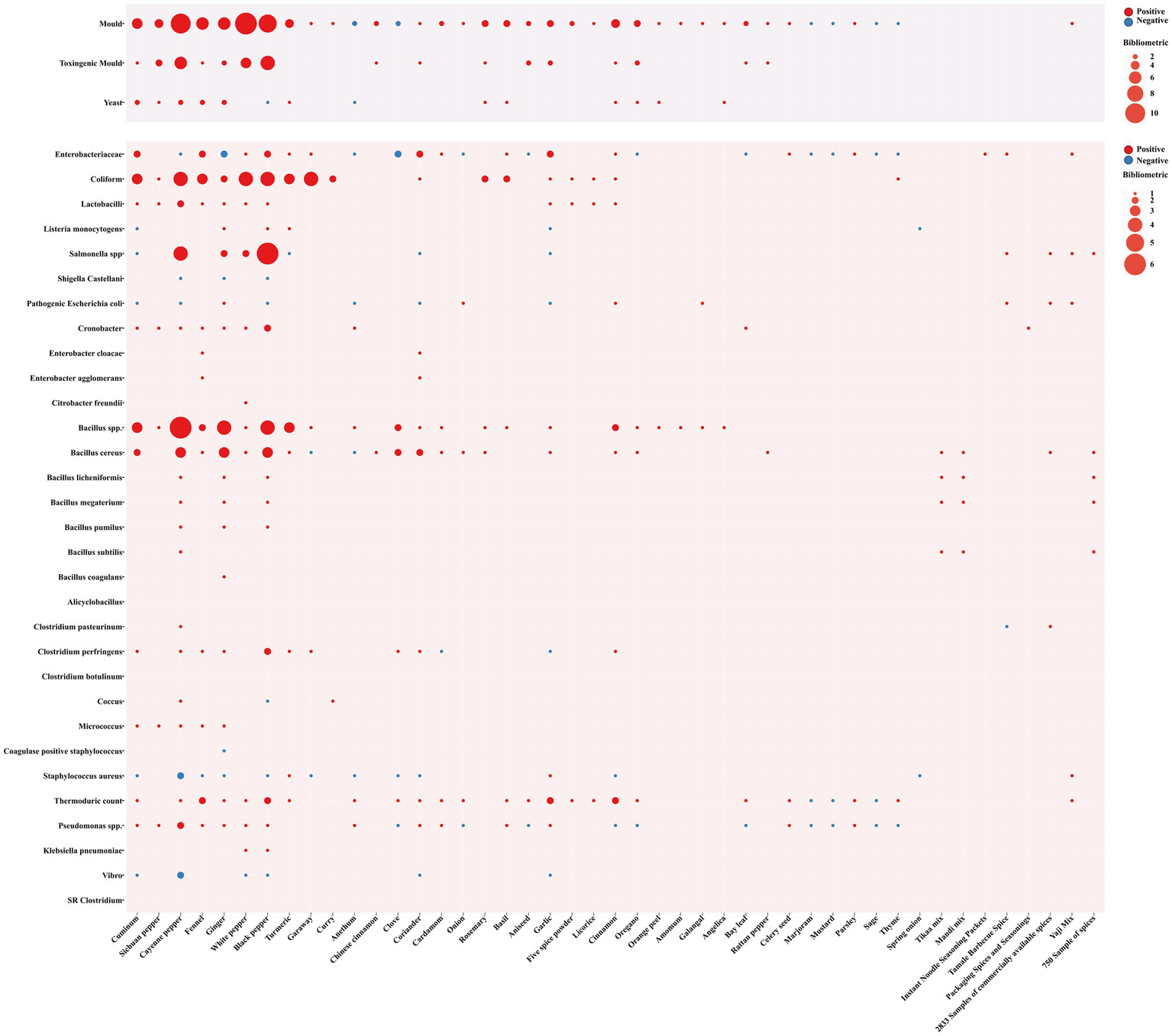
Risk matrix of microbial contamination of spices.
3.1.1 Fungal contamination in food spices
The prevalent fungal contaminants found in spices encompass species such as Aspergillus sp., Penicillium sp., Absidia sp., Rhizomucor sp., Cladosporium sp., Mycelia sterilia, Alternaria sp., Fusarium spp., and yeast. Figure 1 illustrates that spices commonly exhibit elevated levels of fungal contamination (26 out of 33 examined varieties) and pose a diverse spectrum of potential mycotoxin hazards (16 out of 33). Particularly, cumin, capsicum, white pepper, and black pepper exhibited heightened levels of mold pollution and residual mycotoxin risks, including aflatoxin and ochratoxin. Similarly, Sichuan peppercorns, ginger, turmeric, rosemary, basil, star anise, garlic, cinnamon, bay leaves, rattan peppercorns, and oregano demonstrated notable fungal contamination levels. While caraway seed, curry, cardamom, onion, five-spice powder, licorice, orange peel, amomum kernel, grass nut, angelica, celery seed, and parsley also exhibited fungal contamination, comprehensive data regarding mycotoxin presence were lacking. Notably, cloves, dill, marjoram, mustard, sage, and thyme displayed no detectable fungal contamination, attributed in part to the abundant antifungal compounds, such as eugenol, present in cloves (Garcia et al., 2018). Additionally, yeast contamination was observed in several spices including cumin, Sichuan pepper, cayenne pepper, ginger, turmeric, rosemary, basil, cinnamon, and oregano, potentially influenced by variations in spice substrate composition.
Fungal contamination typically exhibits intercommunication and a notable resistance to stress factors, facilitating its sustained growth within the low water activity environment characteristic of spices. Garcia et al. conducted an analysis of 200 samples encompassing rosemary, fennel, cinnamon, cloves, black pepper, white pepper, and oregano, leading to the isolation of 51 distinct fungi representing 22 genera. The investigation revealed the prevalence of species such as Aspergillus ruber, Aspergillus chevalieri, Aspergillus montevidensis, and Aspergillus pseudograviviridis across multiple spice varieties, alongside pseudoglaucus, Aspergillus penicillioides, toxin-producing Aspergillus flavus, Aspergillus niger, and various other fungal species (Garcia et al., 2018).
It is noteworthy that within the scope of the study, the detection rates of Aspergillus spp. (32%), Aspergillus nomius (12%), and Aspergillus parasiticus (4%) were observed in both white pepper and black pepper samples. Additionally, the detection rate of the Aspergillus niger complex reached a notable 52%, while Aspergillus ochraceus was detected at a rate of 12%. Furthermore, concerning aflatoxin production, 14.2% of isolated strains from black pepper, 66.7% from white pepper, and all strains from white pepper demonstrated the ability to produce aflatoxins. Another investigation conducted by Garcia revealed that 29% of 304 spice samples obtained from vendors in Mexico City tested positive for Aspergillus niger and rhizopus contamination (Wong, 2015).
Motloung et al. conducted an investigation revealing that 40% of the samples comprising 70 types of South African food spices, including pepper and ginger, were contaminated with aflatoxin, ochratoxin, and other mycotoxins, with 11% of the samples containing a variety of mycotoxins (Motloung et al., 2018). Additionally, in 2014, Chen Yuhang et al. scrutinized spices available in Chengdu, uncovering an average mold count of (8.4 ± 1.5) × 103 CFU/g among 120 samples. Remarkably, 92.5% of these samples tested positive for mycotoxins, with 31.7% exhibiting the presence of aflatoxin B1, ochratoxin A, and fumonisin B (Chen et al., 2017).
3.1.2 Bacterial contamination in food spices
The predominant bacterial contaminants found in spices encompass a diverse array of microorganisms, notably including Enterobacteriaceae, Coliforms, Lactobacilli, Cocci, Micrococci, and thermoduric bacteria. Furthermore, spices are susceptible to contamination by Bacillus species, Clostridium perfringens, Listeria monocytogenes, various Salmonella serotypes, Pseudomonas species, pathogenic Escherichia coli, Cronobacter, Enterobacter cloacae, Enterobacter agglomerans, Citrobacter freundii, Klebsiella pneumoniae, and Staphylococcus aureus, among others.
As illustrated in Figure 1, the analysis revealed elevated levels of contamination in various spices by Enterobacter, Coliforms, Bacillus, and Bacillus cereus (in this study, statistical analysis was independently conducted for Bacillus cereus and other significant contaminants in spices). Subsequently, noteworthy levels of contamination were also observed for Enterobacter, Lactobacillus, Cronobacter, Clostridium perfringens, and Pseudomonas. Vibrio, typically abundant in aquatic products, displayed minimal contamination levels in spices. However, prevalent foodborne pathogens such as Listeria monocytogenes, Salmonella, pathogenic Escherichia coli, Staphylococcus aureus, and Klebsiella pneumoniae exhibited high contamination levels in cumin, ginger, black pepper, and white pepper, while data on contamination levels in other spices were either limited or absent. These pathogens demonstrated high detection rates across a broad spectrum of microbial contamination surveys covering various spices. Furthermore, cumin, cayenne pepper, ginger, white pepper, and black pepper generally manifested a diverse array of cross-contamination involving bacteria and fungi. Notably, cross-contamination of Coliforms, Lactobacillus, Salmonella, Cronobacter, Bacillus, Bacillus subtilis, thermoduric bacteria, Pseudomonas, and Clostridium perfringens was prominently observed in black pepper and white pepper.
Between 1973 and 2010, 71% of the 14 reported food-borne disease outbreaks associated with microbial contaminants were attributed to spices. Salmonella was identified as the primary pathogen in 10 cases, while Bacillus (comprising 2 cases of Bacillus cereus, 2 cases of Bacillus subtilis, and 1 case of Bacillus pumilus) was determined to be the primary pathogen in the remaining 4 cases (Van Doren et al., 2013). And the U. S. Food and Drug Administration surveyed packaged (dried) spices sold in the U. S., collecting 7,250 retail samples of 11 spice types between November 2013 and March 2015 (Zhang et al., 2017). The study revealed Salmonella prevalence estimates of 0.15–0.64% across various spices, including basil leaf, black pepper, coriander seed, curry powder, dehydrated garlic, oregano leaf, paprika, and red pepper (Zhang et al., 2017). Furthermore, within the past decade, the European Union’s Rapid Alert System for Food and Feed (RASFF) has issued over 500 notifications concerning the risk of microbial contamination associated with imported “herbs and spices.” The prevalent microbial contaminants encompass Salmonella, Listeria monocytogenes, Bacillus cereus, pathogenic Escherichia coli, and mycotoxins, affecting black pepper, rosemary, ginger, thyme, paprika, parsley, curry, and other spices.
Additionally, in 2022, a substantial number of batches, exceeding 40, were subjected to serious notifications regarding Salmonella contamination in black pepper.2 Little et al. conducted an analysis of 750 spices and flavorings, revealing the presence of Bacillus cereus in 142 (19%) samples, other Bacillus genera in 399 (53%) samples, and concentrations of up to 104 CFU/g of Bacillus cereus and other Bacillus genera in 222 samples (Little et al., 2003). Similarly, Garcia’s investigation identified Bacillus cereus in 32 out of 304 spice samples retailed in Mexico City (Garcia et al., 2018). In a separate study by Li et al., the examination of spices sold in Wenzhou unveiled a detection rate of Cronobacter in 22.30% (66 strains) of the 296 spices analyzed (Li et al., 2017).
3.2 Risk analysis of microbial contaminations in food spices
Based on distinct microbial pollution characteristics, the risks associated with microbial contamination in spices were initially categorized into three groups: pathogenic risk, pathogenic spoilage risk, and spoilage risk, as detailed in Table 1. The identified pathogenic risk groups for spice contamination encompass Cocci, Listeria monocytogenes, Shigella, pathogenic Escherichia coli, Cronobacter, Salmonella, Klebsiella pneumoniae, Staphylococcus aureus, Vibrio, Clostridium perfringens, Botulinum, Clostridium perfringens, Enterobacter clostridium, Citrobacter fredii, and Bacillus subtilis. These pathogens or their associated toxins adhere to spices, subsequently contaminating food products and leading to potential poisoning or gastrointestinal infections upon ingestion.
Table 1
| Risk of disease | Pathogenicity and spoilage risk | Risk of spoilage |
|---|---|---|
| Coccus | Toxigenic mold | Mold |
| Listeria monocytogens | Pseudomonas spp. | Yeast |
| Salmonella spp. | Enterobacteriaceae | Lactobacilli |
| Shigella Castellani | Coliform | Micrococcus |
| Pathogenic Escherichia coli | Bacillus spp. | B. licheniformis |
| Cronobacter | Campylobacter | B. subtilis |
| Staphylococcus aureus | Bacillus pumilus | |
| Klebsiella pneumoniae | Bacillus megaterium | |
| Vibro | Thermoduric count | |
| Clostridium botulinum | Bacillus coagulans | |
| Clostridium perfringens | Alicyclobacillus | |
| Enterobacter cloacae | Clostridium pasteurinum | |
| Enterobacter agglomerans | ||
| Citrobacter freundii | ||
| Bacillus cereus |
Risk classification of microbial contamination in spices.
The microorganisms contributing to the spoilage risk of spices comprise mold, yeast, Lactobacillus, Micrococcus, Bacillus licheniformis, Bacillus megaterium, Bacillus pumilus, B. subtilis, Bacillus coagulans, Alicyclobacillus, and Clostridium pasteurinum. These spoilage microorganisms can directly result in the deterioration of spices and, upon introduction into food substrates, lead to the spoilage of the entire food products. Furthermore, the microorganisms associated with pathogenic and spoilage risks in spice contamination encompass mycotoxin-producing molds, Pseudomonas, coliform, Enterobacter group, Bacillus, and Campylobacter. These microorganisms not only facilitate the spoilage of spices and food but also present a significant pathogenic risk.
To further evaluate the potential exposure risk of spices to pathogenic microorganisms, spoilage microorganisms, and their combination, a thorough analysis of pertinent data was conducted, and the findings are presented in Figure 2. The examination revealed that cumin, capsicum, black pepper, white pepper, and ginger exhibited a high risk of pathogenic bacteria, spoilage bacteria, and pathogenic spoilage bacteria. These spices demonstrated an elevated likelihood of exposure to specific pathogens such as Bacillus subtilis, Clostridium perfringens, and Cronobacter, while displaying a comparatively lower risk of exposure to E. coli, Klebsiella pneumoniae, and Staphylococcus aureus. Spices exhibited an increased likelihood of exposure to associated spoilage microorganisms, including molds, yeast, and thermophiles, while presenting a lower susceptibility to Bacillus subtilis, Bacillus licheniformis, Bacillus megaterium, Bacillus parvus pumilus, and Clostridium. Moreover, spices demonstrated a heightened risk of exposure to mycotoxin-producing molds, coliforms, Enterobacter, Bacillus, and Pseudomonas.
Figure 2
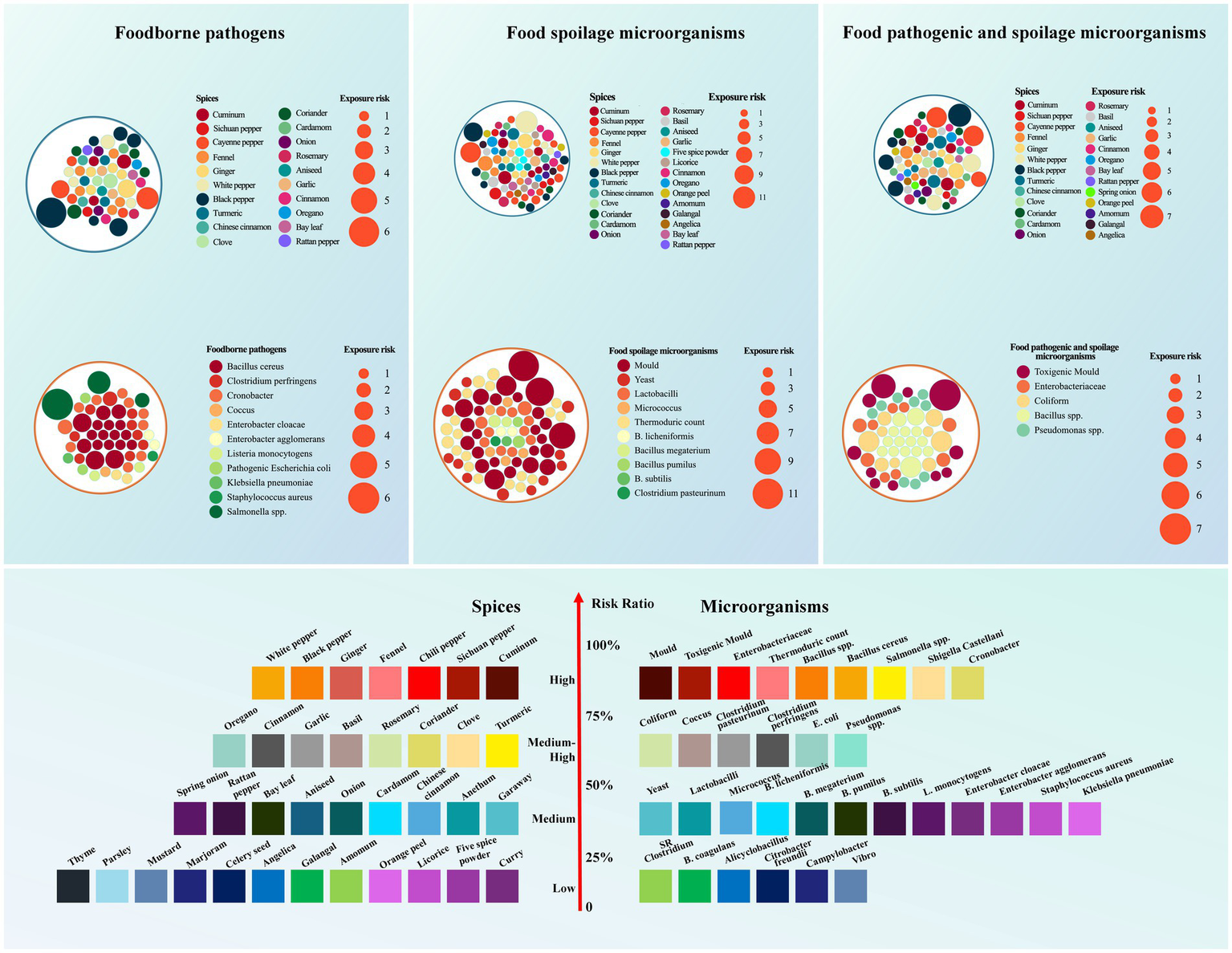
The risk of exposure of spices to microorganisms and the classification of risk levels of spices and microorganisms.
This study undertook a comprehensive assessment of factors including the risk of exposure to microorganisms, prevalent processing methods, consumption patterns, and microbial characteristics. These characteristics encompassed the potential for toxin production, the degree of pathogenicity, inclusion on the Centers for Disease Control and Prevention (CDC) warning list, susceptibility to spoilage, residue risk, and resilience to environmental conditions and storage. Subsequently, risk levels pertaining to spices and their associated microorganisms were determined, scored, and initially categorized, with the outcomes depicted in Figure 2. The classification stratified risk into four tiers: high risk (75–100%), moderate risk (50–75%), moderate risk (25–50%), and low risk (0–25%).
The spices categorized as high-risk encompass cumin, Sichuan pepper, chili pepper, ginger, black pepper, and white pepper. Those deemed medium-high risk include turmeric, cloves, coriander, rosemary, basil, garlic, cinnamon, and oregano. Meanwhile, caraway seed, dill, cardamom, onion, star anise, bay leaf, rattan pepper, and spring onion were identified as medium-risk spices. Spices categorized as low risk comprise curry, five spice powder, licorice, orange peel, amomum, galangal, Angelica, celery seed, marjoram, mustard, parsley, and thyme.
The high-risk microorganisms identified in spices exposure encompass molds, mycotoxigenic molds, Enterobacter, thermophilic bacteria, Bacillus, Bacillus cereus, Salmonella, Shigella, and Cronobacter. Furthermore, high-risk microorganisms in spices exposure include coliforms, cocci, Clostridium, pathogenic Escherichia coli, and Pseudomonas. The microorganisms posing a risk in spices exposure consist of yeast, Lactobacillus, Micrococcus, Clostridium perfringens, Bacillus licheniformis, Bacillus megaterium, Bacillus pumilus, Bacillus subtilis, Enterobacter cloacae, Listeria monocytogenes, Enterobacter agglomerans, Staphylococcus aureus, and Klebsiella pneumoniae. Lastly, the low-risk microorganisms in spices exposure include Clostridium enterica, Bacillus coagulans, Bacillus aliphaticacid, Citrobacter freundii, and Vibrio.
3.3 Early warning framework for microorganism in food spices
Monitoring the levels of microbial contaminants present in spices to identify potential biohazards plays a crucial role in providing essential toxicological data for the safe use of spices, enhancing the accuracy of dietary risk assessment, and implementing effective control measures. In light of this, we have developed an early warning framework for the importation of microorganisms in food spices, outlined in Figure 3. The sources of microbial contamination in spices primarily stem from cross-contamination occurring during various stages in the supply chain, including soil environments pre-harvest, transportation, and storage, characterized by extensive diversity and complexity. As such, our framework emphasizes qualitative or semi-quantitative analysis of the predominant microflora present in spices, rather than solely focusing on quantifying specific spoilage and pathogenic microorganisms, as is commonly practiced. This approach aims to provide a deeper understanding of the risks associated with microbial importation into spices.
Figure 3
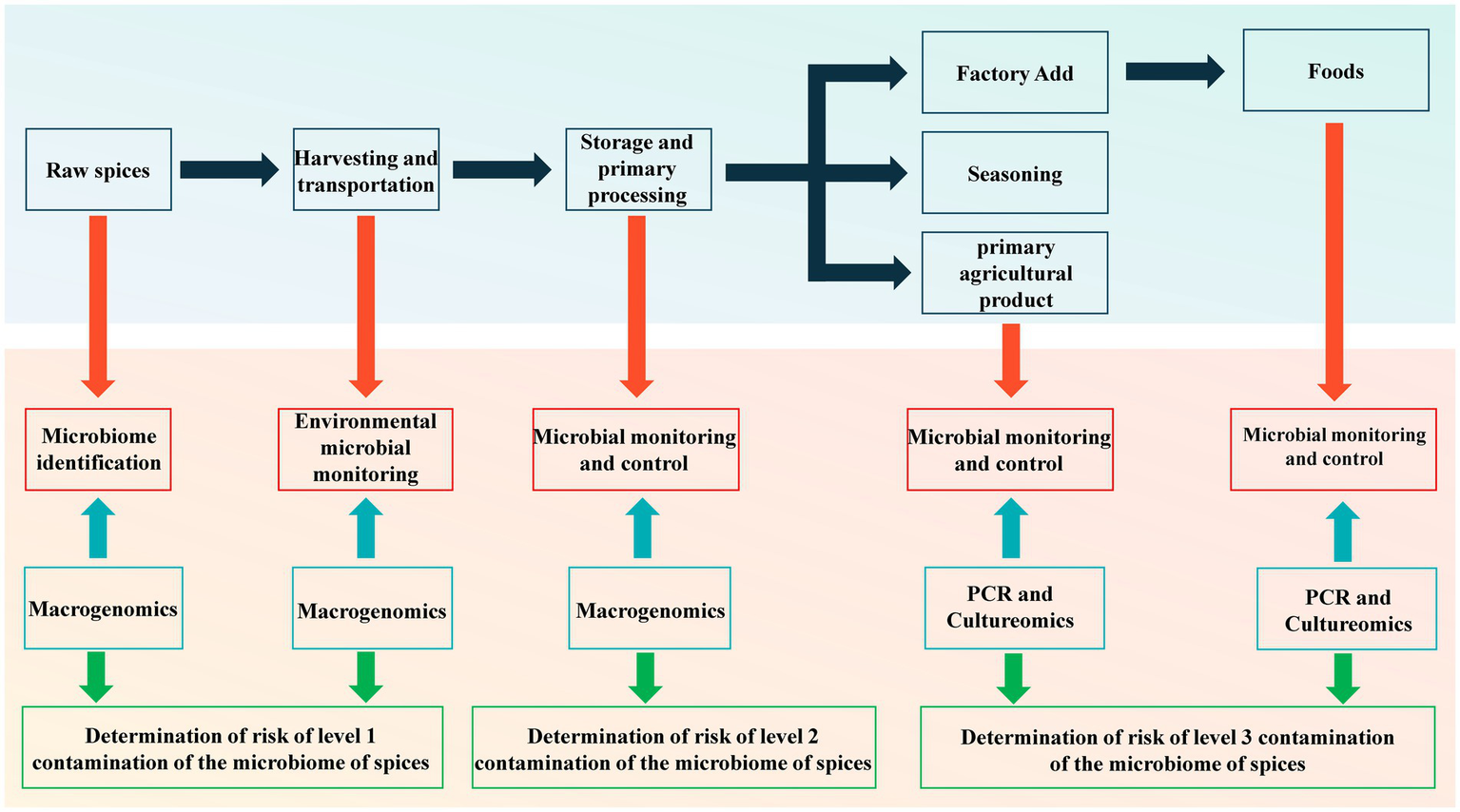
Early warning framework for microorganism import of spices.
Given that spices are inherently host to a diverse array of bacteria and fungi, the on-going advancements in metagenomics and sequencing technologies present an opportunity for a comprehensive exploration of the microbiome within spices. Metagenomic sequencing facilitates both qualitative and quantitative analysis of the microbiome, there-by addressing the constraints associated with the culturability of microorganisms in traditional culturomics. Additionally, this technology enables the collection of comparative microbiome data across various spices in different spatio-temporal contexts, thereby establishing an ever-expanding dataset of spice microbiomes. These insights are invaluable for conducting risk assessments related to microbial exposure in spices and serve as a fundamental basis for devising microbial control strategies spanning the entire spectrum of spice production, from cultivation to consumption.
Given the potential association between microbial contamination of spices and factors such as their soil environment, storage, processing methods, and eventual use (including incorporation into processed foods in manufacturing facilities or direct consumption), the establishment of an early warning framework for microbial importation can effectively delineate level 1, 2, and 3 contamination risks associated with the spice micro-biome. This framework holds significant promise in offering valuable insights for the sustainable management of agricultural production processes involved in spice cultivation and harvesting. Furthermore, it can serve as a crucial guide for devising monitoring programs and implementing control measures at critical junctures within the processing, storage, and utilization of spices. Simultaneously, it serves as a pivotal reference for the development of quality and safety traceability systems for spices and the formulation of national standards governing spice quality and safety (Wang and Wang, 2021).
4 Conclusion
The widespread presence of pathogenic and/or spoilage microorganisms in spices can not only lead to the spices’ own deterioration but also compromise food quality and sensory dimensions when incorporated into food products, thereby heightening the risk of spoilage and foodborne illnesses. This investigation encompassed 41 datasets pertaining to microbial contamination in spices, elucidated prevalent levels of microbial contamination observed in spices, evaluated the associated exposure risks, and delineated the significant pathogenic, spoilage, and pathogenic-spoilage microorganisms, subsequently categorizing the associated risk levels. Salmonella, pathogenic Escherichia coli, Coliforms, Clostridium perfringens, Cronobacter, Bacillus cereus, Bacillus spp., molds, and mycotoxin-producing molds were identified as high-risk contaminants in spices. Specifically, cumin, Zanthoxylum, cayenne pepper, ginger, black pepper, and white pepper were classified as high-risk spices, warranting specialized monitoring of their microbial contamination levels during usage. Notably, numerous spices have received inadequate attention in terms of food safety and public health considerations thus far. To address this, we proposed an early warning framework for identifying microbial input in spices. Leveraging sequencing technology, an ever-expanding dataset of spice microbiomes can be established, providing pivotal data for assessing the microbial exposure risks associated with spices and serving as a fundamental basis for devising comprehensive microbial control strategies across various stages of the spice supply chain, from cultivation to consumption.
Statements
Data availability statement
The original contributions presented in the study are included in the article/supplementary material, further inquiries can be directed to the corresponding author.
Author contributions
XT: Conceptualization, Data curation, Formal analysis, Funding acquisition, Investigation, Methodology, Project administration, Resources, Software, Supervision, Validation, Visualization, Writing – original draft, Writing – review & editing.
Funding
The author declares that financial support was received for the research and/or publication of this article. This research was supported by Shanghai Engineering Research Center of Convenient Foods, grant number 19DZ2251500.
Conflict of interest
XT was employed by Shanghai Kangshi Food Science and Technology Co., Ltd.
Generative AI statement
The author declares that no Gen AI was used in the creation of this manuscript.
Publisher’s note
All claims expressed in this article are solely those of the authors and do not necessarily represent those of their affiliated organizations, or those of the publisher, the editors and the reviewers. Any product that may be evaluated in this article, or claim that may be made by its manufacturer, is not guaranteed or endorsed by the publisher.
Footnotes
References
1
Abdulsalam L. Usman R. A. (2019). Heavy metal content and microbiological quality of Yaji (complex spice mixture) sold within Kano metropolis. Bayero J. Pure Appl. Sci.12, 93–98. doi: 10.4314/BAJOPAS.V12I1.16S
2
Bakobie N. Addae A. S. Duwiejuah A. B. Cobbina S. J. Miniyila S. (2017). Microbial profile of common spices and spice blends used in tamale, Ghana. Int. J. Food Contaminat.4, 1–5. doi: 10.1186/s40550-017-0055-9
3
Banerjee M. Sarkar P. K. (2003). Microbiological quality of some retail spices in India. Food Res. Int.36, 469–474. doi: 10.1016/s0963-9969(02)00194-1
4
Bata-Vidács I. Baka E. Tóth Á. Csernus O. Luzics S. Adányi N. et al . (2018). Investigation of regional differences of the dominant microflora of spice paprika by molecular methods. Food Control83, 109–117. doi: 10.1016/j.foodcont.2017.04.030
5
Chen Y. H. Ling L. Wang S. Y. Jin Y. Pei X. F. (2017). Contamination status of common spice molds and fungal toxins sold in Chengdu in 2014. J. Hyg. Res.46, 324–327. doi: 10.19813/j.cnki.weishengyanjiu.2017.02.028
6
Chen S. Zhang W. (2011). Quality status of spice products in U.S.A.Chinese Wild Plant Resour.30, 31–32. doi: 10.3969/j.issn.1006-9690.2011.05.007
7
Garcia M. V. Parussolo G. Moro C. B. Bernardi A. O. Copetti M. V. (2018). Fungi in spices and mycotoxigenic potential of some aspergilli isolated. Food Microbiol.73, 93–98. doi: 10.1016/j.fm.2018.01.013
8
Geeta H. Kulkarni P. R. (1987). Survey of the Microbiological Quality of Whole, Black Pepper and Turmeric Powder Sold in Retail Shops in Bombay. Food Protect.50:40.
9
Huang X. Qian H. Chen B. (2015). Research on the mold contamination of several commonly used spices. Chinese Wild Plant Resour.34, 13–17. doi: 10.3969/j.issn.1006-9690.2015.06.004
10
Koohy-Kamaly-Dehkordy P. Nikoopour H. Siavoshi F. Koushki M. Abadi A. (2013). Microbiological quality of retail spices in Tehran, Iran. J. Food Prot.76, 843–848. doi: 10.4315/0362-028X.JFP-12-180
11
Lebai Juri M. Ito H. Watanabe H. Tamura N. (1986). Distribution of microorganisms in spices and their decontamination by gamma-irradiation. Agric. Biol. Chem.50, 347–355. doi: 10.1080/00021369.1986.10867397
12
Li J. (2010). Effects of 60Co-γ irradiation on the microbial population and quality of spices [MA thesis, South China University of Technology].
13
Li Y. Jiang H. Jiao Y. (2017). Isolation and identification of Cronobacter spp. from dried spices and condiments. Sci. Technol. Food Ind.38, 125–130. doi: 10.13386/j.issn1002-0306.2017.19.024
14
Li Y. Lin D. Xie A. (2022). Contamination investigation and molecular typing analysis of Cronobacter in food spices and condiments. Chinese J. Health Lab. Technol.32, 495–498.
15
Li Z. Yang Y. Song Y. (2005). Study on microbial quality of spices used in Chinese meat products. Food Sci.2, 46–50. doi: 10.3321/j.issn:1002-6630.2005.02.006
16
Little C. Omotoye R. Mitchell R. (2003). The microbiological quality of ready-to-eat foods with added spices. Int. J. Environ. Health Res.13, 31–42. doi: 10.1080/0960312021000063331
17
Liu M. (2015). The effects of spice on flavor and quality in carbonado chicken: Henan University of Technology.
18
Liu Q. Meng X. Li Y. Zhao C. N. Tang G. Y. Li H. B. (2017). Antibacterial and antifungal activities of spices. Int. J. Mol. Sci.18:1283. doi: 10.3390/ijms18061283
19
Liu S. P. Zhu Y. Pei E. Y. Hai Z. G. (2016). Research and construction of spice products quality safety traceability system. Agricult. Netw. Informat.1, 44–49. doi: 10.3969/j.issn.1672-6251.2016.01.011
20
Liu Y. Y. Zou Y. X. Zheng X. J. Mu L. X. Liu X. M. Zhuang P. R. et al . (2022). Research progress of natural spices in green processing of meat products. Chinese Condiments47, 215–220. doi: 10.3969/j.issn.1000-9973.2022.07.041
21
Lu Y. (2022). Research on the microbes in spices. Food Res Dev2, 32–33. doi: 10.3969/j.issn.1005-6521.2002.02.014
22
Ma C. Chen X. Qian C. (2015). Microbial contamination analysis of fresh vegetables sold in Haikou City. J. Zhejiang Agricult. Sci.56, 396–401. doi: 10.16178/j.issn.0528-9017.20150336
23
Ming Y. Liang Z. (2020). Research progress on food safety risk factors of spices. Food Indust. Sci. Technol.41, 323–328+336. doi: 10.13386/j.issn1002-0306.2020.14.052
24
Moore R. E. Millar B. C. Panickar J. R. Moore J. E. (2019). Microbiological safety of spices and their interaction with antibiotics: implications for antimicrobial resistance and their role as potential antibiotic adjuncts. Food Qual. Saf.3, 93–97. doi: 10.1093/fqsafe/fyz008
25
Motloung L. De Saeger S. De Boevre M. Detavernier C. Audenaert K. Adebo O. A. et al . (2018). Study on mycotoxin contamination in south African food spices. World Mycotoxin J.3, 401–409. doi: 10.3920/WMJ2017.2191
26
Oranusi S. Nwachukwu C. Adekeye B. T. Dahunsi O. S. Adeyemi A. O. (2013). Microbial profile, antibacterial and antioxidant activities of some imported spices in Nigeria. Eur. J. Exp. Biol.3, 193–202.
27
Rahman M. Islam M. A. Das K. C. Salimullah M. Mollah M. Z. I. Khan R. A. (2021). Effect of gamma radiation on microbial load, physico-chemical and sensory characteristics of common spices for storage. J. Food Sci. Technol.58, 3579–3588. doi: 10.1007/s13197-021-05087-4
28
Sagoo S. K. Little C. L. Greenwood M. Mithani V. Grant K. A. McLauchlin J. et al . (2009). Assessment of the microbiological safety of dried spices and herbs from production and retail premises in the United Kingdom. Food Microbiol.26, 39–43. doi: 10.1016/j.fm.2008.07.005
29
Shi J. Han W. Gu M. (2003). Investigation on the contamination of various biotoxins in spices. Chinese J. Health Lab. Technol.5, 589–592. doi: 10.3969/j.issn.1004-8685.2003.05.022
30
Shu R. (2016). Microbial control package of instant noodle seasoning powder. Mod. Food12, 36–37. doi: 10.16736/j.cnki.cn41-1434/ts.2016.12.015
31
Torpdahl M. White E. D. Schjørring S. Søby M. Engberg J. Engsbro A. L. et al . (2023). Imported spring onions related to the first recorded outbreak of enteroinvasive Escherichia coli in Denmark, November to December 2021. Eur. Secur.28:2200572. doi: 10.2807/1560-7917.ES.2023.28.15.2200572
32
Van Doren J. M. Neil K. P. Parish M. Gieraltowski L. Gould L. H. Gombas K. L. (2013). Foodborne illness outbreaks from microbial contaminants in spices, 1973–2010. Food Microbiol.36, 456–464. doi: 10.1016/j.fm.2013.04.014
33
Wang J. Q. Wang J. (2021). Comparison of domestic and foreign spices regulations and analysis of main problems. Chinese Condiments46, 163–169. doi: 10.3969/j.issn.1000-9973.2021.02.036
34
Witkowska A. M. Hickey D. K. Alonso-Gomez M. Wilkinson M. G. (2011). The microbiological quality of commercial herb and spice preparations used in the formulation of a chicken supreme ready meal and microbial survival following a simulated industrial heating process. Food Control22, 616–625. doi: 10.1016/j.foodcont.2010.10.014
35
Wong C. F. (2015). Microbiological survey of retail herbs and spices. Am. J. Plant Sci.6, 718–724. doi: 10.4236/ajps.2015.65077
36
Xue R. (2023). Microbial contamination analysis of retail pepper and chili in Sichuan province and construction of whole-genome database of highly heat-resistant strains: Sichuan Agricultural University.
37
Yadav S. (2024). Top 10 largest producer of spices in the world [EB/OL]. Available online at: https://businessesranker.com/largest-producers-of-spices-in-the-world
38
Yan W. H. Gong H. P. Ye X. M. Li L. Y. Ran B. (2022). Risk analysis on potential quality problems of five spices. Mod. Food28, 224–228. doi: 10.16736/j.cnki.cn41-1434/ts.2022.23.057
39
Zeng L. Wang J. Chen W. (2015). The application and research progress of spices in fruits and vegetables preservation. J. Food Safety Qual. Inspect.6, 735–741. doi: 10.19812/j.cnki.jfsq11-5956/ts.2015.03.001
40
Zhang J. (2009a). Application of high temperature short time steam sterilization in spice sterilization. Tianjin Sci. Technol.36, 20–21. doi: 10.3969/j.issn.1006-8945.2009.03.009
41
Zhang J. (2009b). Discussion on the problem of microbial exceeding standard in instant noodle production. Tianjin Sci. Technol.36, 94–96. doi: 10.3969/j.issn.1006-8945.2009.03.040
42
Zhang C. Cai J. Pan F. (2007). Study on microbial contamination conditions of low moisture capsicum powder and control technology. Food Sci.1, 131–134. doi: 10.3321/j.issn:1002-6630.2007.01.029
43
Zhang Y. Guo Y. (2011). Research process on antibacterial mechanism of spice essential oils and their application on food conservation. Chinese Condiment36, 4–10. doi: 10.3969/j.issn.1000-9973.2011.07.002
44
Zhang G. Hu L. Pouillot R. Tatavarthy A. Doren J. M. V. Kleinmeier D. et al . (2017). Prevalence of Salmonella in 11 spices offered for sale from retail establishments and in imported shipments offered for entry to the United States. J. Food Protect.80, 1791–1805. doi: 10.4315/0362-028X.JFP-17-072
45
Zhao X. Schaffner D. W. Yue T. (2013). Quantification of aflatoxin risk associated with Chinese spices: point and probability risk assessments for aflatoxin B1. Food Control33, 366–377. doi: 10.1016/j.foodcont.2013.03.012
46
Zhou F. Yang Q. Chen H. (2015). Progress on research of spices on improving food quality and safety. J. Shenyang Norm. Univ. (Nat. Sci. Ed.)33, 60–63. doi: 10.3969/j.issn.1673-5862.2015.01.013
Summary
Keywords
food spices, microbial contamination, microbial input datasets, risk analysis, food safety
Citation
Tang X (2025) Risk analysis of microorganisms in common food spices. Front. Microbiol. 16:1549719. doi: 10.3389/fmicb.2025.1549719
Received
21 December 2024
Accepted
14 July 2025
Published
25 August 2025
Volume
16 - 2025
Edited by
Arun K. Bhunia, Purdue University, United States
Reviewed by
Guodong Zhang, United States Food and Drug Administration, United States
Swapan Banerjee, Poornima University, India
Updates
Copyright
© 2025 Tang.
This is an open-access article distributed under the terms of the Creative Commons Attribution License (CC BY). The use, distribution or reproduction in other forums is permitted, provided the original author(s) and the copyright owner(s) are credited and that the original publication in this journal is cited, in accordance with accepted academic practice. No use, distribution or reproduction is permitted which does not comply with these terms.
*Correspondence: Xiaoyang Tang, xytang_vilin@163.com
Disclaimer
All claims expressed in this article are solely those of the authors and do not necessarily represent those of their affiliated organizations, or those of the publisher, the editors and the reviewers. Any product that may be evaluated in this article or claim that may be made by its manufacturer is not guaranteed or endorsed by the publisher.