Abstract
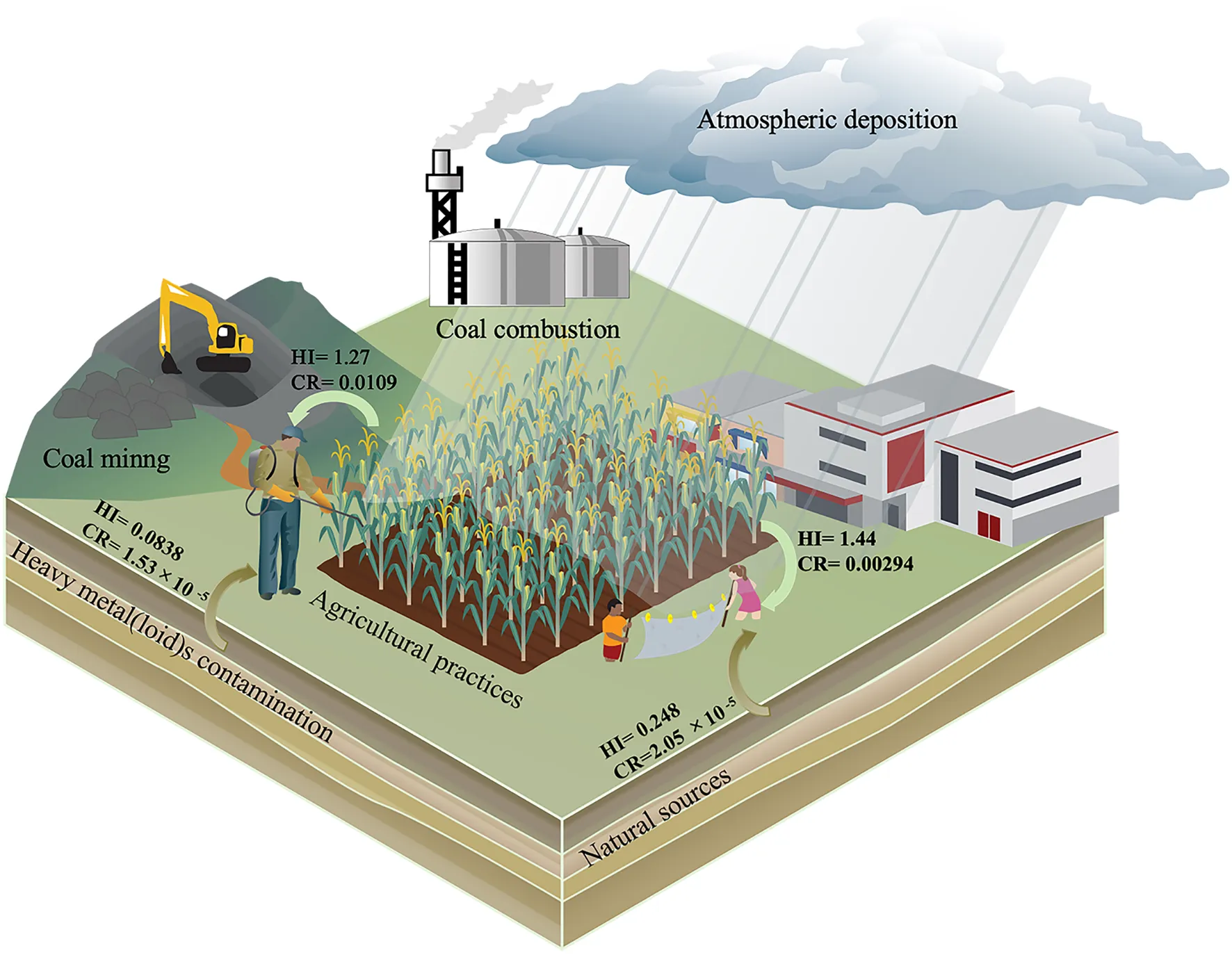
Heavy metal(loid) contamination in farmlands around coal mining areas significantly threatens ecosystem stability and human health. In this study, the extent and sources of heavy metal(loid) contamination in farmland near Shanxi coal mines were assessed using the absolute principal component scores-multiple linear regression (APCS-MLR) model. Additionally, a probabilistic health risk assessment model was developed using Monte Carlo simulation to determine the health risks faced by local residents. The average concentrations of soil Pb, Hg, Mn, and Zn was 28.56mg/kg, 0.17mg/kg, 666.29mg/kg, and 83.49mg/kg, respectively. In maize, Pb, Zn, and Cr concentrations exceeded their respective safety thresholds, with exceedance occurrence rates of 16.67%, 95.83%, and 100%, respectively. Among them, Cr exhibited the highest bioaccumulation factor (BCF), reaching 0.55 in maize. Five main sources of soil heavy metal(loid) contamination were identified: coal mining activities, air pollution, agricultural practices, natural sources, and coal combustion. Probabilistic health risk assessment revealed that the average non-carcinogenic hazard index (HI) values of soil-mediated heavy metal(loid) exposure remained below 1 for both children and adults, although the average HI for children was 2.96 times higher than adults. However, the average HI of maize-mediated heavy metal(loid) exposure exceeded the risk threshold, reaching 1.44 for children and 1.27 for adults. In contrast, the overall carcinogenic risk (CR) of maize-mediated heavy metal(loid) was 3.71 times higher in adults than in children. In conclusion, the farmland near Shanxi coal mines was severely contaminated with heavy metal(loid)s, with coal mining activities being the main pollution source. Local residents, particularly children, faced substantial health threats.
1 Introduction
The exploitation of large coal resources has led to increasingly obvious environmental pollution, especially heavy metal(loid)s has adverse impacts on surrounding farmlands (1). When farmlands are located near coal mining areas, the impact is even more significant (2). During the coal mining process, waste materials such as gangue, tailings, coal dust, and coal slag are generated. These materials migrate and spread to surrounding farmlands through processes like wind erosion, runoff, and leaching, leading to increased levels of heavy metal(loid)s in the soil (3). Shanxi Province, as one of Chinese major coal-producing regions, is known for its abundant coal reserves and is often referred to as the “Sea of Coal” or the “Coal Capital” (4). However, extensive coal mining has resulted in severe heavy metal(loid) pollution in the soil ecosystem of the region. Hou et al. reported that 14% to 17% of global farmland is contaminated by heavy metal(loid) like arsenic (As) and cadmium (Cd), which affects the health of 9 to 1.4 billion people (5). Yang et al. highlighted that heavy metal pollution in farmland soils near coal mining areas in Shanxi Province poses a threat to local resident’s health (6). Hence, it is curial to investigate heavy metal(loid) pollution in farmland surrounding coal mining areas and its health threats to local residents.
Heavy metal(loid)s effect soil ecosystem stability and pose significant risks to human health. Their accumulation in soil and water can inhibit plant growth, alter microbial community structure, and ultimately disrupt ecosystem function and stability (7). Moreover, exposure to heavy metal(loid)s has been linked to a range of chronic diseases, including neurological dysfunction, cardiovascular diseases, kidney disorders, and developmental impairments (8). Long-term exposure to hexavalent chromium (Cr), which the International Agency for Research on Cancer (IARC) and the U.S. Environmental Protection Agency (US EPA) classify as a human carcinogen, has been associated with an increased risk of lung cancer (9). Lead (Pb) poisoning is strongly linked to developmental impairments in children, while mercury (Hg) exposure negatively affects the nervous and cardiovascular systems (10, 11). Given these serious health implications, there is an urgent need to assess human exposure risks associated with heavy metal(loid)s contamination.
Heavy metal(loid)s accumulated in ecosystems and the human body through multiple sources. Industrial activities, mining, agricultural inputs, and urbanization are the primary heavy metal(loid) contamination sources (12). These pollutants enter ecosystems through atmospheric deposition, surface runoff, and soil infiltration, accumulating in soil, water, and living organisms (13). Their accumulation in soil and water allows for transfer through the food chain, posing serious threats to human health (12). Currently, the assessment method combining chemometric techniques with risk indices has been employed to investigate the presence, distribution, and fate of trace contaminants in various media (14). Furthermore, multivariate analysis has been applied to identify the sources of pollutants in the groundwater of the copper (Cu) mining and smelting area of Bor in Eastern Serbia’s Southern Carpathians (15). Thus, this study employed multivariate analysis techniques to identify the sources and the relevant migration pathways of heavy metal(loid).
Heavy metal(loid) exposure occurs through various pathways, including ingestion, dermal contact, inhalation, and indirect dietary intake (16). Among these, soil ingestion and food consumption are the primary exposure pathways for the general population, accounting for 60% to 90% of Cd, Pb and As exposure occurrences (17). Homegrown grains and vegetables are the predominant dietary sources of heavy metal(loid) intake (18). Previous studies have primarily focused on the health risk faced by the general population, resulting in limited understanding of the specific exposure sources and pathways affecting residents living near coal mines. Therefore, targeted research is essential to accurately identify and assess the health risks faced by this vulnerable population.
Currently, deterministic health risk assessment models have been widely applied to reveal the quantitative relationship between heavy metal(loid) exposure and health risks. However, it tends to underestimate or overestimate actual risks by failing to account for parameter uncertainty, thereby reducing the effectiveness of risk management decisions (19). Probability modeling can reduce these biases by incorporating statistical distributions that describe the uncertainty and variability of key exposure parameters (16). Among probabilistic modeling methods, Monte Carlo simulation is particularly effective, providing accurate and practical assessments of complex environmental pollution (20). This method randomly selects a large number of values from exposure parameters and substitutes them into the US EPA probabilistic health risk assessment model to calculate health risks values, enabling a more comprehensive assessment of the heavy metal(loid) pollution risks to human health (21). Monte Carlo simulation has been applied to assess the health risks posed by specific pollution sources in the soil of an e-waste recycling site in Sombor, Northern Serbia, for both adults and children (22). Thus, this study employs Monte Carlo simulation to develop a probabilistic health risk assessment model for evaluating the health risks faced by residents living near coal mines.
The objectives of this study are to: (1) investigate the characteristics and transfer efficiency of heavy metal(loid) pollution in soil and maize; (2) identify the sources of heavy metal(loid) pollution in areas near coal mines, and (3) assess the human health risks associated with heavy metal(loid) pollution in soil and maize. This study provides valuable guidance for developing targeted strategies to control heavy metal(loid) pollution in areas near coal mines and for reducing associated health risks to local residents.
2 Materials and methods
2.1 Study area
Seven cities in Shanxi Province, China — Jinzhong (N36°40′-38°06′, E111°25′-114°05′), Yangquan (N37°40′-38°31′, E112°5′-114°4′), Gujiao (N37°40′-38°8′, E111°43′-112°21′), Linfen (N35°23′-36°57′, E110°22′-112°34′), Changzhi (N35°49′-37°07′, E111°59′-113°44′), Shuozhou (N39°5′-40°17′, E111°53′-113°34′), and Xinzhou (N38°6′-39°40′, E110°53′-113°58′) — were selected for this study (Figure 1). The study area is situated in the mid-reaches of the Yellow River, encompassing a total area of 156,700 square kilometers and a permanent population of approximately 34.46 million people. This region is predominantly characterized by mountainous and hilly terrain, with most areas in the province elevated above 1,500 meters. Climatically, it is classified as having a temperate continental monsoon climate, with annual precipitation varying between 358 and 621 millimeters (23). The dominant soil type is cinnamon series, characterized by a neutral to slightly alkaline pH.
Figure 1
2.2 Sample collection
In April and October 2022, a total of 360 soil samples (0 to 20 cm depth) were collected from the study area. Seven cities were selected based on the coal output to ensure the representativeness and diversity of the samples. In each city, we have selected 4–7 coal mining areas. Within each coal mining area, we selected at least 3 farmlands and distance of 5 to 10 km between all farmlands to avoid interference between samples. Each piece of farmland covers an area of about 2 acres, about 100 meters from the entry of a coal mine area or mine (Figure 1). Three composite samples were collected for each selected farmland, defined for each sampling point between 25 and 30 meters using a grid sampling method (24). To ensure accuracy and reliability, soil mixture samples were collected, maintaining even distribution, while areas with recently disturbed soil, garbage piles, or visibly contaminated spots were excluded. Freshly collected samples were sealed in plastic bags and promptly transported to the laboratory within 12 hours.
In the laboratory, soil samples were first processed by removing visible plant roots, stones, branches, leaves, and debris. Then, they were dried under natural shade, ground into a fine powder, and sequentially passed through 20-mesh and 100-mesh nylon sieves. The sieved soil was subsequently thoroughly mixed using a bamboo shovel until a homogeneous mixture was obtained. All maize samples were kernel of yellow maize, with uniform plumpness and at the mature stage. Maize samples were cleaned by removing impurities from the kernels and rinsing them three times with distilled water until no visible contaminants remained. The cleaned samples were air-dried at room temperature and then oven-dried at 70°C until a constant weight was achieved. The dried kernels were dehulled, ground into a fine powder, passed through a 100-mesh nylon sieve, and stored in polyethylene plastic bottles for future use.
The certified reference materials GBW07425 (GSS-11) and GBW10014 were used for quality assurance and quality control (QA/QC), with recovery rates of 90 to 110%. Furthermore, we analyzed reagent blanks to correct for background heavy metal(loid) content.
2.3 Characteristic of heavy metal(loid) contaminations in soil and maize
The soil samples were placed in polytetrafluoroethylene sealed digestion vessels, and aqua regia (a mixture of HCL and HNO3) was added. For the maize samples, a digestion solution consisting of HNO3 and HClO4 was utilized. In this study, all acid reagents used are of guaranteed reagent grade (GR). The concentrations of HNO3, HClO4 and HCL were 68%, 72%, and 38%, respectively. The microwave digestion process consists of three steps, carried out sequentially. The warming up times for each step were 5 min, 4 min, and 5 min, respectively; the target temperatures were 120°C, 150°C, and 185°C, respectively; and the hold times were 2 min, 5 min, and 40 min, respectively. The output power of the microwave digestion system was set to 1600W (25). Given the strong acidity and oxidizing nature of aqua regia, which may affect the detection results of certain metal elements, we ensured the reliability of our results by validating with reagent blanks, certified reference materials GBW07425 (GSS-11) and GBW10014. The concentrations of 11 heavy metal(loid)s — Cr, nickel (Ni), As, manganese (Mn), Cd, Pb, Hg, zinc (Zn), Cu, antimony (Sb), and selenium (Se) — were determined using inductively coupled plasma mass spectrometry (ICP-MS) (8800 ICP-QQQ, Agilent, USA). The analytical process was conducted in accordance with the quality requirements outlined in Chinese National Standard HJ 1315-2023, Soil and Sediment—Determination of 19 Total Metal Elements—Inductively Coupled Plasma Mass Spectrometry. The operational parameters of the ICP-MS instrument were as follows: a 1.1 kW reflection power, a 15 L/minute plasma gas flow rate, a 0.98 L/minute carrier gas flow rate, a 0.98 L/minute nebulizer flow rate, and a 1.2 L/minute auxiliary gas flow rate. Ni, Sb, and Se concentrations in maize were below the detection limit and therefore could not be detected.
To assess the uniformity and spatial variability of heavy metal(loid) distribution in soil and maize, the coefficients of variation (CV) was calculated using the formula:
where represents the standard deviation and is the mean.
The bioaccumulation factor (BCF) was used as an indicator for the extent of heavy metal(loid) contamination in maize (26). It was calculated using the formula:
where Cmaize and Csoil are the concentrations of heavy metal(loid)s in maize and soil, respectively.
2.4 Source identification of heavy metal(loid) contamination in soil
Principal component analysis (PCA) was employed to identify correlations among variables and determine the primary contributors to heavy metal(loid) pollution in soil (20). To further quantify the contribution of each pollution source, the absolute principal component scores-multiple linear regression (APCS-MLR) model was applied (27). This model normalized factor scores derived from PCA results, enabling a more precise assessment of the impact of different pollution sources on soil heavy metal(loid) contamination (28).
2.5 Probabilistic health risk assessment of soil-mediated and maize-mediated heavy metal(loid) exposure
The health risks associated with soil-mediated and maize-mediated heavy metal(loid) exposure was assessed using the US EPA probabilistic health risk assessment model. Three exposure pathways were considered: dermal contact with soil, inhalation of soil particles, and ingestion of soil dust and maize (16). And they can be calculated with the equations:
Where , and denoted as the average daily exposure doses for these pathways, with representing the average daily exposure associated with heavy metal(loid) ingestion through maize consumption. The exposure parameters used in the calculations of the non-carcinogenic hazard index (HI), non-carcinogenic hazard quotient (HQ), and carcinogenic risk index (CR) are detailed in Supplementary Table S1, S2 (29–32).
An HQ or HI value greater than 1 indicated health risks requiring further attention (33). Meanwhile, CR values ranging between 1×10⁻⁶ and 1×10⁻⁴ indicated carcinogenic risks within an acceptable range (34).
Monte Carlo simulation is a technique used in risk assessment that effectively reduces uncertainties associated with heavy metal(loid) concentrations and exposure parameters, and it can predict both carcinogenic and non-carcinogenic risks (20). In this study, we implemented Monte Carlo simulation using Oracle Crystal Ball software (Oracle Corporation, Vallejo, CA, USA), running 10,000 iterations to calculate the probabilistic risk values for carcinogenic and non-carcinogenic risks associated with heavy metal(loid) exposure for both adults and children. The probability distribution and value ranges of parameters are described in Supplementary Table S3 (35, 36). Additionally, the sensitivity analysis was conducted to address uncertainties in the health risk assessment process and to identify the key parameters that significantly influenced the outcomes.
2.6 Data analysis
The continuous variable data were shown as the mean ± standard deviation. A 5% significance level was applied, and all p-values and 95% confidence intervals were calculated using two-tailed tests. The Monte Carlo permutation test was used to assess the statistical significance of the axis. To ensure the intuitiveness of the sampling map, ArcGIS 9.0 was used for geographic information processing and visualization. Normality tests on the data were conducted using SPSS 22.0 to assess data distribution. Data visualization was performed using Origin 2022 and Prism 9.5.1. Correlation analysis, PCA, and APCS-MLR modeling were implemented in R software (version 4.1.0) using the ‘ stats ‘ package, ‘ FactoMineR ‘ package, and ‘ pls ‘ package, respectively. The materials used for the graphical abstract was sourced from websites (https://ian.umces.edu/media-library/; https://bioicons.com/).
3 Results
3.1 Extent of heavy metal(loid) contamination in soil and maize
The average concentrations of soil heavy metal(loid)s in soil did not exceed the regulatory and screening thresholds for agricultural land contamination. However, the maximum concentrations of Cr, Ni, and Cd all surpassed their respective screening thresholds, indicating spatial variability the distribution of these elements. Among soil samples collected from the study area, the proportions of samples with heavy metal(loid) concentrations exceeding the local background values were as follows: Pb (96.25%), Hg (80.42%), Mn (74.17%), and Zn (71.25%). The CV values of heavy metal(loid) concentrations in soil followed the order of Hg > Se > Sb > Ni > Cd > Cr > Pb > Zn > As = Mn > Cu (Table 1).
Table 1
| Heavy metal(loid)s | Zn | Cu | Cr | Ni | Mn | Cd | Pb | Hg | As | Sb | Se | References |
|---|---|---|---|---|---|---|---|---|---|---|---|---|
| Mean ± SD/(mg/kg) | 83.49 ± 27.06* | 25.49 ± 6.63 | 47.30 ± 26.36* | 38.40 ± 26.31* | 666.29 ± 205.53* | 0.17 ± 0.10* | 28.56 ± 12.15* | 0.17 ± 0.23* | 8.80 ± 2.73* | 1.04 ± 0.80* | 0.45 ± 0.47* | This study |
| CV | 0.32 | 0.26 | 0.56 | 0.69 | 0.31 | 0.59 | 0.43 | 1.35 | 0.31 | 0.77 | 1.04 | This study |
| Background value/(mg/kg) | 66.2 | 24.4 | 57.9 | 31.4 | 545 | 0.116 | 15.1 | 0.034 | 9.5 | 1.3 | 0.18 | Shi et al. (37) |
| Control criteria/(mg/kg) | – | – | 1000 | – | – | 3 | 700 | 4 | 120 | – | – | |
| Screening criteria/(mg/kg) | 250 | 100 | 200 | 100 | – | 0.3 | 120 | 2.4 | 30 | – | – | This study |
| (>Background) % | 71.3% | 60.9% | 24.6% | 58.3% | 74.2% | 64.6% | 96.3% | 80.4% | 38.8% | 39.6% | 66.3% | This study |
| Shanxi Province | ||||||||||||
| Datong city | 61.22 | 29.33 | 86.76 | 28.35 | – | 0.15 | 24.92 | 0.03 | 9.19 | – | – | Sun et al. (38) |
| Jincheng City | – | 24.3 ± 4.59 | – | 31.1 ± 6.10 | – | 0.11 ± 0.07 | 22.5 ± 5.09 | 0.04 ± 0.03 | 8.96 ± 2.10 | – | – | Cheng et al. (39) |
| Yuncheng City | – | 23.4 ± 5.15 | – | 27.2 ± 8.48 | – | 0.18 ± 0.13 | 18.1 ± 4.74 | 0.06 ± 0.03 | 11.4 ± 2.67 | – | – | Cheng et al. (39) |
| Taiyuan City | – | 30.7 ± 14.70 | – | 31.7 ± 3.43 | – | 0.15 ± 0.06 | 23.6 ± 3.78 | 0.01 ± 0.01 | 10.7 ± 0.45 | – | – | Cheng et al. (39) |
| Huozhou City | 59.15 | 50.13 | 62.28 | – | – | – | 17.01 | – | – | – | – | Ren et al. (40) |
| China | ||||||||||||
| Sichuan Province | 146.21 | 87 | 142.81 | 70.3 | – | 0.55 | 44.6 | – | 17.35 | – | – | Zhang et al. (41) |
| Liaoning Province | 921.59 ± 1502.82 | 54.07 ± 18.80 | 23.95 ± 6.19 | 20.87 ± 7.00 | – | 7.50 ± 14.63 | 766.00 ± 1620.34 | 3.45 ± 6.75 | 9.90 ± 8.03 | – | – | Wang et al. (42) |
| Guangxi Zhuang Autonomous Region | 144 | 47.7 | 129 | 52 | – | 0.64 | 51.4 | 0.15 | 47.8 | – | – | Jia et al. (27) |
| Henan Province | 73.63 | 32.1 | 70 | 28.76 | – | 0.23 | 40.1 | 0.043 | 9.67 | – | – | Song (43) |
| Zhejiang Province | – | – | 66.3 | – | – | 0.24 | 41.2 | 0.25 | 7.62 | – | – | Deng et al. (44) |
| Other countries | 2.75 | 9.94 | 4.3 | 1.9 | 2.4 | |||||||
| India | 229.6 | 253.3 | 203.3 | 73.1 | – | – | 68.6 | – | 3.2 | – | – | Aradhi et al. (34) |
| Ghana | – | – | 0.422 | 0.343 | – | – | 1.52 | – | 0.086 | – | – | Baah et al. (45) |
| Serbia | 80.6 | 31.2 | 30.9 | 24.9 | – | 2.24 | 203 | 0.53 | 7.78 | 0.68 | – | Miletić et al. (22) |
| Iran | 80.22 | 38.74 | – | 53.44 | – | 0.88 | 57.98 | – | – | – | – | Rezapour et al. (46) |
| Turkey | 67 | 36.4 | 59.9 | 70.9 | 475 | 0.244 | 14.2 | – | 8.4 | – | – | Varol et al. (47) |
Statistical summary of the heavy metal(loid) concentrations (mg/kg) in soil.
*indicated that heavy metal(loid)s content in the study area was significantly different from the background value (P < 0.05).
Black bold values indicate concentrations higher than those measured in this study.
This study compared the average concentrations of heavy metal(loid)s measured in agricultural soils with those from other cities in Shanxi Province, other provinces in China, and internationally. The results indicated that the average concentrations of Zn, Ni, Pb, and Hg in this study were lower than those found in Datong, Jincheng, Yuncheng, Taiyuan, and Huozhou. Conversely, the average concentrations of Cr and As were higher than those in the aforementioned cities. The average concentrations of Cu in Datong, Taiyuan, and Huozhou exceeded those observed in this study, while those in Jincheng and Yuncheng were lower. Additionally, only Yuncheng exhibited a higher average concentration of Cd compared to this study (38–40).
In comparison to other provinces in China, the average concentrations of heavy metal(loid)s detected in the soil in this study were significantly lower than those reported in Sichuan Province, where the average concentrations of Zn, Ni, As, Cr, and Cu were found to be 1.75 to 3.41 times higher than those observed in this study (41). In Liaoning Province, the average concentrations of Cr and Ni were lower than those in this study; however, the concentrations of other heavy metal(loid)s were higher, particularly Zn, Hg, Pb, and Cd, which were 11.04 to 44.12 times greater than in this study (42). In the Guangxi Zhuang Autonomous Region, only the average concentration of Hg was lower than that in this study, while the concentrations of other heavy metal(loid)s were elevated (27). In Henan Province, the average concentrations of Cu, Cr, Cd, Pb, and As exceeded those in this study, whereas the concentrations of Zn, Ni, and Hg were lower (43). Lastly, in Zhejiang Province, the average concentrations of Cr, Cd, Pb, and Hg were higher than those in this study, while the average concentration of As was lower (44).
Indian average concentrations of Ni, Pb, Zn, Cr, and Cu were found to be 1.90 to 9.94 times higher than those reported in this study (34). The average concentrations of all heavy metal(loid)s were lower in Ghana than those observed in this research (45). In Serbia, the average concentrations of Cu, Cd, Pb, and Hg exceeded those in this study, with Pb and Cd being 7.11 to 13.18 times higher. However, the average concentrations of Zn, Cr, Ni, As, and Sb was lower (22). All heavy metal(loid)s, with the exception of Zn, exhibited higher average concentrations in Iran compared to this study (46). In Turkey, the average concentrations of Cu, Cr, Ni, and Cd were higher than in this study, whereas those of Zn, Mn, Pb, and As were lower (47).
The average concentrations of heavy metal(loid)s in maize were as follows: Zn (36.13 mg/kg) > Cr (26.39 mg/kg) > Mn (13.84 mg/kg) > Cu (3.58 mg/kg) > Pb (0.13 mg/kg) > As (0.056 mg/kg) > Hg (0.0030 mg/kg) > Cd (0.0018 mg/kg) (Table 2). Notably, the average concentrations of Zn and Cr in maize exceeded the safety thresholds established by NY 861–2004 and GB 2762-2017. Similarly, the average concentrations of Pb, Zn, and Cr in maize surpassed their respective safety thresholds, with 16.67%, 95.83%, and 100% of maize samples, respectively, exhibiting these exceedances. The CV values for heavy metal(loid) concentrations in maize were all above 0.3, following the order of As > Cr > Cd > Hg > Pb > Mn > Zn > Cu. Among these elements, Cr exhibited the highest BCF at 0.55, followed by Zn at 0.48 (Figure 2).
Table 2
| Heavy metal(loid)s | Zn | Cu | Cr | Mn | Cd | Pb | Hg | As | References |
|---|---|---|---|---|---|---|---|---|---|
| Mean ± SD/(mg/kg) | 36.13 ± 15.24 | 3.58 ± 1.38 | 26.39 ± 25.61 | 13.84 ± 7.52 | 0.0018 ± 0.0015 | 0.13 ± 0.10 | 0.0030 ± 0.0023 | 0.056 ± 0.068 | This study |
| CV | 0.42 | 0.39 | 0.97 | 0.54 | 0.87 | 0.74 | 0.78 | 1.21 | This study |
| Standard level/(mg/kg) | 10a | 50a | 1b | – | 0.1b | 0.2b | 0.02b | 0.5b | |
| Over-standard rate/% | 95.8 | 0 | 100 | – | 0 | 16.7 | 0 | 0 | This study |
| Shanxi Province | |||||||||
| Jinzhong City | 24.73 ± 3.58 | 2.86 ± 1.46 | 0.56 ± 0.67 | 6.72 ± 1.79 | 0.0026 ± 0.0011 | 0.0664 ± 0.0676 | – | 0.0167 ± 0.0149 | Yang et al. (6) |
| China | |||||||||
| Anhui Province | 105.72 | 85.09 | 47.14 | – | 0.23 | 32.7 | 0.04 | 9.69 | Wu et al. (48) |
| Sichuan Province | – | – | 0.15 | – | 0.18 | 0.002 | 0.002 | 0.03 | Zhang et al. (49) |
| Guizhou Province | 19.776 | 1.868 | 0.471 | – | – | 0.031 | – | – | Zhao et al. (50) |
| Other countries | |||||||||
| Iran | 7.87 | 5.08 | – | – | 0.11 | 0.13 | – | – | Rezapour et al. (46) |
| Greece | 22.653 | 1.465 | – | – | 0.008 | 0.195 | – | – | Šmuc et al. (51) |
| Tanzania | 26.08 | – | 0.67 | 31.1 | – | 0.96 | – | – | Sanga and Pius (52) |
Statistical summary of the heavy metal(loid) concentrations (mg/kg) in maize.
ais the limit value proposed in standard of NY 861-2004; bis the limit value proposed in standard of GB 2762-2017.
Black bold values indicate concentrations higher than those measured in this study.
Figure 2
We compared the average concentrations of heavy metal(loid)s in maize grains from this study with data from Jinzhong in Shanxi Province, other provinces in China, and various countries internationally. The results indicated that the average concentration of Cd in maize grains from Jinzhong was slightly higher than that observed in this study, whereas the average concentrations of other heavy metal(loid)s were lower (6). The average concentrations of all heavy metal(loid)s in maize grains in Anhui Province, exceeded those in this study, with Cd, As, and Pb being 127.78 to 251.54 times higher (48). Conversely, the average concentrations of all heavy metal(loid)s in maize grains from Guizhou Province were lower than those in this study (50). In Sichuan Province, only the average concentration of Cd in maize grains was higher than that in this study, at a level 100 times greater (49). Internationally, the average concentrations of Cu and Cd in maize grains from Iran surpassed those in this study, while the average concentration of Zn was lower, and the average concentration of Pb was comparable (46). In Greece, the average concentrations of Cd and Pb in maize grains were higher than those in this study, while the average concentrations of Zn and Cu were lower (51). The average concentrations of Mn and Pb in maize grains in Tanzania exceeded those in this study, while the average concentrations of Zn and Cr were lower (52).
3.2 Sources of heavy metal(loid) contamination in soil
Five factors, including coal mining activities, air pollution, agricultural practices, natural sources, and coal combustion, were identified as major contributors to the presence of 11 heavy metal(loid)s in soil. Their average contribution rates were 33.84%, 12.72%, 14.80%, 18.86%, and 19.62%, respectively. All heavy metal(loid) simulation curves exhibited R2 values exceeding 0.5, with 72.73% of them demonstrating R2 values above 0.7 (Supplementary Table S4). Factor 1 contributed significantly to Zn (75.09%), Cd (61.87%), Cu (60.03%), and Sb (44.88%) (Figure 3). Factor 2 was associated with Hg (46.69%), Pb (32.86%), and Se (34.84%). Factor 3 showed relatively high contributions to As (55.69%) and Cr (27.46%). Ni (64.47%) was the dominant component in Factor 4. Finally, Factor 5 contributed predominantly to Mn (65.44%) and Cr (35.42%).
Figure 3
3.3 Probabilistic health risk assessment of soil-mediated and maize-mediated heavy metal(loid) exposure
3.3.1 Health risk assessment of soil-mediated heavy metal(loid) exposure
For both children and adults, the average HQ and HI values for 10 heavy metal(loid)s remained below 1 (Figures 4, 5). However, the average HI for children was 2.96 times higher than that for adults (Figure 5). Among the three exposure pathways, ingestion posed the highest non-carcinogenic risk for children, while adults faced the greatest non-carcinogenic risk through dermal contact (Figure 4). Soil As exhibited the highest non-carcinogenic risk for exposure via ingestion and dermal contact, while Mn was the primary contributor to the non-carcinogenic risk from inhalation exposure.
Figure 4
Figure 5
The average CR values for Ni, Cr, As, Cd, and Pb were within or below the acceptable range (from 1×10⁻⁶ to 1×10⁻⁴) (Figure 5). In both children and adults, the highest CR values for ingestion and inhalation were observed for Ni, while the highest CR values for dermal contact were observed for As (Figure 4). Compared to inhalation and dermal contact, ingestion consistently resulted in higher CR values in both children and adults. Furthermore, the CR values for ingestion were higher in children than in adults, while the CR values for inhalation and dermal contact were higher in adults than in children.
Sensitivity analysis showed that soil As had the greatest influence on the results of non-carcinogenic health risk assessment, while soil Ni was the most significant factor affecting the results of carcinogenic health risk assessment (Supplementary Figure S3). Furthermore, the soil intake rate had a significant impact on non-carcinogenic and carcinogenic risks. Notably, an increase in body weight was associated with a decrease in health risk sensitivity.
3.3.2 Health risk assessment of maize-mediated heavy metal(loid) exposure
For both children and adults, the average HQ values for heavy metal(loid)s in maize remained below the risk threshold, but the average HI values exceeded the threshold, with children facing higher health risks compared to adults (Figures 4, 5). Assessment of carcinogenic risks of maize consumption showed that the CR values for individual heavy metal(loid)s followed the order of Cr > As > Cd > Pb for both children and adults (Figure 4). Among these elements, Cr posed the greatest carcinogenic threat, with CR values of 1.08×10⁻² for adults and 2.92×10⁻³ for children — both exceeding the risk threshold of 1×10⁻⁴. The cumulative carcinogenic risk of maize-mediated heavy metal(loid) exposure was higher in adults than in children, with adults facing a 3.71 times greater risk (Figure 5).
Sensitivity analysis identified As and Cr concentrations in maize as the most influential parameters affecting non-carcinogenic and carcinogenic risk assessments, respectively (Supplementary Figure S3). Additionally, exposure frequency had a significant impact on health risk assessment outcomes. Body weight was negatively correlated with health risk estimates, consistent with sensitive analysis findings for soil-mediated heavy metal(loid) exposure.
4 Discussion
The concentrations of heavy metal(loid)s such as Pb, Hg, Mn, and Zn in soil near coal mines exceeded local background values. Maize grown in these areas showed elevated concentrations of Pb, Zn, and Cr, with Cr having the highest BCF. Coal mining was identified as a major source of heavy metal(loid) pollution in the region. Although the average HI values for heavy metal(loid) exposure from soil remained low for both children and adults, the HI values for heavy metal(loid) exposure from maize exceeded acceptable risk thresholds. Additionally, the overall CR of heavy metal(loid) exposure from maize was higher for adults than for children. These findings provide theoretical support for ecological restoration and pollution control in coal mining regions, as well as important evidence for protecting the health of residents in these areas.
Heavy metal(loid) concentrations in soil exceeded local background values, while those in maize surpassed the allowable limits established by national standards. Hg and Se showed high CV values in soil, while Cr and Zn exhibited high BCF values in maize. Notably, heavy metal(loid)s in maize exhibited an alignment between the ranking of their concentrations and that of their BCF values. Soil Pb and Hg exceeds the local background values established for Shanxi Province, consistent with the findings of this study (39). The differences in heavy metal(loid) concentrations found in soil and maize grains across different regions may arise from a combination of factors, including geological environments, land use practices, historical pollution events, local industrial activities, and waste disposal methods (2). The high CV values of Hg and Se in soil suggest that spatial distribution of heavy metal(loid)s in soil is uneven and significantly affected by human activities (34). The excessive concentrations of Pb, Zn, and Cr in maize were attributed to the transferability of these heavy metal(loid)s from soil to crops (53). Furthermore, atmospheric deposition (e.g., coal dust) and irrigation with contaminated water (e.g., wastewater from coal washing plants), further contributed to heavy metal(loid) accumulation in maize (54). Heavy metal(loid)s in maize showed a consistency between the ranking of their concentrations and that of their BCF values, demonstrating the relationship between the concentrations of heavy metal(loid)s and their absorption by maize (55). These findings highlight the need to develop targeted agricultural policies and soil remediation strategies for minimizing heavy metal(loid) contamination and ensuring public health in coal-mining regions.
Factors 1 to 5 were influenced, respectively, by coal mining activities, air pollution, agricultural practices, natural sources, and coal combustion. However, the degree of influence exerted by heavy metal(loid)s varied significantly among these five factors. Soil contamination with Cd, Sb, and Zn was primarily caused by waste erosion from coal mining activities, aligning with the our findings that Zn, Cu, Cd, and Sb had substantial proportions in Factor 1 (41). Additionally, secondary sources of Cd also include synthetic fertilizers, particularly phosphate fertilizers (56). The proportions of Hg, Pb, and Se in Factor 2 were notably high, which was attributed to particulate matter and gaseous emissions from coal combustion, as well as vehicle exhaust (57). As and Cr were dominant in Factor 3, likely due to the excessive use of nitrogen-phosphorus-potassium fertilizers, high-arsenic fertilizers, and pesticides (27). Factor 4 was primarily characterized by the presence of Ni, which was associated with soil parent material, geological formation processes, and rock weathering (22, 58). Mn and Cr were the primary contributors in Factor 5, with their high concentrations strongly linked to emissions from coal-related activities, such as coal combustion, coal-fired power plants, and industrial activities (59). Given these findings, it is clear that policymakers and environmental regulators to implement targeted management strategies to achieve effective pollution control and environmental governance.
Although both children and adults exhibited low HI values for soil-mediated heavy metal(loid) exposure, the HI values for children were higher than those for adults. Moreover, there were differences in exposure pathways and the dominant heavy metal(loid)s affecting each group. The significant HI values for children are consistent with the non-carcinogenic risk levels observed in children living near a coal mine spoil heap in Chongqing (41). Children showed the highest HI values for ingestion exposure, which was related to their frequent hand-to-mouth behavior and higher respiratory rates (60). Their exploratory behaviors, such as crawling on the ground and placing dusty objects or hands into their mouths, further increased their ingestion exposure risk (61). In contrast, dermal contact posed the greatest non-carcinogenic exposure risk for adults, likely due to their larger skin surface area (62). The observation is consistent with our findings that soil As had the highest contribution to exposure through ingestion and dermal contact, while Mn was the primary contributor to inhalation exposure (47, 63). These findings suggest that policymakers should implement stricter environmental regulations to reduce heavy metal(loid) exposure risk, especially in areas where children frequently engage in outdoor activities.
The CR values for heavy metal(loid)s in soil remained within the safety threshold. In both children and adults, ingestion was the primary pathway for carcinogenic risks, with children exhibiting a higher risk compared to adults. However, adults faced greater risks through inhalation and dermal contact compared to children. Similarly, the degrees of influence exerted by heavy metal(loid)s varied across different exposure pathways. Song found that average CR values for heavy metal(loid)s in soil are well below the acceptable range, aligning with our findings (43). Similarly, the carcinogenic risks for children and adults near the Chaihe Pb-Zn mine in the Northeast region, which fall within the acceptable range, also confirm this result (42). Both children and adults exhibited the highest CR values for ingestion exposure, suggesting that hand-to-mouth intake was the main exposure pathway for carcinogenic risks from soil heavy metal(loid) contamination (20). In contrast, adults showed relatively higher CR values for inhalation and dermal contact, which was attributed to their greater body weight and lager skin surface area (62). The highest carcinogenic risk from dermal contact was observed for As, while Ni was the dominant contributor to carcinogenic risks from inhalation, which is consistent with our findings (63, 64). Additionally, As is identified as the most health risk contributing toxic element by assessing 12 potentially toxic elements in groundwater samples from the Cu mining and smelting area of Bor in Eastern Serbia’s Southern Carpathians (15). Considering the results, targeted intervention strategies for different age groups to address exposure risks effectively.
Compared to adults, children demonstrated higher HI values for maize-mediated heavy metal(loid) exposure. Meanwhile, the opposite trend was observed for the CR values. Among heavy metal(loid)s, Cr posed the greatest carcinogenic risk to both children and adults. In both children and adults, the average HI values for maize-mediated heavy metal(loid) exposure exceeded the risk threshold, with children facing greater risks due differences in metabolic capacity, body weight, and heavy metal(loid) exposure duration between the two groups (45). Zhao et al. also demonstrated that maize contamination with Cr posed the greatest carcinogenic risk for both children and adults (50). Adults, however, had a greater overall carcinogenic risk of maize heavy metal(loid) exposure compared to children, which was related to their greater intake and prolonged consumption of maize (46). These results underscore the urgency of controlling Cr contamination in maize and treating maize contaminated with heavy metal(loid)s to mitigate associated health risks.
5 Conclusion
The farmland near Shanxi coal mines was severely contaminated with heavy metals(loid)s. The contamination sources were diverse, but coal mining activities being the main contributor. This study highlights that local resident, particularly children, face substantial health risks. This study provides important scientific evidence for ecological restoration near coal mines and for protecting the health of local residents. However, this study did not measure the soil organic matter contents, which could affect the bioavailability of metals to plants and soil organisms. This omission may lead to an underestimation or overestimation of heavy metal(loid) pollution risks. Further research will incorporate a systematic analysis of soil organic matter to more comprehensively assess soil contaminants and provide a more scientific basis for soil management and pollution remediation.
Statements
Data availability statement
The raw data supporting the conclusions of this article will be made available by the authors, without undue reservation.
Author contributions
LC: Conceptualization, Writing – original draft. HD: Writing – review & editing, Visualization. BC: Writing – review & editing, Methodology. QX: Validation,Writing – review & editing. SW: Software, Writing – review & editing. ZF: Writing – review & editing, Software. XX: Data curation, Writing – review & editing. QR: Data curation, Writing – review & editing. HY: Supervision, Writing – review & editing. YY: Writing – review & editing, Supervision. HZ: Writing – review & editing, Resources. XY: Writing – review & editing.
Funding
The author(s) declare that financial support was received for the research and/or publication of this article. This work was financially supported by National Natural Science Foundation of China (32301421), the Applied Basic Research Project of Shanxi Province, China (202203021221189).
Acknowledgments
We would like to express our sincere gratitude to the editors and reviewers who have devoted considerable time and effort into their comments on this paper. We thank TopEdit (www.topeditsci.com) for its linguistic assistance during the preparation of this manuscript.
Conflict of interest
HY was employed by Shanxi Lipu Innovation Technology Co., Ltd.
The remaining authors declare that the research was conducted in the absence of any commercial or financial relationships that could be construed as a potential conflict of interest.
Generative AI statement
The author(s) declare that no Generative AI was used in the creation of this manuscript.
Publisher’s note
All claims expressed in this article are solely those of the authors and do not necessarily represent those of their affiliated organizations, or those of the publisher, the editors and the reviewers. Any product that may be evaluated in this article, or claim that may be made by its manufacturer, is not guaranteed or endorsed by the publisher.
Supplementary material
The Supplementary Material for this article can be found online at: https://www.frontiersin.org/articles/10.3389/fsoil.2025.1630336/full#supplementary-material
References
1
LiJYWangJ. Comprehensive utilization and environmental risks of coal gangue: A review. J Clean Prod. (2019) 239:117946. doi: 10.1016/j.jclepro.2019.117946
2
LiSJYangLChenLDZhaoFKSunL. Spatial distribution of heavy metal concentrations in peri-urban soils in eastern China. Environ Sci pollut R. (2019) 26:1615–27. doi: 10.1007/s11356-018-3691-6
3
KumariMKumarABhattacharyaT. Assessment of heavy metal contamination in street dust: concentrations, bioaccessibility, and human health risks in coal mine and thermal power plant complex. Environ Geochem Health. (2023) 45:7339–62. doi: 10.1007/s10653-023-01695-5
4
ZhangXT. Research on the current situation and governance measures of coal gangue mountains in Shanxi province. China Resour Compr Utilization. (2025) 43:129. doi: 10.3969/j.issn.1008-9500.2025.03.038
5
HouDYJiaXYWangLWMcGrathSPZhuYGHuQet al. Global soil pollution by toxic metals threatens agriculture and human health. Science. (2025) 388:316–21. doi: 10.1126/science.adr5214
6
YangXJChengBJGaoYZhangHMLiuLP. Heavy metal contamination assessment and probabilistic health risks in soil and maize near coal mines. Front Public Health. (2022) 10:1004579. doi: 10.3389/fpubh.2022.1004579
7
JinYYLuanYNNingYCWangLY. Effects and mechanisms of microbial remediation of heavy metals in soil: A critical review. Appl Sci. (2018) 8:1336. doi: 10.3390/app8081336
8
JomovaKAlomarSYNepovimovaEKucaKValkoM. Heavy metals: toxicity and human health effects. Arch Toxicol. (2025) 99:153–209. doi: 10.1007/s00204-024-03903-2
9
SunHBrocatoJCostaM. Oral chromium exposure and toxicity. Curr Env Hlth Rep. (2015) 2:295–303. doi: 10.1007/s40572-015-0054-z
10
HouSXYuanLFJinPPDingBJQinNLiLet al. A clinical study of the effects of lead poisoning on the intelligence and neurobehavioral abilities of children. Theor Biol Med Model. (2013) 10:13. doi: 10.1186/1742-4682-10-13
11
HuXFLoweMChanHM. Mercury exposure, cardiovascular disease, and mortality: A systematic review and dose-response meta-analysis. Environ Res. (2021) 193:110538. doi: 10.1016/j.envres.2020.110538
12
SinghVAhmedGVedikaSKumarPChaturvediSKRaiSNet al. Toxic heavy metal ions contamination in water and their sustainable reduction by eco-friendly methods: isotherms, thermodynamics and kinetics study. Sci Rep-Uk. (2024) 14:7595. doi: 10.1038/s41598-024-58061-3
13
ZhaoDWangPZhaoFJ. Toxic metals and metalloids in food: current status, health risks, and mitigation strategies. Curr Env Hlth Rep. (2024) 11:468–83. doi: 10.1007/s40572-024-00462-7
14
OnjiaAHuangXGonzálezJMTEgbueriJC. Editorial: Chemometric approach to distribution, source apportionment, ecological and health risk of trace pollutants. Front Env Sci-Switz. (2022) 10:1107465. doi: 10.3389/fenvs.2022.1107465
15
VeskovićJBulatovićSMiletićATadićTMarkovićBNastasovićAet al. Source-specific probabilistic health risk assessment of potentially toxic elements in groundwater of a copper mining and smelter area. Stoch Env Res Risk A. (2024) 38:1597–612. doi: 10.1007/s00477-023-02643-6
16
YangSYSunLJSunYFSongKQinQZhuZYet al. Towards an integrated health risk assessment framework of soil heavy metals pollution: Theoretical basis, conceptual model, and perspectives. Environ pollut. (2022) 316:120596. doi: 10.1016/j.envpol.2022.120596
17
WangPChenHPKopittkePMZhaoFJ. Cadmium contamination in agricultural soils of China and the impact on food safety. Environ pollut. (2019) 249:1038–48. doi: 10.1016/j.envpol.2019.03.063
18
KimKMeloughMMVanceTMNohHKooSIChunOKet al. Dietary cadmium intake and sources in the US. Nutrients. (2019) 11:2. doi: 10.3390/nu11010002
19
MishraHSinghJKarmakarSKumarR. An integrated approach for modeling uncertainty in human health risk assessment. Environ Sci pollut R. (2021) 28:56053–68. doi: 10.1007/s11356-021-14531-z
20
EidMHEissaMMohamedEARamadanHSTamásMKovácsAet al. New approach into human health risk assessment associated with heavy metals in surface water and groundwater using Monte Carlo Method. Sci Rep-Uk. (2024) 14:1008. doi: 10.1038/s41598-023-50000-y
21
LiYYeZYuYLiYJiangJWangLJet al. A combined method for human health risk area identification of heavy metals in urban environments. J Hazard Mater. (2023) 449:131067. doi: 10.1016/j.jhazmat.2023.131067
22
MiletićAVeskovićJLučićMOnjiaA. Monte Carlo simulation of source-specific risks of soil at an abandoned lead-acid battery recycling site. Stoch Env Res Risk A. (2024) 38:3313–29. doi: 10.1007/s00477-024-02747-7
23
The People’s Government of Shanxi Province. Profile of Shanxi province. (2025). Available online at: https://www.shanxi.gov.cn/zjsx/zlssx/sqgk/202007/t20200724_6045048.shtml (Accessed June 10, 2025).
24
AckersonJP. Soil sampling guidelines(2018). Available online at: https://www.extension.purdue.edu/extmedia/AY/AY-368-w.pdf (Accessed June 10, 2025).
25
Ministry of Ecology and Environment of the People’s Republic of China. Soil and sediment-Determination of aqua regia extracts of 12 metal elements-Inductively coupled plasma mass spectrometry(2016). Available online at: https://www.mee.gov.cn/ywgz/fgbz/bz/bzwb/jcffbz/201606/t20160630_356525.shtml (Accessed June 10, 2025).
26
AtikpoaEOkonofuabESUwadiacNOMichaelA. Health risks connected with ingestion of vegetables harvested from heavy metals contaminated farms in Western Nigeria. Heliyon. (2021) 7:e07716. doi: 10.1016/j.heliyon.2021.e07716
27
JiaZYWangJXZhouXDZhouYJLiYLiBJet al. Identification of the sources and influencing factors of potentially toxic elements accumulation in the soil from a typical karst region in Guangxi, Southwest China. Environ pollut. (2020) 256:113505. doi: 10.1016/j.envpol.2019.113505
28
GongCXiaXLanMGShiYCLuHCWangSXet al. Source identification and driving factor apportionment for soil potentially toxic elements via combining APCS-MLR, UNMIX, PMF and GDM. Sci Rep-Uk. (2024) 14:10918. doi: 10.1038/s41598-024-58673-9
29
Ministry of Ecology and Environment of the People’s Republic of China. Technical guidelines for risk assessment of contaminated sites(2014). Available online at: https://english.mee.gov.cn/Resources/standards/Soil/Method_Standard4/201605/t20160506_337324.shtml (Accessed June 10, 2025).
30
US EPA. Exposure factors handbook 2011 edition (Final Report)(2011). Available online at: https://www.epa.gov/expobox/exposure-factors-handbook-2011-edition (Accessed June 10, 2025).
31
UstaoğluF. Risk assessment guidance for superfund (RAGS) volume III: part A(2001). Available online at: https://www.epa.gov/risk/risk-assessment-guidance-superfund-rags-volume-iii-part (Accessed June 10, 2025).
32
WuHYYangFLiHPLiQBZhangFLBaYet al. Heavy metal pollution and health risk assessment of agricultural soil near a smelter in an industrial city in China. Int J Environ Health Res. (2020) 30:174–86. doi: 10.1080/09603123.2019.1584666
33
MiletićALučićMOnjiaA. Exposure factors in health risk assessment of heavy metal(loid)s in soil and sediment. Metals. (2023) 13:1266. doi: 10.3390/met13071266
34
AradhiKKDasariBMBanothuDManavalanS. Spatial distribution, sources and health risk assessment of heavy metals in topsoil around oil and natural gas drilling sites, Andhra Pradesh, India. Sci Rep-Uk. (2023) 13:10614. doi: 10.1038/s41598-023-36580-9
35
Ministry of Ecology and Environment of the People’s Republic of China. Technical guidelines for risk assessment of soil contamination of land for construction(2019). Available online at: https://www.mee.gov.cn/ywgz/fgbz/bz/bzwb/trhj/201912/t20191224_749893.shtml (Accessed June 10, 2025).
36
US EPA. Exposure factors handbook, volume 1: general factors(1997). Available online at: https://iris.epa.gov/Document/&deid=12464 (Accessed June 10, 2025).
37
ShiCWZhaoLZGuoXBGaoSYangJPLiJH. Background values of soil elementsin shanxi and their distribution feature. Agro-environmental Protection. (1996) 15:24–28.
38
SunQFZhengJLSunZAWangJHLiuZJXingWGet al. Study and risk assessment of heavy metals and risk element pollution in shallow soil in Shanxi province, China. Pol J Environ Stud. (2022) 31:3819–31. doi: 10.15244/pjoes/146707
39
ChengBJWangZYYanXQYuYFLiuLPGaoYet al. Characteristics and pollution risks of Cu, Ni, Cd, Pb, Hg and As in farmland soil near coal mines. Soil Environ Health. (2023) 1:100035. doi: 10.1016/j.seh.2023.100035
40
RenSSBiBGuoLKYuYJ. Heavy metal contents and pollution assessment in reclaimed soil of coal waste pile. Guizhou Agric Sci. (2016) 44:117–20.
41
ZhangMCChengLSYueZHPengLHXiaoL. Assessment of heavy metal(oid) pollution and related health risks in agricultural soils surrounding a coal gangue dump from an abandoned coal mine in Chongqing, Southwest China. Sci Rep-Uk. (2024) 14:18667. doi: 10.1038/s41598-024-69072-5
42
WangHYuSYSunLNWangYGWuHWangXX. Pollution assessment and health risk of metals in surface soil near a Pb–Zn mine, northeast China. Front Env Sci-Switz. (2025) 13:1585272. doi: 10.3389/fenvs.2025.1585272
43
SongXG. Agricultural land soil health risk assessment. Agric Engineering. (2024) 14:141–6. doi: 10.19998/j.cnki.2095-1795.2024.09.023
44
DengMHZhuYWShaoKZhangQYeGHShenJ. Metals source apportionment in farmland soil and the prediction of metal transfer in the soil-rice-human chain. J Environ Manage. (2020) 260:110092. doi: 10.1016/j.jenvman.2020.110092
45
BaahDSGikunooEFoliGArthurEKEntsieP. Health risk assessment of trace metals in selected food crops at Abuakwa South Municipal, Ghana. Environ Monit Assess. (2021) 193:609. doi: 10.1007/s10661-021-09373-8
46
RezapourSMoghaddamSSNouriAAqdamKK. Urbanization influences the distribution, enrichment, and ecological health risk of heavy metals in croplands. Sci Rep-Uk. (2022) 12:3868. doi: 10.1038/s41598-022-07789-x
47
VarolMGündüzKSünbülMR. Pollution status, potential sources and health risk assessment of arsenic and trace metals in agricultural soils: A case study in Malatya province, Turkey. Environ Res. (2021) 202:111806. doi: 10.1016/j.envres.2021.111806
48
WuDLiuHWuJGaoXNyashaNKCaiGJet al. Bi-directional pollution characteristics and ecological health risk assessment of heavy metals in soil and crops in Wanjiang economic zone, Anhui province, China. Int J Environ Res Public Health. (2022) 19:9669. doi: 10.3390/ijerph19159669
49
ZhangCHWangZSLiuLLiuY. Comprehensive quality assessment of soil-maize heavy metals in high geological background area. Environ Science. (2023) 44:4142–50. doi: 10.13227/j.hjkx.202208050
50
ZhaoYFLiDSXiaoDFXiangZYangXPXiaoYJet al. Co-exposure of heavy metals in rice and corn reveals a probabilistic health risk in Guizhou Province, China. Food Chemistry: X. (2023) 20:101043. doi: 10.1016/j.fochx.2023.101043
51
ŠmucNRDolenecTSerafimovskiTTasevGDolenecMVrhovnikP. Heavy metal characteristics in Kočani Field plant system (Republic of Macedonia). Environ Geochem Health. (2012) 34:513–26. doi: 10.1007/s10653-011-9439-6
52
SangaVFPiusCF. Heavy metal contamination in soil and food crops and associated human health risks in the vicinity of Iringa Municipal dumpsite, Tanzania. Discov Environ. (2024) 2:104. doi: 10.1007/s44274-024-00137-y
53
XiangMTLiYYangJYLeiKGLiYLiFet al. Heavy metal contamination risk assessment and correlation analysis of heavy metal contents in soil and crops. Environ pollut. (2021) 278:116911. doi: 10.1016/j.envpol.2021.116911
54
YanXLLiuMZhongJQGuoJTWuW. How human activities affect heavy metal contamination of soil and sediment in a long-term reclaimed area of the Liaohe river delta, North China. Sustainability. (2018) 10:338. doi: 10.3390/su10020338
55
WanYet al. Heavy metals in agricultural soils: sources, influencing factors, and remediation strategies. Toxics. (2024) 12:63. doi: 10.3390/toxics12010063
56
YuYet al. Risk assessment of cadmium and arsenic in phosphate fertilizer. J Agro⁃Environment Science. (2018) 37:1326–31. doi: 10.11654/jaes.2018-0715
57
ChenHet al. High contribution of vehicular exhaust and coal combustion to PM2.5-bound Pb pollution in an industrial city in North China: An insight from isotope. Atmos Environ. (2023) 294:119503. doi: 10.1016/j.atmosenv.2022.119503
58
OkoliNet al. Chemical fractionation and mobility of nickel in soils in relation to parent materials. Arch Agron Soil Sci. (2020) 67:1075–92. doi: 10.1080/03650340.2020.1776265
59
ZhaoSLet al. Emission characteristic and transformation mechanism of hazardous trace elements in a coal-fired power plant. Fuel. (2018) 214:597–606. doi: 10.1016/j.fuel.2017.09.093
60
Al OsmanMet al. Exposure routes and health effects of heavy metals on children. Biometals. (2019) 32:563–73. doi: 10.1007/s10534-019-00193-5
61
TaghaviMet al. Soil pollution indices and health risk assessment of metal(loid)s in the agricultural soil of pistachio orchards. Sci Rep-Uk. (2024) 14:8971. doi: 10.1038/s41598-024-59450-4
62
CooperBRKrishnamurthyK. Overview of Environmental Skin Cancer Risks. Treasure Island, FL, USA: StatPearls Publishing (2024).
63
WangQet al. Health risk assessment of heavy metal and its mitigation by glomalin-related soil protein in sediments along the South China coast. Environ pollut. (2020) 263:114565. doi: 10.1016/j.envpol.2020.114565
64
BedaiwiAet al. Arsenic exposure and melanoma among US adults aged 20 or older 2003-2016. Public Health Reportsr. (2021) 137:548–56. doi: 10.1177/00333549211008886
Summary
Keywords
potentially toxic elements (PTEs), probabilistic health risk assessment, pollution source, soil, maize, mining areas, Monte Carlo simulation
Citation
Cao L, Duan H, Cheng B, Xiang Q, Wang S, Fu Z, Xu X, Ren Q, Yang H, Yu Y, Zhang H and Yang X (2025) Sources and health risks of heavy metal(loid) contamination in farmland near Shanxi coal mines. Front. Soil Sci. 5:1630336. doi: 10.3389/fsoil.2025.1630336
Received
17 May 2025
Accepted
18 June 2025
Published
14 July 2025
Volume
5 - 2025
Edited by
Remigio Paradelo Núñez, University of Santiago de Compostela, Spain
Reviewed by
Szilvia Dr. Barna, National Public Health Center Budapest, Hungary
Antonije Onjia, University of Belgrade, Belgrade, Serbia
Updates
Copyright
© 2025 Cao, Duan, Cheng, Xiang, Wang, Fu, Xu, Ren, Yang, Yu, Zhang and Yang.
This is an open-access article distributed under the terms of the Creative Commons Attribution License (CC BY). The use, distribution or reproduction in other forums is permitted, provided the original author(s) and the copyright owner(s) are credited and that the original publication in this journal is cited, in accordance with accepted academic practice. No use, distribution or reproduction is permitted which does not comply with these terms.
*Correspondence: Xiujuan Yang, yangxj@sxmu.edu.cn
Disclaimer
All claims expressed in this article are solely those of the authors and do not necessarily represent those of their affiliated organizations, or those of the publisher, the editors and the reviewers. Any product that may be evaluated in this article or claim that may be made by its manufacturer is not guaranteed or endorsed by the publisher.