 Marita Vedovelli Cardozo1*
 Apostolos Liakopoulos2†
 Michael Brouwer2
 Arie Kant2
 Lucas José Luduvério Pizauro3Mariana Monezi Borzi1Dik Mevius2Fernando Antonio de Ávila1
- 1Department of Veterinary Pathology, Faculty of Agricultural and Veterinary Sciences, São Paulo State University (Unesp), Jaboticabal, Brazil
- 2Department of Bacteriology and Epidemiology, Wageningen Bioveterinary Research, Wageningen University and Research, Lelystad, Netherlands
- 3Department of Tecnology, Faculty of Agricultural and Veterinary Sciences, São Paulo State University (Unesp), Jaboticabal, Brazil
This study aimed to investigate the phylogenetic diversity and epidemiology of extended-spectrum beta-lactamase (ESBL)-producing Escherichia coli and Klebsiella pneumoniae from chicken, chicken meat, and human clinical isolates in Sao Paolo, Brazil, and characterize their respective ESBL-encoding plasmids. Three hundred samples from chicken cloaca, chicken meat, and clinical isolates were phenotypically and genotypically assessed for ESBL resistance. Isolates were identified by MALDI TOF-MS and further characterized by MLST analysis and phylogenetic grouping. ESBL genes were characterized and their location was determined by I-Ceu-I-PFGE and Southern blot, conjugation, transformation, and PCR-based replicon typing experiments. Thirty-seven ESBL-producing isolates (28 E. coli and 9 K. pneumoniae) that were positive for the blaCTX–M–1 or blaCTX–M–2 gene groups were obtained. Two isolates were negative in the transformation assay, and the chromosomal location of the genes was deduced by Southern blot. The blaCTX–M genes identified were carried on plasmid replicon-types X1, HI2, N, FII-variants, I1 and R. The E. coli isolates belonged to nine sequence types, while the K. pneumoniae isolates belonged to four sequence types. The E. coli isolates belonged to phylotype classification groups A, B1, D, and F. This study demonstrated that isolates from cloacal swabs, chicken meat, and human feces had genetic diversity, with a high frequency of blaCTX–M–15 among chickens, chicken meat, and human feces. Thus, this reinforces the hypothesis that chickens, as well as their by-products, could be an important source of transmission for ESBL-producing pathogens to humans in South America.
Introduction
Enterobacterales carrying extended-spectrum β-lactamase (ESBLs) genes with resistance to third- and fourth-generation cephalosporins have been detected widely in livestock (Wu et al., 2018). The role of chicken meat as a potential source of multidrug-resistant bacteria that carries ESBL genes have been demonstrated in several countries including China (Wu et al., 2018), Canada (Ghosh et al., 2019), The Netherlands (Liakopoulos et al., 2016), Senegal (Vounba et al., 2019), and Brazil (Casella et al., 2017).
Brazil draws attention as the world’s largest chicken meat and derivatives exporter (USDA, 2019). Therefore, European countries have demonstrated concerns regarding Brazilian imported chicken meat due to its possible role in transferring antibiotic-resistant strains from food to humans (Liakopoulos et al., 2016). Although it has been shown that human-to-human transmission in the open community has a greater impact on transmission of ESBL-producing isolates than other putative sources (Mughini-Gras et al., 2019), this concern originates from the fact that genetic determinants, such as plasmids, encoding CTX-M enzymes may be transmitted to humans via the food chain (Cyoia et al., 2019) and/or direct contact with animals or the environment (Mughini-Gras et al., 2019).
Several studies in Brazil have shown the presence of ESBL-encoding isolates in animals, chicken meat, and humans, but none of them has demonstrated the presence and the relationship of CTX-M-producing Enterobacteriaceae in the food chain, comprising of broilers, chicken meat, and the consumers. Therefore, we aimed to investigate the origin, phylogenetic diversity, and epidemiology of ESBL-producing Escherichia coli and Klebsiella pneumoniae isolates from chickens and chicken meat, and their relationship with those causing clinical symptoms in humans in Sao Paulo, Brazil, as well as characterize their respective ESBL-encoding genes and plasmid replicon types.
Materials and Methods
Bacterial Sampling, Identification, and Phenotypic Characterization
A total of 300 samples, from the northwest region of the Sao Paulo, from two farms, two clinics and two slaughterhouses within a 80 km radius, were obtained between February and October of 2014 in Sao Paulo, Brazil, consisting of: (1) 100 cloacal swabs of clinically healthy chickens originated from two different farms in the same state [50 from Farm 1 (F1) and 50 from Farm 2 (F2)], (2) 100 chicken meat samples at a local retail (1 g each) [50 from Supermarket 1 (S1), and 50 from Supermarket 2 (S2)], and (3) 100 samples of human feces collected from an equal number of patients with gastrointestinal disease without prior antibiotic treatment of two different local hospitals [50 from Hospital 1 (H1), and 50 from Hospital 2 (H2)]. After collection, samples were transferred to a selective pre-enrichment broth (Luria–Bertani broth supplemented with 1 mg/L cefotaxime) and incubated overnight at 37°C. Subsequently, they were cultured on selective MacConkey agar plates supplemented with 1 mg/L cefotaxime (Sigma-Aldrich, Germany), and incubated for 24 h at 37°C. Thereafter, five morphologically different colonies per sample were tested for ESBL production using a combination disk test as previously described (Liakopoulos et al., 2016). The species of the recovered ESBL-producing isolates was determined by MALDI-TOF mass spectrometry (MALDI Biotyper, Bruker, Germany).
ESBL-Gene Typing
The genomic DNA was extracted by DNeasy Blood and Tissue Kit (QIAGEN, Germany). The presence of ESBL genes was assessed by microarray analysis using the Check-MDR CT-101 (Check-Points, Wageningen, Netherlands) and characterized by polymerase chain reaction (PCR) and sequence analysis as previously described (Dierikx et al., 2013). Sequence data were analyzed using Sequencher version 4.2 (Gene Codes Corporation, United States), and the sequences obtained were compared to ones deposited in GenBank.
Bacterial and Plasmid Typing
All E. coli and K. pneumoniae isolates were characterized by multilocus sequence typing (MLST) according to Achtman’s1 and Pasteur’s2 schemes, respectively. E. coli phylotyping was performed according to Clermont et al. (2013). After transformation and/or conjugation, plasmid characterization was performed by PCR-based replicon typing (PBRT) on transformants and/or transconjugants as previously described (Carattoli et al., 2005).
Genetic Support of the blaCTX–M Genes
The localization of ESBL genes on plasmids was assessed by transformation and/or conjugation experiments. For transformation experiments, the plasmids were extracted using Qiagen Plasmid Midi Kits (Qiagen, Netherlands) and electro-transformed in ElectroMaxTM H10BTM cells (Gibco Invitrogen, United States). Conjugation assays were performed in Luria–Bertani medium (LB-medium) using a rifampicin-resistant, indole-negative E. coli K12 strain as the recipient (Liakopoulos et al., 2016). Transformants were selected on MacConkey agar containing 1 mg/L cefotaxime, whereas transconjugants on MacConkey agar contained 1 mg/L cefotaxime and 100 mg/L rifampicin. The chromosomal location of the ESBL genes, when necessary, was confirmed by I-Ceu-I-PFGE followed by Southern blot hybridization, as previously described (Liakopoulos et al., 2016).
Results and Discussion
From the MacConkey agar screening coupled with the combination disk test, we recovered 25 ESBL-producing isolates from 100 chicken cloacal samples (25%), seven isolates from 100 chicken meat samples (7%), and five isolates from 100 human fecal samples (5%). MALDI-TOF MS revealed that these 37 isolates composed of nine K. pneumoniae and 28 E. coli strains. Interestingly, ESBL-producing K. pneumoniae is so far detected rarely among poultry (Zhuo et al., 2013; Daehre et al., 2018; Projahn et al., 2019). A micro-array showed that our isolates were positive for blaCTX–M–1 or blaCTX–M–2 group genes. Through sequencing, we have shown that all blaCTX–M–1-group-harboring isolates encoded the blaCTX–M–15 gene, and all blaCTX–M–2-group encoded the blaCTX–M–2 gene, with blaCTX–M–15 being the most prevalent ESBL gene (86.4%; 32/37) among isolates of all sources (Figure 1A). Specifically, our data indicated that the blaCTX–M–15 gene was present in 91.3% (23/25) of the chicken cloacal isolates, in 71.4% (5/7) of the chicken meat isolates, and in 83.3% (4/5) of the human feces isolates (Table 1). Despite the blaCTX–M–2 and blaCTX–M–8 genes being the most predominant ESBL genes so far in South America, the blaCTX–M–15 gene has recently emerged in clinical isolates and is now detected as often as the blaCTX–M–2 gene in humans, while it has only been reported sporadically from chickens in Brazil (Botelho et al., 2015; Ferreira et al., 2016; Casella et al., 2018). Either these cases reflect direct contamination through human handling or the potential emergence of the blaCTX–M–15 gene in chickens on farms, they pose the risk for further spread of the blaCTX–M–15 gene within the poultry production pyramid. We identified only five isolates encoding the blaCTX–M–2 gene, in particularly two E. coli from cloaca, two from chicken meat and one from human feces, contrary to the previous studies documenting the high prevalence of the blaCTX–M–2 gene among isolates recovered from chicken meat in Brazil (Casella et al., 2018). Overall, the detection of E. coli and K. pneumoniae isolates carrying blaCTX–M genes raises concerns about the broad dissemination of these antimicrobial resistance determinants in Brazil.
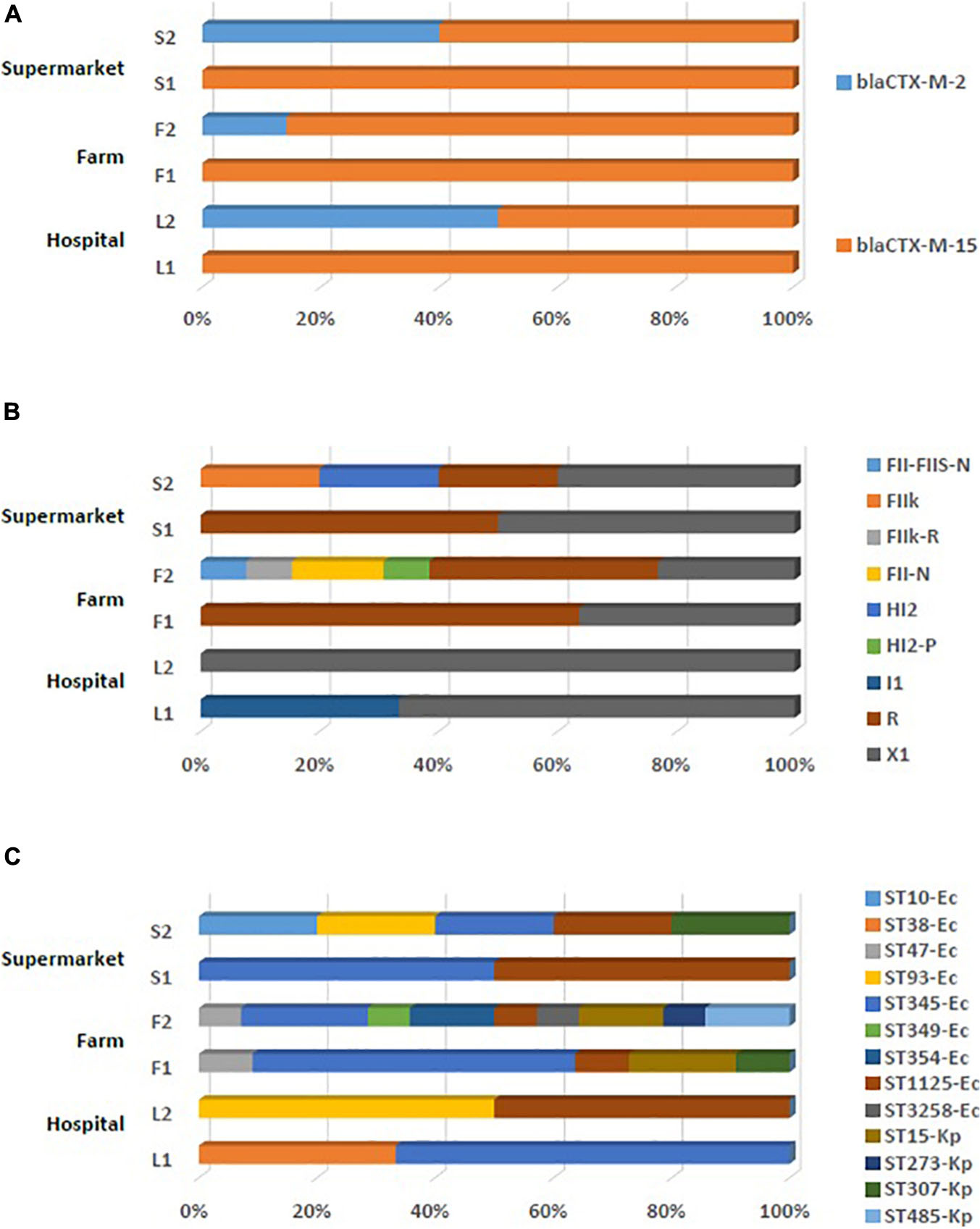
Figure 1. Distribution of ESBL gene types (A), plasmid replicon types (B), and isolate sequence types (C) among the ESBL-producing isolates recovered from each of the reservoirs tested. Refer to Table 1 for the more detailed molecular characteristics of each isolate recovered.
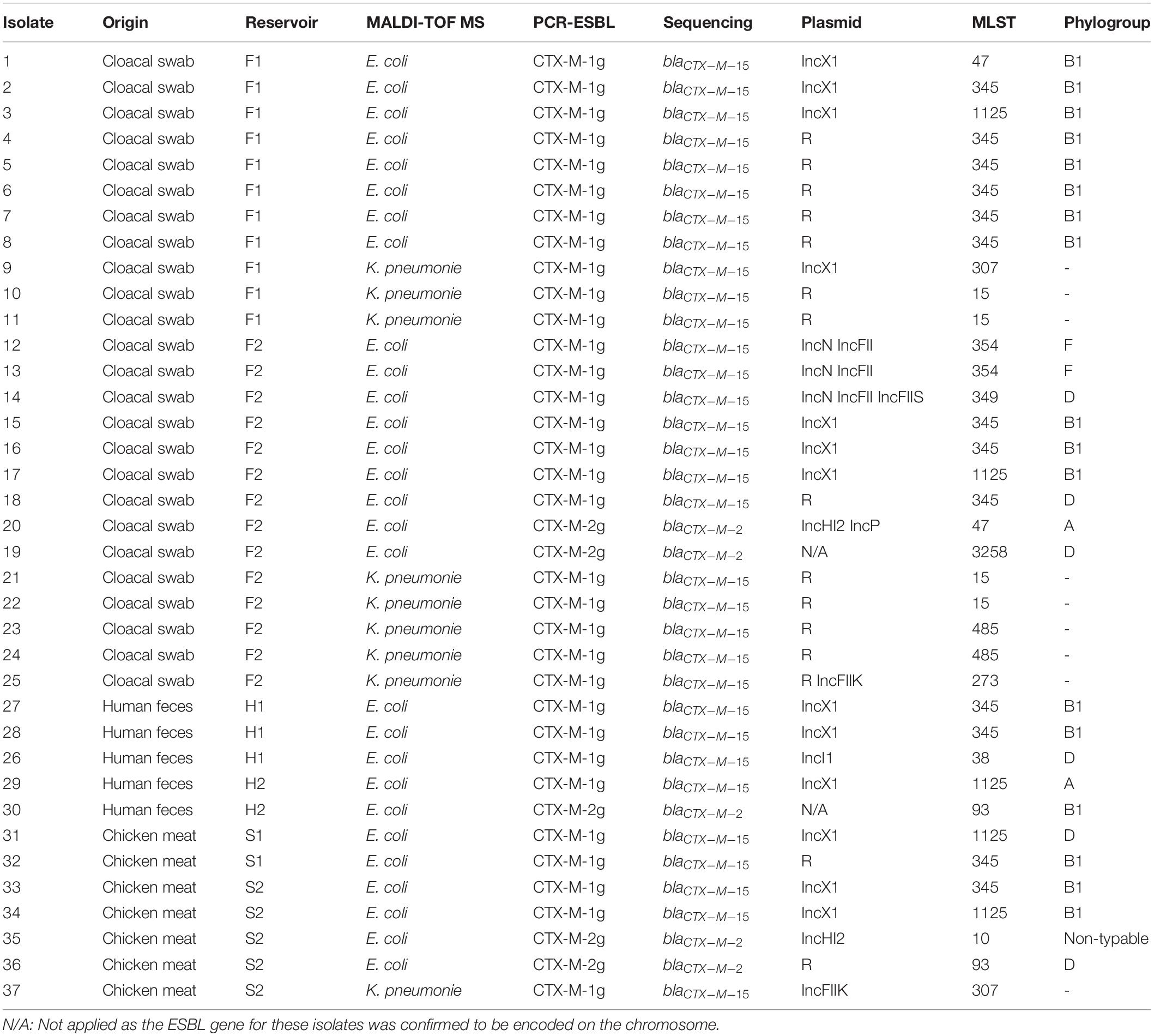
Table 1. Isolate origin, identification, ESBL gene, plasmid type, sequence type, and phylotype.
Transformation experiments revealed that the ESBL genes were plasmid-encoded in 35 of the 37 isolates with these plasmids belonging to diverse replicon-types (Figure 1B). In particular, plasmid replicon-types detected for the blaCTX–M–15 gene were R, X1, FIIK, I1, N-FII(-FIIs), and R-FIIk, whereas for the blaCTX–M–2 gene were R and HI2(-P). In the two E. coli isolates that were negative for transformation and the subsequent conjugation experiments, suggesting that the blaCTX–M–2 gene was not located on a plasmid (Table 1), we confirmed the chromosomal location of the blaCTX–M–2 gene by I-Ceu-I-PFGE followed by Southern blot hybridization (Supplementary Figure 1). Although the blaCTX–M–2 gene has been previously documented in different genetic backgrounds as well as on plasmids highlighting multiple integration events and transmission pathways, it has been mostly reported to be chromosomally encoded (Casella et al., 2018). In our study, only a limited number of blaCTX–M–2 genes were chromosomally encoded, suggesting that plasmids are important facilitators of their spread among the recovered isolates. Overall, our data highlight the contribution of plasmids on the epidemiology of ESBL-producing Enterobacterales of poultry and human origin in Sao Paulo, Brazil.
Clermont’s classification demonstrated that our E. coli isolates belonged to A, B1, D, and F groups with one isolate being not classifiable. The B1 was the most prevalent with 64.7% (11/28) of cloacal isolates belonging to this group, followed by 17.6% (3/17) of D, 11.7% (2/17) of F, and 5.8% (1/17) of A. Similarly, B1 was the most prevalent group among the isolates that we recovered from human clinical samples (60%; 3/5) and chicken meat (50%; 3/6). Isolates assigned to the B1 group have been previously associated with mostly intestinal pathogenic E. coli with high virulent potential in animal models (Morcatti et al., 2018).
Multilocus sequence typing classification demonstrated that the 28 E. coli isolates belonged to nine sequence types (ST10, ST38, ST47, ST93, ST345, ST349, ST354, ST1125, and ST3258) with the ST345 and ST1125 being the most prevalent ones (46.4 and 17.8%, respectively) (Figure 1C). K. pneumoniae isolates were assigned to four sequence types (ST15, ST273, ST307, and ST485) with ST15 being the most prevalent (44.4%) one (Figure 1C). Of note, we observed some known epidemic clones among the E. coli (i.e., ST10 and ST38) and K. pneumoniae (i.e., ST15 and ST307) isolates (Woodford et al., 2011; Mathers et al., 2015; Navon-Venezia et al., 2017). K. pneumoniae ST15 isolates harboring blaCTX–M–15, are emerging among patients with respiratory tract infections in China (An et al., 2012; Xu et al., 2019) and have been previously isolated from companion animals in Paris (Morcatti et al., 2018). As previously described, our data reveal clonal diversity among the recovered isolates and highlight Brazilian poultry meat as a reservoir of ExPEC lineages (i.e., ST10) (Casella et al., 2018).
As observed by Casella et al. (2018), we show genetic identity in the ESBL gene, plasmid type, isolate ST, and phylogroup suggesting clonal similarity in K. pneumoniae isolates between F1 and F2 (blaCTX–M–15, R, ST15) but also E. coli isolates among (1) F1, F2, H1, and S2 (blaCTX–M–15, IncX1, ST345/B1); (2) F1 and S1 (blaCTX–M–15, R, ST345/B1); and (3) F1, F2, and S2 (blaCTX–M–15, IncX1, ST1125/B1) (Table 1). In addition, we observed genetic identity in ESBL gene and plasmid type suggesting plasmid spread among (1) F1, F2, H1, H2, S1, and S2 (blaCTX–M–15, IncX1) and (2) F1, F2, and S1 (blaCTX–M–15, R) (Table 1). Overall, our data highlight a complex epidemiology of ESBL-producing Enterobacterales driven by both clones and plasmids, as well as the potential transmission of these clones and plasmids along the poultry meat chain to humans and/or vice versa.
In conclusion, we demonstrated that despite their overall genetic diversity, isolates from cloacal swabs, chicken meat, and human feces present genetic similarities highlighting that Brazilian chickens, as well as their by-products, may be an important source of transmission for ESBL-producing pathogens to humans. In addition, we indicated the occurrence and high frequency of E. coli and K. pneumoniae isolates harboring the blaCTX–M–15 gene from chicken and chicken meat products in South America for the first time.
Data Availability Statement
The original contributions presented in the study are included in the article/Supplementary Material, further inquiries can be directed to the corresponding author/s.
Author Contributions
MC conceptualized and designed the study. AL and LP aided with data analysis, and manuscript preparation and revision. AK aided in data acquisition. MBo in data acquisition and manuscript preparation. All authors read, contributed to, and approved the final manuscript.
Funding
Financial support was obtained from the European Union’s Horizon 2020 Research and Innovation Program under grant agreement no. 773830 OneHealth EJP: ARDIG and also grants 2021/03188-7, 2015/10140-0, and 2013/18280-0 from São Paulo Research Foundation (FAPESP).
Conflict of Interest
The authors declare that the research was conducted in the absence of any commercial or financial relationships that could be construed as a potential conflict of interest.
Acknowledgments
We thanks the Fundação de Amparo a Pesquisa do Estado de São Paulo (FAPESP) for the scholarship, the Wageningen University and Research, and the São Paulo State University.
Supplementary Material
The Supplementary Material for this article can be found online at: https://www.frontiersin.org/articles/10.3389/fmicb.2021.628738/full#supplementary-material
Supplementary Figure 1 | Chromosomal localization of the blaCTX–M–2 gene by I-Ceu-I-PFGE and Southern blot hybridization. Columns 1 (Isolate 19) and 2 (Isolate 30) depict the hybridization results using an intragenic blaCTX–M–2 gene probe, whereas columns 3 (S. enterica ser. Braenderup strain H9812—marker), 4 (Isolate 19), and 5 (Isolate 30) depict the hybridization results using intragenic 16S rDNA probes.
Footnotes
References
An, S., Chen, J., Wang, Z., Wang, X., Yan, X., Li, J., et al. (2012). Predominant characteristics of CTX-M-producing Klebsiella pneumoniae isolates from patients with lower respiratory tract infection in multiple medical centers in China. FEMS Microbiol. Lett. 332, 137–145. doi: 10.1111/j.1574-6968.2012.02586.x
Botelho, L. A. B., Kraychete, G. B., Silva, E. J. L. C., Regis, D. V. V., Picão, R. C., Moreira, B. M., et al. (2015). Widespread distribution of CTX-M and plasmid-mediated AmpC β-lactamases in Escherichia coli from Brazilian chicken meat. Mem. Inst. Oswaldo Cruz 110, 249–254. doi: 10.1590/0074-02760140389
Carattoli, A., Bertini, A., Villa, L., Falbo, V., Hopkins, K. L., and Threlfall, E. J. (2005). Identification of plasmids by PCR-based replicon typing. J. Microbiol. Methods 63, 219–228. doi: 10.1016/j.mimet.2005.03.018
Casella, T., Cerdeira, L. T., Fernandes, M. R., Souza, T. A., Haenni, M., Madec, J., et al. (2017). Draft genome sequence of a CTX-M-15-producing Escherichia coli ST345 from commercial chicken meat in Brazil. Integr. Med. Res. 9, 124–125. doi: 10.1016/j.jgar.2017.04.002
Casella, T., Haenni, M., Madela, N. K., Andrade, L. K., De Pradela, L. K., De Andrade, L. N., et al. (2018). Extended-spectrum cephalosporin-resistant Escherichia coli isolated from chickens and chicken meat in Brazil is associated with rare and complex resistance plasmids and pandemic ST lineages. J. Antimicrob. Chemother. 73, 3293–3297. doi: 10.1093/jac/dky335
Clermont, O., Christenson, J. K., Denamur, E., and Gordon, D. M. (2013). The Clermont Escherichia coli phylo-typing method revisited: improvement of specificity and detection of new phylo-groups. Environ. Microbiol. Rep. 5, 58–65. doi: 10.1111/1758-2229.12019
Cyoia, P. S., Koga, V. L., Nishio, E. K., Houle, S., Dozois, C. M., De Brito, K. C. T., et al. (2019). Distribution of ExPEC virulence factors, bla CTX-M, fosA3, and mcr-1 in Escherichia coli isolated from commercialized chicken carcasses. Front. Microbiol. 10:3254. doi: 10.3389/fmicb.2018.03254
Daehre, K., Projahn, M., Friese, A., Semmler, T., Guenther, S., and Roesler, U. H. (2018). ESBL-producing Klebsiella pneumoniae in the broiler production chain and the first description of ST3128. Front. Microbiol. 9:2302.
Dierikx, C., van der Goot, J., Fabri, T., van Essen-Zandbergen, A., Smith, H., and Mevius, D. (2013). Extended-spectrum-β-lactamase- and AmpC-β-lactamase-producing Escherichia coli in Dutch broilers and broiler farmers. J. Antimicrob. Chemother. 68, 60–67. doi: 10.1093/jac/dks349
Ferreira, J. C., Penha Filho, R. A. C., Andrade, L. N., Berchieri Junior, A., and Darini, A. L. C. (2016). Evaluation and characterization of plasmids carrying CTX-M genes in a non-clonal population of multidrug-resistant Enterobacteriaceae isolated from poultry in Brazil. Diagn. Microbiol. Infect. Dis. 85, 444–448. doi: 10.1016/j.diagmicrobio.2016.05.011
Ghosh, K. K., Lebert, L. A., Mcewen, S. A., Reid-smith, R. J., Deckert, A. E., Agunos, A., et al. (2019). B-Lactamase-producing Escherichia coli isolates from chickens raised in small flocks in Ontario, Canada. Microb. Drug Resist. 25, 1250–1256. doi: 10.1089/mdr.2018.0406
Liakopoulos, A., Geurts, Y., Dierikx, C. M., Brouwer, M. S. M., Kant, A., Wit, B., et al. (2016). Extended-spectrum cephalosporin- resistant Salmonella enterica serovar Heidelberg strains, the Netherlands. Emerg. Infect. Dis. 22, 1257–1261. doi: 10.3201/eid2207.151377
Mathers, A. J., Peirano, G., and Pitout, J. D. D. (2015). The role of epidemic resistance plasmids and international high- risk clones in the spread of multidrug-resistant Enterobacteriaceae. Clin. Microbiol. Rev. 28, 565–591. doi: 10.1128/CMR.00116-14
Morcatti, F., Amanda, C., Diniz, N., Augusto, C., Junior, O., Pereira, A., et al. (2018). Detection of virulence genes and the phylogenetic groups of Escherichia coli isolated from dogs in Brazil. Ciência Rural 48, 1–6.
Mughini-Gras, L., Dorado-García, A., van Duijkeren, E., van den Bunt, G., Dierikx, C. M., Bonten, M. J. M., et al. (2019). Attributable sources of community-acquired carriage of Escherichia coli containing β-lactam antibiotic resistance genes: a population-based modelling study. Lancet Planet. Health 3:e0357-69. doi: 10.1016/S2542-5196(19)30130-5
Navon-Venezia, S., Kondratyeva, K., and Carattoli, A. (2017). Klebsiella pneumoniae: a major worldwide source and shuttle for antibiotic resistance. FEMS Microbiol. Rev. 41, 252–275. doi: 10.1093/femsre/fux013
Projahn, M., von Tippelskirch, P., Semmler, T., Guenther, S., Alter, T., and Roesler, U. (2019). Contamination of chicken meat with extended-spectrum beta-lactamase producing- Klebsiella pneumoniae and Escherichia coli during scalding and defeathering of broiler carcasses. Food Microbiol. 77, 185–191. doi: 10.1016/j.fm.2018.09.010
USDA (2019). Country Production Total Exports Country Production Total Exports Country Production Total Exports Livestock and Poultry: World Markets and Trade China’s Share of World Meat Imports to Expand in 2019. 21. Available online at: https://apps.fas.usda.gov/psdonline/circulars/livestock_poultry.pdf (accessed October, 2020).
Vounba, J. P., Arsenault, R., and Bada-Alambédji, J. M. F. (2019). Prevalence of antimicrobial resistance and potential pathogenicity, and possible spread of third generation cephalosporin resistance, in Escherichia coli isolated from healthy chicken farms in the region of Dakar, Senegal. PLoS One 14:e0214304. doi: 10.1371/journal.pone.0214304
Woodford, N., Turton, J. F., and Livermore, D. M. (2011). Multiresistant Gram-negative bacteria: the role of high-risk clones in the dissemination of antibiotic resistance. FEMS Microbiol. Rev. 35, 736–755. doi: 10.1111/j.1574-6976.2011.00268.x
Wu, C., Wang, Y., Shi, X., Wang, S., Ren, H., Shen, Z., et al. (2018). Rapid rise of the ESBL and mcr-1 genes in Escherichia coli of chicken origin in China, 2008 - 2014. Emerg. Microb. Infect. 7:30. doi: 10.1038/s41426-018-0033-1
Xu, H., Huo, C., Sun, Y., Zhou, Y., Xiong, Y., Zhao, Z., et al. (2019). Emergence and molecular characterization of multidrug-resistant Klebsiella pneumoniae isolates harboring bla CTX-M-15 extended-spectrum β-lactamases causing ventilator-associated pneumonia in China. Infect. Drug Resist. 12, 33–43. doi: 10.2147/IDR.S189494
Keywords: antibiotic resistance, plasmids, extended spectrum beta lactamases (ESBLs), poultry, food chain
Citation: Cardozo MV, Liakopoulos A, Brouwer M, Kant A, Pizauro LJL, Borzi MM, Mevius D and de Ávila FA (2021) Occurrence and Molecular Characteristics of Extended-Spectrum Beta-Lactamase-Producing Enterobacterales Recovered From Chicken, Chicken Meat, and Human Infections in Sao Paulo State, Brazil. Front. Microbiol. 12:628738. doi: 10.3389/fmicb.2021.628738
Received: 12 November 2020; Accepted: 29 March 2021;
Published: 22 June 2021.
Edited by:
Aloysius Wong, Kean University-Wenzhou, ChinaReviewed by:
Ruichao Li, College of Veterinary Medicine, Yangzhou University, ChinaBojana Bogovic Matijasic, University of Ljubljana, Slovenia
Copyright © 2021 Cardozo, Liakopoulos, Brouwer, Kant, Pizauro, Borzi, Mevius and de Ávila. This is an open-access article distributed under the terms of the Creative Commons Attribution License (CC BY). The use, distribution or reproduction in other forums is permitted, provided the original author(s) and the copyright owner(s) are credited and that the original publication in this journal is cited, in accordance with accepted academic practice. No use, distribution or reproduction is permitted which does not comply with these terms.
*Correspondence: Marita Vedovelli Cardozo, bWFyaXRhdmVkb3ZlbGxpQGdtYWlsLmNvbQ==
†Present address: Apostolos Liakopoulos, Department of Microbial Biotechnology and Health, Institute of Biology Leiden, University of Leiden, Leiden, Netherlands