

- 1 Division Psychosomatic Medicine and Psychotherapy, Department of Medicine, Charité – Universitätsmedizin Berlin, Berlin, Germany
- 2 Digestive Diseases Research Center and Center for Neurobiology of Stress, Digestive Diseases Division, Department of Medicine, University of California Los Angeles, and Veterans Affairs Greater Los Angeles Healthcare System, Los Angeles, CA, USA
The gastric X/A-like endocrine cell receives growing attention due to its peptide products with ghrelin being the best characterized. This peptide hormone was identified a decade ago as a stimulator of food intake and to date remains the only known peripherally produced and centrally acting orexigenic hormone. In addition, subsequent studies identified numerous other functions of this peptide including the stimulation of gastrointestinal motility, the maintenance of energy homeostasis and an impact on reproduction. Moreover, ghrelin is also involved in the response to stress and assumed to play a role in coping functions and exert a modulatory action on immune pathways. Our knowledge on the regulation of ghrelin has markedly advanced during the past years by the identification of the ghrelin acylating enzyme, ghrelin-O-acyltransferase, and by the description of changes in expression, activation, and release under different metabolic as well as physically and psychically challenging conditions. However, our insight on regulatory processes of ghrelin at the cellular and subcellular levels is still very limited and warrants further investigation.
Introduction
Several enteroendocrine cells have been identified in the stomach and shown to influence physiological functions with a predominant effect on gastric acid secretion, namely gastrin-producing cells (G cells), somatostatin-releasing cells (D cells, 5–10% of gastric oxyntic endocrine cells in rats, >20% in humans), enterochromaffin-like cells releasing histamine (ECL, 65% in rats, 30% in humans), and much less abundantly the serotonin-containing enterochromaffin (EC) cells (Rindi et al., 2004). In addition, a distinct cell type has been identified in the stomach that is distributed throughout the mucosa (Figure 1) that was termed X/A-like cell in rats and P/D1 cell in humans (Date et al., 2000; Mizutani et al., 2009). These cells were named X cells because of their unknown functions and in addition termed A-like cells due to their similarity with pancreatic A-cells (Rindi et al., 2004). They account for 20–30% of the oxyntic endocrine cells and therefore represent the second most abundant gastric endocrine cell type (Rindi et al., 2004). Distribution studies in the rat gastrointestinal tract indicate that the cell density (cells/mm2) of X/A-like cells is 10- to 100-times greater in the gastric body than in the lower intestinal tract (Sakata et al., 2002). At the morphologic level, the X/A-like cells exist as closed-type cells without contact to the lumen and open-type cells with luminal contact. The open-type cells are more prominent in the ileum, cecum, and colon, where they account for more than 60% of ghrelin cells (Sakata et al., 2002). The identification of ghrelin in rat X/A-like and human P/D1 cells (Rindi et al., 2002) as the only peripherally produced and centrally acting hormone known to increase food intake (Date et al., 2000) dramatically increased the interest in this endocrine cell type which is now commonly named ghrelin cell (Rindi et al., 2002).
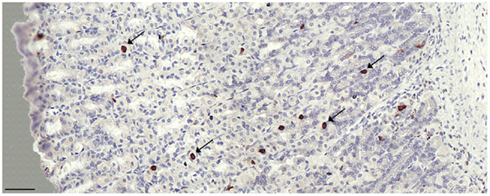
Figure 1. Immunohistochemical photomicrograph of X/A-like cells in the rat gastric oxyntic mucosa of ad libitum fed male rats. Ghrelin-positive X/A-like cells (arrows) are evenly distributed throughout the entire length of the gastric oxyntic glands. The scale bar represents 50 μm.
Peptide Products of X/A-Like Cells
Growing interest in ghrelin cells led to the discovery of additional peptide products derived from this cell type. These peptides are either derived from the same ghrelin gene including desacyl ghrelin and n-decanoyl ghrelin (Date et al., 2000; Hiejima et al., 2009) as well as obestatin (Zhang et al., 2005) or from a different gene, namely nucleobindin 2 (NUCB2)/nesfatin-1 (Stengel et al., 2009a).
Ghrelin was discovered in 1999 by Kojima and colleagues (reviewed in Kojima and Kangawa, 2011) and identified to be the endogenous ligand of the growth hormone (GH) secretagogue receptor 1a isoform (GHS-R1a; Kojima et al., 1999), which was later renamed ghrelin receptor (GRLN-R; Davenport et al., 2005). Ghrelin is a 28-amino acid peptide which has a unique n-octanoic acid residue on the serine-3 thereby increasing its lipophilicity (Kojima et al., 1999) and shown to be essential for binding to the GRLN-R (Kojima et al., 1999; Kojima and Kangawa, 2005). Structure-activity studies established that the first five N-terminal amino acids that include the hydrophobic residue are able to activate the receptor pointing toward the active core of ghrelin (Bednarek et al., 2000). Studies in mice ingesting different concentrations of medium-chain fatty acids (MCFA) or medium-chain triacylglycerols (MCT) established their direct use as a source for ghrelin acyl modification (Nishi et al., 2005). Without this post-translational modification desacyl ghrelin is obtained which does not bind to the GRLN-R. The gastric endocrine X/A-like cells are the major source of circulating desacyl and acyl ghrelin and the ratio of acyl and total (both acyl and desacyl) ghrelin in the circulation has been initially reported to be between 1:15 (Hosoda et al., 2000) and 1:55 (Raff, 2003). Recent improvements in blood processing resulted in a markedly higher acyl/total ghrelin ratio of 1:5 compared to 1:19 obtained after standard blood processing (EDTA blood on ice; Stengel et al., 2009b) indicating that although desacyl ghrelin represents the major form of circulating ghrelin, previous values were skewed by suboptimal blood processing conditions to preserve acyl ghrelin that is easily cleaved by a wide range of cellular protease and during protein extraction. Recently, another acylated form of ghrelin has been identified in humans and rodents, n-decanoyl ghrelin, which is also derived from X/A-like cells and circulates in considerable amounts in the mouse blood (Hiejima et al., 2009).
The enzyme catalyzing the acylation of ghrelin was unknown for a decade and recently identified in mice and humans as a member of the superfamily of membrane-bound O-acyltransferases (MBOATs), MBOAT4 that was renamed ghrelin-O-acyltransferase (GOAT; Gutierrez et al., 2008; Yang et al., 2008). GOAT is thought to octanoylate proghrelin before being transported to the Golgi apparatus where it is cleaved by prohormone convertase 1/3 (PC 1/3; Yang et al., 2008). Recently, GOAT protein was also identified in rodent circulation (Stengel et al., 2010d) leading to the possibility of an extracellular acylation of ghrelin. Both MCFAs C8 and C10 are substrates for GOAT-catalyzed acylation resulting in octanoyl and decanoyl ghrelin (Gutierrez et al., 2008). A current study reported the development of an antagonist of GOAT, a peptide-based bisubstrate analog GO-CoA-Tat, shown to be a useful tool in vitro and in vivo to assess the relevance of GOAT in body weight and glucose regulation (Barnett et al., 2010).
Alternative splicing and post-translational modification at a computer-based predicted cleavage site of proghrelin was reported to result in another biologically active peptide which was termed obestatin and assumed to have opposite effects to those of ghrelin (Zhang et al., 2005; Soares and Leite-Moreira, 2008). Obestatin immunoreactivity is also found in human gastric endocrine P/D1 cells and localized in secretory granules (Gronberg et al., 2008; Tsolakis et al., 2009). Similarly, in rats obestatin fully colocalized with preproghrelin in intracellular dense core granules of gastric endocrine cells, whereas only partial (60%) colocalization of ghrelin and obestatin have been described giving rise to differential post-translational expression (Zhao et al., 2008).
NUCB2/nesfatin-1 was initially identified in the rat hypothalamus (Oh-I et al., 2006) but recently shown to be also expressed in the gastric oxyntic mucosa, prominently in gastric oxyntic endocrine cells (Stengel et al., 2009a). Colocalization of ghrelin and nesfatin-1 in rat gastric X/A-like cells was identified by immunofluorescence within different pools of vesicles indicative of a distinct subcellular distribution (Stengel et al., 2009a). Coexpression of these two peptides in X/A-like cells is also supported by the presence of PC 1/3 in this cell type (Yang et al., 2008) which is involved in the processing of both, ghrelin and nesfatin-1 (Yang et al., 2008; Shimizu et al., 2009).
Despite the fact that the functions of obestatin remain highly controversial (Goebel et al., 2008) and those of desacyl ghrelin (Chen et al., 2009) and nesfatin-1 (Garcia-Galiano et al., 2010) are just starting to be understood, all peptide products derived from this cell seem to be involved in the regulation of food intake with a stimulatory action of ghrelin and an inhibitory effect of desacyl ghrelin and nesfatin-1 (Stengel et al., 2010c).
Regulation of Ghrelin Release and Receptor Interactions
Ghrelin-positive X/A-like cells represent by far the major source of circulating ghrelin (Ariyasu et al., 2001) as demonstrated by the sharp decrease of circulating ghrelin following gastrectomy (Jeon et al., 2004). In addition, lower amounts of ghrelin are produced in the intestine (Date et al., 2000), pancreas (Date et al., 2002b) and other peripheral organs including the kidney, liver, heart, testis, adipose tissue, and skin (Barreiro et al., 2002; Gnanapavan et al., 2002). Circulating ghrelin levels vary with metabolic status rising before and declining after a meal in various experimental animals and humans (Cummings et al., 2001; Tschop et al., 2001a). In addition, fasting increases gastric ghrelin mRNA expression in mice (Xu et al., 2009) and rats (Toshinai et al., 2001; Kim et al., 2003), whereas gastric ghrelin peptide content is decreased, indicative of increased synthesis and release of the peptide into the circulation by feeding (Toshinai et al., 2001; Kim et al., 2003). Likewise, gastric GOAT expression as well as circulating levels of GOAT protein are increased under conditions of fasting (Gonzalez et al., 2008; Stengel et al., 2010d). Total ghrelin levels are also influenced by fat mass and body weight with an increase in anorexic and cachectic patients and a decrease under conditions of overweight and obesity (Tschop et al., 2000, 2001b; Cummings et al., 2002). Interestingly, acyl and desacyl ghrelin can be regulated differently as shown by a recent study reporting the release of desacyl ghrelin when the gastric pH is low whereas acyl ghrelin is not affected (Mizutani et al., 2009). Conversely, a rapid decline in fasting circulating levels of acyl ghrelin with less prominent or no changes in desacyl ghrelin was induced in response to various stressors either physical (strenuous physical exercise in humans; Shiiya et al., 2011), immunological (intraperitoneal low dose of lipopolysaccharide (Stengel et al., 2010b) or visceral (abdominal surgery; Stengel et al., 2011b) in rats. This differential regulation of ghrelin and desacyl ghrelin under various physiological conditions is not well understood yet and warrants further characterization.
The regulation of ghrelin secretion by peripheral administration of a large number of gut peptides or transmitters was tested in vivo in rats and more recently in vitro using ghrelin producing mouse ghrelinoma MGN 3-1 cells as well as in humans (Mundinger et al., 2006; Hosoda and Kangawa, 2008; Zhao et al., 2010; Iwakura et al., 2011). It is well established that somatostatin inhibits ghrelin release in experimental and clinical studies (Shimada et al., 2003; de la Cour et al., 2007; Iwakura et al., 2011). Convergent anatomic and functional evidence indicates a direct action of somatostatin on rat X/A-like and human P/D1 cells mediated through interaction with the somatostatin receptor subtype 2 (sst2). This is supported by the expression of sst2 on ghrelin-positive cells in the rat (Figures 2A,B; Stengel et al., 2011b) and human (Fischer et al., 2008) stomach along with the potent inhibitory effect of intravenous injection of a selective peptide sst2 agonist (Figures 2C,D; Stengel et al., 2011b). Studies with other gut peptides have yielded inconsistent results that may be related to species differences or experimental conditions. Inhibitory effects were reported for glucagon-like peptide (GLP-1) in rat and human studies (Lippl et al., 2004; Hagemann et al., 2007; Perez-Tilve et al., 2007) but not in other studies in rats or in vitro testing (Mundinger et al., 2006; Hosoda and Kangawa, 2008; Zhao et al., 2010), for CCK-8 in humans (Brennan et al., 2007) but not in rats or in vitro (de la Cour et al., 2007; Iwakura et al., 2011), and for insulin in humans and in vitro (Saad et al., 2002; Iwakura et al., 2011) but not in rats although a trend was observed (de la Cour et al., 2007). The decrease following administration of bombesin/gastrin releasing peptide in rats (de la Cour et al., 2007) has to be substantiated in further investigations. Other peptides, namely calcitonin, gastrin, gastric inhibitory polypeptide, neurotensin, pancreatic polypeptide, and vasoactive intestinal peptide (VIP) had no effect on ghrelin release both in vivo in rats or in vitro (de la Cour et al., 2007; Iwakura et al., 2011) while the increase in ghrelin release induced by oxytocin and vasopressin reported in vitro (Iwakura et al., 2011) and secretin (de la Cour et al., 2007) as well as endothelin 1 and 3 (de la Cour et al., 2007; Thanthan et al., 2009) in vivo still need replication. Among the neurotransmitters increasing ghrelin levels are adrenaline, and noradrenaline in rats and in vitro (Mundinger et al., 2006; de la Cour et al., 2007; Iwakura et al., 2011) supporting the contention that the sympathetic nervous system is an important stimulant of ghrelin secretion although other evidence indicates that the neural, unlike the neurohumoral component of the sympathetic nervous system stimulates ghrelin secretion (Mundinger et al., 2006). Less consistent results have been observed for dopamine resulting in ghrelin increase at high concentrations (10−4 to 10−5) in vitro (Iwakura et al., 2011) but not in vivo (de la Cour et al., 2007) while no effect of γ-aminobutyric acid (GABA), serotonin, and histamine have been reported both in vitro and in vivo (de la Cour et al., 2007; Iwakura et al., 2011). Also activation of vagal cholinergic components of the autonomic nervous system results in the stimulation of ghrelin release in rats (Ao et al., 2006; Stengel et al., 2010a) and in humans in response to sham feeding (Simonian et al., 2005). However, in vitro carbachol as well as superfused onto the gastric submucosa had no effect on ghrelin release (de la Cour et al., 2007; Iwakura et al., 2011). Other studies reported a stimulatory effect of cannabinoids (Zbucki et al., 2008) and an inhibitory action of interleukin-1 (Wang et al., 2006) to be further characterized. Prostacyclin induces a reduction of circulating total ghrelin levels that may reflect a direct effect on the prostacyclin receptor (PGI2) expressed on ghrelin containing cells (Madison et al., 2008). However, in general our knowledge on the regulation of acyl and desacyl ghrelin release at the cellular level is very limited due to the lack of cell isolation techniques of native ghrelin cells. Coexpression of ghrelin and fluorescent dye (Kageyama et al., 2008) or immortalized ghrelin cell lines (Iwakura et al., 2011) will help to advance our understanding on the processing and regulation of ghrelin.
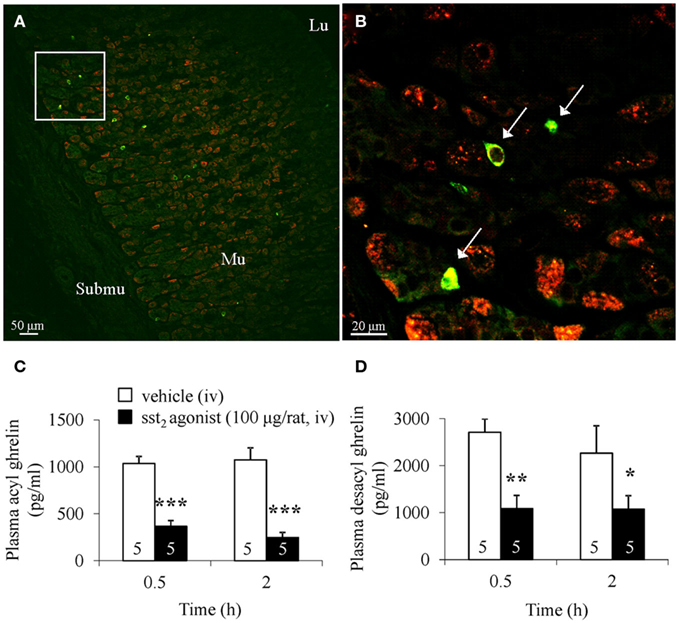
Figure 2. Somatostatin could act directly on gastric X/A-like cells by interaction with the somatostatin receptor subtype 2 (sst2) localized on these cells. (A,B) Ghrelin-positive X/A-like cells in the gastric oxyntic mucosa express the sst2a receptor in naive rats. Paraffin-embedded gastric corpus sections of ad libitum fed rats were processed for immunofluorescent double labeling. Confocal microscopy shows the localization of sst2a-immunopositive cells throughout the gastric oxyntic mucosa [(A), red], whereas ghrelin-positive cells are localized mostly in the middle and the lower part of the glands [(A), green]. The higher magnification (B) shows that ghrelin-positive cells express the sst2a receptor (arrow). Lu, lumen; Mu, mucosa; Submu, submucosa. (C,D) The sst2 agonist decreases circulating acyl and desacyl ghrelin levels in overnight-fasted rats implanted with an intrajugular catheter. The sst2 agonist (100 μg/rat in 200 μl saline containing 0.1% BSA) or vehicle (saline containing 0.1% BSA) was injected intravenously (iv) twice at 0 and 0.5 h. Blood was withdrawn before the second injection at 0.5 and at 2 h and processed for acyl (A) and total ghrelin measurement. Desacyl ghrelin (B) was calculated as the difference of total minus acyl ghrelin for each individual sample. Each bar represents the means ± SEM of number of rats indicated at the bottom of the column. *P < 0.05, **P < 0.01, and ***P < 0.001 versus vehicle. Reproduced with permission from reference (Stengel et al., 2011b).
Ghrelin binds to the seven transmembrane domains GRLN-R expressed in the periphery and brain in experimental animals and humans (Howard et al., 1996; Guan et al., 1997; Nakazato et al., 2001; Gnanapavan et al., 2002; Zigman et al., 2006). In peripheral organs, the GRLN-R has been described in the pituitary, on vagal afferents, pancreas, spleen, myocardium, adipose tissue, thyroid, and adrenal gland (Hattori et al., 2001; Gnanapavan et al., 2002; Schellekens et al., 2010). Interestingly, in the brain the GRLN-R is able to form heterodimers with other receptors such as the cannabinoid 1 (CB1) receptor (Schellekens et al., 2010) and the dopamine receptor subtype 1 (D1; Jiang et al., 2006) possibly leading to amplified signaling. On the other hand, the GRLN-R rapidly desensitizes after stimulation through endocytosis via clathrin-coated pits and shows slow non-dissociation of the ligand/receptor (Camina et al., 2004), mechanisms likely to prevent over-stimulation of the receptor.
Biological Actions of Ghrelin
The peptide hormone ghrelin exerts pleiotropic biological actions, prominently on the regulation of food intake, gastrointestinal motility, and energy homeostasis. In addition, there is a growing body of evidence that ghrelin is also involved in stress pathways as recently reviewed (Stengel et al., 2011c). Lastly, ghrelin seems to be involved in the modulation of reproductive, cardiovascular, and immune functions. Although additional functions and pharmacological effects have been described for ghrelin (Ueno et al., 2010; Steiger et al., 2011; Ukkola, 2011) this review will focus on those listed above.
Orexigenic Effect
Ghrelin is the only known peripherally produced and centrally acting hormone that is well established to stimulate food intake following peripheral or brain injection in various animal models (Wren et al., 2000; Tang-Christensen et al., 2004) as well as after peripheral administration in lean and obese humans (Druce et al., 2005). Similar to acyl (octanoyl) ghrelin, n-decanoyl ghrelin stimulates food intake in mice (Hiejima et al., 2009). These effects are mediated by interaction with the GRLN-R as conclusively shown by the suppression of ghrelin-induced food intake by GRLN-R antagonists (e.g., JMV 3002, 2959, and 2810; Salome et al., 2009). Further supporting these results GRLN-R knockout mice failed to increase food intake following exogenous administration of ghrelin (Sun et al., 2004; Zigman et al., 2005). Interestingly, mice over-expressing both ghrelin and desacyl ghrelin do not display stimulated but rather decreased food intake (Iwakura et al., 2009) which is not related to the desensitization of receptors. This is suggested to be related to the gastric hypertrophy under these conditions, although the balancing role of desacyl ghrelin counteracting the orexigenic effect of ghrelin could not be ruled out as recently reviewed (Stengel et al., 2010c).
Ghrelin exerts its orexigenic effects via direct actions on food regulatory brain nuclei after passage through the blood–brain barrier (Banks et al., 2002; Pan et al., 2006). Moreover, the GRLN-R is expressed on vagal afferents (Date et al., 2002a; Sakata et al., 2003) and therefore a mediation of the food intake stimulatory signals via the vagus nerve has been proposed. In line with this assumption, the ghrelin-induced food intake following intravenous injection in rats (4.9 μg/rat) is abolished after subdiaphragmatic or gastric vagotomy (Date et al., 2002a). However, in contrast with this finding another study reported that after selective subdiaphragmatic vagal deafferentation intraperitoneally injected ghrelin (40 μg/kg, approximately 12 μg/rat) still stimulates food intake in rats (Arnold et al., 2006). Whether this merely represents a dose-related effect with recruitment of both vagal and direct central mechanisms with increasing doses of peptides warrants further investigation. Collectively, existing data support the contention that ghrelin is likely to increase food intake via both, direct brain action and vagal pathways. Lastly, ghrelin is not only involved in the homeostatic control of food intake but also in the rewarding aspect of food as recently reviewed (Skibicka and Dickson, 2011). This was established by showing that the peripheral injection of ghrelin in mice increases the consumption of saccharin irrespective of the caloric content, an effect that is no longer observed in mice lacking the GRLN-R (Disse et al., 2010).
Interaction with Appetite-Regulating Peptides in the Hypothalamus and Molecular Mechanisms
Ghrelin is also produced centrally in the arcuate nucleus of the hypothalamus (Lu et al., 2002) and in neurons adjacent to the third ventricle (Cowley et al., 2003). The arcuate nucleus plays a major role in the regulation of food intake (Schwartz et al., 2000) and neuroanatomical studies showed that ghrelin containing arcuate neurons are connected with agouti-related peptide (AgRP) and neuropeptide Y (NPY) positive neurons (Cowley et al., 2003; Guan et al., 2003), two major central orexigenic peptides (Abizaid and Horvath, 2008). Peripheral administration of ghrelin selectively activates NPY immunoreactive arcuate neurons in mice (Wang et al., 2002). Likewise, acute and chronic intracerebroventricular (icv) injection of ghrelin activates NPY/AgRP positive neurons and upregulates the expression of NPY and AgRP mRNA (Kamegai et al., 2001). Pharmacological studies showed that ghrelin’s orexigenic action is abolished by an anti-NPY or anti-AgRP antibody (Nakazato et al., 2001). Gene deletion experiments further highlight these findings. Mice lacking NPY and AgRP do not respond to peripherally injected ghrelin whereas mice with a single peptide gene knockout still showed an increased food intake giving rise to a compensation of NPY by AgRP and vice versa (Chen et al., 2004). Taken together, these data along with the expression of GRLN-R in over 90% of all NPY neurons in the ARC while the GRLN-R is only present in less than 8% of pro-opiomelanocortin (POMC) neurons (Willesen et al., 1999) show that the orexigenic effect of ghrelin is mediated by central AgRP and NPY signaling. However, while the orexigenic NPY/AgRP neuronal activity is stimulated, the activity of POMC containing neurons is suppressed via inhibitory GABA-ergic inputs. This lowering of activity of POMC promotes ghrelin’s orexigenic action by dampening melanocyte stimulating hormone (the peptide product of POMC) and cocaine- and amphetamine-regulated transcript (CART) anorexigenic pathways (Cowley et al., 2003).
The downstream signaling mechanisms in arcuate neurons activated by ghrelin have been recently unraveled and reviewed (Andrews, 2011). They involve AMP-activated protein kinase (AMPK) – carnitine palmitoyltransferase 1 (CPT1) – uncoupling protein 2 (UCP2) pathways that promote mitochondrial efficiency and shield reactive oxygen species in order to maintain an appropriate firing response of NPY. Ghrelin increased mitochondrial respiration in NPY arcuate neurons, an effect that was dependent on UCP2 as shown by the complete absence of these changes in mice lacking the UCP2 gene (Andrews et al., 2008). Ghrelin also increased the number of mitochondria in NPY neurons in wild type but not Ucp2 knockout mice (Andrews et al., 2008). In mice lacking Ucp2, ghrelin increases reactive oxygen species suggesting a buffering system by UCP2 (Andrews et al., 2008). The activation of these NPY neurons as indicated by the increased action potential firing induced by ghrelin was also attenuated in Ucp2 knockout mice (Andrews et al., 2008). Lastly, the ghrelin-induced food intake was blunted in Ucp2 knockout mice (Andrews et al., 2008). It has been shown that fasting induces an increased phosphorylation of AMPK in the hypothalamus resulting in decreased hypothalamic levels of malonyl-CoA and increased CPT1 activity (Lopez et al., 2008). This effect on AMPK signaling is mimicked by injected ghrelin (Lopez et al., 2008) pointing toward a physiological mechanism of ghrelin to promote feeding. Further corroborating this hypothesis, central blockade of AMPK signaling by dominant negative forms of AMPKα1 and α2 reduced the orexigenic effect of ghrelin (Lopez et al., 2008). Moreover, fasting as well as injection of ghrelin decreases the hypothalamic expression of fatty acid synthase (FAS; Lopez et al., 2008). This fasting induced decrease of FAS mRNA expression is absent in GRLN-R knockout mice (Lopez et al., 2008) indicating a physiological effect of ghrelin. Lastly, inhibition of AMPK signaling blocked the ghrelin-induced reduction of FAS mRNA expression (Lopez et al., 2008) providing insight into the downstream signaling of ghrelin to mediate the central orexigenic action. The activation of AMPK signaling by ghrelin was still visible in Ucp2 knockout mice (Andrews et al., 2008) pointing toward an effect upstream of UCP2. On the other hand, inhibition of AMPK signaling reduced food intake in wild type but not Ucp2 knockout mice indicating that UCP2 is relevant downstream of AMPK (Andrews et al., 2008). Chronic treatment with ghrelin results in greater body weight gain in mice lacking the UCP2 gene compared to wild type littermates due to decreased fat oxidation (Andrews et al., 2010) highlighting the importance of UCP2 for the restriction of fat storage.
Effects on Energy Homeostasis
In addition to its effects on short term modulation of food intake, ghrelin also affects long term body weight homeostasis. Chronic infusion of ghrelin enhances body weight gain in rodents which is not only due to increased appetite but also to fat storage (Tschop et al., 2000; Strassburg et al., 2008; Davies et al., 2009) especially in retroperitoneal and inguinal fat tissue (Davies et al., 2009; Sangiao-Alvarellos et al., 2009). On the other hand, mice that over-express desacyl ghrelin have a decreased body weight compared to their wild type littermates (Ariyasu et al., 2005) associated with reduced amounts of perirenal and epididymal fat tissue (Zhang et al., 2008). Since the food intake was not changed in those mice (Ariyasu et al., 2005), these alterations could reflect a direct effect of desacyl ghrelin on fat storage. However, in humans both acylated and desacyl ghrelin have been reported to stimulate lipid accumulation in visceral adipocytes (Rodriguez et al., 2009). Besides the effect on increased storage, ghrelin also increases fat depots by reducing lipid mobilization as indicated by an increased respiratory exchange ratio (Davies et al., 2009). Conversely genetically modified mice lacking both ghrelin and the GRLN-R display increased energy expenditure resulting in a decrease of body weight (Pfluger et al., 2008). Interestingly, mice lacking either ghrelin (Sun et al., 2003; Pfluger et al., 2008) or the GRLN-R (Pfluger et al., 2008) genes do not show these alterations. However, GRLN-R knockout mice fed a high fat diet (a.k.a. western type diet) gain less body weight than their wild type littermates (Zigman et al., 2005). Additional support for a role of ghrelin in energy homeostasis comes from ghrelin knockout mice fed a high fat diet that show a reduced respiratory quotient indicating increased fat utilization (Wortley et al., 2004). When ghrelin was infused chronically icv glucose utilization was increased in brown adipose tissue (Theander-Carrillo et al., 2006). Ghrelin increased the mRNA expression of FAS, acetyl-CoA carboxylase alpha, stearoyl-CoA desaturase-1, and lipoprotein lipase (Theander-Carrillo et al., 2006), all enzymes involved in promotion of fat storage. On the other hand, the mRNA expression of the major enzyme of fat oxidation, carnitine palmitoyltransferase-1alpha was reduced. Supporting a physiological relevance of these findings, ghrelin deficient mice showed an opposite expression pattern of these enzymes (Theander-Carrillo et al., 2006). Interestingly, mice lacking the β1-, β2-, and β3-adrenoceptor treated icv with ghrelin did not gain body weight and did not show an up-regulated mRNA expression of, e.g., FAS as observed in wild type mice (Theander-Carrillo et al., 2006) indicating a crucial involvement of the sympathetic nervous system in the homeostatic effects of ghrelin. In summary, ghrelin is involved in the maintenance of energy homeostasis and promotes fat storage.
The role of GOAT in energy homeostasis was investigated using mice lacking Mboat4 or over-expressing human ghrelin and GOAT (Kirchner et al., 2009). Mice lacking Mboat4 did not show changes in body weight when fed a standard rodent diet but developed a reduced body weight when fed a high fat diet compared to their wild type littermates (Kirchner et al., 2009). Furthermore, adding specifically medium-chain triglycerides to the diet results in lowering of fat mass and body weight of Mboat4 knockout mice (Kirchner et al., 2009) leading to the hypothesis that GOAT is acting as a lipid sensor.
Effects on Gastrointestinal Motility
Several food intake regulatory peptides also influence gastrointestinal motility and therefore alteration of this function was early on suspected for ghrelin. In addition, the variation of circulating ghrelin levels is closely associated with the occurrence of gastric migrating motor complexes (Ariga et al., 2007). When injected intravenously, ghrelin increases antral motility in rats (Masuda et al., 2000; Fujino et al., 2003), dogs (Yin and Chen, 2006), and humans (Tack et al., 2006). Conversely, GRLN antagonists abolish gastric phase III-like contractions in mice (Zheng et al., 2009a) and rats (Ariga et al., 2007; Taniguchi et al., 2008a). In addition, ghrelin stimulates the antropyloric coordination when injected intraperitoneally (Ariga et al., 2008). The increased gastric propagative contractile activity could underlie the ghrelin-induced acceleration of gastric emptying of liquid and solid food in rats (Trudel et al., 2002; Fukuda et al., 2004; Depoortere et al., 2005; Wang et al., 2006; Tumer et al., 2008), mice (Asakawa et al., 2001b; Dornonville de la Cour et al., 2004; Kitazawa et al., 2005), and humans (Levin et al., 2006). Therefore, ghrelin is also proposed to act as a gastroprokinetic under conditions of reduced gastric motility such as diabetic gastroparesis or after abdominal surgery known to induce postoperative gastric ileus (Camilleri et al., 2009; Sallam and Chen, 2010; Stengel and Taché, 2011). Interestingly, only pharmacologically high doses of ghrelin are able to provoke a gastroprokinetic effect in humans with neurogenic, diabetic, or idiopathic gastroparesis (Murray et al., 2005; Tack et al., 2005; Binn et al., 2006), whereas lower doses that have an effect on GH release do not modulate gastric emptying (Cremonini et al., 2006).
In addition to these effects in the stomach, intravenous infusion of ghrelin also increases small intestinal interdigestive contractions (Edholm et al., 2004; Taniguchi et al., 2008b) resulting in an acceleration of small intestinal transit in rats (Trudel et al., 2002; Fukuda et al., 2004). Likewise, also colonic transit is increased by intravenous (Shimizu et al., 2006), intrathecal (Shimizu et al., 2006) as well as third intracerebroventricular injection (Tebbe et al., 2005) of ghrelin or ghrelin agonists.
Effects on Reproductive Functions
Ghrelin has only recently emerged as a possible signal to participate in the regulation of reproductive physiology by both hormonal actions at different levels of the reproductive system as well as by direct gonadal actions in males and females as recently reviewed in detail (Muccioli et al., 2011). Supporting a local action, ghrelin is expressed in the rat testis (Barreiro et al., 2002) and similar to rodent models, ghrelin RNA expression was also detected in human testis (Gnanapavan et al., 2002; Gaytan et al., 2004) with a cellular distribution pattern in Leydig cells (Gaytan et al., 2004) and Sertoli cells (Barreiro et al., 2003). Along with the ligand, the GRLN-R has been localized in rat and human testis on different cell types, namely the Leydig cells, Sertoli cells, and probably germ cells (Barreiro et al., 2003; Gaytan et al., 2004). Likewise, in several female animal species and humans, the expression of ghrelin has been documented in ovary, hilus interstitial cells and young and mature corpora lutea and that of GRLN-R protein in oocytes, somatic follicular cells, hilus interstitial cells, and luteal cells (Muccioli et al., 2011).
In keeping with high demand in energy of the reproductive axis, ghrelin acting at central and peripheral levels is largely inhibitory. When ghrelin is injected centrally in rats, the peptide suppresses luteinizing hormone (LH) secretion in ovariectomized female rats (Furuta et al., 2001) as well as cyclic female rats (Fernandez-Fernandez et al., 2006). Similarly, gonadotropin releasing hormone (GnRH) is significantly inhibited by ghrelin (Fernandez-Fernandez et al., 2006). This inhibition could be, at least in part, due to a suppression of Kiss1 gene expression (Forbes et al., 2009). However, in vitro studies reported a stimulatory effect of ghrelin on LH and follicle stimulating hormone (FSH) release from pituitary tissue (Fernandez-Fernandez et al., 2006) indicating a differential mode of action when injected centrally versus applied locally on the pituitary gland. Consistent with its inhibitory effects on LH and FSH release, ghrelin delayed balano-preputial separation (Zigman and Elmquist, 2003; Fernandez-Fernandez et al., 2005b; Martini et al., 2006) and vaginal opening (Fernandez-Fernandez et al., 2005a) as an indicator of puberty in male and female rats, respectively.
Effects on Cardiovascular Functions
Ghrelin and the GRLN-R are also expressed in cardiomyocytes with decreased hormone and increased receptor expression in patients with congestive heart failure (Beiras-Fernandez et al., 2010) which supports the effects of ghrelin on cardiovascular functions. In cultured H9c2 cardiomyocytes, ghrelin and the ghrelin mimetic hexarelin increase proliferation as indicated by increased thymidine incorporation, an effect that is likely to be mediated by a receptor different than the GRLN-R due to binding of ghrelin and hexarelin also in the absence of the GRLN-R (Pettersson et al., 2002). In addition, ghrelin also exerts antiapoptotic effects on mouse and rat cardiomyocytes by acting on MAPK and PI3K/Akt pathways, an effect also mimicked by desacyl ghrelin (Baldanzi et al., 2002; Lear et al., 2010). Moreover, hexarelin reduces apoptosis of rat cardiomyocytes by blocking caspase-3 activity, reducing the expression of the proapoptotic Bax protein and increasing expression levels of the antiapoptotic Bcl-2 (Pang et al., 2004).
Besides the effects on proliferation and controlled cell death, ghrelin also affects blood pressure and cardiac output. The GH secretagogue induced an increase in cardiac output in rats (Nagaya et al., 2001b) and humans (Bisi et al., 1999) which may be a direct effect (Enomoto et al., 2003) but also be secondary to the vasodilatation or release of GH (Tajima et al., 1999). Ghrelin decreases blood pressure (Nagaya et al., 2001a) likely through activating endothelial nitric oxide synthase (eNOS; Shimizu et al., 2003) but also nitric oxide independent mechanisms (Okumura et al., 2002). In addition, ghrelin also exerts a direct inhibitory effect on sympathetic nervous activity when microinjected into the nucleus of the solitary tract in rats, a major autonomic brain nucleus in the brainstem (Lin et al., 2004). Conversely, reduction of ghrelin signaling by peripheral administration of the GRLN-R antagonist, [D-Lys-3]-GHRP-6 increases heart rate and mean arterial pressure, an effect blocked by inhibition of alpha- and beta1-adrenoreceptors (Vlasova et al., 2009).
These effects mentioned above may have clinical significance mainly under conditions of cardiac ischemia. Hexarelin (Locatelli et al., 1999) and ghrelin (Frascarelli et al., 2003) protect against cardiac damage as shown by a decrease in infarction size post ischemia. In line with these findings, the injection of ghrelin during reperfusion after an ischemic period in rats exerts beneficial effects on heart functions as indicated by increased left ventricular contraction and improved left ventricular systolic pressure and coronary flow (Chang et al., 2004). Ghrelin may also induce beneficial effects in patients with congestive heart failure as suggested by a pilot study reporting that these subjects treated with ghrelin intravenously over a period of 3 weeks increased left ventricular ejection fraction associated with lower left ventricular end-systolic volume (Nagaya et al., 2004), an interesting finding to be followed up in larger cohorts of patients. Based on growing evidence, the administration of ghrelin might become a unique new therapy for cardiovascular diseases (Kishimoto et al., 2011).
Effects on Stress and Coping Functions
Recent studies investigated the role of ghrelin in the stress response and a possible involvement in coping functions. In a model of mice maintained under conditions of caloric restriction, circulating acyl ghrelin levels increased, and animals showed an anxiolytic and antidepressant behavior (Lutter et al., 2008). These types of behavior were mimicked by exogenous administration of ghrelin and not observed in mice lacking the GRLN-R (Lutter et al., 2008). In a different animal model of chronic defeat stress, despite the increase of blood ghrelin levels mice display depression-like symptoms such as reduced social interaction (Lutter et al., 2008). These behavioral alterations are more pronounced in mice lacking the GRLN-R (Lutter et al., 2008) pointing toward a stress coping effect of ghrelin. In line with these findings, circulating levels of ghrelin are increased after restraint stress in rats (Zheng et al., 2009b). Moreover, Wistar Kyoto rats, a rat strain displaying more anxiety than Sprague Dawley rats, have twofold lower fasting ghrelin levels compared to Sprague Dawley rats (Florentzson et al., 2009). Lastly, a study in human subjects reported that intravenous administration of ghrelin reduced the mental stress-induced rise in blood pressure and sympathetic nerve activity (Lambert et al., 2011).
Contrasting with the body of evidence described above, another study reported that peripheral or direct brain injection of ghrelin increases anxiety which is blocked by a non-selective corticotropin releasing factor (CRF) receptor subtypes 1 and 2 antagonist, α-helical CRF9–41 (Asakawa et al., 2001a). In addition, ghrelin stimulates CRF release from hypothalamic cells in vitro (Kageyama et al., 2011) leading to the hypothesis that ghrelin may increase CRF signaling pathways and thereby some biological components linked with the stress response. In summary, the role of ghrelin in response to stress and possible coping modulatory properties remain to be further characterized and may differ in states of acute versus chronic stress.
Effects on Immune Functions
Expression and effect on cytokine production under acute conditions
Ghrelin, like the expression of several other gut peptides is found in immune cells encompassing B and T cells as well as monocytes and natural killer cells (Hattori, 2009; Figure 3). In addition, also the GRLN-R is expressed on rodent immune cells (Gnanapavan et al., 2002) and has subsequently also been detected on human monocytes and T cells (Dixit et al., 2004; Figure 3).
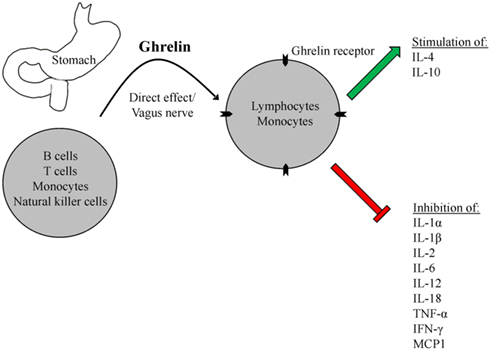
Figure 3. Schematic overview of ghrelin derived from gastric X/A-like cells or immune cells and effect on cytokine production and release from immune cells under immune challenge conditions.
Ghrelin and ghrelin agonists have an immunomodulatory protective effect under conditions of acute endotoxinemia resulting in reduced tissue infiltration by immune cells (Chen et al., 2008; Li et al., 2010) and decreased mortality (Chang et al., 2003b). This could be mediated directly via the interaction with immune cells since ghrelin reduces the mRNA and protein production of the proinflammatory cytokines, interleukin-1α (IL-1α), IL-1β, IL-6, and tumor necrosis factor α (TNF-α) after an immune challenge, an effect not observed with desacyl ghrelin (Dixit et al., 2004; Figure 3). Ghrelin affects both the Th1 and the Th2 pathways as shown by the suppression of IL-2 and interferon-γ and IL-4 and IL-10 respectively in mice (Xia et al., 2004). Conversely, when ghrelin expression is knocked down in T cells by silencing RNA, levels of proinflammatory cytokines such as interferon-γ and IL-17 were increased giving rise to a physiological role of ghrelin in regulating the inflammatory response (Dixit et al., 2009). One important regulatory pathway targeted seems to be the high mobility group box 1 (HMGB1), a DNA-binding factor acting as late inflammatory factor crucial for progression of sepsis (Chorny et al., 2008) and activating peroxisome proliferator-activated receptor gamma (PPAR gamma; Cheng et al., 2009), whose inhibition by ghrelin resulted in blunted circulating cytokine levels (Chorny et al., 2008). Similar to the orexigenic effect, the vagus nerve seems to play a role in the mediation of ghrelin’s effects on immune actions as after vagotomy IL-6 and TNF-α levels were not blocked by ghrelin under immune challenge conditions (Wu et al., 2007a). An overview of studies reporting the effects of ghrelin treatment on cytokine levels is given in Table 1.
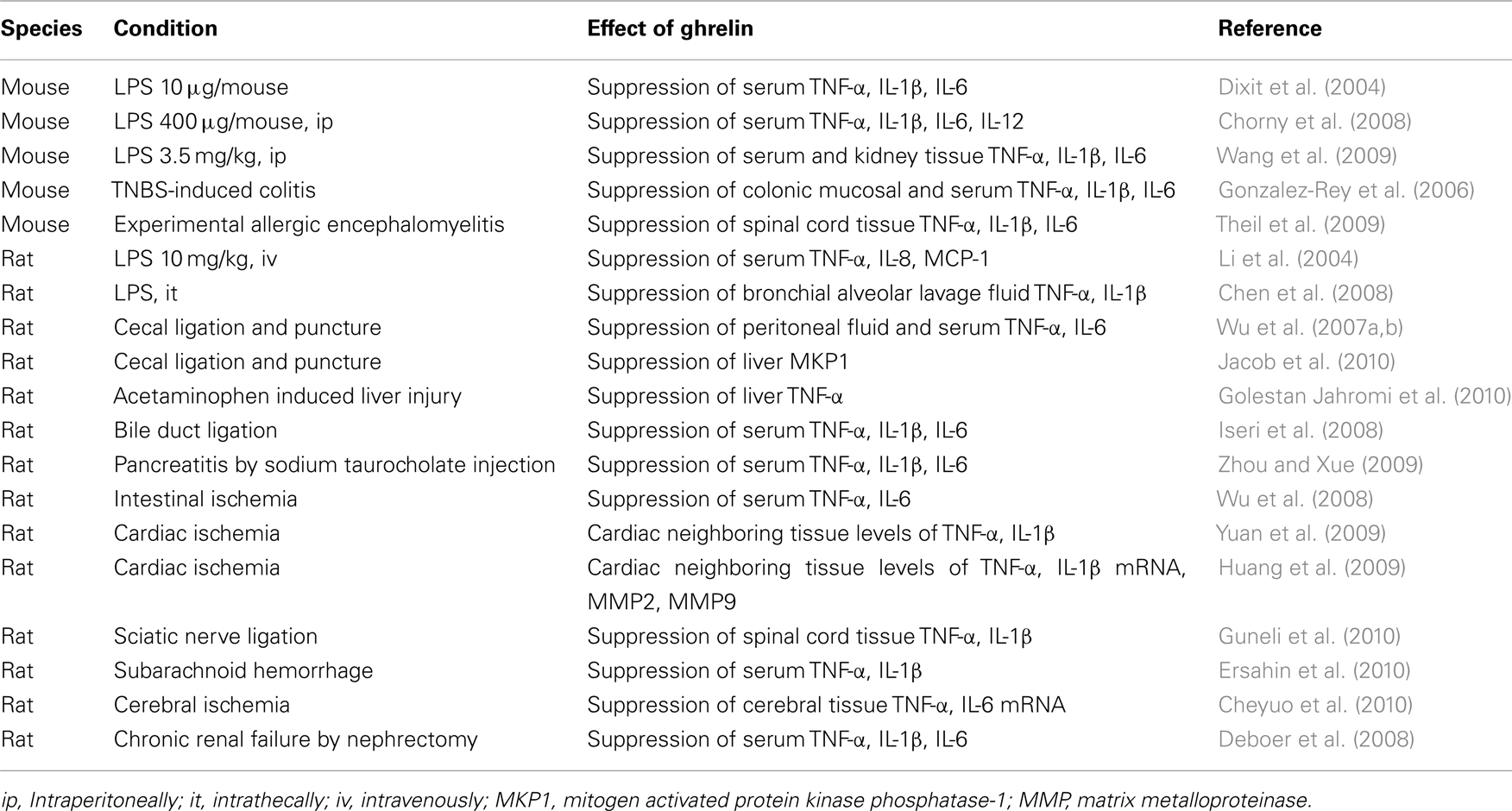
Table 1. Effects of ghrelin treatment on cytokine levels in animal models of inflammation.
The use of the endotoxin LPS which is part of the membrane of Gram-negative bacteria is a well established model of acute immune stress. Under these conditions ghrelin reduces NFκB activity and lowers the circulating levels of TNF-α, monocyte chemotactic protein-1 (MCP-1), and IL-8 (Li et al., 2004). This effect was also reproduced in human cells where ghrelin blocked the expression of proinflammatory cytokines in human monocytes following an LPS challenge (Dixit et al., 2004). Several studies investigated the regulation of ghrelin under these conditions and reported a decrease of circulating ghrelin levels following endotoxin challenge or cytokine injection (Basa et al., 2003; Hataya et al., 2003; Wang et al., 2006; Endo et al., 2007; Vila et al., 2007). Similarly, after cecal ligation and puncture in rats, the circulating levels of ghrelin were reduced as well as the GRLN-R mRNA expression in the intestine, aorta, and heart (Wu et al., 2005) indicating not only a regulatory but also adaptive role of the ghrelin signaling system under these conditions.
Effects on cytokine production under subacute and chronic conditions
Contrasting to the acute regulation, under chronic conditions, circulating ghrelin levels were reported to be increased during postoperative sepsis (Maruna et al., 2005) as well as in a mouse model of trinitrobenzene sulfate (TNBS)-induced acute colitis (Gonzalez-Rey et al., 2006). In this colitis model, ghrelin injected intraperitoneally improves clinical signs of illness along with histological signs of colitis by reducing the mRNA and protein expression of inflammatory cytokines such as TNF-α, IFN-γ, IL-1α, IL-1β, IL-6, IL-12, IL-15, IL-17, and IL-18 and increasing the colonic levels of the anti-inflammatory cytokine IL-10 (Gonzalez-Rey et al., 2006).
In a rat model of cardiac ischemia chronic ghrelin treatment over a period of 4 weeks inhibited myocardial remodeling and thereby improved cardiac functions (Huang et al., 2009). Similarly, subcutaneous ghrelin treatment over a period of 5 weeks reduced the clinical severity of experimental allergic encephalomyelitis, a mouse model of multiple sclerosis which was associated with the reduction of proinflammatory cytokines including TNF-α, IL-1β, and IL-6 probably derived from microglia (Theil et al., 2009).
Lastly, the role of ghrelin signaling was also investigated in the context of rheumatoid arthritis. Ghrelin mRNA and peptide expression has been detected in mouse, rat, and human chondrocytes (Caminos et al., 2005). In addition, GOAT mRNA expression was detected in cultured murine and human immortalized chondrocytes and found to be decreased by LPS (Gomez et al., 2009). In a rat model of adjuvant-induced arthritis and in patients with rheumatoid arthritis circulating ghrelin levels were reduced (Otero et al., 2004). Exogenous administration of ghrelin was shown to attenuate arthritis in the rodent model associated with a decreased production of TNF-α and IFN-γ whereas expression of the anti-inflammatory cytokine IL-10 was increased (Granado et al., 2005a,b). These studies may be indicative of a potential use of ghrelin or ghrelin agonists in the treatment of rheumatoid arthritis.
Alterations of Circulating Ghrelin by Stress or Immune Challenges
A number of studies have investigated the impact of various challenges on circulating levels of ghrelin and desacyl ghrelin in experimental animals and humans as recently reviewed (Stengel et al., 2011c).
Psychological Stressors
In a model of water avoidance stress, this psychological stressor applied acutely (for 90 min) or continuously (over a period of 5 days) increases circulating acyl (Ochi et al., 2008) and total (Kristenssson et al., 2006; Ochi et al., 2008) ghrelin levels in rats. This was associated with an increased expression of gastric ghrelin mRNA (Zheng et al., 2009b). Such changes in ghrelin levels were shown to play a physiological role in the restoration of gastric emptying inhibited acutely by such a stress exposure (Ochi et al., 2008). Similarly, in a mouse model of induced depression by daily social defeat associated with exposure to aggressive CD1 mice over a period of 10 days circulating ghrelin levels were increased after the stress on day 11 and remained elevated for a period of 4 weeks (Lutter et al., 2008). This increase contributes to the blunting of deleterious effects of chronic stress such as reduced social interaction and food intake (Lutter et al., 2008). Another model of chronic unpredictable stress consisting of heterotypic stressors such as noise, open field, aggressive male, novel aversive environment, predator scent, and restraint over a period of 14 days results in an increase of blood acyl ghrelin levels in mice (Patterson et al., 2010). These effects are not restricted to animal models as the Trier Social Stress Test, a well described stress test for humans where participants have to give a speech in front of an expert committee being videotaped, leads to an increase of circulating total ghrelin levels (Rouach et al., 2007; Raspopow et al., 2010). In summary, various psychological stressors increase circulating ghrelin levels not only in animals but also in humans. This increase could play a role in the defense against depressive-like symptoms (Lutter et al., 2008) and stress-induced eating and food-reward behavior (Chuang et al., 2011) under conditions of chronic stress as recently hypothesized.
Endotoxin
Injection of LPS at a low dose (100 μg/kg) mimics symptoms of an acute infection including reduced appetite and increased body temperature (Langhans, 1996, 2000; Wang et al., 2006). At the same time, LPS decreases fasting levels of circulating total ghrelin in rats (Basa et al., 2003; Wang et al., 2006; Stengel et al., 2010b). This decrease was rapid in onset and long lasting and levels were completely restored at 24 h post injection (Wang et al., 2006; Stengel et al., 2010b). Exogenous administration of ghrelin under these conditions restored both gastric emptying and food intake which may be indicative that alterations in circulating ghrelin could be part of the underlying mechanisms associated with alterations of ingestive and gut function in response to bacterial infections. Also, studies in human subjects reported a decrease of circulating ghrelin at 5 h post injection (Vila et al., 2007). However, this was preceded by a rapid increase of ghrelin at 2 h post injection (Vila et al., 2007). In addition, under conditions of chronic infection with the Gram-negative bacterium, Helicobacter pylori, circulating ghrelin levels are also decreased when compared to H. pylori negative individuals (Jeffery et al., 2011) and eradication of the bacteria was reported to restore ghrelin levels and to improve appetite and increase body weight (Jeffery et al., 2011). In contrast to these states of mild inflammation, when assessed under conditions of septic shock, circulating ghrelin levels were increased in fasted dogs after injection of high dose endotoxin (1 mg/kg; Yilmaz et al., 2008) and in fasted rats after cecal ligation and perforation (Chang et al., 2003a) that was associated with reduced mean arterial blood pressure and blood glucose levels (Chang et al., 2003a). Likewise, in humans ghrelin levels increased during the first days of sepsis (Maruna et al., 2005). Whether this increase is merely due to reduced ghrelin clearance observed under those conditions (Wu et al., 2003) or also reflects increased production, activation, and release warrants further investigation.
Abdominal Surgery
Abdominal surgery consisting of laparotomy and cecal palpation is a well established model for visceral stress which induces a rapid and long-lasting decline in fasted plasma acyl and desacyl ghrelin levels observed at 0.5, 2, and 5 h post surgery (Stengel et al., 2010a, 2011b). Ghrelin levels were partly recovered at 7 h and fully restored at 24 h post surgery (Stengel et al., 2011b). This decrease was accompanied by a delay of gastric emptying and a reduction of food intake (Stengel et al., 2011a). Interestingly, in humans an increase of total ghrelin was observed at 24 h post surgery compared to preoperative levels (Maruna et al., 2008), a difference that remains to be further investigated.
Summary
Ghrelin as new gastric hormone has attracted much attention early on due to its stimulatory effects on food intake observed across many species. Thereafter, fields of ghrelin investigation expanded to encompass integrated actions of the orexigenic effect with that on energy homeostasis and gastrointestinal motility. More recently, our knowledge is increasing on the modulatory actions of ghrelin on cardiovascular (antiapoptotic effects, protection against cardiac damage, increase of cardiac output) and reproductive functions (largely inhibitory) along with inflammation (largely suppressing the production of cytokines). In addition, ghrelin, can restore various functions, e.g., gastric emptying affected under conditions of inflammation and stress responses (increases coping, blunts the effects of chronic stress). Although several important questions were answered recently, highly relevant cellular and molecular mechanisms remain to be investigated and clearly defined. These include the receptor expression pattern of the gastric X/A-like cell to characterize the possible direct interactions with other transmitters modulating the expression and release of ghrelin under different conditions. The subcellular mechanisms of ghrelin expression, processing, and release leading to the altered circulating levels of the acyl and non-acylated form of the peptide hormone need to be characterized. Genetic approaches such as labeling with fluorescent dye followed by isolation of the X/A-like cells for microarray as well as in vitro analyses will be helpful to approach these goals.
Conflict of Interest Statement
The authors declare that the research was conducted in the absence of any commercial or financial relationships that could be construed as a potential conflict of interest.
Acknowledgments
This work was supported by NIH R01 DK-33061, NIH Center Grant DK-41301 (Animal Core), VA Research Career Scientist (Yvette Taché), and Charité University funding (Andreas Stengel). We thank Ms. Eugenia Hu for careful reading of the manuscript.
References
Abizaid, A., and Horvath, T. L. (2008). Brain circuits regulating energy homeostasis. Regul. Pept. 149, 3–10.
Andrews, Z. B. (2011). Central mechanisms involved in the orexigenic actions of ghrelin. Peptides 32, 2248–2255.
Andrews, Z. B., Erion, D. M., Beiler, R., Choi, C. S., Shulman, G. I., and Horvath, T. L. (2010). Uncoupling protein-2 decreases the lipogenic actions of ghrelin. Endocrinology 151, 2078–2086.
Andrews, Z. B., Liu, Z. W., Walllingford, N., Erion, D. M., Borok, E., Friedman, J. M., Tschöp, M. H., Shanabrough, M., Cline, G., Shulman, G. I., Coppola, A., Gao, X. B., Horvath, T. L., and Diano, S. (2008). UCP2 mediates ghrelin’s action on NPY/AgRP neurons by lowering free radicals. Nature 454, 846–851.
Ao, Y., Go, V. L., Toy, N., Li, T., Wang, Y., Song, M. K., Reeve, J. R. Jr., Liu, Y., and Yang, H. (2006). Brainstem thyrotropin-releasing hormone regulates food intake through vagal-dependent cholinergic stimulation of ghrelin secretion. Endocrinology 147, 6004–6010.
Ariga, H., Nakade, Y., Tsukamoto, K., Imai, K., Chen, C., Mantyh, C., Pappas, T. N., and Takahashi, T. (2008). Ghrelin accelerates gastric emptying via early manifestation of antro-pyloric coordination in conscious rats. Regul. Pept. 146, 112–116.
Ariga, H., Tsukamoto, K., Chen, C., Mantyh, C., Pappas, T. N., and Takahashi, T. (2007). Endogenous acyl ghrelin is involved in mediating spontaneous phase III-like contractions of the rat stomach. Neurogastroenterol. Motil. 19, 675–680.
Ariyasu, H., Takaya, K., Iwakura, H., Hosoda, H., Akamizu, T., Arai, Y., Kangawa, K., and Nakao, K. (2005). Transgenic mice overexpressing des-acyl ghrelin show small phenotype. Endocrinology 146, 355–364.
Ariyasu, H., Takaya, K., Tagami, T., Ogawa, Y., Hosoda, K., Akamizu, T., Suda, M., Koh, T., Natsui, K., Toyooka, S., Shirakami, G., Usui, T., Shimatsu, A., Doi, K., Hosoda, H., Kojima, M., Kangawa, K., and Nakao, K. (2001). Stomach is a major source of circulating ghrelin, and feeding state determines plasma ghrelin-like immunoreactivity levels in humans. J. Clin. Endocrinol. Metab. 86, 4753–4758.
Arnold, M., Mura, A., Langhans, W., and Geary, N. (2006). Gut vagal afferents are not necessary for the eating-stimulatory effect of intraperitoneally injected ghrelin in the rat. J. Neurosci. 26, 11052–11060.
Asakawa, A., Inui, A., Kaga, T., Yuzuriha, H., Nagata, T., Fujimiya, M., Katsuura, G., Makino, S., Fujino, M. A., and Kasuga, M. (2001a). A role of ghrelin in neuroendocrine and behavioral responses to stress in mice. Neuroendocrinology 74, 143–147.
Asakawa, A., Inui, A., Kaga, T., Yuzuriha, H., Nagata, T., Ueno, N., Makino, S., Fujimiya, M., Niijima, A., Fujino, M. A., and Kasuga, M. (2001b). Ghrelin is an appetite-stimulatory signal from stomach with structural resemblance to motilin. Gastroenterology 120, 337–345.
Baldanzi, G., Filigheddu, N., Cutrupi, S., Catapano, F., Bonissoni, S., Fubini, A., Malan, D., Baj, G., Granata, R., Broglio, F., Papotti, M., Surico, N., Bussolino, F., Isgaard, J., Deghenghi, R., Sinigaglia, F., Prat, M., Muccioli, G., Ghigo, E., and Graziani, A. (2002). Ghrelin and des-acyl ghrelin inhibit cell death in cardiomyocytes and endothelial cells through ERK1/2 and PI 3-kinase/AKT. J. Cell Biol. 159, 1029–1037.
Banks, W. A., Tschop, M., Robinson, S. M., and Heiman, M. L. (2002). Extent and direction of ghrelin transport across the blood-brain barrier is determined by its unique primary structure. J. Pharmacol. Exp. Ther. 302, 822–827.
Barnett, B. P., Hwang, Y., Taylor, M. S., Kirchner, H., Pfluger, P. T., Bernard, V., Lin, Y. Y., Bowers, E. M., Mukherjee, C., Song, W. J., Longo, P. A., Leahy, D. J., Hussain, M. A., Tschöp, M. H., Boeke, J. D., and Cole, P. A. (2010). Glucose and weight control in mice with a designed ghrelin O-acyltransferase inhibitor. Science 330, 1689–1692.
Barreiro, M. L., Gaytan, F., Caminos, J. E., Pinilla, L., Casanueva, F. F., Aguilar, E., Diéguez, C., and Tena-Sempere, M. (2002). Cellular location and hormonal regulation of ghrelin expression in rat testis. Biol. Reprod. 67, 1768–1776.
Barreiro, M. L., Suominen, J. S., Gaytan, F., Pinilla, L., Chopin, L. K., Casanueva, F. F., Diéguez, C., Aguilar, E., Toppari, J., and Tena-Sempere, M. (2003). Developmental, stage-specific, and hormonally regulated expression of growth hormone secretagogue receptor messenger RNA in rat testis. Biol. Reprod. 68, 1631–1640.
Basa, N. R., Wang, L., Arteaga, J. R., Heber, D., Livingston, E. H., and Taché, Y. (2003). Bacterial lipopolysaccharide shifts fasted plasma ghrelin to postprandial levels in rats. Neurosci. Lett. 343, 25–28.
Bednarek, M. A., Feighner, S. D., Pong, S. S., McKee, K. K., Hreniuk, D. L., Silva, M. V., Warren, V. A., Howard, A. D., Van Der Ploeg, L. H., and Heck, J. V. (2000). Structure-function studies on the new growth hormone-releasing peptide, ghrelin: minimal sequence of ghrelin necessary for activation of growth hormone secretagogue receptor 1a. J. Med. Chem. 43, 4370–4376.
Beiras-Fernandez, A., Kreth, S., Weis, F., Ledderose, C., Pottinger, T., Dieguez, C., Beiras, A., and Reichart, B. (2010). Altered myocardial expression of ghrelin and its receptor (GHSR-1a) in patients with severe heart failure. Peptides 31, 2222–2228.
Binn, M., Albert, C., Gougeon, A., Maerki, H., Coulie, B., Lemoyne, M., Rabasa Lhoret, R., Tomasetto, C., and Poitras, P. (2006). Ghrelin gastrokinetic action in patients with neurogenic gastroparesis. Peptides 27, 1603–1606.
Bisi, G., Podio, V., Valetto, M. R., Broglio, F., Bertuccio, G., Del Rio, G., Arvat, E., Boghen, M. F., Deghenghi, R., Muccioli, G., Ong, H., and Ghigo, E. (1999). Acute cardiovascular and hormonal effects of GH and hexarelin, a synthetic GH-releasing peptide, in humans. J. Endocrinol. Invest. 22, 266–272.
Brennan, I. M., Otto, B., Feltrin, K. L., Meyer, J. H., Horowitz, M., and Feinle-Bisset, C. (2007). Intravenous CCK-8, but not GLP-1, suppresses ghrelin and stimulates PYY release in healthy men. Peptides 28, 607–611.
Camilleri, M., Papathanasopoulos, A., and Odunsi, S. T. (2009). Actions and therapeutic pathways of ghrelin for gastrointestinal disorders. Nat. Rev. Gastroenterol. Hepatol. 6, 343–352.
Camina, J. P., Carreira, M. C., El Messari, S., Llorens-Cortes, C., Smith, R. G., and Casanueva, F. F. (2004). Desensitization and endocytosis mechanisms of ghrelin-activated growth hormone secretagogue receptor 1a. Endocrinology 145, 930–940.
Caminos, J. E., Gualillo, O., Lago, F., Otero, M., Blanco, M., Gallego, R., Garcia-Caballero, T., Goldring, M. B., Casanueva, F. F., Gomez-Reino, J. J., and Dieguez, C. (2005). The endogenous growth hormone secretagogue (ghrelin) is synthesized and secreted by chondrocytes. Endocrinology 146, 1285–1292.
Chang, L., Du, J. B., Gao, L. R., Pang, Y. Z., and Tang, C. S. (2003a). Effect of ghrelin on septic shock in rats. Acta Pharmacol. Sin. 24, 45–49.
Chang, L., Zhao, J., Yang, J., Zhang, Z., Du, J., and Tang, C. (2003b). Therapeutic effects of ghrelin on endotoxic shock in rats. Eur. J. Pharmacol. 473, 171–176.
Chang, L., Ren, Y., Liu, X., Li, W. G., Yang, J., Geng, B., Weintraub, N. L., and Tang, C. (2004). Protective effects of ghrelin on ischemia/reperfusion injury in the isolated rat heart. J. Cardiovasc. Pharmacol. 43, 165–170.
Chen, C. Y., Asakawa, A., Fujimiya, M., Lee, S. D., and Inui, A. (2009). Ghrelin gene products and the regulation of food intake and gut motility. Pharmacol. Rev. 61, 430–481.
Chen, H. Y., Trumbauer, M. E., Chen, A. S., Weingarth, D. T., Adams, J. R., Frazier, E. G., Shen, Z., Marsh, D. J., Feighner, S. D., Guan, X. M., Ye, Z., Nargund, R. P., Smith, R. G., Van der Ploeg, L. H., Howard, A. D., MacNeil, D. J., and Qian, S. (2004). Orexigenic action of peripheral ghrelin is mediated by neuropeptide Y and agouti-related protein. Endocrinology 145, 2607–2612.
Chen, J., Liu, X., Shu, Q., Li, S., and Luo, F. (2008). Ghrelin attenuates lipopolysaccharide-induced acute lung injury through NO pathway. Med. Sci. Monit. 14, BR141–BR146.
Cheng, B., Wan, J., Wang, Y., Mei, C., Liu, W., Ke, L., and He, P. (2009). Ghrelin inhibits foam cell formation via simultaneously down-regulating the expression of acyl-coenzyme A: cholesterol acyltransferase 1 and up-regulating adenosine triphosphate-binding cassette transporter A1. Cardiovasc. Pathol. 19, e159–e166.
Cheyuo, C., Wu, R., Zhou, M., Jacob, A., Coppa, G., and Wang, P. (2010). Ghrelin suppresses inflammation and neuronal nitric oxide synthase in focal cerebral ischemia via the vagus nerve. Shock 35, 258–265.
Chorny, A., Anderson, P., Gonzalez-Rey, E., and Delgado, M. (2008). Ghrelin protects against experimental sepsis by inhibiting high-mobility group box 1 release and by killing bacteria. J. Immunol. 180, 8369–8377.
Chuang, J. C., Perello, M., Sakata, I., Osborne-Lawrence, S., Savitt, J. M., Lutter, M., and Zigman, J. M. (2011). Ghrelin mediates stress-induced food-reward behavior in mice. J. Clin. Invest. 121, 2684–2692.
Cowley, M. A., Smith, R. G., Diano, S., Tschop, M., Pronchuk, N., Grove, K. L., Strasburger, C. J., Bidlingmaier, M., Esterman, M., Heiman, M. L., Garcia-Segura, L. M., Nillni, E. A., Mendez, P., Low, M. J., Sotonyi, P., Friedman, J. M., Liu, H., Pinto, S., Colmers, W. F., Cone, R. D., and Horvath, T. L. (2003). The distribution and mechanism of action of ghrelin in the CNS demonstrates a novel hypothalamic circuit regulating energy homeostasis. Neuron 37, 649–661.
Cremonini, F., Camilleri, M., Vazquez Roque, M., McKinzie, S., Burton, D., Baxter, K., and Zinsmeister, A. R. (2006). Obesity does not increase effects of synthetic ghrelin on human gastric motor functions. Gastroenterology 131, 1431–1439.
Cummings, D. E., Purnell, J. Q., Frayo, R. S., Schmidova, K., Wisse, B. E., and Weigle, D. S. (2001). A preprandial rise in plasma ghrelin levels suggests a role in meal initiation in humans. Diabetes 50, 1714–1719.
Cummings, D. E., Weigle, D. S., Frayo, R. S., Breen, P. A., Ma, M. K., Dellinger, E. P., and Purnell, J. Q. (2002). Plasma ghrelin levels after diet-induced weight loss or gastric bypass surgery. N. Engl. J. Med. 346, 1623–1630.
Date, Y., Kojima, M., Hosoda, H., Sawaguchi, A., Mondal, M. S., Suganuma, T., Matsukura, S., Kangawa, K., and Nakazato, M. (2000). Ghrelin, a novel growth hormone-releasing acylated peptide, is synthesized in a distinct endocrine cell type in the gastrointestinal tracts of rats and humans. Endocrinology 141, 4255–4261.
Date, Y., Murakami, N., Toshinai, K., Matsukura, S., Niijima, A., Matsuo, H., Kangawa, K., and Nakazato, M. (2002a). The role of the gastric afferent vagal nerve in ghrelin-induced feeding and growth hormone secretion in rats. Gastroenterology 123, 1120–1128.
Date, Y., Nakazato, M., Hashiguchi, S., Dezaki, K., Mondal, M. S., Hosoda, H., Kojima, M., Kangawa, K., Arima, T., Matsuo, H., Yada, T., and Matsukura, S. (2002b). Ghrelin is present in pancreatic alpha-cells of humans and rats and stimulates insulin secretion. Diabetes 51, 124–129.
Davenport, A. P., Bonner, T. I., Foord, S. M., Harmar, A. J., Neubig, R. R., Pin, J. P., Spedding, M., Kojima, M., and Kangawa, K. (2005). International Union of Pharmacology. LVI. Ghrelin receptor nomenclature, distribution, and function. Pharmacol. Rev. 57, 541–546.
Davies, J. S., Kotokorpi, P., Eccles, S. R., Barnes, S. K., Tokarczuk, P. F., Allen, S. K., Whitworth, H. S., Guschina, I. A., Evans, B. A., Mode, A., Zigman, J. M., and Wells, T. (2009). Ghrelin induces abdominal obesity via GHS-R-dependent lipid retention. Mol. Endocrinol. 23, 914–924.
de la Cour, C. D., Norlen, P., and Hakanson, R. (2007). Secretion of ghrelin from rat stomach ghrelin cells in response to local microinfusion of candidate messenger compounds: a microdialysis study. Regul. Pept. 143, 118–126.
Deboer, M. D., Zhu, X., Levasseur, P. R., Inui, A., Hu, Z., Han, G., Mitch, W. E., Taylor, J. E., Halem, H. A., Dong, J. Z., Datta, R., Culler, M. D., and Marks, D. L. (2008). Ghrelin treatment of chronic kidney disease: improvements in lean body mass and cytokine profile. Endocrinology 149, 827–835.
Depoortere, I., De Winter, B., Thijs, T., De Man, J., Pelckmans, P., and Peeters, T. (2005). Comparison of the gastroprokinetic effects of ghrelin, GHRP-6 and motilin in rats in vivo and in vitro. Eur. J. Pharmacol. 515, 160–168.
Disse, E., Bussier, A. L., Veyrat-Durebex, C., Deblon, N., Pfluger, P. T., Tschop, M. H., Laville, M., and Rohner-Jeanrenaud, F. (2010). Peripheral ghrelin enhances sweet taste food consumption and preference, regardless of its caloric content. Physiol. Behav. 101, 277–281.
Dixit, V. D., Schaffer, E. M., Pyle, R. S., Collins, G. D., Sakthivel, S. K., Palaniappan, R., Lillard, J. W. Jr., and Taub, D. D. (2004). Ghrelin inhibits leptin- and activation-induced proinflammatory cytokine expression by human monocytes and T cells. J. Clin. Invest. 114, 57–66.
Dixit, V. D., Yang, H., Cooper-Jenkins, A., Giri, B. B., Patel, K., and Taub, D. D. (2009). Reduction of T cell-derived ghrelin enhances proinflammatory cytokine expression: implications for age-associated increases in inflammation. Blood 113, 5202–5205.
Dornonville de la Cour, C., Lindstrom, E., Norlen, P., and Hakanson, R. (2004). Ghrelin stimulates gastric emptying but is without effect on acid secretion and gastric endocrine cells. Regul. Pept. 120, 23–32.
Druce, M. R., Wren, A. M., Park, A. J., Milton, J. E., Patterson, M., Frost, G., Ghatei, M. A., Small, C., and Bloom, S. R. (2005). Ghrelin increases food intake in obese as well as lean subjects. Int. J. Obes. (Lond.) 29, 1130–1136.
Edholm, T., Levin, F., Hellstrom, P. M., and Schmidt, P. T. (2004). Ghrelin stimulates motility in the small intestine of rats through intrinsic cholinergic neurons. Regul. Pept. 121, 25–30.
Endo, M., Masaki, T., Seike, M., and Yoshimatsu, H. (2007). Involvement of stomach ghrelin and hypothalamic neuropeptides in tumor necrosis factor-alpha-induced hypophagia in mice. Regul. Pept. 140, 94–100.
Enomoto, M., Nagaya, N., Uematsu, M., Okumura, H., Nakagawa, E., Ono, F., Hosoda, H., Oya, H., Kojima, M., Kanmatsuse, K., and Kangawa, K. (2003). Cardiovascular and hormonal effects of subcutaneous administration of ghrelin, a novel growth hormone-releasing peptide, in healthy humans. Clin. Sci. 105, 431–435.
Ersahin, M., Toklu, H. Z., Erzik, C., Cetinel, S., Akakin, D., Velioglu-Ogunc, A., Tetik, S., Ozdemir, Z. N., Sener, G., and Yegen, B. C. (2010). The anti-inflammatory and neuroprotective effects of ghrelin in subarachnoid hemorrhage-induced oxidative brain damage in rats. J. Neurotrauma 27, 1143–1155.
Fernandez-Fernandez, R., Martini, A. C., Navarro, V. M., Castellano, J. M., Dieguez, C., Aguilar, E., Pinilla, L., and Tena-Sempere, M. (2006). Novel signals for the integration of energy balance and reproduction. Mol. Cell. Endocrinol. 254–255, 127–132.
Fernandez-Fernandez, R., Navarro, V. M., Barreiro, M. L., Vigo, E. M., Tovar, S., Sirotkin, A. V., Casanueva, F. F., Aguilar, E., Dieguez, C., Pinilla, L., and Tena-Sempere, M. (2005a). Effects of chronic hyperghrelinemia on puberty onset and pregnancy outcome in the rat. Endocrinology 146, 3018–3025.
Fernandez-Fernandez, R., Tena-Sempere, M., Navarro, V. M., Barreiro, M. L., Castellano, J. M., Aguilar, E., and Pinilla, L. (2005b). Effects of ghrelin upon gonadotropin-releasing hormone and gonadotropin secretion in adult female rats: in vivo and in vitro studies. Neuroendocrinology 82, 245–255.
Fischer, T., Doll, C., Jacobs, S., Kolodziej, A., Stumm, R., and Schulz, S. (2008). Reassessment of sst2 somatostatin receptor expression in human normal and neoplastic tissues using the novel rabbit monoclonal antibody UMB-1. J. Clin. Endocrinol. Metab. 93, 4519–4524.
Florentzson, M., Svensson, K., Astin-Nielsen, M., Andersson, K., Hakanson, R., and Lindstrom, E. (2009). Low gastric acid and high plasma gastrin in high-anxiety Wistar Kyoto rats. Scand. J. Gastroenterol. 44, 401–407.
Forbes, S., Li, X. F., Kinsey-Jones, J., and O’Byrne, K. (2009). Effects of ghrelin on kisspeptin mRNA expression in the hypothalamic medial preoptic area and pulsatile luteinising hormone secretion in the female rat. Neurosci. Lett. 460, 143–147.
Frascarelli, S., Ghelardoni, S., Ronca-Testoni, S., and Zucchi, R. (2003). Effect of ghrelin and synthetic growth hormone secretagogues in normal and ischemic rat heart. Basic Res. Cardiol. 98, 401–405.
Fujino, K., Inui, A., Asakawa, A., Kihara, N., Fujimura, M., and Fujimiya, M. (2003). Ghrelin induces fasted motor activity of the gastrointestinal tract in conscious fed rats. J. Physiol. (Lond.) 550, 227–240.
Fukuda, H., Mizuta, Y., Isomoto, H., Takeshima, F., Ohnita, K., Ohba, K., Omagari, K., Taniyama, K., and Kohno, S. (2004). Ghrelin enhances gastric motility through direct stimulation of intrinsic neural pathways and capsaicin-sensitive afferent neurones in rats. Scand. J. Gastroenterol. 39, 1209–1214.
Furuta, M., Funabashi, T., and Kimura, F. (2001). Intracerebroventricular administration of ghrelin rapidly suppresses pulsatile luteinizing hormone secretion in ovariectomized rats. Biochem. Biophys. Res. Commun. 288, 780–785.
Garcia-Galiano, D., Navarro, V. M., Gaytan, F., and Tena-Sempere, M. (2010). Expanding roles of NUCB2/nesfatin-1 in neuroendocrine regulation. J. Mol. Endocrinol. 45, 281–290.
Gaytan, F., Barreiro, M. L., Caminos, J. E., Chopin, L. K., Herington, A. C., Morales, C., Pinilla, L., Paniagua, R., Nistal, M., Casanueva, F. F., Aguilar, E., Diéguez, C., and Tena-Sempere, M. (2004). Expression of ghrelin and its functional receptor, the type 1a growth hormone secretagogue receptor, in normal human testis and testicular tumors. J. Clin. Endocrinol. Metab. 89, 400–409.
Gnanapavan, S., Kola, B., Bustin, S. A., Morris, D. G., McGee, P., Fairclough, P., Bhattacharya, S., Carpenter, R., Grossman, A. B., and Korbonits, M. (2002). The tissue distribution of the mRNA of ghrelin and subtypes of its receptor, GHS-R, in humans. J. Clin. Endocrinol. Metab. 87, 2988.
Goebel, M., Stengel, A., and Taché, Y. (2008). Continued controversy on obestatin as a gut hormone influencing food intake and gastrointestinal motility. Obes. Metab. 4, 143–148.
Golestan Jahromi, M., Nabavizadeh, F., Vahedian, J., Nahrevanian, H., Dehpour, A. R., and Zare-Mehrjardi, A. (2010). Protective effect of ghrelin on acetaminophen-induced liver injury in rat. Peptides 31, 2114–2117.
Gomez, R., Lago, F., Gomez-Reino, J. J., Dieguez, C., and Gualillo, O. (2009). Expression and modulation of ghrelin O-acyltransferase in cultured chondrocytes. Arthritis Rheum. 60, 1704–1709.
Gonzalez, C. R., Vazquez, M. J., Lopez, M., and Dieguez, C. (2008). Influence of chronic under nutrition and leptin on GOAT mRNA levels in rat stomach mucosa. J. Mol. Endocrinol. 41, 415–421.
Gonzalez-Rey, E., Chorny, A., and Delgado, M. (2006). Therapeutic action of ghrelin in a mouse model of colitis. Gastroenterology 130, 1707–1720.
Granado, M., Priego, T., Martin, A. I., Villanua, M. A., and Lopez-Calderon, A. (2005a). Anti-inflammatory effect of the ghrelin agonist growth hormone-releasing peptide-2 (GHRP-2) in arthritic rats. Am. J. Physiol. Endocrinol. Metab. 288, E486–E492.
Granado, M., Priego, T., Martin, A. I., Villanua, M. A., and Lopez-Calderon, A. (2005b). Ghrelin receptor agonist GHRP-2 prevents arthritis-induced increase in E3 ubiquitin-ligating enzymes MuRF1 and MAFbx gene expression in skeletal muscle. Am. J. Physiol. Endocrinol. Metab. 289, E1007–E1014.
Gronberg, M., Tsolakis, A. V., Magnusson, L., Janson, E. T., and Saras, J. (2008). Distribution of obestatin and ghrelin in human tissues: immunoreactive cells in the gastrointestinal tract, pancreas, and mammary glands. J. Histochem. Cytochem. 56, 793–801.
Guan, J. L., Wang, Q. P., Kageyama, H., Takenoya, F., Kita, T., Matsuoka, T., Funahashi, H., and Shioda, S. (2003). Synaptic interactions between ghrelin- and neuropeptide Y-containing neurons in the rat arcuate nucleus. Peptides 24, 1921–1928.
Guan, X. M., Yu, H., Palyha, O. C., McKee, K. K., Feighner, S. D., Sirinathsinghji, D. J., Smith, R. G., Van der Ploeg, L. H., and Howard, A. D. (1997). Distribution of mRNA encoding the growth hormone secretagogue receptor in brain and peripheral tissues. Brain Res. Mol. Brain Res. 48, 23–29.
Guneli, E., Onal, A., Ates, M., Bagriyanik, H. A., Resmi, H., Orhan, C. E., Kolatan, H. E., and Gumustekin, M. (2010). Effects of repeated administered ghrelin on chronic constriction injury of the sciatic nerve in rats. Neurosci. Lett. 479, 226–230.
Gutierrez, J. A., Solenberg, P. J., Perkins, D. R., Willency, J. A., Knierman, M. D., Jin, Z., Witcher, D. R., Luo, S., Onyia, J. E., and Hale, J. E. (2008). Ghrelin octanoylation mediated by an orphan lipid transferase. Proc. Natl. Acad. Sci. U.S.A. 105, 6320–6325.
Hagemann, D., Holst, J. J., Gethmann, A., Banasch, M., Schmidt, W. E., and Meier, J. J. (2007). Glucagon-like peptide 1 (GLP-1) suppresses ghrelin levels in humans via increased insulin secretion. Regul. Pept. 143, 64–68.
Hataya, Y., Akamizu, T., Hosoda, H., Kanamoto, N., Moriyama, K., Kangawa, K., Takaya, K., and Nakao, K. (2003). Alterations of plasma ghrelin levels in rats with lipopolysaccharide-induced wasting syndrome and effects of ghrelin treatment on the syndrome. Endocrinology 144, 5365–5371.
Hattori, N. (2009). Expression, regulation and biological actions of growth hormone (GH) and ghrelin in the immune system. Growth Horm. IGF Res. 19, 187–197.
Hattori, N., Saito, T., Yagyu, T., Jiang, B. H., Kitagawa, K., and Inagaki, C. (2001). GH, GH receptor, GH secretagogue receptor, and ghrelin expression in human T cells, B cells, and neutrophils. J. Clin. Endocrinol. Metab. 86, 4284–4291.
Hiejima, H., Nishi, Y., Hosoda, H., Yoh, J., Mifune, H., Satou, M., Sugimoto, H., Chiba, S., Kawahara, Y., Tanaka, E., Yoshimatsu, H., Uchimura, N., Kangawa, K., and Kojima, M. (2009). Regional distribution and the dynamics of n-decanoyl ghrelin, another acyl-form of ghrelin, upon fasting in rodents. Regul. Pept. 156, 47–56.
Hosoda, H., and Kangawa, K. (2008). The autonomic nervous system regulates gastric ghrelin secretion in rats. Regul. Pept. 146, 12–18.
Hosoda, H., Kojima, M., Matsuo, H., and Kangawa, K. (2000). Ghrelin and des-acyl ghrelin: two major forms of rat ghrelin peptide in gastrointestinal tissue. Biochem. Biophys. Res. Commun. 279, 909–913.
Howard, A. D., Feighner, S. D., Cully, D. F., Arena, J. P., Liberator, P. A., Rosenblum, C. I., Hamelin, M., Hreniuk, D. L., Palyha, O. C., Anderson, J., Paress, P. S., Diaz, C., Chou, M., Liu, K. K., McKee, K. K., Pong, S. S., Chaung, L. Y., Elbrecht, A., Dashkevicz, M., Heavens, R., Rigby, M., Sirinathsinghji, D. J., Dean, D. C., Melillo, D. G., Patchett, A. A., Nargund, R., Griffin, P. R., DeMartino, J. A., Gupta, S. K., Schaeffer, J. M., Smith, R. G., and Van der Ploeg, L. H. (1996). A receptor in pituitary and hypothalamus that functions in growth hormone release. Science 273, 974–977.
Huang, C. X., Yuan, M. J., Huang, H., Wu, G., Liu, Y., Yu, S. B., Li, H. T., and Wang, T. (2009). Ghrelin inhibits post-infarct myocardial remodeling and improves cardiac function through anti-inflammation effect. Peptides 30, 2286–2291.
Iseri, S. O., Sener, G., Saglam, B., Ercan, F., Gedik, N., and Yegen, B. C. (2008). Ghrelin alleviates biliary obstruction-induced chronic hepatic injury in rats. Regul. Pept. 146, 73–79.
Iwakura, H., Ariyasu, H., Hosoda, H., Yamada, G., Hosoda, K., Nakao, K., Kangawa, K., and Akamizu, T. (2011). Oxytocin and dopamine stimulate ghrelin secretion by the ghrelin-producing cell line, MGN3-1 in vitro. Endocrinology 152, 2619–2625.
Iwakura, H., Ariyasu, H., Li, Y., Kanamoto, N., Bando, M., Yamada, G., Hosoda, H., Hosoda, K., Shimatsu, A., Nakao, K., Kangawa, K., and Akamizu, T. (2009). A mouse model of ghrelinoma exhibited activated growth hormone-insulin-like growth factor I axis and glucose intolerance. Am. J. Physiol. Endocrinol. Metab. 297, E802–E811.
Jacob, A., Rajan, D., Pathickal, B., Balouch, I., Hartman, A., Wu, R., Zhou, M., and Wang, P. (2010). The inhibitory effect of ghrelin on sepsis-induced inflammation is mediated by the MAPK phosphatase-1. Int. J. Mol. Med. 25, 159–164.
Jeffery, P. L., McGuckin, M. A., and Linden, S. K. (2011). Endocrine impact of Helicobacter pylori: focus on ghrelin and ghrelin O-acyltransferase. World J. Gastroenterol. 17, 1249–1260.
Jeon, T. Y., Lee, S., Kim, H. H., Kim, Y. J., Son, H. C., Kim, D. H., and Sim, M. S. (2004). Changes in plasma ghrelin concentration immediately after gastrectomy in patients with early gastric cancer. J. Clin. Endocrinol. Metab. 89, 5392–5396.
Jiang, H., Betancourt, L., and Smith, R. G. (2006). Ghrelin amplifies dopamine signaling by cross talk involving formation of growth hormone secretagogue receptor/dopamine receptor subtype 1 heterodimers. Mol. Endocrinol. 20, 1772–1785.
Kageyama, H., Kitamura, Y., Hosono, T., Kintaka, Y., Seki, M., Takenoya, F., Hori, Y., Nonaka, N., Arata, S., and Shioda, S. (2008). Visualization of ghrelin-producing neurons in the hypothalamic arcuate nucleus using ghrelin-EGFP transgenic mice. Regul. Pept. 145, 116–121.
Kageyama, K., Kumata, Y., Akimoto, K., Takayasu, S., Tamasawa, N., and Suda, T. (2011). Ghrelin stimulates corticotropin-releasing factor and vasopressin gene expression in rat hypothalamic 4B cells. Stress 14, 520–529.
Kamegai, J., Tamura, H., Shimizu, T., Ishii, S., Sugihara, H., and Wakabayashi, I. (2001). Chronic central infusion of ghrelin increases hypothalamic neuropeptide Y and agouti-related protein mRNA levels and body weight in rats. Diabetes 50, 2438–2443.
Kim, M. S., Yoon, C. Y., Park, K. H., Shin, C. S., Park, K. S., Kim, S. Y., Cho, B. Y., and Lee, H. K. (2003). Changes in ghrelin and ghrelin receptor expression according to feeding status. Neuroreport 14, 1317–1320.
Kirchner, H., Gutierrez, J. A., Solenberg, P. J., Pfluger, P. T., Czyzyk, T. A., Willency, J. A., Schürmann, A., Joost, H. G., Jandacek, R. J., Hale, J. E., Heiman, M. L., and Tschöp, M. H. (2009). GOAT links dietary lipids with the endocrine control of energy balance. Nat. Med. 15, 741–745.
Kishimoto, I., Tokudome, T., Hosoda, H., Miyazato, M., and Kangawa, K. (2011). Ghrelin and cardiovascular diseases. J. Cardiol. 59, 8–13.
Kitazawa, T., De Smet, B., Verbeke, K., Depoortere, I., and Peeters, T. L. (2005). Gastric motor effects of peptide and non-peptide ghrelin agonists in mice in vivo and in vitro. Gut 54, 1078–1084.
Kojima, M., Hosoda, H., Date, Y., Nakazato, M., Matsuo, H., and Kangawa, K. (1999). Ghrelin is a growth-hormone-releasing acylated peptide from stomach. Nature 402, 656–660.
Kojima, M., and Kangawa, K. (2011). The discovery of ghrelin: with a little luck and great passion. Preface. Peptides 32, 2153–2154.
Kristenssson, E., Sundqvist, M., Astin, M., Kjerling, M., Mattsson, H., Dornonville de la Cour, C., Håkanson, R., and Lindström, E. (2006). Acute psychological stress raises plasma ghrelin in the rat. Regul. Pept. 134, 114–117.
Lambert, E., Lambert, G., Ika-Sari, C., Dawood, T., Lee, K., Chopra, R., Straznicky, N., Eikelis, N., Drew, S., Tilbrook, A., Dixon, J., Esler, M., and Schlaich, M. P. (2011). Ghrelin modulates sympathetic nervous system activity and stress response in lean and overweight men. Hypertension 58, 43–50.
Langhans, W. (1996). Bacterial products and the control of ingestive behavior: clinical implications. Nutrition 12, 303–315.
Lear, P. V., Iglesias, M. J., Feijoo-Bandin, S., Rodriguez-Penas, D., Mosquera-Leal, A., Garcia-Rua, V., Gualillo, O., Ghè, C., Arnoletti, E., Muccioli, G., Diéguez, C., González-Juanatey, J. R., and Lago, F. (2010). Des-acyl ghrelin has specific binding sites and different metabolic effects from ghrelin in cardiomyocytes. Endocrinology 151, 3286–3298.
Levin, F., Edholm, T., Schmidt, P. T., Gryback, P., Jacobsson, H., Degerblad, M., Höybye, C., Holst, J. J., Rehfeld, J. F., Hellström, P. M., and Näslund, E. (2006). Ghrelin stimulates gastric emptying and hunger in normal-weight humans. J. Clin. Endocrinol. Metab. 91, 3296–3302.
Li, G., Li, J., Zhou, Q., Song, X., Liang, H., and Huang, L. (2010). Growth hormone releasing peptide-2, a ghrelin agonist, attenuates lipopolysaccharide-induced acute lung injury in rats. Tohoku J. Exp. Med. 222, 7–13.
Li, W. G., Gavrila, D., Liu, X., Wang, L., Gunnlaugsson, S., Stoll, L. L., McCormick, M. L., Sigmund, C. D., Tang, C., and Weintraub, N. L. (2004). Ghrelin inhibits proinflammatory responses and nuclear factor-kappaB activation in human endothelial cells. Circulation 109, 2221–2226.
Lin, Y., Matsumura, K., Fukuhara, M., Kagiyama, S., Fujii, K., and Iida, M. (2004). Ghrelin acts at the nucleus of the solitary tract to decrease arterial pressure in rats. Hypertension 43, 977–982.
Lippl, F., Kircher, F., Erdmann, J., Allescher, H. D., and Schusdziarra, V. (2004). Effect of GIP, GLP-1, insulin and gastrin on ghrelin release in the isolated rat stomach. Regul. Pept. 119, 93–98.
Locatelli, V., Rossoni, G., Schweiger, F., Torsello, A., De Gennaro Colonna, V., Bernareggi, M., Deghenghi, R., Müller, E. E., and Berti, F. (1999). Growth hormone-independent cardioprotective effects of hexarelin in the rat. Endocrinology 140, 4024–4031.
Lopez, M., Lage, R., Saha, A. K., Perez-Tilve, D., Vazquez, M. J., Varela, L., Sangiao-Alvarellos, S., Tovar, S., Raghay, K., Rodríguez-Cuenca, S., Deoliveira, R. M., Castañeda, T., Datta, R., Dong, J. Z., Culler, M., Sleeman, M. W., Alvarez, C. V., Gallego, R., Lelliott, C. J., Carling, D., Tschöp, M. H., Diéguez, C., and Vidal-Puig, A. (2008). Hypothalamic fatty acid metabolism mediates the orexigenic action of ghrelin. Cell Metab. 7, 389–399.
Lu, S., Guan, J. L., Wang, Q. P., Uehara, K., Yamada, S., Goto, N., Date, Y., Nakazato, M., Kojima, M., Kangawa, K., and Shioda, S. (2002). Immunocytochemical observation of ghrelin-containing neurons in the rat arcuate nucleus. Neurosci. Lett. 321, 157–160.
Lutter, M., Sakata, I., Osborne-Lawrence, S., Rovinsky, S. A., Anderson, J. G., Jung, S., Birnbaum, S., Yanagisawa, M., Elmquist, J. K., Nestler, E. J., and Zigman, J. M. (2008). The orexigenic hormone ghrelin defends against depressive symptoms of chronic stress. Nat. Neurosci. 11, 752–753.
Madison, L. D., Scarlett, J. M., Levasseur, P., Zhu, X., Newcomb, K., Batra, A., Bowe, D., and Marks, D. L. (2008). Prostacyclin signaling regulates circulating ghrelin during acute inflammation. J. Endocrinol. 196, 263–273.
Martini, A. C., Fernandez-Fernandez, R., Tovar, S., Navarro, V. M., Vigo, E., Vazquez, M. J., Davies, J. S., Thompson, N. M., Aguilar, E., Pinilla, L., Wells, T., Dieguez, C., and Tena-Sempere, M. (2006). Comparative analysis of the effects of ghrelin and unacylated ghrelin on luteinizing hormone secretion in male rats. Endocrinology 147, 2374–2382.
Maruna, P., Gurlich, R., Frasko, R., and Rosicka, M. (2005). Ghrelin and leptin elevation in postoperative intra-abdominal sepsis. Eur. Surg. Res. 37, 354–359.
Maruna, P., Gurlich, R., and Rosicka, M. (2008). Ghrelin as an acute-phase reactant during postoperative stress response. Horm. Metab. Res. 40, 404–409.
Masuda, Y., Tanaka, T., Inomata, N., Ohnuma, N., Tanaka, S., Itoh, Z., Hosoda, H., Kojima, M., and Kangawa, K. (2000). Ghrelin stimulates gastric acid secretion and motility in rats. Biochem. Biophys. Res. Commun. 276, 905–908.
Mizutani, M., Atsuchi, K., Asakawa, A., Matsuda, N., Fujimura, M., Inui, A., Kato, I., and Fujimiya, M. (2009). Localization of acyl ghrelin- and des-acyl ghrelin-immunoreactive cells in the rat stomach and their responses to intragastric pH. Am. J. Physiol. Gastrointest. Liver Physiol. 297, G974–G980.
Muccioli, G., Lorenzi, T., Lorenzi, M., Ghe, C., Arnoletti, E., Raso, G. M., Castellucci, M., Gualillo, O., and Meli, R. (2011). Beyond the metabolic role of ghrelin: a new player in the regulation of reproductive function. Peptides 32, 2514–2521.
Mundinger, T. O., Cummings, D. E., and Taborsky, G. J. Jr. (2006). Direct stimulation of ghrelin secretion by sympathetic nerves. Endocrinology 147, 2893–2901.
Murray, C. D., Martin, N. M., Patterson, M., Taylor, S. A., Ghatei, M. A., Kamm, M. A., Johnston, C., Bloom, S. R., and Emmanuel, A. V. (2005). Ghrelin enhances gastric emptying in diabetic gastroparesis: a double blind, placebo controlled, crossover study. Gut 54, 1693–1698.
Nagaya, N., Kojima, M., Uematsu, M., Yamagishi, M., Hosoda, H., Oya, H., Hayashi, Y., and Kangawa, K. (2001a). Hemodynamic and hormonal effects of human ghrelin in healthy volunteers. Am. J. Physiol. Regul. Integr. Comp. Physiol. 280, R1483–R1487.
Nagaya, N., Uematsu, M., Kojima, M., Ikeda, Y., Yoshihara, F., Shimizu, W., Hosoda, H., Hirota, Y., Ishida, H., Mori, H., and Kangawa, K. (2001b). Chronic administration of ghrelin improves left ventricular dysfunction and attenuates development of cardiac cachexia in rats with heart failure. Circulation 104, 1430–1435.
Nagaya, N., Moriya, J., Yasumura, Y., Uematsu, M., Ono, F., Shimizu, W., Ueno, K., Kitakaze, M., Miyatake, K., and Kangawa, K. (2004). Effects of ghrelin administration on left ventricular function, exercise capacity, and muscle wasting in patients with chronic heart failure. Circulation 110, 3674–3679.
Nakazato, M., Murakami, N., Date, Y., Kojima, M., Matsuo, H., Kangawa, K., and Matsukura, S. (2001). A role for ghrelin in the central regulation of feeding. Nature 409, 194–198.
Nishi, Y., Hiejima, H., Hosoda, H., Kaiya, H., Mori, K., Fukue, Y., Yanase, T., Nawata, H., Kangawa, K., and Kojima, M. (2005). Ingested medium-chain fatty acids are directly utilized for the acyl modification of ghrelin. Endocrinology 146, 2255–2264.
Ochi, M., Tominaga, K., Tanaka, F., Tanigawa, T., Shiba, M., Watanabe, T., Fujiwara, Y., Oshitani, N., Higuchi, K., and Arakawa, T. (2008). Effect of chronic stress on gastric emptying and plasma ghrelin levels in rats. Life Sci. 82, 862–868.
Oh-I, S., Shimizu, H., Satoh, T., Okada, S., Adachi, S., Inoue, K., Eguchi, H., Yamamoto, M., Imaki, T., Hashimoto, K., Tsuchiya, T., Monden, T., Horiguchi, K., Yamada, M., and Mori, M. (2006). Identification of nesfatin-1 as a satiety molecule in the hypothalamus. Nature 443, 709–712.
Okumura, H., Nagaya, N., Enomoto, M., Nakagawa, E., Oya, H., and Kangawa, K. (2002). Vasodilatory effect of ghrelin, an endogenous peptide from the stomach. J. Cardiovasc. Pharmacol. 39, 779–783.
Otero, M., Nogueiras, R., Lago, F., Dieguez, C., Gomez-Reino, J. J., and Gualillo, O. (2004). Chronic inflammation modulates ghrelin levels in humans and rats. Rheumatology (Oxford) 43, 306–310.
Pan, W., Tu, H., and Kastin, A. J. (2006). Differential BBB interactions of three ingestive peptides: obestatin, ghrelin, and adiponectin. Peptides 27, 911–916.
Pang, J. J., Xu, R. K., Xu, X. B., Cao, J. M., Ni, C., Zhu, W. L., Asotra, K., Chen, M. C., and Chen, C. (2004). Hexarelin protects rat cardiomyocytes from angiotensin II-induced apoptosis in vitro. Am. J. Physiol. Heart Circ. Physiol. 286, H1063–H1069.
Patterson, Z. R., Ducharme, R., Anisman, H., and Abizaid, A. (2010). Altered metabolic and neurochemical responses to chronic unpredictable stressors in ghrelin receptor-deficient mice. Eur. J. Neurosci. 32, 632–639.
Perez-Tilve, D., Gonzalez-Matias, L., Alvarez-Crespo, M., Leiras, R., Tovar, S., Dieguez, C., and Mallo, F. (2007). Exendin-4 potently decreases ghrelin levels in fasting rats. Diabetes 56, 143–151.
Pettersson, I., Muccioli, G., Granata, R., Deghenghi, R., Ghigo, E., Ohlsson, C., and Isgaard, J. (2002). Natural (ghrelin) and synthetic (hexarelin) GH secretagogues stimulate H9c2 cardiomyocyte cell proliferation. J. Endocrinol. 175, 201–209.
Pfluger, P. T., Kirchner, H., Gunnel, S., Schrott, B., Perez-Tilve, D., Fu, S., Benoit, S. C., Horvath, T., Joost, H. G., Wortley, K. E., Sleeman, M. W., and Tschöp, M. H. (2008). Simultaneous deletion of ghrelin and its receptor increases motor activity and energy expenditure. Am. J. Physiol. Gastrointest. Liver Physiol. 294, G610–G618.
Raspopow, K., Abizaid, A., Matheson, K., and Anisman, H. (2010). Psychosocial stressor effects on cortisol and ghrelin in emotional and non-emotional eaters: influence of anger and shame. Horm. Behav. 58, 677–684.
Rindi, G., Leiter, A. B., Kopin, A. S., Bordi, C., and Solcia, E. (2004). The “normal” endocrine cell of the gut: changing concepts and new evidences. Ann. N. Y. Acad. Sci. 1014, 1–12.
Rindi, G., Necchi, V., Savio, A., Torsello, A., Zoli, M., Locatelli, V., Raimondo, F., Cocchi, D., and Solcia, E. (2002). Characterisation of gastric ghrelin cells in man and other mammals: studies in adult and fetal tissues. Histochem. Cell Biol. 117, 511–519.
Rodriguez, A., Gomez-Ambrosi, J., Catalan, V., Gil, M. J., Becerril, S., Sainz, N., Silva, C., Salvador, J., Colina, I., and Frühbeck, G. (2009). Acylated and desacyl ghrelin stimulate lipid accumulation in human visceral adipocytes. Int. J. Obes. (Lond.) 33, 541–552.
Rouach, V., Bloch, M., Rosenberg, N., Gilad, S., Limor, R., Stern, N., and Greenman, Y. (2007). The acute ghrelin response to a psychological stress challenge does not predict the post-stress urge to eat. Psychoneuroendocrinology 32, 693–702.
Saad, M. F., Bernaba, B., Hwu, C. M., Jinagouda, S., Fahmi, S., Kogosov, E., and Boyadjian, R. (2002). Insulin regulates plasma ghrelin concentration. J. Clin. Endocrinol. Metab. 87, 3997–4000.
Sakata, I., Nakamura, K., Yamazaki, M., Matsubara, M., Hayashi, Y., Kangawa, K., and Sakai, T. (2002). Ghrelin-producing cells exist as two types of cells, closed- and opened-type cells, in the rat gastrointestinal tract. Peptides 23, 531–536.
Sakata, I., Yamazaki, M., Inoue, K., Hayashi, Y., Kangawa, K., and Sakai, T. (2003). Growth hormone secretagogue receptor expression in the cells of the stomach-projected afferent nerve in the rat nodose ganglion. Neurosci. Lett. 342, 183–186.
Salome, N., Haage, D., Perrissoud, D., Moulin, A., Demange, L., Egecioglu, E., Fehrentz, J. A., Martinez, J., and Dickson, S. L. (2009). Anorexigenic and electrophysiological actions of novel ghrelin receptor (GHS-R1A) antagonists in rats. Eur. J. Pharmacol. 612, 167–173.
Sangiao-Alvarellos, S., Vazquez, M. J., Varela, L., Nogueiras, R., Saha, A. K., Cordido, F., López, M., and Diéguez, C. (2009). Central ghrelin regulates peripheral lipid metabolism in a growth hormone-independent fashion. Endocrinology 150, 4562–4574.
Schellekens, H., Dinan, T. G., and Cryan, J. F. (2010). Lean mean fat reducing “ghrelin” machine: hypothalamic ghrelin and ghrelin receptors as therapeutic targets in obesity. Neuropharmacology 58, 2–16.
Schwartz, M. W., Woods, S. C., Porte, D. Jr., Seeley, R. J., and Baskin, D. G. (2000). Central nervous system control of food intake. Nature 404, 661–671.
Shiiya, T., Ueno, H., Toshinai, K., Kawagoe, T., Naito, S., Tobina, T., Nishida, Y., Shindo, M., Kangawa, K., Tanaka, H., and Nakazato, M. (2011). Significant lowering of plasma ghrelin but not des-acyl ghrelin in response to acute exercise in men. Endocr. J. 58, 335–342.
Shimada, M., Date, Y., Mondal, M. S., Toshinai, K., Shimbara, T., Fukunaga, K., Yoshimatsu, H., Matsuo, H., and Nakazato, M. (2003). Somatostatin suppresses ghrelin secretion from the rat stomach. Biochem. Biophys. Res. Commun. 302, 520–525.
Shimizu, H., Oh, I. S., Okada, S., and Mori, M. (2009). Nesfatin-1: an overview and future clinical application. Endocr. J. 56, 537–543.
Shimizu, Y., Chang, E. C., Shafton, A. D., Ferens, D. M., Sanger, G. J., Witherington, J., and Furness, J. B. (2006). Evidence that stimulation of ghrelin receptors in the spinal cord initiates propulsive activity in the colon of the rat. J. Physiol. (Lond.) 576, 329–338.
Shimizu, Y., Nagaya, N., Teranishi, Y., Imazu, M., Yamamoto, H., Shokawa, T., Kangawa, K., Kohno, N., and Yoshizumi, M. (2003). Ghrelin improves endothelial dysfunction through growth hormone-independent mechanisms in rats. Biochem. Biophys. Res. Commun. 310, 830–835.
Simonian, H. P., Kresge, K. M., Boden, G. H., and Parkman, H. P. (2005). Differential effects of sham feeding and meal ingestion on ghrelin and pancreatic polypeptide levels: evidence for vagal efferent stimulation mediating ghrelin release. Neurogastroenterol. Motil. 17, 348–354.
Skibicka, K. P., and Dickson, S. L. (2011). Ghrelin and food reward: the story of potential underlying substrates. Peptides 32, 2265–2273.
Soares, J. B., and Leite-Moreira, A. F. (2008). Ghrelin, des-acyl ghrelin and obestatin: three pieces of the same puzzle. Peptides 29, 1255–1270.
Steiger, A., Dresler, M., Schussler, P., and Kluge, M. (2011). Ghrelin in mental health, sleep, memory. Mol. Cell. Endocrinol. 340, 88–96.
Stengel, A., Goebel, M., Luckey, A., Yuan, P. Q., Wang, L., and Taché, Y. (2010a). Cold ambient temperature reverses abdominal surgery-induced delayed gastric emptying and decreased plasma ghrelin levels in rats. Peptides 31, 2229–2235.
Stengel, A., Goebel, M., Wang, L., Reeve, J. R. Jr., Taché, Y., and Lambrecht, N. W. (2010b). Lipopolysaccharide differentially decreases plasma acyl and desacyl ghrelin levels in rats: potential role of the circulating ghrelin-acylating enzyme GOAT. Peptides 31, 1689–1696.
Stengel, A., Goebel, M., Wang, L., and Taché, Y. (2010c). Ghrelin, des-acyl ghrelin and nesfatin-1 in gastric X/A-like cells: role as regulators of food intake and body weight. Peptides 31, 357–369.
Stengel, A., Goebel, M., Wang, L., Taché, Y., Sachs, G., and Lambrecht, N. W. (2010d). Differential distribution of ghrelin-O-acyltransferase (GOAT) immunoreactive cells in the mouse and rat gastric oxyntic mucosa. Biochem. Biophys. Res. Commun. 392, 67–71.
Stengel, A., Goebel, M., Yakubov, I., Wang, L., Witcher, D., Coskun, T., Taché, Y., Sachs, G., and Lambrecht, N. W. (2009a). Identification and characterization of nesfatin-1 immunoreactivity in endocrine cell types of the rat gastric oxyntic mucosa. Endocrinology 150, 232–238.
Stengel, A., Keire, D., Goebel, M., Evilevitch, L., Wiggins, B., Taché, Y., and Reeve, J. R. Jr. (2009b). The RAPID method for blood processing yields new insight in plasma concentrations and molecular forms of circulating gut peptides. Endocrinology 150, 5113–5118.
Stengel, A., Goebel-Stengel, M., Wang, L., Luckey, A., Hu, E., Rivier, J., and Taché, Y. (2011a). Central administration of pan-somatostatin agonist ODT8-SST prevents abdominal surgery-induced inhibition of circulating ghrelin, food intake and gastric emptying in rats. Neurogastroenterol. Motil. 23, e294–e308.
Stengel, A., Goebel-Stengel, M., Wang, L., Shaikh, A., Lambrecht, N. W., Rivier, J. E., and Taché, Y. (2011b). Abdominal surgery inhibits circulating acyl ghrelin and ghrelin-O-acyltransferase levels in rats: role of the somatostatin receptor subtype 2. Am. J. Physiol. Gastrointest. Liver Physiol. 301, G239–G248.
Stengel, A., Wang, L., and Taché, Y. (2011c). Stress-related alterations of acyl and desacyl ghrelin circulating levels: mechanisms and functional implications. Peptides 32, 2208–2217.
Stengel, A., and Taché, Y. (2011). Ghrelin: new insight to mechanisms and treatment of postoperative gastric ileus. Curr. Pharm. Des. 17, 1587–1593.
Strassburg, S., Anker, S., Castaneda, T., Burget, L., Perez-Tilve, D., Pfluger, P. T., Nogueiras, R., Halem, H., Dong, J. Z., Culler, M. D., Datta, R., and Tschöp, M. H. (2008). Long-term effects of ghrelin and ghrelin receptor agonists on energy balance in rats. Am. J. Physiol. Endocrinol. Metab. 295, E78–E84.
Sun, Y., Ahmed, S., and Smith, R. G. (2003). Deletion of ghrelin impairs neither growth nor appetite. Mol. Cell. Biol. 23, 7973–7981.
Sun, Y., Wang, P., Zheng, H., and Smith, R. G. (2004). Ghrelin stimulation of growth hormone release and appetite is mediated through the growth hormone secretagogue receptor. Proc. Natl. Acad. Sci. U.S.A. 101, 4679–4684.
Tack, J., Depoortere, I., Bisschops, R., Delporte, C., Coulie, B., Meulemans, A., Janssens, J., and Peeters, T. (2006). Influence of ghrelin on interdigestive gastrointestinal motility in humans. Gut 55, 327–333.
Tack, J., Depoortere, I., Bisschops, R., Verbeke, K., Janssens, J., and Peeters, T. (2005). Influence of ghrelin on gastric emptying and meal-related symptoms in idiopathic gastroparesis. Aliment. Pharmacol. Ther. 22, 847–853.
Tajima, M., Weinberg, E. O., Bartunek, J., Jin, H., Yang, R., Paoni, N. F., and Lorell, B. H. (1999). Treatment with growth hormone enhances contractile reserve and intracellular calcium transients in myocytes from rats with postinfarction heart failure. Circulation 99, 127–134.
Tang-Christensen, M., Vrang, N., Ortmann, S., Bidlingmaier, M., Horvath, T. L., and Tschop, M. (2004). Central administration of ghrelin and agouti-related protein (83–132) increases food intake and decreases spontaneous locomotor activity in rats. Endocrinology 145, 4645–4652.
Taniguchi, H., Ariga, H., Zheng, J., Ludwig, K., Mantyh, C., Pappas, T. N., and Takahashi, T. (2008a). Endogenous ghrelin and 5-HT regulate interdigestive gastrointestinal contractions in conscious rats. Am. J. Physiol. Gastrointest. Liver Physiol. 295, G403–G411.
Taniguchi, H., Ariga, H., Zheng, J., Ludwig, K., and Takahashi, T. (2008b). Effects of ghrelin on interdigestive contractions of the rat gastrointestinal tract. World J. Gastroenterol. 14, 6299–6302.
Tebbe, J. J., Tebbe, C. G., Mronga, S., Ritter, M., and Schafer, M. K. (2005). Central neuropeptide Y receptors are involved in 3rd ventricular ghrelin induced alteration of colonic transit time in conscious fed rats. BMC Gastroenterol. 5, 5. doi: 10.1186/1471-230X-5-5
Thanthan, S., Mekaru, C., Seki, N., Hidaka, K., Ueno, A., Thidarmyint, H., and Kuwayama, H. (2009). Endogenous ghrelin released in response to endothelin stimulates growth hormone secretion in cattle. Domest. Anim. Endocrinol. 38, 1–12.
Theander-Carrillo, C., Wiedmer, P., Cettour-Rose, P., Nogueiras, R., Perez-Tilve, D., Pfluger, P., Castaneda, T. R., Muzzin, P., Schürmann, A., Szanto, I., Tschöp, M. H., and Rohner-Jeanrenaud, F. (2006). Ghrelin action in the brain controls adipocyte metabolism. J. Clin. Invest. 116, 1983–1993.
Theil, M. M., Miyake, S., Mizuno, M., Tomi, C., Croxford, J. L., Hosoda, H., Theil, J., von Hörsten, S., Yokote, H., Chiba, A., Lin, Y., Oki, S., Akamizu, T., Kangawa, K., and Yamamura, T. (2009). Suppression of experimental autoimmune encephalomyelitis by ghrelin. J. Immunol. 183, 2859–2866.
Toshinai, K., Mondal, M. S., Nakazato, M., Date, Y., Murakami, N., Kojima, M., Kangawa, K., and Matsukura, S. (2001). Upregulation of Ghrelin expression in the stomach upon fasting, insulin-induced hypoglycemia, and leptin administration. Biochem. Biophys. Res. Commun. 281, 1220–1225.
Trudel, L., Tomasetto, C., Rio, M. C., Bouin, M., Plourde, V., Eberling, P., and Poitras, P. (2002). Ghrelin/motilin-related peptide is a potent prokinetic to reverse gastric postoperative ileus in rat. Am. J. Physiol. Gastrointest. Liver Physiol. 282, G948–G952.
Tschop, M., Smiley, D. L., and Heiman, M. L. (2000). Ghrelin induces adiposity in rodents. Nature 407, 908–913.
Tschop, M., Wawarta, R., Riepl, R. L., Friedrich, S., Bidlingmaier, M., Landgraf, R., and Folwaczny, C. (2001a). Post-prandial decrease of circulating human ghrelin levels. J. Endocrinol. Invest. 24, RC19–RC21.
Tschop, M., Weyer, C., Tataranni, P. A., Devanarayan, V., Ravussin, E., and Heiman, M. L. (2001b). Circulating ghrelin levels are decreased in human obesity. Diabetes 50, 707–709.
Tsolakis, A. V., Grimelius, L., Stridsberg, M., Falkmer, S. E., Waldum, H. L., Saras, J., and Janson, E. T. (2009). Obestatin/ghrelin cells in normal mucosa and endocrine tumours of the stomach. Eur. J. Endocrinol. 160, 941–949.
Tumer, C., Oflazoglu, H. D., Obay, B. D., Kelle, M., and Tasdemir, E. (2008). Effect of ghrelin on gastric myoelectric activity and gastric emptying in rats. Regul. Pept. 146, 26–32.
Ueno, H., Shiiya, T., and Nakazato, M. (2010). Translational research of ghrelin. Ann. N. Y. Acad. Sci. 1200, 120–127.
Ukkola, O. (2011). Ghrelin in Type 2 diabetes mellitus and metabolic syndrome. Mol. Cell. Endocrinol. 340, 26–28.
Vila, G., Maier, C., Riedl, M., Nowotny, P., Ludvik, B., Luger, A., and Clodi, M. (2007). Bacterial endotoxin induces biphasic changes in plasma ghrelin in healthy humans. J. Clin. Endocrinol. Metab. 92, 3930–3934.
Vlasova, M. A., Jarvinen, K., and Herzig, K. H. (2009). Cardiovascular effects of ghrelin antagonist in conscious rats. Regul. Pept. 156, 72–76.
Wang, L., Basa, N. R., Shaikh, A., Luckey, A., Heber, D., St-Pierre, D. H., and Taché, Y. (2006). LPS inhibits fasted plasma ghrelin levels in rats: role of IL-1 and PGs and functional implications. Am. J. Physiol. Gastrointest. Liver Physiol. 291, G611–G620.
Wang, L., Saint-Pierre, D. H., and Taché, Y. (2002). Peripheral ghrelin selectively increases Fos expression in neuropeptide Y – synthesizing neurons in mouse hypothalamic arcuate nucleus. Neurosci. Lett. 325, 47–51.
Wang, W., Bansal, S., Falk, S., Ljubanovic, D., and Schrier, R. (2009). Ghrelin protects mice against endotoxemia-induced acute kidney injury. Am. J. Physiol. Renal Physiol. 297, F1032–F1037.
Willesen, M. G., Kristensen, P., and Romer, J. (1999). Co-localization of growth hormone secretagogue receptor and NPY mRNA in the arcuate nucleus of the rat. Neuroendocrinology 70, 306–316.
Wortley, K. E., Anderson, K. D., Garcia, K., Murray, J. D., Malinova, L., Liu, R., Moncrieffe, M., Thabet, K., Cox, H. J., Yancopoulos, G. D., Wiegand, S. J., and Sleeman, M. W. (2004). Genetic deletion of ghrelin does not decrease food intake but influences metabolic fuel preference. Proc. Natl. Acad. Sci. U.S.A. 101, 8227–8232.
Wren, A. M., Small, C. J., Ward, H. L., Murphy, K. G., Dakin, C. L., Taheri, S., Kennedy, A. R., Roberts, G. H., Morgan, D. G., Ghatei, M. A., and Bloom, S. R. (2000). The novel hypothalamic peptide ghrelin stimulates food intake and growth hormone secretion. Endocrinology 141, 4325–4328.
Wu, R., Dong, W., Cui, X., Zhou, M., Simms, H. H., Ravikumar, T. S., and Wang, P. (2007a). Ghrelin down-regulates proinflammatory cytokines in sepsis through activation of the vagus nerve. Ann. Surg. 245, 480–486.
Wu, R., Zhou, M., Das, P., Dong, W., Ji, Y., Yang, D., Miksa, M., Zhang, F., Ravikumar, T. S., and Wang, P. (2007b). Ghrelin inhibits sympathetic nervous activity in sepsis. Am. J. Physiol. Endocrinol. Metab. 293, E1697–E1702.
Wu, R., Dong, W., Ji, Y., Zhou, M., Marini, C. P., Ravikumar, T. S., and Wang, P. (2008). Orexigenic hormone ghrelin attenuates local and remote organ injury after intestinal ischemia-reperfusion. PLoS ONE 3, e2026. doi: 10.1371/journal.pone.0002026
Wu, R., Dong, W., Zhou, M., Cui, X., Hank Simms, H., and Wang, P. (2005). Ghrelin improves tissue perfusion in severe sepsis via downregulation of endothelin-1. Cardiovasc. Res. 68, 318–326.
Wu, R., Zhou, M., Cui, X., Simms, H. H., and Wang, P. (2003). Ghrelin clearance is reduced at the late stage of polymicrobial sepsis. Int. J. Mol. Med. 12, 777–781.
Xia, Q., Pang, W., Pan, H., Zheng, Y., Kang, J. S., and Zhu, S. G. (2004). Effects of ghrelin on the proliferation and secretion of splenic T lymphocytes in mice. Regul. Pept. 122, 173–178.
Xu, G., Li, Y., An, W., Li, S., Guan, Y., Wang, N., Tang, C., Wang, X., Zhu, Y., Li, X., Mulholland, M. W., and Zhang, W. (2009). Gastric mammalian target of rapamycin signaling regulates ghrelin production and food intake. Endocrinology 150, 3637–3644.
Yang, J., Brown, M. S., Liang, G., Grishin, N. V., and Goldstein, J. L. (2008). Identification of the acyltransferase that octanoylates ghrelin, an appetite-stimulating peptide hormone. Cell 132, 387–396.
Yilmaz, Z., Ilcol, Y. O., and Ulus, I. H. (2008). Endotoxin increases plasma leptin and ghrelin levels in dogs. Crit. Care Med. 36, 828–833.
Yin, J., and Chen, J. (2006). Inhibitory effects of gastric electrical stimulation on ghrelin-induced excitatory effects on gastric motility and food intake in dogs. Scand. J. Gastroenterol. 41, 903–909.
Yuan, M. J., Huang, C. X., Tang, Y. H., Wang, X., Huang, H., Chen, Y. J., and Wang, T. (2009). A novel peptide ghrelin inhibits neural remodeling after myocardial infarction in rats. Eur. J. Pharmacol. 618, 52–57.
Zbucki, R. L., Sawicki, B., Hryniewicz, A., and Winnicka, M. M. (2008). Cannabinoids enhance gastric X/A-like cells activity. Folia Histochem. Cytobiol. 46, 219–224.
Zhang, J. V., Ren, P. G., Avsian-Kretchmer, O., Luo, C. W., Rauch, R., Klein, C., and Hsueh, A. J. (2005). Obestatin, a peptide encoded by the ghrelin gene, opposes ghrelin’s effects on food intake. Science 310, 996–999.
Zhang, W., Chai, B., Li, J. Y., Wang, H., and Mulholland, M. W. (2008). Effect of des-acyl ghrelin on adiposity and glucose metabolism. Endocrinology 149, 4710–4716.
Zhao, C. M., Furnes, M. W., Stenstrom, B., Kulseng, B., and Chen, D. (2008). Characterization of obestatin- and ghrelin-producing cells in the gastrointestinal tract and pancreas of rats: an immunohistochemical and electron-microscopic study. Cell Tissue Res. 331, 575–587.
Zhao, T. J., Sakata, I., Li, R. L., Liang, G., Richardson, J. A., Brown, M. S., Goldstein, J. L., and Zigman, J. M. (2010). Ghrelin secretion stimulated by {beta}1-adrenergic receptors in cultured ghrelinoma cells and in fasted mice. Proc. Natl. Acad. Sci. U.S.A. 107, 15868–15873.
Zheng, J., Ariga, H., Taniguchi, H., Ludwig, K., and Takahashi, T. (2009a). Ghrelin regulates gastric phase III-like contractions in freely moving conscious mice. Neurogastroenterol. Motil. 21, 78–84.
Zheng, J., Dobner, A., Babygirija, R., Ludwig, K., and Takahashi, T. (2009b). Effects of repeated restraint stress on gastric motility in rats. Am. J. Physiol. Regul. Integr. Comp. Physiol. 296, R1358–R1365.
Zhou, X., and Xue, C. (2009). Ghrelin inhibits the development of acute pancreatitis and nuclear factor kappaB activation in pancreas and liver. Pancreas 38, 752–757.
Zigman, J. M., and Elmquist, J. K. (2003). Minireview: from anorexia to obesity – the yin and yang of body weight control. Endocrinology 144, 3749–3756.
Zigman, J. M., Jones, J. E., Lee, C. E., Saper, C. B., and Elmquist, J. K. (2006). Expression of ghrelin receptor mRNA in the rat and the mouse brain. J. Comp. Neurol. 494, 528–548.
Zigman, J. M., Nakano, Y., Coppari, R., Balthasar, N., Marcus, J. N., Lee, C. E., Jones, J. E., Deysher, A. E., Waxman, A. R., White, R. D., Williams, T. D., Lachey, J. L., Seeley, R. J., Lowell, B. B., and Elmquist, J. K. (2005). Mice lacking ghrelin receptors resist the development of diet-induced obesity. J. Clin. Invest. 115, 3564–3572.
Keywords: acyl and desacyl, GOAT, ghrelin, nesfatin-1, NUCB2, endocrine cells, stress
Citation: Stengel A and Taché Y (2012) Ghrelin – a pleiotropic hormone secreted from endocrine X/A-like cells of the stomach. Front. Neurosci. 6:24. doi: 10.3389/fnins.2012.00024
Received: 08 October 2011; Accepted: 29 January 2012;
Published online: 16 February 2012.
Edited by:
Manuel Tena-Sempere, University of Cordoba, SpainReviewed by:
Miguel Lopez, University of Santiago de Compostela, SpainOreste Gualillo, Santiago University Clinical Hospital, Spain
Copyright: © 2012 Stengel and Taché. This is an open-access article distributed under the terms of the Creative Commons Attribution Non Commercial License, which permits non-commercial use, distribution, and reproduction in other forums, provided the original authors and source are credited.
*Correspondence: Yvette Taché, Center for Neurobiology of Stress, VA Greater Los Angeles Healthcare System, CURE Building 115, Room 117, 11301 Wilshire Blvd., Los Angeles, CA 90073, USA. e-mail:eXRhY2hlQG1lZG5ldC51Y2xhLmVkdQ==