 Luisa Paul1,2,3
 Sandra Greve1,2
 Johanna Hegemann1,2
 Sonja Gienger1,2Verena Tamara Löffelhardt1,2
 Adela Della Marina1,2
 Ursula Felderhoff-Müser1,2
 Christian Dohna-Schwake1,2
 Nora Bruns1,2*
- 1Department of Pediatrics I, Neonatology, Pediatric Intensive Care Medicine, Pediatric Neurology, and Pediatric Infectious Diseases, University Hospital Essen, University of Duisburg-Essen, Essen, Germany
- 2C-TNBS, Centre for Translational Neuro-and Behavioural Sciences, University Hospital Essen, University of Duisburg-Essen, Essen, Germany
- 3Department of Pediatric Cardiology/Congenital Cardiology, Heidelberg University Medical Center, Heidelberg, Germany
A Correction on
Association of bilaterally suppressed EEG amplitudes and outcomes in critically ill children
by Paul, L., Greve, S., Hegemann, J., Gienger, S., Löffelhardt, V. T., Della Marina, A., Felderhoff-M user, U., Dohna-Schwake, C., and Bruns, N. (2024). Front. Neurosci. 18:1411151. doi: 10.3389/fnins.2024.1411151
There was a mistake in Table 1 as published. The corrected Table 1 appears below.
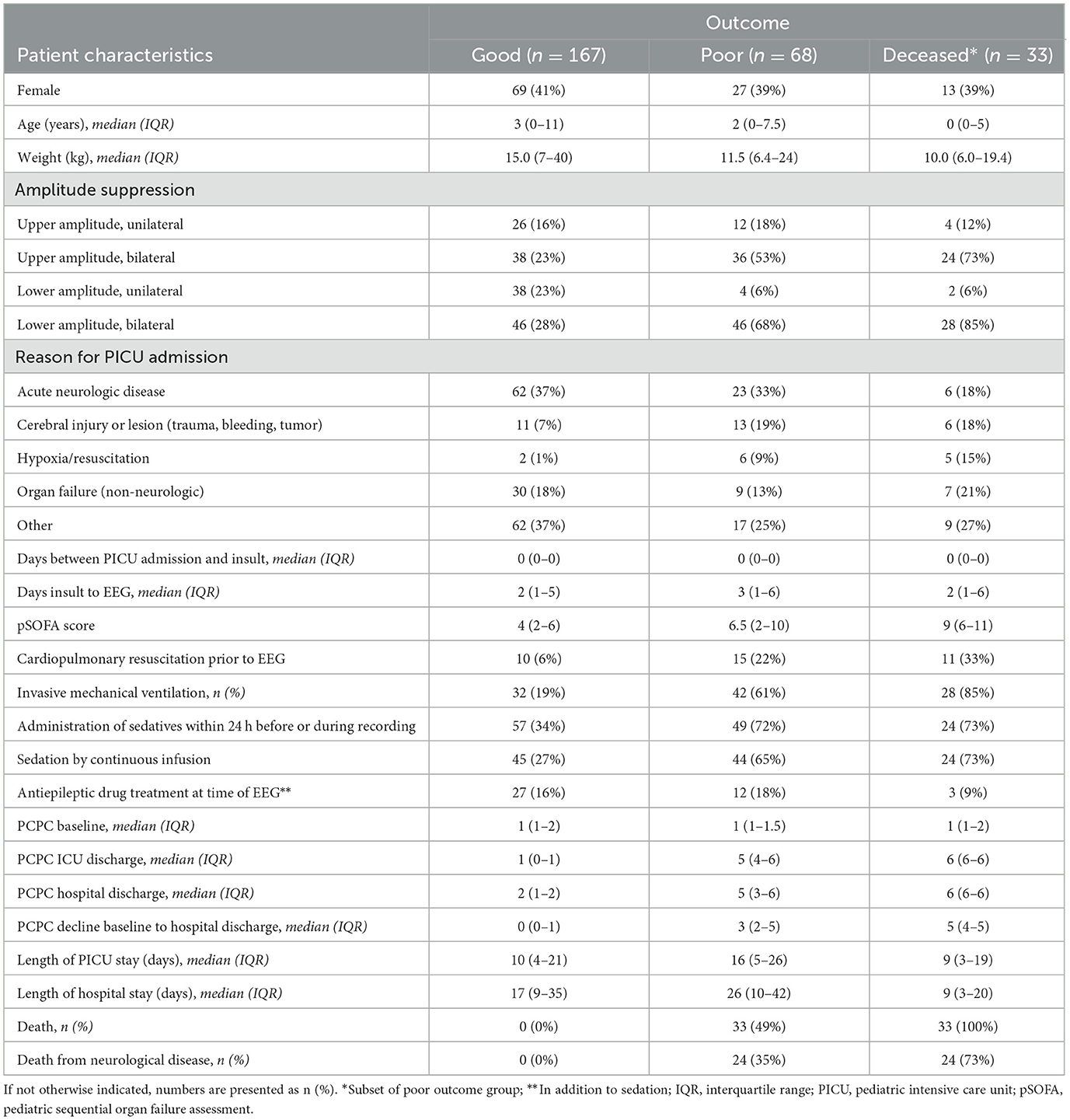
Table 1. Patient characteristics by outcome group.
In the abstract, there was a misspelling in the sentence: “PICU admission occurred due to neurological reasons in 43% and patients had high overall disease severity.”
This has been corrected to read: “PICU admission occurred due to acute neurological diseases in 36% and patients had high overall disease severity.”
There was a misspelling in the sentence: “The included patients displayed high degrees of acute overall and neurological illness with median pSOFA scores of 4 (interquartile range 2–7) and neurological reasons for PICU admission in 156 cases (66%) (Table 1).”
A correction has been made to the section Results, first paragraph, and the corrected sentence reads: “The included patients displayed high degrees of acute overall and neurological illness with median pSOFA scores of 4 (interquartile range 2–7) and neurological reasons for PICU admission in 117 cases (50%) (Table 1)”.
The original version of this article has been updated.
Publisher's note
All claims expressed in this article are solely those of the authors and do not necessarily represent those of their affiliated organizations, or those of the publisher, the editors and the reviewers. Any product that may be evaluated in this article, or claim that may be made by its manufacturer, is not guaranteed or endorsed by the publisher.
Keywords: amplitude-integrated EEG, pediatric intensive care unit, children, neurocritical illness, mortality, PCPC, outcome, amplitude suppression
Citation: Paul L, Greve S, Hegemann J, Gienger S, Löffelhardt VT, Della Marina A, Felderhoff-Müser U, Dohna-Schwake C and Bruns N (2025) Correction: Association of bilaterally suppressed EEG amplitudes and outcomes in critically ill children. Front. Neurosci. 19:1741863. doi: 10.3389/fnins.2025.1741863
Received: 07 November 2025; Accepted: 13 November 2025;
Published: 28 November 2025.
Edited and reviewed by: Dong-Xin Wang, Peking University First Hospital, China
Copyright © 2025 Paul, Greve, Hegemann, Gienger, Löffelhardt, Della Marina, Felderhoff-Müser, Dohna-Schwake and Bruns. This is an open-access article distributed under the terms of the Creative Commons Attribution License (CC BY). The use, distribution or reproduction in other forums is permitted, provided the original author(s) and the copyright owner(s) are credited and that the original publication in this journal is cited, in accordance with accepted academic practice. No use, distribution or reproduction is permitted which does not comply with these terms.
*Correspondence: Nora Bruns, bm9yYS5icnVuc0B1ay1lc3Nlbi5kZQ==