Abstract
Background: Tranexamic acid (TXA) has been applied in various types of surgery for hemostasis purposes. The efficacy and safety of TXA are still controversial in different surgeries. Guidelines for clinical application of TXA are needed.
Materials and method: We systematically searched multiple medical databases for meta-analyses examining the efficacy and safety of TXA. Types of surgery included joint replacement surgery, other orthopedic surgeries, cardiac surgery, cerebral surgery, etc. Outcomes were blood loss, blood transfusion, adverse events, re-operation rate, operative time and length of hospital stay, hemoglobin (Hb) level, and coagulation function. Assessing the methodological quality of systematic reviews 2 (AMSTAR 2) and Grading of Recommendations, Assessment, Development and Evaluation (GRADE) were used for quality assessment of the included meta-analyses. Overlapping reviews were evaluated by calculating the corrected covered area (CCA).
Result: In all, we identified 47 meta-analyses, of which 44 of them were of “high” quality. A total of 319 outcomes were evaluated, in which 58 outcomes were assessed as “high” quality. TXA demonstrates significant hemostatic effects in various surgeries, with lower rates of blood transfusion and re-operation, shorter operative time and length of stay, and higher Hb levels. Besides, TXA does not increase the risk of death and vascular adverse events, but it is a risk factor for seizure (a neurological event) in cardiac surgery.
Conclusion: Our study demonstrates that TXA has a general hemostatic effect with very few adverse events, which indicates TXA is the recommended medication to prevent excessive bleeding and reduce the blood transfusion rate. We also recommend different dosages of TXA for different types of adult surgery. However, we could not recommend a unified dosage for different surgeries due to the heterogeneity of the experimental design.
Systematic Review Registration:clinicaltrials.gov/, identifier CRD42021240303
1 Introduction
Hemorrhage is a leading cause of death in surgery and trauma (; ), Allogeneic blood transfusion, autologous blood donation, and acute normovolemic hemodilution are the first-line treatment for hemorrhage (; ; ). However, without the potential risk of serious immune reactions and viral infections, antifibrinolytic agents seem to be a safe and affordable alternative (). Tranexamic acid (TXA), a synthetic lysine analogue, has been frequently used for hemostasis (; ). TXA inhibits the activation of plasminogen by blocking the lysine-binding sites of plasminogen, leading to increased clot stabilization and thus reducing blood loss ().
Investigation of TXA has been a popular topic recently where numerous meta-analyses have discussed the hemostatic efficacy and safety of TXA. Hunt et al. estimated a reduction of 120,000 deaths worldwide each year if TXA was given to all patients with severe traumatic bleeding (). TXA was also demonstrated to be a safe and effective choice in total knee arthroplasty (TKA), total hip arthroplasty (THA), cardiac surgery, and other types of surgeries (; ; ). Moreover, TXA has also been reported in treating postpartum hemorrhage ().
So far, numerous RCTs and meta-analyses have discussed TXA in various surgery types and reported significant effects. However, the methodological and statistical qualities of these studies are heterogeneous. Besides, the risks of embolism and other complications are unclear. In order to provide a comprehensive review of existing evidence, we performed an umbrella review of meta-analyses to demonstrate the efficacy and safety of TXA in various surgeries and provide a guideline for clinical application.
2 Methods
2.1 Search Strategy
Our review followed the guidelines for Meta-analyses of Observational Studies in Epidemiology and the Preferred Reporting Items for Systematic Reviews and Meta-analyses (PRISMA), and the protocol was registered in PROSPERO (registration No CRD42021240303) (; ). Two independent researchers (PH and JJL) searched Medline, Embase, Web of Science, and Cochrane databases updated to 15 September for meta-analyses. The detailed search strategy is shown in Supplementary Appendix S1. We processed another search at the end of the study on 16 February 2022. We would only replace the included study when the newly published study had a different conclusion. Two researchers (RL and YD) independently screened the titles and abstracts, and articles satisfying the inclusion criteria were accessed for full-text review. They independently reviewed full-text articles for eligibility. When data were incomplete, the corresponding author was contacted by email and invited to provide additional information. Reference lists of eligible reviews and meta-analyses were searched for additional citations.
2.2 Inclusion Criteria
We only included meta-analyses of RCTs or meta-analyses of observational studies discussing TXA. Post hoc analyses and systematic reviews without meta-analysis were excluded. Articles were included when the exposure group was divided based on the dosage or administration method, and patients who just received the placebo or saline were included in the controlled group. We included studies with comparisons of different administration methods and dosages (high versus low dose and any versus none). Bayesian meta- and network meta-analysis were excluded unless we could extract the complete statistical data separately from a subgroup analysis. Included studies must be in accordance with the Declaration of Helsinki and approved by the respective ethics committees.
2.3 Data Extraction
Two researchers (SR and JJL) independently extracted data from eligible articles. Our data extraction methodology was recommended and revised by the Joanna Briggs Institute (Supplementary Appendix S2) (). Outcomes were classified as blood loss (total blood loss, intraoperative blood loss, and postoperative blood loss), risk of adverse effects (risk of massive hemorrhage, risk of transfusion requirement, risk of postoperative edema and ecchymosis, risk of rebleeding, and risk of significant adverse effects), and other outcomes (surgical field score, satisfaction with the surgical field, operative time, intraoperative blood pressure, hemoglobin drop, hematocrit drop, and length of hospital stay). We only compared the preoperative dose, which was more important than the maintenance dose. Considering that more variables would bring heterogeneity and that the maintenance dose was also correlated with the preoperative dose, we did not compare the maintenance dose. If an article presented separate meta-analyses for more than one health outcome, we included each of these separately. Standard mean difference (SMD) or weighted mean difference (WMD) was used for continuous variable statistics, and relative risks (RR), odds ratios (OR), or risk difference (RD) was used for discontinuous variable statistics.
2.4 Quality Assessment
We used “assessing the methodological quality of systematic reviews (AMSTAR) 2” to assess the methodological quality of the included meta-analyses (Supplementary Appendix S3) (). We also used the Grading of Recommendations, Assessment, Development and Evaluation (GRADE) tool to evaluate the quality of evidence for each included outcome (Supplementary Appendix S4) (). The GRADE tool classifies evidence for outcomes from systematic reviews and meta-analyses into “high,” “moderate,” “low,” and “very low.” The study design of the included studies decides the baseline quality of evidence, but other factors can decrease or increase the quality level (for the detailed appraisal rule, see Supplementary Appendix S4). Two researchers (RL and JJL) rated the methodological quality of the reviews.
2.5 Statistical Analysis
The heterogeneity in the results of meta-analyses was assessed by chi-square and I2 tests, followed by appropriate analysis models (fixed-effect or random-effect). Chi-squared p < 0.05 and I2 >50% indicated high heterogeneity, and random-effects models were used in these outcomes, whereas chi-squared p > 0.05 and I2<50% were considered acceptable heterogeneity, and a fixed-effects model was used instead. Most of the meta-analyses included in our review used software (Stata and RevMan) to process their statistical analyses. Publication bias was evaluated by funnel plots and further confirmed by Egger’s and Begg’s test, and p < 0.05 was considered as the statistically significant risk of bias (). Small-study effects that lead to potential reporting or publication bias could also be avoided by Egger’s test. However, if the data of Egger’s test were not reported, then the meta-analyses, including no more than five studies, were considered high publication bias. Sensitivity analysis was performed in the meta-analysis by excluding each study one at a time to check whether the effectiveness of the outcome was determined by individual studies. Overlapping reviews happened frequently when two or more studies evaluated the same exposure and outcome. To determine the potential overlapping, a graphical cross-tabulation was made to calculate the corrected covered area (CCA), which could quantify the degree of overlap (). Detailed rules and standards of calculation are explained in Supplementary Appendix S5.
Besides, Shojania et al. suggested that more than 50% of systematic reviews were outdated after 5.5 years (). Hence, if the gap between the year of publication of potential overlapping studies is >5 years or if meta-analysis only included studies published more than 15 years ago, the previous one would be excluded directly. Update of eligible reviews was recommended by and satisfied the following criterion: the review achieved a minimum rating of the Moderate AMSTAR score. We identified newly published studies that met the inclusion criteria and matched the keywords of previous studies; the outcomes from the newly published one would change the conclusion or credibility of the review.
3 Result
3.1 Literature Search and Characteristics of Included Studies
Figure 1 (flowchart of literature search) shows the procedure for the literature search and selection of eligible studies. Overall, 736 unique records (excluded duplicates) were searched across 4 databases, and 292 full-text articles were screened in full text. After the preliminary screening, 154 meta-analyses met the inclusion criteria. Supplementary Appendix S5 describes citation matrices of CCA for reviews with overlapping associations. In all, 107 meta-analyses reported 25 overlapping topics. After removing overlapping and outdated reviews, 47 studies were included in our umbrella review with 319 unique outcomes. Supplementary Appendices S6,S7 show the characteristics of included studies and excluded studies with their reasons for exclusion. Supplementary Appendices S8,S9 show specific data of the detailed outcomes in Result and Discussion.
FIGURE 1
The included meta-analyses were divided into eight categories as per the types of surgery: joint replacement surgery, other orthopedic surgery, cerebral surgery, cardiac surgery, nasal surgery, obstetrics and gynecological surgery, other types of surgery, and complex antifibrinolytic agents. The 47 included studies were published from 2012 to 2022, and 42 of them were published within 6 years (2016 and later). A total of 45 of 47 studies were rated as High quality in AMSTAR, and the remaining two were rated as Moderate quality. All the studies of High quality were meta-analyses of RCTs. AMSTAR scores for individual studies included in the umbrella review are shown in Supplementary Appendix S10. Among 319 outcomes, there were 101 outcomes assessed as at least of Moderate quality by GRADE, and 58 of them were rated as High quality. GRADE classification of the quality of evidence is listed in Supplementary Appendix S11.
3.2 Blood Loss
Blood loss, being the core outcome of our study, had complicated data for subgroup analysis. We divided outcomes into those of the WMD group and the SMD group. The WMD group included subgroups of total blood loss, intraoperative blood loss, and postoperative blood loss (see Table 1).
TABLE 1
| Author year | Surgery | Dosage | Characteristic | Outcome | Subgroup | RCTs | Patients | 95% CI Estimate (WMD) | GRADE | |
| Spine surgery | 5–30 mg/kg | IV | PTBL | Continuous | 8 | 674 |  | -214.68 [-281.10, -148.27] | High | |
| OS | 10–20 mg/kg | IV | IBL | Total dosage | 10 | 655 | -153.97 [-166.52, -141.41] | High | ||
| Spine surgery | 5–30 mg/kg | IV | PTBL | Noncontinuous | 2 | 128 | -402.52 [-522.74, -282.29] | Moderate | ||
| THA | Inconsistent | IV/topical | TBL | — | 11 | 687 | -369.17 [-481.73, -256.61] | Moderate | ||
| THA | Inconsistent | IV/topical/oral | TBL | — | 9 | 488 | -331.00 [-436.35, -225.65] | Moderate | ||
| PAO | Inconsistent | IV | TBL | — | 3 | 333 | -330.49 [-390.16, -270.83] | Moderate | ||
| OS | 10–20 mg/kg | IV | IBL | 20 mg/kg | 3 | 133 | -288.90 [-400.86, -176.94] | Moderate | ||
| Spine surgery | 5–30 mg/kg | IV | PTBL | Any administration | 10 | 802 | -266.85 [-351.18, -182.52] | Moderate | ||
| Spine surgery | 5–30 mg/kg | IV | IBL | — | 7 | 587 | -210.38 [-267.31, -153.45] | Moderate | ||
| IFS | 1–3 g | IV | PBL | — | 4 | 339 | -172.83 [-241.43, -104.23] | Moderate | ||
| THA | Inconsistent | IV/topical/oral | PBL | — | 8 | 416 | -157.85 [-232.36, -83.34] | Moderate | ||
| IFS | 1–3 g | IV | HBL | — | 3 | 267 | -144.20 [-210.74, -77.66] | Moderate | ||
| IFS | Inconsistent | IV | HBL | — | 2 | 177 | -139.05 [-213.67, -64.43] | Moderate | ||
| Spine surgery | Inconsistent | IV/topical/oral | PBL | — | 3 | 251 | -95.12 [-142.65, -47.60] | Moderate | ||
| Vaginal delivery | 1 g | IV | PBL | — | 2 | 301 | -41.24 [-55.50, -26.98] | Moderate | ||
| IFS | 1–3 g | IV | IBL | — | 4 | 339 | -33.46 [-52.40, -14.52] | Moderate | ||
| Tonsillectomy | 10 mg/kg | IV/topical | TBL | — | 2 | 180 | -32.72 [-42.66, -22.78] | Moderate | ||
| IFS | Inconsistent | IV | PBL | — | 3 | 314 | -14.38 [-20.83, -7.93] | Moderate | ||
| Vaginal delivery | 1 g | IV | IBL | — | 3 | 4,140 | -14.30 [-28.39, -0.22] | Moderate |
High and moderate outcomes of blood loss (ml) with weighted mean difference (WMD).
OS, orthognathic surgery; PAO, periacetabular osteotomy; IFS, intertrochanteric fracture surgery; PTBL, perioperative total blood loss; IBL, intraoperative blood loss; PBL, postoperative blood loss; TBL, total blood loss; HBL, hidden blood loss.
Nine types of surgeries provided WMD outcomes with a relatively higher quality (at least Moderate GRADE), and two of them were High GRADE. IV TXA in spine surgery (WMD -214.68ml, 95% CI, -281.10 to -148.27) and orthognathic surgery (WMD -153.97ml, 95% CI, -166.52 to -141.41) could reduce perioperative bleeding and intraoperative bleeding, respectively (; ). Besides, reported that antifibrinolytic drugs could significantly reduce blood loss in THA (WMD -389.14, 95% CI, -483.95 to -295.23). In conclusion, TXA could effectively reduce blood loss and play a more significant role in major orthopedic surgery, including THA, TKA, and spine surgery.
As for subgroups, antifibrinolytic drugs could lead to a reduction of both intraoperative and postoperative blood loss (see Supplementary Appendix S12). A few studies that discussed SMD blood loss are shown in Supplementary Appendix S12d. IV TXA could significantly reduce intraoperative blood loss in endoscopic sinus surgery (SMD -0.66, 95% CI, –0.86 to -0.46) (). Du and Feng concluded that IV or topical TXA could reduce intraoperative blood loss in spinal fusion surgery (SMD -0.32, 95% CI, -0.58 to -0.06) ().
3.3 Transfusion Rate and Adverse Events
Blood transfusion is an emergency treatment and could reflect the critical situation of the patient. In all, 14 surgeries provided outcomes with a relatively higher quality, and 16 outcomes were rated as High (see Tables 2, 3). According to 42 RCTs, concluded that TXA would reduce the transfusion rate in major orthopedic surgery by 49% (RR 0.51, 95% CI, 0.46–0.56). Besides, data from 31 RCTs demonstrated that IV or topical TXA in cardiac surgery could reduce the transfusion rate by 29% (RR 0.71, 95% CI, 0.65–0.78) (). We also summarized incidences of adverse events containing seizure (a neurologic event), death, and vascular adverse events (see Table 4). Vascular adverse events included deep vein thrombosis (DVT), stroke, myocardial infarction (MI), and pulmonary embolism (PE). Five outcomes were rated as High. reported that IV TXA could effectively reduce the rate of all adverse events in calcaneal fracture surgery (RR 0.26, 95% CI, 0.15–0.42). Li et al. indicated that IV antifibrinolytic drugs decreased the risk of DVT in spine surgery by 64%. Besides, TXA decreased the mortality of upper gastrointestinal bleeding by 41% (). In contrast, displayed that high-dose TXA increased the risk of seizure by nearly five times in cardiac surgery, and also demonstrated an increased incidence of seizure by more than six times. Therefore, we concluded that TXA could reduce the transfusion rate and that TXA is also a protective factor from vascular adverse events and death, but it is a risk factor for seizures.
TABLE 2
| Author year | Surgery | Agent | Characteristic | Subgroup | RCTs | Patients | 95% CI Estimate | |
| OS | 10–20 mg/kg | IV | 10 mg/kg | 3 | 290 | 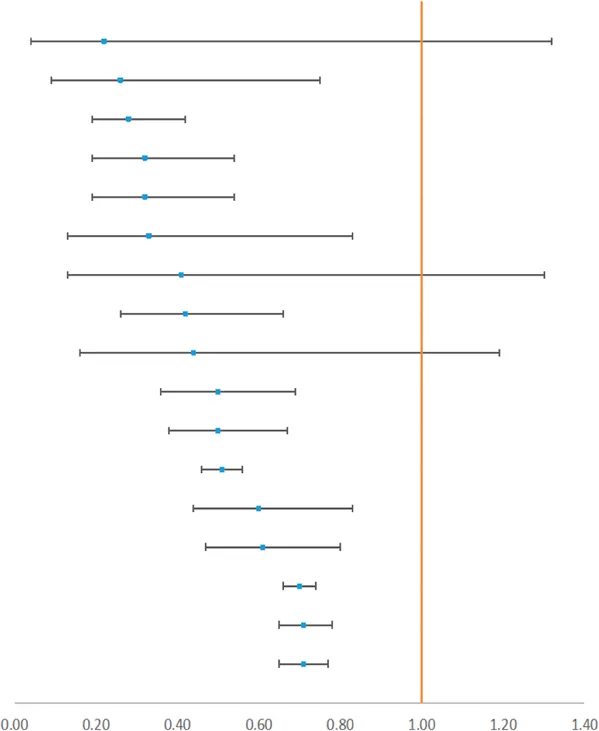 | OR 0.22 [0.04,1.32] | |
| PAO and HTO | Inconsistent | IV/topical | — | 6 | 665 | RR 0.26 [0.09,0.75] | ||
| TKA | 0.5–3 g | topical | Any dosage | 6 | 647 | RR 0.28 [0.19,0.42] | ||
| CABG | 10–20 mg/kg | IV | Off-pump | 3 | 206 | RR 0.32 [0.19,0.54] | ||
| OS | 10–20 mg/kg | IV | Any dosage | 7 | 463 | OR 0.33 [0.13, 0.83] | ||
| OS | 10–20 mg/kg | IV | 20 mg/kg | 3 | 133 | OR 0.41 [0.13,1.30] | ||
| THA | Inconsistent | IV/topical | — | 14 | 816 | RR 0.42 [0.26,0.66] | ||
| Spinal fusion | 10–30 mg/kg | IV/topical | — | 3 | 231 | RR 0.44 [0.16,1.19] | ||
| IFS | 10–15 mg/kg | IV | — | 8 | 836 | OR 0.50 [0.36,0.69] | ||
| Cardiac surgery | Inconsistent | IV/topical | Low dosage | 7 | 265 | RR 0.50 [0.38,0.67] | ||
| MOS | Inconsistent | IV/topical/oral | — | 42 | 2,649 | RR 0.51 [0.46,0.56] | ||
| Cardiac surgery | Inconsistent | IV/topical | Off-pump | 7 | 660 | RR 0.60 [0.44,0.83] | ||
| Prostate surgery | 10–15 mg/kg | IV/oral/local spray | Any dosage | 7 | 718 | RR 0.61 [0.47,0.80] | ||
| Cardiac surgery | Inconsistent | IV | — | 28 | 8,053 | RR 0.70 [0.66,0.74] | ||
| Cardiac surgery | Inconsistent | total | — | 31 | 8,925 | RR 0.71 [0.65,0.78] | ||
| Cardiac surgery | Inconsistent | IV/topical | High dosage | 12 | 2043 | RR 0.71 [0.65,0.77] |
Outcomes of the transfusion rate with high GRADE.
OS, orthognathic surgery; PAO, periacetabular osteotomy; HTO, high tibial osteotomy; CABG, coronary artery bypass grafting; MOS, major orthopedic surgery (TKA, THA, and spine surgery); IFS, intertrochanteric fracture surgery.
TABLE 3
| Author year | Surgery | Agent | Characteristic | Subgroup | RCTs | Patients | 95% CI Estimate | |
|---|---|---|---|---|---|---|---|---|
| TKA | 0.5–3 g | Topical | Total dose<1.5 g | 2 | 168 | 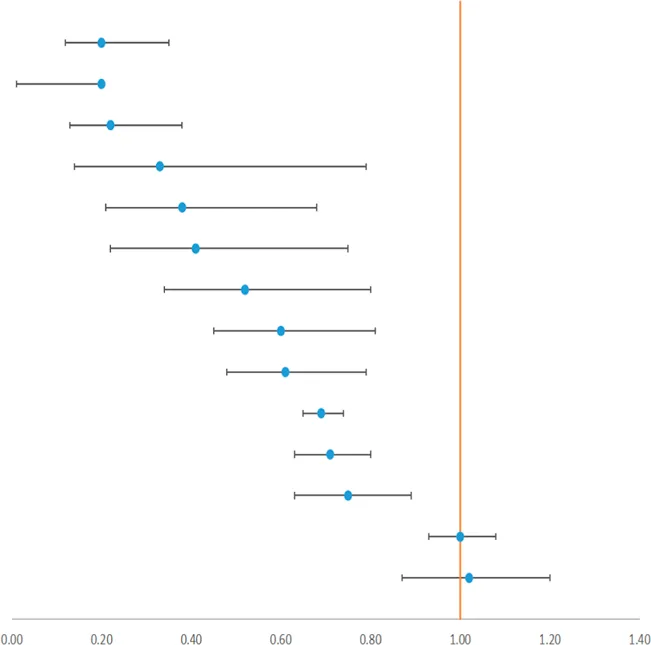 | RR 0.20 [0.12,0.35] | |
| a | HTO | Inconsistent | IV/topical | — | 3 | 332 | RR 0.20 [0.01,4.10] | |
| TKA | 0.5–3 g | Topical | Clamped drain<2 h | 3 | 250 | RR 0.22 [0.13,0.38] | ||
| TKA | 0.5–3 g | Topical | Clamped drain ≥2 h | 2 | 128 | RR 0.33 [0.14,0.79] | ||
| TKA | 10 mg/kg | IV | — | 5 | 398 | RR 0.38 [0.21,0.68] | ||
| TKA | 0.5–3 g | Topical | Total dose ≥1.5 g | 4 | 344 | RR 0.41 [0.22,0.75] | ||
| Montroy et al. (2017) | Cancer | Inconsistent | IV/topical | — | 7 | 955 | RR 0.52 [0.34,0.80] | |
| Prostate surgery | 10–15 mg/kg | IV/oral/local spray | — | 3 | 462 | RR 0.60 [0.45,0.81] | ||
| Spine surgery | 5–30 mg/kg | IV | — | 5 | 471 | RR 0.61 [0.48,0.79] | ||
| Cardiac surgery | Inconsistent | IV/topical | Low dosage | 5 | 496 | RR 0.69 [0.65,0.74] | ||
| Cardiac surgery | Inconsistent | IV/topical | On-pump | 23 | 3,299 | RR 0.71 [0.63,0.80] | ||
| Spine surgery | 4–100 mg/kg | IV | — | 12 | 815 | RR 0.75 [0.63,0.89] | ||
| UGIB | Inconsistent | IV | — | 8 | 1763 | RR 1.00 [0.93,1.08] | ||
| Cardiac surgery | Inconsistent | topical | — | 4 | 797 | RR 1.02 [0.87,1.20] |
Outcomes of the transfusion rate with moderate GRADE.
HTO, high tibial osteotomy; UGIB, upper gastrointestinal bleeding; EACA , epsilon-aminocaproic acid; AP, aprotinin.
Considering the overall presentation, we only show half the outcome of the study by .
We included these complex data because we failed to extract the solo data of TXA from the study.
TABLE 4
| Author year | Surgery | Agent | Characteristic | Outcome | Subgroup | RCTs | Patients | 95% CI Estimate | GRADE | |
| Calcaneal fracture | 10–20 mg/kg | IV | Any event | — | 6 | 389 | 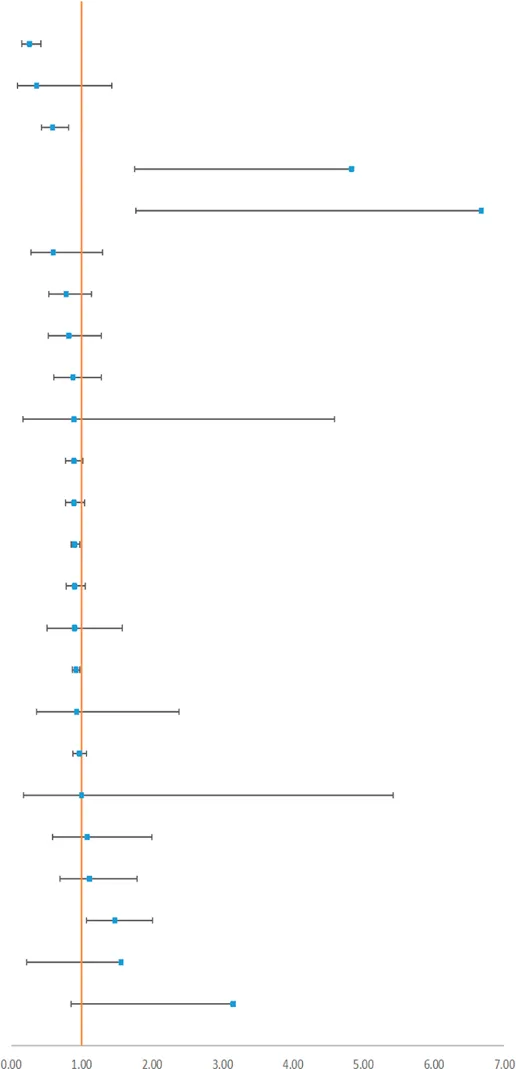 | RR 0.26 [0.15,0.42] | High | |
| Spine surgery | 4–100 mg/kg | IV | DVT | — | 17 | 1191 | RR 0.36 [0.09,1.43] | High | ||
| UGIB | Inconsistent | IV/topical/oral | Mortality | — | 10 | 2013 | RR 0.59 [0.43,0.82] | High | ||
| a | Cardiac surgery | Inconsistent | IV/topical | Seizure | High dosage | 5 | 5,807 | RR 4.83 [1.75,13.33] | High | |
| Zhang (2019) a | CABG | 10–20 mg/kg | IV | Seizure | — | 4 | 4,911 | RR 6.67 [1.77,25.20] | High | |
| Montroy (2017) | Cancer | Inconsistent | IV/topical | DVT | — | 9 | 1075 | OR 0.60 [0.28, 1.30] | Moderate | |
| Cardiac surgery | Inconsistent | IV/topical | Mortality | — | 29 | 8,907 | RR 0.78 [0.54,1.14] | Moderate | ||
| CABG | 10–20 mg/kg | IV | Mortality | On-/off-pump | 17 | 6,259 | RR 0.82 [0.53,1.28] | Moderate | ||
| Cardiac surgery | Inconsistent | IV/topical | Stroke | — | 32 | 9,257 | RR 0.88 [0.61,1.28] | Moderate | ||
| UGIB | Inconsistent | IV | Vascular event | — | 6 | 1041 | RR 0.89 [0.17,4.59] | Moderate | ||
| Cerebral hemorrhage | Inconsistent | IV | Mortality | All-follow-up | 20 | 10,253 | OR 0.89 [0.77, 1.02] | Moderate | ||
| Cardiac surgery | Inconsistent | Topical/IV | MI | — | 32 | 8,688 | RR 0.89 [0.77,1.04] | Moderate | ||
| Ker (2015) | Acute trauma | Inconsistent | IV | Mortality | — | 2 | 20,367 | RR 0.90 [0.85,0.97] | Moderate | |
| CABG | 10–20 mg/kg | IV | MI | On-/off-pump | 23 | 6,714 | RR 0.90 [0.78,1.05] | Moderate | ||
| CABG | 10–20 mg/kg | IV | MI | On-pump | 13 | 1286 | RR 0.90 [0.51,1.58] | Moderate | ||
| Brain trauma | 1g | IV | Mortality | — | 5 | 30,262 | RR 0.92 [0.87,0.97] | Moderate | ||
| CABG | 10–20 mg/kg | IV | Mortality | On-pump | 12 | 1302 | RR 0.93 [0.36,2.38] | Moderate | ||
| Cardiac surgery | Inconsistent | IV | Any event | — | 44 | 9,896 | RR 0.97 [0.88,1.07] | Moderate | ||
| TKA | IV 10 mg/kg | IV | DVT | — | 6 | 394 | RR 1.00 [0.18,5.42] | Moderate | ||
| Cardiac surgery | Inconsistent | IV/topical | PE | — | 18 | 6,587 | RR 1.08 [0.59,2.00] | Moderate | ||
| MOS | Inconsistent | IV/topical/oral | DVT | — | 44 | 2,689 | RR 1.11 [0.69,1.79] | Moderate | ||
| Cerebral hemorrhage | Inconsistent | IV | Vascular event | — | 3 | 2,904 | OR 1.47 [1.07,2.01] | Moderate | ||
| a | CABG | Inconsistent | IV | MI | Off-pump | 9 | 798 | RR 1.56 [0.22,11.23] | Moderate | |
| a | Hemoptysis | 500 mg-1 g | IV | Any event | — | 2 | 70 | OR 3.15 [0.85,11.63] | Moderate |
Outcomes of adverse events with high or moderate GRADE.
UGIB, upper gastrointestinal bleeding; CABG, coronary artery bypass grafting; MOS, major orthopedic surgery (TKA, THA, and spine surgery); DVT, deep venous thrombosis; MI, myocardial infarction; PE, pulmonary embolism.
Considering the overall presentation, we only show half the outcome of the studies by , , and .
We included these complex data because we failed to extract the solo data of TXA from the study.
3.4 Other Outcomes
We also evaluated outcomes of reoperation rate, operative time, length of hospital stay, and hemoglobin (Hb). Re-operation was the additional surgical intervention due to poor postoperative recovery. The reduction in the postoperative reoperation rate could avoid unnecessary pain and the economic burden on patients. As shown in Supplementary Appendix S13a, reported that IV TXA led to a 54% decrease in the reoperation rate in coronary artery bypass grafting (CABG) (RR 0.46, 95% CI, 0.31, 0.68). Similarly, showed that IV or topical TXA averts 38% of reoperation in cardiac surgery.
Besides, the operative time and length of hospital stay were also significantly shortened with TXA treatment (see Supplementary Appendix S13b,c). Zhao et al. demonstrated the decreasing operation time of orthognathic surgery with IV TXA (WMD -16.18, 95% CI, -19.60 to -12.75) (). Tsai et al. also reported that IV TXA could shorten the length of hospital stay for hemoptysis patients by 1.62 days (). These outcomes demonstrated the hemostatic effect of TXA, with faster postoperative recovery.
Furthermore, postoperative Hb outcomes have been displayed in Supplementary Appendix S14a,b. Chen et al. determined that the IV TXA group gained a higher Hb level after spine surgery (SMD 0.20, 95% CI, 0.02–0.38) (). and also suggested that patients receiving TXA showed fewer Hb decreases. However, in terms of the coagulation function, there is no significant difference in partial thromboplastin time and prothrombin time (see Supplementary Appendix S14c).
3.5 Recommended Application
We summarized the recommended application of TXA in different types of adult surgery after the overall data analysis. IV-combined topical TXA (1–1.5 g IV + 1–3 g topical) was recommended for joint replacement surgery, and 10–15 mg/kg IV TXA was recommended in spinal surgery. 10 mg/kg IV TXA was recommended for cardiac surgery, and 2 g IV TXA was recommended in cerebral hemorrhage. Other detailed data are presented in Table 5.
TABLE 5
| Types of surgery | Dosage | Administration | References |
|---|---|---|---|
| Major orthopedic surgery (joint replacement surgery) | 1–1.5 g IV + | ||
| 1–3 g topical | IV combined topical | [40] | |
| Cardiac surgery | 10 mg/kg | IV | [29] |
| Cerebral hemorrhage | 1g | IV | [45] |
| Spinal surgery | 10–15 mg/kg | IV | [22] |
| Intertrochanteric fracture | 4 g | IV | [43] |
| Craniosynostosis surgery | 10 or 50 mg/kg | IV | [46] |
| Nasal surgery | 1 g | Oral | [49] |
| Cesarean section | 10 or 15 mg/kg | IV | [52] |
| Tonsillectomya | 10 mg/kg | IV | [55] |
| Orthognathic surgery | 10 mg/kg | IV | [23] |
| Minor oral surgery | 4.8%b | Gargle | [56] |
| Hemoptysis | 500 mg | Nebulization | [32] |
| Prostatectomy | 500 mg or 1 g | IV | [58] |
Recommended dosage of TXA in different types of adult surgery.
The corresponding meta-analysis includes three RCTs and four case–control studies.
10 ml TXA, gargle for 2 min.
4 Discussion
4.1 Principle Findings
We analyzed data from 47 meta-analyses and demonstrated that TXA effectively reduced blood loss and the transfusion rate in various surgeries. TXA resulted in a higher Hb level, shorter operative time and length of hospital stay, and a decreased rate of reoperation. Besides, TXA did not increase the risk of death and vascular adverse events, but it was a risk factor for seizure in cardiac surgery. Therefore, we believe that TXA is a safe choice for hemostasis in major surgeries, in particular with a high risk of allogeneic blood transfusion. We also recommended the dosage of TXA in different types of adult surgery.
4.2 Supplemental Outcome Measures of Dosage and Administration
4.2.1 Major Orthopedic Surgery
A high dose of IV TXA and combined IV and topical TXA are recommended in joint replacement surgery. In terms of dosage, Chen et al. suggested that a high dose of IV TXA (30 mg/kg) was more effective than a low dose (15–20 mg/kg) in reducing blood loss without increasing the risk of DVT (). However, the heterogeneity may come from selection biases: , Chen et al., and mentioned that patients with a cardiovascular disease history and renal insufficiency were excluded, but Guo et al., , and did not. As for administration routes, detailed outcomes are displayed in Supplementary Appendix S15. Li’s research suggested topical usage: topical TXA reduced 33.38 ml more than IV TXA did on total blood loss (WMD 33.38, 95% CI, 19.24–47.51). However, demonstrated insignificant differences in the blood transfusion rate and adverse effects. In addition, similar outcomes were found in oral and IV TXA for all aspects. However, it should be noted that combined IV and topical TXA would be better than a single route. Sun’s research showed that the combined group decreased 198.07 ml total blood loss (WMD -198.07, 95% CI, -307.67 to -88.46) and the blood transfusion rate was 60% less than that of the single route (RR 0.40, 95% CI, 0.24–0.68). and also reported similar outcomes preferring combined IV and topical TXA (see Supplementary Appendix S15b) (; ).
4.2.2 Other Types of Orthopedic Surgery
Other types of orthopedic surgery were also included. As for spinal surgery, a starting dose of 10–15 mg/kg and a maintenance dose of 1.0–2.0 mg/(kg·h) were optimal in Chen’s study (). demonstrated that intraoperative blood loss and postoperative blood loss were significantly reduced in adolescents with idiopathic scoliosis, but this could not be confirmed in lumbar pedicle subtraction osteotomy surgery. Besides, concluded that 4 g TXA leads to the least amount of blood loss in femoral intertrochanteric fracture (WMD -570.8, 95% CI, -1071.04 to -70.56), which demonstrated that a larger dose corresponds to better effectiveness when under the premise of safety. Moreover, reported that TXA could significantly reduce the incidence of postoperative incision complications in calcaneal fracture (RR 0.26, 95% CI, 0.15–0.42), which is common but inevitable.
4.2.3 Cerebral Surgery
Three meta-analyses of cerebral surgery were included. found that early TXA treatment (within 3 h) after cerebral hemorrhage was effective in reducing the incidence of deaths and hematoma (as well as the volume of hematoma) caused by cerebral trauma. However, delayed TXA treatment (beyond 3 h) would not benefit the patients. Therefore, they suggested that patients with acute cerebral hemorrhage should use TXA as soon as possible (<3 h). Similarly, also agreed that patients with acute brain injury <3 h or a mild to moderate Glasgow Coma Scale score would need early TXA treatment. In addition, the optimal dose of TXA remained controversial (50 mg/kg or 10 mg/kg) in craniosynostosis surgery, but demonstrated that both doses could significantly reduce blood transfusion.
4.2.4 Cardiac Surgery
In terms of cardiac surgery, we included three studies and summarized the following suggestions: low-dose IV TXA was the best choice, and it was unnecessary to exclude patients with renal impairment, coagulation dysfunction, or a history of thromboembolism. All these included studies indicated that high-dose TXA was significantly associated with the incidence of seizure (; ; ). demonstrated that low-dose TXA (10 mg/kg) was sufficient to reduce blood transfusion requirements without increasing the risk of seizure, although high-dose TXA displayed less blood loss. In addition, found that topical TXA (whether combined with IV TXA or not) was not enough to reduce bleeding or the blood transfusion rate, and therefore, IV TXA was recommended in cardiac surgery.
4.2.5 Nasal Surgery
According to the four included articles, different routes of administration had a similar hemostatic effect, and both oral and IV TXA were reliable in short-term surgical results and for thromboembolic complications (; ; ). Due to the narrow scope of surgery in the nasal cavity, slight bleeding could distort the vision of the endoscope. TXA reduced intraoperative blood loss and improved the quality of the surgical field in endoscopic sinus surgery, thereby increasing the surgeon’s satisfaction and the success rate of the operation (; ). However, reported that giving oral TXA (1 g) (WMD -61.70, 95% CI, –83.02 to –40.39) 2 h before rhinoplasty surgery reduced more intraoperative bleeding than IV TXA (10 mg/kg) (WMD –23.88, 95% CI, –45.19 to –2.58).
4.2.6 Obstetrics and Gynecological Surgery
TXA has been used generally in cesarean section, vaginal delivery, and heavy menstrual bleeding (>80 ml blood loss per menstrual cycle). Wang’s study demonstrated that different doses (10 or 15 mg/kg) of TXA had similar effects in reducing blood loss and the transfusion rate in cesarean section (). Wang also found that TXA significantly reduced the application of uterine tension agents (oxytocin and methylergometrine). In addition, according to Bryant-Smith’s study, TXA showed better efficacy than nonsteroidal anti-inflammatory drugs and progestogens ().
Besides, a study mainly involving orthopedics, obstetrics and gynecology, and maxillofacial and oral surgery showed the most common single preoperative dose is 15 mg/kg ().
4.2.7 Other Types of Surgery
We included a few operations that were difficult to be classified. Chan’s study indicated that 10 mg/kg IV TXA significantly reduced the average blood loss (−32.72 ml) and average bleeding time (−3.6 h) of tonsillectomy patients (). Tonsils are rich in plasminogen, which may explain why anti-plasminogen TXA works well (). In orthognathic surgery, recommended 10 mg/kg IV TXA as the most effective dose for intraoperative bleeding reduction. Besides, reported that flushing the surgical site with TXA (4.8%) and then gargling within 1 week after minor oral surgery could reduce the risk of bleeding in anticoagulant patients (RR 0.13, 95% CI, 0.03–0.45). However, no difference was found between TXA and the standard care group (gelatin sponge and sutures or dry gauze compression) (). As for prostatectomy, about 8% of patients have a blood loss of more than 2000 ml. According to Longo et al., 500 mg or 1 g TXA significantly reduced blood loss (SMD −1.93, 95% CI, −2.81 to −1.05) and the blood transfusion rate (RR 0.61, 95% CI, 0.47–0.80) (). In addition, patients with hemoptysis were recommended for TXA (500 mg) treatment by . Nebulization of TXA was also helpful, which directly acts on the bleeding site and provides a beneficial hemostatic effect.
4.3 Strength and Weakness
4.3.1 Strength of TXA
As a lysine analogue, TXA inhibits the activation of plasminogen by blocking the lysine binding site, which reduces the hydrolysis of fibrinogen and stabilizes the blood clot (). In addition to hemostasis, TXA has certain effects in other aspects. In rhinoplasty surgery, TXA reduces eyelid edema in the first week after surgery by decreasing interleukin-6 and acute-phase proteins (). Besides, TXA has an anti-inflammatory effect, where early use of TXA (<60min) can reduce endothelial cell apoptosis and necrosis (). TXA seems to reduce the incidence of incision complications, which could be seen in calcaneal fracture surgery ().
TXA provides surgeons with new ideas for hemostasis in surgical operations and can also save blood transfusion. Attributed to its hemostatic and blood-saving effects, TXA is regarded as an excellent alternative therapy. Global demand and availability of blood products were studied by Roberts et al., and they found that 119 countries (61%) did not have enough blood supply to meet their needs. The gap between demand and supply was significant in many developing countries. They showed that the WHO target of 10–20 donations per 1,000 people was underestimated for many countries (). In addition, TXA is cheap enough to reduce the financial burden on patients. reported that $8,000 was saved per 100 patients undertaking TKA or THA treated with TXA. Besides, concluded that the cost of blood transfusion in open craniosynostosis surgery was estimated to be more than 100 pounds higher if TXA was not used. Moreover, with a half-life of 3 h, the strongest hemostatic effect appears in the first 24 h so that quick effect achieves the purpose of less medication and cost (; ; ).
4.3.2 Adverse Effect of TXA
According to the included studies, TXA is proven as a protective factor against vascular adverse events. Furthermore, although pregnant women are in a state of hypercoagulability, no increased risk of DVT is revealed in vaginal delivery and cesarean section (; ). In cardiac surgery, demonstrated that TXA could also be applied in patients with renal impairment, coagulation dysfunction, or a history of thromboembolism. Besides, a recent meta-analysis of 216 studies showed that regardless of dosage, IV TXA was not associated with an increased risk of any thromboembolic events ().
Potential adverse events have limited the clinical application of TXA: high-dose TXA is a risk factor for seizure in cardiac surgery, which was shown in three studies (; ; ). In particular, Guo’s subgroup analysis demonstrated a high risk of seizure in the high-dose TXA group (RR 4.83, 95% CI, 1.75 to 13.33) (). Zufferey declared that low-dose TXA increased the risk of seizures by a factor of 1.2; meanwhile, the risk factor of high-dose TXA is 2 (). A metaregression by Murao showed an increased risk of seizures with an increased dose of TXA (p = 0.011) (). Another study also showed that the incidence of postoperative seizures in cardiac surgery increased from 0.5–1.0% to 6.4–7.3% after the application of high doses of TXA (). Stephan et al. had clearly demonstrated that TXA enhanced neuronal excitation by antagonizing inhibitory GABAergic neurotransmission via postsynaptic mechanisms (). TXA, as a competitive antagonist, is structurally similar to glycine, which prevents the activation of glycine receptors and leads to the development of seizure (). Besides, isoflurane and the less effective propofol had been found useful in treating TXA-induced seizures, which guarantee the safety of high-dose TXA ().
4.3.3 Umbrella Review
This is the first umbrella review on the efficacy and safety of the application of TXA in surgeries. An umbrella review is a targeted compilation of evidence for various clinical-related questions on all health outcomes associated with a particular exposure. It is an ideal way of presenting a wide picture of the evidence related to an interesting question, and a higher methodological quality results in a more reliable conclusion. Precisely, in order to screen qualified results from these research studies and produce guidelines for clinical application of antifibrinolytic agents, we summarized the evidence produced to date and took a judicial, critical approach to the quality of these systematic reviews and meta-analyses. After the evaluation of AMSTAR, most of the included studies were of High quality. In addition, the studies we included are relatively updated, with 40 studies published after 2016.
However, limitations also exist: TXA may also be applied to other types of surgery, but they were not included in our umbrella review without related meta-analysis. Besides, the studies not written in English or Chinese are excluded, which provides potential bias. Furthermore, for the same outcome (such as blood loss), each meta-analysis has a different effect size, which may be a potential source of heterogeneity. However, we have tried our best to perform separate comparative studies without compromising the conclusion.
5 Conclusion
Our study demonstrates that TXA has a general hemostatic effect with very few adverse events, which indicates TXA is the recommended medication to prevent excessive bleeding and reduce the blood transfusion rate. We recommended different dosages of TXA for different types of adult surgery. However, we could not recommend a unified dosage for different surgeries due to the heterogeneity of the experimental design.
Statements
Author contributions
JnL was in charge of the main idea and was the guarantor of integrity of the entire clinical study. RL and YD were in charge of the study concepts, design, manuscript preparation, and editing. PH and JJL searched online databases. RL and YD independently screened the titles and abstracts. Articles satisfying the inclusion criteria were accessed for full-text review. SR and JJL independently extracted data from eligible articles. RL and JJL rated the methodological quality of the reviews. PH and SR were in charge of language polishing and grammar revision.
Conflict of interest
The authors declare that the research was conducted in the absence of any commercial or financial relationships that could be construed as a potential conflict of interest.
Publisher’s note
All claims expressed in this article are solely those of the authors and do not necessarily represent those of their affiliated organizations or those of the publisher, the editors, and the reviewers. Any product that may be evaluated in this article, or claim that may be made by its manufacturer, is not guaranteed or endorsed by the publisher.
Supplementary material
The Supplementary Material for this article can be found online at https://www.frontiersin.org/articles/10.3389/fphar.2022.887386/full#supplementary-material
Abbreviations
RCTs, randomized controlled trials; TXA, tranexamic acid; Hb, Hemoglobin; TKA, total knee arthroplasty; THA, total hip arthroplasty; PRISMA, Preferred Reporting Items for Systematic Reviews and Meta-Analyses; WMD, weighted mean difference; SMD, standard mean difference; CI, confidence interval; OR, odds ratio; RR, relative risk; RD, risk difference; AMSTAR, assessing the methodological quality of systematic reviews; GRADE, Grading of Recommendations, Assessment, Development and Evaluation; CCA, corrected covered area; DVT, deep vein thrombosis; MI, myocardial infarction; PE, pulmonary embolism; CABG, coronary artery bypass grafting.
References
1
AromatarisE.FernandezR. S.GodfreyC.HollyC.KhalilH.TungpunkomP. (2014). Methodology for JBI Umbrella Reviews. Adelaide: Joanna Briggs Inst Rev Man, 1–34. Availableat: https://ro.uow.edu.au/smhpapers/3344.
2
Bryant-SmithA. C.LethabyA.FarquharC.HickeyM. (2018). Antifibrinolytics for Heavy Menstrual Bleeding. Cochrane Database Syst. Rev.4 (4), CD000249. 10.1002/14651858.CD000249
3
ChanC. C.ChanY. Y.TanweerF. (2013). Systematic Review and Meta-Analysis of the Use of Tranexamic Acid in Tonsillectomy. Eur. Arch. Otorhinolaryngol.270 (2), 735–748. 10.1007/s00405-012-2184-3
4
ChenJ. P.LiK.ChenQ.GuoH. R.ZhangY. B.WeiB. (2021). Meta-analysis of the Efficacy and Safety of Tranexamic Acid in Open Spinal Surgery. Zhongguo Zuzhi Gongcheng Yanjiu25 (9), 1458–1464. 10.3969/j.issn.2095-4344.3765
5
ChenZ. Y.GaoY.ChenW.LiuY. J.ZhangY. Z. (2014). Reduced Blood Loss after Intra-articular Tranexamic Acid Injection during Total Knee Arthroplasty: a Meta-Analysis of the Literature. Knee Surg. Sports Traumatol. Arthrosc.22 (12), 3181–3190. 10.1007/s00167-013-2814-3
6
de VasconcellosS. J.de Santana SantosT.ReinheimerD. M.Faria-E-SilvaA. L.de MeloM. F.Martins-FilhoP. R. (2017). Topical Application of Tranexamic Acid in Anticoagulated Patients Undergoing Minor Oral Surgery: A Systematic Review and Meta-Analysis of Randomized Clinical Trials. J. Craniomaxillofac. Surg.45 (1), 20–26. 10.1016/j.jcms.2016.10.001
7
de VasconcellosS. J. A.do Nascimento-JúniorE. M.de Aguiar MenezesM. V.Tavares MendesM. L.de Souza DantasR.Martins-FilhoP. R. S. (2018). Preoperative Tranexamic Acid for Treatment of Bleeding, Edema, and Ecchymosis in Patients Undergoing Rhinoplasty: A Systematic Review and Meta-Analysis. JAMA Otolaryngol. Head Neck Surg.144 (9), 816–823. 10.1001/jamaoto.2018.1381
8
DiebelL. N.MartinJ. V.LiberatiD. M. (2017). Early Tranexamic Acid Administration Ameliorates the Endotheliopathy of Trauma and Shock in an In Vitro Model. J. Trauma Acute Care Surg.82 (6), 1080–1086. 10.1097/TA.0000000000001445
9
DuY.FengC. (2018). The Efficacy of Tranexamic Acid on Blood Loss from Lumbar Spinal Fusion Surgery: A Meta-Analysis of Randomized Controlled Trials. World Neurosurg.119, e228–234. 10.1016/j.wneu.2018.07.120
10
EngelenE. T.SchutgensR. E.Mauser-BunschotenE. P.van EsR. J.van GalenK. P. (2018). Antifibrinolytic Therapy for Preventing Oral Bleeding in People on Anticoagulants Undergoing Minor Oral Surgery or Dental Extractions. Cochrane Database Syst. Rev.7 (7), CD012293. 10.1002/14651858.CD012293
11
EtchasonJ.PetzL.KeelerE.CalhounL.KleinmanS.SniderC.et al (1995). The Cost Effectiveness of Preoperative Autologous Blood Donations. N. Engl. J. Med.332 (11), 719–724. 10.1056/NEJM199503163321106
12
FerrarisV. A.FerrarisV. A.BrownJ. R.DespotisG. J.HammonJ. W.ReeceT. B. (2011). Update to the Society of Thoracic Surgeons and the Society of Cardiovascular Anesthesiologists Blood Conservation Clinical Practice Guidelines. Ann. Thorac. Surg.91 (3), 944–982. 10.1016/j.athoracsur.2010.11.078
13
GarnerP.HopewellS.ChandlerJ.MacLehoseH.SchünemannH.AklE.et al (2016). Panel for Updating Guidance for Systematic Reviews (PUGs). When and How to Update Systematic Reviews: Consensus and Checklist. BMJ354, i3507. 10.1136/bmj.i3507
14
GuoJ.GaoX.MaY.LvH.HuW.ZhangS.et al (2019). Different Dose Regimes and Administration Methods of Tranexamic Acid in Cardiac Surgery: a Meta-Analysis of Randomized Trials. BMC Anesthesiol19 (1), 129. 10.1186/s12871-019-0772-0
15
GuoP.HeZ.WangY.GaoF.SunW.GuoW.et al (2018). Efficacy and Safety of Oral Tranexamic Acid in Total Knee Arthroplasty: A Systematic Review and Meta-Analysis. Medicine (Baltimore)97 (18), e0587. 10.1097/MD.0000000000010587
16
GuyattG.OxmanA. D.AklE. A.KunzR.VistG.BrozekJ.et al (2011). GRADE Guidelines: 1. Introduction GRADE Evidence Profiles and Summary of Findings Tables. J. Clin. Epidemiol.64, 383–394. 10.1016/j.jclinepi.2010.04.026
17
HenryD. A.CarlessP. A.MoxeyA. J.O'ConnellD.StokesB. J.McClellandB.et al (2011). Anti-fibrinolytic Use for Minimising Perioperative Allogeneic Blood Transfusion. Cochrane Database Syst. Rev.2011 (3), CD001886. 10.1002/14651858.CD001886
18
HeynsM.KnightP.SteveA. K.YeungJ. K. (2021). A Single Preoperative Dose of Tranexamic Acid Reduces Perioperative Blood Loss: A Meta-Analysis. Ann. Surg.273 (1), 75–81. 10.1097/SLA.0000000000003793
19
HuW.XinY.ChenX.SongZ.HeZ.ZhaoY. (2019). Tranexamic Acid in Cerebral Hemorrhage: A Meta-Analysis and Systematic Review. CNS Drugs33 (4), 327–336. 10.1007/s40263-019-00608-4
20
HuangF.WuD.MaG.YinZ.WangQ. (2014). The Use of Tranexamic Acid to Reduce Blood Loss and Transfusion in Major Orthopedic Surgery: a Meta-Analysis. J. Surg. Res.186 (1), 318–327. 10.1016/j.jss.2013.08.020
21
HuangF.WuY.YinZ.MaG.ChangJ. (2015). A Systematic Review and Meta-Analysis of the Use of Antifibrinolytic Agents in Total Hip Arthroplasty. Hip Int.25 (6), 502–509. 10.5301/hipint.5000285
22
HuntB. J. (2015). The Current Place of Tranexamic Acid in the Management of Bleeding. Anaesthesia70 (1), 50–53. 10.1111/anae.12910
23
JosephJ.Martinez-DevesaP.BelloriniJ.urtonM. J. (2018). Tranexamic Acid for Patients with Nasal Haemorrhage (Epistaxis). Cochrane Database Syst. Rev.12 (12), CD004328. 10.1002/14651858.CD004328
24
JulyJ.PranataR. (2020). Tranexamic Acid Is Associated with Reduced Mortality, Hemorrhagic Expansion, and Vascular Occlusive Events in Traumatic Brain Injury - Meta-Analysis of Randomized Controlled Trials. BMC Neurol.20 (1), 119. 10.1186/s12883-020-01694-4
25
KangH.HwangS. H. (2020). Does Topical Application of Tranexamic Acid Reduce Intraoperative Bleeding in Sinus Surgery during General Anesthesia?Braz. J. Otorhinolaryngol.86 (1), 111–118. 10.1016/j.bjorl.2019.08.006
26
KhairS.PerelmanI.YatesJ.TaylorJ.LampronJ.TinmouthA.et al (2019). Exclusion Criteria and Adverse Events in Perioperative Trials of Tranexamic Acid in Cardiac Surgery: a Systematic Review and Meta-Analysis. Can. J. Anaesth.66 (10), 1240–1250. 10.1007/s12630-019-01393-w
27
KimD. H.KimS.KangH.JinH. J.HwangS. H. (2019). Efficacy of Tranexamic Acid on Operative Bleeding in Endoscopic Sinus Surgery: A Meta-Analysis and Systematic Review. Laryngoscope129 (4), 800–807. 10.1002/lary.27766
28
KirschJ. M.BediA.HornerN.WiaterJ. M.PauzenbergerL.KoueiterD. M.et al (2017). Tranexamic Acid in Shoulder Arthroplasty: A Systematic Review and Meta-Analysis. JBJS Rev.5 (9), e3. 10.2106/JBJS.RVW.17.00021
29
KratzerS.IrlH.MattuschC.BürgeM.KurzJ.KochsE.et al (2014). Tranexamic Acid Impairs γ-aminobutyric Acid Receptor Type A-Mediated Synaptic Transmission in the Murine Amygdala: a Potential Mechanism for Drug-Induced Seizures?Anesthesiology120 (3), 639–649. 10.1097/ALN.0000000000000103
30
LeckerI.WangD. S.RomaschinA. D.PetersonM.MazerC. D.OrserB. A. (2012). Tranexamic Acid Concentrations Associated with Human Seizures Inhibit glycine Receptors. J. Clin. Invest. Dec.122 (12), 4654–4666. 10.1172/JCI63375
31
LeckerI.WangD. S.WhissellP. D.AvramescuS.MazerC. D.OrserB. A. (2021). Tranexamic Acid-Associated Seizures: Causes and Treatment. Ann. Neurol.79 (1), 18–26. 10.1002/ana.24558
32
LiJ.LiuR.RaiS.ZeR.TangX.HongP. (2020). Intra-articular vs. Intravenous Administration: a Meta-Analysis of Tranexamic Acid in Primary Total Knee Arthroplasty. J. Orthop. Surg. Res.215 (1), 581. 10.1186/s13018-020-02119-1
33
LongoM. A.CavalheiroB. T.de Oliveira FilhoG. R. (2018). Systematic Review and Meta-Analyses of Tranexamic Acid Use for Bleeding Reduction in Prostate Surgery. J. Clin. Anesth.48, 32–38. 10.1016/j.jclinane.2018.04.014
34
LuV. M.GoyalA.DanielsD. J. (2019). Tranexamic Acid Decreases Blood Transfusion Burden in Open Craniosynostosis Surgery without Operative Compromise. J. Craniofac. Surg.30 (1), 120–126. 10.1097/SCS.0000000000004875
35
MoherD.LiberatiA.TetzlaffJ.AltmanD. G.PRISMA Group (2009). Preferred Reporting Items for Systematic Reviews and Meta-Analyses: the PRISMA Statement. J. Clin. Epidemiol.62, 1006–1012. 10.1371/journal.pmed.1000097
36
MuraoS.NakataH.RobertsI.YamakawaK. (2021). Effect of Tranexamic Acid on Thrombotic Events and Seizures in Bleeding Patients: a Systematic Review and Meta-Analysis. Crit. Care25 (1), 380. 10.1186/s13054-021-03799-9
37
MurrayD. (2004). Acute Normovolemic Hemodilution. Eur. Spine J.13 (1), S72–S75. 10.1007/s00586-004-0755-8
38
NakanishiK.KandaM.KoderaY. (2019). Long-lasting Discussion: Adverse Effects of Intraoperative Blood Loss and Allogeneic Transfusion on Prognosis of Patients with Gastric Cancer. World J. Gastroenterol.25 (22), 2743–2751. 10.3748/wjg.v25.i22.2743
39
NovikovaN.HofmeyrG. J.CluverC. (2015). Tranexamic Acid for Preventing Postpartum Haemorrhage. Cochrane Database Syst. Rev. (6), CD007872. 10.1186/s12884-019-2718-4
40
PieperD.AntoineS-L.MathesT.NeugebauerE. A.EikermannM. (2014). Systematic Review Finds Overlapping Reviews Were Not Mentioned in Every Other Overview. J. Clin. Epidemiol.67, 368–375. 10.1016/j.jclinepi.2013.11.007
41
PintoM. A.ChedidM. F.SekineL.SchmidtA. P.CapraR. P.PredigerC.et al (2019). Intraoperative Cell Salvage with Autologous Transfusion in Liver Transplantation. World J. Gastrointest. Surg.11 (1), 11–18. 10.4240/wjgs.v11.i1.11
42
RobertsN.JamesS.DelaneyM.FitzmauriceC. (2019). The Global Need and Availability of Blood Products: a Modelling Study. Lancet Haematol.6 (12), e606–615. 10.1016/S2352-3026(19)30200-5
43
RossaintR.BouillonB.CernyV.CoatsT. J.DuranteauJ.Fernández-MondéjarE.et al (2016). The European Guideline on Management of Major Bleeding and Coagulopathy Following Trauma: Fourth Edition. Crit. Care20, 100. 10.1186/s13054-016-1265-x
44
SheaB. J.ReevesB. C.WellsG.ThukuM.HamelC.MoranJ.et al (2017). AMSTAR 2: a Critical Appraisal Tool for Systematic Reviews that Include Randomised or Non-randomised Studies of Healthcare Interventions, or Both. BMJ358, j4008. 10.1136/bmj.j4008
45
ShojaniaK. G.SampsonM.AnsariM. T.JiJ.DoucetteS.MoherD. (2007). How Quickly Do Systematic Reviews Go Out of Date? A Survival Analysis. Ann. Intern. Med.147, 224–233. 10.7326/0003-4819-147-4-200708210-00179
46
SterneJ. A.GavaghanD.EggerM. (2000). Publication and Related Bias in Meta-Analysis: Power of Statistical Tests and Prevalence in the Literature. J. Clin. Epidemiol.53, 1119–1129. 10.1016/S0895-4356(00)00242-0
47
StroupD. F.BerlinJ. A.MortonS. C.OlkinI.WilliamsonG. D.RennieD.et al (2000). Meta-analysis of Observational Studies in Epidemiology - a Proposal for Reporting. JAMA283, 2008–2012. 10.1001/jama.283.15.2008
48
SukeikM.AlshrydaS.PowellJ.HaddadF. S. (2020). The Effect of Tranexamic Acid on Wound Complications in Primary Total Hip Arthroplasty: A Meta-Analysis. Surgeon18 (1), 53–61. 10.1016/j.surge.2019.05.003
49
SunQ.LiJ.ChenJ.ZhengC.LiuC.JiaY. (2019). Comparison of Intravenous, Topical or Combined Routes of Tranexamic Acid Administration in Patients Undergoing Total Knee and Hip Arthroplasty: a Meta-Analysis of Randomised Controlled Trials. BMJ Open9 (1), e024350. 10.1136/bmjopen-2018-024350
50
TaeuberI.WeibelS.HerrmannE.NeefV.SchlesingerT.KrankeP.et al (2021). Association of Intravenous Tranexamic Acid with Thromboembolic Events and Mortality: A Systematic Review, Meta-Analysis, and Meta-Regression. JAMA Surg.156 (6), e210884. 10.1001/jamasurg.2021.0884
51
TsaiY. S.HsuL. W.WuM. S.ChenK. H.KangY. N. (2020). Effects of Tranexamic Acid on Hemoptysis: A Systematic Review and Meta-Analysis of Randomized Controlled Trials. Clin. Drug Investig.40 (9), 789–797. 10.1007/s40261-020-00946-y
52
Twum-BarimahE.AbdelgadirI.GordonM.AkobengA. K. (2020). Systematic Review with Meta-Analysis: the Efficacy of Tranexamic Acid in Upper Gastrointestinal Bleeding. Aliment. Pharmacol. Ther.51 (11), 1004–1013. 10.1111/apt.15761
53
WangY.LiuS.HeL. (2019). Prophylactic Use of Tranexamic Acid Reduces Blood Loss and Transfusion Requirements in Patients Undergoing Cesarean Section: A Meta-Analysis. J. Obstet. Gynaecol. Res.45 (8), 1562–1575. 10.1111/jog.14013
54
WuY.YangT.ZengY.SiH.CaoF.ShenB. (2017). Tranexamic Acid Reduces Blood Loss and Transfusion Requirements in Primary Simultaneous Bilateral Total Knee Arthroplasty: a Meta-Analysis of Randomized Controlled Trials. Blood Coagul. Fibrinolysis28 (7), 501–508. 10.1097/MBC.0000000000000637
55
WuY. G.ZengY.HuQ. S.BaoX. C.XiongH. Z.ShenB. (2018). Tranexamic Acid Plus Low-Dose Epinephrine Reduces Blood Loss in Total Knee Arthroplasty: A Systematic Review and Meta-Analysis. Orthop. Surg.10 (4), 287–295. 10.1111/os.12404
56
XiaY.GriffithsB. B.XueQ. (2020). Tranexamic Acid for Postpartum Hemorrhage Prevention in Vaginal Delivery: A Meta-Analysis. Medicine (Baltimore)99 (3), e18792. 10.1097/MD.0000000000018792
57
YaoR. Z.GaoW. Q.WangB. W.WangG. L.WuC. X.A-Mu Yd (2019). Efficacy and Safety of Tranexamic Acid in Reducing Blood Loss of Lower Extremity Osteotomy in Peri-Acetabulum and High Tibia: A Systematic Review and Meta-Analysis. Orthop. Surg.11 (4), 545–551. 10.1111/os.12515
58
ZhangH.HeG.ZhangC.XuB.WangX.ZhangC. (2017a). Is Combined Topical and Intravenous Tranexamic Acid superior to Intravenous Tranexamic Acid Alone for Controlling Blood Loss after Total Hip Arthroplasty?: A Meta-Analysis. Medicine (Baltimore)96 (21), e6916. 10.1097/MD.0000000000006916
59
ZhangS.GeW. L.LiC.HanS. C.WangG.enW. J.R (2019b). Efficacy and Safety of Intravenous Tranexamic Acid in the Operative Treatment of Calcaneal Fractures: a Meta-Analysis. Zhongguo Zuzhi Gongcheng Yanjiu23 (20), 3268–3274. 10.3969/j.issn.2095-4344.3765
60
ZhangX. Q.NiJ.GeW. H. (2017b). Combined Use of Intravenous and Topical versus Intravenous Tranexamic Acid in Primary Total Joint Arthroplasty: A Meta-Analysis of Randomized Controlled Trials. Int. J. Surg.38, 15–20. 10.1016/j.ijsu.2016.11.136
61
ZhangY.BaiY.ChenM.ZhouY.YuX.ZhouH.et al (2019a). The Safety and Efficiency of Intravenous Administration of Tranexamic Acid in Coronary Artery Bypass Grafting (CABG): a Meta-Analysis of 28 Randomized Controlled Trials. BMC Anesthesiol19 (1), 104. 10.1186/s12871-019-0761-3
62
ZhaoH.LiuS.WuZ.ZhaoH.MaC. (2019). Comprehensive Assessment of Tranexamic Acid during Orthognathic Surgery: A Systematic Review and Meta-Analysis of Randomized, Controlled Trials. J. Craniomaxillofac. Surg.47 (4), 592–601. 10.1016/j.jcms.2019.01.021
63
ZhouX. D.LiJ.FanG. M.HuangY.XuN. W. (2019). Efficacy and Safety of Tranexamic Acid in Elderly Patients with Intertrochanteric Fracture: An Updated Meta-Analysis. World J. Clin. Cases7 (11), 1302–1314. 10.12998/wjcc.v7.i11.1302
64
ZuffereyP. J.LanoiseléeJ.GraouchB.VieilleB.DelavenneX.OllierE. (2021). Exposure-Response Relationship of Tranexamic Acid in Cardiac Surgery. Anesthesiology134 (2), 165–178. 10.1097/ALN.0000000000003633
Summary
Keywords
umbrella review, meta-analysis, antifibrinolytic agent, tranexamic acid, blood transfusion, hemostasis
Citation
Hong P, Liu R, Rai S, Liu J, Ding Y and Li J (2022) Does Tranexamic Acid Reduce the Blood Loss in Various Surgeries? An Umbrella Review of State-of-the-Art Meta-Analysis. Front. Pharmacol. 13:887386. doi: 10.3389/fphar.2022.887386
Received
01 March 2022
Accepted
14 April 2022
Published
19 May 2022
Volume
13 - 2022
Edited by
Daniela Calina, University of Medicine and Pharmacy of Craiova, Romania
Reviewed by
Kurt Neumann, Independent Researcher, Kerékteleki, Hungary
Chong Lei, Fourth Military Medical University, China
Updates
Copyright
© 2022 Hong, Liu, Rai, Liu, Ding and Li.
This is an open-access article distributed under the terms of the Creative Commons Attribution License (CC BY). The use, distribution or reproduction in other forums is permitted, provided the original author(s) and the copyright owner(s) are credited and that the original publication in this journal is cited, in accordance with accepted academic practice. No use, distribution or reproduction is permitted which does not comply with these terms.
*Correspondence: Yuhong Ding, dingyh00@foxmail.com; Jin Li, lijin2003whxh@foxmail.com
† These authors have contributed equally to this work and share first authorship
This article was submitted to Drugs Outcomes Research and Policies, a section of the journal Frontiers in Pharmacology
Disclaimer
All claims expressed in this article are solely those of the authors and do not necessarily represent those of their affiliated organizations, or those of the publisher, the editors and the reviewers. Any product that may be evaluated in this article or claim that may be made by its manufacturer is not guaranteed or endorsed by the publisher.