 Timothy J. Mateer
 William L. Rice1,2
 Brendan Derrick Taff
 Nathan Reigner
- 1Department of Recreation, Park, and Tourism Management, Pennsylvania State University, State College, PA, United States
- 2Department of Society and Conservation, University of Montana, Missoula, MT, United States
- 3Leave No Trace Center for Outdoor Ethics, Boulder, CO, United States
The COVID-19 pandemic has created an unprecedented disruption to daily life for large swaths of individuals and resulted in potentially widespread implications for individuals' health and wellbeing. This study utilized an online survey of avid outdoor recreationists to understand the psychosocial factors influencing recreationist behaviors during the COVID-19 pandemic across rural, urban cluster, and urban communities in the United States. Confirmatory factor analyses indicate that the five studied psychosocial factors–perceived risk, social norms, recommendations from authority, health benefits, and lifestyle adjustments–exist as unique constructs influencing individuals' outdoor recreation behaviors. Repeated measures analyses suggest individuals rated seeking benefits to their general health as most important when making outdoor recreation decisions, followed by recommendations from authority, then perceptions of risk, with lifestyle adjustments and social norms rated as least important. Lastly, analysis across community types indicated individuals across the rural-urban gradient weighed perceptions of risk and recommendations from authority differently when making outdoor recreation decisions. Managerial implications and future directions for research are discussed.
Introduction
The COVID-19 pandemic has resulted in a drastically altered way of life for many across the globe. This highly contagious viral disease was deemed a pandemic by the World Health Organization (WHO) on March 11th, 2020 (World Health Organization, 2020). Until new cases and deaths can be reduced to minimal levels, disruptive practices such as aggressive social distancing are necessary to limit the spread of the virus and limit loss of life across broad sectors of society (Stier et al., 2020). While necessary, these mitigation factors coupled with increased risk factors have resulted in profound effects on individuals' mental and physical health (Bao et al., 2020; Stier et al., 2020).
Some have called for outdoor recreation and the use of public spaces to serve as sources of community resilience during the COVID-19 pandemic (Samuelsson et al., 2020). The American Psychological Association (2012) defines resilience “as the process of adapting well in the face of adversity, trauma, tragedy, threats or significant sources of stress.” Outdoor recreation and green spaces have been broadly considered to foster resilience in individuals and communities by providing spaces to facilitate social interaction (Kuo et al., 1998; Mann and Leahy, 2010), supporting mental and physical health (Buchecker and Degenhardt, 2015; Kuo, 2015; Azara et al., 2018; Lackey et al., 2019), and allowing individuals and communities to learn and develop social-ecological knowledge together (Krasny and Tidball, 2009; Smith et al., 2016). Outdoor recreation has supported such outcomes during other previous crises such as the aftermath of Hurricane Katrina in the city of New Orleans (Rung et al., 2011) or the 2003 SARS Epidemic in Hong Kong (Marafa and Tung, 2004). Nierenberg (2020) as well as Maurer and Poniachik (2020) both illustrate how outdoor spaces have already been linked to various forms of resiliency during the COVID-19 pandemic.
To help visitors achieve these outcomes, land managers and policymakers across community types must have knowledge of behavioral characteristics and patterns of visitors to effectively maintain the benefits provided by outdoor recreation. This must be done while also minimizing the unique risks associated with these activities, such as unintentionally contracting COVID-19 when recreating outdoors. These considerations are especially important given that well-crafted policies are key in effectively managing public health during and after this unprecedented time (Tufan and Kayaaslan, 2020).
Behavioral correlates of outdoor recreation prior to the COVID-19 pandemic can help to provide unique insight into recreationists' decision-making processes during this period of stress as well, helping to develop policy and management approaches that maximize health benefits while also mitigating risk factors (Holland et al., 2018). Specifically, understanding psychosocial factors influencing outdoor recreation behavior can result in targeted policies and aligned management that effectively influence recreationists' behavior in positive ways (Heberlein, 2012). The purpose of this study is to utilize a population of avid outdoor recreationists to understand if previously researched psychosocial factors correlated with outdoor recreation behavior exist as unique constructs relating to behavior during the COVID-19 pandemic, and if so, how individuals weigh various psychosocial factors when choosing to make recreation-based decisions. As previous research indicates the COVID-19 pandemic may be affecting these communities differently, the importance of each psychosocial factor is then compared across rural, urban cluster, and urban areas (Rice et al., 2020a; Venter et al., 2020; Templeton et al., 2021). The factors explored are perceived risk, social norms, recommendations from authority, health benefits, and lifestyle adjustments. Given dedicated outdoor recreationists are both highly dependent on outdoor areas (White et al., 2008) and represent a key stakeholder in relation to outdoor recreation area management (Propst et al., 2003), psychosocial constructs influencing behavior within this group must be understood to make effective managerial decisions. Throughout this article, a broad definition of outdoor recreation is utilized to capture the wide-array of activities and spaces utilized in these leisure activities. We adopt Jenkins and Pigram's (2003) definition of outdoor recreation as cited in Lackey et al. (2019), with the term outdoor recreation being used to refer to “all forms of leisure that rely on the natural environment” (p. 2). With this, the present study aims to provide managerial recommendations for outdoor recreation managers in a variety of settings ranging from urban green spaces to large wilderness areas.
Literature Review
Previous research on psychosocial factors influencing outdoor recreation behaviors provides important insight into what is motivating individuals' actions and decisions during the COVID-19 pandemic. This has been a key focus of previous research aiming to influence user behavior in outdoor recreation spaces (e.g., Marion and Reid, 2007; Hughes et al., 2009). The following literature review covers various relevant theories and concepts influencing outdoor recreation behavior prior to the COVID-19 pandemic and begins to extend this thinking toward this novel crisis across the rural-urban gradient.
Understanding Psychosocial Factors for Outdoor Recreation Management
A variety of psychosocial theories, such as the Theory of Planned Behavior (Ajzen, 1991) and Value-Belief-Norm Theory (Stern, 2000), have been previously utilized to understand outdoor recreationist behaviors and inform corresponding management decisions. Each of these theories utilizes social and psychological constructs that precede a behavior of interest to predict the likelihood that an individual will engage in that behavior (Ajzen, 1991; Stern, 2000). These theories are especially useful as outdoor recreation managers often attempt to utilize “passive” programs such as educational or persuasive messaging in an attempt to influence visitor behaviors (Marion and Reid, 2007). Such efforts have been previously cited as an important element of park and protected area management (Burn and Winter, 2009). For example, the Theory of Planned Behavior has been utilized to understand and develop policies around a variety of recreation-related behaviors such as litter control (Brown et al., 2010), hunting (Hrubes et al., 2001), and bear cannister use when backpacking (Martin and McCurdy, 2009).
Conner and Armitage (1998) state that the Theory of Planned Behavior “details the determinants of an individual's decision to enact a particular behavior” (emphasis added, p. 1429). Value-Belief-Norm Theory follows a similar process of predicting rather specific behaviors (Stern, 2000). As the aim of this study is to explore decision-making processes across contexts related to outdoor recreation behavior during the COVID-19 pandemic, we aim to expand upon these predictive theories to understand how avid outdoor recreationists are making general outdoor recreation decisions during this unprecedented time. This aligns with the calls to effectively utilize behavioral science to help mitigate and control the spread of COVID-19 (Lunn et al., 2020) and the purpose of this study in aiming to provide broad recommendations for managers across outdoor recreation. While this study primarily utilizes individualistic theories to understand outdoor recreationist behaviors during the COVID-19 pandemic, further research may also benefit from looking to more complex social-ecological theories to understand behavior during this unprecedented time (e.g., Raymond et al., 2018). It should be noted, the intent of the present study is not to test these theories, but to use their insights to guide our inquiry.
Psychosocial Factors of Interest
The Theory of Planned Behavior and Value-Belief-Norm Theory mutually utilize three general constructs in predicting individuals' behaviors: social norms, perceived behavioral control, and attitudes (Ajzen, 1991; Stern, 2000). Examining each of these general realms can help provide direction on more focused psychosocial constructs that may be of interest when understanding avid outdoor recreationist behaviors during the COVID-19 pandemic. The following paragraphs build upon these three areas and argue that five specific psychosocial constructs—perceptions of risk, social norms, recommendations from authority, benefits to general health, and lifestyle adjustments—may be most useful in understanding avid outdoor recreationist behavior during this unprecedented time. Figure 1 outlines how the psychosocial factors of interest relate to and build upon the Theory of Planned Behavior.
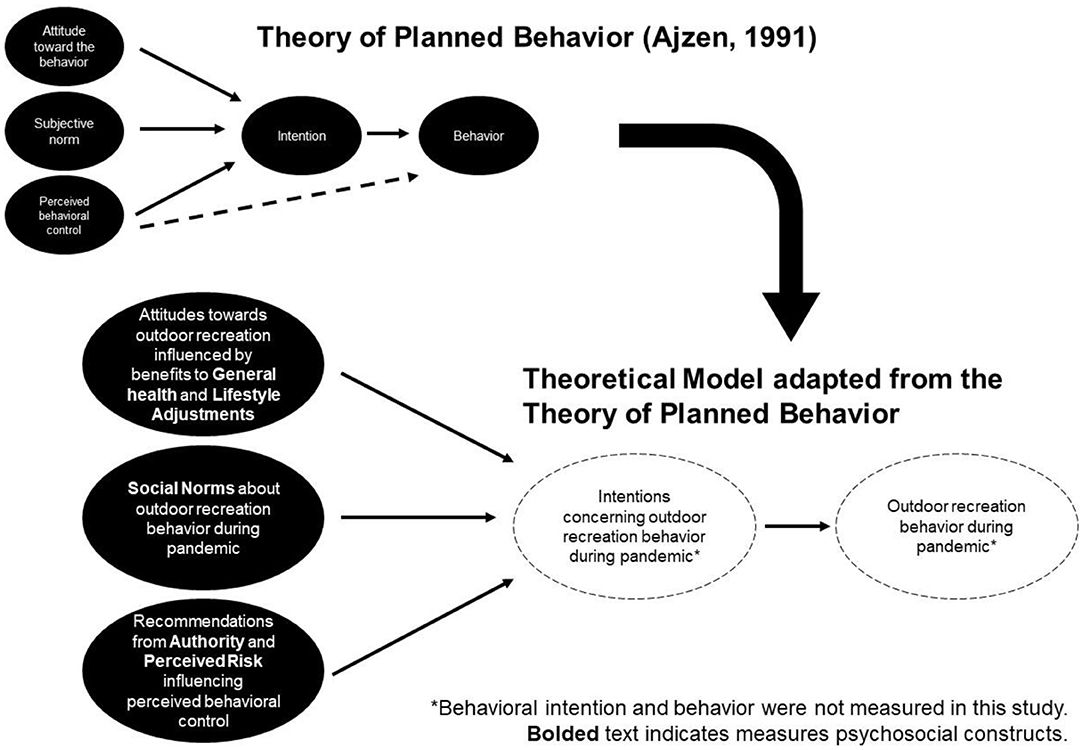
Figure 1. Extension of the Theory of Planned Behavior (Ajzen, 1991) to incorporate psychosocial constructs of interest influencing outdoor recreation behaviors during the COVID-19 pandemic.
Ajzen (1991) defines social norms as the “perceived social pressure to perform or not to perform” (p. 188) a behavior of interest. Extensive previous research has indicated that social norms are strong predictors of behavior both in outdoor recreation settings and otherwise (e.g., Heywood and Murdock, 2002; Anderson and Loomis, 2011; Heberlein, 2012). Both perceptions of behavioral regularities and expectations of others serve as distinct elements of social norms influencing how individuals act (Heberlein, 2012). For example, Heywood and Murdock (2002) found that expectations of negative judgements from others influenced individuals' intention to not litter in public areas. Social norms may be especially important for avid outdoor recreationists as previous research has indicated that involvement in serious leisure can lead to individuals developing “social worlds” within their chosen activities (Scott and Shafer, 2001; Hughes et al., 2016), potentially heightening the influence of social norms. Perceived expectations and behavioral regularities from friends, family, or strangers all may play a role in how individuals act when choosing to recreate outdoors, or not, during the COVID-19 pandemic.
Perceived behavioral control broadly refers to how easy or difficult an individual believes it is to take a specific action (Ajzen, 1991). Participation in outdoor recreation generally requires that individuals negotiate various constraints inhibiting their participation (Godbey et al., 2010). Avid outdoor recreationists are generally able to navigate these varying levels of constraints to regularly partake in nature-based leisure (Alexandris et al., 2007; Lyu and Oh, 2015). Novel factors associated with the COVID-19 pandemic, though, may present additional constraining factors for individuals who participate in outdoor recreation regularly. Specifically, the perception of risk and recommendations from authority could be new and important constraints for avid outdoor recreationists during the COVID-19 pandemic. Initial research has indicated that the COVID-19 pandemic has influenced individuals' perceptions of risk (Torales et al., 2020), a process that may be further amplified by exposure to media coverage on the topic (Garfin et al., 2020). Risk has also been previously identified as a constraining factor in outdoor recreation participation specifically (Reis et al., 2012). In examining these concepts holistically, research on outdoor education programming during the COVID-19 pandemic supports that possibility of infection presents a novel layer of risk management for outdoor activities during this time (Beery, 2020). Understanding how heavily individuals weigh this perceived risk may be an important element in understanding how avid outdoor recreationists are behaving. Furthermore, as recommendations from authority continue to play a major role in how communities are managing the spread of COVID-19 (Tufan and Kayaaslan, 2020), practices such as social distancing, capacity limits, and park closures all may act as constraining factors that individuals may need to navigate if and when they choose to recreate outdoors as well.
Attitudes within the Theory of Planned Behavior are defined as an individual's positive or negative feelings toward a particular action (Ajzen, 1991). Vaske and Donnelly (1999) expand upon this definition, stating attitudes “represent an individual's consistent tendency to respond favorably or unfavorably toward the object in question” (p. 527). Unlike an individuals' values, attitudes are more situational and less static than broad, more basal value orientations (Vaske and Donnelly, 1999). While it is likely that avid outdoor recreationists already have a positive attitude toward outdoor recreation generally, two primary situational factors may shift individuals' attitudes toward outdoor recreation during the COVID-19 pandemic: seeking out benefits to one's health and lifestyle adjustments associated with the COVID-19 pandemic. While each of these two psychosocial constructs more closely represent motivations or preferences, they likely influence the attitudes avid outdoor recreationist have toward recreating outdoors during the COVID-19 pandemic (e.g., If one is no longer going into their office for work, they may respond more favorably to outdoor recreation as a means to get out of the house). A shift in attitudes toward outdoor recreation during the COVID-19 pandemic may stem from individuals' evolving behavioral beliefs and the corresponding evaluation of the outdoor recreation behaviors (Ajzen, 1991). In describing behavioral beliefs, Ajzen (1991) states “each belief links the behavior to a certain outcome, or to some other attribute such as the cost incurred by performing the behavior” (p. 191). In the context of the COVID-19 pandemic, this may manifest itself as individuals believing that outdoor recreation can provide health benefits or allow them to better negotiate lifestyle changes associated with novel conditions during this time. Such behavioral beliefs are simultaneously paired with an evaluation of the behavior, such as believing that outdoor recreation behaviors are worth carrying out due to their associated benefits (Ajzen, 1991; Greaves et al., 2013).
Current research has documented the negative impact of the COVID-19 pandemic on individuals' mental and physical health (Bao et al., 2020; Stier et al., 2020). As outdoor recreation offers an opportunity for participants to accrue mental and physical health benefits (Thomsen et al., 2013; Holland et al., 2018), individuals may be turning to outdoor recreation to buffer the negative health impacts of the COVID-19 pandemic. This would align with the benefits outdoor recreation has provided individuals and communities during other times of crisis (Marafa and Tung, 2004; Rung et al., 2011; Smith et al., 2016). Additionally, the COVID-19 pandemic has also led to widespread closures (Tufan and Kayaaslan, 2020) which may influence the availability of other leisure activities for individuals. Previous research has indicated that recreationists will go through a process of finding substitute activities if other options become unavailable (Hammitt et al., 2004; Sutton and Oh, 2015). Given certain forms of outdoor recreation may be less impacted by these closures when compared to other forms of leisure, lifestyle adjustments may play an important role in individuals' attitudes and corresponding decisions related to outdoor recreation. These lifestyle adjustments may take the form of participating in outdoor recreation instead of another activity that may be perceived as less safe during the COVID-19 pandemic or more frequent participation in outdoor recreation activities to relieve situation feelings like isolation.
Considering the broad framing provided by previous behavioral theories (Ajzen, 1991; Stern, 2000) and the unique temporal characteristics of the COVID-19 pandemic, there is potential that the five outlined psychosocial factors (perceptions of risk, social norms, recommendations from authority, benefits to general health, and lifestyle adjustments) may be especially influential regarding avid outdoor recreationist behaviors. A brief summary of each and its potential relevance during the COVID-19 pandemic is provided in Table 1.
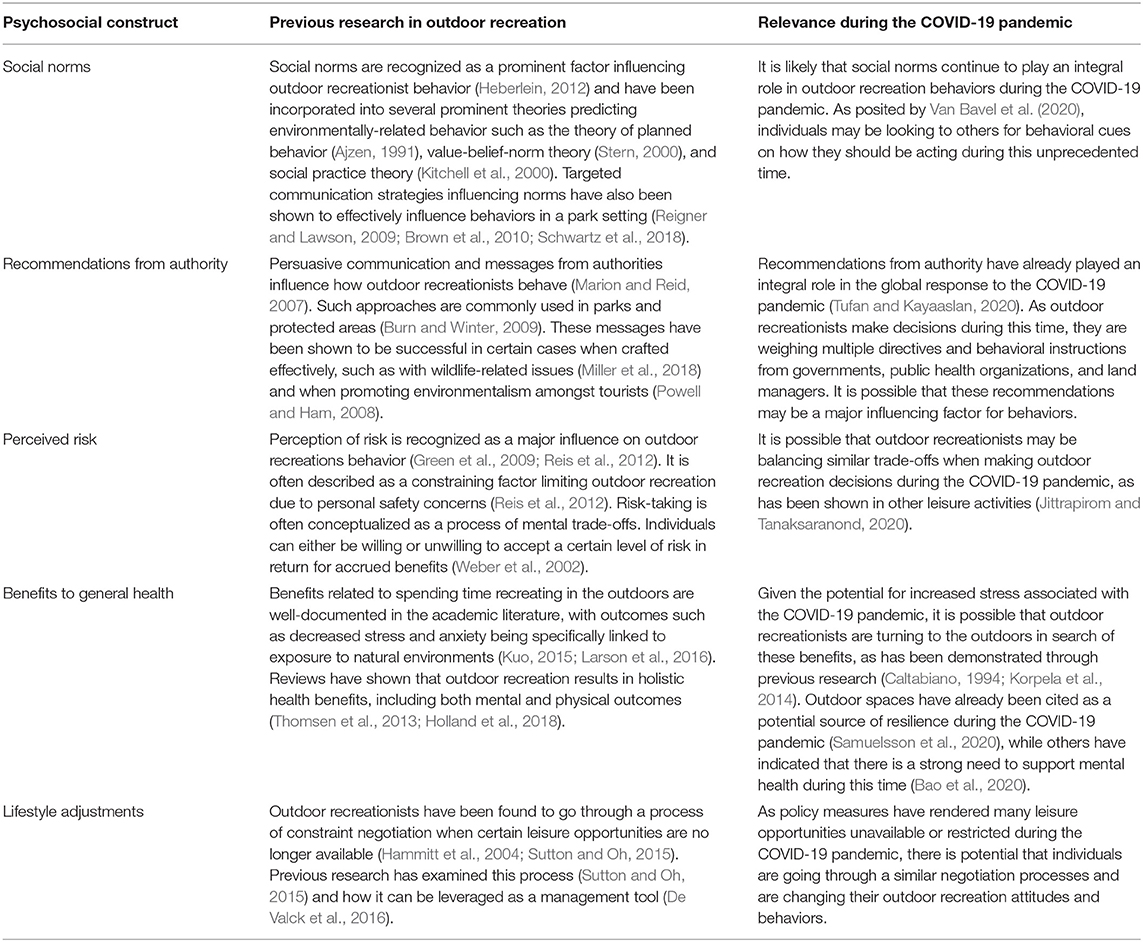
Table 1. Previous literature on focal psychosocial constructs.
Furthermore, given this study aims to make general managerial recommendations for a broad range of outdoor recreation settings, it is imperative to understand if and how individuals residing in communities across the rural-urban gradient may differ in their orientations regarding these psychosocial factors and how these differences may affect outdoor recreation behaviors. For example, Venter et al. (2020) found that outdoor recreation participation in urban parks throughout Oslo, Norway, increased drastically during the COVID-19 pandemic. Alternatively, Geng et al. (2021) found mixed trends for urban park visitation rates internationally. In comparing trends across the rural-urban gradient in the United States, Rice et al. (2020a) found that urban outdoor recreationists were more significantly impacted by various restrictions during the early stages of the COVID-19 pandemic when compared to individuals residing in more rural communities. Understanding if and how the psychosocial constructs of interest differ across the rural-urban gradient can help provide a more nuanced understanding of potential shifts in outdoor recreation behavior and what may be causing them. This is especially important as access to green spaces can foster various forms of resilience across community types (Marafa and Tung, 2004; Krasny and Tidball, 2009; Rung et al., 2011).
Purpose and Research Questions
The purpose of this study is specifically to define these previously identified psychosocial factors in the novel context of the COVID-19 pandemic and understand how they influence avid outdoor recreationist behaviors and decision-making processes across rural and urban communities in the United States. This will help outdoor recreation managers and policymakers develop more effective messaging and aid in proactively managing shifts in visitor volume and behavior. Given this need and the potential relevance of the five psychosocial factors (see Table 1) within this process, this study is driven by three primary research questions:
RQ1: How reliable and valid are the developed sub-scales in assessing perceived risk, social norms, recommendations from authority, benefits to general health, and lifestyle adjustments during the early stages of the COVID-19 pandemic?
RQ2: How important are the five outlined psychosocial factors for avid outdoor recreationists when making outdoor recreation-related decisions during the early stages of the COVID-19 pandemic?
RQ3: How does the self-reported importance of the five outlined psychosocial factors differ between individuals residing in rural, urban cluster, and urban areas in the United States?
Methods
An online survey designed to examine the three outlined research questions was developed and administered to a sample of avid outdoor recreationists through the Leave No Trace (LNT) Center for Outdoor Ethics email list. Confirmatory factor analyses (CFA) and reliability analyses were utilized to address research question #1 and a repeated measures ANOVA was utilized to address research question #2. Lastly, a series of one-way ANOVA's was utilized to answer research question #3. All methodological procedures were approved by the Pennsylvania State University Institutional Review Board.
Survey Development
The survey was developed utilizing evidence from previous research to measure five primary psychosocial constructs that may influence outdoor recreation during the COVID-19 pandemic. Respondents were asked to respond to the prompt: “How important are the following factors when making outdoor recreation decisions (e.g., frequency of outing, distance from home, activity) during the COVID-19 pandemic?” Previous theoretical and empirical work on behavioral correlates in outdoor recreation as well as temporally relevant work examining the impact of COVID-19 on broader society were reviewed during the scale development phase (see Table 1). This work was then used to develop novel scale items that measured the five outlined constructs: perceptions of risk, social norms, recommendations from authority, benefits to general health, and lifestyle adjustments. Additional questions were also asked about frequency of outdoor recreation participation, type of outdoor recreation participation, and areas utilized for outdoor recreation.
Each novel item was designed to load onto one of the five previously outlined psychosocial constructs. Social norms examined perceived behavioral patterns of others in three items. Perceived risk was measured by three items examining how the COVID-19 pandemic existed as a threat to oneself as well as others. Recommendations from authority measured the importance individuals placed on messages from prominent medical authorities such as the Center for Disease Control, state governments, as well as recommendations from land management agencies themselves. This was measured in five items. General health benefits measured benefits sought for both mental and physical health via three items. And finally, lifestyle adjustments such as utilizing outdoor recreation as an outlet for safe leisure activities were measured via three items. Individuals were prompted to rate each measurement item on a five-point scale ranging from “Not at all important” to “Extremely important” when making outdoor recreation decisions.
Survey Administration
An email survey examining outdoor recreation patterns and decision-making processes during the COVID-19 pandemic was distributed via the LNT email mailing list. LNT is a prominent environmental organization in the United States and internationally, partnering with various local, regional, and national land management agencies, non-profits, and other organizations to share pro-environmental messages with audiences (Marion, 2014). Specifically, LNT's online community is composed of largely avid outdoor recreationists—partaking in 8–12 h of outdoor recreation per week—and is primarily based in the United States (Leave No Trace Center for Outdoor Ethics, 2018). This sample was chosen as it provided an accessible population of avid outdoor recreationists during the height of COVID-19 lockdown measures in much of the United States. Individuals opt into being on the listserv, with members being recruited via events, online outreach, or finding the outlet through their own volition. Both demographic information and information on general outdoor recreation behaviors were collected to explore the representativeness of the sampled population in comparison to the broader population of outdoor recreationists in the United States.
The survey was distributed to 63,890 members of the listserv via the Qualtrics survey platform. The survey was open for 48 h starting at 9 a.m. MST on April 9th, 2020. Having the survey open for a short period of time helped capture a single, initial snapshot into behavioral factors during the volatile time of the COVID-19 pandemic.
Data Analysis
The first research question explored whether the five outlined psychosocial constructs were measured via reliable and valid sub-scales, thus operationalizing these concepts in the novel context of the COVID-19 pandemic. A CFA was utilized to examine convergent and discriminant validity for the developed scales (Brown, 2015). The CFA was carried out in SPSS AMOS utilizing a maximum likelihood estimation model. For the CFA, initial model fit was analyzed using a X2 value, though it is recognized that this statistic can be sensitive to large sample sizes (Kline, 2016). Given this, the following criteria were also utilized to determine goodness of fit: RMSEA ≤ 0.10 (Kline, 2016); SRMR ≤ 0.08 (Kline, 2016); and CFI ≥ 0.90 (Hu and Bentler, 1998). Bias corrected confidence intervals were utilized in determining significance levels for standardized factor loadings to reduce the likelihood of Type 1 error (Byrne, 2001). Standardized factor loadings were deemed adequate when values were >0.30 and statistically significant (Kline, 1994). The CFA was followed by a calculation of Cronbach's Alpha for each scale (Vaske, 2008), which was utilized to determine the scale reliability. Cronbach's Alpha were deemed to indicate appropriate reliability when >0.65 (Vaske, 2008).
A repeated measures ANOVA was used to compare scale means within respondents and address the second research question. A repeated measures ANOVA was utilized as scale means for each psychosocial factor acted as a within-subjects measure. This was chosen over a traditional ANOVA analysis as each categorical independent variable lacked independence of observations with each analyzed individual providing responses on items contributing to all five scales (Courtney, 2018).
Lastly, to answer the third research question, a series of one-way ANOVA's were conducted to examine how important each psychosocial factor was for individuals residing across the rural-urban gradient. Communities were classified as rural (<5,000 residents), urban cluster (between 5,000 and 50,000 residents), and urban (>50,000 residents) for this analysis (U.S. Census Bureau, 2010; U.S. Department of Transportation: Federal Highway Administration, 2017). A series of one-way ANOVA's was utilized as this research question specifically aimed to understand how each singular psychosocial construct differed across the three community types. Given the repeated use of this statistical test to answer this research question, a Bonferroni adjustment (Vaske, 2008) was utilized to reduce the likelihood of Type 1 error for each omnibus test (Armstrong, 2014).
Results
Sample Characteristics
Of distributed surveys, 1,012 surveys were completed. This is in relation to 3,003 individuals who opened the email, providing an adjusted completion rated of 33.7% (Blumenberg and Barros, 2018). Individuals with missing data on the psychosocial factor items were deleted listwise as is appropriate after data were determined to be missing completely at random (Little, 1988), an assumption confirmed by Little's MCAR Test (X2 = 403.579, df = 368, p = 0.098). This listwise deletion resulted in 977 surveys used in subsequent analyses. The sampled individuals were predominantly white (81.2%), female (53.1%), and had a mean age of 44 years old. 31.5% of respondents lived in rural communities (<5,000 individuals), while 23.0% of respondents lived in urban cluster communities (5,000–50,000 individuals), and 37.6% of individuals lived in urban communities (>50,000 individuals). Location of survey respondents were primarily clustered along the east coast, west coast, and the Rocky Mountain regions of the United States; however 48 states were represented in the sample [see Rice et al. (2020b) for more detailed location information]. Further demographic information is presented in Table 2.
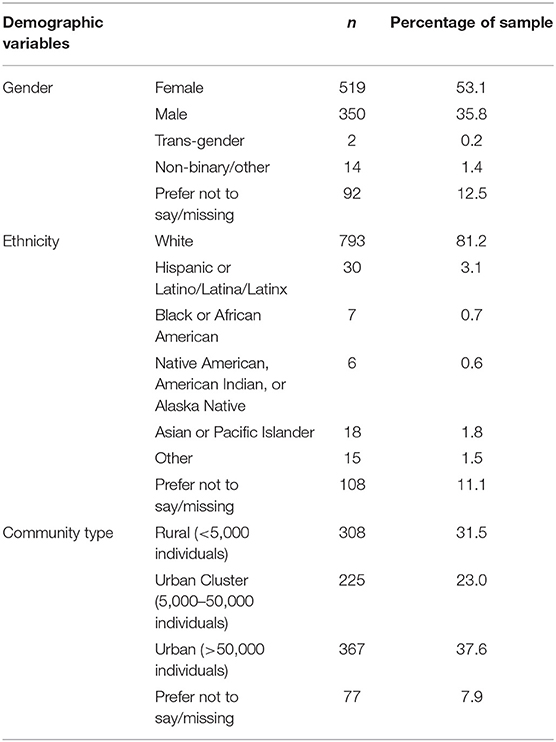
Table 2. Demographic information of sampled population.
Prior to the COVID-19 pandemic, survey respondents indicated recreating outdoors an average of 5.00 days per week. A slight reduction was reported after the WHO declared COVID-19 a pandemic on March 11th, 2020, with respondents reporting recreating outdoor an average of 4.68 days per week after this date. Surveyed individuals were also asked to indicate their primary outdoor recreation activity. Hiking was identified as the most common outdoor recreation activity for surveyed individuals (45.1% of respondents). Other commonly identified primary recreation activities included running (9.8% of respondents), downhill skiing or snowboarding (6.0% of respondents), camping or RV'ing (4.6% of respondents), bicycling or triathlon (4.0% of respondents), and Nordic skiing or snowshoeing (3.7% of respondents). Furthermore, survey respondents reported visiting a wide variety of outdoor recreation spaces including state forest land, Bureau of Land Management lands, county or regional parks, neighborhood or city streets, national parks, as well as others. Overall, individuals reported utilizing all areas less frequently during the COVID-19 pandemic except for neighborhood and city streets [see Rice et al. (2020b) for more detailed breakdown of outdoor recreation area use]. The variety of outdoor recreation activities and spaces utilized supports this study's goal of making general policy recommendations for outdoor recreation during the COVID-19 pandemic.
In comparing these findings to those presented by the Outdoor Foundation (2020) on general characteristics of outdoor recreationists in the United States, the sampled population mimics the broader characteristics of avid outdoor recreationist in the United States. The general characteristics reported by the Outdoor Foundation (2020) found the average outdoor recreationist in the United States to be 36.2 years old with 73.7% of respondents being white, making the present study's sample slightly older and slightly whiter. Additionally, the Outdoor Foundation found the majority of their respondents to be male (53.9%), while the majority of respondents in this study were female (53.1%). Furthermore, there may be unaccounted for difference between the sampled population and the broader outdoor recreationist population regarding factors such as knowledge of responsible outdoor recreation given LNT's educational mission. To this end, this sample is not intended to represent the population of the United States as a whole, which may have experienced changing recreation behaviors during the COVID-19 pandemic. Instead, this sample provides a group of avid outdoor recreationists who are highly dependent on outdoor recreation as a means of leisure (see Outdoor Industry Association, 2015).
Defining Psychosocial Constructs
All scales had an appropriate Cronbach's Alpha of 0.65 or greater when measuring reliability (Vaske, 2008). While X2 values indicated the model did not fit the data well (X2 = 770.03, df = 109, p < 0.001), this statistic is sensitive to large sample sizes (Kline, 2016). The data demonstrated appropriate fit across all other outlined measures: RMSEA = 0.079; SRMR = 0.0594; CFI = 0.902. In examining each single-item measure, all satisfied appropriate thresholds with factor loadings being >0.30 and statistically significant (Kline, 1994). The original model was retained without re-specification. Given this, scale means were calculated from the measurement items that loaded onto each unique construct. Calculated means for each scale were Perceived Risk = 3.63 (SD = 1.06); Social Norms = 3.29 (SD = 1.06); Authority = 4.18 (SD = 0.75); General Health = 4.31 (SD = 0.78); and Lifestyle Adjustments = 3.37 (SD = 0.96). Details on psychosocial constructs and related measurement items are outlined in Table 3.
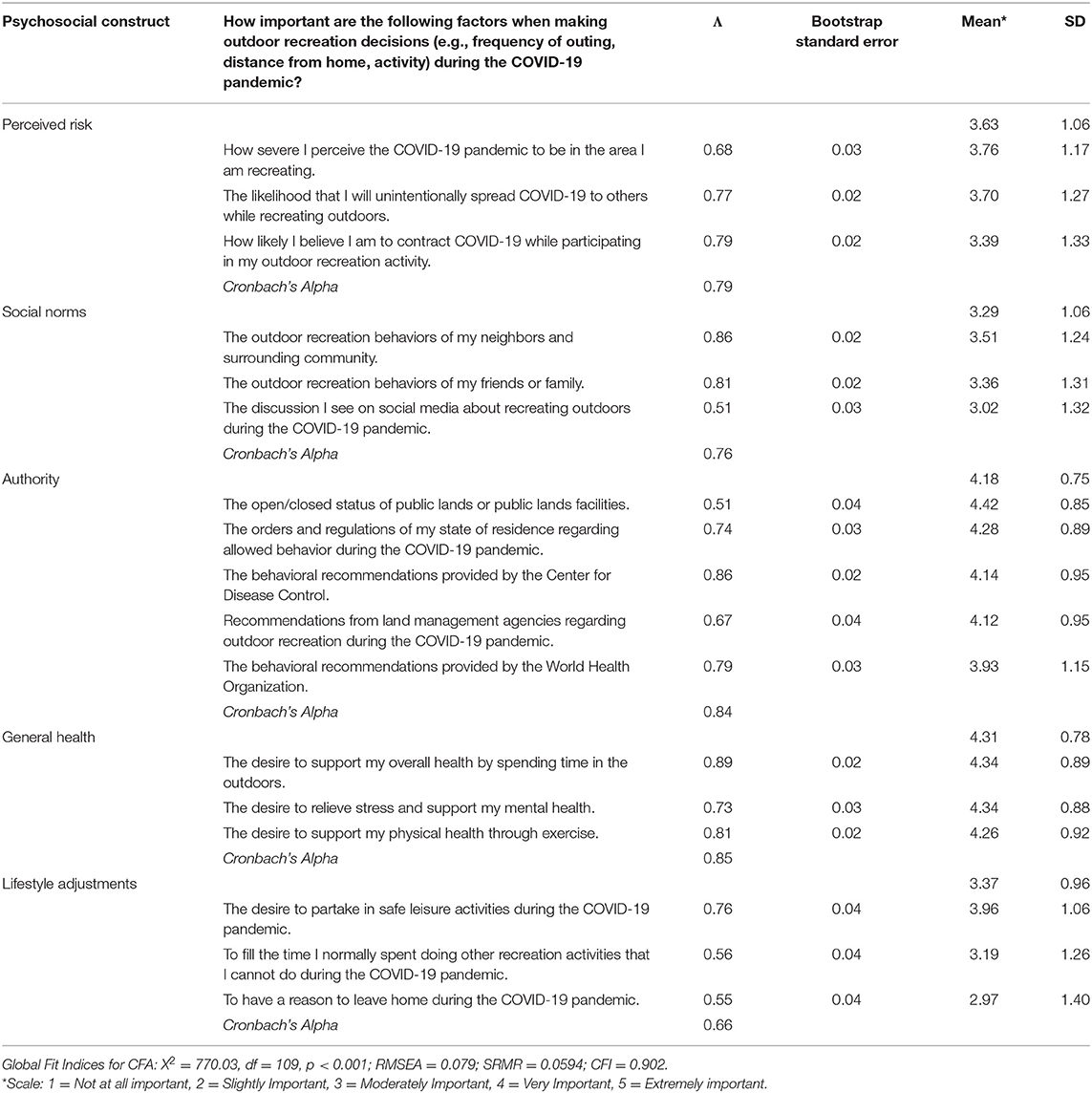
Table 3. Scale development indices and single-item/scale means.
General Population Differences in Psychosocial Constructs
In addressing the second research question, results from the repeated measures ANOVA compared differences in importance among each of the latent psychosocial constructs for sampled individuals when making outdoor recreation decisions during the COVID-19 pandemic. The data failed the assumption of sphericity via Mauchly's test [X2(9) = 487.83; p < 0.001]. As a result, the Huynh-Feldt adjustment was utilized to account for this failure (ε = 0.789) (Huynh and Feldt, 1976). Additionally, data for each latent psychosocial construct failed the Shapiro-Wilk test for normality [Perceived Risk: W(977) = 0.94, p < 0.001; Social Norms: W(977) = 0.97, p < 0.001; Authority: W(977) = 0.89, p < 0.001; General Health: W(977) = 0.82, p < 0.001; Lifestyle Adjustments: W(977) = 0.97, p < 0.001], though no adjustment was utilized as chosen analysis procedures were deemed robust to violations or normality (Norman, 2010). The omnibus test showed there was a significant difference amongst the importance ratings for the five psychosocial factors influencing outdoor recreation decisions for the sampled individuals [F(3.16, 3082.14) = 309.50; p < 0.001]. General Health was rated as the most important psychosocial factor relative to the other constructs, followed by Authority, Perceived Risk, Lifestyle Adjustments, and Social Norms in descending order of importance.
Post-hoc pairwise comparisons showed that all psychosocial factors of interest were significantly different from each other (all p-values < 0.001) except for lifestyle adjustments and social norms (p = 0.648). Results from the repeated measures ANOVA and subsequent post-hoc tests are summarized in Figure 2.
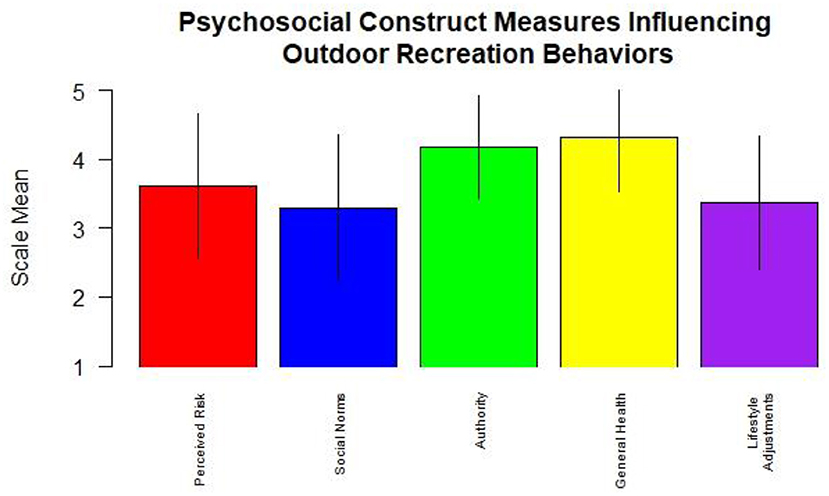
Figure 2. Importance ratings for each psychosocial factor influencing outdoor recreation behavior analyzed through a repeated measures ANOVA [F(3.16, 3082.14) = 309.50, p-value < 0.001]; all means are significantly different from each other (p < 0.001) excluding Lifestyle Adjustments and Social Norms (p = 0.648); error bars represent the standard deviation for each psychosocial construct.
Comparison Across Rural-Urban Gradient
In addressing the third research question, a series of one-way ANOVA's were conducted for each psychosocial construct for residents living in rural, urban cluster, or urban communities. Data for each ANOVA satisfied the assumption of equal variances via Levene's F Test (all p-values >0.05). As was done for the repeated measures ANOVA, analyses were conducted despite violations to the assumption of normality as the test is robust to these deviations (Norman, 2010). Additionally, a Bonferroni adjustment was utilized for each omnibus test to reduce the risk of Type 1 error (Vaske, 2008).
The omnibus tests for three psychosocial factors showed no significant difference across community types: Social Norms [F(2, 897) = 0.05; p = 0.951], General Health [F(2, 897) = 0.48, p = 0.622], and Lifestyle Adjustments [F(2, 897) = 0.37, p = 0.688]. The remaining two psychosocial factors did show a significant difference between community type: Perceived Risk [F(2, 897) = 5.23, p = 0.006] and Authority [F(2, 897) = 6.79, p = 0.001]. For Perceived Risk, Scheffé's post-hoc test indicated that individuals living in urban communities perceived significantly higher levels of risk when compared to rural (p = 0.035) or urban cluster communities (p = 0.018). For Authority, the post-hoc test indicates that urban communities significantly differed from urban cluster communities in valuing recommendations from authority more highly (p = 0.001). Results pertaining to research question three are further outlined in Figure 3.
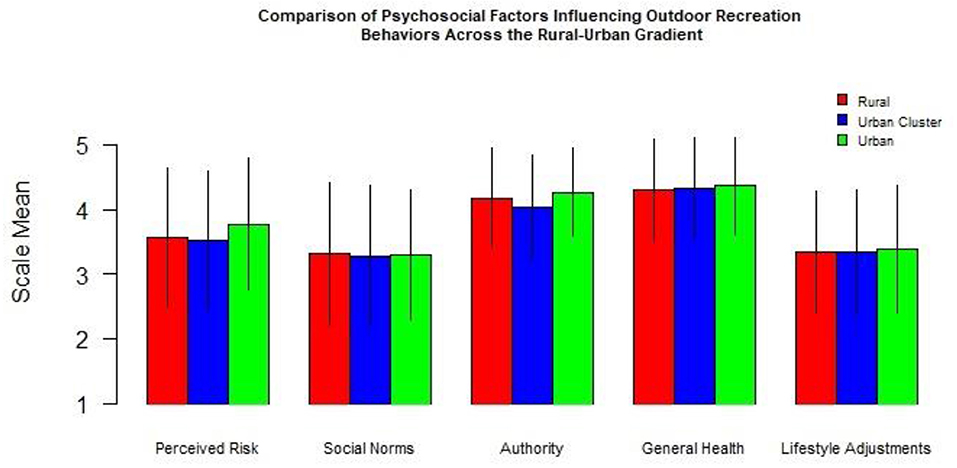
Figure 3. Results from the one-way ANOVA's examining differences amongst scale means across three community types (rural, urban cluster, and urban); omnibus tests for one-way ANOVA's were significant across community types for Perceived Risk [F(2, 897) = 5.23, p = 0.006] and Authority [F(2, 897) = 6.79, p = 0.001]; error bars represent the standard deviation for each psychosocial construct.
Discussion
Study results provide important insight into how avid outdoor recreationists make decisions during the COVID-19 pandemic across community types. By better understanding which psychosocial factors influence outdoor recreation decisions, outdoor recreation managers and policymakers can make more informed decisions that maximize safety and wellbeing for those utilizing outdoor recreation spaces during this time and during potential future health crises. In examining the first research question, analysis indicates that perceptions of risk, social norms, recommendations from authority, promoting general health and wellbeing, and lifestyle adjustments all exist as unique constructs influencing outdoor recreationist behavior during the COVID-19 pandemic. Furthermore, in addressing the second research question, findings indicate that promoting one's personal health matters most to outdoor recreationists during the pandemic. This is followed, in order of relative importance, by recommendations from authority, perceived risk, lifestyle adjustments, and social norms. Lastly, communities along the rural-urban gradient significantly differed in how strongly they weighed perceived risk and recommendations from authority when choosing to recreate outdoors.
Perhaps most notably, these results underscore the importance avid outdoor recreationists are placing on the benefits of recreating in the natural world during the early stages of the COVID-19 pandemic. While there was a slight decrease in the use of outdoor recreation spaces, surveyed individuals were still recreating outdoors an average of 4.68 days per week during the early stages of the COVID-19 pandemic across community types. With health outcomes of outdoor recreation being well-documented in the academic literature (Kuo, 2015; Larson et al., 2016; Azara et al., 2018), these data suggest that outdoor recreationists continue to highly value these benefits despite other novel pressures such as potentially increased health risks associated with visiting outdoor recreation spaces. This value individuals are placing on health benefits is also consistent across rural, urban cluster, and urban communities. These findings align with the assertions of Samuelsson et al. (2020), who posit that parks and open space can serve as a source of resilience during the COVID-19 pandemic and other future crises. To maintain a resilient society, these desired health benefits and the priorities placed on them by avid outdoor recreationists must be acknowledged and maximized across the rural-urban gradient.
This study also helps to illuminate the value avid outdoor recreationists place on guidance provided by public health agencies and land management agencies during the COVID-19 pandemic. Avid outdoor recreationists may adapt their recreation patterns in order to continue to seek out similar experiences to support health benefits in light of park closures or other constraints (Suwa, 2008), especially considering avid outdoor recreationists in this study continued to report recreating outdoors frequently despite novel threats from COVID-19. In further support of this, lifestyle adjustments during the COVID-19 pandemic were rated as being relatively low in importance when making outdoor recreation decisions when compared to other measured psychosocial constructs. This further implies that avid outdoor recreationists maintained high levels of motivation to participate in outdoor recreation despite novel pressures from COVID-19. Initial information provided by respondents provides interesting insight on this, with individuals reporting an increase in recreation on neighborhood and city streets and a decrease in recreation in all other outdoor spaces. This is especially insightful as urban communities valued recommendations from authority significantly higher than those in urban cluster communities. This increase in use of neighborhood and city streets may represent a form of constraint navigation by those residing in urban communities specifically. Given recommendations from authority may have closed outdoor recreation spaces or dissuaded individuals from visiting these areas, individuals may have turned to city and neighborhood streets as an alternative outlet for outdoor recreation activities. Furthermore, as the COVID-19 pandemic continues to evolve, outdoor recreation managers of sites that remain open should be prepared to mitigate crowding as avid outdoor recreationists seek out areas where they can improve their mental and physical health despite existing limitations and recommendations from authority. This could parallel a similar process to what was found during the 2003 SARS outbreak in Hong Kong (Marafa and Tung, 2004). Such dynamics could be especially important as the nature of recommendations from authority, perceived risk, or social norms change over the course of the COVID-19 pandemic.
Recommendations from authority were also ranked higher than all other psychosocial factors aside from seeking out benefits to one's own mental and physical health. With this in mind, land managers and policymakers can expect that changes in recommendations from the World Health Organization, Center for Disease Control, or other authorities will likely have an appreciable influence on outdoor recreation behavior amongst outdoor recreation enthusiasts, more so than personal perceptions of risk held by individuals or social norms. Furthermore, avid outdoor recreationists valuing these orders and directives demonstrates that communication from authorities is effective at influencing outdoor recreationist decisions. As demonstrated in previous studies, effective communication (e.g., well-designed signage) should continue to be used as a potentially useful means of encouraging safe behavior in outdoor recreation areas (Walkosz et al., 2008; Miller et al., 2018). The strong influence recommendations from authority had on avid outdoor recreationists during the early stages of the COVID-19 pandemic may be especially pronounced given a similar scenario had not been experienced by many individuals residing in the United States at the time. These novel stressors may result in individuals relying on expert opinions (i.e., recommendations from authority) rather than social norms as little collective knowledge on navigating pandemics existed within the United States during April 2020.
This study also helped to develop an understanding of how perceptions of risk, social norms, recommendations from authority, promoting general health and wellbeing, and lifestyle adjustments exist as unique factors influencing avid outdoor recreationist behaviors across rural, urban cluster, and urban communities. Monitoring and understanding these concepts across the rural-urban gradient can play an integral role in developing effective policy measures over the course of the COVID-19 pandemic and beyond, especially given the role similar policy measures have already played in the global pandemic response (Tufan and Kayaaslan, 2020). In examining the three psychosocial factors that have not been extensively discussed thus far (perceptions of risk, social norms, and lifestyle adjustments), it is notable that urban communities weighed perceived risk significantly higher than other community types when choosing to recreate outdoors. Various factors such as dense populations, lack of access to green space, or being transportation hubs may contribute to this higher risk perception by avid outdoor recreationists in urban communities (Peters, 2020; Hubbard et al., 2021). This differential in risk perception between rural, urban cluster, and urban communities should be acknowledged and incorporated into messaging and managerial decisions by land managers in these various communities.
Limitations and Future Research
When interpreting findings from this study, several limitations should be acknowledged and considered. The sampled population was quite homogenous, being mostly white, female, and made up of avid outdoor recreationists. Though the study's sample is overwhelmingly composed of non-Hispanic white individuals, this composition aligns with other estimates of overall outdoor recreation participation (Askew and Walls, 2019; Outdoor Foundation, 2020). However, the female majority within the sample is not consistent with outdoor recreation participation at large (Outdoor Foundation, 2020). Additionally, the lack of other socio-demographic measures within this study presents the possibility of additional biases within the sample. For example, higher socioeconomic status can potentially allow individuals to more effectively navigate constraints during the COVID-19 pandemic and continue to recreate frequently in the outdoors (Ghimire et al., 2014). The surveying of members within the LNT email list also presents a potential bias, as the sample may be more educated about responsible outdoor recreation and therefore more disposed to following regulations in comparison to the larger outdoor recreation community.
Care should be taken in extending these findings to the average park or protected area visitor in the United States or internationally. The frequency of outdoor recreation represented by participants in this study is considerably higher than the average outdoor recreationist in the United States (Leave No Trace Center for Outdoor Ethics, 2018). Additionally, LNT and those involved in the organization are primarily based in the United States and thus inextricably linked to the unique social, cultural, and managerial forces shaping outdoor recreation patterns of the country. Those surveyed as part of the LNT listserv have a very specific conceptualization of responsible outdoor recreation that may not translate easily to how other countries perceive their relationship with outdoor recreation spaces. Additionally, some demographic trends represented by this research, such as avid outdoor recreationists having relatively high incomes, may not be representative of avid outdoor recreationists in other countries. Future research has the opportunity to build upon this initial study and expand this exploration of psychosocial factors influencing outdoor recreation decisions during health crises to a broader, more holistic population. This could help land managers better understand how outdoor recreation patterns are shifting as a result of the COVID-19 pandemic on a broader scale.
Further research also has the opportunity to explore psychosocial factors influencing outdoor recreation decisions in more specific environments or regarding more specific outdoor recreation behaviors. This study primarily aims to make broad recommendations across outdoor recreation settings and behaviors. While this is valuable during the unprecedented and rapidly evolving context of the COVID-19 pandemic, future research can explore more nuanced behaviors (e.g., those relating to a specific type of outdoor recreation activity) and their psychosocial drivers during these times. It should also be noted that the psychosocial constructs of interest were not explicitly linked to actual or self-reported behavioral changes in this study. Future research could explicitly link the measured psychosocial constructs to outdoor recreation behavioral changes.
Additionally, while initial metrics indicate that the developed scales had appropriate reliability and validity, further work should be done to develop these measurement tools. Expanding the studied population beyond the relatively homogenous sample for this project could help develop an understanding of whether these scales are useful in measuring psychosocial factors within the broader public. Furthermore, there is an opportunity to refine the measures used in this study to further establish reliability and validity in future studies.
Lastly, this study represents an initial snapshot into the dynamic nature of outdoor recreation during the COVID-19 pandemic. The volatile nature of this pandemic and future pandemics may result in rapid shifts in public opinion, environmental conditions, or other influential factors measured here. Findings from this study exist as a single point of reference during the early COVID-19 pandemic, and future research has the opportunity to track and understand how the measured psychosocial factors may change moving forward or during other forthcoming health crises.
Conclusion
The COVID-19 pandemic has drastically altered daily life for individuals across the globe, but public lands and other areas used for outdoor recreation have the opportunity to serve as sources of resilience and strength for individuals and communities (Bedimo-Rung et al., 2005; Pretty et al., 2005; Samuelsson et al., 2020). To proactively manage and steward these recreation resources during current and future health crises, the psychosocial factors driving outdoor recreation behaviors must be understood. Data indicate that avid outdoor recreationists highly value benefits to their mental and physical health when making decisions to go outside for recreation during the COVID-19 pandemic. Additionally, these avid outdoor recreationists indicated they are weighing recommendations from authority more heavily than most other measured factors. Taken together, this indicates that land managers, government agencies of all levels, and public health organizations have the responsibility of making recommendations to keep individuals safe while also allowing them to obtain the necessary health benefits of outdoor recreation. Achieving this difficult balance as the COVID-19 pandemic continues to evolve and upend the status quo in parks and protected areas is a necessity, both in the United States and globally.
Data Availability Statement
The raw data supporting the conclusions of this article will be made available by the authors, without undue reservation.
Ethics Statement
The studies involving human participants were reviewed and approved by Pennsylvania State University Institutional Review Board. The patients/participants provided their written informed consent to participate in this study.
Author Contributions
TM: project formulation, survey development, data analysis, and manuscript writing and review. WR: project formulation, survey development, and manuscript writing and review. BT, BL, NR, and PN: project formulation, survey development, and manuscript review. All authors contributed to the article and approved the submitted version.
Conflict of Interest
The authors declare that the research was conducted in the absence of any commercial or financial relationships that could be construed as a potential conflict of interest.
Publisher's Note
All claims expressed in this article are solely those of the authors and do not necessarily represent those of their affiliated organizations, or those of the publisher, the editors and the reviewers. Any product that may be evaluated in this article, or claim that may be made by its manufacturer, is not guaranteed or endorsed by the publisher.
References
Ajzen, I. (1991). The theory of planned behavior. Organ. Behav. Hum. Decis. Process. 50, 179–211. doi: 10.1016/0749-5978(91)90020-T
Alexandris, K., Kouthouris, C., and Girgolas, G. (2007). Investigating the relationships among motivation, negotiation, and alpine skiing participation. J. Leis. Res. 39, 648–667. doi: 10.1080/00222216.2007.11950126
American Psychological Association (2012). Building Your Resilience. Available online at: https://www.apa.org/topics/resilience (accessed July 19, 2020).
Anderson, L. E., and Loomis, D. K. (2011). SCUBA diver specialization and behavior norms at coral reefs. Coast. Manag. 39, 478–491. doi: 10.1080/08920753.2011.598813
Armstrong, R. A. (2014). When to use the Bonferroni correction. Ophthalmic Physiol. Optics 34, 502–508. doi: 10.1111/opo.12131
Askew, R., and Walls, M. A. (2019, May 24). Diversity in the great outdoors: is everyone welcome in America's parks and public lands? Resources Magazine. Available online at: https://www.resourcesmag.org/common-resources/diversity-in-the-great-outdoors-is-everyone-welcome-in-americas-parks-and-public-lands/ (accessed June 15, 2020).
Azara, I., Michopoulou, E., Niccolini, F., Taff, B. D., and Clarke, A., (eds.). (2018). Tourism, Health, Wellbeing, and Protected Areas. Wallingford: CABI.
Bao, Y., Sun, Y., Meng, S., Shi, J., and Lu, L. (2020). 2019-nCoV epidemic: address mental health care to empower society. Lancet 395, 37–38. doi: 10.1016/S0140-6736(20)30309-3
Bedimo-Rung, A. L., Mowen, A. J., and Cohen, D. A. (2005). The significance of parks to physical activity and public health: a conceptual model. Am. J. Prev. Med. 28, 159–168. doi: 10.1016/j.amepre.2004.10.024
Beery, T. (2020). What we can learn from environmental and outdoor education during COVID-19: a lesson in participatory risk management. Sustainability 12:9096. doi: 10.3390/su12219096
Blumenberg, C., and Barros, A. J. D. (2018). Response rate differences between web and alternative data collection methods for public health research: a systematic review of the literature. Int. J. Public Health 63, 765–773. doi: 10.1007/s00038-018-1108-4
Brown, T. A. (2015). Confirmatory Factor Analysis for Applied Research. https://www.google.com/search?sxsrf=ALeKk01u37hUCM34lX8qq8QD8OwmgDcy9g:1624882051147&q=New+York&stick=H4sIAAAAAAAAAOPgE-LSz9U3MIsvKUopUuIEsY3ijSzMtLSyk63084vSE_MyqxJLMvPzUDhWGamJKYWliUUlqUXFi1g5_FLLFSLzi7J3sDICAIOWvABTAAAA&sa=X&ved=2ahUKEwig8NarpbrxAhXeyDgGHW_cAcgQmxMoATAaegQIFRAD&cshid=1624882056840534, NY: Guilford Publications.
Brown, T. J., Ham, S. H., and Hughes, M. (2010). Picking up litter: an application of theory-based communication to influence tourist behaviour in protected areas. J. Sustain. Tour. 18, 879–900. doi: 10.1080/09669581003721281
Buchecker, M., and Degenhardt, B. (2015). The effects of urban inhabitants' nearby outdoor recreation on their well-being and their psychological resilience. J. Outdoor Recreat. Tour. 10, 55–62. doi: 10.1016/j.jort.2015.06.007
Burn, S. M., and Winter, P. L. (2009). A behavioral intervention tool for recreation managers. Park Sci. 25, 66–68.
Byrne, B. M. (2001). Structural Equation Modeling With AMOS: Basic Concepts, Applications, and Programming. Mahwah, NJ: Lawrence Erlbaum Associates.
Caltabiano, M. L. (1994). Measuring the similarity among leisure activities based on a perceived stress-reduction benefit. Leis. Stud. 13, 17–31. doi: 10.1080/02614369400390021
Conner, M., and Armitage, C. J. (1998). Extending the theory of planned behavior: a review and avenues for further research. J. Appl. Soc. Psychol. 28, 1429–1464. doi: 10.1111/j.1559-1816.1998.tb01685.x
Courtney, M. G. R. (2018). “Repeated measures analysis of variance,” in The SAGE Encyclopedia of Educational Research, Measurement, and Evaluation, ed B. B. Frey (Thousand Oaks, CA: Sage), 1403–1407.
De Valck, J., Broekx, S., Liekens, I., De Nocker, L., Van Orshoven, J., and Vranken, L. (2016). Contrasting collective preferences for outdoor recreation and substitutability of nature areas using hot spot mapping. Landsc. Urban Plan. 151, 64–78. doi: 10.1016/j.landurbplan.2016.03.008
Garfin, D. R., Silver, R. C., and Holman, E. A. (2020). The novel coronavirus (COVID-2019) outbreak: amplification of public health consequences by media exposure. Health Psychol. 39, 355–357. doi: 10.1037/hea0000875
Geng, D. C., Innes, J., Wu, W., and Wang, G. (2021). Impacts of COVID-19 pandemic on urban park visitation: a global analysis. J. For. Res. 32, 553–567. doi: 10.1007/s11676-020-01249-w
Ghimire, R., Green, G. T., Poudyal, N. C., and Cordell, H. K. (2014). An analysis of perceived constraints to outdoor recreation. J. Park Recreat. Admin. 32, 52–67.
Godbey, G., Crawford, D. W., and Shen, X. S. (2010). Assessing hierarchical leisure constraints theory after two decades. J. Leis. Res. 42, 111–134. doi: 10.1080/00222216.2010.11950197
Greaves, M., Zibarras, L. D., and Stride, C. (2013). Using the theory of planned behavior to explore environmental behavioral intentions in the workplace. J. Environ. Psychol. 34, 109–120. doi: 10.1016/j.jenvp.2013.02.003
Green, G. T., Bowker, J. M., Wang, X., Cordell, H. K., and Johnson, C. Y. (2009). An examination of perceived constraints to outdoor recreation. J. Public Affairs Issues 12, 28–53.
Hammitt, W. E., Backlund, E. A., and Bixler, R. D. (2004). Experience use history, place bonding and resource substitution of trout anglers during recreation engagements. J. Leis. Res. 36, 356–378. doi: 10.1080/00222216.2004.11950028
Heywood, J. L., and Murdock, W. E. (2002). Social norms in outdoor recreation: searching for the behavior-condition link. Leis. Sci. 24, 283–295. doi: 10.1080/01490400290050745
Holland, W. H., Powell, R. B., Thomsen, J. M., and Monz, C. A. (2018). A systematic review of the psychological, social, and educational outcomes associated with participation in wildland recreational activities. J. Outdoor Recreat. Educ. Leadersh. 10, 197–225. doi: 10.18666/JOREL-2018-V10-I3-8382
Hrubes, D., Ajzen, I., and Daigle, J. (2001). Predicting hunting intentions and behavior: an application of the theory of planned behavior. Leis. Sci. 23, 165–178. doi: 10.1080/014904001316896855
Hu, L., and Bentler, P. M. (1998). Fit indices in covariance structure modeling: sensitivity to underparameterized model misspecification. Psychol. Methods 3, 424–453. doi: 10.1037/1082-989X.3.4.424
Hubbard, G., Daas, C. D., Johnston, M., Murchie, P., Thompson, C. W., and Dixon, D. (2021). Are rurality, area deprivation, access to outside space, and green space associated with mental health during the COVID-19 pandemic? A Cross Sectional Study (CHARIS-E). Int. J. Environ. Res. Public Health 18:3869. doi: 10.3390/ijerph18083869
Hughes, M., Ham, S. H., and Brown, T. (2009). Influencing park visitor behavior: a belief-based approach. J. Park Recreat. Admin. 27, 38–53.
Hughes, M. D., Hallo, J. C., and Norman, W. C. (2016). Re-conceptualizing recreation-based social worlds: examining the core characteristics of social worlds. Leisure 40, 149–174. doi: 10.1080/14927713.2016.1219965
Huynh, H., and Feldt, L. S. (1976). Estimation of the box correction for degrees of freedom from sample data in randomized block and split-plot designs. J. Educ. Stat. 1, 69–82. doi: 10.3102/10769986001001069
Jenkins, J., and Pigram, J. (2003). Encyclopedia of Leisure and Outdoor Recreation. New York, NY: Routledge.
Jittrapirom, P., and Tanaksaranond, G. (2020). An exploratory survey on the perceived risk of COVID-19 and travelling. SocArXiv [preprint]. doi: 10.31235/osf.io/v3g5d
Kitchell, A., Kempton, W., Holland, D., and Tesch, D. (2000). Identities and actions within environmental groups. Hum. Ecol. Rev. 7, 1–19.
Kline, R. B. (2016). Principles and Practice of Structural Equation Modeling, 4th Edn. New York, NY: Guilford Publications.
Korpela, K., Borodulin, K., Neuvonen, M., Paronen, O., and Tyrväinen, L. (2014). Analyzing the mediators between nature-based outdoor recreation and emotional well-being. J. Environ. Psychol. 37, 1–7. doi: 10.1016/j.jenvp.2013.11.003
Krasny, M. E., and Tidball, K. G. (2009). Applying a resilience systems framework to urban environmental education. Environ. Educ. Res. 15, 465–482. doi: 10.1080/13504620903003290
Kuo, F. E., Sullivan, C. W., Coley, R. L., and Brunson, L. (1998). Fertile ground for community: inner-city neighborhood common spaces. Am. J. Community Psychol. 26, 823–851. doi: 10.1023/A:1022294028903
Kuo, M. (2015). How might contact with nature promote human health? promising mechanisms and a possible central pathway. Front. Psychol. 6:1093. doi: 10.3389/fpsyg.2015.01093
Lackey, N. Q., Tysor, D. A., McNay, G. D., Joyner, L., Baker, K. H., and Hodge, C. (2019). Mental health benefits of nature-based recreation: a systematic review. Ann. Leis. Res. 1–15. doi: 10.1080/11745398.2019.1655459
Larson, L. R., Jennings, V., and Cloutier, S. A. (2016). Public parks and wellbeing in urban areas of the United States. PLoS ONE 11:e0153211. doi: 10.1371/journal.pone.0153211
Leave No Trace Center for Outdoor Ethics (2018). Report for Leave Not Trace 2018 Member Survey. Boulder, CO: Leave No Trace Center for Outdoor Ethics.
Little, R. J. (1988). A test of missing completely at random for multivariate data with missing values. J. Am. Stat. Assoc. 83, 1198–1202. doi: 10.1080/01621459.1988.10478722
Lunn, P. D., Belton, C. A., Lavin, C., McGowan, F. P., Timmons, S., and Robertson, D. A. (2020). Using behavioral science to help fight the coronavirus. J. Behav. Public Admin. 3, 1–15. doi: 10.30636/jbpa.31.147
Lyu, S. O., and Oh, C. O. (2015). Bridging the conceptual frameworks of constraints negotiation and serious leisure to understand leisure benefit realization. Leis. Sci. 37, 176–193. doi: 10.1080/01490400.2014.952461
Mann, M., and Leahy, J. (2010). Social capital in an outdoor recreation context. Environ. Manage. 45, 363–376. doi: 10.1007/s00267-009-9407-4
Marafa, L. M., and Tung, F. (2004). Changes in participation in leisure and outdoor recreation activities among Hong Kong people during the SARS outbreak. World Leis. 46, 38–47. doi: 10.1080/04419057.2004.9674356
Marion, J. L., and Reid, S. E. (2007). Minimising visitor impacts to protected areas: the efficacy of low impact education programmes. J. Sustain. Tour. 15, 5–27. doi: 10.2167/jost593.0
Martin, S. R., and McCurdy, K. (2009). Wilderness food storage in Yosemite: using the theory of planned behavior to understand backpacker canister use. Hum. Dimens. Wildl. 14, 206–218. doi: 10.1080/10871200902858993
Maurer, M., and Poniachik, D. (2020). City Parks: A Lifesaver During COVID Winter. Available online at: https://news.climate.columbia.edu/2020/11/12/city-parks-covid-winter/ (accessed April 19, 2021).
Miller, Z. D., Freimund, W., Metcalf, E. C., and Nickerson, N. (2018). Targeting your audience: wildlife value orientations and the relevance of messages about bear safety. Hum. Dimens. Wildl. 23, 213–226. doi: 10.1080/10871209.2017.1409371
Nierenberg, A. (2020). Classrooms Without Walls, and Hopefully Covid. Available online at: https://www.nytimes.com/2020/10/27/us/outdoor-classroom-design.html (accessed April 19, 2021).
Norman, G. (2010). Likert scales, levels of measurement and the “laws” of statistics. Adv. Health Sci. Educ. 15, 625–632. doi: 10.1007/s10459-010-9222-y
Outdoor Industry Association (2015). Consumer Segmentation Executive Summary: Outdoor From the Consumer Point of View. Boulder, CO: Outdoor Industry Association.
Peters, D. J. (2020). Community susceptibility and resiliency to COVID-19 across the rural-urban continuum in the United States. J. Rural Health 36, 446–456. doi: 10.1111/jrh.12477
Powell, R. B., and Ham, S. H. (2008). Can ecotourism interpretation really lead to pro-conservation knowledge, attitudes, and behaviour? evidence from the galapagos islands. J. Sustain. Tour. 16, 467–489. doi: 10.1080/09669580802154223
Pretty, J., Peacock, J., Sellens, M., and Griffin, M. (2005). The mental and physical health outcomes of green exercise. Int. J. Environ. Health Res. 15, 319–337. doi: 10.1080/09603120500155963
Propst, D. B., Jackson, D. L., and McDonough, M. H. (2003). Public participation, volunteerism, and resource-based recreation management in the U.S.: what do citizens expect? Soc. Leis. 26, 389–415. doi: 10.1080/07053436.2003.10707628
Raymond, C. M., Giusti, M., and Barthel, S. (2018). An embodied perspective on the co-production of cultural ecosystem services: toward embodied ecosystems. J. Environ. Plann. Manag. 61, 778–799. doi: 10.1080/09640568.2017.1312300
Reigner, N., and Lawson, S. R. (2009). Improving the efficacy of visitor education in Haleakalā National Park using the theory of planned behavior. J. Interpret. Res. 14, 21–45. doi: 10.1177/109258720901400203
Reis, A. C., Thompson-Carr, A., and Lovelock, B. (2012). Parks and families: addressing management facilitators and constraints to outdoor recreation participation. Ann. Leis. Res. 15, 315–334. doi: 10.1080/11745398.2012.737299
Rice, W. L., Mateer, T. J., Reigner, N., Newman, P., Lawhon, B., and Taff, B. D. (2020a). Changes in recreational behaviors of outdoor enthusiasts during the COVID-19 pandemic: analysis across urban and rural communities. J. Urban Ecol. 6:juaa020. doi: 10.1093/jue/juaa020
Rice, W. L., Meyer, C., Lawhon, B., Taff, B. D., Mateer, T., Reigner, N., and Newman, P. (2020b). The COVID-19 pandemic is changing the way people recreate outdoors: Preliminary report on a national survey of outdoor enthusiasts amid the COVID-19 pandemic. SocArXiv. doi: 10.31235/osf.io/prnz9
Rung, A. L., Broyles, S. T., Mowen, A. J., Gustat, J., and Sothern, M. S. (2011). Escaping to and being active in neighbourhood parks: park use in a post-disaster setting. Disasters 35, 383–403. doi: 10.1111/j.1467-7717.2010.01217.x
Samuelsson, K., Barthel, S., Colding, J., Macassa, G., and Giusti, M. (2020). Urban nature as a source of resilience during social distancing amidst the coronavirus pandemic. OSF Preprints doi: 10.31219/osf.io/3wx5a
Schwartz, F., Taff, B. D., Lawhon, B., and VanderWoude, D. (2018). Mitigating undesignated trail use: the efficacy of messaging and direct site management actions in an urban-proximate open space context. Environ. Manage. 62, 458–473. doi: 10.1007/s00267-018-1054-1
Scott, D., and Shafer, C. S. (2001). Recreational specialization: a critical look at the construct. J. Leis. Res. 33, 319–343. doi: 10.1080/00222216.2001.11949944
Smith, J. G., DuBois, B., and Krasny, M. E. (2016). Framing for resilience through social learning: impacts of environmental stewardship on youth in post-disturbance communities. Sustain. Sci. 11, 441–453. doi: 10.1007/s11625-015-0348-y
Stern, P. (2000). Toward a coherent theory of environmentally significant behavior. J. Soc. Issues 56, 407–424. doi: 10.1111/0022-4537.00175
Stier, A. J., Berman, M. G., and Bettencourt, L. M. A. (2020). COVID-19 attack rate increases with city size. medRxiv [preprint]. doi: 10.1101/2020.03.22.20041004
Sutton, S. G., and Oh, C. O. (2015). How do recreationists make activity substitution decisions? a case of recreational fishing. Leis. Sci. 37, 332–353. doi: 10.1080/01490400.2015.1016195
Suwa, T. (2008). Estimation of the spatial substitution effect of national park trip demand: an application of the Kuhn-Tucker model. Environ. Econ. Policy Stud. 9, 239–257. doi: 10.1007/BF03354010
Templeton, A. J., Goonan, K., and Fyall, A. (2021). COVID-19 and its impact on visitation and management at US national parks. Int. Hosp. Rev. doi: 10.1108/IHR-08-2020-0039
Thomsen, J. M., Powell, R. B., and Allen, D. (2013). Park health resources: benefits, values, and implications. Park Sci. 30, 30–36.
Torales, J., O'Higgins, M., Castaldelli-Maia, J. M., and Ventriglio, A. (2020). The outbreak of COVID-19 coronavirus and its impact on global mental health. Int. J. Soc. Psychiatry 66, 317–320. doi: 10.1177/0020764020915212
Tufan, Z. K., and Kayaaslan, B. (2020). Crushing the curve, the role of national and international institutions and policy makers in COVID-19 pandemic. Turk. J. Med. Sci. 50, 495–508. doi: 10.3906/sag-2004-167
U.S. Census Bureau (2010). 2010 Urban Area FAQs. Available online at: https://www.census.gov/programs-surveys/geogra~phy/about/faq/2010-urban-area-faq.html (accessed June 15, 2020).
U.S. Department of Transportation: Federal Highway Administration (2017). Planning Processes: Statewide Transportation Planning. Available online at: https://www.fhwa.dot.gov/planning%20/processes/statewide/related/highway_functional_classifications/section06.cfm (accessed May 1, 2020).
Van Bavel, J. J., Baicker, K., Boggio, P. S., Capraro, V., Cichocka, A., Cikara, M., et al. (2020). Using social and behavioural science to support COVID-19 pandemic response. Nat. Hum. Behav. 4, 460–471. doi: 10.1038/s41562-020-0884-z
Vaske, J. J. (2008). Survey Research and Analysis: Applications in Parks, Recreation, and Human Dimensions. State College, PA: Venture Publishing.
Vaske, J. J., and Donnelly, M. P. (1999). A value-attitude-behavior model predicting wildland preservation voting intentions. Soc. Nat. Resour. 12, 523–537. doi: 10.1080/089419299279425
Venter, Z. S., Barton, D. N., Gundersen, V., Figari, H., and Nowell, M. (2020). Urban nature in a time of crisis: recreational use of green space increases during the COVID-19 outbreak in Oslo, Norway. Environ. Res. Lett. 15:104075. doi: 10.1088/1748-9326/abb396
Walkosz, B. J., Buller, D. B., Andersen, P. A., Scott, M. D., Dignan, M. B., Cutter, G. R., et al. (2008). Increasing sun protection in winter outdoor recreation: a theory-based health communication program. Am. J. Prev. Med. 34, 502–509. doi: 10.1016/j.amepre.2008.02.011
Weber, E. U., Blais, A. R., and Betz, N. E. (2002). A domain-specific risk-attitude scale: measuring risk perceptions and risk behaviors. J. Behav. Deci. Mak. 15, 263–290. doi: 10.1002/bdm.414
White, D. D., Virden, R. J., and Van Riper, C. J. (2008). Effects of place identity, place dependence, and experience-use history on perceptions of recreation impacts in a natural setting. Environ. Manage. 42, 647–657. doi: 10.1007/s00267-008-9143-1
World Health Organization (2020). WHO Director-General's Opening Remarks at the Media Briefing on COVID-19–11 March 2020 [Press Release]. Available online at: https://www.who.int/dg/speeches/detail/who-director-general-s-opening-remarks-at-the-media-briefing-on-covid-19-−11-march-2020 (accessed June 15, 2020).
Keywords: coronavirus pandemic, COVID-19, health and wellbeing, outdoor recreation, recreation behavior
Citation: Mateer TJ, Rice WL, Taff BD, Lawhon B, Reigner N and Newman P (2021) Psychosocial Factors Influencing Outdoor Recreation During the COVID-19 Pandemic. Front. Sustain. Cities 3:621029. doi: 10.3389/frsc.2021.621029
Received: 24 October 2020; Accepted: 25 June 2021;
Published: 23 July 2021.
Edited by:
Sonya Sachdeva, United States Forest Service (USDA), United StatesReviewed by:
Thomas H. Beery, Kristianstad University, SwedenLincoln R. Larson, North Carolina State University, United States
Copyright © 2021 Mateer, Rice, Taff, Lawhon, Reigner and Newman. This is an open-access article distributed under the terms of the Creative Commons Attribution License (CC BY). The use, distribution or reproduction in other forums is permitted, provided the original author(s) and the copyright owner(s) are credited and that the original publication in this journal is cited, in accordance with accepted academic practice. No use, distribution or reproduction is permitted which does not comply with these terms.
*Correspondence: Timothy J. Mateer, dGptNzE1QHBzdS5lZHU=