 Paulo Mantey Domingues Caetano1*Hélia Maria Santa Bárbara Pereira1Lara Cavalcanti Ribeiro Figueiredo2
 Patrícia Marra Sepe2
 Leandro Luiz Giatti3
- 1Secretariat of Green and Environment of the São Paulo City, São Paulo, Brazil
- 2Secretariat of Urbanism and Licensing of the São Paulo City, São Paulo, Brazil
- 3School of Public Health, University of São Paulo, São Paulo, Brazil
In 2013 the urban authority for São Paulo city, Brazil, was interested in incorporating environmental aspects into the urban licensing process of diverse urban developments. To overcome concepts related simply to soil sealing, the initiative gave rise to a wide range of principles associated with environmental services and the consideration that green areas in this megacity are unequally distributed. Given the costs involved in analyzing each case and the legal uncertainty among entrepreneurs, it has become a tradition in Brazil for authorities in charge of urban licensing to follow general regulations rather than case-by-case studies, except in high-impact developments. In response, the São Paulo municipal government developed during the period from 2013 to 2016 a governing instrument to deal with these issues, known as the Environmental Quota (EQ). For that, the following guiding principles were established: (a) it should have a solid theoretical basis, with incentives for consistent public participation; (b) it should be flexible in such a way that it can provide a general framework within which a project designer can make decisions, rather than a set of rigidly determined solutions; and (c) it should consider inequalities in the availability of urban green infrastructure throughout the city. This paper will first detail the political-institutional context in which the EQ and its guidelines were established and implemented, then provide a general overview of the tool and the theoretical frameworks within which it was developed, and, finally, discuss the complex social decision-making process of its legal constraints. Moreover, it analyzes the implementation and application of the EQ to examine its effectiveness and how it relates to the city's gentrification. Furthermore, it is considered the replicability potential of the EQ to expand both the supply and distribution of green infrastructure and environmental services throughout the urban environment and, thus, contribute toward mitigating the intricate problems of urban environments in the Global South.
Introduction
Contemporary large-scale urbanization has been exacerbating the global environmental crisis. In this context, cities throughout the world centralize the high demands for environmental and ecosystem services, characterizing the locus of fundamental mitigation actions for ongoing environmental changes (Seto et al., 2017). When it comes to mitigating and adapting to the impacts of climate change, for example, local governments face critical political and governing challenges (Di Giulio et al., 2019). Indeed, cities are both a cause of climate change, by way of the emissions of greenhouse gases, and victims of its consequences, given that urban inequalities exacerbate the negative impacts of climate disasters, such as floods, hurricanes, and droughts (Kjellstrom et al., 2007; Bulkeley, 2010; Prieur-Richard et al., 2019).
Green urban infrastructure has been recognized as a key element of any strategy to deal with climate change issues, given its potential to mitigate greenhouse gas emissions and, therefore, reduce the contribution of cities to global climate change, as well as improve the environmental health and quality of life of its residents and reduce their vulnerability to global climate change impacts. However, the process of greening urban spaces has been characterized by the gentrification paradox, whereby poorer and more vulnerable populations have become isolated and pushed out to locations far from these urban improvements (Cole et al., 2017; Haase et al., 2017; Staddon et al., 2018; Andersson et al., 2019).
Cities with high population densities and poor planning, particularly those in the Global South, face worrisome conditions regarding the risks of heavy rainfall associated with poor green infrastructure, deep social inequities and housing built on extensive areas susceptible to flooding and landslides. Moreover, the vulnerable urban populations who live in these cities face constant difficulties due to increasing urban population density, high soil sealing, and insufficiency of environmental services, such as the provision of healthier environments (Anguelovski et al., 2016; Prieur-Richard et al., 2019).
In this paper, it is explored the parceling, use and occupation of land in the city of São Paulo, Brazil, concerning the implementation of the Environmental Quota (EQ), an innovative public policy tool designed to render ecosystem benefits by implementing green infrastructure and flood mitigation on private1 lots in a city that is highly vulnerable to climate effects and has deep social inequities. Furthermore, it is described the process that led to the development of the EQ and its subsequent institutionalization as an alternative regulatory policy to deal with urban environmental services, urban drainage, and urban microclimates.
This paper is organized as follows, after this introduction: section Environmental Quota Development and Institutionalization summarizes the process that led to the development of the EQ and the principles and legal institutionalization of it in the context of the municipality of São Paulo; section Stakeholder Engagement explores the role of the stakeholders involved in the development and implementation of the EQ; section Effectiveness and Provision of Environmental Services examines the effectiveness of the EQ for the provision of environmental services from private urban plots; section The Environmental Quota and Gentrification discusses the relationship between the EQ and gentrification; section Replicability of the Environmental Quota analyzes the replicability of this initiative in other cities; and, finally, section Final Considerations presents the final considerations. The methodology used in this paper, and which forms the basis of discussions, is descriptive, especially concerning discussions surrounding the replicability of development analogous to the EQ in other cities.
This paper is developed from the empirical evidence through participant observation (Yin, 2015) made by the first four authors, which are career technicians working for the city of São Paulo and played prominent roles in proposing, developing and implementing the EQ. Therefore, as a review of policy and practice, this paper was developed by compiling, analyzing and discussing the process of environmental innovation within the context of development and implementation of local government policy. It relates to the public processes and is also dedicated to highlighting the relevant dialogue between various stakeholders, and reflections on issues inherent to the challenges of urban greening and urban sustainability.
Environmental Quota Development and Institutionalization
São Paulo city2 is the capital of the state of São Paulo and is the most populous municipality in Brazil, with about 12 million people (IBGE—Instituto Brasileiro de Geografia e Estatística, 2021). Although the city only occupies 0.02% of Brazil's total landmass, it concentrates 12% of the country's GDP (Seade apud EMPLASA, 2019). São Paulo is characterized by high population density in the outskirts, social inequalities, housing deficits, informal and unplanned urbanization, occupation of risk areas, high rates of soil sealing, and unequal distribution of green areas and environmental services. Any innovation implemented in the greater cities of these regions has the potential to reverberate through to the surrounding municipalities and, thereby, further contribute to the regional dilemmas of unsustainable urbanization.
In order to implement the most recent São Paulo Municipality Strategic Master Plan, which came into effect by way of law 16,050 on July 31, 2014, it was required that several laws should be updated, among which was the law concerning the parceling, use and occupation of land, i.e., the zoning law. During the preliminary works for the formulation of the new zoning law, the city administration decided to create a legal clause making mandatory for anyone seeking a license to build or renovate buildings to consider the environmental aspects of doing so, in addition to the environmental licenses already required by the National Environmental System (SISNAMA). It was agreed that this tool, unprecedented in the various Brazilian legal bodies, would be called Environmental Quota (EQ).
Internal seminars were held within the municipal administration to determine the guidelines to steer the development of the EQ. It was decided that the research being carried out by Caetano (2016) for his PhD thesis at the School of Public Health within the University of São Paulo would be used as a theoretical starting point to develop the EQ. Next, an ad hoc working group (WG) made up of four technicians from the São Paulo City Hall was created. These technicians are the first four authors of this paper.
Caetano initially sought to adapt Berlin's Biotope area factor (Biotopflächenfaktor, in German) (Landschaft Planen Bauen, 1990; Pobloth, 2008)3 to the São Paulo context. In addition, the WG also considered Seattle's Green Factor (Hirst et al., 2008; Stenning, 2008), Malmö's (Sweden) Special Green Factor and Green Point System (Skärbäck, 2007; Kruuse, 2011) and Singapore's Green Plot Ratio to develop the São Paulo EQ. Given the idiosyncrasies and complexities of the city of São Paulo, the WG understood that the EQ should be more than a mere adaptation of the above cited experiences. Therefore, the EQ took on a shape of its own, with its particular characteristics. More details of the process to develop the EQ and concepts can be found in Caetano (2016).
Since the WG's activities began, it has been led by the following conceptual guidelines: first, that the purpose of the EQ is to insert an environmental clause in the legislation about the parceling, use and occupation of land; and second, that the insertion of such a clause must occur by way of institutionalizing the EQ into the zoning law with the same status as pre-established urban parameters, such as the occupancy rate, the land use coefficient, the building height and the floor area coefficient.
Three working guidelines were also established by the WG at the onset:
• Flexibility: the designers–for any submitting proposal–should not compose their projects from stereotypical solutions imposed by legislation, but from a relatively broad menu of environmental measures provided by the EQ legislation;
• Simplicity for the designer and the licensing body: a challenge to developing the EQ was to create a simplified process to assess complex issues. This was made possible with a set of powerful indicators, specifically eco-exergy, as shown in the following text. The result of this simplification is an electronic spreadsheet that facilitates the elaboration of each project considerably for the user. However, as a result of the urban, environmental, and political complexities inherent to the city of São Paulo, the EQ, during its development, was losing its desired simplicity;
• Solid theoretical basis: this guideline was never intended to deny the political nature of the decision-making process for the development and approval of EQ. On the contrary, the aim was to facilitate the decision-making process by developing a solid theoretical basis. Such a basis would allow any changes requested by the decision-making entities involved in the approval of EQ to reverberate throughout the EQ framework in order to provide a level of consistency and conceptual integrity of the EQ given these requested changes. Caetano's (2016) research provided fundamental support in this regard.
As the work progressed, it was deemed appropriate to add another guideline:
• No retrogression when it comes to environmental matters: for the EQ to be politically viable, it should not repeal any previously established legal municipal environmental protection provisions. Without such a clause, it would have been possible for any parties interested in relaxing previously established environmental provisions to maliciously take advantage of the EQ development process to do so. Moreover, were it not for this directive, groups who have fought hard and successfully over time to advance environmental legislation would not feel secure about EQ and they would oppose it.
The guidelines that were followed throughout the development of the EQ, concerning public consultation and compatibility with general and sectorial principles, plans and programs at the municipal, state and federal levels, did not need to be made explicit by the WG as they had already been contemplated in the Organic Municipal Law (the city's “Constitution”). The WG also sought to determine operationalization criteria (Box 1) and the environmental objectives of the EQ (Table 1).
Box 1. EQ operationalization should be as follows.
- The EQ is an index that aggregates several indicators to evaluate the environmental performance of an urban built-up plot;
- A given designer develops the lot coverage from a menu available in the legislation of surfaces of environmental relevance in the project (for example, green cover, vertical greenery, green roofs, greened surfaces, semi-permeable floor, arboreal specimens, palm trees), here called biotopes. Using an electronic spreadsheet provided by the municipality, the area covered by these biotopes is processed to generate a number. This number is the project's EQ (EQproj). The project must be such that the EQproj is either equal to or greater than the minimum established by the legislation (EQmin), which is determined according to the location and area of the lot.
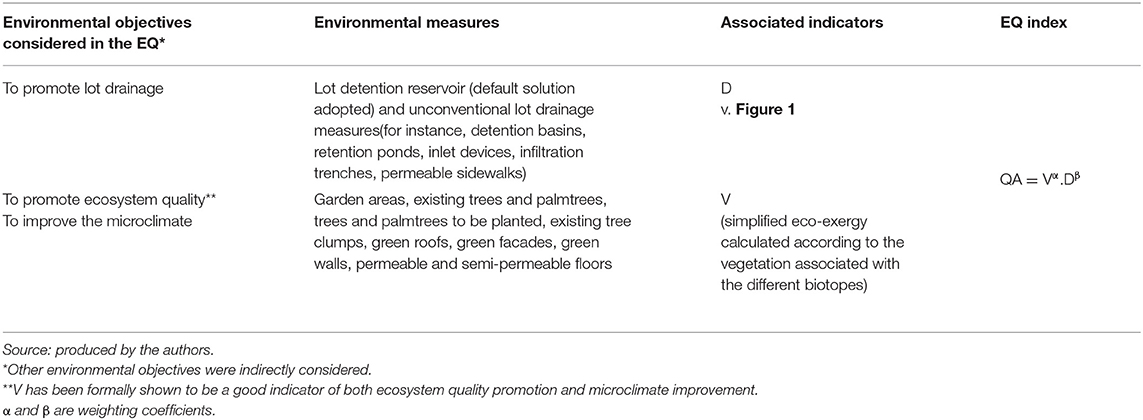
Table 1. Environmental objectives and indicators.
The solid theoretical basis ensured that the indicators related to these environmental goals (Table 1) had cardinal character. Other environmental goals were implicitly considered in the choice of such goals. However, the indicators chosen for the implicit environmental objectives are merely ordinal in nature.
Drainage is one of several rainwater management measures that can occur on three levels: macro drainage, micro drainage, and lot drainage. The EQ is concerned with the latter. To obtain the indicator for lot drainage, each lot is considered to be a watershed wherein the outlet corresponds to the pipes through which stormwater flows from the lot to the micro drainage system.
In a given basin with an area on the order of magnitude of an urban lot, it is perfectly adequate to use the rational method to determine the maximum outflow. To consider storage aspects, it is best to use the modified rational method (Chow et al., 1988). Hence, in the EQ method, each surface element of the constructed lot is assigned a runoff coefficient value (the surface elements chosen by the landscaper which are the called biotopes). An increase in the runoff coefficient can lead to the following outcomes: (a) the peak of the outflow hydrograph increases, (b) the lag time of the outflow hydrograph decreases; (c) the volume of water drained tends to increase. These are undesirable situations as they overload micro drainage systems.
It was decided that the EQ should only address the abatement in the peak of the outflow hydrograph. It was also decided that any measures aimed at abatement should be classified into one of two categories, as follows: (a) conventional measures (detention and retention for reservoirs) or (b) non-conventional measures (e.g., infiltration trenches, porous sidewalks, grassed trenches, infiltration wells). Finally, a decision was made to adopt the detention reservoir as the paradigmatic situation to develop the EQ, given that this is the measure that the technical community and licensors are most familiar with. Non-conventional measures will be subjected to regulations that are currently being elaborated.
The D indicator is a measure of how well the lot performs for promoting lot drainage. If the detention reservoir system succeeds at lowering the peak outflow hydrograph value of the plot to the pre-development value of the peak outflow hydrograph, then D = 1.0 (the so-called “zero impact”). If the placement of the reservoir succeeds at reducing the difference between the pre-developed and developed hydrograph peaks by 80%, then D = 0.8. Figure 1 can better clarify the concept.
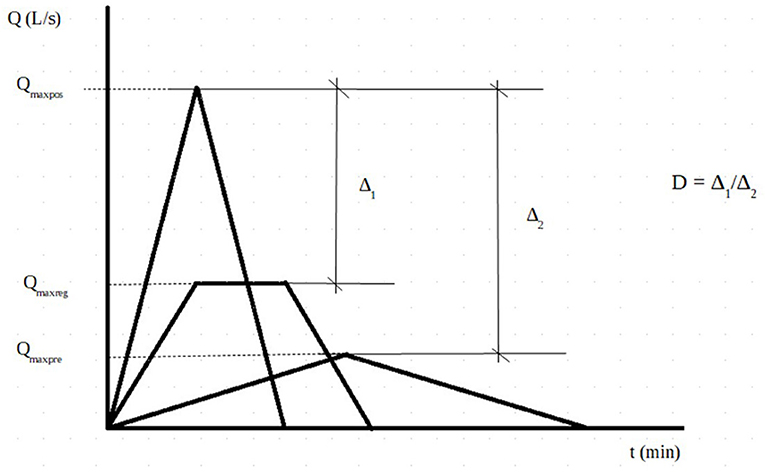
Figure 1. Diagram of indicator D. Source: produced by the authors. Qmaxpre, maximum lot output flow in the pre-developed condition; Qmaxpos, maximum lot output flow in the post-developed condition; Qmaxreg, maximum lot outlet flow with regulation through the chosen detention reservoir; The lines of the hydrographs are presented as straight for the sake of simplicity.
The EQ procedure is currently as follows: first, a given designer chooses the detention reservoir volume, then D is calculated according to the spreadsheet. A possible reversal of these procedures is currently being studied whereby the designer would first choose a D-value and then, based on that value, the spreadsheet would calculate the minimum reserve volume needed to obtain this D value.
Additionally, the EQ establishes detention reservoir outlet structure requirements, without which the mere requirement to a minimum detention volume would be innocuous.
The objective of the EQ is to improve ecosystem integrity based on a solid theoretical foundation through representative and powerful indicators. Ecosystem integrity has been well-documented by Kay (1991, 2000), and Schneider and Kay (1994), being integrity the ability of a given ecosystem to maintain its structure while self-organizing and dissipating energy. Xu and Tao (2000) point out that some ecologists prefer the expression “ecological integrity” to “ecological health.” Furthermore, they state that these expressions are used in official documents in the USA to refer to long-term policies associated with environmental conservation objectives. There is a debate in ecology as to whether health and integrity are equivalent, and whether equivalent expressions can be assumed a priori. Jørgensen (2006) argues that the concept of eco-exergy is an excellent indicator of ecosystem health.
The exergy of a system is the maximum amount of work required to bring that system into equilibrium with its environment. Jørgensen (1992) postulated that ecosystems maintain themselves out of thermodynamic equilibrium with the environment. It occurs with a high degree of organization and information about that environment. Ecosystems do so in such a way that maximizes their exergy. Mejer and Jørgensen (1979) proposed that the content of the so-called eco-exergy of an ecosystem component can be calculated as the probability of producing such a component at thermodynamic equilibrium. For a component of an ecosystem, it consists of the probability of producing organic matter (classical exergy term) and the probability of finding the genetic code, i.e., the correct sequence of DNA nucleotides (informational exergy term) of this ecosystem component (Bendoricchio and Jørgensen 1997; (Jørgensen et al., 2005; Silow et al., 2011a,b). Note that this calculation does not consider the information inscribed in the structure of the ecosystem. In practical terms, eco-exergy in a building project will relate, for example, to the diversity of tree strata and the types of vegetation cover rather than just the number of square meters of vegetation.
Thus, the V indicator of the EQ corresponds to the ratio between (a) the sum of a simplified Jørgensen's eco-exergy associated with the different surface biotopes of the per unit plot area and (b) a reference value that is intended to normalize the indicator. Table 2 clarifies how the V indicator is calculated, demonstrating some possible landscape solutions listed in the EQ menu.

Table 2. Calculation of indicator V.
For calculating the existing trees and palms on a given plot of land, the V indicator uses a single variable allometric equation, namely the diameter at breast height (DBH), as it provides a quick assessment of the trees and palm trees already on the plot. For trees and palm trees to be planted, V should be estimated based on catalogs published by the São Paulo Municipal Secretariat of Green and Environment [São Paulo (City), 2005] with a considerable safety coefficient included to account for the probability that seedlings will not thrive. For other biotopes, literature reviews were conducted regarding their biomass, and the values used were judiciously chosen.
Caetano (2016) argued that eco-exergy also serves as a microclimate indicator and is frequently associated with urban greening and related environmental services. Thus, the V indicator seeks to describe how a built lot performs to improve both ecosystem integrity and the surrounding microclimate.
Given that a set of general rules regulates the EQ for licensing purposes, rather than on a case-by-case basis, it is essential to emphasize that mere compliance with its requirements does not guarantee, in of itself, a good landscape or lot drainage project (OBSERVASP, 2015; Cioni and Passos, 2018). This task is up to the landscape architect and the hydraulic engineer.
Once the values of the D and V indicators have been obtained for the project, the EQ indicator is, in turn, obtained by taking the weighted geometric mean of both. The WG opted to adopt the geometric mean instead of the arithmetic mean to limit the possibility that a designer could compensate excessively poor performance by promoting lot drainage with good performance to promote ecosystem quality and microclimate improvement, and vice versa.
Table 1 presents a summary of the intertwined relationships between the environmental objectives considered in the EQ, environmental measures, indicators, and the formula to calculate the EQ index. Values for EQmin (environmental standards) were set as a function of lot area and lot position in the city.
Considering that the city of São Paulo has rigorous legislation regarding tree management, development of the EQ provided a glimpse of a very auspicious environmental possibility. The paradoxical effect of excessive legal protection of an environmental good, such as protection of a given tree species, is well-known. The procedures to manage trees on land in the city of São Paulo are so difficult and complex that real estate developers argue the presence of trees on a given plot of land tends to devalue the property. Since trees that already exist in a given plot of land considerably increase the numerical value of EQ as it is calculated in its spreadsheet, the EQ goes against this trend.
The EQmin values as a function of lot area were set according to a logistic curve. To set EQmin as a function of the position of the lot in the city, environmental zoning (the set of “environmental qualification perimeters”) was developed using a method analogous to that of McHarg (1969) (see also Yang and Li, 2016), and environmental qualification perimeters were set from there. This zoning has considered the environmental situation of the regions inside the perimeters and also its transformation potential. Figure 2 shows the environmental qualification perimeters in the São Paulo municipality territory. From this figure, it is clear that the peripheral regions of the city received the worst scores in terms of their environmental situation and also in terms of the potential for change. This corresponds to more evidence of environmental inequalities in the city's structure, especially in its aspects of greening, which impacts the environmental comfort of its residents and their leisure possibilities.

Figure 2. Environmental Qualification Perimeters in the São Paulo municipality territory. Source: São Paulo City Hall; adapted by the authors. Environmental Qualification Perimeters (EQPs) are, in practice, environmental zoning. The territory of the municipality of São Paulo was divided into homogeneous regions into environmental terms, with 13 types of regions being defined. For each of the 13 types of EQPs, requirements are presented in the law in terms of minimum permeability (even for the lots dispensed from the EQ) as well as the minimum numerical values of the EQ score as a function of the lot size. To define EQPs' degrees of rigor, each homogeneous region was evaluated in terms of indicators for (a) microclimate plus biodiversity, on a scale of 1–4, with 1 corresponding to the best state and 4 the worst; (b) drainage, idem; (c) transformation potential, on a scale of 1–4, with 4 corresponding to the best potential and 1 the worst. The indicators were then added together in order to be ranked. The higher the ranking, the greater the legal requirements of each EQP. The idea of including state indicators and a potential transformation indicator and providing them with values on an opposite scale rests on the following: an EQP with a good environmental state and very bad transformation potential receives the worst grades, having, therefore, the minor legal requirements in terms of EQ; on the contrary, an EQP with a deplorable environmental state and a good transformation potential receives the best grades, therefore having the highest legal requirements in terms of EQ.
It was determined that developments that exceeded their EQ score by a certain amount would receive urban incentives. The zoning law in effect establishes two potential types of non-cumulative EQ incentives (see Table 3). The first corresponds to a discount on the financial contribution of the onerous grant for the right to build4 or the additional non-computable built area and can be claimed when EQproj exceeds EQmin at a certain level. The second corresponds to a discount on the financial contribution to the onerous grant for the right to build, which is calculated according to the sustainability certification level that the developer obtains for the property, i.e., the lot's environmental performance. The municipality itself does not grant environmental certifications. This task is delegated to environmental certifiers who have registered and been approved by the municipality. The certification can be, for example, LEED® (GBC Brasil, 2021), AQUA-HQE (Fundação Vanzolini, 2021), Selo Casa Azul CAIXA (Caixa Econômica Federal, 2021) or EDGE (IFC, 2021). After an environmental certifier is registered with the municipality, different levels of its certification are scored according to EQ legislation, being the EQ incentive provided according to that score. The certification incentive is only valid for either residential developments or non-residential developments associated with residential use.
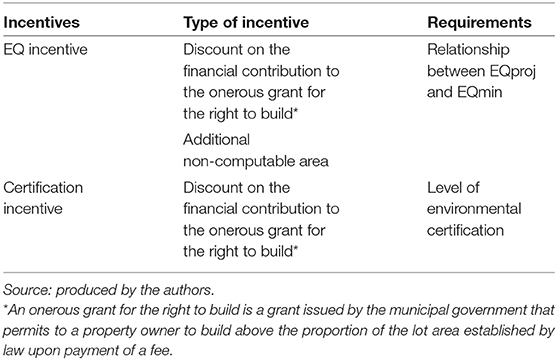
Table 3. Incentives.
The development of the EQ also took into consideration climate factors potentially related to global climate change. The severe water crisis between 2014 and 2016 in the state of São Paulo (Soriano et al., 2016; Moraes, 2020) contributed to determining that the EQ should include a requirement for buildings to have rainwater harvesting systems. This requirement is aligned with the idea that big cities should jointly manage alternatives to mitigate and adapt to climate change. Traditionally, there has been a scarcity of efforts to create synergies between them (Ürge-Vorsatz et al., 2018).
Stakeholder Engagement
In 2013, at the start of a new municipal administration, it was well-known that the then-mayor had formed a comprehensive coalition that included politicians from both the right and left sides of the political spectrum.
Although the mayor did not receive unconditional support, negotiations occurred in such a way that made it possible for the executive branch to pass their bills comfortably, provided, of course, that it was willing to spend its political capital. This also explains why the WG was pressured to make the EQ self-applicable, i.e., to leave little for future regulations, such as decrees, ordinances and other administrative acts, that could easily amend the EQ under future administrations.
Institutionalization of the EQ would not have been possible without following eminently political processes. As for developing the EQ, it is worth discussing how the relationship between politics and technique is established. Decision-makers responsible for weighing costs against benefits and accepting and dealing with risks and uncertainty when it comes to scientific, technical, social, political and, especially, legal concerns. Yet, it is up to technicians to ensure that any solutions presented to decision-makers are contained within a trade-off surface This is sometimes very difficult given the various degrees of uncertainty surrounding technical decisions (Scoones and Stirling, 2020). In that sense, it is the responsibility of the technique to assist politics. Table 4 presents more detailed information about the stakeholders' engagement during the EQ development process.
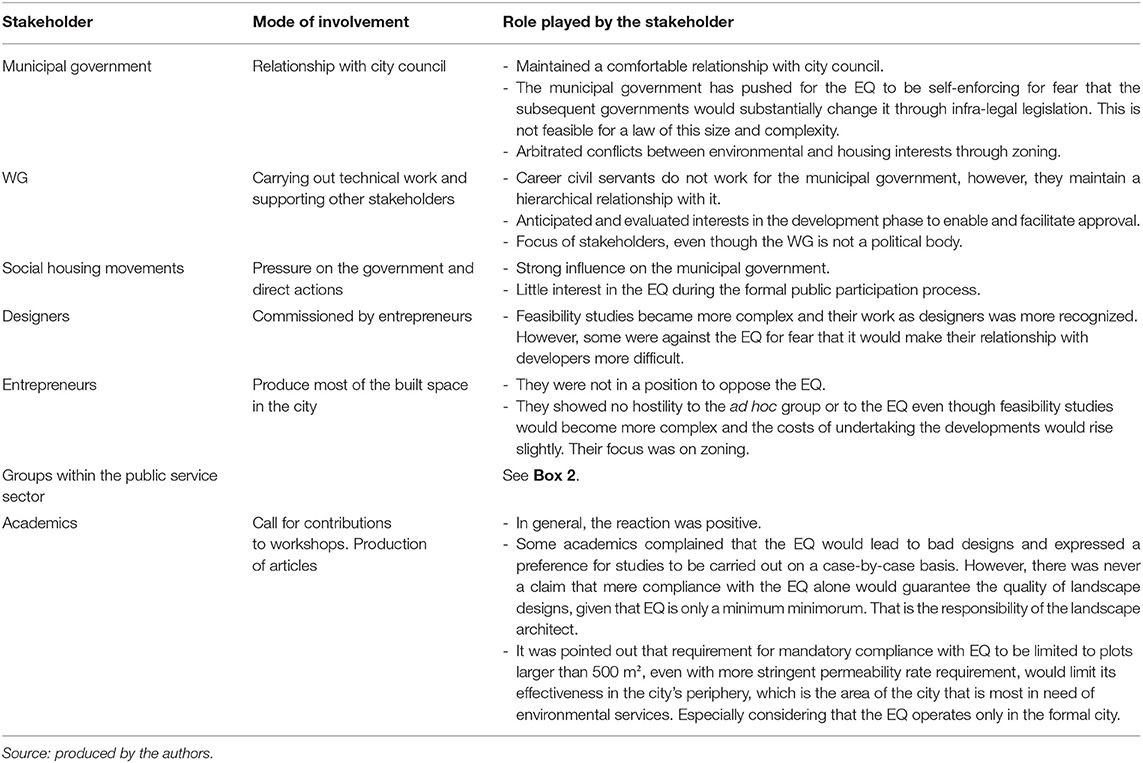
Table 4. Stakeholder involvement in EQ development and implementation.
Parameters are necessarily suggested or imposed by the technique. These parameters, when institutionalized and having defined mandatory thresholds, become standards. Setting standards is necessarily a policy task. Private entities, research institutes, universities and the literature suggest threshold values for the parameters, thresholds that are called criteria (Porto, 1991; Förstner, 1995). Political decision-making entities, when defining standards, should consider not only the suggested criteria but the social, economic and cultural issues associated with that definition, taking risks and deciding in a situation of uncertainty (Scoones and Stirling, 2020). In the case of EQ development, parameters were successfully defined. What involved considerable difficulty was to define criteria to be suggested to the decision-making entities. This implied the need to perform several simulations to obtain reasonable values for the parameters, being oft tricky even to know possible values for the parameters, let alone for their criteria. In the face of scarce data, how to decide? To use the mean, the median, the mode, a characteristic value? Are they available? Often this process involved the suggestion of criteria in a somewhat arbitrary but in reasonable and responsible way. Such is the realm of producing new socially robust knowledge, whereby social actors corroborate the quality control of science and technology used to make decisions (Gibbons, 1999).
Career civil servants have sufficient autonomy not to be obliged to compromise with the political options of the government5. Its role, ideally, is to maintain the possible neutrality and assist the government, doing so in the form of suggestions for alternatives for government officials to make their political decisions. Nevertheless, in producing alternatives to submitted to government political agents, public career civil servants in the early stages of their work should have in mind the political preferences of their hierarchical superiors and all stakeholders, also evaluating the power relations between them. This was observed when developing the EQ. It is not a good technique to produce proposals that are not politically viable or are not likely to be easily adjusted according to the political negotiations conducted between the stakeholders. That is why it can happen that career civil servants still in the development phase of their jobs are subject to direct pressure from stakeholders outside the public administration, as was the case with EQ development. The government itself is also not homogeneous, nor does it always know exactly what it wants. This can lead government officials to give contradictory or empty directives that must be taken into account by the career civil servers. Since the early stages of the development of the EQ, the WG considered political backgrounds and proceeded with negotiations involving stakeholders. The WG had always kept in mind that the government itself is not homogeneous, and this can lead government officials to give contradictory directives.
In the public service sector, five significant situations occurred as the EQ was being developed, as reported in Box 2.
Box 2. Situations of EQ development in the public service sector.
1) The group that was developing an update of the Building and Construction Code hardly opposed the EQ, alleging that the drainage concepts proposed in the development of EQ were not aligned with those that they had been adopted, mainly the concept of specific flow [Tucci, 2000; São Paulo (City), 2012].
2) Some public employees who had been developing academic studies were pleased to incorporate these studies into the EQ proposal.
3) The staff responsible for approving tree management expressed strong opposition to the final, approved version of the EQ.
4) Some staff with excellent academic credentials complained that they had not been asked to contribute to the EQ. This was due to the urgency with which the process was carried out.
5) Career civil servants involved in licensing hardly opposed the first decree proposal when it was being written. This opposition had to do with the legal uncertainty surrounding the activity of these servants.
When the EQ was being developed by the WG, the São Paulo municipal government was widely sensitive to the demands of social housing movements. For the most part, these demands were not directed at the WG. The municipal government established a clause into law that stated the EQ parameters for social housing would be subject to specific regulation. Moreover, the municipal government arbitrated these interests by establishing in the urban zoning areas specifically intended for low-income housing developments and other areas of environmental interest.
As the EQ was being elaborated, some design entities took a keen interest in it and the new possibilities it provided. Before the institutionalization of the EQ, feasibility studies for real estate developments were relatively simple. Implementation of the EQ meant that many landscape design decisions would need to be made at the feasibility study stage. This situation obviously displeased entrepreneurs. Some designers considered it a valorization of their profession due to the EQ opening up. In addition, designers realized the prospect for a new market with more possibilities and more plasticity to their projects, especially concerning green infrastructure; others demonstrated being displeased and pressured by their clients to respond to the new requirements. For some designers, it became impossible to oppose the idea of incorporating environmental aspects in the zoning law.
Perhaps it was precisely due to this unfeasibility to publicly oppose the EQ that some members of the real estate developers sector, which is quite powerful economically and politically, did not demonstrate any objections to the EQ. It is worthy to reinforce that more elaborate projects tend to be of better quality, offering benefits to buyers that developers will know how to use. Table 5 summarizes some criticisms of EQ and the responses to those criticisms.
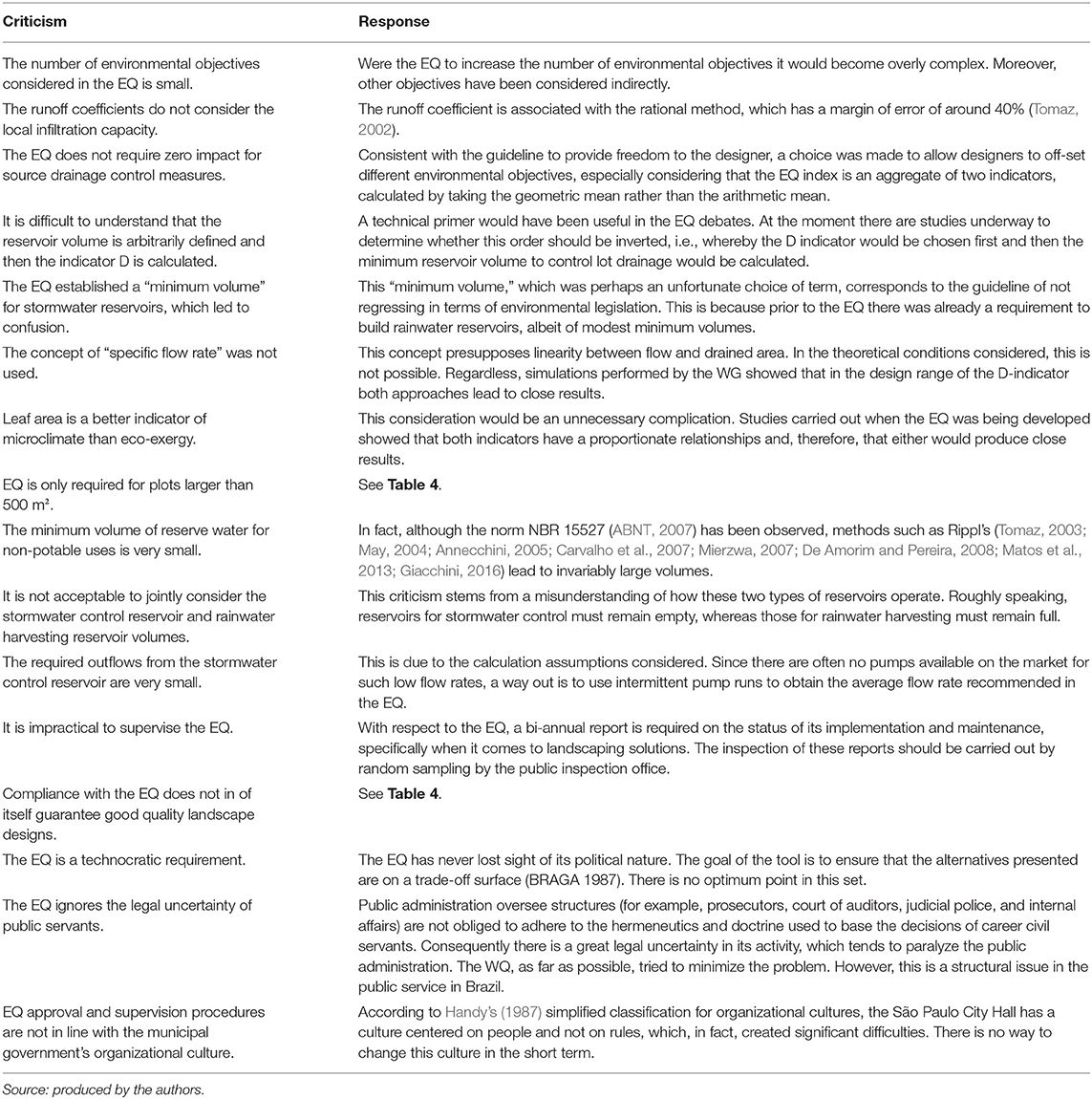
Table 5. Criticisms of the EQ.
Effectiveness and Provision of Environmental Services
Two elements are fundamental to guaranteeing the effective implementation of urban planning guidelines: licensing and inspection. For several reasons, when it comes to overseeing urban works, the municipality of São Paulo faces some challenges.
Licensing of the EQ occurs within the scope of the general process to request an urban license for a given development. Roughly speaking, in São Paulo, the process to request an urban license for a “large-scale” development is overseen by a central department (currently the Secretariat of Urbanism and Licensing, SMUL), whereas the process to request a “small-scale” is overseen by decentralized units.
A sample of 83 non-residential developments was extracted to carry out an initial assessment of the EQ. Obviously, a complete assessment of these effects would require further study in much greater depth and comprehensiveness, which has yet to be done. Therefore, the results presented here must be carefully considered. The total area consumed by each of these developments varies between 551 m2 and 66,041 m2, with an average development area of 4,333 m2. The total area consumed by all of these developments combined is 34.7 ha.
The municipality of São Paulo is located in the Atlantic Forest biome, a biome similar to that of the Amazon concerning biodiversity. Based on data from Jørgensen (2010), Lima (2010), and Forster and Melo (2007), the eco-exergy of fragments of secondary Atlantic Rain Forest in the initial/intermediate succession stage was roughly estimated at 1.7 e.u./m2 or 32 GJ/m2 (see Table 2). The weighted average simplified eco-exergy of the 83 developments considered here was found to be ~0.8 e.u./m2, that is approximately half of the value above, which demonstrates good environmental performance in promoting ecosystem quality and improving the microclimate. The exergy of the analyzed enterprises amounted to 4.8 PJ (petajoules).
Wall (2009) showed that the relationship between physical exergy and the amount of information at room temperature corresponds to 2.9 × 10⁻²¹ J/bit, and the exergy per unit of information of a protein synthesis process in a cell is 4.6 × 10⁻²¹ J/bit. Assuming that one unit of eco-exergy corresponds to the same amount of information as one unit of physical exergy (which, in the best case scenario, would provide only one order of magnitude given that they use different concepts and references), the amount of information stored in the vegetation of these 83 developments would be in the order of 4.7 × 1030 bit/m2, and the total amount of information stored would be in the order of 1.7 × 1036 bit.
The weighted average of indicator D, which relates the performance of the development to the plot drainage, is 0.67. This result would disappoint those who advocates of zero impact measures. The weighted average of the runoff coefficient is 0.65. This runoff coefficient corresponds to that used by the rational method to estimate the flow corresponding to a precipitation of duration equal to the time of concentration of the basin; thus, it does not consider the effect of the reservoir. It is important to note that the simplifications made in the QA to estimate the runoff coefficient were such that they tend to increase the numerical value of this coefficient.
This raises an interesting question: if a detention reservoir were built to have zero impact on a given fictitious basin and the volume of this reservoir was the sum of the lot's detention reservoir volumes, what would be the numerical value of this fictitious basin area? Canholi (2014) extracted some expeditious methods from the literature to estimate the volume of detention reservoirs. It was used the United States Conservation Service method (SCS 1986 apud Canholi, 2014). After adopting some assumptions to simplify the calculation, it was concluded that such an area would be ~300 ha. This result is remarkable since the sum of the lot areas corresponds to 35 ha.
Only a more complete study could test the validity of the adopted hypothesis and analysis. Above all, it is essential not to lose sight that the average of a function (correct method) does not always come closer to the function of the average (the method used here). In short, these are only preliminary calculations that are intended to provide a starting point to the structure of future evaluations.
The Environmental Quota and Gentrification
Based on what has been presented so far, one might consider that, given the enormous environmental and social sustainability problems engendered by São Paulo city, the EQ is a relatively modest instrument. Such a conclusion would be proper whether the municipal government had abdicated its efforts toward urban sustainability and outsourced them to the private sector. However, in reality, nothing could be further from the truth. What the São Paulo city did was to determine the real estate sector to make its share of sacrifices (in the form of a not so significant costs increase) in pursuit of sustainability based on the social function of properties principle, an innovative concept from the field of urban studies, consolidated in the 1988 Brazilian Federal Constitution6.
Indeed, the Municipal Secretariat of Green and Environment is engaged in the so-called green plans, which include, as determined by the Strategic Master Plan for the City of São Paulo (Municipal Law No. 16,050 of July 31, 2014), the Municipal Plan for Protected Areas, Green Areas and Open Spaces, the Municipal Plan for Conservation and Recovery of Areas Providing Environmental Services, the Municipal Plan for Urban Afforestation, and the Municipal Plan for the Atlantic Forest. These plans and actions were established through participatory, complementary, and harmonious work, and considerable human resources were allocated toward them.
It is essential to keep in mind that these plans prioritize concerns over gentrification by establishing mechanisms to minimize it. Thus, the EQ constitutes an unprecedented and well-liked by-product of these established priorities.
The EQ does, in effect, cause gentrification, but to a small degree. In coordination with the plans outlined above, the EQ could be used to improve its parameters to mitigate the processes that cause gentrification. The literature on urban greening and gentrification has demonstrated the paradox related to improvements in urban green infrastructure and making poorer and vulnerable people migrating from these areas (Cole et al., 2017; Haase et al., 2017; Andersson et al., 2019). The EQ can be argued to make a different effect since it dedicates to improvements on environmental services from green infrastructure to private and public urban plots. It characterizes environmental services provided by the private and public developments and also operates from urban plots in urban outskirts and poorer neighborhoods, even with compensation on urban areas with lower degrees of green infrastructure. In that sense, it is assumed that the EQ can assist in lowering the inequalities on the green in urban spaces. That is to be considered a perspective of improving urban resilience to climate change impacts and encompassing deep urban inequalities (Yang and Li, 2016; Staddon et al., 2018).
Even lots smaller than 500 m2, for which the EQ provisions do not apply7 (Nobre et al., 2015; Da Silva et al., 2018), must comply with a minimum permeability rate. The EQ not only established a significant increase to the minimum permeability rate compared to the previous requirements. It also modified the concept to become more rigorous, whereby only garden areas on natural soil are accepted and there cannot be slabs under them.
Replicability of the Environmental Quota
The EQ is very customized to the complexities inherent to the city of São Paulo, the political situation at the time it was being developed, and the time that it took to elaborate. Nevertheless, some of the experience gained in developing the EQ in São Paulo could serve as a starting point to discuss specific issues when developing an instrument analogous to the EQ in other cities.
A prior assessment is obviously needed, at least, to address the city's real estate market, environmental situation, the local political context and how public administration oversee structures affect it (for better or worse), the state and municipal government guidelines and, finally, to assess the decision making processes and survey the main stakeholders. A timeline is necessary, but it is also important to remember that political processes are complex and unpredictable, and this timeline will need to be adjusted continuously.
Next, the mode of operation must be defined. A small group of career civil servants with experience in public administration, composed of members from different backgrounds and, above all, a history of working together is desirable. How public participation will take place must be defined a priori. It has been proven to be adequate to convene specialists and allow a small degree of intervention among stakeholders in the development phase, all under the political tutelage of the municipal government. Seminars can be held with the Academy, research institutes, civil servants, including from other spheres of government, slightly more technical stakeholders, consultants, developers and designers. In the final stage, the public should be encouraged to participate, i.e., any citizen with interest in the subject. A careful strategy must be defined to handle this phase, for example, making primers for citizens to participate in public hearings, among other forms of participation.
It is important to remember that, although public participation is a mandatory requirement of any public policy, program or project, dialogue does not solve everything. The government has to assume the burden of the decision in the event of a deadlock. Issues related to representativity and proportional representation among the entities who will act on behalf of the public are complex.
Anyhow, decisions surrounding the environmental objectives and their magnitude must be made. There is a fine line between “ensuring the legal instrument remains simple” and “ensuring its regulatory power.” For example, concerning lot drainage, the desire to include issues related to infiltration, interception, and diffuse pollution can be assessed; however, this would make the instrument more complex. It can have a vital role in cities located in tropical zones that are highly vulnerable to climatic events (Canil et al., 2020; Travassos et al., 2020), as in São Paulo and in many Global South cities. Nevertheless, the experience of the EQ in the municipality of São Paulo provides an alternative, as it aggregates three different environmental objectives within a plausible framework.
Any government considering adopting a similar tool to the EQ should consider whether it is more convenient to establish a single index or to separate the indicators when determining different environmental objectives. Architects tend to have spatial vision and are, therefore, more comfortable with the V indicator. On the other hand, engineers tend to have a more functional vision; therefore, more in tune with the D indicator.
The choice to establish weighting factors related to an indicator analogous to V through the Delphi method, for example, should be studied, as Berlin did to develop the Biotope Area Factor (Keeley, 2011). On the one hand, weighting factors would be easier to understand, yet, on the other hand, this would come at the expense of scientific rigor and political legitimacy.
The convenience provided by establishing mandatory adherence to the principle of zero impact on lot drainage should be studied. The convenience of adopting the concept of specific flow should also be considered (Tucci, 2000). The convenience of establishing regulations concerning the definitive lowering of the water table by buildings with subsoil, which implies the need for permanent pumping, should also be considered. Additionally, the convenience of repealing existing environmental legislation should be analyzed, assuming the political burden of doing so in case of contradictions.
The legal framework and the control mechanisms and institutions must be studied very carefully to not hinder licensing and inspection. If enforcement mechanisms are not carefully considered, the effectiveness of the regulation tool will be seriously compromised. The degree of administrative discretion for licensing should be carefully considered. The relationship of EQ with other environmental regulation tools must be considered. Everything should be consistent with the culture of the involved organizations.
It is mandatory to proceed in a multi- and interdisciplinary way when it comes to environmental matters in complex urban contexts. Even with such open approaches, there will be several difficulties demanding careful prior assessments and political work.
Incentives to complement previously established environmental objectives are an exciting strategy that may be worth replicating. One could also think of extending EQ requirements, for example, by including considerations to install photovoltaic panels on buildings with large roof areas, such as supermarkets and shopping centers. Any measures will also depend on the regulations established by the electricity authority on the sale of energy. The use of high thermal performance paints (Gartland, 2010) and other similar strategies can also be considered in this context.
Given these arguments and considerations, we believe that the EQ can be replicated and adjusted to other cities or metropolitan areas8. This is particularly true for cities and metropolitan areas located in the Global South, where improving environmental services makes sense given the unequal division of urban territories. In that direction, it is worthy to remark that the development of the EQ can be understood by encompassing five dimensions on the necessary ability of local governments to advance in adaptation to climate change. These dimensions are presented by Di Giulio et al. (2019) through cognitive factors, resources, organizational factors, political aspects, and urban planning. Furthermore, EQ operationalized a principle of public function for the private properties, what in the case of Brazil set out in the Federal Constitution. For the Global North, the EQ experience can provide insights into how to promote urban greening from private developments in a way that benefits the whole city.
Final Considerations
The decision made by the municipality of São Paulo to introduce an environmental element to its land parceling, use and occupation legislation arose, in part, from a desire to overcome some of the limitations imposed by the National Environmental System (SISNAMA), in which São Paulo acts as a local agency. These limitations have to deal with federal legislation's formal rigidity, which reflects the previous experiences of some state agencies in approving pollution control legislation and Environmental Impact Studies. Additionally, it was in the City's interest to capillarize and universalize environmental measures at the lot level for either new developments or renovations.
This solution was inspired, in part, by other cities that have undergone similar processes, such as Berlin, Seattle, Malmö and Singapore. However, the development of São Paulo's tool (the EQ) differed substantially from its predecessors. The EQ explicitly states its three environmental objectives. Two of them, which relate to ecological and microclimatic aspects, are solved by lot occupation and development. The other, which is related to lot drainage, depends on hydraulic structures. The number called EQ is an aggregate of indicators that seek to evaluate the environmental performance of a given lot. Given that these indicators are grounded on a solid theoretical foundation, an assessment of the environmental performance of a given plot can be objectively measured and compared with other measures and indicators.
A very expeditious analysis showed possible aspects of the effectiveness of EQ in non-residential buildings. By this analysis, EQ had a good ecological and microclimate performance and a somewhat disappointing but good enough performance in lot drainage. These conclusions need to be ratified by a more comprehensive and in-depth study. In particular, it would be interesting to compare these results with those to be obtained for residential buildings.
Development of the EQ was centered mainly around a small ad hoc WG formed by four municipal government employees who have decades of experience working in this area and are, thus, well-versed in its formal and tacit norms, culture, and decision-making processes, and have considerable knowledge of the city. These professionals formed this group based on their individual expertise and their previous experience working together. This group developed the EQ over hundreds of hours of work, received suggestions, sought feedback from both outside and local experts, held seminars, provided information, attended to the (sometimes conflicting) demands from the local government and mediated interests between stakeholders and local government. Moreover, the group anticipated the different interests that would converge in the EQ and sought to develop compromises to accelerate political convergence. Above all, and even though the EQ is an unprecedented tool to insert environmental aspects into the legislation governing land parceling, use and occupation, the group strived for reasonableness so that the EQ would be respected by the diverse interest groups, even those who were opposed to it.
Several stakeholders have sought to influence the EQ during its development. Prominent among them is the powerful real estate development industry. Naturally, any given legal initiative that implies an increase in costs, even relatively modest ones, such as those contemplated in the EQ, is bound to face opposition. For the most part, these additional costs are absorbed by buyers and developers according to the relative elasticity of the supply and demand curves for new real estate. It is essential to say that the municipal government dared to take a chance such a new proposal as the EQ, even though it could have weakened its political capital given that such a measure was unprecedented.
Given that it is the center of a large peripheral capitalist megalopolis, São Paulo city has enormous social, environmental, landscape, economic, and urban planning problems, especially in terms of unequal access to the city's infrastructure and quality of life. Given these enormous problems and environmental imbalances in the city, even if a stakeholder were to disagree with the EQ, it would be difficult for them to publicly position themselves against it, no matter how much they disagreed. This is what was expected from the real estate development sector. Indeed, this sector showed relative small resistance to the EQ, despite the economic crisis of unprecedented magnitude that had engulfed the country. Perhaps the incentives contributed to this lack of resistance, especially the certification incentives, which are pretty usual in compliance processes. Moreover, it is remarkable the acceptance of the EQ among designers who were happy to see the diverse alternatives that the EQ made possible.
The interests of popular urban housing movements ignored rather than positioned themselves in front of EQ. It was a positive convergence considering their good organization and influence due to the city's huge housing deficit.
The commitment of municipal (local) governments is of decisive importance to enable a tool like EQ. Also remarkable is the municipal government's willingness to mobilize its political capital to make a tool like EQ politically viable, and supporting its approval in the city council. This is a key element for any other city that wishes to successfully develop a tool similar to the EQ.
It is important to note that the EQ does not imply that addressing the city's environmental and landscape issues will be delegated to the private sector. It merely requests that this sector contribute, within the framework of the social function of property, enshrined in the 1988 Federal Constitution. Given the city's severe environmental problems, the EQ would be modest in isolation (since it would only apply to the formal sector of housing developments). Thus it must be accompanied by a diversity of landscape and sanitation plans.
If, in principle, EQ is modest in its effectiveness in the face of serious environmental problems in the city, it is also modest in its capacity to produce gentrification. In addition, the aforementioned green plans work explicitly with the issue of gentrification and are committed to reducing inequalities in access to urban green infrastructure. It cannot be forgotten that if EQ had its application limited to lots smaller than 500 m2, having limited its effects on the fringes of the city, the minimum permeability rates remain not only valid for any lot size, but have had a its requirements increased, both from a quantitative perspective (the minimum rates are higher) as a qualitative one (to be considered a permeable area, it cannot be inscribed in a semi-permeable area or have a slab under it).
Finally, considering the need to better understanding the potentialities of EQ, we suggest three lines for further studies. First, on physical and urban effects of the application of EQ considering properties of adaptation on climate change. Second, perspectives of refinement of EQ in terms of how to make concepts into better applications. Third, comparative studies on São Paulo's EQ with the experiences of Berlin, Seattle, Malmö, Singapore, and Campo Grande. Now, the Secretariat of Green and Environment of the São Paulo City is conducting studies in the first and second lines. This and more in-depth comparisons on similar policies can give more comprehensive guidelines for the replicability of these innovative alternatives to contribute to urban sustainability in the face of climate change.
Author Contributions
PC, HP, LF, and PS contributed in the process of implementation of the EQ and as so provided relevant information produced through participant observation. PC and LG worked collaboratively in proposing and writing the first draft, organizing data, including tables and figures, and reviewing the final version. HP and LF reviewed the paper, included data, and writing inputs. PS made inputs of data and reviewed the final version. All authors contributed to the article and approved the submitted version.
Funding
The authors received support from FAPESP–São Paulo Research Foundation (proc. n. 2015/03804-9), CAPES/PROEX and from CNPq–National Council for Scientific and Technological Development (proc. n. 309840/2018-0).
Conflict of Interest
The authors declare that the research was conducted in the absence of any commercial or financial relationships that could be construed as a potential conflict of interest.
The handling editor PT declared a shared affiliation with one of the authors, LG, at the time of review.
Footnotes
1. ^Our discussion also applies to developments in public lots, but in this text, we highlight the perspective of private lots that represent the vast majority of permits.
2. ^In this paper, the words “city” and “municipality” are used interchangeably. Officially, the word municipality is more representative of the territory and its administrative structure, i.e., its executive power, the mayoral office (“Prefeitura”), which in Brazil is called the municipal administration. Brazilian municipalities also have legislative power, which is represented by a City Council (“Câmara Municipal”). The Brazilian Federal Constitution (CF) considers municipalities as federated entities. According to Fernandes (2013), it is the only country in the world that gives this status to municipalities.
3. ^SENATSVERWALTUNG FÜR UMWELT, VERKEHR UND KLIMASCHUTZ STADT BERLIN. BFF Biotopflächenfaktor https://www.berlin.de/sen/uvk/natur-und-gruen/landschaftsplanung/bff-biotopflaechenfaktor/ (accessed February 14, 2021).
4. ^An onerous grant for the right to build, which establishes that property owner can build beyond the percentage of lot area pre-established by law, is issued by the São Paulo municipal government to the property owner upon payment of a financial consideration.
5. ^The purpose of the group of career civil servants (servidores efetivos in Portuguese) is to provide a permanent structure for the Public Administration due to the sudden changes in the government in office. They are hired from public tenders and are not appointed or elected. In order to protect themselves from undue or illegal coercion, they are given job stability after a three-year probationary period. They have criminal, civil, and administrative liability for their decisions or opinions issued. There is great legal uncertainty in its activity, which tends to paralyze the public administration. The first four authors of this paper, as careen civil servants, are employees of the executive branch of São Paulo city. They are not government employees in power, although they maintain a hierarchical relationship with it.
6. ^It cannot be overlooked here that the cost increases implied by EQ are partly passed on to consumers and partly reduce the profits of developers. Quite simply, it can be said that the proportion between the transfer of costs and the decrease in profits will depend on the relative elasticity of the supply and demand curves for housing. There is a particular generational injustice involved in this process since younger generations will bear the costs of EQ while all will enjoy the benefits.
7. ^The restriction of the mandatory application of the provisions of the EQ to lots smaller than 500 m2 was a political requirement, against which the WG unsuccessfully opposed. It should be noted that to a development in a lot smaller than 500 m2 is allowed the application of EQ so that it can enjoy the incentives of EQ, without prejudice, of course, to the requirements presented above in terms of minimum permeability rate and all other urban and environmental legislation.
8. ^For example, the municipality of Campo Grande, capital of the state of Mato Grosso do Sul, Brazil, created through complementary law n. 341, of December 4, 2018, the Environmental Relevance Rate (TRA), clearly inspired by the EQ (see also Campo Grande, 2021). The municipality of Ribeirão Preto is also studying an urban instrument in part inspired by the EQ.
References
ABNT—Associação Brasileira de Normas Técnicas (2007). NBR 15527: Água de chuva—aproveitamento de coberturas em áreas urbanas para fins não potáveis—requisitos. Rio de Janeiro: ABNT.
Andersson, E., Langemeyer, J., Borgström, S., McPhearson, T., Haase, D., Kronenberg, J., et al. (2019). Enabling green and blue infrastructure to improve contributions to human well-being and equity in urban systems. BioScience 69, 566–574. doi: 10.1093/biosci/biz058
Anguelovski, I., Shi, L., Chu, E., Gallagher, D., Goh, K., Lamb, Z., et al. (2016). Equity impacts of urban land use planning for climate adaptation: critical perspectives from the global north and south. J. Plan. Educ. Res. 36, 333–348. doi: 10.1177/0739456X16645166
Annecchini, K. P. V. (2005). Aproveitamento de água de chuva para fins não potáveis na cidade de Vitória (ES) (Master thesis). Programa de Pós-Graduação em Engenharia Ambiental, Universidade Federal do Espírito Santo, Vitória, Brazil.
Bulkeley, H. (2010). Cities and the governing of climate change. Annu. Rev. Environ. Resour. 35, 229–253. doi: 10.4324/9780203858295
Caetano, P. M. D. (2016). Fundamentação teórica da Quota Ambiental e estudo de caso de seu desenvolvimento em São Paulo (PhD Thesis). Universidade de São Paulo, São Paulo, Brazil.
Caixa Econômica Federal (2021). Selo Casa Azul CAIXA. Available online at: https://www.caixa.gov.br/sustentabilidade/negocios-sustentaveis/selo-casa-azul-caixa/Paginas/default.aspx (access May 13, 2021).
Campo Grande (2021). Prefeitura Municipal de Campo Grande. Agência Municipal de Meio Ambiente e Planejamento Urbano. Taxa de Relevância Ambiental: instrumento de Planejamento Ambiental. Available online at: http://www.campogrande.ms.gov.br/planurb/wp-content/uploads/sites/18/2020/03/Apresenta%C3%A7%C3%A3o-audi%C3%Aancia-TRA-27-02-2020.pdf (accessed May 17, 2021).
Canholi, A. P. (2014). Drenagem urbana e controle de enchentes. 2nd Edn. São Paulo: Oficina de Textos.
Canil, K., Lampis, A., and dos Santos, K. L. (2020). Vulnerabilidade e a construção social do risco: uma contribuição para o planejamento na macrometrópole paulista. Cadernos Metrópole 22, 397–416. doi: 10.1590/2236-9996.2020-4803
Carvalho, G. S., De Oliveira, S. C., and Moruzzi, R. B. (2007). “Cálculo do volume do reservatório de sistemas de aproveitamento de água de chuva: comparação entre métodos para aplicação em residência unifamiliar,” in Simpósio Nacional de Sistemas Prediais, Vol. 10 (São Carlos).
Cioni, L. F., and Passos, M. B. (2018). Plano Diretor Estratégico de São Paulo: introdução da Quota Ambiental e construção sustentável. Trabalho de Conclusão de Curso (Pós-Graduação Lato Sensu em Construção Sustentável e Certificação Ambiental em Empreendimentos Imobiliários). São Paulo: SENAC-SP.
Cole, H. V., Lamarca, M. G., Connolly, J. J., and Anguelovski, I. (2017). Are green cities healthy and equitable? unpacking the relationship between health, green space, and gentrification. J. Epidemiol. Community Health 71, 1118–1121. doi: 10.1136/jech-2017-209201
Da Silva, P. W. S., Benites, M., Monteiro, L. M., and Duarte, D. H. S. (2018). Instrumentos urbanísticos para incremento da vegetação em áreas urbanas: análise comparada a partir da quota ambiental do município de São Paulo. Cadernos Zygmunt Bauman 8, 167–186.
De Amorim, S. V., and Pereira, D. J. A. (2008). Estudo comparativo dos métodos de dimensionamento para reservatórios utilizados em aproveitamento de água pluvial. Built Environ. 8, 53–66.
Di Giulio, G. M., Torres, R. R., Lapola, D. M., Bedran-Martins, A. M., da Penha Vasconcellos, M., Braga, D. R., et al. (2019). Bridging the gap between will and action on climate change adaptation in large cities in Brazil. Reg. Environ. Change 19, 2491–2502. doi: 10.1007/s10113-019-01570-z
EMPLASA (2019). Plano de Desenvolvimento Integrado (PDUI)–Região Metropolitana de São Paulo: diagnóstico final. São Paulo: EMPLASA.
Forster, H. W., and Melo, A. G. C. (2007). Biomassa aérea e de raízes em árvores de reflorestamento heterogêneo no vale do Paranepanema. São Paulo: I F Sér. Reg., 153–157.
Fundação Vanzolini (2021). Certificação AQUA-HQE. Available online at: https://vanzolini.org.br/aqua/certificacao-aqua-hqe/ (accessed May 13, 2021).
Gartland, L. (2010). Ilhas de calor: como mitigar zonas de calor em áreas urbanas. São Paulo: Oficina de Textos.
GBC Brasil (2021). Certificação LEED—GBC Brasil. Available online at: https://www.gbcbrasil.org.br/certificacao/certificacao-leed/ (accessed May 13, 2021).
Giacchini, M. (2016). “O método de Rippl para dimensionamento de reservatórios de sistemas de aproveitamento de águas de chuva,” in Annals of Congresso Técnico Científico da Engenharia E da Agronomia (Foz do Iguaçu).
Gibbons, M. (1999). Science's new social contract with society. Nature 402:C81. doi: 10.1038/35011576
Haase, D., Kabisch, S., Haase, A., Andersson, E., Banzhaf, E., Baró, F., et al. (2017). Greening cities–to be socially inclusive? about the alleged paradox of society and ecology in cities. Habitat Int. 64, 41–48. doi: 10.1016/j.habitatint.2017.04.005
Handy, C. (1987). Deuses da Administração: Transformando Organizações. (São Paulo: Vertice and Editora dos Tribunais), 245–245.
Hirst, J., Morley, J., and Bang, K. (2008). Functional Landscapes: Assessing Elements of Seattle Green Factor. Seattle, WA: The Berger Partnerships.
IBGE—Instituto Brasileiro de Geografia e Estatística (2021). IBGE Cidades. Available online at: https://cidades.ibge.gov.br/brasil/sp/sao-paulo/panorama (accessed January 10, 2021).
IFC (2021). Cerificação EDGE. Available online at: https://edgebuildings.com/certify/?lang=pt-pt (accessed May 13, 2021).
Jørgensen, S. E. (1992). Integration of Ecosystem Theories: A Pattern. Ecology and Environment V.1. Dordrecht: Kluwer Academic Publishers.
Jørgensen, S. E. (2006). Application of holistic thermodynamic indicators. Ecol. Indic. 6, 24–29. doi: 10.1016/j.ecolind.2005.08.003
Jørgensen, S. E. (2010). Ecosystem services, sustainability, and thermodynamic indicators. Ecol. Complex. 7, 311–313. doi: 10.1016/j.ecocom.2009.12.003
Jørgensen, S. E., Ladegaard, N., Debeljak, M., and Marques, J. C. (2005). Calculations of exergy for organisms. Ecol. Model. 185, 165–175.
Kay, J. J. (1991). A nonequilibrium thermodynamic framework for discussing ecosystem integrity. Environ. Manag. 15, 483–195. doi: 10.1007/BF02394739
Kay, J. J. (2000). “Ecosystems as self-organizing holarchic open systems: narratives and the Second Law of Thermodynamics,” in Handbook of Ecosystem Theories and Management, eds S. E. Jørgensen and F. Müller (Boca Raton, FL: CRC/Lewis), 135–150.
Keeley, M. (2011). The Green Area Ratio: an urban site sustainability metric. J. Environ. Plan. Manag. 54, 7, 937–958. doi: 10.1080/09640568.2010.547681
Kjellstrom, T., Friel, S., Dixon, J., Corvalan, C., Rehfuess, E., Campbell-Lendrum, D., et al. (2007). Urban environmental health hazards and health equity. J. Urban Health 84, 86–97. doi: 10.1007/s11524-007-9171-9
Kruuse, A. (2011). The Green Space Factor and the Green Points System (Green and Blue Space Adaptation for Urban Areas and Eco Towns—GraBS—Expert Paper 6). London: Town and Country Planning Association.
Landschaft Planen and Bauen and Becker Giseke Mohren Richard (1990). Der Biotopflächenfaktor als ökologischer Kennwert: Grundlagen zur Ermittlung und Zielgröβenbestimmung. Berlin: Senatsverwaltung für Umweltsschutz und Stadtentwicklung.
Lima, J. A. S. (2010). Estimativas de biomassa acima do solo de florestas segundárias da Área de Proteção Ambiental Rio Macacu (RJ) (Boletim de Pesquisa e Desenvolvimento/Embrapa Solos 163). Rio de Janeiro: EMBRAPA.
Matos, C., Santos, C., Pereira, S., Bentes, I., and Imteazc, M. (2013). Rainwater storage tank sizing: case study of a commercial building. Int. J. Sustain. Built Environ. 2, 109–118. doi: 10.1016/j.ijsbe.2014.04.004
May, S. (2004). Estudo da viabilidade do aproveitamento de água de chuva para consumo não potável em edificações [Master thesis (Mestrado em engenharia civil)]. Escola Politécnica, Universidade de São Paulo, São Paulo, Brazil.
Mejer, H., and Jørgensen, S. E. (1979). “Exergy and ecological buffer capacity,” in State-of-the-art in Ecological Modelling (Elsevier), 829–846.
Mierzwa, J. C. (2007). Águas pluviais: método de cálculo do reservatório e conceitos para um aproveitamento adequado. REGA 4, 29–37.
Moraes, G. G. B. (2020). The need for legal improvement of civil liability for the guarantee of the human right to access to water as an essential public service in Brazil: an analysis based on the São Paulo water crisis (2014–2016). Catalan J. Environ. Law XI, 1–43. doi: 10.17345/rcda2869
Nobre, C., Martin, I., and Lima, P. (2015). Quota Ambiental: o desafio de ser simples em território complexo. OBSERVASP. Available online at: http://www.labcidade.fau.usp.br/quota-ambiental-o-desafio-de-ser-simples-em-territorio-complexo/#:~:text=Quota%20Ambiental%3A%20o%20desafio%20de%20ser%20simples%20em%20territ%C3%B3rio%20complexo,-Vista%20a%C3%A9rea%20dosandtext=As%20%C3%A1reas%20que%20mais%20precisam,nos%20par%C3%A2metros%20da%20Quota%20Ambiental (accessed May 17, 2021).
OBSERVASP (2015). Entre a utopia e o plausível: conversa com Silvio Macedo (Entrevista concedida a Pedro Lima e Paula Santoro). São Paulo. Available online at: https://observasp.wordpress.com/2015/01/14/entre-a-utopia-e-o-plausivel-conversa-com-silvio-macedo/ (accessed December 9, 2015).
Pobloth, S. (2008). Die Entwicklung der Landschaftsplanung in Berlin im Zeitraum 1979 bis 2004 unter besonderer Berücksichtung der Stadtökologie [Dissertation (Doktorat Ingenieurwissenschaft)]. Fakultät VI Planen Bauen Umwelt der Technischen Universität Berlin, Berlin, Germany.
Porto, M. F. A. (1991). “Estabelecimento de parâmetros de controle da poluição,” in Hidrologia Ambiental (Coleção ABRH de Recursos Hídricos; v.3), ed R. L. Porto (org.) (Porto Alegre: ABRH, São Paulo: Edusp), 375–390.
Prieur-Richard, A.-H., Walsh, B., Craig, M., Melamed, M. L., Colbert, M., Pathak, M., et al. (2019). Global Research and Action Agenda on Cities and Climate Change Science. Edmonton. Available online at: https://citiesipcc.org/wp-content/uploads/2018/09/Research-Agenda-Aug-10_Final_Long-version.pdf
São Paulo (City) (2005). Prefeitura do Município de São Paulo. Secretaria Municipal do Verde e do Meio Ambiente Manual técnico de arborização urbana, 2nd Edn. São Paulo: SVMA.
São Paulo (City) (2012). Prefeitura do Município de São Paulo. Secretaria Municipal de Desenvolvimento Urbano. Manual de drenagem e manejo de águas pluviais, 2: aspectos tecnológicos: fundamentos. São Paulo: SMDU.
Schneider, E. D., and Kay, J. J. (1994). Life as manifestation of Second Law of Thermodynamics. Math. Comput. Model. 19, 25–48. doi: 10.1016/0895-7177(94)90188-0
Scoones, I., and Stirling, A. (2020). The Politics of Uncertainty: Challenges of Transformation. Milton Park: Taylor and Francis.
Seto, K. C., Golden, J. S., Alberti, M., and Turner, B. L. (2017). Sustainability in an urbanizing planet. Proc. Natl. Acad. Sci. U.S.A. 114, 8935–8938. doi: 10.1073/pnas.1606037114
Silow, E. A., Mokry, A. V., and Jørgensen, S. E. (2011a). “Some applications of thermodynamics for ecological systems,” in Thermodynamics-Interaction Studies-Solids, Liquids and Gases. IntechOpen.
Silow, E. A., Mokry, A. V., and Jørgensen, S. E. (2011b). “Eco-exergy use for ecosystem health assessment,” in Int. J. Exergy. Proc. Paris. 1–22.
Skärbäck, E. (2007). Landscape planning to promote well being: studies and examples from Sweden. Environ. Pract. 9, 206–217. doi: 10.1017/S1466046607070299
Soriano, E., Londe, L. R., Di Gregorio, L. T., Coutinho, M. P., and Santos, L. B. L. (2016). Crise hídrica em São Paulo sob o ponto de vista dos desastres. Environ. Soc.XIX, 21–42. doi: 10.1590/1809-4422ASOC150120R1V1912016
Staddon, C., Ward, S., De Vito, L., Zuniga-Teran, A., Gerlak, A. K., Schoeman, Y., et al. (2018). Contributions of green infrastructure to enhancing urban resilience. Environ. Syst. Decis. 38, 330–338. doi: 10.1007/s10669-018-9702-9
Stenning, E. (2008). An assessment of the Seattle Green Factor: increasing and improving the quality of urban green structure [Thesis (Mastery Urban Planning)]. Department of Urban Design and Planning, University of Washington, Seattle, EA, United States.
Tomaz, P. (2002). Cálculos hidrológicos e hidráulicos para obras municipais: piscinões, galerias, bueiros, canais; métodos SCS, Denver, Santa Bárbara, Racional, TR-55. Guarulhos. Navegar.
Travassos, L., Torres, P. H. C., Di Giulio, G., Jacobi, P. R., Dias De Freitas, E., Siqueira, I. C., et al. (2020). Why do extreme events still kill in the São Paulo Macro Metropolis Region? chronicle of a death foretold in the global south. Int. J. Urban Sustain. Dev. 13, 1–16. doi: 10.1080/19463138.2020.1762197
Tucci, C. E. M. (2000). Coeficiente de escoamento e vazão máxima de bacias urbanas. Br. J. Water Resour. 5, 61–68.
Ürge-Vorsatz, D., Rosenzweig, C., Dawson, R. J., Rodriguez, R. S., Bai, X., Barau, A. S., et al. (2018). Locking in positive climate responses in cities. Nat. Clim. Change 8, 174–177. doi: 10.1038/s41558-018-0100-6
Keywords: urban greening, urban land use, environmental services, gentrification, Environmental Quota, Biotope Area Factor, exergy, Quota Ambiental
Citation: Caetano PMD, Pereira HMSB, Figueiredo LCR, Sepe PM and Giatti LL (2021) The City of São Paulo's Environmental Quota: A Policy to Embrace Urban Environmental Services and Green Infrastructure Inequalities in the Global South. Front. Sustain. Cities 3:685875. doi: 10.3389/frsc.2021.685875
Received: 26 March 2021; Accepted: 25 May 2021;
Published: 25 June 2021.
Edited by:
Pedro Henrique Campello Torres, University of São Paulo, BrazilReviewed by:
Priscila Weruska Stark Da Silva, Technical University of Munich, GermanyBing Xue, Institute of Applied Ecology (CAS), China
Copyright © 2021 Caetano, Pereira, Figueiredo, Sepe and Giatti. This is an open-access article distributed under the terms of the Creative Commons Attribution License (CC BY). The use, distribution or reproduction in other forums is permitted, provided the original author(s) and the copyright owner(s) are credited and that the original publication in this journal is cited, in accordance with accepted academic practice. No use, distribution or reproduction is permitted which does not comply with these terms.
*Correspondence: Paulo Mantey Domingues Caetano, cGF1bG8ubWFudGV5QGdtYWlsLmNvbQ==