SP
swayamtrupta panda
Gemini Observatory
La Serena, Chile
2,180
Total downloads
13k
Total views and downloads
Submit your idea
You will be redirected to our submission process.
Manuscript Extension Submission Deadline 31 December 2025
This Research Topic is still accepting articles.
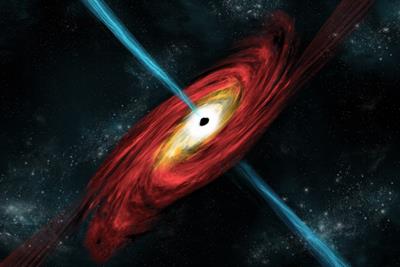
Active Galactic Nuclei (AGNs) are among the most luminous and energetic objects in the universe, powered by supermassive black holes at their centers. Understanding the broad-band spectral energy distributions (SEDs) of AGNs is crucial for deciphering the complex physical processes, both thermal and non-thermal, occurring in their vicinity. Despite significant advancements, several questions remain unanswered, such as the precise mechanisms driving the energy output across different wavelengths and the interplay between various emission regions. Recent studies have made strides in characterizing AGN SEDs, leveraging data from a wide range of wavelengths—from radio to gamma-rays. However, challenges persist in integrating these diverse datasets into a coherent framework, and there is a pressing need for more sophisticated SED fitting tools and methodologies. The advent of big data and the synergy between current and upcoming telescopes offer promising avenues to address these gaps, yet a comprehensive understanding remains elusive.
This research topic aims to evaluate recent developments in the field of AGN SEDs, focusing on the integration of multi-wavelength data to better understand the physical processes at play. The primary objectives include addressing specific questions about the energy budget of AGNs, the physics of the line-emitting gas near supermassive black holes, and the validation of existing theories. By fostering a collaborative effort, we seek to advance the methodologies for constructing robust, broad-band SEDs and to explore the potential of new observational tools and techniques.
To gather further insights into the broad-band spectral energy distributions of AGNs, we welcome articles addressing, but not limited to, the following themes:
• Development and application of SED fitting tools
• Multi-wavelength observational campaigns and data integration
• Theoretical models of AGN emission processes
• Case studies of individual AGNs with comprehensive SEDs
• Impact of big data and machine learning on SED analysis
• Synergies between current and future telescopes/instruments
• Variability studies and their implications for AGN physics
• Comparative studies of different AGN types and their SEDs
• Advances in understanding the line-emitting regions near supermassive black holes
• New methodologies for estimating the energy budget of AGNs
We welcome submissions in the form of (1) Original Research, (2) Review, (3) Mini Review, (4) Hypothesis and Theory, (5) Perspective, (6) Data Report, (7) Brief Research Report, (8) Opinion, (9) Technology and Code, and (10) Study Protocol.
This Research Topic accepts the following article types, unless otherwise specified in the Research Topic description:
Articles that are accepted for publication by our external editors following rigorous peer review incur a publishing fee charged to Authors, institutions, or funders.
Keywords: active galaxies, spectral energy distributions, techniques: SED fitting, accretion disks, spectroscopy, photometry, radio, sub-mm, infrared, optical, ultraviolet, X-ray, gamma-ray, polarimetry, scaling relations, cosmology, multiwavelength data, modelling, observations, theory
Important note: All contributions to this Research Topic must be within the scope of the section and journal to which they are submitted, as defined in their mission statements. Frontiers reserves the right to guide an out-of-scope manuscript to a more suitable section or journal at any stage of peer review.
Manuscripts can be submitted to this Research Topic via the main journal or any other participating journal.
Submit your idea
You will be redirected to our submission process.
