ZZ
zhaojiang zuo
Zhejiang Agriculture and Forestry University
Hangzhou, China
5,501
Total downloads
19k
Total views and downloads
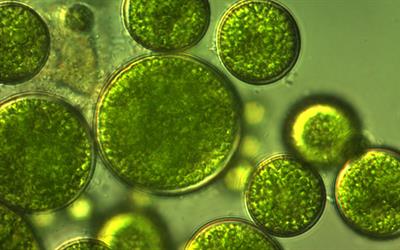
In the aquatic ecosystem, algae are significant primary producers, having large biomass and diversity of species that release a wide range of volatile organic compounds (VOCs). VOCs are a group of chemicals with high volatility at ambient temperatures, which are biosynthesized through secondary metabolism pathways. Algae synthesize and release VOCs to respond to environmental variations, such as light, temperature, nutrition, etc. The majority of individual VOC types have well-studied synthetic pathways in higher plants, but less so in algae, particularly for several unique algal VOCs. In addition, some non-volatile secondary metabolites are formed with essential VOCs as building blocks, e.g., triterpenoids and tetraterpenoids are composed of isoprene units. These non-volatile compounds can be oxidized to produce a mass of volatile compounds, such as the major algal odorants β-cyclocitral and β-ionone.
In water bodies, algal VOCs act as infochemicals serving important ecophysiological functions, ranging from enhancing the emitters’ tolerance to abiotic and biotic stresses, transferring important information between algae, to repelling predators, which are beneficial to algae coping with the complicated and changeable aquatic ecosystems. Some algal VOCs also contribute to water body odor. It is not clear whether these odor compounds influence human health, but they dramatically impact water supplies by increasing the costs of water treatment. When these VOCs enter the atmosphere from the hydrosphere, they participate in aerosol formation through a series of chemical reactions, especially in the ocean-atmosphere. Unfortunately, aerosols have exhibited serious impacts on human health.
This Research Topic welcomes the submission of Original Research articles, Reviews and Mini-reviews, Methods, Opinions and Perspectives. The potential topics may include, but are not limited to:
- Biosynthetic pathways of the VOCs in algae and cyanobacteria.
- Generation and emission mechanisms of algal VOCs in response to environmental variations.
- Dynamic monitoring and change of water odor which is mainly from algae, cyanobacteria, and planktonic microorganisms.
- Physiological and ecological functions of the VOCs in algae.
- Formation mechanism and functions of the algal VOCs from the non-volatile secondary metabolites.
- Chemical reactions and aerosol formation of the algal VOCs in the atmosphere.
- Effects of water odor or algal VOCs on human health.
Keywords: Aerosol Formation, Biosynthetic Pathway, Environmental Regulation, Ecophysiological Function, Water Odor
Important note: All contributions to this Research Topic must be within the scope of the section and journal to which they are submitted, as defined in their mission statements. Frontiers reserves the right to guide an out-of-scope manuscript to a more suitable section or journal at any stage of peer review.
