CF
claudio forte
Department of Veterinary Sciences, School of Agriculture and Veterinary Medicine, University of Turin
Turin, Italy
4,459
Total downloads
17k
Total views and downloads
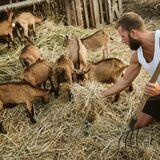
The field of animal nutrition is currently grappling with the issue of ""feed-food competition,"" a term that refers to the tension between using edible crops for direct human consumption versus feeding livestock. This competition is part of a larger system of competing uses for resources such as land, wild fish, water, labor, capital, and ecosystem services. The EU Animal Task Force has highlighted the need for science-based management strategies to reduce reliance on non-renewable resources, emphasizing the role of animals in converting non-edible agricultural biomass into food and manure, a valuable source of nutrients for plants and soils. However, there is a need for a more comprehensive understanding of how to increase the sustainability of animal nutrition, particularly through the use and reuse of resources not intended for human consumption.
The primary aim of this research topic is to gather global data on efforts to reduce feed-food competition. This will be achieved through a transdisciplinary approach that yields results beneficial to both companies and policymakers. The research will focus on developing sustainable strategies for animal feed production, exploring the use of alternative ingredients, and improving current methodologies for sustainability assessment.
The scope of this research topic is broad, encompassing a range of subjects related to sustainable animal nutrition. We welcome articles addressing, but not limited to, the following themes:
• Sustainable crop management for feed production
• Use of alternative ingredients such as insects, food waste, former food, agro-industrial by-products, and co-products
• Use of new feed additives obtained through sustainable processes, starting from functional wastes or by-products
• Development of new methods for determining competition indexes
• Improvement of current methodology for sustainability assessment.
Keywords: sustainability, nutraceuticals, by-products, co-products, re-use
Important note: All contributions to this Research Topic must be within the scope of the section and journal to which they are submitted, as defined in their mission statements. Frontiers reserves the right to guide an out-of-scope manuscript to a more suitable section or journal at any stage of peer review.
Department of Veterinary Sciences, School of Agriculture and Veterinary Medicine, University of Turin
Turin, Italy
University of Catania
Catania, Italy
University of Perugia
Perugia, Italy
Department of Veterinary Medicine and Animal Sciences, Faculty of Veterinary Medicine, University of Milan
Milan, Italy
University of Modena and Reggio Emilia
Modena, Italy
