KP
krishna pramanik
National Institute of Technology Rourkela
Rourkela, India
3,434
Total downloads
15k
Total views and downloads
Additive manufacturing techniques offer exciting possibilities for producing objects with detailed geometries based on individual and particular demands and hence these new manufacturing technologies can be widely used in many areas, such as biomedical applications, including the orthopedic and dental implants/prosthetics and other surgical devices & accessories, tissue engineering and regenerative medicine, drug delivery, food processing, cosmetology and packaging industries.
This is the case for manufacturing polymeric-based biomedical devices, including artificial hips and knee implants or systems such as stents, heart valves, or even vascular grafts, which are commonly used to improve the quality of life and, increase life expectancy, fabrication of complex and customized dental components using different materials, biomedical devices that are able to prevent biofilm formation, fabrication of wound dressings, or scaffolds for tissue regeneration etc.
Besides medical devices, additive manufacturing techniques, including 3D printing, can create personalized drug delivery systems. By layering materials based on digital models, tailored solutions can be designed for specific patients or patient groups. The combination of patient-tailored drug dose, dosage form, and drug release adjustment can enhance the patient therapy.
However, these manufacturing methodologies suffer from crucial disadvantage of biomaterial-associated infections which remain a major challenge. In this context, the fusion of additive manufacturing and antimicrobial strategies holds immense promise for improving patient outcomes and combating drug-resistant bacteria. Additive manufacturing is used to create customized tools, equipment, and parts used in food processing facilities and in food packaging. In the food industry, implementing effective antimicrobial strategies is crucial to ensure food safety through 3D printing technology.
The food industry is also actively exploring antimicrobial materials that can help in maintaining hygiene and prevent microbial growth in these settings and innovative antimicrobial additives/agents that can prevent microorganisms from growing, producing energy and/or replicating when the microbe encounters the biomaterial surface, thereby enhancing safety, sustainability, and hygiene in food packaging. Similarly, recently 3D printing has opened up a wide scope for technological advancement in the cosmetic industry to produce various cosmetic products and cosmetics packaging containers, for which antimicrobial strategy against contamination by pathogenic microorganisms is of immense importance to assure consumers' safety and to increase their shelf-life.
Therefore, antimicrobial strategies play a crucial role in the context of additive manufacturing in the mentioned application fields. To enhance antimicrobial properties, researchers have explored various approaches depending on the specific application such as employing polymers that either exhibit intrinsic antibacterial capacities or provide antimicrobial functional groups, surface modification of the polymers or composite materials through adding certain antibacterial agents like quaternary salt-based agents, metallic nanoparticles, inorganic oxide nanoparticles, ions release, use of probiotic are some of the examples.
This special issue welcomes reviews and research papers on antimicrobial strategies to enhance the antimicrobial activity of the materials used for additive manufacturing in the orthopedic, dental, tissue engineering, drug delivery, food processing, cosmetic and packaging industries.
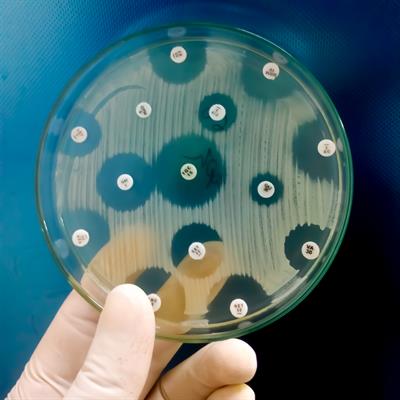
Keywords: Additive Manufacturing, 3D printing, Biomedical applications, antimicrobial strategies, biomaterial-associated infections
Important note: All contributions to this Research Topic must be within the scope of the section and journal to which they are submitted, as defined in their mission statements. Frontiers reserves the right to guide an out-of-scope manuscript to a more suitable section or journal at any stage of peer review.
