JM
joice mathew
Australian National University
Canberra, Australia
1,942
Total views and downloads
Submit your idea
You will be redirected to our submission process.
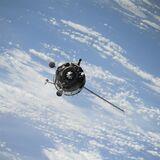
Small satellite and high-altitude balloon platforms have emerged as crucial tools for astronomical research, offering unique avenues for deploying advanced instrumentation in space, thus overcoming the limitations posed by traditional large satellite programs. There is a growing need to address the challenges of miniaturization and the adaptation of sophisticated technology such as spectrometers and high-resolution imaging systems to these smaller, more versatile platforms. Despite recent advancements in optical technologies, photodetectors, and lightweight telescopes, further enhancement and innovation are necessary for achieving groundbreaking results in astronomic observations.
This Research Topic aims to aggregate the latest scientific advancements and technological innovations that amplify the utility and efficacy of small satellites and high-altitude balloons for astronomical observations. It seeks to spotlight studies that push the boundaries of current technological capabilities including the development of modular systems, improved instrument resilience through novel materials and optical coatings, and the autonomous operational capacities that minimize ground control dependency. By integrating improved data handling techniques such as advanced onboard processing and innovative uses of AI for data analysis, this field stands to markedly increase the scientific yields from space-based platforms.
To gather further insights in these compact astronomical systems, we welcome articles addressing, but not limited to, the following themes:
• Miniaturized and adaptable instrumentation for space platforms
• Enhanced imaging and photodetection technologies
• Advancements in space photonics and Photonic Integrated Circuits
• Deployment and stabilization strategies for satellites and balloons
• Innovations in thermal and power management for prolonged missions
• Integrated data processing and real-time analysis enhancements
• Collaboration between ground-based and space-based observation systems
• Case studies and strategies for mission planning and operational management
Through these discussions and explorations, the collection aims to deepen the understanding and refine the application of small-scale satellites and high-altitude balloons in the ever-evolving domain of astronomy.
The Editors welcome all manuscript types accepted by Frontiers in Astronomy and Space Sciences, including shorter papers like Brief Research Report, Mini Review and Perspective.
Conflict of Interest Statement
Dr Joice Mathew co-founded a private company called Arksa Research Labs Pvt Ltd in 2016, but he is no longer actively involved in the company. All other Topic Editors declare no competing interests.
This Research Topic accepts the following article types, unless otherwise specified in the Research Topic description:
Articles that are accepted for publication by our external editors following rigorous peer review incur a publishing fee charged to Authors, institutions, or funders.
Keywords: Small satellites, High-altitude balloons, Miniaturization, Advanced instrumentation, Spectrometers, High-resolution imaging systems, Photodetectors, UV instrumentation, IR instrumentation, X-ray instrumentation, Optical technologies, Autonomous operations, Onboard data processing and AI applications, Space photonics, Modular systems
Important note: All contributions to this Research Topic must be within the scope of the section and journal to which they are submitted, as defined in their mission statements. Frontiers reserves the right to guide an out-of-scope manuscript to a more suitable section or journal at any stage of peer review.
Australian National University
Canberra, Australia
Austrian Academy of Sciences (OeAW)
Vienna, Austria
Institute for Astronomy and Astrophysics, University of Tübingen
Tübingen, Germany
University of Massachusetts Lowell
Lowell, United States
Indian Institute of Astrophysics (IIA)
Bangalore, India
Manuscripts can be submitted to this Research Topic via the main journal or any other participating journal.
Submit your idea
You will be redirected to our submission process.
