RK
ruchi kher jaggi
Symbiosis International University
Pune, India
4,376
Total views and downloads
This Research Topic explores the potential of streaming platforms as purveyors of soft power. Joseph Nye (1990) defines soft power as a country's ability to achieve outcomes through attraction rather than coercion. He identifies three sources of a country’s soft power: its culture, its political values, and its foreign policies (Thussu, 2014). Media plays a central role in the discussion on soft power. Historically, the American media and entertainment industries have had significant global distribution and impact. Despite the rise of media and entertainment industries from the Global South, the top five media companies by revenue remain American (Statista, 2023). Governmental support has been a significant factor, with successive U.S. governments following a commercial model for their media (Thussu, ibid.). However, the rise of digital media platforms has brought increased attention to media content emerging from other regions of the world. India, China, and Brazil have attracted large global audiences through their transnational television networks. India’s film industry has served as a powerful transmitter of cultural diplomacy, with the large Indian diaspora further increasing the global popularity of its media content.
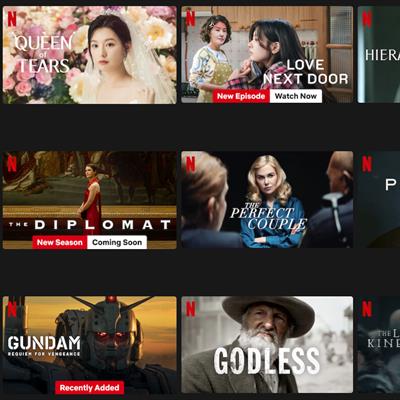
Writing in Modern Diplomacy, Carminati (2023) notes how a streaming platform like Netflix, available in over 190 countries, can showcase diverse and lesser-known cultures and societies, acting as a soft power multiplier. Elkins (2021) examines the case of Netflix's globalization to introduce the concept of streaming diplomacy: the use of digital media and streaming platforms to enhance a country’s soft power.
A prominent example of this is the Korean Wave, or Hallyu. As Jin (2021) explains, “Korea has noticeably developed its distinctive soft power due in large part to the Korean Wave and its utilization of digital technologies.” Citing Nye (2020), Jin emphasizes that “with technological advances, soft power depends not only on government policies, but also on the attractiveness of its civil society embedded in digital society.” He further notes that “[t]he growth of digital platforms, both OTT platforms and music streaming services in the cultural industries, has been related to the Korean Wave [and that the latter’s] recent success has been connected to Korea’s leading position in digital technologies”.
This Research Topic explores the concept of streaming diplomacy, or the potential of digital and streaming platforms to enhance a country’s soft power. We welcome submissions in the areas listed below. This list is indicative and diverse, and more critical perspectives are welcome.
• theoretical foundations and frameworks of soft power in the digital era
• national case studies in streaming diplomacy
• strategies for nation branding using digital/streaming platforms
• streaming diplomacy and political narratives
• streaming platforms—propaganda and manipulation
• commodification of soft power
• state or governmental interference
• issues and concerns regarding hyper-nationalism, polarization, and fragmentation.
Keywords: streaming diplomacy, soft power, OTT and soft power, digital media, diaspora
Important note: All contributions to this Research Topic must be within the scope of the section and journal to which they are submitted, as defined in their mission statements. Frontiers reserves the right to guide an out-of-scope manuscript to a more suitable section or journal at any stage of peer review.
