AC
andrea caroppo
Institute of Microelectronics and Microsystems, National Research Council
Lecce, Italy
1,121
Total downloads
9,213
Total views and downloads
Submit your idea
Select the journal/section where you want your idea to be submitted:
Multiple definitions of "Active and Healthy Aging" (AHA) have been proposed in the last few years. The main goal of AHA is to improve people's overall quality of life (as they age) in several ways, including health and long-term care, social and professional participation, physical security, and financial stability, among others.
Furthermore, it fosters creative and economically viable technology, services, and policies to meet the demands of an aging population, so contributing to the long-term sustainability of health, care, and social service systems.
The World Health Organization (WHO) describes AHA as the process of developing and maintaining the functional ability that promotes well-being in older age. According to this concept, older adults actively participate in their surroundings and lives.
The WHO specifically names four pillars to enhance life quality and accomplish AHA:
(1) mental training, to keep the mind sharp and flexible supporting brain health and cognitive resilience;
(2) regular physical exercise to stimulate not only physical but also neurological health;
(3) nutrition, as a healthy diet influences brain function and reduces risks of neurodegenerative diseases; and
(4) social inclusion, which combats loneliness and depression while fostering emotional and cognitive well-being through meaningful relationships.
According to the European Commission, the COVID-19 pandemic that hit the population in 2020 exposed the vulnerabilities of an aging population since home confinement and lockdown measures were seen as obstacles to achieving and maintaining AHA. Lockdowns and social distancing disrupted routines and clinical practices, including neurological health monitoring. However, these challenges accelerated the advancement of remote medicine and technological solutions. Innovations like smart wearable devices became pivotal, offering not only remote clinical care but also direct feedback on activity recognition, movement disorders, and even cognitive function through continuous data collection and analysis.
The rapid spread of smart wearable devices among the elderly population has strongly contributed to the development of even remote solutions capable of providing objective and frequent information on activity recognition, movement disorders monitoring, detection of dangerous situations (i.e., falls), and continuous observing of vital parameters.
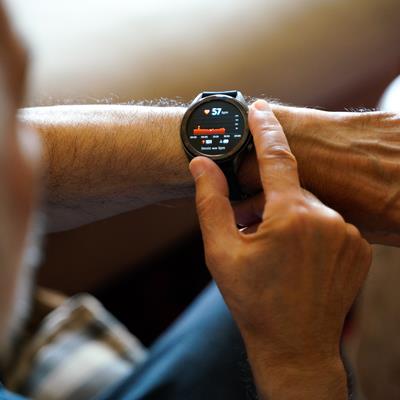
The implementation of these solutions is expected to lower the costs associated with providing health and social care while also improving general well-being, managing health conditions, and improving quality of life. Among these devices, wrist-worn technologies stand out for their ease of use and acceptability. Access to raw data from such devices, extracted openly from the wrist device or the smartphone connected to it, enables researchers and developers to refine their applications, particularly in detecting early signs of neurological decline, enhancing brain health, and promoting AHA.
This Research Topic will explore the design, implementation, testing, benchmarking, and use of wearable smart wrist devices in various medical fields (e.g. recognition of Activities of Daily Living (ADLs), the evaluation of movement disorders, the reporting of cardiac dysfunctions, and the detection of critical events) emphasizing their potential to monitor and support brain health. Another goal will be to address technological problems in the processing and hardware integration of wearable smart devices.
This collection aims to advance research at the intersection of technology and aging, emphasizing brain health as a cornerstone of AHA.
Submissions may include original research, reviews, methods, and perspectives on sub-topics such as:
1) Smart wrist devices and associated methods for activity recognition of elderly subjects (monitoring vital signs).
2) Methods for activity recognition and its implications for overall brain health
3) Integration of wearable technologies in the early detection of movement disorders of elderly subjects and/or neurological disorders
4) Smart wrist devices and associated methods for critical event detection of elderly subjects.
5) Smart wrist devices signal processing
6) Health monitoring systems with smart wrist devices.
7) Decision support systems using smart wrist devices for personalized care.
8) Applications of smart devices for dual-task assessments in movement and cognitive load analysis.
9) Use of wrist devices for the assessment of sleep disorders
10) Innovative applications of smart wrist devices
This Research Topic accepts the following article types, unless otherwise specified in the Research Topic description:
Articles that are accepted for publication by our external editors following rigorous peer review incur a publishing fee charged to Authors, institutions, or funders.
Keywords: healthy aging, smart devices, quality of life, aging, elderly, wearable device, movement disorders, monitoring, vital signs
Important note: All contributions to this Research Topic must be within the scope of the section and journal to which they are submitted, as defined in their mission statements. Frontiers reserves the right to guide an out-of-scope manuscript to a more suitable section or journal at any stage of peer review.

Manuscripts can be submitted to this Research Topic via the main journal or any other participating journal.
Submit your idea
Select the journal/section where you want your idea to be submitted: