JZ
jinhong zhao
Wannan Medical College
Wuhu, China
280
Total downloads
2,355
Total views and downloads
Submit your idea
You will be redirected to our submission process.
Manuscript Submission Deadline 31 January 2026
This Research Topic is currently accepting articles.
Please note that only the following article categories are accepted: mini reviews, general commentaries, perspectives, case reports and classifications.
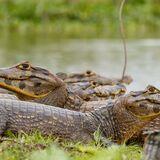
Animal parasitic disease has characteristics of easy infection and transmission diversity, this makes it to become a major disease to wildlife. Although wild animals have developed certain behavioral patterns and physiological mechanisms to deal with parasitic infections in the course of long-term adaptation, this avoidance cannot be assured. Parasitic infections can reduce the productivity of wild animals, affect their survival and reproduction ability, and may even lead to a drastic reduction or extinction of species. Such as coccidia may become pathogenic, causing illness or death in younger alligators under captive feeding and reproduction. Some parasitic diseases of wildlife also have zoonotic characteristics. For example, Toxoplasma gondii can induce miscarriage and congenital malformations, which will not only affect the health and performance of animals, resulting in slow growth, reproductive disorders, decreased immunity and other problems, but also may be transmitted to humans, causing zoonotic parasitic diseases, posing a threat to public health. Moreover, controlling the parasitic diseases of wildlife is also an important part of maintaining ecosystem stability. Each species in the ecosystem is in a complex ecological network, influencing each other and interlocking. If wildlife are greatly reduced or extinct due to parasitic diseases, it will cause irreversible damage to the entire food chain and ecosystem, and then affect the survival and development of human beings. Therefore, controlling parasitic diseases of wildlife is crucial because it is related to wildlife welfare, human health, and the maintenance of ecological balance.
The goal is to raise awareness about the parasitic diseases of wildlife threat to wildlife well-being, human health, and ecological balance, there is a need for more research in this area. This research topic welcomes articles from different geographic regions, focusing on important emerging diseases and neglected parasites, especially from previously non-studied areas. The following article categories are accepted: mini reviews, general commentaries, perspectives, case reports and classifications.
We welcome articles addressing the biology of pathogens and vectors, host-parasite relationships, and mechanisms of pathogenicity of wildlife Parasitology, but not limited to, the following themes:
- The biology and epidemiology of parasitic diseases
- The study of host-parasite immune interaction
- Advances in the diagnosis, treatment, and control of these diseases
- Studies on the proteome, immunome, and molecular aspects of these diseases
- The public health and social sciences of these diseases
- Clinical cases and short manuscripts related of these diseases.
This Research Topic accepts the following article types, unless otherwise specified in the Research Topic description:
Articles that are accepted for publication by our external editors following rigorous peer review incur a publishing fee charged to Authors, institutions, or funders.
Keywords: biology, ecology, diagnostics, immunoregulation, prevention, control
Important note: All contributions to this Research Topic must be within the scope of the section and journal to which they are submitted, as defined in their mission statements. Frontiers reserves the right to guide an out-of-scope manuscript to a more suitable section or journal at any stage of peer review.
Manuscripts can be submitted to this Research Topic via the main journal or any other participating journal.
Submit your idea
You will be redirected to our submission process.
