RC
robert c allen
Southwest Research Institute (SwRI)
San Antonio, United States
128
Total downloads
3,109
Total views and downloads
Submit your idea
Select the journal/section where you want your idea to be submitted:
Manuscript Submission Deadline 19 January 2026
This Research Topic is currently accepting articles.
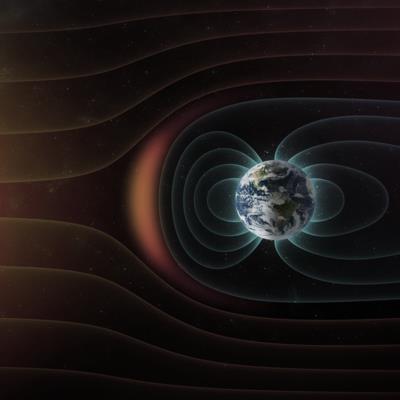
The solar wind heavily influences the environments around inner solar system bodies. Interactions vary throughout the inner solar system: from the intrinsic magnetospheres of Mercury and Earth to the induced and hybrid magnetospheres of Venus and Mars; from the weathering of lunar and small rocky body surfaces to the local effects of crustal fields. Understanding the wide range of solar wind interactions and driving of these environments has long been an active area of research, with recent and exciting opportunities in observations, modeling, and computing capabilities enabling new insight.
Future missions, such as BepiColombo, Lunar Vertex, Escape and Plasma Acceleration and Dynamics Explorers (ESCAPADE), and Martian Moons eXploration (MMX), will bring new observations needed to understand how the solar wind and embedded transient events (e.g., coronal mass ejections, stream interactions regions, and solar energetic particle events) can impact the magnetosphere and surface conditions of Mercury, the Moon, Mars, and the Martian moons, respectively. Meanwhile, a wealth of current and historical datasets is ripe to understand and characterize the environment and interactions in cis-lunar space (e.g., Acceleration, Reconnection, Turbulence and Electrodynamics of the Moon’s Interaction with the Sun (ARTEMIS)) and around comets and asteroids (e.g., Rosetta), the magnetosphere and near planet environment at Mercury (e.g., MErcury Surface, Space ENvironment, GEochemistry, and Ranging (MESSENGER)), and the interactions between the solar wind and the crustal fields of Mars (e.g., The Mars Atmosphere and Volatile EvolutioN (MAVEN) and Mars Express). Additionally, recent fly-by observations from Solar Orbiter and Parker Solar Probe are providing new vantages of the near-Venus plasma environment with new particle and fields instrumentation that complement the rich datasets from previous missions (e.g., Venus Express, Pioneer Venus Orbiter). Advances in machine learning, including algorithm development and application across various planetary bodies, also now enable new ways to study solar wind interactions at these bodies.
This Research Topic aims to explore the continued advancement and integration of both observations and modeling to better understand the interplay between the solar wind and associated transients with inner solar system bodies. This includes, but is not limited to, impacts on magnetospheres and crustal fields, ionospheres, surfaces, and the cis-lunar environment.
For example, topics may include:
• Characterization of cis-lunar space and associated variabilities.
• Impacts of surface interactions with solar wind weathering.
• Understanding magnetopause and bowshock dynamics at inner solar system bodies.
• Applications of new techniques and methodologies to unravel the solar wind-planet interactions.
• Impacts of transient events (Coronal Mass Ejections (CMEs), Stream Interaction Regions (SIRs), Solar Energetic Particles (SEPs), etc.) on different planetary systems.
• Comparative studies of solar wind interactions within the inner heliosphere, including comparisons with Earth.
• Understanding of solar wind impacts on small rocky bodies within the inner heliosphere, including interactions with comets.
• Evolution and variability of the solar wind and transients between planetary systems within the inner heliosphere.
We invite submissions of various article types, including Original Research, Review, Mini Review, and Perspective articles.
This Research Topic accepts the following article types, unless otherwise specified in the Research Topic description:
Articles that are accepted for publication by our external editors following rigorous peer review incur a publishing fee charged to Authors, institutions, or funders.
Keywords: Solar Wind Interactions, Magnetospheres, Cis-Lunar Environment, Comparative Magnetospheres, Surface Interaction, Coronal Mass Ejections (CMEs), Planetary Space Weather, Inner Solar System Bodies
Important note: All contributions to this Research Topic must be within the scope of the section and journal to which they are submitted, as defined in their mission statements. Frontiers reserves the right to guide an out-of-scope manuscript to a more suitable section or journal at any stage of peer review.
Southwest Research Institute (SwRI)
San Antonio, United States
University of Michigan
Ann Arbor, United States
Southwest Research Institute (SwRI)
San Antonio, United States
Department of Physics, Faculty of Science and Technology, Umeå University
Umeå, Sweden

Manuscripts can be submitted to this Research Topic via the main journal or any other participating journal.
Submit your idea
Select the journal/section where you want your idea to be submitted: