SM
santi m. mandal
University of California, San Diego
La Jolla, United States
4,335
Total downloads
30k
Total views and downloads
Antibiotic resistance constitutes an escalating worldwide health threat, contributing to increased morbidity, mortality, and healthcare expenses. Rapid and accurate assessment of bacterial infections' susceptibility to antibiotics is paramount for guiding effective treatment and curtailing the overuse of antimicrobial agents. Conventional antibiotic susceptibility testing (AST) methods, such as disk diffusion and broth microdilution, are well-established but typically take 24 to 48 hours to yield results. The pressing need for faster and more accurate diagnostic tools has spurred the development of next-generation technologies incorporating advanced molecular, imaging, and biosensor techniques to enhance diagnostic efficiency and accuracy.
These advanced technologies are revolutionizing antibiotic susceptibility testing by significantly reducing turnaround times and enhancing detection sensitivity. Microfluidic platforms enable real-time examination of individual bacterial cells under controlled conditions, providing high throughput and reduced reagent usage. Nanotechnology approaches, such as gold nanoparticles and quantum dots, offer fast, highly sensitive detection of bacterial responses through optical or electrochemical signals. Meanwhile, mass spectrometry, including matrix-assisted laser desorption/ionization time-of-flight (MALDI-TOF), swiftly identifies bacterial species and resistance mechanisms. Furthermore, whole-genome sequencing, polymerase chain reaction assays, and CRISPR-based technologies are being employed to pinpoint genetic resistance markers. The integration of machine learning and AI combined with automated microscopy and other imaging methods is further propelling the field, rapidly discerning growth patterns and predicting susceptibility.
Despite the advantages of next-generation AST methods, challenges regarding cost, accessibility, and regulatory approvals remain. Many advanced techniques require specialized equipment and proficient personnel, limiting their applicability in resource-limited settings.
Ensuring consistent reliability and reproducibility across clinical laboratories necessitates standardization and validation. Future integrations of these technologies with point-of-care diagnostics and telemedicine could potentially offer real-time antimicrobial stewardship and global monitoring of resistance patterns. Progress in AI, biosensor technology, and rapid genetic testing will be pivotal in tackling the rising threat of antibiotic resistance. Continued innovation and collaboration among scientists, healthcare professionals, and policymakers are vital for transforming these research breakthroughs into viable solutions for global health challenges.
To gather further insights in the field of rapid antibiotic susceptibility testing, we welcome articles addressing, but not limited to, the following sub-themes:
o Development and optimization of microfluidic platforms for AST
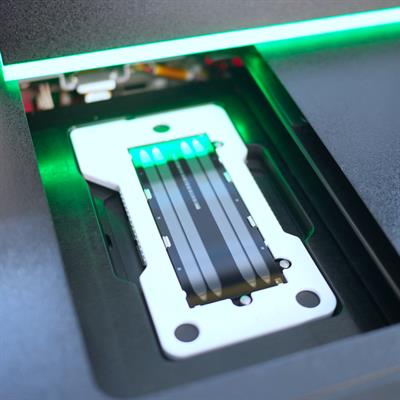
o Adoption of lab-on-a -chip technology as diagnostic tool, DNA sequencing and biochemical characterization
o Advanced nanotechnology applications in detecting bacterial responses
o Innovations in mass spectrometry and rapid bacterial identification
o Genetic resistance marker analysis via next-generation sequencing
o The role of AI and machine learning in predicting susceptibility patterns
In this Research Topic we consider the following article types: Mini Review, Original Research, Review, Systematic Review and Methods.
Keywords: Next generation technologies, Antibiotic susceptibility tests, Lab-on-a-chip, AI, machine learning, Nanotechnology
Important note: All contributions to this Research Topic must be within the scope of the section and journal to which they are submitted, as defined in their mission statements. Frontiers reserves the right to guide an out-of-scope manuscript to a more suitable section or journal at any stage of peer review.
University of California, San Diego
La Jolla, United States
Indian Institute of Technology Delhi
New Delhi, India
Chongqing Medical University
Chongqing, China
Department of companion animal health and science, Silla University
Busan, Republic of Korea
Huashan Hospital, Fudan University
Shanghai, China
