CP
christophe pellefigues
CNRS EMR5070, RETORE INSTITUTE
Toulouse, France
2,394
Total downloads
10k
Total views and downloads
Submit your idea
Select the journal/section where you want your idea to be submitted:
This Research Topic is the second volume of "The Fundamental Biology of Basophils in Health and Disease". Please see volume I here.
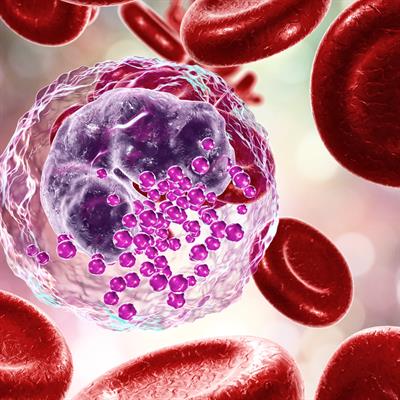
The field of immunology has long been intrigued by the multifaceted roles of basophils, a type of circulating basophilic granulocyte. These hematopoietic cells, found across various animal species, including invertebrates, are known for their ability to release a wide array of bioactive molecules. In mammals, basophils are particularly noted for their involvement in type 2 immunity, where they play protective roles against helminth infections and tick infestations, as well as pathogenic roles in allergic and autoimmune diseases. Recent studies have highlighted their bactericidal properties and their ability to promote pathogenic Th17 responses. Despite these insights, the full spectrum of basophil functions, especially their "innate" roles in immunity and non-immune physiological processes, remains underexplored. Current research has begun to unravel the mechanisms of basophil activation, both antibody-dependent and independent, yet significant gaps persist in understanding their evolutionary significance and broader physiological roles.
This Research Topic aims to deepen our understanding of the fundamental biology of basophils in health and disease. By exploring the diverse functions and mechanisms of basophils, the research seeks to answer critical questions about their roles in immunity and beyond. The objective is to gather comprehensive insights into how basophils contribute to both protective and deleterious immune responses and to elucidate their potential involvement in non-immune processes.
To gather further insights into the complex biology of basophils, we welcome articles addressing, but not limited to, the following themes:
- Population-level studies such as Epidemiology, Immunogenetics, or Evolutionary Immunology
- Organism-level investigations including Systems Biology, Microbiome-Immune crosstalks, Physiology, and Physiopathology, Allergy, and Autoimmunity
- Organ-level research on Infectious Diseases, Inflammation, Neuroimmunology, Fibrosis, and Remodeling
- Cellular-level studies focusing on Cell Biology, Hematopoiesis, and Intercellular communications
- Molecular-level analyses involving Multi-Omics and Cell Signaling
Topic Editor Juan Manuel Leyva-Castillo is employed by Areteia Therapeutics. All other Topic Editors declare no competing interests with regards to the Research Topic subject.
This Research Topic accepts the following article types, unless otherwise specified in the Research Topic description:
Articles that are accepted for publication by our external editors following rigorous peer review incur a publishing fee charged to Authors, institutions, or funders.
Keywords: Basophils, Innate Immunity, Hematopoietic, Pathogenic, Multi-Omics, Cell Signaling, Inflammation, Neuroimmunology, Fibrosis
Important note: All contributions to this Research Topic must be within the scope of the section and journal to which they are submitted, as defined in their mission statements. Frontiers reserves the right to guide an out-of-scope manuscript to a more suitable section or journal at any stage of peer review.
Manuscripts can be submitted to this Research Topic via the main journal or any other participating journal.
Submit your idea
Select the journal/section where you want your idea to be submitted: