AG
ali ghasem-zadeh
Austin Health, University of Melbourne
Melbourne, Australia
1,496
Total downloads
22k
Total views and downloads
Submit your idea
Select the journal/section where you want your idea to be submitted:
Manuscript Submission Deadline 8 January 2026
This Research Topic is currently accepting articles.
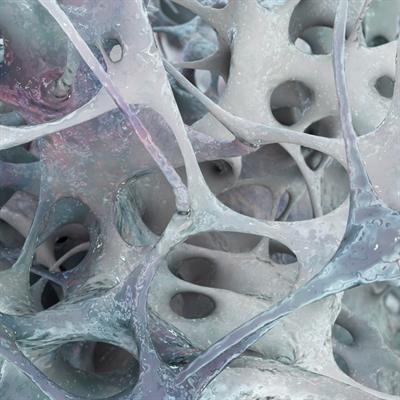
Although it may appear inert, bone is a highly dynamic tissue that undergoes continuous remodeling throughout life. Specialized bone cells constantly adapt bone architecture in response to mechanical loading and hormonal signals, maintaining structural integrity and minimizing fracture risk. However, with advancing age, this delicate balance is disrupted—leading to reduced bone mineral density (BMD), deterioration of bone microarchitecture, and increased susceptibility to fragility fractures. These changes are particularly pronounced in postmenopausal women and older men and often culminate in the diagnosis of osteoporosis.
Whilst research has identified the key roles of hormones such as estrogen, testosterone, and parathyroid hormone in structural bone decay, significantly enhancing our understanding of the pathophysiology of osteoporosis, there remains much to learn. Despite notable advancements in elucidating the biochemical pathways that influence bone mineral density and bone microstructure, important gaps remain in our ability to accurately diagnose osteoporosis, identify individuals at risk of fragility fractures, and implement effective prevention strategies for falls and fractures. Current treatment options—including anti-resorptive agents, anabolic therapies, calcium and vitamin D supplementation, and hormone replacement therapy, offer varying degrees of efficacy but are often accompanied by potential side effects. Moreover, the integration of emerging methodologies and personalized medicine approaches into clinical practice is still in its early stages.
This collection seeks to address several ongoing challenges in the diagnosis of individuals at risk of fragility fractures as well as in the prevention and treatment management of osteoporosis. It aims to explore how emerging technologies such bone mineral densitometry, quantitative bone microstructure analysis, bone markers and recent endocrine research can be integrated into existing treatment frameworks to enhance patient outcomes. We also aim to investigate the efficacy of current and novel therapeutic agents, and examine the role of personalised medicine in tailoring interventions based on individual hormonal, BMD and microstructural profiles. Furthermore, we aim to delve into preventive strategies that can be implemented at various life stages to mitigate the risk of fragility fracture, focusing on both dietary and lifestyle modifications.
The scope of this special issue encompasses several sub-areas critical to advancing the field of osteoporosis research, including but not limited to:
• Diagnosis Advances: Assessment of bone macro/microstructure
• Preventive Strategies: Evaluation of lifestyle and dietary interventions at different life stages.
• Therapeutic Advances: Assessment of current treatments and exploration of new drugs and biologics.
• Personalized Medicine: Analysis of individual risk factors and customisation of treatment plans
This Research Topic accepts the following article types, unless otherwise specified in the Research Topic description:
Articles that are accepted for publication by our external editors following rigorous peer review incur a publishing fee charged to Authors, institutions, or funders.
Keywords: Bone, Osteoporosis, Fragility Fracture, Therapeutic, Management
Important note: All contributions to this Research Topic must be within the scope of the section and journal to which they are submitted, as defined in their mission statements. Frontiers reserves the right to guide an out-of-scope manuscript to a more suitable section or journal at any stage of peer review.

Manuscripts can be submitted to this Research Topic via the main journal or any other participating journal.
Submit your idea
Select the journal/section where you want your idea to be submitted: