Searching for the timekeeping center in the brain

  • 628

    Total views and downloads

About this Research Topic

Submission deadlines

  1. Manuscript Summary Submission Deadline 1 February 2026 | Manuscript Submission Deadline 22 May 2026

  2. This Research Topic is currently accepting articles.
Background

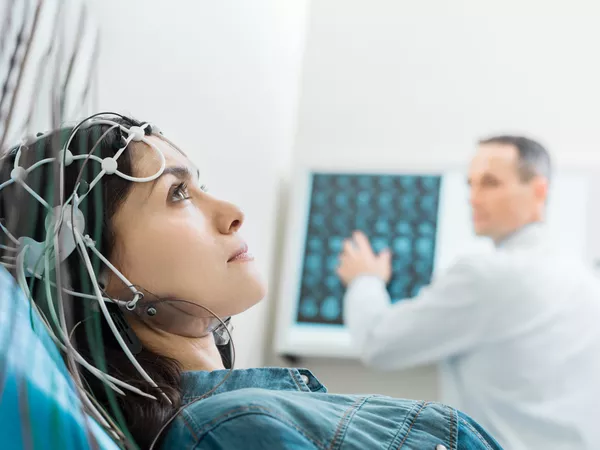
Time recognition presents a unique conundrum within the realm of neuroscience, as it lacks dedicated sensory organs and relies on brain mechanisms distinct from other senses. Contemporary research and neuroimaging studies have illuminated a network, including the prefrontal cortex, parietal cortex, and cerebellum, as integral to subjective time perception. While attempts to pinpoint a central timekeeping hub continue, understanding time perception's involvement across various neurological and developmental disorders, such as autism or ADHD, remains essential. This field of research holds potential to unravel the complexities of time recognition in the brain, driving us closer to identifying the elusive "center" of temporal processing.

This Research Topic aims to present cutting-edge studies in the somewhat neglected area of time recognition in neuroscience. We seek contributions that delve into the underlying mechanisms of time perception, particularly through investigations involving individuals with neurological or developmental disorders. By examining time recognition on both microscopic and macroscopic scales—ranging from millisecond-level sensory perceptions to broader temporal constructs of past, present, and future—a cohesive understanding can emerge. We aim to foster dialogue that unites diverse research avenues in pursuit of pinpointing the "center" of time recognition, reconciling different disorders and phenomena under a shared investigative umbrella.

Our scope welcomes extensive research linked to the neurological, neuropsychological, and neuroscientific aspects of time recognition. We invite authors to explore:

-Microscopic and macroscopic perspectives on time perception
-Sensory perception in time processing across visual, auditory, and tactile domains
-Memory and its connection to time recognition on broader scales
-Temporal mechanisms in neurological and neurodevelopmental disorders
-Theoretical and opinion pieces discussing neural underpinnings of time recognition

In addition to empirical investigations, original research, interventions, and review articles, we encourage opinion papers centered on the neural mechanisms of time recognition. This diversity in article types provides a broader foundation for discussion and exchange of ideas on this multifaceted Research Topic.

Article types and fees

This Research Topic accepts the following article types, unless otherwise specified in the Research Topic description:

  • Brief Research Report
  • Case Report
  • Clinical Trial
  • Community Case Study
  • Conceptual Analysis
  • Data Report
  • Editorial
  • FAIR² Data
  • General Commentary

Articles that are accepted for publication by our external editors following rigorous peer review incur a publishing fee charged to Authors, institutions, or funders.

Keywords: Time Recognition, Neurological Diseases, Developmental Disorders

Important note: All contributions to this Research Topic must be within the scope of the section and journal to which they are submitted, as defined in their mission statements. Frontiers reserves the right to guide an out-of-scope manuscript to a more suitable section or journal at any stage of peer review.

Topic editors

Manuscripts can be submitted to this Research Topic via the main journal or any other participating journal.

Impact

  • 628Topic views
View impact