AA
alba abras
Department of Biology, Faculty of Sciences, University of Girona
Girona, Spain
620
Total views and downloads
Submit your idea
You will be redirected to our submission process.
Manuscript Submission Deadline 14 March 2026
This Research Topic is currently accepting articles.
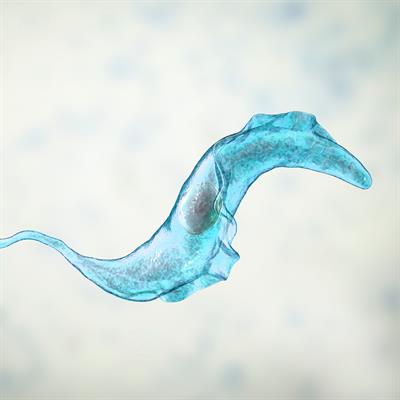
Chagas disease (CD), caused by the protozoan parasite Trypanosoma cruzi, is a major neglected tropical disease with a significant impact on global health. While traditionally endemic to Latin America, globalization has led to the emergence of non-vectorial transmission routes and the spread of the disease to non-endemic countries. Although treatment options such as benznidazole and nifurtimox are available, their efficacy is not 100%, in addition to the occurrence of adverse effects, and they are considerably more effective when administered during the acute phase of the disease. Therefore, early diagnosis is crucial for effective treatment and control; however, multiple challenges remain, including reduced diagnostic sensitivity in chronic stages, lack of harmonized algorithms, and limited access to validated tools in endemic regions, which are mostly characterized as middle- and low-income countries. The remarkable genetic diversity of T. cruzi, structured into discrete typing units (DTUs), adds further complexity, as it may influence disease presentation and diagnostic performance.
Advancing diagnostic strategies is essential to improve clinical management, facilitate timely treatment, and support global control efforts against CD. In this context, this Research Topic aims to:
• Highlight recent advances in diagnostic tools for T. cruzi, including molecular and serological technologies, rapid diagnostic tests (RDTs), and point-of-care (POC) approaches;
• Examine the impact of parasite genetic diversity (DTUs) on diagnostic performance and clinical outcomes;
• Address challenges in the diagnosis of both chronic and congenital CD, including test discordance, lack of harmonized algorithms, and gaps in perinatal screening programs;
• Explore strategies for improving access to accurate diagnostics in resource-limited and non-endemic settings;
• Present developments in biomarkers for treatment efficacy and post-therapy monitoring.
We invite submissions that contribute to improving the understanding, development, evaluation, and implementation of diagnostic tools for T. cruzi across diverse epidemiological and healthcare settings. Authors are encouraged to present original research, synthesize current knowledge, or share case-based insights related to CD diagnosis. Submissions may address, but are not limited to, the following topics:
• Diagnostic challenges in the chronic phase of CD;
• Strategies for congenital CD: screening in pregnancy and testing in newborns;
• Field evaluation of RDTs and POC diagnostics;
• Impact of parasite genetic diversity on test accuracy and clinical use;
• Correlation between T. cruzi DTUs, clinical presentation, and diagnostic approaches;
• Performance comparison of serological vs. molecular tools across geographic regions;
• Development of harmonized diagnostic algorithms for endemic and non-endemic settings;
• Identification and validation of biomarkers of treatment response;
• Development of strategies to expand diagnostic access in low-resource settings;
• Integration of artificial intelligence in diagnostic workflows.
This Research Topic accepts the following article types, unless otherwise specified in the Research Topic description:
Articles that are accepted for publication by our external editors following rigorous peer review incur a publishing fee charged to Authors, institutions, or funders.
Keywords: Chagas disease, Trypanosoma cruzi, diagnosis, Discrete Typing Units, molecular diagnostics, serology, rapid diagnostic tests, point-of-care testing, congenital transmission
Important note: All contributions to this Research Topic must be within the scope of the section and journal to which they are submitted, as defined in their mission statements. Frontiers reserves the right to guide an out-of-scope manuscript to a more suitable section or journal at any stage of peer review.
Manuscripts can be submitted to this Research Topic via the main journal or any other participating journal.
Submit your idea
You will be redirected to our submission process.
