AM
ahmed mostafa
University of Saskatchewan
Saskatoon, Canada
157
Total downloads
2,515
Total views and downloads
Submit your idea
Select the journal/section where you want your idea to be submitted:
Manuscript Submission Deadline 18 May 2026
This Research Topic is currently accepting articles.
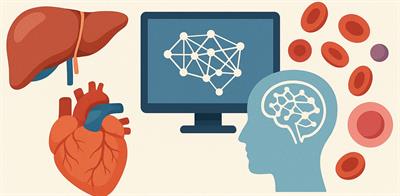
Allograft rejection and transplant failure remain major challenges in both solid organ and hematopoietic stem cell transplantation (HSCT). Conventional donor–recipient matching based on HLA allele-level comparisons only partially reflects the molecular determinants of immune recognition. Subtle variations at the epitope level can critically influence alloimmune and graft-versus-host responses. Molecular or epitope-level matching provides a more precise assessment of compatibility by identifying the specific amino acid residues targeted by donor-specific antibodies and T cells. These molecular insights pave the way toward personalized transplantation medicine, where immunological risk can be quantified and immunosuppression or conditioning regimens optimized. Incorporating computational and machine learning (ML) models into molecular matching enhances the prediction of rejection or GVHD and supports more equitable, data-driven donor allocation strategies.
The goal of this Research Topic is to advance computational and machine learning (ML) approaches for molecular matching across both solid organ transplantation and HSCT. Despite remarkable progress in HLA typing, immunogenetic databases, and data analytics, existing allele-based matching systems remain limited in their predictive capacity. Recent computational advances enable multidimensional integration of donor–recipient data, epitope mismatches, immunogenicity, antibody reactivity, and clinical outcomes, facilitating individualized risk prediction.
We particularly welcome studies exploring whether models developed in solid organ transplantation can inform HSCT donor selection, and vice versa. The overlap in immunogenetic mechanisms makes ML-based tools highly relevant across both fields. Notably, groups such as ours are developing AI-guided tools for optimized donor selection in HSCT—illustrating the translational potential of computational immunology in precision transplant medicine. This Topic aims to encourage cross-disciplinary collaboration to validate and deploy interpretable, clinically applicable ML models that improve donor matching, minimize rejection or GVHD, and optimize long-term outcomes.
This Research Topic welcomes original research, reviews, and perspectives advancing computational and ML models for molecular (epitope-level) matching in transplantation, including both solid organ and HSCT settings. We encourage submissions on:
• Computational pipelines for mismatch quantification and immunogenicity prediction
• ML-based prediction of allograft rejection or GVHD
• Integration of NGS-based HLA typing with molecular models
• Interpretable ML and AI-guided decision-support tools for donor selection
• Ethical, regulatory, and allocation challenges in AI-driven transplantation
By bridging computational immunology, data science, and clinical transplantation, this Research Topic aims to accelerate the adoption of precision-matching tools to enhance graft survival, reduce immune complications, and improve donor allocation equity.
Topic Editor Kelley M.K. Hitchman serves on the speakers bureau of One Lambda (a Thermo Fisher Company). All other Topic Editors declare no competing interests with regards to the Research Topic subject.
This Research Topic accepts the following article types, unless otherwise specified in the Research Topic description:
Articles that are accepted for publication by our external editors following rigorous peer review incur a publishing fee charged to Authors, institutions, or funders.
Keywords: Molecular matching, Epitope matching, Computational immunology, Machine learning, Artificial intelligence (AI), Allograft rejection, Personalized immunosuppression, Organ allocation, Donor-specific antibodies, Precision transplantation
Important note: All contributions to this Research Topic must be within the scope of the section and journal to which they are submitted, as defined in their mission statements. Frontiers reserves the right to guide an out-of-scope manuscript to a more suitable section or journal at any stage of peer review.
Manuscripts can be submitted to this Research Topic via the main journal or any other participating journal.
Submit your idea
Select the journal/section where you want your idea to be submitted: