PE
panagiotis evaggelos antoniou
Aristotle University of Thessaloniki
Thessaloniki, Greece
323
Total views and downloads
Submit your idea
Select the journal/section where you want your idea to be submitted:
Manuscript Summary Submission Deadline 28 February 2026 | Manuscript Submission Deadline 30 June 2026
This Research Topic is currently accepting articles.
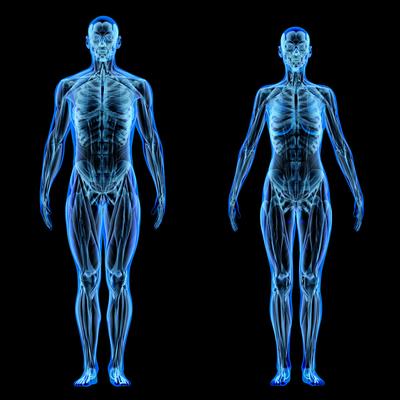
Tangible and intangible experiential technologies have emerged as significant positive disruptors in healthcare. Modalities like virtual, augmented reality (VR/AR) and 3d printing, are all catering to the immediate need for visualization both in the practice and in the education of healthcare professionals. Teaching complex relations of neuroanatomical structures is where 3d prints and VR/AR, jointly referred as eXtended Reality (XR), excel. These relations and structures cannot be easily visualized in two dimensional atlases, neither discerned in cadaver dissections, hence making experiential means essential for understanding them. On the other hand, visualizing complex 3d structures from imaging data in the pre-operative stage of surgical preparation is equally important and is a core medical practice challenge. Furthermore, important, cutting-edge applications, like rehabilitation through augmented reality, neurofeedback loops based on VR, etc., are all applications that appear both in research literature and in healthcare practice.
In spite of the wide and deep scope of experiential modalities in the application for XR, the fact remain that its proliferation is rather limited in mainstream education and intervention practice. Entrepreneurial actors spend significant amount of resources in order to create “killer” apps and frameworks. These are centralized, very productive, suites for XR development and deployment. By providing extremely high added value these efforts aim to implement a centralized pipeline that will become a standard for developing and deploying XR applications in the healthcare sector. On the other hand, several projects, especially of academic origins aim to create federation frameworks for including diverse components and technologies. The aim here is creating a standardized, but multi-centric development and deployment XR pipeline in the healthcare domain. The goal of this Research Topic is to present endeavors from both trends, as well as independent research in XR applications for healthcare. This collection of research works will hopefully foster the emergence of a unified vision both for enterprise and academia for successfully proliferating XR in the mainstream of healthcare education and practice.
This Research Topic welcomes submissions on the following themes (but are limited to):
• XR and 3d printing in anatomy teaching;
• Augmented/Mixed Reality for clinical skills training;
• XR and 3d printing for surgical applications;
• XR for immersive scenario-based learning;
• Teaching non-technical soft skills through XR;
• XR rehabilitation;
• XR interventions for pain and stress management in healthcare;
• XR for wellness and healthy living;
• XR biofeedback/neurofeedback applications.
This Research Topic accepts the following article types, unless otherwise specified in the Research Topic description:
Articles that are accepted for publication by our external editors following rigorous peer review incur a publishing fee charged to Authors, institutions, or funders.
Keywords: Virtual Reality, Augmented Reality, Healthcare, Medical Education, Non-Pharmaceutical Interventions
Important note: All contributions to this Research Topic must be within the scope of the section and journal to which they are submitted, as defined in their mission statements. Frontiers reserves the right to guide an out-of-scope manuscript to a more suitable section or journal at any stage of peer review.
Aristotle University of Thessaloniki
Thessaloniki, Greece
Aristotle University of Thessaloniki
Thessaloniki, Greece
Aristotle University of Thessaloniki
Thessaloniki, Greece
University of Nottingham
Nottingham, United Kingdom
Aristotle University of Thessaloniki
Thessaloniki, Greece
University of Westminster
London, United Kingdom

Manuscripts can be submitted to this Research Topic via the main journal or any other participating journal.
Submit your idea
Select the journal/section where you want your idea to be submitted: