MR
mario romano mignini renzini
clinica EUGIN ITALIA
Milano, Italy
533
Total views and downloads
Submit your idea
You will be redirected to our submission process.
Manuscript Summary Submission Deadline 22 February 2026 | Manuscript Submission Deadline 12 June 2026
This Research Topic is currently accepting articles.
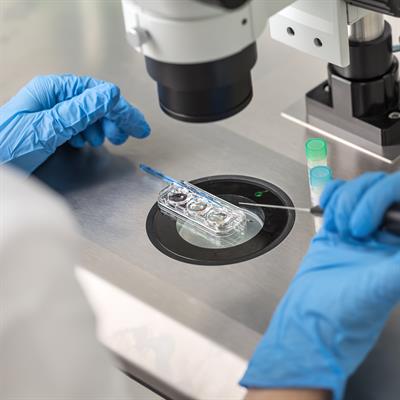
Assisted reproductive technology (ART) stands at the forefront of fertility care, yet the embryo transfer (ET) stage remains a critical bottleneck influencing overall treatment success. As the pivotal step that connects high-quality, laboratory-cultured embryos with the prepared endometrial environment, ET plays a decisive role in the potential for implantation and live birth in both fresh and frozen embryo transfer cycles. Despite notable advancements in stimulation protocols, embryo culture, and cryopreservation, achieving reliable and precise embryo–endometrial synchrony continues to challenge clinicians, with substantial variability in clinical outcomes across patient groups and protocols. The current landscape features ongoing debates regarding optimal timing, transfer techniques, endometrial preparation, and personalization, underscoring an urgent need for consensus and innovative research to close persistent gaps in knowledge.
This Research Topic aims to consolidate cutting-edge multidisciplinary evidence and foster innovative strategies for optimizing embryo transfer in ART. The central goal is to elucidate the biological, endocrine, and procedural determinants shaping ET success, and to translate mechanistic insights into practical, individualized protocols that enhance implantation and live birth rates. By addressing both foundational mechanisms and real-world clinical applications, this initiative seeks to narrow practice variability, encourage data-driven personalization, and advance best practices in embryo transfer. Key objectives include defining standards for endometrial receptivity, refining transfer timing in relation to embryonic and endometrial dynamics, and integrating comprehensive approaches to patient stratification and protocol adaptation.
To gather further insights in the evidence-based optimization and personalization of embryo transfer, we invite contributions addressing, but not limited to, the following themes:
o Endometrial preparation strategies and diagnostics across natural and programmed cycles
o Effects of embryo developmental stage, quality, and timing on transfer success
o Advances in ET procedural techniques
o Hormonal and molecular regulation of endometrial receptivity and embryo–endometrial communication
o Personalization of transfer protocols for specific patient populations (e.g., recurrent implantation failure, advanced age, endocrine disorders)
o Application of AI, digital health tools, and novel biomarkers for real-time and predictive decision-making in ET
This Research Topic accepts the following article types, unless otherwise specified in the Research Topic description:
Articles that are accepted for publication by our external editors following rigorous peer review incur a publishing fee charged to Authors, institutions, or funders.
Keywords: Assisted reproductive technology, embryo transfer, endometrial receptivity, implantation, personalization, synchronization, embryo quality, transfer timing, hormonal regulation, predictive decision-making
Important note: All contributions to this Research Topic must be within the scope of the section and journal to which they are submitted, as defined in their mission statements. Frontiers reserves the right to guide an out-of-scope manuscript to a more suitable section or journal at any stage of peer review.
Manuscripts can be submitted to this Research Topic via the main journal or any other participating journal.
Submit your idea
You will be redirected to our submission process.
