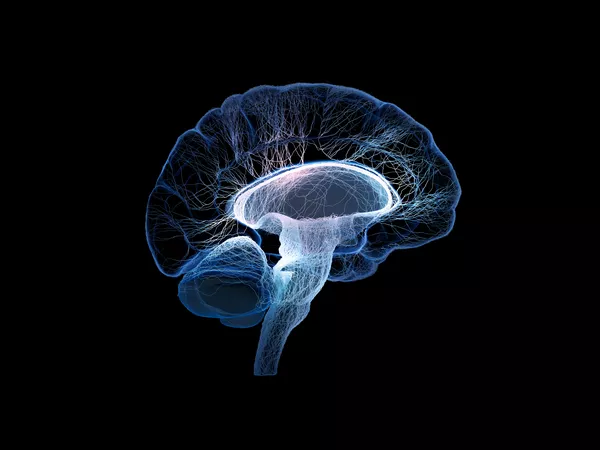
Understanding how the brain anticipates future states and transmits or reconstructs information remains a central challenge in neuroscience. This Research Topic invites studies that leverage machine learning and generative modeling to forecast neural activity and behavior from spikes, ECoG, or fMRI. We especially encourage work probing the structural networks and directional information flow that enable neural predictability, clarifying how specific anatomical and functional architectures give rise to these computations. We also welcome studies that train models on one dataset and evaluate them on others to uncover cross-dataset and cross-species relationships, revealing shared principles across individuals, species, and recording modalities.
This Research Topic aims to integrate predictive modeling and causal inference to reveal the principles by which neural circuits forecast, encode, and transmit information. Specifically, it seeks contributions that bridge cutting-edge machine learning with analyses of brain connectivity and causal pathways, and which test the robustness of predictive approaches across species and data modalities. By evaluating when and why models succeed—or fail—and how predictions relate to the underlying neural architecture, we strive to gain deeper insight into how brains compute and represent future states.
To gather further insights into the intersection of predictive modeling, structural connectivity, and causal information flow, we welcome articles addressing, but not limited to, the following themes:
- Time-series prediction of neural activity (e.g., Transformer, diffusion-based models)
- Reconstruction and validation of neural signals using generative models
- Analysis of information flow and causal structures (e.g., Transfer Entropy, Granger Causality)
- Relationship between predictability and structural connectivity
- Cross-dataset model transfer to examine inter-data relationships
- Fluctuation and prediction: handling uncertainty and evaluating predictive reliability
- Data standardization and sharing (e.g., NWB, BIDS) for reproducibility
- Connections to theoretical frameworks (e.g., Predictive Coding, Free Energy Principle, Active Inference)
Article types and fees
This Research Topic accepts the following article types, unless otherwise specified in the Research Topic description:
Brief Research Report
Case Report
Clinical Trial
Community Case Study
Conceptual Analysis
Curriculum, Instruction, and Pedagogy
Data Report
Editorial
FAIR² Data
Articles that are accepted for publication by our external editors following rigorous peer review incur a publishing fee charged to Authors, institutions, or funders.
Article types
This Research Topic accepts the following article types, unless otherwise specified in the Research Topic description:
Brief Research Report
Case Report
Clinical Trial
Community Case Study
Conceptual Analysis
Curriculum, Instruction, and Pedagogy
Data Report
Editorial
FAIR² Data
FAIR² DATA Direct Submission
General Commentary
Hypothesis and Theory
Methods
Mini Review
Opinion
Original Research
Perspective
Registered Report
Review
Study Protocol
Systematic Review
Technology and Code
Keywords: neuroscience, data generation, brain dynamic, prediction
Important note: All contributions to this Research Topic must be within the scope of the section and journal to which they are submitted, as defined in their mission statements. Frontiers reserves the right to guide an out-of-scope manuscript to a more suitable section or journal at any stage of peer review.