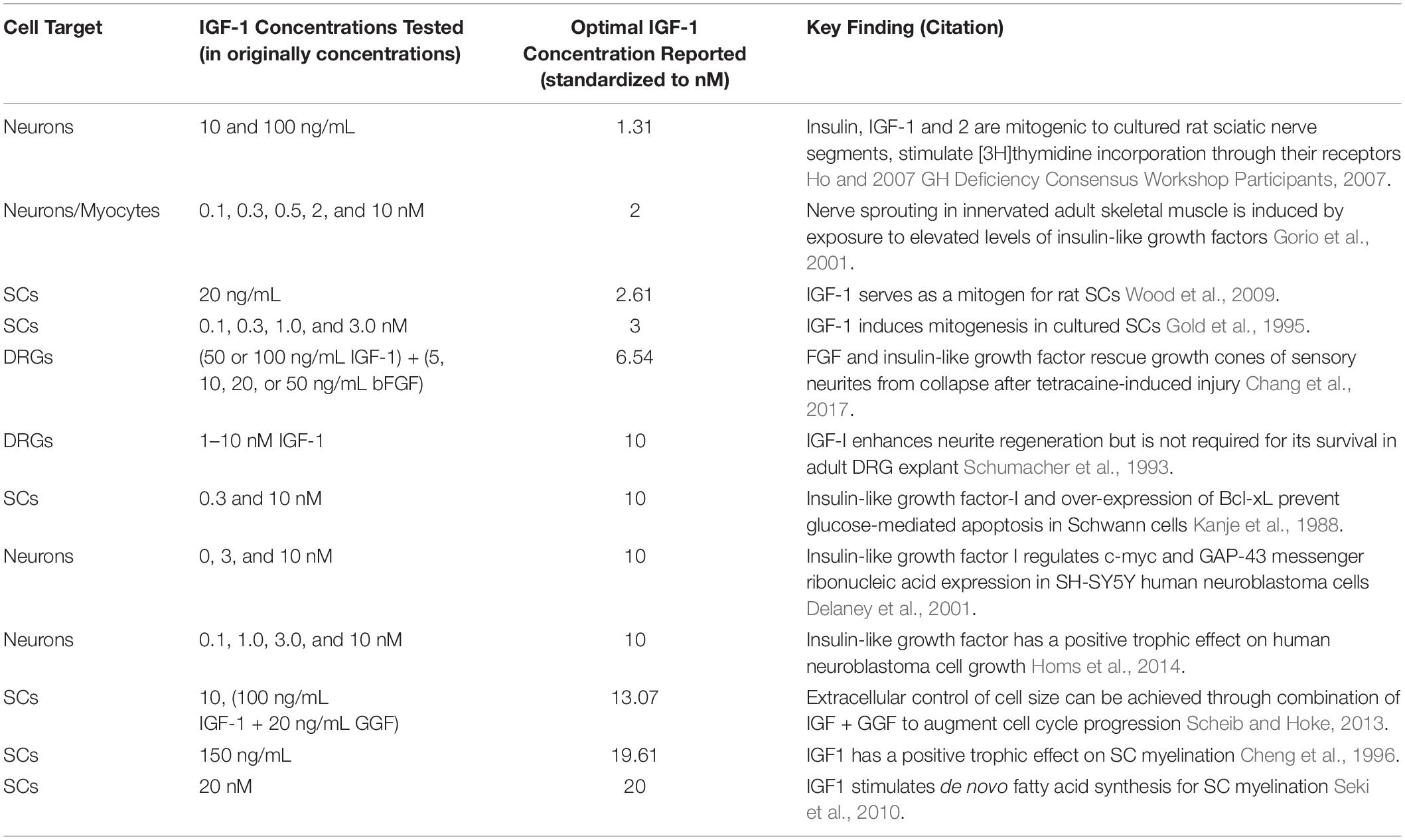
The special issue research topic entitled "Bio-systems engineering for regulation of nerve regeneration" is focused on new and emerging approaches for promoting nerve regeneration.Acute and chronic nerve injuries often result in the loss of sensory, motor and autonomic functions with variable pathological changes arising from traumatic or non-traumatic forms of injuries. Despite the severe consequences of such injuries for the patients, existing treatment options, i.e., surgical repair, often using autologous nerve grafting, and pharmacological compounds, such as corticosteroids, nonsteroidal anti-inflammatory and analgesic drugs, are all associated with important drawbacks and are far from being optimal solutions. Consequently, the quality of patient's life is poor and the resulting socioeconomic impact is huge. Thus, there is a great need for further research to advance with new and innovative treatment strategies for improving functional recovery and patient wellbeing and to minimize the socioeconomic burden.So far, research over the past 100 years has achieved remarkable achievements in the field of nerve regeneration, resulting in the advancement of micro-surgical nerve management, nerve cellular and molecular biology, nerve guidance scaffolds, cell therapy and nerve tissue engineering. Nevertheless, the existing knowledge and translational modalities still remain inadequate for clinical applications. Within this context, the collected research articles in this issue represent the work of 62 different authors in the form of three review articles and six original research reports, presenting new and emerging strategies involving interdisciplinary efforts ranging from cell and molecular biology, engineered nano-micromaterials, bio-active delivery, cell and gene therapy, tissue engineered grafts, and complex nerve conduit scaffolds.Taken together, the collected research reports strengthen existing knowledge in the field and provide further insights to move forward. Growth factors are widely accepted for their key role in regulating tissue growth and development. However, the current lack of appropriate delivery scaffolds and strategies has limited their therapeutic potential. In their review, Salvin et al. present the therapeutic potential of insulin-like growth factor-1, known for its trophic and protective effects on neuronal and non-neuronal glial cells. In addition, the review offers important insights on the most promising delivery routes and dosage forms for supporting nerve regeneration. Spinal root (ventral root) avulsion is critical and represents the most serious proximal nerve injury, given the fact that the distance between the lesion and target innervation site is too long and often results in a permanent loss of motor function. Among all the neurotrophic factors, glial cell linederived neurotrophic factor (GDNF) is the most potent for the survival and growth of motor axons. In another review by Egger et al., recent advances in the field of GDNF gene therapy are presented, as well as future research directions emphasizing the importance of the spatio-temporal aspects of the therapeutic intervention, such as the location, timing, dose and duration of GDNF.The extracellular matrix composition of nerve tissue is complex in nature and architecture. Biomaterials and bio-based research approaches are promising for recapitulating the key features and for instructing the sequence of cellular and molecular events of the axonal regeneration and nerve tissue formation. However, the detailed mechanisms underlying the interface regulation between engineered biomaterials and nerve tissue components are largely unclear. In a detailed review article, Powel et al. present such mechanisms with further information on the cell controllable micro-environment resulting from engineered bio-active biomaterials.In summary, we consider that all the articles included in the current issue provide new and interesting data and important insights for further research in the field, particularly regarding the interdisciplinary aspects of nerve repair and regeneration approaches. The guest editors of this special issue thank all authors once again for their valuable contributions and hope that the readers in the field will be inspired by these significant research findings and expert opinions.
6 Authors
- OC
Oscar Castaño
Electronics and Biomedical Engineering, Universitat de Barcelona, Spain
- AL
Ana López-Mengual
Molecular and Cellular Neurobiotechnology, Institute of Bioengineering of Catalonia, Parc Cientific de Barcelona, Spain
- DR
Diego Reginensi
School of Medicine, Universidad de Panamá, Panama
- AM
Andreu Matamoros-Angles
Molecular and Cellular Neurobiotechnology, Institute of Bioengineering of Catalonia, Parc Cientific de Barcelona, Spain
- EE
Elisabeth Engel
Biomaterials for Regenerative Therapies, Institute of Bioengineering of Catalonia, Parc Cientific de Barcelona, Spain
- JA
José Antonio del Rio
Molecular and Cellular Neurobiotechnology, Institute of Bioengineering of Catalonia, Parc Cientific de Barcelona, Spain
5,426 views
7 citations
5 Authors
- MG
Martino Guiotto
Department of Plastic, Reconstructive and Hand Surgery, Centre Hospitalier Universitaire Vaudois (CHUV), University of Lausanne (UNIL), Switzerland
- WR
Wassim Raffoul
Department of Plastic, Reconstructive and Hand Surgery, Centre Hospitalier Universitaire Vaudois (CHUV), University of Lausanne (UNIL), Switzerland
- AM
Andrew M. Hart
Centre for the Cellular Microenvironment, University of Glasgow, United Kingdom
- MO
Mathis O. Riehle
Centre for the Cellular Microenvironment, University of Glasgow, United Kingdom
- PG
Pietro G. di Summa
Department of Plastic, Reconstructive and Hand Surgery, Centre Hospitalier Universitaire Vaudois (CHUV), University of Lausanne (UNIL), Switzerland
3,572 views
12 citations


5 Authors
- RE
Ruben Eggers
Laboratory for Neuroregeneration, Netherlands Institute for Neuroscience, Institute of the Royal Academy of Arts and Sciences, Netherlands
- FD
Fred de Winter
Laboratory for Neuroregeneration, Netherlands Institute for Neuroscience, Institute of the Royal Academy of Arts and Sciences, Netherlands
- MR
Martijn R. Tannemaat
Laboratory for Neuroregeneration, Netherlands Institute for Neuroscience, Institute of the Royal Academy of Arts and Sciences, Netherlands
- MJ
Martijn J. A. Malessy
Laboratory for Neuroregeneration, Netherlands Institute for Neuroscience, Institute of the Royal Academy of Arts and Sciences, Netherlands
- JV
Joost Verhaagen
Laboratory for Neuroregeneration, Netherlands Institute for Neuroscience, Institute of the Royal Academy of Arts and Sciences, Netherlands