148kviews
Editorial06 September 2022
Editorial: Improving medical diagnosis in rare diseases

INTRODUCTION

A rare disease (RD) is defined as a disorder affecting fewer than 1 in 2,000 people (European Union, 2000). Although each is rare, they cumulatively involve greater than 300 million people worldwide (Nguengang Wakap et al., 2020). There are approximately 7,000 RDs reported by the Online Mendelian Inheritance in Man (OMIM) database, and 6,172 unique RDs by Orphanet, 70% of whom have childhood onset (Amberger et al., 2015; Nguengang Wakap et al., 2020).

One of the many challenges that persons living with an RD and their families face is the search for a diagnosis. Given their rarity, large number of disease entities and heterogeneous manifestation, patients often remain undiagnosed or misdiagnosed for years. The correct diagnosis has enormous implications for the patient and their family; it offers insight into the disease cause, natural history, and prognosis. It can facilitate contact with support groups and provides families with informed genetic counselling. Moreover, it can increase the understanding of the disease pathogenesis and thus improve therapeutic strategies.

More than 70% of RDs are genetic in origin (Nguengang Wakap et al., 2020). In the last decade, next-generation sequencing (NGS) technologies such as whole-exome sequencing (WES) and whole-genome sequencing (WGS) have enabled the identification of disease-causing variants in RDs. The diagnostic yields of NGS in RDs varies (24–68%) depending on the technology employed, the disease group studied, the patient age groups, clinical indications, family structures and variant types analysed (Clark et al., 2018). Genome test interpretation and reporting represents one of the challenges to laboratories seeking to implement or maximize the diagnostic yield of NGS, and guidelines have just been published in order to address this gap (Austin-Tse et al., 2022). Even though NGS affords us a better opportunity to elucidate the genetic causes of RDs, a proportion of individuals remain undiagnosed. Therefore, within this Research Topic, we created a collection of articles demonstrating emerging approaches to facilitate genetic diagnosis and discussing the impact of identifying a genetic cause in RDs.

Statistics on this research topic: The research topic was published ion September 2020 and manuscripts were received until February 2022. It received 72 manuscripts, and 23 submissions were accepted after a rigorous and constructive reviewing process.

COMPOSITION

Studies showing applications of NGS as a frontline test in healthcare settings to accelerate rare disease diagnosis

Time-to-diagnosis is an important metric to consider in children with RDs, specially to neonates admitted to intensive care settings. Liu et al. (2021a) focus on the clinical application of WES in critically ill patients in the pediatric intensive care units; the median age of children enrolled was 10.5 months (range, 1 month to 14.8 years). Whole-exome was performed in 169 critically ill children, and approximately a quarter of them were diagnosed with a monogenic disorder. They show that WES played a key role in family decision-making and clinical treatment and may improve the prognosis of some children and reduce the economic burden on families and the society.

Bioinformatic and molecular analysis approaches and results from genomics centers or diagnosis laboratories

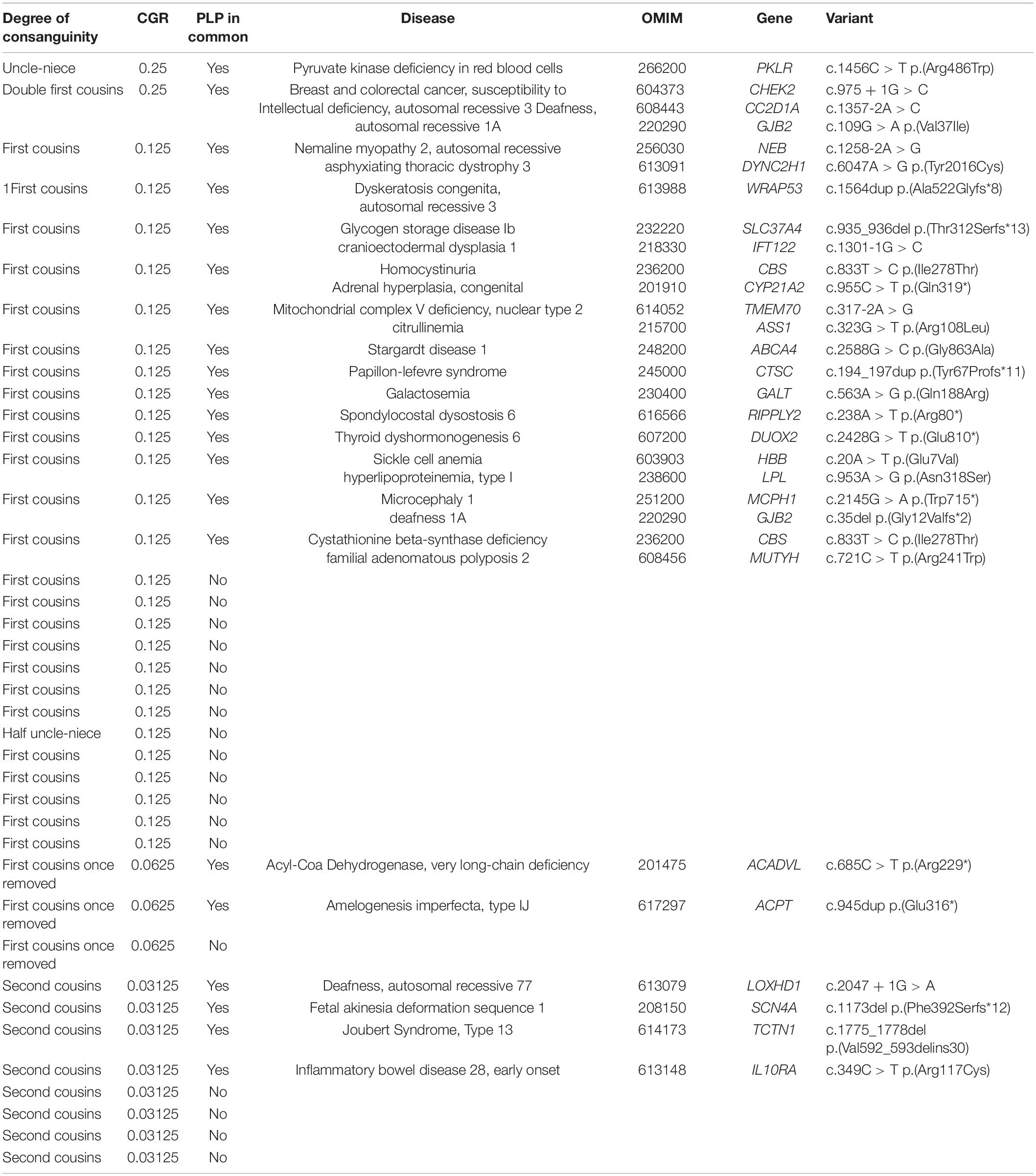
Santos et al. (2021) describe a new protocol for the procedure of preconception screening of consanguineous couples by WES. They considered all genes listed in the Clinical Genomics Database as causally related to autosomal recessive (AR) diseases and analysed 39 consanguineous couples using bioinformatic filters to identify pathogenic variants that were present on the same gene in both members of the couple. In 21 couples (53.8%), they ascertained sharing of heterozygosity for at least one variant considered pathogenic for an AR disease. Once the specific pathogenic variant was identified, it became possible for the couple to undergo prenatal diagnosis or, if desired, preimplantation genetic diagnosis.

Botta et al. (2021) studied a total of 570 individuals with a clinical suspect of Myotonic dystrophy type 2 (DM2), which is an autosomal dominant multisystemic disorder caused by a (CCTG)n repeat expansion in intron 1 of CNBP gene. The DM2 locus was analysed by a combination of short-range PCR (SR-PCR), tetraplet-primed PCR (TP-PCR), long-range PCR (LR-PCR), and Sanger sequencing of CNBP alleles. DM2 molecular diagnosis was confirmed in 187 samples analysed (32.8%) and was mainly associated with the presence of myotonia in patients.

Mellone et al. (2022) show the utility of using a targeted NGS gene panel including 221 genes in providing molecular diagnosis as a second tier-test by detecting clinically relevant variants in 71 out of 338 (21%) patients with Neurodevelopmental Disorders (NDDs). Their findings show that this NGS panel represents a powerful and affordable clinical tool, significantly increasing the diagnostic yield in patients with different forms of NDDs in a cost- and time-effective manner.

The results of Santos et al. (2021), Botta et al. (2021) and Mellone et al. (2022) demonstrateprove their methods have diagnostic power, and may provide useful information and potential clinical benefits for other genomic centers offering preconception screening by WES, DM2 genetic testing, or customized NGS panels for NDD, respectively.

Applications of methodologies to promote early genetic diagnosis

Due to advances in molecular diagnosis, individuals with a RD may even be diagnosed in utero. Xue et al. (2022) identified variants in TALDO1 gene in a fetus with Transaldolase Deficiency, supporting the application of WES in prenatal diagnosis, and further supporting proving that effective postpartum treatments could improve prognosis.

The early molecular diagnosis is particularly important for treatable disorders, like Congenital adrenal hyperplasia (CAH). Tolba et al. (2022) show that Multiplex ligation-dependent probe amplification (MLPA) of the CYP21A2 gene may improve the diagnosis and management of missed cases with atypical CAH presentations. They analysed 112 unrelated Egyptian children with CAH and 79.5% of the patients were diagnosed within the first month of life.

Liu et al. (2021b) report the clinical features of eight fetuses with pathogenic variants in CPLANE1, TMEM67, NPHP4, and DYNC2H1 identified by WES analysis, expanding the prenatal clinical manifestations of ciliopathies. The fetuses showed prenatal diagnostic features includingas occipital encephalocele, polydactyly and polycystic kidneys.

Qiao et al. (2021) describe a prenatal case with Cornelia de Lange syndrome (CdLS) caused by a novel heterozygous synonymous NIPBL variant in NIPBL gene. RT-PCR confirmed that the variant affects splicing. Their study expands the mutation spectrum of NIPBL gene and shows the importance of in-depth analysis of apparent synonymous mutations in clinical diagnoses.

He et al. (2021) show that prenatal WES can improve the genetic diagnostic yield in anomalous fetuses with normal results both at karyotype and chromosomal microarray. They performed WES in 94 fetuses and identified a diagnostic genetic variant in 37 (39.4%). They also obtained fetal phenotypes by post-mortem examinations for terminated pregnancies, providing genotype-phenotype correlations and more precise interpretations of the genetic results.

Prenatal risk assessment of carriers of heterozygous X-linked deletions is a great challenge due to variable phenotype expression induced by X chromosome inactivation (XCI). Zhao et al. (2021) present four pedigrees with distinct pathogenic X-linked deletions larger than above 1Mb, which were associated with completely skewed XCI in all female carriers. They also performed the first prenatal XCI pattern analysis in a female fetus carrier of heterozygous PCDH19-deletion to make risk prediction.

Hou et al. (2021) present a girl with Wiskott-Aldrich syndrome (WAS) due to a heterozygous WASP gene variant. WAS is a rare X-linked recessive immunodeficiency disorder; affected males show symptoms while females carrying the defective WAS gene are usually asymptomatic. In the described girl, the completeentirely inactivation of normal X-chromosome led to the dominant symptoms. This study illustrates the importance of performing in-depth molecular assays to confirm the diagnosis of symptomatic female carriers with X-linked disorders.

Studies exploring incomplete penetrance and variable expressivity in rare disorders, and discussing genotype-phenotype correlations

With the expanded use of WES or WGS analysis, more families with rare disorders with incomplete penetrance and variable expressivity are increasingly being reported, showing the importance of performing molecular analysis to facilitate the diagnosis of syndromes with heterogeneous phenotypes.

Yim et al. (2022) report a family with an incomplete presentation of Andersen-Tawil syndrome (ATS) diagnosed through WES; the proband had all classic symptom triad, while her father who also carried the same novel KCNJ2 variant had only two symptoms and no cardiac manifestations.

Linhares et al. (2022) describe three patients with mild presentation of Arthrogryposis, renal dysfunction, and cholestasis syndrome (ARCS) diagnosed by WES, all of them carrying the same novel VPS33B variant. The authors raise awareness of the existence of a mild clinical picture of ARCS with prolonged survival, and they propose that molecular analysis of the VPS33B and VIPAS39 genes should be considered in patients with normal gamma-glutamyl transferase cholestasis.

Che et al. (2022) report a three-generation pedigree including eight family members with mild thrombocytopenia due to a novel heterozygous CYCS variant in CYCS gene. There are only 4 pedigrees with non-syndromic thrombocytopenia reported in the literature, and the disease has been characterized with mild thrombocytopenia, normal platelet size and morphology, and no increased bleeding tendency.

Wen et al. (2021) report a novel SOD1 missense variant (p.R116S) causing Rapid Progressive Familial Amyotrophic lateral sclerosis (ALS). Their study expands the list of ALS causing variants, and suggests a possible pathogenic determinant related to R116 mutant SOD1 neurotoxicity.

Xie et al. (2022) review pathogenic COQ4 variants in patients with Primary Coenzyme Q10 Deficiency-7 (COQ10D7), a rare mitochondrial disorder. Their study provides a fundamental reference for the sub-classification of COQ10D7 and contribute to the knowledge of the pathogenesis, clinical diagnosis and prognosis of this disease, and to the development of possible interventions.

Peng et al. (2022) delineate the molecular features, clinical presentation, and aspects of the immunological phenotype of 6 paediatric patients with EBV-infection and N-linked glycosylation defect (XMEN) disease caused by novel MAGT1 variants in the MAGT1 gene. They conclude that when evaluating patients with transaminase elevation, chronic EBV infection and EBV-associated lymphoproliferative disease, the possibility of XMEN should be considered in addition to isolated liver diseases.

Feng et al. (2021) characterize the phenotypic features in five families with Branchiootorenal syndrome (BOR) and branchiooto syndrome (BOS) due to novel variants in EYA1 and SIX1 genes, respectively; all cases exhibited a degree of phenotypic variability between or within families. The authors also demonstrate that cochlear implantation for auditory rehabilitation is a feasible option in some BOR/BOS patients.

Kim et al. (2021) report the first case of SHORT syndrome-related transient neonatal diabetes mellitus with insulin resistance due to a pathogenic PIK3P1 variant in PIK3P1 gene. The patient exhibited three of the five characteristics in the SHORT syndrome acronym (short stature, deep set eyes, inguinal hernias), as well as the typical facial gestalt.

Applications of bioinformatic methods to increase medical diagnosis considering repeat expansions, structural variants, mosaic variants and uniparental disomy

The diagnostic yield of NGS is expected to increase with the development of novel bioinformatics methods that could facilitate the detection of repeat expansions, structural variants, mosaic variants, uniparental disomy and disease-causing variants in non-coding regions.

Li et al. (2022) describe an 8-year-old boy with a novel homozygous MYF5 variant in MYF5 due to paternal uniparental disomy (UPD) of chromosome 12. Their results re-emphasized the clinical importance of UPD analysis in case the results are inconsistent with recessive inheritance.

Li et al. (2021a) show that WES could detect partial exonic deletion mutations even involving intronic sequences by copy number variants (CNVs) and breakpoint analysis. They described the case of a 10-year-old boy diagnosed with Duchenne muscular dystrophy (DMD) due to a de novo deletion spanning intron 50 and exon 51. The deletion was identified by WES and confirmed by Sanger sequencing and long-read WGS.

The accurate analysis of short tandem repeats is a critical aspect to define precise prognosis and transmission risk in more than 40 rare genetic diseases, including Fragile X syndrome (FXS). However, molecular diagnosis of such genetic features is traditionally challenging and incompletely achieved. Grosso et al. (2021) demonstrate that the use of indirect sequence capture (Xdrop technology) coupled to Nanopore and Illumina sequencing is an efficient approach to characterize repeat lengths and to identify Single Nucleotide Variants (SNVs) and small insertions/deletions (indels) in FMR1, the gene responsible of FXS.

Li et al. (2021b) show the value of combining WES with low-coverage WGS for better characterization of structural rearrangements in RDs. They described an 18-year-old man with Nagashima-type palmoplantar keratoderma (NPPK) and diffuse white matter abnormalities in the brain. He presented with a mosaic heterozygous SERPINB7 gene stop-gain variant inherited from the mother and a de novo SERPINB7 exonic deletion identified via trio-based WES explaining NPPK. Copy number variant analysis of the WES data indicated an additional downstream heterozygous gross deletion of 18q22.3-q23. Furthermore, low-coverage WGS confirmed the 18q22.3-q23 deletion and additionally detected a mosaic 18q21.33-q22.3 deletion, together explaining the proband’s MRI findings.

CONCLUSIONS AND PERSPECTIVES

It is evident that the applications of NGS can facilitate the diagnosis of RD patients, yet the translational gap between NGS-based genetic testing and clinical implementation remains, mainly due to a scarcity of infrastructure and trained specialized staff. Better public health policies are necessary to fill this gap and support the implementation of care pathways for people living with a RD (Castro et al., 2017; Tumiene and Graessner, 2021). On the16 December 2021, the United Nations (UN) formally adopted the first-ever resolution on “Addressing the challenges of persons living with a rare disease and their families” (United Nations, 2021). The Resolution was adopted by consensus with the support from all 193 UN Member States of the General Assembly. The Member States are encouraged to progressively cover RD patients with safe, effective, and affordable essential medicines, diagnostics, and health technologies. The Resolution also encourages Member States to increase research support by strengthening international collaboration and the sharing of data. Consequently, new hope arises with the perspectives offered by this new UN resolution in the field of RDs.

2,436 views

2 citations

ORIGINAL RESEARCH
11 August 2022
The Usefulness of a Targeted Next Generation Sequencing Gene Panel in Providing Molecular Diagnosis to Patients With a Broad Spectrum of Neurodevelopmental Disorders
Simona Mellone, 17 more and Mara Giordano
The Usefulness of a Targeted Next Generation Sequencing Gene Panel in Providing Molecular Diagnosis to Patients With a Broad Spectrum of Neurodevelopmental Disorders
Background: Neurodevelopmental disorders (NDDs) comprise a clinically and genetically heterogeneous group of conditions that affect 2-5% of children and represents a public health challenge due to complexity of the etiology. Only few patients with unexplained syndromic and non-syndromic NDDs receive a diagnosis through first-tier genetic tests as array-CGH and the search for FMR1 CGG expansion. The aim of this study was to evaluate the clinical performance of a targeted next-generation sequencing (NGS) gene panel as a second-tier test in a group of undiagnosed patients with NDDs. Method: A 221-gene NGS custom panel was designed and used to analyze a cohort of 338 patients with a broad spectrum of NDDs (202 males and 136 females) including Intellectual Disability (ID), Autism Spectrum Disorders (ASD), Epilepsy, language and motor disorders. Results: A molecular diagnosis was established in 71 patients (21%) and a de novo origin was present in 38 (64.4%) of the available trios. The diagnostic yield was significantly higher in females than in males (29.4% vs 15.3%; p=0.0019) in particular in ASD (36.8% vs 7.6%; p=0.0026) and Epilepsy (38.9% vs 14.4% p= 0.001). The most involved genes were SLC2A1, SCN1A ANKRD11, ATP1A2, CACNA1A, FOXP1, and GNAS altered in more than two patients and accounting for the 19.7% of the diagnosis. Conclusion: Our findings showed that this NGS panel represents a powerful and affordable clinical tool, significantly increasing the diagnostic yield in patients with different form of NDDs in a cost- and time-effective manner without the need of large investments in data storage and bioinformatic analysis.

5,648 views

29 citations

Copy Number Variations in Genetic Diagnosis of Congenital Adrenal Hyperplasia Children
ORIGINAL RESEARCH
2 March 2022
Copy Number Variations in Genetic Diagnosis of Congenital Adrenal Hyperplasia Children
Aisha Tolba, 10 more and Marwa Elsharkawy

5,884 views

9 citations

Prenatal Diagnosis of Fetus With Transaldolase Deficiency Identifies Compound Heterozygous Variants: A Case Report
Transaldolase (TALDO) deficiency is a rare autosomal recessive disorder caused by variants in the TALDO1 gene that commonly results in multisystem dysfunction. Herein, we reported compound heterozygous variants in a Chinese prenatal case with TALDO deficiency using whole-exome sequencing (WES) for trios and Sanger sequencing. The heterozygous variants were located on the TALDO1 gene: NM_006755.2:c.574C>T(Chr11:g.763456C>T), a missense variant in exon 5 paternally inherited; NM_006755.2:c.462-2A>G(Chr11:g.763342A>G), a splicing aberration in intron 4 maternally inherited. The qualitative analysis of urinary polyols in neonatal urine indicated that xylitol+arabitol and ribitol in the proband's urine were significantly increased. These findings expand the variation spectrum of the TALDO1 gene, provide solid evidence for the family's counseling in regard to future pregnancies, strongly support the application of WES in prenatal diagnosis, and further prove that effective postpartum treatments could improve prognosis.

4,713 views

13 citations

CASE REPORT
31 January 2022
Andersen–Tawil Syndrome With Novel Mutation in KCNJ2: Case Report
Jisook Yim, 3 more and Myungshin Kim

5,541 views

7 citations

Primary Coenzyme Q10 Deficiency-7 and Pathogenic COQ4 Variants: Clinical Presentation, Biochemical Analyses, and Treatment
Primary Coenzyme Q10 Deficiency-7 (COQ10D7) is a rare mitochondrial disorder caused by pathogenic COQ4 variants. In this review, we discuss the correlation of COQ4 genotypes, particularly the East Asian-specific c.370G>A variant, with the clinical presentations and therapeutic effectiveness of coenzyme Q10 supplementation from an exon-dependent perspective. Pathogenic COQ4 variants in exons 1–4 are associated with less life-threating presentations, late onset, responsiveness to CoQ10 therapy, and a relatively long lifespan. In contrast, pathogenic COQ4 variants in exons 5–7 are associated with early onset, unresponsiveness to CoQ10 therapy, and early demise and are more fatal. Patients with the East Asian-specific c.370G>A variant displays intermediate disease severity with multi-systemic dysfunction, which is between that of the patients with variants in exons 1–4 and 5–7. The mechanism underlying this exon-dependent genotype-phenotype correlation may be associated with the structure and function of COQ4. Sex is shown unlikely to be associated with disease severity. While point-of-care high-throughput sequencing would be useful for the rapid diagnosis of pathogenic COQ4 variants, whereas biochemical analyses of the characteristic impairments in CoQ10 biosynthesis and mitochondrial respiratory chain activity, as well as the phenotypic rescue of the CoQ10 treatment, are necessary to confirm the pathogenicity of suspicious variants. In addition to CoQ10 derivatives, targeted drugs and gene therapy could be useful treatments for COQ10D7 depending on the in-depth functional investigations and the development of gene editing technologies. This review provides a fundamental reference for the sub-classification of COQ10D7 and aim to advance our knowledge of the pathogenesis, clinical diagnosis, and prognosis of this disease and possible interventions.

8,372 views

22 citations

ORIGINAL RESEARCH
25 January 2022
Further Delineation of the Spectrum of XMEN Disease in Six Chinese Pediatric Patients
Xiaomin Peng, 9 more and Wenhao Zhou

5,287 views

8 citations

ORIGINAL RESEARCH
17 December 2021
X Chromosome Inactivation Pattern and Pregnancy Outcome of Female Carriers of Pathogenic Heterozygous X-Linked Deletions
Yuanyin Zhao, 4 more and Hong Guo
X Chromosome Inactivation Pattern and Pregnancy Outcome of Female Carriers of Pathogenic Heterozygous X-Linked Deletions
Prenatal risk assessment of carriers of heterozygous X-linked deletion is a big challenge due to the phenotypic modification induced by X chromosome inactivation (XCI). Herein, we described four Chinese pedigrees with maternal-inherited X-deletions above 1Mb. The pathogenic evaluation revealed that all X-deletions are harmful to heterozygous carriers, however, the asymptomatic pregnant female carriers in these families tremendously complicate the prognostic assessment of the unborn heterozygous embryos. In this study, we detected the XCI pattern of eleven female carriers of heterozygous X-linked deletions and four non-carrier females in these families, especially performed the first prenatal XCI pattern analysis in a fetal female carrier of heterozygous PCDH19-deletion to make risk prediction. In an adult female who lost one copy of the terminal of X chromosome short arm (Xp), a region enriching a large number of XCI escapees, the expression level of representative XCI escape genes was also detected. Pregnancy outcomes of all families were followed up or retrospected. Our research provides clinical evidence that X-deletions above 1Mb are indeed associated with extremely skewed XCI. The favorable skewed XCI in combination with potential compensatory upregulation of XCI escapees would protect some but not all female carriers with pathogenic X-deletion from severe clinical consequences, mainly depending on the specific genetic contents involved in the deletion region. For PCDH19-disorder, the XCI pattern is considered as the decisive factor of phenotype expression of which, prenatal XCI assay using uncultured amniocytes could be a practicable way for risk prediction of this disease. These results provide valuable information about the usage of XCI assay in the prenatal risk assessment of heterozygous X-linked deletions.

7,740 views

10 citations

Novel Partial Exon 51 Deletion in the Duchenne Muscular Dystrophy Gene Identified via Whole Exome Sequencing and Long-Read Whole-Genome Sequencing
Duchenne muscular dystrophy (DMD), one of the most common progressive and severely disabling neuromuscular diseases in children, can be largely attributed to the loss of function of the DMD gene on chromosome Xp21.2-p21.1. This paper describes the case of a 10-year-old boy diagnosed with DMD. Whole exome sequencing confirmed the hypothesized large partial exonic deletion of c.7310-11543_7359del (chrX:g.31792260_31803852del) spanning exon 51 and intron 50 in DMD. This large deletion was verified to be de novo by polymerase chain reaction, and the two breakpoints were further confirmed by Sanger sequencing and long-read whole-genome sequencing. Notably, this partial exonic deletion was the only complex variation in the deep intron regions or intron-exon junction regions in DMD. Additionally, the case study demonstrates the clinical importance of using multiple molecular genetic testing methods for the diagnosis of rare diseases.

4,981 views

9 citations

BRIEF RESEARCH REPORT
17 November 2021
Missense Mutations of Codon 116 in the SOD1 Gene Cause Rapid Progressive Familial ALS and Predict Short Viability With PMA Phenotype
Xinmei Wen, 12 more and Yuwei Da

3,717 views

7 citations

Genetic and Phenotypic Variability in Chinese Patients With Branchio-Oto-Renal or Branchio-Oto Syndrome
ORIGINAL RESEARCH
15 November 2021
Genetic and Phenotypic Variability in Chinese Patients With Branchio-Oto-Renal or Branchio-Oto Syndrome
Haifeng Feng, 6 more and Wei Lu

5,497 views

24 citations

A Protocol for Preconceptional Screening of Consanguineous Couples Using Whole Exome Sequencing
ORIGINAL RESEARCH
25 October 2021
A Protocol for Preconceptional Screening of Consanguineous Couples Using Whole Exome Sequencing
Carolina Maria de Araújo dos Santos, 2 more and Sérgio Danilo Junho Pena
Genetic studies performed in consanguineous couples suggest that the reproductive risk that distinguish them from other couples in the general population is related to autosomal recessive (AR) diseases. This risk is scattered among the thousands of potential AR diseases. Thus, for the preconceptional screening of consanguineous couples it is necessary a study that must encompass the largest number of genes possible. For that reason, we decided to create a protocol based on Whole Exome Sequencing (WES). We sequenced completely the exomes of 39 consanguineous couples at high coverage (~100X). Applying bioinformatics filters, we could detect genetic variants that were simultaneously present in both members of the couple in all genes listed in the Clinical Genomics Database as causally related to AR diseases. Shared variants were then assessed for pathogenicity. For non-truncating variants (missense and in-frame indels) we considered as pathogenic or likely pathogenic only the variants included as such in the ClinVar database. Shared truncating variants (frameshift, nonsense and canonical splice variants) were considered likely pathogenic when loss-of-function was a known mechanism of disease. The 39 consanguineous cases included two couples with a coefficient of genetic relationship (CGR) of 0.25, 26 couples with a CGR of 0.125, three couples with a CGR of 0.0625% and eight couples with a CGR of 0.03125. In 21 of the 39 couples (53.8%) we ascertained sharing of heterozygosity for at least one variant considered pathogenic or likely pathogenic for an autosomal recessive disease. In eight couples we found sharing of heterozygosity for at least two pathogenic variants. Once the specific pathogenic variant was identified, it became possible for the couple to undergo prenatal diagnosis or, if desired, preimplantation genetic diagnosis (PGD) involving in vitro fertilization and embryo screening. In conclusion, our results demonstrate that preconceptional screening by Whole Exome Sequencing is a useful new procedure that should be incorporated in the genetic counseling of all consanguineous couples.

8,445 views

4 citations

4,618 views

5 citations

Traditional methods for the analysis of repeat expansions, which underlie genetic disorders such as fragile X syndrome (FXS), lack single-nucleotide resolution in repeat analysis and the ability to characterize causative variants outside the repeat array. These drawbacks can be overcome by long-read and short-read sequencing, respectively. However, the routine application of next-generation sequencing in the clinic requires target enrichment, and none of the available methods allows parallel analysis of long-DNA-fragments using both sequencing technologies. In this study, we investigated the use of indirect sequence capture (Xdrop technology) coupled to Nanopore and Illumina sequencing to characterize FMR1, the gene responsible of FXS. We achieved the efficient enrichment (> 200×) of large target DNA fragments (~60-80 kbp) encompassing the entire FMR1 gene. The analysis of Xdrop-enriched samples by Nanopore long-read sequencing allowed the complete characterization of repeat lengths in samples with normal, pre-mutation and full mutation status (> 1 kbp), and correctly identified repeat interruptions relevant for disease prognosis and transmission. Single-nucleotide variants (SNVs) and small insertions/deletions (indels) could be detected in the same samples by Illumina short-read sequencing, completing the mutational testing through the identification of pathogenic variants within the FMR1 gene, when no typical CGG repeat expansion is detected. The study successfully demonstrated the parallel analysis of repeat expansions and SNVs/indels in the FMR1 gene at single-nucleotide resolution by combining Xdrop enrichment with two next-generation sequencing approaches. With the appropriate optimization necessary for the clinical settings, the system could facilitate both the study of genotype-phenotype correlation in FXS and enable a more efficient diagnosis and genetic counselling for patients and their relatives.

10,417 views

20 citations

Clinical Application of Whole Exome Sequencing for Monogenic Disorders in PICU of China
ORIGINAL RESEARCH
1 September 2021
Clinical Application of Whole Exome Sequencing for Monogenic Disorders in PICU of China
Yingchao Liu, 12 more and Suyun Qian
Objectives. Whole exome sequencing (WES) has been widely used to detect genetic disorders in critically ill children. Relevant data are lacking in pediatric intensive care units (PICUs) of China. This study aimed to investigate the spectrum of monogenic disorders and the diagnostic yield and clinical utility of WES from a PICU in a large children’s hospital of China. Methods. From July 2017 to February 2020, WES was performed in 169 critically ill children with suspected monogenic diseases in the PICU of Beijing Children’s Hospital. The clinical features, human phenotype ontology terms, and assessment of clinical impact were analyzed. Results. The media age of the enrolled children was 10.5 months (range, 1 month to 14.8 years). After WES, a total of 43 patients (25%) were diagnosed with monogenic disorders. The most common categories of diseases were metabolic disease (33%), neuromuscular disease (19%), and multiple deformities (14%). The diagnosis yield of children with “metabolism/homeostasis disorder” and “growth delay” or “ocular anomalies” was higher than that of children without these features. In addition, the diagnosis rate increased when more features were observed in children. The results of WES had an impact on the treatment for 30 cases (70%): (1) change of treatment (n=11), (2) disease monitoring initiation (n=18), (3) other systemic evaluation (n=3), (4) family intervention (n=2), and (5) rehabilitation and redirection of care toward palliative care (n=12). Conclusion. WES can be used as an effective diagnostic tool in the PICU of China and has an important impact on the treatment of patients with suspected monogenic conditions.

6,559 views

16 citations

The Added Value of Whole-Exome Sequencing for Anomalous Fetuses With Detailed Prenatal Ultrasound and Postnatal Phenotype
ORIGINAL RESEARCH
22 July 2021
The Added Value of Whole-Exome Sequencing for Anomalous Fetuses With Detailed Prenatal Ultrasound and Postnatal Phenotype
Miao He, 6 more and Dan Chen

6,438 views

24 citations