 Jingli Zhang1†
 Wei Qi2†Wenru Fan1Zongwei Cao1
 Kaijun Luo1Changxiang Tan1Xiaohui Zhang2
 Zhigang Deng2
 Zhimeng Zhang2Xinxiang Li1Yun Yuan1
 Wen Luo1*Weimin Zhou2*
- 1School of Nuclear Science and Technology, University of South China, Hengyang, China
- 2Science and Technology on Plasma Physics Laboratory, Laser Fusion Research Center, China Academy of Engineering Physics, Mianyang, China
Introduction: An accurate knowledge of the isomeric yield ratio (IR) induced by the photonuclear reaction is crucial to study the nuclear structure and reaction mechanisms. 165Ho is a good candidate for the investigation of the IR since the Ho target has a natural abundance of 100% and the residual nuclide has a good decay property.
Methods: In this study, the photoneutron production of 164m, gHo induced by laser-accelerated electron beams is investigated experimentally. The γ-ray spectra of activated Ho foils are off-line detected. Since the direct transitions from the 164mHo are not successfully observed, we propose to extract the IRs of the 164m, gHo using only the photopeak counts from the ground-state decay.
Results: The production yields of 164m, gHo are extracted to be (0.45 ± 0.10) × 106 and (1.48 ± 0.14) × 106 per laser shot, respectively. The resulting IR is obtained to be 0.30 ± 0.08 at the effective γ-ray energy of 12.65 MeV.
Discussion: The present data, available experimental data, and TALYS calculations are then compared to examine the role of the excitation energy. It is found that besides the giant dipole resonance, the excitation energy effect also plays a key role in the determination of the IRs.
1 Introduction
Nuclear isomers have been widely studied due to their fascinating applications, including medical imaging (Habs et al., 2011; Pan et al., 2021), nuclear clocks (Peik et al., 2021), and nuclear batteries (Prelas et al., 2014). They still play a crucial role in various aspects of astrophysical nuclear reactions (Hayakawa et al., 2008; Zilges et al., 2022). In many nuclear reactions, the residual nuclei have isomeric states with narrow energy levels and relatively long half-lives. The isomeric cross-section or yield ratio (IR) of high-spin to low-spin states of the residual nucleus provides valuable information about nuclear structure and reaction mechanisms, such as the transfer of angular momentum, the spin dependence of nuclear level density, the amelioration in γ-ray transition theory, and tests of different models (Naik et al., 2016; Rahman et al., 2020). In addition, the IR plays a key role in calculating the total production cross-section of the residual products when the production cross-section of one isomer is known in advance.
The excitation energy and angular momentum of incident particles can significantly affect the IR values of the residual products. The IRs have been studied in nuclear reactions induced by different incident particles, such as photon (Rahman et al., 2016), proton (Hilgers et al., 2007), neutron (Luo et al., 2014), and alpha (Kim et al., 2015). Compared to other particles, photons carry a smaller angular momentum of 1ℏ or 2ℏ. Furthermore, intense bremsstrahlung photons can be readily produced using radio-frequency (RF) electron accelerators. As a result, the photonuclear reactions seem to be a good tool to investigate the effect of the excitation energy on the IR. Kolev et al. (1995) deduced the experimental IRs of (γ, 3n)110m, gIn, (γ, n)164m, gHo, and (γ, 3n) 162m, gHo by a bremsstrahlung source with an end-point energy of 43 MeV. Thiep et al. (2011) determined the IRs of 165Ho(γ, n)164m, gHo and 175Lu (γ, n)174m, gLu reactions in the bremsstrahlung energy region from 14 to 25 MeV. Do et al. (2013) measured the IRs of 164m, gHo and 162m, gHo via 165Ho(γ, n) and 165Ho(γ, 3n) reactions in the bremsstrahlung energy region from 45 to 65 MeV. It is noticeable that the available IRs for the 165Ho(γ, n)164m, gHo reactions are still scarce. It particularly lacks experimental data in the energy region below 11 MeV. With the rapid development of high-intensity laser technology (Danson et al., 2019), laser–plasma interactions are used to study various nuclear phenomena (Schlenvoigt et al., 2008; Günther et al., 2022; Cao et al., 2023). Recently, the efficient production of nuclear isomers, including 113m, 115mIn and 93mMo, has been studied experimentally using the laser-accelerated electron beam (e− beam) (Feng et al., 2022; Fan et al., 2023 under review).
In this study, we experimentally investigate the production of 164m, gHo by laser-induced photoneutron reactions. The γ-ray spectra of the activated Ho foils are detected by an offline γ-ray spectrometry technique. Since the direct transitions from 164mHo were not successfully observed, we propose to extract the ground and isomeric yields of 164Ho using only the photopeak counts from the ground-state decay. We should note that this approach differs from determining the counts of two photopeaks that directly characterize the isomeric and ground states. The IR value of 165Ho(γ, n)164m, gHo is obtained for a given excitation energy. The present and similar literature data on IRs are compared to examine the role of excitation energy. Furthermore, the cross-section and IR curves of the 165Ho(γ, n)164m, gHo reaction are calculated by the TALYS software to examine the compatibility of the theoretical model with the experimental data.
2 Experimental setup
The 164m, gHo production experiment was performed on the XingGuang-III laser facility at the Laser Fusion Research Center in Mianyang. The experimental setup is schematically shown in Figure 1A. An intense laser pulse with a duration of ∼0.8 ps and energy of ∼100 J was focused by an f/2.6 off-axis parabola (OAP) mirror (Robbie et al., 2018) onto a supersonic gas jet with a well-defined uniform density distribution (Feng et al., 2022). In the first stage of the experiment, high-charge multi-MeV e− beams were produced during the laser–gas interactions. An image plate (IP) stack with a central hole was used to measure the spatial distribution of the laser-accelerated e− beam. It should be noted that the IP stack is composed of seven IPs, with each IP being stuck on a tantalum foil with a thickness of 0.5 mm. Meanwhile, an electron magnetic spectrometer (EMS) was placed downstream of the IP stack to accurately diagnose the energy of the e− beam passing through the central hole of the IP stack. In the second stage of the experiment, a metal stack composed of Ta foil and stacked Ho foils was installed, and both the IP stack and EMS were uninstalled. The Ta foil is 2 mm thick, in which energetic bremsstrahlung photons are generated. The stacked Ho foils used for activation have 10 layers in total, with each layer having a thickness of 1 mm and a natural abundance of 99.99% (Inagaki et al., 2020). During the activation, the bremsstrahlung radiations irradiate the Ho foils, successfully triggering photoneutron reactions and then producing a large number of 164m, gHo, as shown in Figure 1B. After the activation, the Ho foils are taken out from the target chamber of the XingGuang-III laser facility. The activation spectra are recorded using a high-purity germanium (HPGe) detector. The response of the HPGe detector has been well calibrated by standard γ-ray sources, including 60Co, 152Eu, 133Ba, 226Ra, 137Cs, and 241Am. In order to reduce the self-absorption effect induced by the stacked Ho foils, the 10 layers are spread out at the surface of the Al window of the HPGe detector.
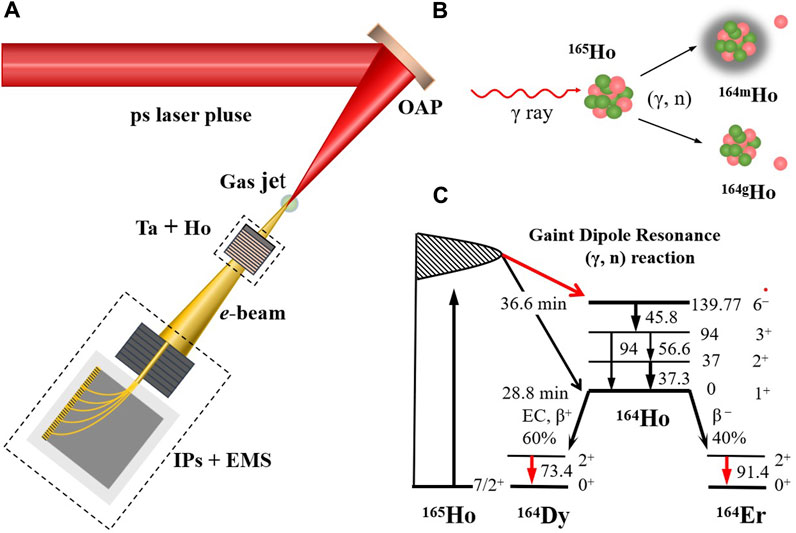
FIGURE 1. Experimental setup for the production of 164m, gHo at the XingGuang-III laser facility (not to scale) (A). Schematic view of the photoneutron production of 164m, gHo (B) and the partial-level scheme of 164m, gHo and the decay property of 164gHo (not to scale) (C). As the laser-accelerated e− beam fires to the metal stack (Ta + Ho), a large number of bremsstrahlung photons are generated, and subsequently, the Ho stacks are activated via photoneutron reactions, producing 164Ho in both the ground state (Jπ = 1+) and isomeric state (Jπ = 6−) (Singh et al., 2018). The 6− isomer in 164Ho decays, via only internal decay, to the ground state. The decay from the 6− isomer to the 3+ excited state is an E3 transition. This 3+ excited state subsequently de-excites to the ground state. The resulting transition energies are 94.0, 56.6, and 37.3 keV. Finally, the ground-state decays to the daughter nucleus 164Dy or 164Er, emitting two characteristic γ-rays at 73.4 and 91.4 keV.
3 Isomeric yield ratio determination
The temporal evolution of the numbers of nuclei that are formed in the isomeric and ground states is described by the following kinetic equations (Thiep et al., 2011):
where the subscripts
where
Since the gamma spectroscopy method is used in the experiment, the photopeak counts (
where
In the case of the bremsstrahlung photon, the expression of the IR reads (Jonsson et al., 1977) as follows:
Usually, the IR in a nuclear reaction is determined by measuring the counts of photopeaks that characterize the isomeric and ground states, respectively. When one or more photopeaks induced by the isomeric state are directly detected, the
where
As a result, the uncertainty of the
4 Results and discussion
4.1 Electron spectra
In our experiment, high-energy electrons are mainly produced by the parametrically enhanced direct laser acceleration (Cao et al., 2023). As the electron yield and charge are sensitive to the plasma density, the e–beam generation can be optimized by adjusting the backing pressure of the gas jet. Figure 2A shows the energy distributions of truncated e–beams recorded by the EMS at two backing pressures of 2.0 and 2.6 MPa. The spectral pattern of the e–beam can be described by a Boltzmann distribution
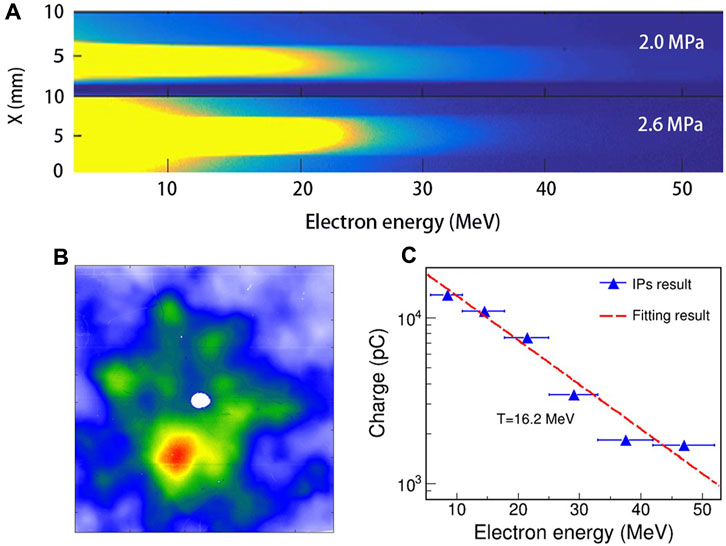
FIGURE 2. Spectral distributions of the laser-accelerated e− beam diagnosed by the EMS (A), spatial distribution of the laser-accelerated e− beam recorded at the backing pressure of 2.0 MPa (B), and the electron charge in dependence on the electron energy (C).
Generally, only high-energy electrons can be used to induce isomer production. However, the bright electron spot is located beneath the central hole, as shown in Figure 2B. This suggests that most of the electrons with high energy did not pass through the central hole of the IP stack and were not recorded by the EMS in our experiment. To understand more about the spectral pattern of the laser-accelerated e− beam, we utilized the Geant4 toolkit (Agostinelli et al., 2003) to simulate the attenuation of monoenergetic electrons inside the IP stack. For a given energy, when the number of incident electrons reduces by a factor of 0.9, such energy is regarded as the minimum energy recorded by each IP. Then, the spectral distribution of the e− beam can be figured out but with a relatively large uncertainty. Similar studies have been conducted by Bonnet et al. (2013) and Nishiuchi et al. (2020). Figure 2C shows the simulated electron spectral distribution, which matches well with the Boltzmann distribution. Note that the uncertainty represents the detectable energy range for each IP. The slope temperature is fitted to be 16.2 MeV, which is two times higher than the one recorded by the EMS. This is because the bright e− beam was not centered with the hole on the IP stack so that the EMS only detected the low-energy part of the e– beam, as presented earlier. Since the slope temperature is sufficiently high, such an e– beam interacting with a Ta foil can generate a high flux of bremsstrahlung radiation.
4.2 Characteristic γ-ray spectrum
The characteristic γ-rays emitted from the Ho sample were measured with the HPGe detector, as mentioned earlier. In our case, the cooling time
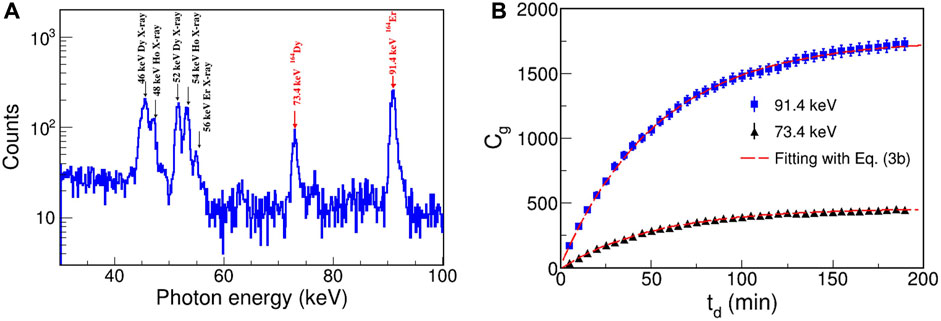
FIGURE 3. Typical γ-ray spectrum from the activated Ho foils (
As mentioned previously, reasonably partitioning the
where
4.3 Isomeric ratio calculation
The calculation of the IR relies on the determination of
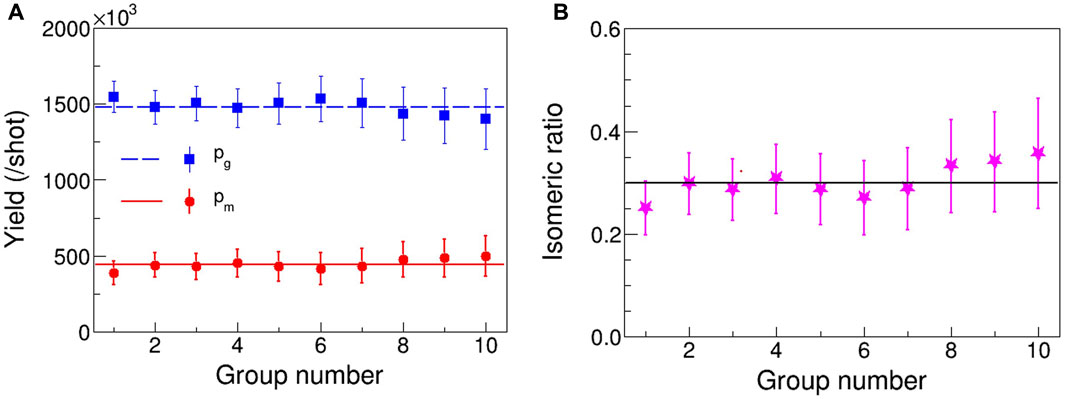
FIGURE 4. Ten groups of
Photoneutron reaction cross-section of 165Ho calculated with TALYS 1.9 (Koning et al., 2019) and the data from the Experimental Nuclear Reaction Database (EXFOR) are compared and shown in Figure 5A. One can see that the 165Ho(γ, n)164gHo reaction plays a dominant role in the giant dipole resonance (GDR) region. The 165Ho(γ, n)164mHo reaction has a similar distribution with the 165Ho(γ, n)164gHo. However, its maximum cross-section, ∼60 mb, is visibly lower than that of the latter. As the photon energy continues to increase, the multiple emission reactions take over. The maximum cross-section decreases as the number of emitted particles increases. The TALYS calculations are in overall good agreement with the EXFOR data obtained from previous measurements using photon sources caused by positron annihilation in flight (Bergère et al., 1968; Berman et al., 1969). This indicates the reliability of the TALYS inputs and calculations. In addition, it is noticeable that the available experimental data in terms of isomer production are very rare, which can potentially be measured using state-of-the-art laser-Compton scattering facilities generating high-intensity and quasi-monoenergetic γ-ray beams (An et al., 2018; Wang et al., 2022).
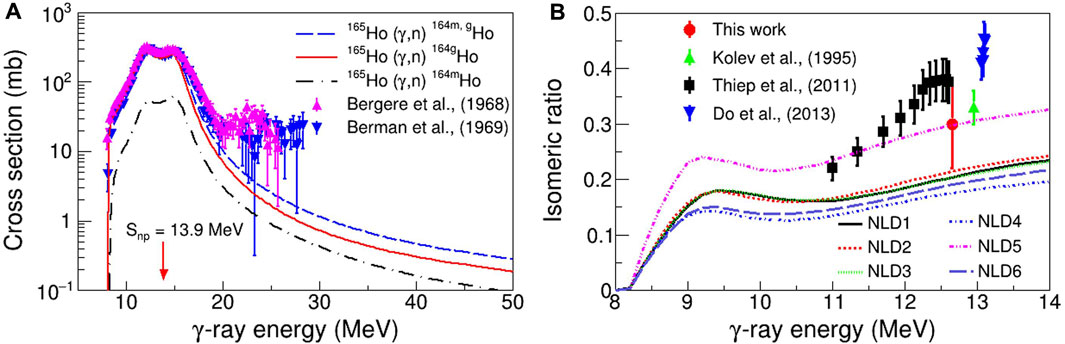
FIGURE 5. Calculated (γ, n) cross-sections for 165Ho and the available EXFOR data for comparison (A) and the flux-averaged IR of 164m, gHo in the 165Ho(γ, n) reaction as a function of excitation energy (B). In (A), the experimental data are total cross-sections of the 165Ho(γ, n) and 165Ho(γ, np) reactions, and
The
where the
5 Conclusion
We carried out the experiment to produce 164m, gHo via photoneutron reaction induced by a laser-accelerated electron beam, in which the IR value of 164m, gHo is determined by using the activation and offline γ-ray spectrometry technique. However, since the characteristic γ-rays from the isomeric decay of 164mHo were not successfully observed, we propose to extract the production yields of 164m, gHo by partitioning counts of photopeak characterizing the ground-state decay. This is different from the approach by extracting the counts of two photopeaks characterizing directly the isomeric and ground states. The production yields of 164m, gHo were successfully extracted to be (0.45 ± 0.10) × 106 and (1.48 ± 0.14) × 106 per laser shot. Accordingly, the IR value is calculated to be 0.30 ± 0.08 at
Data availability statement
The original contributions presented in the study are included in the article/Supplementary material; further inquiries can be directed to the corresponding authors.
Author contributions
JZ: Data curation, Formal Analysis, Investigation, Software, Visualization, Writing–original draft. WQ: Data curation, Investigation, Resources, Writing–review and editing. WF: Data curation, Visualization, Writing–review and editing. ZC: Data curation, Software, Writing–review and editing. KL: Data curation, Visualization, Writing–review and editing. CT: Software, Writing–review and editing. XZ: Resources, Writing–review and editing. ZD: Resources, Writing–review and editing. ZZ: Resources, Writing–review and editing. XL: Writing–review and editing. YY: Writing–review and editing. WL: Funding acquisition, Supervision, Writing–review and editing. WZ: Funding acquisition, Supervision, Writing–review and editing.
Funding
The authors declare financial support was received for the research, authorship, and/or publication of this article. This work was supported by the National Key R&D Program of China (Grant No. 2022YFA1603300), the National Natural Science Foundation of China (Grant No. U2230133), the Independent Research Project of the Key Laboratory of Plasma Physics, CAEP (Grant No. JCKYS2021212009), the Open Fund of the Key Laboratory of Nuclear Data, CIAE (Grant No. JCKY2022201C152), the Research Foundation of Education Bureau of Hunan Province, China (No. 22B0453), the Hunan Provincial Natural Science Foundation of China (No. 2023JJ40525), and the Hengyang Municipal Science and Technology Project (No. 202150054076).
Acknowledgments
The authors thank the XingGuang-III operation team for operating the laser system and providing the laser-accelerated electron beam.
Conflict of interest
The authors declare that the research was conducted in the absence of any commercial or financial relationships that could be construed as a potential conflict of interest.
Publisher’s note
All claims expressed in this article are solely those of the authors and do not necessarily represent those of their affiliated organizations, or those of the publisher, the editors, and the reviewers. Any product that may be evaluated in this article, or claim that may be made by its manufacturer, is not guaranteed or endorsed by the publisher.
References
Agostinelli, S., Allison, J., Amako, K., Apostolakis, J., Araujoa, H., Arce, P., et al. (2003). GEANT4-a simulation toolkit. Nucl. Instrum. Methods Phys. Res. Sect. A 506 (3), 250–303. doi:10.1016/S0168-9002(03)01368-8
An, G., Chi, Y., Dang, Y., Fu, G., Guo, B., Huang, Y., et al. (2018). High energy and high brightness laser Compton backscattering gamma-ray source at IHEP. Matter Radiat. Extrem 3 (4), 219–226. doi:10.1016/j.mre.2018.01.005
Bergère, R., Beil, H., and Veyssière, A. (1968). Photoneutron cross sections of La, Tb, Ho and Ta. Nucl. Phys. 121 (2), 463–480. doi:10.1016/0375-9474(68)90433-8
Berman, B. L., Kelly, M. A., Bramblett, R. L., Caldwell, J. T., and Fultz, S. C. (1969). Giant resonance in deformed nuclei: photoneutron cross sections for Eu153, Dd160, Ho165, and W186. Phys. Rev. 185 (4), 1576–1590. doi:10.1103/PhysRev.185.1576
Bonnet, T., Comet, M., Denis-Petit, D., Gobet, F., Hannachi, M., Tarisien, M., et al. (2013). Response functions of fuji imaging plates to monoenergetic protons in the energy range 0.6–3.2 MeV. Rev. Sci. Instrum. 84 (1), 013508. doi:10.1063/1.4775719
Cao, Z., Qi, W., Lan, H., Cui, B., Zhang, X., Deng, Z., et al. (2023). Experimental study of medical isotopes 62,64Cu and 68Ga production using intense picosecond laser pulse. Plasma Phys. control. Fusion 65, 055007. doi:10.1088/1361-6587/acc090
Danson, C., Haefner, C., Bromage, J., Butcher, T., Chanteloup, J., Chowdhury, E., et al. (2019). Petawatt and exawatt class lasers worldwide. High. Power Laser Sci. 7, E54. doi:10.1017/hpl.2019.36
Do, N. V., Khue, P. D., Thanh, K. T., Hien, N. T., Kim, G., Lee, M., et al. (2013). Measurement of isomeric yield ratios for the natHo(γ, xn)164m, g; 162m, gHo reactions in the bremsstrahlung energy region from 45 to 65 MeV. J. Radioanal. Nucl. 298, 1447–1452. doi:10.1007/s10967-013-2608-6
Fan, W., Qi, W., Zhang, J., Cao, Z., Lan, H., Li, X., et al. (2023). Efficient production of nuclear isomer 93mMo with laser-accelerated proton beam and an astrophysical implication on 92Mo production. Available at: https://arxiv.org/ftp/arxiv/papers/2308/2308.02994.pdf.
Feng, J., Li, Y., Tan, J., Wang, W., Li, Y., Zhang, X., et al. (2022). Laser plasma accelerated ultra-intense electron beam for efficiently exciting nuclear isomers. doi:10.48550/arXiv.2203.06454
Günther, M. M., Rosmej, O. N., Tavana, P., Gyrdymov, M., Skobliakov, A., Kantsyrev, A., et al. (2022). Forward-looking insights in laser-generated ultra-intense γ-ray and neutron sources for nuclear application and science. Nat. Commun. 13, 170. doi:10.1038/s41467-021-27694-7
Habs, D., and Köster, U. (2011). Production of medical radioisotopes with high specific activity in photonuclear reactions with γ-beams of high intensity and large brilliance. Appl. Phys. B 103, 501–519. doi:10.1007/s00340-010-4278-1
Hayakawa, T., Miyamoto, S., Hayashi, Y., Kawase, K., Horikawa, K., Chiba, S., et al. (2008). Half-life of the 164Ho by the (γ,n) reaction from laser Compton scattering γ rays at the electron storage ring NewSUBARU. Phys. Rev. C 74, 065802. doi:10.1103/physrevc.74.065802
Hilgers, K., Qaim, S. M., and Sudar, S. (2007). Formation of the isomeric pairs 1³Ndm,g and 11Ndm,g in proton and ³He-particle-induced nuclear reactions. Phys. Rev. C 76, 064601. doi:10.1103/PHYSREVC.76.064601
Inagaki, M., Sekimoto, S., Tadokoro, T., Ueno, Y., Kani, Y., Ohtsuki, T., et al. (2020). Production of 99Mo/99mTc by photonuclear reaction using a natMoO3 target. J. Radioanal. Nucl. Chem. 324, 681–686. doi:10.1007/s10967-020-07086-9
Jacobs, E., Thierens, H., Frenne, D. D., Clercq, A. D., D'hondt, P., Gelder, P. D., et al. (1979). Product yields for the photofission of 238U with 12-15-20-30-and 70-MeV bremsstrahlung. Phys. Rev. C 19 (2), 422–432. doi:10.1103/PhysRevC.19.422
Jonsson, G., and Eriksson, M. (1977). Isomeric ratios in photon-induced spallation reactions at intermediate energies. Z. Phys. A 281, 53–56. doi:10.1007/BF01408612
Kim, K., Kim, G., Naik, H., Zaman, M., Yang, S., Song, T., et al. (2015). Excitation function and isomeric ratio of Tc-isotopes from the 93Nb(α, xn) reaction. Nucl. Phys. 935, 65–78. doi:10.1016/j.nuclphysa.2014.12.006
Kolev, D., Dobreva, E., Nenov, N., and Todorov, V. (1995). A convenient method for experimental determination of yields and isomeric ratios in photonuclear reactions measured by the activation technique. Nucl. Instrum. Methods Phys. Res. Sect. A 356 (2-3), 390–396. doi:10.1016/0168-9002(94)01319-5
Koning, A. J., Rochman, D., Sublet, J., Dzysiuk, N., Fleming, M., and Marck, S. V. D. (2019). TENDL: complete nuclear data library for innovative nuclear science and technology. Nucl. Data Sheets 155, 1–55. doi:10.1016/j.nds.2019.01.002
Luo, J., and Jiang, L. (2014). Ground-state and isomeric-state cross sections for 165Ho(n, 2n)164Ho reaction from the reaction threshold to 20 MeV. Phys. Rev. C 89, 014604. doi:10.1103/PhysRevC.89.014604
Naik, H., Kim, G. N., Schwengner, R., Kim, K., Zaman, M., Yang, S. C., et al. (2016). Measurement of isomeric ratios for 89g,mZr, 91g,mMo, and 97g,mNb in the bremsstrahlung end-point energies of 16 and 45-70 MeV. Eur. Phys. J. 52, 47. doi:10.1140/epja/i2016-16047-8
Nishiuchi, M., Sakaki, H., Dover, N. P., Miyahara, T., Shiokawa, K., Manabe, S., et al. (2020). Ion species discrimination method by linear energy transfer measurement in Fujifilm BAS-SR imaging plate. Rev. Sci. Instrum. 91, 093305. doi:10.1063/5.0016515
Peik, E., Schumm, T., Safronova, M. S., Pálffy, A., Weitenberg, J., and Thirolf, P. G. (2021). Nuclear clocks for testing fundamental physics. Quantum Sci. Technol. 6, 034002. doi:10.1088/2058-9565/abe9c2
Prelas, M. A., Weaver, C. L., Watermann, M. L., Lukosi, E. D., Schott, R. J., and Wisniewskiet, A. (2014). A review of nuclear batteries. Prog. Nucl. Energ 75, 117–148. doi:10.1016/j.pnucene.2014.04.007
Qi, W., Zhang, X., Zhang, B., He, S., Zhang, F., Cui, B., et al. (2019). Enhanced photoneutron production by intense picoseconds laser interacting with gas-solid hybrid targets. Phys. Plasmas. 26, 043103. doi:10.1063/1.5079773
Rahman, M. S., Kim, K., Kim, G., Naik, H., Nadeem, M., Hien, N. T., et al. (2016). Measurement of flux-weighted average cross-sections and isomeric yield ratios for 103Rh(γ, xn) reactions in the bremsstrahlung end-point energies of 55 and 60 MeV. Eur. Phys. J. A 52, 194. doi:10.1140/epja/i2016-16194-x
Rahman, M. S., Kim, K., Nguyen, T. H., Kim, G., Naik, H., Yang, S., et al. (2020). Measurement of flux-weighted average cross sections of natIn(γ, xn) reactions and isomeric yield ratios of 112mg, 111m,g, 110m,g in with bremsstrahlung. Eur. Phys. J. A 56, 235. doi:10.1140/epja/s10050-020-00245-2
Robbie, W., Martin, K., Ross, G., David, C., Rachel, D., Nicholas, B., et al. (2018). Development of focusing plasma mirrors for ultraintense laser-driven particle and radiation sources. Quantum Beam Sci. 2 (1), 1. doi:10.3390/qubs2010001
Schlenvoigt, H. P., Haupt, K., Debus, A., Budde, F., Jäckel, O., Pfotenhauer, S., et al. (2008). A compact synchrotron radiation source driven by a laser-plasma wakefield accelerator. Nat. Phys. 4, 130–133. doi:10.1038/nphys811
Pan, W., Song, T., Lan, H., Ma, Z., Zhang, J., Zhu, Z., and Luo, W. (2021). Photo-excitation production of medically interesting isomers using intense γ-ray source. Appl Radiat Isotopes 168, 109534. doi:10.1016/j.apradiso.2020.109534
Singh, B., and Chen, J. (2018). Nuclear data sheets for A=164. Nucl. Data Sheets 147, 1–381. doi:10.1016/j.nds.2018.01.001
Thiep, T. D., An, T. T., Cuong, P. V., Vinh, N. T., and Belov, A. G. (2011). Study of the isomeric ratios in photonuclear reactions of natural holmium and lutetium induced by bremsstrahlungs with endpoint energies in the giant dipole resonance region. J. Radioanal. Nucl. Chem. 290, 515–524. doi:10.1007/s10967-011-1257-x
Wang, H., Fan, G., Liu, L., Xu, H., Shen, W., Ma, Y., et al. (2022). Commissioning of laser electron gamma beamline SLEGS at SSRF. Nucl. Sci. Tech. 33, 87. doi:10.1007/s41365-022-01076-0
Zilges, A., Balabanski, D., Isaak, J., and Pietralla, N. (2022). Photonuclear reactions-From basic research to applications. Prog. Part. Nucl. Phys. 122, 103903. doi:10.1016/j.ppnp.2021.103903
Appendix
The photopeak counts
As shown above, the activity
Firstly, the number of x-state
And then, in the cooling and the detection intervals, the production doesn’t do any contribution to the activities of the isomeric and ground states. Therefore, the Eq. 1 in the proof for the cooling and detection intervals can be written as:
By solving it, the
Due to
Substituting Eq. 7 into Eq. 1 and solving it, the
where the Eq. 3a in the proof is deduced out.
And do the same performance to Eq. 8 like Eq. 7. The
where the Eq. 3b in the proof is deduced out.
Keywords: isomeric yield ratio, photoneutron reaction, laser-accelerated electron beam, effective γ-ray energy, 164m, gHo
Citation: Zhang J, Qi W, Fan W, Cao Z, Luo K, Tan C, Zhang X, Deng Z, Zhang Z, Li X, Yuan Y, Luo W and Zhou W (2023) Study of the isomeric yield ratio in the photoneutron reaction of natural holmium induced by laser-accelerated electron beams. Front. Astron. Space Sci. 10:1265919. doi: 10.3389/fspas.2023.1265919
Received: 24 July 2023; Accepted: 02 October 2023;
Published: 08 November 2023.
Edited by:
Yi Xu, Horia Hulubei National Institute for Research and Development in Physics and Nuclear Engineering (IFIN-HH), RomaniaReviewed by:
Canel Eke, Akdeniz University, TürkiyeMarina Barbui, Texas A&M University, United States
Copyright © 2023 Zhang, Qi, Fan, Cao, Luo, Tan, Zhang, Deng, Zhang, Li, Yuan, Luo and Zhou. This is an open-access article distributed under the terms of the Creative Commons Attribution License (CC BY). The use, distribution or reproduction in other forums is permitted, provided the original author(s) and the copyright owner(s) are credited and that the original publication in this journal is cited, in accordance with accepted academic practice. No use, distribution or reproduction is permitted which does not comply with these terms.
*Correspondence: Wen Luo, d2VubHVvLW9rQDE2My5jb20=; Weimin Zhou, emhvdXdtQGNhZXAuY24=
†These authors share first authorship