 Amy Keesee
 Viacheslav G. Merkin
 Michael Wiltberger
 Stephen Hale
 Eric Winter
 Nikhil Rao
- 1Department of Physics and Astronomy and Space Science Center, University of New Hampshire, Durham, NH, United States
- 2Johns Hopkins University Applied Physics Laboratory, Laurel, MD, United States
- 3US National Science Foundation National Center for Atmospheric Research, High Altitude Observatory, Boulder, CO, United States
- 4Joan and James Leitzel Center for Mathematics, Science, and Engineering Education, University of New Hampshire, Durham, NH, United States
The US National Aeronautics and Space Administration (NASA) DRIVE Center for Geospace Storms (CGS) hosted a workshop for graduate students conducting research in geospace science in November 2024. The research relevant to geospace has traditionally been separated into the Magnetosphere, including Magnetosphere-Ionosphere coupling, and the Ionosphere-Thermosphere-Mesosphere disciplines. This is apparent in sections of the American Geophysical Union and the funding structure of the United States National Science Foundation (NSF) and NASA. Following that structure, the geospace science community is divided into sub-communities separated along the discipline boundaries. However, it is now widely accepted that geospace is a tightly coupled system whose parts are strongly interconnected. The future Heliophysics workforce, particularly those focused on geospace, must have an understanding of how the regions of geospace influence and are influenced by each other. The goal of the workshop hosted by CGS was to bring together graduate students to improve their understanding across all regions of geospace with an emphasis on how to use geospace modeling to address compelling research questions throughout the domain. We report on the content of the workshop and the evaluation of achievement of these goals.
1 Introduction
The Center for Geospace Storms (CGS)1 is one of three centers selected for a 5-year Phase II implementation by the US National Aeronautics and Space Administration (NASA) Heliophysics Division as a part of the Diversify, Realize, Integrate, Venture, Educate (DRIVE) initiative recommended in the 2013 Decadal Survey (National Research Council, 2013). CGS aims to unravel the complex web of interactions during solar storms as they impact geospace, extending roughly from ∼80,000 miles on the sunward side all the way to one million miles on the nightside of space that surrounds Earth. To do this, CGS is building a physics-based, predictive, community model of stormtime geospace called the Multiscale Atmosphere-Geospace Environment (MAGE) model2. The Broadening Impacts (i.e., education and public outreach) goals of CGS include Heliophysics workforce development and deep knowledge integration. The key educational goal is to train next-generation NASA scientists whose skills will transcend traditional boundaries. While CGS has a cohort of funded graduate students at the universities that are part of the center, it is also important to provide such training opportunities to the larger Heliophysics community.
Within the US, graduate students have opportunities to attend summer schools that cover a broad array of Heliophysics topics and workshops sponsored by the National Science Foundation (NSF) that focus on either the magnetosphere-ionosphere (M-I; Geospace Environment Modeling-GEM) or the ionosphere-thermosphere-mesosphere (I-T-M; Coupling, Energetics, and Dynamics of Atmospheric Regions-CEDAR). CGS wanted to create an opportunity for graduate students that focuses on geospace as a whole. The purpose of the workshop was to provide graduate students that have a foundation in their area of research, usually by having attended GEM or CEDAR, an opportunity for knowledge integration across all of geospace.
The workshop was held in November 2024. Announcements for the workshop and travel award application were sent to GEM, CEDAR, and other field-related newsletters. There were 22 participants, 16 received travel awards, four were supported by CGS member universities, and two were local. The group was dubbed the Mastering Analyses for Geospace, the Innovation Cohort (MAGIC) and a unique logo was developed (see Figure 1) from the original MAGE logo by adding an image of a book and stars to signify the focus on education.
Figure 1. Logo used for the workshop.
2 Workshop schedule and content
The workshop was held over 4 days, with the first and last days being student-focused, and the middle two being incorporated into the CGS Community Workshop. The student-focused days included student-led tutorials on descriptions of specific regions within the geospace system and their governing physical characteristics and dynamics, modeled after the student days at the GEM and CEDAR workshops, networking opportunities among the students, and a hands-on tutorial for the MAGE model and analysis tools. Participants also had the opportunity to take a tour of Applied Physics Lab which hosted the workshop.
2.1 Student day 1
2.1.1 Welcome
The workshop started with a welcome and overview of CGS and the workshop. The overall goals and agenda slides are shown in Figure 2. The full Welcome slideshow is available in the Supplemental Information.
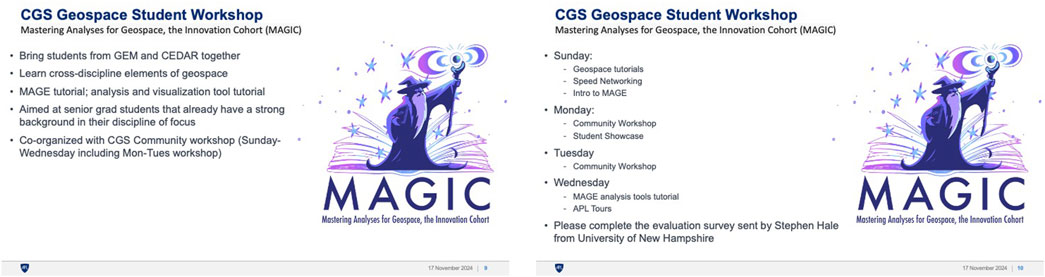
Figure 2. Slides from the workshop Welcome session (left) Workshop goals. (right) Workshop agenda.
2.1.2 Geospace topical tutorials
During the application process, volunteers were recruited to give tutorials. The volunteers described the topic(s) they would be interested in discussing, and workshop organizers worked with them to refine the topics to ensure coverage across geospace without significant overlap. The tutorial topics were.
2.1.3 Speed networking
This session gave students the opportunity to meet each other and briefly discuss their research as well as challenges they were facing. The students were roughly divided into M-I and I-T-M groups that lined up and faced each other. Each pair facing each other had 4 min for each person to do the following:
After the 8 min for a given pair, there was a brief time to rotate to the next pair. Over the session, students were able to talk with half of the participants at the workshop. A photo during the speed networking session is shown in Figure 3.
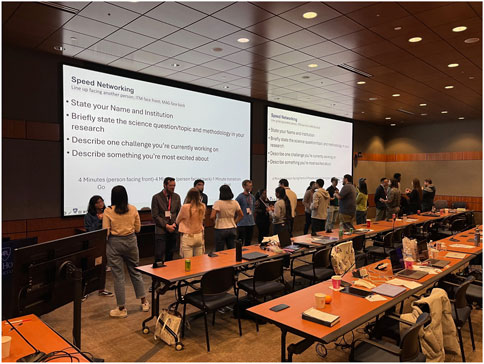
Figure 3. Workshop participants during the Speed Networking session.
2.2 Community workshop
The CGS Community Workshop was started in 2020 during the Phase I implementation. The goal of the Community Workshop is to bring together scientists at the forefront of geospace research across the regional (magnetosphere, ionosphere, thermosphere, etc.) and methodology (simulation, data analysis, etc.) boundaries. Speakers were a mix of CGS Team members and invited speakers from the geopsace community. The Community Workshop was incorporated into the student workshop. Most of the sessions were mixed topically to encourage communication across the research boundaries, and presenters were encouraged to write their talk with such an audience in mind. One of the sessions was a Student Showcase where the student workshop participants had the opportunity to give lightning talks on their research. The workshop program is available in the Supplemental Information and at the CGS website3.
2.3 Student day 2
2.3.1 MAGE tutorials
As part of our education and outreach efforts, a hands-on tutorial session was held to introduce the participants to state-of-the-art tools and techniques for geospace modeling and data analysis. The tutorial was designed to provide practical experience with the Community Coordinated Modeling Center’s (CCMC) Runs on Request system and the MAGE model developed by the CGS team. MAGE 0.75 (Sorathia et al., 2023) couples the GAMERA global MHD model of the magnetosphere (Zhang et al., 2019; Sorathia et al., 2020), the RCM model of the inner magnetosphere (Toffoletto et al., 2003) and the ionospheric electrodynamics model REMIX (Merkin and Lyon, 2010). The tutorial materials, including slides, video, and Jupyter notebook are available at Wiltberger et al. (2025).
The session began with an overview of the MAGE model, including a summary of its coupled components representing the ionosphere, thermosphere, magnetosphere, and ring current systems. Following this introduction, students were guided through the process of submitting a MAGE event simulation using CCMC’s Runs on Request web interface. Emphasis was placed on step-by-step instruction for setting up input parameters, selecting event times, and interpreting the simulation request status. Participants were also shown how to access and download the output data generated by their runs, an essential step for downstream analysis.
To further develop analysis skills, students were provided with demonstration accounts on the NSF NCAR supercomputing platform. Precomputed MAGE simulation results were made available to all participants, allowing them to bypass the queue and directly engage with model output. Instruction then focused on installing and using the kaipy Python package—developed by CGS for visualization and analysis of MAGE results4. The students worked through a curated set of Jupyter notebooks, which introduced key functionality in kaipy for reading and plotting data fields.
Each notebook included interactive elements and embedded questions, encouraging participants to apply concepts from earlier steps to generate custom visualizations. This active learning approach was designed to reinforce data literacy and promote deeper understanding of the physical processes captured by the model. The tutorial concluded with an open-ended exercise in which students were asked to explore a scientific question of personal interest using the available MAGE output and the extensive documentation hosted on Read the Docs.
Overall, the tutorial successfully provided participants with practical experience in geospace modeling and analysis workflows, from model submission through scientific interpretation. It also served to increase awareness and accessibility of CGS-developed tools within the next-generation of space scientists.
2.3.2 APL tour
The final session of the workshop was a tour of facilities at Applied Physics Lab. This included the Environmental Test Facility5 that includes equipment for instrument and payload testing including thermal vacuum, vibration, and electromagnetic tests. The tour also included observation of the ongoing integration of the Interstellar Mapping and Acceleration Probe (IMAP) mission6.
3 Evaluation
Workshop participants were requested to complete an evaluation survey after the completion of the workshop. Of the 22 graduate students attending the workshop, 17 (77%) completed an evaluation survey designed to understand the workshop’s impact on students’ professional development through three key interventions: 1) Geospace topical tutorials, 2) Speed-networking, and 3) Lightning talks. There was also an open MAGE tutorial for CGS community researchers (not just students), for which the students were also surveyed.
Students were primarily (11 of 17) advanced graduate students with 4+ years in their role. Most (10 of 17) students were studying Earth’s magnetosphere with lesser numbers focusing on study of Earth’s Ionosphere, Thermosphere, and Mesosphere.
3.1 Geospace topical tutorials
About half of the students led tutorials for the other half of students. Twelve students (71%) found the tutorials to be Very or Extremely effective. In terms of tutorials’ relevance for students, 14 (82%) found the tutorials to be Moderately (4), Very (9), or Extremely (1), relevant.
3.2 Speed-networking
The Speed-networking session was effective for students to make meaningful connections with others. For this session, 13 students (76%) self-reported that speed-networking was either Very or Extremely Effective for making meaningful connections. Furthermore, 11 students (65%) reported making 1-2 meaningful connections during the session, while six students reported making 3-6 meaningful connections. For our purposes, a meaningful connection was defined as one in which there was high likelihood of future collaboration or communication on a CGS topic, research proposal, publication, or regarding future career decisions.
3.3 Lightning talks
Thirteen students (65%) presented Lightning Talk presentations. All but one student found the Lightning Talk format to be Moderately (3), Very (5), or Extremely (4) Effective for reporting on their science. Two general themes among students emerged from their experience with Lightning Talks. First, was that the 5-min presentation length was very constraining, but second the students thought it was effective for focusing their messages on their highest priorities. One student wrote, “This was perfect. I did not get bored while listening to others”. After the Lightning Talk session concluded, students reported receiving follow-up questions during the breaks and other networking sessions, thus demonstrating that although the sessions are brief, they do not necessarily stifle follow up discussions. One student wrote, “I was glad that a few scientists talked to me the next day during the breaks to provide feedback and suggestions. probably 5”. Another student wrote, “Quite a few, which actually gave me ideas for future work”.
3.4 MAGE tutorials
The vast majority (16) of Graduate students found the Mage Tutorials to be Moderately (4), Very (3), or Extremely (7) Effective and also similarly (12) relevant for their own work. Supporting these specific conclusions were the following notes provided by the students.
“I think I can use these tools in my work. Those are extremely useful tools”.
“The (MAGE) tutorial was very effective in having an understanding of how I could potentially use this model”.
“I was pleased with how smoothly the tutorial went and impressed by how well the interactive portions functioned”.
4 Summary and future plans
The response to the workshop was overwhelmingly positive. CGS will continue to offer the Graduate Student Workshop in combination with the Community Workshop as funds allow, enabling the MAGIC to grow. Current plans include incorporating more hands-on tutorials to facilitate the use of CGS-developed models and analysis tools, particularly taking advantage of the MAGE open source release in June 2025 (Merkin et al., 2025).
Data availability statement
The original contributions presented in the study are included in the article/supplementary material, further inquiries can be directed to the corresponding author.
Author contributions
AK: Conceptualization, Investigation, Project administration, Writing – original draft. VM: Conceptualization, Funding acquisition, Project administration, Supervision, Writing – review and editing. MW: Methodology, Software, Writing – review and editing. SH: Formal Analysis, Investigation, Methodology, Writing – original draft. EW: Software, Writing – review and editing. NR: Software, Writing – review and editing.
Funding
The author(s) declare that financial support was received for the research and/or publication of this article. This work was supported by NASA DRIVE Science Center for Geospace Storms (CGS) under award #80NSSC22M0163. This material is based upon work supported by the National Center for Atmospheric Research, which is a major facility sponsored by the National Science Foundation under Cooperative Agreement No. 1852977.
Conflict of interest
The authors declare that the research was conducted in the absence of any commercial or financial relationships that could be construed as a potential conflict of interest.
Generative AI statement
The author(s) declare that no Generative AI was used in the creation of this manuscript.
Any alternative text (alt text) provided alongside figures in this article has been generated by Frontiers with the support of artificial intelligence and reasonable efforts have been made to ensure accuracy, including review by the authors wherever possible. If you identify any issues, please contact us.
Publisher’s note
All claims expressed in this article are solely those of the authors and do not necessarily represent those of their affiliated organizations, or those of the publisher, the editors and the reviewers. Any product that may be evaluated in this article, or claim that may be made by its manufacturer, is not guaranteed or endorsed by the publisher.
Supplementary material
The Supplementary Material for this article can be found online at: https://www.frontiersin.org/articles/10.3389/fspas.2025.1663738/full#supplementary-material
Footnotes
2https://cgs.jhuapl.edu/Models/
3https://cgs.jhuapl.edu/News-and-Events/Agenda/index.php?id=132
4https://kaipy-docs.readthedocs.io/en/latest/
5https://www.jhuapl.edu/work/impact/space-science-and-engineering/facilities
6https://www.jhuapl.edu/destinations/missions/imap
References
Merkin, V. G., and Lyon, J. G. (2010). Effects of the low-latitude ionospheric boundary condition on the global magnetosphere. J. Geophys. Res. Space Phys. 115. doi:10.1029/2010JA015461
[Dataset] Merkin, V., Arnold, H., Bao, S., Garretson, J., Lyon, J., Lin, D., et al. (2025). JHUAPL/kaiju: MAGE_1.0.5. doi:10.5281/zenodo.16818682
National Research Council (2013). Solar and space physics: a science for a technological Society. Washington, DC: The National Academies Press. doi:10.17226/13060
Sorathia, K. A., Merkin, V. G., Panov, E. V., Zhang, B., Lyon, J. G., Garretson, J., et al. (2020). Ballooning-interchange Instability in the Near-Earth Plasma Sheet and Auroral Beads: global magnetospheric modeling at the Limit of the MHD Approximation. Geophys. Res. Lett. 47, e2020GL088227. doi:10.1029/2020GL088227
Sorathia, K. A., Michael, A., Merkin, V. G., Ohtani, S., Keesee, A. M., Sciola, A., et al. (2023). Multiscale magnetosphere-ionosphere coupling during stormtime: a Case study of the Dawnside current Wedge. J. Geophys. Res. Space Phys. 128, e2023JA031594. doi:10.1029/2023JA031594
Toffoletto, F., Sazykin, S., Spiro, R., and Wolf, R. (2003). Inner magnetospheric modeling with the Rice Convection model. Space Sci. Rev. 107, 175–196. doi:10.1023/A.1025532008047
Wiltberger, M., Rao, N., and Winter, E. (2025). Multscale atmosphere geospace Environment (MAGE) model tutorial. doi:10.5281/zenodo.17054903
Keywords: geospace, STEM education, STEM workforce development, magnetosphere, ionosphere, thermosphere
Citation: Keesee A, Merkin VG, Wiltberger M, Hale S, Winter E and Rao N (2025) Center for geospace storms graduate student workshop. Front. Astron. Space Sci. 12:1663738. doi: 10.3389/fspas.2025.1663738
Received: 10 July 2025; Accepted: 11 September 2025;
Published: 22 September 2025.
Edited by:
Gareth Perry, New Jersey Institute of Technology, United StatesReviewed by:
Octav Marghitu, Space Science Institute, RomaniaHyomin Kim, New Jersey Institute of Technology, United States
Copyright © 2025 Keesee, Merkin, Wiltberger, Hale, Winter and Rao. This is an open-access article distributed under the terms of the Creative Commons Attribution License (CC BY). The use, distribution or reproduction in other forums is permitted, provided the original author(s) and the copyright owner(s) are credited and that the original publication in this journal is cited, in accordance with accepted academic practice. No use, distribution or reproduction is permitted which does not comply with these terms.
*Correspondence: Amy Keesee, YW15LmtlZXNlZUB1bmguZWR1