 Jayatri Das1
 Cynthia Forlini2
 Darrell M. Porcello3,4
 Karen S. Rommelfanger5,6*
 Arleen Salles7,8Global Neuroethics Summit Delegates
- 1The Franklin Institute, Philadelphia, PA, United States
- 2School of Medicine, Deakin University, Geelong, VIC, Australia
- 3Lawrence Hall of Science, University of California, Berkeley, Berkeley, CA, United States
- 4Children's Creativity Museum, San Francisco, CA, United States
- 5Department of Neurology, Emory University, Atlanta, GA, United States
- 6Institute of Neuroethics Think and Do Tank, Atlanta, GA, United States
- 7Center for Research Ethics and Bioethics, Uppsala University, Uppsala, Sweden
- 8NeuroeticaBA, Buenos Aires, Argentina
Neuroscience research has been expanding, providing new insights into brain and nervous system function and potentially transformative technological applications. In recent years, there has been a flurry of prominent international scientific academies and intergovernmental organizations calling for engagement with different publics on social, ethical, and regulatory issues related to neuroscience and neurotechnology advances. Neuroscientific activities and outputs are value-laden; they reflect the cultural, ethical, and political values that are prioritized in different societies at a given time and impact a variety of publics beyond the laboratory. The focus on engagement in neuroscience recognizes the breadth and significance of current neuroscience research whilst acknowledging the need for a neuroethical approach that explores the epistemic and moral values influencing the neuroscientific agenda. The field of neuroethics is characterized by its focus on the social, legal, and philosophical implications of neuroscience including its impact on cultural assumptions about the cognitive experience, identity, consciousness, and decision-making. Here, we outline a proposal for neuroethics engagement that reflects an enhanced and evolving understanding of public engagement with neuroethical issues to create opportunities to share ideation, decision-making, and collaboration in neuroscience endeavors for the benefit of society. We demonstrate the synergies between public engagement and neuroethics scholarship and activities that can guide neuroethics engagement.
Introduction
Research and discovery in neuroscience include in their scope the fundamental understanding of neuroanatomy and cognitive function as well as innovations in medicine and technology. Neuroscience research has been providing new insights into brain and nervous system function and potentially transformative technological applications. However, neuroscientific activities and outputs are value-laden, reflecting the cultural, ethical, and political values that are prioritized in different societies at a given time. Furthermore, they impact a variety of publics beyond the laboratory and, in the process, raise numerous ethical, social, and regulatory issues.
Neuroethics is a multi- and interdisciplinary field that has evolved as a response to the need for timely attention to the social, legal, and philosophical implications of neuroscience that can uniquely impact cultural assumptions about the cognitive experience, identity, consciousness, and decision-making. Multiple understandings of the nature, content, methodologies, and goals of neuroethics coexist (Racine and Aspler, 2017). There is consensus, however, in that the field requires normative (application of ethical theory and reasoning to practical issues raised by neuroscience and emerging neurotechnologies), empirical (use of empirical data to inform the understanding and management of issues), and conceptual (which minimally requires careful analysis and clarification of key notions) approaches to address the different issues (Roskies, 2002; Illes, 2007; Evers et al., 2017; Kellmeyer et al., 2019). By virtue of the breadth in content and methodology, neuroethics attempts to systematically examine whether and how the values driving neuroscience research are aligned with societal values and how potential conflicts might be understood, approached, and addressed.
Strong public engagement inclusive of a plurality of views and voices can add another key approach to advance research on and inform applications of neuroethics. It is true that there have been several previous public engagement efforts intended to promote neuroethics and neuroscience literacy by disseminating information through empirical research projects as well as expert-led media and public events (Illes et al., 2011; Sullivan and Illes, 2017; Das and Porcello, 2019). Within the field of bioethics, empirical approaches have used a number of methodologies with the aim to integrate the stakeholders' values, attitudes, and experiences with ethical and normative analysis (Davies et al., 2015; Ives et al., 2018). Empirical bioethics methodologies share core elements with public engagement such as orientations toward public empowerment and dialogue with stakeholders. Here we do not attempt to question the role that existing engagement practices in neuroethics may play. Our goal is instead to present an enhanced and evolving understanding of engagement and neuroethics to set the stage for the creation of new opportunities to share ideation, decision-making, and collaboration in neuroscience endeavors for the benefit of society.
We see this type of neuroethics engagement as a generative activity that combines (1) the systematic approaches of neuroethics for surfacing the unspoken assumptions and valuations by scientists and diverse publics about emerging neuroscience, with (2) best practices of public engagement in science to advance mutual learning and multi-directional communication across stakeholders and disciplines.
Neuroethics engagement promises to spark a new, international network that effectively convenes a necessarily diverse stakeholder community of neuroscientists, neuroethicists, public engagement specialists, and publics. Strategically and conscientiously implemented, sustained neuroethics engagement can help to break down silos of thought and practice across disciplined and professions connected to neuroscience by forging a greater community and cultural representation.
We begin by reviewing the impetus for this expanded understanding of public engagement and introducing key learnings from public engagement scholarship. Next we describe the attributes needed to practice the proposed type of neuroethics engagement and, finally, forecast areas that in the near-term would benefit from this approach. In this first instance, we direct our communication toward neuroscientists, neuroethicists, and public engagement specialists as the likely candidates to lead neuroethics engagement activities—with diverse and broad publics from patients and policymakers to science enthusiasts and experts (Das and Porcello, 2019).
The continuum of public engagement
Calls for public engagement have been made in numerous neuroscience consensus reports and neuroethics recommendations (OECD, 2019; Anonymous, 2019; National Academies of Sciences, Medicine, 2021). A recent report from the National Academies of Science, Engineering, and Medicine (NASEM), for example, calls specifically for exploration of areas of public concern and facilitation of multidirectional dialogue among publics, experts, and policy makers concerning the growing field of human neural organoids, transplants, and chimeras (National Academies of Sciences, Medicine, 2021). In turn, the European Commission has adopted an approach to science and innovation where the creation of intentional spaces for social and ethical reflection about the issues raised by science and innovation, as well as engagement with all the relevant stakeholders, is expected to play a prominent role in scientific research agendas. The Canadian Institutes of Health has developed a strategy for patient-oriented research based upon the idea that engagement of caregivers and families is key for setting priorities that will ultimately shape the research process and lead to better patient outcomes. Recommendations for inclusion of public engagement tend to reflect the often implicit expectations of contemporary governance approaches: to respect the rights of citizens to both be informed and participate in decision making processes on one hand, and the desire to improve science and its outcomes by aligning it with the needs, priorities, and values of the different societies on the other (Adjekum et al., 2017). For neuroscience research, how thorny ethical considerations are addressed can potentially make or break public trust and ultimately affect progress and funding.
Many current public engagement efforts in neuroscience can be characterized by top-down, one-way dissemination from experts. One-way transmission of information from scientific experts to publics can serve an important role in communicating critical information or offering inspiring narratives about science. These efforts largely manifest as scientific demonstrations or activities that build excitement about science and its benefits or inform about an issue (Das et al., 2018). Best practice in public engagement in science has evolved beyond the deficit model to focus on more participatory methods associated with multi-directional dialogue and co-construction which in turn can help to build support, trust, and understanding (McCallie et al., 2009). Figure 1 depicts the evolution beyond information provision on the left to these more participatory forms of engagement on the right (Irwin and Wynne, 1996; Sturgis and Allum, 2004; McCallie et al., 2009; American Association for the Advancement of Science, 2016).
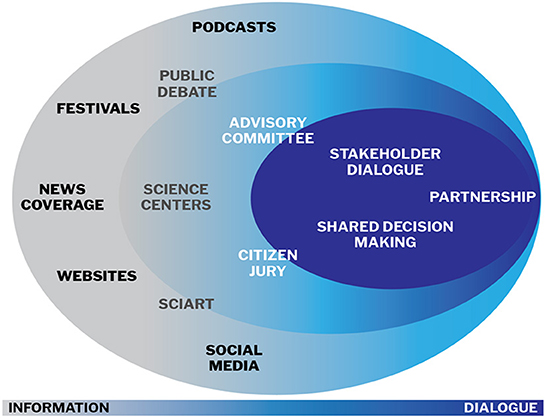
Figure 1. Public opportunities for science engagement. Represented are a range of activities through which public audiences may participate in science, from largely information-gathering such as personal exploration on websites (represented on the left in gray) to mutually-informing dialogue that can even lead to collaboration (moving toward the right in dark blue). These activities are shaped by multiple dimensions of interactions between experts and public audiences—the goal of the interaction; the specific topic or focus; the attitudes, behaviors, and expectations of publics. These factors combine to create a spectrum of activities that frame the role of public audiences interacting with science as well as its societal impacts.
Neuroethics engagement, as we conceive it, is grounded on an understanding of public engagement as a robust dialogue characterized by mutual learning “allow[ing] people with varied backgrounds and scientific expertise to articulate and contribute their perspectives, ideas, knowledge, and values in response to scientific questions or science-related controversies” (McCallie et al., 2009). The activities represented in the darker blue areas of Figure 1 also reflect a trend of advocating for the democratization of science with shared decision-making—parallel to Arnstein's Ladder of Citizen Participation, which conceptualizes how structural processes enabling citizen control are necessary to elevate citizen agency in political decision making (Arnstein, 1969).
Merely making changes in format or increasing the diversity of audiences reached (i.e., multiple publics) are not by themselves sufficient for the deeper, richer dialogue necessary for grappling with fundamental issues of neuroethics and their impact on society. Embedding ethical questions (Medvecky and Leach, 2017) of risks, benefits, implications for autonomy, and access into public engagement and research can support potentially more impactful outcomes including the co-creation of more robust engineering solutions and community trust building, and lead to incorporation of public views in societal deliberations related to policy and emerging advances in neuroscience.
Some current work in ethics already reflects these best practices, such as collecting empirical data about relevant stakeholders, multiple-perspective taking, consensus workshops, and combining foresight and anticipatory ethics with conceptual analysis. Since its inception in 2013, the Human Brain Project through its partnership with the Danish Board of Technology Foundation (DBT), has developed a dialogical approach to public engagement (Anonymous, n.db.), systematically undertaking engagement activities with diverse publics. Complementarily, public engagement activities such as those described below can enhance the reach of neuroethics inquiry. These innovations in public engagement applied at scale have the potential to empower a larger and more diverse population of public stakeholders in neuroscience research and neurotechnology development.
Two of the authors of this paper (JD, DP) conducted an informal landscape study to examine public engagement projects with neuroethics-related topics (Das and Porcello, 2019). The projects surveyed involved different audiences, venues, and formats, but could be characterized as falling in one of five categories: (1) Structured assessment of public opinions and attitudes; (2) Interactive exhibits, public programs, and other informal STEM learning experiences; (3) Inspirational media through partnerships with artists; (4) Expert discussions for public audiences; and (5) Partnerships for clinical applications. Aligned with established strategies for successful public engagement (Bell et al., 2018), many of these projects generally increased relevance for ongoing research and innovation, attempted to reach a broad representation sample of public audiences, and incorporated evaluation (Bell et al., 2018). Together, the initiatives sampled suggested how intentional design of dialogue inspired by neuroethics can yield meaningful impact at different levels ranging from individual to societal, as illustrated by the examples in Box 1.
Box 1. Examples of outcomes of public engagement activities with neuroethics-related topics.
Example 1: Stigma and Mental Health
The vocabulary and historical context of science can be at odds with public perceptions and values, with consequential outcomes. For example, in Japan, prior to 2002, schizophrenia had been named with a term reflecting an outdated understanding of the disease that was associated with inhumane treatments, discriminatory legislation, and severe stigma. Envisioning how a change in terminology could lead to changes in cultural inclusion, the Japanese Society of Psychology and Neurology and an advocacy group, the National Federation of Families with Mentally Ill in Japan, developed an intentional strategy to engage stakeholders, scientists, and public audiences that resulted in a formal name change. The new term, better aligned with new scientific understanding and shedding earlier pejorative connotations, has led to improvements in professional and public perceptions and new approaches to diagnosis and care (Aoki et al., 2016). However, a study regarding the long term effect of the name change has shown that there is still a need for ongoing public engagement to reduce stigma (Koike et al., 2018), and continued communication with multiple stakeholders will be necessary (Sanderson, 2021).
Example 2: Picturing Parkinson's
Many factors including fear, prejudice, and dehumanization—among both scientists and public audiences—hinder the process of understanding how a neurological disease such as Parkinson's disease impacts patients' lives (Antoniades et al., 2022). Added to this, patients with Parkinson's disease often struggle with communicating their own experience, due to both physical, social, and psychological barriers. In the face of these challenges, patients' perspectives are still fundamental to advancing ethical discussions about new neurotechnology treatments including Deep Brain Stimulation. Picturing Parkinson's is a program at the University of Oxford (UK) where artists work directly with patients to create an externalization of what they are feeling. Program leaders work with participating artists to support openness and humility while creating a supportive space for patients to tell their stories. From these honest conversations, one artist created a delicate model of a person paired with a fist inside to echo feelings of restriction brought on by Parkinson's, while another chose to depict Deep Brain Stimulation as a dove within a brain. The sometimes-evocative creative works spark opportunities for reflection and dialogue between clinicians, scientists, students, patients and their families, during a public forum presenting patient stories.
Developing a practice of neuroethics engagement
Neuroethics scholarship can be anticipatory or reactive, but it ultimately sheds light on how neuroscience knowledge or tools are perceived by the members of society who can further integrate or implement the relevant findings into their personal or professional lives. Neuroethics engagement is driven by the recognition that different stakeholders must participate in the identification and exploration of the ethical and societal issues raised by neuroscience at a global scale. It extends this premise by motivating researchers to strive to consistently and rigorously integrate and respond to diverse public views when making decisions about the directions of neuroscience research, and when addressing the ethical issues neuroscience raises. This is a challenging task, but neuroethics engagement presents an opportunity for publics and research communities to engage in reflective practice together to shed light on respective commitments and assumptions in neuroscience while recognizing where they might converge or diverge.
Achieving the goals of neuroethics engagement entails recruiting the tools of neuroethics to help create both meaningful and effective engagement experiences. Neuroethics scholarship often involves exploration of multiple perspectives from the clinical to the political (Jotterand and Ienca, 2017; Dubljević et al., 2021), employing diverse systematic methodological approaches—from the empirical to the conceptual (Amadio et al., 2018). The conceptual and philosophical resources of neuroethics provide the basis for conceptual clarity regarding what are the relevant topics and for generating timely questions (Amadio et al., 2018) that are responsive to emerging developments in neuroscience and facilitating opportunities to drive reflection and engagement with key stakeholder groups on these questions. The empirical methods used in neuroethics can generate data-driven insights that represent participants' assumptions, attitudes, and perspectives. Conceptual and empirical approaches are complementary and, when used in concert, they strengthen neuroethical inquiry.
The push for a richer conception of public engagement as a democratic tool to promote “dialogue, exchange of viewpoints... where the motivation is one of learning about the experiences and perspectives of others” (Bitsch et al., 2021), and impact science policy (Stilgoe et al., 2014) suggests that public engagement with science is a natural partner for neuroethics. Neuroethicists have been calling for greater representation of diverse voices in neuroethics discourse (Anonymous, 2020a). Public engagement can answer this call, with goals and evidence-based strategies to promote mutual learning shared among scientists, ethicists, and with diverse publics. In turn, the engagement of a diverse set of public stakeholders requires a stronger interdisciplinary approach for neuroethics–one with more consistent intentionality in the consideration and selection of scholarly approaches across topics and methodologies (Racine et al., 2005). A partnership between the approaches that define neuroethics and public engagement presents a unique opportunity for developing robust best practices associated with neuroethics engagement (McCallie et al., 2009; PytlikZillig and Tomkins, 2011; Saunders, 2018; UCL Public Engagement Unit, 2022).
Attributes that support neuroethics engagement
The last few years have seen calls for more specific guidance regarding which models of engagement lead to the best outcomes in different contexts (PytlikZillig and Tomkins, 2011) and also the articulation of guiding principles and recommendations to enhance public engagement with science (Selin et al., 2016; Saunders, 2018). We believe that the successful operationalization of public engagement guidelines involves the cultivation of various personal attributes of both individuals and organizations who initiate and sustain neuroethics engagement (Figure 2).
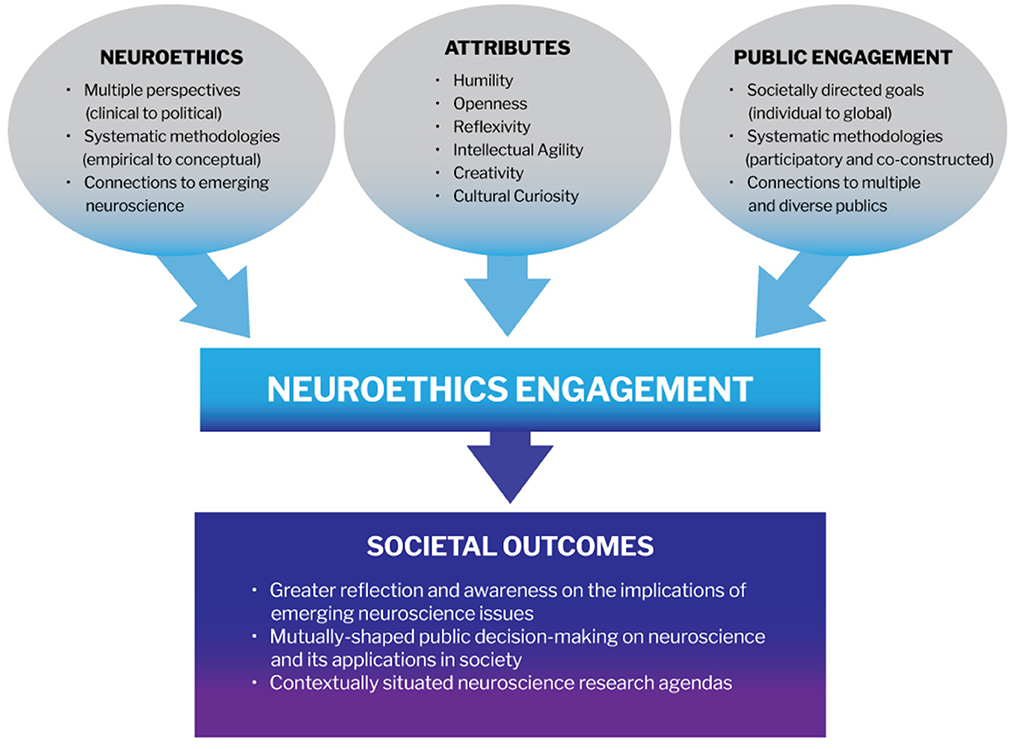
Figure 2. Neuroethics engagement inputs and outputs. Integration of neuroethics methodologies, public engagement practices and cultivation of personal attributes are critical components of neuroethics engagement. Effective neuroethics engagement results in positive societal outcomes.
In a recent paper, Goering and Klein describe particular attributes that they consider key in enhancing collaborations between embedded neuroethicists and scientists (Goering and Klein, 2020). They identify flexibility, persistence, creativity, reflexivity, vigilance, and openness to learning/humility as key attributes. We believe the presence and cultivation of these attributes amongst all participants support successful neuroethics engagement practices. We have adapted Goering and Klein's list for the wider participant group relevant to neuroethics engagement below, and hope to continue to articulate and refine the suite of attributes as neuroethics engagement becomes a mainstay in neuroscience:
1. Humility: Initiating and pursuing neuroethics engagement requires humility both epistemically and morally. On the one hand, it is an epistemic consideration that recognizes the limits and promises of science and technology and their outcomes (Jasanoff, 2007). On the other hand, it is a moral consideration that recognizes the value of other sources of generated knowledge and their contribution to issues in science and society.
2. Openness: Openness in neuroethics engagement creates a context for transparent sharing of perspectives as well as curiosity that can facilitate generative and authentic exchange of ideas. Openness invites the voices of other groups (i.e., disciplinary, social, cultural) to participate in neuroethics engagement activities and learn from them.
3. Reflexivity: Science and society are value-laden. These values can dictate the commitments, assumptions, and consequences of research in both neuroscience and neuroethics (Salles et al., 2019). Reflexivity allows a self-exploration of biases (Matshabane, 2021) and presents an opportunity for publics to engage in reflective practice together in a way that sheds light on respective ideological commitments and assumptions while recognizing where they converge and diverge.
4. Intellectual Agility: Neuroethics engagement, with a commitment to actionable outcomes, requires real-time intellectual agility that allows agents to (a) adapt to new goals or constraints of the engagement experience, (b) respond to different perspectives, and (c) cultivate willingness to iterate, learn, and reimagine one's stance and values.
5. Creativity: Thinking creatively is at the foundation of scientific research and can embolden interdisciplinary teams exploring ethical implications of current and future innovations (Goering and Klein, 2020). Importantly, creativity is not necessarily inherent, but instead a skill that can be practiced and developed throughout life (Fasko, 2001). Fostering creativity in participants through moral imagination (a blend of creativity and ethical thinking) is a type of creative cultivation which can enhance empathy, perspective-taking and even facilitate quick ethical decision-making when needed (Nussbaum, 1990; Buchholz and Rosenthal, 2005; Bierly et al., 2009; Boyd, 2019).
6. Cultural Curiosity: Proactive exploration of culture understood broadly e.g., in the disciplinary and geographical sense not only of one's own culture and others. A key consideration for neuroethics is how conceptions of the relationship between the brain and mind, cognitive experience, memory, identity, autonomy, and agency and how they impact personal and societal ethical evaluations on the value conflicts that might arise with emerging neurotechnology (Amadio et al., 2018).
Challenges and opportunities for developing neuroethics engagement
Proceeding in the direction of neuroethics engagement also necessitates being mindful of the long-standing challenges faced by the broader enterprise of public engagement with science. Multidisciplinary partnerships to participate in public engagement are not always incentivized in academic culture. Whether due to a misalignment of institutional values (Rose et al., 2020), negative perceptions of lack of real impacts (or concerns that public engagement can impede scientific research), or lack of communication skills among scientists, public engagement efforts (C. National Research, 2014) and their associated practitioners—are rarely seen as equal partners with research in the scientific enterprise (C. National Research, 2014; Rose et al., 2020). As a result, these efforts can suffer from a lack of time and resources. Our landscaping interviews revealed examples of multidisciplinary teams enthusiastic about the idea of collaboration, but without the funding or the right connections to develop and sustain such partnerships (Das and Porcello, 2019). An additional challenge is that public engagement practice and research has largely been dominated by geographically and ideologically Western practices. Societal values influence both perceptions of science and norms of engagement, and scientists who are enabled to recognize and learn from diverse perspectives and traditions have the potential to advance more societally beneficial science (Canfield and Menezes, 2020).
As neuroscience advances, we face multiple frontiers ranging from unprecedented models for research to individual rights in the face of revolutionary neurotechnologies, each with their own specific ethical questions and potential impacts. Below we share a table of timely and relevant neuroscience topics that would benefit from neuroethics engagement, as proposed by an international cohort of public engagement specialists, neuroethicists, and neuroscientists (Delegates, 2020). Note that engagement goals and strategy for each topic will be shaped by the unique nature of the neuroethics challenges they raise. The precise determination of engagement activities will require a concerted multidisciplinary effort that builds on the attributes required for neuroethics engagement and intentionality for setting goals and desired outcomes.
Table 1 outlines several contemporary issues in neuroscience that have spurred significant debate. Presented alongside are the specific ethical issues and the impetus for conducting neuroethics engagement. For example, addressing ethical challenges of neuroprivacy might require individual participants to reflect on their current online footprint and engage in exercises that promote foresight and the exercise of moral imagination. Alternatively, a multi-directional dialogue on human brain banking may be better served by exercises that promote valuing personal decisions and considering broader cultural conceptions of mind, death, and familial obligation. Even though creating engagement activities for topics such as brain death, consciousness, or identity might prove extremely difficult, a reasonable beginning could include smaller, more intimate events with opportunities for dialogue to build relationships or for approaching a topic more tangentially to ease into dialogue. Some topics might present issues in different time scales, from the near to intermediate and far terms. Conversations should carefully be designed and stewarded to ensure open dialogue while mitigated for hyped science and hyped ethical concerns.
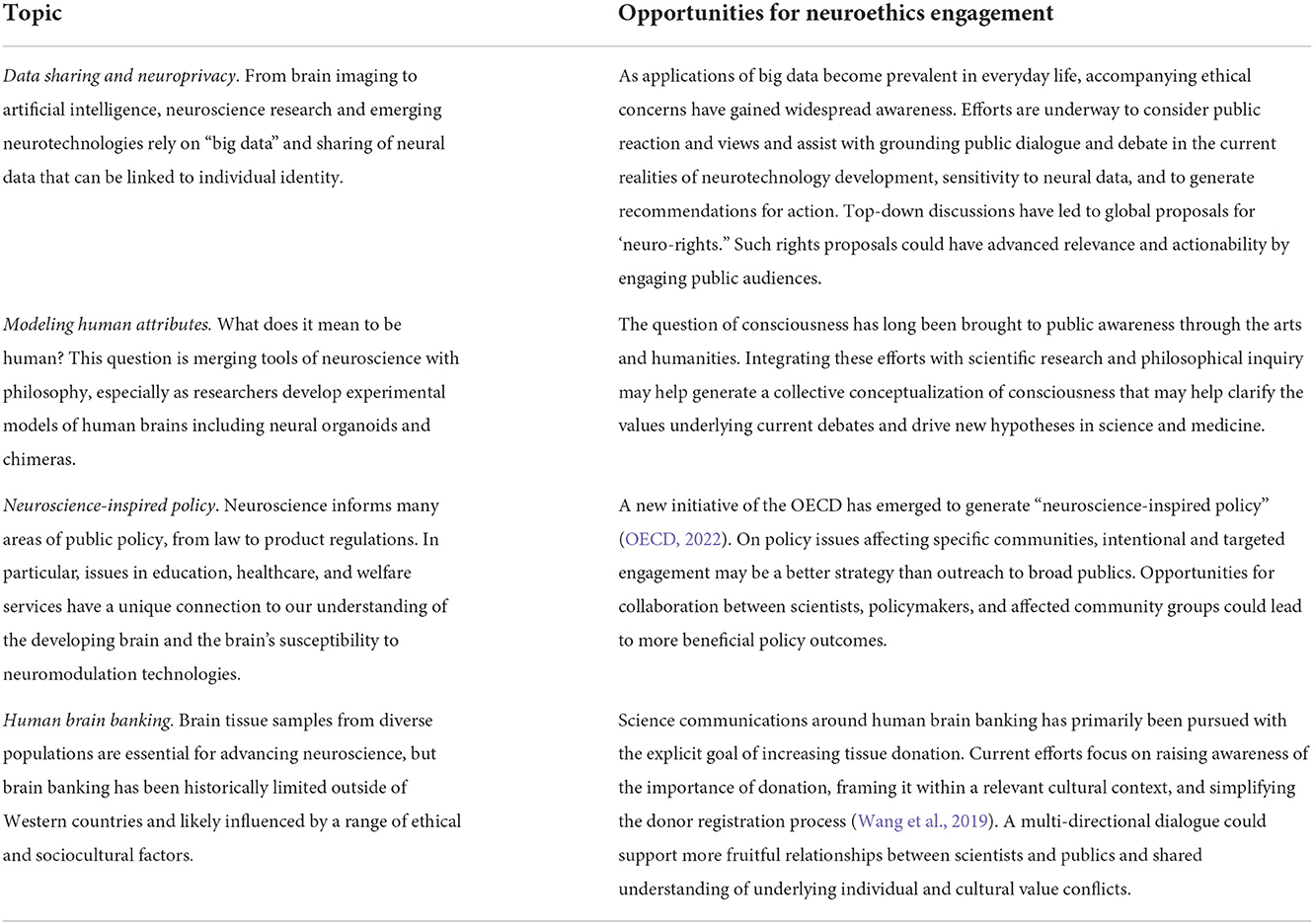
Table 1. Topical neuroscience issues and opportunities for neuroethics engagement.
Other lines of research within neuroscience would benefit from neuroethics engagement. To illustrate, we can focus on cutting edge research on brain modeling and digital twins (DT) of the brain. In the European Human Brain Project computational brain models are developed for further understanding the brain and for applications in the clinic where they may be used for personalizing interventions and treatments for brain disorders. Importantly, computational models are considered to be instrumental to the development of digital twins of the brain, i.e., dynamic simulations powered by a novel feedback loop between the simulation and the real brain (Amunts et al., 2022). Beyond their use in basic brain research and neuro-inspired technologies, a fundamental aim of creating DTs of the human brain is clinical: by predicting possible progressions of disease it suggests different treatment options, thus contributing to progress in personalized and precision medicine for brain diseases by improving both diagnostics and therapy.
Although brain modeling and digital twin technology promise several theoretical and clinical benefits, challenges emerge at the practical and conceptual levels, for example, regarding access, consent, reliability (Braun, 2021; Mittelstadt, 2021; Nyholm, 2021); the conceptualization of brain models and digital twins (i.e., whether it makes sense to describe a model of a brain as a “twin”) and, insofar as computational models and DTs are expected to perform diagnostics and optimizations, how DTs can represent patients (Evers and Salles, 2021). The needed neuroethical reflection on those issues should not need to be limited to neuroethicists and scientists: it can be enriched when informed by meaningful bidirectional dialogue with diverse stakeholders, industry, policy makers, patients, citizens to ensure diverse inputs.
In addition, recent interest (by academic stakeholders and other disciplinary specialists) in the regulation of emerging neurotechnologies and specifically the notion of “neurorights” provides another unique opportunity for developing inclusive neuroethics engagement experiences (Ienca, 2021). Thus far, discussions on neurorights have tended to revolve around interpreting neuroethical provisions in terms of rights and obligations including both moral rights and legal rights in the sense of international human rights law (Ienca and Andorno, 2017; Yuste et al., 2017; Lavazza, 2018; Sommaggio and Mazzocca, 2020). A growing number of countries are exploring novel neurorights governance (Anonymous, 2020b,c, 2021) which has generated a lively discussion largely amongst academic scholars and policymakers. However, issues such as what neurorights are; the possibility and implications of “rights inflation”; and how to implement new rights in a globally pluralistic and democratic deliberative manner remain open. A fruitful discussion on neurotechnologies and on the tools that could be used to regulate them calls for neuroethics engagement, that is, for opening spaces for diverse communities to engage in joint identification, reflection, and action (Rommelfanger et al., 2022).
Conclusion
Building on research from numerous fields and experiences of the past, engagement between neuroscience, neuroethics, and publics offers a critical lens for anticipating and interrogating the unique societal implications of neuroscience discovery and dissemination, and it can help guide regulation so that neuroscience products promote societal well-being. Engagement offers a bridge not only for neuroscientists and neuroethicists, but also for neuroethics and the public. It is possible that more widespread use of neuroethics engagement will reveal yet unknown or overlooked ethical conflicts in neuroscience that may take priority over the ones listed here.
We offer this paper as part of a continued and expanded dialogue on neuroethics engagement. The concept we propose will require the input of stakeholders beyond neuroethics, neuroscience, and public engagement in science to build practices that are inclusive and fit for purpose. Effective neuroethics engagement should be locally and temporally informed, lead to a culturally situated understanding of science and diplomacy, aim to understand the transnational nature of scientific knowledge, and be mindful of the challenges raised by how knowledge of discoveries circulates.
Data availability statement
The data analyzed in this study is subject to the following licenses/restrictions: The data are informal interviews published here: https://www.nisenet.org/brain. Requests to access these datasets should be directed to amRhc0BmaS5lZHU= and cG9yY2VsbG9AZ21haWwuY29t.
Global neuroethics summit delegates
Nargis Akter, Rachel Ankeny, Toshiyuki Araki, Fumie Arie, Tasia Asakawa, Allyson J. Bennett, Lise Bitsch, Olivia Carter, Jayatri Das, Cynthia Forlini, Cynthia Forlini, Miyako Fukuda, Tamami Fukushi, Saskia Hendriks, Karen Herrera-Ferra, Marcello Ienca, Judy Illes, Sung-Jin Jeong, L. Syd Johnson, Paul-Howard Jones, So Yoon Kim, Joan Leach, Megumi Maruyama, Agnes McMahon, Caroline Montojo, Kentaro Morita, Katsuki Nakamura, Eisuke Nakazawa, Cliodhna O'Connor, Mu-ming Poo, Darrell M. Porcello, Khara Ramos, Linda Richards, Karen S. Rommelfanger, Norihiro Sadato, Arleen Salles, Reiko Shimizu, Brooke Smith, Stepheni Uh, Huimin Wang, Samantha White, Windy Yi Wang, and Jie Yin.
Author contributions
All authors listed have made a substantial, direct, and intellectual contribution to the work and approved it for publication.
Funding
This project was funded by the Kavli Foundation. JD and DP are funded by the Dana Foundation. AS is funded by the EU Human Brain Project funding from the European Union's Horizon 2020 Framework Programme for Research and Innovation under the Specific Grant Agreement No. 945539 (HBP SGA3).
Conflict of interest
The authors declare that the research was conducted in the absence of any commercial or financial relationships that could be construed as a potential conflict of interest.
Publisher's note
All claims expressed in this article are solely those of the authors and do not necessarily represent those of their affiliated organizations, or those of the publisher, the editors and the reviewers. Any product that may be evaluated in this article, or claim that may be made by its manufacturer, is not guaranteed or endorsed by the publisher.
References
Adjekum, A., Ienca, M., and Vayena, E. (2017). What is trust? Ethics and risk governance in precision medicine and predictive analytics. OMICS 21, 704–710. doi: 10.1089/omi.2017.0156
Amadio, J., Bi, G. Q., Boshears, P. F., Carter, A., Devor, A., Doya, K., et al. (2018). Neuroethics questions to guide ethical research in the international brain initiatives. Neuron 100, 19–36. doi: 10.1016/j.neuron.2018.09.021
American Association for the Advancement of Science. (2016). Theory of Change for Public Engagement with Science. Washington, DC: American Association for the Advancement of Science.
Amunts, K., Axer, M., Bitsch, L., Bjaalie, J., Brovelli, A., Caspers, S., et al. (2022). The coming decade of digital brain research - A vision for neuroscience at the intersection of technology and computing (Version 3.0). Zenodo. doi: 10.5281/zenodo.7319334
Anonymous (2020a). Commitment to Diversity and Justice. Montreal: International Neuroethics Society.
Anonymous (2020b). “Modifica el artículo 19, número 1°, de la Carta Fundamental, para proteger la integridad y la indemnidad mental con relación al avance de las neurotecnologías,” in Boletín 13827-19, ed R. d. C. Senado.
Anonymous (2020c). “Sobre protección de los neuroderechos y la integridad mental, y el desarrollo de la investigación y las neurotecnologías,” in Boletín 13828-19, ed R. d. C. Senado.
Antoniades, C., Pumphrey, J., Su, Z., Brzezicki, M., and Cooley, B. (2022). Picturing Parkinson's. Oxford: Nuffield Department of Clinical Neurosciences. Available online at: https://www.ucl.ac.uk/culture/sites/culture/files/guidingprinciplesforpublicengagement.pdf (accessed November 18, 2022).
Aoki, A., Aoki, Y., Goulden, R., Kasai, K., Thornicroft, G., and Henderson, C. (2016). Change in newspaper coverage of schizophrenia in Japan over 20-year period. Schizophr Res. 175, 193–197. doi: 10.1016/j.schres.2016.04.026
Bell, L., Lowenthal, C., Sittenfeld, D., Todd, K., Pfeifle, S., and Kollman, E. K. (2018). Public Engagement with Science: A Guide to Creating Conversations Among Publics and Scientists for Mutual Learning and Societal Decision-Making. Boston, MA: Museum of Science.
Bierly, P. E., Kolodinsky, R. W., and Charette, B. J. (2009). Understanding the complex relationship between creativity and ethical ideologies. J. Bus. Ethics 86, 101–112. doi: 10.1007/s10551-008-9837-6
Bitsch, L., Rekve, K., and Neuhaus, S. V. (2021). The Landscape of Science, Ethics and Public Engagement and its Potential for the Future. Los Angeles: Kavli Foundation
Boyd, E. R. (2019). How creativity can help us cultivate moral imagination. San Francisco: The Conversation.
Braun, M. (2021). Represent me: please! Towrads an ethics of digital twins in medicine. J. Med. Ethics 47, 394–400. doi: 10.1136/medethics-2020-106134
Buchholz, R. A., and Rosenthal, S. B. (2005). The spirit of entrepreneurship and the qualities of moral decision making: toward a unifying framework. J. Bus. Ethics 60, 307–315. doi: 10.1007/s10551-005-0137-0
Canfield, K., and Menezes, S. (2020). The State of Inclusive Science Communication: A Landscape Study. Kingston, RI: University of RhodeIsland.
C. National Research (2014). Sustainable Infrastructures for Life Science Communication: Workshop Summary, eds B. Elizabeth Stallman, Y. Laurence, and S. Keegan (Washington, DC: The National AcademiesPress).
Das, J., Kollmann, E. K., Porcello, D., Ostman, R., and Bell, L. (2018). Public Engagement with Neuroscience and Society: Conference Report and Vision for a National Informal Neuroscience Education Initiative (Tempe: NISENET), 28.
Das, J., and Porcello, D. (2019). A global landscape of neuroscience public engagement efforts and the potential nexus of neuroethics. Philadelphia Natl. Inform. STEM Educ. Netw. 44, 1–41.
Davies, R., Ives, J., and Dunn, M. (2015). A systematic review of empirical bioethics methodologies. BMC Med. Ethics 16, 15. doi: 10.1186/s12910-015-0010-3
Delegates, G. (2020). Neuroethics as a Science Engagement Strategy for Excellence in Global Neuroscience.
Dubljević, V., Trettenbach, K., and Ranisch, R. (2021). The socio-political roles of neuroethics and the case of Klotho. AJOB Neurosci. 13, 10–22. doi: 10.1080/21507740.2021.1896597
Evers, K., and Salles, A. (2021). Epistemic Challenges of Digital Twins & Virtual Brains : Perspectives from Fundamental Neuroethics. SCIO: Revista de Filosofía. p. 21.
Evers, K., Salles, A., and Farisco, M. (2017). “Theoretical framingfor neuroethics: the need for a conceptual approach,” in Debates about Neuroethics, eds E. Racine, and J. Aspler (Cham: Springer), 89–107. doi: 10.1007/978-3-319-54651-3_7
Fasko, D. (2001). Education and creativity. Creat. Res. J. 13, 317–327. doi: 10.1207/S15326934CRJ1334_09
Goering, S., and Klein, E. (2020). “Embedding ethics in neural engineering: an integrated transdisciplinary collaboration” in A Guide to Field Philosophy: Case Studies and Practical Strategies, eds E. Brister, and R. Frodeman (New York: Routledge), 17–34. doi: 10.4324/9781351169080-2
Ienca, M., and Andorno, R. (2017). Towards new human rights in the age of neuroscience and neurotechnology. Life Sci. Soc. Policy 13, 5. doi: 10.1186/s40504-017-0050-1
Illes, J. (2007). Empirical neuroethics: Can brain imaging visualize human thought? Why is neuroethics interested in such a possibility? EMBO Rep. 8(Suppl 1), S57–S60. doi: 10.1038/sj.embor.7401007
Illes, J., Moser, M. A., McCormick, J. B., Racine, E., Blakeslee, S., Caplan, A., et al. (2011). Neurotalk: improving the communication of neuroscience research. Nat Rev Neurosci. 11, 61–69. doi: 10.1038/nrn2773
Irwin, A., and Wynne, B. (1996). Misunderstanding Science? The Public Reconstruction of Science and Technology. Cambridge: Cambridge University Press. doi: 10.1017/CBO9780511563737
Ives, J., Dunn, M., Molewijk, B., Schildmann, J., Bærøe, K., Frith, L., et al. (2018). Standards of practice in empirical bioethics research: towards a consensus. BMC Med. Ethics 19, 68. doi: 10.1186/s12910-018-0304-3
Jotterand, F., and Ienca, M. (2017). “The biopolitics of neuroethics” in Debates About Neuroethics: Perspectives on Its Development, Focus, and Future, eds E. Racine, and J. Aspler (Cham: Springer International Publishing), 247–261. doi: 10.1007/978-3-319-54651-3_17
Kellmeyer, P., Chandler, J., Cabrera, L., Carter, A., Kreitmair, K., Weiss, A., et al. (2019). For the emerging issues task force, international neuroethics society. Neuroethics 10, 104–110. doi: 10.1080/21507740.2019.1632958
Koike, S., Yamaguchi, S., Ojio, Y., Ohta, K., Shimada, T., Watanabe, K., et al. (2018). A randomised controlled trial of repeated filmed social contact on reducing mental illness-related stigma in young adults. Epidemiol. Psychiatr. Sci. 27, 199–208. doi: 10.1017/S2045796016001050
Lavazza, A. (2018). Freedom of thought and mental integrity: the moral requirements for any neural prosthesis. Front. Neurosci. 12, 82. doi: 10.3389/fnins.2018.00082
Matshabane, O. P. (2021). Promoting diversity and inclusion in neuroscience and neuroethics. EBioMedicine 67, 103359. doi: 10.1016/j.ebiom.2021.103359
McCallie, E., Bell, L., Lohwater, T., Falk, J. H., Lehr, J. L., Lewenstein, B. V., et al. (2009). “Many experts, many audiences: public engagement with science and informal science education,” in A CAISE Inquiry Group Report (Washington, DC: Center for the Advancement of Informal Science Education), 83.
Medvecky, F., and Leach, J. (2017). The ethics of science communication. J. Sci. Commun. 16, 1393–1408. doi: 10.22323/2.16040501
Mittelstadt, B. (2021). Near-term ethical challenges of digital twins. J. Med. Ethics 47, 6. doi: 10.1136/medethics-2021-107449
National Academies of Sciences Medicine. (2021). The Emerging Field of Human Neural Organoids, Transplants, and Chimeras: Science, Ethics, and Governance. Washington, DC: The National Academies Press. doi: 10.17226/26078
Nussbaum, M. C. (1990). Love's Knowledge: Essays on Philosophy and Literature. Oxford: Oxford University Press.
Nyholm, S. (2021). should a medical digital twin be viewed as an extension of the patient's body? J. Med. Ethics 47, 401–402. doi: 10.1136/medethics-2021-107448
OECD (2019). Recommendation of the Council on Responsible Innovation in Neurotechnology. Paris: OECD.
PytlikZillig, L. M., and Tomkins, A. J. (2011). Public engagement for informing science and technology policy: what do we know, what do we need to know, and how will we get there? Rev. Policy Res. 28, 197–217. doi: 10.1111/j.1541-1338.2011.00489.x
Racine, E., and Aspler, A. (2017). Debates about Neuroethics: Perspectives on its Development, Focus and Future. Cham: Springer.
Racine, E., Bar-Ilan, O., and Illes, J. (2005). fMRI in the public eye. Nat. Rev. Neurosci. 6, 159–164. doi: 10.1038/nrn1609
Rommelfanger, K., Pustilnik, A., and Salles, A. (2022). Mind the Gap: Lessons Learned from “Neuro-Rights” Efforts. doi: 10.1126/scidip.ade6797
Rose, K. M., Markowitz, E. M., and Brossard, D. (2020). Scientists' incentives and attitudes toward public communication. Proceed. Natl. Acad. Sci. 117, 1274. doi: 10.1073/pnas.1916740117
Roskies, A. (2002). Neuroethics for the new millennium. Neuron 35, 21–23. doi: 10.1016/S0896-6273(02)00763-8
Salles, A., Bjaalie, J. G., Evers, K., Farisco, M., Fothergill, B. T., Guerrero, M., et al. (2019). The human brain project: responsible brain research for the benefit of society. Neuron 101, 380–384. doi: 10.1016/j.neuron.2019.01.005
Sanderson, K. (2021). High-profile autism genetics project paused amid backlash. Nature 598, 17–18. doi: 10.1038/d41586-021-02602-7
Saunders, T. (2018). Seven Principles for Public Engagement in Science and Innovation Policymaking. London: Nesta
Selin, C., Rawlings, K. C., de Ridder-Vignone, K., Sadowski, J., Altamirano Allende, C., Gano, G., et al. (2016). Experiments in engagement: designing public engagement with science and technology for capacity building. Public Understand. Sci. 26, 634–649. doi: 10.1177/0963662515620970
Sommaggio, P., and Mazzocca, M. (2020). “Cognitive liberty and human rights,” in Neuroscience and Law: Complicated Crossings and New Perspectives, eds A. D'Aloia, and M. C. Errigo (Cham: Springer International Publishing), 95–111. doi: 10.1007/978-3-030-38840-9_6
Stilgoe, J., Lock, S. J., and Wilsdon, J. (2014). Why should we promote public engagement with science? Public Understand. Sci. 23, 4–15. doi: 10.1177/0963662513518154
Sturgis, P., and Allum, N. (2004). Science in society: re-evaluating the deficit model of public attitudes. Public Understand. Sci. 13, 55–74. doi: 10.1177/0963662504042690
Sullivan, L. S., and Illes, J. (2017). “Models of engagement in neuroethics programs: past, present, and future,” in Debates About Neuroethics: Perspectives on Its Development, Focus, and Future, eds E. Racine, and J. Aspler (Cham: Springer International Publishing), 165–181. doi: 10.1007/978-3-319-54651-3_12
UCL Public Engagement Unit (2022). Guiding Principles for Public Engagement. London: UCL Public Engagement. Available online at: https://www.ucl.ac.uk/culture/sites/culture/files/guidingprinciplesforpublicengagement.pdf
Wang, Y., Yin, J., Wang, G., Li, P., Bi, G., Li, S., et al. (2019). Responsibility and sustainability in brain science, technology, and neuroethics in China—a culture-oriented perspective. Neuron 101, 375–379. doi: 10.1016/j.neuron.2019.01.023
Keywords: social sciences, neuroscience public engagement, science diplomacy, culture, brain initiatives, ethics, science and society
Citation: Das J, Forlini C, Porcello DM, Rommelfanger KS, Salles A and Global Neuroethics Summit Delegates (2022) Neuroscience is ready for neuroethics engagement. Front. Commun. 7:909964. doi: 10.3389/fcomm.2022.909964
Received: 31 March 2022; Accepted: 14 November 2022;
Published: 21 December 2022.
Edited by:
Monica Thiel, Asian Institute of Management, PhilippinesReviewed by:
Jon Leefmann, University of Erlangen Nuremberg, GermanyCopyright © 2022 Das, Forlini, Porcello, Rommelfanger, Salles and Global Neuroethics Summit Delegates. This is an open-access article distributed under the terms of the Creative Commons Attribution License (CC BY). The use, distribution or reproduction in other forums is permitted, provided the original author(s) and the copyright owner(s) are credited and that the original publication in this journal is cited, in accordance with accepted academic practice. No use, distribution or reproduction is permitted which does not comply with these terms.
*Correspondence: Karen S. Rommelfanger, ZGlyZWN0b3JAaW5zdGl0dXRlb2ZuZXVyb2V0aGljcy5vcmc=