 Mokhtar Elareshi
 Mohammed Habes
 Sana Ali
 Razaz Waheeb Attar4
- 1College of Communication, University of Sharjah, Sharjah, United Arab Emirates
- 2Radio & TV Department, Yarmouk University, Irbid, Jordan
- 3Department of Mass Communication, Allama Iqbal Open University Islamabad, Islamabad, Pakistan
- 4Management Department, College of Business Administration, Princess Nourah Bint Abdulrahman University, Riyadh, Saudi Arabia
The way information disseminated in the early period of COVID-19 led the world to confusion and an unprecedented public health crisis. This paper examines the relationships between public engagement through public service advertisements (PSA) and the effectiveness of health care awareness during early COVID-19. To explore such a relationship and mainly public perceptions, we conducted a very early survey (n = 200) using an online convenience sampling procedure with different age groups in Sahiwal, Pakistan. Data were analyzed using the PLS-SEM software to measure such a relationship. We find that PSA were perceived as a vital platform, which has an impact on public perceptions towards taking precautionary measures during the early pandemic. Importantly, PSA have a strong impact on spreading health awareness in Pakistan. Policymakers and health care professionals should grasp and acknowledge the significance of media content influence to enhance health awareness including the role of PSAs in health care. This comprehension may motivate the adoption of practices and policies in the health sector, contributing to the known ‘new normal’, ensuring their continuity even beyond the COVID-19 era.
1 Introduction
When COVID-19 started, Pakistan had few diagnostic and treatment facilities. The local authorities were sending the samples to international laboratories as they were incapable of testing the suspicious case; meanwhile, they also received helps from other countries (Khalid and Ali, 2020; Rehman et al., 2021). The increase in the number of local cases created severe health care concerns, revealing the vulnerability and incapacity of the local health care system (Din et al., 2020; Qureshi et al., 2020). However, regional authorities worked on multiple occasions to address health challenges. In the early stages of COVID-19, a primary task of the National Institute of Health (NIH) involved formulating guidelines and establishing services to care for individuals identified with symptoms of COVID. The government acknowledged the importance of disseminating accurate / official messages to ensure public awareness of the pandemic through the NIH. The latter used several media platforms (e.g., official media, websites, and social networks) (Figure 1). Most of these platforms were used to run health advertising campaigns and programs (in different languages), including working with health providers, policymakers, journalists, advertisers and doctors to increase Covid-19 health awareness among the public (Khalid and Ali, 2020; Roy et al., 2020), especially information disseminated through public service advertisements (hereafter, PSA).
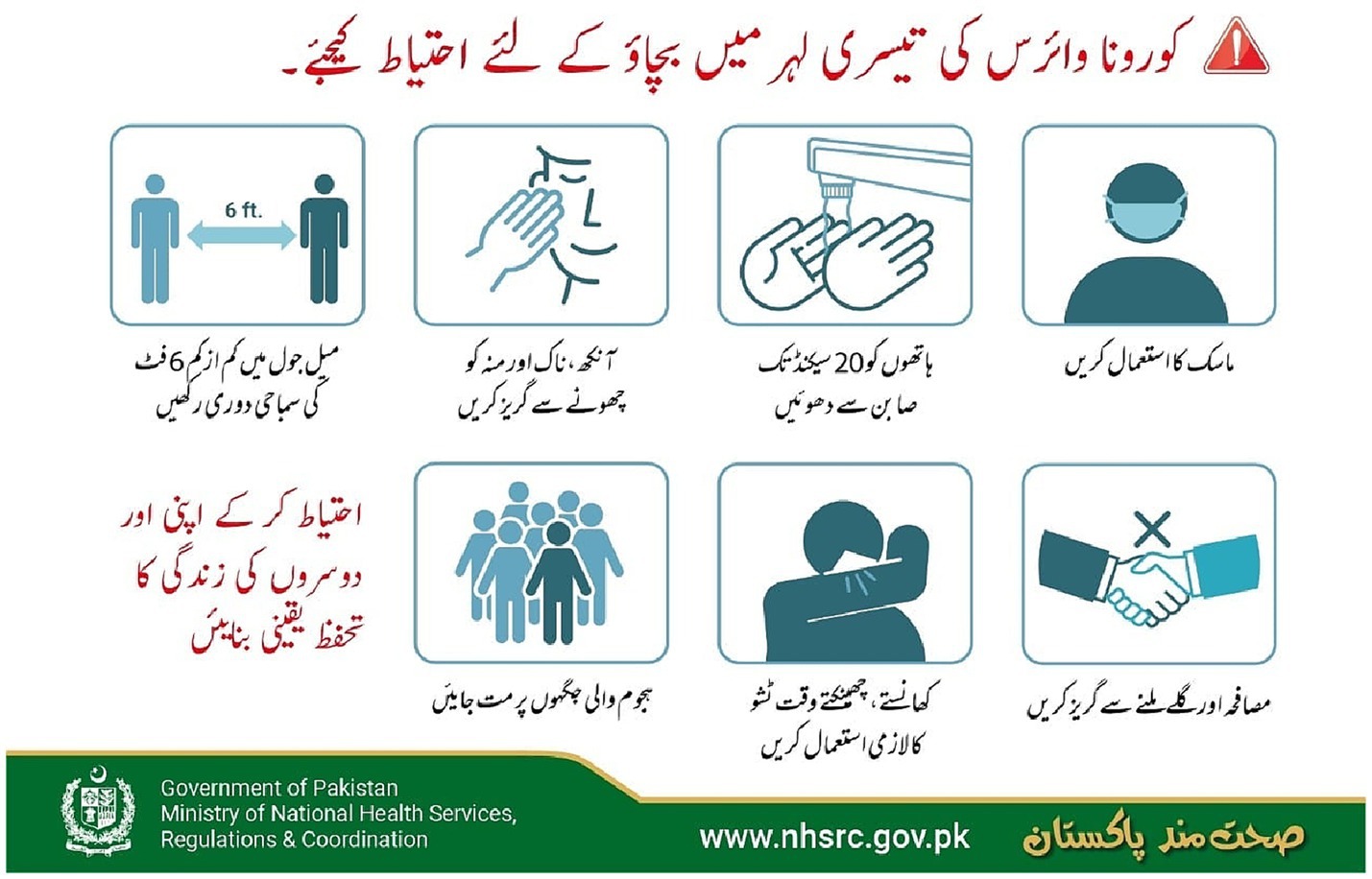
Figure 1. Early awareness of Pakistan COVID-19 (source: NIH Pakistan).
Noticeably, the role of PSA during the previous endemic have remained highly influential globally. In this time, health care policymakers and stakeholders consider PSA as an important platform for social wellbeing and awareness campaigns, see for, (e.g., Gralinski and Menachery, 2020; Van Asbroeck et al., 2021). For example, research has shown the role of PSA in spreading HIV, Swine flu, Malaria, etc. awareness campaigns and information about preventive measures (Datta and Choudhury, 2019; Hamid and Sule, 2021; Kudrati et al., 2021). PSA through both electronic and print media remained highly influential during the HIV campaigns globally (Shepperson, 2000). Such campaigns aimed at bringing social change, which is much recognized through advertising campaigns that raise health care awareness. Studies also confirmed that health-based attitudes can be changed due to PSA campaigns (especially social media) influencing campaigns and exposure (Melki and Kozman, 2021; Lu and Sun, 2022). These advertisements are usually published through the PSA, and as media platforms are highly accessible for large audiences who exposure to these advertisements (Saraf and Balamurugan, 2018).
Despite PSA being part of government efforts to promote health awareness and information (Tait et al., 2022; Habes et al., 2023), empirical and theoretical gaps are still excited when considering their effectiveness during and after COVID-19 in Pakistan. Most officials and wellness-based institutions usually link closely to different media platforms when it comes to raising health awareness campaigns (Naveena, 2015; Subica et al., 2016; Kim and Diwas, 2020). In Pakistan, hospitals usually resort to different media platforms to reach the public for awareness of health care through promoting their services and containing rational argumentation, advocating a healthy lifestyle as a strong necessity (Kumar and Bano, 2017; Rehman et al., 2021). For example, health institutions and centers often use social networks to advertise their services and convey their messages, indicating the fundamental role of new media in our daily practices (Lu and Sun, 2022).
Due to the unexpected circumstances of the COVID-19 period (Khalid and Ali, 2020; Ali et al., 2022), there has been little research on the impact of PSA campaigns in health communication and awareness, particularly within health care in Pakistan. In fact, up to the time of writing this study, little was known about strategic health communication in Pakistan post-COVID-19. Studies have argued about the scale of change needed post-COVID-19 in different organizations and sectors to cope with the new environment called “the new normal” (Widodo et al., 2020; Cancelas-Ouviña, 2021; Nguyen and Tran, 2022). In the health sector, for example, health companies are meant to play a key role in serving their communities by updating them with new information on COVID-19 measures (Zakar et al., 2021), and PSA campaigns can be used to improve the relationships between media advertisements and health care awareness (Reidenberg and Berman, 2022).
Given the above discussion, the role of health information during the public health emergencies can also be understood through the Risk Communication Theory (RCT) (Covello, 1992). However, there is a difference between public engagement through public service advertisements (PSA) and their effectiveness in such a crisis and awareness of health care during early COVID-19. This investigation is vital, as previous research advocates that understanding such a relationship would help both public relations professionals in crafting and disseminating effective PSA campaigns to ensure having a strategic communication when delivering health care messages to targeted audience (Elareshi and Bajnaid, 2019), as well as media advertisements and health care companies promote social and wellness health awareness issues, health literacy (Zakar et al., 2021), especially post-COVID-19. We test the following principle of PSA and their use in dealing with COVID-19 information in Pakistan in terms of:
• The link between PSA campaigns and health care awareness.
• The effectiveness of PSA campaigns on the awareness of COVID-19.
• Whether the COVID-19 campaigns have an impact on the attitudes of the respondents.
The study is supported by these three hypotheses by assessing respondents who reside in Sahiwal City, Pakistan. Such an analysis is important and relevant, as few studies have examined this phenomenon during COVID-19 (Datta et al., 2020). Thus, for both practical and theoretical aspects, this study aims to understand the adoption and change of certain attitudinal behaviors among the public as a result of PSA health care awareness (Reidenberg and Berman, 2022) and digital health literacy (Zakar et al., 2021). It evaluates these attitudes and strategically provides health professionals and policymakers with information to develop positive attitudinal change as Harinie et al. (2017) state. Theoretically, this study contributes to the importance of developing PSA messages to increase awareness and attitudes about health care, especially intentions to change behaviors’ attitudes (Reidenberg and Berman, 2022), in the era of digital communication technologies as Goodwill (2020) indicate.
2 Literature review and theoretical framework
2.1 Rick communication theory
The Communication Theory (RCT), introduced by Covello (1992), support the conceptual model of the current research, the relationships between public engagement through public service advertisements (PSA) and their effectiveness in such health crisis and awareness of health care during early COVID-19 (Human Rights Commission Pakistan, 2020; Almansoori et al., 2021). Although, there is a plethora of literature examining the public engagement with information through PSA, rapidly evolving the importance of effectively communication in uncertainties time such as during COVID-19 that needs more validation and new findings for theoretical background. As known, COVID-19 was described as a novel infectious disease first identified in December 2019 in Wuhan City, China and leading to a pandemic declaration by the WHO in March 2020 (World Health Organization, 2022). As mentioned earlier, the RCT emphasizes on the importance of communication to facilitate informed decision-making, enhance public understanding (in both ways), and promote appropriate behavioral responses. The RCT suggests five principles for any effectively communication in crisis (COVID-19) such as transparency that considers disseminating clear, accurate and timely information to the public during early COVID-19 (Saling et al., 2021; Awan et al., 2022). Trustworthiness, where building trust with the public through honest and open communication, acknowledging unforeseen and addressing concerns (Tong, 2023). Audience understanding by tailoring communication strategies to the needs and literacy levels of diverse audiences to ensure comprehension and relevance (Zakar et al., 2021). Empowerment by enhancing the ability of the public to take appropriate actions to protect themselves such as taking vaccination (Khan et al., 2020), stay home, follow PSA promotion guidance etc. Public engagement through encouraging two-way communication and dialog with stakeholders, health care providers, and policymakers (Gralinski and Menachery, 2020; Van Asbroeck et al., 2021) to address COVID-19 issues and spread health awareness and measures through PSA.
2.2 Public service advertisements / announcements
PSA are defined as nonchargeable announcement to promote program (s), activities or services which are provided by state or local government regarding serving a community interest (Tait et al., 2022). It is a message / communication produced by the media for public benefit without any cost (Goodwill, 2020). However, PSA can be paid or unpaid (Jones, 2012). PSA are commonly used to communicate information on topics or concerns relevant to the public (Datta and Choudhury, 2019), reflecting the social wellbeing in any given community. Historically, it goes back to a few centuries ago, but it was more recognized and played a vital part in wartime, especially WWI and WWII when it became more formalized. After the war, the media continues to offer free space for good causes such as health awareness (e.g., drugs, smoking) and social wellbeing (feeling good, being happy) and environmental issues (e.g., flooding).
These PSA are broadcast on TV, radio, and appears in print media as well. For their ease of use and usefulness, local governments often use the Internet for their PSA (Singh and Singh, 2017; Tait et al., 2022). These advertisements may change public sentiments by increasing awareness of specific matters (e.g., COVID-19) (Azer and Alexander, 2022). The local government (as part of public relations dues, and this implies through persuasive communication on behavior change) is often responsible for sponsoring and running more PSA campaigns. Other organizations such as trade associations, (non-)profit institutions can also lead on informing the public about health issues. Park et al. (2008) evaluated the function of advertisements in enlisting individuals with physical disabilities for the Special Olympics. The study demonstrated that the advertisements predominantly employed rational arguments, emphasizing the effects of participation on the mental and physical well-being of individuals with special needs, encouraging their participation in the international event.
PSA are highly used to reinforce healthy behaviors and the adoption of physical and mental health care lifestyles (Datta and Choudhury, 2019). It also addresses other issues such as basic human rights, empowerment, and others. Jones (2012), examined the influence of PSA on the social well-being of youth / teens regarding organ donation and drug abuse awareness campaigns among college students in Florida, US, and found that the campaigns highly affected the participants. Hence, the individuals expressed a strong inclination to abstain from drugs and to view organ donation as a component of social well-being. In Pakistan, Jin et al. (2021) found that public service announcements that incorporate fear-based messages are considered an effective communication strategy in addressing vaccine hesitancy (Khan et al., 2020). As a result, PSA have the potential to elicit a positive response from the public. This elucidates why most health campaigns use advertisements to convey cognitive and emotional signals, aiming to achieve the desired outcomes, specifically attitudinal changes (Krishen and Bui, 2015; Jin et al., 2021).
H1: PSA campaigns have an impact on health care awareness (HAW).
2.3 PSA in health care awareness campaigns and attitudinal change
From old to new media, health care awareness campaigns use them to promote health issues (for their ease of access and availability to everyone). In addition to traditional media, social networks also support different health promotion campaigns such as smoking awareness, HIV awareness, cancer awareness, etc. (Hamid and Sule, 2021; Kudrati et al., 2021). This is to aid the public interest (Masoni et al., 2011). Even in addition to advertisements, talk shows regarding health care are also trending in mainstream media to raise health care awareness (Naveena, 2015).
To obtain positive constructive outcomes, PSA messages sometimes are built on fear-based framed messages (Krishen and Bui, 2015). Krishen and Bui (2015) further examined the use of fear appeal in US-based health care advertisements. The use of the case study method showed that the ‘consequence message’ greatly helped advertisers capture audience attention, which further convinced them to adopt a healthy lifestyle and attitudinal change towards health care. Therefore, as indicated by Radu et al. (2018) PSA play an important role in creating a communication bridge between advertisers and viewers, especially in health care issues such as awareness of COVID-19. The study assumed the following.
H2: PSA campaigns have an impact on COVID-19 awareness (COA).
In terms of attitudinal change, as mentioned earlier, the health communication literature has examined PSA in health care for some times after WWII, especially to raise awareness or change public attitudes towards a health and social issue. To change attitudes, PSA campaigns have found different ways to convey their messages to spectators with shorter attention spans, video platforms (e.g., YouTube, Facebook), or uses celebrities to garner attention (Ftanou et al., 2021). Others may use it to appeal to interact with the public by portraying risks and issues (e.g., protection against COVID-19) (Damewood, 2022). In this regard, awareness of health care has worked efficiently to spread information regarding various diseases such as HIV/AIDS (Hamid and Sule, 2021), Ebola (Abramowitz et al., 2017; Sell et al., 2020), Black Death, Influenza, Cholera (Riha et al., 2021), etc. These media advertisements remained highly effective for the public engagement (Durkin et al., 2012) and provide an opportunity to change attitudes towards a specific issue and improve ‘help-seeking behavior’ as Ftanou et al. (2021, p. 830) indicate.
Rabar (2009) examined the influence of TV ads for HIV/AIDS campaigns aired between 2005 and 2007 in Kenya and found that the most effective ads (in terms of attitudes change) are those that provide precise and accurate communication. Respondents indicated their positive influence on attitudinal changes. Similarly, Utulu (2011) examined the impact of HIV / AIDS-based ads on the mass media in Nigeria. Participants revealed that exposure to these advertisements has greatly informed them about the threat of AIDS, which further helped them to adopt the measures regarding disease prevention. Relatively, very few studies have examined the impact of PSA in health care during COVID-19 campaigns, especially in Pakistan, and whether PSA campaigns have the capacity to change attitudes and behaviors towards protection against COVID-19 using different media platforms. Concerning awareness of COVID-19, research has scrutinized the efficacy of such awareness efforts, revealing a correlation with various physical and mental health concerns such as loneliness, anxiety, stress and depression (Arafa et al., 2021; Bakioğlu et al., 2021; Bendau et al., 2021; Demirtaş-Madran, 2021). These studies also highlight the impact of PSA in media advertisements, encouraging the adoption of preventive measures and vaccination, as Reinhardt et al. (2022) mention. Regarding COVID-19 awareness, studies examined the effectiveness of COVID-19 awareness, which has caused several physical and mental health problems such as anxiety, depressive, loneliness and stress (Arafa et al., 2021; Bakioğlu et al., 2021; Bendau et al., 2021; Demirtaş-Madran, 2021). These studies also highlight the role of PSA through media ads, leading to the adoption of preventive measures / vaccination (Reinhardt et al., 2022).
During the COVID-19 era, although certain countries demonstrated relative success in curbing infection rates through various media channels, not all COVID-19 campaigns resulted in significant improvements in effective preventive health behaviors (Demirtaş-Madran, 2021). Studies suggest that individuals responded variably-positively or negatively-to lockdown restrictions and social distancing measures, influenced by factors that encompass personal, social, mental, and economic dimensions. Gerhold (2020) found a gender-based correlation, revealing that women exhibited a higher likelihood of expressing concern about the outbreak compared to men. Therefore, there is a need for a more comprehensive understanding of how the changes of public attitude and behavior towards COVID-19-related advertisements influence their overall attitudinal changes. Consequently, PSA play a crucial role in instigating favorable attitudinal transformations among the public regarding COVID-19 campaigns in Pakistan. This study aims to assess the relationship between PSA and health care awareness during early COVID-19 and its correlation with attitudinal changes among the Pakistani population (Figure 2).
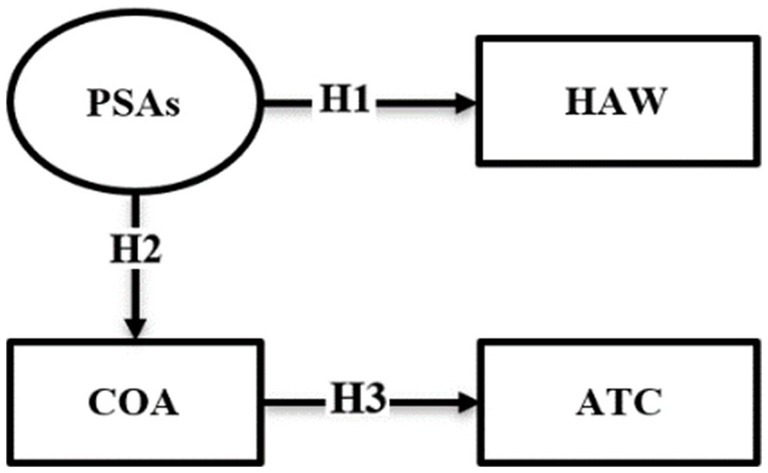
Figure 2. Conceptual framework model proposed.
H3: Awareness of COVID-19 (COA) has influence on attitudinal change (ATC).
3 Methodology
3.1 Study design, population and settings
Following the guidelines of the Pakistani government for the public to reduce face-to-face communication, this study used an online convenience sampling procedure to collect data from the 21st largest populous city in Pakistan, Sahiwal. Due to lockdown restrictions, specific criteria were applied to conduct our data, e.g., participation must be (1) 18 years old and over, (2) well prepared to participate in a timeframe, (3) had seen or understood the PSA campaign (s) in relation to the COVID-19 campaigns. After reviewing early research (see, e.g., Kim and Diwas, 2020), data were gathered through a developed and semi-structured, and distributed through a local researcher. Table 1 summarizes the demographic features of the respondents (Figure 3).
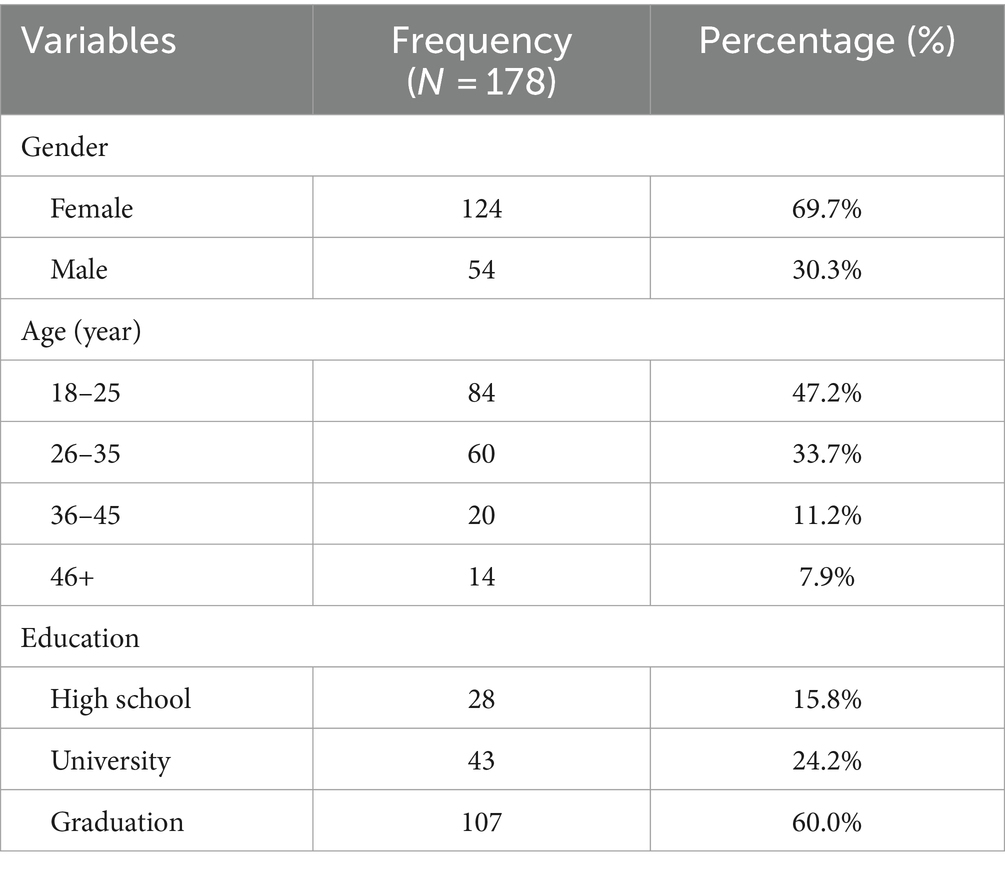
Table 1. Demographic characteristics of the respondents to the online survey.
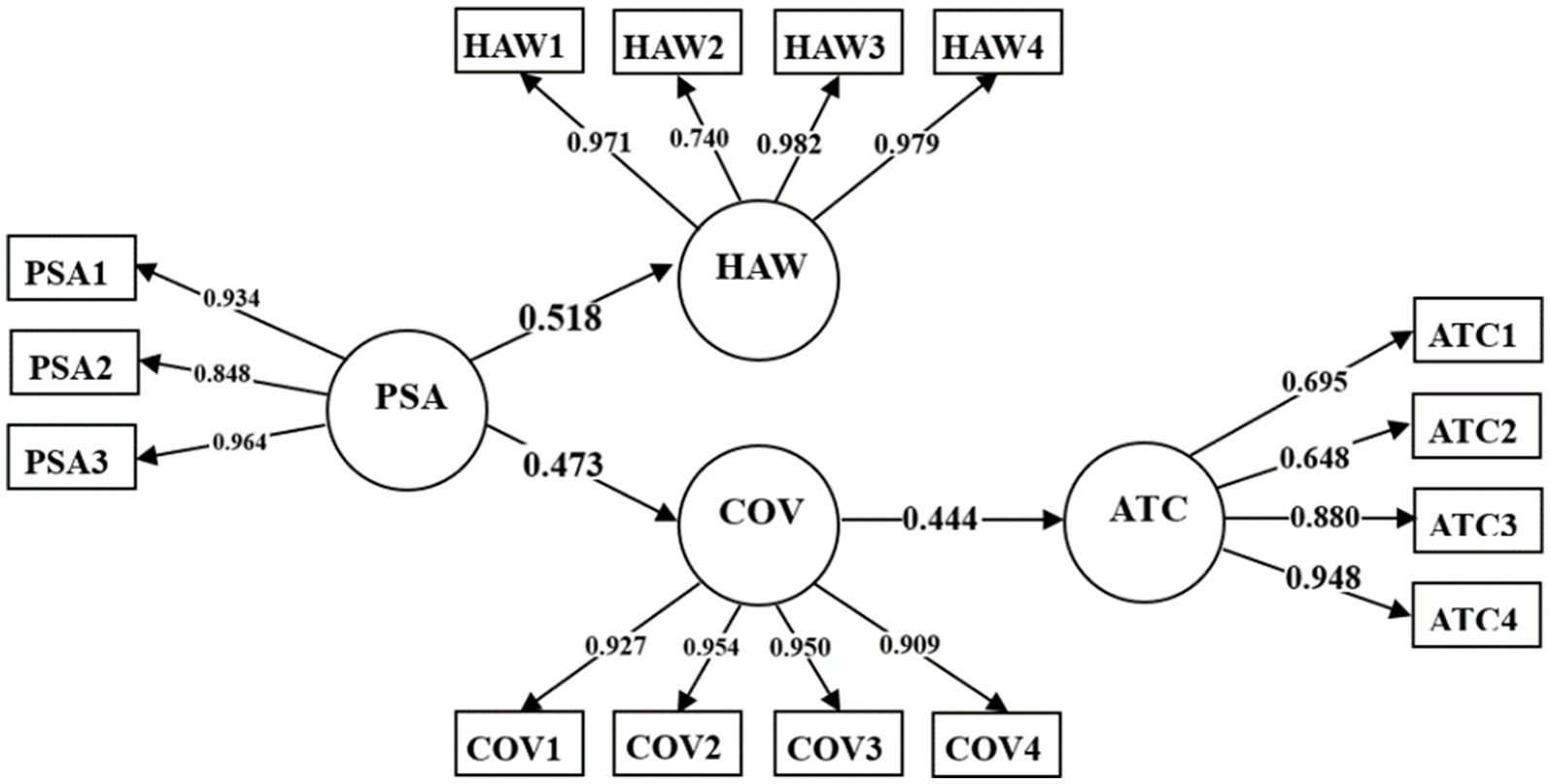
Figure 3. Path analysis results.
Convenience sampling was employed due to its practicality and efficiency in accessing respondents during a challenging period of strict lockdown measures and social distancing protocols. With limited physical access to potential participants, a random number of 200 respondents was initially selected. However, a total of 178 questionnaires were received during the given timeframe by the residents of Sahiwal. This method expedited the data collection process, aligning with the urgency of understanding public engagement and health care awareness during pandemic and health crises.
3.2 Data gathering
Before starting the survey, the study obtained the ethical approval of Allama Iqbal Open University Islamabad (BASAR 12–00-16), and participants received detailed information about the research objectives and procedures. They willingly and voluntarily agreed to participate without any form of coercion and were explicitly informed of their right to withdraw from the study at any point without facing repercussions. Additionally, the importance of confidentiality was emphasized. Note that the generalization of our results is relatively directed to those participated in this research. Participants were invited to complete the survey during March 2021. The study was able to collect a total of 200 responses. The participants were thanked for and appreciated their time to participate in the study. After filtering the responses, 22 responses were excluded for being incompletely filled.
The questionnaire obtained details about the personal demographic attributes of the respondents, study details, and reported COVID-19 awareness and campaigns in Pakistan. A variety of other questions were asked about the awareness of the health care of the respondents and the materials from the PSA, the authors developed 15 scale items, asking the respondents to evaluate such perceptions. Cronbach’s Alpha (α) scores were calculated for all 15 items. For example, PSA were measured with three items (α = 0.800); health care awareness (HAW) was measured with four items (α = 0.780); COVID-19 awareness (COA) was measured with four items (α = 0.732); and attitudinal change (ATC) was measured with four items (α = 0.811). These items were measured on a five-point Likert scale with 1 = “strongly agree” and 5 = “strongly disagree’. Table 2 provides details of the questionnaire items and their sources.
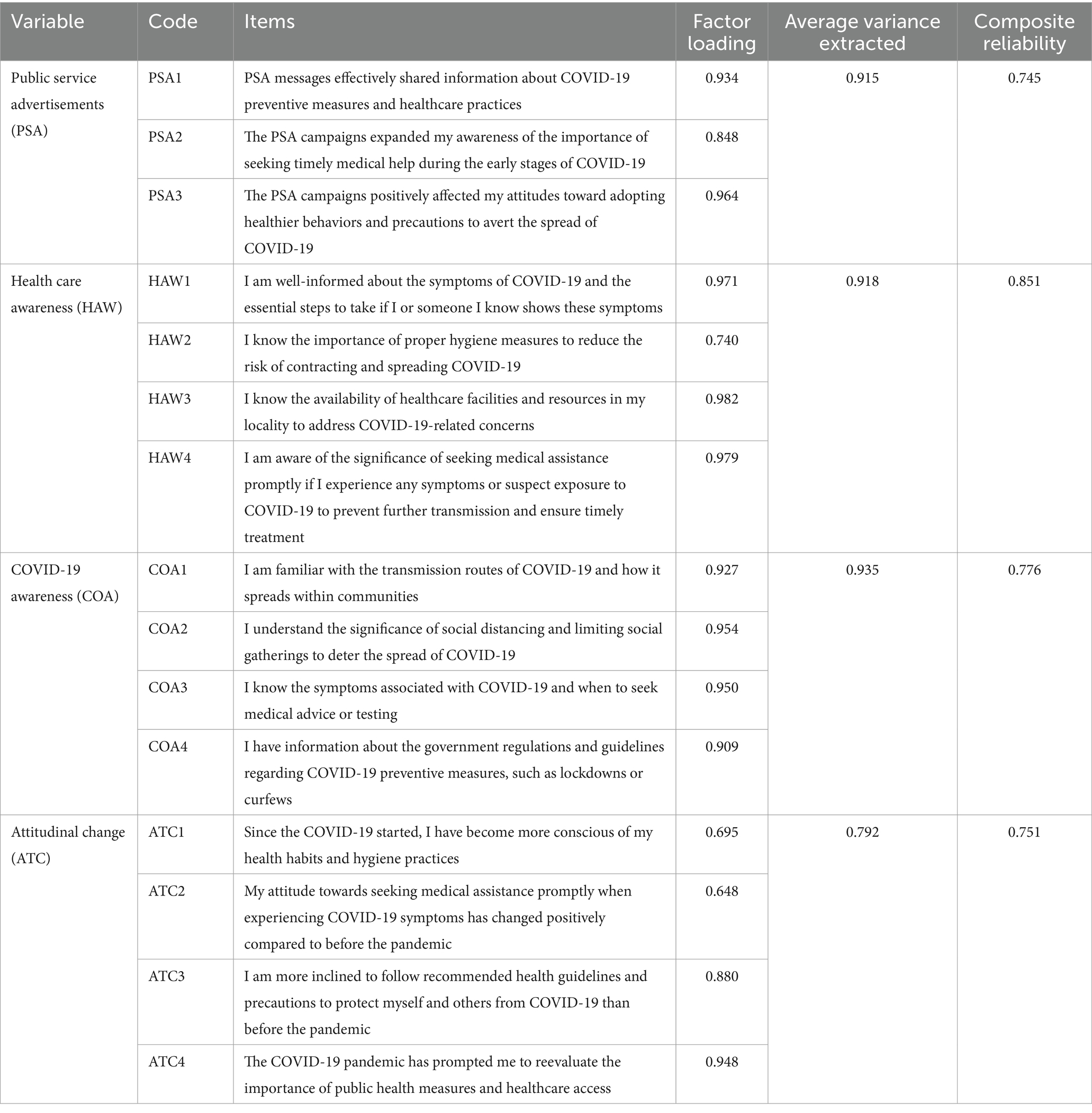
Table 2. Confirmatory factor analysis (convergent validity testing).
Furthermore, a pilot sample (n = 15) was run to improve the language and clarity of expression and to identify any potential problems in the investigation. It helped to adjust and rephrase the items for greater clarity and coherence. Four constructs were used to measure and represent the attitudinal changes of the respondents to better understand the role / relationship between PSA and health care awareness during the COVID-19 outbreak.
4 Results
4.1 Reliability and validity
Reliability and validity are run to understand how well a method measures something. Two tests measure the reliability of the measurement (construct) and the validity (convergent and discriminant) and assess the model measurement using composite reliability, factor loadings, average variance extracted (Table 2). For the reliability assessment, composite reliability was run to test the reliability of the four constructs. Based on the PLS-SEM, the criterion was used to conduct the reliability was a minimum of 0.60%. All constructs on the path analyzes had composite reliability values that exceeded the minimum acceptable measure, indicating an appropriate construct reliability.
For the validity assessment, the convergence validity and discriminant were run using factor loading and average variance extracted, which evaluated how the related components of each construct were significantly correlated. The criterion used to conduct the validity assessment was a minimum of 0.70% in both FL and AVE values. With the threshold values for FL being above 0.70 and the common threshold for the AVE values being above 0.70, the level of convergent validity of the 15-item was acceptable to be used in the study.
Furthermore, the research conducted the Fornell-Larker criterion test to assess the discriminant validity of our research model, as illustrated in Table 3. This test aimed to determine whether the constructs were distinct from each other, essentially evaluating whether the constructs that theoretically should not be closely related exhibited low correlations. Table 3 indicated that the AVE values (highlighted in bold) exceeded the provided correlation values.
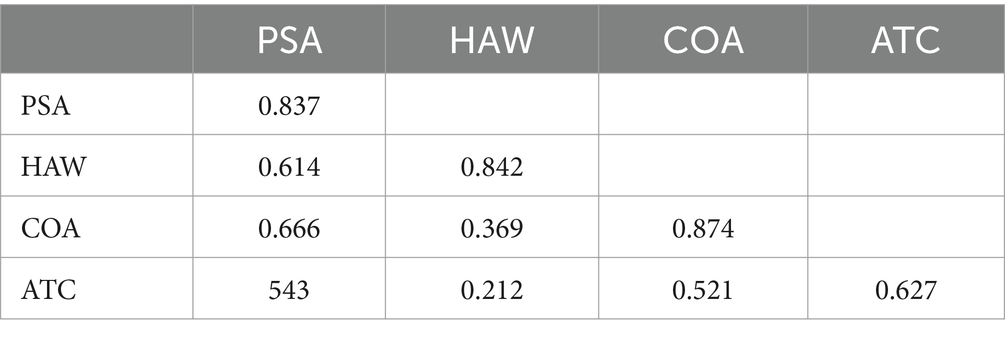
Table 3. Discriminant validity results.
4.2 Coefficient of determination R2
To further validate the research model, the coefficient of determination R2 was run using the structural equation modeling (SEM) (Turney, 2022). The R-squared (R2) is a number between 0 (the lowest possible value) and 1 (the highest possible value) that measures the accuracy with which a statistical model predicts an outcome. Simply, the higher the value (close to 1), the greater the predictive precision of a model (Hair et al., 2019). The values of R2 in this study were above 0.8 (for example PSA = 0.801; HAW = 0.883; ATC = 0.877), indicating that the research model contains strong predictive power.
4.3 Structural model and hypotheses testing
An additional phase was executed using the partial least squares (PLS) method to perform the structural equation modeling (SEM). This was used to examine our research hypotheses through path analysis and regression analysis. This analytical approach facilitates the evaluation of relationships between a single independent variable and three dependent variables. The level of path coefficients of the inner model was tested with a resampling bootstrapping of 1,000 iterations. This analysis required performing t-values, Beta values (β), R2 values, significant direction, and decision, as summarized in Table 3. In general, the data revealed that all three hypotheses were supported (see Figure 3).
For our H1, we predict the relationship between public service advertisements (PSA) and health care awareness (HAW). PSA have a significantly positive impact on HAW, indicating that H1 has been supported (β = 0.518, t = 8.027, p < 0.000, 2-tailed). Similarly, H2 anticipates that PSA have associated with awareness of COVID-19 (COA). The data also showed that PSA have a significantly positive impact on COA (β = 0.473, t = 7.439, p < 0.000, 2-tailed). Accordingly, both the H1 and H2 postulations were supported. Finally, H3 predicts that awareness of COA is associated with attitudinal change. The data revealed a significant impact of COA on ATC. Hence, H3 was supported (β = 0.444, t = 6.422, p < 0.000, 2-tailed).
5 Discussion and conclusion
The onset of the COVID-19 pandemic impacted the contagion rate and transmission patterns, posing a threat to our feelings of security, safety precautions, and practices of social distancing (Alshahrani and Babour, 2021; Topf and Williams, 2021; Karakose et al., 2022). It has changed what inherently human is doing in communicating with others. Simultaneously, both the public and private health care sectors in Pakistan suffered and faced several problems such as lack of adequate services and physical infrastructure, paramedical personnel, etc., especially in urban areas compared to rural areas, highlighting health care as a major social concern in Pakistan (Kumar and Bano, 2017; Rehman et al., 2021).
Given that this study examines the relationships between public engagement through public service advertisements (PSA) and their effectiveness in addressing health care awareness during the earlier COVID-19 in Pakistan. It primarily focused on how viewers perceived PSA to spread health care awareness to address health care challenges during the COVID-19 pandemic. This study, therefore, contributes to our understanding of the role of communication in public health crises. The study was based on three hypotheses that examined the relationship between PSA campaigns and health care awareness (H1); the effectiveness of PSA in COVID-19 awareness campaigns (H2); and whether COVID-19 advertisements have an impact on respondents’ behavioral attitudes (H3). The use of PSA emerged a crucial tool in disseminating health care information and promoting behavioral changes among the public (see Figure 1).
Our analysis provides evidence on the role of PSA in awareness of health care and change in behavior during COVID-19. Our hypotheses statistically were supported the relationship between the use of PSA as a public engagement tool and awareness of health care. Drawing upon the RCT which emphasizes the importance of transparent, timely, and trustworthy communication during crises, our study explores the impact of PSA information on health care awareness and behavioral attitudes in Pakistan. As expected, PSA has played a significant role in raising public awareness of health care issues during COVID-19. It has contributed to public awareness of health care in general in Pakistan, educating their users by sharing transparency of accurate and timely information, with trustworthiness and public engagement (Ejaz et al., 2021; Jin et al., 2021). PSA also helps to raise public awareness through their understanding of the pandemic and empowering the public to take appropriate actions to protect their communities (Khan et al., 2020) through actionable guidance using PSA during COVID-19 (Datta et al., 2020). Scholars, medical practitioners, and policy makers would acknowledge the role of PSA in raising disease awareness and behavioral changes elsewhere; e.g., in China (Puppin, 2020), India (Sharma et al., 2022), Turkey (Bakioğlu et al., 2021; Demirtaş-Madran, 2021), the United Kingdom (Deng et al., 2022), the United States (Taylor et al., 2020), and Saudi Arabia (Barry et al., 2020), South Africa (Shepperson, 2000), and Egypt (Arafa et al., 2021).
Furthermore, our findings fill the literature gap regarding such a role and relationship. It significantly contributes to understanding how PSA are used to promote successful health care campaigns, especially after COVID-19, and the possibility of normalizing the changes that have major implications on different organizations (e.g., health care) (Perreault and Ferrucci, 2020; Widodo et al., 2020; Cancelas-Ouviña, 2021). This study supports the literature on the relation between public engagement and public health care and change in behavior of people in Pakistan COVID-19 (Rehman et al., 2021).
There are significant implications from our results for governmental health bodies and public engagement in Pakistan, e.g., NIH, health care professionals and practitioners. These bodies should consider more PSA in health care awareness campaigns and behavioral health care change to adequately protect people from such virus and diseases (Abuhashesh et al., 2021). This is because some of the information regarding COVID-19 came through the PSA platform. Given the ripped changes in the media landscape and platforms communication in Pakistan, people do change based on information received from these platforms, as the mentioned media can reflect and create reality (Jarynowski et al., 2020). Therefore, people obtain these changes by observing the environmental changes (e.g., PSA campaigns) and adopting them (attitude change). As we want to make use of the ‘desired outcomes’ by resorting to attitudinal changes, our cognition here allows us to evaluate and adopt these attitudes through the observational learning process (Brady, 2017). Continuous observation eventually helps individuals adopt the relevant behavior (e.g., to cope with restrictions during COVID-19 and adopt the new normal environment post-COVID-19). Additionally, people would adapt these behaviors to receive rewards attributed to attitudinal change. The role of PSA in health care communication is the same (Harinie et al., 2017). Today, when media platforms facilitate us with easy and convincing use of these platforms, developing positive attitudinal change is not difficult. Although there can be several internal and external barriers, the modeled behavior is highly adaptable for the audiences (Topf and Williams, 2021).
In summary, optimistically, media content through PSA directly can enable policymakers and health care practitioners to access and engage with the public and keep them updated. Also, PSA can strongly influence the public to adopt measures (e.g., during COVID-19) to save lives. However, major social institutions must accelerate their efforts to cope with the global health care emergency (Saqlain et al., 2020), not only during the pandemic, but also afterward, in which the new normal or change becomes more adaptable. Building on the COVID-19 crisis, our research could help health policymakers identify and adapt interventions that increase health care awareness (Krammer, 2022) including vaccine confidence and public health services communications (Khan et al., 2020).
6 Limitations and future research
Some limitations can be highlighted. First, we used the convenience sampling method; therefore, the findings represented the only population from the Sahiwal city that further questions its generalisability in other cities and even countries. Second, data were collected during the peak time COVID-19, and we believe respondents could be under uncertainly / confused period which could affect their answers. To minimize the effect of this, findings cannot guarantee representativeness of the study population. Therefore, we suggest more studies to re-examine the role of PSA in health care awareness in a large population and longitudinal studies to determine whether the findings are transient or enduring. Third, the study focused only on PSA, yet there are many other programs, materials designed by the NIH for public engagement, health care awareness and information, that further narrow down the scope of this study. Thus, we recommend more studies to individually examine PSA post COVID-19 and attitudinal change using different data collection and methods, such as the qualitative approach.
Data availability statement
The original contributions presented in the study are included in the article/supplementary material, further inquiries can be directed to the corresponding author.
Ethics statement
This study was reviewed and approved by the IRB Allama Iqbal Open University in accordance with the local legislation and institutional requirements. Written informed consent was not required for participation in the study in accordance with the local legislation and institutional requirements. Participants were fully informed about the study and their contributions will only be used for research purposes.
Author contributions
ME: Investigation, Software, Writing – review & editing. MH: Conceptualization, Writing – original draft. SA: Data curation, Investigation, Methodology, Writing – original draft, Writing – review & editing. RW: Conceptualization, Formal analysis, Visualization, Writing – original draft.
Acknowledgments
This work was supported by Princess Nourah bint Abdulrahman University Researchers Supporting Project number (PNURSP2024R 343), Princess Nourah bint Abdulrahman University, Riyadh, Saudi Arabia.
Conflict of interest
The authors declare that the research was conducted in the absence of any commercial or financial relationships that could be construed as a potential conflict of interest.
Publisher’s note
All claims expressed in this article are solely those of the authors and do not necessarily represent those of their affiliated organizations, or those of the publisher, the editors and the reviewers. Any product that may be evaluated in this article, or claim that may be made by its manufacturer, is not guaranteed or endorsed by the publisher.
References
Abramowitz, S., McKune, S. L., Fallah, M., Monger, J., Tehoungue, K., and Omidian, P. A. (2017). The opposite of denial: social learning at the onset of the Ebola emergency in Liberia. J. Health Commun. 22, 59–65. doi: 10.1080/10810730.2016.1209599
Abuhashesh, M., Al-Dmour, H., Masa'ed, R., Salman, A., Al-Dmour, R., Boguszewicz-Kreft, M., et al. (2021). The role of social media in raising public health awareness during the pandemic COVID-19: an international comparative study. Informatics 8, 1–19. doi: 10.3390/informatics8040080
Ali, S., Pasha, S. A., and Khalid, A. (2022). COVID-19, vaccination, and conspiracies: a micro-level qualitative study in Islamabad, Pakistan. Yale J. Biol. Med. 95, 177–190.
Almansoori, A., AlShamsi, M., Salloum, S. A., and Shaalan, K. (2021). Critical review of knowledge management in healthcare. Stud. Syst. Decis. Control. 295, 99–119. doi: 10.1007/978-3-030-47411-9_6
Alshahrani, R., and Babour, A. (2021). An infodemiology and infoveillance study on COVID-19: analysis of twitter and Google trends. Sustain. For. 13:8528. doi: 10.3390/su13158528
Arafa, A., Mohamed, A., Saleh, L., and Senosy, S. (2021). Psychological impacts of the COVID-19 pandemic on the public in Egypt. Community Ment. Health J. 57, 64–69. doi: 10.1007/s10597-020-00701-9
Awan, T. M., Aziz, M., Sharif, A., Ch, T. R., Jasam, T., and Alvi, Y. (2022). Fake news during the pandemic times: a systematic literature review using PRISMA. Open Inf. Sci. 6, 49–60. doi: 10.1515/opis-2022-0131
Azer, J., and Alexander, M. (2022). COVID-19 vaccination: engagement behavior patterns and implications for public health service communication. J. Serv. Theory Pract. 32, 323–351. doi: 10.1108/JSTP-08-2021-0184
Bakioğlu, F., Korkmaz, O., and Ercan, H. (2021). Fear of COVID-19 and positivity: mediating role of intolerance of uncertainty, depression, anxiety, and stress. Int. J. Ment. Heal. Addict. 19, 2369–2382. doi: 10.1007/s11469-020-00331-y
Barry, M., Al Amri, M., and Memish, Z. A. (2020). Covid-19 in the shadows of MERS-CoV in the Kingdom of Saudi Arabia. J. Epidemiol. Glob. Health 10, 1–3. doi: 10.2991/jegh.k.200218.003
Bendau, A., Kunas, S. L., Wyka, S., Petzold, M. B., Plag, J., Asselmann, E., et al. (2021). Longitudinal changes of anxiety and depressive symptoms during the COVID-19 pandemic in Germany: the role of pre-existing anxiety, depressive, and other mental disorders. J. Anxiety Disord. 79:102377. doi: 10.1016/j.janxdis.2021.102377
Brady, C. M. (2017). “Social learning theory” in The Encyclopedia of Juvenile Delinquency and Justice. ed. C. M. Brady (Hoboken, NJ: John Wiley & Sons, Inc)
Cancelas-Ouviña, L. P. (2021). Humor in times of COVID-19 in Spain: viewing coronavirus through memes disseminated via WhatsApp. Front. Psychol. 12:1075. doi: 10.3389/FPSYG.2021.611788/FULL
Covello, V. T. (1992). Risk communication: an emerging area of health communication research. Ann. Int. Commun. Assoc. 15, 359–373. doi: 10.1080/23808985.1992.11678816
Damewood, C. L. (2022). What is public service advertising? Smart Capital Mind. Available at: https://www.smartcapitalmind.com/what-is-public-service-advertising.htm
Datta, D., and Choudhury, A. K. (2019). Public service advertising of healthcare service sector: an Indian conceptual framework. IUP Magazine Mark. Master. 16, 48–58.
Datta, D., Pal, P., and Patra, S. (2020). Influence of observational experience of public service advertising of health care service. IUJ J. Manag. 8, 9–31. doi: 10.11224/IUJ.08.02.02
Demirtaş-Madran, H. A. (2021). Accepting restrictions and compliance with recommended preventive behaviors for COVID-19: a discussion based on the key approaches and current research on fear appeals. Front. Psychol. 12:558437. doi: 10.3389/fpsyg.2021.558437
Deng, T., Ekachai, D., and Pokrywczynski, J. (2022). Global COVID-19 advertisements: use of informational, transformational and narrative advertising strategies. Health Commun. 37, 628–636. doi: 10.1080/10410236.2020.1859725
Din, M., Asghar, M., and Ali, M. (2020). Delays in polio vaccination programs due to COVID-19 in Pakistan: a major threat to Pakistan’s long war against polio virus. Public Health 189, 1–2. doi: 10.1016/J.PUHE.2020.09.004
Durkin, S., Brennan, E., and Wakefield, M. (2012). Mass media campaigns to promote smoking cessation among adults: an integrative review. Tob. Control. 21, 127–138. doi: 10.1136/tobaccocontrol-2011-050345
Ejaz, W., Ittefaq, M., Seo, H., and Naz, F. (2021). Factors associated with the belief in COVID-19 related conspiracy theories in Pakistan. Health Risk Soc. 23, 162–178. doi: 10.1080/13698575.2021.1929865
Elareshi, M., and Bajnaid, A. (2019). Libyan PR participants’ perceptions of and motivations for studying PR in Libya. Rom. J. Commun. Public Relat. 21, 23–38. doi: 10.21018/rjcpr.2019.2.275
Ftanou, M., Ross, A., Machlin, A., Spittal, M. J., King, K., Nicholas, A., et al. (2021). Public service announcements to change attitudes about youth suicide: a randomized controlled trial. Arch. Suicide Res. 25, 829–844. doi: 10.1080/13811118.2020.1765929
Goodwill, B. (2020). A brief history of public service advertising. PSA Research Center. Available at: https://www.psaresearch.com/a-brief-history-of-public-service-advertising/
Gralinski, L. E., and Menachery, V. D. (2020). Return of the coronavirus: 2019-nCoV. Viruses 12:135. doi: 10.3390/v12020135
Habes, M., Elareshi, M., Tahat, K., and Tahat, D. (2023). “Social media narratives of Covid-19 pandemic and misinformation” in 2023 international conference on intelligent computing, communication, networking and services (ICCNS). eds. M. Quwaider, J. Lloret, M. C. Angelides, and Y. Jararweh (Piscataway, NJ: IEEE), 124–127.
Hair, J. F., Risher, J. J., Sarstedt, M., and Ringle, C. M. (2019). When to use and how to report the results of PLS-SEM. Eur. Bus. Rev. 31, 2–24. doi: 10.1108/EBR-11-2018-0203/FULL/HTML
Hamid, A. M., and Sule, G. M. (2021). “Media campaign exposure and HIV/AIDS prevention: 1980–2020” in AIDS updates—Recent advances and new perspectives. ed. S. Okware (London: IntechOpen), 125–189.
Harinie, L. T., Sudiro, A., Rahayu, M., and Fatchan, A. (2017). Study of the Bandura’s social cognitive learning theory for the entrepreneurship learning process. Soc. Sci. 6, 1–6. doi: 10.11648/j.ss.20170601.11
Human Rights Commission Pakistan (2020). Country policy and information note crisis. Human Rights Commission Pakistan. Available at: www.hrcp-web.org
Jarynowski, A., Wójta-Kempa, M., and Belik, V. (2020). Trends in perception of COVID-19 in polish internet. medRxiv :2020.05.04.20090993. doi: 10.1101/2020.05.04.20090993
Jin, Q., Raza, S., Yousaf, M., Zaman, U., and Siang, J. (2021). Can communication strategies combat COVID-19 vaccine hesitancy with trade-off between public service messages and public skepticism? Experimental evidence from Pakistan. Vaccine 9:757. doi: 10.3390/vaccines9070757
Jones, J. (2012). Do the right thing the role of public service advertisements on the behaviors of contemporary college students. Bachelor of Science in Business Administration, College of Business Administration, University of Central Florida. Orlando, FL
Karakose, T., Yirci, R., and Papadakis, S. (2022). Investigating the relationships between COVID-19 quality of life, loneliness, happiness, and internet addiction among K-12 teachers and school administrators-a structural equation modeling approach. Int. J. Environ. Res. Public Health 19:1052. doi: 10.3390/ijerph19031052
Khalid, A., and Ali, S. (2020). COVID-19 and its challenges for the healthcare system in Pakistan. Asian Bioethics Review 12, 551–564. doi: 10.1007/s41649-020-00139-x
Khan, Y. H., Mallhi, T. H., Alotaibi, N. H., Alzarea, A. I., Alanazi, A. S., Tanveer, N., et al. (2020). Threat of COVID-19 vaccine hesitancy in Pakistan: the need for measures to neutralize misleading narratives. Am. J. Trop. Med. Hyg. 103, 603–604. doi: 10.4269/ajtmh.20-0654
Kim, T. T., and Diwas, K. C. (2020). The impact of hospital advertising on patient demand and health outcomes. Mark. Sci. 39, 612–635. doi: 10.1287/MKSC.2019.1153
Krammer, S. M. S. (2022). Navigating the new normal: which firms have adapted better to the COVID-19 disruption? Technovation 110:102368. doi: 10.1016/j.technovation.2021.102368
Krishen, A. S., and Bui, M. (2015). Fear advertisements: influencing consumers to make better health decisions. Int. J. Advert. 34, 533–548. doi: 10.1080/02650487.2014.996278
Kudrati, S. Z., Hayashi, K., and Taggart, T. (2021). Social media & PrEP: a systematic review of social media campaigns to increase prep awareness & uptake among young black and Latinx MSM and women. AIDS Behav. 25, 4225–4234. doi: 10.1007/s10461-021-03287-9
Kumar, S., and Bano, S. J. J. H. M. M. (2017). Comparison and analysis of health care delivery systems. J. Hosp. Mark. 3, 21–22.
Lu, F., and Sun, Y. (2022). COVID-19 vaccine hesitancy: the effects of combining direct and indirect online opinion cues on psychological reactance to health campaigns. Comput. Hum. Behav. 127:107057. doi: 10.1016/J.CHB.2021.107057
Masoni, M., Guelfi, M. R., and Gensini, G. F. (2011). Online healthcare advertising needs regulation. BMJ 342:c5778. doi: 10.1136/bmj.c5778
Melki, J., and Kozman, C. (2021). Media dependency, selective exposure and trust during war: media sources and information needs of displaced and non-displaced Syrians. Media, War, Conflict 14, 93–113. doi: 10.1177/1750635219861907
Naveena, N. (2015). Importance of mass media in communicating health messages: an analysis. IOSR J. Human. Soc. Sci. 20, 36–41. doi: 10.9790/0837-20253641
Nguyen, N. T., and Tran, H. T. T. (2022). Factors affecting students’ desire to take upcoming online courses after E-learning experience during Covid 19. Int. J. Interact. Mobile Technol. 16, 22–37. doi: 10.3991/ijim.v16i01.26777
Park, M., Turner, B. A., and Pastore, D. L. (2008). Effective public service advertisements to attract volunteers for the Special Olympics: an elaboration likelihood perspective. Sport Manag. Rev. 11, 165–192. doi: 10.1016/S1441-3523(08)70108-6
Perreault, G. P., and Ferrucci, P. (2020). What is digital journalism? Defining the practice and role of the digital journalist. Digit. Journal. 8, 1298–1316. doi: 10.1080/21670811.2020.1848442
Puppin, G. (2020). Forty years of the return of advertising in China (1979–2019): a critical overview. JOMEC J. 15:1. doi: 10.18573/jomec.201
Qureshi, U. U., Saleem, S., Khan, A., Afzal, M., Ali, M., and Ahmed, H. (2020). Outbreak of novel Corona virus (2019-nCoV); implications for travelers to Pakistan. Travel Med. Infect. Dis. 34, 101571–101572. doi: 10.1016/j.tmaid.2020.101571
Rabar, J. L. (2009). Gender (in) sensitivity in televised advertising on hiv/aids control managing the media message for maximum impact University of Nairobi, Nairobi, Kenya.
Radu, M., Radu, G., Condurache, A., and Purcărea, V. L. (2018). The influence of digital media on the success of a health care unit. J. Med. Life 11, 254–256. doi: 10.25122/jml-2018-0064
Rehman, A. U., Zakar, R., Zakar, M. Z., Hani, U., Wrona, K. J., and Fischer, F. (2021). Role of the media in health-related awareness campaigns on perception of COVID-19: a pre-post study in the general population of Pakistan. Front. Public Health 9:779090. doi: 10.3389/fpubh.2021.779090
Reidenberg, D., and Berman, A. (2022). Evaluating the effectiveness in initiating help-seeking behaviors by exposure to an adult male public service announcement. Arch. Suicide Res. 26, 304–312. doi: 10.1080/13811118.2020.1774453
Reinhardt, A., Rossmann, C., and Engel, E. (2022). Radio public service announcements to promote vaccinations for older adults: effects of framing and distraction. Vaccine 40, 4864–4871. doi: 10.1016/J.VACCINE.2022.06.037
Riha, J., Abreu Lopes, C., Ibrahim, N. A., and Srinivasan, S. (2021). Media and digital technologies for mixed methods research in public health emergencies such as Covid-19: lessons learned from using interactive radio–SMS for social research in Somalia. J. Mixed Methods Res. 15, 304–326. doi: 10.1177/1558689820986748
Roy, D., Tripathy, S., Kar, S. K., Sharma, N., Verma, S. K., and Kaushal, V. (2020). Study of knowledge, attitude, anxiety & perceived mental healthcare need in Indian population during COVID-19 pandemic. Asian J. Psychiatr. 51:102083. doi: 10.1016/J.AJP.2020.102083
Saling, L. L., Mallal, D., Scholer, F., Skelton, R., and Spina, D. (2021). No one is immune to misinformation: an investigation of misinformation sharing by subscribers to a fact-checking newsletter. PLoS One 16, e0255702–e0255713. doi: 10.1371/journal.pone.0255702
Saqlain, M., Munir, M. M., Rehman, S. U., Gulzar, A., Nazir, S., Ahmed, Z., et al. (2020). Knowledge, attitude, practice and perceived barriers among healthcare workers regarding COVID-19: a cross-sectional survey from Pakistan. J. Hosp. Infect. 105, 419–423. doi: 10.1016/J.JHIN.2020.05.007
Saraf, R. A., and Balamurugan, J. (2018). The role of mass media in health care development: a review article. J. Adv. Res. 5, 39–43. doi: 10.24321/2395.3810.201807
Sell, T. K., Hosangadi, D., and Trotochaud, M. (2020). Misinformation and the US Ebola communication crisis: analyzing the veracity and content of social media messages related to a fear-inducing infectious disease outbreak. BMC Public Health 20, 1–10. doi: 10.1186/S12889-020-08697-3/FIGURES/2
Sharma, M., Banerjee, S., and Paul, J. (2022). Role of social media on mobile banking adoption among consumers. Technol. Forecast. Soc. Chang. 180:121720. doi: 10.1016/j.techfore.2022.121720
Shepperson, A. (2000). HIV/AIDS reporting in South Africa: an analysis of the response of the press. in Beyond awareness campaign HIV/AIDS and STD directorate Department of Health, South Africa. South Africa
Singh, K. P., and Singh, A. (2017). Public service advertising in India: an evaluation through literature. Int. J. Marketing Financ. Manag. 5, 53–64.
Subica, A. M., Grills, C. T., Douglas, J. A., and Villanueva, S. (2016). Communities of color creating healthy environments to combat childhood obesity. Am. J. Public Health 106, 79–86. doi: 10.2105/AJPH.2015.302887
Tait, M. E., Abrahams, J., Brehm, R., Baum, L., Fowler, E. F., Niederdeppe, J., et al. (2022). Serving the public? A content analysis of COVID-19 public service announcements airing from march – December of 2020 in the U.S. Prev. Med. Rep. 29:101971. doi: 10.1016/J.PMEDR.2022.101971
Taylor, S., Landry, C. A., Paluszek, M. M., Fergus, T. A., McKay, D., and Asmundson, G. J. G. (2020). COVID stress syndrome: concept, structure, and correlates. Depress. Anxiety 37, 706–714. doi: 10.1002/da.23071
Tong, J. (2023). From content to context: a qualitative case study of factors influencing audience perception of the trustworthiness of COVID-19 data visualisations in UK newspaper coverage. Journalism, 1–19. doi: 10.1177/14648849231190725
Topf, J. M., and Williams, P. N. (2021). COVID-19, social media, and the role of the public physician. Blood Purif. 50, 595–601. doi: 10.1159/000512707
Turney, S. (2022). Coefficient of determination (R2), calculation and interpretation. Scribbr. Available at: https://www.scribbr.com/statistics/coefficient-of-determination/
Utulu, A. U. (2011). The effects of advertisement messages: the case of HIV and AIDS awareness campaign in Nigeria. J. Healthcare, Agri. Biol. 1, 13–26.
Van Asbroeck, S., van Boxtel, M. P. J., Steyaert, J., Köhler, S., Heger, I., de Vugt, M., et al. (2021). Increasing knowledge on dementia risk reduction in the general population: results of a public awareness campaign. Prev. Med. 147:106522. doi: 10.1016/J.YPMED.2021.106522
Widodo, S. F. A., Wibowo, Y. E., and Wagiran, W. (2020). Online learning readiness during the Covid-19 pandemic. J. Phys. Conf. Ser. 1700:012033. doi: 10.1088/1742-6596/1700/1/012033
World Health Organization (2022). Call for action: Managing the Infodemic. Available at: https://www.who.int/news/item/11-12-2020-call-for-action-managing-the-infodemic
Keywords: pandemic, health care awareness, public service advertisements, attitudinal changes, university students, health care campaigns
Citation: Elareshi M, Habes M, Ali S and Waheeb Attar R (2024) Public engagement through public service advertisements for health care awareness during early COVID-19 in Pakistan. Front. Commun. 9:1376717. doi: 10.3389/fcomm.2024.1376717
Edited by:
Pradeep Nair, Central University of Himachal Pradesh, IndiaReviewed by:
Atta Ur Rehman, Shaheed Zulfiqar Ali Bhutto Medical University (SZABMU), PakistanGaniu Oladega Okunnu, Lagos State University, Nigeria
Gabriela Zago, Federal University of Pelotas, Brazil
Copyright © 2024 Elareshi, Habes, Ali and Waheeb Attar. This is an open-access article distributed under the terms of the Creative Commons Attribution License (CC BY). The use, distribution or reproduction in other forums is permitted, provided the original author(s) and the copyright owner(s) are credited and that the original publication in this journal is cited, in accordance with accepted academic practice. No use, distribution or reproduction is permitted which does not comply with these terms.
*Correspondence: Mokhtar Elareshi, bWVsYXJlc2hpQHNoYXJqYWguYWMuYWU=