 Xiaobo Qi
- School of Logistics, Guangdong Mechanical and Electrical Polytechnic, Guangzhou, Guangdong, China
Introduction: At present, innovative customer knowledge on social media platforms is mostly treated as a kind of “self-entertainment” activity content, and has not been effectively integrated and used by sales-oriented social media enterprises. As a result, the problem of electronic word-of-mouth recommendation reducing for such enterprises is more prominent. Theoretically, on the one hand, researches in the field of customer knowledge are mainly concentrated in the field of knowledge management led by the enterprise, which lacks to discuss the influence of innovative knowledge on electronic word-of-mouth recommendation behavior from the perspective of customer dominance. On the other hand, previous studies lack to explore the formation mechanism of electronic word-of-mouth recommendation behavior of innovative customers from the dual paths of altruism and egoism. The professional characteristics and social characteristics of innovative customers are not analyzed as boundary conditions. In this context, based on social learning theory and social identity theory, this study explores the influence mechanism of innovative customer knowledge on electronic word-of-mouth recommendation behavior.
Methods: Data were collected by Likert 5-level scale using questionnaire survey method. A total of 452 valid questionnaires were collected from Northeast, Northwest, East, North, Central, South and southwest China by random sampling method. SPSS21.0 software and Bootstrap (PROCESS3.0) program were used to analyze the multilevel linear regression, structural equation model and robustness test of the model.
Results: (1) Innovative customer knowledge had a significant positive impact on electronic word-of-mouth recommendation behavior and professional identity; (2) Professional identity had a significant positive effect on electronic word-of-mouth recommendation behavior; (3) Professional identity played mediating role between innovative customer knowledge and electronic word-of-mouth recommendation behavior; (4) Compared with high professional status and high social status, low professional status and low social status had a stronger moderating effect on the relationship between professional identity and electronic word-of-mouth recommendation behavior, and there was a moderated mediation effect.
Discussion: Innovative customer knowledge generates electronic word-of-mouth recommendation behavior through two paths: altruism and egoism. These two paths are affected by the external characteristics of innovative customers, that is, professional characteristics and social characteristics have a moderating effect on them.
1 Introduction
Web 3.0 technology spawns the era of Marketing 4.0. On social media shopping platforms (in China, such as Taobao, Tmall, Jingdong, Pinduoduo, various live streaming platforms, etc.), consumers first pay attention to electronic word-of-mouth (such as likes and comments) before shopping. In addition, sales-oriented social media enterprises mainly achieve the purpose of improving sales performance through the electronic word-of-mouth recommendation effect formed by likes and praise. Philip Kotler, “the father of modern Marketing,” also pointed out that in the era of Marketing 4.0, “recommendation behavior” has become an important part of influencing customers’ purchasing activities (Kotler et al., 2017). However, in reality, many sales-oriented social media enterprises cannot effectively integrate innovative customer knowledge, so that the professionalism of customers is not recognized, resulting in the reduction of electronic word-of-mouth. The results manifest in the “losing fans” in the live-streaming sales, and the lacking motivation for customers to fill in the praise for merchants on the online shopping platform. Finally, the decline of electronic word-of-mouth has a negative impact on consumers’ purchase intention (Liu, 2015). In terms of theoretical research, the research in this field mainly focuses on the impact of service innovation on word-of-mouth (Lee et al., 2022), and the impact of information and value expression on the usefulness of electronic word-of-mouth (Hung et al., 2023). However, the formation mechanism of electronic word-of-mouth recommendation behavior is not discussed from the perspective of customer knowledge innovation. Therefore, this study is based on this.
Innovative customers refer to those who participate in the company’s product/service innovation activities (including the process of design, research, development and promotion), invest their intellectual, physical and emotional efforts, and ultimately create valuable results for the company (Zhang et al., 2017). Innovative customer knowledge refers to certain innovative content in the form of audio, video, text and pictures generated by innovative customers in the process of participating in product or service innovation based on social media. As an important external resource of enterprises, innovative customer knowledge is also a key intangible asset (Koniorczyk, 2015), which has attracted more and more enterprises’ attention. For example, innovative customers can customize exclusive cola, pens, personalized cakes, clothes, and photo albums in the stores of sales-oriented social media enterprises such as Taobao, Tmall, and Pinduoduo with the help of the innovative knowledge they have mastered. The innovative customer knowledge is eventually transformed into highly personalized new products. In recent years, the consumption mode of innovative customers to generate new products with the help of innovative knowledge has become a consumption trend in China, and this trend is easy to form electronic word-of-mouth recommendation effect with the help of social media. For enterprises, innovative customer knowledge is a strategic resource and unique knowledge stock outside the enterprise, which contribute to the formation of sustainable competitive advantage (Levy et al., 2019; Wu et al., 2019). Therefore, in the future, the market value of innovative customer knowledge will become the focus of development of sales-oriented social media enterprises.
However, in reality, innovative customer knowledge is more as a kind of “self-entertainment” activity content to promote. How to transform it into electronic word-of-mouth, this problem has not been effectively solved. In terms of theory, the academic community has achieved valuable research results in the field of customer knowledge, but scholars still pay little attention to customer knowledge (García-Murillo and Annabi, 2002). Moreover, the research is more concentrated in the field of customer knowledge management led by the enterprise (Bratianu et al., 2023; Kolour and Nikkhah, 2024; Ramadhan et al., 2024). Be manifested in: First, enterprises pay more attention to the impact of the valuable knowledge products they provide on customer satisfaction (Kolour and Nikkhah, 2024), and the knowledge transfer initiated by the corporate headquarters (Zhang et al., 2024).
Second, by encouraging customer participation and using customers as co-developers and information sources, enterprises can acquire relevant knowledge about customer needs (Wang, 2022; Zhang et al., 2024). Or gain knowledge about customers through social media data (He et al., 2019).
Third, enterprises through the management of customer knowledge and utilization (Boateng, 2016; Chari et al., 2016), improving product innovation and innovation quality (Chaithanapat et al., 2022; Bratianu et al., 2023; Kolour and Nikkhah, 2024), improving enterprise performance and innovation performance (Falasca et al., 2017; Jin et al., 2020; Johansson et al., 2019; Wen et al., 2020). Therefore, there is a lack of studies on the influence of innovation knowledge on customer follow-up behavior and firm performance from the perspective of customer dominance.
Among the only studies on customer-led innovation knowledge, a small number of scholars have studied the impact of customer knowledge on innovation and customer loyalty (Komejani and Mohaghegh, 2017; Wahab et al., 2023), and also preliminarily discussed the positive correlation between customer knowledge level and recommendation intention (Zhang et al., 2020). However, on the one hand, these studies did not deeply explore the mechanism of the influence of innovative customer knowledge on word-of-mouth recommendation behavior. Previous studies on customer knowledge mainly focused on the sources of knowledge for ordinary customers, including “knowledge about customers,” “knowledge from customers” and “knowledge owned by customers” (Valacherry and Pakkeerappa, 2018), and rarely involved customer innovation knowledge. Unlike ordinary customers, innovative customers are “quasi-experts” who can generate innovative knowledge, and they have a stronger willingness to spread their innovative knowledge. This kind of innovative knowledge has a certain degree of professionalism, and its dissemination on social media has a stronger influence, which is more conducive to the spread of electronic word-of-mouth of sales-oriented social media enterprises. However, what is the mechanism of the influence of innovative customer knowledge on electronic word-of-mouth recommendation behavior? From the perspective of altruism, social learning theory holds that people learn to engage in behaviors that help others, which is a prosocial behavior (Branscombe and Baron, 2017). From the perspective of egoism, social identity theory holds that people do certain behaviors mainly in the hope of gaining positive views of themselves and others (Ferrucci et al., 2020). Social learning theory and social identity theory are mainly applied to the research in the field of sociology. However, how to apply these two theories to the field of customer innovation in marketing, and explain how innovative customer knowledge affects electronic word-of-mouth recommendation behavior through altruism and egoism? At present, there is a lack of theoretical expansion in this area and a lack of clear and targeted conclusions in this field. Therefore, based on the theory of social identity and social learning, the research is carried out in two ways: altruism and egoism.
On the other hand, the two potential motivations for individuals to generate citizenship behavior are egoism and altruism (Lemmon and Wayne, 2015). Electronic word-of-mouth recommendation behavior is a kind of customer citizenship behavior, so it is necessary to explore the mechanism of innovative customer knowledge on electronic word-of-mouth recommendation behavior from the two paths of egoism and altruism. What is the intrinsic motivation of innovative customers in the process of the influence of innovative customer knowledge on electronic word-of-mouth recommendation behavior? What factors are affected by the external environment in the process of influence? The only research on the influence of customer knowledge on electronic word-of-mouth shows that expert customers with higher professional knowledge will generate cognition and behavior centered on expert attributes, while novice customers with lower professional knowledge will generate cognition and behavior centered on interests (Park and Kim, 2008). Therefore, the process of innovative customer knowledge affecting electronic word-of-mouth recommendation behavior may also have an attribute-centered altruism path and an interest-centered egoism path. Further, studies have shown that egoism has the most significant impact on individuals with higher levels of identification (Graham et al., 2020). Although this study (Park and Kim, 2008) preliminarily proposed the altruistic and egoistic paths through which customer knowledge affects electronic word-of-mouth. However, it does not deeply explore the role of professional identity in the path of egoistic influence. From the perspective of intrinsic motivation of egoism, in order to distinguish themselves from others and emphasize their sense of superiority as “professionals,” innovative customers will generate electronic word-of-mouth recommendation behavior through the mediating role of professional identity. With the knowledge of innovation, the behavior of innovative customers will be affected by the external environment. This kind of influence is reflected in the status of innovative customers. The professionalism of innovative knowledge changes their professional status, and the social communication of innovative knowledge changes their social status. Research shows that for customers with high professional degree, the influence of professional attribute is greater than that of interest center; on the contrary, for customers with low professional degree, the influence of interest center is greater than that of professional attribute (Park and Kim, 2008). From the perspective of egoistic factors of external environment, compared with high professional status and high social status, innovative customers with low professional status and low social status have stronger motivation to moderate the relationship between professional identity and electronic word-of-mouth recommendation behavior, so as to obtain a better image and higher degree of respect. Therefore, the analysis of the mediating factors of professional identity and the moderating factors of professional status and social status is of great value to unlock the mechanism of the influence of innovative customer knowledge on electronic word-of-mouth recommendation behavior. However, existing research has not explored this dimension in depth. Therefore, this study introduces professional identity as the mediating variable and professional status and social status as the moderating variable, which complements the shortcomings of existing studies on altruism and egoism. Moreover, the research is extended to the field of customer innovation, which enriches the research results of the influence of customer knowledge on electronic word-of-mouth.
Professional identity is a self-perceived construct that describes how people perceive themselves as professionals (Ranz et al., 2017; Kunrath et al., 2020). When innovative customers use innovative knowledge to “show “their innovative products on social media circle of friends (such as WeChat moments), they often get likes and praise from members of the circle of friends, which makes it easy for them to obtain professional recognition based on innovative knowledge. However, the research on professional identity is mainly carried out from the perspective of enterprise employees, lacking from the perspective of customers, and also lack of research on the relationship between innovative customer knowledge and professional identity. In terms of employees, more studies focus on the impact of employees’ professional identity on customer interaction attitude, knowledge sharing attitude and response attitude in the process of customer value co-creation (Amin et al., 2024). In terms of knowledge relationship with customers, customers’ knowledge sharing attitude towards value co-creation positively affects customers’ behavior (Amin et al., 2024), and practitioners’ perception of their professional identity will give priority to and influence their subsequent behavior (Pierson, 2024). As innovative customers gain certain professional identity, their professional status and social status in their peers also change, however, what boundary role do these two factors play in the process of innovative customers forming electronic word-of-mouth recommendation behavior? There are few researches on this issue.
For professional status. Innovative customer knowledge is knowledge with high content quality, which directly affect customers’ behavioral intention and purchase intention (Filieri et al., 2023). Studies have also shown that employee positions matching professional status have a moderating effect on identity motivation and value co-creation attitude (Amin et al., 2024). Therefore, professional status may moderate the relationship between innovative customer knowledge and electronic word-of-mouth recommendation behavior. For social status, self-perceived social status positively affects participation challenge and electronic word-of-mouth adoption (Zhang et al., 2021; Kim and Kiura, 2023). Moreover, professional identity is related to personal social status (Bossio and Sacco, 2017). In short, professional identity, professional status and social status are the potential factors affecting the relationship between innovative customer knowledge and electronic word-of-mouth recommendation behavior. Therefore, this paper attempted to introduce professional identity as mediating variable and professional status, and social status as moderating variables into the relationship model between innovative customer knowledge and electronic word-of-mouth recommendation behavior.
In order to answer the above practical and theoretical questions, this paper takes innovative customers as the research object, builds a moderated mediation model based on social learning theory and social identity theory, and discusses the influence mechanism of innovative customer knowledge on electronic word-of-mouth recommendation behavior. And as well as discusses the mediating role of professional identity, and the moderating role of professional status and social status. The contribution of this study is as follows: first, it reveals the influence mechanism of innovative customer knowledge on electronic word-of-mouth recommendation behavior, and enriches the research results of social learning theory; The second is to verify the mediating role and the moderated mediating role of professional identity, and expand the research results of social identity theory in the field of customer innovation; The third is to consider the professional and social characteristics of innovative customers, introduce professional status and social status as moderating variables, and explore the boundary effect of the two on the relationship between professional identity and electronic word-of-mouth recommendation behavior. In addition, this research conclusion is helpful for sales-oriented social media enterprises to effectively guide the transformation of innovative customer knowledge into electronic word-of-mouth, expand the consumer market and improve sales performance.
In order to carry out the research effectively, I made the following design for the structure of the paper. The first part is introduction, which introduces the background and significance of this study. The second part is the literature review and hypothesis development. According to the literature review, seven research hypotheses are proposed. The third part is the research method, which introduces the sample collection and scale. The fourth part is the research results, which mainly analyzes the mediating effect, moderating effect and the robustness of the results. The fifth part is for discussion, introducing the theoretical contribution, practical value, research limitations and future research direction. The sixth part is the conclusion, in-depth overview of the research findings of this paper.
2 Literature review and hypotheses development
2.1 Innovative customer knowledge
Innovative customers refer to those who participate in the company’s product/service innovation activities (including the process of design, research, development and promotion), invest their intellectual, physical and emotional efforts, and ultimately create valuable results for the company (Zhang et al., 2017). Compared with ordinary customers, innovative customers are the holders, users and sharers of innovative knowledge. And they are also a kind of knowledge customer, whose innovation activity is a kind of professional activity which is the comprehensive application of innovation knowledge. In a narrow sense, customer knowledge is the knowledge about customer needs, preferences and behaviors (Tang and Marinova, 2020). In a broad sense, customer knowledge comes from outside the enterprise, including “knowledge about customers,” “knowledge from customers” and “knowledge owned by customers” (Valacherry and Pakkeerappa, 2018). For customers, the more complex the innovation context, the more innovative knowledge learners will acquire (van Lysebetten et al., 2020). Innovative customer knowledge is often reflected in the creation process of personalized goods, which is a kind of User-Generated Content, including audio, video, text, pictures, etc. (Xu et al., 2018).
Based on the above definition and background, this study defines innovative customer knowledge as certain innovative content in the form of audio, video, text and pictures generated by innovative customers in the process of participating in product or service innovation based on social media.
2.2 Innovative customer knowledge and electronic word-of-mouth recommendation behavior
The behavioral motivation of innovative customer groups is related to the situation they are in. When innovative customers are in a non-competitive situation, they do not need to be recognized by others, and their behavior is pure and altruistic. Social learning theory holds that people learn to engage in a certain behavior because of the pleasurable feeling that comes after the behavior. And if the behavior is to help others, it is a prosocial behavior (Branscombe and Baron, 2017). Altruistic behavior is a voluntary behavior that is intended to benefit others, rather than the expectation of obtaining an external reward or avoiding an externally generated aversive stimulus or punishment (Eisenberg and Miller, 1987).
Electronic word-of-mouth is positively correlated with knowledge sharing on social media (Choi and Scott, 2013). Therefore, Electronic word-of-mouth recommendation behavior is an innovative customer knowledge sharing behavior. In social media, altruism not only positively affects individual knowledge sharing behavior (Wang and Hou, 2015), but also has a positive impact on Electronic word-of-mouth (Sundaram et al., 1998; Mahmood et al., 2019). At the same time, innovative customer knowledge is an important condition for participating in product innovation, and it also reflects the innovation ability of customers, and participation in product and customer innovation ability positively affects electronic word-of-mouth behavior (Sundaram et al., 1998;. Yusuf et al., 2018). Therefore, from the perspective of altruism, electronic word-of-mouth recommendation behavior is the altruistic result of innovative customer knowledge.
The altruistic internal mechanism of innovative customer knowledge affecting electronic word-of-mouth recommendation behavior is embodied in knowledge sharing attitude, professional knowledge sharing and knowledge exchange promotion. First, the altruistic sharing attitude in innovation activities contributes to the generation of electronic word-of-mouth recommendation behavior. Innovative activities are always intertwined with innovative knowledge, and not only innovative customers’ attitude towards knowledge sharing positively affects customer behavior (Amin et al., 2024), but also innovating itself also has a positive impact on knowledge sharing behavior (Afriyie et al., 2020).
Second, the experience of innovative customer knowledge triggers the sharing behavior of altruism, which has a positive impact on the electronic word-of-mouth recommendation behavior. Innovative customer knowledge is a collection of content expressed by audio, video, text, pictures, etc. In social media, such knowledge can not only exert influence as a kind of experience, opinion and judgment (Park, 2013), but also customer expertise itself will positively affect customer knowledge sharing (Guan et al., 2018). The electronic word-of-mouth generated by innovative customers is a kind of knowledge word-of-mouth. Based on the altruistic desire to share knowledge, innovative customer knowledge positively affects the electronic word-of-mouth recommendation behavior.
Third, innovative knowledge shapes the “quasi-expert” identity of innovative customers, and the altruistic exchange of professional knowledge among experts promotes the sharing of electronic word-of-mouth. Innovative customers are “quasi-experts” between innovative experts and ordinary customers, who have mastered more professional knowledge of innovation and carry out interpersonal communication through word-of-mouth recommendation behavior. This is because one of the motivations for sharing positive reputation among experts is professional knowledge (Wojnicki and Godes, 2017). Based on the above analysis, this paper proposes the following hypothesis:
H1: Innovative customer knowledge positively affects electronic word-of-mouth recommendation behavior.
2.3 Innovative customer knowledge and professional identity
Professional identity is a social and self-perceived construct that is one of the multiple social identities a person holds (Ranz et al., 2017), and it describes how people perceive themselves as professionals (Kunrath et al., 2020). The influence of innovative customer knowledge on professional identity is embodied in three aspects, that is, innovative customer knowledge positively affects professional identity through professionalism, creativity and technicality of knowledge.
First, the specialization of innovative knowledge contributes to the formation of professional identity. Professional identity includes cognition (Zhao and Zhang, 2017), the core of which is personal knowledge resources (Echeverri and Akesson, 2018). Innovative customer knowledge is a kind of knowledge resource, which constitutes the advanced cognition of innovative customers that is different from ordinary customers. Therefore, this advanced cognition is the basis for the formation of professional identity.
Second, the creativity of innovative knowledge helps to form professional identity. Innovative customer knowledge is not only the basis of creativity, but also the embodiment of personality. Creativity is the personal attribute of an individual to obtain professional identity (Kunrath et al., 2020). Therefore, the creativity of innovative customer knowledge is the embodiment of innovative customer’s personality in innovative professional knowledge, and it helps innovative customer to obtain professional recognition.
Third, the technicality of innovative customer knowledge is the condition of forming professional identity. Innovative customer knowledge is the basis of innovative technology, which is manifested in the operation of network, the use of software, the application of programs, etc. In the process of innovation, while technology is the condition that affects professional identity (Echeverri and Akesson, 2018). After customers master innovative knowledge, the knowledge gradually evolves into innovative technology in the process of application of innovative activities. When innovative customers have these innovative technologies, they have the conditions for professional recognition. Therefore, innovative customer knowledge as an antecedent condition produces professional identity. Based on the above analysis, this paper proposes the following hypothesis:
H2: Innovative customer knowledge positively influences professional identity.
2.4 Professional identity and electronic word-of-mouth recommendation behavior
In a certain professional context, professional identity allows individuals to identify themselves as professionals who develop attitudes and behaviors (Marquardt et al., 2016; Pierson, 2024). Professional identity generates electronic word-of-mouth recommendation behavior, which reflects the egoistic motive of innovative customers.
First, based on the egoistic motive, the word-of-mouth sharing of innovative customers is to obtain others’ praise, learn and imitate. In virtual communities, innovative customers are more willing to share their knowledge (Ma and Agarwal, 2007; Lifshitz-Assaf, 2018). These innovative products are rich in innovative knowledge and have won professional recognition. Innovative customers make use of the strong communication of social media to publicize innovative products through electronic word-of-mouth recommendation behavior, so that more netizens can understand, praise, learn and imitate.
Second, based on egoistic needs, innovative customers, after gaining professional recognition, publicize their innovative and valuable innovative products through electronic word-of-mouth recommendation behavior, which can highlight their stronger innovation ability and professional ability compared with ordinary people. Self-enhancement is the ability to affirm oneself. On the one hand, innovative customers generally take actions to enhance themselves in order to improve their perception in the eyes of others (Wojnicki and Godes, 2017). On social media, this action takes the form of presenting innovative products through electronic word-of-mouth recommendation and gaining a sense of superiority. On the other hand, in order to gain authority in the field of innovation, innovative customers show their ability to peers through electronic word-of-mouth recommendation behavior and gain self-enhancement perception. Compared with ordinary customers, one of the motivations for sharing positive word-of-mouth among experts is self-enhancement (Wojnicki and Godes, 2017).
Third, based on egoistic needs, after obtaining professional recognition, innovative customers communicate with others through network word-of-mouth recommendation behavior, which can further obtain praise from others. For one thing, innovative customers show their innovative products to others through word-of-mouth recommendation behavior. And the process of online shoppers receiving word-of-mouth information and making praise and evaluation meets the social needs of innovative customers for interpersonal interaction. For another thing, in the context of social media, identification is also carried out through interactions with others (Bossio and Sacco, 2017; Petriglieri and Obodaru, 2019). Based on the above analysis, this paper proposes the following hypothesis:
H3: Professional identity positively affects electronic word-of-mouth recommendation behavior.
2.5 The mediating effect of professional identity
The behavioral motivation of innovative customer groups is complex. When they are in a competitive situation and need the professional recognition of others in order to improve their status, their egoistic motivation is triggered. Electronic word-of-mouth recommendation behavior is the result of satisfying their egoistic needs. According to the social identity theory, people want to get a positive view of themselves and others (Ferrucci et al., 2020). And professional identity is a kind of social identity for individuals to distinguish themselves from other individuals (Barbour and Lammers, 2015). Innovative customers also want to gain professional identity and be viewed positively by others. Under the motivation of egoism, innovative customers further generate electronic word-of-mouth recommendation behavior.
On the one hand, innovative customer knowledge positively influences professional identity, which is the basis of professional identity formation. To participate in innovation, they need to possess certain knowledge of the design and production of audio, video, text and pictures, the application of software and programs, as well as the knowledge of color matching, literature and aesthetics, which shapes the professional identity (Abbott, 1988; Kunrath et al., 2020).
On the other hand, professional identity positively affects the electronic word-of-mouth recommendation behavior, which is the egoistic antecedent of the electronic word-of-mouth recommendation behavior. Professional identity with knowledge resources as the core (Echeverri and Akesson, 2018) is formed in the process of knowledge sharing, which helps innovative customers gain respect (Flynn, 2003). Through further innovation, customers can also gain positive views from others and form a better personal image, which is driven by these egoistic needs to generate electronic word-of-mouth recommendation behaviors (Yang, 2017). Thus, innovative customer knowledge positively affects professional identity, and professional identity further promotes innovative customers to generate electronic word-of-mouth recommendation behavior. Based on the above analysis, this paper proposes the following hypothesis:
H4: Professional identity mediates the relationship between innovative customer knowledge and electronic word-of-mouth recommendation behavior.
2.6 The moderating effect of professional status
Innovative customers who gain professional recognition gain self-enhanced perception (Wojnicki and Godes, 2017). Compared with ordinary customers, innovative customers also gain the status of “quasi-experts” at this time. Further, self-enhancement positively affects word-of-mouth sharing among experts (Wojnicki and Godes, 2017). At the same time, the specialization of innovative customer knowledge triggers the external environmental factor of professional status. The high and low professional status of innovative customers represents the strong and weak recognition degree given to them by the outside world.
When innovative customers have high professional status, they can offer advice to others, they are often the senders of information (Axtell et al., 2020), and they are not prone to feeling incompetent in their self-image (Berger et al., 1980). High professional status means high professional contribution, so the contribution sensitivity of such innovative customers is not high (Liu et al., 2014; Yang et al., 2021). Thus, after high professional status innovation customers obtain professional recognition, the motivation of electronic word-of-mouth recommendation behavior is weak in order to improve self-image and contribution degree. Therefore, the influence of high professional status on the relationship between professional identity and electronic word-of-mouth recommendation behavior is weak.
When innovative customers have low professional status, individuals usually use their professional status to protect their own image, rather than appearing incompetent (Axtell et al., 2020). Moreover, they have a strong motivation to obtain positive evaluations from others (Berger et al., 1980). Furthermore, people with lower status often seek advice or solutions from those with higher status (Bianchi et al., 2012). More critically, innovative customers with low professional status are more sensitive to prestige, reputation and contribution, and are more willing to continuously link their personal identity with their professional identity through participation, observation, interpretation and reinterpretation of personal experience (Beijaard et al., 2004; Liu et al., 2014; Yang et al., 2021). Thus, after the innovative customers with low professional status obtain professional recognition, they have a strong motivation to generate electronic word-of-mouth recommendation behavior in order to improve their self-image and contribution degree. That is, low professional status has a strong influence on the relationship between professional identity and electronic word-of-mouth recommendation behavior.
Therefore, compared with high professional status, the cross-effect of low professional status and professional identity has a stronger influence on electronic word-of-mouth recommendation behavior. Based on the above analysis, this paper proposes the following hypothesis:
H5: Compared with high professional status, low professional status has a stronger moderating effect on the relationship between professional identity and electronic word-of-mouth recommendation behavior.
2.7 The moderating effect of social status
In the context of social media, identification occurs through interactions with others (Bossio and Sacco, 2017; Petriglieri and Obodaru, 2019). Word-of-mouth is a form of online interaction (Wang and Yu, 2017). Therefore, professional identity positively affects electronic word-of-mouth recommendation behavior.
Social status is the degree to which an individual or group is respected by others (Magee and Galinsky, 2008), which is mainly composed of advantages and prestige (Mattan et al., 2017). Social status is correlated with professional identity (Bossio and Sacco, 2017), and is an external feature of value identity (Zhao and Zhang, 2017). According to the social identity theory, people mainly obtain self-perception and self-concept from the social category to which they belong (Hogg and Abrams, 2010). And social status perception is an important factor in determining individual social actions. The influence of high and low social status of innovative customers on their social behavior is quite different.
When innovative customers are in a high social status, on the one hand, they already have a high social influence and popularity (Boukarras et al., 2020). On the other hand, they also gain life satisfaction and happiness due to their high social status (Haller and Hadler, 2006). Therefore, innovative customers with high social status are less motivated to generate electronic word-of-mouth recommendation behavior for the purpose of popularity and happiness after gaining professional identity.
When innovative customers are in a low social status, they are more likely to expect competence perception, popularity, self-honor, prestige and influence (Groysberg et al., 2011; Boukarras et al., 2020). More importantly, innovative customers with low social status are more inclined to view the relationship between professional identity and electronic word-of-mouth recommendation behavior from the perspective of egoism. This is because the charitable donation (Liu and Hao, 2017), commitment (Liu, 2019) and utilitarian consumption behavior (Chen et al., 2019) of individuals with low social status are more based on egoism. Moreover, innovative customers with low social status are more likely to obtain the life satisfaction and happiness generated by high social status (Haller and Hadler, 2006). This means that innovative customers with low social status, after gaining professional identity, have stronger motivation to generate electronic word-of-mouth recommendation behaviors for their own ability perception, popularity, prestige, influence and happiness.
Therefore, compared with high social status, the cross-effect of low social status and professional identity has a stronger influence on electronic word-of-mouth recommendation behavior. Based on the above analysis, this paper proposes the following hypothesis:
H6: Compared with high social status, low social status has a stronger moderating effect on the relationship between professional identity and electronic word-of-mouth recommendation behavior.
2.8 The moderated mediation effect of professional status and social status
According to the generation mechanism of moderated mediation effect (Wen-Zhonglin and Hou, 2006), the generation of moderated mediation effect should meet the following two points at the same time: First, the effect of independent variable on mediating variable, the effect of mediating variable on dependent variable, and the mediating effect are all significant. Second, the moderating effect exists, and the cross term between the moderating variable and the mediating variable has a significant influence on the dependent variable.
For the first point, according to the above analysis, innovative customer knowledge has a positive impact on electronic word-of-mouth recommendation behavior (Wojnicki and Godes, 2017; Guan et al., 2018; Amin et al., 2024), and professional identity mediates the relationship between the two (Abbott, 1988; Wojnicki and Godes, 2017; Kunrath et al., 2020). That is to say, innovative customer knowledge has a significant effect on professional identification, professional identification has a significant effect on electronic word-of-mouth recommendation behavior, and professional identification has a significant mediating effect.
For the second point, compared with high professional status, low professional status has a stronger moderating effect on the relationship between professional identity and electronic word-of-mouth recommendation behavior (Bianchi et al., 2012; Liu et al., 2014; Axtell et al., 2020; Yang et al., 2021). Compared with high social status, low social status has a stronger moderating effect on the relationship between professional identity and electronic word-of-mouth recommendation behavior (Haller and Hadler, 2006; Groysberg et al., 2011; Boukarras et al., 2020). Thus, compared with high professional status and high social status, low professional status and low social status have a stronger moderating effect on the mediating effect of professional identity between innovative customer knowledge and electronic word-of-mouth recommendation behavior. That is, the moderating effect of professional identity and social identity exists. Moreover, the cross-effects of professional status, social status and professional identity, respectively, have obvious differences on the influence of electronic word-of-mouth recommendation behavior at high and low levels. Thus, there is a second-stage moderating mediating effect. Based on the above analysis, this paper proposes the following hypothesis:
H7: Compared with high professional status and high social status, low professional status and low social status have a stronger moderating effect on the mediating effect of professional identity on the relationship between innovative customer knowledge and electronic word-of-mouth recommendation behavior.
In summary, this study builds a theoretical model as showed in Figure 1.
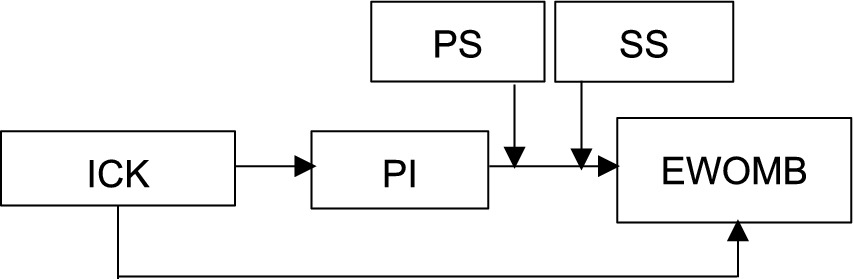
Figure 1. Theoretical model. ICK, innovative customer knowledge; PI, professional identity; EWOMB, electronic word-of-mouth recommendation behavior; PS, professional status; SS, social status.
3 Research methodology
3.1 Sample and data collection
Customers who participated in customer innovation activities on social media were randomly recruited for the survey. And the sample covered Northeast, Northwest, East, North, central, South and Southwest China. A total of 550 questionnaires were sent out and 452 valid questionnaires were collected, with an effective recovery rate of 82.18%. The data collection process was divided into three stages: (1) Questionnaire design: Through the study of a large number of literatures, the scale with high maturity that has been widely verified in existing literatures was selected. After repeated discussions between doctoral supervisors in the field and a number of doctoral students and master’s students, the questionnaire was made after revising the item statements that may cause ambiguity. And the Likert 5-level scale was adopted (1 represents complete disagreement, 5 represents complete agreement); (2) Pre-test: In order to ensure the reliability of questionnaire items, 77 initial questionnaires were sent out for pre-survey before the formal questionnaire was formed. And then a small number of items were modified and deleted according to the test results to form a formal questionnaire with good reliability and validity; (3) Did formal research. The sample characteristics are showed in Table 1.

Table 1. Composition and distribution of samples.
3.2 Measures
1. Innovative customer knowledge. The research results of Zhang et al. (2020) were used for reference, including five items such as “I am familiar with applications and functions related to customer innovation in social media.” The Cronbach’s α coefficient of this scale was 0.921.
2. Professional identity. The research results of Bennett (2010) were used for reference, including six items such as “I strongly feel that I am an innovative customer.” Cronbach’s α coefficient of this scale was 0.897.
3. Professional status. Based on the research results of Lount et al. (2019), which included three items such as “I believe that my innovative products make me respected by the people around me.” The Cronbach’s α coefficient of this scale was 0.871.
4. Social status. Flynn’s (2003) research results were used for reference, including three items such as “As an innovative customer, I am respected by others.” Cronbach’s α coefficient of this scale was 0.872.
5. Electronic word-of-mouth recommendation behavior. The research results of Sayil et al. (2016) were used for reference, including three items such as “in social media, I will tell others about the positive information of the innovative products I participate in.” Cronbach’s α coefficient of this scale was 0.872.
According to previous studies, gender, age and education background were selected as control variables in this study.
4 Research results
4.1 Reliability and validity analysis
Reliability test. As showed in Table 2, To begin with, Cronbach’s α coefficient of all scales was greater than 0.7; Then, the combined reliability value CR of innovative customer knowledge, professional identity, professional status, social status and electronic word-of-mouth recommendation behavior were greater than 0.7; Finally, the CICT of each variable corresponding to the item were calculated, and its value were between 0.691 and 0.849, both of which were greater than 0.4. To sum up, the reliability level of each variable was high.

Table 2. Reliability and validity analysis.
The validity test includes structural validity, convergence validity and discriminative validity. (1) The structural validity was tested by exploratory factor analysis (EFA). The KMO value of each variable was greater than 0.7, and the corresponding Bartlett sphericity test was significant at the p < 0.001 level, indicating that each scale had good structural validity. (2) The convergence validity was tested by AVE of each variable, as showed in Table 2: AVE values were all greater than 0.5, indicating that each scale had good convergence validity. (3) The AVE square root of each variable was greater than the value of its row and column, as showed in Table 3, indicating that each variable meets the requirement of discrimination validity. Therefore, all scales in this study had good reliability and validity.
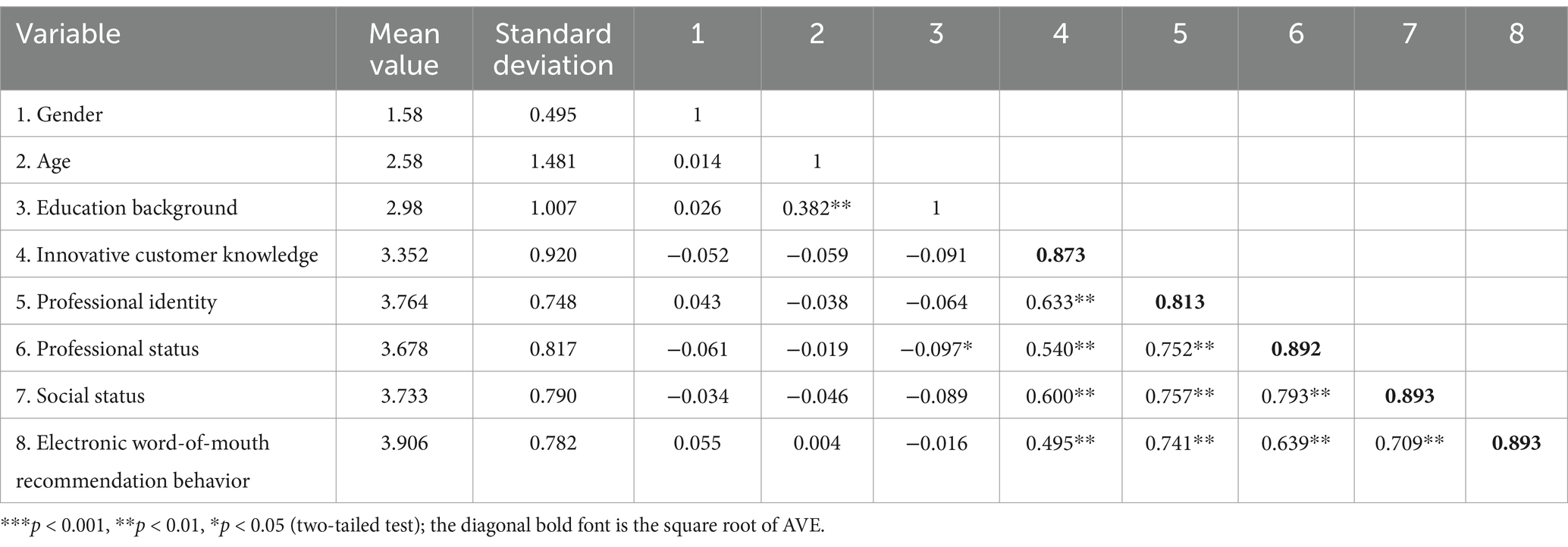
Table 3. Descriptive statistics and correlation analysis of variables (N = 452).
4.2 Descriptive statistics and correlation analysis
As shown in Table 3, innovative customer knowledge and professional identity (r = 0.633, p < 0.01), professional status (r = 0.540, p < 0.01), social status (r = 0.600, p < 0.01), electronic word-of-mouth recommendation behavior (r = 0.495, p < 0.01); Professional identity and professional status (r = 0.752, p < 0.01), social status (r = 0.757, p < 0.01), electronic word-of-mouth recommendation behavior (r = 0.741, p < 0.01); Professional status and electronic word-of-mouth recommendation behavior (r = 0.639, p < 0.01); Social status and electronic word-of-mouth recommendation behavior (r = 0.709, p < 0.01). The above variables were significantly positively correlated, and the results preliminarily supported the research hypothesis of this paper and provided a basis for the next hypothesis test.
4.3 Structural equation model analysis
4.3.1 Main effect analysis and mediating effect test
SPSS 21.0 was used to test the main effect and mediating effect by multiple linear regression method. As showed in Table 4: According to models 2 and 6, innovative customer knowledge had a significant positive impact on electronic word-of-mouth recommendation behavior (M2, β = 0.502, p < 0.001) and professional identity (M6, β = 0.636, p < 0.001). Thus, H1 and H2 were supported. According to model 3, professional identification had a significant positive effect on electronic word-of-mouth recommendation behavior (M3, β = 0.742, p < 0.001), and H3 was supported. Meanwhile, Model 4 shows that professional identity (M4, β = 0.711, p < 0.001) had a significant indirect effect on the relationship between innovative customer knowledge and electronic word-of-mouth recommendation behavior. Therefore, the mediating effect of professional identity was significant, and H4 was supported.
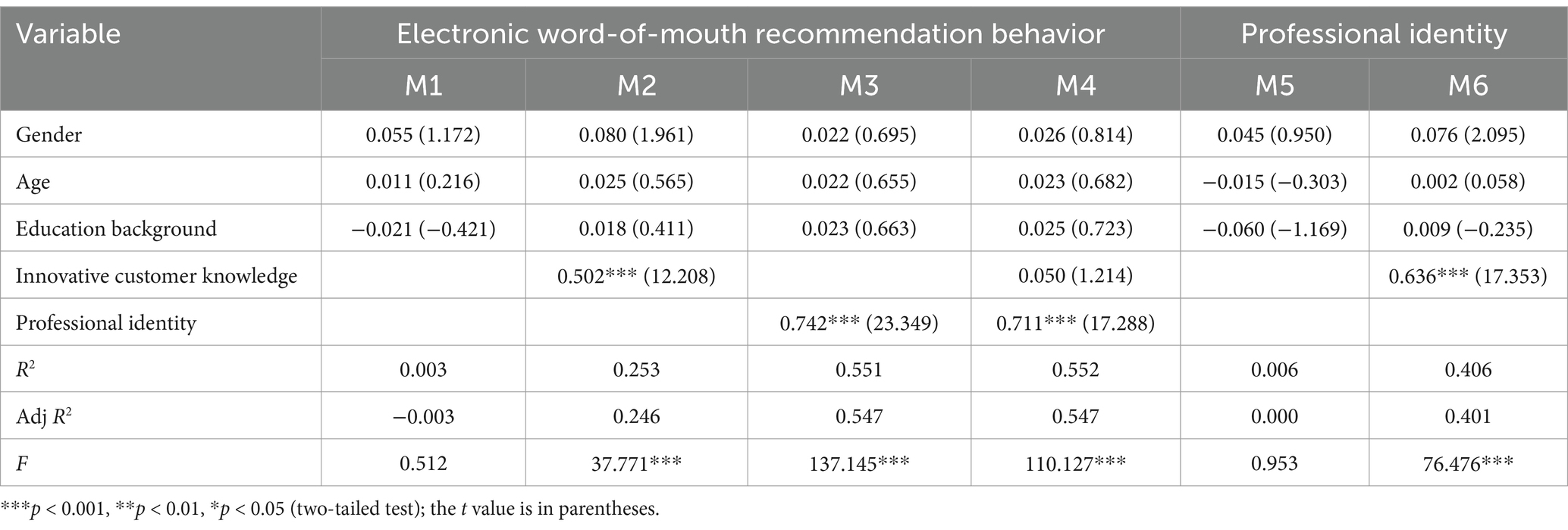
Table 4. Results of multilevel linear regression test.
4.3.2 Moderating effect test
The PROCESS 3.0 program of SPSS 21.0 was used to analyze the moderating effect. As shown in Table 5, the Effect value of the interaction term between low professional status and professional identity was greater than that of high professional status (Effect: low professional status: 0.673 > Effect: high professional status: 0.560), and the T-value was significant at the 0.05 level. The interaction terms of low social status and professional identity were larger than those of high social status (Effect: low social status: 0.562 > Effect: high social status: 0.457). And the T-value was significant at 0.05 level. These results indicated that the effect values of each interaction item had significant differences between the high and low professional status groups and between the high and low social status groups. Therefore, H5 and H6 were supported. To further verified the moderating effect, this paper drew a moderating effect chart based on the research results of Aiken and West (1991). As shown in Figures 2, 3, the slope of the group with low professional status was greater than that of the group with high professional status, and the slope of the group with low social status was greater than that of the group with high social status. Low professional status and low social status had a stronger moderating effect between professional identity and electronic word-of-mouth recommendation behavior. And H5 and H6 had been confirmed again.
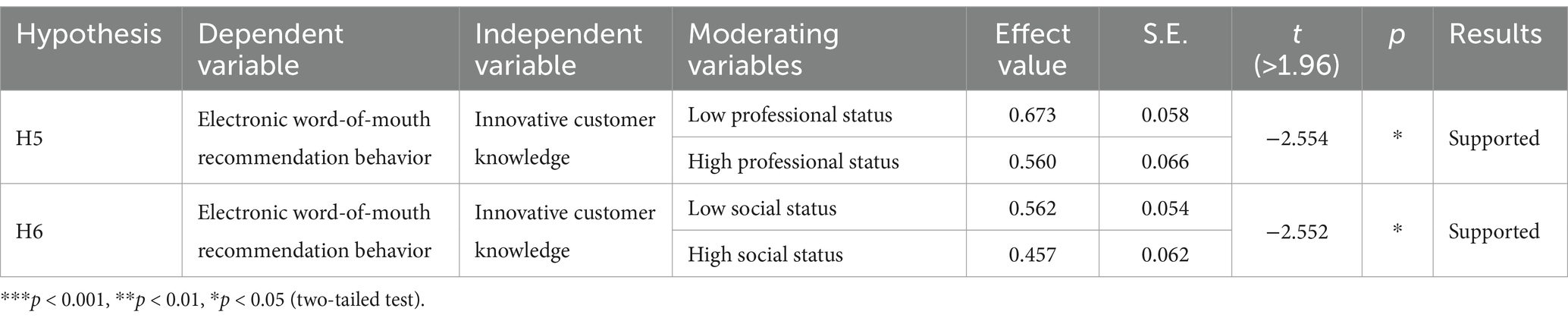
Table 5. Test results of moderating effect.

Figure 2. The moderating effect of professional status. LPI, low professional identity; HPI, high professional identity; EWOMB, electronic word-of-mouth recommendation behavior; LPS, low professional status; HPS, high professional status.
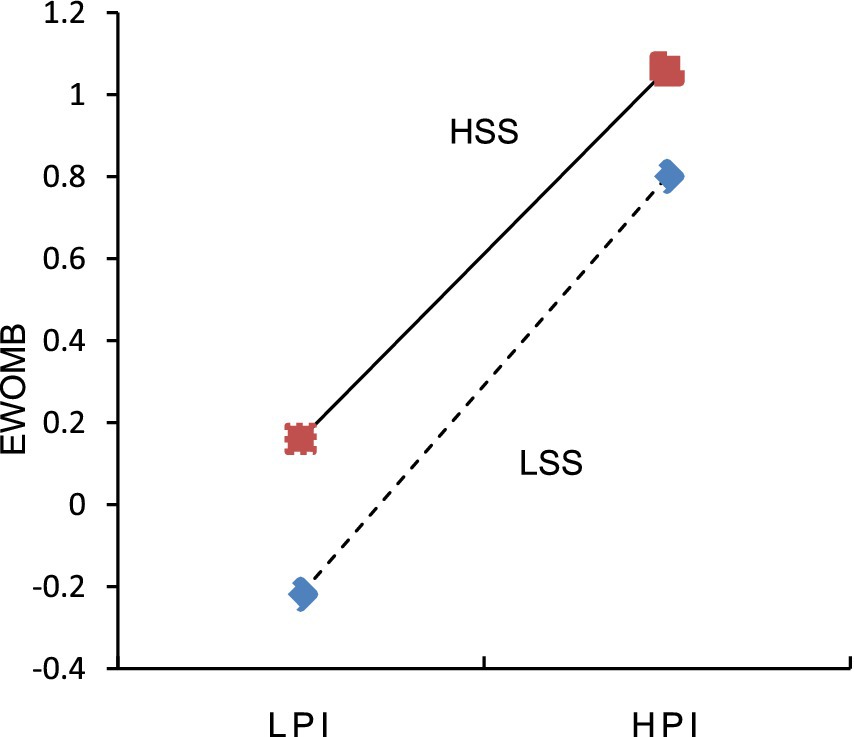
Figure 3. The moderating effect of social status. LPI, low professional identity; HPI, high professional identity; EWOMB, electronic word-of-mouth recommendation behavior; LSS, low social status; HSS, high social status.
4.3.3 Moderated mediation effect test
First of all, Bootstrapping method was used to test, and one standard deviation above the mean (+1SD) and one standard deviation below the mean (−1SD) were selected as the high and low values of the moderating variables, as shown in Table 6. The indirect effect of innovative customer knowledge on electronic word-of-mouth recommendation behavior through professional identity was greater in the low professional status group than in the high professional status group (Effect: low professional status group: 0.397 > Effect: high professional status group: 0.331). The indirect Effect value of the low social status group was greater than that of the high social status group (Effect: low social status group: 0.331 > Effect: high social status group: 0.270). And in both cases, the 95%Boot confidence interval of indirect effect did not contain 0, which was significant, indicating that the lower the professional status and social status, the stronger the mediating effect of professional identity between innovative customer knowledge and electronic word-of-mouth recommendation behavior. Secondly, the PROCESS 3.0 program of SPSS 21.0 was used to analyze and show that the 95%Boot confidence intervals of the moderated mediation INDEX. Index of professional status and social status were CI: professional status = [−0.060, −0.005] and CI: social status = [−0.054, −0.010], none of them contained 0, indicating that the moderated mediation effect was significant. Thus, H7 was confirmed.

Table 6. Test results of moderated mediating effects in the second stage.
4.3.4 Robustness checks
If Bootstrapping method is used to further verify the hierarchical regression results and the same conclusion can be obtained, it can be proved that the conclusion has a certain robustness (Hu et al., 2017). Therefore, Bootstrapping method was used in this paper to further test the mediating effect and moderating effect. The sample size was set to 5,000 and the confidence interval was set to 95%. Among them, the mediating effect test results are shown in Table 7. Boot confidence interval of indirect effect of professional identity did not contain 0 (CI = [0.371, 0.534]). Therefore, the mediating effect of professional identity was significant, and H4 was again supported.
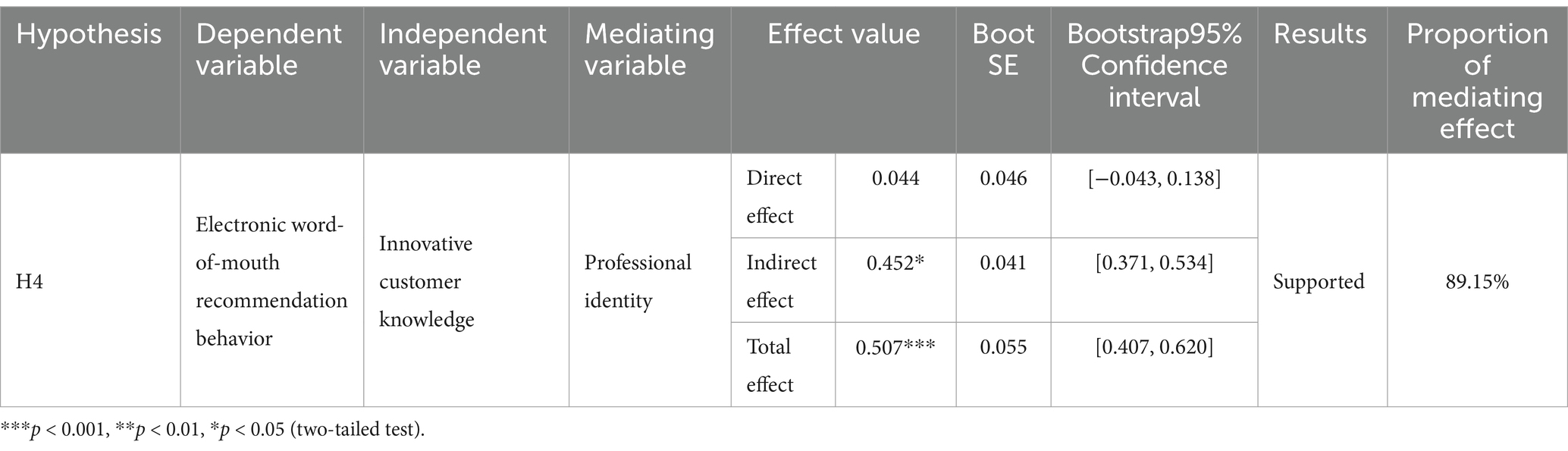
Table 7. Robustness test results of the mediation effect of Bootstrapping method.
At the same time, it can be seen from Table 6 that Bootstrapping tests the moderated mediating effect. The results show that Boot confidence intervals for indirect effects at both low and high levels did not contain 0. And Boot confidence intervals for the moderated mediating INDEX did not contain 0. That is, the moderating effect was significant, and H5 and H6 had been confirmed for the third time. Therefore, the results of hierarchical linear regression were verified again by Bootstrapping method, which shows that the conclusion of this paper had good robustness.
5 Discussion
5.1 Theoretical contributions
Based on social learning theory and social identity theory, with professional identity as the mediating variable, with professional status and social status as the moderating variable, this study explored the mechanism of the influence of innovative customer knowledge on electronic word-of-mouth recommendation behavior.
First, it proved that innovative customer knowledge positively affected electronic word-of-mouth recommendation behavior. On the one hand, previous studies mainly focus on the impact of enterprise-led knowledge management on innovation performance, service performance and firm performance. This study explored in depth the internal mechanism of how innovative customer knowledge affected electronic word-of-mouth recommendation behavior from a customer-led perspective. And the research conclusions deepen and enrich the research results in this field. On the other hand, according to social learning theory, a certain behavior is derived from the pleasant feeling brought about by the behavior. And if the behavior is to help others, it is a prosocial behavior. The conclusion of this paper confirmed the altruistic path of innovative customer knowledge to electronic word-of-mouth recommendation behavior. That is, innovative customers with altruistic thoughts can directly generate electronic word-of-mouth recommendation behavior without additional conditions. It further expands the research results of social learning theory in the field of customer innovation.
Second, it was confirmed that innovative customer knowledge positively affects professional identity, professional identity positively affects electronic word-of-mouth recommendation behavior, and professional identity mediates innovative customer knowledge and electronic word-of-mouth recommendation behavior. Previous studies rarely explore in depth the mediating factors that influence innovative customer knowledge on electronic word-of-mouth recommendation behavior. The conclusion of this study shows that professional identity, as an egoistic factor, is the main mediating variable affecting innovative customer knowledge and electronic word-of-mouth recommendation behavior. Innovative customers with egoistic thoughts need professional identity to generate electronic word-of-mouth recommendation behavior. It is further confirmed that there is an egoistic path to the influence of innovative customer knowledge on electronic word-of-mouth recommendation behavior. On the one hand, previous studies mainly regard electronic word-of-mouth recommendation behavior as a purely profitable behavior, but this study shows that innovative customers also generate electronic word-of-mouth recommendation behavior through the egoistic motivation of professional identification. This further indicates that the formation mechanism of electronic word-of-mouth of innovative customers is complex, which is not only influenced by the “single track” of altruism motivation, but also by the “double track” joint motivation composed of altruism and self-interest. Social identity theory, on the other hand, states that people want to be viewed positively by themselves and others. This conclusion indicates that innovative customers generate electronic word-of-mouth recommendation behaviors precisely to obtain professional identity (positive perception of others), which enriches the research results of social identity theory in the field of electronic word-of-mouth recommendation.
Thirdly, the relationship between professional identity and electronic word-of-mouth recommendation was confirmed by professional status and social status. In other words, compared with high professional status and high social status, low professional status and low social status have a stronger moderating effect between professional identity and electronic word-of-mouth recommendation behavior. In the past, the research on the formation mechanism of electronic word-of-mouth rarely included the customer’s status factor. However, with the advent of the era of Marketing4.0, the status of customers in social media has been unprecedented. Thus, this paper incorporates innovative customer status factors into the research model and subdivided them into professional status and social status, which reflect professional and social characteristics. The moderating and moderated mediating effects between professional identity and electronic word-of-mouth recommendation behavior were verified. And the boundary conditions for the influence of innovative customer knowledge on electronic word-of-mouth recommendation behavior through professional identity were revealed.
5.2 Practical implications
First, sales-oriented social media enterprises should incorporate innovative customer knowledge into their marketing performance expansion system as a formal resource. At present, the application of innovative customer knowledge is in the state of “self-entertainment,” and enterprises have not integrated it as a formal knowledge resource system. According to the conclusion that innovative customer knowledge positively affects electronic word-of-mouth recommendation behavior, sales-oriented social media enterprises should establish a collection, training and guidance system for innovative customer knowledge on the basis of the existing sales system. On the one hand, they should actively help customers master innovative knowledge and skills under the background of social media, and constantly stimulate their innovation vitality. On the other hand, the innovative customers who guide altruistic tendency produce electronic word-of-mouth recommendation behavior based on altruistic motivation.
Secondly, sales-oriented social media enterprises should take a two-pronged approach to open up a “dual path” of altruism and egoism to develop electronic word-of-mouth marketing strategies. In view of the realistic problem of “losing fans” in live marketing of sales-oriented social media enterprises, two approaches should be adopted to develop electronic word-of-mouth for innovative customers. For innovative customers with high altruistic tendency, the focus should be on stimulating their pro-social motivation, and the relationship between electronic word-of-mouth recommendation and helping others should be taken as the focus of publicity. For innovative customers with high egoistic tendency, a professional identity evaluation system should be established. Through online excellent innovative product evaluation, offline excellent innovative customers meeting with fans and other activities, the social recognition and self-enhancement effect brought by professional identity should be emphasized. So as to meet their needs for image enhancement, prestige enhancement and self-enhancement, and then stimulate their electronic word-of-mouth recommendation behavior.
Third, sales-oriented social media enterprises should actively pay attention to the external professional and social characteristics of innovative customers, and focus on innovative customers with low professional status and low social status as key objects for the development of electronic word-of-mouth recommendation. The conclusion of this study shows that innovative customers with low professional status and low social status are more motivated to generate electronic word-of-mouth recommendation behavior based on egoistic motivation than innovative customers with high professional status and high social status. Therefore, sales-oriented social media enterprises should take these two types of customers as key development objects, increase their innovation knowledge, enhance their professional identity and stimulate their electronic word-of-mouth recommendation behavior.
5.3 Limitations and future research directions
This paper also has some shortcomings and limitations: First, in data collection, questionnaire method was used, which may lead to common methodology bias caused by data from a single source. In future research design, the mixed research method of “questionnaire method + experimental method” can be used, especially the field experiment method. Second, this study preliminarily found that innovative customer knowledge affects the altruistic path and egoistic path of electronic word-of-mouth recommendation behavior, but the relationship and interaction between these two paths have not been deeply discussed. Therefore, further research can be carried out on this. Thirdly, this paper confirmed that professional identity plays a partial mediating role between innovative customer knowledge and electronic word-of-mouth recommendation behavior. This conclusion suggests that other mediating variables should be explored in future studies to fully uncover the mechanism of the influence of innovative customer knowledge on electronic word-of-mouth recommendation behavior.
6 Conclusion
In this study, the multi-level linear regression analysis, structural equation model analysis and robustness test show that my research conclusion has a certain stability. The process of generating electronic word-of-mouth recommendation behavior from innovative customer knowledge has two paths: altruism and egoism. In this process, it is moderated by the external characteristics of innovative customers.
First, I find that the essence of innovative customer knowledge directly and positively affects electronic word-of-mouth recommendation behavior was altruism. On the one hand, innovation activities can stimulate innovative customers’ desire to share knowledge, spread the experience and creativity of innovative knowledge. And then generate electronic word-of-mouth recommendation behavior to help others obtain useful information. On the other hand, innovative customers use knowledge as the medium to exchange professional knowledge with others through electronic word-of-mouth recommendation behavior, so as to meet people’s learning needs and social needs.
Second, I find that professional identity mediates the relationship between innovative customer knowledge and electronic word-of-mouth recommendation behavior. The mediating effect accounts for 89.15%, which indicates that professional identity is the main mediating variable between the two. But, it also means that there are other mediating variables, and the subsequent research can be further expanded based on this.
Third, I find that the external characteristics of innovative customers, namely professional characteristics (professional status) and social characteristics (social status), have a moderating effect on the relationship between innovative customer knowledge and electronic word-of-mouth recommendation behavior, and the moderated mediating effect exists. Moreover, the lower the professional status and social status, the stronger the moderating effect, mainly because the group with these characteristics has a stronger motivation to enhance self-image, enhance prestige, enhance reputation, and utilitarian. This also suggests that sales-oriented social media enterprises should focus on the development of electronic word-of-mouth by innovative customers with low professional status and low social status.
Data availability statement
The datasets presented in this study can be found in online repositories. The names of the repository/repositories and accession number(s) can be found in the article/Supplementary material.
Ethics statement
Ethical review and approval was not required for the study on human participants in accordance with the local legislation and institutional requirements. Written informed consent from the patients/participants or patients/participants legal guardian/next of kin was not required to participate in this study in accordance with the national legislation and the institutional requirements.
Author contributions
XQ: Conceptualization, Data curation, Formal analysis, Funding acquisition, Investigation, Methodology, Project administration, Resources, Software, Supervision, Validation, Visualization, Writing – original draft, Writing – review & editing.
Funding
The author(s) declare that financial support was received for the research, authorship, and/or publication of this article. This study was supported by the Guangdong Mechanical & Electrical Polytechnic 2023 school-level teaching and scientific research project (YJYB2023-44).
Conflict of interest
The author declares that the research was conducted in the absence of any commercial or financial relationships that could be construed as a potential conflict of interest.
Publisher’s note
All claims expressed in this article are solely those of the authors and do not necessarily represent those of their affiliated organizations, or those of the publisher, the editors and the reviewers. Any product that may be evaluated in this article, or claim that may be made by its manufacturer, is not guaranteed or endorsed by the publisher.
Supplementary material
The Supplementary material for this article can be found online at: https://www.frontiersin.org/articles/10.3389/fcomm.2024.1488675/full#supplementary-material
References
Abbott, A. D. (1988). The system of professions: an essay on the division of expert labor. Chicago: University of Chicago Press.
Afriyie, S., Du, J. G., and Musah, A. A. I. (2020). Innovation and knowledge sharing of sme in an emerging economy; the moderating effect of transformational leadership style. Int. J. Innov. Manag. 24, 2050034–2050026. doi: 10.1142/S1363919620500346
Aiken, L. S., and West, S. G. (1991). Multiple regression: testing and interpreting interactions. Newbury Park, CA: Sage.
Amin, M., Khan, I., Shamim, A., Ting, D. H., Jan, A., and Abbasi, A. Z. (2024). Employee motivations in shaping customer value co-creation attitude and behavior: job position as a moderator. J. Retail. Consum. Serv. 79:103819. doi: 10.1016/j.jretconser.2024.103819
Axtell, C. M., Moser, K. S., and McGoldrick, J. (2020). Professional status and norm violation in email collaboration. TPM 26, 1–15. doi: 10.1108/TPM-07-2019-0083
Barbour, J. B., and Lammers, J. C. (2015). Measuring professional identity: a review of the literature and a multilevel confirmatory factor analysis of professional identity constructs. J. Prof. Organ. 2, 38–60. doi: 10.1093/jpo/jou009
Beijaard, D., Meijer, P. C., and Verloop, N. (2004). Reconsidering research on teachers’ professional identity. Teach. Teach. Educ. 20, 107–128. doi: 10.1016/j.tate.2003.07.001
Bennett, R. (2010). What makes a marketer? Development of ‘marketing professional identity’ among marketing graduates during early career experiences. J. Mark. Manag. 27, 8–27. doi: 10.1080/02672571003647792
Berger, J., Rosenholtz, S. J., and Zelditch, M. Jr. (1980). Status organizing processes. Annu. Rev. Sociol. 6, 479–508. doi: 10.1146/annurev.so.06.080180.002403
Bianchi, A. J., Kang, S. M., and Stewart, D. (2012). The organizational selection of status characteristics: status evaluations in an open source community. Organ. Sci. 23, 341–354. doi: 10.1287/orsc.1100.0580
Boateng, H. (2016). Customer knowledge management practices on a social media platform. Inf. Dev. 32, 440–451. doi: 10.1177/0266666914554723
Bossio, D., and Sacco, V. (2017). From "selfies" to breaking tweets how journalists negotiate personal and professional identity on social media. Journal. Pract. 11, 527–543. doi: 10.1080/17512786.2016.1175314
Boukarras, S., Era, V., Aglioti, S. M., Aglioti, S. M., and Candidi, M. (2020). Modulation of preference for abstract stimuli following competence-based social status primes. Exp. Brain Res. 238, 193–204. doi: 10.1007/s00221-019-05702-z
Branscombe, N. R., and Baron, R. A. (2017). Social psychology. 14th Edn. New York: Pearson Education Inc.
Bratianu, C., Stanescu, D. F., and Mocanu, R. (2023). The mediating role of customer knowledge management on the innovative work behavior and product innovation relationship. Kybernetes 52, 5353–5384. doi: 10.1108/K-09-2021-0818
Chaithanapat, P., Punnakitikashem, P., Khin Khin Oo, N. C., and Rakthin, S. (2022). Relationships among knowledge-oriented leadership, customer knowledge management, innovation quality and firm performance in SMEs. J. Innov. Knowl. 7:100162. doi: 10.1016/j.jik.2022.100162
Chari, S., Tarkiainen, A., and Salojärvi, H. (2016). Alternative pathways to utilizing customer knowledge: a fuzzy-set qualitative comparative analysis. J. Bus. Res. 69, 5494–5499. doi: 10.1016/j.jbusres.2016.04.160
Chen, D., Qu, W., Xiang, Y. H., Zhao, J., Shen, G., Zhao, J., et al. (2019). People of lower social status are more sensitive to hedonic product information-electrophysiological evidence from an ERP study. Front. Hum. Neurosci. 13, 1–10. doi: 10.3389/fnhum.2019.00147
Choi, J. H., and Scott, J. E. (2013). Electronic word of mouth and knowledge sharing on social network sites: a social capital perspective. J. Theor. Appl. Electron. Commer. Res. 8, 11–12. doi: 10.4067/S0718-18762013000100006
Echeverri, P., and Akesson, M. (2018). Professional identity in service work: why front-line employees do what they do. J. Serv. Theory Pract. 28, 315–335. doi: 10.1108/JSTP-11-2016-0212
Eisenberg, N., and Miller, P. (1987). The relation of empathy to prosocial and related behaviors. Psychol. Bull. 101, 91–119. doi: 10.1037/0033-2909.101.1.91
Falasca, M., Zhang, J. M., Conchar, M., and Li, L. (2017). The impact of customer knowledge and marketing dynamic capability on innovation performance: an empirical analysis. J. Bus. Ind. Mark. 32, 901–912. doi: 10.1108/JBIM-12-2016-0289
Ferrucci, P., Tandoc, E. C., and Schauster, E. E. (2020). Journalists primed: how professional identity affects moral decision making. Journal. Pract. 14, 896–912. doi: 10.1080/17512786.2019.1673202
Filieri, R., Acikgoz, F., and Du, H. (2023). Electronic word-of-mouth from video bloggers: the role of content quality and source homophily across hedonic and utilitarian products. J. Bus. Res. 160:113774. doi: 10.1016/j.jbusres.2023.113774
Flynn, F. J. (2003). How much should I give and how often? The effects of generosity and frequency of favor exchange on social status and productivity. Acad. Manag. J. 46, 539–553. doi: 10.2307/30040648
García-Murillo, M., and Annabi, H. (2002). Customer knowledge management. J. Oper. Res. Soc. 53, 875–884. doi: 10.1057/palgrave.jors.2601365
Graham, K. A., Resick, C. J., Margolis, J. A., Shao, P., Hargis, M. B., and Kiker, J. D. (2020). Egoistic norms, organizational identification, and the perceived ethicality of unethical pro-organizational behavior: a moral maturation perspective. Hum. Relat. 73, 1249–1277. doi: 10.1177/0018726719862851
Groysberg, B., Polzer, J. T., and Elfenbein, H. A. (2011). Too many cooks spoil the broth: how high-status individuals decrease group effectiveness. Organ. Sci. 22, 722–737. doi: 10.1287/orsc.1100.0547
Guan, X. H., Xie, L. S., and Huan, T. C. (2018). Customer knowledge sharing, creativity and value co-creation. Int. J. Contemp. Hosp. Manag. 30, 961–979. doi: 10.1108/IJCHM-09-2016-0539
Haller, M., and Hadler, M. (2006). How social relations and structures can produce happiness and unhappiness: an international comparative analysis. Soc. Indic. Res. 75, 169–216. doi: 10.1007/s11205-004-6297-y
He, W., Zhang, W. D., Tian, X., Tao, R., and Akula, V. (2019). Identifying customer knowledge on social media through data analytics. J. Enterp. Inf. Manag. 32, 152–169. doi: 10.1108/JEIM-02-2018-0031
Hogg, M. A., and Abrams, D. (2010). The process of social identity. Gao Minghua, trans. Beijing: China Renmin University Press.
Hu, H., Wang, Z., and Zhang, L. (2017). The influence of incubator control power on innovation incubation performance: a moderated mediating effect. Nankai Manag. Rev. 20, 150–162.
Hung, S.-W., Chang, C.-W., and Chen, S.-Y. (2023). Beyond a bunch of reviews: the quality and quantity of electronic word-of-mouth. Inf. Manag. 60:103777. doi: 10.1016/j.im.2023.103777
Jin, J., Chen, Z., and Li, S. (2020). The impact of digital open innovation on firm innovation performance: mediated by knowledge field activity. Res. Dev. Manag. 6, 1–12. doi: 10.13581/j.cnki.rdm.20200793
Johansson, A. E., Raddats, C., and Witell, L. (2019). The role of customer knowledge development for incremental and radical service innovation in servitized manufacturers. J. Bus. Res. 98, 328–338. doi: 10.1016/j.jbusres.2019.02.019
Kim, H., and Kiura, M. (2023). The influences of social status and organizational justice on employee voice: a case of customer care workers. Int. J. Bus. Commun. 60, 802–822. doi: 10.1177/2329488420969776
Kolour, H. R., and Nikkhah, Y. (2024). Explaining the effect of customer knowledge management on innovation quality through strategic agility with moderating role of competition intensity: a study in medical equipment manufacturing firms. J. Ind. Manag. Perspect. 14, 66–84. doi: 10.48308/JIMP.14.2.66
Komejani, SMM., and Mohaghegh, N. (2017). The effects of customer knowledge management in improving customer loyalty in private educational institutions. Proceedings of the proceedings of the 14th international conference on intellectual capital, knowledge management & organisational learning (Icickm 2017).
Koniorczyk, G. (2015). Customer knowledge in (co)creation of product. A case study of IKEA. J. Econ. Manag. 22, 107–120.
Kotler, P., Kartajaya, H., and Setiawan, I. (2017). Marketing 4.0: moving from traditional to digital. New Jersey: John Wiley & Sons.
Kunrath, K., Cash, P., and Kleinsmann, M. (2020). Designers' professional identity: personal attributes and design skills. J. Eng. Des. 31, 297–330. doi: 10.1080/09544828.2020.1743244
Lee, W.-L., Liu, C.-H., and Tseng, T.-W. (2022). The multiple effects of service innovation and quality on transitional and electronic word-of-mouth in predicting customer behaviour. J. Retail. Consum. Serv. 64:102791. doi: 10.1016/j.jretconser.2021.102791
Lemmon, G., and Wayne, S. J. (2015). Underlying motives of organizational citizenship behavior. J. Leadersh. Organ. Stud. 22, 129–148. doi: 10.1177/1548051814535638
Levy, S., Tabatchnik, I., and Akron, S. (2019). Product success implications of distant innovative knowledge. Eurasian Bus. Rev. 9, 69–88. doi: 10.1007/s40821-018-0108-x
Lifshitz-Assaf, H. (2018). Dismantling knowledge boundaries at NASA: the critical role of professional identity in open innovation. Adm. Sci. Q. 63, 746–782. doi: 10.1177/0001839217747876
Liu, P. (2015). Research on the influence of internet word-of-mouth on consumers' behavioral intention: an intermediary model mediated by internet involvement. Consum. Econ. 31, 74–86.
Liu, C. J. (2019). Expectation, commitment, and charitable giving: the mediating role of trust and the moderating role of social status. Voluntas 30, 754–767. doi: 10.1007/s11266-018-0014-y
Liu, C. J., and Hao, F. (2017). Reciprocity belief and gratitude as moderators of the association between social status and charitable giving. Personal. Individ. Differ. 111, 46–50. doi: 10.1016/j.paid.2017.02.003
Liu, Y., Lam, L. W., and Loi, R. (2014). Examining professionals' identification in the workplace: the roles of organizational prestige, work-unit prestige, and professional status. Asia Pac. J. Manag. 31, 789–810. doi: 10.1007/s10490-013-9364-6
Lount, R. B., Doyle, S. P., Brion, S., and Pettit, N. C. (2019). Only when others are watching: the contingent efforts of high status group members. Manag. Sci. 65, 3382–3397. doi: 10.1287/mnsc.2018.3103
Ma, M., and Agarwal, R. (2007). Through a glass darkly: information technology design, identity verification, and knowledge contribution in online communities. Inf. Syst. Res. 18, 42–67. doi: 10.1287/isre.1070.0113
Magee, J. C., and Galinsky, A. D. (2008). Social hierarchy: the self‐reinforcing nature of power and status. Acad. Manag. Ann. 2, 351–398. doi: 10.5465/19416520802211628
Mahmood, S., Khwaja, M. G., and Jusoh, A. (2019). Electronic word of mouth on social media websites: role of social capital theory, self-determination theory, and altruism. Int. J. Space Based Situat. Comput. 9, 74–89. doi: 10.1504/IJSSC.2019.104217
Marquardt, M. K., Gantman, A. P., Gollwitzer, P. M., and Oettingen, G. (2016). Incomplete professional identity goals override moral concerns. J. Exp. Soc. Psychol. 65, 31–41. doi: 10.1016/j.jesp.2016.03.001
Mattan, B. D., Kubota, J. T., and Cloutier, J. (2017). How social status shapes person perception and evaluation: a social neuroscience perspective. Perspect. Psychol. Sci. 12, 468–507. doi: 10.1177/1745691616677828
Park, C. S. (2013). Does twitter motivate involvement in politics? Tweeting, opinion leadership, and political engagement. Comput. Hum. Behav. 29, 1641–1648. doi: 10.1016/j.chb.2013.01.044
Park, D.-H., and Kim, S. (2008). The effects of consumer knowledge on message processing of electronic word-of-mouth via online consumer reviews. Electron. Commer. Res. Appl. 7, 399–410. doi: 10.1016/j.elerap.2007.12.001
Petriglieri, J. L., and Obodaru, O. (2019). Secure-base relationships as drivers of professional identity development in dual-career couples. Adm. Sci. Q. 64, 694–736. doi: 10.1177/0001839218783174
Pierson, C. M. (2024). The role of identity moderators and perceived degree of identity separation in librarian professional identity development. J. Librariansh. Inf. Sci. 56, 353–368. doi: 10.1177/09610006221142311
Ramadhan, A., Iyiola, K., and Alzubi, A. B. (2024). Linking absorptive capacity to project success via mediating role of customer knowledge management capability: the role of environmental complexity. Bus. Process. Manag. J. 30, 939–962. doi: 10.1108/BPMJ-07-2023-0511
Ranz, R., Grodofsky, M. M., and Abu, N. B. (2017). A "jewish study hall" influenced approach to social work professional identity development: a qualitative study. Aust. Soc. Work. 70, 302–311. doi: 10.1080/0312407X.2016.1221981
Sayil, E. M., Donmaz, A., Simsek, G. G., and Akyol, A. (2016). The impacts of relationship marketing orientation on relational response behaviours. Int. J. Mob. Commun. 14, 472–498. doi: 10.1504/Ijmc.2016.078722
Sundaram, D. S., Mitra, K., and Webster, C. (1998). Word of mouth communications: a motivational analysis. Adv. Consum. Res. 25, 527–531.
Tang, Y. H., and Marinova, D. (2020). When less is more: the downside of customer knowledge sharing in new product development teams. J. Acad. Mark. Sci. 48, 288–307. doi: 10.1007/s11747-019-00646-w
Valacherry, A. K., and Pakkeerappa, P. (2018). Customer knowledge management via social media: a case study of an Indian retailer. J. Hum. Values 24, 39–55. doi: 10.1177/0971685817733571
van Lysebetten, S., Anseel, F., and Sanchez, D. R. (2020). The effects of situation variability in a simulation-based training for implicit innovation knowledge. Simul. Gaming 51, 477–497. doi: 10.1177/1046878120914327
Wahab, A., Aqif, T., Sigamony, J. M., Arshad, M. S., Rao, S., and Khan, U. U. (2023). Impact of customer knowledge and digital platforms on online entrepreneurship with the mediation of digital innovation. J. Global Bus. Technol. 19, 41–58.
Wang, J. (2022). Research on the impact of customer participation in virtual community on service innovation performance- the role of knowledge transfer. Front. Psychol. 13:847713. doi: 10.3389/fpsyg.2022.847713
Wang, W.-T., and Hou, Y.-P. (2015). Motivations of employees’ knowledge sharing behaviors: a self-determination perspective. Inf. Organ. 25, 1–26. doi: 10.1016/j.infoandorg.2014.11.001
Wang, Y., and Yu, C. (2017). Social interaction-based consumer decision-making model in social commerce: the role of word of mouth and observational learning. Int. J. Inf. Manag. 37, 179–189. doi: 10.1016/j.ijinfomgt.2015.11.005
Wen, X., Wu, G., Kang, Q., Wang, L., and Zeng, J. (2020). A study on customer knowledge management, inbound open innovation and firm performance. Hum. Syst. Manag. 39, 183–195. doi: 10.3233/HSM-190720
Wen-Zhonglin, Z. L., and Hou, J. (2006). Mediated moderator and moderated mediator. Acta Psychol. Sin. 38:448. doi: 10.1016/S0379-4172(06)60092-9
Wojnicki, A. C., and Godes, D. (2017). Signaling success: word of mouth as self-enhancement. Customer Needs Solut. 4, 68–82. doi: 10.1007/s40547-017-0077-8
Wu, W. W., Liu, Y. X., Zhang, Q., and Yu, B. (2019). How innovative knowledge assets and firm transparency affect sustainability-friendly practices. J. Clean. Prod. 229, 32–43. doi: 10.1016/j.jclepro.2019.05.007
Xu, X. L., Wu, S. C., Jin, A. B., and Gao, Y. T. (2018). Review on research progress of user generated content. Modern Inform. 38, 130–144. doi: 10.3969/j.issn.1008-0821.2018.11.022
Yang, F. X. (2017). Effects of restaurant satisfaction and knowledge sharing motivation on eWOM intentions. J. Hospital. Tour. Res. 41, 93–127. doi: 10.1177/1096348013515918
Yang, H. L., Du, H. S., He, W., and Qiao, H. (2021). Understanding the motivators affecting doctors' contributions in online healthcare communities: professional status as a moderator. Behav. Inform. Technol. 40, 146–160. doi: 10.1080/0144929X.2019.1679887
Yusuf, A. S., Che Hussin, A. R., and Busalim, A. H. (2018). Influence of e-WOM engagement on consumer purchase intention in social commerce. J. Serv. Mark. 32, 493–504. doi: 10.1108/jsm-01-2017-0031
Zhang, H., Liang, X., and Qi, C. (2021). Investigating the impact of interpersonal closeness and social status on electronic word-of-mouth effectiveness. J. Bus. Res. 130, 453–461. doi: 10.1016/j.jbusres.2020.01.020
Zhang, T. J., Wang, D. T., Tse, C. H., and Tse, S. Y. (2024). Enhancing subsidiary innovation capability through customer involvement in new product development: a contingent knowledge source perspective. J. Prod. Innov. Manag. 41, 86–111. doi: 10.1111/jpim.12700
Zhang, F. H., Zhang, D. P., and Lin, M. F. (2020). The impact of the innovative knowledge of customers on their recommendation intentions. Front. Psychol. 11, 1–12. doi: 10.3389/fpsyg.2020.00979
Zhang, D. P., Zhang, F. L., Lin, M. F., and Du, H. S. (2017). Knowledge sharing among innovative customers in a virtual innovation community. Online Inf. Rev. 41, 691–709. doi: 10.1108/OIR-08-2016-0226
Keywords: innovative customer knowledge, professional identity, professional status, social status, electronic word-of-mouth recommendation behavior
Citation: Qi X (2024) How does innovative customer knowledge influence electronic word-of-mouth recommendation behavior through egoistic and altruistic approaches? Testing a moderated mediation model. Front. Commun. 9:1488675. doi: 10.3389/fcomm.2024.1488675
Edited by:
Tereza Semerádová, Technical University of Liberec, CzechiaReviewed by:
Ana Lisboa, Polytechnic Institute of Leiria, PortugalPinghao Ye, Wuhan Business University, China
Copyright © 2024 Qi. This is an open-access article distributed under the terms of the Creative Commons Attribution License (CC BY). The use, distribution or reproduction in other forums is permitted, provided the original author(s) and the copyright owner(s) are credited and that the original publication in this journal is cited, in accordance with accepted academic practice. No use, distribution or reproduction is permitted which does not comply with these terms.
*Correspondence: Xiaobo Qi, MjU4ODM1MDkzQHFxLmNvbQ==