 Tasmia Hai
 Rose Swansburg2,3
 Frank P. MacMaster
- 1Department of Educational Psychology, Faculty of Education, University of Alberta, Edmonton, AB, Canada
- 2Department of Psychiatry, Cumming School of Medicine, University of Calgary, Calgary, AB, Canada
- 3Department of Pediatrics, Cumming School of Medicine, University of Calgary, Calgary, AB, Canada
The COVID-19 pandemic led to school closures and a rapid transition to online classes. However, little is known about the impact of online learning in Canadian children with Attention-Deficit/Hyperactivity Disorder (ADHD). An online survey created on Qualtrics was distributed to families across Canada. Data collection was conducted over a total of five weeks in May and June 2020. We reviewed 587 surveys (4% margin of error using a 95% confidence interval) completed by caregivers/parents of children with ADHD (mean child age 10.14 years, SD = 3.06). Survey questions focused on hours of schoolwork completed and whether the learning needs of children with ADHD were met during school closures. Results indicated 90% of children with ADHD received web-based learning during the pandemic. Parents (41%) reported < 5 h of schoolwork per week, and 35% indicated between 5 to 10 h. Of the parents who said their child with ADHD had a modified curriculum (68%), 40% reported receiving educational materials that met their learning expectations during online classes. Parents (59%) reported that their child found it “very challenging” adjusting to online classes. The results indicated that children with ADHD faced significant challenges in adapting to online learning during the pandemic. Binary logistic regression indicated significant associations between depression severity, difficulties with starting and managing tasks and challenges adjusting to online learning. Long-term consequences of these challenges will need to be determined to ensure children with ADHD are able to meet their academic expectations.
Introduction
Attention-Deficit/Hyperactivity Disorder (ADHD) is a neurodevelopmental disorder with prevalence rates between 5% and 9% in Canadian school-aged children (Brault and Lacourse, 2012; Polanczyk et al., 2014). According to the Diagnostic and Statistical Manual of Mental Disorders, Fifth Edition (DSM-V), symptoms of ADHD include age-inappropriate levels of inattention or hyperactivity and impulsivity (American Psychiatric Association, 2013). Typically, children with ADHD encounter challenges with their academic functioning, peer relationships, and emotional regulation (Biederman et al., 2004; Wolraich et al., 2019). These challenges make it necessary for children with ADHD to receive psychosocial and behavioral interventions (Canadian Attention Deficit Hyperactive Disorder Research Association, 2018; Wolraich et al., 2019). Furthermore, children with ADHD are often prescribed medications to manage their symptoms (Cortese et al., 2018). Consequently, these multimodal interventions require follow up from psychologists, pediatricians, family doctors or other healthcare professionals on a frequent basis.
On March 11, 2020, the World Health Organization (WHO) declared coronavirus disease 2019 (COVID-19), caused by severe acute respiratory syndrome coronavirus 2 (SARS-Cov-2), a pandemic (World Health Organization, 2019). Currently, there are no known vaccinations available to protect against COVID-19. As a result, based on different public health agency recommendations, the federal, provincial and municipal governments across Canada declared preventative measures to stop the spread of COVID-19. These preventative measures included the closing of schools, community centers, reduced access to medical and therapeutic personnel and other physical distancing measures.
The rapid closure of schools meant that teachers and other educators had to quickly transition to online classes without any developed guidelines for planning and delivering the online curriculum. There are also many possible adverse consequences associated with school closures, such as interruptions in learning, social isolation, parents unable to engage in homeschooling and lack of childcare for working families (UNESCO, 2020). Esposito and Principi (2020) further stated that online learning through technology could be hard to implement. Therefore, without proper online learning guidelines, children with special and different needs may be more vulnerable to the challenges associated with online learning, thereby exacerbating existing disparities (Schiariti, 2020).
Many schools often serve as a first-line treatment resource for mental health challenges in Canadian children (Liebenberg et al., 2015). School boards offer services such as access to school psychologists, social workers, speech and language pathologists, physical and occupational therapists. Furthermore, children with ADHD specifically depend on different school-based psychosocial and instructional interventions for their academic success (Lovett and Nelson, 2020). Given the rapid closure of schools and a quick transition to online classes, it is essential to understand how these changes affected children with ADHD. While the full impact of COVID-19 will likely take some time to understand, the potential negative consequences of school closures on children with ADHD need to be studied (Esposito and Principi, 2020).
There is currently limited available research specifically investigating the impact of COVID-19 on parents and their children with ADHD as it pertains to school closures. A recent survey of 538 parents of French children with ADHD was conducted during the first 20–30 days of lockdown (Bobo et al., 2020). The parents reported that their children struggled to complete their school-related tasks, and their teachers could not provide accommodations to meet the children’s needs. Another study from China, although not specifically addressing school-related concerns, found that parents of children with ADHD reported increased symptoms in their children (Zhang et al., 2020). Lastly, a study conducted on adolescents in the United States reported that remote learning was challenging specifically for adolescents with ADHD compared to those without (Becker et al., 2020), and parents whose child with ADHD had an individualized educational plan found it harder to support their child at home.
On April 17, 2020, the European ADHD guidelines group published a practice guideline on how to manage ADHD symptoms in the pediatric population during the pandemic (Cortese et al., 2020). The guidelines did not, however, provide specific information on how to deliver educational services during the pandemic. Furthermore, to the best of our knowledge, there is no existing resource in North America on how to adjust or modify educational services to meet the needs of children with ADHD during a pandemic or an epidemic. Given the unprecedented and novel situation, it is essential to gather information regarding the impact of COVID-19 on learning and educational services provided to Canadian students with ADHD.
The current research study has three aims: 1) to describe the changes in learning and educational services taking place during the pandemic, 2) to describe how the transition to online learning went for students with ADHD, and 3) to investigate the relationship between socio-demographic characteristics, mental health symptoms and challenges adjusting to an online curriculum. Due to the unprecedented and novel situation and no prior published paper on transition to online learning in children with ADHD at the time of study design and data collection (April 2020), the current study did not have any specific hypotheses.
Materials and Methods
Study Design and Participants. An online survey was created using Qualtrics to gather information from parents about the educational impact due to the COVID-19 pandemic restrictions on children with ADHD. The survey was distributed to families across Canada through research websites, social media (Twitter and Facebook), and direct email contact. The survey was active from May 11, 2020, to June 15, 2020, for a total of five weeks. Minimum survey response of 384 participants was required to represent the Canadian pediatric ADHD population of 430,000 children, based on a prevalence estimate of 7.2% of six million children (Statistics Canada, 2016; sample size calculator used a 95% confidence interval, 5% margin of error). Upon completion of the survey, participants were included in a draw for one of fifty CAN$20 gift card.
Inclusion Criteria
Any caregivers of children between the ages of 5 and 18 years who were diagnosed with ADHD and currently living in Canada were eligible to participate in the study. While the current study did not confirm the ADHD diagnosis and relied on parent reports, as part of the survey questions, parents were asked to report what year and what type of healthcare professional (family physician, pediatrician or psychologist) made the diagnosis.
Measures
The survey was part of a larger study understanding the impact of COVID-19 in children with ADHD. The questionnaire included 113 questions related to demographic information, education, lifestyle, and mental health challenges during the pandemic. The average time to complete the survey was approximately 30 min.
Socio-Demographic and Medical Information
Participants provided demographic information, including postal code, household income range, and the number of people in the home. Parents reported their child’s comorbid diagnoses and diagnosis of a learning disorder. Lastly, parents answered questions related to their child’s current medication use and involvement in behavioral therapy.
Impact of COVID-19 on Learning and Educational Services
Questions related to changes in educational services were asked through items created by study authors. Parents were asked questions related to online classes, including programs used for online classes, hours of online instruction, challenges with different executive function (EF) skills and whether the student’s learning needs were met through the online programs.
Educational Challenges During the COVID-19 Pandemic
Parents were asked how challenging it had been for their child to adjust to online learning. This question used a Likert scale ranging from 1 “not challenging at all” to 4 “extremely challenging.”
Mental Health Questions
Parents answered questions about their child’s mental health symptoms using the Patient Health Questionnaire-9 (PHQ-9), Generalized Anxiety Disorder-7 (GAD-7) and the Swanson, Nolan, and Pelham, Fourth Edition (SNAP-IV).
PHQ-9 (Kroenke et al., 2001). Parents were asked to rate whether their child experienced depressive symptoms over the previous two weeks using a 4-point Likert scale ranging from 0 “not at all” to 3 “nearly every day.” Total scores ranged from 0 to 27, with higher scores indicating higher distress. In a large general population sample, the scale was valid and reliable compared to longer symptom inventories assessing anxiety and depression.
GAD-7 (Spitzer et al., 2006). Parents completed the GAD-7 questionnaire to rate symptoms of anxiety in their child with ADHD (Spitzer et al., 2006). The GAD-7 uses a 4-point Likert scale ranging from 0 “not at all” to 3 “nearly every day.” Total scores ranged from 0 to 21, with higher scores indicating higher distress.
SNAP-IV (Bussing et al., 2008). Parents answered the SNAP-IV to rate their child’s current ADHD symptoms. The SNAP-IV 26-item scale is an abbreviated version of the Swanson, Nolan, and Pelham (SNAP) Questionnaire (Swanson et al., 1992). The SNAP-IV uses a 4-point Likert scale ranging from 0 “not at all” to 3 “very much.” The questionnaire provides three sub-scores based on total inattention, hyperactivity/impulsivity, and opposition/defiance. The cut-off score for inattention is 1.78, hyperactivity/impulsivity is 1.44, and opposition/defiance is 1.88.
Data Analysis. Survey data was first manually inspected to check for accuracy. From the 663 responses, 587 had answered greater than 90% of the survey questions and were deemed complete. The remaining 76 were removed due to incomplete responses. The survey had an approximate response rate of 64.6% based on the number of total individuals who started the survey. All data were analyzed using SPSS version 25. Descriptive statistics (percentages, mean and standard deviations) were computed for demographics and main study variables. Bivariate correlations using Spearman’s correlations were used to determine relationships between socio-demographic characteristics, mental health symptoms and challenges adjusting to online classes. Multivariate binomial logistic regression was then conducted on socio-demographic characteristics and mental health factors that were significantly affecting adjustment to online classes for children with ADHD.
Results
Participant Demographics. The demographic information is presented in Table 1. A total of 587 surveys were reviewed from parents of children with ADHD. The mean age of the children was 10.14, SD = 3.06 (mean age male = 10.21 years, female = 9.87 years). In regard to gender, 70.2% of the children were male, 28.3% female, and 1.5% other (categories included transgender female, transgender male, non-binary, and prefer not to answer). Consistent with the Canadian demographic, ethnicity reported in the current study showed 80.7% were Caucasian, 5.3% First Nation or Metis, 2% Asian, 1.2% Black or African American, 1.5% Hispanic, and 9.2% were in the Other category, which included mixed profile (Aboriginal people accounted for 4.9% of the total population in the 2016 Census, and 77.7% reported not being a visible minority;Statistics Canada, 2016). Parents (55.4%) reported household incomes greater than $100,000, 30.2% between $50,000 and $99,000, and 5.3% less than $25,000. According to Statistics Canada 2018 information, median family income for two-parent families with one to ≥ 3 children was $105,490 to $113,060 (Statistics Canada, 2018). Survey responses were obtained from all provinces and territories except the Northwest Territories and Nunavut, with the majority of responses from Alberta (40.9%) and Ontario (31.3%). Based on the 2016 and 2018 Stats Canada Data and Government of Canada demographic information (Statistics Canada, 2016, 2018), we considered this survey to be an adequate representation sample of the current Canadian population.
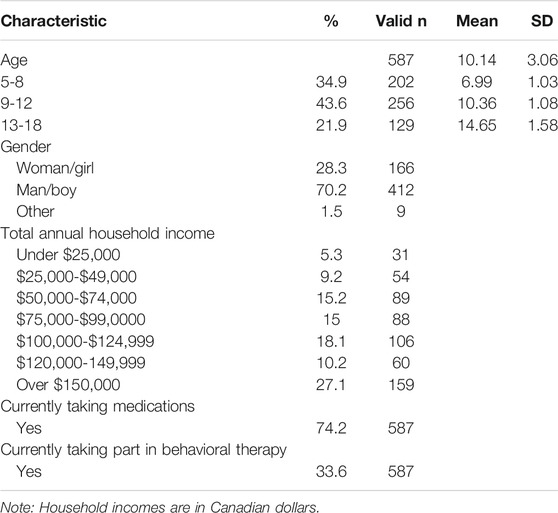
TABLE 1. Sample characteristics.
At the time of survey completion, 34% of children were currently involved in behavioral therapy, (e.g. social skills training, cognitive-behavioural therapy), and 74% of children were taking medication to manage their symptoms. In terms of a learning disorder diagnosis, 41% of parents reported their child having a comorbid diagnosis of learning disorder, with 6.3% of parents reporting a diagnosis of reading disorder, 19.3% reporting a diagnosis of writing disorder, 5% reporting a math disorder and 24.4% reporting multiple disorders. Parents (58%) also mentioned their child having other comorbid diagnoses, with 38% reporting anxiety, 9.6% reporting Autism Spectrum Disorder, 6.5% reporting a diagnosis of depression, 6.2% reporting a diagnosis of Tourette syndrome or Tic disorders, and 6.1% reporting a diagnosis of Oppositional Defiant Disorder.
Impact of COVID-19 on Learning and Education Services. Table 3 presents changes in learning and educational services following COVID-19 pandemic restrictions.
At the time of survey completion, all schools were closed, and no one reported attending in-person classes. To continue their academic learning, schools rapidly transitioned to online learning. Parents reported that 90% of children were receiving web-based instruction from their school/teachers during the school closures. Google Classroom was the predominant tool used to support online teaching (66%), followed by Microsoft Office tools (14%) and Zoom (4%). In terms of hours of schoolwork completed, parents reported that 78% of children with ADHD were completing 10 h or less of schoolwork per week (41% < 5 h, 36% 5–10 h) during the COVID-19 pandemic. Of the children with ADHD having an individualized learning curriculum (commonly known as an individualized education plan, IEP) (69.7%), only 40.5% of parents reported that their child was receiving educational materials that met their child’s specific learning needs.
Prevalence of Educational Related Challenges due to COVID-19
Parents (60%) communicated that it had been very or extremely challenging to adjust to online classes. Some of the reasons that were discussed included difficulties staying focused (80%), distractions (58%), material not engaging enough (41%), having to share laptops/computers with siblings/family members (18%), no good quiet space for learning (17%), and difficulties with internet bandwidth (12%). Furthermore, 94% of survey respondents tried to follow a routine during the COVID-19 pandemic. Of them, 60.5% stated that it was very or extremely challenging to adjust to this new routine with their child. Lastly, parents reported executive function challenges when completing online learning (see Figure 1). There were no significant age or gender differences identified in terms of difficulty or issues adjusting to online classes.
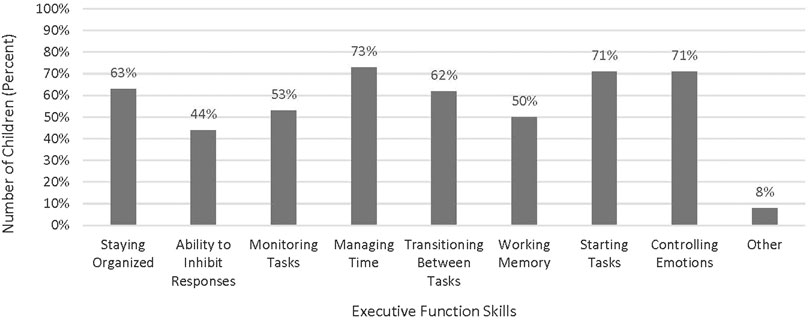
FIGURE 1. Number of children experiencing difficulty staying organized, inhibiting responses, monitoring tasks, managing time, transitioning between tasks, holding mental information (working memory), starting tasks, and/or controlling emotions during COVID-19 pandemic (caregiver report, n = 580, 70% male, average age = 10.14 years, SD = 3.06).
Mental Health Questions
PHQ-9
The Cronbach alpha score for the PHQ-9 for our sample was 0.79, indicating good internal consistency. Based on parent report for the PHQ-9, 36.5% (214/585) of children met the criteria for mild depressive severity, 27.8% (163/585) moderate depressive severity, and 17.7% (104/585) severe depressive symptom severity (moderately severe and severe categories were combined) (See Table 2).
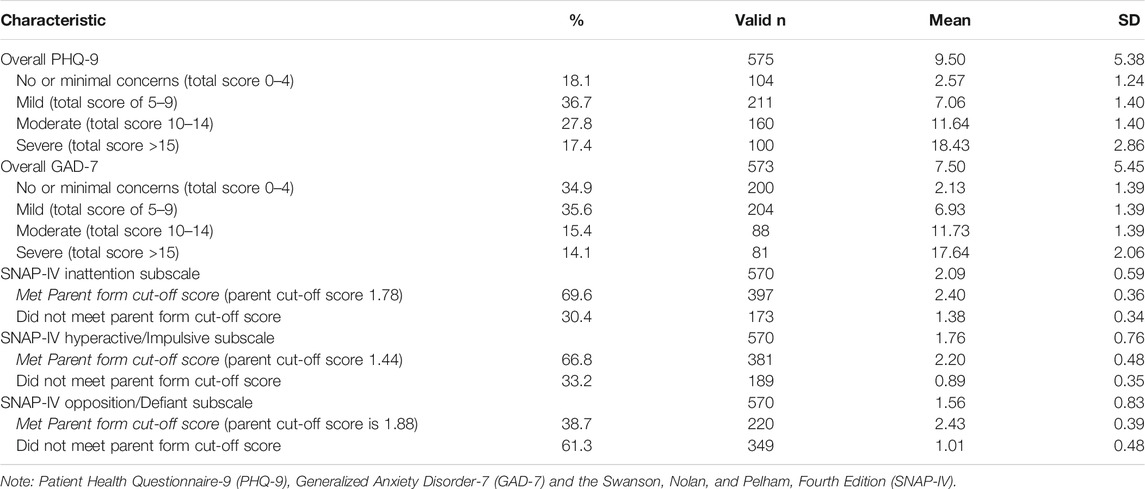
TABLE 2. Mental health and executive function skills scores.
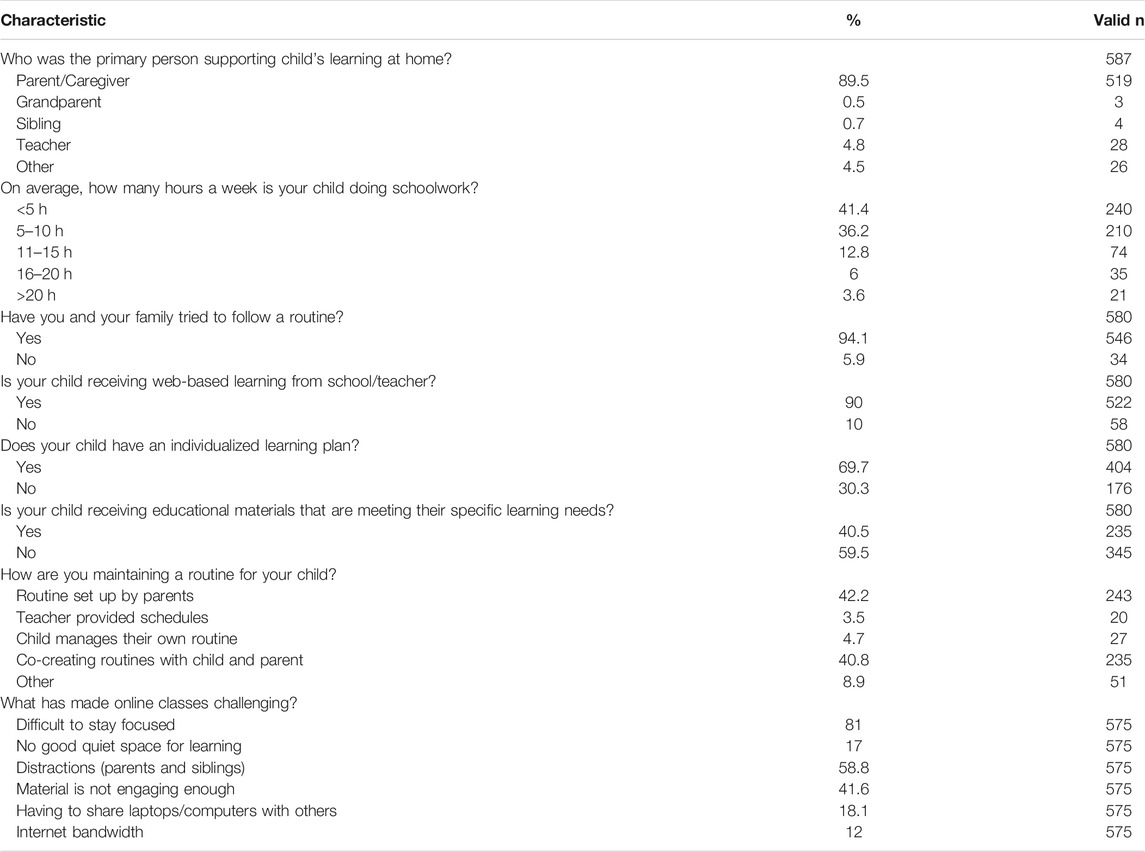
TABLE 3. Changes in educational curricula and services during COVID-19 pandemic.
GAD-7
The Cronbach alpha score for the GAD-7 was 0.89, suggesting good internal consistency. On the GAD-7, 34.8% (204/573) of children met the criteria for mild anxiety-like symptoms, 15.0% (88/573) moderate anxiety-like symptoms, and 13.8% (81/573) severe anxiety-like symptoms (See Table 2).
SNAP-IV
Based on the cut-off scores for the SNAP-IV, parents reported that 73.6% of their children with ADHD were currently exhibiting clinically significant Inattentive symptoms, 66.8% were showing clinically significant Hyperactive/Impulsive symptoms, and 38.7% were exhibiting clinically significant oppositional defiant behavior (ODD). The Cronbach alpha score of 0.94 suggests good internal consistency (See Table 2).
Correlates of Educational Challenges During the COVID-19 Pandemic
Results from Spearman’s correlations are presented in Table 4. In terms of socio-demographic information, age, gender, number of people in the household, total household income, currently taking medication, presently involved in therapy and receiving psychoeducational support did not significantly correlate with facing challenges with online courses. Inattentive and ODD symptom reports on the SNAP-IV, total depression scores on the PHQ-9, total anxiety symptom scores on the GAD-7, and challenges with different EF skills were correlated to facing difficulties adjusting to online courses.
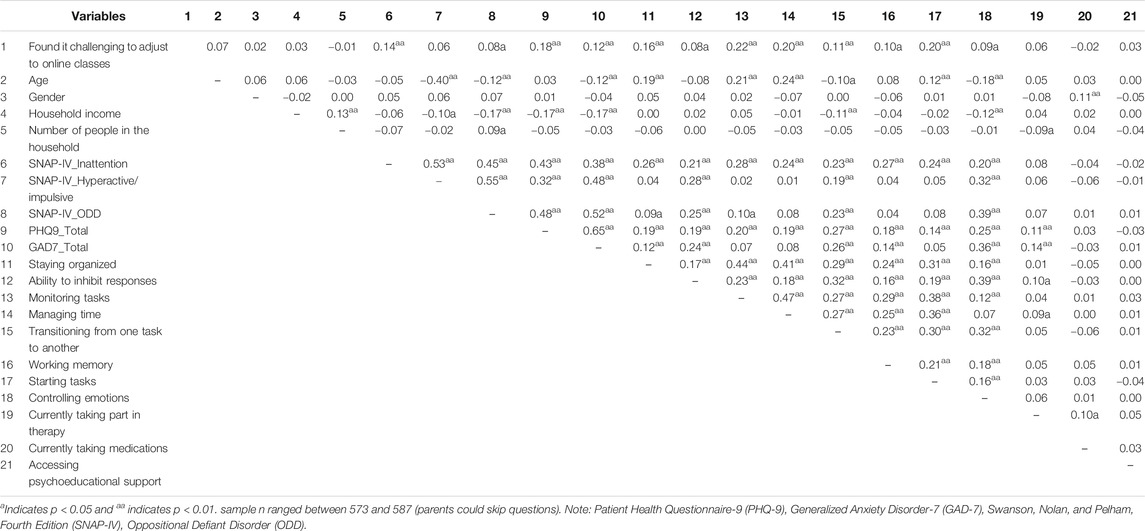
TABLE 4. Correlates of Educational Changes due to COVID-19 pandemic.
Block-wise logistic regression indicated total depression score on the PHQ-9 (OR = 1.08, 95% CI [1.00, 1.17], p = 0.047), challenges with monitoring tasks (EF skill monitoring task; OR = 2.39, 95% CI [1.18, 4.83], p = 0.016) and challenges with starting tasks (EF skill starting task; OR = 1.83, 95% CI [1.01, 3.31], p = 0.045) significantly affected the odds of facing difficulties adjusting to online courses (Table 5).
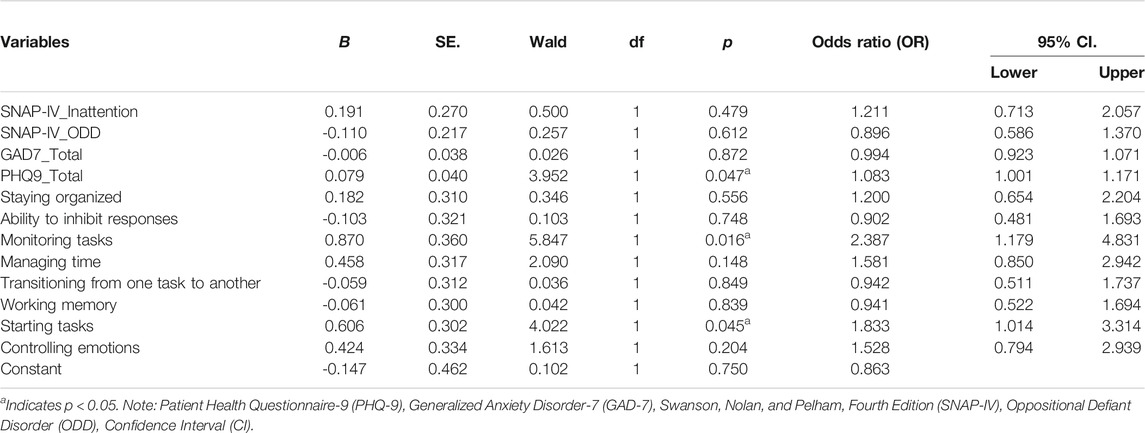
TABLE 5. Stepwise logistic regression model predicting challenges with online classes for children with ADHD.
Discussion
The purpose of this study was to understand changes in learning and educational services provided to Canadian children with ADHD during the COVID-19 pandemic. To our knowledge, this is the first study to document changes in learning and educational services provided to Canadian children with ADHD. Findings from the study suggested that all children with ADHD switched to online learning following school closures. The results showed that 90% of children were receiving web-based instruction. This meant that a small percentage of students did not complete online learning since the beginning of the pandemic. However, the reasons for not completing remote learning are unknown.
Similar to the findings of Becker et al. (2020), students with ADHD were engaging in reduced hours of online instruction. On average, in Canada, a child typically receives about 5.5 h of direct instruction from teachers per day. Our data revealed that 41% of students spent less than 5 h per week on their schoolwork, and about 36% spent between 5 to 10 h during the COVID-19 pandemic. This is a significant reduction in instructional hours. With school closures, the impact of these reduced instructional hours on children with ADHD will require follow-up. Future research needs to address whether the reduced instructional time leads to an increase in academic disparity among a group of students that usually need extra support. These findings will help teachers and educators provide targeted interventions and educational support to reduce the gap in learning.
Of the students with ADHD receiving online learning, significant challenges in adjusting to online classes were reported by parents. Specifically, online learning became more challenging for individuals who were exhibiting depressive symptoms and had struggles with starting and managing tasks. Our findings revealed that the majority of online learning for children was dependent on parents. While parents tried to follow a routine during the pandemic, over 60% of them reported finding it difficult to sustain a routine. Additionally, some parents reported that their child with ADHD did not have a quiet space to study at home, was distracted by others, or had to share devices with siblings, and thus were not able to engage in their online learning properly. As Canadian schools begin to reopen, it is imperative to address some of these inequities and support parents as much as possible to prevent further academic disparities.
In terms of learning, a significant portion of the survey respondents mentioned that their child was not receiving learning materials that were based on their child's modified curriculum or individualized education plan (IEP). Given that 41% of the children with ADHD from the current sample had a learning disorder, it is important for teachers and educators to monitor and provide learning materials that are relevant for their students. This will help with engagement and improve the overall learning experience.
Interestingly, parents of children with ADHD reported significant challenges in implementing EF skills during the COVID-19 pandemic. While EF challenges are common in individuals with ADHD (Willcutt et al., 2005), the present study was not specifically investigating changes in EF skills during the pandemic. However, parents and teachers are encouraged to teach and apply strategies, (e.g. using a daily planner, creating checklists, setting time limits) that children with ADHD can use to manage their EF challenges (Gaskins and Pressley, 2007; Kaufman, 2010).
It is also essential to mention that parents of children with ADHD reported significant mental health challenges in their children during the COVID-19 pandemic, especially related to depressive and anxiety symptoms. While the purpose of this study was not to investigate mental health challenges, it is important to monitor these symptoms closely overtime to ensure appropriate interventions are provided for these children. There are severe long-term consequences of untreated depressive and anxiety symptoms, specifically in the pediatric population (Rapaport et al., 2005). Additionally, consistent with the current study, studies with other neurodevelopmental disorders have reported challenges during the COVID-19 pandemic, including individuals with intellectual disability (Courtenay, 2020) and Autism Spectrum Disorder (Colizzi et al., 2020). Although there is some consensus around the impact of COVID-19 on mental health and educational services, it is difficult to understand the exact significance of this pandemic on a vulnerable population. Future studies are required to answer whether the COVID-19 impacted vulnerable populations differently compared to the general population.
Limitations and Future Studies
This study provides valuable information about the impact of the COVID-19 pandemic on children with ADHD. However, these results need to be considered in light of some limitations. The survey data is cross-sectional and thus unable to make inferences about long-term impacts of changes in learning and educational services due to school closures. Another limitation of the survey sample is the reliance on parent reports for the diagnosis of ADHD in their children. As indicated by the SNAP-IV symptoms, a proportion of the children with ADHD did not meet the symptom cut off. However, it is important to note that these below threshold ratings could be due to a number of factors, including receipt of medication or behavioral treatment. Numerous factors impact online learning for children with ADHD, and the current study did not capture all these relevant factors. Lastly, while the survey sample was considered representative of the Canadian population, it is possible that we received responses from highly motivated parents, high socioeconomic status families representing a disproportionate fraction of the population, potentially with needs and struggles.
Future studies are certainly needed to continue to understand the challenges faced by children with ADHD during the COVID-19 pandemic. The current study did not specifically investigate the impact of children’s motivation, engagement and commitment to learning on successful online learning experiences; therefore, forthcoming studies are needed to address these concerns. It would allow educators to intervene and address some of the challenges with online learning. It would also be important to understand the challenges of online learning from the perspectives of students and teachers who are engaged in online teaching of students with ADHD. Future studies should address potential variables that could help mitigate challenges related to online learning. Finally, as we monitor the reopening of schools and adjustments implemented by school boards, it is important to specifically understand how the lack of face to face instruction these past few months have impacted learning in children with ADHD.
Conclusion
Overall, this study provides valuable information about the educational challenges faced by children with ADHD. Given the present study’s findings, it is vital to provide behavioral intervention and treatment to children with ADHD to address their depression and EF skill-related challenges. In addition, it may be useful to tackle emotional concerns simultaneously using a transdiagnostic approach to interventions.
With the strong possibility of a second wave of COVID-19 and additional school closures, it is important and necessary for educators and mental health professionals to be aware of targeted strategies that could help ease the transition to online classes for children with ADHD. As a recent article stated, “we should anticipate that the secondary stressors from the COVID-19 pandemic will escalate the number of children with developmental, behavioral, psychological, and maltreatment concerns both during and in the aftermath of this crisis” (Fung and Ricci, 2020).
Data Availability Statement
The raw data supporting the conclusion of this article will be made available by the authors, without undue reservation.
Ethics Statement
The studies involving human participants were reviewed and approved by the Conjoint Health Research Ethics Board (CHREB: REB20-0672), University of Calgary. Written informed consent for participation was not required for this study in accordance with the national legislation and the institutional requirements.
Author Contributions
All authors listed have made a substantial, direct and intellectual contribution to the work and approved it for publication.
Funding
This work was supported by funding from the Alberta Children’s Hospital Foundation and Owerko Center (Cumming School of Medicine, University of Calgary).
Conflict of Interest
The authors declare that the research was conducted in the absence of any commercial or financial relationships that could be construed as a potential conflict of interest.
Acknowledgments
The authors would like to thank the children, and adolescents and their families, for their participation. Thank you to Linda Beatty for her assistance in manuscript formatting.
References
American Psychiatric Association (2013). American psychiatric association 2013, in Diagnostic and statistical manual of mental disorders. 5th ed, Philadelphia, PA, United States: American Psychiatric Association. doi:10.1176/appi.books.9780890425596.744053
Becker, S. P., Breaux, R., Cusick, C. N., Dvorsky, M. R., Marsh, N. P., and Sciberras, E. (2020). Remote learning during COVID-19 : examining school practices , service continuation , and difficulties for adolescents with and without ADHD. J. Adolesc. Health 67(6), 769–777. doi:10.1016/j.jadohealth.2020.09.002
Biederman, J., Monuteaux, M. C., Doyle, A. E., Seidman, L. J., Wilens, T. E., Ferrero, F., et al. (2004). Impact of executive function deficits and attention-deficit/hyperactivity disorder (ADHD) on academic outcomes in children. J. Consult. Clin. Psychol. 72, 757–766. doi:10.1037/0022-006X.72.5.757
Bobo, E., Lin, L., Acquaviva, E., Caci, H., Franc, N., Gamon, L., et al. (2020). Comment les enfants et adolescents avec le trouble déficit d’attention/hyperactivité (TDAH) vivent-ils le confinement durant la pandémie COVID-19 ? Encephale 46, S85–S92. doi:10.1016/j.encep.2020.05.011
Brault, M. C., and Lacourse, É. (2012). Prevalence of prescribed attention-deficit hyperactivity disorder medications and diagnosis among Canadian preschoolers and school-age children: 1994-2007. Can. J. Psychiatr. 57, 93–101. doi:10.1177/070674371205700206
Bussing, R., Fernandez, M., Harwood, M., Wei Hou, W., Garvan, C. W., Eyberg, S. M., et al. (2008). Parent and teacher SNAP-IV ratings of attention deficit hyperactivity disorder symptoms: psychometric properties and normative ratings from a school district sample. Assessment 15, 317–328. doi:10.1177/1073191107313888
Canadian Attention Deficit Hyperactive Disorder Research Association (2018). Caddra 91. CADDRA guidelines. 4th Ed, 399–404. Available at: Accessed: www.caddra.ca September 27, 2020).
Colizzi, M., Sironi, E., Antonini, F., Ciceri, M. L., Bovo, C., and Zoccante, L. (2020). Psychosocial and behavioral impact of COVID-19 in autism Spectrum disorder: an online parent survey. Brain Sci. 10, 341. doi:10.3390/brainsci10060341
Cortese, S., Adamo, N., Del Giovane, C., Mohr-Jensen, C., Hayes, A. J., Carucci, S., et al. (2018). Comparative efficacy and tolerability of medications for attention-deficit hyperactivity disorder in children, adolescents, and adults: a systematic review and network meta-analysis. Lancet Psychiatry 5, 727–738. doi:10.1016/S2215-0366(18)30269-4
Cortese, S., Asherson, P., Sonuga-Barke, E., Banaschewski, T., Brandeis, D., Buitelaar, J., et al. (2020). ADHD management during the COVID-19 pandemic: guidance from the European ADHD guidelines group. Lancet Child Adolesc. Heal. 4(6), 412–414. doi:10.1016/S2352-4642(20)30110-3
Courtenay, K. (2020). Covid-19: challenges for people with intellectual disability. BMJ 369, m1609. doi:10.1136/bmj.m1609
Esposito, S., and Principi, N. (2020). School closure during the coronavirus disease 2019 (COVID-19) pandemic: an effective intervention at the global level?. JAMA Pediatr. 174(10), 921–922. doi:10.1001/jamapediatrics.2020.1892
Fung, A., and Ricci, M. F. (2020). Rethinking 'essential' and 'nonessential': the developmental paediatrician's COVID-19 response. Paediatr. Child Health 25, 265–267. doi:10.1093/pch/pxaa077
Gaskins, I. W., and Pressley, M. (2007). “Teaching metacognitive strategies that address executive function processes within a schoolwide curriculum,” in Executive function in education: From theory to practice, Editor L. Meltzer (New York, NY, US: Guilford). Available at: https://eric.ed.gov/?id=ED493739.
Kaufman, C. (2010). Executive function in the classroom: practical strategies for improving performance and enhancing skills for all students. New York, NY, United States: ERIC.
Kroenke, K., Spitzer, R. L., and Williams, J. B. (2001). The PHQ-9: validity of a brief depression severity measure. J. Gen. Intern. Med. 16, 606–613. doi:10.1046/j.1525-1497.2001.016009606.x
Liebenberg, L., Theron, L., Sanders, J., Munford, R., van Rensburg, A., Rothmann, S., et al. (2015). Bolstering resilience through teacher-student interaction: lessons for school psychologists. Sch. Psychol. Int. 37, 140–154. doi:10.1177/0143034315614689
Lovett, B. J., and Nelson, J. M. (2020). Systematic review: educational accommodations for children and adolescents with attention-deficit/hyperactivity disorder. J. Am. Acad. Child Adolesc. Psychiatry S0890-8567(20), 31333–31342. doi:10.1016/j.jaac.2020.07.891
Polanczyk, G. V., Willcutt, E. G., Salum, G. A., Kieling, C., and Rohde, L. A. (2014). ADHD prevalence estimates across three decades: an updated systematic review and meta-regression analysis. Int. J. Epidemiol. 43, 434–442. doi:10.1093/ije/dyt261
Rapaport, M. H., Clary, C., Fayyad, R., and Endicott, J. (2005). Quality-of-Life impairment in depressive and anxiety disorders. Am. J. Psychiatr. 162, 1171–1178. doi:10.1176/appi.ajp.162.6.1171
Schiariti, V. (2020). The human rights of children with disabilities during health emergencies: the challenge of COVID-19. Dev. Med. Child Neurol. 62, 661. doi:10.1111/dmcn.14526
Spitzer, R. L., Kroenke, K., Williams, J. B., and Löwe, B. (2006). A brief measure for assessing generalized anxiety disorder: the GAD-7. Arch. Intern. Med. 166, 1092–1097. doi:10.1001/archinte.166.10.1092
Statistics Canada (2018). Canadian income survey, 2018. Available at: Accessed: https://www150.statcan.gc.ca/t1/tbl1/en/tv.action?pid=1110001301 June 24, 2020).
Statistics Canada (2016). Census profile, 2016. Available at: Accessed: https://www12.statcan.gc.ca/census-recensement/2016/dp-pd/prof/details/Page.cfm?Lang=EandGeo1=PRandCode1=35andGeo2=and Code2=andData=CountandSearchText=OntarioandSear January 9, 2021).
Swanson, J., Nolan, W., and Pelham, W. E. (1992). The SNAP-IV rating scale. Irvine, CA, United States: CA Univ. Calif. Irvine.
UNESCO (2020). Adverse consequences of school closures. Available at: Accessed: https://en.unesco.org/covid19/educationresponse/consequences September 27, 2020).
Willcutt, E. G., Doyle, A. E., Nigg, J. T., Faraone, S. V., and Pennington, B. F. (2005). Validity of the executive function theory of attention-deficit/hyperactivity disorder: a meta-Analytic review. Biol. Psychiatr. 57, 1336–1346. doi:10.1016/j.biopsych.2005.02.006
Wolraich, M. L., Hagan, J. F., Allan, C., Chan, E., Davison, D., Earls, M., et al. (2019). Clinical practice guideline for the diagnosis, evaluation, and treatment of attention-deficit/hyperactivity disorder in children and adolescents. Pediatrics 144, e20192528. doi:10.1542/peds.2019-2528
World Health Organization (2019). Coronavirus disease (COVID-19) pandemic. Available at: Accessed: https://www.who.int/emergencies/diseases/novel-coronavirus-2019 June 24, 2020).
Keywords: ADHD 1, COVID-19 2, educational services 3, children 4, pandemic 5
Citation: Hai T, Swansburg R, MacMaster FP and Lemay J-F (2021) Impact of COVID-19 on Educational Services in Canadian Children With Attention-Deficit/Hyperactivity Disorder. Front. Educ. 6:614181. doi: 10.3389/feduc.2021.614181
Received: 05 October 2020; Accepted: 22 January 2021;
Published: 25 February 2021.
Edited by:
Christine Beaudry, Nevada State College, United StatesReviewed by:
Balwant Singh, Partap College of Education, IndiaGeorge DuPaul, Lehigh University, United States
Copyright © 2021 Hai, Swansburg, MacMaster and Lemay. This is an open-access article distributed under the terms of the Creative Commons Attribution License (CC BY). The use, distribution or reproduction in other forums is permitted, provided the original author(s) and the copyright owner(s) are credited and that the original publication in this journal is cited, in accordance with accepted academic practice. No use, distribution or reproduction is permitted which does not comply with these terms.
*Correspondence: Jean-François Lemay, amYubGVtYXlAYWhzLmNh