 Lea Pölczman
 Márk Jámbor1
 György Purebl
- 1Institute of Behavioural Sciences, Faculty of Medicine, Semmelweis University, Budapest, Hungary
- 2Department of Ophthalmology, Faculty of Medicine, Semmelweis University, Budapest, Hungary
Introduction: During their academic studies, medical students may encounter a variety of challenging situations. It is no wonder that they have a higher prevalence of poor mental health than the general population. Mentoring programs have proven useful in promoting mental health in medical education. The study aimed to explore the perceptions and experiences of medical students as mentors in a near-peer mentoring program.
Methods: A qualitative study was carried out between March and April 2022 at Semmelweis University in Budapest, Hungary. Five focus group discussions (FGDs) included 26 medical students who were enrolled as mentors in the mentoring program. The recordings were transcribed verbatim and anonymized. An deductive and semantic approach was adopted, and the data were analyzed with thematic analysis.
Results: Three major themes were identified: professional and personal growth and reflections on the mentoring experience. Mentors reported growth in social and practical problem-solving skills, self-confidence, psychosocial benefits, and both personal and professional development. The program had a great impact on students’ sense of self-efficacy, self-awareness, perception of their competencies, and adherence to their boundaries.
Discussion: In conclusion, the mentors strongly emphasized the professional and psychosocial benefits they perceived while participating in the mentoring program. Therefore, the experiences obtained during the mentoring are important milestones. Mentoring programs could greatly improve students both personally and professionally so that later, they will be the best possible professionals in the field of health care.
1 Introduction
Throughout their highly demanding academic studies, medical students face countless challenging situations (Dyrbye et al., 2006; Dyrbye et al., 2008; Dyrbye et al., 2009). No wonder medical students compared to the general population demonstrate an increased prevalence of poor mental health with high rates of stress, anxiety, distress, depression, burnout, and suicidal thoughts (Dyrbye et al., 2006; Dyrbye et al., 2009; Győrffy et al., 2013; Grant et al., 2015; Rotenstein et al., 2016; Heinen et al., 2017; Moutinho et al., 2017; Torales et al., 2019; Wilkes et al., 2019; Aziz et al., 2020; Jordan et al., 2020; Kaewpila et al., 2020; Rajapuram et al., 2020; Cho and Lee, 2021; Tlili et al., 2021; Whistle, 2021; Langness et al., 2022). According to the national and international literature, the prevalence of burnout syndrome can be as high as 50% among medical students (Dyrbye et al., 2006; Ádám and Hazag, 2013; IsHak et al., 2013; Ádám et al., 2014; Dyrbye and Shanafelt, 2016; Tlili et al., 2021). The learning environment characteristics influence student burnout greatly (Dyrbye et al., 2009), for example, academic workload, time constraints, examination burden, and participation in dissection practices (Sándor et al., 2015).
To address mental health concerns and to offer support, guidance, and interventions, medical schools provide or ought to provide a wide range of services, such as mentoring (Grant et al., 2015; Wilkes et al., 2019; Cho and Lee, 2021; Graves et al., 2021; Langness et al., 2022). Several existing studies concluded that peer mentoring was a great and cost-effective way to help first-year students handle and face challenges, cope, and adjust to the new environment at the beginning of their academic lives. By being able to address both personal and professional matters, mentors are important cornerstones in burnout prevention (Singh et al., 2014; Abdolalizadeh et al., 2017; Zhang et al., 2017; Akinla et al., 2018; Lapp et al., 2018; Nimmons et al., 2019).
Near-peer mentoring is a relationship wherein a senior student (mentor) provides guidance and support as a counselor to a fellow junior student (mentee). The mentors are academically one or more years senior to the mentored student. By this proximity in age and social and professional background, the mentors are credible to the mentees. Mentoring can be challenging, with many difficulties and limitations for mentors, for example, it can be a resource-intensive task. It is also important to constantly monitor the mentoring process and the mentors, and provide them with psychological support. This way, mentors are developing professionally and personally through constant monitoring, sensitization and support. Educating the coming generation of healthcare professionals about the importance of mental health and well-being, and giving them tools and techniques to maintain and improve it, will eventually result in a better, more humane healthcare system for workers and patients alike. Also, the experiences obtained during mentoring are vital milestones, as important skills are also being acquired, to help students become the best healthcare professionals possible. As discussed in previous studies, students reported numerous benefits they experienced by participating in the program as mentors and mentees alike. The most frequently mentioned benefits were reduced anxiety and stress, increased self-confidence, self-awareness, improved social, communication, and problem-solving skills, well-being, more effective learning, and enhanced resilience (Yusoff et al., 2010; Kalén et al., 2012; Kovács and Kovács, 2012; Al-Dubai et al., 2013; Rehman et al., 2014; Singh et al., 2014; Abdolalizadeh et al., 2017; Zhang et al., 2017; Kukreja, 2018; Altonji et al., 2019; Prunuske et al., 2019; Laurence et al., 2020; Mohd Shafiaai et al., 2020; Atlas et al., 2021).
This exploratory study aims to examine the perceptions and experiences of the mentors in a near-peer mentoring program. In this study, we would like to present the first results of research on a near-peer mentoring program, which is innovative and the first of its kind in Hungary.
2 Materials and methods
2.1 Study design
This qualitative study was conducted at the Faculty of Medicine at Semmelweis University, Budapest. Five focus group discussions (FGDs) were formed to explore the mentors’ satisfaction with the program, their experiences, and perceptions of potential benefits as a result of the participation. The study was reported according to the consolidated criteria for reporting qualitative research guidelines (Tong et al., 2007), and the checklist can be found in Supplementary Table 1.
2.2 Setting
The Semmelweis Mentoring Program was established in September 2019 at Semmelweis University, Budapest, Hungary. The medical program lasts 6 years. The Mentoring Program is designed to help first-year medical students adapt to university life, master proactive coping in overcoming difficulties, and also provide them with practical information about the university. The goal of the program is psychosocial intervention, with the aim to maintain and improve students’ mental health and quality of life, prevent burnout, and reduce stress levels. In the academic year of 2021/2022, 185 first-year students and 171 peer mentors participated in the 1-year mentoring program. Mentors were third-year students and above who were trained at the beginning of the program and throughout the academic year on the following topics: goals of mentoring, competencies, and boundaries in mentoring, stress management, and mental health support. They receive training from psychologists and physicians in psychological/psychiatric emergencies, learning how to initiate appropriate responses until the mentee receives professional assistance, if necessary.
A major strength of this program is the mandatory training of mentors, which includes the monitoring of their work and involvement by asking them to keep a mentoring diary, and the provision of ongoing supervision to maintain the quality of their mentorship. In each semester, mentors participate in a minimum of 4 mandatory training sessions and 2 supervision, each lasting a minimum of 90 min. Supervision is not standard in most mentoring programs, despite being an appropriate tool to provide mentors with guidance and feedback (Altonji et al., 2019). These two group supervision occasions per semester provide an opportunity for self-reflection and exchanging experiences and thoughts about their work, also providing support for the mentors. Mentors are encouraged to contact the leaders of the Mentoring Program when they are not confident about the next steps to take. They are introduced to the services and possibilities offered by the university (e.g., psychological student counseling service) and are encouraged to recommend these in case of need. The mentors received ECTS credits for their work. The program guidelines require at least 1 face-to-face meeting per month and weekly online contact. The frequency of contact or communication between the mentor and the mentee depends solely on their needs. The majority of students follow the guidelines. Fifty-one percent of mentors keep in touch with their mentees at least weekly, and 41% meet with them monthly. Despite the guidelines, the actual frequency of meetings may vary due to scheduling conflicts, personal commitments, or differing needs and preferences of mentors and mentees.
2.3 Participants
Purposive sampling was used, based on the following inclusion criteria: (1) students who were enrolled in the program at that time and (2) were mentors. Study participants were recruited via email and through the Mentoring Program’s social media account in March 2022. By this time, mentors had been working with their mentees for approximately8 months. The exclusion criteria were as follows: students who do not contribute to the audio recording. Since there were no such students, no one was excluded from participating in the study. Participation was voluntary. Grouping into focus groups was randomized. Five focus groups included 26 participants.
2.4 Data collection
We collected data through semi-structured FGDs. The FGDs took place between March and April 2022 on the campus of Semmelweis University in Budapest, Hungary. The FGDs were conducted in Hungarian by LP, a psychologist. Prior to the discussions, study participants were informed about the purpose of the study, confidentiality, and their rights to withdraw from participation. Then, every participant signed informed consent, verbally also consented to the audio recording, and filled out a demographic questionnaire (gender, age, year of study). FGDs lasted between 60 and 90 min and were audio recorded. Only the moderator and the study participants were present. The moderator took notes during the FGDs. A semi-structured interview guide was used (see Supplementary Material 1), which was developed by LP and ZsGy. The guiding questions were formulated based on thorough consideration of various sources, including topics raised during supervision sessions from previous years, contents mentioned by students, and students’ feedback about the program and the mentoring role, obtained during supervision sessions. Furthermore, the interview guide underwent a review process facilitated by EG to ensure its comprehensiveness and relevance. The guide we developed for our supervision sessions was also used as a basis for developing the interview questions. The FGD interview guide contained open-ended questions that explored students’ experiences with the program, and their perceptions of received benefits as a result of the participation. When necessary, follow-up questions were asked for clarification or further exploration. After the first few FGDs, debriefing sessions were held with the research team to report on the data collection. Data collection was carried out until data saturation was reached and no significant new data or themes emerged.
2.5 Data analysis
The recordings were transcribed verbatim and anonymized after completing every FGD. A deductive approach was adopted and the FGDs’ data were analyzed using the six-step-method created by Braun and Clarke (Braun and Clarke, 2006). A semantic approach was utilized in our analysis. The data analysis was conducted by two researchers with different disciplinary backgrounds (LP and MJ). MJ is a physician and is involved in research focusing on the mental health of medical students’. He only accessed the anonymized data. Firstly, the transcripts were read through independently multiple times by both researchers in order to get familiar with the data. In step two, a handful of transcripts were independently coded line by line. After that, the codes were compared, the codebook was created, and a consensus on coding was reached. After the first transcripts were re-coded, the remaining transcripts were coded independently. Then, their independent analyses were discussed and compared, so that the discrepancies could be resolved. Therefore, further re-coding was not necessary. Once the consensual agreement was reached, the relationships between codes were discussed, and then patterns, differences, and similarities were searched and looked into. In step three, sub-themes, and emerging themes were categorized. The potential themes were discussed regularly several times. In step four, the themes were reviewed in relation to the coded material and the whole data set, and a thematic map was created. In step five, the themes were further refined and defined, the findings were reviewed, and a consensus on thematic analysis was reached. Lastly, in step six, the report was produced, and the findings were reported in a narrative form that summarize the experiences, attitudes, thoughts, and suggestions of the participants. Quotes that best illustrate the themes were chosen using codes such as FGD1-P01. The data analysis was reviewed by ZsGy, to ensure that the original data was reflected in the interpretation. All authors agreed on the final interpretations of the data.
3 Results
The five FGDs included 26 participants (5–9 per FGD). Ten of the participants were male (38.5%) and sixteen were female (61.5%). Participants came from the 20–24 age group (mean = 22.04; SD = 2.163). Most of the participants were third-year medical students (18; 69.2%), 5 (19.2%) of them were in their fourth year, and only 3 participants were second-year students (11.5%).
The thematic analysis of the data resulted in three broad themes. Two are related to the perceived benefits and outcomes of participating in the mentoring program, while the remaining is related to the participants’ reflections on the mentoring experience and on the mentoring program. The Supplementary Table 2 provides a representation of the three emerging themes, sub-themes, some of the most reflective quotes, and interview excerpts. The thematic map for the themes and sub-themes is given in Figure 1.
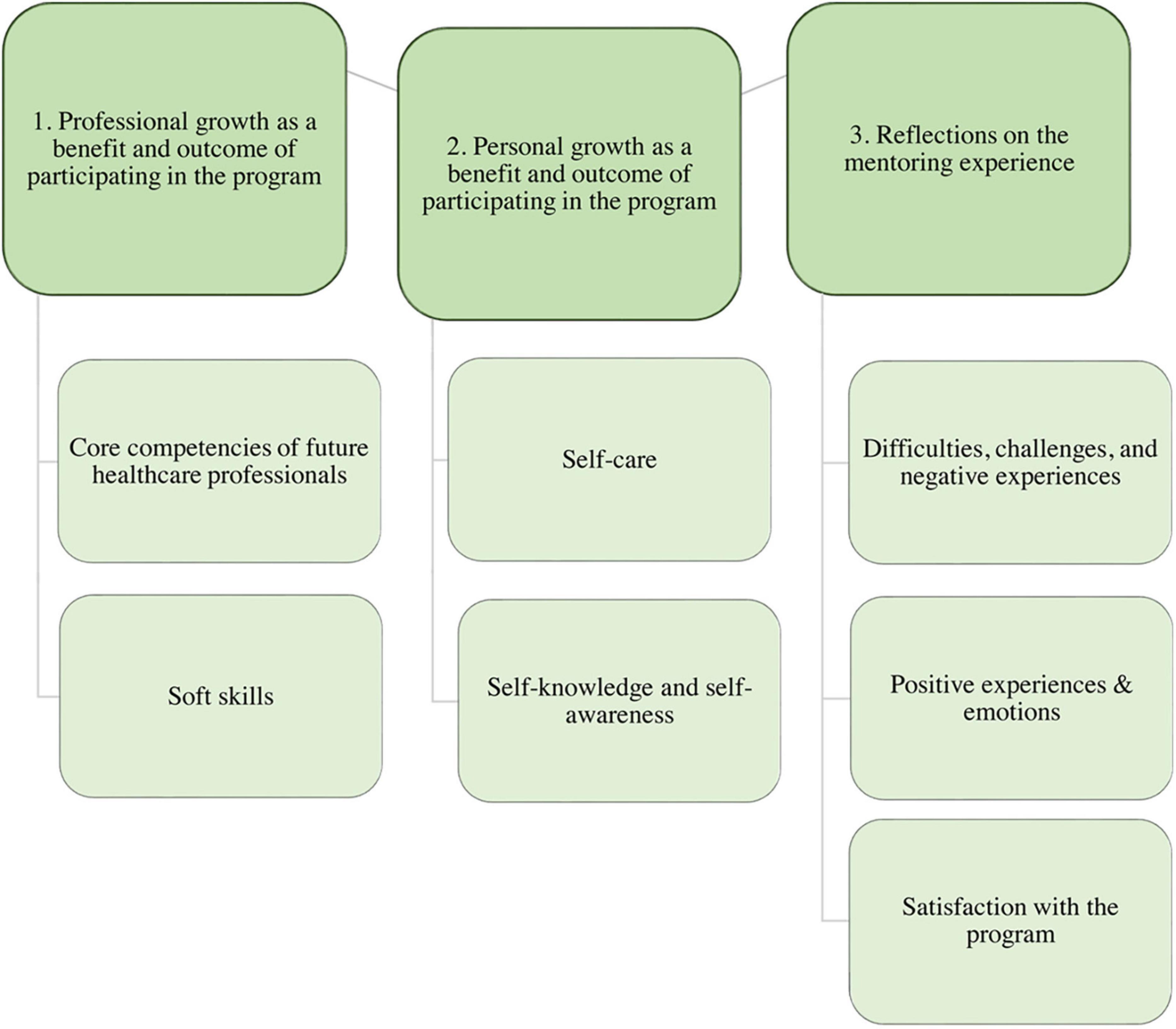
Figure 1. Thematic map.
3.1 Professional growth as a benefit and outcome of participating in the program
Two sub-themes of professional growth-related topics were identified. Participants felt that they improved in the following areas by participating in the program: soft skills and core competencies. Acquiring and developing such skills are important stepping stones to becoming a good healthcare professional.
3.1.1 Soft skills
The development of soft skills was one of the most frequently cited benefits and outcomes of participating in the program, specifically: the sense of responsibility, punctuality, and time management. Communication skills and problem-solving skills were also gained by mentors through participation in the Mentoring Program. Mentors reported that coordinating and organizing sessions, managing schedules, meeting deadlines, and paying attention to detail were tasks each mentor had to excel at:
“[.] my problem-solving skills have improved significantly. I encountered numerous administrative challenges while assisting my mentee, some of which were unfamiliar to me, leaving me unsure of where to begin. However, with perseverance, I successfully devised solutions to address her issues and resolved them effectively.” (FGD4-P01)
3.1.2 Core competencies of future healthcare professionals
The mentors reported improvements in empathy. Some mentors have also improved their ability to maintain their own boundaries and have become more aware of their own competencies. These skills learned during mentoring are essential skills to conduct successful mentoring which is also pivotal to becoming a successful healthcare professional.
“I discovered that some situations, which were easy for me, may not be the same for others. Through my mentoring experience, I gained empathy and realized that everyone’s experiences are unique. This understanding will be valuable in my future healthcare work, where patients have diverse experiences and process them differently.” (FGD5-P03)
Another mentor further added: “In our first meeting, I conveyed to my mentee the purpose of the program and clarified my role. I endeavored to maintain those boundaries throughout our mentoring relationship, aiming to provide assistance and support to the best of my ability within my competencies.” (FGD1-P09)
Some mentors labeled their work as a simulation and reported that their mentor-mentee relationship was comparable to and thus was good practice for their future relationships with patients. A participant noted:
“[.] it was good practice for the future, like getting ready for when I become a physician. We can try hard to help, but if the mentee - or later the patient - doesn’t want to change, there’s not much we can do.” (FGD2-P02)
3.2 Personal growth as a benefit and outcome of participating in the program
Students reported several different aspects of personal development and growth in connection with the program. Two sub-themes were identified: self-knowledge and self-awareness, and self-care.
3.2.1 Self-knowledge and self-awareness
The discussions revealed a new layer of self-knowledge and self-awareness. Certain mentors acknowledged their inclination toward being highly self-critical and perfectionist. The following quote reflect this sub-theme:
“My mentee also served as a reflection for self-awareness. During specific instances when my mentee exhibited inappropriate behavior, it became apparent that I was mirroring those actions, recognizing the undesirability of such conduct. This awareness motivated me to initiate changes in these aspects of myself. In this reciprocal dynamic, the mentorship has proven to be a valuable catalyst for personal growth.” (FGD5–P03)
Another mentor added:
“During the mentoring process I realized that I hold high expectations for myself, particularly regarding my academic achievements.” (FGD1-P03)
3.2.2 Self-care
Mentors expressed the acknowledgment of the significance and necessity of self-soothing, occasionally emphasizing the importance of prioritizing one’s own interests. One mentor specifically highlighted the practice of prioritizing personal interests:
“One female mentor commented on this: “I gained insight that there are moments when prioritizing myself and my needs is necessary for my mental health in order to be able to help others.” (FGD1-P01)
3.3 Reflections on the mentoring experience
Mentors experienced a wide array of emotions and gained a broad range of experiences while mentoring. This theme consists of students’ perceptions and reflections on their experiences and on the mentoring program. This theme consists of three sub-themes.
3.3.1 Positive experiences and emotions
The majority of the shared experiences and emotions regarding the mentoring program and the mentor-mentee relationship were positive. Experiences played a crucial role in the program, with a significant number of participants expressing joy, positive sentiments, and satisfaction with their role as mentors. Mentors often reported that receiving positive feedback, such as the mentee accepting their advice, adjusting to university life, and becoming more independent and capable, served as motivation to continue. Feeling useful and effective was another advantage mentors highlighted.
“I provided assistance to my mentee beyond practical matters. She faced numerous personal challenges that hindered her from focusing on her exams. During a particularly difficult moment when she had a panic attack and couldn’t stop crying, I reached out to her. We engaged in a 2-h conversation, discussing the potential solutions and reassuring her that her life was not without hope. At that moment, I felt a profound sense of being able to offer significant support. Cultivating such a close relationship with her and earning her trust brought me immense joy.” (FGD5–P03)
This is reflected in the following quote:
“I had an exceptionally positive experience. For instance, we’ve cultivated a strong bond to the extent that my mentee turns to me first with all her inquiries. The trust she places in me is truly gratifying. Additionally, it’s quite encouraging that she values and heeds my advice. I sense that she greatly relies on my guidance.” (FGD2-P01)
3.3.2 Difficulties, challenges, and negative experiences
Certain mentors shared occasions when they experienced a sense of disappointment. Mentors also reflected on instances in the mentoring relationship that fell short of their expectations. A participant noted:
”My mentee proved to be an exceptionally bright and clever student, which, in a way, presented a challenge as I noticed him handling nearly every task independently. I aimed to offer my assistance to share the wisdom I had gained, but unfortunately, he seldom sought my guidance. This lack of need for my support left me disappointed, and I interpreted it as a personal setback.” (FGD2–P04)
A couple of participants conveyed feelings of ineffectiveness. And there were instances when mentors encountered challenging situations. A mentor shared his challenging experience:
“It’s disheartening to witness the challenges the mentee is facing and understand the reasons behind them. You make an effort to offer assistance, equipped with the knowledge of how to help, yet they remain resistant to your advice. Feeling ineffective is profoundly discouraging. Nevertheless, it’s crucial to learn how to cope with these situations, as similar challenges may arise in the future.” (FGD2-P06)
3.3.3 Satisfaction with the program
Based on the focus group interviews, students expressed satisfaction with the program, its offerings, and organization. Participants emphasized the program’s significance, highlighting the extreme usefulness of the supervision sessions. Mentors frequently commended the pre-program training, noting its ideal nature and the acquisition of valuable and current knowledge. The communication of information was perceived as effective and appropriate. A mentor commented on the usefulness of supervision sessions:
“For me, these supervisions turned out to be a pleasant surprise. Initially, I lacked motivation to attend, but it proved highly beneficial to learn about others’ experiences and realize that they encountered similar or even identical challenges as me. Furthermore, I found the opportunity to assist my fellow mentors rewarding […]. The training and supervision adequately equipped us to address the diverse issues and problems that might arise.” (FGD1-P04)
Another mentor further added: “I wouldn’t alter or include anything additional in the mentor training, as it exceeded my expectations by covering a comprehensive range of topics. It proved exceptionally valuable, and I especially appreciated the self-awareness component of the mentor training, which I found truly engaging and enjoyable.” (FGD1-P01)
4 Discussion
In this qualitative study, the perceptions and experiences of the mentors in Semmelweis University’s Mentoring Program were investigated. Three major themes were identified: professional and personal growth, and reflections on the mentoring experience. The mentors strongly emphasized the positive benefits and outcomes of the peer mentoring program. And both the positive and negative experiences of participants were examined.
According to the mentors, the program promoted professional growth by strengthening their soft, practical problem-solving and communication skills, and improved their time management, and sense of responsibility. The findings from previous studies are consistent with these findings, concluding that near-peer mentoring programs have been shown to greatly help mentors in their professional and personal growth (Singh et al., 2014; Mat Nor et al., 2017; Nimmons et al., 2019; Prunuske et al., 2019). In previous international studies, mentors reported several benefits of participating in a mentoring program, including the development of professional qualities such as better stress management, more efficient time management, enhanced communication and, problem-solving skills, flexibility, and responsibility (Yusoff et al., 2010; Singh et al., 2014; Kukreja, 2018; Prunuske et al., 2019; Mohd Shafiaai et al., 2020). In other studies, mentors also reported that a stronger sense of responsibility contributed to the program’s success (Cho and Lee, 2021). In medical training, these skills and qualities are essential (Mat Nor et al., 2017).
The mentors experienced improvements in empathy, in the ability to maintain their own boundaries, and in their awareness of their own competencies. Some mentors also reported that they had felt their work was a simulation of and a good practice for their future work with patients. A previous study reported that mentoring contributed to developing characteristics and essential skills considered fundamental to becoming a good and successful healthcare professional (Mohd Shafiaai et al., 2020). In other words, these skills are consistent with the core competencies of a good physician, which are competent interpersonal and communication skills, and practicing professional attributes such as compassion, adaptability, attentiveness, empathy, confidence, and humility. Without these, patient care would be at great risk (Lauer and Lauer, 2017; Mat Nor et al., 2017).
The program promoted personal growth by strengthening the mentor’s self-knowledge, self-awareness, and self-care. The mentors also recognized patterns in their behavior, which, according to them, needed improvement. During the conversations, the mentors emphasized that they needed to have balanced mental health to be able to help others. It applies not only to mentoring work, but to everyone who is in a helping profession. The results of the study support Kukreja’s findings, that the mentor role helps the mentors to gain self-awareness and, practice self-compassion and empathy (Prunuske et al., 2019).
Findings from the study reflected a mix of experiences and emotions, but most of them were positive about the mentoring and the program. It was rewarding for the mentors, when they were able to help and support the mentee, when the mentee accepted their advice or when the mentee succeeded in their endeavors. In a previous study, consistent results were found, wherein, the mentor and mentee provided emotional support to each other and they built a strong personal relationship (Cho and Lee, 2021). This confirms Kukreja’s findings that mentors experienced improved psychological well-being as a mental health benefit by belonging to a supportive social group (Kukreja, 2018).
During the course of the program, the mentors experienced that the guidance they provided was highly valued, which led them to feel a sense of effectiveness and self-efficacy. Consistent results have been previously found where increased self-efficacy was reported, and these have been shown to contribute to mental health (Yusoff et al., 2010; Abdolalizadeh et al., 2017; Kukreja, 2018; Altonji et al., 2019).
Initially, the mentors also experienced challenges, such as coping with something that did not meet their expectations. Another study found similar negative experiences, e.g., the mentees did not participate actively, did not accept the given advice, or did not reach out on time (Cho and Lee, 2021). A study conducted by Kukreja (2018) found high stress and low self-efficacy among mentors due to the unrealistic expectations and goals set for themselves, but this dissipated within the first month of the program as they adapted to their duties and developed essential skills. In the following year’s mentor training, a lot of emphasis will be put on teaching mentors how to set realistic expectations and goals for themselves. This is one of the pivotal skills to becoming a successful healthcare professional.
In this study, the students expressed their satisfaction with the program. The FGDs indicated that this program is essential to the students and they are satisfied with its organization. Perhaps the success of the program is also reflected by the fact that a majority of the mentors were serving for the second or third time, and nearly half of them had previously participated in the program as mentees during their freshman year. Mentors also expressed the need for mentor training, supervision sessions, and writing mentor diaries, as these were important and useful in the success of mentoring, and they all contributed to their personal growth. Thus, mentors were also taught to reflect on their experiences. This confirms the findings of Kukreja, that mentor tasks like these require self-reflection (Kukreja, 2018).
The main purpose of education for healthcare professionals is to prepare them for their future duties. Despite the fact that direct patient care was missing from this program, the mentoring experience can still be seen as a catalyst for the improvement of the healthcare profession (Prunuske et al., 2019), and as an important milestone. These results imply that the proof supporting mentoring stays convincing, mentoring has several valuable benefits to students in terms of professional and psychosocial aspects. However, further longitudinal research is also needed, and the implementation of mentoring needs to be thoroughly assessed by medical schools (Dyrbye et al., 2009; Mat Nor et al., 2017).
4.1 Limitations
The primary limitation of this study is that the study sample consisted of mentors from a single institution from one country, which means that the generalizability of the results may be difficult when considering the curriculum, learning environment, and characteristics of other universities. Furthermore, the sample was small, a bigger sample size would have increased the confidence in the data. In addition, interviews with mentees could have increased the credibility of the results. It must also be acknowledged that the mentors participating in the FGDs made this decision voluntarily, which may have biased our results. If such bias was present then less satisfied and less interested students may be underrepresented in our sample. Nonetheless, the judgment of more satisfied students is still very valuable from the point of view of program development. It is possible that non-respondents were simply less motivated rather than less satisfied, as the extent of their participation is unknown. This should be considered when interpreting the findings. Collecting qualitative data only through focus groups has certain limitations, where students may not be fully open in the presence of their peers. However, we felt that by conducting exclusively mentor focus groups, students would be more open to talking about their experiences, and all participants were encouraged to speak, thereby limiting any negative effects on the results of this study. Despite these limitations, we believe that the conclusions drawn in this study are valid and provide valuable data from the perspective of medical students regarding the need for medical school mentoring programs.
4.2 Implications for practice and future research
As for the design of this program, there is no consensus in the literature on the most effective pairing approach as of yet. However, a current systematic review advises that mentors be assigned to mentees through a database, based on their preferences or similar interests (Atlas et al., 2021). The effectiveness of peer mentoring can be increased through more thoughtful pairing methods (Altonji et al., 2019). In the future, we will try to modify our randomized method to some sort of selection process when pairing mentors and mentees to create more successful relationships. In further research, we are planning a quantitative, longitudinal study to thoroughly explore the program’s outcomes and benefits and examine the long-term impact of mentoring for personal and professional development to verify the present findings.
4.3 Conclusion
In conclusion, the mentors strongly emphasized the positive benefits, and outcomes of the peer mentoring program, the extensive experiences they collected, and their satisfaction with the mentoring program. Mentoring programs should be operated to reinforce psychosocial support and well-being, interpersonal skills, academic motivation, and personal, and professional development (Rehman et al., 2014; Altonji et al., 2019). The students’ skills can also be greatly improved with the program, both personally and professionally so that later they will be the best possible professionals in the field of health care. These benefits can be substantiated with minimal institutional resources (Altonji et al., 2019). It would be worth including the mentoring program in the repertoire of support services provided by universities. We believe that peer mentoring programs in medical school are greatly beneficial, but further research and improvements are needed.
Data availability statement
The raw data supporting the conclusions of this article will be made available by the authors, without undue reservation.
Ethics statement
The studies involving humans were approved by the Regional, Institutional Scientific, and Research Ethics Committee of Semmelweis University (protocol number: 37/2022). The studies were conducted in accordance with the local legislation and institutional requirements. The participants provided their written informed consent to participate in this study. No potentially identifiable human images or data are presented in this study.
Author contributions
LP: Conceptualization, Data curation, Formal analysis, Methodology, Writing – original draft, Writing – review and editing. MJ: Conceptualization, Formal analysis, Writing – original draft, Writing – review and editing. ZsGy: Methodology, Supervision, Writing – original draft, Writing – review and editing. GyP: Writing – original draft, Writing – review and editing. AV: Writing – original draft, Writing – review and editing. EG: Conceptualization, Supervision, Writing – original draft, Writing – review and editing.
Funding
The author(s) declare that no financial support was received for the research, authorship, and/or publication of this article.
Acknowledgments
We would like to thank all the interviewed mentors of the Semmelweis Mentoring Program for participating in this study and all other collaborators, the staff of the Mentoring Program who contributed to the implementation of the study and the Bence Döbrössy for proofreading the manuscript. We would also like to thank Professor Kellermayer, Dean of the Faculty of Medicine, for his utmost support and his complete enthusiasm for the program.
Conflict of interest
The authors declare that the research was conducted in the absence of any commercial or financial relationships that could be construed as a potential conflict of interest.
GyP declared that he was an editorial board member of Frontiers, at the time of submission. This had no impact on the peer review process and the final decision.
Publisher’s note
All claims expressed in this article are solely those of the authors and do not necessarily represent those of their affiliated organizations, or those of the publisher, the editors and the reviewers. Any product that may be evaluated in this article, or claim that may be made by its manufacturer, is not guaranteed or endorsed by the publisher.
Supplementary material
The Supplementary Material for this article can be found online at: https://www.frontiersin.org/articles/10.3389/feduc.2024.1372697/full#supplementary-material
References
Abdolalizadeh, P., Pourhassan, S., Gandomkar, R., Heidari, F., and Sohrabpour, A. A. (2017). Dual peer mentoring program for undergraduate medical students: Exploring the perceptions of mentors and mentees. Med. J. Islam Republic Iran 31:2. doi: 10.18869/mjiri.31.2
Ádám, S., and Hazag, A. (2013). High prevalence of burnout among medical students in Hungary: Engagement and positive parental attitudes as potential protective factors. Mentálhigiéné Pszichoszomatika 14, 1–23. doi: 10.1556/mental.14.2013.1.1
Ádám, S., Nistor, A., Nistor, K., and Hazag, A. (2014). Negative and positive predictive relationships between coping strategies and the three burnout dimensions among Hungarian medical students. Orvosi Hetilap 155, 1273–1280. doi: 10.1556/oh.2014.29949
Akinla, O., Hagan, P., and Atiomo, W. (2018). A systematic review of the literature describing the outcomes of near-peer mentoring programs for first year medical students. BMC Med. Educ. 18:98. doi: 10.1186/s12909-018-1195-1
Al-Dubai, S. A. R., Alshagga, M. A., and Manaf, M. R. A. (2013). Mentoring and perceived stress level among private medical students: A Malaysian perspective. Proc. Soc. Behav. Sci. 93, 276–280. doi: 10.1016/j.sbspro.2013.09.189
Altonji, S. J., Baños, J. H., and Harada, C. N. (2019). Perceived benefits of a peer mentoring program for first-year medical students. Teach. Learn. Med. 31, 445–452. doi: 10.1080/10401334.2019.1574579
Atlas, A. M., Seltzer, E. S., Watters, A., Riley, B., and Chan, T. (2021). A global perspective of mentorship in medical schools: Systematic review from 2014 to 2019. Med. Sci. Educ. 31, 969–977. doi: 10.1007/s40670-021-01252-8
Aziz, A., Mahboob, U., and Sethi, A. (2020). What problems make students struggle during their undergraduate medical education? A qualitative exploratory study. Pak. J. Med. Sci. 36, 1020–1024. doi: 10.12669/pjms.36.5.2267
Braun, V., and Clarke, V. (2006). Using thematic analysis in psychology. Qual. Res. Psychol. 3, 77–101. doi: 10.1191/1478088706qp063oa
Cho, M., and Lee, Y.-S. (2021). Voluntary peer-mentoring program for undergraduate medical students: Exploring the experiences of mentors and mentees. Korean J. Med. Educ. 33, 175–190. doi: 10.3946/kjme.2021.198
Dyrbye, L. N., Thomas, M. R., and Shanafelt, T. D. (2006). Systematic review of depression, anxiety, and other indicators of psychological distress among U.S. and Canadian medical students. Acad. Med. 81, 354–373.
Dyrbye, L. N., Thomas, M. R., Harper, W., Massie, F. S. Jr., Power, D. V., Eacker, A., et al. (2009). The learning environment and medical student burnout: A multicentre study. Med. Educ. 43, 274–282. doi: 10.1111/j.1365-2923.2008.03282.x
Dyrbye, L. N., Thomas, M. R., Massie, F. S., Power, D. V., Eacker, A., Harper, W., et al. (2008). Burnout and suicidal ideation among U.S. medical students. Ann. Int. Med. 149, 334–341. doi: 10.7326/0003-4819-149-5-200809020-00008
Dyrbye, L., and Shanafelt, T. (2016). A narrative review on burnout experienced by medical students and residents. Med. Educ. 50, 132–149. doi: 10.1111/medu.12927
Grant, A., Rix, A., Winter, P., Mattick, K., and Jones, D. (2015). Support for medical students with mental health problems: A conceptual model. Acad. Psychiatry 39, 16–21. doi: 10.1007/s40596-014-0154-3
Graves, B. S., Hall, M. E., Dias-Karch, C., Haischer, M. H., and Apter, C. (2021). Gender differences in perceived stress and coping among college students. PLoS One 16:e0255634. doi: 10.1371/journal.pone.0255634
Győrffy, Z., Csala, I., and Sándor, I. (2013). Medical students of Hungary. A changing profession or feminisation? Orvosi. Hetilap. 154, 1950–1958. doi: 10.1556/oh.2013.29766
Heinen, I., Bullinger, M., and Kocalevent, R.-D. (2017). Perceived stress in first year medical students - associations with personal resources and emotional distress. BMC Med. Educ. 17:4. doi: 10.1186/s12909-016-0841-8
IsHak, W., Nikravesh, R., Lederer, S., Perry, R., Ogunyemi, D., and Bernstein, C. (2013). Burnout in medical students: A systematic review. Clin. Teacher 10, 242–245. doi: 10.1111/tct.12014
Jordan, R. K., Shah, S. S., Desai, H., Tripi, J., Mitchell, A., and Worth, R. G. (2020). Variation of stress levels, burnout, and resilience throughout the academic year in first-year medical students. PLoS One 15:e0240667. doi: 10.1371/journal.pone.0240667
Kaewpila, W., Thaipisuttikul, P., Awirutworakul, T., Jumroonrojana, K., Pitidhammabhorn, U., and Stevens, F. (2020). Depressive disorders in Thai medical students: An exploratory study of institutional, cultural, and individual factors. Int. J. Med. Educ. 11, 252–260. doi: 10.5116/ijme.5fbe.4ce5
Kalén, S., Ponzer, S., Seeberger, A., Kiessling, A., and Silén, C. (2012). Continuous mentoring of medical students provides space for reflection and awareness of their own development. Int. J. Med. Educ. 3, 236–244. doi: 10.5116/ijme.50ad.328c
Kovács, M., and Kovács, E. (2012). “Veszélyben az orvostanhallgatók?” - hallgatói kiégés és tanulmányok iránt mutatott elkötelezettség. Mentál. Pszichoszomatika 13, 163–179. doi: 10.1556/Mental.13.2012.2.4
Kukreja, G. (2018). The mental health and resilience benefits of being a peer mentor. Master of Arts. London: The University of Western Ontario.
Langness, S., Rajapuram, N., Marshall, M., Rahman, A. S., and Sammann, A. (2022). Risk factors associated with student distress in medical school: Associations with faculty support and availability of wellbeing resources. PLoS One 17:e0265869. doi: 10.1371/journal.pone.0265869
Lapp, H., Makowka, P., and Recker, F. (2018). Peer-mentoring program during the preclinical years of medical school at Bonn University: A project description. GMS J. Med. Educ. 35:Doc7. doi: 10.3205/zma001154
Lauer, A. K., and Lauer, D. A. (2017). The good doctor: More than medical knowledge & surgical skill. Ann. Eye Sci. 2:36. doi: 10.21037/aes.2017.05.04
Laurence, C. E., Jones, J. R., Stone, S. N., Moses-Hampton, M., Yates, S. J., Khalil, M. E., et al. (2020). Feasibility and impact of a student-led, semi-structured, near-peer student guides program on navigating through medical school. Med. Sci. Educ. 30, 457–466. doi: 10.1007/s40670-020-00929-w
Mat Nor, Z. M., Yusoff, S. B. M., and Abdul Rahim, F. A. (2017). Characteristics of mentoring programmes in the early phase of medical training at the Universiti Sains, Malaysia. J. Taibah Univ. Med. Sci. 12, 343–348. doi: 10.1016/j.jtumed.2017.01.003
Mohd Shafiaai, M. S. F., Kadirvelu, A., and Pamidi, N. (2020). Peer mentoring experience on becoming a good doctor: Student perspectives. BMC Med. Educ. 20:494. doi: 10.1186/s12909-020-02408-7
Moutinho, I. L., Maddalena, N. C., Roland, R. K., Lucchetti, A. L., Tibirica, S. H., Ezequiel, O. D., et al. (2017). Depression, stress and anxiety in medical students: A cross-sectional comparison between students from different semesters. Rev. Assoc. Med. Bras. (1992) 63, 21–28. doi: 10.1590/1806-9282.63.01.21
Nimmons, D., Giny, S., and Rosenthal, J. (2019). Medical student mentoring programs: Current insights. Adv. Med. Educ. Pract. 10, 113–123. doi: 10.2147/AMEP.S154974
Prunuske, A., Houss, B., and Wirta Kosobuski, A. (2019). Alignment of roles of near-peer mentors for medical students underrepresented in medicine with medical education competencies: A qualitative study. BMC Med. Educ. 19:417. doi: 10.1186/s12909-019-1854-x
Rajapuram, N., Langness, S., Marshall, M. R., and Sammann, A. (2020). Medical students in distress: The impact of gender, race, debt, and disability. PLoS One 15:e0243250. doi: 10.1371/journal.pone.0243250
Rehman, R., Usmani, A., Omaeer, Q., and Gul, H. (2014). “Mentorship” a stride towards maintenance of medical student’s well being. J. Pak. Med. Assoc. 64, 1352–1357.
Rotenstein, L. S., Ramos, M. A., Torre, M., Segal, J. B., Peluso, M. J., Guille, C., et al. (2016). Prevalence of depression, depressive symptoms, and suicidal ideation among medical students: A systematic review and meta-analysis. JAMA 316, 2214–2236. doi: 10.1001/jama.2016.17324
Sándor, I., Birkás, E., and Győrffy, Z. (2015). The effects of dissection-room experiences and related coping strategies among Hungarian medical students. BMC Med. Educ. 15:73. doi: 10.1186/s12909-015-0355-9
Singh, S., Singh, N., and Dhaliwal, U. (2014). Near-peer mentoring to complement faculty mentoring of first-year medical students in India. J. Educ. Eval. Health Prof. 11:12. doi: 10.3352/jeehp.2014.11.12
Tlili, M. A., Aouicha, W., Sahli, J., Testouri, A., Hamoudi, M., Mtiraoui, A., et al. (2021). Prevalence of burnout among health sciences students and determination of its associated factors. Psychol. Health Med. 26, 212–220. doi: 10.1080/13548506.2020.1802050
Tong, A., Sainsbury, P., and Craig, J. (2007). Consolidated criteria for reporting qualitative research (COREQ): A 32-item checklist for interviews and focus groups. Int. J. Qual. Health Care 19, 349–357. doi: 10.1093/intqhc/mzm042
Torales, J., Kadhum, M., Zárate, G., Barrios, I., González, I., Farrell, S. M., et al. (2019). Wellbeing and mental health among medical students in Paraguay. Int. Rev. Psychiatry 31, 598–602. doi: 10.1080/09540261.2019.1667172
Whistle, C. E. (2021). Resilience and burnout in second-and third-year medical students. Ph.D. Dissertation. Tampa, FL: University of South Florida.
Wilkes, C., Lewis, T., Brager, N., Bulloch, A., MacMaster, F., Paget, M., et al. (2019). Wellbeing and mental health amongst medical students in Canada. Int. Rev. Psychiatry 31, 584–587. doi: 10.1080/09540261.2019.1675927
Yusoff, M. S. B., Rahim, A. F. A., Noor, A. R., Yaacob, N. A., and Hussin, Z. A. M. (2010). Evaluation of medical students’ perception towards the BigSib Programme in the School of Medical Sciences, USM. Educ. Med. J. 2, e2–e11. doi: 10.5959/eimj.2.1.2010.or1
Keywords: medical students, near-peer mentoring program, students’ experience, students’ perceptions, qualitative study, focus group discussion
Citation: Pölczman L, Jámbor M, Győrffy Zs, Purebl Gy, Végh A and Girasek E (2024) A qualitative study of mentors’ perceptions and experiences of a near-peer mentoring program for medical students. Front. Educ. 9:1372697. doi: 10.3389/feduc.2024.1372697
Received: 18 January 2024; Accepted: 04 March 2024;
Published: 19 March 2024.
Edited by:
Susana Henriques, Universidade Aberta (UAb), PortugalReviewed by:
William Burton, Albert Einstein College of Medicine, United StatesJumanah Essa-Hadad, Bar-Ilan University, Israel
Copyright © 2024 Pölczman, Jámbor, Győrffy, Purebl, Végh and Girasek. This is an open-access article distributed under the terms of the Creative Commons Attribution License (CC BY). The use, distribution or reproduction in other forums is permitted, provided the original author(s) and the copyright owner(s) are credited and that the original publication in this journal is cited, in accordance with accepted academic practice. No use, distribution or reproduction is permitted which does not comply with these terms.
*Correspondence: Lea Pölczman, cG9sY3ptYW4ubGVhQHBoZC5zZW1tZWx3ZWlzLmh1