 Yi Zhao
 Yang Yang1
- 1College of Civil and Transportation Engineering, Southeast University Chengxian College, Nanjing, China
- 2College of Civil and Transportation Engineering, Southeast University, Nanjing, China
Learning via online platforms is gaining traction among university students globally. Prior research has demonstrated that students pursuing majors in medicine, linguistics, and computer science have reaped benefits from online learning platforms. Will Chinese students persist in utilizing online platforms for ongoing learning? This study establishes a novel model, drawing on data from 435 undergraduate students majoring in civil engineering in China. This model amalgamates user experience, the Technology Acceptance Model (TAM), and the Expectation Confirmation Model (ECM), providing an in-depth analysis of the factors influencing the willingness to continue using the Bilibili online platform. The findings reveal that: (1) the new model exhibits good fit; (2) 12 out of 13 hypotheses are supported, with functional experience showing no significant influence on satisfaction and intention to continue using; (3) perceived ease of use has a more pronounced impact on satisfaction and intention to continue using compared to perceived usefulness
1 Introduction
The digital revolution sweeping the world has begun to permeate the field of education. New channels of communication have accompanied the development of the Internet, expanding the range of options for the dissemination of and access to educational information. The shortcomings of traditional classroom teaching that do not provide an immediate learning environment and greater participation are being improved by making education more accessible through technology, which is rapidly changing the way students learn (Haleem et al., 2022). The advent of technology has helped to separate the tasks of production and consumption in education. Instructional materials and learning resources can now be used on the Internet in ways, places, times and at speeds preferred by learners to meet their learning needs (Chintalapati and Daruri, 2017).
Synergistic advances in technology and education have fueled the growth of several websites including YouTube, WhatsApp, Google Classroom, Tencent Meeting, Facebook, YouTube, Twitter, Flickr, Instagram, Bilibili, Douyin and other websites and mobile apps (Liu and Yu, 2023). These social media sites are becoming a major source of knowledge for college students outside of the traditional classroom. Students get different feelings from using different social media aids for learning, and using visual objects, especially videos, to explain something makes it easier for students to visualize and really understand the topic (Moghavvemi et al., 2018). Dewitt et al. (2013) confirm that the students' understanding levels tend to increase through the processes of watching, hearing, and producing in instructional context to reach 75%.
As an example, in a study of 22 engineering students at a Mexican university using videos as a source of math help, YouTube, an internationally used video site, was found to feature prominently among the sources of math help consulted by engineering students. The math helps students get from YouTube videos is a versatile help that is readily available, private, easy to use and self-paced (Esparza Puga and Aguilar, 2023). 79.1% of Jordan University of Science and Technology (JUST) medical students used YouTube as an anatomy learning tool, and YouTube provided them with useful anatomical information and enhanced their understanding, memorization, and recall of anatomical information (Mustafa et al., 2020). Seventy one percentage of the 321 students in the Faculty of Business and Accountancy, University Sains Malaysia, agreed that they use YouTube as an aid to academic learning and believe that academic videos on YouTube can enhance learning because its visual cues make it easier to understand (Moghavvemi et al., 2018). In Johannesburg, South Africa, over 80% of university students use YouTube to enhance their education (Maziriri et al., 2020). Data from two universities in the UAE show that YouTube as an aid in the higher education environment has a positive impact on student performance (Mady and Baadel, 2020).
In China, Bilibili, which is similar to YouTube, has become an important platform for young people to learn through online videos. According to the Bilibili 2023 ESG Report, the average daily usage time of Bilibili users throughout the year amounted to 97 mins, and the average daily video playback amounted to 4.3 billion Knowledge-based content is one of the most popular video genres on Bilibili, with over 200 million users learning through the platform in 2023. Previous studies Du et al. (2021) has shown that Bilibili is now the leading platform for video interaction and original content among Chinese youth. Lin et al. (2018), Shen and Liang (2022), Wu et al. (2022), Li and Yang (2023), and Tian (2021) has confirmed the educational significance of Bilibili and further proposed that Bilibili's productivity as a digital platform promotes the behavior of college students using fragmented time for large-scale online learning. Li (2020) in a study exploring college students' willingness to use and the effectiveness of Bilibili, the following two key findings emerged: firstly, the number of female college students on the Bilibili platform outweighs that of males; secondly, while users' learning and entertainment needs constitute a significant proportion, the satisfaction level of these needs remains low. Currently, research on Chinese university students' utilization of the Bilibili platform exhibits three notable deficiencies. Firstly, the target population primarily consists of medical, mathematics, and linguistics students, with a notable absence of studies on engineering students, particularly those specializing in civil engineering. Secondly, prior research has predominantly centered around the user experience stemming from the integration of Bilibili's learning, entertainment, and social functions, as well as its role in students' fragmented learning and daily lives. However, while several recent studies (e.g., Chen et al., 2025; Wang et al., 2024) have begun to discuss the use of Bilibili or similar video-based platforms as informal or extracurricular learning tools, few have systematically examined its potential as a structured supplementary learning resource for discipline-specific contexts such as civil engineering during extended after-school hours. Therefore, this study fills that gap by focusing on civil engineering students and constructing an integrated UX–TAM–ECM model to analyze their continuance intention. Thirdly, most previous studies have relied on a single theoretical framework, such as the Technology Acceptance Model (TAM), or have only applied Structural Equation Modeling (SEM) as an analytical technique without theoretical integration. In contrast, the present study develops an integrated model that combines the TAM and Expectation Confirmation Model (ECM) frameworks with additional user experience (UX) variables, and employs SEM to empirically validate the relationships among these multidimensional constructs.
In this paper, we aim to investigate the use of Bilibili as an online learning video platform for Chinese civil engineering students. This includes 2 aspects: (1) to examine how students use Bilibili to enhance traditional classroom learning effectiveness; and (2) to develop and validate an integrated model combining user experience (UX), the Technology Acceptance Model (TAM), and the Expectation Confirmation Model (ECM) to predict factors influencing students' continued use of the platform for learning.
The choice of these theoretical frameworks is based on their complementary strengths: TAM explains users' perceived usefulness and ease of use during technology acceptance; ECM captures post-adoption behaviors driven by expectation confirmation and satisfaction; and UX extends the analysis to emotional and experiential dimensions particularly relevant in multimedia learning environments. Together, these models provide a holistic understanding of both cognitive and affective mechanisms influencing sustained learning behaviors on Bilibili. Moreover, “continued use” rather than “initial adoption” was selected as the dependent variable because Bilibili is already a well-established platform among Chinese students, and the research focus lies in understanding how to sustain engagement and long-term learning intention, which is more critical for educational technology outcomes.
2 Literature review
2.1 User experience
The concept of user experience (UX) was introduced by American cognitive psychologist Donald Norman in the early 1990s. According to ISO 9241-210, user experience is defined as all the reactions and outcomes that people have when using or anticipating the use of a product, system, or service. Existing research suggests that user experience determines the success or failure of a company's business development (Maia and Furtado, 2016), but measuring and understanding it is not a simple task. Morville proposed seven dimensions to measure user experience: usability, usefulness, ease of use, reliability, ease of finding, agreeableness, and value. Vyas developed the APEC model, which includes Aesthetic, Practical, Emotional, and Cognitive components. Zhao argues that user experience is interactive, personalized, dynamic, induced and emotional. Therefore, the measurement and understanding of user experience is multidimensional.
The user experience on mobile platforms appears to be one of the most promising research areas within the field of human-computer interaction, given the prevalent challenges faced by individuals due to usability issues arising from mobile interface design and the constraints of mobile devices (Öztürk and Rizvanoglu, 2011). In this paper, we study the Bilibili mobile app (see Figure 1). Educators can leverage user experience research to better understand the needs of their educational audience, develop interactive solutions, optimize instructional design, and ultimately improve learner satisfaction, engagement, motivation, and outcomes (Wolcott and McLaughlin, 2024). Some studies have found that e-learning effectiveness can be improved by enhancing the user experience of students, thereby leveraging the advantages of e-learning to maximize learning outcomes, while data visualization and analysis provide an important decision-making basis for the optimization and innovation of teachers' pedagogical practices (Yu, 2024). Guay et al. (2019) achieved the project goal of gaining a broad understanding of users by conducting a user experience study of the Scarborough Library website at the University of Toronto, which led to improvements in the site's information architecture and enhancing user experience and engagement. Building upon existing user experience research and integrating the unique characteristics of the Bilibili platform, this paper aims to incorporate variables such as aesthetic experience, resource experience, functional experience, and technological experience into the study of sustained platform use intention, thereby investigating the relationship between user experience and the willingness to continue using the platform.

Figure 1. Bilibili app civil engineering professional learning resource interface.
2.2 Technology Acceptance Model (TAM)
Building on the Theory of Reasoned Action (TRA) framework, Davis (1986) introduced the technology acceptance model to examine user acceptance of information systems. The model is now widely used in fields such as computer science, psychology, education, and many others to analyze how users accept and use technology. The two most important variables in the model are Perceived Ease of Use (PEOU) and Perceived Usefulness (PU). In this context, Perceived Usefulness refers to the extent to which users perceive an increase in work capacity or efficiency in the use of a technology or system, and Perceived Ease of Use refers to the extent to which it is easy for users to use a technology or system.
In educational settings, TAM is a useful tool for understanding technology adoption by different populations in different contexts (Fan, 2023). Currently, scholars have examined the use of various technologies—including computer-assisted technologies, Web 2.0 technologies, digital media technologies, virtual reality technologies, online learning platforms, and mobile learning applications—for K-12 students, college students, and other learners, using the TAM model. However, the original TAM has been criticized for its oversimplification and failure to account for other variables that may affect the acceptance process (Huang and Teo, 2021), Consequently, many scholars have proposed extended or modified versions of the TAM. User acceptance can be assessed more accurately by introducing additional variables and frameworks. In an empirical study of computer science students' use of an online education platform at a public university in Tunisia, researchers extended and refined the TAM by introducing and validating additional constructs, including online course design, perceived system quality, perceived enjoyment, perceived interaction, and social norms (Adouani and Khenissi, 2024). Additionally, Alenazy et al. (2019) combined TAM with the Innovation Diffusion Theory (IDT) to study students' intention to use e-learning systems. Similarly, Nguyen et al. (2022) integrated TAM with the Theory of Planned Behavior (TPB). Ahmad et al. (2020) merged the Technology Readiness Index (TRI) and TAM to examine potential and actual barriers to technology adoption in developing countries. In this paper, we investigate the integration of TAM and the Expectation Confirmation Model (ECM) to study users' continued-use intention.
2.3 Expectation Confirmation Model (ECM)
Based on the expectation-confirmation theory (ECT), Bhattacherjee (2001) proposed the Expectation Confirmation Model (ECM). According to ECT, consumers' intention to continue purchasing depends on their satisfaction with their previous product or service usage. Bhattacherjee argues that continued use of information systems shares significant similarities with repurchase behavior in expectation-confirmation processes, as both initial adoption and continued usage are influenced by expectation confirmation. The ECM consists of four key variables: perceived usefulness, expectation confirmation, satisfaction, and continued-use intention. Research on the relationships between these variables demonstrates that prior experience significantly influences users' future behavior regarding product or service usage (Alsadoon, 2022).
The intention to continue using technologies in education is key to enhancing online learning in future university settings (Wang et al., 2021). Recent educational research has extended the ECM by integrating additional variables and theoretical frameworks tailored to specific research contexts. Alsadoon (2022) combined ECM with Structural Equation Modeling (SEM) to examine how expectation confirmation predicts students' continued-use intention of Virtual Desktop Infrastructure (VDI), based on survey data from 367 public administration students. Wang et al. (2021) extended the Expectation Confirmation Theory (ECT) by integrating the Task-Technology Fit (TTF) model to examine college students' continuance intention toward online learning, based on empirical data collected from 854 participants. Joo et al. (2016) extended the traditional ECM to investigate the factors influencing university students' continued use of library online resources through empirical evidence of the relationship between five variables: usefulness, expectation confirmation, resource quality, satisfaction, and continued use. Al-Mamary et al. (2023) used an integrated Extended Control Model (ECM) and Technology Acceptance Model (TAM) to identify key factors predicting students' willingness to use Learning Management Systems (LMS) for the graduate student population at Gombe State University's School of Arts and Management Sciences in Nigeria. The data was analyzed using SPSS version 22 and Amos version 21 (Al-Mamary et al., 2023). Alshammari et al. (2025) studied the factors influencing students' use of ChatGPT to support learning by combining the Extended Technology Acceptance Model (TAM) with the Expectation Confirmation Model (ECM). On this basis, by providing insights into designing and improving user-friendly security systems, ChatGPT developers and designers can be assisted, which may increase students' usage of ChatGPT (Alshammari et al., 2025). Previous studies have frequently examined learners' initial acceptance of new technologies using TAM or UTAUT frameworks. However, in mature digital ecosystems such as Bilibili, the key issue is no longer whether students adopt the platform, but whether they continue to use it for learning purposes over time. The Expectation Confirmation Model (ECM) has proven particularly useful in studying post-adoption behaviors such as satisfaction and continuance intention, while UX complements this by accounting for emotional and interactive experiences that influence long-term engagement. Therefore, integrating UX, TAM, and ECM allows for a more comprehensive exploration of sustained technology use in educational settings. In this paper, we try to combine UX, TAM and ECM to study the impact of different factors on users' persistent willingness to use Bilibili platform.
3 Research model and hypotheses
Unlike prior studies that used SEM (Sarstedt et al., 2017; Fornell and Larcker, 1981) merely as a statistical tool to test the TAM, this research utilizes SEM to validate a more comprehensive, multi-framework model that integrates UX, TAM, and ECM constructs. Building on the TAM and ECM models, this paper introduces the relevant variables of user experience, this study introduces user experience-related variables to construct a conceptual model examining Chinese civil engineering students' continuance intention toward the Bilibili platform. The model encompasses nine key dimensions: expectation confirmation, perceived usefulness, perceived ease of use, aesthetic experience, resource experience, functional experience, technical experience, user satisfaction, and continuance intention. Based on these dimensions, we propose 13 research hypotheses (where “+” denotes a hypothesized positive relationship between latent variables) (see Figure 2).

Figure 2. Integrating UX, TAM and ECM framework.
3.1 Expectations confirmed
Based on ECT and ECM, this study defines expectation confirmation as the degree to which Chinese civil engineering students' pre-usage expectations of the Bilibili platform align with their post-usage perceived performance. When students' various expectations are confirmed through the use of the Bilibili platform, it can enhance users' perceptions of the platform's usefulness, ease of use, and satisfaction. Empirical studies on Virtual Desktop Infrastructure (VDI) adoption among students have demonstrated that expectation confirmation positively influences both perceived benefits and user satisfaction (Alsadoon, 2022). Some scholars studying online course learning have found that if users' expectations of online course learning are confirmed, their perceived ease of use also increases (Liu and Yu, 2023). Based on previous studies, the following hypotheses are proposed:
H1a: Expectation Confirmation Positively Affects Perceived Usefulness;
H1b: Expectation Confirmation Positively Affects Perceived Ease of Use;
H1c: Expectation Confirmation Positively Affects Users' Satisfaction.
3.2 Perceived ease of use
Perceived ease of use (PEOU) is an important variable in the TAM model. In this study, it is defined as students' assessment of the Bilibili platform's usability. Existing literature suggests that higher PEOU positively influences user satisfaction, which subsequently enhances continuance intention. In studies of mobile learning (M-learning), researchers have found that perceived ease of use positively influences perceived usefulness and behavioral willingness to actively use (Almogren and Aljammaz, 2022). Guan (2020) found that perceived ease of use positively affects perceived usefulness and user satisfaction in an empirical study of university digital library websites. (Hong et al. 2006) reached the same conclusion in their study of users' willingness to continue using the mobile Internet. Based on previous studies, the following hypotheses are proposed:
H2a: Perceived ease of use positively influences user satisfaction;
H2b: Perceived ease of use positively influences perceived usefulness;
H2c: Perceived ease of use positively influences users' continuance intention.
3.3 Perceived usefulness
According to ECT, users' willingness to continue using an information system depends largely on their satisfaction with their previous information system use (Halilovic and Cicic, 2013). In the study of educational technology, Sánchez-Franco (2010) argues that individuals' expectations of satisfaction are defined as the extent to their requirements, priorities and aspirations are fully realized. Ansari and Khan (2020) showed that satisfaction significantly increased the likelihood of using m-learning services. Similarly, related studies have confirmed that satisfaction has a considerable effect on persistence intention (Cheng, 2019). Based on previous studies, the following hypotheses are proposed:
H3a:Perceived usefulness positively affects user satisfaction;
H3b:Perceived usefulness positively influences continued willingness to use.
3.4 Users' satisfaction
According to ECT, users' willingness to continue using an information system depends largely on their satisfaction with their previous information system use (Halilovic and Cicic, 2013). In the study of educational technology, Sánchez-Franco (2010) argues that individuals' expectations of satisfaction are defined as the extent to their requirements, priorities and aspirations are fully realized. Ansari and Khan (2020) showed that satisfaction significantly increased the likelihood of using m-learning services. Similarly, related studies have confirmed that satisfaction has a considerable effect on persistence intention (Cheng, 2019). Based on previous studies, the following hypotheses are proposed:
H4: User satisfaction positively influences users' willingness to continue using.
3.5 User experience
As an important part of user experience, this paper innovatively introduces aesthetic experience, resource experience, functional experience, and technological experience as variables in this research. Lavie and Tractinsky (2004) argued that the visual aesthetics of a computer interface is a strong determinant of user satisfaction and pleasure. Masrek and Gaskin (2016) in his study of digital libraries in Malaysian universities found that there is a positive effect of the quality of the information resources on user satisfaction. Coker (2013) in his study testing website experience found that navigation, ease of searching, and downloading speed and other website features have a positive effect on user satisfaction. Kim et al. (2009) in his study on user satisfaction of e-commerce websites verified that website technical indicators such as responsiveness, security, and reliability positively affect user satisfaction. Based on previous studies, the following hypotheses are proposed:
H5: Aesthetic experience positively affects user satisfaction;
H6: Resource experience positively affects user satisfaction;
H7: Functional experience positively affects user satisfaction;
H8: Technology experience positively affects user satisfaction.
4 Research methods
4.1 Participants
This paper adopts the questionnaire survey method in two steps. The first step is to conduct a pre-survey of 30 civil engineering students who often use the Bilibili platform for after-school learning, and adjust the content of the questionnaire to form a formal questionnaire based on their feedback. Secondly, the formal questionnaire was opened through the online survey platform of Questionnaire Star (www.wjx.cn), and participants were informed in advance that their data would be used only for this study. Eventually 448 Chinese participants from 4 universities agreed and participated in the study. A total of 448 responses were collected, of which 13 were excluded due to incomplete answers, similar response patterns, or completion times less than 90 s, resulting in 435 valid questionnaires.
To ensure data quality, several control measures have been implemented: (1) incorporating reverse coding projects to detect negligent reactions; (2) Each IP address is limited to one response; And (3) pilot testing to address unclear or redundant issues. These programs improve the reliability and effectiveness of the collected data.
As shown in Table 1, in terms of gender, 70.3% of the subjects were male and 29.7% were female, and the gender ratio of the subjects was basically the same as the gender ratio of male and female students enrolled in the civil engineering program. In terms of grade level, the proportion of freshmen, sophomores, and juniors was relatively balanced, while the proportion of seniors was smaller, accounting for only 5.3%, which was related to the fact that seniors were in off-campus internships and other factors that led to lower participation. In terms of the frequency of Bilibili mobile use, 43.4% of users use it once a day or more, and 30.3% use it once a week or more, with the cumulative percentage of the two accounting for 73.7%, reflecting the relatively frequent use of the sample under test. In terms of course interest preference in assisted learning, basic courses and specialized courses are similarly hot, with 43.2% of the subjects interested in basic courses and 41.1% in specialized courses, which together account for more than 84% of the total, reflecting that theoretical courses are more popular in assisted learning, and that the interest in practical courses is relatively low: only 15.6% of the subjects are interested in practical courses. The civil engineering majors in the sample specifically included the architectural engineering, road and bridge, and engineering management tracks.

Table 1. Demographic information of the participants.
4.2 Research instrument
The questionnaire for this study consisted of two parts. The first section consisted of the participants' consent to join the study and their demographic information. The second part consisted of the scales and each variable, where participants were asked to rate the 30-item questions on a 5-point Likert scale (1-strongly disagree, 2-disagree, 3-neutral, 4-agree, 5-strongly agree). As shown in Table 2, the constructed model consists of nine components, and these items were designed and revised based on previous literature. Among them, AE stands for Aesthetic Experience, RE stands for Resource Experience, FE stands for Function Experience, TE stands for Technology Experience, EC stands for Expectation Confirmation, PEOU stands for Perceived Ease of Use, PU stands for Perceived Usefulness, US stands for User Satisfaction, and CUI stands for Continuance Use Intention. The questionnaire was released from March 25, 2025 to April 15, 2025.

Table 2. Constructs and instruments.
5 Results
Following Hair (2010) and Kline (2015), the measurement and structural models were assessed using Cronbach's α, CR, AVE, and model fit indices. The authors first evaluated the measurement model in terms of reliability, validity, average variance extracted (AVE), and composite reliability (CR), and then examined the model fit and path coefficients of the structural model.
5.1 Measurement model assessment
Because all data in this study were collected using self-reported questionnaires, common method bias (CMB) may pose a potential threat to the validity of the results. In this study, Harman's single-factor test was used to assess the presence of CMB. The analysis showed that the argest factor in this study explained 33.73% of the variance, which is below the recommended threshold of 40% (Wang et al., 2024, 2025; Chen et al., 2025). Factor loadings, values of AVE and CR (rho_a), and Cronbach's α were assessed in the reliability and convergent validity test. In reliability testing, the Cronbach's α value is generally required to be in the range of 0-1. Cronbach's α is used to test internal reliability and the value should be higher than 0.7 to indicate an acceptable level of reliability (Hair, 2010). The authors of this study used SPSS to count the Cronbach's alpha coefficients for each variable and dimension to determine whether the empirical data recovered for each variable and dimension satisfy the requirements of internal consistency and reliability, as shown in Table 3. In this study, a total of 30 measurement items were set up, corresponding to 9 latent variables. The reliability alpha of the scale as a whole was 0.930; the reliability alpha of aesthetic experience was 0.829; the reliability alpha of resource experience was 0.857; the reliability alpha of functional experience was 0.821; the reliability alpha of technological experience was 0.821; the reliability alpha of expectation confirmation was 0.828; the reliability alpha of perceived ease of use was 0.869; the reliability alpha of perceived usefulness was 0.823; user satisfaction was 0.858; and willingness to continue using the scale was 0.872. From the statistics in the above table, it can be seen that the reliability coefficients of all the variables involved in this study are greater than 0.8. It can be shown that the questionnaire designed in this study has very good credibility and consistency.

Table 3. Factor loadings, reliability, and convergent validity.
In validity testing, exploratory factor analysis was used to measure the structural validity of the scale, and thus to determine whether the measured variables of each latent variable had stable consistency and structure. This paper applies SPSS to test the dimensional components. When using exploratory factor analysis for validity analysis, first of all, we need to determine whether to meet the conditions of factor analysis, generally need to meet two conditions, one of which is the need for the KMO value is greater than 0.7; the second is the significance of the test of Bartlett's sphericity is less than 0.05, if the two conditions are met indicates that there is a strong correlation between the observed variables, which is suitable for doing factor analysis. The results of the test see Table 4, the KMO test value of the survey data is 0.912, which is greater than 0.70, indicating that the questionnaire is suitable for factor analysis. The results of the Bartlett's test of sphericity show that the approximate chi-square value is 6,827.836, with a probability of significance of 0.000 (p < 0.01), so the scale is considered suitable for factor analysis, with a good validity structure.

Table 4. KMO and Bartlett's sphericity test.
Meanwhile, when the standardized factor loading value is higher than 0.5, it indicates that the item is significant [21]. When CR and AVE are equal to or higher than 0.5, it is suggested that they are both adequate[22]. If the factor loadings and CR are greater than 0.7 and the AVE is greater than 0.5, it means that the aggregation validity is good. If the square root of the AVE of a structure is greater than its corresponding correlation with other structures, it means that these structures meet discriminant validity [23]. The factor loadings and CRs were greater than 0.7 in Table 3, and the square roots of the AVEs were greater than the correlation coefficients of the other factors in Table 5. In summary, the sample aggregation validity is good and the discriminant validity is satisfactory.
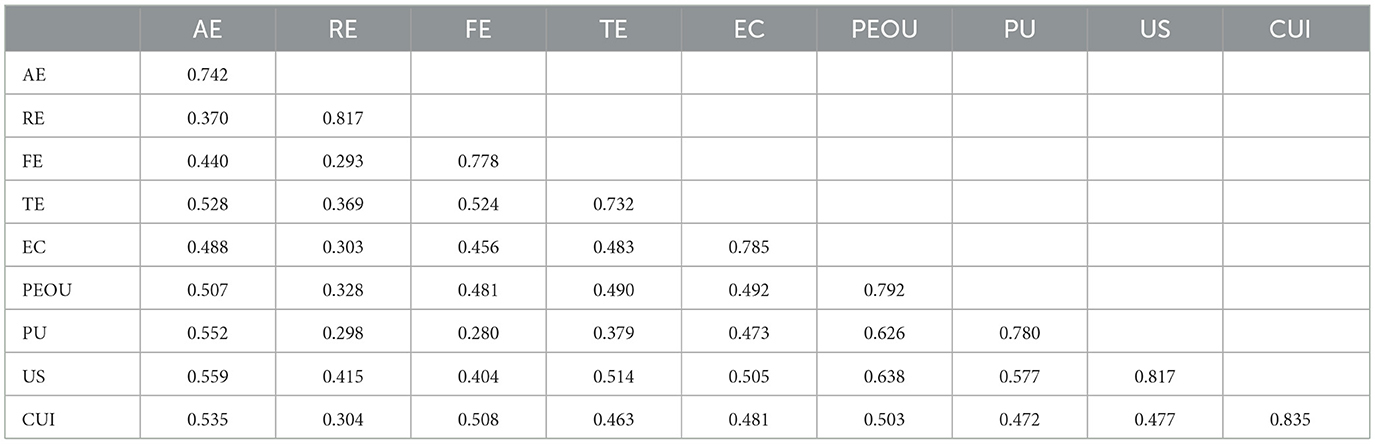
Table 5. Correlation matrix and square root of AVE.
5.2 Structural model assessment
Table 6 shows the model's goodness of fit metrics. Referring to the model fitting goodness of fit criteria proposed by Sahoo (2019) and Hair et al. (2006), the model fit statistics clearly indicate that this model was validated as an effective model to study the willingness of Bilibili platform to be used consistently among Chinese civil engineering students. In addition to the commonly reported indices (CFI, GFI, AGFI, IFI, RMSEA), the Standardized Root Mean Square Residual (SRMR) was included to provide a more comprehensive assessment of model fit, following the recommendations of Hu and Bentler (1999). The SRMR value of 0.037 indicates an excellent model fit, as it is well below the 0.08 threshold.

Table 6. Model fit statistics.
According to Table 7, the results reveal that H1a (β = 0.225, p < 0.001), H1b (β = 0.496, p < 0.001), H2a (β = 0.321, p < 0.001), H2b (β = 0.514, p < 0.001) and H4 (β = 0.243, p < 0.001) are validated at the significant level of p < 0.001. Also, H1c (β = 0.123, p < 0.05), H2c (β = 0.223, p < 0.05), H3a (β = 0.190, p < 0.05), H3b (β = 0.193, p < 0.05), H5 (β = 0.186, p < 0.05), H6 (β = 0.152, p < 0.05) and H8 (β = 0.153, p < 0.05) are accepted at the significant level of p < 0.05. However, H7 (β = 0.010, p = 0.864) is rejected as p values is greater than 0.05. Hence, 12 of the 13 hypotheses are supported while H7 is not (Figure 3).
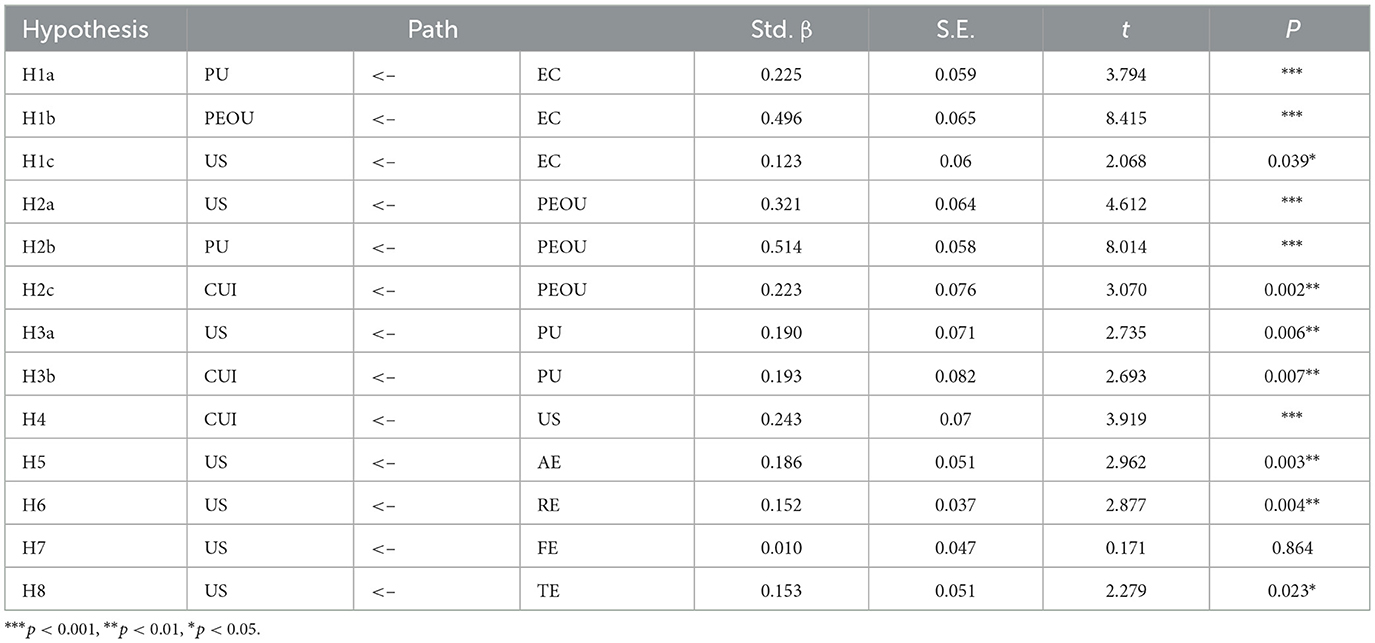
Table 7. Results of hypothesis testing.

Figure 3. Final structural model with standardized path coefficients.
6 Discussion
6.1 Discussion of model variables and values
Through the study, firstly, from the theoretical perspective, the authors innovatively integrated the model based on UE, TAM, and ECM, verified the applicability and validity of the model in the study, clarified the relationship between the variables, and most of all, based on the model, they derived the empirical data affecting the Chinese civil engineering students' willingness to use the Bilibili platform consistently in their study, and through the survey, they understood the students' use of this platform for course-assisted learning preferences. Secondly, from a practical point of view, the results of the study provide empirical references to enhance the satisfaction and the willingness to use Bilibili platform continuously, and provide improvement countermeasures to serve the learning of Chinese civil engineering students.
6.2 The relationship between AE, RE, FE, TE, and US
The results showed that AE, RE, and TE all had a positive effect on US, with AE and RE having a more significant effect on US. Among them, AE has the largest positive effect on US with an impact coefficient of 0.186, this finding is consistent with related studies on website aesthetics, such as Guay et al., 2019 pointed out that aesthetics and visibility of website elements had a prominent effect on user experiences. The coefficient of influence of RE on US was 0.152, a finding that is the same as Guan (2020) study of library website resources on college students' persistent intention to use them, but different from Liu and Yu (2023) study of persistent intention to use Bilibili for online learning. Liu and Yu argue that since Bilibili serves both educational and entertainment functions, irrelevant videos may appear in the recommendation bar during the learning process, thus distracting learners' attention. This gives us the insight that e-learning resources and video resources should not only be in large quantity but also in good quality, and more intelligent targeted quality recommendations involving basic and specialized civil engineering courses for civil engineering students will enhance the willingness to use them continuously. The impact coefficient of FE on US was 0.01 with a p of 0.864, implying a non-significant effect. In the questionnaire functional experience contained algorithmic recommendations, pop-up features, and download responses, this finding is similar with that of Mou et al. (2022), who argued that pop-up comments enhance interactions between learners by providing timely feedback, but can reduce learning outcomes. The coefficient of influence of TE on US was 0.153, which is the same as the results of a study examining the quality of distance learning among Saudi university students. Albanyan believes that students have the ability to easily access the system and receive online education, but poor internet, and lack of technology are the most important factors affecting students' distance learning outcomes (Mohammed Albanyan, 2024).
6.3 The relationship between PU, PEOU, and US
The results show that both PU and PEOU have a significant positive effect on US, where PEOU has a greater effect on US than PU, while at the same time PEOU has a significant positive effect on PU. The first is the analysis of the impact of PEOU on US, which is in line with the findings of Fan (2023) who studied the use of WeChat and Bilibili by Chinese university students for English learning by creating user-friendly interfaces and providing training and support to help them familiarize themselves with the features and functionalities, which in turn increases learners' willingness to use these platforms (Fan, 2023). This also echoes the findings above that complexity affects the perception of use, and simplicity of use enhances US, which ultimately affects the willingness to continue to use as well as the learning outcomes. The second is the analysis of the impact of PU on US, which is similar with the results found for English mobile learning systems (Chang et al., 2013), E-learning (Humida et al., 2022). In a study of 371 Chinese university students using online video-sharing platforms, it was confirmed that the perceived usefulness of the interactive features of the platforms increased the willingness to continue learning (Yang et al., 2024). As in the study of how it feels to use the Bilibili platform in English language learning, when learners recognize the advantages of these platforms, they develop positive beliefs and motivation to incorporate them into their language learning practices (Fan, 2023). This gives us the inspiration to meet the professional learning needs of student users and the use of the feeling of demand, so that student users more intuitively feel the use of the platform value can enhance the use of satisfaction, and then enhance the willingness to use. Third, this study also concludes that Chinese civil engineering students experience a positive effect of PEOU on PU when studying using the Bilibili platform. Student users who feel that it is easy and quick to use the features, search for content, and improve their understanding will enhance their perception of the platform's usefulness. This is consistent with Fan (2023) conclusion that when a technology is perceived to be easy to use, it reduces the cognitive effort required and increases people's confidence in using it.
6.4 The relationship between PU, PEOU, US, and EC
The results show that EC has a significant positive effect on PU, PEOU, and US, with EC having the largest coefficient of 0.496 on PEOU. The results of EC on PU and US are consistent with the conclusions drawn by Alsadoon (2022) in his study of students' use of Virtual Desktop Infrastructure. When students' expectations of VDI use are met, they feel the greater benefits of the technology in terms of enhanced perceived usefulness and satisfaction with the experience. Data from Cheng's (2019) study showed that students' confirmation had a significant impact on PU of cloud-based e-learning systems, and that US and PU were important determinants of their continued use of cloud-based e-learning systems, with US being much more significant than PU (Cheng, 2019). This is consistent with our findings. During the process of our study, we also explored the relationship between EC and PEOU, which revealed that users significantly find the platform more user-friendly when their expectations are met. Perceived ease of use is also affected by confirmation in the integration of TAM and ECM, suggesting that if users' expectations are confirmed, their perceived ease of use also increases (Liu and Yu, 2023). Studies similar to Jankowski et al. (2019) and Becker and Yannotta (2013) found that cluttered interfaces and poor visibility of key features can hinder the use of a website, whereby it can be assumed that the expectations of users are not being met and that they find the platform even less user-friendly.
6.5 The relationship between PU, PEOU, US, and CUI
The results showed that PU, PEOU, and US had positive effects on CUI, with the positive effect of US on CUI being highly significant and the positive effect of PU and PEOU on CUI being consistently more significant. Some previous studies support the results of the effect of US on CUI in our study. They believed that Increased user satisfaction leads to stronger intentions for continued adoption (Zhang and Wu, 2024), those with high satisfaction also have high continuance intention (Wang et al., 2021), users who will be satisfied with their learning experience on Bilibili will find it helpful, which further contributes to the willingness to use it (Liu and Yu, 2023). We found that the effect of PEOU on CUI is greater than the effect of PU on CUI, and this finding can be explained by the fact that PEOU promotes the users' willingness to continue using it more than PU. Although the effect of PEOU and PU on CUI is smaller than that of US, the improvement of PEOU and PU enhancement cannot be ignored.
6.6 Comparison of models and methodological choice
In order to confirm the robustness and superiority of the integrated UX–TAM–ECM model, we compared its fit indices with those of the traditional TAM and ECM models. The integrated model achieved higher goodness-of-fit (CFI = 0.937, RMSEA = 0.050) than the single TAM (CFI = 0.891, RMSEA = 0.071) and ECM (CFI = 0.902, RMSEA = 0.066) models, demonstrating that incorporating user experience variables better explains students' continuance intention. Therefore, the UX–TAM–ECM integrated approach represents the most suitable and explanatory model for this research context.
7 Conclusion
7.1 Major findings
This study examined the factors influencing Chinese civil engineering students' continued willingness to use Bilibili for online learning by creating a validated model that integrates user experience, technology acceptance model, and expectation confirmation model. Twelve hypotheses were found to be valid and one was found not to be valid after analyzing 435 questionnaires using SPSS and AMOS and validating them using structural equation modeling. The results fill a gap in research facing the use of Bilibili for learning by civil engineering students, and the data reflects consistency with other similar studies, as well as the specificity of this study. Compared with individual TAM or ECM models, the integrated UX–TAM–ECM model yielded better model fit and explanatory power for predicting continuance intention. At the same time, this comprehensive model provides empirical evidence and an effective framework for other scholars to conduct the same type of research in the future.
7.2 Limitations
There are two additional limitations to this study. First, only undergraduate students were studied due to the limited scope of the sample, so are the needs and feelings of master's and doctoral students when using the platform consistent with those of undergraduate students? Another limitation does not adequately demonstrate the impact of differences in geographic development on how undergraduates feel about using the platform. This study only investigated college students in the relatively developed eastern region of China, but China, as the world's largest developing country, still faces an imbalance in development between the east and the west, and between the south and the north.
7.3 Future research direction
Although functional experience did not have a significant positive effect on user satisfaction in this study, it does not mean that in-depth research and continuous improvement of functional experience is not important. Previous research has confirmed the significance of interactions and identities within the functional experience, for example, in enhancing the online learning experience (Yang et al., 2024). Other researchers have noted that those responsible for developing social media platforms or other emerging technologies should consider factors such as ease of use, utility, and enjoyment when designing these tools (Fan, 2023). The needs of students are ever-changing, so it makes sense to consider the exploration of fun in future research.
Besides Bilibili, we found that Chinese university students are also using some other resource platforms to assist their studies, such as Douyin and Rednote. Different platforms have different styles, for example, Douyin focuses on short videos and Rednote focuses on graphics. Each platform attracts a wide audience due to its own characteristics, so which platform will become the main platform used by students in the future? Or in what way will these platforms complement each other and coexist? This will be the focus of our future research.
Data availability statement
The original contributions presented in the study are included in the article/supplementary material, further inquiries can be directed to the corresponding author.
Author contributions
YZ: Methodology, Conceptualization, Data curation, Software, Writing – original draft. YY: Writing – review & editing, Resources, Validation, Data curation. ZG: Writing – review & editing, Supervision, Project administration.
Funding
The author(s) declare that no financial support was received for the research and/or publication of this article.
Conflict of interest
The authors declare that the research was conducted in the absence of any commercial or financial relationships that could be construed as a potential conflict of interest.
Generative AI statement
The author(s) declare that no Gen AI was used in the creation of this manuscript.
Any alternative text (alt text) provided alongside figures in this article has been generated by Frontiers with the support of artificial intelligence and reasonable efforts have been made to ensure accuracy, including review by the authors wherever possible. If you identify any issues, please contact us.
Publisher's note
All claims expressed in this article are solely those of the authors and do not necessarily represent those of their affiliated organizations, or those of the publisher, the editors and the reviewers. Any product that may be evaluated in this article, or claim that may be made by its manufacturer, is not guaranteed or endorsed by the publisher.
References
Adouani, Y., and Khenissi, M. A. (2024). Investigating computer science students' intentions towards the use of an online educational platform using an extended technology acceptance model (e-TAM): an empirical study at a public university in Tunisia. Educ. Inf. Technol. 29, 14621–14645. doi: 10.1007/s10639-023-12437-6
Ahmad, T., Madarsha, K. B., Zainuddin, A., Ismail, N. A., and Nordin, M. S. (2020). The impact of technology readiness on mobile learning adoption among university students. Educ. Inform. Technol. 25, 5173–5198. doi: 10.1007/s10639-020-10276-1
Alenazy, W. M., Al-Rahmi, W. M., and Khan, M. S. (2019). Validation of TAM model on social media use for collaborative learning to enhance collaborative authoring. IEEE Access 7, 71550–71562. doi: 10.1109/ACCESS.2019.2920242
Al-Mamary, Y. H., Abubakar, A. A., and Abdulrab, M. (2023). The effects of the expectation confirmation model (ECM) and the technology acceptance model (TAM) on learning management systems (LMS) in sub-saharan Africa. Int. Learn. Environ. 32, 1–17. doi: 10.1080/10494820.2023.2191272
Almogren, A. S., and Aljammaz, N. A. (2022). The integrated social cognitive theory with the TAM model: The impact of M-learning in King Saud University art education. Front. Psychol. 13:1050532. doi: 10.3389/fpsyg.2022.1050532
Alsadoon, E. (2022). Intentions of students to continue using virtual desktop infrastructure: expectation confirmation model perspective. IEEE Access 10, 49080–49087. doi: 10.1109/ACCESS.2022.3173299
Alshammari, S. H., Almankory, A. Z., and Alrashidi, M. E. (2025). The effects of awareness and trust on students' willingness to use ChatGPT: an integrated TAM-ECM model. RIED 28:43476. doi: 10.5944/ried.28.2.43476
Ansari, J. A. N., and Khan, N. A. (2020). Exploring the role of social media in collaborative learning: the new domain of learning. Smart Learn. Environ. 7:9. doi: 10.1186/s40561-020-00118-7
Becker, B. W., and Yannotta, L. (2013). Modeling a library website redesign process: developing a user-centered website through usability testing. Inform. Technol. Libr. 32, 6–22. doi: 10.6017/ital.v32i1.2311
Bhattacherjee, A. (2001). Understanding information systems continuance: an expectation-confirmation model. Manage. Inform. Syst. Q. 25, 351–370. doi: 10.2307/3250921
Chang, C.-C., Liang, C., Yan, C.-F., and Tseng, J.-S. (2013). The impact of college students' intrinsic and extrinsic motivation on continuance intention to use english mobile learning systems. Asia Pacific Educ. Res. 22, 181–192. doi: 10.1007/s40299-012-0011-7
Chen, X., Yu, T., Dai, J., Jing, Y., and Wang, C. (2025). Unveiling learners' intentions toward influencer-led education: an integration of qualitative and quantitative analysis. Int. Learn. Environ. 33, 3469–3487. doi: 10.1080/10494820.2024.2444533
Cheng, Y.-M. (2019). How does task-technology fit influence cloud-based e-learning continuance and impact? ET 61, 480–499. doi: 10.1108/ET-09-2018-0203
Chintalapati, N., and Daruri, V. S. K. (2017). Examining the use of YouTube as a Learning Resource in higher education: Scale development and validation of TAM model. Telemat. Inform. 34, 853–860. doi: 10.1016/j.tele.2016.08.008
Coker, B. L. S. (2013). Antecedents to website satisfaction, loyalty, and word-of-mouth. J. Inform. Syst. 27, 115–129. doi: 10.5748/9788599693094-10CONTECSI/PS-48
Davis, F. D. (1986). A technology acceptance model for empirically testing new end-user information systems: Theory and results [Unpublished doctoral dissertation]. Massachusetts Institute of Technology.
Dewitt, D., Alias, N., Siraj, S., Yaakub, M. Y., Ayob, J., and Ishak, R. (2013). The potential of youtube for teaching and learning in the performing arts. Proc. Soc. Behav. Sci. 103, 1118–1126. doi: 10.1016/j.sbspro.2013.10.439
Du, P., Liu, Z., and Yu, Z. (2021). The educational value of Bilibili as an online learning platform. Open Educ. Res. 27, 96–105. (In Chinese).
Esparza Puga, D. S., and Aguilar, M. S. (2023). Students' perspectives on using YouTube as a source of mathematical help: the case of ‘julioprofe.' Int. J. Math. Educ. Sci. Technol. 54, 1054–1066. doi: 10.1080/0020739X.2021.1988165
Fan, C. (2023). English learning motivation with TAM: Undergraduates' behavioral intention to use Chinese indigenous social media platforms for English learning. Cogent. Soc. Sci. 9:2260566. doi: 10.1080/23311886.2023.2260566
Fornell, C., and Larcker, D. F. (1981). Structural equation models with unobservable variables and measurement error: algebra and statistics. J. Mark. Res. 18, 382–388. doi: 10.1177/002224378101800313
Guan, Y. (2020). Factors affecting user satisfaction with university library digital resources. Libr. Inform. Serv. 64, 112–122. (In Chinese).
Guay, S., Rudin, L., and Reynolds, S. (2019). Testing, testing: a usability case study at University of Toronto Scarborough Library. LM 40, 88–97. doi: 10.1108/LM-10-2017-0107
Hair, J. F. (2010). Multivariate Data Analysis: a Global Perspective, 7th Edn. global ed. Upper Saddle River, NJ Munich: Pearson.
Hair, J. F., Black, W. C., Babin, B. J., Anderson, R. E., and Tatham, R. L. (2006). Multivariate Data Analysis, 6th Edn. Upper Saddle River, NJ: Pearson Prentice Hall.
Haleem, A., Javaid, M., Qadri, M. A., and Suman, R. (2022). Understanding the role of digital technologies in education: a review. Sustain. Operat. Comput. 3, 275–285. doi: 10.1016/j.susoc.2022.05.004
Halilovic, S., and Cicic, M. (2013). Antecedents of information systems user behaviour – extended expectation-confirmation model. Behav. Inform. Technol. 32, 359–370. doi: 10.1080/0144929X.2011.554575
Hong, S.-J., Thong, J. Y. L., and Tam, K.-Y. (2006). Understanding continued information technology usage behavior: a comparison of three models in the context of mobile Internet. Decis. Support Syst. 42, 1819–1834. doi: 10.1016/j.dss.2006.03.009
Hu, L.-T., and Bentler, P. M. (1999). Cutoff criteria for fit indexes in covariance structure analysis: conventional criteria versus new alternatives. Struct. Equ. Model. 6, 1–55.
Huang, F., and Teo, T. (2021). Examining the role of technology-related policy and constructivist teaching belief on English teachers' technology acceptance: a study in Chinese universities. Br. J. Educ. Technol. 52, 441–460. doi: 10.1111/bjet.13027
Humida, T., Al Mamun, M. H., and Keikhosrokiani, P. (2022). Predicting behavioral intention to use e-learning system: a case-study in Begum Rokeya University, Rangpur, Bangladesh. Educ. Inf. Technol. 27, 2241–2265. doi: 10.1007/s10639-021-10707-9
Jankowski, J., Hamari, J., and Watróbski, J. (2019). A gradual approach for maximising user conversion without compromising experience with high visual intensity website elements. Inter. Res. 29, 194–217. doi: 10.1108/IntR-09-2016-0271
Joo, Y. J., Kim, N., and Kim, N. H. (2016). Factors influencing students' continued use of library e-resources. J. Acad Librariansh. 42 653–666. doi: 10.1016/j.acalib.2016.08.005
Kim, J., Jin, B., and Swinney, J. L. (2009). The role of etail quality,e-satisfaction and e-trust in online loyalty development process. J. Retail. Consum. Serv. 16, 239–247. doi: 10.1016/j.jretconser.2008.11.019
Kline, R. B. (2015). Principles and Practice of Structural Equation Modeling, 4th Edn. New York, NY: Guilford Press.
Lavie, T., and Tractinsky, N. (2004). Assessing dimensions of perceived visual aesthetics of web sites. Int. J. Hum. Comput. Stud. 60, 269–298. doi: 10.1016/j.ijhcs.2003.09.002
Li, L. (2020). Research on college students' willingness to use Bilibili for learning. Mod. Educ. Technol. 30, 102–108. (In Chinese).
Li, Z., and Yang, Y. (2023). Determinants of college students' online fragmented learning effect: an analysis of teaching courses on scientific research software on the Bilibili platform. Sustainability 15:16023. doi: 10.3390/su152216023
Lin, X., Huang, M., and Cordie, L. (2018). An exploratory study: using Danmaku in online video-based lectures. Educ. Media Int. 55, 273–286. doi: 10.1080/09523987.2018.1512447
Liu, X., and Yu, Z. (2023). Continuance intention to use bilibili for online learning: an integrated structural equation model. Int. J. Adult Educ. Technol. 14, 1–24. doi: 10.4018/IJAET.322387
Mady, M. A., and Baadel, S. (2020). Technology-Enabled Learning (TEL): youtube as a Ubiquitous Learning Aid. J. Info. Know. Mgmt. 19:2040007. doi: 10.1142/S0219649220400079
Maia, C. L. B., and Furtado, E. S. (2016). “A Systematic Review About User Experience Evaluation,” in Design, User Experience, and Usability: Design Thinking and Methods, ed. A. Marcus (Cham: Springer International Publishing), 445–455. doi: 10.1007/978-3-319-40409-7_42
Masrek, M. N., and Gaskin, J. E. (2016). Assessing users satisfaction with web digital library:the case of Universiti Teknologi MARA. Int. J. Inf. Learn. Technol. 33, 36–56. doi: 10.1108/IJILT-06-2015-0019
Maziriri E. T. Gapa P. Faculty of Information Technology Monash University South Africa cGFyc2dwMUBnbWFpbC5jb20= Chuchu, T. Department of Marketing M.anagement, Faculty of Economic Management Sciences, University of Pretoria,dGluYXNoZS5jaHVjaHVAdXAuYWMuemE=(2020). Student Perceptions Towards the use of YouTube as An Educational Tool for Learning and Tutorials. INT J INSTRUCTION 13, 119–138. doi: 10.29333/iji.2020.1329a
Moghavvemi, S., Sulaiman, A., Jaafar, N. I., and Kasem, N. (2018). Social media as a complementary learning tool for teaching and learning: the case of youtube. Int. J. Manag. Educ. 16, 37–42. doi: 10.1016/j.ijme.2017.12.001
Mohammed Albanyan, A. (2024). The quality of distance learning during COVID-19: perspectives of Saudi university students. Heliyon 10:e33731. doi: 10.1016/j.heliyon.2024.e33731
Mou, Y., Jing, B., Li, Y., Fang, N., and Wu, C. (2022). Interactivity in learning instructional videos: sending danmaku improved parasocial interaction but reduced learning performance. Front. Psychol. 13:1066164. doi: 10.3389/fpsyg.2022.1066164
Mustafa, A. G., Taha, N. R., Alshboul, O. A., Alsalem, M., and Malki, M. I. (2020). Using youtube to learn anatomy: perspectives of Jordanian medical students. Biomed. Res. Int. 2020, 1–8. doi: 10.1155/2020/6861416
Nguyen, V. K. L., Le, T. M. H., Duong, T. N. M., Nguyen, T. S., Le, T. T. H., and Nguyen, T. T. H. (2022). Assessing student's adoption of e-learning: an integration of TAM and TPB framework. J. Inform. Technol. Educ. 21, 297–335. doi: 10.28945/5000
Öztürk, Ö., and Rizvanoglu, K. (2011). “How to improve user experience in mobile social networking: a user-centered study with turkish mobile social network site users,” in Design, User Experience, and Usability. Theory, Methods, Tools and Practice, ed. A. Marcus (Berlin, Heidelberg: Springer Berlin Heidelberg), 521–530. doi: 10.1007/978-3-642-21675-6_60
Sahoo, M. (2019). “Structural equation modeling: threshold criteria for assessing model fit,” in Methodological Issues in Management Research: Advances, Challenges, and the Future (Emerald Publishing).
Sánchez-Franco, M. J. (2010). WebCT - the quasimoderating effect of perceived affective quality on an extending technology acceptance model. Comput. Educ. 54, 37–46. doi: 10.1016/j.compedu.2009.07.005
Sarstedt, M., Ringle, C. M., and Hair, J. F. (2017). “Partial least squares structural equation modeling,” in Handbook of Market Research, eds. C. Homburg, M. Klarmann, and A. Vomberg (Cham: Springer International Publishing), 1–40. doi: 10.1007/978-3-319-05542-8_15-1
Shen, H., and Liang, Y. (2022). On effective strategies for online teaching-Based on text analysis of bullet screen of online open course pedagogy on Bilibili website. Dianhua Jiaoyu Yanjiu 43, 69–76+84. doi: 10.13811/j.cnki.eer.2022.11.009
Tian, Y. (2021). A created “Bilibili Learning Site”: research on the knowledge-type affinity space of social video platforms. Future Commun. 28, 81–90. (In Chinese).
Wang, C., Dai, J., Zhu, K., Yu, T., and Gu, X. (2024). Understanding the continuance intention of college students toward new e-learning spaces based on an integrated model of the TAM and TTF. Int. J. Hum. Comput. Interact. 40, 8419–8432. doi: 10.1080/10447318.2023.2291609
Wang, C., Wang, H., Li, Y., Dai, J., Gu, X., and Yu, T. (2025). Factors influencing university students' behavioral intention to use generative artificial intelligence: integrating the theory of planned behavior and ai literacy. Int. J. Hum. Comput. Interact. 41, 6649–6671. doi: 10.1080/10447318.2024.2383033
Wang, T., Lin, C.-L., and Su, Y.-S. (2021). Continuance intention of university students and online learning during the COVID-19 pandemic: a modified expectation confirmation model perspective. Sustainability 13:4586. doi: 10.3390/su13084586
Wolcott, M. D., and McLaughlin, J. E. (2024). Exploring user experience (UX) research methods in health professions education. Curr. Pharm. Teach. Learn. 16, 144–149. doi: 10.1016/j.cptl.2023.12.010
Wu, H., Wang, Z., Li, M., Sun, P., Zhang, L., Zhang, C., et al. (2022). The current state of vascular surgery presence in Bilibili video platform of china. Front. Surg. 9:874113. doi: 10.3389/fsurg.2022.874113
Yang, J., Zhang, T., Gao, J., Bao, Z., Liang, H., and Zhang, H. (2024). “Why college students prefer to study on online video-sharing platforms: the case of bilibili platform,” in E-Business. New Challenges and Opportunities for Digital-Enabled Intelligent Future, eds. Y. P. Tu and M. Chi (Cham: Springer Nature Switzerland), 167–178. doi: 10.1007/978-3-031-60264-1_15
Yu, L. (2024). User experience of english online classroom E-learning based on routing algorithm and data visualization analysis. Entertain. Comput. 51:100733. doi: 10.1016/j.entcom.2024.100733
Keywords: influencing factors, continuance use intention, user experience, expectation-confirmation mode, technology acceptance mode
Citation: Zhao Y, Yang Y and Guo Z (2025) Exploring the factors influencing Chinese civil engineering students' willingness to continuously use the Bilibili online platform: innovative integration model based on UX, TAM, and ECM. Front. Educ. 10:1697203. doi: 10.3389/feduc.2025.1697203
Received: 02 September 2025; Accepted: 20 November 2025;
Published: 15 December 2025.
Edited by:
Aslina Baharum, Sunway University, MalaysiaReviewed by:
Jian Dai, Zhejiang University of Technology, ChinaAhmed Alkhuwaylidee, University of Thi-Qar, Iraq
Copyright © 2025 Zhao, Yang and Guo. This is an open-access article distributed under the terms of the Creative Commons Attribution License (CC BY). The use, distribution or reproduction in other forums is permitted, provided the original author(s) and the copyright owner(s) are credited and that the original publication in this journal is cited, in accordance with accepted academic practice. No use, distribution or reproduction is permitted which does not comply with these terms.
*Correspondence: Zhengxing Guo, R3VvengxOTU2MDhAMTI2LmNvbQ==