 M. Adeel Munir1*
 M. Salman Habib2
 Amjad Hussain3Muhammad Ali Shahbaz1Adnan Qamar1
 Tariq Masood4
 M. Sultan5
 M. A. Mujtaba1Shahid Imran1
 Mudassir Hasan6Muhammad Saeed Akhtar7*Hafiz Muhammad Uzair Ayub7*
 Chaudhary Awais Salman8*
- 1Department of Mechanical Engineering (New Campus), University of Engineering and Technology Lahore, Lahore, Pakistan
- 2Department of Industrial & Manufacturing Engineering, University of Engineering and Technology Lahore, Lahore, Pakistan
- 3Department of Mechanical Engineering, University of Engineering and Technology Lahore, Lahore, Pakistan
- 4Department of Design, Manufacturing and Engineering Management, University of Strathclyde, Glasgow, United Kingdom
- 5Department of Agricultural Engineering, Bahauddin Zakariya University, Multan, Pakistan
- 6Chemical Engineering Department, College of Engineering, King Khalid University, Abha, Saudi Arabia
- 7School of Chemical Engineering, College of Engineering, Yeungnam University, Gyeongsan, South Korea
- 8School of Business, Society and Engineering, Mälardalen University, Västerås, Sweden
Due to the rapid increase in environmental degradation and depletion of natural resources, the focus of researchers is shifted from economic to socio-environmental problems. Blockchain is a disruptive technology that has the potential to restructure the entire supply chain for sustainable practices. Blockchain is a distributed ledger that provides a digital database for recording all the transactions of the supply chain. The main purpose of this research is to explore the literature relevant to blockchain for sustainable supply chain management. The focus of this review is on the sustainability of the blockchain-based supply chain concerning environmental conservation, social equality, and governance effectiveness. Using a systematic literature review, a total of 136 articles were evaluated and categorized according to the triple bottom-line aspects of sustainability. Challenges and barriers during blockchain adoption in different industrial sectors such as aviation, shipping, agriculture and food, manufacturing, automotive, pharmaceutical, and textile industries were critically examined. This study has not only explored the economic, environmental, and social impacts of blockchain but also highlighted the emerging trends in a circular supply chain with current developments of advanced technologies along with their critical success factors. Furthermore, research areas and gaps in the existing research are discussed, and future research directions are suggested. The findings of this study show that blockchain has the potential to revolutionize the entire supply chain from a sustainability perspective. Blockchain will not only improve the economic sustainability of the supply chain through effective traceability, enhanced visibility through information sharing, transparency in processes, and decentralization of the entire structure but also will help in achieving environmental and social sustainability through resource efficiency, accountability, smart contracts, trust development, and fraud prevention. The study will be helpful for managers and practitioners to understand the procedure of blockchain adoption and to increase the probability of its successful implementation to develop a sustainable supply chain network.
1 Introduction
In the past, the economic benefit was the main focus of supply chain professionals. However, due to a high rate of environmental degradation, the emphasis is shifted from economic to social and environmental sustainability (Tseng et al., 2019; Gupta et al., 2020). The pressure from stakeholders such as government organizations, regulatory bodies, and customers is forcing the firms to redesign their internal and external supply chain structures, according to environmental concerns and social needs (Srivastava, 2007; de Oliveira et al., 2018; Manupati et al., 2019). Green supply chains and sustainable practices are an important area of research, and it includes a series of green initiative activities in all processes (Silvestre et al., 2018; Rezaei Vandchali et al., 2021). The supplementary concepts used in sustainability are the reuse, recycle, and circular supply chain (Koberg and Longoni, 2019). The green and sustainable practices are adopted by different firms to ensure the welfare of society through waste reduction, emission reduction, and energy usage optimization (Agyabeng-Mensah et al., 2020). There are many innovative technologies that provide a competitive advantage to firms (Kamble S. S. et al., 2021). Advancement in technologies is very extensive, and each of these technologies has effects on the green initiative and social sustainability of the firms (Kouhizadeh and Sarkis, 2018). Among all recently developed technologies, blockchain (distributed ledger) has significant effects on the sustainability (Kouhizadeh and Sarkis, 2018).
Blockchain is a distributed accounting system with automatic transaction execution, which is used to maintain the growing data (Wu et al., 2017). Its main characteristics are high consistency, data veracity, traceability, and cybersecurity. Blockchain is considered as a technology that will bring breakthrough in the supply chain as it is a transparent and temper proof system, which will improve the tracking and tracing system (Badia-Melis et al., 2015; Wu et al., 2017; Wang Y. et al., 2019a; Pournader et al., 2019; Behnke and Janssen, 2020; Feng et al., 2020; Ozdemir et al., 2020; Xu et al., 2020; Garaus and Treiblmaier, 2021). Blockchain can be beneficial for the food supply chain in many aspects such as quality preservation, fraud prevention, anti-counterfeiting, and cost reduction (Coronado Mondragon et al., 2020). Effective traceability is required in a complete value chain as lack of transparency in one firm will affect the entire supply chain (Hu et al., 2013). The other factors which drive for the adoption of blockchain are consumer trust, risk management practices, regulatory requirements, high consistency, and data veracity (Bosona and Gebresenbet, 2013). Blockchain will shift the “product-based economy” to an “information-based economy” (Pazaitis et al., 2017).
There are various studies published in the field of blockchain in the supply chain under different titles. The main objective of these studies was to analyze the effects of blockchain adoption on the overall performance of the supply chain. Galvez et al. (2018) examined the capability of blockchain and concluded that traceability and transparency can be improved using blockchain. Kamilaris et al. (2019) reviewed the effects of blockchain in the agri-food supply chain and concluded that blockchain is a step toward transparency in the food supply chain. Feng et al. (2020) provided review of different characteristics of blockchain and proposed a framework for adoption of blockchain in the food traceability system. Hosseini Bamakan et al. (2021) and Han et al. (2021) provided the deep insights into the application of blockchain in pharmaceutical cold chain and identified the different challenges of blockchain adoption. Lim et al. (2021) used descriptive analysis and explored different themes and methodologies used for the adoption of the blockchain. Niknejad et al. (2021) conducted a review on the blockchain using graphical mapping of the bibliographic information. Main emphasis of researchers is the traceability of products, through emerging modern technologies. Wamba and Queiroz (2020) discussed the techniques by which different sectors such as agriculture, e-commerce, and public services gained a competitive advantage through the effective use of blockchain. Liu et al, (2021) examined the literature about the information and communication technologies in agriculture. Rejeb and Rejeb, (2020) and Park and Li, (2021) concluded that all the indicators of sustainability can be improved using blockchain.
Blockchain adoption in the supply chain is at a very early stage, although its application in different sectors is increasing rapidly (Choi et al., 2018; Kuo and Kusiak, 2019). Blockchain has a potential to reshape the entire supply chain by incorporating sustainable activities with a special focus on environment protection and social reforms (Tsai et al., 2021). There is limited literature available which covers that how blockchain will impact the supply chain in terms of its sustainability (Khanfar et al., 2021). The previous literature only covers the economic aspects of blockchain in the supply chain. Moreover, application areas for most of the literature reviews of blockchain are the food and agriculture supply chain and cold supply chain, in which transformational capabilities of blockchain through different attributes such as traceability, transparency, and cybersecurity are analyzed (Sunmola et al., 2021). Challenges and financial barriers in adoption and implementation of the blockchain are widely discussed in the previous literature. There exists a research gap as limited literature is available on the impact of blockchain on green practices in the supply chain. Similarly, the social impacts and challenges of blockchain adoption are discussed in the past, but the concept of social sustainability is very broad, which includes other dimensions such as community welfare, regional development, and employability. The humanitarian supply chain is the core topic of researchers, and the effects of digitalizing the supply chain on risk management and sustainability are still need to be explored, especially during the time of crisis. These research gaps are addressed in the current study.
The main objective of this study is to collect the articles from leading journals on the theme of blockchain in perspective of the sustainable supply chain. In this research, articles were collected and categorized on the basis of three basic indicators of (economic, environmental, and social) sustainability. Different models, frameworks, and case studies are included under the paradigm of sustainability. The scope for social sustainability is widened, and articles related to social welfare and the humanitarian supply chain are also included. The main contribution of this study is that it will not only provide the insights about the use of blockchain for the development of the green supply chain but also will help the researchers to evaluate this new technology for its environmental and social impacts as well. The article has the following structure. Section 2 covers the methodology of the systematic literature review. Section 3 is about the basic overview on the supply chain sustainability and blockchain. Section 4 has a detailed review about the economic sustainability in the supply chain using blockchain. Section 5 covers all the contents of the green supply chain/circular supply chain. Section 6 describes the advantages of blockchain in the humanitarian supply chain and its social aspects. Section 7 covers the practical implications of blockchain. Section 8 is about conclusion.
2 Methodology of the Systematic Literature Review
A literature review should be systematic in methodology, explicit in explaining the procedures, comprehensive in scope for all the included material, and reproducible for the people who are reviewing the same topic (Okoli and Schabram, 2010). The difference between traditional literature review and systematic literature review is that systematic review has clearly defined questions, comprehensive relevant study, and properly evaluated and synthesized results, and its main purpose is to make a summary of the best available research on a relevant topic transparently (Habib et al., 2016). Systematic literature review is a rigorous method to assess and evaluate the research in any area. For this research, systematic literature review (SLR) was adopted. There are four steps in a systematic literature review. These steps include planning, searching on a particular topic, screening, and extraction. Protocol for the systematic literature review is given in “Figure 1.”
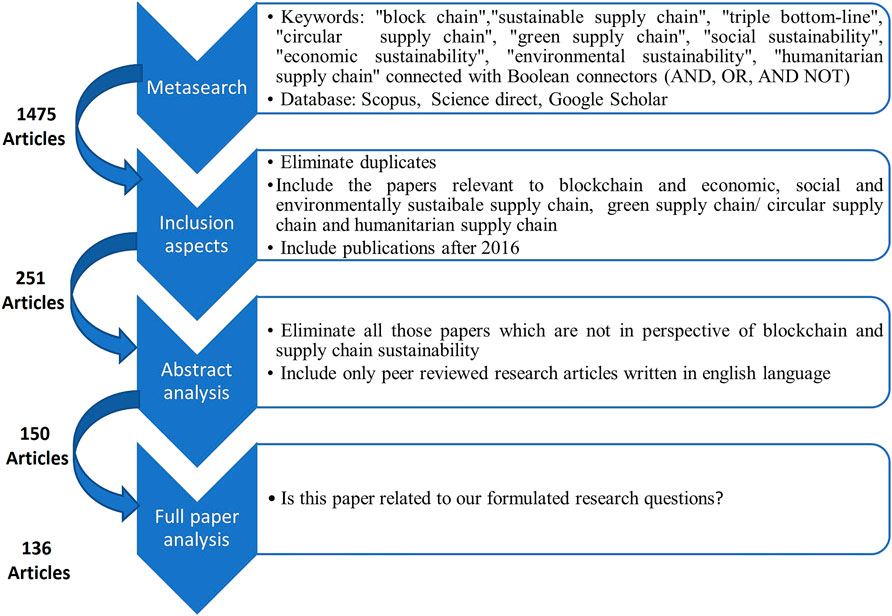
FIGURE 1. Protocol for the systematic literature review.
Planning: it is the phase in which research questions are formulated. The questions should be clear and explicit. The research questions in this research are the following:
RQ 1: What is the current literature on the intersection of blockchain and the sustainable supply chain?
RQ 2: What are the gaps and future research trends in improving the sustainability of the supply chain using blockchain from economic, social, and environmental perspectives?
Searching: keywords were developed to search the articles relevant to blockchain and the sustainable supply chain, and these keywords were based on research questions. These articles were collected by using keywords: “blockchain” AND “logistics” OR supply chain” AND “social sustainability, AND “environmental sustainability,” OR “green supply chain,” AND “economic sustainability,” AND “circular supply chain” AND “humanitarian supply chain”. Scopus-indexed journals and the Scopus database were selected for data collection. Other forums such as Google Scholar and ScienceDirect were combined for search. The publications were selected from 2016 to 2022 because the concept of blockchain is at its early development stage.
Screening: the inclusion and exclusion criteria were used for the objectivity of research.
Inclusion criteria: the scope of this work was to study about blockchain and sustainability of the supply chain, so all articles are relevant to the application of blockchain in the green supply chain, circular supply chain, and the effects of blockchain on social sustainability. Moreover, articles related to economic sustainability through traceability, transparency, and visibility were also selected. We have included articles from peer-reviewed journals and limited conference articles, which are relevant to the previously described questions.
Exclusion criteria: the main emphasis of this study was on blockchain and triple bottom-line aspects of sustainability in the supply chain. The articles which do not fall in this category were excluded from the list.
Extraction: in the extraction phase, the articles are divided into three categories based on three dimensions of sustainability. The first category of articles is based on blockchain and economic sustainability in the supply chain. In this category, different characteristics of blockchain such as traceability, visibility, and transparency are discussed in detail. The second category is the blockchain-based green supply chain and circular supply chain. In the third category, articles are relevant to social sustainability and humanitarian supply chain management.
3 Research on the Interface of Blockchain and Sustainable Supply Chain Management
Blockchain helps in achieving environmental sustainability as it helps companies to reduce carbon emissions (Xu et al., 2019). It creates a reputation-based mechanism that encourages participants to find the long-term solution to emissions because all the participants are fully aware of financial benefits of being a well-reputed organization (Esmaeilian et al., 2020). Blockchain can help in the detection of all counterfeit products (Duan et al., 2020). Tracking the products can help in reducing the rework which will help in reducing resource utilization and gas emissions (Badia-Melis et al., 2015; Li et al., 2020). If the manufacturing process becomes green, then environment friendly customers will prefer to purchase the green products (Martins and Pato, 2019). One method to achieve environmental sustainability is the imposition of a carbon tax as the product becomes expansive with a high tax of the carbon footprint, then the customer will prefer the product with a lower price (Lim et al., 2021). Blockchain can help in reducing the carbon footprint in the journey of products toward the end user (De Sousa Jabbour et al., 2018). The supply chain environmental analysis tool (SCEnAT) recommends an outline that will evaluate the emission of carbon of all entities used in supply chains, and its latest version is integrated with Internet of Things (IoT), blockchain, and artificial intelligence (Koh et al., 2013). IBM is developing green assets based on blockchain, which will help the organizations to track, measure, and reduce carbon emissions (Meyer et al., 2019; Upadhyay et al., 2021). The main framework for this research is shown in “Figure 2.” The features of blockchain include consensus among partners, cybersecurity, immutability, smart contracts, and decentralization of information on a distributed ledger (Viriyasitavat et al., 2018). This excellent information sharing system will improve the traceability, transparency, trust, and responsiveness of the supply chain. Through smart monitoring and controlling of carbon emissions, the environmental sustainability can be improved. Similarly, through smart contracts, carbon taxation policy can be imposed and monitored regularly. The traceability of products and responsiveness of the supply chain will increase the trust of customers (Rodríguez-Espíndola et al., 2020; Thakur and Breslin, 2020). All of these characteristics of blockchain will be useful for monitoring and controlling the overall process of the humanitarian supply chain and firms involved in the supply chain will become socially more responsible. Total articles in this research article are divided into three categories.
1) Articles related to economic sustainability through different features of blockchain such as traceability, transparency, accountability, and visibility.
2) Articles relevant to the model development, theoretical framework, case studies, adoption challenges for blockchain in the supply chain, emissions reduction, green supply chain, and circular supply chain.
3) Articles related to the challenges in implementation of blockchain in the supply chain, its societal impacts, and humanitarian supply chain.
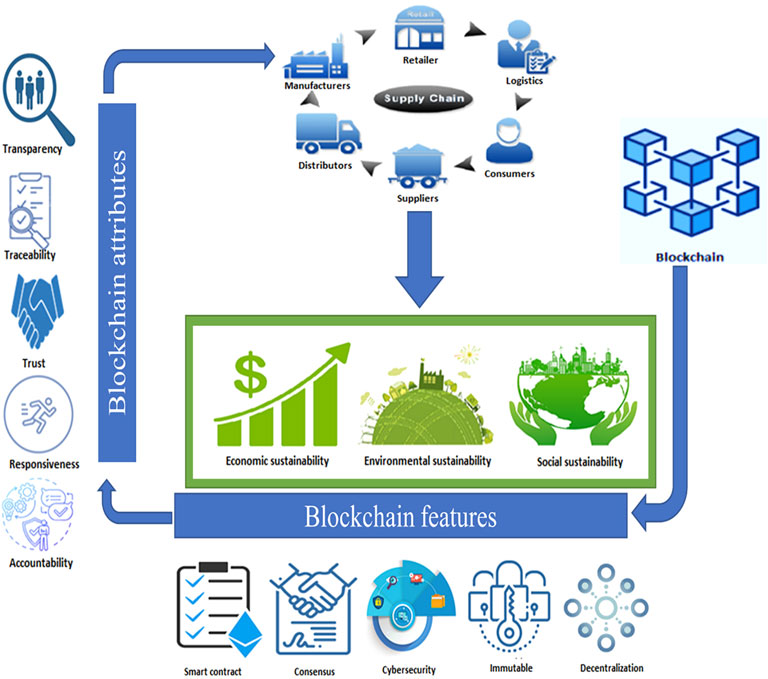
FIGURE 2. Conceptual framework of transformation of the supply chain to attain triple bottom line through blockchain.
4 Economic Sustainability in the Supply Chain
Digitalization is transforming the supply chain; specifically, the food supply chain and consumer are more focused on environmental and socially sustainable products (Kittipanya-ngam and Tan, 2019). As a result, traceability, sustainability, and safety have become the core issues (Queiroz and Fosso Wamba, 2019; Wang Y.et al., 2019b). Blockchain technology is regarded as a disruptive and innovative technology and is considered to be the primary tool in the industry 4.0 (Ramadurai and Bhatia, 2019; Thylin and Duarte, 2019). The various features of the blockchain include traceability, privacy, immutability, decentralization, and consensus mechanism (Sikorski et al., 2017). The outcomes of the blockchain are agility, resilience, responsiveness, and sustainability (Stranieri et al., 2021). The conceptual framework of economic sustainability of the supply chain using blockchain is shown in “Figure 3.” The main features of blockchain are its transparency, effective traceability, responsive supply chain, and accountability as discussed in previous sections. By incorporating these features in supply chain processes the quality of products or services will be improved (Chang Y. et al., 2019; Bechtsis et al., 2019). It also will improve the process efficiency and thus will provide the competitive advantage.
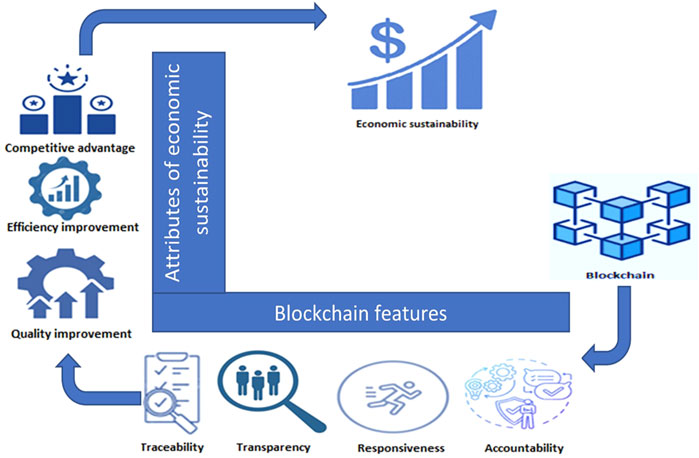
FIGURE 3. Conceptual framework of economic sustainability of the supply chain through blockchain.
4.1 Model Development, Framework Related to Economic Sustainability, and the Blockchain-Based Supply Chain in Agriculture, Food, and Healthcare Sectors
Blockchain is an excellent mechanism of sharing information. Its applications in the food, agriculture, and healthcare sectors are rapidly increasing due to the traceability system. Perishable foods, vaccines, and cold supply chains require this disruptive technology to control the wastage of food and temperature-controlled pharmaceutical products (Óskarsdóttir and Oddsson, 2019). The researchers have developed different models and frameworks in the perspective of economic sustainability through transparency, traceability, visibility, and accountability in supply by using blockchain. A list of differently proposed frameworks and models related to blockchain and economic sustainability in the supply chain is given in “Table 1.” The main features of these models are as follows:
1) Most of the developed models and proposed frameworks are based on the agriculture and food sectors, and there are some articles relevant to the pharmaceutical and healthcare sectors.
2) The main emphasis is to develop models and frameworks based on smart contracts and for traceability solutions as contracts can help develop and improve the relationship among all the network of the supply chain. It improves data sharing among all the actors, and it is a continuous improvement process.
3) Some articles are based on the conceptual study and other solution approaches are used including Ethereum and Hyperledger Fabric, machine learning, programming using Python, “SWARA” method, serialization method, mathematical modeling, and prototype development.
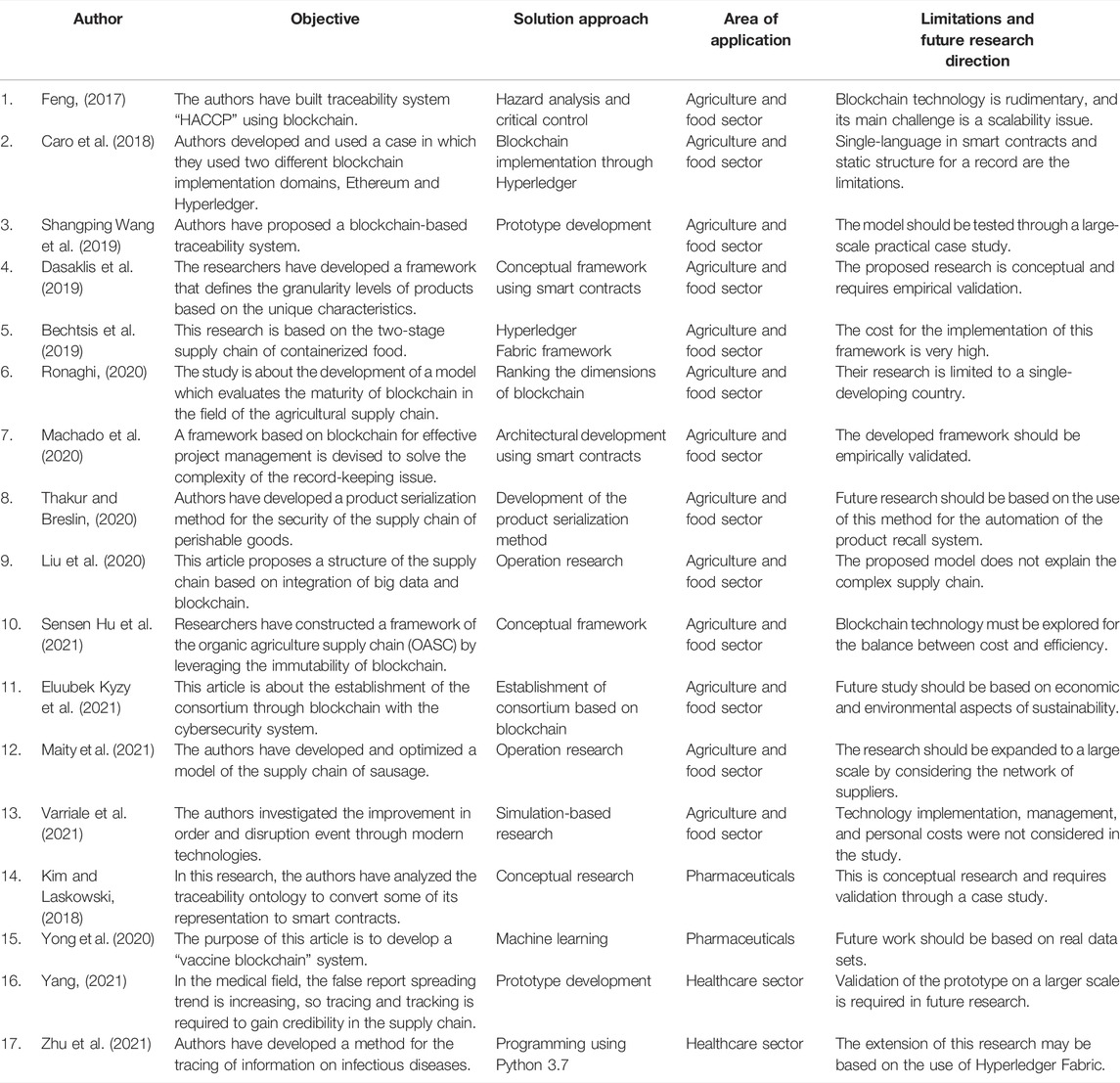
TABLE 1. Models and framework development for the blockchain-based supply chain with economic sustainability in the agriculture, food, and healthcare sectors.
For many years, food security has been a large problem. The old methods for logistics and transportation of agri-food are not feasible to match the demands of the market. The traceability system, based on radio frequency identification, for the agri-food value chain should be designed for the safety of food. In this perspective, Bechtsis et al. (2019) presented a framework that integrates all the information of containerized food on a single and secured platform of sharing information called the blockchain. Ronaghi (2020) researched in three stages: in the first phase, they used the SWARA method for ranking different dimensions of blockchain: in the second phase, they designed a model for the evaluation of maturity of blockchain for the agriculture sector. In the third phase, they evaluated their model using a questionnaire. Their findings showed that transaction records and smart contracts are of higher importance in all dimensions of the supply chain.
4.2 Model Development, Framework Related to Economic Sustainability, and the Blockchain-Based Supply Chain in Different Sectors
One of the basic benefits of blockchain is the reliable transaction of payment and money transfer (Rubio et al., 2018). There are a large number of examples for the successful implementation of blockchain in the industrial sector, product development, and governance mechanism. The main purpose for using this application is to restructure the supply chain (Sundarakani et al., 2021). Different models and framework development based on blockchain in perspective of economic sustainability for different sectors are listed in “Table 2.” Some important points are as follows:
1) Specific articles are related to the technology implementation, software development, or different characteristics of blockchain. These are categorized as the technology sector.
2) The other areas of applications are postal services, wood supply chain, energy sector, urban logistics, and defense industry.
3) Various articles are conceptual; other solution approaches used are fuzzy cognitive map, automated machine learning, hierarchical deterministic wallet, cloud-based portal, graph-based approach, development of blockchain-based logistics monitoring system (BLMS), fuzzy MICMAC, fuzzy analytic network process, quantitative analysis, and operation research techniques.
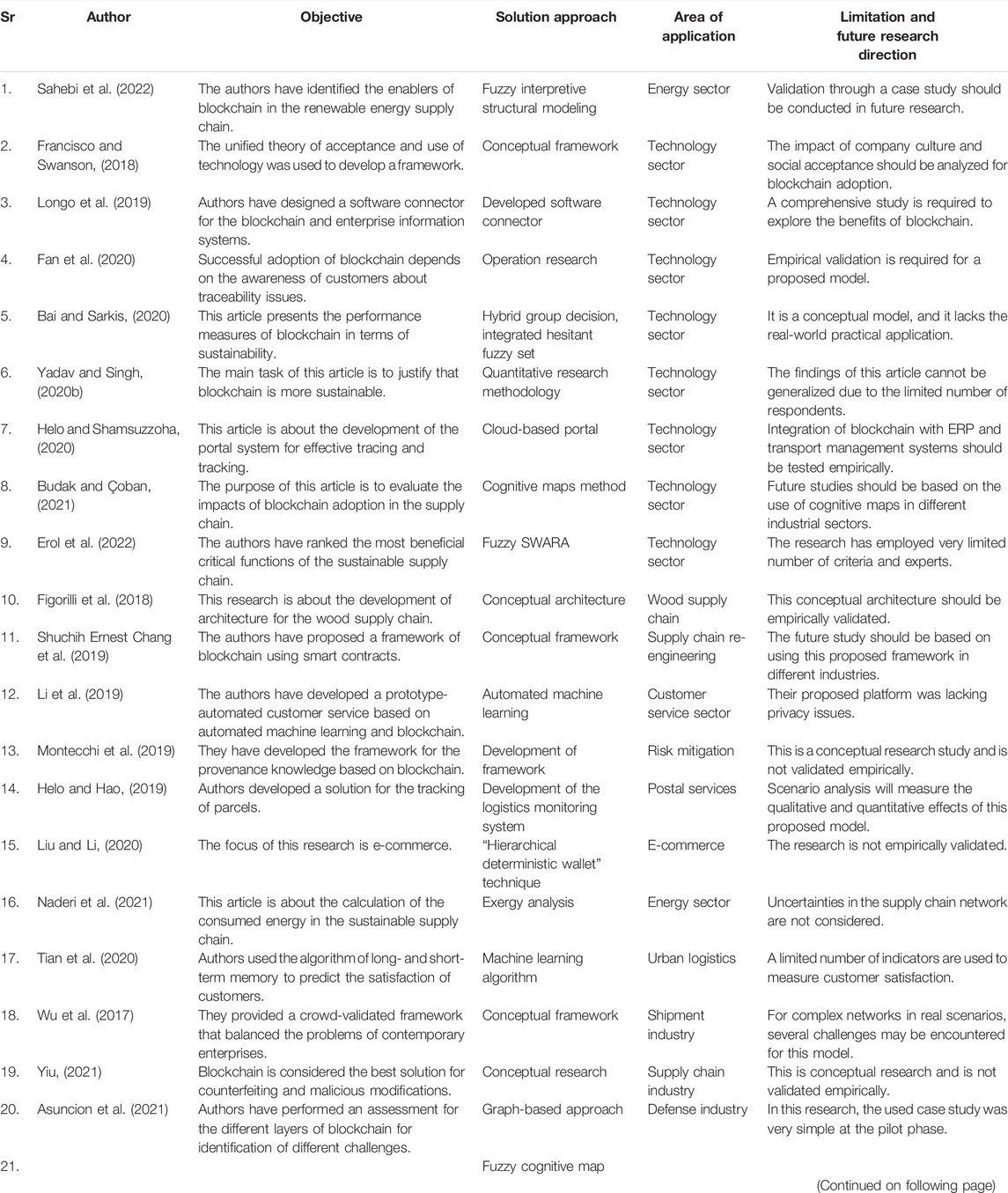
TABLE 2. Models and framework development for the blockchain-based supply chain and economic sustainability for different sectors.
The main features of the blockchain are decentralization, audibility, and cybersecurity (Hu D. et al., 2021). Blockchain is a transparent system across the whole supply chain as data cannot be manipulated due to minimum role of mediators. In this background, Yadav and Singh (2020b) compared the performance of a blockchain-based supply chain and a traditional supply chain. They identified the characteristics of blockchain and analyzed them through modeling on fuzzy-interpretative structural modeling. Naderi et al. (2021) provided an optimized model which was multi-objective and based on exergy analysis for the sustainable supply chain. The model was simulated on real-time data in the dairy sector of Iran. The rapid changing of the demand of consumers due to urbanization is continuously affecting the logistics industry, which is a challenge for a logistic service provider. In this background, Tian et al., (2020) proposed an evaluation approach for customer satisfaction based on blockchain. A simulation based on experimental work was performed, and the feasibility was evaluated for the proposed model.
4.3 Case Studies Relevant to Economic Sustainability in the Blockchain-Based Supply Chain in the Agriculture, Food, and Healthcare Sectors
The basic characteristic of blockchain is the shared information on equality base as no individual has access to change the information without the approval of other participants (Liu et al., 2020). Case studies and empirical pieces of evidence of blockchain are not in the mature stage; however, different researchers have conducted case studies and developed theoretical inferences. Different case studies conducted in the agriculture, food, dairy, aquaculture, and pharmaceutical sectors are listed in “Table 3.”
1) The different solution approaches used in these case studies are Ethereum smart contracts, conjoint analysis, analytical hierarchy process, qualitative and quantitative research methodology, and prototype development.
2) The main characteristics of blockchain in the supply chain such as flexibility, efficiency, responsiveness, and transparency are discussed in detail.
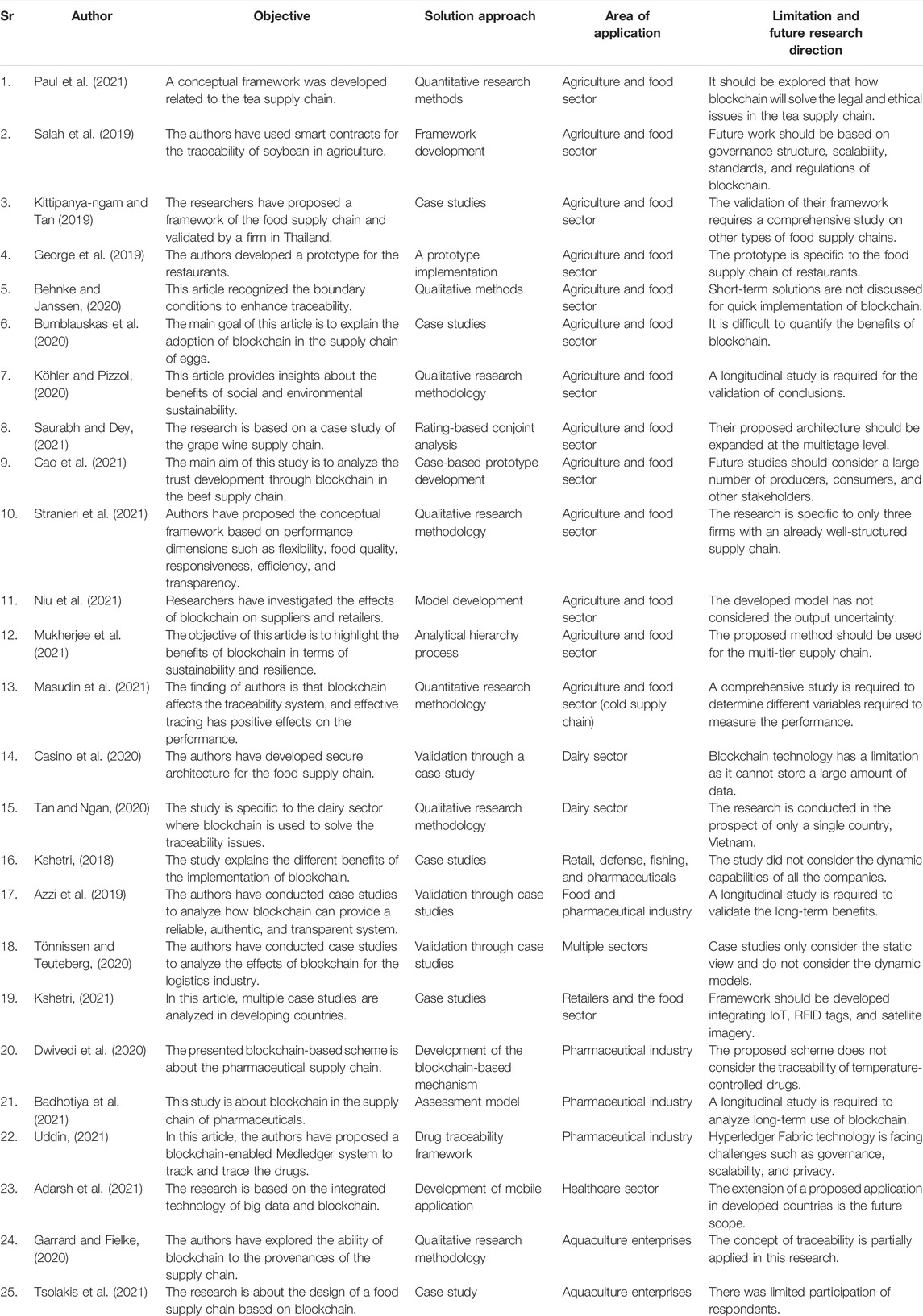
TABLE 3. Case studies related to economic sustainability in the blockchain-based supply chain in agriculture, food, and healthcare sectors.
Blockchain is used to keep the record of each activity in the supply chain. This record is shareable, traceable, authentic, and legitimate. In this background, Kshetri (2021) conducted multiple case studies and assessed the environmental and social impacts of blockchain. Blockchain technology also uses diverse technologies such as IoT, QR codes, RFID tags, and satellite imagery (Kshetri, 2017). Cao et al. (2021) have conducted a study with a partnership of Australian agricultural processors and developed a mechanism of human–machine reconciles with an overall focus on traceability in the beef supply chain system. Different challenges faced by the pharmaceutical industry involve counterfeit and other operational issues. (A et al., 2021) worked on traceability problems of vaccines and developed a model based on blockchain and big data to track the handling of vaccine in cold storage in India. Digitalization has played an important role in the sustainable agriculture supply chain but there is limited research about the factors which motivate to adopt digital technologies (Davis, 1993). In this perspective, Saurabh and Dey (2021) identified some drivers which are the motivators to adopt blockchain. These drivers are price, trust, traceability, disintermediation, compliance, coordination, and control. Köhler and Pizzol (2020) conducted the six case studies on blockchain-based food supply chains and developed a framework for its assessment using components including the technique, organization knowledge, and product (Seawright and Gerring, 2008).
4.4 Case Studies Relevant to Economic Sustainability in the Blockchain-Based Supply Chain in Different Sectors
A blockchain-based system can reduce the intermediaries and need for centralized authority because it provides the transaction record, efficiency, and transparency (Pournader et al., 2019). The sustainability effects are linked to visibility and traceability in the supply chain. The articles related to the case studies in different sectors are listed in “Table 4.”
1) The area of application of these case studies is supply chains of chemical, cargo, shipping, logistics, retail, aviation, textile, construction, automotive, trading, mineral, and oil sectors.
2) Some articles are conceptual based; however, different solution approaches used in some case studies are action research through case studies, quantitative research methodology, qualitative research methodology, and prototype development.
3) Some case studies are based on the development of Ethereum-based consortiums, algorithm based on small contract, simulation-based models, and operation research techniques.
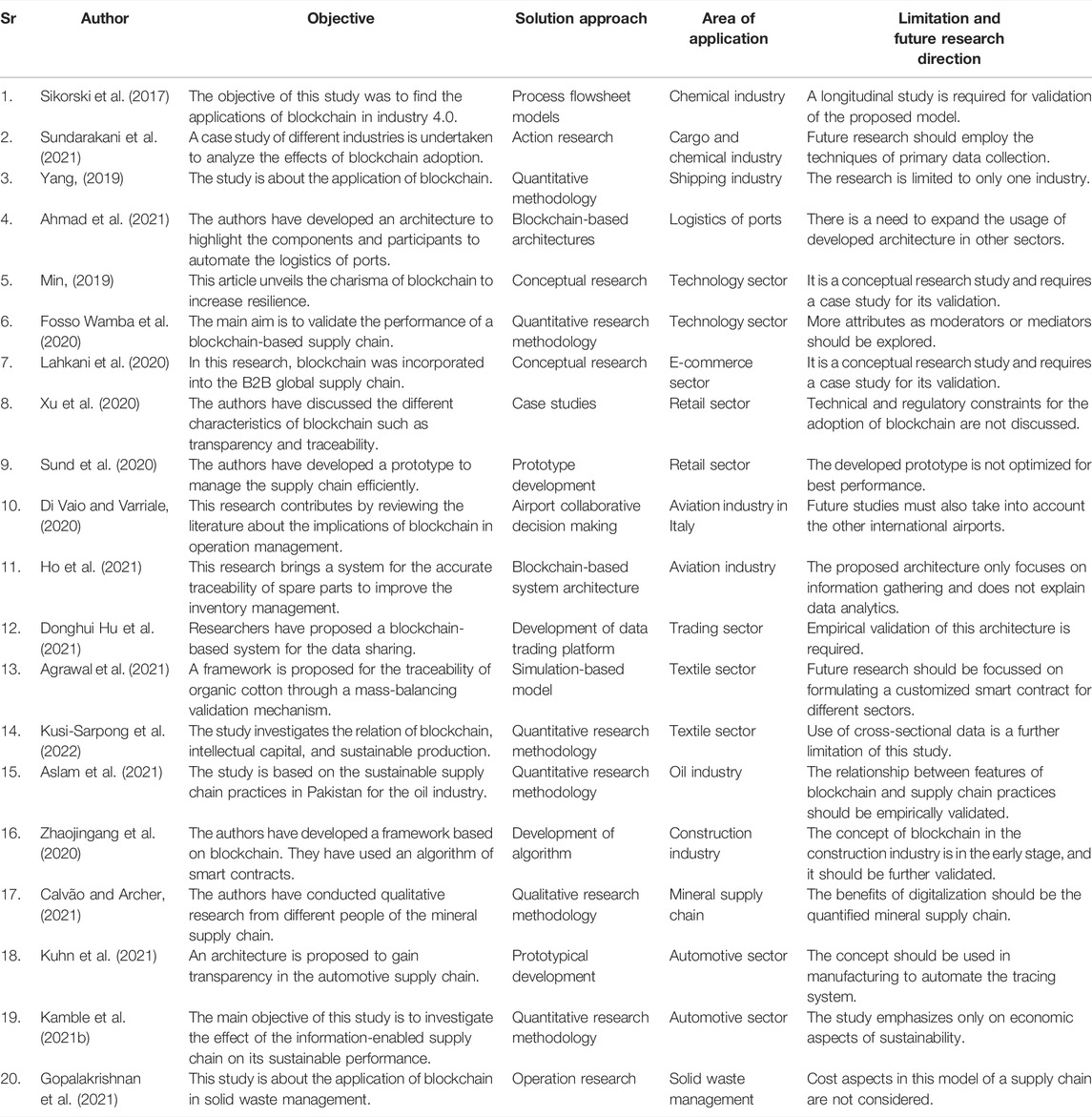
TABLE 4. Case studies related to economic sustainability in the blockchain-based supply chain for different sectors.
4.5 Critical Success Factors, Barriers, and Challenges in Adoption of Blockchain for Economic Sustainability in the Supply Chain
Blockchain is continuously gaining the attention of researchers and practitioners, and it has a potential to bring breakthroughs in the entire supply chain (Kamble et al., 2018). Some case studies of blockchain in different supply chain fields including agriculture, food, health, and manufacturing sectors are discussed in previous sections. Improvement in sustainability includes different dimensions including transparency, traceability, visibility, efficiency, and green practices (Yadav et al., 2020). The adoption of this technology has not gained much acceptance for several years (Dutta et al., 2020). The barriers and challenges for adoption of blockchain for an economically sustainable supply chain are critically examined, and its critical success factors are discussed. Details of relevant articles are given in “Table 5.”
1) These challenges and barriers are in different areas of applications such as the agriculture and food sectors, pharmaceutical, manufacturing sector, maritime industry, fashion industry, small and medium enterprises, and local and global supply chains.
2) Most of the researchers have used the solution methodology for identification and ranking of challenges and barriers, which is the decision-making trial and evaluation laboratory (DEMATEL); the other methodologies used are the analytic hierarchical process, a fishbone diagram and Political, Economic, Social, Technological, Legal, and Environmental (PESTLE) analysis, intuitionistic fuzzy AHP (multi-criteria decision making), fuzzy VIKOR, qualitative research methodology, and quantitative research methodology “interpretive structural modeling (ISM).”
3) Most of the identified barriers can be categorized into technical, organizational, and environmental barriers.
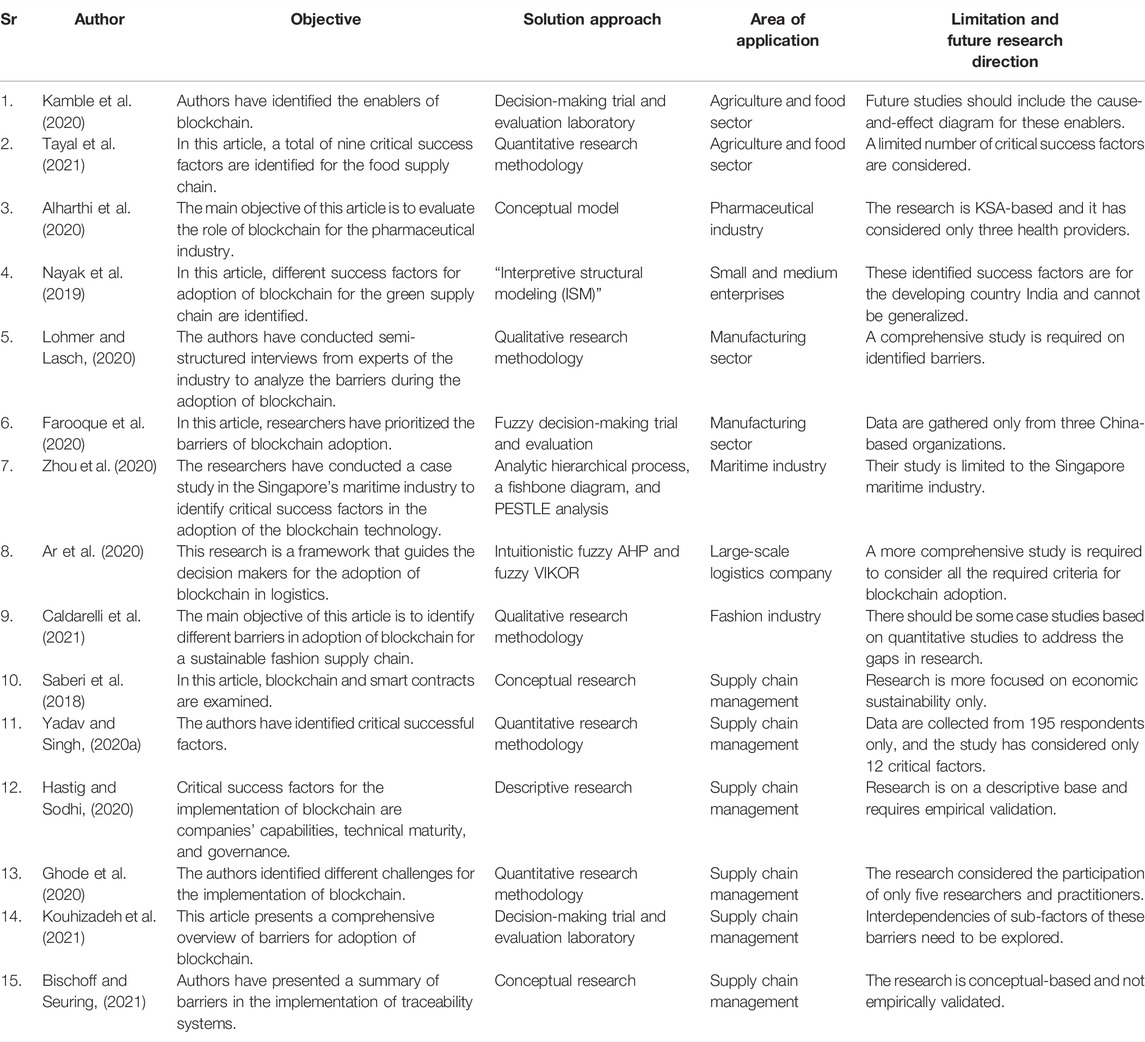
TABLE 5. Article list about different challenges in adoption of blockchain for an economically sustainable supply chain.
Blockchain is a revolutionary technology that will transform the entire supply chain, but there are many challenges and barriers in its implementation. In this context, Farooque et al. (2020) have collected the data from three organizations of China about the experience of blockchain implementation. Their findings were that technological immaturity, poor organizational policies, and lack of government regulations are the main barriers. Saberi et al. (2018) examined the applications of blockchain in the context of sustainability. The important part of this critical examination is that how blockchain can overcome the barriers during its adoption. These barriers are categorized as intraorganizational, interorganizational, technical, and external barriers. Alharthi et al. (2020) explored the challenges in the adoption of blockchain for the pharmaceutical industry. The main issues found are lack of integration of this technology in the health system, lack of coordination among stakeholders, and poor demand forecasting of medicines (Zhou et al., 2020). Data were gathered from the 30 maritime professionals, and the analytical hierarchical process (“AHP”) ( and PESTLE analysis were applied to identify critical success factors.
The future work should be based on the development of a model or framework which considers all dimensions of sustainability including social, economic, and environmental perspectives. The model should be empirically validated for multiple sectors to draw a generalized conclusion, and all the benefits should be quantitatively measured. These frameworks and architecture should consider the other technologies which will be integrated with blockchain for data collection such as the Internet of Things, QR codes, RFID, and artificial intelligence.
5 Blockchain-Based Circular/Green Supply Chain Management
A sustainable supply chain is the flow of resources and information from supplier to end customer while considering the financial, societal, and environmental performances (Chen et al., 2014). The firms are focusing to increase the technical capabilities without affecting the triple bottom-line (Casino et al., 2019). Blockchain is used in different countries to control carbon generation efficiently. The conceptual model for the blockchain-based green supply chain or circular supply chain is shown in Figure 4. The two concepts discussed in this model are to form the circular supply chain and green supply chain by using the blockchain technology. The model of the circular supply chain urges the producers and manufacturers to remake and reuse the discarded material to make it more economical and environmentally sustainable. Different characteristics of blockchain such as traceability and smart contracts are useful for the monitoring, controlling, and reducing the carbon footprints during different stages of supply chain. The air pollution monitoring will be useful for the carbon reduction. Similarly smart contracts can be developed to impose the carbon tax policies. For example, blockchain is used in Northern Europe to motivate the people for financial rewards in exchange for depositing the recyclables’ plastic bottles or cans. Proper traceability of products through blockchain and resource efficiency can be useful to develop the complete structure of the close loop supply chain.
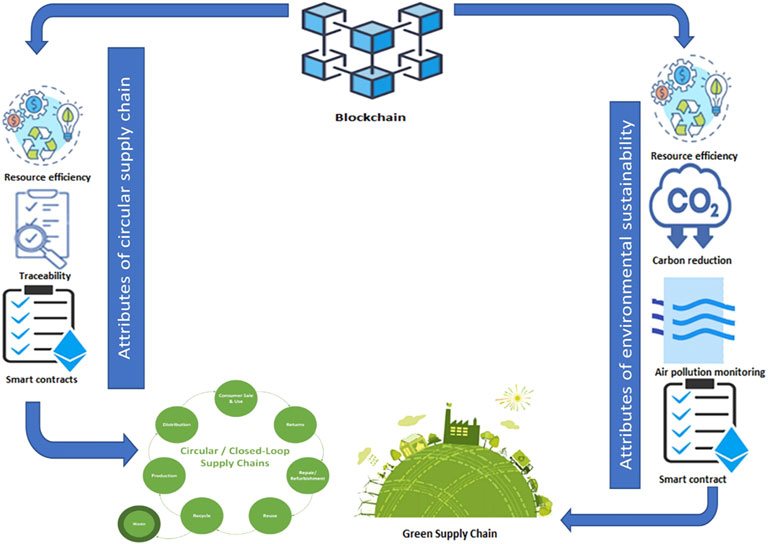
FIGURE 4. Conceptual framework of transformation of the supply chain to the green/circular supply chain.
5.1 Model Development, Framework, and Architecture Related to Blockchain-Based Green and Circular Supply Chains
Blockchain is an assurance of transparency and human rights. The research on blockchain for the environmentally sustainable supply chain is in an early phase, but it is evolving rapidly. A list of articles for different models, architecture, and frameworks by different researchers are given in “Table 6” and discussed in detail. The main features of these research articles are as follows:
1) These models and frameworks are developed in different sectors such as waste management, the fashion industry, and the food and agriculture sectors.
2) Some articles are conceptual-based; other methodologies used are Bayesian formula, mixed integer non-linear programming (MINLP) model, and mathematical modeling techniques.
3) The main theme of these frameworks is a green supply chain, circular supply chain, and carbon reduction policies through smart contracts, recycling, and rework.
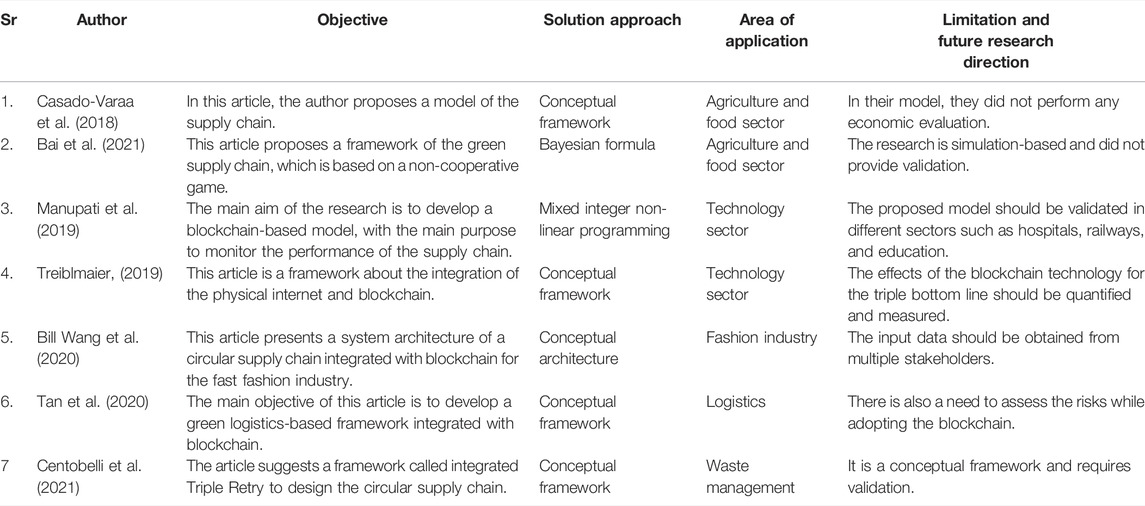
TABLE 6. Models and frameworks related to the blockchain-based green/circular supply chain.
The new emerging technology including blockchain and physical internet (PI) can improve the sustainability by restructuring the entire supply chain. Bai et al. (2021) presented a framework of the green supply chain, which is based on a non-cooperative game, and they designed a model which was based on the Bayesian formula. They evaluated their work through simulation on Python 3.5. Manupati et al. (2019) developed a model to optimize carbon emission levels and operational cost. The circular supply chain is a transition from disposal to reuse and is a step toward a sustainable economy. Wang B. et al. (2020) presented system architecture of a circular supply chain. Their study analyzed the challenges related to sustainability. Casado-Varaa et al, (2018) proposed a new model of an agricultural supply chain using blockchain. They used the multi-agent system based on smart contracts. The main advantage of the model was that through blockchain, the traceability of all the stages is possible.
5.2 Case Studies and Theoretical Developments of Blockchain in the Green/Circular Supply Chain
Sustainable practices are implemented by the firms to mitigate the negative environmental and social effects in their supply chain (Rejeb and Rejeb, 2020; Gupta et al., 2021). The development in sustainability is the opportunity for all the firms to redesign their supply chain. The integration of big data, blockchain, and artificial intelligence can improve the sustainability goals linked to traceability, security, environmental degradation, and social ethics. Case studies and theoretical developments for the green/circular supply chain are listed in “Table 7.” The main features of these case studies are as follows:
1) The different areas of applications of these case studies are the maritime industry, packaging waste, solid waste, agriculture, forestry, and fisheries industries; one article is written based on the background of COVID-19.
2) Many research articles are based on conceptual models validated through case studies; however, one research article is based on the ReSOLVE model (regenerate, share, optimize, loop, virtualize, and exchange).
3) Most of the themes are about the circular supply chain, waste-to-energy concepts, packaging waste, and integration of IoT and RFID technologies with blockchain.
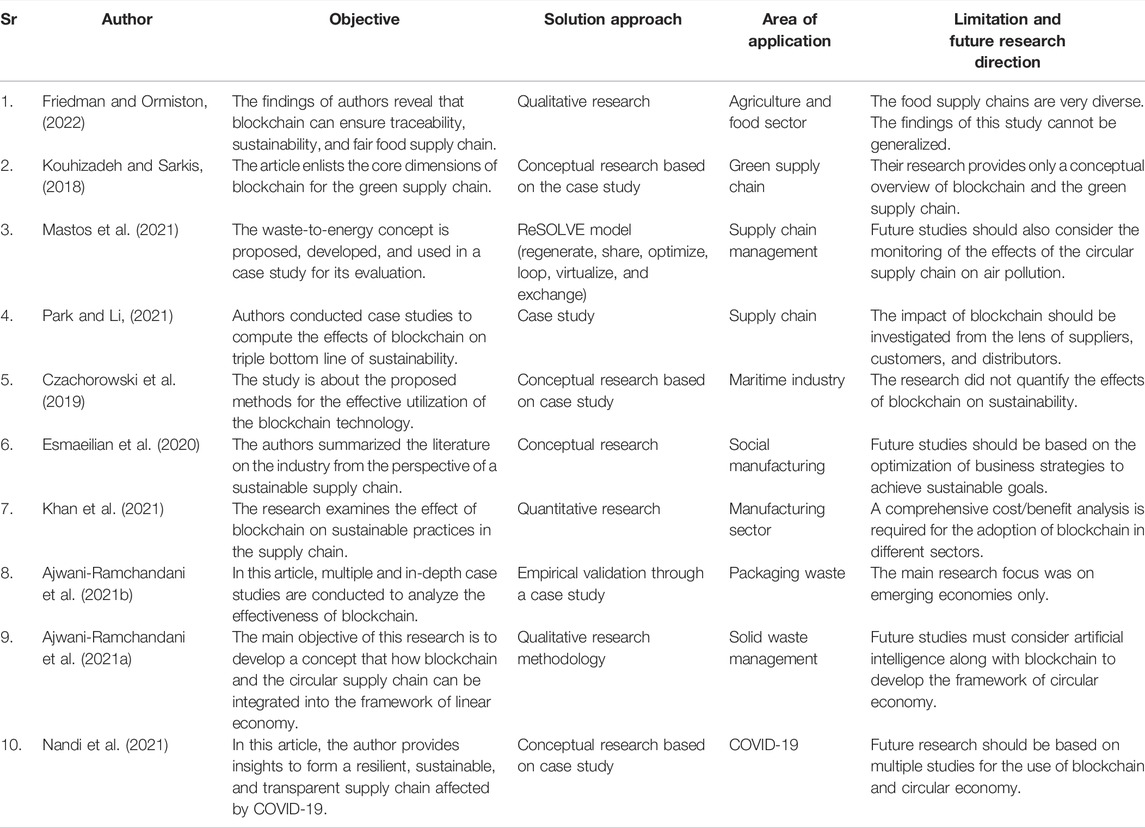
TABLE 7. Case studies for the blockchain-based green/circular supply chain.
The concept is the circular economy is evolving in recent times, which focuses to transform the products into new products after their useful life. In this context, Mastos et al. (2021) developed the waste-to-energy model and validated it by three case studies of the wood waste supply chain in the paradigm of industry 4.0. The knowledge of circular economy is still very limited, although it is adopted in developing countries (Kalmykova et al., 2018). Ajwani-Ramchandani et al. (2021a) provided the concept that how blockchains can be used for social and environmental sustainability in a circular supply chain. Modern society is more focused on social and environmental aspects. In this perspective, Kouhizadeh and Sarkis (2018) discussed the core dimensions of blockchain including decentralization of the database, secured transaction, information transparency, and smart contracts (Leng et al., 2019). The maritime industry is producing environmental degradation rapidly. Czachorowski et al. (2019) presented the insights on blockchain in the maritime industry for the reduction of pollution. Packaging waste is the most critical problem, which is a barrier for the implementation of sustainable development programs (Dahlbo et al., 2018).
5.3 Critical Success Factors, Barriers, and Challenges of Blockchain for the Green/Circular Supply Chain
The most important success factor of blockchain is the awareness of customers. If manufacturing becomes green, then the environmental friendly customer will prefer purchasing the product. In this section, the barriers and adoption of blockchain for green/circular supply chains are critically examined, and its critical success factors are discussed. Details of relevant articles are given in “Table 8.”
1) One of these articles is from the procurement section, and it has used quantitative and qualitative research methodology to find the challenges during blockchain adoption.
2) The second article is from the manufacturing sector, and it has used the decision-making trial and evaluation laboratory “DEMATEL” method, which is used to evaluate the critical success factors.
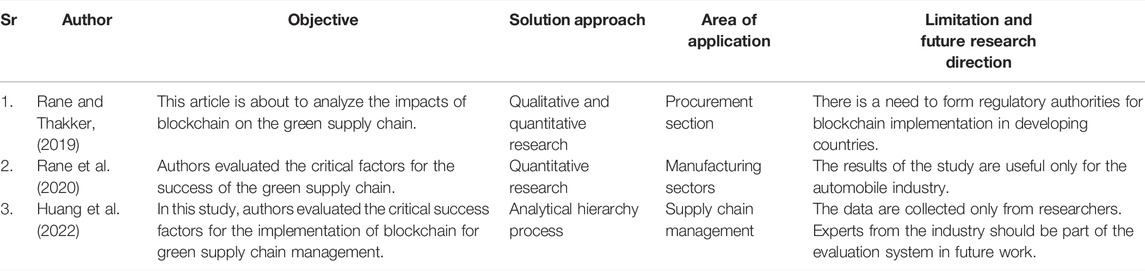
TABLE 8. Article related to challenges and barriers in the blockchain-based green/circular supply chain.
There were many limitations in articles relevant to case studies and theoretical developments in the blockchain-based green supply chain/circular supply chain. One common problem among all these studies is that these studies were cross-sectional studies and were unable to completely assess the effects of blockchain in different industrial sectors. A longitudinal study is needed to evaluate the long-term impacts of this nascent technology. Similarly, most of the studies were for a specific sector in a specific region. The geographic location, culture, laws, and people can affect the results and conclusions drawn from these studies. Another observation is that most of the studies were qualitative, and interviews conducted were structured or semi-structured. More quantitative studies should be included to get some quantifiable results and effects for all the attributes.
6 Blockchain-Based Social Sustainability in the Supply Chain
One major issue in the global supply chain is to protect the rights of workers and to provide them with a safe environment. There are a lot of standards for their rights, but it is common to violate the rules and regulations even in reputable organizations. Blockchain provides a commitment to achieve social sustainability. The parameters to measure the social sustainability include regional development, the welfare of workers, humanitarian supply chain, animals’ health, transparency, fraud mitigation, trust development, and food security. A list of articles about the impacts of blockchain on social sustainability and for the humanitarian supply chain is given in “Table 9.” The conceptual framework is given in “Figure 5.” The main areas discussed in this framework are social sustainability and social welfare. Social welfare also includes the humanitarian supply chain management. The different attributes of blockchain such as accountability, transparency, and traceability will be beneficial for the fraud prevention and trust development of all stakeholders. Traceability of products will improve the safety of food. Similarly, effective tracing and tracking will lead toward the transparency in humanitarian supply chain management. Important points of these research articles are as follows
1) Some articles are relevant to humanitarian supply chain management, in which used solution approaches are quantitative research methodology (partial least squares structural equation modeling), fuzzy delphi and best–worst method, fuzzy decision-making trial and evaluation laboratory, intuitionistic fuzzy analytic network process, and fuzzy best–worst method.
2) The area of application of other articles includes the agriculture and food sector, dairy sector, small and medium enterprises, manufacturing sector, social media, the fashion industry, and global supply chain. The methodologies used in these articles are quantitative research methodology (ISM-DEMATEL), qualitative research methodology, mathematical modeling, and conceptual research.
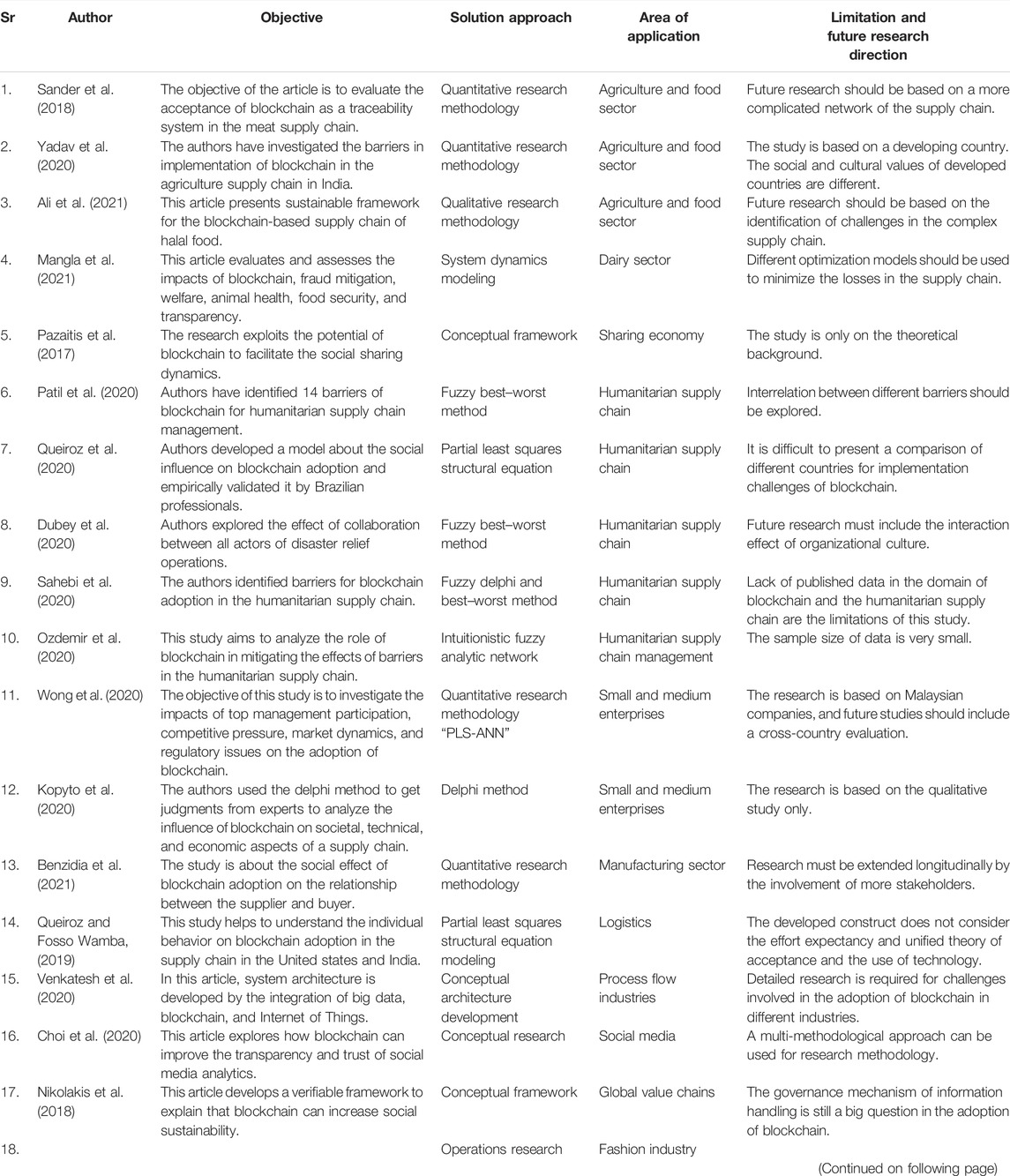
TABLE 9. Article related to blockchain use for social sustainability in the supply chain and humanitarian supply chain.
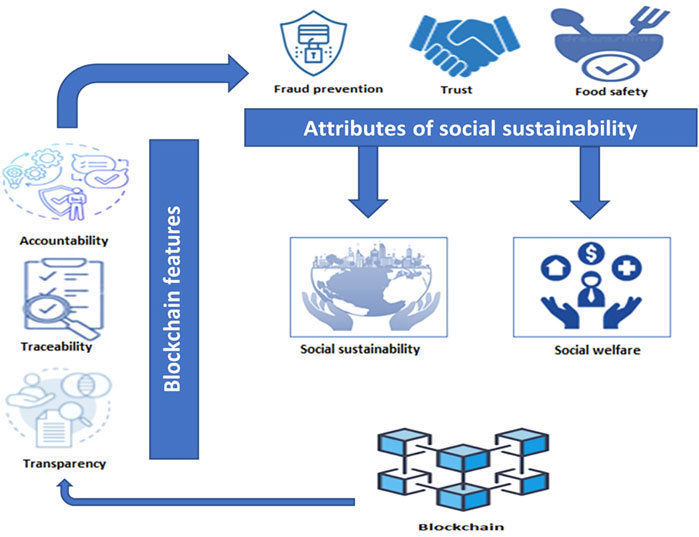
FIGURE 5. Conceptual framework of transformation of the supply chain to attain social sustainability through blockchain.
Food safety is the main concern of the developing world. In this perspective, Yadav et al. (2020) have got the opinion of experts in the agriculture industry in India. Their finding revealed that government regulations and lack of trust are the main barriers for blockchain adoption. Benzidia et al. (2021) developed a conceptual model based on the ambidexterity theory of dynamic capability. The organization strategy of ambidexterity with a balanced approach of social and technological factors between suppliers and customers will enhance the capabilities of digitalization and innovation potential of the buyer, while considering the sustainable processes. Patil et al. (2020) identified 14 barriers for blockchain in the humanitarian supply chain. The identified barriers are organizational, technological, and financial. Blockchain can increase transparency, which is the need for a halal food value chain. In this perspective, Ali et al. (2021) explored that the supply chain of halal food can achieve sustainability through blockchain technology. The strategic fit in the supply chain and regulatory intervention are the enablers in the success of blockchain. Mangla et al. (2021) collected the data from the dairy farmers and evaluated the social impacts of the blockchain technology on farmers and communities using different parameters such as rural area development, food fraud, animals’ health, food security, healthy food, and transparency.
Supply chains are very complex nowadays, and customer satisfaction is very challenging in this era of globalization. Most of the work is carried out for economic sustainability, and research for environmental and social sustainability is scarce. Most of the experts of the supply chain do not recognize the new technology, so their responses are not as reliable to be considered for further analysis. Future research should be based on the data from multiple sectors from multiple regions, so a comparative analysis may be performed to identify and prioritize the challenges and barriers for blockchain implementation.
7 Practical Implications
This extensive review will provide insights about recent advances at the interface of blockchain and the supply chain to all the managers, researchers, practitioners, and policy makers who are involved in the supply chain. Blockchain can revolutionize different industrial sectors such as banking and finance, health and medicine, retail, agriculture, and logistics. The review is focused on different models’ development, conceptual frameworks, and case studies about the implementation of blockchain. This research is useful by summarizing all the latest developments of blockchain and its effects on the sustainability of the supply chain for various sectors including agri-food, pharmaceuticals, manufacturing, automobiles, aviation, and many other national and international companies. Different attributes of blockchain are evaluated in this article, which include fraud mitigation, workers’ welfare, animal health, food security, transparency, traceability, and resilient supply chain. It also sheds light on the social aspects of blockchain such as food safety, trustful collaboration, humanitarian logistics, and social welfare. Firms will be able to improve their strategies and policies using blockchain to broaden their eco-friendly practices, sustainable consumption of energy and natural resources, and social vitality. Blockchain can foster the green supply chain by the traceability of products in an effective way and by monitoring the environmental compliance throughout the entire supply chain. Through efficient tracing, it will improve energy wastage and resource consumption. Finally, it will be helpful in transaction cost reduction through smart contracts and will increase the accuracy, speed, and efficiency of the supply chain.
8 Conclusion
After conducting the extensive literature review, it is being concluded that the supply chain has entered the era of blockchain and big data, and these technologies have great potential to revolutionize the entire network. The research was categorized into three domains. In the first category, blockchain and economic sustainability through different attributes of blockchain such as traceability, transparency, decentralization, visibility, smart contracts, accountability, immutability, and cybersecurity were evaluated through relevant literature studies. In the second category, the role of blockchain for the circular and green supply chains was assessed through a review of relevant articles. The benefits of blockchain in the humanitarian supply chain and its social aspects through trust development, fraud prevention, and food safety were critically examined in the third category. Different constructive characteristics of blockchain provide resilience, mutual trust, fraud mitigation, social welfare, and risk mitigation in the supply chain.
However, the scope of the present study is very broad, as it not only covers the triple bottom-line aspects of sustainability but it also lists the articles relevant to the humanitarian supply chain. Still, the study has limitations such as the research is conducted only from sustainability perspective and other aspects of supply chain such as resilience, agility, and robustness are not the scope of this study. The articles were selected only from Scopus-indexed journals, and some important information sources such as book chapters were neglected. Blockchain has a capability for the traceable, authentic, and reliable information flow using the smart contract, but the main question is still unanswered that is blockchain a real disruptive technology for social innovation or is it just an incremental technology that has very low strategic significance in supply chain sustainability. At present, several countries have adopted the blockchain technology in several sectors. Developed countries such as the United States and Japan are among the top countries for the acceptance and implementation of blockchain. Many African and Asian countries are also part of leading countries in blockchain adoption. In developing countries, blockchain adoption and green practices in procurement and the supply chain are at a very early stage, and there is a need to develop regulatory authorities at the government level to implement these practices. The effective use of the blockchain technology in developing countries with focused improvements will not only strengthen the economic aspects of the supply chain but will also improve its performance to comply with the environmental regulations and social aspects.
Future research direction in perspective of developmental research should be a joint function of blockchain with big data, life cycle assessment techniques, Internet of Things, and RFID. Future research should consider the limitations of blockchain in information handling, governance framework, and workability of smart contracts. Many unaddressed questions should be explored, for example, what non-technological aspects such as company regulations, culture, and social acceptance will impact the adoption of blockchain? The basic lesson learned from the COVID-19 crisis is to manage the resilience and risk. It should be investigated that how blockchain will affect the cost, risks, and uncertainties during the operation and disruption. Future research should also consider the government’s role in the adoption of blockchain. Overall, this article will provide an opportunity to academicians and researchers, for the complete understanding of the blockchain-based supply chain in paradigm of triple bottom-line aspects.
Data Availability Statement
The original contributions presented in the study are included in the article/Supplementary Material, further inquiries can be directed to the corresponding authors.
Author Contributions
Each author contributed to the literature review, analysis, and to the writing of the manuscript. MAM (1st author) conceptualized and drafted the manuscript. AH, TM, and MH were the research supervisors and provided guidance for the collection of relevant articles. CS and AQ helped in developing frameworks, while MS, MAM (8th author), and SI contributed to the graphical abstract and figures.
Funding
This work was supported by the Deanship of Scientific Research at King Khalid University, Abha-KSA, for funding this research through the General Research Project under the grant number (R.G.P.2/189/43).
Conflict of Interest
The authors declare that the research was conducted in the absence of any commercial or financial relationships that could be construed as a potential conflict of interest.
Publisher’s Note
All claims expressed in this article are solely those of the authors and do not necessarily represent those of their affiliated organizations, or those of the publisher, the editors, and the reviewers. Any product that may be evaluated in this article, or claim that may be made by its manufacturer, is not guaranteed or endorsed by the publisher.
References
Adarsh, S., Joseph, S. G., John, F., Lekshmi, M. B., and Asharaf, S. (2021). A Transparent and Traceable Coverage Analysis Model for Vaccine Supply-Chain Using Blockchain Technology. IT Prof. 23 (4), 28–35. doi:10.1109/MITP.2021.3094194
Agrawal, T. K., Kumar, V., Pal, R., Wang, L., and Chen, Y. (2021). Blockchain-based Framework for Supply Chain Traceability: A Case Example of Textile and Clothing Industry. Comput. Industrial Eng. 154, 107130. doi:10.1016/j.cie.2021.107130
Agyabeng-Mensah, Y., Ahenkorah, E., Afum, E., Dacosta, E., and Tian, Z. (2020). Green Warehousing, Logistics Optimization, Social Values and Ethics and Economic Performance: the Role of Supply Chain Sustainability. Ijlm 31 (3), 549–574. doi:10.1108/ijlm-10-2019-0275
Ahmad, R. W., Hasan, H., Jayaraman, R., Salah, K., and Omar, M. (2021). Blockchain Applications and Architectures for Port Operations and Logistics Management. Res. Transp. Bus. Manag. 41, 100620. doi:10.1016/j.rtbm.2021.100620
Ajwani-Ramchandani, R., Figueira, S., Torres de Oliveira, R., and Jha, S. (2021a). Enhancing the Circular and Modified Linear Economy: The Importance of Blockchain for Developing Economies. Resour. Conservation Recycl. 168, 105468. doi:10.1016/j.resconrec.2021.105468
Ajwani-Ramchandani, R., Figueira, S., Torres de Oliveira, R., Jha, S., Ramchandani, A., and Schuricht, L. (2021b). Towards a Circular Economy for Packaging Waste by Using New Technologies: The Case of Large Multinationals in Emerging Economies. J. Clean. Prod. 281, 125139. doi:10.1016/j.jclepro.2020.125139
Alharthi, S., Cerotti, P. R. C., and Maleki Far, S. (2020). An Exploration of the Role of Blockchain in the Sustainability and Effectiveness of the Pharmaceutical Supply Chain. Jsccrm, 1–29. doi:10.5171/2020.562376
Ali, M. H., Chung, L., Kumar, A., Zailani, S., and Tan, K. H. (2021). A Sustainable Blockchain Framework for the Halal Food Supply Chain: Lessons from Malaysia. Technol. Forecast. Soc. Change 170, 120870. doi:10.1016/j.techfore.2021.120870
Ar, I. M., Erol, I., Peker, I., Ozdemir, A. I., Medeni, T. D., and Medeni, I. T. (2020). Evaluating the Feasibility of Blockchain in Logistics Operations: A Decision Framework. Expert Syst. Appl. 158, 113543. doi:10.1016/j.eswa.2020.113543
Aslam, J., Saleem, A., Khan, N. T., and Kim, Y. B. (2021). Factors Influencing Blockchain Adoption in Supply Chain Management Practices: A Study Based on the Oil Industry. J. Innovation Knowl. 6 (2), 124–134. doi:10.1016/j.jik.2021.01.002
Asuncion, F., Brinckman, A., Cole, D., Curtis, J., Davis, M., Dunlevy, T., et al. (2021). Connecting Supplier and DoD Blockchains for Transparent Part Tracking. Blockchain Res. Appl. 2, 100017. doi:10.1016/j.bcra.2021.100017
Azzi, R., Chamoun, R. K., and Sokhn, M. (2019). The Power of a Blockchain-Based Supply Chain. Comput. Industrial Eng. 135, 582–592. doi:10.1016/j.cie.2019.06.042
Badhotiya, G. K., Sharma, V. P., Prakash, S., Kalluri, V., and Singh, R. (2021). Investigation and Assessment of Blockchain Technology Adoption in the Pharmaceutical Supply Chain. Mater. Today Proc. 46, 10776–10780. doi:10.1016/j.matpr.2021.01.67310.1016/j.matpr.2021.01.673
Badia-Melis, R., Mishra, P., and Ruiz-García, L. (2015). Food Traceability: New Trends and Recent Advances. A Review. Food control. 57, 393–401. doi:10.1016/j.foodcont.2015.05.005
Bai, C., and Sarkis, J. (2020). A Supply Chain Transparency and Sustainability Technology Appraisal Model for Blockchain Technology. Int. J. Prod. Res. 58 (7), 2142–2162. doi:10.1080/00207543.2019.1708989
Bai, Y., Fan, K., Zhang, K., Cheng, X., Li, H., and Yang, Y. (2021). Blockchain-based Trust Management for Agricultural Green Supply: A Game Theoretic Approach. J. Clean. Prod. 310, 127407. doi:10.1016/j.jclepro.2021.127407
Bechtsis, D., Tsolakis, N., Bizakis, A., and Vlachos, D. (2019). A Blockchain Framework for Containerized Food Supply Chains. Food Supply Chains 46, 1369–1374. doi:10.1016/b978-0-12-818634-3.50229-0
Behnke, K., and Janssen, M. F. W. H. A. (2020). Boundary Conditions for Traceability in Food Supply Chains Using Blockchain Technology. Int. J. Inf. Manag. 52, 101969. doi:10.1016/j.ijinfomgt.2019.05.025
Benzidia, S., Makaoui, N., and Subramanian, N. (2021). Impact of Ambidexterity of Blockchain Technology and Social Factors on New Product Development: A Supply Chain and Industry 4.0 Perspective. Technol. Forecast. Soc. Change 169, 120819. doi:10.1016/j.techfore.2021.120819
Bischoff, O., and Seuring, S. (2021). Opportunities and Limitations of Public Blockchain-Based Supply Chain Traceability. Mscra 3, 226–243. ahead-of-print(ahead-of-print). doi:10.1108/MSCRA-07-2021-0014
Bosona, T., and Gebresenbet, G. (2013). Food Traceability as an Integral Part of Logistics Management in Food and Agricultural Supply Chain. Food control. 33 (1), 32–48. doi:10.1016/j.foodcont.2013.02.004
Budak, A., and Çoban, V. (2021). Evaluation of the Impact of Blockchain Technology on Supply Chain Using Cognitive Maps. Expert Syst. Appl. 184, 115455. doi:10.1016/j.eswa.2021.115455
Bumblauskas, D., Mann, A., Dugan, B., and Rittmer, J. (2020). A Blockchain Use Case in Food Distribution: Do You Know where Your Food Has Been? Int. J. Inf. Manag. 52, 102008. doi:10.1016/j.ijinfomgt.2019.09.004
Caldarelli, G., Zardini, A., and Rossignoli, C. (2021). Blockchain Adoption in the Fashion Sustainable Supply Chain: Pragmatically Addressing Barriers. Jocm 34 (2), 507–524. doi:10.1108/jocm-09-2020-0299
Calvão, F., and Archer, M. (2021). Digital Extraction: Blockchain Traceability in Mineral Supply Chains. Polit. Geogr. 87, 102381. doi:10.1016/j.polgeo.2021.102381
Cao, S., Powell, W., Foth, M., Natanelov, V., Miller, T., and Dulleck, U. (2021). Strengthening Consumer Trust in Beef Supply Chain Traceability with a Blockchain-Based Human-Machine Reconcile Mechanism. Comput. Electron. Agric. 180, 105886. doi:10.1016/j.compag.2020.105886
Caro, M. P., Ali, M. S., Vecchio, M., and Giaffreda, R. (2018). “Blockchain-based Traceability in Agri-Food Supply Chain Management: A Practical Implementation,” in 2018 IoT Vertical and Topical Summit on Agriculture - Tuscany (IOT Tuscany), Tuscany, Italy, 8-9 May 2018, 1–4. doi:10.1109/iot-tuscany.2018.8373021
Casado-Varaa, R., Prieto, J., De la Prietaa, F., and Corchadoa, J. M. (2018). How Blockchain Improves the Supply Chain: Case Study Alimentary Supply chain.Pdf. Procedia Comput. Sci. 134, 393–398. doi:10.1016/j.procs.2018.07.193
Casino, F., Dasaklis, T. K., and Patsakis, C. (2019). A Systematic Literature Review of Blockchain-Based Applications: Current Status, Classification and Open Issues. Telematics Inf. 36, 55–81. doi:10.1016/j.tele.2018.11.006
Casino, F., Kanakaris, V., Dasaklis, T. K., Moschuris, S., Stachtiaris, S., Pagoni, M., et al. (2020). Blockchain-based Food Supply Chain Traceability: a Case Study in the Dairy Sector. Int. J. Prod. Res. 59 (19), 5758–5770. doi:10.1080/00207543.2020.1789238
Centobelli, P., Cerchione, R., Vecchio, P. D., Oropallo, E., and Secundo, G. (2021). Blockchain Technology for Bridging Trust, Traceability and Transparency in Circular Supply Chain. Inf. Manag., 103508. doi:10.1016/j.im.2021.103508
Chang, S. E., Chen, Y.-C., and Lu, M.-F. (2019). Supply Chain Re-engineering Using Blockchain Technology: A Case of Smart Contract Based Tracking Process. Technol. Forecast. Soc. Change 144, 1–11. doi:10.1016/j.techfore.2019.03.015
Chang, Y., Iakovou, E., and Shi, W. (2019). Blockchain in Global Supply Chains and Cross Border Trade: a Critical Synthesis of the State-Of-The-Art, Challenges and Opportunities. Int. J. Prod. Res. 58 (7), 2082–2099. doi:10.1080/00207543.2019.1651946
Chen, Y.-S., Chang, C.-H., and Lin, Y.-H. (2014). The Determinants of Green Radical and Incremental Innovation Performance: Green Shared Vision, Green Absorptive Capacity, and Green Organizational Ambidexterity. Sustainability 6 (11), 7787–7806. https://www.mdpi.com/2071-1050/6/11/7787. doi:10.3390/su6117787
Choi, T.-M., Guo, S., and Luo, S. (2020). When Blockchain Meets Social-Media: Will the Result Benefit Social Media Analytics for Supply Chain Operations Management? Transp. Res. Part E Logist. Transp. Rev. 135, 101860. doi:10.1016/j.tre.2020.101860
Choi, T.-M., and Luo, S. (2019). Data Quality Challenges for Sustainable Fashion Supply Chain Operations in Emerging Markets: Roles of Blockchain, Government Sponsors and Environment Taxes. Transp. Res. Part E Logist. Transp. Rev. 131, 139–152. doi:10.1016/j.tre.2019.09.019
Choi, T.-M., Wallace, S. W., and Wang, Y. (2018). Big Data Analytics in Operations Management. Prod. Oper. Manag. 27 (10), 1868–1883. doi:10.1111/poms.12838
Coronado Mondragon, A. E., Coronado Mondragon, C. E., and Coronado, E. S. (2020). Managing the Food Supply Chain in the Age of Digitalisation: a Conceptual Approach in the Fisheries Sector. Prod. Plan. Control 32 (3), 242–255. doi:10.1080/09537287.2020.1733123
Czachorowski, K., Solesvik, M., and Kondratenko, Y. (2019). The Application of Blockchain Technology in the Maritime Industry. Marit. Ind. 171, 561–577. doi:10.1007/978-3-030-00253-4_24
Dahlbo, H., Poliakova, V., Mylläri, V., Sahimaa, O., and Anderson, R. (2018). Recycling Potential of Post-consumer Plastic Packaging Waste in Finland. Waste Manag. 71, 52–61. doi:10.1016/j.wasman.2017.10.033
Dasaklis, T. K., Casino, F., and Patsakis, C. (2019). “Defining Granularity Levels for Supply Chain Traceability Based on IoT and Blockchain,” in Proceedings of the International Conference on Omni-Layer Intelligent Systems (Crete, Greece: Association for Computing Machinery). doi:10.1145/3312614.3312652
Davis, F. D. (1993). User Acceptance of Information Technology: System Characteristics, User Perceptions and Behavioral Impacts. Int. J. Man-Machine Stud. 38 (3), 475–487. doi:10.1006/imms.1993.1022
de Oliveira, U. R., Espindola, L. S., da Silva, I. R., da Silva, I. N., and Rocha, H. M. (2018). A Systematic Literature Review on Green Supply Chain Management: Research Implications and Future Perspectives. J. Clean. Prod. 187, 537–561. doi:10.1016/j.jclepro.2018.03.083
de Sousa Jabbour, A. B. L., Chiappetta Jabbour, C. J., Sarkis, J., Gunasekaran, A., Furlan Matos Alves, M. W., and Ribeiro, D. A. (2018). Decarbonisation of Operations Management - Looking Back, Moving Forward: a Review and Implications for the Production Research Community. Int. J. Prod. Res. 57 (15-16), 4743–4765. doi:10.1080/00207543.2017.1421790
Di Vaio, A., and Varriale, L. (2020). Blockchain Technology in Supply Chain Management for Sustainable Performance: Evidence from the Airport Industry. Int. J. Inf. Manag. 52, 102014. doi:10.1016/j.ijinfomgt.2019.09.010
Duan, J., Zhang, C., Gong, Y., Brown, S., and Li, Z. (2020). A Content-Analysis Based Literature Review in Blockchain Adoption within Food Supply Chain. Ijerph 17 (5), 1784. doi:10.3390/ijerph17051784
Dubey, R., Gunasekaran, A., Bryde, D. J., Dwivedi, Y. K., and Papadopoulos, T. (2020). Blockchain Technology for Enhancing Swift-Trust, Collaboration and Resilience within a Humanitarian Supply Chain Setting. Int. J. Prod. Res. 58 (11), 3381–3398. doi:10.1080/00207543.2020.1722860
Dutta, P., Choi, T.-M., Somani, S., and Butala, R. (2020). Blockchain Technology in Supply Chain Operations: Applications, Challenges and Research Opportunities. Transp. Res. Part E Logist. Transp. Rev. 142, 102067. doi:10.1016/j.tre.2020.102067
Dwivedi, S. K., Amin, R., and Vollala, S. (2020). Blockchain Based Secured Information Sharing Protocol in Supply Chain Management System with Key Distribution Mechanism. J. Inf. Secur. Appl. 54, 102554. doi:10.1016/j.jisa.2020.102554
Eluubek kyzy, I., Song, H., Vajdi, A., Wang, Y., and Zhou, J. (2021). Blockchain for Consortium: A Practical Paradigm in Agricultural Supply Chain System. Expert Syst. Appl. 184, 115425. doi:10.1016/j.eswa.2021.115425
Erol, I., Ar, I. M., and Peker, I. (2022). Scrutinizing Blockchain Applicability in Sustainable Supply Chains through an Integrated Fuzzy Multi-Criteria Decision Making Framework. Appl. Soft Comput. 116, 108331. doi:10.1016/j.asoc.2021.108331
Esmaeilian, B., Sarkis, J., Lewis, K., and Behdad, S. (2020). Blockchain for the Future of Sustainable Supply Chain Management in Industry 4.0. Resour. Conservation Recycl. 163, 105064. doi:10.1016/j.resconrec.2020.105064
Fan, Z.-P., Wu, X.-Y., and Cao, B.-B. (2020). Considering the Traceability Awareness of Consumers: Should the Supply Chain Adopt the Blockchain Technology? Ann. Oper. Res. 309, 837–860. doi:10.1007/s10479-020-03729-y
Farooque, M., Jain, V., Zhang, A., and Li, Z. (2020). Fuzzy DEMATEL Analysis of Barriers to Blockchain-Based Life Cycle Assessment in China. Comput. Industrial Eng. 147, 106684. doi:10.1016/j.cie.2020.106684
Feng, H., Wang, X., Duan, Y., Zhang, J., and Zhang, X. (2020). Applying Blockchain Technology to Improve Agri-Food Traceability: A Review of Development Methods, Benefits and Challenges. J. Clean. Prod. 260, 121031. doi:10.1016/j.jclepro.2020.121031
Feng Tian, T. (2017). “A Supply Chain Traceability System for Food Safety Based on HACCP, Blockchain & Internet of Things,” in 2017 International Conference on Service Systems and Service Management, Dalian, 16-18 June 2017, 1–6. doi:10.1109/ICSSSM.2017.7996119
Figorilli, S., Antonucci, F., Costa, C., Pallottino, F., Raso, L., Castiglione, M., et al. (2018). A Blockchain Implementation Prototype for the Electronic Open Source Traceability of Wood along the Whole Supply Chain. Sensors 18 (9), 3133. https://www.mdpi.com/1424-8220/18/9/3133. doi:10.3390/s18093133
Fosso Wamba, S., Queiroz, M. M., and Trinchera, L. (2020). Dynamics between Blockchain Adoption Determinants and Supply Chain Performance: An Empirical Investigation. Int. J. Prod. Econ. 229, 107791. doi:10.1016/j.ijpe.2020.107791
Francisco, K., and Swanson, D. (2018). The Supply Chain Has No Clothes: Technology Adoption of Blockchain for Supply Chain Transparency. Logistics 2 (1), 2. doi:10.3390/logistics2010002
Friedman, N., and Ormiston, J. (2022). Blockchain as a Sustainability-Oriented Innovation?: Opportunities for and Resistance to Blockchain Technology as a Driver of Sustainability in Global Food Supply Chains. Technol. Forecast. Soc. Change 175, 121403. doi:10.1016/j.techfore.2021.121403
Galvez, J. F., Mejuto, J. C., and Simal-Gandara, J. (2018). Future Challenges on the Use of Blockchain for Food Traceability Analysis. TrAC Trends Anal. Chem. 107, 222–232. doi:10.1016/j.trac.2018.08.011
Garaus, M., and Treiblmaier, H. (2021). The Influence of Blockchain-Based Food Traceability on Retailer Choice: The Mediating Role of Trust. Food control. 129, 108082. doi:10.1016/j.foodcont.2021.108082
Garrard, R., and Fielke, S. (2020). Blockchain for Trustworthy Provenances: A Case Study in the Australian Aquaculture Industry. Technol. Soc. 62, 101298. doi:10.1016/j.techsoc.2020.101298
George, R. V., Harsh, H. O., Ray, P., and Babu, A. K. (2019). Food Quality Traceability Prototype for Restaurants Using Blockchain and Food Quality Data Index. J. Clean. Prod. 240, 118021. doi:10.1016/j.jclepro.2019.118021
Ghode, D. J., Yadav, V., Jain, R., and Soni, G. (2020). Blockchain Adoption in the Supply Chain: an Appraisal on Challenges. Jmtm 32 (1), 42–62. doi:10.1108/jmtm-11-2019-0395
Gopalakrishnan, P. K., Hall, J., and Behdad, S. (2021). Cost Analysis and Optimization of Blockchain-Based Solid Waste Management Traceability System. Waste Manag. 120, 594–607. doi:10.1016/j.wasman.2020.10.027
Gupta, H., Kumar, A., and Wasan, P. (2021). Industry 4.0, Cleaner Production and Circular Economy: An Integrative Framework for Evaluating Ethical and Sustainable Business Performance of Manufacturing Organizations. J. Clean. Prod. 295, 126253. doi:10.1016/j.jclepro.2021.126253
Gupta, H., Kusi-Sarpong, S., and Rezaei, J. (2020). Barriers and Overcoming Strategies to Supply Chain Sustainability Innovation. Resour. Conservation Recycl. 161, 104819. doi:10.1016/j.resconrec.2020.104819
Habib, M. S., Lee, Y. H., and Memon, M. S. (2016). Mathematical Models in Humanitarian Supply Chain Management: A Systematic Literature Review. Math. Problems Eng. 2016, 1–20. doi:10.1155/2016/3212095
Han, J.-W., Zuo, M., Zhu, W.-Y., Zuo, J.-H., Lü, E.-L., and Yang, X.-T. (2021). A Comprehensive Review of Cold Chain Logistics for Fresh Agricultural Products: Current Status, Challenges, and Future Trends. Trends Food Sci. Technol. 109, 536–551. doi:10.1016/j.tifs.2021.01.066
Hastig, G. M., and Sodhi, M. S. (2020). Blockchain for Supply Chain Traceability: Business Requirements and Critical Success Factors. Prod. Oper. Manag. 29 (4), 935–954. doi:10.1111/poms.13147
Helo, P., and Hao, Y. (2019). Blockchains in Operations and Supply Chains: A Model and Reference Implementation. Comput. Industrial Eng. 136, 242–251. doi:10.1016/j.cie.2019.07.023
Helo, P., and Shamsuzzoha, A. H. M. (2020). Real-time Supply Chain-A Blockchain Architecture for Project Deliveries. Robotics Computer-Integrated Manuf. 63, 101909. doi:10.1016/j.rcim.2019.101909
Ho, G. T. S., Tang, Y. M., Tsang, K. Y., Tang, V., and Chau, K. Y. (2021). A Blockchain-Based System to Enhance Aircraft Parts Traceability and Trackability for Inventory Management. Expert Syst. Appl. 179, 115101. doi:10.1016/j.eswa.2021.115101
Hosseini Bamakan, S. M., Ghasemzadeh Moghaddam, S., and Dehghan Manshadi, S. (2021). Blockchain-enabled Pharmaceutical Cold Chain: Applications, Key Challenges, and Future Trends. J. Clean. Prod. 302, 127021. doi:10.1016/j.jclepro.2021.127021
Hu, D., Li, Y., Pan, L., Li, M., and Zheng, S. (2021). A Blockchain-Based Trading System for Big Data. Comput. Netw. 191, 107994. doi:10.1016/j.comnet.2021.107994
Hu, J., Zhang, X., Moga, L. M., and Neculita, M. (2013). Modeling and Implementation of the Vegetable Supply Chain Traceability System. Food control. 30 (1), 341–353. doi:10.1016/j.foodcont.2012.06.037
Hu, S., Huang, S., Huang, J., and Su, J. (2021). Blockchain and Edge Computing Technology Enabling Organic Agricultural Supply Chain: A Framework Solution to Trust Crisis. Comput. Industrial Eng. 153, 107079. doi:10.1016/j.cie.2020.107079
Huang, L., Zhen, L., Wang, J., and Zhang, X. (2022). Blockchain Implementation for Circular Supply Chain Management: Evaluating Critical Success Factors. Ind. Mark. Manag. 102, 451–464. doi:10.1016/j.indmarman.2022.02.009
Kalmykova, Y., Sadagopan, M., and Rosado, L. (2018). Circular Economy - from Review of Theories and Practices to Development of Implementation Tools. Resour. Conservation Recycl. 135, 190–201. doi:10.1016/j.resconrec.2017.10.034
Kamble, S., Gunasekaran, A., and Arha, H. (2018). Understanding the Blockchain Technology Adoption in Supply Chains-Indian Context. Int. J. Prod. Res. 57 (7), 2009–2033. doi:10.1080/00207543.2018.1518610
Kamble, S. S., Belhadi, A., Gunasekaran, A., Ganapathy, L., and Verma, S. (2021a). A Large Multi-Group Decision-Making Technique for Prioritizing the Big Data-Driven Circular Economy Practices in the Automobile Component Manufacturing Industry. Technol. Forecast. Soc. Change 165, 120567. doi:10.1016/j.techfore.2020.120567
Kamble, S. S., Gunasekaran, A., and Sharma, R. (2020). Modeling the Blockchain Enabled Traceability in Agriculture Supply Chain. Int. J. Inf. Manag. 52, 101967. doi:10.1016/j.ijinfomgt.2019.05.023
Kamble, S. S., Gunasekaran, A., Subramanian, N., Ghadge, A., Belhadi, A., and Venkatesh, M. (2021b). Blockchain Technology’s Impact on Supply Chain Integration and Sustainable Supply Chain Performance: Evidence from the Automotive Industry. Ann. Oper. Res. doi:10.1007/s10479-021-04129-6
Kamilaris, A., Fonts, A., and Prenafeta-Boldύ, F. X. (2019). The Rise of Blockchain Technology in Agriculture and Food Supply Chains. Trends Food Sci. Technol. 91, 640–652. doi:10.1016/j.tifs.2019.07.034
Khan, S. A. R., Godil, D. I., Jabbour, C. J. C., Shujaat, S., Razzaq, A., and Yu, Z. (2021). Green Data Analytics, Blockchain Technology for Sustainable Development, and Sustainable Supply Chain Practices: Evidence from Small and Medium Enterprises. Ann. Oper. Res. doi:10.1007/s10479-021-04275-x
Khanfar, A. A. A., Iranmanesh, M., Ghobakhloo, M., Senali, M. G., and Fathi, M. (2021). Applications of Blockchain Technology in Sustainable Manufacturing and Supply Chain Management: A Systematic Review. Sustainability 13 (14), 7870. https://www.mdpi.com/2071-1050/13/14/7870. doi:10.3390/su13147870
Kim, H. M., and Laskowski, M. (2018). Toward an Ontology-Driven Blockchain Design for Supply-Chain Provenance. Intell. Sys Acc. Fin. Mgmt 25 (1), 18–27. doi:10.1002/isaf.1424
Kittipanya-ngam, P., and Tan, K. H. (2019). A Framework for Food Supply Chain Digitalization: Lessons from Thailand. Prod. Plan. Control 31 (2-3), 158–172. doi:10.1080/09537287.2019.1631462
Koberg, E., and Longoni, A. (2019). A Systematic Review of Sustainable Supply Chain Management in Global Supply Chains. J. Clean. Prod. 207, 1084–1098. doi:10.1016/j.jclepro.2018.10.033
Koh, S. C. L., Genovese, A., Acquaye, A. A., Barratt, P., Rana, N., Kuylenstierna, J., et al. (2013). Decarbonising Product Supply Chains: Design and Development of an Integrated Evidence-Based Decision Support System - the Supply Chain Environmental Analysis Tool (SCEnAT). Int. J. Prod. Res. 51 (7), 2092–2109. doi:10.1080/00207543.2012.705042
Köhler, S., and Pizzol, M. (2020). Technology Assessment of Blockchain-Based Technologies in the Food Supply Chain. J. Clean. Prod. 269, 122193. doi:10.1016/j.jclepro.2020.122193
Kopyto, M., Lechler, S., von der Gracht, H. A., and Hartmann, E. (2020). Potentials of Blockchain Technology in Supply Chain Management: Long-Term Judgments of an International Expert Panel. Technol. Forecast. Soc. Change 161, 120330. doi:10.1016/j.techfore.2020.120330
Kouhizadeh, M., Saberi, S., and Sarkis, J. (2021). Blockchain Technology and the Sustainable Supply Chain: Theoretically Exploring Adoption Barriers. Int. J. Prod. Econ. 231, 107831. doi:10.1016/j.ijpe.2020.107831
Kouhizadeh, M., and Sarkis, J. (2018). Blockchain Practices, Potentials, and Perspectives in Greening Supply Chains. Sustainability 10 (10), 3652. doi:10.3390/su10103652
Kshetri, N. (2018). 1 Blockchain's Roles in Meeting Key Supply Chain Management Objectives. Int. J. Inf. Manag. 39, 80–89. doi:10.1016/j.ijinfomgt.2017.12.005
Kshetri, N. (2021). Blockchain and Sustainable Supply Chain Management in Developing Countries. Int. J. Inf. Manag. 60, 102376. doi:10.1016/j.ijinfomgt.2021.102376
Kshetri, N. (2017). Will Blockchain Emerge as a Tool to Break the Poverty Chain in the Global South? Third World Q. 38 (8), 1710–1732. doi:10.1080/01436597.2017.1298438
Kuhn, M., Funk, F., and Franke, J. (2021). Blockchain Architecture for Automotive Traceability. Procedia CIRP 97, 390–395. doi:10.1016/j.procir.2020.05.256
Kuo, Y.-H., and Kusiak, A. (2019). From Data to Big Data in Production Research: the Past and Future Trends. Int. J. Prod. Res. 57 (15-16), 4828–4853. doi:10.1080/00207543.2018.1443230
Kusi-Sarpong, S., Mubarik, M. S., Khan, S. A., Brown, S., and Mubarak, M. F. (2022). Intellectual Capital, Blockchain-Driven Supply Chain and Sustainable Production: Role of Supply Chain Mapping. Technol. Forecast. Soc. Change 175, 121331. doi:10.1016/j.techfore.2021.121331
Lahkani, M. J., Wang, S., Urbański, M., and Egorova, M. (2020). Sustainable B2B E-Commerce and Blockchain-Based Supply Chain Finance. Sustainability 12 (10), 3968. doi:10.3390/su12103968
Leng, J., Jiang, P., Xu, K., Liu, Q., Zhao, J. L., Bian, Y., et al. (2019). Makerchain: A Blockchain with Chemical Signature for Self-Organizing Process in Social Manufacturing. J. Clean. Prod. 234, 767–778. doi:10.1016/j.jclepro.2019.06.265
Li, Z., Guo, H., Barenji, A. V., Wang, W. M., Guan, Y., and Huang, G. Q. (2020). A Sustainable Production Capability Evaluation Mechanism Based on Blockchain, LSTM, Analytic Hierarchy Process for Supply Chain Network. Int. J. Prod. Res. 58 (24), 7399–7419. doi:10.1080/00207543.2020.1740342
Li, Z., Guo, H., Wang, W. M., Guan, Y., Barenji, A. V., Huang, G. Q., et al. (2019). A Blockchain and AutoML Approach for Open and Automated Customer Service. IEEE Trans. Ind. Inf. 15 (6), 3642–3651. doi:10.1109/tii.2019.2900987
Lim, M. K., Li, Y., Wang, C., and Tseng, M.-L. (2021). A Literature Review of Blockchain Technology Applications in Supply Chains: A Comprehensive Analysis of Themes, Methodologies and Industries. Comput. Industrial Eng. 154, 107133. doi:10.1016/j.cie.2021.107133
Liu, P., Long, Y., Song, H.-C., and He, Y.-D. (2020). Investment Decision and Coordination of Green Agri-Food Supply Chain Considering Information Service Based on Blockchain and Big Data. J. Clean. Prod. 277, 123646. doi:10.1016/j.jclepro.2020.123646
Liu, W., Shao, X.-F., Wu, C.-H., and Qiao, P. (2021). A Systematic Literature Review on Applications of Information and Communication Technologies and Blockchain Technologies for Precision Agriculture Development. J. Clean. Prod. 298, 126763. doi:10.1016/j.jclepro.2021.126763
Liu, Z., and Li, Z. (2020). A Blockchain-Based Framework of Cross-Border E-Commerce Supply Chain. Int. J. Inf. Manag. 52, 102059. doi:10.1016/j.ijinfomgt.2019.102059
Lohmer, J., and Lasch, R. (2020). Blockchain in Operations Management and Manufacturing: Potential and Barriers. Comput. Industrial Eng. 149, 106789. doi:10.1016/j.cie.2020.106789
Longo, F., Nicoletti, L., Padovano, A., d'Atri, G., and Forte, M. (2019). Blockchain-enabled Supply Chain: An Experimental Study. Comput. Industrial Eng. 136, 57–69. doi:10.1016/j.cie.2019.07.026
Machado, T. B., Ricciardi, L., and Beatriz P P Oliveira, M. (2020). Blockchain Technology for the Management of Food Sciences Researches. Trends Food Sci. Technol. 102, 261–270. doi:10.1016/j.tifs.2020.03.043
Maity, M., Tolooie, A., Sinha, A. K., and Tiwari, M. K. (2021). Stochastic Batch Dispersion Model to Optimize Traceability and Enhance Transparency Using Blockchain. Comput. Industrial Eng. 154, 107134. doi:10.1016/j.cie.2021.107134
Mangla, S. K., Kazancoglu, Y., Ekinci, E., Liu, M., Özbiltekin, M., and Sezer, M. D. (2021). Using System Dynamics to Analyze the Societal Impacts of Blockchain Technology in Milk Supply Chainsrefer. Transp. Res. Part E Logist. Transp. Rev. 149, 102289. doi:10.1016/j.tre.2021.102289
Manupati, V. K., Schoenherr, T., Ramkumar, M., Wagner, S. M., Pabba, S. K., and Inder Raj Singh, R. (2019). A Blockchain-Based Approach for a Multi-Echelon Sustainable Supply Chain. Int. J. Prod. Res. 58 (7), 2222–2241. doi:10.1080/00207543.2019.1683248
Martins, C. L., and Pato, M. V. (2019). Supply Chain Sustainability: A Tertiary Literature Review. J. Clean. Prod. 225, 995–1016. doi:10.1016/j.jclepro.2019.03.250
Mastos, T. D., Nizamis, A., Terzi, S., Gkortzis, D., Papadopoulos, A., Tsagkalidis, N., et al. (2021). Introducing an Application of an Industry 4.0 Solution for Circular Supply Chain Management. J. Clean. Prod. 300, 126886. doi:10.1016/j.jclepro.2021.126886
Masudin, I., Ramadhani, A., and Restuputri, D. P. (2021). Traceability System Model of Indonesian Food Cold-Chain Industry: A Covid-19 Pandemic Perspective. Clean. Eng. Technol. 4, 100238. doi:10.1016/j.clet.2021.100238
Meyer, T., Kuhn, M., and Hartmann, E. (2019). Blockchain Technology Enabling the Physical Internet: A Synergetic Application Framework. Comput. Industrial Eng. 136, 5–17. doi:10.1016/j.cie.2019.07.006
Min, H. (2019). Blockchain Technology for Enhancing Supply Chain Resilience. Bus. Horizons 62 (1), 35–45. doi:10.1016/j.bushor.2018.08.012
Montecchi, M., Plangger, K., and Etter, M. (2019). It's Real, Trust Me! Establishing Supply Chain Provenance Using Blockchain. Bus. Horizons 62 (3), 283–293. doi:10.1016/j.bushor.2019.01.008
Mukherjee, A. A., Singh, R. K., Mishra, R., and Bag, S. (2021). Application of Blockchain Technology for Sustainability Development in Agricultural Supply Chain: Justification Framework. Oper. Manag. Res. doi:10.1007/s12063-021-00180-5
Naderi, R., Shafiei Nikabadi, M., Alem Tabriz, A., and Pishvaee, M. S. (2021). Supply Chain Sustainability Improvement Using Exergy Analysis. Comput. Industrial Eng. 154, 107142. doi:10.1016/j.cie.2021.107142
Nandi, S., Sarkis, J., Hervani, A. A., and Helms, M. M. (2021). Redesigning Supply Chains Using Blockchain-Enabled Circular Economy and COVID-19 Experiences. Sustain. Prod. Consum. 27, 10–22. doi:10.1016/j.spc.2020.10.019
Nayak, G., Dhaigude, A. S., and Pai, Y. P. (2019). A Conceptual Model of Sustainable Supply Chain Management in Small and Medium Enterprises Using Blockchain Technology. Cogent Econ. Finance 7 (1), 1667184. doi:10.1080/23322039.2019.1667184
Niknejad, N., Ismail, W., Bahari, M., Hendradi, R., and Salleh, A. Z. (2021). Mapping the Research Trends on Blockchain Technology in Food and Agriculture Industry: A Bibliometric Analysis. Environ. Technol. Innovation 21, 101272. doi:10.1016/j.eti.2020.101272
Nikolakis, W., John, L., and Krishnan, H. (2018). How Blockchain Can Shape Sustainable Global Value Chains: An Evidence, Verifiability, and Enforceability (EVE) Framework. Sustainability 10 (11), 3926. doi:10.3390/su10113926
Niu, B., Shen, Z., and Xie, F. (2021). The Value of Blockchain and Agricultural Supply Chain Parties' Participation Confronting Random Bacteria Pollution. J. Clean. Prod. 319, 128579. doi:10.1016/j.jclepro.2021.128579
Okoli, C., and Schabram, K. (2010). A Guide to Conducting a Systematic Literature Review of Information Systems Research. SSRN Electron. J. doi:10.2139/ssrn.1954824
Óskarsdóttir, K., and Oddsson, G. V. (2019). Towards a Decision Support Framework for Technologies Used in Cold Supply Chain Traceability. J. Food Eng. 240, 153–159. doi:10.1016/j.jfoodeng.2018.07.013
Ozdemir, A. I., Erol, I., Ar, I. M., Peker, I., Asgary, A., Medeni, T. D., et al. (2020). The Role of Blockchain in Reducing the Impact of Barriers to Humanitarian Supply Chain Management. Ijlm 32 (2), 454–478. doi:10.1108/ijlm-01-2020-0058
Park, A., and Li, H. (2021). The Effect of Blockchain Technology on Supply Chain Sustainability Performances. Sustainability 13 (4), 1726. doi:10.3390/su13041726
Patil, A., Shardeo, V., Dwivedi, A., and Madaan, J. (2020). An Integrated Approach to Model the Blockchain Implementation Barriers in Humanitarian Supply Chain. Jgoss 14 (1), 81–103. doi:10.1108/jgoss-07-2020-0042
Paul, T., Mondal, S., Islam, N., and Rakshit, S. (2021). The Impact of Blockchain Technology on the Tea Supply Chain and its Sustainable Performance. Technol. Forecast. Soc. Change 173, 121163. doi:10.1016/j.techfore.2021.121163
Pazaitis, A., De Filippi, P., and Kostakis, V. (2017). Blockchain and Value Systems in the Sharing Economy: The Illustrative Case of Backfeed. Technol. Forecast. Soc. Change 125, 105–115. doi:10.1016/j.techfore.2017.05.025
Pournader, M., Shi, Y., Seuring, S., and Koh, S. C. L. (2019). Blockchain Applications in Supply Chains, Transport and Logistics: a Systematic Review of the Literature. Int. J. Prod. Res. 58 (7), 2063–2081. doi:10.1080/00207543.2019.1650976
Queiroz, M. M., and Fosso Wamba, S. (2019). Blockchain Adoption Challenges in Supply Chain: An Empirical Investigation of the Main Drivers in India and the USA. Int. J. Inf. Manag. 46, 70–82. doi:10.1016/j.ijinfomgt.2018.11.021
Queiroz, M. M., Fosso Wamba, S., De Bourmont, M., and Telles, R. (2020). Blockchain Adoption in Operations and Supply Chain Management: Empirical Evidence from an Emerging Economy. Int. J. Prod. Res. 59 (20), 6087–6103. doi:10.1080/00207543.2020.1803511
Ramadurai, K. W., and Bhatia, S. K. (2019). “Disruptive Technologies and Innovations in Humanitarian Aid and Disaster Relief: An Integrative Approach,” in Reimagining Innovation in Humanitarian Medicine (cham: Springer), 75–91. doi:10.1007/978-3-030-03285-2_4
Rane, S. B., and Thakker, S. V. (2019). Green Procurement Process Model Based on Blockchain-IoT Integrated Architecture for a Sustainable Business. Meq 31 (3), 741–763. doi:10.1108/meq-06-2019-0136
Rane, S. B., Thakker, S. V., and Kant, R. (2020). Stakeholders' Involvement in Green Supply Chain: a Perspective of Blockchain IoT-Integrated Architecture. Meq 32, 1166–1191. (ahead-of-print). doi:10.1108/meq-11-2019-0248
Rejeb, A., Rejeb, K., and Rejeb, K. (2020). Blockchain and Supply Chain Sustainability. Logforum 16 (3), 363–372. doi:10.17270/j.log.2020.467
Rezaei Vandchali, H., Cahoon, S., and Chen, S.-L. (2021). The Impact of Supply Chain Network Structure on Relationship Management Strategies: An Empirical Investigation of Sustainability Practices in Retailers. Sustain. Prod. Consum. 28, 281–299. doi:10.1016/j.spc.2021.04.016
Rodríguez-Espíndola, O., Chowdhury, S., Beltagui, A., and Albores, P. (2020). The Potential of Emergent Disruptive Technologies for Humanitarian Supply Chains: the Integration of Blockchain, Artificial Intelligence and 3D Printing. Int. J. Prod. Res. 58 (15), 4610–4630. doi:10.1080/00207543.2020.1761565
Ronaghi, M. H. (2021). A Blockchain Maturity Model in Agricultural Supply Chain. Inf. Process. Agric. 8, 398–408. doi:10.1016/j.inpa.2020.10.00410.1016/j.inpa.2020.10.004
Rubio, M. A., Tarazona, G. M., and Contreras, L. (2018). “Big Data and Blockchain Basis for Operating a New Archetype of Supply Chain,” in Data Mining and Big Data. Editors Y. Tan, Y. Shi, and Q. Tang (Cham: Springer), 10943, 659–669. DMBD 2018. Lecture Notes in Computer Science. doi:10.1007/978-3-319-93803-5_62
Saberi, S., Kouhizadeh, M., Sarkis, J., and Shen, L. (2018). Blockchain Technology and its Relationships to Sustainable Supply Chain Management. Int. J. Prod. Res. 57 (7), 2117–2135. doi:10.1080/00207543.2018.1533261
Sahebi, I. G., Masoomi, B., and Ghorbani, S. (2020). Expert Oriented Approach for Analyzing the Blockchain Adoption Barriers in Humanitarian Supply Chain. Technol. Soc. 63, 101427. doi:10.1016/j.techsoc.2020.101427
Sahebi, I. G., Mosayebi, A., Masoomi, B., and Marandi, F. (2022). Modeling the Enablers for Blockchain Technology Adoption in Renewable Energy Supply Chain. Technol. Soc. 68, 101871. doi:10.1016/j.techsoc.2022.101871
Salah, K., Nizamuddin, N., Jayaraman, R., and Omar, M. (2019). Blockchain-Based Soybean Traceability in Agricultural Supply Chain. IEEE Access 7, 73295–73305. doi:10.1109/access.2019.2918000
Sander, F., Semeijn, J., and Mahr, D. (2018). The Acceptance of Blockchain Technology in Meat Traceability and Transparency. Bfj 120 (9), 2066–2079. doi:10.1108/BFJ-07-2017-0365
Saurabh, S., and Dey, K. (2021). Blockchain Technology Adoption, Architecture, and Sustainable Agri-Food Supply Chains. J. Clean. Prod. 284, 124731. doi:10.1016/j.jclepro.2020.124731
Seawright, J., and Gerring, J. (2008). Case Selection Techniques in Case Study Research. Political Res. Q. 61 (2), 294–308. doi:10.1177/1065912907313077
Sikorski, J. J., Haughton, J., and Kraft, M. (2017). Blockchain Technology in the Chemical Industry: Machine-To-Machine Electricity Market. Appl. Energy 195, 234–246. doi:10.1016/j.apenergy.2017.03.039
Silvestre, B. S., Monteiro, M. S., Viana, F. L. E., and de Sousa-Filho, J. M. (2018). Challenges for Sustainable Supply Chain Management: When Stakeholder Collaboration Becomes Conducive to Corruption. J. Clean. Prod. 194, 766–776. doi:10.1016/j.jclepro.2018.05.127
Srivastava, S. K. (2007). Green Supply-Chain Management: A State-Of-The-Art Literature Review. Int. J. Manag. Rev. 9 (1), 53–80. doi:10.1111/j.1468-2370.2007.00202.x
Stranieri, S., Riccardi, F., Meuwissen, M. P. M., and Soregaroli, C. (2021). Exploring the Impact of Blockchain on the Performance of Agri-Food Supply Chains. Food control. 119, 107495. doi:10.1016/j.foodcont.2020.107495
Sund, T., Lööf, C., Nadjm-Tehrani, S., and Asplund, M. (2020). Blockchain-based Event Processing in Supply Chains-A Case Study at IKEA. Robotics Computer-Integrated Manuf. 65, 101971. doi:10.1016/j.rcim.2020.101971
Sundarakani, B., Ajaykumar, A., and Gunasekaran, A. (2021). Big Data Driven Supply Chain Design and Applications for Blockchain: An Action Research Using Case Study Approach. Omega 102, 102452. doi:10.1016/j.omega.2021.102452
Sunmola, F. T., Burgess, P., and Tan, A. (2021). Building Blocks for Blockchain Adoption in Digital Transformation of Sustainable Supply Chains. Procedia Manuf. 55, 513–520. doi:10.1016/j.promfg.2021.10.070
Tan, A., and Ngan, P. T. (2020). A Proposed Framework Model for Dairy Supply Chain Traceability. Sustain. Futur. 2, 100034. doi:10.1016/j.sftr.2020.100034
Tan, B. Q., Wang, F., Liu, J., Kang, K., and Costa, F. (2020). A Blockchain-Based Framework for Green Logistics in Supply Chains. Sustainability 12 (11), 4656. doi:10.3390/su12114656
Tayal, A., Solanki, A., Kondal, R., Nayyar, A., Tanwar, S., and Kumar, N. (2021). Blockchain‐based Efficient Communication for Food Supply Chain Industry: Transparency and Traceability Analysis for Sustainable Business. Int. J. Commun. Syst. 34 (4), e4696. doi:10.1002/dac.4696
Thakur, S., and Breslin, J. G. (2020). Scalable and Secure Product Serialization for Multi-Party Perishable Good Supply Chains Using Blockchain. Internet Things 11, 100253. doi:10.1016/j.iot.2020.100253
Thylin, T., and Duarte, M. F. N. (2019). Leveraging Blockchain Technology in Humanitarian Settings - Opportunities and Risks for Women and Girls. Gend. Dev. 27 (2), 317–336. doi:10.1080/13552074.2019.1627778
Tian, Z., Zhong, R. Y., Vatankhah Barenji, A., Wang, Y. T., Li, Z., and Rong, Y. (2020). A Blockchain-Based Evaluation Approach for Customer Delivery Satisfaction in Sustainable Urban Logistics. Int. J. Prod. Res. 59 (7), 2229–2249. doi:10.1080/00207543.2020.1809733
Tönnissen, S., and Teuteberg, F. (2020). Analysing the Impact of Blockchain-Technology for Operations and Supply Chain Management: An Explanatory Model Drawn from Multiple Case Studies. Int. J. Inf. Manag. 52, 101953. doi:10.1016/j.ijinfomgt.2019.05.009
Treiblmaier, H. (2019). Combining Blockchain Technology and the Physical Internet to Achieve Triple Bottom Line Sustainability: A Comprehensive Research Agenda for Modern Logistics and Supply Chain Management. Logistics 3 (1), 10. doi:10.3390/logistics3010010
Tsai, F. M., Bui, T.-D., Tseng, M.-L., Ali, M. H., Lim, M. K., and Chiu, A. S. (2021). Sustainable Supply Chain Management Trends in World Regions: A Data-Driven Analysis. Resour. Conservation Recycl. 167, 105421. doi:10.1016/j.resconrec.2021.105421
Tseng, M.-L., Islam, M. S., Karia, N., Fauzi, F. A., and Afrin, S. (2019). A Literature Review on Green Supply Chain Management: Trends and Future Challenges. Resour. Conservation Recycl. 141, 145–162. doi:10.1016/j.resconrec.2018.10.009
Tsolakis, N., Niedenzu, D., Simonetto, M., Dora, M., and Kumar, M. (2021). Supply Network Design to Address United Nations Sustainable Development Goals: A Case Study of Blockchain Implementation in Thai Fish Industry. J. Bus. Res. 131, 495–519. doi:10.1016/j.jbusres.2020.08.003
Uddin, M. (2021). Blockchain Medledger: Hyperledger Fabric Enabled Drug Traceability System for Counterfeit Drugs in Pharmaceutical Industry. Int. J. Pharm. 597, 120235. doi:10.1016/j.ijpharm.2021.120235
Upadhyay, A., Mukhuty, S., Kumar, V., and Kazancoglu, Y. (2021). Blockchain Technology and the Circular Economy: Implications for Sustainability and Social Responsibility. J. Clean. Prod. 293, 126130. doi:10.1016/j.jclepro.2021.126130
Varriale, V., Cammarano, A., Michelino, F., and Caputo, M. (2021). Sustainable Supply Chains with Blockchain, IoT and RFID: A Simulation on Order Management. Sustainability 13 (11), 6372. https://www.mdpi.com/2071-1050/13/11/6372. doi:10.3390/su13116372
Venkatesh, V. G., Kang, K., Wang, B., Zhong, R. Y., and Zhang, A. (2020). System Architecture for Blockchain Based Transparency of Supply Chain Social Sustainability. Robotics Computer-Integrated Manuf. 63, 101896. doi:10.1016/j.rcim.2019.101896
Viriyasitavat, W., Da Xu, L., Bi, Z., and Sapsomboon, A. (2018). Blockchain-based Business Process Management (BPM) Framework for Service Composition in Industry 4.0. J. Intell. Manuf. 31 (7), 1737–1748. doi:10.1007/s10845-018-1422-y
Wamba, S. F., and Queiroz, M. M. (2020). Blockchain in the Operations and Supply Chain Management: Benefits, Challenges and Future Research Opportunities. Int. J. Inf. Manag. 52, 102064. doi:10.1016/j.ijinfomgt.2019.102064
Wang, B., Luo, W., Zhang, A., Tian, Z., and Li, Z. (2020). Blockchain-enabled Circular Supply Chain Management: A System Architecture for Fast Fashion. Comput. Industry 123, 103324. doi:10.1016/j.compind.2020.103324
Wang, S., Li, D., Zhang, Y., and Chen, J. (2019). Smart Contract-Based Product Traceability System in the Supply Chain Scenario. IEEE Access 7, 115122–115133. doi:10.1109/ACCESS.2019.2935873
Wang, Y., Han, J. H., and Beynon-Davies, P. (2019a). Understanding Blockchain Technology for Future Supply Chains: a Systematic Literature Review and Research Agenda. Scm 24 (1), 62–84. doi:10.1108/scm-03-2018-0148
Wang, Y., Singgih, M., Wang, J., and Rit, M. (2019b). Making Sense of Blockchain Technology: How Will it Transform Supply Chains? Int. J. Prod. Econ. 211, 221–236. doi:10.1016/j.ijpe.2019.02.002
Wang, Z., Wang, T., Hu, H., Gong, J., Ren, X., and Xiao, Q. (2020). Blockchain-based Framework for Improving Supply Chain Traceability and Information Sharing in Precast Construction. Automation Constr. 111, 103063. doi:10.1016/j.autcon.2019.103063
Wong, L.-W., Leong, L.-Y., Hew, J.-J., Tan, G. W.-H., and Ooi, K.-B. (2020). Time to Seize the Digital Evolution: Adoption of Blockchain in Operations and Supply Chain Management Among Malaysian SMEs. Int. J. Inf. Manag. 52, 101997. doi:10.1016/j.ijinfomgt.2019.08.005
Wu, H., Li, Z., King, B., Ben Miled, Z., Wassick, J., and Tazelaar, J. (2017). A Distributed Ledger for Supply Chain Physical Distribution Visibility. Information 8 (4), 137. doi:10.3390/info8040137
Xu, J., Guo, S., Xie, D., and Yan, Y. (2020). Blockchain: A New Safeguard for Agri-Foods. Artif. Intell. Agric. 4, 153–161. doi:10.1016/j.aiia.2020.08.002
Xu, M., Cui, Y., Hu, M., Xu, X., Zhang, Z., Liang, S., et al. (2019). Supply Chain Sustainability Risk and Assessment. J. Clean. Prod. 225, 857–867. doi:10.1016/j.jclepro.2019.03.307
Yadav, S., and Singh, S. P. (2020b). An Integrated Fuzzy-ANP and Fuzzy-ISM Approach Using Blockchain for Sustainable Supply Chain. Jeim 34 (1), 54–78. doi:10.1108/jeim-09-2019-0301
Yadav, S., and Singh, S. P. (2020a). Blockchain Critical Success Factors for Sustainable Supply Chain. Resour. Conservation Recycl. 152, 104505. doi:10.1016/j.resconrec.2019.104505
Yadav, V. S., Singh, A. R., Raut, R. D., and Govindarajan, U. H. (2020). Blockchain Technology Adoption Barriers in the Indian Agricultural Supply Chain: an Integrated Approach. Resour. Conservation Recycl. 161, 104877. doi:10.1016/j.resconrec.2020.104877
Yang, C.-S. (2019). Maritime Shipping Digitalization: Blockchain-Based Technology Applications, Future Improvements, and Intention to Use. Transp. Res. Part E Logist. Transp. Rev. 131, 108–117. doi:10.1016/j.tre.2019.09.020
Yang, M. (2021). “Withdrawn: Trusted Data Collection Gateway for BlockChain Traceability Applications and Edge Computing,” in Microprocessors and Microsystems (Elseveir), 104088. doi:10.1016/j.micpro.2021.104088
Yiu, N. C. K. (2021). Toward Blockchain-Enabled Supply Chain Anti-counterfeiting and Traceability. Future Internet 13 (4), 86. https://www.mdpi.com/1999-5903/13/4/86. doi:10.3390/fi13040086
Yong, B., Shen, J., Liu, X., Li, F., Chen, H., and Zhou, Q. (2020). An Intelligent Blockchain-Based System for Safe Vaccine Supply and Supervision. Int. J. Inf. Manag. 52, 102024. doi:10.1016/j.ijinfomgt.2019.10.009
Yousefi, S., and Mohamadpour Tosarkani, B. (2022). An Analytical Approach for Evaluating the Impact of Blockchain Technology on Sustainable Supply Chain Performance. Int. J. Prod. Econ. 246, 108429. doi:10.1016/j.ijpe.2022.108429
Zhou, Y., Soh, Y. S., Loh, H. S., and Yuen, K. F. (2020). The Key Challenges and Critical Success Factors of Blockchain Implementation: Policy Implications for Singapore's Maritime Industry. Mar. Policy 122, 104265. doi:10.1016/j.marpol.2020.104265
Keywords: blockchain, sustainable supply chain, green supply chain, triple bottom-line, circular supply chain, traceability
Citation: Munir MA, Habib MS, Hussain A, Shahbaz MA, Qamar A, Masood T, Sultan M, Mujtaba MA, Imran S, Hasan M, Akhtar MS, Uzair Ayub HM and Salman CA (2022) Blockchain Adoption for Sustainable Supply Chain Management: Economic, Environmental, and Social Perspectives. Front. Energy Res. 10:899632. doi: 10.3389/fenrg.2022.899632
Received: 18 March 2022; Accepted: 19 April 2022;
Published: 30 May 2022.
Edited by:
Ala’A Al-Muhtaseb, Sultan Qaboos University, OmanReviewed by:
Muhammad Wakil Shahzad, Northumbria University, United KingdomSanja Josip Armakovic, University of Novi Sad, Serbia
Amir Haider, Sejong University, South Korea
Alberto Pettinau, Sotacarbo S.p.A., Italy
Copyright © 2022 Munir, Habib, Hussain, Shahbaz, Qamar, Masood, Sultan, Mujtaba, Imran, Hasan, Akhtar, Uzair Ayub and Salman. This is an open-access article distributed under the terms of the Creative Commons Attribution License (CC BY). The use, distribution or reproduction in other forums is permitted, provided the original author(s) and the copyright owner(s) are credited and that the original publication in this journal is cited, in accordance with accepted academic practice. No use, distribution or reproduction is permitted which does not comply with these terms.
*Correspondence: M. Adeel Munir, YWRlZWwubXVuaXJAdWV0LmVkdS5waw==; Muhammad Saeed Akhtar, bXNha2h0YXJAeW51LmFjLmty; Hafiz Muhammad Uzair Ayub, dXphaXJheXViQHl1LmFjLmty; Chaudhary Awais Salman, YXdhaXMuc2FsbWFuQG1kdS5zZQ==