 Ghulam Ghouse
 Aribah Aslam1
 Muhammad Ishaq Bhatti
- 1Department of Economics, University of Lahore, Lahore, Pakistan
- 2SP Jain School of Global Management, Lidcombe, NSW, Australia
Whenever there is a question of environmental quality and inclusive economic growth, green and renewable energy consumption leads the debate. This paper explores the relationship between green energy consumption and inclusive economic growth. It employs GMM panel data modelling frameworks for understanding the “green energy vis-à-vis -growth paradox”. It uses post-COVID-19 data for eighty-three countries between 2010 and 2020. These countries are divided into high-, middle- and low-income as per the World Bank’s classifications. The selected composite variables are consisting of GDP growth, poverty, income equality and employment measures. The study reports that green energy positively contributes to inclusive growth despite its lower contribution to overall energy usage in low-income countries. It observes that socio-digital inclusion and green energy together impact positively on inclusive growth in all income groups (low, middle and high). This means citizens of the selected countries are aware of the pros and cons of green energy that helps countries to mitigate the negative impacts of countries’ transition to clean energy usage in terms of job losses, higher costs of clean energy and uncertainty to energy supply. Furthermore, results also reveal that green energy is significant contributor towards achieving inclusive growth, however it his highly significant in high income countries compared to other groups, showing its higher use in it. This comprehensive study is the first of its kind providing comparative analysis of 83 countries which explores and compares the interesting impacts of green energy consumption on inclusive growth in global data from the designated income groups.
Introduction
Global catastrophes in economic terms can follow a long period of global prosperity, and it has been the subject of much debate due to Gilmore., (1976), Jackson., (2009), Kaufmann et al., (2002) among others (Segerstrom., 1998; Young., 1998). The great ambition today for economic growth is that it should be inclusive (Aslam et al., 2021; Fay., 2012; Koirala., 2019; Kouton., 2021; Montmasson-Clair and das Nair, 2017; Zulfiqar et al., 2016). In a real-world analysis, the growth determinants follow time varying-patterns and are asymmetric in nature (Ling et al., 2022). The debate on inclusive growth was triggered by the World Bank and its partners for a focus on sustainability of inclusive growth, particularly in the late 2000’s. The drive for sustainable economic growth is occurring at the same time as demands for better standards of living, and an issue of poverty reduction in many developing countries (Midilli et al., 2006; Jackson., 2009; Fay., 2012; Yip et al., 2016; Romano et al., 2017; Alola et al., 2021; Sachs, et al., 2021a; Dantas et al., 2021; Kirikkaleli and Adebayo., 2021; Nundy et al., 2021; Sachs et al., 2021; Ge et al., 2022). However, despite much research on achieving sustainable inclusive growth, many countries still suffer from high-income inequalities, widespread poverty, and high unemployment levels, which is not measured while taking care of economic growth measures such GDP alone (Nguyen, 2021a; Roberts et al., 2021; Hassan et al., 2022; Inam and Murat., 2022). Government policymakers continue to devise regulations that may address the effects of this crisis, but have never been completely successful, so many countries are diverging rather than converging in their economic progress (Zulfiqar et al., 2017). Today economists are talking about inclusive growth; a type of growth that is focused on advances for all in society (Ali and Son., 2007; Ranieri and Ramos., 2013; Montmasson-Clair and das Nair., 2017; Ngepah., 2017; Aslam et al., 2021).
More than 200 million people worldwide are unemployed, and more than 15 million people in OECD countries are more unemployed today than when the GFC (Global Financial Crisis) began in 2007 (Martin., 2009). This level will reach 205 million people unemployed throughout the world in 2022 (Liu and Feng., 2022). Similarly, millions of people in developing countries remain poor and are unable to have three meals a day (Sewpaul., 2005). The risk of deep unemployment is leading to an emergency that exacerbates poverty and inequality to alarming levels. Economic downturns in developing and underdeveloped nations have a direct bearing on weak institutional structures in the face of already high levels of poverty, unemployment and under-employment (Williamson., 1998; Aghion et al., 2004; Tabellini., 2008; Siddiqui and Ahmed., 2013; Aslam and Farooq., 2019; Aslam., 2020). People in developing and underdeveloped countries are raising their concerns and demands: the right to earn, eat and have a respectful life, which is threatened by high levels of poverty and little new job creation (Reutlinger., 1984; Chowdhury., 2000; Fortman., 2006; Fujiwara., 2006; Ismael., 2006; Shah and Das., 2007; Tiwari., 2007; Nunan and Devas., 2014). Asia follows Africa in terms of high inflation rates and life becoming difficult, particularly in the wake of COVID-19 (Alzúa and Gosis., 2020; Atılgan., 2020; Cottani., 2020; Deyshappriya., 2020; Murphy et al., 2020; Tinson., 2020; Sachs., et al., 2021a; Bargain and Aminjonov., 2021; Cooney and Shaefer., 2021; Erdoĝdu and Öz, 2021; Ghouse et al., 2021; Nundy et al., 2021; Rodriguez and Atamanov., 2021; Yeganeh., 2021).
Further growing pressure on international organizations to devise a policy that targets sustainable development has further strengthened the argument on the need for inclusive growth, rather than economic growth alone (Sachs, et al., 2021a; Sachs, et al., 2021). This led to the revolutionary transfer of the interests of economists to the new global economic debate of inclusive growth, which is in line with the international commitment to the UN’s Sustainability Development Goals (SDGs). More specifically, in the early 2000’s, a policy framework for improving the lives of the poor in society was developed and specially to improve service delivery so that they can also benefit from the fruits of economic growth, particularly where institutional systems are weak and technological development is slow.
Advances in technology for making economic growth possible depend on energy use (Dresselhaus and Thomas., 2001; Stiegel and Maxwell., 2001; Sohag et al., 2015; Yip et al., 2016; Thomas et al., 2017; Wang et al., 2017; Santosh et al., 2019; Yüksel et al., 2020; Alola et al., 2021; Mohideen., 2021). The more a country is technologically advanced, the more energy that will be used. Moreover, modern technology incorporates digital and social inclusion that should create more awareness in people about the use of green energy rather than energy such as fossil fuels which harm the environment (Lund., 1999; Midilli et al., 2006; Fay., 2012; Hartmann and Apaolaza-Ibáñez., 2012; Karatayev and Clarke., 2016; Bhowmik et al., 2017; Gibson et al., 2017; Oncel., 2017; Riahi et al., 2017; Romano et al., 2017; Sangroya and Nayak., 2017; Wackernagel et al., 2017; Carfora et al., 2018; Wang et al., 2018; Hewitt et al., 2019; Koirala, 2019; Stjepanović et al., 2019; Chien et al., 2021). The countries that are more technologically advanced are now more sensitive to environmental degradation and choose to invest in renewable energy options (Al Irsyad et al., 2017; Wackernagel et al., 2017; Stadler et al., 2018; Hewitt et al., 2019; Ayobamiji et al., 2022; Chen et al., 2022). Inclusive growth is encouraged through green energy, creating more and different employment opportunities and also saving the environment. Here, it is important to consider how socio-digital inclusion creates awareness among people, while also opening up productive employment opportunities for poor people seeking work (Helsper, 2017; Aslam et al., 2019; Helsper, 2019; Nundy et al., 2021). We thus claim that socio-digital inclusion and green energy go hand-in-hand to achieve the broader target of inclusive growth. Inclusive growth in broader terms generates equitable employment opportunities for all, while removing great swathes of poverty as much as possible (Ali and Son., 2007; Aslam and Farooq., 2019; Aslam et al., 2021; Kouton., 2021; Montmasson-Clair and das Nair., 2017).
It has been observed that literature is more focused on economic growth rather than taking care of the poor. However, when the resources are limited, it becomes difficult for a country to become more technologically advanced and its people suffer from poverty, income inequalities and high unemployment, and usually coupled with high inflation rates (Aslam and Farooq., 2019). It is now imperative to find solutions that promote inclusive economic growth to reduce the gap between rich and poor - not just in the terms of income inequalities, but also in terms political, social and other living standards. Doing so requires dramatic and solution-oriented research, which is clear, and focused on generating productive employment opportunities so that the fruits of growth are shared equally within society. We add to the existing literature by addressing four major research questions (RQ): 1) Can green energy promote inclusive growth and how does it change in different income worlds?; 2) Can social and digital inclusion, in the presence of green energy, change the different income worlds?; 3) Given that COVID-19 has triggered much economic misery throughout the world, especially for the poor and middle class, do society’s institutions function to make inclusive growth possible in the different income worlds?; and 4) Does social and digital inclusion interact with green energy to achieve inclusive growth and does it vary in the different income groups? The results from this study reveal that green energy is significant contributor towards achieving inclusive growth, however it his highly significant in high income countries, showing its higher use in it.
Literature Review
The relationship between institutional quality, income inequalities, energy use, and economic growth has been around for a long time in academia, and much debated in public or government policy (Aslam., 2020; Aslam et al., 2021; Sareen., 2021; Stiegel and Maxwell., 2001; Thomas et al., 2017; Yip et al., 2016; Zulfiqar et al., 2016, 2017; Kirikkaleli, D., et al., 2022). However, most of the literature has not tackled the theme of energy use, particularly green energy and its impact on inclusive growth (Mohsin et al., 2021). Not much has been done on examining the impacts on different income groups. Earlier research analyzed institutional impacts, energy, social and digital connectivity on economic growth, but did not compare world-level data. The emergence of new institutional economics in the 1990’s, produced strong evidence on the role of institutions in economic growth, which was overlooked previously (North., 1989; North., 1991; Collard., 1995). This also gave a new dimension to studies that were broader in their perspective, i.e., assessing the determinants of inclusive growth rather than economic growth alone.
In one such study, Aslam and Farooq., 2019 look at the determinants of inclusive growth in selected Asian countries divided into two main categories–middle- and low-income countries. The study supports those institutions can play a significant role in achieving inclusive growth. However, this study is limited in terms of selected countries, ignores high income countries, and also does not cater for the effects of endogeneity. In their work, Aslam and Zulfiqar et al., 2016 explore the determinants of inclusive growth and forecast the future impacts of different policy variables on achieving it. However, their research is limited in terms of chosen countries and ignored developed countries. Zulfiqar et al., 2016 investigate the links between financial inclusion and its impact on inclusive growth in Pakistan. The study reveals interesting results but is again limited to Pakistan only and does not cater for the effects of endogeneity. The study also overlooks the impacts of institutions on inclusive growth. Another study by Aslam et al., 2019 looks for the possible contributors to inclusive growth by examining the role of social and digital inclusion in world-level data. These authors used a cross-panel lagged model (CPLM) and ignored major determinants of inclusive growth such as energy use, inflation, trade openness, institutions and investment. Similarly, Aslam et al., 2021 used world-level data and drew interesting insights while looking at how social and digital inclusion can play a role in inclusive growth in different income countries. The study though comprehensive lacks any assessment of the impact of green energy use on inclusive growth.
Much of the literature on the other hand, is focused on how social inclusion, digital inclusion, institutions and green energy can shape economic growth in separate models using selected countries only (Lund., 1999; Bailey., 2005; Olphert et al., 2005; Midilli et al., 2006; Hospes and Clancy., 2011; Hartmann and Apaolaza-Ibáñez., 2012; Giambona and Vassallo, 2014; Karatayev and Clarke., 2016; Arcidiacono et al., 2017; Bhowmik et al., 2017; Gibson et al., 2017; Oncel., 2017; Riahi et al., 2017; Romano et al., 2017; Sangroya and Nayak., 2017; Thomas et al., 2017; Carfora et al., 2018; Wang et al., 2018; Sareen., 2021). Barely any significant study is carried out at the world level in three different incomes groups and creates meaningful policy options for inclusive as well as economic growth. A study in point is that by Aslam., (2020), which looks for the impact of human capital on economic growth but ignoring inclusive. Similarly, a study by Farooq et al., (2019) looks at the triangular nexus between institutions, trade openness and agriculture growth, but not how these can achieve inclusive growth. Similarly, Qamar et al., 2020 look at the effects of institutions on economic growth, rather inclusive growth.
A study by Kouton., 2021 assesses the role of energy use on inclusive growth but is limited to African countries. Such a study may be helpful but can bring more fruitful results if using a continental comparison. Such a study is very insightful and has explored the impact of energy on inclusive growth. However, the study is lacking in two respects; 1) the study is limited to only African countries; and 2) green energy and not energy is more desirable for targeting sustainable inclusive growth. Alola et al., 2021, Carfora et al., 2018, Dresselhaus and Thomas., 2001, Gibson et al., 2017, Hassan et al., 2022 and Sareen., (2021) all elaborated on the role of energy use in economic growth but not how energy use can lead to productive employment opportunities, curtailing poverty and reducing income gaps. The present study aims at filling in the gaps in literature in four ways. Firstly, it analyzes the world-level data into three income categories to draw more insightful policies for less developed countries to achieve inclusive growth. Secondly, it incorporates the role of green energy in inclusive growth, which is a promising variable for promoting inclusive growth. Thirdly, the study controls for the theoretical endogeneity that is present due to inclusion of institutions, which cannot be ignored while targeting inclusive growth. Fourthly, green energy is strongly linked to social and digital changes, which are very important in achieving inclusive growth. The study incorporates all the above aspects to generate more concise policy options.
Inclusive Growth and Green Energy: Conceptual Links and Theoretical Framework
Following the seminal work by Montmasson-Clair and das Nair., 2017 and Kouton., 2021 conceptual links between green energy and inclusive growth are developed and depicted in Figure 1. The growing rate of digital inclusion has not only created awareness among people but also has elevated job opportunities and spurred technological advances (Selwyn, 2004; Olphert et al., 2005; Brynjolfsson and McAfee., 2011). These advances are evident in the rise of sources and processes of using green energy (Dresselhaus and Thomas, 2001; Stiegel and Maxwell, 2001; Yip et al., 2016; Santosh et al., 2019). Social inclusion is social capital and it spurs development and technological advances (embedded in green energy use), leading to more jobs and employment opportunities, less income inequalities, better economic growth, and ultimately inclusive growth (Bailey, 2005; Hospes and Clancy, 2011; Giambona and Vassallo, 2014; Arcidiacono et al., 2017; Thomas et al., 2017; Mohideen., 2021; Sareen., 2021).
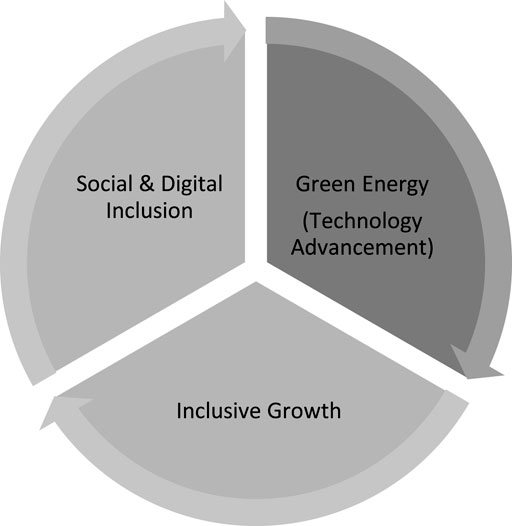
FIGURE 1. Radial diagram of key linkages.
According to their level of economic progress, countries will take up green energy (Midilli et al., 2006; Hospes and Clancy, 2011; Romano et al., 2017; Carfora et al., 2018; Stjepanović et al., 2019; Chien et al., 2021; Kirikkaleli and Adebayo, 2021; Mohideen., 2021). Such technical and technological changes have greatly informed people’s choices and decisions, and also attributed to informal norms such as culture, habits, ethics, and beliefs etc. The informal norms, combined with formal rules shape institutions, play a key role in the economic development, rather than inclusive growth of a country (Goguen and Burstall., 1983; Hodgson., 1988, 2006; North., 1989; North., 1991; Collard, 1995; Goodin., 1996; Williamson., 1998; Tabellini., 2008; Popov and Sukharev, 2017; Farooq et al., 2019; Aslam., 2020; Qamar et al., 2020; Aslam et al., 2021). An interesting link already established in the literature is the positive role of institutions, social inclusion, and digital inclusion as far as inclusive growth is concerned (Aslam et al., 2021). However, studies are very rare on the links between inclusive growth and green energy, and hardly anything has been published on socio-digital inclusion and institutional changes. A more comprehensive picture can be drawn if such comparisons are made on world-level data of high, middle, and low-income countries.
The relationship between green energy and inclusive growth can be explained in three major aspects. Firstly, poor countries have limited resources and weak institutional structures or proper enforcement mechanisms (Alayli., 2005; Aslam et al., 2021). With limited resources to grow and develop, these countries have less jobs to match the needs of unchecked population growth (Bloom and Freeman., 1986). This results in high rates of unemployment. With high levels of unemployment, much of the labor force as a form of human capital is wasted, and not able to take part in any technological advancement process or strategy (Teixeira and Queirós., 2016; Imran et al., 2020; Gumede., 2021; Kirikkaleli and Adebayo., 2021). A country that lacks technological capabilities is less likely to consider switching to green energy (Dresselhaus and Thomas., 2001; Alola et al., 2021; Mohideen., 2021). Consequently, such countries do not achieve a growth that is inclusive and sustainable.
Secondly, poor countries have low levels of education and high illiteracy rates (Aslam and Farooq., 2019). Not only that, they suffer from a lack of medical and healthcare systems and facilities. Health and education are not only important for human capital but also the lack of education means that people are less included in society and less connected with each other (Aslam et al., 2017). With low levels of education and minimal social inclusion, people are unaware of the digital world (Aslam et al., 2021). So, people are less aware of environmental degradation, do not choose green energy and know little or nothing about how it can productive employment opportunities. Such countries target economic growth in obsolete was and at the cost of environmental degradation (Mishan and Mishan., 1967; Kirikkaleli and Adebayo., 2021). In this way, many developing countries are unable to achieve sustainable inclusive growth.
Thirdly, many poor countries have exclusive, authoritarian and repressive political and economic institutions (North., 1989; North., 1991; Popov and Sukharev., 2017). Institutions that function well for the good of the people are imperative for any country if it wants to achieve sustainable economic growth (Collard., 1995; Aslam et al., 2021). Weak policies embedded in weak institutional structures, often overlook the use of green energy to create employment opportunities. As a result, the developing nations remain economically and technologically poor, unable to engage in sustainable inclusive growth. Based on Figure 2 above, we deem that if society is socially and digitally modern, it is more aware of and connected to the changes occurring in the world, and more concerned about using green energy for economic progress and inclusive growth (Kouton, 2021). To test this conjecture, we introduce two interactions: 1) social inclusion and green energy; and 2) digital inclusion and green energy.
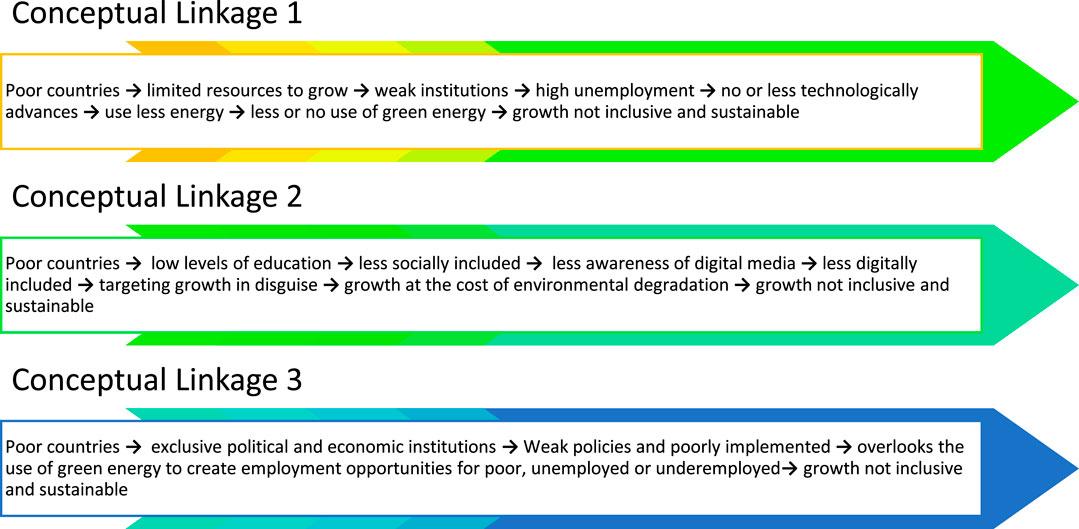
FIGURE 2. The conceptual linkages between green energy and inclusive growth.
Methodology and Model Specification
Dynamic panel econometric models are commonly used explore the relationship between the variable. In this study we employed the GMM model. Kirikkaleli, et al., (2022) has used autoregressive distributed lag (ARDL) approximations, fully modified ordinary least square (FMOLS) and dynamic ordinary least square (DOLS); however, all such techniques do not control for endogeneity. Moreover, the author of this paper has hardly focused on inclusive growth, which is a better measure growth that promises equity.Its general functional form is:
Meanwhile the econometric equation is written as follows:
Generalized Method of Moments
The issue of endogeneity is one of the main reasons for the inconclusiveness of ordinary least squares estimates, owing to omitted variable bias (Szetela et al., 2022). To tackle the problem of endogeneity (Hansen, 1982) the GMM method can be used when data distribution is unknown. Difference GMM is an extension of the linear GMM method. The linear GMM regression equation is:
The t = 1, …, n, “
Where the
Data
We examine the impact of green energy, institutions, and socio-digital inclusion on inclusive growth by using the panel data for eighty-three countries for the years 2010–2020. These countries are divided into high-income, middle-income and low-income places based on the World Bank’s classifications. Four indices are built for social inclusion, institutions, digital inclusion and inclusive growth. The study applied the min–max normalized indexing technique to construct these indices:
1) The social inclusion index comprises eleven variables is adopted from the work by Aslam et al., 2021 and Aslam et al., 2019. Rather, this study is extension of these studies and contributes to the literature by incorporating the important variable of green energy, which the above studies overlooked.
2) Inclusive growth index is a composite of GDP growth, no poverty, income equalities and employment to population ratio. All these variables is adopted from the research by Aslam et al., 2021 and Aslam et al., 2019.
3) An institutional quality index is a composite of six institutional quality measures, “control of corruption, government effectiveness, rule of law and order, regulatory quality, voice and accountability, political stability and absence of violence” based on: Aslam., 2020; Aslam and Farooq., 2019; Aslam et al., 2021; Aslam et al., 2019; Aslam et al., 2017; Zulfiqar et al., 2016; Farooq et al., 2019; and Qamar et al., 2020.
4) The digital inclusion index includes “the number of broadband connections, internet users and the number of mobile users” is also adopted from Aslam et al., 2021 and Aslam et al., 2019.
The data on all economic variables including inflation, trade openness and investment (GFCF) are taken from the World Development Indicators (WDI), published by the World Bank. The data on institutions are acquired from the International Country Risk Guide (ICRG).
Empirical Findings and Results
We found from Table 1 that all variables greatly affect the inclusive growth for low income and middle income countries except for inflation. Inflation is prevalent in low income nations only. There were also differences in the level of significance for each variable towards inclusive growth with varying income levels. These two aspects reflect contextual differences among three income contexts. Inflation is only significant in low income places. The rationale for this is that inflation is mostly controlled in high and middle income countries because it has a stronger institutional structure than low income places (Aslam and Farooq., 2019; Aslam et al., 2021; Zulfiqar et al., 2016). Institutions on the other hand are playing a significant role in middle and high income countries but is insignificant in low income ones. These results are due to the growth of an inclusive institutional structure in the high and middle income countries (North., 1989; North., 1991; PopovSukharev., 2017). In contrast the low income nations are mired in resistant and conservative political and economic institutions that discourage growth (Goguen and Burstall., 1983).
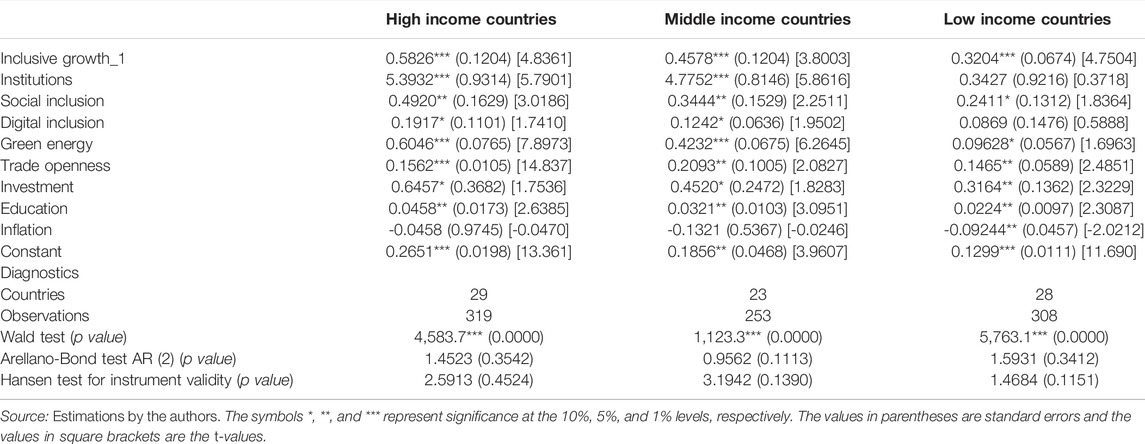
TABLE 1. Results without interaction terms.
Green energy has a significant impact on inclusive growth in all the income groups (Kouton., 2021). However, if we chose to focus on differences, this tends to emerge and be significant in different income groups. Green energy is a highly significant contributor to inclusive growth in both middle and high income countries but not so much in the low income ones. By highlighting these differences, we can state that such results explain why the low income countries should catch up with the middle and high income countries, which have accepted the rationale for the affordability of green energy.
We now discuss results which match our perceptions of expected results for social and digital income following Aslam et al., 2021. Social inclusion may be important in all cases but is less so in low income nations (Aslam et al., 2021). Some of the underlying reasons for such differences can be summarized into two main points. Firstly, genuine differences are seen between the impact of digital inclusion on inclusive growth in three income scenarios, suggesting that digital inclusion can in the low income world achieve inclusive growth. The role of digital inclusion in inclusive growth is less noted, simply because fewer people will be connected in the online sense and so are not socially included. Secondly, low income economies have lower rates of literacy which excludes them from the drivers of growth and innovation, so they are less socially included. What results is less productive employment opportunities leading to low or non-existent inclusive growth.
Trade openness and investment are significant contributors to sustainable inclusive growth in all income cases and there is not much variation in terms of their significance (Sohag et al., 2015; Farooq et al., 2019; Campbell and Sigalov, 2022; Ge et al., 2022). Trade creates opportunities for countries to mutually grow and benefit from the fruits of economic growth. Hence the results are according to the expectations. Similarly, investment is a promising variable that helps economic growth since it creates new avenues for employment and may also help curtail other social evils like poverty and crime.
Table 2 summarizes the arguments made in the conceptual framework about the interactions between social inclusion and green energy instruments. It shows that developing and shifting to green energy is easier when people are socially included. Such people are more aware about the changes going on in the world and the benefits of green energy. This is evident in the significant impact of interaction terms in the high, middle and lower income countries. The rest of the results do not differ much from those in Table 1 in terms of their significance for inclusive growth. An important point to make here is that interaction of social inclusion and green energy is significant in all three income groups has the same level of significance, which strengthens their combined role in achieving inclusive growth.
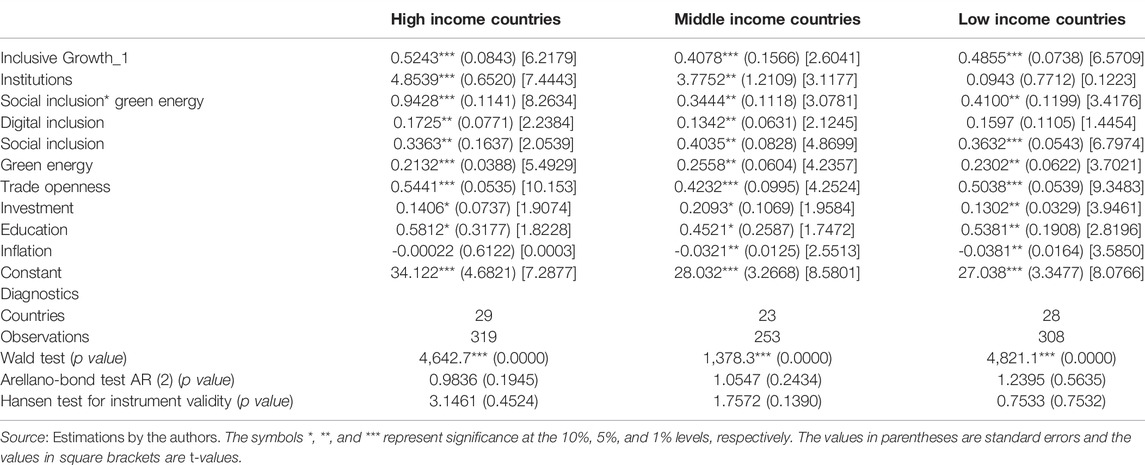
TABLE 2. Results of social inclusion and green energy interaction.
While there is not much difference in the results shown in Table 2, Table 3 does highlight the interactions between digital inclusion and green energy, which is an important driver of inclusive growth. The results predict no significant change in terms of other determinants of inclusive growth in the three income cases. We conclude that digital inclusion creates awareness, and a digitally included society may have the options to switch to green energy. Digital inclusion helps with inclusive growth by creating awareness and generating employment opportunities without compromising the need to save the environment and avoid pollution and degradation.
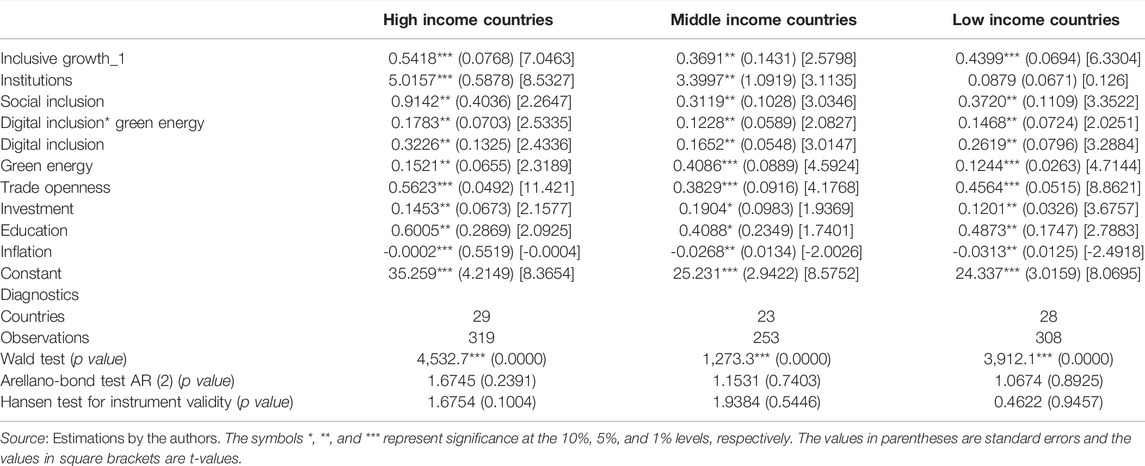
TABLE 3. Results of digital inclusion and green energy interaction.
Conclusion
Our research suggests that switching to green energy use will help countries wanting to achieve inclusive growth. Such counterfactuals can reduce the amount of environmental degradation when new jobs are created through technological innovations in all three income level cases. We highlight how much the significance of green energy can vary due to the different income levels and conclude that it more desirable in high and middle income countries, since they have already switched to it. Low income countries, however, need to follow the processes taken up by middle and high income countries if they want a good level of inclusive growth. We can safely conclude that inclusive growth is triggered by changing to green energy. This is a novel addition to the literature, as to date, the impact of green energy use on inclusive growth at the world-level data has not been studied previously.
Our results make a case for low income countries to follow the higher and middle income nations to become more socially and digitally included. A cross-income comparison reveals that high and middle income economies are able to achieve inclusive growth due to the significant role of institutions, and digital and social inclusion. Furthermore, the introduction of control variables such as trade openness, investment and inflation lead to much less reliance on generally accepted if increasingly obsolete economic growth theories. From the perspective of our results for these three variables, they are broadly supportive of the positive role of trade openness and investment towards attaining inclusive growth.
Another interesting and novel result documented here is the interaction of social and digital inclusion with green energy. It is highly significant in achieving inclusive growth in all three income groups. This highlights that if a society is socially and digitally inclusive, it helps them to opt for green energy resources and thus further acts as a great contributor to inclusive growth. We thus conclude that unlocking the hidden potential of socio-digital inclusion can help countries mitigate the problems associated with climate change when they embrace green energy. Literature shows that many datasets used for cross-country or cross-regional analyses concerning economic development are not that comprehensive as they do not target growth for all economies. Interestingly, hardly any study has reported the impacts of green energy on inclusive growth, when taking the post-COVID-19 data into account as well. At the same time, the idiosyncratic differences between the achievement of inclusive growth through acceptance of green energy for individual countries suggests that researchers must rely on improved benchmarking of inclusive growth, so that the proceeds of trade, commerce and economic transactions help the poor.
Data Availability Statement
Publicly available datasets were analyzed in this study. This data can be found here: WDI.
Author Contributions
GG worked on conceptualization and econometric analysis. AA did work on the write-up and theoretical frame framework. MB supervised the whole process and worked on data.
Conflict of Interest
The authors declare that the research was conducted in the absence of any commercial or financial relationships that could be construed as a potential conflict of interest.
Publisher’s Note
All claims expressed in this article are solely those of the authors and do not necessarily represent those of their affiliated organizations, or those of the publisher, the editors and the reviewers. Any product that may be evaluated in this article, or claim that may be made by its manufacturer, is not guaranteed or endorsed by the publisher.
References
Aghion, P., Alesina, A., and Trebbi, F. (2004). Endogenous political institutions. Q. J. Econ. 119 (2), 565–611. doi:10.1162/0033553041382148
Al Irsyad, M. I., Halog, A. B., Nepal, R., and Koesrindartoto, D. P. (2017). Selecting tools for renewable energy analysis in developing countries: An expanded review. Front. Energy Res. 5 (34), 1. doi:10.3389/fenrg.2017.00034
Alayli, M. A. (2005). Resource rich countries and weak institutions: The resource curse effect. Retrieved December
Alola, A. A., Ozturk, I., and Bekun, F. V. (2021). Is clean energy prosperity and technological innovation rapidly mitigating sustainable energy-development deficit in selected sub-saharan Africa? A myth or reality. Energy policy 158, 112520. doi:10.1016/j.enpol.2021.112520
Alzúa, M. L., and Gosis, P. (2020). Social and economic impact of Covid-19 and policy options in Argentina, 19. Latin America: Undp Lac C.
Arcidiacono, A., Causone, F., Grosso, M., Masera, G., Tadi, M., and Zadeh, H. M. (2017). Environmental performance and social inclusion: A project for the rocinha favela in rio de Janeiro. Energy Procedia 134, 356–365. doi:10.1016/j.egypro.2017.09.546
Aslam, A., and Farooq, A. (2019). In pursuit of inclusive institutional growth: A comparative pattern of selected asian countries. Eur. Online J. Nat. Soc. Sci. 8 (3), 495
Aslam, A., Naveed, A., and Shabbir, G. (2021). Is it an institution, digital or social inclusion that matters for inclusive growth? A panel data analysis. Qual. Quant. 55 (1), 333–355. doi:10.1007/s11135-020-01008-3
Aslam, A., and Shabbir, G. (2019). Socio-digital inclusion for inclusive growth: Evidences from world level data. Pak. J. Soc. Sci. (PJSS) 39 (2), 567.
Aslam, A., Sultana, N., and Yasin, I. (2017). Bi-directional associations among educational quality, institutions and social inclusion. Pak. Econ. Soc. Rev. 55 (2), 473
Aslam, A. (2020). The hotly debate of human capital and economic growth: Why institutions may matter? Qual. Quant. 54 (4), 1351–1362. doi:10.1007/s11135-020-00989-5
Atılgan, D. (2020). Investigation of happiness levels of individuals actively exercising for recreational purposes during the Covid-19 outbreak. J. Educ. Recreat. Patterns 1 (1).
Ayobamiji, A. A., Mata, M. N., Ahmed, Z., Coelho, M. F., Altuntaş, M., Moleiro Martins, J., et al. (2022). How do renewable energy, economic growth and natural resources rent affect environmental sustainability in a globalized economy? Evidence from Colombia based on the gradual shift causality approach. Front. Energy Res. 9, 1–3. doi:10.3389/fenrg.2021.739721
Bailey, R. (2005). Evaluating the relationship between physical education, sport and social inclusion. Educ. Rev. 57 (1), 71–90. doi:10.1080/0013191042000274196
Bargain, O., and Aminjonov, U. (2021). Poverty and COVID-19 in Africa and Latin America. World Dev. 142, 105422. doi:10.1016/j.worlddev.2021.105422
Bhowmik, C., Bhowmik, S., Ray, A., and Pandey, K. M. (2017). Optimal green energy planning for sustainable development: A review. Renew. Sustain. Energy Rev. 71, 796–813. doi:10.1016/j.rser.2016.12.105
Bloom, D. E., and Freeman, R. B. (1986). Population growth, labor supply, and employment in developing countries. Massachusetts, USA: National Bureau of Economic Research Cambridge.
Brynjolfsson, E., and McAfee, A. (2011). Race against the machine: How the digital revolution is accelerating innovation, driving productivity, and irreversibly transforming employment and the economy. Los Angeles: Digital Frontier Press.
Campbell, J. Y., and Sigalov, R. (2022). Portfolio choice with sustainable spending: A model of reaching for yield. J. Financial Econ. 143 (1), 188–206. doi:10.1016/j.jfineco.2021.05.018
Carfora, A., Pansini, R. V., Romano, A., and Scandurra, G. (2018). Renewable energy development and green public policies complementarities: The case of developed and developing countries. Renew. Energy 115, 741–749. doi:10.1016/j.renene.2017.09.008
Chen, J., Su, F., Jain, V., Salman, A., Tabash, M. I., Haddad, A. M., et al. (2022). Does renewable energy matter to achieve sustainable development goals? The impact of renewable energy strategies on sustainable economic growth. Front. Energy Res. 10, 829252. doi:10.3389/fenrg.2022.829252
Chien, F., Ngo, Q.-T., Hsu, C.-C., Chau, K. Y., and Iram, R. (2021). Assessing the mechanism of barriers towards green finance and public spending in small and medium enterprises from developed countries. Environ. Sci. Pollut. Res. 28 (43), 60495–60510. doi:10.1007/s11356-021-14907-1
Chowdhury, M. J. A. (2000). Microcredit, enhancement of entitlement and alleviation of poverty: An investigation into the grameen bank's role in Bangladesh. Economics eTheses. Stirling, Scotland: University of Stirling.
Collard, D. (1995). The mainspring of institutional change? A review article of: Douglas C. North, institutions, institutional change and economic performance. Cambridge: Cambridge university press. Int. J. Econ. Bus. 2 (3), 497
Cooney, P., and Shaefer, H. L. (2021). Material hardship and mental health following the COVID-19 relief bill and American rescue plan act. Ann Arbor, Michigan: Poverty Solutions, University of Michigan.
Cottani, J. (2020). The effects of covid-19 on Latin America's economy. New York: JSTOR. Washington, D.C., The Center for Strategic and International Studies.
Dantas, T. E., De-Souza, E., Destro, I., Hammes, G., Rodriguez, C., and Soares, S. (2021). How the combination of circular economy and industry 4.0 can contribute towards achieving the sustainable development goals. Sustain. Prod. Consum. 26, 213–227. doi:10.1016/j.spc.2020.10.005
Deyshappriya, N. (2020). Economic impacts of COVID-19 macro and microeconomics evidences from Sri Lanka. Available at: https://ssrn.com/abstract=3910004 (Accesed May 10, 2020).
Dresselhaus, M. S., and Thomas, I. (2001). Alternative energy technologies. Nature 414 (6861), 332–337. doi:10.1038/35104599
Erdoğdu, M., and Öz, N. D. (2021). Evaluation of participation in recreational exercise with basic psychological needs and happiness parameters during the COVID-19 pandemic process. Turkish J. Sport Exerc. 23 (2), 178
Farooq, A., Hamid, K., Aslam, A., and Shabbir, G. (2019). Triangular nexus between institutional quality, trade liberalization, and agricultural growth in Pakistan. Paradigms 13 (2), 10–17. doi:10.24312/1993130202
Fay, M. (2012). Inclusive green growth: The pathway to sustainable development. NW, Washington: World Bank Publications.
Fortman, B. (2006). Poverty as a failure of entitlement: Do rights-based approaches make sense. Int. poverty law Emerg. discourse, 34–48.
Fujiwara, L. (2006). “The politics of citizenship and entitlement: Immigrants, welfare, and the persistence of poverty,” in The promise of welfare reform: Political rhetoric and the reality of poverty in the twenty-first century Oxfordshire, England, UK Routledg. 1st Edition (Philadelphia, Pennsylvania: Haworth Press), 237
Ge, M., Kannaiah, D., Li, J., Khan, N., Shabbir, M. S., Bilal, K., et al. (2022). Does foreign private investment affect the clean industrial environment? Nexus among foreign private investment, CO2 emissions, energy consumption, trade openness, and sustainable economic growth. Environ. Sci. Pollut. Res. 29, 26182–26189. doi:10.1007/s11356-022-18814-x
Ghouse, G., Aslam, A., and Bhatti, M. I. (2021). Role of islamic banking during COVID-19 on political and financial events: Application of impulse indicator saturation. Sustainability 13 (21), 11619. doi:10.3390/su132111619
Giambona, F., and Vassallo, E. (2014). Composite indicator of social inclusion for European countries. Soc. Indic. Res. 116 (1), 269–293. doi:10.1007/s11205-013-0274-2
Gibson, L., Wilman, E. N., and Laurance, W. F. (2017). How green is ‘green’energy? Trends Ecol. Evol. 32 (12), 922–935. doi:10.1016/j.tree.2017.09.007
Gilmore, J. S. (1976). Boom Towns May Hinder Energy Resource Development: Isolated rural communities cannot handle sudden industrialization and growth without help. Science 191 (4227), 535–540. doi:10.1126/science.191.4227.535
Goguen, J. A., and Burstall, R. M. (1983). Introducing institutions. Workshop Log. Programs 164, 221. doi:10.1007/3-540-12896-4_366
Goodin, R. E. (1996). “Institutions and their design,” in The theory of institutional design. Editor R. Goodin (New York, USA: Cambridge University Press), 1, 9
Gumede, V. (2021). Revisiting poverty, human development and inequality in democratic South Africa. Indian J. Hum. Dev. 15 (2), 183–199. doi:10.1177/09737030211032961
Hartmann, P., and Apaolaza-Ibáñez, V. (2012). Consumer attitude and purchase intention toward green energy brands: The roles of psychological benefits and environmental concern. J. Bus. Res. 65 (9), 1254–1263. doi:10.1016/j.jbusres.2011.11.001
Hassan, S. T., Batool, B., Zhu, B., and Khan, I. (2022). Environmental complexity of globalization, education, and income inequalities: New insights of energy poverty. J. Clean. Prod. 340, 130735. doi:10.1016/j.jclepro.2022.130735
Helsper, E. J. (2017). A socio-digital ecology approach to understanding digital inequalities among young people. J. Child. media 11 (2), 256–260. doi:10.1080/17482798.2017.1306370
Helsper, E. (2019). Why location-based studies offer new opportunities for a better understanding of socio-digital inequalities?. Paulo, Brazil: LSE.
Hewitt, R. J., Bradley, N., Baggio Compagnucci, A., Barlagne, C., Ceglarz, A., Cremades, R., et al. (2019). Social innovation in community energy in europe: A review of the evidence. Front. Energy Res. 7, 31. doi:10.3389/fenrg.2019.00031
Hodgson, G. M. (1988). Economics and institutions. Philadelphia, Pennsylvania: University of Pennsylvania Press.
Hodgson, G. M. (2006). What are institutions? J. Econ. issues 40 (1), 1–25. doi:10.1080/00213624.2006.11506879
Hospes, O., and Clancy, J. (2011). “Unpacking the discourse on social inclusion in value chains,” in Value chains social inclusion and economic development: Contrasting theories and realities. Editors A. Helmsing, and S. Vellema (Oxfordshire, England, UK: Routledge Enschede, Netherlands: Department of Governance and Technology for Sustainability, University of Twente), 23.
Imran, Z. A., Aslam, A., and Chaudhary, M. A. (2020). Human resource management, unemployment and underemployment in Pakistan. Pak. Econ. Soc. Rev. 58 (2), 181.
Inam, B., and Murat, D. (2022). “The correlation between income inequality and population health: An empirical study,” in Redefining global economic thinking for the welfare of society (Pennsylvania, United States: IGI Global), 94
Ismael, S. (2006). Child poverty and the Canadian welfare state: From entitlement to charity. Edmonton, Canada: University of Alberta Press.
Jackson, T. (2009). Prosperity without growth? The transition to a sustainable economy. New York, United States: Sustainable Development Commission.
Karatayev, M., and Clarke, M. L. (2016). A review of current energy systems and green energy potential in Kazakhstan. Renew. Sustain. Energy Rev. 55, 491–504. doi:10.1016/j.rser.2015.10.078
Kaufmann, D., Kraay, A., Lora, E., and Pritchett, L. (2002). Growth without governance. Economia 3 (1), 169–229. doi:10.1353/eco.2002.0016
Kirikkaleli, D., and Adebayo, T. S. (2021). Do renewable energy consumption and financial development matter for environmental sustainability? New global evidence. Sustain. Dev. 29 (4), 583–594. doi:10.1002/sd.2159
Kirikkaleli, D., Güngör, H., and Adebayo, T. S. (2022). Consumption based carbon emissions, renewable energy consumption, financial development and economic growth in Chile. Bus. Strategy Environ. 31 (3), 1123–1137. doi:10.1002/bse.2945
Koirala, S. (2019). SMEs: Key drivers of green and inclusive growth. Paris, France: OECD, 1. doi:10.1787/8a51fc0c-en
Kouton, J. (2021). The impact of renewable energy consumption on inclusive growth: Panel data analysis in 44 african countries. Econ. Change Restruct. 54 (1), 145–170. doi:10.1007/s10644-020-09270-z
Ling, G., Razzaq, A., Guo, Y., Fatima, T., and Shahzad, F. (2022). Asymmetric and time-varying linkages between carbon emissions, globalization, natural resources and financial development in China. Environ. Dev. Sustain. 24 (5), 6702–6730. doi:10.1007/s10668-021-01724-2
Liu, Y.-Q., and Feng, C. (2022). The effects of nurturing pressure and unemployment on carbon emissions: Cross-country evidence. Environ. Sci. Pollut. Res. 29, 52013–52032. doi:10.1007/s11356-022-19515-1
Lund, H. (1999). A green energy plan for Denmark. Environ. Resour. Econ. 14 (3), 431–440. doi:10.1023/a:1008344032223
Martin, P. (2009). The recession and migration: Alternative scenarios. Oxford University in the United Kingdom: International Migration Institute.
Midilli, A., Dincer, I., and Ay, M. (2006). Green energy strategies for sustainable development. Energy policy 34 (18), 3623–3633. doi:10.1016/j.enpol.2005.08.003
Mohideen, R. (2021). “Technology for social well-being: Strengthening urban resilience in developing countries integrating infrastructure, energy, health and social inclusion,” in IEEE Conference on Norbert Wiener in the 21st Century (21CW)
Mohsin, M., Kamran, H. W., Nawaz, M. A., Hussain, M. S., and Dahri, A. S. (2021). Assessing the impact of transition from nonrenewable to renewable energy consumption on economic growth-environmental nexus from developing Asian economies. J. Environ. Manag. 284, 111999. doi:10.1016/j.jenvman.2021.111999
Montmasson-Clair, G., and das Nair, R. (2017). “8 South Africa’s renewable energy experience: Inclusive growth lessons,” in Competition law and economic regulation. Editor N. Dunne (New York, USA: Cambridge University Press), 189.
Murphy, A., Abdi, Z., Harirchi, I., McKee, M., and Ahmadnezhad, E. (2020). Economic sanctions and Iran's capacity to respond to COVID-19. Lancet Public Health 5 (5), e254. doi:10.1016/s2468-2667(20)30083-9
Ngepah, N. (2017). A review of theories and evidence of inclusive growth: An economic perspective for Africa. Curr. Opin. Environ. Sustain. 24, 52–57. doi:10.1016/j.cosust.2017.01.008
Nguyen, T. C. (2021). Financial crises and income inequality. Available at: https://ssrn.com/abstract=3879483.
Nguyen, T. C. (2021a). The effects of financial crisis on income inequality. Development Policy Review, e12600. doi:10.1111/dpr.12600
North, D. C. (1989). “Economic institutions,” in Leading edges in social and behavioral science. Editors R. Luce, S. Neil, and G. Dean (New York, US: Russell Sage Foundation), 385.
Nunan, F., and Devas, N. (2014). “Accessing land and services: Exclusion or entitlement?,” in Urban governance voice and poverty in the developing world. Editor D. Nick (Oxfordshire, England, UK: Routledge), 179
Nundy, S., Ghosh, A., Mesloub, A., Albaqawy, G. A., and Alnaim, M. M. (2021). Impact of COVID-19 pandemic on socio-economic, energy-environment and transport sector globally and sustainable development goal (SDG). J. Clean. Prod. 312, 127705. doi:10.1016/j.jclepro.2021.127705
Olphert, C. W., Damodaran, L., and May, A. (2005). “Towards digital inclusion–engaging older people ‘digital world’.” in Accessible Design in the Digital World Conference 2005, Dundee, Scotland, August 23-25, 2005. Science Open, Inc.
Oncel, S. S. (2017). Green energy engineering: Opening a green way for the future. J. Clean. Prod. 142, 3095–3100. doi:10.1016/j.jclepro.2016.10.158
Popov, E. V. e., and Sukharev, O. S. (2017). Institutional factors of economic changes: Development trajectories of douglas north’s theory. Вестник Пермского университета. Серия «Экономика»= Perm. Univ. Her. Econ. 12 (3), 338–359. doi:10.17072/1994-9960-2017-3-338-359
Qamar, A., Ashraf, M. S., Ghouse, G., and Aslam, A. (2020). Probing real economic growth through institutional quality and fiscal policy in Pakistan. Ilk. Online 19 (3), 2378. doi:10.17051/ilkonline.2020.03.735395
Ranieri, R., and Ramos, R. A. (2013). After all, what is inclusive growth. International Policy Centre for Inclusive Growth. Brasília, Federal District, Brazil: International Policy Centre for Inclusive Growth (online document).
Reutlinger, S. (1984). Poverty and famines: An Essay on Entitlement and deprivation. Amartya sen. Econ. Dev. Cult. Change 32 (4), 881–886. doi:10.1086/451432
Riahi, K., Van Vuuren, D. P., Kriegler, E., Edmonds, J., O’neill, B. C., Fujimori, S., et al. (2017). The shared socioeconomic pathways and their energy, land use, and greenhouse gas emissions implications: An overview. Glob. Environ. change 42, 153–168. doi:10.1016/j.gloenvcha.2016.05.009
Roberts, B., Cooper, A., Swartz, S., and Juan, A. (2021). ‘Minding the just gap’: Perceptions of the legitimacy of income inequality from the South African social attitudes survey. Politikon 48 (1), 1–18. doi:10.1080/02589346.2021.1877489
Rodriguez, L., and Atamanov, A. (2021). Welfare and distributional impacts of inflation and the COVID-19 outbreak in the islamic republic of Iran. Available at: http://hdl.handle.net/10986/35207.
Romano, A. A., Scandurra, G., Carfora, A., and Fodor, M. (2017). Renewable investments: The impact of green policies in developing and developed countries. Renew. Sustain. Energy Rev. 68, 738–747. doi:10.1016/j.rser.2016.10.024
Sewpaul, V. (2005). Feminism and globalisation: The promise of beijing and neoliberal capitalism in Africa. Agenda 19 (64), 104–113. doi:10.2307/4066579
Sachs, J., Kroll, C., Lafortune, G., Fuller, G., and Woelm, F. (2021). Sustainable development report 2021. New York, USA: Cambridge University Press.
Sachs, J., Schmidt-Traub, G., Kroll, C., Lafortune, G., Fuller, G., and Woelm, F. (2021a). Sustainable development report 2020: The sustainable development goals and covid-19 includes the SDG index and dashboards. New York, USA: Cambridge University Press.
Sangroya, D., and Nayak, J. K. (2017). Factors influencing buying behaviour of green energy consumer. J. Clean. Prod. 151, 393–405. doi:10.1016/j.jclepro.2017.03.010
Santosh, R., Arunkumar, T., Velraj, R., and Kumaresan, G. (2019). Technological advancements in solar energy driven humidification-dehumidification desalination systems-A review. J. Clean. Prod. 207, 826–845. doi:10.1016/j.jclepro.2018.09.247
Sareen, S. (2021). Digitalisation and social inclusion in multi-scalar smart energy transitions. Energy Res. Soc. Sci. 81, 102251. doi:10.1016/j.erss.2021.102251
Selwyn, N. (2004). Reconsidering political and popular understandings of the digital divide. New media. Soc. 6 (3), 341–362. doi:10.1177/1461444804042519
Shah, A., and Das, B. (2007). Remoteness and chronic poverty in a forest region of southern Orissa: A tale of entitlement failure and state's apathy. Chronic Poverty Res. Centre Work. Paper(34) 73, 56760. doi:10.2139/ssrn.1756760
Siddiqui, D. A., and Ahmed, Q. M. (2013). The effect of institutions on economic growth: A global analysis based on GMM dynamic panel estimation. Struct. Change Econ. Dyn. 24, 18–33. doi:10.1016/j.strueco.2012.12.001
Sohag, K., Begum, R. A., Abdullah, S. M. S., and Jaafar, M. (2015). Dynamics of energy use, technological innovation, economic growth and trade openness in Malaysia. Energy 90, 1497–1507. doi:10.1016/j.energy.2015.06.101
Stadler, P., Girardin, L., Ashouri, A., and Maréchal, F. (2018). Contribution of model predictive control in the integration of renewable energy sources within the built environment. Front. Energy Res. 6, 22. doi:10.3389/fenrg.2018.00022
Stiegel, G. J., and Maxwell, R. C. (2001). Gasification technologies: The path to clean, affordable energy in the 21st century. Fuel Process. Technol. 71 (1-3), 79–97. doi:10.1016/s0378-3820(01)00138-2
Stjepanović, S., Tomić, D., and Škare, M. (2019). Green GDP: An analyses for developing and developed countries. Economics 22 (4), 4–14. doi:10.15240/tul/001/2019-4-001
Szetela, B., Majewska, A., Jamroz, P., Djalilov, B., and Salahodjaev, R. (2022). Renewable energy and CO2 emissions in top natural resource rents depending countries: The role of governance. Front. Energy Res. 10, 1–7. doi:10.3389/fenrg.2022.872941
Tabellini, G. (2008). Presidential Address Institutions and culture. J. Eur. Econ. Assoc. 6 (2-3), 255–294. doi:10.1162/jeea.2008.6.2-3.255
Teixeira, A. A., and Queirós, A. S. (2016). Economic growth, human capital and structural change: A dynamic panel data analysis. Res. policy 45 (8), 1636–1648. doi:10.1016/j.respol.2016.04.006
Thomas, H., Becerra, L., Fressoli, M., Garrido, S., and Juarez, P. (2017). “Theoretical and policy failures in technologies and innovation for social inclusion: The cases of social housing, renewal energy and food production in Argentina,” in Research handbook on innovation governance for emerging economies (Cheltenham, United Kingdom: Edward Elgar Publishing).
Tinson, A. (2020). Living in poverty was bad for your health before COVID-19. The Health Foundation. Available at: https://www.health.org.uk/publications/long-reads/living-in-poverty-was-bad-for-your-health-long-before-COVID-19.
Tiwari, M. (2007). Chronic poverty and entitlement theory. Third World Quarterly 28 (1), 171–191. doi:10.1080/01436590601081971
Wackernagel, M., Hanscom, L., and Lin, D. (2017). Making the sustainable development goals consistent with sustainability. Front. Energy Res. 5, 18. doi:10.3389/fenrg.2017.00018
Wang, B., Xie, L.-H., Wang, X., Liu, X.-M., Li, J., and Li, J.-R. (2018). Applications of metal–organic frameworks for green energy and environment: New advances in adsorptive gas separation, storage and removal. Green Energy. Environ. 3 (3), 191–228. doi:10.1016/j.gee.2018.03.001
Wang, J., Lu, K., Ma, L., Wang, J., Dooner, M., Miao, S., et al. (2017). Overview of compressed air energy storage and technology development. Energies 10 (7), 991. doi:10.3390/en10070991
Yeganeh, H. (2021). Emerging social and business trends associated with the Covid-19 pandemic. Crit. Perspect. Int. Bus. 17, 188. doi:10.1108/cpoib-05-2020-0066
Yip, N. Y., Brogioli, D., Hamelers, H. V., and Nijmeijer, K. (2016). Salinity gradients for sustainable energy: Primer, progress, and prospects. Environ. Sci. Technol. 50 (22), 12072–12094. doi:10.1021/acs.est.6b03448
Young, A. (1998). Growth without scale effects. J. political Econ. 106 (1), 41–63. doi:10.1086/250002
Yüksel, S., Dinçer, H., and Uluer, G. S. (2020). “The role of technological development on renewable energy usage: An econometric analysis for G7 countries,” in Handbook of research on sustainable supply chain management for the global economy (Pennsylvania, United States: IGI Global) 136
Zulfiqar, K., Chaudhary, M. A., and Aslam, A. (2017). Convergence hypothesis: A cross country analysis. Pak. Econ. Soc. Rev. 55 (1), 201
Keywords: green energy, inclusive growth, socio-digital inclusion, global data, institutions
Citation: Ghouse G, Aslam A and Bhatti MI (2022) Green Energy Consumption and Inclusive Growth: A Comprehensive Analysis of Multi-Country Study. Front. Energy Res. 10:939920. doi: 10.3389/fenrg.2022.939920
Received: 09 May 2022; Accepted: 31 May 2022;
Published: 01 November 2022.
Edited by:
Muhammad Mohsin, Jiangsu University, ChinaCopyright © 2022 Ghouse, Aslam and Bhatti. This is an open-access article distributed under the terms of the Creative Commons Attribution License (CC BY). The use, distribution or reproduction in other forums is permitted, provided the original author(s) and the copyright owner(s) are credited and that the original publication in this journal is cited, in accordance with accepted academic practice. No use, distribution or reproduction is permitted which does not comply with these terms.
*Correspondence: Ghulam Ghouse, Z2hvdXNlcmF6YWE3ODZAZ21haWwuY29t