 Dan Zhang1
 Long Wang
 Xucheng Chang
- 1School of Aerospace Engineering, Zhengzhou University of Aeronautics, Zhengzhou, China
- 2State Grid Henan Extra High Voltage Company, Anyang, China
As a waste heat recovery power generation technology, the thermoelectric generation (TEG) system is popular and promising for its high reliability and environmental benefits. However, because of its low conversion efficiency, it has not been in large-scale use. To raise the efficiency of the TEG system, maximum power point tracking (MPPT) techniques are effective ways to gain the maximum power of the TEG system. But in practical engineering scene, TEG usually works under nonuniform temperature distribution (NTD) conditions; this will bring some difficulties on MPPT controlling, such as local maximum power point (LMPP) and oscillations around the maximum power point (MPP). For this reason, many intelligent MPPT algorithms have been emerged to solve aforementioned problems. In this article, the mathematical model and NTD condition will be introduced. Then, the latest research on classical and intelligent MPPT technologies will be reviewed, which includes a comparison of complexity, economy, efficiency, adaptive ability, and other aspects of these methods, in which researchers can obtain information in related fields.
1 Introduction
In recent years, the clean use of energy sources and develop clean energy has gained global visibility. Several kinds of the new energy generation technology have given impetus to the construction and utilization of energy resources (Yang et al., 2021). Among all the renewable energy sources, solar energy is one of the leading energy sources, which has produced a large amount of energy conversion techniques. Photovoltaic (PV) generation and thermoelectric generation (TEG) are two main energy conversion technologies of solar energy (Yang et al., 2020a; Wang et al., 2021). The operation theory of the TEG system is based on the Seebeck effect, which converts extra heat, waste heat, and other heat energy into electric energy. In engineering disciplines, the TEG system has demonstrated superior engineering practicability and high environmental benefits, which has been in commercial use such as deep space probes, vehicles, medical fields, remote actuators, and large powerplant units (Paraskevas and Koutroulis, 2016; Lauri et al., 2018). But because of its low energy conversion efficiency and relatively high cost, the real-world application of TEG is limited. For this reason, researching reliable and durable materials, reducing system costs, and exploring efficient power optimization techniques are the related research focus of the TEG system.
One effective way to enhance energy conversion efficiency is the power optimization technique. Recently, the optimization technologies of the TEG system have been emerged in order to realize the high-efficiency use of energy. Similar to PV modules, TEG modules can be connected in series or parallel for the sake of satisfactory power in TEG systems, which have high scalability. The generated power of the TEG system is affected by load, as well as the temperature gradient of hot and cold sides of the TEG module (Nakayama et al., 2015). Moreover, temperature also has effect on the voltage of the TEG module, so tracing the maximum power point of the TEG system is a feasible way; these techniques are called maximum power point tracking (MPPT) technologies. Under uniform temperature distribution (NTD), the electrical characteristic of a TEG system is a smooth curve, and there is a peak in the output power–voltage (P–V) curve of the TEG system. When TEG modules in a system are under nonuniform temperature differences (NTD), the output P–V curve of the TEG system will show nonlinearity and exhibit a few peaks, and there will be a mismatch in the output current of the TEG system (Adeel et al., 2020; Yang et al., 2020b). This complexity brings higher demand on the MPPT of the TEG system.
Until now, researchers have developed many MPPT approaches of the TEG system to intensify the construction of solar energy generation. The electrical characteristics of the TEG system are similar to those of the PV system, so MPPT control methods of the PV system can be equally applied or be improved, and then used in the TEG system (Hm et al., 2022). This article divides MPPT control methods into classical MPPT methods and intelligent MPPT methods. Classical MPPT approaches are usually simple and easy to implement. For instance, perturb and observe (P&O) approach is the most frequently used method which changes the operation point by disturbing the TEG system, and then estimates the direction of power change (Yu and Chau, 2009). Incremental conductance (INC), parasitic capacitance (PC), and constant voltage (CV) are also popular MPPT methods (Hohm and Ropp, 2003). The open-circuit voltage (OCV) technique and short-circuit current (SCC) technique track maximum power point (MPP) by measuring open circuit voltage and short circuit current (Siouane et al., 2016; Yang et al., 2019). Heuristic algorithms, neural networks, deep learning, and other artificial intelligence (AI) algorithms have the advantage of fast convergence, not easy to trap into local optimum, therefore suitable for MPPT control problems. Intelligent MPPT methods use current popular artificial intelligence technologies (AIT) to conduct MPPT control of the TEG system, which have relatively high efficiency and high flexibility, and are more applicable to track MPP under NTD. Intelligent MPPT methods play a positive role in promoting the construction of smart solar power generation systems; hence, this article will emphasize intelligent MPPT approaches and related articles.
This article reviews and summarizes existing MPPT techniques for TEG systems, which provides a reference and a guide to help researchers conduct research and development in related fields. These methods are evaluated in terms of tracking efficiency, complexity, economy, adaptability, and other aspects. Section 2 gives the mathematical model and related equations of the TEG system. Section 3 introduces the concept of NTD and analyzes its influence on MPPT. Section 4 introduces and evaluates several classical MPPT techniques for the TEG system. Section 5 gives a comprehensive review on intelligent MPPT techniques. Section 6 gives the discussion and conclusion of this article.
2 The TEG System Modelling
2.1 Modeling of TEG Blocks
A TEM typically consists of a large number of thermocouples that are connected in series with each other by using p-type semiconductor and n-type semiconductor elements connected by a thin layer of copper. As the temperature difference is imposed on two different materials to form a thermocouple, a potential voltage is generated. Figure 1 demonstrates the equivalency circuit of a typical TEG module. Open-circuit voltage VOC generated by the TEG module when the temperature difference between the hot and cold sides is kept constant can be written as (Liu et al., 2016)
where
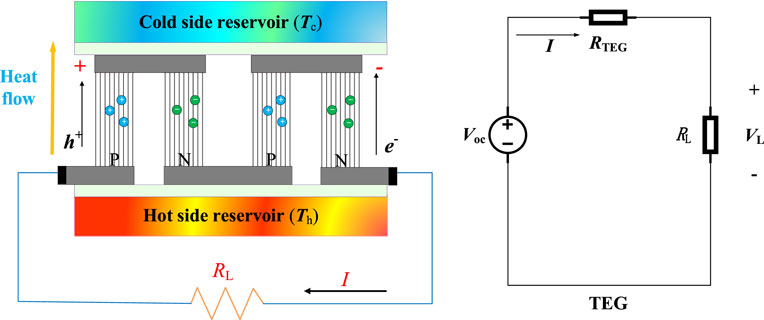
FIGURE 1. Equivalent circuit of a TEG block.
When there is a temperature difference between two metal contacts, there is a continuous current flow in the loop. This phenomenon is called the Seebeck effect. Furthermore, thermodynamic components are an assembly of a number of junctions of tiny Peltier junctions, and when accompanied by the passage of a current with a continuous temperature gradient, each Peltier junction generates or assimilates thermal energy independently, which would be regarded as a continuous Peltier effect, called Thomson effect. In particular, Thomson coefficient τ is represented as (Liu et al., 2016).
where T represents the temperature on average.
In reality, the Thomson coefficient is by no means identical to zero for an accuracy of the TEG module. As a consequence, the Seebeck coefficient will vary with the average temperature dynamically. This would be represented as (Chakraborty et al., 2006)
where
By the fundamental circuit theory, the power created by the power module of the TEG would be calculated by the following equation:
where
2.2 TEG System Architecture
In actual implementations, the integrated TEG system generally comprises a few TEG modules attached in varying collocation. The system is sufficient to generate enough output power to meet the requirements of a specific application. Nevertheless, a system such as this will unavoidably lead to severe mismatched power losses in the TEG system when operating under NTD conditions (Rakesh and Edward, 2018). Figure 2 illustrates three typical system configurations of TEG systems, as shown in the following text:
1) Integrated TEG structure: this integrates together a series and shunt connection of a TEG module with an MPPT converter, as shown in Figure 2A. It features the minimum implementation and upkeep expenses for the transducer but demands relatively small variability in temperature and the maximal unmatched power losses at the NTD conditions.
2) Tandem-type TEG structure: as shown in Figure 2B, every TEG strand is in position following the temperature isotherm of the thermal power source with an MPPT converter attached to it. It has moderate converter implementation and maintenance costs, and moderate unmatched power losses at the NTD conditions.
3) Modular TEG structure: every TEG block independently tracks their personal MPP through their respective MPPT translators, as indicated in Figure 2C. It is the most expensive converter to implement and maintain, while mismatch power lost is minimized.
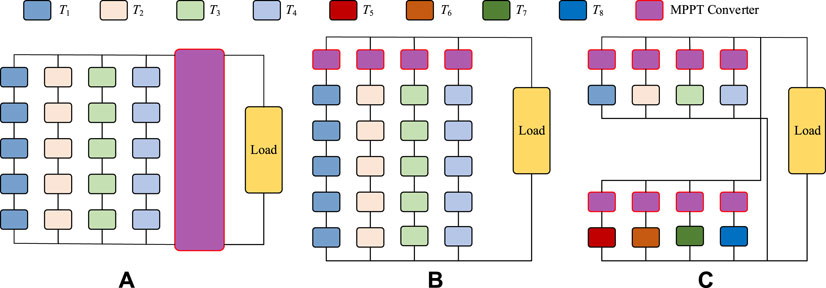
FIGURE 2. Three classic architectures of the TEG systems: (A) integrated, (B) tandem-type, and (C) modular.
3 Nonuniform Temperature Distribution
Similar to the partial shading condition (PSC), the NTD condition usually happens when the TEG system works in a practical engineering environment. The NTD condition will affect the overall performance of the TEG system. Bimrew et al. (2013) separated the TEG system into four parts and set different temperature differences on each part. By simulation and quantitative analysis, Bimrew et al. (2013) verified TEG system gains better outputs under UTD than NTD. Moreover, the heat flux mismatch in TEG modules will lead to NTD conditions. A literature work by Thankakan and Samuel Nadar (2018) considered the influence on load voltage, load current, and output power of different configurations of TEG systems under NTD. It can be concluded from the work by Thankakan and Samuel Nadar (2018) that square series-parallel connected TEG modules perform best under NTD conditions, and NTD greatly affects the output power of the TEG system. Shittu et al. (2020) studied the electrical and mechanical properties of segmented and non-segmented TEG systems under nonuniform heat flux. Xu et al. (2020) indicated that local temperature rising caused by interface effects of different materials will affect the operating performance of the TEG system, and they then gave a quantitative study about the aforementioned issue. In conclusion, NTD condition and nonuniform heat flux will seriously affect the electrical characteristics of the TEG system; hence, there is a need to explore effective MPPT techniques under NTD to improve the efficiency of the TEG system.
4 Classical MPPT Methods Proposed For the TEG System
4.1 Perturb and Observe Method
The classical P&O MPPT method has a simple process. The traditional P&O approach uses PWM control to perturb the operation point of the TEG system, and then obtains the maximum output power by making the derivative equal to zero (Yu and Chau, 2009). However, this MPPT method usually leads to a local maximum power point (LMPP) and then causes power oscillation. For this reason, Wei et al. (2017) proposed a modified P&O MPPT algorithm, which merged the P&O MPPT algorithm and OCV MPPT algorithm, fitted the I–V characteristic curve by the least squares method, and greatly enhanced output power. A time exponential rate P&O MPPT control method is proposed to collect maximum power from the TEG system (Song, 2021). By adjusting negative-channel metal-oxide semiconductor (NMOS) on-time exponentially, the tracking ability of the TEG system consisting of different internal resistance TEG modules can be enhanced. To overcome the drawbacks of the traditional P&O MPPT algorithm, Celia et al. (2021) proposed an automatic and self-adaptive P&O MPPT technique, which used a particle swarm optimization algorithm to advance the P&O algorithm, in which the simulation results showed the superiority of the proposed method.
4.2 Incremental Conductance Method
The INC MPPT approach uses the value of source voltage as well as source current information to achieve the best operating point (Adel and Sadequr, 2021), but the efficiency of INC is relatively lower than that of P&O in most cases. It can be concluded from the work by Adel and Sadequr (2021) that INC outperforms P&O within a certain temperature range. In conclusion, INC and P&O are the two most used MPPT control techniques among all MPPT techniques for the TEG system.
4.3 Open Circuit Voltage/Short Circuit Current Method
The OCV MPPT method is based on the principle that the voltage of the TEG system at MPP is in fixed proportion with open-circuit voltage (Esram and Chapman, 2007). Similar to the OCV technique, the SCC MPPT method is based on the principle that the current of the TEG system at MPP is in fixed proportion with the short circuit current (Dalala and Zahid, 2015). However, due to the practical temperature difference, internal resistances difference, and other factors in the practical scene, the open-circuit voltage is not exactly proportional with the voltage of the TEG system at MPP (Jean and Jinmi, 2021). In the same way, the SCC technique has some considerable limitations. Hence, these two methods cannot realize effective maximum power point tracking. Andrea and Andrew (2015) proposed an innovative open-circuit voltage measurement technique to precisely measure the open-circuit voltage, which ensured maximum output power is collected in the TEG system.
5 Intelligent MPPT Methods Proposed for the TEG System
5.1 Adaptive Rapid Neural Optimization
A study proposes an adaptive fast neural optimization (ARNO) method applied to catch the MPP of a centralized TEG system (Li et al., 2021). The method uses appropriate maps constructed by a generalized regression neural network (GRNN) among the dominant control incoming and the dominant power outgoing of the TEG system to achieve an effective MPP search by ARNO. The MPPT on the basis of the ARNO method accurately discriminates the best MPP of the integrated TEG system under NTD from multiple LMPPs, and the selection of GRNN hyperparameters offline which is based on Bayesian optimization effectively not only avoids the laborious and mindless nature of manual tuning but also simultaneously improves GRNN’s optimization properties. As compared with the metaheuristic algorithm, ARNO enables to obtain better velocity, stabilization, more energy output, and less energy fluctuations in power.
5.2 Equilibrium Optimization Algorithm Based on Swarm Intelligence
In response to the question of the impact of hot and cold side NTD of TEG modules on centralized MPPT, a balance equilibrium optimization (EQO) algorithm based on swarm intelligence (SI) is proposed (Mansoor et al., 2021). The results of this study show that with a 1.8–8% increasing energy harvesting, the power tracking effectiveness could be improved to 99.68%, and the stable voltage and current transients with a minimum tracking time of 180 ms could be realized. The EQO technique proposed in this study successfully addresses the shortcomings of low GM tracking, random fluctuations, and inefficient transient power efficiency. Since EQO avoids LM traps and has a relatively easy realization, it is a perfect choice for low-cost implementation of the controller. The ability of EQO to deal with unpredictable variations at random strain and high efficiency in practical applications makes the EQO technique more feasible in real-world applications. This method provides a new idea and a new way for MPPT of TEG systems under NTD.
5.3 Grey Wolf Optimizer-Based Fractional MPPT for TEG
An optimized fractional MPPT (OFMPPT) is presented to perform better TEGs, and the OFMPPT’s best parametrization is defined by applying the gray wolf optimizer (GWO) (Abdullah et al., 2021). Particle swarm optimization (PSO) and genetic algorithm (GA) were compared and found, from which a comparison can be made to conclude that the largest adaptation features value, the smallest standard deviation, and the highest productivity obtained by applying GWO; these values are 1.22265, 027256, and 88.80%, respectively. After identifying the best parameters of OFINR, the tracking capabilities of the presented OFINR algorithm are investigated in comparison with the legacy INR and P&O approaches during changes in load, and it is found that OFMPPT has an advantage over INRT and POT in both mechanical and steady-state reactions.
5.4 A Sine Cosine Algorithm-Based Fractional MPPT for TEG
In a study, an optimized fractional INR tracker (OF-INRT) is presented for improving the output performance of a TEG through a population-based sine cosine algorithm (SCA) for determining the optimal parameters of the OF-INRT, based on an SCA-tuned PIλ controller, and the results are compared with particle swarm optimization (PSO) and whale optimization algorithm (WOA)-based techniques (Rezk et al., 2021). The experimental data show that the STD values of the PSO, WOA, and SCA-based optimizers vary between 0.32349 and 0.00025, respectively, while the SCA optimizer achieves the smallest STD value. Moreover, SCA has a higher efficiency than WOA and PSO, with the SCA optimizer having the highest efficiency of 96.56%, while the PSO-based optimizer has the lowest efficiency of 80.33%. The optimized fractional MPPT approach successfully improves the dynamical feedback and eliminates steady-state fluctuations. In conclusion, OF-INRT overcomes the problem of sluggish motion and prevalent high steady-state fluctuations around MPP in the conventional tracker with incremental resistance tracker (INRT), and provides a great advantage for MPPT applications in TEG systems.
5.5 Particle Swarm Optimization MPPT for TEG
In a research article, the study modeled TEG by MATLAB/Simulink and incorporated some MPPT methods, among which the particle swarm optimization algorithm (PSO) demonstrated advantages (El-Shahat and Bhuiyan, 2021). The analysis and comparison of the simulation results reveal that under the same input thermal energy conditions, the output voltage is lower than 2 V without the MPPT technique, and the voltage levels are 3 V and 5 V with P&O and INC methods, respectively, while the output voltage of the PSO method can be as high as 6 V. Similarly, the output current and output power are low; after the introduction of PSO, there is a significant increase in the electrical energy obtained from thermal energy, and the output current of the thermoelectric generator reaches 6 A and the output power is close to 40 W. In this study, the maximum efficiency under the PSO MPPT method is around 16.58%, which is more efficient than that of both P&O and INC. Therefore, the PSO MPPT algorithm for TEG systems has better power generation capability with high output power and efficiency than both P&O and INC.
5.6 “Lock-On Mechanism” MPPT Algorithm for TEG
A study proposes a “locking mechanism” MPPT algorithm specifically applied to TEGs, in contrast to the classical fixed-step-based MPPT method, which enhances the MPP tracking capability by self-adaptively adjusting the DC-DC converters' duty cycling every time the MPP is targeted (Kwan and Wu, 2017). In this process, this method is able to abolish the steady-state swing that exists in the fixed-step MPPT algorithm and achieve a steady-state MPP reaction. Comparison with the traditional fixed-step ramp climbing algorithm shows that the implementation is faster and more reliable than the traditional fixed-step ramp climbing algorithm, and by comparing, a high-performance tracking response with low steady-state oscillations is achieved.
5.7 Barnacles Mating Optimization Algorithm for TEG
A survey utilized the barnacle mating optimization (BMO) algorithm for optimal MPPT control of TEG systems under NTD conditions (Tariq et al., 2021). Comparing the results with the GWO, PSO, and cuckoo search (CS) algorithms, it was found that the proposed BMO algorithm provides good grid connectivity with minimal oscillations and minimal transient fluctuations in output voltage. Also, the BMO algorithm achieves the highest average energy harvesting and GMPP within 381 ms, which is 53.7% faster than that of PSO. In addition, BMO has a higher power tracking efficiency with values as high as 99.93% and the smallest oscillation of ≈0.8 W. Further confirmation of the controller’s superior implementation based on the barnacle mating optimization algorithm (BMO) with the smallest RMSE and the largest SR, giving BMO a greater competitive advantage in performance than other technologies.
6 Discussions and Conclusion
To investigate MPPT techniques proposed for the TEG system under NTD conditions, this article analyzes three classical MPPT methods and seven intelligent MPPT methods, which can be divided into these three points:
1) Traditional MPPT methods usually face the difficulty of easily being trapped into local optimum and oscillating around MPP. From this, there have been several modified or improved methods of traditional MPPT methods.
2) To achieve intelligent control of MPPT, heuristic algorithms, fuzzy logic method, neural network, and other intelligent algorithms are combined with MPPT techniques to realize the automatic control of the whole system. The intelligent MPPT method is usually of high flexibility and high efficiency, but its high cost and randomness are the weakness in practical implementation, which should be improved in future research.
3) Future studies will focus on MPPT techniques on large-scale TEG power plants.
Author Contributions
DZ: conceptualization, writing—reviewing and editing; LS: writing—original draft preparation, and investigation; LW: supervision; XL: conceptualization and resources; XC: writing—reviewing and editing, and software; PW: supervision.
Funding
This work was jointly supported by Key Science and Technology Projects of Henan Province (182102310784, 222102240117, 212102210026, 192102210306, and 212102110218).
Conflict of Interest
Author LS was employed by State Grid Luoyang Electric Power Supply Company.
The remaining authors declare that the research was conducted in the absence of any commercial or financial relationships that could be construed as a potential conflict of interest.
Publisher’s Note
All claims expressed in this article are solely those of the authors and do not necessarily represent those of their affiliated organizations, or those of the publisher, the editors, and the reviewers. Any product that may be evaluated in this article, or claim that may be made by its manufacturer, is not guaranteed or endorsed by the publisher.
References
Abdullah, A. M., Rezk, H., Elbloye, A., K. Hassan, M., and F. Mohamed, A. (2021). Grey Wolf Optimizer-Based Fractional MPPT for Thermoelectric Generator. Intelligent Automation Soft Comput. 29 (3), 729–740. doi:10.32604/iasc.2021.018595
Adeel, F. M., Majad, M., Kamal, Z., Yaqoob, M., Muhammad, J., Zafard, H., et al. (2020). High-efficiency Hybrid PV-TEG System with Intelligent Control to Harvest Maximum Energy under Various Non-static Operating Conditions. J. Clean. Prod. 320, 128643. doi:10.1016/j.jclepro.2021.128643
Adel, E., and Sadequr, R. B. (2021). “Thermal Generator Performance and Efficiency Analysis Integrated with MPPT Techniques,” in International Conference on Sustainable Energy and Future Electric Transportation, Griet, Hyderabad, India, 21-23 Jan. 2021.
Andrea, M., and Andrew, R. K. (2015). Maximum Power Point Tracking Converter Based on the Open-Circuit Voltage Method for Thermoelectric Generators. IEEE Trans. Power Electron. 30 (2), 828–839. doi:10.1109/TPEL.2014.2313294
Bimrew, T. A., Luo, X., and Yao, J. (2013). Effects of Temperature Non-uniformity over the Heat Spreader on the Outputs of Thermoelectric Power Generation System. Energy Convers. Manag. 76, 533–540.
Celia, A., Abdelhakim, B., Ilhami, C., Guenounou, O., and Kacimi, M. A. (2021). “Automatic and Self Adaptive P&O MPPT Based PID Controller and PSO Algorithm,” in 2021 10th International Conference on Renewable Energy Research and Application (ICRERA), Turkey: Istanbul, September 26-29, 2021, 385–390.
Chakraborty, A., Saha, B. B., Koyama, S., and Ng, K. C. (2006). Thermodynamic Modelling of a Solid State Thermoelectric Cooling Device: Temperature-Entropy Analysis. Int. J. Heat Mass Transf. 49, 3547–3554. doi:10.1016/j.ijheatmasstransfer.2006.02.047
Dalala, Z. M., and Zahid, Z. U. (2015). “New MPPT Algorithm Based on Indirect Open Circuit Voltage and Short Circuit Current Detection for Thermoelectric Generators,” in 2015 IEEE Energy Conversion Congress and Exposition (ECCE), Montreal: QCCanada, 20-24 Sept. 2015, 1062–1067. doi:10.1109/ecce.2015.7309806
El-Shahat, A., and Bhuiyan, M. S. R. (2021). “Thermoelectric Generator Performances and Efficiency Analysis Integrated with MPPT Techniques,” in 2021 International Conference on Sustainable Energy and Future Electric Transportation (SEFET), Hyderabad, India, 21-23 Jan. 2021, 1–7. doi:10.1109/sefet48154.2021.9375713
Esram, T., and Chapman, P. L. (2007). Comparison of Photovoltaic Array Maximum Power Point Tracking Techniques. IEEE Trans. Energy Convers. 22 (2), 439–449. doi:10.1109/tec.2006.874230
Hm, A., Mas, A., and Mrab, B. (2022). Future Perspective and Current Situation of Maximum Power Point Tracking Methods in Thermoelectric Generators. Sustain. Energy Technol. Assessments 50, 101824. doi:10.1016/j.seta.2021.101824
Hohm, D. P., and Ropp, M. E. (2003). Comparative Study of Maximum Power Point Tracking Algorithms. Prog. Photovolt. Res. Appl. 11 (1), 47–62. doi:10.1002/pip.459
Jean, V., and Jinmi, L. (2021). Design and Implementation of a Thermoelectric Energy Harvester with MPPT Algorithms and Supercapacitor. IEEE Lat. Am. Trans. 19 (1), 163–170.
Kwan, T. H., and Wu, X. (2017). TEG Maximum Power Point Tracking Using an Adaptive Duty Cycle Scaling Algorithm. Energy Procedia 105, 14–27. doi:10.1016/j.egypro.2017.03.274
Lauri, K., John, M., Antti, K., Lehtonena, M., and Karppinenc, M. (2018). Thermoelectric Applications for Energy Harvesting in Domestic Applications and Micro-production Units. Part I: Thermoelectric Concepts, Domestic Boilers and Biomass Stoves. Renew. Sustain. Energy Rev. 98, 519–544. doi:10.1016/j.rser.2017.03.051
Li, F., Lin, D., Yu, T., Li, J., Wang, K., Zhang, X., et al. (2021). Adaptive Rapid Neural Optimization: A Data-Driven Approach to MPPT for Centralized TEG Systems. Electr. Power Syst. Res. 199, 107426. doi:10.1016/j.epsr.2021.107426
Liu, Y.-H., Chiu, Y.-H., Huang, J.-W., and Wang, S.-C. (2016). A Novel Maximum Power Point Tracker for Thermoelectric Generation System. Renew. Energy 97, 306–318. doi:10.1016/j.renene.2016.05.001
Mansoor, M., Mirza, A. F., Duan, S., Zhu, J., Yin, B., and Ling, Q. (2021). Maximum Energy Harvesting of Centralized Thermoelectric Power Generation Systems with Non-uniform Temperature Distribution Based on Novel Equilibrium Optimizer. Energy Convers. Manag. 246, 114694. doi:10.1016/j.enconman.2021.114694
Nakayama, S., Kimura, K., Kushino, Y., and Koizumi, H. (2015). “A Simple MPPT Control Method for Thermoelectric Energy Harvesting,” in 2015 IEEE Energy Conversion Congress and Exposition (ECCE), Montreal, QC, Canada, 20-24 Sept. 2015, 6455–6460.
Paraskevas, A., and Koutroulis, E. (2016). A Simple Maximum Power Point Tracker for Thermoelectric Generators. Energy Convers. Manag. 108, 355–365. doi:10.1016/j.enconman.2015.11.027
Rakesh, T., and Edward, R. S. N. (2018). Investigation of Thermoelectric Generators Connected in Different Configurations for Micro-grid Applications. Int. J. Energy Ressearch 42, 2290–2301. doi:10.1002/er.4015
Rezk, H., Alhato, M. M., Al-Dhaifallah, M., and Bouallègue, S. (2021). A Sine Cosine Algorithm-Based Fractional MPPT for Thermoelectric Generation System. Sustainability 13 (21), 11650. doi:10.3390/su132111650
Shittu, S., Li, G., Xuan, Q., Zhao, X., Ma, X., and Cui, Y. (2020). Electrical and Mechanical Analysis of a Segmented Solar Thermoelectric Generator under Non-uniform Heat Flux. Energy 199, 117433. doi:10.1016/j.energy.2020.117433
Siouane, S., Jovanović, S., and Poure, P. (2016). “Influence of Contact Thermal Resistances on the Open Circuit Voltage MPPT Method for Thermoelectric Generators,” in 2016 IEEE International Energy Conference (ENERGYCON), Leuven, Belgium, 4-8 April 2016, 1–6. doi:10.1109/energycon.2016.7514002
Song, Z. (2021). MPPT Circuit Using Time Exponential Rate Perturbation and Observation for Enhanced Tracking Efficiency for a Wide Resistance Range of Thermoelectric Generator. Appl. Sci. 4650, 1–11.
Tariq, M. I., Mansoor, M., Feroz Mirza, A., Khan, N. M., Zafar, M. H., Z. Kouzani, A., et al. (2021). Optimal Control of Centralized Thermoelectric Generation System under Nonuniform Temperature Distribution Using Barnacles Mating Optimization Algorithm. Electronics 10 (22), 2839. doi:10.3390/electronics10222839
Thankakan, R., and Samuel Nadar, E. R. (2018). Investigation of Thermoelectric Generators Connected in Different Configurations for Micro-grid Applications. Int. J. Energy Res. 42, 2290–2301. doi:10.1002/er.4015
Wang, J., Song, X., Ni, Q., Li, X., and Meng, Q. (2021). Experimental Investigation on the Influence of Phase Change Material on the Output Performance of Thermoelectric Generator. Renew. Energy 177, 884–894. doi:10.1016/j.renene.2021.06.014
Wei, X., Huang, G., Xiao, Z., and Deng, F. (2017). “A Maximum Power Point Tracking Controller for Thermoelectric Generators,” in 2017 36th Chinese Control Conference (CCC), China: Dalian, July 26-28, 2017, 9079–9084.
Xu, G., Duan, Y., Chen, X., Ming, T., and Huang, X. (2020). Effects of Thermal and Electrical Contact Resistances on the Performance of a Multi-Couple Thermoelectric Cooler with Non-ideal Heat Dissipation. Appl. Therm. Eng. 169, 114933. doi:10.1016/j.applthermaleng.2020.114933
Yang, B., Wang, J., Zhang, X., Zhang, M., Shu, H., Li, S., et al. (2019). MPPT Design of Centralized Thermoelectric Generation System Using Adaptive Compass Search under Non-uniform Temperature Distribution Condition. Energy Convers. Manag. 199, 111991. doi:10.1016/j.enconman.2019.111991
Yang, B., Zhang, M., Wang, J., Zeng, K., Zhang, Z., Shu, H., et al. (2021). Interacted Collective Intelligence Based Energy Harvesting of Centralized Thermoelectric Generation Systems under Non-uniform Temperature Gradient. Sustain. Energy Technol. Assessments 48, 101600. doi:10.1016/j.seta.2021.101600
Yang, B., Zhang, M., Zhang, X., Wang, J., Shu, H., Li, S., et al. (2020). Fast Atom Search Optimization Based MPPT Design of Centralized Thermoelectric Generation System under Heterogeneous Temperature Difference. J. Clean. Prod. 248, 119301. doi:10.1016/j.jclepro.2019.119301
Yang, B., Zhu, T., Wang, J., Shu, H., Yu, T., Zhang, X., et al. (2020). Comprehensive Overview of Maximum Power Point Tracking Algorithms of PV Systems under Partial Shading Condition. J. Clean. Prod. 268, 121983. doi:10.1016/j.jclepro.2020.121983
Keywords: solar energy, thermoelectric generation, maximum power point tracking, nonuniform temperature distribution, intelligent MPPT techniques
Citation: Zhang D, Song L, Wang L, Li X, Chang X and Wu P (2022) A Systematic Review and Analysis of MPPT Techniques for TEG Systems Under Nonuniform Temperature Distribution. Front. Energy Res. 10:942347. doi: 10.3389/fenrg.2022.942347
Received: 12 May 2022; Accepted: 25 May 2022;
Published: 05 July 2022.
Edited by:
Yaxing Ren, University of Warwick, United KingdomReviewed by:
Yingjie Wang, University of Liverpool, United KingdomFeixiong Chen, Fuzhou University, China
Copyright © 2022 Zhang, Song, Wang, Li, Chang and Wu. This is an open-access article distributed under the terms of the Creative Commons Attribution License (CC BY). The use, distribution or reproduction in other forums is permitted, provided the original author(s) and the copyright owner(s) are credited and that the original publication in this journal is cited, in accordance with accepted academic practice. No use, distribution or reproduction is permitted which does not comply with these terms.
*Correspondence: Long Wang, aG91ZGV6YWl3dTIwMTBAeWVhaC5uZXQ=