 Jin Yan1,2
 Naerduo Mei
 DaPeng Zhang
- 1Guangdong Ocean University, Zhanjiang, China
- 2Shenzhen Research Institute of Guangdong Ocean University, Shenzhen, China
With its huge energy storage and high energy density, ocean wave energy is one of the most promising marine renewable resources. Traditional wave energy generation technology, on the other hand, has a high maintenance cost, a bulky construction, and a low conversion efficiency, which limits its application. Due to its low cost, simple construction, and ease of fabrication, wave energy generating technology based on triboelectric nanogenerators has emerged as a potential new power generation technology in recent years. This paper elaborates on the power generation principle, working mode, and the latest research status of wave energy harvesting using different types of triboelectric nanogenerator structures, and finally summarises the current problems and challenges of this technology, and innovatively combines some current examples to propose future research trends, which can help relevant reseach. This will assist researchers in swiftly grasping the present state of wave energy harvesting research and promoting the field’s progress.
1 Introduction
The development of green energy and the expansion of new energy supply has become a shared objective of the world (Shi and Liu, 2021) in order to alleviate the environmental pollution, global warming, and energy depletion concerns caused by the usage of traditional fossil energy. Wind and ocean power, the main renewable energy sources among them, have been extensively developed worldwide to complement and replace traditional fossil fuels (Li et al., 2021a; Li, 2022a). Because of its green, low-carbon, and clean properties, marine renewable energy has become a new development target. Making full use of marine renewable energy can help to solve not just environmental pollution and other issues, but also promote deep-sea development, national defense forces, and the creation of a strong marine state (Zhao and Zhou, 2013). Wave energy, among the various marine renewable energy sources, has become a focus of study and development because to its large reserves, high energy density, low environmental effect, high quality, and widespread distribution (Figure 1) (Zheng et al., 2014). Traditional wave energy technologies have a restricted use due to high maintenance costs, low conversion efficiency, and inefficient conversion procedures (Xiao et al., 2014a; Ahamed et al., 2020). Due to its low cost, simple structure, and ease of fabrication, a novel wave energy generating technology based on Triboelectric Nanogenerator (TENG) has gotten a lot of interest. This study presents a focused evaluation of the new wave energy generation technology based on TENG by introducing the principle and application status of conventional wave energy generation technology. It then summarizes the technology’s current problems and challenges, and suggests future research trends based on some current examples.
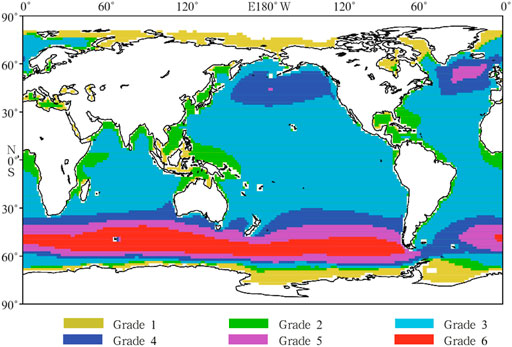
FIGURE 1. Map of the global ocean wave energy resources division (Zheng et al., 2014)
2 Status of research on conventional wave energy generation technology
2.1 Types and basic principles of wave energy generation
The Girard father and son in France were the first to be issued a patent for a wave energy conversion device in 1799 (Chen et al., 2020), and since then, patents on the conversion and utilisation of wave energy have increasingly increased. Different classification approaches can be used to categorise wave energy generation. They can be classified as coastal, nearshore (water depth <20 m), or offshore (water depth >40 m) depending on the installation location. They can be classified as oscillating water column, float, pendulum, duck, raft, clam, and contraction ramp, among others, based on the wave energy collection method (Chen R W et al., 2019). According to the power output system they can be divided into direct mechanical drives, hydraulic motor systems, hydro and air turbine delivery systems, direct electric drive systems, triboelectric nanogenerators, and composite systems (Ahamed et al., 2020), which often combine a direct electric drive system and a triboelectric nanogenerator, are the different types of power output systems.
A wave energy harvesting device and a power output system are the most common components of a wave energy producing system. The wave energy harvesting device collects the wave energy, which is then transmitted, stored, and converted by various power output systems till electricity is produced. Traditional wave energy generation technology, as shown in Figure 2, often requires three levels of energy conversion to convert wave energy into electricity, whereas new technologies, such as triboelectricnanogenerators and composite systems, can directly convert wave energy into electricity, which not only eliminates the complicated energy conversion process in between, but also greatly reduces maintenance costs. Because the economic viability, efficiency, and complexity of wave power systems are often determined by their power output systems, it is critical to understand the current state of application and development of various power output systems in the field of wave energy so that the study and deployment of power output systems can be better integrated.
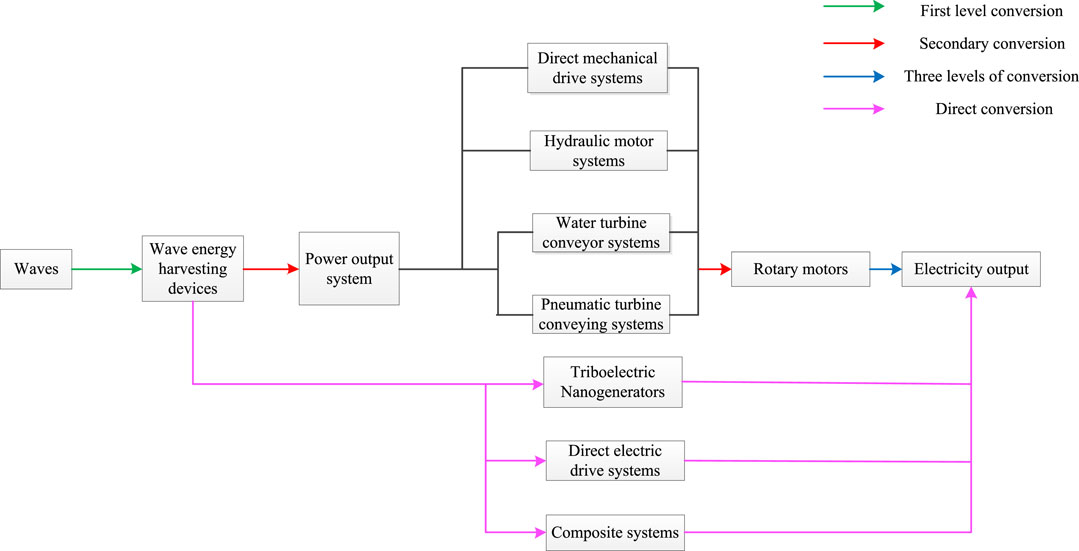
FIGURE 2. Schematic diagram of basic principle of wave energy power generation.
2.2 Current status of conventional wave energy generation technology applications
2.2.1 Wave energy generation technology based on direct mechanical drive systems
A gearbox is often coupled to a generator to drive the generator (shown in Figure 3A), which is used to immediately transform the energy generated by the wave energy converter into electricity. Many investigations on wave energy generation based on direct mechanical drive systems have been conducted recently. For example, Resen Waves (Ahamed et al., 2020) created and developed the Smart Power Buoy, a lightweight and cost-effective wave energy conversion device (shown in Figure 3B). The device is not only easy to build, but it also delivers continuous power and autonomous real-time data connectivity for machines and devices in the water (shown in Figure 3C). Using a clutch and a speed-increasing gearbox, Elisabetta. T (Tedeschi et al., 2010) of the Norwegian University of Science and Technology et al. converted wave energy into electrical energy and investigated the function of irregular waves in the control and design of wave energy conversion devices. The advantage of using a direct drive mechanical system to generate wave energy is that it is more mature and only requires three energy conversions to attain excellent performance. However, the cost, efficiency, and maintenance of the gearbox system limit its application.

FIGURE 3. (A)Power output system based on direct mechanical drive. (B)Physical drawing of intelligent power buoy (Ahamed et al., 2020).(C) Schematic diagram of data transmission (Ahamed et al., 2020)
2.2.2 Wave energy generation technology based on hydraulic motor systems
A hydraulic cylinder, a hydraulic motor, an accumulator, and a generator are commonly found in a hydraulic motor-based power output system. The passage of a wave causes the hydraulic cylinder to expand, increasing the pressure of the hydraulic oil, which translates translational or rotational motion into hydraulic energy, which is used to power the hydraulic motor, and then the generator, which generates electricity. The hydraulic system is perfect for generating wave energy because it can apply huge forces at low speeds (Ricci et al., 2011). Wave energy conversion devices include rafts and pendulums, which are the most prevalent. The Wave Power Deliver firm (Yemm et al., 2012) has devised a raft-type wave energy conversion device (shown in Figure 4) that should be built at sea in water depths greater than 40 m. Although the raft may be placed in the waves and has good wave resistance, it has not been used in a long time due to its big size, high cost, and easy wear and tear of the hinge parts.
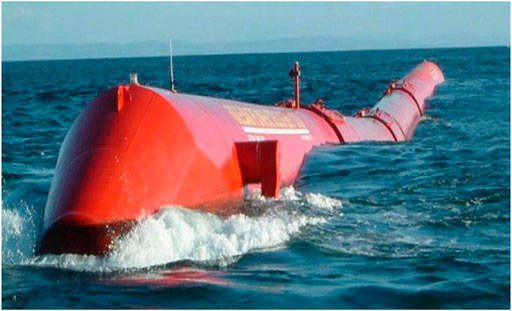
FIGURE 4. Pelamis wave energy conversion device (Yemm et al., 2012)
Pendulum wave energy converters can be characterised as near-shore or seafloor (Xiao et al., 2014b) depending on their installation position, as shown in Figures 5A,B. When waves pass by, the pendulum is driven to oscillate by the waves, which causes a hydraulic turbine to work, which drives an electric motor to generate electricity. In 2007, the first prototype pendulum wave roller (shown in Figure 5C) was tested at sea (Lin et al., 2015). In normal sea conditions, the pendulum wave energy converter has the advantages of a wide frequency response, a simple structure, and a high energy conversion efficiency. However, it has drawbacks such as the mechanical element being prone to seawater contact, difficult maintenance, installation location restrictions, and low reliability (Flocard and Finnigan, 2010).

FIGURE 5. Pendulum wave energy conversion device(A)The offshore type.(B)The seabed type (Xiao et al., 2014b).(C)Wave Roller prototype (Lin et al., 2015)
2.2.3 Wave energy generation technology based on air turbines and hydro transmission systems
Air turbine transmission systems are typically used for the oscillating water column type, as shown in Figure 6A. The forced vibration of the water column through the air chamber squeezes the air, converting it into compressive and kinetic energy, and the pressurised air flows through a turbine attached to the generator, driving the generator to generate electricity (Cai and Wang, 2012). The Japan Marine Science and Technology Centre’s Yoshio Masuda (Falcão and Henriques, 2016) created a big barge called Kaimei (shown in Figure 6B), which was deployed off the west coast in 1978, and was the first large-scale wave energy conversion device to be deployed at sea.2019 Spain’s LaudinoR (Rodríguez et al., 2019) researched a double turbine structure for power generation through enhanced design and discovered that radial turbines are especially ideal for turbine systems and have higher efficiency than axial turbines. 2021 By creating a new oscillating water column wave energy converter based on dielectric elastomers that leverages the deformation of dielectric elastomers to generate electrical energy, Du Xiaozhen et al. (Du et al., 2021) from Shandong University of Science and Technology enhanced the energy conversion efficiency.

FIGURE 6. Wave energy conversion device with oscillating water column(A)Schematic diagram(B)Kaimei wave energy conversion device (Falcão and Henriques, 2016)
Wave energy generating technology based on turbine transmission systems compresses water to drive a turbine, the turbine then drives the generator directly to generate electricity. In 2003, the Danish business Wave Dragon Aps (Kofoed et al., 2006) constructed and erected the world’s first offshore wave energy converter, the “Wave Dragon” (shown in Figure 7). Zhang Bu’en (Zhang et al., 2019) from Hehai University created and constructed a new form of floating wave energy generation device in 2019, using hydro-turbine power generation technology, and the power generation efficiency was increased to 73.55 percent by modifying the shape of the float.
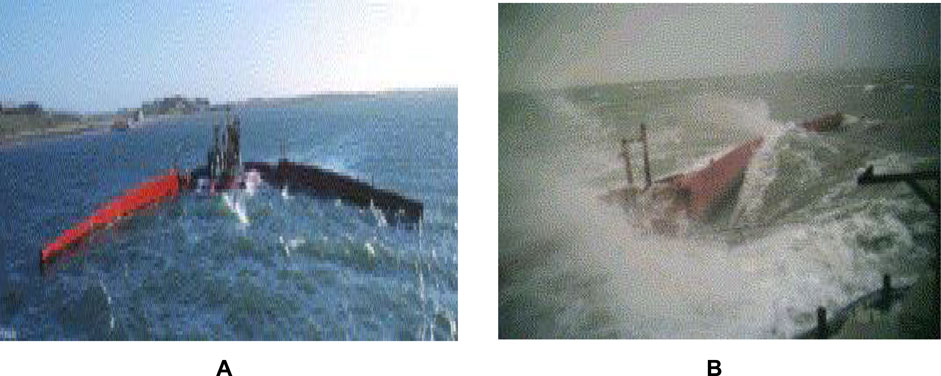
FIGURE 7. Sea dragon prototype(A)At the Nissum Bredning test site.(B)In big wave conditions (Kofoed et al., 2006).
2.3 Wave energy generation technology based on direct electric drive systems
A wave energy generation device based on a direct electric drive system has been created and explored to minimize maintenance and reliability issues generated by complex hydraulic and turbine systems (Figure 8A). A linear motor, unlike traditional rotational motors, attaches a converter to a floating buoy, and as a wave passes, the converter, which is made up of permanent magnets, moves up and down with the buoy, generating a magnetic field in the stator coil windings, which provides electrical energy (Drew et al., 2009). There has been an increase in research into direct electric driven wave energy generators in the last 30 years, such as the Archimedes Wave Swing (AWS) (Polinder et al., 2004) in the United Kingdom, which completed its first successful test in Portugal in 2004 (Figure 8B). As the wave passes, the upper end cap moves up and down, squeezing the air between the upper and lower end caps and causing the generator coil connected to the upper end cap and the permanent magnet connected to the lower end cap to move relative to each other, converting the wave energy into electrical energy (Figure 8C).
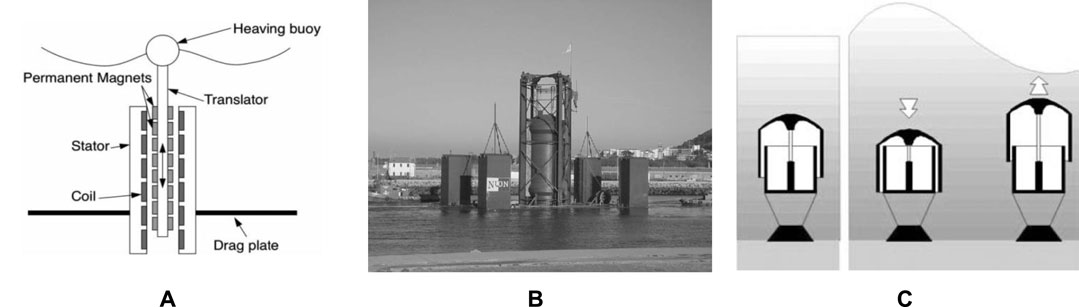
FIGURE 8. (A)Power take-off system based on direct electric drive.(B)AWS prototype.(C)Working principle diagram of AWS (Polinder et al., 2004).
3 Triboelectric nanogenerator fundamentals
Professor Zhonglin Wang and colleagues at Georgia Tech proposed triboelectric nanogenerators (TENG) in 2012 to convert mechanical energy into electrical energy using a combination of triboelectric initiation and electrostatic induction (Wang, 2013; Wu et al., 2019). TENG is increasingly being used for energy harvesting and self-energy supply monitoring due to its many advantages, including low cost, easy manufacturing, high power density, a wide range of material possibilities, and the potential to operate as a self-energy supply sensor (Liu et al., 2015; Zhao et al., 2016; Liu et al., 2018; Wang et al., 2021). TENG has been proven to have substantial advantages over conventional power generation employing electromagnetic induction for harvesting low frequency energy (5 Hz) [31[]. As a result, TENG is a great option for harvesting low-frequency, irregular wave energy. The Maxwell displacement current (Wang et al., 2016) is the theoretical source of the fundamental TENG model, which is stated as:
where D represents the displacement field; B represents the magnetic field; E represents the electric field; H represents the magnetisation field; Pf represents the free charge density; and Jf represents the free current density.
Where P represents the polarisation field density and ε0 represents the vacuum dielectric constant. In Eq. (4), the second term is defined as the Maxwell displacement current.
The first term in Eq. is the induced current resulting from the time-varying electric field, which is the theoretical basis for the existence of electromagnetic waves (Wang, 2013; Wang S et al., 2015; Wang et al., 2016); the second term is the current caused by the polarisation field generated by the electrostatic charge carried by the surface, which is the fundamental theoretical basis and source of the nanogenerator (Wang, 2017b).
4 The four modes of operation of TENG
The TENG (shown in Figure 9) has four modes of operation: vertical contact-separation mode, horizontal sliding mode, single electrode mode, and separate layer mode (Wang, 2015). Separating two dielectric films with metal electrodes coated on the back in vertical contact generates electricity in the vertical contact-separation mode. Because the two dielectric films are in distinct positions in the triboelectric electrical sequence and have varying electronegativity, when their surfaces come into touch, they will transport equal quantities of dissimilar charges through electron gain and loss. When the two dielectric films are separated, an induced potential difference is generated between them. If the metal electrodes on the back are connected by a load, the free moving electrons will circulate in the external circuit connected to the two electrodes in order to balance the potential difference. If the two dielectric films come into close contact again, the potential difference between the two disappears and the electrons return to the original electrodes, and the Periodic contact separation leads to AC output from external circuits (Figure 9A). The horizontal sliding principle is similar to the vertical contact separation mode, with the exception that the dielectric film contact separation induced by vertical contact is substituted by relative sliding (Figure 9B). The load must only be attached to one electrode in the single-electrode mode, with the other end of the load acting as a potential reference electrode or being directly grounded. Although this mode is better for getting energy from freely moving objects (Figure 9C), the electrostatic shielding effect can reduce electron transfer efficiency in this mode. In addition, as shown in Figure 9D, the basic structure of the free-standing layer mode can be consisted of a freely movable dielectric film and two fixed electrodes at regular intervals. When an external excitation is applied to move the free dielectric film layer from contact with the left electrode to contact with the right electrode, an uneven charge is generated between the two electrodes resulting in a potential difference between them. In order to balance the potential difference, electrons will flow in an external circuit connecting the two electrodes, which will produce an alternating current output through the reciprocal movement of the dielectric film between the two electrodes. The separate layer mode is not limited to the two electrodes connected to the load being plated on the opposing moving device, which facilitates the design of the device and does not suffer from the shielding effect of the single electrode mode, so it has a high energy conversion efficiency and is very suitable for wave energy harvesting (Figure 9D).
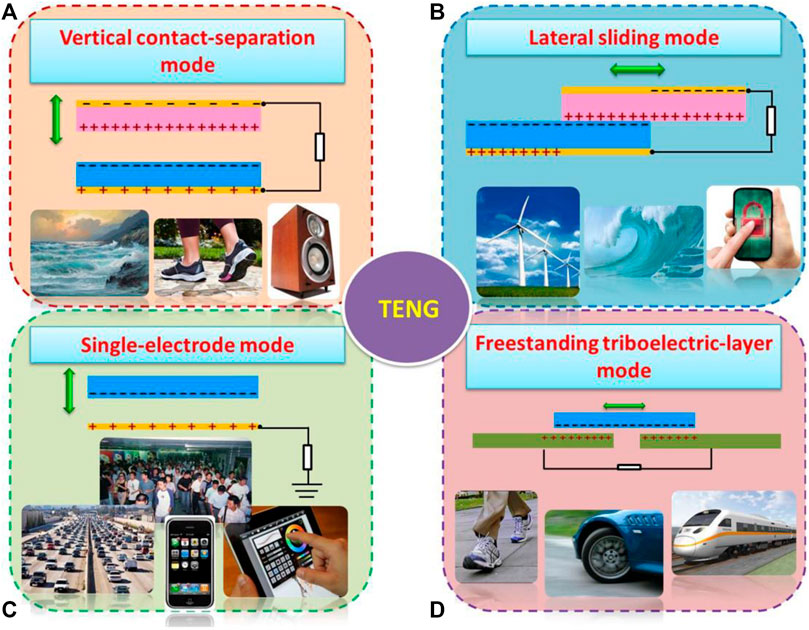
FIGURE 9. The four modes of operation of the TENG (Wang, 2015). (A) Vertical contact-separation mode, (B) lateral sliding mode, (C) single-electrode mode, (D) freestanding triboelectric-layer mode.
5 Status of research on triboelectric nano-wave energy generation technology
By integrating distinct structural designs with their own mechanisms, TENG for wave energy generation not only supplies energy for offshore sensor networks, but also allows them to become self-energy supply sensors. As a result, TENG-based wave energy harvesting technology has become a popular topic. Wave energy harvesting with TENG can currently be classified as liquid-solid mode TENG (Lin et al., 2013; Li et al., 2018; Zhao et al., 2018; Liu et al., 2020; Gu et al., 2021), totally enclosed TENG (Wen et al., 2014; Wang X et al., 2015; Zhang et al., 2016; Xu et al., 2017; Xu et al., 2018; Zhang et al., 2018; Xu et al., 2019a; Cheng et al., 2019; Liu et al., 2019; Liang et al., 2021; Rodrigues et al., 2021), spinning disk TENG (Jiang et al., 2020), hybrid TENG (Yang H et al., 2019; Chen X et al., 2019; Hao et al., 2019; Chandrasekhar et al., 2020; Jurado et al., 2020; Wu et al., 2020; Feng et al., 2021; Zheng et al., 2021), and so on.
5.1 Liquid-solid mode TENG
Lin et al. (Lin et al., 2013) proposed the first TENG based on liquid-solid mode in 2013 (shown in Figure 10A), in which contact separation of polydimethylsiloxane and water causes an electrical potential difference between the electrodes on the substrate, the two electrodes are connected by a load, and the potential difference drives the flow of electrons in the load pathway, thus generating electrical energy. Under periodic contact separation, the electrical energy produced by this liquid-solid TENG can charge a 33-F capacitor and successfully light up 60 light emitting diodes. In 2018, Li et al. (Li et al., 2018) created a buoy-like liquid-solid TENG (shown in Figures 10B,C) that can gather energy from various low frequency vibrations (up and down, rocking and rotational movements). By forming a network up to 290 μA, 16,725 nC, 300 V electrical output can drive an RF transmitter, illuminate hundreds of light emitting diodes and power the wireless SOS system to send out marine emergency signals. To avoid the problem of seawater erosion and entanglement of transmission lines in the TENG unit during large-scale wave energy harvesting, Liu et al. (Liu et al., 2020) in 2020 designed a TENG network of planar power cables consisting of spring steel strips and three layers of polymer film (shown in Figure 10D), with the steel strips inside the power cables acting not only as a structural skeleton but also as electrodes. Experimental analysis shows that a single cable achieves a maximum open circuit voltage of 34 V and a transferred charge of 25 nC in one cycle. Due to the novel working mechanism of the TENG, water itself can act as a triboelectric electrical material interacting with the insulating polymer film and therefore the liquid-solid mode can significantly reduce the effects of seawater corrosion and electrostatic interference on the TENG.
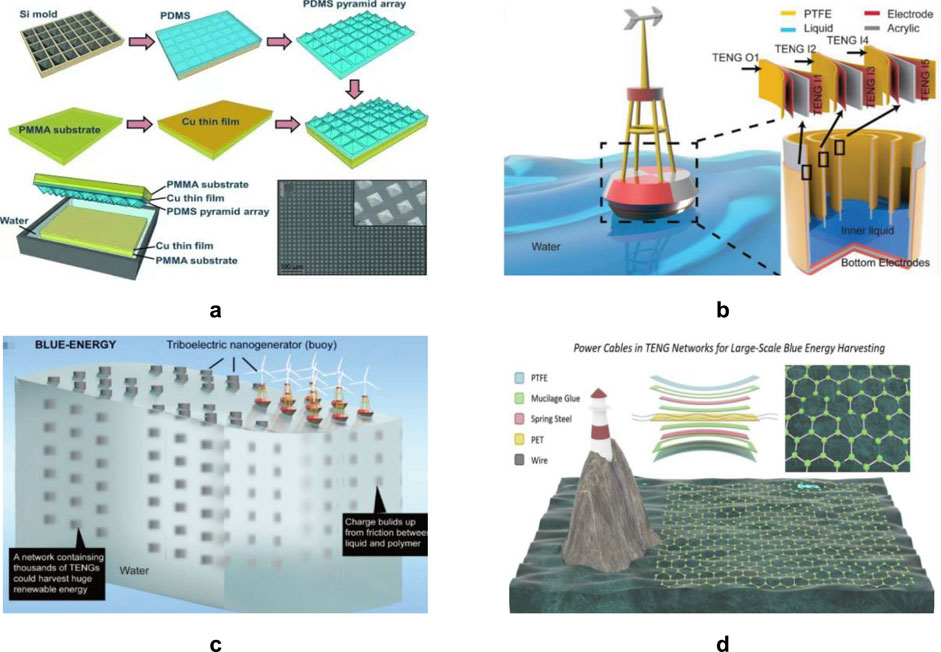
FIGURE 10. Liquid-solid contact TENG (A) First liquid-solid TENG structure (Lin et al., 2013). (B) Floating liquid-solid TENG power generation structure. (C) Application scenario of buoyed liquid-solid TENG (Li et al., 2018). (D) TENG network with a cellular topology connected by power cables (Liu et al., 2020).
5.2 Fully enclosed TENG
Because the effect of ambient humidity on the output performance of the TENG must be considered when using solid-solid contact to harvest wave energy, fully enclosed structures are frequently employed to be able to operate in harsh conditions. For wave energy harvesting, a variety of totally enclosed TENG structures have been reported, including rolling structures (Wang X et al., 2015; Xu et al., 2018; Zhang et al., 2018; Xu et al., 2019a; Cheng et al., 2019; Liu et al., 2019; Liang et al., 2021; Rodrigues et al., 2021), wave-shaped electrode structures (Wen et al., 2014; Zhang et al., 2016), air-driven membrane structures (Xu et al., 2017), and so on.
5.2.1 Rolling structures
In 2015, Wang et al. (Wang X et al., 2015) developed the RF-TENG, a freestanding and totally enclosed rolling TENG for wave energy harvesting that encompasses a rolling ball (nylon) inside a ball with an inner shell coated with a polyimide film (shown in Figure 11A). When driven by water waves, the 6 cm diameter RF-TENG may provide a short-circuit current of 1 μA and an instantaneous output power of up to 10 mW by optimising material and structural parameters. The performance of this TENG device is capable of directly driving more than 70 light emitting diodes and commercial thermometers at a duty cycle of 26.5 percent due to the excellent charge transfer efficiency of the freestanding TENG and the less frictional rolling construction. By optimising the material and structural design, Cheng et al. (Cheng et al., 2019) were able to convert a hard contact spherical TENG into a soft-contact spherical TENG (SS-TENG) (shown in Figure 11B), which raised the maximum output charge by a factor of ten over the standard TENG due to the increased contact area. Furthermore, in 2021, C. Rodrigues (Rodrigues et al., 2021) et al. created three TENG systems based on rolling spheres, as demonstrated by trials with large scale wave flumes in real sea conditions under a fixed navigation buoy: When the buoy is subjected to wave excitation, the electrical output is significantly reliant on pitch freedom, and the entire buoy dynamics, not just the TENG dynamics, must be considered.
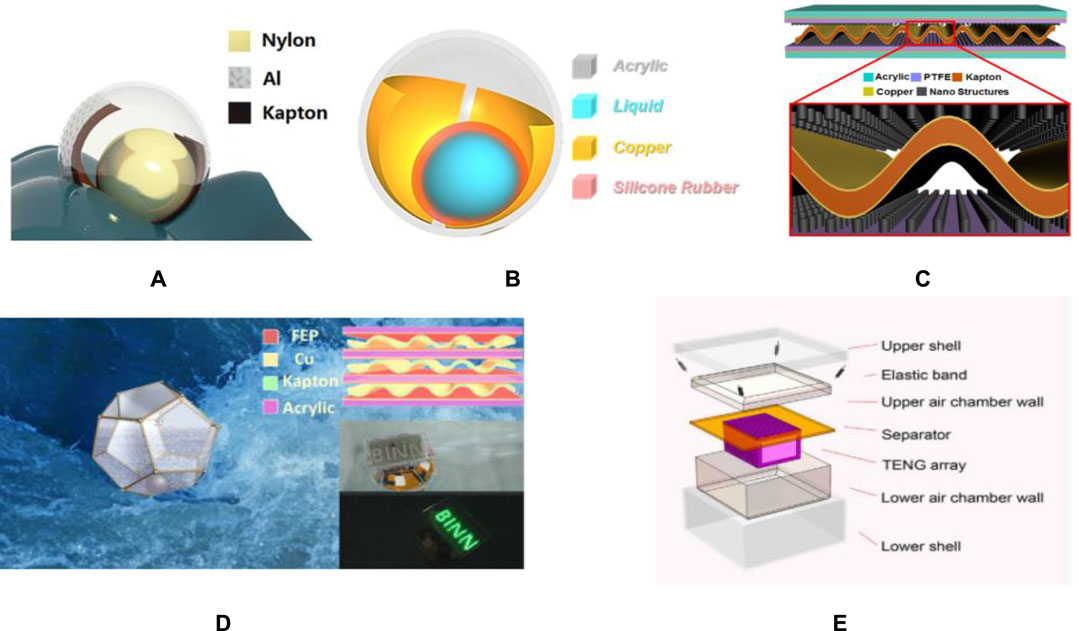
FIGURE 11. Fully enclosed TENG (A) Schematic diagram of the RF-TENG structure (Wang X et al., 2015). (B) Schematic diagram of SS-TENG structure (Cheng et al., 2019). (C) Schematic diagram of the wave-like TENG structure (Wen et al., 2014). (D) Schematic diagram of WS-TENGs (Zhang et al., 2016). (E) Schematic diagram of an integrated TENG array device based on an air-driven membrane structure (Xu et al., 2017).
5.2.2 Wave-like electrode structure
A wave-like structure-based TENG was invented by Wen (Wen et al., 2014) et al., in 2014 (shown in Figure 11C), which sandwiches a copper-polyimide-copper membrane between two flat nanostructured PTFE membranes to convert energy using the triboelectric initiation effect. The authors investigated different stirring methods to trigger a fully packed TENG and demonstrated the potential of this TENG for hydrological analysis by analysing the output signal and its corresponding Fourier transform spectrum, where the three stirring methods were distinguished from each other. Zhang et al. (Zhang et al., 2016) fabricated an integrated 12-pack of multilayer wave-like structured orthododecahedral triboelectric nanogenerators (WS-TENGs) (Figure 11D shown). After rectification by wave driving, the device produced high output voltages and currents of 260 V and 220 μA, proving a viable way of energy harvesting that outperforms traditional water waves.
5.2.3 Air-driven membrane structures
In 2017, Xu et al. (Xu et al., 2017) designed a unique spring-suspended oscillator structure that employs air pressure to transfer and distribute the collected water wave energy, resulting in an integrated triboelectric nanogenerator array device based on an air-driven membrane structure (shown in Figure 11E). Experiments show that at low frequencies around 2.9 Hz, the device with 38 integrated TENG units can achieve a transferred charge per cycle of 15 μC, a short-circuit current of 187 μA, and an optimised peak power density of 13.23 W/m3, allowing 600 light emitting diodes to be lit simultaneously in real water waves, thanks to the innovative design of the spring-levitated oscillator structure and a mechanism that uses ai. Thanks to the revolutionary design of the spring-levitated oscillator structure, and a mechanism that employs air pressure to transport and disperse the collected water wave energy. The device can easily combine large scale high density TENG arrays in a single package, and greatly enhance output.
5.3 Disk rotation TENG
In 2020, Jiang et al. (Jiang et al., 2020) developed a swing structure triboelectric nanogenerator (SS-TENG) with a high energy conversion efficiency for ultra-low frequency water wave energy collecting (shown in Figure 12A). The air gap and flexible dielectric brushes are designed to reduce frictional resistance and maintain the frictional charge, boosting robustness and endurance. Experiments show a maximum peak power of 4.56 mW and an average power of 0.48 mW at motor parameters of 7 cm travel and acceleration of 7.5 m/s2. Importantly, the device can achieve a maximum oscillation time of 88 s with a single trigger and exhibits excellent durability. Figure 12B,C show the successful driving of the digital thermometer after the wave is driven by the power generated by the SS-TENG and stored in the capacitor. The power created by the SS-TENG is held behind a capacitor to power a wireless transmitter, which successfully turns on the alarm by creating a signal to the receiver, as shown in Figure 12D,E. The investigations show that the SS-TENG could be used for self-powered temperature sensing and environmental monitoring using blue energy.
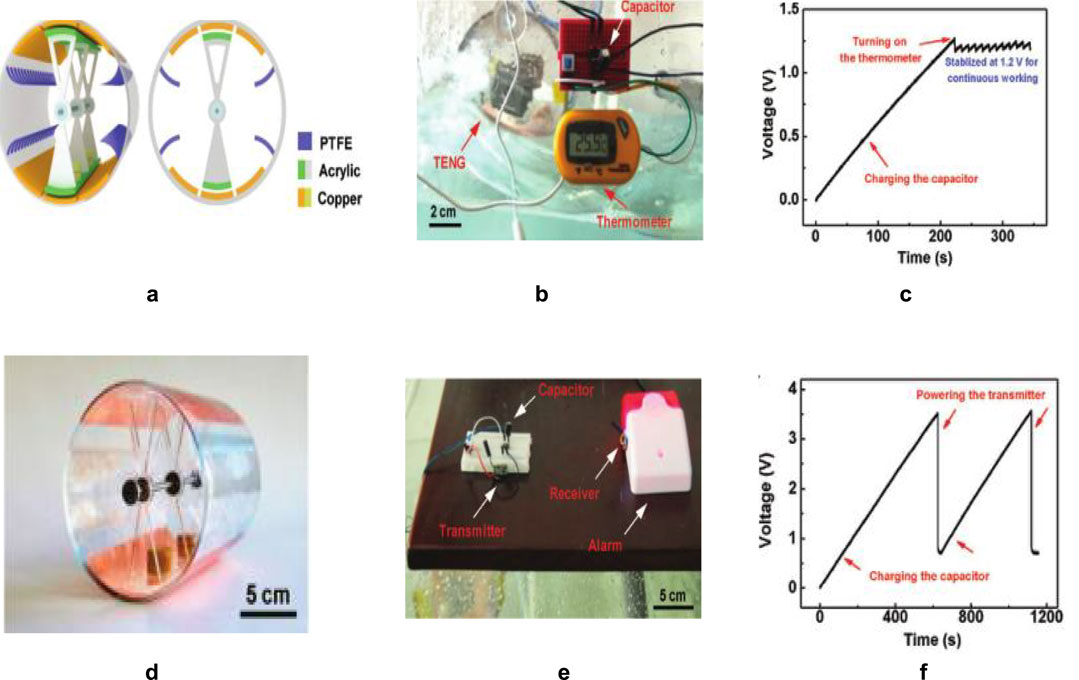
FIGURE 12. (A) Schematic diagram of the SS-TENG structure and cross-section. (B) Photograph of a digital thermometer powered by an SS-TENG driven by water waves. (C) Charge/discharge process of a 220 µF capacitor powering a thermometer at 10 cm amplitude and 1.2 Hz wave frequency. (D) Physical view of the SS-TENG. (E) Photograph of the wireless transmitter. (F) Charging and discharging process of a 220 µF capacitor powering a transmitter for two consecutive transmitting cycles (Jiang et al., 2020)
5.4 Hybrid TENG
Energy harvesting systems that can successfully gather wave energy at low frequencies are required for the advancement of marine technology. Integrating several energy harvesting systems for wave energy harvesting appears to be a very promising solution, according to several research. In 2019, Chen et al. (Chen X et al., 2019) suggested a self-powered wireless sensor node system using a disordered pendulum triboelectric (TENG) and electromagnetic (EMG) hybrid nanogenerator (shown in Figure 13A). The device’s physical design takes advantage of the disordered pendulum’s low operating frequency and high electromechanical conversion efficiency, allowing the nanogenerator’s maximum output power to reach 15.21 W and the EMG’s maximum output power to reach 1.23 mW under water wave excitation conditions (Figure 13B). Figure 13C shows how the hybrid nanogenerator can power up to 100 light emitting diodes. The hybrid nanogenerator can also power the wireless sensor node of the marine environmental monitoring system on the buoy, while the self-powered transmitter sends the data to the base station. The authors concluded that this research provides an innovative and effective method for harvesting blue energy and a new direction for aerospace and industry. Feng et al. (Feng et al., 2021) in 2021 designed a hybrid nanogenerator containing a soft-contact cylindrical triboelectric nanogenerator and an oscillating electromagnetic generator (Figure 13D). The stator-rotor pair was separated by introducing brushes made of flexible rabbit hair (Figure 13E), giving it the function of pumping charge to the dielectric surface, thereby reducing the operating resistance and improving the durability of the device. The optimised hybrid nanogenerator exhibited the best output response to water wave stirring at 0.1 Hz, producing an instantaneous peak power of 4.8 mW, a peak power density of 10.16 W/m3 and an average power density of 0.23 W/m3. Finally, self-powered temperature mapping and wireless transmission was successfully demonstrated in ultra-low frequency water waves by the composed array (Figure 13F).
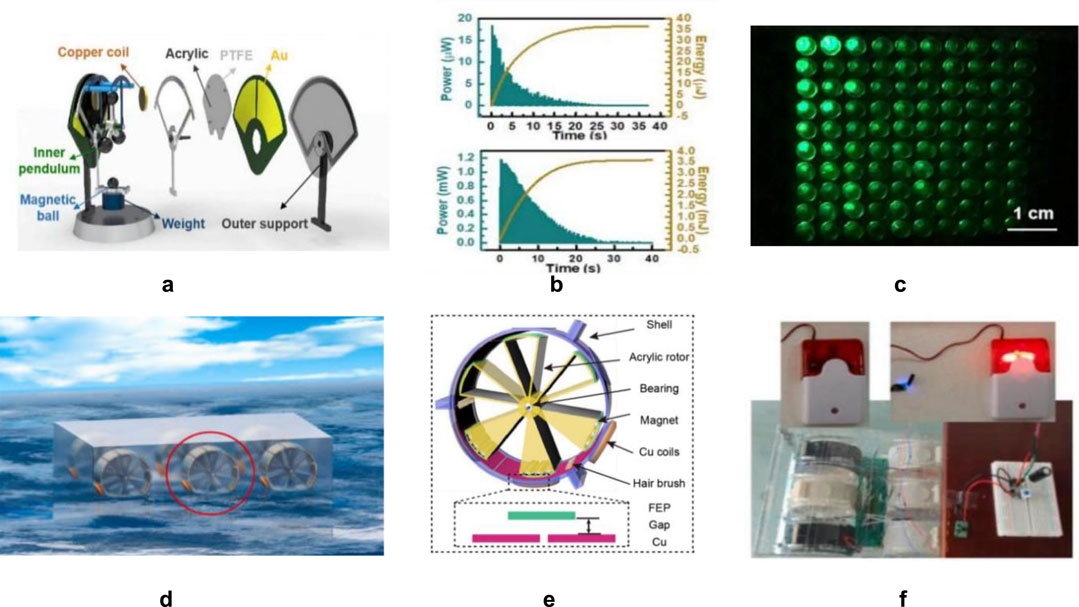
FIGURE 13. (A) Structure of the hybrid nanogenerator based on the disorder pendulum. (B) Output power and conversion energy of the TENG and EMG under water wave triggering with an impedance of 400 MΩ. (C) Lighting of 100 LEDs under water wave triggering (Chen X et al., 2019). (D) Schematic diagram of the hybrid nano-generator and its application in wave energy harvesting. (E) Diagram of the hybrid nanogenerator structure (enlarged view showing the gap between the FEP film and the copper electrode. (f) Powering a wireless transmitter by charging a 1,000 μF capacitor (Feng et al., 2021).
5.5 Comparison of the properties of TENG in different modes
Because of the liquid-solid mode TENG’s revolutionary operating mechanism, water can operate as a frictional electrical substance interacting with the insulating polymer layer, considerably reducing the impacts of seawater corrosion and electrostatic interference on the TENG. The effect of ambient humidity on the output performance of the TENG must be taken into account when using solid-solid contact mode for wave energy harvesting, hence a fully enclosed structure is frequently employed to be able to work in difficult conditions. For wave energy harvesting, many different forms of fully enclosed TENG structures have been documented, such as rolling structures, undulating electrode structures, air-driven membrane structures, and so on. The disk-rotating TENG shows great potential in self-powered temperature sensing and blue energy environmental monitoring because it minimises frictional resistance through the design of the air gap and flexible dielectric brushes, and the frictional charge is sustainable, thus improving robustness and durability. Wave energy collecting by hybrid TENGs incorporating different energy harvesting methods appears to be a very viable approach, according to several research. Low operating frequency and excellent electromechanical conversion efficiency are two advantages of hybrid TENGs. A comparison of the characteristics of TENG in different modes is plotted in a table, as shown in Table 1.
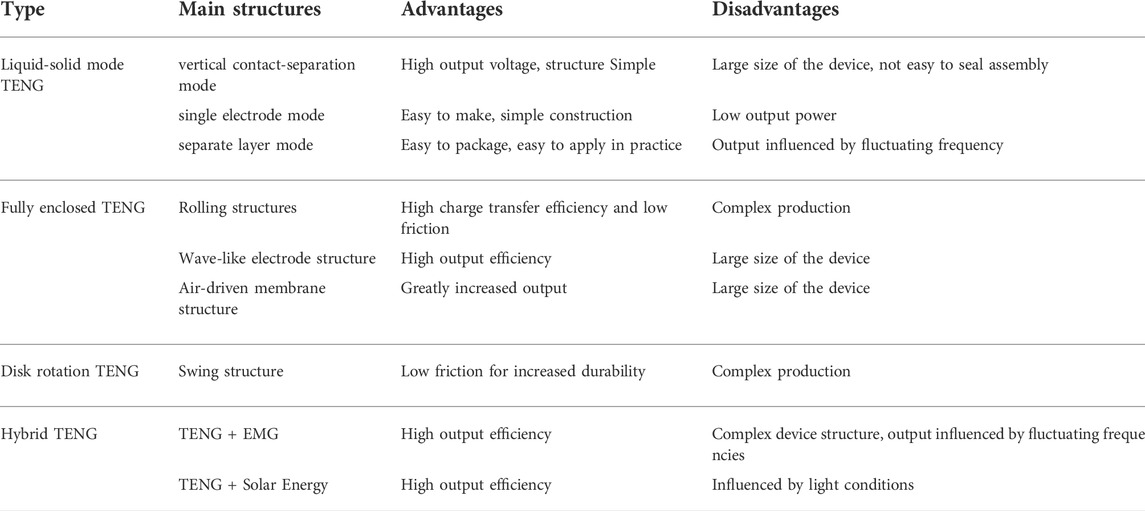
TABLE 1. Comparison of the characteristics of TENG in different modes.
6 Problems and research trends in triboelectric nano-wave energy generation technology
The expanding number of offshore operations and the growing integration with marine equipment has substantially raised the demand for energy in order to realize the smart ocean strategy. Traditional wave power technologies have high maintenance costs, bulky structures, and low conversion efficiency, and most of them can only be transmitted to large power grids, making direct power to marine equipment and platforms difficult, while battery power has high maintenance costs and poor endurance. TENG, in contrast to standard wave energy generating technologies that use electromagnetic power, can deliver high power output and continue to run efficiently at low frequencies and low amplitudes, considerably decreasing operation and maintenance costs (Wang, 2017a; Wang et al., 2017). TENG-based wave energy generating technology thus emerges as a very viable alternative solution in this context, not as a replacement for electromagnetic generators for large-scale power supply, but as a complement to them for the energy supply of offshore equipment and sensors. This is a novel sort of power generation technology, and it still has a lot of obstacles and challenges to overcome before it can mature and be used in practical applications. Future research trends in this discipline are primarily in the following areas in response to these issues:
6.1 Power circuit management optimisation
Because the majority of the electricity generated by TENGs is AC, while offshore equipment and sensors require only DC power, rectification bridges are frequently used to convert AC to DC. Multiple TENGs are frequently used to establish a network to feed power to widely spread offshore sensors, necessitating a high number of rectifier bridges, which surely increases the complexity of the power circuit transmission and the area occupied. As a result, for TENG-based wave energy generating technology, power circuit management optimization is critical. Gao et al. (Gao et al., 2021) constructed a DC TENG in rolling mode in 2021 (Figure 14), coupling frictional start and electrostatic breakdown effects for the first time to achieve constant current output in rolling mode. This strategy is unquestionably a fantastic way to optimize power circuit management when used to wave energy generation. Mechanical rectification, phase control, and dielectric breakdown are three general ways for generating DC from TENG without sophisticated rectifier bridges. The application of the TENG DC generating method to wave power generation technology would be a breakthrough in power circuit management optimization.
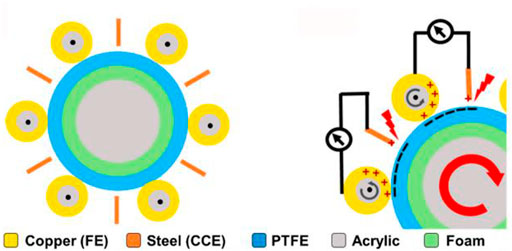
FIGURE 14. Rolling DC-TENG (Gao et al., 2021)
6.2 Study of multi-energy utilisation of composite structures
Energy harvesting research is moving in the direction of integrated multi-energy utilization. The marine environment is complicated and varied, and marine platforms or buoys frequently incorporate a range of marine equipment with electronic systems such as sensors for marine weather monitoring, signal transmission, safety monitoring, and navigation, among other things. For battery storage, they are usually only fueled by solar power, which is expensive, inefficient, and easily impacted by light conditions. At sea, on the other hand, a wide range of environmental energy sources are available, including wave, raindrop, wind, and sun energy. Most researchers have so far focused solely on the structure and technology for collecting wave energy. When numerous energies can be collected and used at the same time using an integrated composite mechanism, it not only makes the power generating system more integrated, but it also enhances the energy conversion efficiency per unit area significantly. For example, Shao (Shao et al., 2017) et al. designed a multifunctional hybrid power device that can effectively harvest wave and solar energy and was experimentally demonstrated to be a practical power source for directly driving light-emitting diodes or charging energy storage devices using triboelectric nanogenerators and electromagnetic generators. Integrating a composite mechanism to collect multiple energies simultaneously is beneficial to produce higher output performance while also improving space utilization and achieving the goal of integrating energy harvesting structures with energy supply in order to adapt to environmental diversification.
6.3 Study of self-driven sensing
Wave sensors track parameters including wave height, period, and direction, and wave monitoring is essential for efficient use of marine resources, maritime safety, and marine disaster warning. Wave sensors today are frequently powered by batteries, resulting in insufficient range and expensive maintenance costs. Wave energy generation is used to power the sensors in the majority of current TENG wave energy harvesting studies. The relationship between the electrical signal generated and the waves can be derived by studying the relationship between the internal structure motion pattern and the waves, resulting in effective wave parameter monitoring and self-supply of energy if the characteristics of TENG generation can be used wisely, i.e. the electrical signal generated by it often has a certain relationship (e.g., linear relationship) with its own parameters or motion. For example, Xu et al. (Xu et al., 2019b) in 2018 proposed a highly sensitive wave sensor based on TENG at the liquid-solid interface (WS-TENG) (Figures 15A,B), which is made of a sensing copper electrode covered with a PTFE film on the surface, and the peak output voltage varies linearly with the wave height, which can sense wave heights in the millimetre range, and was successfully used for real-time monitoring around a simulated ocean platform through experiments in a wave tank. For intelligent marine equipment, this innovative self-driven wave sensor could be a viable alternative to wave monitoring. Triboelectric nanopower technology allows for self-energy monitoring of not just wave parameters but also other ocean factors. For miniaturised and extensively dispersed marine sensors, self-driven sensing must be realised, hence research into self-driven sensors will be a prominent topic in the future.
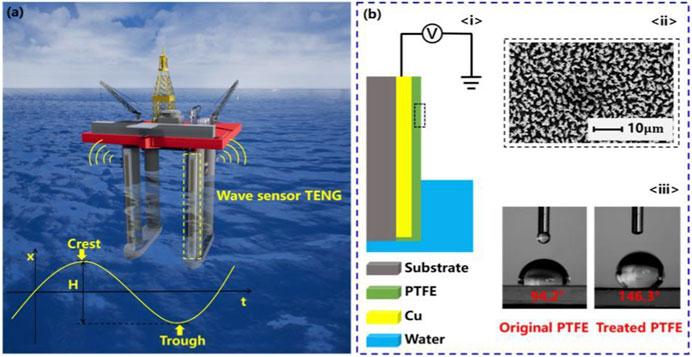
FIGURE 15. (A)Schematic diagram of WS-TENG used to monitor waves around a marine equipment.(B)Structural diagram of the WS-TENG (Xu et al., 2019b).
6.4 Stability and durability of the power generation unit
The longevity and stability of TENG-based wave energy harvesting devices has always been a concern, because the process of generating electricity from TENG is often based on repeated contact and separation of different frictional materials within the device, which inevitably leads to wear and tear on the materials over time and may change the output performance. Furthermore, the waves’ kinetic and potential energy causes them to constantly contact the outside of the power generation unit during the process, as well as the unknown composition of the saltwater, which might cause corrosion of the power generation unit that cannot be ignored. As a result, solutions include how to increase the power plant’s stability and durability through diverse material processing and structural design, as well as how to provide effective condition monitoring and early detection of fault symptoms in the power plant. The development of TENG-based wave power technology has become a serious concern (Li et al., 2021b; Li, 2022b). In 2021, Zhao (Zhao B et al., 2021) of China’s Ocean University suggested a high-performance, long-lasting point-absorbing wave energy generation system based on triboelectric-electromagnetic composite generation technology (shown in Figures 16A,B). Through a multilayer soft bristle structure and a unidirectional driving mechanism, the device considerably increased the TENG’s output performance and endurance, resulting in a continuous, high-performance output. High stability and durability are crucial criteria that researchers exploring TENG-based wave energy generating technologies must consider in order to realize large-scale application of TENG in wave energy harvesting.
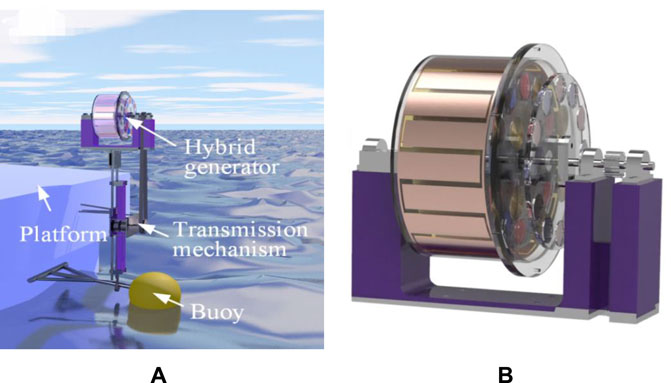
FIGURE 16. (A)Schematic illustration of the heaving point absorber-based wave energy converter and its application in ocean wave energy harvesting. (B) Overall structure of the hybrid generator (Zhao B et al., 2021)
6.5 Application of the TENG network
A single TENG wave energy generator can only power a single small sensor, but due to the simple and tiny TENG structure and the vast expanse of the sea, multiple TENGs can be combined to form a network on the surface, allowing a network of TENGs to power a widely distributed network of sensors and even provide useful power to a local power plant or grid on a small scale. Wave energy can be captured using the TENG network. The idea of employing TENG networks to absorb wave energy was first introduced in 2014 (Figure 17A shows) (Zhao T et al., 2021), and there are already a number of prototypes that demonstrate the principle’s viability, but there are still numerous obstacles to overcome before it can be used on a big basis. The first is the unit’s endurance, which is important because seawater and sunshine can degrade the material on the outside of the unit, and storms can cause fatigue damage to the TENG unit’s connection structure. The second consideration is the network’s location and size in order to minimize disruption to the public, marine life, and ships. Yang et al. (Yang X et al., 2019) proposed a self-assembling TENG network for wave energy harvesting based on encapsulated high performance units in 2019 (shown in Figures 17B,C). The device self-assembles through adaptive magnetic joints, working under the adaptive mechanism of magnetic poles and anisotropic degrees of freedom constraints, with the ability to self-heal ruptures and reconfigure quickly, greatly increasing the network’s autonomy and mechanical robustness for large-scale fabrication and maintenance. There is significant value and promise in investigating the practical uses of large-scale TENG networks in the ocean to fulfill the growing energy demand and overcome the challenges and difficulties experienced by TENG networks.
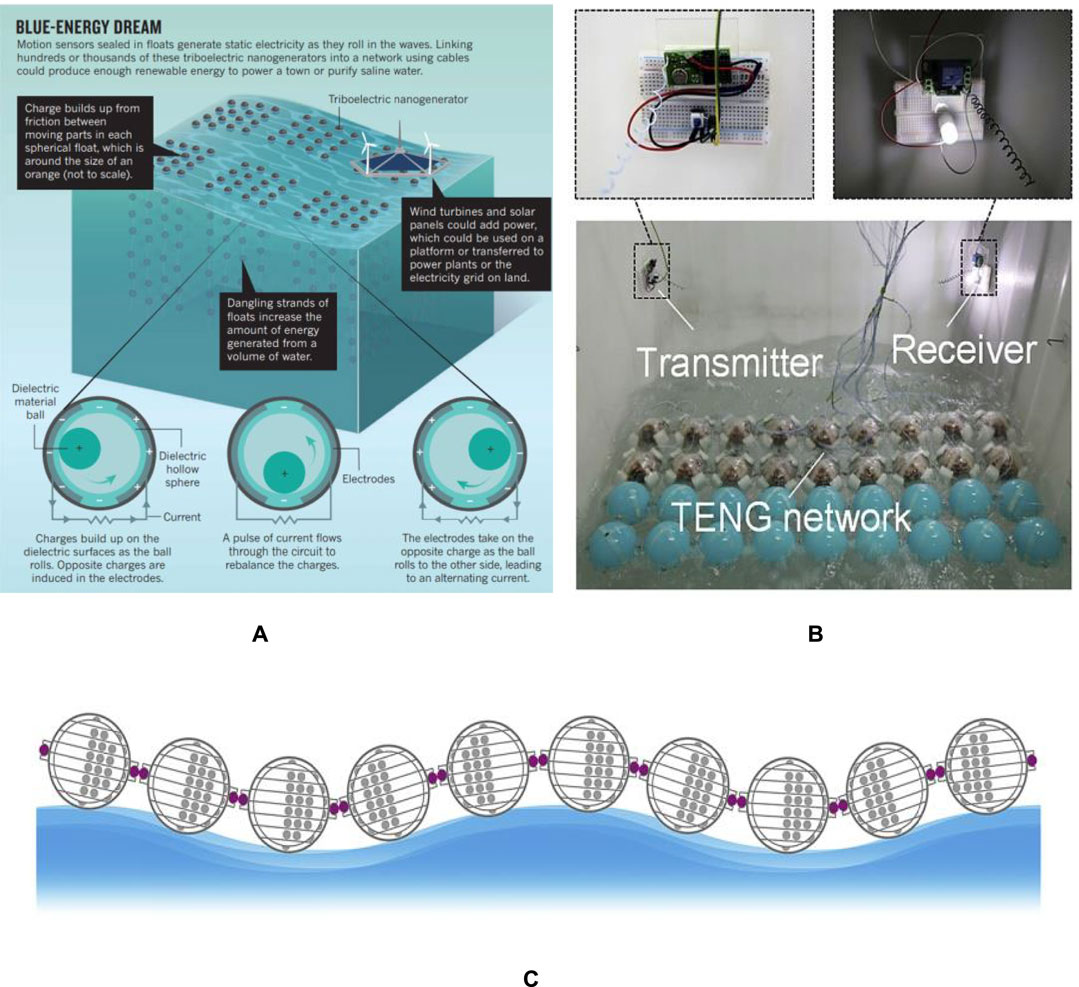
FIGURE 17. (A)TENG network (Zhao T et al., 2021). (B) Schematic illustration of the TENG networkagitated by water waves. (C) Photographs of the TENG network to power the wireless transmitter (Yang X et al., 2019)
7 Conclusion
The working principle, operating mode, and present research status of TENG-based wave energy generating technology are reviewed in this study, and it is discovered that wave energy harvesting employing various TENG structures has different output performance and application scope, then presenting some of the current problems with the technology. For example, due to the alternating current generated by TENGs, the complexity of the power circuit and the limited space utilisation, most TENG structures are only suitable for single energy harvesting, the lack of self-driven sensing research on ocean parameters, the poor stability and short lifespan of the power generation devices due to the fact that most TENGs generate electricity through frictional material contact separation, and there are still many challenges and difficulties in forming a TENG network, etc. Simultaneously, future research trends in this technology are proposed in the context of some current research cases, such as the application of DC TENG to wave energy generation for power circuit management optimization, the study of composite structures for multi-energy utilisation, the study of self-driven sensing of ocean parameters, the use of different structures and materials to enhance the device’s stability and durability, and the exploration of large-scale applications. TENG-based wave energy generating technology is clearly a new power generation technology with enormous potential for development in the context of the current Internet of Things era and the trend of developing and utilizing new energy sources. With the maturation of this technology, it is thought that constructing a TENG network is a practical approach to realize the blue energy dream.
Author contributions
All authors listed have made a substantial, direct, and intellectual contribution to the work and approved it for publication.
Funding
The authors gratefully acknowledge the support provided for this research by Guangdong provincial special fund for promoting high quality economic development (Yuerong Office letter [(2020)161, GDNRC (2021)56] and Natural Science Foundation of Guangdong Province (2022A1515011562).
Conflict of interest
The authors declare that the research was conducted in the absence of any commercial or financial relationships that could be construed as a potential conflict of interest.
Publisher’s note
All claims expressed in this article are solely those of the authors and do not necessarily represent those of their affiliated organizations, or those of the publisher, the editors and the reviewers. Any product that may be evaluated in this article, or claim that may be made by its manufacturer, is not guaranteed or endorsed by the publisher.
References
Ahamed, R., McKee, K., and Howard, I. (2020). Advancements of wave energy converters based on power take off (PTO) systems: A review. Ocean. Eng. 204, 107248. doi:10.1016/j.oceaneng.2020.107248
Cai, N., and Wang, S. (2012). Development and prospects of wave energy utilization. Land Nat. Resour. Res. 6, 92–94. doi:10.16202/j.cnki.tnrs.2012.06.034
Chandrasekhar, A., Vivekananthan, V., and Kim, S. J. (2020). A fully packed spheroidal hybrid generator for water wave energy harvesting and self-powered position tracking. Nano Energy 69, 104439. doi:10.1016/j.nanoen.2019.104439
Chen, Q. M., Gao, G. Z., Yue, X. H., Geng, D. Z., and Xu, L. (2020). Hydropower and new energy opportunities and challenges: Advances in wave energy power technology research. Hydropower New Energy 34 (08), 1–6. doi:10.13622/j.cnki.cn42-1800/tv.1671-3354.2020.08.001
Chen, R. W., Liu, C., and Zhang, Y. X. (2019). Current status and perspectives of research on direct wave energy harvesting. Data Acquis. Process. 34 (02), 5–14. doi:10.16337/j.1004-9037.2019.02.001
Chen, X., Gao, L., Chen, J., Lu, S., Zhou, H., Wang, T., et al. (2019). A chaotic pendulum triboelectric-electromagnetic hybridized nanogenerator for wave energy scavenging and self-powered wireless sensing system. Nano Energy 69, 104440. doi:10.1016/j.nanoen.2019.104440
Cheng, P., Guo, H., Wen, Z., Zhang, C., Yin, X., Li, X., et al. (2019). Largely enhanced triboelectric nanogenerator for efficient harvesting of water wave energy by soft contacted structure. Nano Energy 57, 432–439. doi:10.1016/j.nanoen.2018.12.054
Drew, B., Plummer, A. R., and Sahinkaya, M. N. (2009). A review of wave energy converter technology. Proc. Institution Mech. Eng. Part A J. Power Energy 223 (8), 887–902. doi:10.1243/09576509jpe782
Du, Xiaozhen, Kong, Qingshuai, Guo, Yue, et al. (2021). Analysis of floating oscillating water column power generation based on dielectric elastomer. J. Ocean Univ. China (Natural Sci. Ed.) 51 (3), 110–116. doi:10.16441/j.cnki.hdxb.20180317
Falcão, A. F. O., and Henriques, J. C. C. (2016). Oscillating-water-column wave energy converters and air turbines: A review. Renew. Energy 85, 1391–1424. doi:10.1016/j.renene.2015.07.086
Feng, Y., Liang, X., An, J., Jiang, T., and Wang, Z. L. (2021). Soft-contact cylindrical triboelectric-electromagnetic hybrid nanogenerator based on swing structure for ultra-low frequency water wave energy harvesting. Nano Energy 81, 105625. doi:10.1016/j.nanoen.2020.105625
Flocard, F., and Finnigan, T. D. (2010). Laboratory experiments on the power capture of pitching vertical cylinders in waves. Ocean. Eng. 37 (11-12), 989–997. doi:10.1016/j.oceaneng.2010.03.011
Gao, Y., Liu, D., Zhou, L., Li, S., Zhao, Z., Yin, X., et al. (2021). A robust rolling-mode direct-current triboelectric nanogenerator arising from electrostatic breakdown effect. Nano Energy 85, 106014. doi:10.1016/j.nanoen.2021.106014
Gu, H., Zhang, N., Zhou, Z., Ye, S., Wang, W., Xu, W., et al. (2021). A bulk effect liquid-solid generator with 3D electrodes for wave energy harvesting. Nano Energy 87, 106218. doi:10.1016/j.nanoen.2021.106218
Hao, C., He, J., Zhai, C., Jia, W., Song, L., Cho, J., et al. (2019). Two-dimensional triboelectric-electromagnetic hybrid nanogenerator for wave energy harvesting. Nano Energy 58, 147–157. doi:10.1016/j.nanoen.2019.01.033
Jiang, T., Pang, H., An, J., Lu, P., Feng, Y., Liang, X., et al. (2020). Robust swing‐structured triboelectric nanogenerator for efficient blue energy harvesting. Adv. Energy Mat. 10 (23), 2000064. doi:10.1002/aenm.202000064
Jurado, U. T., Pu, S. H., and White, N. M. (2020). Grid of hybrid nanogenerators for improving ocean wave impact energy harvesting self-powered applications. Nano Energy 72, 104701. doi:10.1016/j.nanoen.2020.104701
Kofoed, J. P., Frigaard, P., Friis-Madsen, E., and Sorensen, H. C. (2006). Prototype testing of the wave energy converter wave dragon. Renew. energy 31 (2), 181–189. doi:10.1016/j.renene.2005.09.005
Li, H., Deng, J., Feng, P., Pu, C., Arachchige, D., Cheng, Q., et al. (2021a). Short-term nacelle orientation forecasting using bilinear transformation and ICEEMDAN framework. Front. Energy Res. 9, 780928. doi:10.3389/fenrg.2021.780928
Li, H., Deng, J., Yuan, S., Feng, P., and Arachchige, D. (2021b). Monitoring and identifying wind turbine generator bearing faults using deep belief network and EWMA control charts. Front. Energy Res. 9, 799039. doi:10.3389/fenrg.2021.799039
Li, H. (2022). SCADA data based wind power interval prediction using LUBE-based deep residual networks. Front. Energy Res. 10, 920837. doi:10.3389/fenrg.2022.920837
Li, H. (2022). Short-term wind power prediction via spatial temporal analysis and deep residual networks. Front. Energy Res. 10, 920407. doi:10.3389/fenrg.2022.920407
Li, X., Tao, J., Wang, X., Zhu, J., Pan, C., and Wang, Z. L. (2018). Networks of high performance triboelectric nanogenerators based on liquid-solid interface contact electrification for harvesting low-frequency blue energy. Adv. Energy Mat. 8 (21), 1800705. doi:10.1002/aenm.201800705
Liang, X., Liu, Z., Feng, Y., Han, J., Li, L., An, J., et al. (2021). Spherical triboelectric nanogenerator based on spring-assisted swing structure for effective water wave energy harvesting. Nano Energy 83, 105836. doi:10.1016/j.nanoen.2021.105836
Lin, Y., Bao, J., Liu, H., Li, W., Tu, L., and Zhang, D. (2015). Review of hydraulic transmission technologies for wave power generation. Renew. Sustain. Energy Rev. 50, 194–203. doi:10.1016/j.rser.2015.04.141
Lin, Z. H., Cheng, G., Lin, L., Lee, S., and Wang, Z. L. (2013). Water-solid surface contact electrification and its use for harvesting liquid-wave energy. Angew. Chem. Int. Ed. 52 (48), 12545–12549. doi:10.1002/anie.201307249
Liu, G., Chen, J., Tang, Q., Feng, L., Yang, H., Li, J., et al. (2018). Wireless electric energy transmission through various isolated solid media based on triboelectric nanogenerator. Adv. Energy Mat. 8, 1703086. doi:10.1002/aenm.201703086
Liu, G., Leng, Q., Lian, J., Guo, H., Yi, X., and Hu, C. (2015). Notepad-like triboelectric generator for efficiently harvesting low-velocity motion energy by interconversion between kinetic energy and elastic potential energy. ACS Appl. Mat. Interfaces 7 (2), 1275–1283. doi:10.1021/am507477y
Liu, G., Xiao, L., Chen, C., Liu, W., Pu, X., Wu, Z., et al. (2020). Power cables for triboelectric nanogenerator networks for large-scale blue energy harvesting. Nano Energy 75, 104975. doi:10.1016/j.nanoen.2020.104975
Liu, W., Xu, L., Bu, T., Yang, H., Liu, G., Li, W., et al. (2019). Torus structured triboelectric nanogenerator array for water wave energy harvesting. Nano Energy 58, 499–507. doi:10.1016/j.nanoen.2019.01.088
Polinder, H., Damen, M. E. C., and Gardner, F. (2004). Linear PM generator system for wave energy conversion in the AWS. IEEE Trans. Energy Convers. 19 (3), 583–589. doi:10.1109/tec.2004.827717
Ricci, P., Lopez, J., Santos, M., Ruiz-Minguela, P., Villate, J., Salcedo, F., et al. (2011). Control strategies for a wave energy converter connected to a hydraulic power take-off. IET Renew. Power Gener. 5 (3), 234. doi:10.1049/iet-rpg.2009.0197
Rodrigues, C., Ramos, M., Esteves, R., Correia, J., Clemente, D., Goncalves, F., et al. (2021). Integrated study of triboelectric nanogenerator for ocean wave energy harvesting: Performance assessment in realistic sea conditions. Nano Energy 84, 105890. doi:10.1016/j.nanoen.2021.105890
Rodríguez, L., Pereiras, B., Fernández-Oro, J., and Castro, F. (2019). Optimization and experimental tests of a centrifugal turbine for an OWC device equipped with a twin turbines configuration. Energy 171, 710–720. doi:10.1016/j.energy.2019.01.029
Shao, H., Wen, Z., Cheng, P., Sun, N., Shen, Q., Zhou, C., et al. (2017). Multifunctional power unit by hybridizing contact-separate triboelectric nanogenerator, electromagnetic generator and solar cell for harvesting blue energy. Nano Energy 39, 608–615. doi:10.1016/j.nanoen.2017.07.045
Shi, H. D., and Liu, Z. (2021). Research progress and development trend of ocean wave energy. Sci. Technol. Her. 39 (6), 22–28.
Tedeschi, E., Molinas, M., Carraro, M., and Mattavelli, P. (2010). “Analysis of power extraction from irregular waves by all-electric power take off,” in 2010 IEEE Energy Conversion Congress and Exposition, Atlanta, GA, USA, 12-16 September 2010 (IEEE), 2370–2377.
Wang, S., Lin, L., and Wang, Z. L. (2015). Triboelectric nanogenerators as self-powered active sensors. Nano Energy 11, 436–462. doi:10.1016/j.nanoen.2014.10.034
Wang, S., Wang, Y., Liu, D., Zhang, Z., Li, W., Liu, C., et al. (2021). A robust and self-powered tilt sensor based on annular liquid-solid interfacing triboelectric nanogenerator for ship attitude sensing. Sensors Actuators A Phys. 317, 112459. doi:10.1016/j.sna.2020.112459
Wang, X., Niu, S., Yin, Y., Yi, F., You, Z., and Wang, Z. L. (2015). Triboelectric nanogenerator based on fully enclosed rolling spherical structure for harvesting low-frequency water wave energy. Adv. Energy Mat. 5 (24), 1501467. doi:10.1002/aenm.201501467
Wang, Z. L. (2017). Catch wave power in floating nets. Nature 542 (7640), 159–160. doi:10.1038/542159a
Wang, Z. L., Jiang, T., and Xu, L. (2017). Toward the blue energy dream by triboelectric nanogenerator networks. Nano Energy 39, 9–23. doi:10.1016/j.nanoen.2017.06.035
Wang, Z. L., Lin, L., Chen, J., Niu, S. M., and Zi, Y. L. (2016). “Theoretical modeling of triboelectric nanogenerators,” in Triboelectric nanogenerators (Cham: Springer), 155–183. doi:10.1007/978-3-319-40039-6_6
Wang, Z. L. (2017). On maxwell's displacement current for energy and sensors: the origin of nanogenerators. Mater. Today 20 (2), 74–82. doi:10.1016/j.mattod.2016.12.001
Wang, Z. L. (2015). Triboelectric nanogenerators as new energy technology and self-powered sensors – principles, problems and perspectives. Faraday Discuss. 176, 447–458. doi:10.1039/c4fd00159a
Wang, Z. L. (2013). Triboelectric nanogenerators as new energy technology for self-powered systems and as active mechanical and chemical sensors. ACS Nano 7 (11), 9533–9557. doi:10.1021/nn404614z
Wen, X., Yang, W., Jing, Q., and Wang, Z. L. (2014). Harvesting broadband kinetic impact energy from mechanical triggering/vibration and water waves. Acs Nano 8 (7), 7405–7412. doi:10.1021/nn502618f
Wu, C., Wang, A. C., Ding, W., Guo, H., and Wang, Z. L. (2019). Triboelectric nanogenerator: A foundation of the energy for the new era. Adv. Energy Mat. 9 (1), 1802906. doi:10.1002/aenm.201802906
Wu, Y., Zeng, Q., Tang, Q., Liu, W., Liu, G., Zhang, Y., et al. (2020). A teeterboard-like hybrid nanogenerator for efficient harvesting of low-frequency ocean wave energy. Nano Energy 67, 104205. doi:10.1016/j.nanoen.2019.104205
Xiao, X., Bai, N. Z., and Kang, Q. (2014a). etc.A review of wave power system development and research into direct-drive wave power systems. J. Electr. Eng. Technol. 29 (03), 1–11. doi:10.19595/j.cnki.1000-6753.tces.2014.03.001
Xiao, Xi, Nianzong, Pendulum, Kang, Qing, et al. (2014b). A review of wave power system development and research on direct-drive wave power systems. J. Electrotechnol. 29 (03), 1–11.
Xu, L., Jiang, T., Lin, P., Shao, J. J., He, C., Zhong, W., et al. (2018). Coupled triboelectric nanogenerator networks for efficient water wave energy harvesting. ACS Nano 12 (2), 1849–1858. doi:10.1021/acsnano.7b08674
Xu, L., Pang, Y., Zhang, C., Jiang, T., Chen, X., Luo, J., et al. (2017). Integrated triboelectric nanogenerator array based on air-driven membrane structures for water wave energy harvesting. Nano Energy 31, 351–358. doi:10.1016/j.nanoen.2016.11.037
Xu, M., Wang, S., Zhang, S. L., Ding, W., Kien, P. T., Wang, C., et al. (2019a). A highly-sensitive wave sensor based on liquid-solid interfacing triboelectric nanogenerator for smart marine equipment. Nano Energy 57, 574–580. doi:10.1016/j.nanoen.2018.12.041
Xu, M., Zhao, T., Wang, C., Zhang, S. L., Li, Z., Pan, X., et al. (2019b). High power density tower-like triboelectric nanogenerator for harvesting arbitrary directional water wave energy. ACS Nano 13 (2), 1932–1939. doi:10.1021/acsnano.8b08274
Yang, H. M., Wang, M. F., Deng, M. M., Guo, H. Y., Zhang, W., Yang, H. K., et al. (2018). A full-packaged rolling triboelectric-electromagnetic hybrid nanogenerator for energy harvesting and building up self-powered wireless systems. Nano Energy 56, 300–306. doi:10.1016/j.nanoen.2018.11.043
Yang, X., Xu, L., Lin, P., Zhong, W., Bai, Y., Luo, J., et al. (2019). Macroscopic self-assembly network of encapsulated high-performance triboelectric nanogenerators for water wave energy harvesting. Nano Energy 60, 404–412. doi:10.1016/j.nanoen.2019.03.054
Yemm, R., Pizer, D., Retzler, C., and Henderson, R. (2012). Pelamis: experience from concept to connection. Phil. Trans. R. Soc. A 1959 (370), 365–380. doi:10.1098/rsta.2011.0312
Zhang, B. E., Zheng, Y., Fu, S. F., Liu, H. W., Zhao, M. Z., and Li, C. (2019). Experimental study of a new wave energy generation conversion device. Chin. J. Electr. Eng. 39 (24), 7263–7271. doi:10.13334/j.0258-8013.pcsee.182298
Zhang, L. M., Han, C. B., Jiang, T., Zhou, T., Li, X. H., Zhang, C., et al. (2016). Multilayer wavy-structured robust triboelectric nanogenerator for harvesting water wave energy. Nano Energy 22, 87–94. doi:10.1016/j.nanoen.2016.01.009
Zhang, S. L., Xu, M., Zhang, C., Wang, Y. C., Zou, H., He, X., et al. (2018). Rationally designed sea snake structure based triboelectric nanogenerators for effectively and efficiently harvesting ocean wave energy with minimized water 1screening effect. Nano Energy 48, 421–429. doi:10.1016/j.nanoen.2018.03.062
Zhao, B., Li, Z., Liao, X., Qiao, L., Li, Y., Dong, S., et al. (2021). A heaving point absorber-based ocean wave energy convertor hybridizing a multilayered soft-brush cylindrical triboelectric generator and an electromagnetic generator. Nano Energy 89, 106381. doi:10.1016/j.nanoen.2021.106381
Zhao, C. J., and Zhou, Y. (2013). Overview of domestic research on marine buoy monitoring systems. Mar. Dev. Manag. 30 (11), 13–18.
Zhao, T., Xu, M., Xiao, X., Ma, Y., Li, Z., and Wang, Z. L. (2021). Recent progress in blue energy harvesting for powering distributed sensors in ocean. Nano Energy 88, 106199. doi:10.1016/j.nanoen.2021.106199
Zhao, X. J., Kuang, S. Y., Wang, Z. L., and Zhu, G. (2018). Highly adaptive solid–liquid interfacing triboelectric nanogenerator for harvesting diverse water wave energy. ACS Nano 12 (5), 4280–4285. doi:10.1021/acsnano.7b08716
Zhao, Z., Pu, X., Du, C., Li, L., Jiang, C., Hu, W., et al. (2016). Freestanding flag-type triboelectric nanogenerator for harvesting high-altitude wind energy from arbitrary directions. ACS Nano 10 (2), 1780–1787. doi:10.1021/acsnano.5b07157
Zheng, C., Shao, L., Shi, W., Su, Q., Lin, G., Li, X., et al. (2014). An assessment of global ocean wave energy resources over the last 45 a. Acta Oceanol. Sin. 33, 92–101. doi:10.1007/s13131-014-0418-5
Keywords: wave energy generation, triboelectric nanogenerators, novel power generation technologies, research trends, power systems
Citation: Yan J, Mei N, Zhang D, Zhong Y and Wang C (2022) Review of wave power system development and research on triboelectric nano power systems. Front. Energy Res. 10:966567. doi: 10.3389/fenrg.2022.966567
Received: 11 June 2022; Accepted: 30 June 2022;
Published: 19 July 2022.
Edited by:
Yusen He, The University of Iowa, United StatesReviewed by:
KEqiang Zhu, Ningbo University, ChinaXiang Zhu, Huazhong University of Science and Technology, China
Copyright © 2022 Yan, Mei, Zhang, Zhong and Wang. This is an open-access article distributed under the terms of the Creative Commons Attribution License (CC BY). The use, distribution or reproduction in other forums is permitted, provided the original author(s) and the copyright owner(s) are credited and that the original publication in this journal is cited, in accordance with accepted academic practice. No use, distribution or reproduction is permitted which does not comply with these terms.
*Correspondence: DaPeng Zhang, MTIxNDI2NTczN0BxcS5jb20=