 Zhukui Tan
 Bin Liu
Introduction
With the development of new power systems, the randomness and volatility of new energy and new load increase the openness, uncertainty, and complexity of distribution networks, which brings new challenges to distribution networks (Bie et al., 2020). In order to guarantee the power system’s security, stability, and economic operation, it is necessary to conduct real-time state estimation, security assessment, network reconfiguration, and online setting of relay protection for power grids (Long et al., 2022). Moreover, the topological relationship information of distribution networks is critical for line loss analysis, power theft warning, fault location, and optimal operation (Liu et al., 2018). Therefore, an accurate topological structure is the foundation of the detailed management and safe operation of distribution networks. The existing topology uses cloud intelligence, acquisition, and identification methods, but there are some problems in the structure, such as inability to determine the direction of network power flow, large influence of load mutation on the topological change detection method, redundant measurement required by the method, high cost of measurement equipment, difficulty adapting to the rapid change of the network structure and very time-consuming (Zhang et al., 2020). In order to solve these problems, some advanced topology structure and identification methods are needed, such as the topology identification of distribution networks based on branch power or the topology automatic identification method of low-voltage distribution station areas based on the weighted least squares method. However, there are still many challenges in the practical application of the current topology structure and identification method. First, after the structural topology is carried out, the power quality and economic benefits of the distribution network are not considered. Second, whether more advanced neural networks or heuristic algorithms can be used to speed up the calculation speed and accuracy in the identification method, rather than the traditional numerical method for iterative search. This study explains the above problems and puts forward some new views on the topology identification technology of distribution networks.
Topology identification method of distribution network based on various algorithms
In recent years, China has actively promoted the research and development and application of smart grid technology, and smart meters, as a key component, have been widely used. Smart meters combined with micro-energy collection have powerful data collection ability and information interaction ability. Therefore, topology identification of low voltage distribution networks based on smart meter measurement data combined with energy harvesting is a potential research topic. In order to solve the problem of topology identification of distribution networks, a similarity algorithm of the adaptive segmented cloud model and the data characteristics of the cloud model are used to identify the similarity between transformer phase voltage and user voltage in the distribution network (Liu et al., 2022). On the characteristic quantity of topology identification, a topology identification method of distribution networks based on branch power estimation is proposed, which introduces power loss to construct a branch power correction equation (Guo et al., 2022). The method mentioned above shows the best network topology through comparison, and some scholars introduce the fast power flow DC method for state estimation to improve the calculation efficiency of the algorithm (Liu et al., 2021), so as to convert the topology error detection problem of such distribution networks into the distribution network reconfiguration problem with the purpose of obtaining high matching degree of measured values. Compared with only considering one quantity of active power, some scholars integrated the two indicators of power flow transfer and power transmission margin and introduced the impedance correction coefficient, taking the comprehensive impedance as the line weight, and then used the improved Dijkstra algorithm to search the shortest path and the second shortest path (Liang et al., 2021). On the topology identification model, a distribution network topology identification model based on a directed adjacency matrix is proposed. The unknown topology of the distribution network is described as an uncertain directed adjacency matrix, which realizes the topology identification of the distribution network and determines the direction of the power flow. A topology changes detection method based on a node voltage adjacency matrix is proposed. By analyzing the decline trend of the voltage amplitude of adjacent nodes, whether the topology changes can be detected or not is considered (Xu et al., 2021). In the application of the algorithm, a topology identification method is proposed for low-voltage distribution station area based on weighted least squares. This method needs to collect the active current values of the transformer low-voltage expansion acquisition unit and the user-side smart meter in multi-periods and establish the matrix equation of the least squares method to solve the topology relationship (Wei et al., 2021). Compared with the least square method, a low-voltage distribution network topology identification method based on principal component analysis and convex optimization is proposed. This method combines norm approximation and the convex relaxation principle, and the topology identification problem of low voltage distribution networks is transformed into a solvable convex optimization problem, which avoids the algorithm falling into local optimal solution (Feng et al., 2021). Compared with the traditional numerical analysis, the improved K-means algorithm is used to cluster the distribution transformers and users in the station area, so as to obtain the correct relationship between users and transformers (Hai et al., 2021). Some structures are also created based on deep learning and existing data, such as reference (Cui et al., 2021). In this study, a distribution network topology identification method is proposed. First, the distribution network is regarded as the permutation and combination of three basic topological units to obtain the node–branch connection relationship and further generate the distribution network topology matrix. Second, based on the DC power flow method and SOM-BP neural network algorithm, the redundant data are filtered by setting the screening radius, which reduces the computational complexity and can retain effective training data. The overall topology of the recognition system is decoupled into the recognition list. Last, the topology of the distribution network can be updated by multiplying the recognition result and topology matrix by the matrix operation. In addition to deep learning, extracting data driving parameters through the equivalent topology of the distribution network and constructing the adjoint circuit model of the distribution network are also proposed. The Norton theorem is used to optimize the fusion results of line parameter identification of the distribution network, and the planning model of line parameter identification of the distribution network is constructed to realize the identification of distribution network topology and line parameters driven by data (Zhou et al., 2021).
Distribution network topology identification method considering cloud-edge-end coordination based on communication equipment and measurement equipment
The above analysis is based on different algorithms to analyze the distribution topology, and some scholars identify the distribution topology using communication equipment or existing measurement devices connected with cloud-edge-end. A topology identification method for medium voltage distribution networks is proposed based on the combination of low-frequency short-term current pulse signal transmission path tracing and high-frequency power line carrier ranging. It involves using a low-frequency short-term current pulse signal detection algorithm based on even-order harmonic sine wave template matching, which contains obvious advantages of signal and noise separability and effectively improves the reliability of signal detection (Huang et al., 2021). The low voltage topology identification strategy based on the physical equipment and information fusion of the distribution network is put forward, fully combining with the existing distribution automation master station, distribution terminal and smart meter equipment, and information data resources, using power line communication signals through the distribution network line sensing to reflect the characteristics of primary line topology (Sun et al., 2021). Zhang et al. (2021) comprehensively utilized the voltage and current data collected by smart terminals and smart meters in the station area and proposed a relationship identification method between the two-level branch lines in the station area and the users, as well as a household table identification method. The principle was to analyze the voltage characteristics of the station area based on the typical network topology of the station area and construct the clustering model of the meter based on the voltage correlation of the equipment in the station area, which is a topology identification process shown in Figure 1. On this basis, a method for identifying topological relations of station areas with two branch lines is proposed. Spatial multi-scale regular topology search and topology verification based on multi-sequence time section rules to achieve three-dimensional spatial characteristics of low voltage distribution network topology identification method literature (Zou et al., 2019). An automatic identification and mapping method of low voltage distribution network topology based on LPWAN Internet of Things is proposed. Based on the principle of fault current uplink and total current collection, the edge calculation is carried out by combining the tree algorithm of the circuit network, which can realize the comprehensive perception of the operation of the distribution station area (Xia and Li, 2021). Based on the micro synchronous phasor measurement unit (μPMU), a new algorithm for distribution network topology identification is proposed. The nonlinear relationship among distribution network topology, photovoltaic, load, and μPMU measurement voltage is fitted by Bayesian network (BN), and the maximum mutual information grid is introduced to divide the continuous node interval, which solves the problem of BN needing to specify the number of intervals artificially when processing continuous data, making it difficult to adapt to more continuous variables (Ren et al., 2021). Li et al. (2017) also uses μPMU to realize synchronous measurement of voltage and current phases, which has a high sampling rate. Vector data with time scale can improve the reliability and fault tolerance of topology identification algorithm. Taking the phase information obtained as reference data, the phase information obtained by power flow calculation under different topology conditions is compared with the measured phase information, and the topology structure and topology change of the distribution network are identified by its correlation. In addition to the use of μPMU, someone also identifies the topology according to the distribution transformer intelligent terminal (TTU) and the voltage intelligent terminal (LTU). Aiming at the problems of chaotic topology and untimely update of the low-voltage distribution network, a topology identification method based on the characteristic signal of the intelligent terminal is proposed, combined with the smart terminal unit (STU) (Wang et al., 2021). For each STU, only the static network topology information associated with it needs to be configured in this method. Under certain topology identification rules, by exchanging information with other intelligent terminals, each intelligent terminal can determine the boundary terminal of the feeder branch set and the connection relationship between boundary terminals and form dynamic network topology information, so as to realize the identification and storage of topology information (Wu et al., 2019).
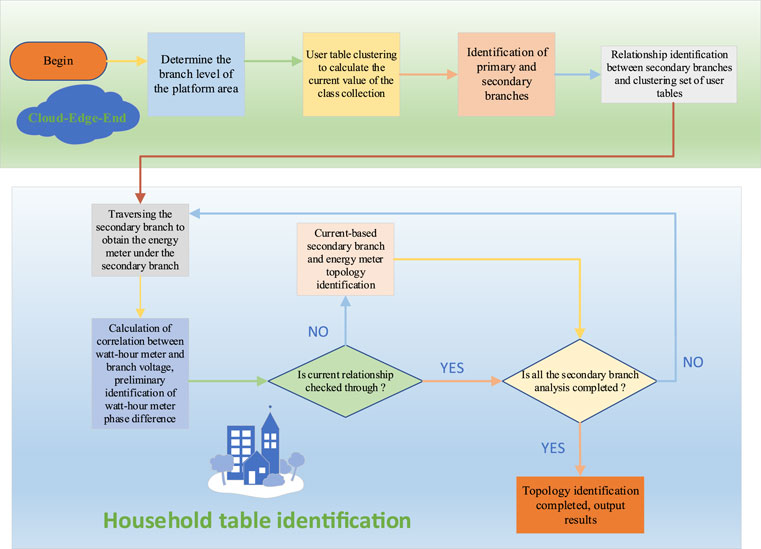
FIGURE 1. Platform topology identification process.
Discussion and conclusion
Distribution network topology identification has an important influence on power flow calculation, state estimation, and user identification of distribution networks. At present, many scholars have solved it by using active power, power loss, or power flow transfer models; then they use numerical algorithms like the least square method, principal component analysis, and convex optimization to optimize it. Deep learning, memory curve, and existing data are also used to construct the distribution network topology identification model. Moreover, the existing data communication equipment and data measurement equipment are applied to identify the distribution network topology according to the network structure and transmission signal. But there are still many improvements, as follows:
1) In the establishment of the model, the power quality, voltage fluctuation, economic benefit, and energy loss can be introduced to establish the model, and even the multi-objective model can be constructed to comprehensively consider the topology of the distribution network.
2) In the identification method of distribution network topology, in addition to the traditional numerical analysis method, the meta-heuristic algorithm can also be used for updating iteration. Because of its rapidity and accuracy, the meta-heuristic algorithm has been applied to many practical engineering fields. It will be helpful to solve such problems by exerting its advantages to the identification of distribution network topology.
3) When using the existing data communication equipment and data measurement equipment, the platform topology identification under more complex situations such as multi-level branch structure and unknown branch level can be considered to improve the applicability of the algorithm and meet the requirements of engineering application.
Author contributions
ZT and BL: writing the original draft and editing. YX: conceptualization. JO: visualization and contribution to the discussion of the topic. XX: supervising.
Funding
This work was supported by the research and demonstration on key technologies of safe smart distribution and utilization in tourism areas based on the industrial Internet (GZKJXM20210350).
Conflict of interest
ZT, BL, YX, JO, and XX were employed by Electric Power Research Institute of Guizhou Power Grid Co Ltd.
Publisher’s note
All claims expressed in this article are solely those of the authors and do not necessarily represent those of their affiliated organizations, or those of the publisher, the editors, and the reviewers. Any product that may be evaluated in this article, or claim that may be made by its manufacturer, is not guaranteed or endorsed by the publisher.
References
Bie, Z., Lin, C., Li, G., and Qiu, A. (2020). Development and prospect of resilient power system in the context of energy transition. Proc. CSEE 40 (9), 2735–2745. doi:10.13334/j.0258-8013.pcsee.191705
Cui, H., Wei, L., Ma, Z., Zhang, H., Zhu, H., and Li, J. (2021). Research on distribution network topology recognition based on electrical distance and SOM-BP. Tech. Automation Appl. 40 (9), 146–151. doi:10.3969/j.issn.1003-7241.2021.09.033
Feng, R., Zhao, T., Xie, S., Huang, J., and Wang, W. (2021). Topology identification for low voltage network based on principal component analysis and convex optimization. J. Tianjin Univ. 54 (7), 746–753. doi:10.11784/tdxbz202005064
Guo, S., Li, T., Chen, T., Zhang, W., Li, Z., and Wu, J. (2022). Distribution network topology identification method based on branch power estimation. Proc. CSU-EPSA, 1003–8930. doi:10.19635/j.cnki.csu-epsa.000947
Hai, D., Cui, J., Wen, Y., Yu, Y., Liu, S., and Huang, C. (2021). Distribution network topology recognition based on voltage fluctuation characteristics clustering. J. Nat. Sci. Hunan Normal Univ. 44 (6), 114–120. doi:10.7612./j.jssn.2096-5281.2021.06.01
Huang, B., Zhang, M., Li, J., Gao, H., Liu, M., and Yang, B. (2021). Automatic identification of medium-voltage power distribution network topology based on high and low frequency power line communication. High. Volt. Eng. 47 (7), 2350–2358. doi:10.13336/j.1003-6520.hve.20210515
Li, A., Liu, Y., Sun, P., Luo, L., and Jiang, X. (2017). Distribution network topology identification method based on phase data by μPMU. Smart Power 45 (11), 31–36. doi:10.3969/j.issn.1673-7598.2017.11.006
Liang, X., Yang, H., Xue, B., Cheng, X., Yang, R., Fu, D., et al. (2021). An identification method for dangerous lines under power flow transfer in a distribution network open circuit. Power Syst. Prot. Control 49 (23), 11–17. doi:10.19783/j.cnki.pspc.210146
Liu, D., Zhang, Q., Lv, G., Wu, J., and Xu, H. (2021). Distribution network topology identification method based on branch active power. Electr. Power Eng. Technol. 40 (3), 92–98. doi:10.12158/j.2096-3203.2021.03.014
Liu, S., Gao, X., Fang, W., Sun, Q., Feng, S., Liu, X., et al. (2018). Modeling the complex network of multidimensional information time series to characterize the volatility pattern evolution. IEEE Access 6, 29088–29097. doi:10.1109/ACCESS.2018.2842069
Liu, S., Huang, C., Li, K., and Hou, S. (2022). Phase identification method for single-phase user based on adaptive piecewise cloud model. Autom. Od. Electr. Power Syst. 46 (3), 42–49. doi:10.7500/AEPS20210510006
Long, H., Fu, X. Q., Kong, W. B., Chen, H., Zhou, Y., and Yang, F. (2022). Key technologies and applications of rural energy internet in China. Inf. Process. Agric. doi:10.1016/j.inpa.2022.03.001
Ren, P., Liu, Y., Liu, T., He, P., Zhang, Y., and Deng, S. (2021). Robust identification algorithm for distribution network topology based on mutual-information Bayesian network. Automation Electr. Power Syst. 45 (9), 55–62. doi:10.7500/AEPS20200818001
Sun, B., Li, Y., Du, H., Zhang, M., and Ma, Z. (2021). Automatic identification and application of distribution network topology based on power line communication. Electr. Autom. 43 (3), 1000–3886. doi:10.3969/j.issn.1000-3886.2021.04.015
Wang, R., Wu, Y., Wei, H., and Wang, C. (2021). Topology identification method for a distribution network area based on the characteristic signal of a smart terminal unit. Smart Power 49 (6), 83–89. doi:10.19783/j.cnki.pspc.200984
Wei, F., Cai, Y., Tang, J., Que, H., Li, J., and Guo, W. (2021). Automatic recognition method of topology of low⁃voltage station area based on weighted least squares method. Power Capacitor React. Power Compens. 42 (5), 122–129. doi:10.19783/j.cnki.pspc.201285
Wu, Y., Zhao, G. J., Hong, G. L., Li, M. F., Li, D., Wu, B., et al. (2019). [Clinical analysis of 22 cases of syndrome caused by acute poisoning]. Power Syst. Prot. Control 47 (16), 136–138. doi:10.3760/cma.j.issn.1001-9391.2019.02.012
Xia, X., and Li, X. (2021). Development and application of automatic identification system of low voltage distribution network topology. Inn. Mong. Electr. Power 39 (6), 23–28. doi:10.19929/j.cnki.nmgdljs.2021.0115
Xu, D., Zhao, J., Wang, X., Mao, D., and Qiu, J. (2021). Distribution network topology detection and identification based on a directed adjacency matrix. Power Syst. Prot. Control 49 (16), 76–85. doi:10.19783/j.cnki.pspc.201285
Zhang, R., Ma, Z., Qian, C., and Hou, Z. (2021). Model and algorithm of automatic identification of substation area topology based on metering data. Electr. Autom. 38 (10), 73–79. doi:10.19421/j.cnki.1006-6357.2021.10.010
Zhang, Z., Li, Y., Zhang, J., Duan, J., and Cao, Y. (2020). A topology identification and impedance estimation method for distribution network with distributed generations. IFAC-PapersOnLine 53 (2), 13155–13160. doi:10.1016/j.ifacol.2020.12.2507
Zhou, Y., Fang, M., and Xia, Y. (2021). Distribution network topology and line parameter identification method based on data-driven technology. Automation Instrum. 5, 193–196. doi:10.14016/j.cnki.1001-9227.2021.05.193
Keywords: topology identification, cloud-edge-end coordination, electrical quantity characteristics identification, distribution network, crucial status and perspectives
Citation: Tan Z, Liu B, Xu Y, Ou J and Xiao X (2022) Crucial status and perspectives of topology identification technologies of distribution network based on electrical quantity characteristics identification considering cloud-edge-end coordination. Front. Energy Res. 10:975244. doi: 10.3389/fenrg.2022.975244
Received: 22 June 2022; Accepted: 30 June 2022;
Published: 09 August 2022.
Edited by:
Bo Yang, Kunming University of Science and Technology, ChinaReviewed by:
Xiaohan Jiang, Kunming University of Science and Technology, ChinaJiawen Li, South China University of Technology, China
Copyright © 2022 Tan, Liu, Xu, Ou and Xiao. This is an open-access article distributed under the terms of the Creative Commons Attribution License (CC BY). The use, distribution or reproduction in other forums is permitted, provided the original author(s) and the copyright owner(s) are credited and that the original publication in this journal is cited, in accordance with accepted academic practice. No use, distribution or reproduction is permitted which does not comply with these terms.
*Correspondence: Bin Liu, MjMyMjE1NzgxNEBxcS5jb20=