 Donglin Wang1
 Jie Li
- 1College of Engineering, China Agricultural University, Beijing, China
- 2School of Energy and Construction Engineering, Harbin University of Commerce, Harbin, Heilongjiang, China
- 3Management School, Harbin University of Commerce, Harbin, Heilongjiang, China
Achieving sustainable development and reducing climate change require a shift to green energy sources. Yet, switching to green energy sources necessitates substantial research and development, as well as regulatory and policy adjustments. Additionally, a number of obstacles are impeding the development of green energy innovation. This study identified several key barriers and sub-barriers that obstruct the development of green energy innovation. Thus, this study identified multiple strategies to overcome those barriers. Therefore, this study uses the fuzzy Analytical Hierarchy Process (AHP) and fuzzy Technique for Order of Preference by Similarity to Ideal Solution (TOPSIS) methods to assess and rank the barriers and strategies to building resilient energy systems in China. First, the fuzzy AHP method identifies the four barriers and sixteen sub-barriers, while the fuzzy TOPSIS method classifies six strategies for the green energy innovation system in China. According to AHP results, funding and policy constraints are the most crucial barriers to green energy innovation. The fuzzy TOPSIS findings show that providing incentives for green energy investment and strengthening policy implementation and enforcement are the most significant strategies for overcoming the barriers to green energy projects.
1 Introduction
The detrimental effects of human activity on the environment have made the need for sustainable development more important (Kutlu, 2020). Climate change is one of the most urgent environmental issues that the world is currently experiencing. It results from human activities like burning of fossil fuels, which releases glasshouse gases, most notably carbon dioxide (Sen and Ganguly, 2017; Ali et al., 2021). Climate change poses a grave threat to both the ecology and human well-being. It can have a harmful effect on food security, water resources, and biodiversity while increasing the frequency and severity of natural disasters like hurricanes, floods, and droughts (IRENA, 2017). It is crucial to make the switch to clean and renewable energy (RE) sources in order to reduce the effects of climate change and promote sustainable development (Ali et al., 2022). Wind, solar, hydropower, and geothermal energy are examples of green energy sources that have the potential to meet a sizeable portion of the world’s energy needs while causing the least amount of environmental harm (Vidadili et al., 2017). Innovations in green energy can also boost economic expansion and open up new work opportunities. Furthermore, the idea of sustainable development is predicated on the understanding that social advancement, environmental preservation, and economic expansion are linked and mutually supportive. Consequently, achieving a balance between social, environmental, and economic goals is necessary for sustainable development (Chel and Kaushik, 2018).
China is the largest carbon emitter in the world, contributing over 30% of all carbon emissions (Guo et al., 2018). The main cause of the country’s excessive carbon emissions is its reliance on coal as its main energy source. The Chinese government has established challenging goals for cutting carbon emissions and raising the proportion of RE in the energy mix in recognition of the significance of green energy (Li et al., 2021). Notwithstanding these initiatives, China’s transition to RE confronts a number of barriers. The limitations to technology are one of the key issues. In order to increase efficiency and lower prices, green energy technologies like solar and wind power still need to be researched and developed. Additionally, the intermittent nature of some RE sources, including wind and solar, necessitates the creation of energy storage devices to guarantee a steady energy supply. The absence of finance is another obstacle to green energy innovation in China. It can be difficult to get the substantial investment needed to develop and implement green energy solutions, especially for small and medium-sized businesses (Liu et al., 2019). The speed of invention can also be slowed down, and the adoption of new technology might be hampered by a lack of financing for research and development in green energy technologies. Another barrier to green energy innovation in China is policy restrictions. Although the Chinese government has set high goals for cutting carbon emissions and raising the proportion of RE in the energy mix, putting these plans into practice can be difficult (Dong et al., 2018). For instance, overcapacity and decreased profitability for RE companies have resulted from government subsidies for RE. Furthermore, the necessity for environmental conservation may occasionally be overshadowed by the government’s emphasis on economic expansion.
Therefore, the goal of this study is to evaluate the major barriers and sub-barriers to green energy for sustainable growth as well as to suggest solution strategies for China’s energy system development. The study uses the fuzzy analytical hierarchy process (AHP) and fuzzy Technique for Order of Preference by Similarity to Ideal Solution (TOPSIS) methods, which enable modeling of complicated problems to solve the decision-making problem. The fuzzy AHP method is appropriate for this study because it can take into consideration the criteria and sub-criteria for the evaluation and development of green energy innovation in China. Therefore, making the switch to green energy innovation is crucial to reducing the consequences of climate change and ensuring the long-term viability of the Earth. Thus, China is a key player in this shift as the world’s greatest carbon emitter.
The structure of the study is as follows. The literature review is presented in Section 2. The barriers and strategies are explained in Section 3. The research methodology is given in Section 4. The findings and analyses are presented in Section 5. The conclusion and policy implications are presented in Section 6.
2 Literature review
Due to the worldwide environmental catastrophe brought on by human activity, green energy innovation and sustainable development have become critical issues of discussion (Eckstein et al., 2019). The literature on green energy innovation and sustainable development is reviewed in this section, with a special emphasis on the difficulties and prospects in China.
2.1 Green energy innovation
Innovation in green energy refers to the creation and application of technologies and procedures that lessen or completely remove the damaging effects of human activity on the environment (Lai, 2020). An ample portion of the world’s energy needs might be met by green energy sources, including solar, wind, hydropower, and geothermal energy, while limiting harm to the environment. As it enables the switch from fossil fuels to clean and RE sources, green energy innovation is essential for sustainable development. Innovation in green energy, however, faces a number of difficulties, including technical restrictions, financial constraints, policy constraints, and a lack of public support (Eleftheriadis and Anagnostopoulou, 2015). Notwithstanding these difficulties, green energy innovation has a great deal of promise to boost economic expansion and generate new job possibilities. Green energy use can also help reduce the consequences of climate change and guarantee the long-term viability of our planet.
2.2 Sustainable development in China
Being the largest carbon emitter in the world, China is vital to the global fight against climate change. The Chinese government has set lofty goals for cutting carbon emissions and raising the proportion of RE in the energy mix because it understands the value of sustainable development. Nevertheless, the country faces a number of barriers in its quest to achieve sustainable development. The reliance on coal as the main energy source is one of the major issues. According to the Energy Information Administration (EIA), around 55% of China’s energy needs are met by coal, which also contributes significantly to the high carbon emissions (EIA, 2021), while around 19% of energy is generated from petroleum sources. Figure 1 presents the primary energy mix of China in 2021.
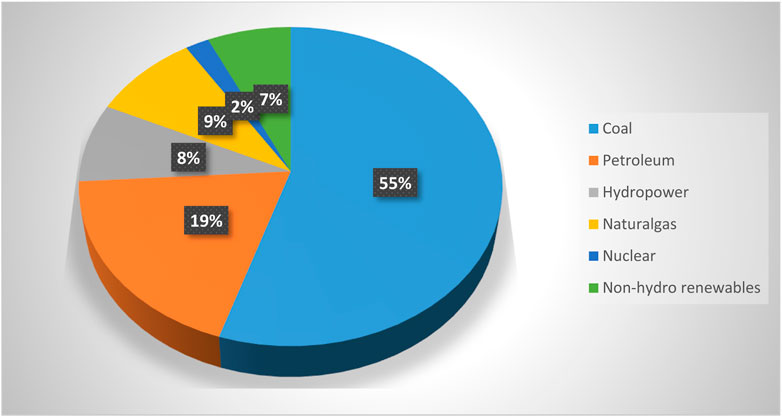
FIGURE 1. Total primary energy consumption in China.
The lack of funding for green energy projects and the study and development of green energy technologies is another issue (Mngumi et al., 2022). Due to the high prices and lengthy commitment necessary, small and medium-sized businesses, which are essential to green energy innovation, sometimes struggle to find funding. Constraints on policy are another barrier to sustainable growth (Jiang et al., 2020). Although the government has set high goals for cutting carbon emissions and raising the proportion of RE in the country’s energy mix, putting these plans into practice can be difficult. The government’s emphasis on economic expansion occasionally obscures the necessity of environmental conservation. Despite these barriers, the country has made great strides toward sustainable development. The country has made significant investments in RE, and its percentage in the energy mix has been continuously rising (Duan et al., 2018). The literature underlines China’s possibilities and difficulties, as well as the significance of green energy innovation for sustainable development. Although the country has made tremendous strides toward sustainability in recent years, there is still more work to be performed in order to meet its sustainability objectives.
In the previous studies, it was identified that the development of green energy is crucial since multiple authors discussed this issue using multi-criteria decision-making (MCDM) methods to analyze the particular decision-making problem (Pohekar and Ramachandran, 2004). Some of the relative studies on the development of green energy sources are compiled in the study, which identified the research gap to conduct this research. Table 1 shows the previous studies related to green energy sources for sustainable development.
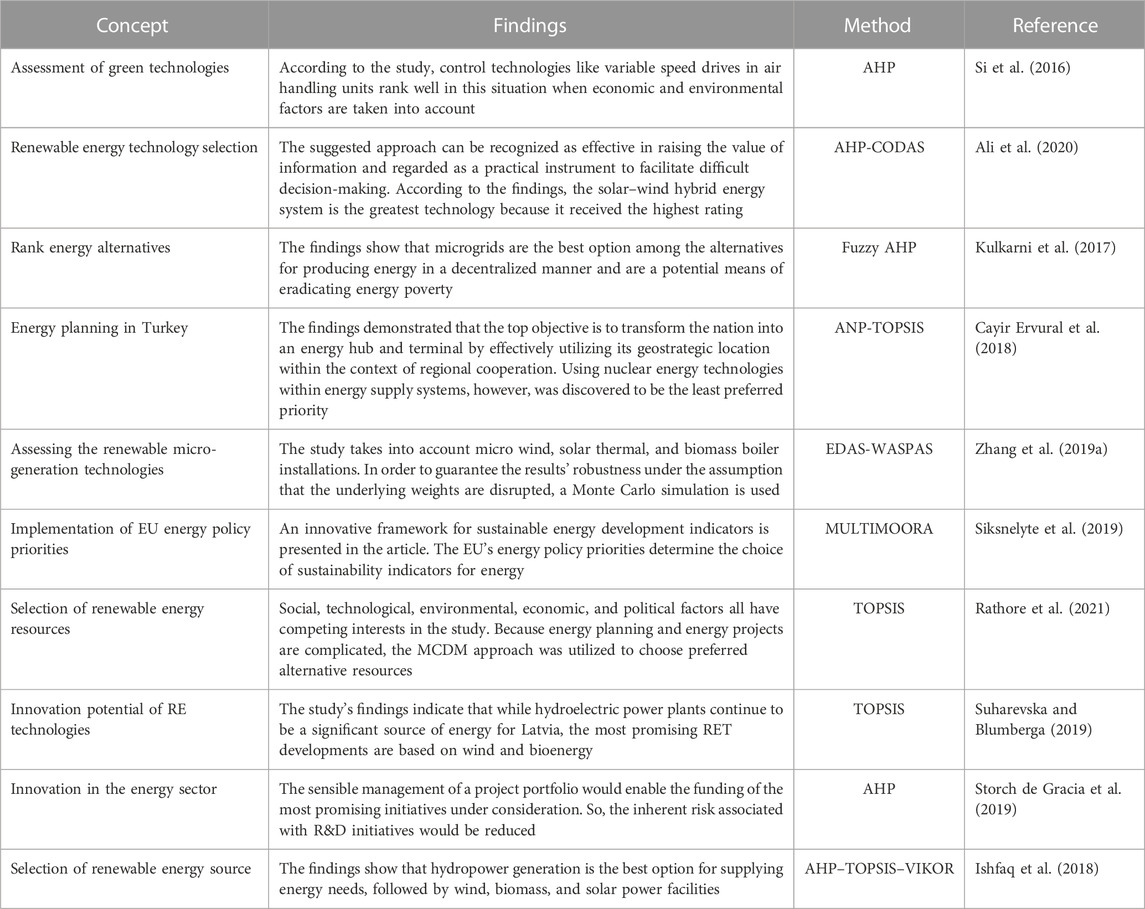
TABLE 1. Previous studies on renewable/green energy development.
A comprehensive assessment of green energy innovation for sustainable development using decision-making techniques like fuzzy AHP and fuzzy TOPSIS still needs to be performed, despite there being sufficient literature on the subject. Although various studies have identified these impediments, most of them have concentrated on a specific issue, such as technological constraints or governmental restrictions (Mateo, 2012). The interplay of the numerous elements that contribute to green energy innovation has rarely been thoroughly analyzed. A small number of studies have also suggested strategies for creating resilient energy systems that take into consideration the interconnection of the many deciding factors (Zhang and Gallagher, 2016).
Some research has evaluated sustainability challenges in other sectors, including energy planning and environmental management, using decision-making techniques like the fuzzy AHP and fuzzy TOPSIS methods. By employing these techniques to undertake a thorough assessment of the barriers and strategies to green energy innovation for sustainable development in China, our research attempts to close this research gap. In order to construct resilient energy systems that take into consideration the interdependence among the various decision criteria, the study will identify the main barriers to green energy innovation and suggest policy strategies to address these barriers. The analysis will add to the body of knowledge on sustainable development and offer insightful information about the potential and the problems associated with China’s transition to green energy sources.
3 Proposed barriers and policy strategies to green energy innovation
3.1 Barriers and sub-barriers
The study highlighted the barriers and sub-barriers to green energy innovation for sustainable development based on the existing literature. These barriers are linked and have an impact on each other. Table 2 shows the proposed barriers and sub-barriers of the study.
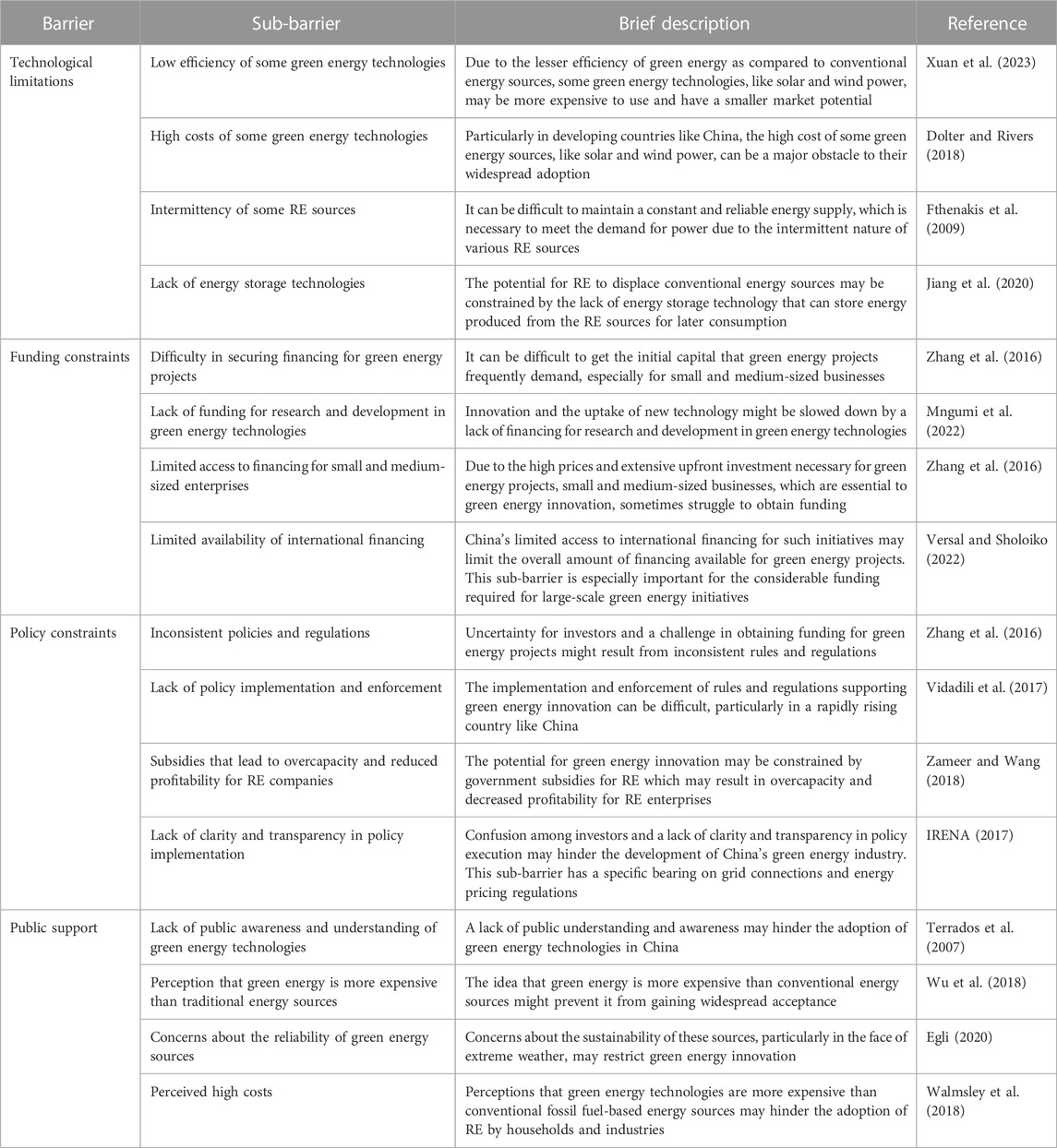
TABLE 2. Proposed barriers and sub-barriers for green energy innovation.
3.2 Policy strategies to overcome the barriers
To overcome the barriers to green energy innovation for sustainable development in China, the study proposed various policy strategies. These strategies have been identified from previous studies and are considered to be very significant to overcome the barriers and develop green innovation for sustainable development in China. Table 3 shows the policy strategies of this study.
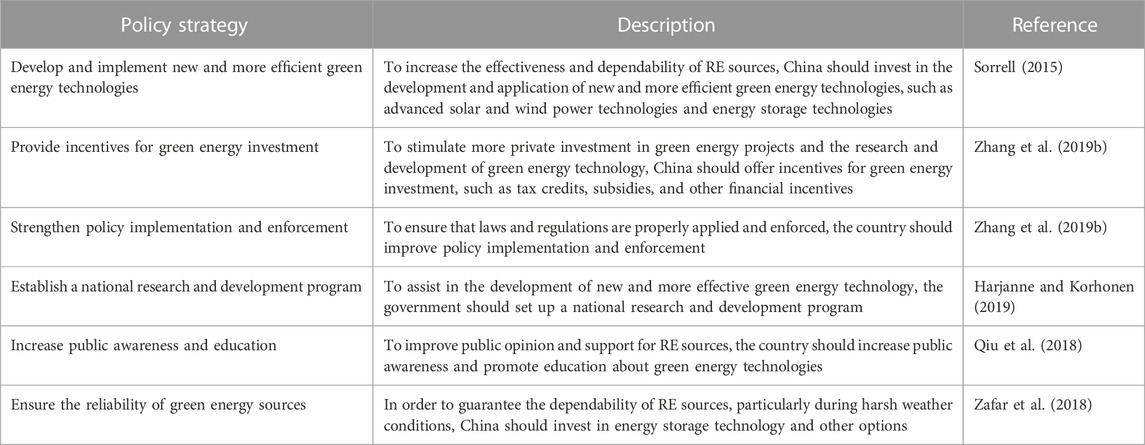
TABLE 3. Proposed policy strategies.
These policy strategies can aid in eliminating barriers to the development of green energy innovations in China. The fuzzy AHP and fuzzy TOPSIS techniques can be used to evaluate these policy options and pinpoint the best possibilities for achieving our intended goals.
4 Research methodology
This research methodology uses the fuzzy AHP and fuzzy TOPSIS methods to evaluate the barriers to green energy innovation for sustainable development and to suggest policy strategies for building resilient energy systems in China. The fuzzy AHP technique is a useful tool for determining barriers and sub-barriers, while the fuzzy TOPSIS method is significant in ranking the best policy strategy to overcome green energy innovation barriers. Figure 2 displays the research methodology of the current study.
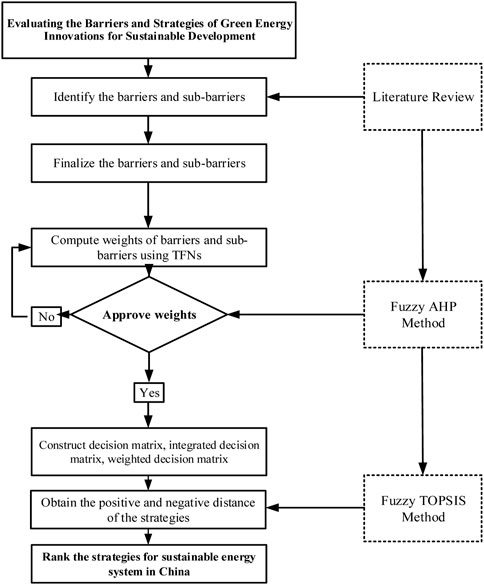
FIGURE 2. Research methodology.
4.1 Fuzzy AHP
One of the main techniques used in MCDM, which consists of a goal, a set of criteria, a set of sub-criteria, and alternatives, is the AHP method (Saaty, 1995). In this study, we used a fuzzy-based AHP technique to get more trustworthy and consistent outcomes. Fuzzy set theory reduces uncertainty in a fuzzy environment (Zadeh, 1978). Both quantitative and qualitative data can be utilized using the AHP technique. The complex choice problem can be broken down into smaller ones using the fuzzy AHP method. The pairwise comparison matrix was used in this study as triangular fuzzy numbers (TNFs) to evaluate barriers and sub-barriers to green energy innovations. The TFNs scale utilized in this study is displayed in Table 4.
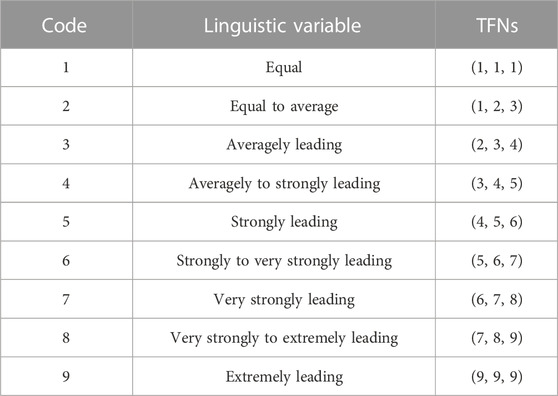
TABLE 4. Triangular fuzzy numbers scale.
In this study, we employed the following procedures to determine the fuzzy pairwise comparison matrix’s inconsistency ratio, as suggested by Gogus and Boucher (Gogus and Boucher, 1998):
Step 1. Transform a triangular fuzzy matrix into two independent matrices, which is presented as follows:
Then, the middle fuzzy triangular matrix can be used to generate the first triangular fuzzy matrix; this equation is written as:
Here, a geometric mean approach can be used to generate the second triangular fuzzy matrix for the upper and lower limits of the TFNs. As a result of this equation, we get:
Step 2. Create the weight vector based on the Saaty technique and lambda max computation.
step 3. Create the consistency index (CI) for each matrix:
Step 4. Create each matrix’s consistency ratio (CR). Each matrix’s consistency index (CI) is divided by its random index for (RI).
When both
4.2 Fuzzy TOPSIS
One of the fundamental MCDM methodologies is TOPSIS (Behzadian et al., 2012). For selecting the alternatives, this method provides the distance between the positive ideal and the negative ideal solution. However, this TOPSIS method is also combined with fuzzy set theory to create fuzzy TOPSIS, just like fuzzy AHP. As a result, linguistic variables and TFNs are used in this study to evaluate the weights of the alternatives (policy strategies). The alternatives are analyzed using TFNs in relation to the study’s sub-criterion (sub-barriers).
The basic steps of the fuzzy TOPSIS technique are given as follows (Cayir Ervural et al., 2018):
Step 1. Let
where
For a positive ideal solution:
where
For a negative ideal solution:
where
Step 3. Construct the weighted normalized fuzzy decision matrix:
Step 4. Recognize the distance between positive and negative ideal solution:
where
where
Here, the distance between
Step 5. Construct the closeness coefficient
where
Step 6. Identify the suitable green supplier based on descending order of
For this study, five specialists in green energy innovation and sustainable development in China were consulted. The professionals we contacted were knowledgeable about numerous green energy technologies, their efficacy, and their potential for advancement and application in China. To ensure a thorough study of the barriers to green energy innovation for sustainable development in China, all of the chosen experts come from a variety of backgrounds, including academics, researchers, industry professionals, and policymakers. As a result, the study methodology entails evaluating the barriers and strategies to green energy innovation using the fuzzy AHP and fuzzy TOPSIS methods to create resilient energy systems.
5 Results and discussion
The current case study offers a thorough analysis of the potential and the problems associated with the switch to green energy sources, as well as the success of the suggested solutions in removing the barriers to green energy innovation. The study evaluated and ranked the barriers, sub-barriers, and policy strategies for the development of green energy using the fuzzy AHP and fuzzy TOPSIS techniques. This case study will have a great impact on sustainable development and green energy innovation in China and other countries.
5.1 Results of barriers
The study identified barriers using the fuzzy AHP method. As is seen, the funding and policy constraints have the highest weights, indicating their importance in the evaluation of green energy innovation development. The technological limitations and public support are the next important barriers in the evaluation process. The ranking of barriers is useful in identifying the most critical dimensions of the sustainable energy system and can be used to guide policy development and decision-making. Figure 3 shows the results of barriers to green energy innovation.
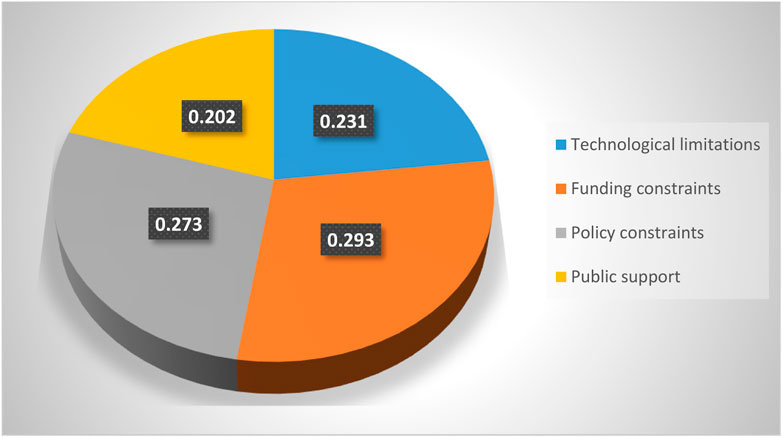
FIGURE 3. Final ranking of barriers for green energy innovation.
5.2 Results of sub-barriers
The study also presents the outcomes of sub-barriers related to each primary barrier. Within the category of technological limitations, it is found that the lack of energy storage technologies holds the top position as a significant sub-barrier in the transition towards a green energy innovation. High costs of some green energy technologies emerge as the second most crucial sub-barrier. Meanwhile, the intermittency of some RE sources and the low efficiency of some green energy technologies are deemed less critical sub-barriers that impede the development of green energy innovations. Table 5 illustrates the weights and rankings of these technological limitations sub-barriers.
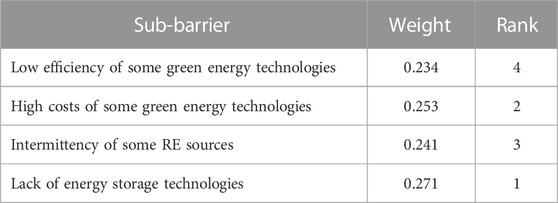
TABLE 5. Sub-barrier ranking (technological limitations).
Within the funding constraints category, the findings reveal that the sub-barrier of difficulty in securing financing for green energy projects has attained the utmost significance in green energy innovation development. Lack of funding for research and development in green energy technologies is ranked as the second most essential sub-barrier, followed by limited access to financing for small and medium-sized enterprises and limited availability of international financing for sustainable resilient energy systems in China. Table 6 showcases the weights and rankings of the funding constraints sub-barriers.

TABLE 6. Sub-barrier ranking (funding constraints).
Within the policy constraints category, the results indicate that inconsistent policies and regulations are the most critical sub-barrier that obstructs the development of green energy innovation. The subsidies that lead to overcapacity and reduced profitability for RE companies are ranked as the second most important sub-barrier, followed by a lack of policy implementation and enforcement and a lack of clarity and transparency in policy implementation. Consequently, these sub-barriers are deemed highly significant for green energy innovation and addressing climate change. Table 7 depicts the weights and rankings of the policy constraints sub-barriers.

TABLE 7. Sub-barrier ranking (policy constraints).
In the public support category, the results reveal that a lack of public awareness and understanding of green energy technologies is the most crucial sub-barrier. Perceived high costs are regarded as the second most important sub-barrier, while perceptions that green energy is more expensive than traditional energy sources and concerns about the reliability of green energy sources hold moderate to lower significance. Table 8 illustrates the weights and rankings of the public support sub-barriers.

TABLE 8. Sub-barrier ranking (public support).
5.3 Results of policy strategies
The results of the analysis are typically based on a range of barriers that are considered important for achieving sustainable energy development. Thus, the results of the fuzzy TOPSIS analysis indicate that providing incentives for green energy investment was found to be the most important strategy to overcome the barriers to transitioning to a sustainable energy future and addressing climate change, followed by strengthening policy implementation and enforcement and developing and implementing new and more efficient green energy technologies. The fuzzy TOPSIS analysis is a sophisticated decision-making instrument that assists in determining and prioritizing crucial strategies for green energy innovation in China. The final ranking of different policy strategies for green energy innovation is presented in Table 9. Moreover, the ranking value based on CCi is presented in Figure 4.
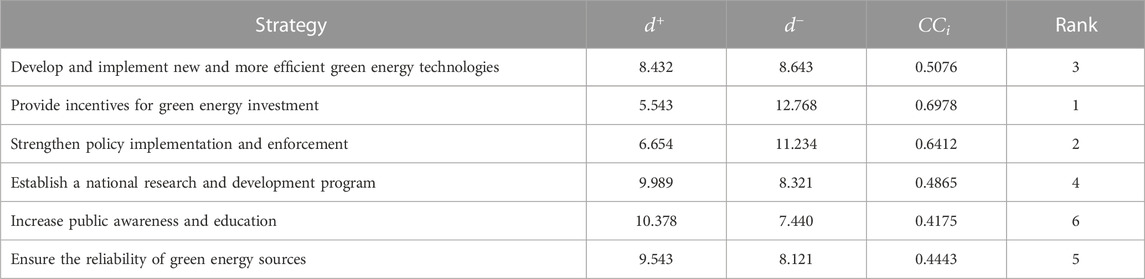
TABLE 9. Final ranking of multiple strategies.
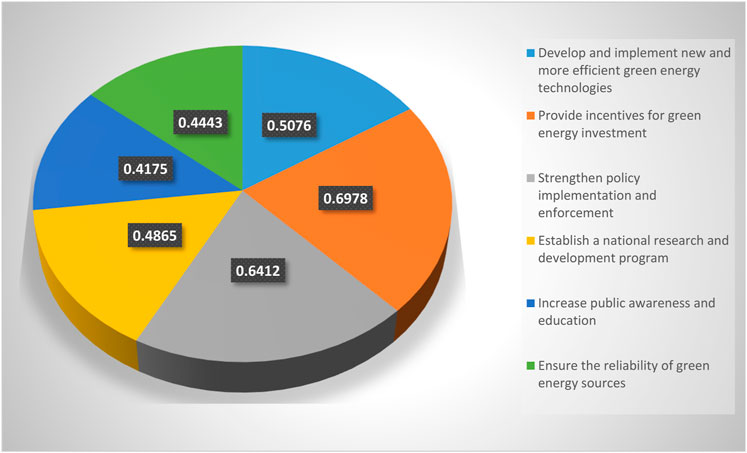
FIGURE 4. Ranking of strategies based on the highest CCi value.
The analysis using the fuzzy TOPSIS method will provide valuable insights into the most effective strategy for promoting green energy innovation and achieving sustainable development in China.
5.4 Discussion
To attain sustainable development and mitigate climate change, there is a need to transition toward green energy sources. However, this shift necessitates significant expenditures for research and development, as well as significant regulatory and policy adjustments. Policy restrictions are a relatively less important barrier, according to the fuzzy AHP research, with inconsistent rules and regulations being the most important sub-barrier. To get around this barrier, the study suggested that uniform policies and rules be put in place to encourage green energy innovation and offer a secure investment environment for green energy projects (Mirjat et al., 2017). Increasing public knowledge and education about green energy technology is essential for overcoming the public support barrier. We have suggested a mix of encouraging the use of green energy and raising public consciousness and education to get around this barrier. In order to deal with the inconsistent nature of RE sources and increase the dependability of the energy system, the research has also recommended making investments in energy storage technology (Zhang et al., 2016). It is crucial to recognize the connections and interactions between China’s constraints on green energy innovation and sustainable development. For instance, a lack of financing for green energy technology research and development may restrict the creation of new technologies, which may restrict the possibility of cost savings and improved efficiency (Mngumi et al., 2022). Inconsistent laws and regulations can lead to uncertainty for investors and difficulty obtaining funding for green energy projects (Solangi et al., 2021). We have been able to simulate the intricate relationships between choice criteria and alternative options using the fuzzy AHP and fuzzy TOPSIS methods. These methods have allowed us to conduct a thorough investigation of the challenges and solutions for building resilient energy systems in China.
The findings could have a big impact on how China and other countries make uniform policies. The suggested actions can help policymakers make choices that will advance green energy innovation and help the nation reach its sustainability objectives (Kamran, 2018). More private investment in green energy projects and research and development can be attracted, in particular, by establishing a green energy fund, offering tax benefits, and funding energy storage technology. A stable investment environment for green energy projects and support for the expansion of the green energy industry can be achieved by establishing uniform laws and regulations and enhancing policy implementation and enforcement (Baležentis and Streimikiene, 2017; Ali et al., 2023). In addition, raising public knowledge and understanding of green energy technologies can encourage public acceptance of and growth in the use of RE sources. In the end, these actions can help China establish a more sustainable and resilient energy system and lessen the effects of climate change.
6 Conclusion and implications
This study used the fuzzy AHP and fuzzy TOPSIS methods to assess the barriers to green energy innovation and policy strategies for a sustainable energy system in China. Based on the findings, the most important barriers, sub-barriers, and strategies have been identified and weighted in the evaluation process of decision-making. According to the fuzzy AHP results, funding constraints are crucial barriers to green energy innovation in China. The study suggested the creation of a green energy fund and tax breaks to promote more private investment in green energy projects in order to eliminate this barrier. Policy constraints are the second most important barrier. The study also suggested that uniform policies and rules be put in place to encourage green energy innovation and offer a secure investment environment for green energy projects. To overcome the barriers of public support, we have also recommended combining the provision of incentives for the use of green energy with an increase in public awareness and education. The intermittent nature of RE sources must be addressed, and the dependability of the energy system must be increased by making investments in energy storage technology. The suggested policy actions can help policymakers make choices that will advance green energy innovation and help the country reach its sustainability objectives.
6.1 Policy implications
The findings have important policy implications for China’s efforts to advance green energy innovation and sustainable development. The suggested actions can help guide policy choices that can boost public support for RE sources, encourage more private investment in green energy projects, and create a stable investment climate for green energy innovation.
• By offering tax benefits for green energy investments, tax incentives can also promote increased private investment in green energy projects.
• The government can establish and enforce policies and rules that encourage green energy innovation and provide fair playing conditions for green energy projects. Uniform laws and rules help lessen investor uncertainty and create a secure environment for green energy innovation.
• The government can offer financial incentives to individuals and companies that employ RE sources like solar and wind power. Public support for RE sources can be increased by raising awareness of green energy technology and educating the public about it.
• The suggested actions can help build a more robust and sustainable energy system and lessen the effects of climate change. The nation can minimize its carbon footprint and help the world transition to a more sustainable energy system by encouraging green energy innovation and lowering its dependency on fossil fuels.
The proposed regulatory changes will have a big impact on China’s efforts to advance green energy innovation and sustainable development. The government can use these policies to increase public support for renewable energy sources, encourage private investment in green energy projects, and foster a secure investment environment for green energy innovation.
6.2 Limitations and future research
The study has various drawbacks that could be resolved in future studies. First, since the analysis was limited to China, it is possible that the conclusions cannot be applied to other regions. In order to conduct a more thorough study of the barriers to green energy innovation, future research could broaden the scope of the analysis to include particular regions or areas in that country. In addition, the proposed solutions to barriers to green energy innovation were based on the opinions of experts and might not accurately represent the desires and concerns of other stakeholders. In the future, surveys or focus groups with these stakeholders could be used to gather their perspectives and develop further strategies to remove the barriers. Finally, the proposed initiatives ignored the larger social and environmental effects of green energy development in favor of boosting green energy innovation in China. Future studies could conduct a thorough sustainability analysis of green energy development, taking into account the effects on the economy, society, and environment.
Data availability statement
The raw data supporting the conclusion of this article will be made available by the authors, without undue reservation.
Author contributions
Methodology: DW and JL. Formal analysis: YL. Investigation: DW. Data collection: YL. Writing—original draft preparation: DW, JL, and YL. Writing—review and editing: JL and YL. Funding acquisition: JL. All authors listed have made a substantial, direct, and intellectual contribution to the work and approved it for publication. All authors contributed to the article and approved the submitted version.
Conflict of interest
The authors declare that the research was conducted in the absence of any commercial or financial relationships that could be construed as a potential conflict of interest.
Publisher’s note
All claims expressed in this article are solely those of the authors and do not necessarily represent those of their affiliated organizations, or those of the publisher, the editors, and the reviewers. Any product that may be evaluated in this article, or claim that may be made by its manufacturer, is not guaranteed or endorsed by the publisher.
References
Ali, K., Bakhsh, S., Ullah, S., Ullah, A., and Ullah, S. (2021). Industrial growth and CO2 emissions in vietnam: The key role of financial development and fossil fuel consumption. Environ. Sci. Pollut. Res. 28, 7515–7527. doi:10.1007/s11356-020-10996-6
Ali, K., Jianguo, D., and Kirikkaleli, D. (2023). How do energy resources and financial development cause environmental sustainability? Energy Rep. 9, 4036–4048. doi:10.1016/j.egyr.2023.03.040
Ali, K., Jianguo, D., and Kirikkaleli, D. (2022). Modeling the natural resources and financial inclusion on ecological footprint: The role of economic governance institutions. Evidence from ECOWAS economies. Resour. Policy 79, 103115. doi:10.1016/j.resourpol.2022.103115
Ali, T., Nahian, A. J., and Ma, H. (2020). A hybrid multi-criteria decision-making approach to solve renewable energy technology selection problem for Rohingya refugees in Bangladesh. J. Clean. Prod. 273, 122967. doi:10.1016/j.jclepro.2020.122967
Baležentis, T., and Streimikiene, D. (2017). Multi-criteria ranking of energy generation scenarios with Monte Carlo simulation. Appl. Energy 185, 862–871. doi:10.1016/j.apenergy.2016.10.085
Behzadian, M., Khanmohammadi Otaghsara, S., Yazdani, M., and Ignatius, J. (2012). A state-of the-art survey of TOPSIS applications. Expert Syst. Appl. 39, 13051–13069. doi:10.1016/j.eswa.2012.05.056
Cayir Ervural, B., Zaim, S., Demirel, O. F., Aydin, Z., and Delen, D. (2018). An ANP and fuzzy TOPSIS-based SWOT analysis for Turkey’s energy planning. Renew. Sustain. Energy Rev. 82, 1538–1550. doi:10.1016/j.rser.2017.06.095
Chel, A., and Kaushik, G. (2018). Renewable energy technologies for sustainable development of energy efficient building. Alex. Eng. J. 57, 655–669. doi:10.1016/j.aej.2017.02.027
Dolter, B., and Rivers, N. (2018). The cost of decarbonizing the Canadian electricity system. Energy Policy 113, 135–148. doi:10.1016/j.enpol.2017.10.040
Dong, F., Hua, Y., and Yu, B. (2018). Peak carbon emissions in China: Status, key factors and countermeasures-A literature review. Sustain 10, 2895. doi:10.3390/su10082895
Duan, F., Ji, Q., Liu, B. Y., and Fan, Y. (2018). Energy investment risk assessment for nations along China’s Belt & Road Initiative. J. Clean. Prod. 170, 535–547. doi:10.1016/j.jclepro.2017.09.152
Eckstein, D., and Hutfils, M. (2019). Global climate risk index 2019. Available at: https://www.germanwatch.org/sites/germanwatch.org/files/Global Climate Risk Index 2019_2.pdf.
Egli, F. (2020). Renewable energy investment risk: An investigation of changes over time and the underlying drivers. Energy Policy 140, 111428. doi:10.1016/j.enpol.2020.111428
Eia, (2021). Energy information administration 2021. https://www.eia.gov/outlooks/ieo/.
Eleftheriadis, I. M., and Anagnostopoulou, E. G. (2015). Identifying barriers in the diffusion of renewable energy sources. Energy Policy 80, 153–164. doi:10.1016/j.enpol.2015.01.039
Fthenakis, V., Mason, J. E., and Zweibel, K. (2009). The technical, geographical, and economic feasibility for solar energy to supply the energy needs of the US. Energy Policy 37. doi:10.1016/j.enpol.2008.08.011
Gogus, O., and Boucher, T. O. (1998). Strong transitivity, rationality and weak monotonicity in fuzzy pairwise comparisons. Fuzzy Sets Syst. 94, 133–144. doi:10.1016/S0165-0114(96)00184-4
Guo, Y., Xia, X., Zhang, S., and Zhang, D. (2018). Environmental regulation, government R & D funding and green technology innovation: Evidence from China provincial data. Sustain 10, 940. doi:10.3390/su10040940
Harjanne, A., and Korhonen, J. M. (2019). Abandoning the concept of renewable energy. Energy Policy 127, 330–340. doi:10.1016/j.enpol.2018.12.029
Irena, (2017). REthinking Energy 2017: Accelerating the global energy transformation. https://www.irena.org/publications/2017/jan/rethinking-energy-2017-accelerating-the-global-energy-transformation.
Ishfaq, S., Ali, S., and Ali, Y. (2018). Selection of optimum renewable energy source for energy sector in Pakistan by using MCDM approach. Process Integr. Optim. Sustain. 2, 61–71. doi:10.1007/s41660-017-0032-z
Jiang, K., Ashworth, P., Zhang, S., Liang, X., Sun, Y., and Angus, D. (2020). China’s carbon capture, utilization and storage (CCUS) policy: A critical review. Renew. Sustain. Energy Rev. 119, 109601. doi:10.1016/j.rser.2019.109601
Kamran, M. (2018). Current status and future success of renewable energy in Pakistan. Renew. Sustain. Energy Rev. 82, 609–617. doi:10.1016/j.rser.2017.09.049
Kulkarni, S. H., Jirage, B. J., and Anil, T. R. (2017). Alternative energy options for India—a multi-criteria decision analysis to rank energy alternatives using analytic Hierarchy process and fuzzy logic with an emphasis to distributed generation. Distrib. Gener. Altern. Energy J. 32, 29–55. doi:10.1080/21563306.2017.11869108
Kutlu, L. (2020). Greenhouse gas emission efficiencies of world countries. Int. J. Environ. Res. Public Health 17, 8771–8811. doi:10.3390/ijerph17238771
Lai, X. (2020). “Green technology innovations development in China: Trend and application,” in Innovation in global green technologies 2020 (London, UK: IntechOpen). doi:10.5772/intechopen.89599
Li, Z. Z., Li, R. Y. M., Malik, M. Y., Murshed, M., Khan, Z., and Umar, M. (2021). Determinants of carbon emission in China: How good is green investment? Sustain. Prod. Consum. 27, 392–401. doi:10.1016/j.spc.2020.11.008
Liu, J., Yang, Q., Zhang, Y., Sun, W., and Xu, Y. (2019). Analysis of CO 2 emissions in China’s manufacturing industry based on extended logarithmic mean division index decomposition. Sustain 11, 226. doi:10.3390/su11010226
Mateo, J. R. S. C. (2012). Multi-criteria analysis in the renewable energy industry. London, UK: Springer. doi:10.1007/978-1-4471-2346-0
Mirjat, N. H., Uqaili, M. A., Harijan, K., Valasai, G. D., Shaikh, F., and Waris, M. (2017). A review of energy and power planning and policies of Pakistan. Renew. Sustain. Energy Rev. 79, 110–127. doi:10.1016/j.rser.2017.05.040
Mngumi, F., Shaorong, S., Shair, F., and Waqas, M. (2022). Does green finance mitigate the effects of climate variability: Role of renewable energy investment and infrastructure. Environ. Sci. Pollut. Res. 29, 59287–59299. doi:10.1007/s11356-022-19839-y
Pohekar, S. D., and Ramachandran, M. (2004). Application of multi-criteria decision making to sustainable energy planning - a review. Renew. Sustain. Energy Rev. 8, 365–381. doi:10.1016/j.rser.2003.12.007
Qiu, H., Yan, J., Lei, Z., and Sun, D. (2018). Rising wages and energy consumption transition in rural China. Energy Policy 119, 545–553. doi:10.1016/j.enpol.2018.04.053
Rathore, N., Debasis, K., and Singh, M. P. (2021).Selection of optimal renewable energy resources using TOPSIS-Z methodology Lecture Notes in Electrical Engineering, Springer, Berlin, Germany, 967–977. doi:10.1007/978-981-15-5341-7_73
Saaty, T. L. (1995). Transport planning with multiple criteria - the analytic Hierarchy process applications and progress review. J. Adv. Transp. 29, 81–126. doi:10.1002/atr.5670290109
Sen, S., and Ganguly, S. (2017). Opportunities, barriers and issues with renewable energy development – a discussion. Renew. Sustain. Energy Rev. 69, 1170–1181. doi:10.1016/j.rser.2016.09.137
Si, J., Marjanovic-Halburd, L., Nasiri, F., and Bell, S. (2016). Assessment of building-integrated green technologies: A review and case study on applications of multi-criteria decision making (MCDM) method. Sustain. Cities Soc. 27, 106–115. doi:10.1016/j.scs.2016.06.013
Siksnelyte, I., Zavadskas, E. K., Bausys, R., and Streimikiene, D. (2019). Implementation of EU energy policy priorities in the Baltic Sea Region countries: Sustainability assessment based on neutrosophic MULTIMOORA method. Energy Policy 125, 90–102. doi:10.1016/j.enpol.2018.10.013
Solangi, Y. A., Longsheng, C., and Shah, S. A. A. (2021). Assessing and overcoming the renewable energy barriers for sustainable development in Pakistan: An integrated AHP and fuzzy TOPSIS approach. Renew. Energy 173, 209–222. doi:10.1016/j.renene.2021.03.141
Sorrell, S. (2015). Reducing energy demand: A review of issues, challenges and approaches. Renew. Sustain. Energy Rev. 47, 74–82. doi:10.1016/j.rser.2015.03.002
Storch de Gracia, M. D., Moya Perrino, D., and Llamas, B. (2019). Multicriteria methodology and hierarchical innovation in the energy sector: The Project Management Institute approach. Manag. Decis. 57, 1286–1303. doi:10.1108/MD-07-2017-0676
Suharevska, K., and Blumberga, D. (2019). Progress in renewable energy technologies: Innovation potential in Latvia. Environ. Clim. Technol. 23, 47–63. doi:10.2478/rtuect-2019-0054
Terrados, J., Almonacid, G., and Hontoria, L. (2007). Regional energy planning through SWOT analysis and strategic planning tools. Renew. Sustain. Energy Rev. 11, 1275–1287. doi:10.1016/j.rser.2005.08.003
Versal, N., and Sholoiko, A. (2022). Green bonds of supranational financial institutions: On the road to sustainable development. Invest. Manag. Financial Innovations 19, 91–105. doi:10.21511/imfi.19(1).2022.07
Vidadili, N., Suleymanov, E., Bulut, C., and Mahmudlu, C. (2017). Transition to renewable energy and sustainable energy development in Azerbaijan. Renew. Sustain. Energy Rev. 80, 1153–1161. doi:10.1016/j.rser.2017.05.168
Walmsley, T. G., Walmsley, M. R. W., and Atkins, M. J. (2018). Energy return on energy and carbon investment of wind energy farms: A case study of New Zealand. J. Clean. Prod. 167, 885–895. doi:10.1016/j.jclepro.2017.08.040
Wu, Y., Xu, C., and Zhang, T. (2018). Evaluation of renewable power sources using a fuzzy MCDM based on cumulative prospect theory: A case in China. Energy 147, 1227–1239. doi:10.1016/j.energy.2018.01.115
Xuan, D., Jiang, X., and Fang, Y. (2023). Can globalization and the green economy hedge natural resources? Functions of population growth and financial development in BRICS countries. Resour. Policy 82, 103414. doi:10.1016/j.resourpol.2023.103414
Zadeh, L. A. (1978). Fuzzy sets as a basis for a theory of possibility. Fuzzy Sets Syst. 1, 3–28. doi:10.1016/0165-0114(78)90029-5
Zafar, U., Ur Rashid, T., Khosa, A. A., Khalil, M. S., and Rahid, M. (2018). An overview of implemented renewable energy policy of Pakistan. Renew. Sustain. Energy Rev. 82, 654–665. doi:10.1016/j.rser.2017.09.034
Zameer, H., and Wang, Y. (2018). Energy production system optimization: Evidence from Pakistan. Renew. Sustain. Energy Rev. 82, 886–893. doi:10.1016/j.rser.2017.09.089
Zhang, C., Wang, Q., Zeng, S., Baležentis, T., Štreimikienė, D., Ališauskaitė-Šeškienė, I., et al. (2019a). Probabilistic multi-criteria assessment of renewable micro-generation technologies in households. J. Clean. Prod. 212, 582–592. doi:10.1016/j.jclepro.2018.12.051
Zhang, D., Cao, H., and Zou, P. (2016). Exuberance in China’s renewable energy investment: Rationality, capital structure and implications with firm level evidence. Energy Policy 95, 468–478. doi:10.1016/j.enpol.2015.12.005
Zhang, F., and Gallagher, K. S. (2016). Innovation and technology transfer through global value chains: Evidence from China’s PV industry. Energy Policy 94, 191–203. doi:10.1016/j.enpol.2016.04.014
Keywords: green energy, innovation, energy system, sustainable development, fuzzy AHP, fuzzy TOPSIS
Citation: Wang D, Li J and Liu Y (2023) Evaluating barriers and strategies to green energy innovations for sustainable development: developing resilient energy systems. Front. Energy Res. 11:1201692. doi: 10.3389/fenrg.2023.1201692
Received: 06 April 2023; Accepted: 04 May 2023;
Published: 15 May 2023.
Edited by:
Yasir Ahmed Solangi, Jiangsu University, ChinaReviewed by:
Rong Wang, Nanjing Xiaozhuang University, ChinaGhulam Muhammad, Bahria University, Karachi, Pakistan
Kishwar Ali, Jiangsu University, China
Copyright © 2023 Wang, Li and Liu. This is an open-access article distributed under the terms of the Creative Commons Attribution License (CC BY). The use, distribution or reproduction in other forums is permitted, provided the original author(s) and the copyright owner(s) are credited and that the original publication in this journal is cited, in accordance with accepted academic practice. No use, distribution or reproduction is permitted which does not comply with these terms.
*Correspondence: Jie Li, MTAxMDE0QGhyYmN1LmVkdS5jbg==