 S. M. Mabrouk1
 Tarek A. Mahmoud
 A. E. Kabeel
 A. S. Rashed
 Fadl A. Essa
- 1Department of Physics and Engineering Mathematics, Faculty of Engineering, Zagazig University, Zagazig, Egypt
- 2Mechanical Power Engineering Department, Faculty of Engineering, Tanta University, Tanta, Egypt
- 3Faculty of Engineering, Delta University for Science and Technology, Al Mansurah, Egypt
- 4Department of Mechanical Engineering, Islamic University of Madinah, Medina, Saudi Arabia
- 5Mechanical Engineering Department, Faculty of Engineering, Kafrelsheikh University, Kafrelsheikh, Egypt
Introduction: Nanofluids, hybrid nanofluid possesses thermophysical features that boost the fluid performance. This research work is motivated by the utilization of water solar collectors that incorporate non-Newtonian, power-law hybrid nanofluid in a three-dimensional model, considering the two-phase model.
Method: The primary objective of this study is to transform the governing equations of the flow model into a set of ordinary differential equations by employing the three-parameters group technique. Based on the innovative discoveries, two models incorporating new associated functions have been successfully developed for two distinct scenarios characterized by the power-law index, n. The impact of physical factors on the velocity profile, temperature distribution, concentration field, and entropy output of the system is clearly illustrated through a variety of graphs.
Results: The results indicated that the inclination angle of 20° had the best thermal characteristics compared to other inclinations. The entropy generation reached its maximum value at temperature difference of 13 K due to irreversibility of the system, which indicates that the system is more efficient.
Discussion: Furthermore, the increasing percentage in Nusselt number is predicted to be 28.18% when the Prandtl number is taken a range. The Sherwood number enhanced up to 18.61% with a range of Brownian motion. A quantitative comparison is conducted between the present results and the literature in order to validate the superior efficiency of the used method.
1 Introduction
Solar energy is widely considered to be the most feasible solution for meeting the energy requirements of technical and industrial applications through the use of renewable sources. The world energy needs can be satisfied by solar energy that the Earth is exposed to. Solar radiation generates electricity or heat through chemical solar energy. Solar energy is well-recognized for its significant advantages, therefore making it suitable for various applications, including the utilization of solar collectors (SCs). Referring to Prado et al. (2016), a solar collector is a system comprising a heat exchanger, where solar radiation is absorbed and then converted into heat, which then transfers to a base fluid like water (H2O) (Kalogirou, 2004; Ajeena et al., 2022). The base fluid travels through solar collectors to generate electrical energy for industrial applications. Industrial applications are space heating, refrigeration, and service hot water (Bellos et al., 2016). Solar energy application is classified into two categories: concentrated solar power and photovoltaics. The photovoltaic (PV) system utilizes solar cells to capture and convert solar radiation into electrical energy in a prompt manner (Jamshed et al., 2021a). The primary applications of photovoltaic systems encompass public lighting, such as billboards, highways, and parking lots (Slimene and Arbi Khlifi, 2020). Additionally, PV systems find utility in solar water pumps and the amplification of signals in wireless communication networks (Cano et al., 2021). On the other hand, concentrated solar power (CSP) systems utilize mirrors (reflectors and lenses) to collect Sun’s rays. As a result of this, a liquid substance is heated, causing a heat engine to work. High-power generation and decreases in the energy demand, consumption, and cost are only a few of the ways in which thermal energy storage technologies contribute to the efficiency of CSP systems (Freund et al., 2021).
Several nanoparticles are mixed together in a single fluid to create a hybrid nanofluid. Recently, the study of hybrid nanofluids have been deeply investigated to replace conventional base fluids (Qureshi, 2021; Jamshed et al., 2022a; Imran et al., 2022; Shahzad et al., 2022). A considerable proportion of researchers choose to focus their attention on the examination of heat transmission in hybrid nanofluids. The wide range of applications encompasses gas turbines, thermoplastic coatings, condensation, medical equipment, and computer storage systems (Dawar et al., 2022). Hybrid nanofluids (HNFs) exhibit high thermal conductivity that is helpful in improving the Solar System efficiency and optical properties (Tiwari et al., 2021). In contrast, magnetohydrodynamics (MHD) is an interdisciplinary field that integrates principles from the electromagnetic theory and fluid mechanics. The utilization of magnetohydrodynamics finds its application in diverse technical and industrial sectors, including but not limited to the petrol industry, MHD power generators, nuclear reactors, the control in aerodynamics, and magnetic mixers (Sheikholeslami et al., 2016). The investigation conducted by Imran focused on the analysis of the two-dimensional unsteady hybrid nanofluid around a deformable and horizontally moving porous plate (Imran et al., 2022). Jamshed et al. (2022a) studied unsteady hybrid nanofluids over a parabolic trough solar collector to enhance the activity of a solar aircraft. Dawar et al. (2022) adopted the homotopy analysis method to analyze the flow of the nanofluid for an inclined thin layer which is subjected to incident solar energy. Aljohani et al. (2023) employed a model to elucidate the behavior of an absorption solar collector. Their results led to the fact that an increase in the inclination angle γ resulted in a reduction of the velocity profile. Shahzad et al. (2022) used mathematical techniques to investigate the heat transmission phenomena in a solar-powered ship. Ghasemi and Hatami (2021) analyzed the effect of solar radiative energy on the two-dimensional model of a nanofluid around a sheet. Using a solar collector plate, Farooq et al. (2022) investigated the bioconvection flow performances of viscoelastic nanofluids in three dimensions (3D). Munir et al. (Farooq et al., 2020) presented the entropy generation of the 3D flow of the nanofluid over a moving plate subjected to an induced magnetic field. According to Sajid et al. (2021), solar aircraft wings show better performance in terms of heat production, viscous dissipative flowing, and thermal radiation. Ibrahim and Gizewu (2023) introduced an analysis of entropy generation over a curved stretching surface.
Krishnamurthy et al. (2016) investigated the effects of chemical reaction and radiation on nanofluids through a horizontal stretching sheet. Gireesha et al. concentrated, in his study, on the constant flow of nanofluids over a stretched surface in a two-dimensional setting, considering the influence of a magnetic field (Gireesha et al., 2016a). In another work, Mahanthesh et al. (2017) used the Eyring–Powell fluid to analyze the unsteady flow in a three-dimensional overheated surface in the existence of Joule heating. In their study, Mahanthesh et al. (2016) utilized a model to investigate the characteristics of the MHD nanofluid over a stretching surface, considering the impact of viscous dissipation. Gireesha et al. (2016b) examined the influence of Hall current and the thermal effect on the heat transfer characteristics of a dusty viscous fluid flowing over a permeable stretched sheet. Madhu et al. (2022) employed the finite element method to investigate the thermal analysis of an Eyring–Powell fluid within a microchannel. Khan et al. (2018) employed a two-dimensional model to obtain the entropy generation of the nanofluid flow on a stretching sheet in the existence of the magnetic field. Rehman et al. (2017) examined the MHD nanofluid in the 3D flow between the horizontal plates. Ijaz Khan et al. (2018) defined the entropy generation of the convective nanoliquid flow around a permeable surface. The same authors studied the heat and mass transfer of the Maxwell fluid toward the stretching plate in Khan et al. (2017a). Javed et al. (2018) used the shooting method to analyze the axisymmetric flow of a fluid over a cylinder. Azam et al., 2019) conducted numerical simulations to investigate the characteristics of the unsteady MHD fluid of a nanofluid subjected to thermal radiation. Rashed et al. (2022a) analyzed the axisymmetric forced flow of the
Ghadikolaei et al. (2018) obtained some results concerning the increase in the inclination angle which causes the decrease in the nanofluid velocity and the temperature profile to rise. Jamshed et al. (2021b) stated that when the power-law index
This interest in a solar collector is because of its several applications, like in a solar power ship, collector storage, aircraft wings, solar furnaces, and thermal power systems (Kalogirou, 2004; Afzal and Aziz, 2016; Jamshed and Aziz, 2018). The non-Newtonian fluid has many applications, like biomedical flows, lubrication, fluid friction, and central cooling and heating systems (Hoyt et al., 1999). Furthermore, the hybrid nanofluid has various practical, technical, and technological uses, including its use in radiator systems, nuclear systems, and the cooling of electronic components (Jamil et al., 2020).The hybrid nanofluid incorporates copper (Cu) and ferro (Fe3O4) nanoparticles suspended in a water (H2O) base fluid. Consequently, this research is more useful for the field of heating water, heat transfer, and thermal energy storage. Based on the aforementioned literature review (Afzal and Aziz, 2016; Jamshed and Aziz, 2018; Jamshed et al., 2021b; Farooq et al., 2022), the present study is focused on investigating the thermal and entropy behavior of a three-dimensional flow of a hybrid nanofluid within a solar collector, specifically under the influence of a magnetic field. The cases of operation are obtained by considering the effect of the power-law index. Therefore, this study could improve industrial production, particularly in a solar energy collector.
The novelty of the present study involves the following:
1) Obtaining two models with new related functions according to the power-law index
2) Using a two-phase model of nanoparticle diffusion instead of a conventional single-phase model.
3) Using the data to fine-tune the entropy production parameters, the system’s performance is enhanced.
2 Mathematical formulation
This study focuses on conducting a mathematical analysis of a non-homogeneous hybrid nanofluid within a solar collector. Owing to this study, it is assumed that the laminar boundary layer exhibits three-dimensional characteristics, is in an unstable condition, and possesses non-Newtonian behavior. Moreover, the inclusion of thermophoresis and Brownian motion is considered in order to address the limitations to the single-phase model. In order to optimize flow regulation, an external magnetic field has been implemented in the z-direction. The provided diagram, shown in Figure 1, illustrates the geometric configuration of the model. The mathematical model for the flow can be expressed by the following formula (Bhatti et al., 2016; Sheikholeslami and Ganji, 2016; Sheikholeslami and Rokni, 2017; Ghobadi and Hassankolaei, 2019; Jamshed et al., 2021c; Dawar et al., 2022; Algehyne et al., 2023; Sharma et al., 2023):
where
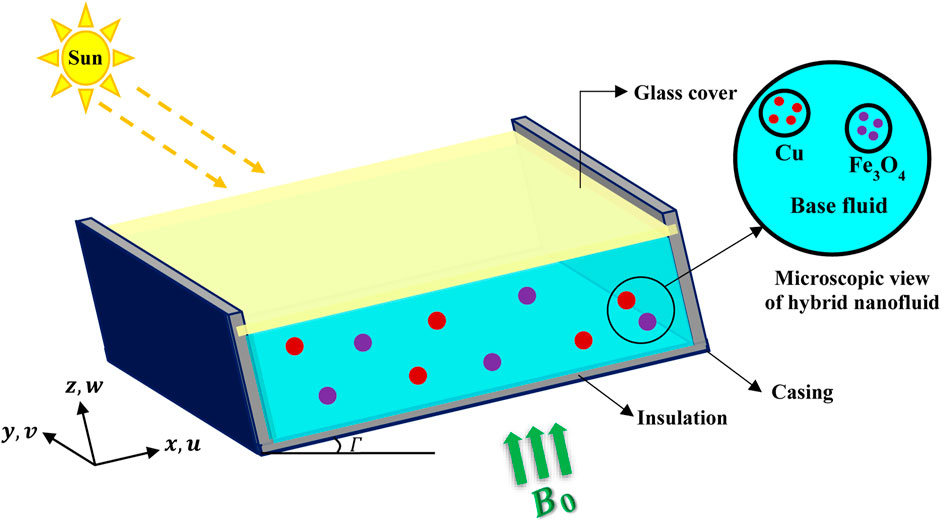
FIGURE 1. Physical representation of the study.
One of the typical solar collectors is used in this research, and the dimensions are given hereafter in Table 1 (Lakhdar et al., 2019; Dhaundiyal and Gebremicheal, 2022).
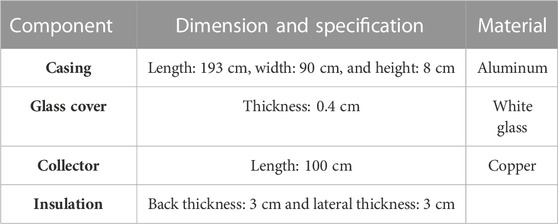
TABLE 1. Dimensions and materials of the water solar collector.
The velocity components and temperature in the normalized form are introduced as follows (Sojoudi et al., 2014):
As a result, Eqs 1–5 are rewritten as follows:
The related boundary conditions are as follows:
3 The group transformation method in three parameters
By employing group transformation, we proceed to examine the system of Equations 9–13. Upon a closer examination of the similarities, the governing PDEs undergo a transformation, resulting in a set of ODEs. One of the main benefits of the GTM approach is its ability to efficiently convert systems of PDEs with varying numbers of variables into systems of ODEs.
3.1 Group systematic formulation of the system
The definition of the group containing three parameters is given by the following:
where the symbol, S, refers to the variables of the system,
3.2 Invariance analysis of the system
The transformation of Equation 9,
takes the form of equivalence, where
Substituting (16) and (17) into (18) leads to the following:
which is simplified as follows:
The invariance of (9) reveals that
Similarly, Eq. 10 can be transformed into the following:
Substituting (16) and (17) into (22) reveals the following:
Simplifying Eq. 23 implies the following:
The invariance of Eq. 10 reveals that
Similarly, Eqs 11–13 can be transformed into the following:
The invariance of Eqs 11–13 implies the following:
The invariance of boundary conditions shows the following:
At the end of this analysis, the group of invariant transformations of systems (9)–(13) can be introduced in the following form:
where
3.3 The complete set of the invariant system
In this section, ODEs are derived from the governing equation by applying the Morgan theorem. Extending Morgan’s theorem (Moran and Gaggioli, 1969) results in achieving the invariant transformations of the system variables
where
3.3.1. Invariant transformation of the independent variables: x, y, z, and t
The transformation of the independent variables
where
By employing the aforementioned transformations, the system of Eqs. 9–13 can be simplified to the subsequent system:
The functions
Two cases could be analyzed as follows:
Case-1:
As a result of this, the functions will be as follows:
where a, b,
Case-2:
The functions take the following form:
From the obtained results in (50), the systems of (39)–(43) will be as follows:
with the related boundary conditions
where the aforementioned parameters are the magnetic parameter, M; power-law index,
The non-dimensional forms of the physical quantities are the Nusselt number, skin friction, and the Sherwood number, as shown as follows (Jamshed et al., 2021c; Jamshed et al., 2021d):
After that, the following correlations between the nanoparticle concentration in the base fluid and the hybrid nanofluid parameters are presented (Jamshed et al., 2022a):
Employing the MATLAB package, the obtained system of ODEs (45)–(49) is solved numerically with the same conditions as in (56). First, let
Using Eq. 60, we find the following:
with the initial conditions
4 Analysis of entropy generation
The entropy outcome of the mathematical model can be characterized as follows (Farooq et al., 2020; Sahoo and Nandkeolyar, 2021):
The entropy generation non-dimensional form,
Entropy generation in the dimensionless form has been rewritten based on Eqs 63 and 64, as demonstrated in the subsequent expression:
where diffusive variable
5 Results and discussion
Hereafter, the current model of the hybrid nanofluid flow inside water solar collectors is analyzed by using the GTM method. Two different novel models are obtained at two different cases of the power-law index
The applications of (Cu) and (Fe3O4) effective nanoparticles are demonstrated in solar thermal collectors, nanotechnology, and ferrofluids due to their physicochemical properties, such as high magnetic susceptibility and chemical stability (Jamshed and Aziz, 2018; Nezafat and Nasrollahzadeh, 2021; Nguyen et al., 2021). The properties of the (H2O) base fluid and (Cu and Fe3O4) nanoparticles are shown in Table 2 (Jamshed and Aziz, 2018).
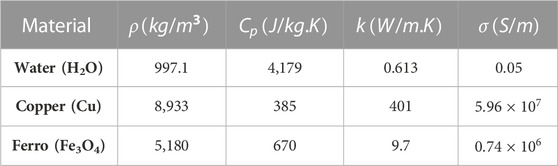
TABLE 2. Thermophysical properties of H2O, Cu, and Fe3O4.
The accuracy of the used method is assessed as shown in Figure 2, which presents a comparison between our results and the results reported by Khan et al. (2015). Validation has been performed in a similar and limiting case as in Khan et al. (2015).These results have been achieved for the 3-D Newtonian flow under the influence of solar radiation, thermophoretic, and Brownian motion. As seen in Figure 2, the impact of the Prandtl number (Pr = 7) on the temperature profile is performed at
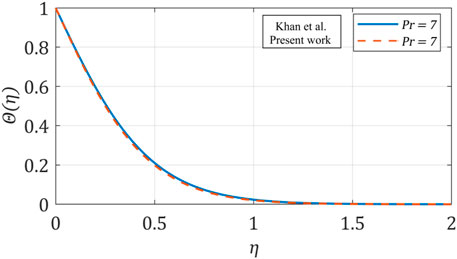
FIGURE 2. Comparison of the temperature profile between the present work with Khan et al. (2015).
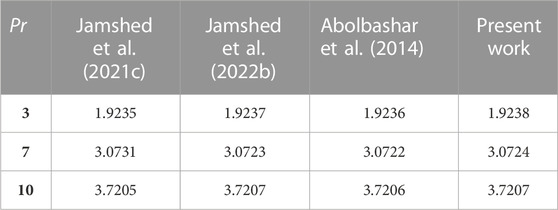
TABLE 3. Comparison of the Nusselt number values with variant
According to results in Figure 2 and Table 3, the current examination agrees with the published results.
Table 4 presents the quantitative values of skin friction, Nusselt number, and the Sherwood number.
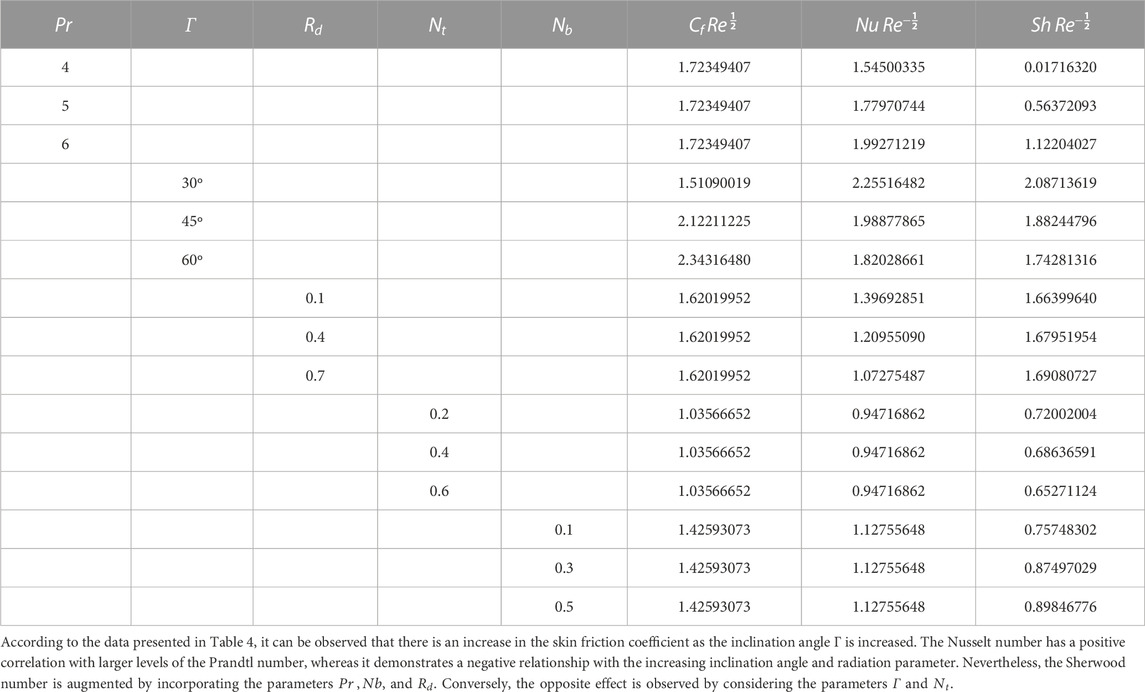
TABLE 4. Numerical values of the skin friction coefficient, Sherwood number, and the Nusselt number for different values of
5.1 Influence of Prandtl number
Figures 3A, B demonstrates the influence of the Prandtl number on the fluid’s characteristics within a range
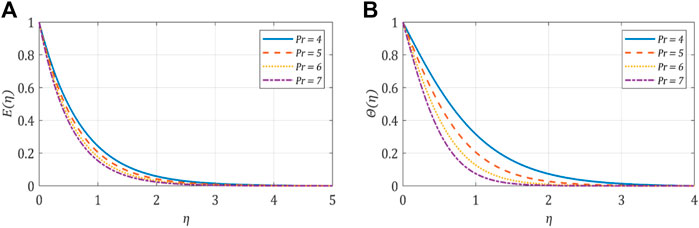
FIGURE 3. (A) Velocity profile against the Prandtl number; (B) temperature profile against the Prandtl number.
5.2 Effect of the magnetic field, M
The variation in fluid characteristics against the magnetic parameter
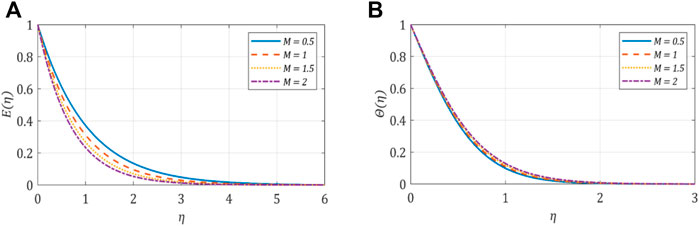
FIGURE 4. (A) Velocity profile against the magnetic parameter; (B) temperature profile against the magnetic parameter.
5.3 Effect of the power-law index, n
The performance of
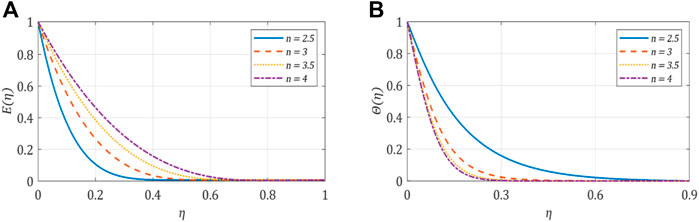
FIGURE 5. (A) Velocity profile against the power-law index; (B) temperature profile against the power-law index.
5.4 Effect of the inclination angle, Γ
The influence of the plate inclination from
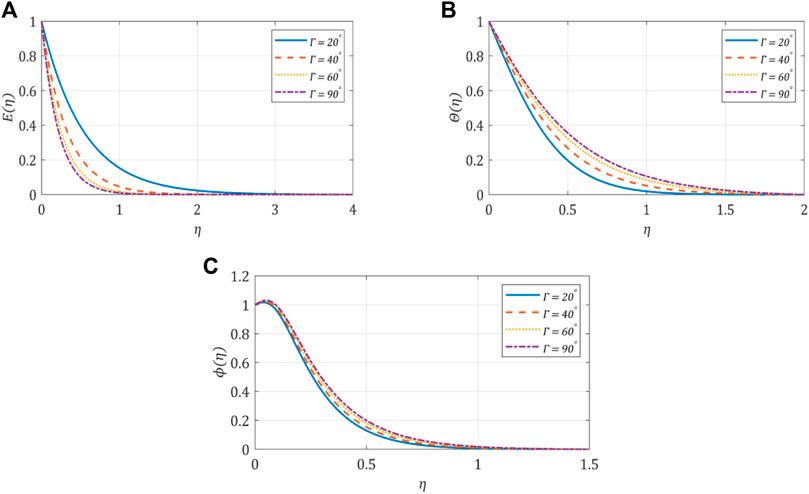
FIGURE 6. (A) Velocity profile against the inclined angle; (B) temperature profile against the inclined angle; (C) concentration profile against the inclined angle.
5.5 Effect of the radiation parameter, Rd
The thermal boundary layer thickness increases as the temperature of the hybrid nanofluid increases. Increasing
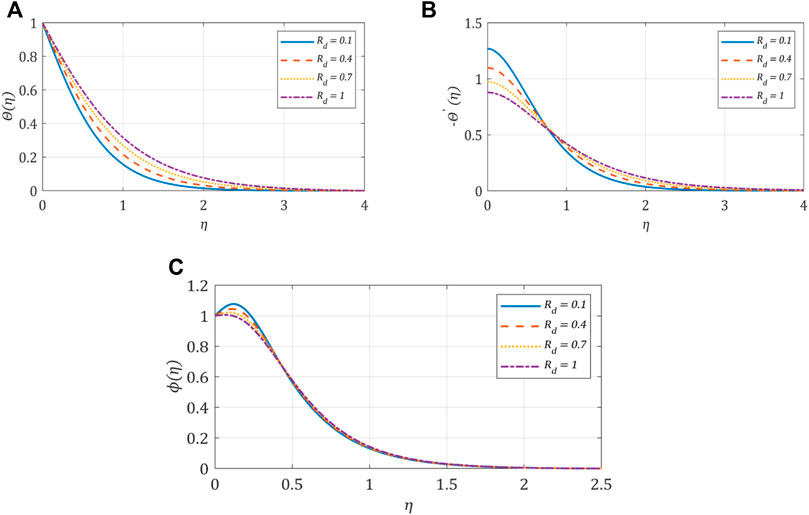
FIGURE 7. (A) Temperature profile against the radiation parameter; (B) heat flux profile against the radiation parameter; (C) concentration profile against the radiation parameter.
5.6 Effect of Brownian motion and the thermophoresis parameter, Nt
Figures 8, 9 are plotted to examine the effects in the fluid characteristics for a range of Brownian motion

FIGURE 8. Concentration profile against the Brownian motion parameter.
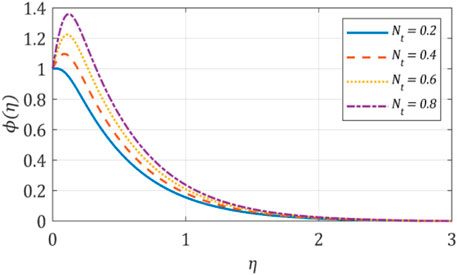
FIGURE 9. Concentration profile against the thermophoresis parameter.
5.7 Effect of the nanoparticle ratio, γφ
The hybrid nanofluid contains the blend of two nanoparticles (NPs), including iron oxide
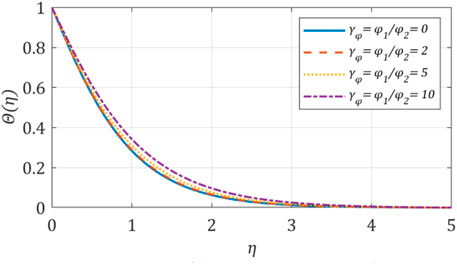
FIGURE 10. Temperature profile against the nanoparticle ratio parameter.
5.8 Effect of the studied parameters on the entropy output, NG
Entropy generation
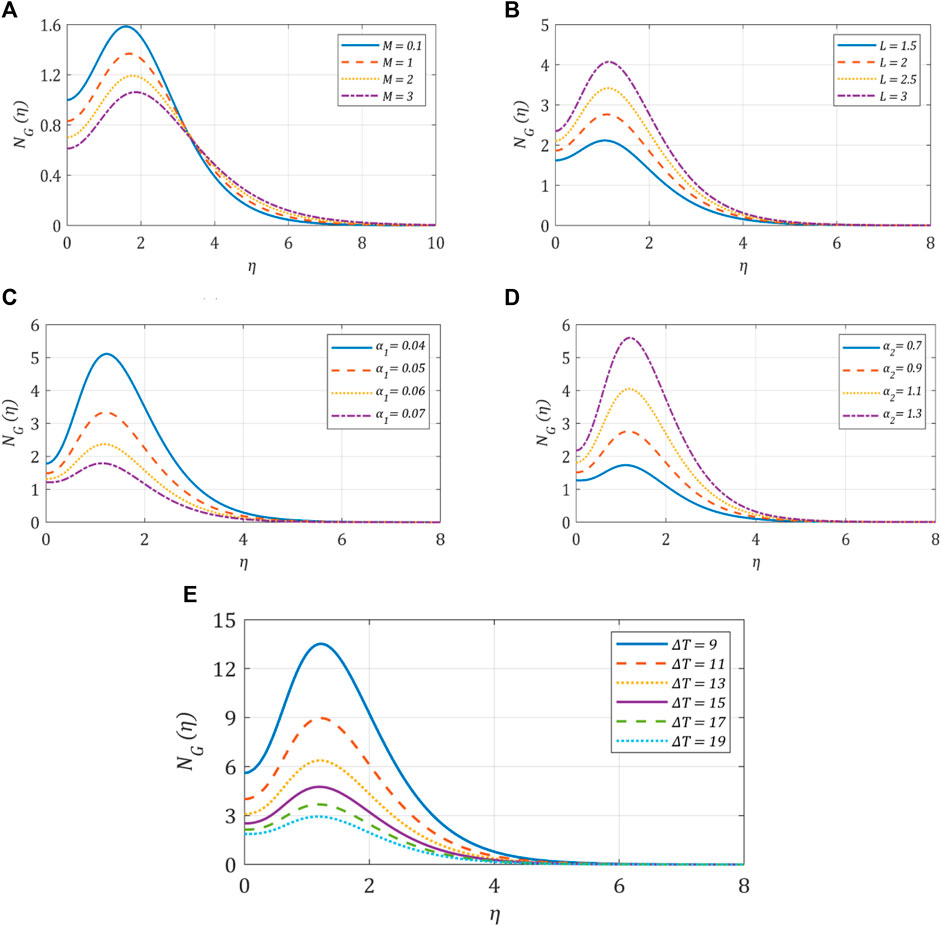
FIGURE 11. Variation in entropy for different studied parameters: (A) entropy against the magnetic parameter; (B) entropy against the diffusive variable; (C) entropy against the temperature ratio; (D) entropy against the concentration ratio; (E) entropy against the temperature difference.
6 Conclusion
In this paper, the GTM method is exploited to analyze the hybrid nanofluid behavior in a solar collector with an unsteady three-dimensional flow. A summary of the obtained results is listed as follows:
• Enhancing the values of the power-law index, n, results in increasing the fluid velocity, which decreases with the Prandtl number
• The temperature field exhibits an enhancement when the values of M,
• An increase in the inclination angle and thermophoresis parameter
• The increase in entropy generation is directly proportional to the increase in diffusivity length (
• Skin friction reached the percentage of 54.96% when the inclination angle ranges from
Data availability statement
The original contributions presented in the study are included in the article/Supplementary Material; further inquiries can be directed to the corresponding author.
Author contributions
All authors listed have made a substantial, direct, and intellectual contribution to the work and approved it for publication.
Conflict of interest
The authors declare that the research was conducted in the absence of any commercial or financial relationships that could be construed as a potential conflict of interest.
Publisher’s note
All claims expressed in this article are solely those of the authors and do not necessarily represent those of their affiliated organizations, or those of the publisher, the editors, and the reviewers. Any product that may be evaluated in this article, or claim that may be made by its manufacturer, is not guaranteed or endorsed by the publisher.
References
Abolbashari, M. H., Freidoonimehr, N., Nazari, F., and Rashidi, M. M. (2014). Entropy analysis for an unsteady mhd flow past a stretching permeable surface in nano-fluid. Powder Technol. 267, 256–267. doi:10.1016/j.powtec.2014.07.028
Afzal, K., and Aziz, A. (2016). Transport and heat transfer of time dependent mhd slip flow of nanofluids in solar collectors with variable thermal conductivity and thermal radiation. Results Phys. 6, 746–753. doi:10.1016/j.rinp.2016.09.017
Ajeena, A. M., Víg, P., and Farkas, I. (2022). A comprehensive analysis of nanofluids and their practical applications for flat plate solar collectors: fundamentals, thermophysical properties, stability, and difficulties. Energy Rep. 8, 4461–4490. doi:10.1016/j.egyr.2022.03.088
Alaidrous, A. A., and Eid, M. R. (2020). 3-d electromagnetic radiative non-Newtonian nanofluid flow with joule heating and higher-order reactions in porous materials. Sci. Rep. 10 (1), 14513. doi:10.1038/s41598-020-71543-4
Algehyne, E. A., Haq, I., Raizah, Z., Alduais, F. S., Saeed, A., and Galal, A. M. (2023). A passive control strategy of a micropolar hybrid nanofluid flow over a convectively heated flat surface. J. Magnetism Magnetic Mater. 567, 170355. doi:10.1016/j.jmmm.2023.170355
Aljohani, A. F., Ebaid, A., Aly, E. H., Pop, I., Abubaker, A. O. M., and Alanazi, D. J. (2023). Explicit solution of a generalized mathematical model for the solar collector/photovoltaic applications using nanoparticles. Alexandria Eng. J. 67, 447–459. doi:10.1016/j.aej.2022.12.044
Azam, M., Shakoor, A., Rasool, H. F., and Khan, M. (2019). Numerical simulation for solar energy aspects on unsteady convective flow of mhd cross nanofluid: a revised approach. Int. J. Heat Mass Transf. 131, 495–505. doi:10.1016/j.ijheatmasstransfer.2018.11.022
Bellos, E., Tzivanidis, C., Antonopoulos, K. A., and Gkinis, G. (2016). Thermal enhancement of solar parabolic trough collectors by using nanofluids and converging-diverging absorber tube. Renew. Energy 94, 213–222. doi:10.1016/j.renene.2016.03.062
Bhatti, M. M., Abbas, T., Rashidi, M. M., and Ali, M. E. (2016). Numerical simulation of entropy generation with thermal radiation on mhd carreau nanofluid towards a shrinking sheet. Entropy 18, 200. doi:10.3390/e18060200
Cano, J. M., Martin, A. D., Herrera, R. S., Vazquez, J. R., and Ruiz-Rodriguez, F. J. (2021). Grid-connected pv systems controlled by sliding via wireless communication. Energies 14, 1931. doi:10.3390/en14071931
Dawar, A., Wakif, A., Thumma, T., and Shah, N. A. (2022). Towards a new mhd non-homogeneous convective nanofluid flow model for simulating a rotating inclined thin layer of sodium alginate-based iron oxide exposed to incident solar energy. Int. Commun. Heat Mass Transf. 130, 105800. doi:10.1016/j.icheatmasstransfer.2021.105800
Dhaundiyal, A., and Gebremicheal, G. H. (2022). The effect of psychrometry on the performance of a solar collector. Environ. Sci. Pollut. Res. 29 (9), 13445–13458. doi:10.1007/s11356-021-16353-5
Farooq, U., Munir, S., Malik, F., Ahmad, B., and Lu, D. (2020). Aspects of entropy generation for the non-similar three-dimensional bioconvection flow of nanofluids. AIP Adv. 10. doi:10.1063/1.5142877
Farooq, U., Waqas, H., Shah, Z., Kumam, P., and Deebani, W. (2022). On unsteady 3d bio-convection flow of viscoelastic nanofluid with radiative heat transfer inside a solar collector plate. Sci. Rep. 12 (1), 2952. doi:10.1038/s41598-022-06728-0
Freund, S., Abarr, M., McTigue, J. D., Frick, K. L., Mathur, A., Reindl, D., et al. (2021). “Chapter 3 - thermal energy storage,” in Thermal, mechanical, and hybrid chemical energy storage systems. Editors K. Brun, T. Allison, and R. Dennis (Academic Press), 65–137.
Ghadikolaei, S. S., Hosseinzadeh, K., Ganji, D. D., and Jafari, B. (2018). Nonlinear thermal radiation effect on magneto casson nanofluid flow with joule heating effect over an inclined porous stretching sheet. Case Stud. Therm. Eng. 12, 176–187. doi:10.1016/j.csite.2018.04.009
Ghasemi, S. E., and Hatami, M. (2021). Solar radiation effects on mhd stagnation point flow and heat transfer of a nanofluid over a stretching sheet. Case Stud. Therm. Eng. 25, 100898. doi:10.1016/j.csite.2021.100898
Ghobadi, A. H., and Hassankolaei, M. G. (2019). Numerical treatment of magneto carreau nanofluid over a stretching sheet considering joule heating impact and nonlinear thermal ray. Heat Transfer—Asian Res. 48 (8), 4133–4151. doi:10.1002/htj.21585
Gireesha, B. J., Mahanthesh, B., Gorla, R. S. R., and Manjunatha, P. T. (2016b). Thermal radiation and hall effects on boundary layer flow past a non-isothermal stretching surface embedded in porous medium with non-uniform heat source/sink and fluid-particle suspension. Heat Mass Transf. 52 (4), 897–911. doi:10.1007/s00231-015-1606-3
Gireesha, B. J., Mahanthesh, B., Shivakumara, I. S., and Eshwarappa, K. M. (2016a). Melting heat transfer in boundary layer stagnation-point flow of nanofluid toward a stretching sheet with induced magnetic field. Int. J. 19 (1), 313–321. doi:10.1016/j.jestch.2015.07.012
Hoyt, J. W., "Some applications of non-Newtonian fluid flow," Rheology series, D. A. Siginer, D. De Kee, and R. P. Chhabra (Editors), vol. 8, Elsevier, 1999, pp. 797–826.
Ibrahim, W., and Gizewu, T. (2023). Analysis of entropy generation of bio-convective on curved stretching surface with gyrotactic micro-organisms and third order slip flow. Int. J. Thermofluids 17, 100277. doi:10.1016/j.ijft.2022.100277
Ijaz Khan, M., Ullah, S., Hayat, T., Waqas, M., Imran Khan, M., and Alsaedi, A. (2018). Salient aspects of entropy generation optimization in mixed convection nanomaterial flow. Int. J. Heat Mass Transf. 126, 1337–1346. doi:10.1016/j.ijheatmasstransfer.2018.05.168
Imran, M., Yasmin, S., Waqas, H., Khan, S. A., Muhammad, T., Alshammari, N., et al. (2022). Computational analysis of nanoparticle shapes on hybrid nanofluid flow due to flat horizontal plate via solar collector. Nanomaterials 12, 663. doi:10.3390/nano12040663
Jamil, F., and Ali, H. M. (2020). “Chapter 6 - applications of hybrid nanofluids in different fields,” in Hybrid nanofluids for convection heat transfer. Editor H. M. Ali (Academic Press), 215–254.
Jamshed, W., Alanazi, A. K., Suzilliana Putri Mohamed Isa, S., Banerjee, R., Eid, M. R., Sooppy Nisar, K., et al. (2022a). Thermal efficiency enhancement of solar aircraft by utilizing unsteady hybrid nanofluid: a single-phase optimized entropy analysis. Sustain. Energy Technol. Assessments 52, 101898. doi:10.1016/j.seta.2021.101898
Jamshed, W., and Aziz, A. (2018). A comparative entropy based analysis of cu and fe3o4/methanol powell-eyring nanofluid in solar thermal collectors subjected to thermal radiation, variable thermal conductivity and impact of different nanoparticles shape. Results Phys. 9, 195–205. doi:10.1016/j.rinp.2018.01.063
Jamshed, W., Eid, M. R., Aissa, A., Mourad, A., Nisar, K. S., Shahzad, F., et al. (2021b). Partial velocity slip effect on working magneto non-Newtonian nanofluids flow in solar collectors subject to change viscosity and thermal conductivity with temperature. PLOS ONE 16, e0259881. doi:10.1371/journal.pone.0259881
Jamshed, W., Eid, M. R., Al-Hossainy, A. F., Raizah, Z., Tag El Din, E. S. M., and Sajid, T. (2022b). Experimental and tddft materials simulation of thermal characteristics and entropy optimized of williamson cu-methanol and al2o3-methanol nanofluid flowing through solar collector. Sci. Rep. 12 (1), 18130. doi:10.1038/s41598-022-23025-y
Jamshed, W., Eid, M. R., Azeany Mohd Nasir, N. A., Nisar, K. S., Aziz, A., Shahzad, F., et al. (2021c). Thermal examination of renewable solar energy in parabolic trough solar collector utilizing maxwell nanofluid: a noble case study. Case Stud. Therm. Eng. 27, 101258. doi:10.1016/j.csite.2021.101258
Jamshed, W., Nasir, N. A. A. M., Isa, S. S. P. M., Safdar, R., Shahzad, F., Nisar, K. S., et al. (2021a). Thermal growth in solar water pump using Prandtl–eyring hybrid nanofluid: a solar energy application. Sci. Rep. 11 (1), 18704. doi:10.1038/s41598-021-98103-8
Jamshed, W., Şirin, C., Selimefendigil, F., Shamshuddin, M. D., Altowairqi, Y., and Eid, M. R. (2021d). Thermal characterization of coolant maxwell type nanofluid flowing in parabolic trough solar collector (ptsc) used inside solar powered ship application. Coatings 11, 1552. doi:10.3390/coatings11121552
Javed, M. F., Khan, M. I., Khan, N. B., Muhammad, R., Rehman, M. U., Khan, S. W., et al. (2018). Axisymmetric flow of casson fluid by a swirling cylinder. Results Phys. 9, 1250–1255. doi:10.1016/j.rinp.2018.04.015
Kalogirou, S. A. (2004). Solar thermal collectors and applications. Prog. Energy Combust. Sci. 30 (3), 231–295. doi:10.1016/j.pecs.2004.02.001
Khan, J. A., Mustafa, M., Hayat, T., and Alsaedi, A. (2015). Three-dimensional flow of nanofluid over a non-linearly stretching sheet: an application to solar energy. Int. J. Heat Mass Transf. 86, 158–164. doi:10.1016/j.ijheatmasstransfer.2015.02.078
Khan, M. I., Khan, T. A., Qayyum, S., Hayat, T., Khan, M. I., and Alsaedi, A. (2018). Entropy generation optimization and activation energy in nonlinear mixed convection flow of a tangent hyperbolic nanofluid. Eur. Phys. J. Plus 133 (8), 329. doi:10.1140/epjp/i2018-12093-y
Khan, M. I., Waqas, M., Hayat, T., Khan, M. I., and Alsaedi, A. (2017a). Chemically reactive flow of upper-convected maxwell fluid with cattaneo–christov heat flux model. J. Braz. Soc. Mech. Sci. Eng. 39 (11), 4571–4578. doi:10.1007/s40430-017-0915-5
Khan, M., Malik, M. Y., and Salahuddin, T. (2017b). Heat generation and solar radiation effects on carreau nanofluid over a stretching sheet with variable thickness: using coefficients improved by cash and carp. Results Phys. 7, 2512–2519. doi:10.1016/j.rinp.2017.06.048
Krishnamurthy, M. R., Prasannakumara, B. C., Gireesha, B. J., and Gorla, R. S. R. (2016). Effect of chemical reaction on MHD boundary layer flow and melting heat transfer of Williamson nanofluid in porous medium. Int. J. 19 (1), 53–61. doi:10.1016/j.jestch.2015.06.010
Lakhdar, B., Azzouz, S., Mahfoud, B., and Mohamed, D. (2019). Exergetic analysis and optimization of a flat plate solar collector. J. Biodivers. Environ. Sci. 14, 1–12.
Madhu, M., Shashikumar, N. S., Gireesha, B. J., and Kishan, N. (2022). Thermal analysis of mhd powell–eyring fluid flow through a vertical microchannel. Int. J. Ambient Energy 43 (1), 4454–4462. doi:10.1080/01430750.2021.1910566
Mahanthesh, B., Gireesha, B. J., Gorla, R. S. R., Abbasi, F. M., and Shehzad, S. A. (2016). Numerical solutions for magnetohydrodynamic flow of nanofluid over a bidirectional non-linear stretching surface with prescribed surface heat flux boundary. J. Magnetism Magnetic Mater. 417, 189–196. doi:10.1016/j.jmmm.2016.05.051
Mahanthesh, B., Gireesha, B. J., and Gorla, R. S. R. (2017). Unsteady three-dimensional mhd flow of a nano eyring-powell fluid past a convectively heated stretching sheet in the presence of thermal radiation, viscous dissipation and joule heating. J. Assoc. Arab Univ. Basic Appl. Sci. 23, 75–84. doi:10.1016/j.jaubas.2016.05.004
Moran, M. J., and Gaggioli, R. A. (1969). A new systematic formalism for similarity analysis. J. Eng. Math. 3 (2), 151–162. doi:10.1007/bf01535519
Nezafat, Z., and Nasrollahzadeh, M. (2021). Biosynthesis of cu/fe3o4 nanoparticles using alhagi camelorum aqueous extract and their catalytic activity in the synthesis of 2-imino-3-aryl-2,3-dihydrobenzo[d]oxazol-5-ol derivatives. J. Mol. Struct. 1228, 129731. doi:10.1016/j.molstruc.2020.129731
Nguyen, M. D., Tran, H.-V., Xu, S., and Lee, T. R. (2021). Fe3o4 nanoparticles: structures, synthesis, magnetic properties, surface functionalization, and emerging applications. Appl. Sci. 11, 11301. doi:10.3390/app112311301
Prado, R. T. A., and Sowmy, D. S. (2016). “7 - innovations in passive solar water heating systems,” in Advances in solar heating and cooling. Editors R. Z. Wang, and T. S. Ge (Woodhead Publishing), 117–150.
Qureshi, M. A. (2021). A case study of mhd driven Prandtl-eyring hybrid nanofluid flow over a stretching sheet with thermal jump conditions. Case Stud. Therm. Eng. 28, 101581. doi:10.1016/j.csite.2021.101581
Rashed, A., Mahmoud, T., and Kassem, M. (2020a). Analysis of homogeneous steady state nanofluid surrounding cylindrical solid pipes. Egypt. Int. J. Eng. Sci. Technol. 31, 71–82. doi:10.21608/eijest.2020.38518.1003
Rashed, A. S. (2019). Analysis of (3+1)-dimensional unsteady gas flow using optimal system of lie symmetries. Math. Comput. Simul. 156, 327–346. doi:10.1016/j.matcom.2018.08.008
Rashed, A. S., Mabrouk, S. M., and Wazwaz, A.-M. (2022b). Forward scattering for non-linear wave propagation in (3 + 1)-dimensional jimbo-miwa equation using singular manifold and group transformation methods. Waves Random Complex Media 32 (2), 663–675. doi:10.1080/17455030.2020.1795303
Rashed, A. S., Mabrouk, S. M., and Wazwaz, A.-M. (2023). Unsteady three-dimensional laminar flow over a submerged plate in electrically conducting fluid with applied magnetic field. Waves Random Complex Media 33, 505–524. doi:10.1080/17455030.2021.1883147
Rashed, A. S., Mahmoud, T. A., and Kassem, M. M. (2021). Behavior of nanofluid with variable brownian and thermal diffusion coefficients adjacent to a moving vertical plate. J. Appl. Comput. Mech. 7 (3), 1466–1479.
Rashed, A. S., Mahmoud, T. A., and Wazwaz, A.-M. (2022a). Axisymmetric forced flow of nonhomogeneous nanofluid over heated permeable cylinders. Waves in Random and Complex Media, 1–29.
Rashed, A. S., Nasr, E. H., and Kassem, M. M. (2020b). Similarity analysis of mass and heat transfer of fhd steady flow of nanofluid incorporating magnetite nanoparticles (fe3o4).
Rehman, F., Khan, M. I., Sadiq, M., and Malook, A. (2017). Mhd flow of carbon in micropolar nanofluid with convective heat transfer in the rotating frame. J. Mol. Liq. 231, 353–363. doi:10.1016/j.molliq.2017.02.022
Sadiq, M. A. (2021). Non fourier heat transfer enhancement in power law fluid with mono and hybrid nanoparticles. Sci. Rep. 11 (1), 20919. doi:10.1038/s41598-021-00423-2
Sahoo, A., and Nandkeolyar, R. (2021). Entropy generation and dissipative heat transfer analysis of mixed convective hydromagnetic flow of a casson nanofluid with thermal radiation and hall current. Sci. Rep. 11 (1), 3926. doi:10.1038/s41598-021-83124-0
Sajid, T., Jamshed, D.-W., Shahzd, D., Eid, M., Akgül, E., and Nisar, K. (2021). Entropy analysis and thermal characteristics of reiner philippoff hybrid nanofluidic flow via a parabolic trough of solar aircraft wings. Keller box method.
Saleh, R., Rashed, A. S., and Wazwaz, A.-M. (2021). Plasma-waves evolution and propagation modeled by sixth order ramani and coupled ramani equations using symmetry methods. Phys. Scr. 96 (8), 085213. doi:10.1088/1402-4896/ac0075
Shahzad, F., Jamshed, W., Safdar, R., Hussain, S. M., Nasir, N. A. A. M., Dhange, M., et al. (2022). Thermal analysis characterisation of solar-powered ship using oldroyd hybrid nanofluids in parabolic trough solar collector: an optimal thermal application. Nanotechnol. Rev. 11 (1), 2015–2037. doi:10.1515/ntrev-2022-0108
Sharma, B. K., Kumar, A., Gandhi, R., Bhatti, M. M., and Mishra, N. K. (2023). Entropy generation and thermal radiation analysis of emhd jeffrey nanofluid flow: applications in solar energy. Nanomaterials 13, 544. doi:10.3390/nano13030544
Sheikholeslami, M., and Ganji, D. D. (2016). “Chapter 1 - magnetohydrodynamic and ferrohydrodynamic,” in External magnetic field effects on hydrothermal treatment of nanofluid. Editors M. Sheikholeslami, and D. D. Ganji (William Andrew Publishing), 1–47.
Sheikholeslami, M., and Ganji, D. D. (2016). Nanofluid convective heat transfer using semi analytical and numerical approaches: a review. J. Taiwan Inst. Chem. Eng. 65, 43–77. doi:10.1016/j.jtice.2016.05.014
Sheikholeslami, M., and Rokni, H. B. (2017). Simulation of nanofluid heat transfer in presence of magnetic field: a review. Int. J. Heat Mass Transf. 115, 1203–1233. doi:10.1016/j.ijheatmasstransfer.2017.08.108
Slimene, M. B., and Arbi Khlifi, M. (2020). Modelling and study of energy storage devices for photovoltaic lighting. Energy Explor. Exploitation 38 (5), 1932–1945. doi:10.1177/0144598720952894
Sojoudi, A., Mazloomi, A., Saha, S. C., and Gu, Y. T. (2014). Similarity solutions for flow and heat transfer of non-Newtonian fluid over a stretching surface. J. Appl. Math. 2014, 1–8. doi:10.1155/2014/718319
Tiwari, A. K., Kumar, V., Said, Z., and Paliwal, H. K. (2021). A review on the application of hybrid nanofluids for parabolic trough collector: recent progress and outlook. J. Clean. Prod. 292, 126031. doi:10.1016/j.jclepro.2021.126031
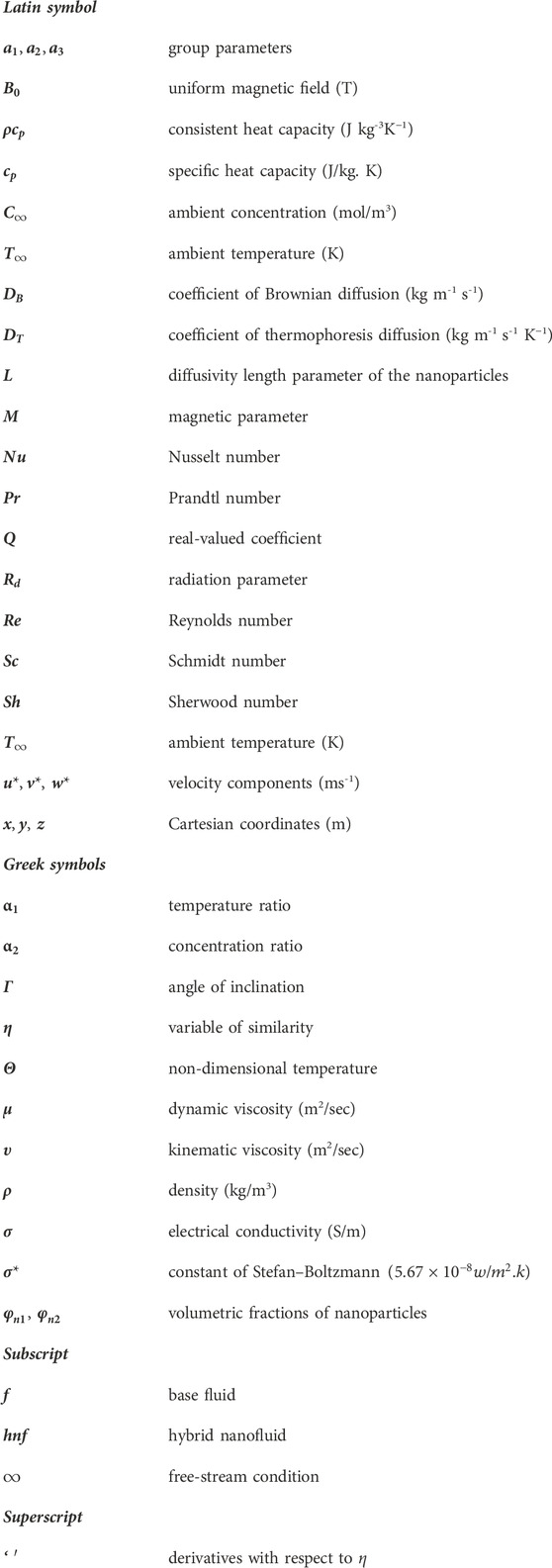
Nomenclature
Keywords: entropy, hybrid nanofluid, power-law index, water solar collectors, non-Newtonian (Casson) fluid
Citation: Mabrouk SM, Mahmoud TA, Kabeel AE, Rashed AS and Essa FA (2023) Thermal and entropy behavior of sustainable solar energy in water solar collectors due to non-Newtonian power-law hybrid nanofluids. Front. Energy Res. 11:1220587. doi: 10.3389/fenrg.2023.1220587
Received: 10 May 2023; Accepted: 09 October 2023;
Published: 06 November 2023.
Edited by:
Loreto Valenzuela, Medioambientales y Tecnológicas, SpainReviewed by:
Gireesha B. J, Kuvempu University, IndiaGabriela Huminic, Transilvania University of Brașov, Romania
Copyright © 2023 Mabrouk, Mahmoud, Kabeel, Rashed and Essa. This is an open-access article distributed under the terms of the Creative Commons Attribution License (CC BY). The use, distribution or reproduction in other forums is permitted, provided the original author(s) and the copyright owner(s) are credited and that the original publication in this journal is cited, in accordance with accepted academic practice. No use, distribution or reproduction is permitted which does not comply with these terms.
*Correspondence: Fadl A. Essa, ZmFkbGVzc2FAZW5nLmtmcy5lZHUuZWc=