 Tobias Zumbraegel*†
 Alisa Kegel†
- Faculty of Chemistry and Earth Sciences, Institute of Geography, Heidelberg University, Heidelberg, Germany
The shipping industry faces the dual challenge of reducing emissions to meet net-zero targets by 2050 and transporting green energy sources like hydrogen and its derivatives. Green shipping corridors provide experimental routes for low-carbon solutions, with the Suez Canal uniquely positioned to lead. This paper examines the canal’s evolving role as a dynamic energy space, where diverse actors and networks intersect, shaping spatial power relations and aligning with green capitalism interests. It explores the Suez Canal’s potential to serve as a model for hydrogen initiatives and its capacity to influence global energy governance and geopolitical dynamics in the transition to a sustainable shipping future. The canal also represents a microcosm of broader global shifts toward a future hydrogen economy, where numerous stakeholders vie for power and influence.
Highlights
• Dual Challenge for the Shipping Industry: The global shipping industry must reduce emissions to meet 2050 net-zero targets while also facilitating the transport of clean energy sources like hydrogen. The Suez Canal is positioned to play a key role in this dual challenge.
• Suez Canal as a Green Shipping Corridor: The Suez Canal, a critical global trade route, is well-suited to serve as a green shipping corridor, linking Europe, the Middle East, and Asia, and could lead the way in hydrogen transport and sustainable maritime innovation.
• Geopolitical and Energy Shifts: The transition to green shipping and hydrogen transport involves diverse international collaborations between public and private sectors, fostering a complex, interconnected geopolitical order. The Suez Canal serves as a microcosm of global shifts, where competition among Middle Eastern countries, as well as between Europe and Asia, unfolds.
Introduction
The global shipping industry faces significant challenges. On one hand, it accounts for approximately 3.1% of global emissions—a share that is expected to rise. To meet the net-zero target set for 2050 by the 2015 Paris Agreement, these emissions must be dramatically reduced (Inal et al., 2022). Energy efficiency measures, such as slow steaming (reducing vessel speed to conserve fuel) or implementing energy-saving technologies (ESTs), are important but insufficient on their own. A fundamental shift in propulsion energy sources is required, transitioning from fossil fuels like heavy fuel oil (HFO), marine diesel oil (MDO), and liquefied natural gas (LNG) to emission-free alternatives such as hydrogen, methanol and ammonia. On the other hand, shipping accounts for 80% of all global trade volume, taking on an additional new role: the transportation of clean energy, such as hydrogen and its derivatives (McKinlay et al., 2021; Inal et al., 2022; Herdzik and Lesnau 2024).
Given the complexities of transitioning to a green shipping industry and the need to evaluate the advantages and disadvantages of potential fuel alternatives,1 green corridors serve as essential bridges and experimental platforms. These corridors, established between key ports and along strategic routes, act as testbeds for advancing sustainable maritime transportation by enabling low- and zero-carbon shipping solutions. The Global Maritime Forum (GMF) defines green shipping corridors as “specific trade routes where the feasibility of zero-emission shipping is catalyzed by public and private action” (Global Maritime Forum, 2023). These corridors encompass critical components such as alternative fuel production facilities, transportation links, and bunkering ports. Initially designed as feasibility study routes to catalyze progress, they are envisioned as stepping stones toward a fully decarbonized shipping industry, where dedicated green corridors will no longer be necessary.
In the following, we argue that the Suez Canal is not only well-suited to serve as a green shipping corridor but also strategically frames itself as a potential leading global example of sustainable maritime innovation. The canal also dubbed ‘Crossroads of World Shipping’, has long been a critical artery of global trade, facilitating 12% of the world’s maritime commerce (Wan et al., 2023). Its strategic location and established infrastructure position it as an ideal candidate for advancing green hydrogen transport and decarbonizing shipping. It is poised to become a cornerstone in energy transitions linking Europe, the Middle East, and Asia, leading to significant (geopolitical) reconfigurations in the global energy transition (for an overview: Thijs van et al., 2020).
The theoretical foundation of this argument draws on critical geography perspectives, which examine how energy systems and logistics are shaped.It emphasizes that energy transitions are not just about economics and technology but are deeply political processes (Walker, 2023; Breetz et al., 2018). These transitions also create and transform spaces, shaping how places are connected and used (Brown and Purcell 2005; Bridge et al., 2013). A key focus is on the networks of relationships that drive these changes, highlighting the influence of power, connections, and control (Johnston, 2008; Henderson et al., 2002, 442).
This approach provides a valuable perspective for understanding the marketization of the Suez Canal, not merely as a static space for conventional trade with logistical adjustments to accommodate a low-carbon transition, but as a dynamic reconfiguration of spatial power relations and the rise of green capitalism. As the Suez Canal evolves into a green corridor, new political alignments and alliances are likely to emerge. The region’s ability to broker green energy deals, develop sustainable maritime policies, and serve as a key transit hub for green goods could significantly enhance its political clout. This shift could lead to a rebalancing of global power, with Egypt and the Arabian Peninsula positioning itself as a critical nexus between East and West, particularly in shaping future trade routes, energy distribution, and ecological standards. As such, the region may increasingly become a center of powerful actors in global energy governance.
In the following sections, the empirical investigation examines the growing importance of hydrogen cooperation between Europe and the Middle East, with a particular focus on the pivotal role of the Suez Canal in transporting, storing, and shipping green fuels to other regions of the world. These fuels are intended for a variety of activities and industries, supported by an exploration of the canal’s positioning through multiple initiatives and planned projects. Building on this foundation, the analysis outlines the key actors and relationships shaping the emerging green shipping corridor of the Suez Canal. Ultimately, the discussion addresses the broader argument regarding the shift and reconfiguration of the global balance of power.
Hydrogen connections: Europe’s collaboration with the Middle East and the strategic role of the Suez Canal
The energy relationship between Europe and the Middle East is becoming increasingly important in the context of global energy transitions, particularly with respect to hydrogen, and questions of energy security since Russian invasion in the Ukraine (Quitzow et al., 2024; Terrapon-Pfaff et al., 2024). As Europe seeks to meet its climate targets and reduce its reliance on fossil fuels, particularly gas from Russia, hydrogen has emerged as a critical component of its energy strategy. However, Europe’s domestic capacity to produce hydrogen is insufficient to meet its growing demand, driving a need for significant imports from regions that have the resources and conditions to produce it efficiently. While countries like Norway, Portugal, and Spain are poised to become net exporters of hydrogen, the majority of European nations are anticipated to be net importers, with Germany being particularly notable in this regard (Abdelshafy et al., 2024).
Germany, Europe’s largest economy and an industrial powerhouse, exemplifies this challenge and is considered “the most prominent actor currently shaping an international hydrogen economy” (Quitzow et al., 2024), 1). Germany has set ambitious hydrogen targets as part of its energy transition (Energiewende). Germany aims to make hydrogen a key economic pillar but, due to limited space for renewable energy production, is expected to import half of its hydrogen needs. As a result, international cooperation is essential to achieving the NHS’s objectives (Nunez and Quitzow 2023). Despite a number of other potential partners worldwide, the Middle East is perceived as a crucial region in ramping up an efforts towards an international hydrogen economy (Quitzow et al., 2024).
The Middle East, and particularly countries such as Morocco, Tunisia, Algeria, Egypt, but also Saudi Arabia, Oman, and the United Arab Emirates (UAE), are strategically positioned to become leading suppliers of hydrogen to Europe (Quitzow et al., 2024; Braun et al., 2024; Tanchum, 2024). There are several reasons for this. First, geographic proximity plays a crucial role. The Middle East’s location offers Europe a relatively short transportation route for hydrogen, whether in the form of ammonia (a more easily transported carrier) or via new hydrogen pipelines. This proximity makes it a more attractive supplier compared to other regions, such as Australia or Latin America, which are also positioning themselves as hydrogen exporters.
Second, the Middle East boasts some of the best conditions globally for the production of green and blue hydrogen. The region has abundant solar and wind resources, which are essential for producing green hydrogen via electrolysis, a process that requires large amounts of renewable electricity. Additionally, many countries have immense amounts of land to create the renewable energy infrastructure. Third, the existing energy infrastructure, including pipelines, storage facilities, and ports, along with decades of expertise and experience in energy production, represents a significant asset.
Against this backdrop, several countries are already making significant strides in their hydrogen strategies. Saudi Arabia, for instance, is developing the world’s largest green hydrogen plant at NEOM, a planned futuristic city in the country’s northwest, close to the Red Sea, powered entirely by renewable energy. Oman and the UAE too, have ambitious plans, with the plans to construct one of the world’s largest green and blue hydrogen facilities.
Emerging hydrogen partnerships between countries in Europe and the Middle East have the potential to reshape the global energy landscape and advance the energy transition both in Europe and the Middle East. It may come not as a surprise that these new hydrogen partnerships heavily resemble past (and failed) ideas of the Desertec project, which has also labelled as ‘win-win scenario’: Europe gains renewable energy for its transition, while MENA countries benefit from sustainable power, economic growth, and job creation (Slaoui, 2012; Rothe, 2016). In fact, in autumn 2020, the Desertec project was revived with a new focus. Instead of electricity, hydrogen is now the key resource bringing the EU and the Middle East closer together (Stumm, 2020). In this regard, discussions on the ‘logistics systems’ have so far focused mainly on technical and economic considerations including costs, uncertainties about storage and transportations as well as the mismatch between production and demand across certain regions (Abdelshafy et al., 2024).
In the global race to establish a hydrogen economy, Egypt is striving to position itself as a key player, leveraging the strategic importance of the Suez Canal as the shortest trade route between Europe and Asia to enhance its influence in maritime trade and energy transitions (Sprenger et al., 2023; Esily et al., 2022). Despite facing significant technical and economic challenges coupled with political repression and instability (Seleem et al., 2023; Terrapon-Pfaff et al., 2024), Egypt envisions a transformative role as a future hydrogen hub. This vision encompasses serving as a vital transport corridor for global hydrogen trade while actively participating in the hydrogen economy itself.
In 2023, the Suez Canal Authority provided a glimpse into the canal’s envisioned future by unveiling its sustainability strategy, Green Canal 2030, which sets forth a commitment to transforming the canal into a 'green' corridor by 2030. Although specific details and measures remain limited, the pledge outlines measures such as converting marine units within the canal to operate on natural gas, offering incentives for vessels utilizing green energy, and implementing robust safety protocols to mitigate pollution risks and prevent oil spills (Suez Canal Authority, 2025).
Beyond decarbonizing the canal itself, its strategic location offers the potential to establish a bunkering infrastructure for alternative fuels. Egypt’s significant renewable energy potential makes it a viable producer of green fuels, and its proximity to the Suez Canal enhances its economic attractiveness as a supply point. Ships passing through the canal would create a steady demand for green fuels. Currently, bunkering in Egypt plays a minor role (Sprenger et al., 2023), but leveraging its renewable energy resources could make local bunkering more cost-effective than exporting the fuels for use elsewhere. However, this would only be economical if the cost savings from refueling in Egypt outweigh the expenses of an additional port stop. Another critical factor is the lower energy density of hydrogen-based fuels compared to conventional fuels, which could necessitate additional bunkering stops. Since ships often experience delays waiting to transit the Suez Canal, this downtime could be utilized for refueling, further enhancing Egypt’s potential as an attractive bunkering location.
As the following map (Figure 1) indicates, the central hub of the canal’s operations is the Suez Canal Economic Zone (SCZONE), which spans 455 km2 and is governed by the General Authority for the Suez Canal Economic Zone, an autonomous body with executive powers. The SCZONE oversees the canal and its surrounding areas, including six ports and four industrial zones (SCZONE, 2015). Through strategic partnerships and agreements with international stakeholders, SCZONE is working to position itself as a global center for green shipping and hydrogen production. The following section will provide a detailed analysis of SCZONE’s partnerships and the projects they are undertaking.
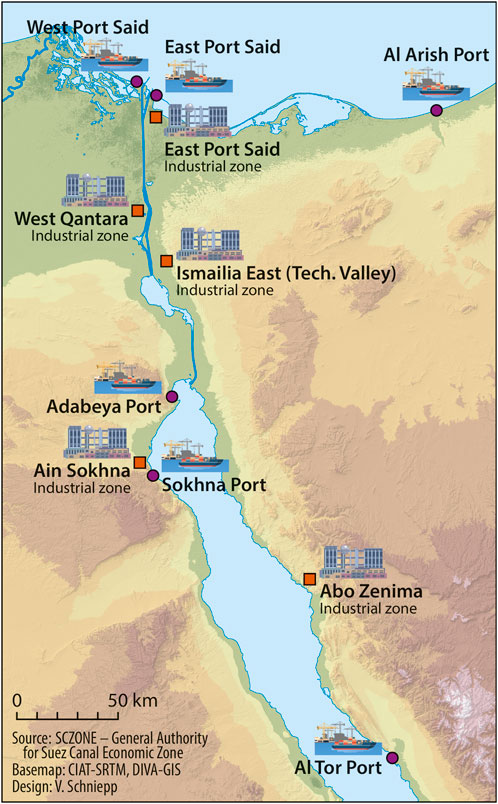
Figure 1. SCZONE with its ports and industrial zones.
A crowded stage: SCZONE as a melting pot of partnerships and projects
As indicated above, SCZONE has become a focal point for local and international partnerships, fostering a wide range of projects to advance green energy production and maritime sustainability. These collaborations underscore the zone’s pivotal role in positioning Egypt as a key player in the global hydrogen economy. In 2022, SCZONE signed a Memorandum of Understanding (MoU) with Scatec ASA, a Norwegian renewable energy company, to establish a green ammonia production facility in Egypt. The facility aims to produce one million tons of green ammonia annually, with potential expansion to three million tons. The agreement also includes the construction of renewable energy plants in close proximity to support the facility’s operations. Scatec brings its expertise in renewable energy, project development, execution, and operation to this initiative, contributing to the development of the green Suez Canal corridor. The produced green ammonia will be exported to European and Asian markets (Scatec, 2022).
Following the successful shipment of the world’s first batch of green ammonia, SCZONE and Scatec signed an additional MoU at COP28 2023 in Dubai. This agreement aims to secure a license for bunkering ships with green fuels, further solidifying SCZONE’s position as a global green energy hub. Other key actors in this extended $1.1 billion partnership include the Sovereign Fund of Egypt (TSFE), the Egyptian Electricity Transmission Company (EETC), and the New and Renewable Energy Authority (NREA). This collaboration not only focuses on bunkering infrastructure but also invests in clean energy generation for green methanol production (Safety4Sea, 2023; Scatec, 2022).
SCZONE is also exploring potential partnerships with Shell, a Dutch multinational energy company. Discussions between SCZONE representatives and Shell officials have considered green hydrogen projects in the Sokhna Zone, including desalination plants, tank farms for liquid bulk, and facilities for green hydrogen production, transport, and storage. The possible implementation of LNG bunkering services in the canal was also discussed, further indicating SCZONE’s ambition to expand its green maritime infrastructure (SCZONE, 2015). Furthermore, SCZONE has partnered with Maersk, one of the world’s leading shipping companies, to explore green fuel production options in Egypt. Together with NREA, EETC, and TSFE, they signed an MoU to conduct feasibility studies for hydrogen and green marine fuel production powered by renewable energy. Maersk will serve as the offtaker for the produced fuels. The Egyptian Prime Minister was also present at the signing, emphasizing the strategic importance of this collaboration (Maersk, 2022).
Two German companies, DAI Infrastruktur and Siemens Energy, have also partnered with SCZONE to develop a green ammonia production facility in East Port Said. This collaboration began with an MoU in 2022 and culminated in a Framework Agreement (FA) signed in June 2024. The project, set to begin production in 2028, will produce two million tonnes of green ammonia annually, of which 1.65 million tonnes will be based entirely on renewable energy. Siemens Energy will provide critical equipment, including electrolysers and auxiliary systems, while both companies will jointly handle engineering services during the project’s development phase. The plant’s strategic location near the port ensures a natural advantage for supplying shipping companies that transit the Suez Canal (DAI, 2025). The following Table 1 provides a comprehensive overview of the various actors involved in transforming the Suez Canal Economic Zone (SCZONE) into a green energy hub and corridor. This aligns with our earlier discussion of the relational understanding of space, which is simultaneously fluid and fixed (Brown and Purcell 2005), shaped by the interactions of agents and networks driven by specific political agendas (Neumann, 2009).
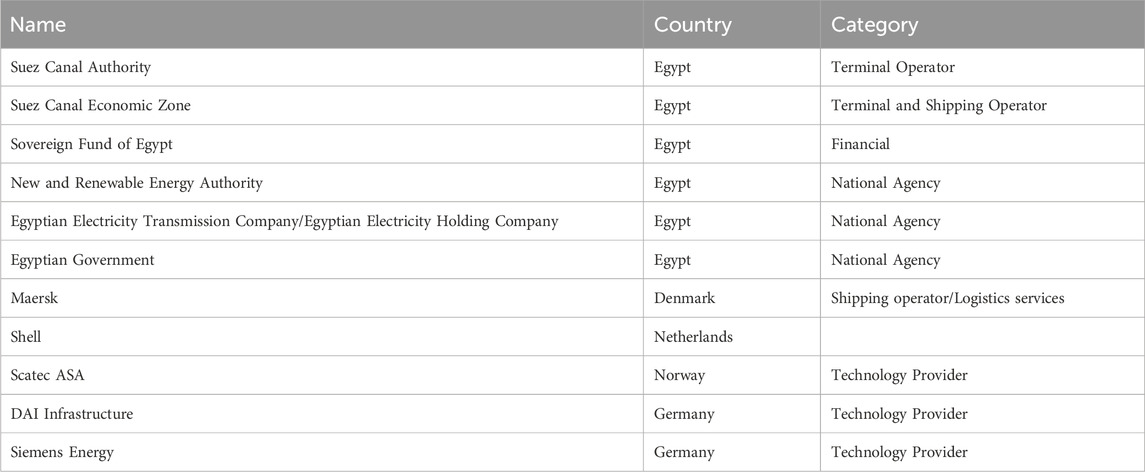
Table 1. Key actors and partnerships from European countries driving the green transformation of the SCZONE.
New interconnections and interdependencies in a multiplex world order
The empirical analysis highlights Egypt’s ambition to position itself as a key player in the global energy transition through the Suez Canal Economic Zone (SCZONE). By forming strategic partnerships with both private (mainly European) and public actors (mainly local and regional partners), Egypt aims to transform the Suez Canal into a green shipping corridor, crucial for hydrogen transport and decarbonizing global shipping. European and Asian companies contribute technological expertise and market access, while Egypt’s state actors oversee, support, and execute the projects.
This collaboration underscores the interconnectivity of a “multiplex world order” (Acharya, 2017), where private and public sectors from diverse regions coalesce to create new energy spaces. SCZONE’s strategic location at the crossroads of Europe, Asia, and the Middle East positions it as an ideal candidate for advancing green hydrogen transport and other sustainable maritime innovations. The partnerships between SCZONE and international companies such as Scatec ASA, Shell, and Maersk reflect a growing convergence of interests that span the global North and South, with the technological and financial capacity of private actors complementing the political will and infrastructural support of national governments.
Egypt aims to play a significant role in the energy transition, positioning its economy to benefit from green energy production and export while also influencing the political dynamics of the broader region and beyond. While Egypt’s role and influence in a hydrogen economy could grow through shipping before an elaborate pipeline network between other North African states and Europe is implemented, it could shift geopolitical power further towards Western Asia. The UAE’s proactive involvement and cooperation in hydrogen projects also show that the country seeks to gain first-mover advantages on the other side of the Arabian Peninsula. At the same time, regional competition may rise, as Saudi Arabia aims to capitalize on its access to the Red Sea for future hydrogen cooperation with Europe and the production of alternative fuels. Unlike Egypt, Saudi Arabia has an advantage with the Jeddah Islamic Port, which already has a developed bunkering infrastructure (Sprenger et al., 2023).
Recent announcements, such as the Rotterdam-Singapore Green Corridor passing through the Suez Canal, further highlight the geopolitical dynamics extending beyond the region of the Middle East, reinforcing its strategic location as a link between the ‘West’ and the ‘East.’ Meanwhile, China is increasingly focusing on the strategic importance of the Suez Canal, heightening the prospects for global competition. In 2023, China strengthened its influence with a significant $6.75 billion agreement between Egypt’s Suez Canal Economic Zone (SCEZ) and China Energy Engineering Corporation (CEEC), a state-owned company. This deal aims to develop green ammonia and green hydrogen projects, further embedding China into the region’s maritime infrastructure (Scott, 2024). Another critical and unresolved issue is the security of the Suez Canal and the Red Sea as vital trade routes. Houthi-led attacks in the Red Sea, particularly near the Suez Canal, pose a significant threat to global trade and could destabilize Egypt’s economy, undermining the profitability of its ports and disrupting international shipping. Regarding the issue of transporting hydrogen and its derivatives, as well as alternative fuels for shipping, these questions take center stage when considering the potential health, ecological, and safety concerns associated with these elements, some of which are highly flammable (Atilhan et al., 2021).
In conclusion, the transformation of the Suez Canal into a green corridor is emblematic of broader geopolitical shifts in the global energy landscape. The partnerships and projects highlighted in the empirical section reveal how Egypt, through the SCZONE, is not only positioning itself as a hub for green energy but is also part of a larger effort to reconfigure global energy flows and power relations (Esily et al., 2022). While there is significant interest from European stakeholders, several Gulf Arab monarchies, already preparing for a future centered on hydrogen export, recognize the Suez Canal and its infrastructure as pivotal in this transformation. Additionally, the involvement of Asian countries such as China, Japan, and South Korea will be essential to these geopolitical shifts, with the Suez Canal serving as a vital corridor and a microcosm of the larger global changes unfolding.
Data availability statement
Publicly available datasets were analyzed in this study. This data can be found here: https://sczone.eg/.
Author contributions
TZ: Conceptualization, Formal Analysis, Funding acquisition, Methodology, Project administration, Supervision, Validation, Visualization, Writing–original draft, Writing–review and editing. AK: Data curation, Formal Analysis, Investigation, Validation, Writing–review and editing.
Funding
The author(s) declare that no financial support was received for the research, authorship, and/or publication of this article.
Conflict of interest
The authors declare that the research was conducted in the absence of any commercial or financial relationships that could be construed as a potential conflict of interest.
Generative AI statement
The author(s) declare that no Generative AI was used in the creation of this manuscript.
Publisher’s note
All claims expressed in this article are solely those of the authors and do not necessarily represent those of their affiliated organizations, or those of the publisher, the editors and the reviewers. Any product that may be evaluated in this article, or claim that may be made by its manufacturer, is not guaranteed or endorsed by the publisher.
Footnotes
1Key challenges and open questions encompass reliability, cost-effectiveness, safety protocols, technological applicability, feedstock availability, infrastructure development, and the ecological impact (Inal et al., 2022).
References
Abdelshafy, A., Lambert, M., and Walther, G. (2024). “MENA region as a potential hydrogen supplier for the European market: analysing a prospective route between kingdom of Saudi Arabia and Germany,” in OIES paper 31. Oxford: The Oxford Institute for Energy Studies.
Acharya, A. (2017). After liberal hegemony: the advent of a multiplex world order. Ethics and Int. Aff. 31 (3), 271–285. doi:10.1017/S089267941700020X
Atilhan, S., Park, S., El-Halwagi, M. M., Atilhan, M., Moore, M., and Nielsen, R. B. (2021). Green hydrogen as an alternative fuel for the shipping industry. Curr. Opin. Chem. Eng. 31, 100668. doi:10.1016/j.coche.2020.100668
Braun, J. F., Van Wijk, Ad, Westphal, K., and Saxena, S. (2024). “Europe’s hydrogen pathways,” in The clean hydrogen Economy and Saudi Arabia, by rami shabaneh, jitendra roychoudhury, jan frederik Braun. 1st ed. (London: Routledge), 208–258. doi:10.4324/9781003294290-10
Breetz, H., Mildenberger, M., and Stokes, L. (2018). The political logics of clean energy transitions. Bus. Polit. 20 (4), 492–522. doi:10.1017/bap.2018.14
Bridge, G., Bouzarovski, S., Bradshaw, M., and Eyre, N. (2013). Geographies of energy transition: space, place and the low-carbon economy. Energy Policy 53 (February), 331–340. doi:10.1016/j.enpol.2012.10.066
Brown, C., and Purcell, M. (2005). There’s nothing inherent about scale: political ecology, the local trap, and the politics of development in the Brazilian amazon. Geoforum 36 (5), 607–624. doi:10.1016/j.geoforum.2004.09.001
DAI (2025). DAI Infrastruktur GmbH. News. Available at: https://dai-inf.eu/news/ (Accessed January 30, 2025).
Esily, R. R., Chi, Y., Ibrahiem, D. M., and Chen, Y. (2022). Hydrogen strategy in decarbonization era: Egypt as a case study. Int. J. Hydrogen Energy 47 (43), 18629–18647. doi:10.1016/j.ijhydene.2022.04.012
Global Maritime Forum (2023). Annual progress report on green shipping corridors. Available at: https://cms.globalmaritimeforum.org/wp-content/uploads/2023/11/Global-Maritime-Forum_Annual-Progress-Report-on-Green-Shipping-Corridors_2023.pdf (Accessed January 30, 2025).
Herdzik, J., and Lesnau, A. (2024). Decarbonization in shipping—the hopes and doubts on the way to hydrogen use. Energies 17 (18), 4668. doi:10.3390/en17184668
Henderson, J., Dicken, P., Hess, M., Coe, N., and Yeung, H. W.-C. (2002). Global production networks and the analysis of economic development. Review. Inter. Poli. Eco. 9 (3), 436–464. doi:10.1080/09692290210150842
Inal, O. B., Zincir, B., and Deniz, C. (2022). Investigation on the decarbonization of shipping: an approach to hydrogen and ammonia. Int. J. Hydrogen Energy 47 (45), 19888–19900. doi:10.1016/j.ijhydene.2022.01.189
Johnston, R. (2008). “Explanation in geography (1969): david harvey,” in Key Texts in Human Geography. Editors P. Hubbard, R. Kitchin, and G. Valentine (SAGE Publications Ltd), 25–32. doi:10.4135/9781446213742.n4
Maersk (2022). Maersk explores new ways to accelerate green fuel production. Available at: https://www.maersk.com/news/articles/2022/03/28/maersk-explores-new-ways-to-accelerate-green-fuel-production (Accessed January 30, 2025)
McKinlay, C. J., Turnock, S. R., and Hudson, D. A. (2021). Route to zero emission shipping: hydrogen, ammonia or methanol? Int. J. Hydrogen Energy 46 (55), 28282–28297. doi:10.1016/j.ijhydene.2021.06.066
Neumann, R. P. (2009). Political ecology: theorizing scale. Prog. Hum. Geogr. 33 (3), 398–406. doi:10.1177/0309132508096353
Nunez, A., and Quitzow, R. (2023). Germany’s hydrogen strategy: securing industrial leadership in a carbon-neutral economy. Application/pdf 948 KB, 21. doi:10.48481/RIFS.2023.010
Quitzow, R., Nunez, A., and Marian, A. (2024). Positioning Germany in an international hydrogen economy: a policy review. Energy Strategy Rev. 53 (May), 101361. doi:10.1016/j.esr.2024.101361
Rothe, D. (2016). Energy for the masses? Exploring the political logics behind the Desertec vision. J. Int. Relat. Dev. 19 (3), 392–419. doi:10.1057/jird.2014.17
Safety4Sea (2023). Suez Canal aims to be the new hotspot for alternative fuel bunkering. Available at: https://safety4sea.com/suez-canal-aims-to-be-the-new-hotspot-for-alternative-fuel-bunkering (Accessed January 30, 2025).
Scatec (2022). Scatec and partners to develop large-scale green ammonia facili-ty in Egypt. Available at: https://scatec.com/2022/03/10/scatec-partners-with-the-sczone-the-sovereign-fund-of-egypt-the-ministry-of-electricity-and-renewable-energy-to-develop-a-large-scale-green-ammonia-facility-in-egypt/ (Accessed January 30, 2025).
Scott, D. (2024). China’s calculated inaction in the Red Sea crisis, Silver Spring, Maryland: Center for International Maritime Security. Available at: https://cimsec.org/chinas-calculated-inaction-in-the-red-sea-crisis/(Accessed November 16, 2024).
SCZONE (2015). Webpage, about us. Available at: https://sczone.eg/about-us/ (Accessed January 30, 2025).
Seleem, M. S., Sameh, R., Esily, R. R., and Ibrahiem, D. M. (2023). A closer look at bio-hydrogen strategy in post-carbon age and its prospect in Egypt. J. Environ. Manag. 345, 118773. doi:10.1016/j.jenvman.2023.118773
Slaoui, A. (2012). Editorial: Desertec project—when science joins politics. J. Renew. Sustain. Energy 4 (1). doi:10.1063/1.3687000
Sprenger, T., Kalvelage, L., Moritz, M., and Wild, P. (2023). “Towards a green shipping gateway,” in Establishing a green hydrogen economy in Egypt. Berlin, Germany: Deutsche Gesellschaft für Internationale Zusammenarbeit GIZ. Available at: https://www.ewi.uni-koeln.de/cms/wp-content/uploads/2023/11/EWI_GIZ_Green_Shipping_Egypt_report.pdf (Accessed January 30, 2025).
Stumm, A. (2020). Neo-colonial continuities in the mediterranean infrastructure projects of atlantropa and Desertec. Ardeth 07 (2), 127. doi:10.17454/ardeth07.08
Suez Canal Authority (2025). The green canal. Available at: https://www.suezcanal.gov.eg/English/About/SuezCanal/Pages/greencanal.aspx (Accessed January 30, 2025).
Tanchum, M. (2024). “Green hydrogen production in North africa: challenges and opportunities,” in Energy transition in the Middle East: opportunities and challenges (London: I.B. Tauris), 183–205.
Terrapon-Pfaff, J., Ersoy, S. R., Prantner, M., and Viebahn, P. (2024). Country risks analysis for the development of green hydrogen and synthetic fuel sectors in the MENA region. Front. Energy Res. 12, 1466381. doi:10.3389/fenrg.2024.1466381
Van de Graaf, T., Overland, I., Scholten, D., and Westphal, K. (2020). The new oil? The geopolitics and international governance of hydrogen. Energy Res. and Soc. Sci. 70 (December), 101667. doi:10.1016/j.erss.2020.101667
Walker, G. (2023). Caution! Transitions ahead: politics, practice, and sustainable transition management. Environ. Plan. A Econ. Space 39 (4), 763–770. doi:10.1068/a39310
Keywords: Suez Canal, hydrogen, green shipping, Europe, Middle East, geopolitics
Citation: Zumbraegel T and Kegel A (2025) Green tides: the Suez Canal as key hub and green corridor for a hydrogen future between the Middle East and Europe. Front. Energy Res. 13:1538792. doi: 10.3389/fenrg.2025.1538792
Received: 03 December 2024; Accepted: 17 January 2025;
Published: 07 February 2025.
Edited by:
Julia Terrapon-Pfaff, Wuppertal Institute for Climate, Environment and Energy gGmbH, GermanyReviewed by:
Rehab R. Esily, Damietta University, EgyptCopyright © 2025 Zumbraegel and Kegel. This is an open-access article distributed under the terms of the Creative Commons Attribution License (CC BY). The use, distribution or reproduction in other forums is permitted, provided the original author(s) and the copyright owner(s) are credited and that the original publication in this journal is cited, in accordance with accepted academic practice. No use, distribution or reproduction is permitted which does not comply with these terms.
*Correspondence: Tobias Zumbraegel, dG9iaWFzLnp1bWJyYWVnZWxAdW5pLWhlaWRlbGJlcmcuZGU=
†ORCID: Tobias Zumbraegel, orcid.org/0000-0002-2895-9948; Alisa Kegel, orcid.org/0009-0007-8994-1331