 Mohammed Al-Hammadi1†
 Günsu Anadol2
 Francisco José Martín-García3†
 Jaime Moreno-García3†
 Tuğba Keskin Gündoğdu4
 Mine Güngörmüşler2*†
- 1Division of Bioengineering, Graduate School, Izmir University of Economics, Izmir, Türkiye
- 2Department of Genetics and Bioengineering, Faculty of Engineering, Izmir University of Economics, Izmir, Türkiye
- 3Department of Agricultural Chemistry, Edaphology and Microbiology, Agrifood Campus of International Excellence CeiA3, University of Córdoba, Córdoba, Spain
- 4Department of Industrial Engineering, Izmir Democracy University, Izmir, Türkiye
Unlike conventional bioethanol production, which raises environmental concerns such as a high carbon footprint from resource-intensive crops, deforestation, and food security issues, non-conventional bioethanol production offers a more sustainable alternative. However, non-traditional feedstock availability and its pretreatment are the main challenges, importantly feedstock availability is either underreported or poorly forecasted, while pretreatment is costly, reaching up to 40% of the overall process or it might generate inhibitors that hamper ethanol production in commercial scale, as well as environmental impact. The literature further lacks the recent update for conventional and non-conventional microbial ability to ferment these feedstocks or their tolerance for inhibitors compared with the conventional yeast. Therefore, this review discusses Europe’s non-conventional feedstock availability in national levels and pretreatment, highlighting pretreatment’s cost industrially, scalability, and its impact on microbial fermentation and the environment. Moreover, recent European policies that might impact the commercialization of non-conventional bioethanol are discussed, emphasizing the revised RED III policy, certification scheme, and how to eliminate fraudulent biofuel imports to boost advanced ethanol production. Finally, this review discusses the pilot-scale case studies that investigated the non-conventional methods besides the recent update on non-conventional microbes’ ability, inhibitors, and the techniques such as the immobilization to improve ethanol yield.
1 Introduction
The type of feedstock and fermenting microorganisms are the primary factors that determine whether bioethanol production is conventional or non-conventional; the procedure used is the secondary factor. Bioethanol derived from non-food crops, such as food waste, agricultural residues, and gaseous by-products, utilizing either conventional or non-conventional fermenting microorganisms, or both, is known as non-conventional bioethanol. Similarly, non-conventional bioethanol is also produced when non-conventional microorganisms are employed, regardless of the type of feedstock (International Energy Agency, 2022; Ndubuisi et al., 2023; Sun et al., 2024).
Non-conventional feedstocks, such as lignocellulosic materials, food waste, and agricultural residues, offer significant advantages over conventional crops by utilizing renewable, low-cost, and widely generated. However, utilizing these feedstocks at the commercial scale remains challenging due to many technical and economic constraints, particularly feedstock availability, the biochemical complexity of the feedstock, the cost compared with the traditional ways, the microbial potential to utilize these feedstock, and the recent policies that are related to commercialization of advanced biofuels (Novia et al., 2025).
First of all, feedstock availability including in the developed countries is generally not reported or forecasted comprehensively, and these feedstocks often require advanced pretreatment techniques to break down lignin and hemicellulose to enhance sugar yields, potentially increasing the overall production cost. Furthermore, the non-conventional pretreatment processes such as deep eutectic solvents, organic solvents, and ionic liquids often introduce inhibitory by-products that can impede fermentation efficiency. On the other hand, other processes, particularly the conventional such as acid or alkaline pretreatment, could have a direct environmental impact, while the cost on industrial level of these processes are varied and some of them are not feasible for the industrial scale (Shukla et al., 2023).
To overcome the inhibitory factor that was generated during or after the pretreatment or by other sources, environmental impact, and reduce the overall production cost, many strategies are suggested. Non-conventional microorganisms are increasingly engineered or selected for their ability to withstand these inhibitors while maintaining robust metabolic activity, paving the way for higher bioethanol yields under industrially relevant conditions. The use of extremophiles in bioethanol production adds a unique dimension to the process by exploiting their natural adaptability to extreme environments, such as high temperatures, salinity, or acidic conditions. These characteristics reduce the need for stringent sterile conditions, which can significantly lower operational costs in industrial applications. For example, thermophilic bacteria and thermotolerant yeasts, like Kluyveromyces marxianus, can ferment diverse sugars, including pentoses and hexoses, at elevated temperatures, improving process integration and efficiency. Beyond feedstock and microbial selection, process innovations such as pretreatment process (Shukla et al., 2023), employing mixed or sequential fermentation (Estrada-Martínez et al., 2019), cell immobilization (Sertkaya et al., 2021), and consolidated bioprocessing (Singh et al., 2022) could be a keypoint to commercialize the non-conventional bioethanol by overcoming the mentioned challenges.
This review fills the existing research gap regarding the feedstock availability in Europe as indicated earlier and classifies the pretreatment processes and the potential of each process in industrial scale, environmental impact, and inhibitory generation along with other inhibitory factors that hinder non-conventional ethanol production. The most updated European policies are discussed as well since it could play a significant role in non-conventional ethanol adoption. Furthermore, this review highlights the latest technical advancements, challenges, and potential of utilizing extremophiles and non-conventional microorganisms/methods in bioethanol production compared with the traditional pathways, focusing on innovative approaches like cell immobilization. Finally, detailed case-studies are provided regarding the scaled (pilot-scale) non-conventional ethanol production and their feasibility is reviewed.
This paper offers a bridge with existing knowledge gaps and provides actionable insights for researchers, industry stakeholders, and policymakers. By outlining the opportunities and barriers in non-conventional bioethanol production, this work contributes to the broader bioenergy literature, fostering innovation and collaboration in the field. Furthermore, the strategies discussed here may accelerate the development of sustainable bioethanol production processes, offering viable solutions to global energy challenges and advancing the transition toward a circular bioeconomy.
2 Opportunities extremophiles/non-conventional microbes bring to bioprocesses
Conventional methods for bioethanol production have limitations, leading to the adoption of non-conventional organisms. Generally, yeasts and bacteria are preferred for bioethanol generation due to their broad substrate range and optimal fermentation conditions. Saccharomyces cerevisiae and Saccharomyces uvarum dominate industrial ethanol production due to their ability to ferment glucose, maltose, and fructose. However, as ethanol accumulates, product formation is inhibited, and these species cannot utilize xylose sugars, a major component of hemicellulose and lignocellulosic biomass (Ibrahim, 2023).
Commonly used bacterial strains include Zymomonas mobilis and Escherichia coli indicated higher production yields relative to yeast species. However, most bacterial strains cannot ferment pure ethanol, necessitating additional purification processes (Bayrakci and Koçar, 2013). While conventional yeasts and bacteria offer some benefits, their limitations, such as substrate specificity and process inefficiencies, underscore the need for innovative approaches.
From an environmental perspective, extremophiles and non-conventional microorganisms recover waste products, such as sugarcane bagasse, pine needles, and sugar beet pulp, through the valorization of agricultural and forest wastes. These processes support bioethanol production and mitigate environmental hazards, such as forest fires, while reducing waste accumulation (Sharma and Chauhan, 2024).
Thermophilic organisms hold significance for bioethanol production due to their unique capabilities, including their enzymatic system and the advanced adaptation to harsh conditions. The enzymatic system in the thermophiles involve hemicellulases and/or cellulases, where they do not exist naturally in S. cerevisiae (Chang and Yao, 2011; den Haan et al., 2021). Although genetic engineering has made it possible to produce such enzymes in S. cerevisiae (Li et al., 2022), trial-and-error approach is still necessary because the successful production of such enzymes is still unpredictable according to den Haan et al. (2021). Other advantages of using thermophilic organism’s enzymes are that they can tolerate severe industrial conditions, such as high temperatures, excessive pH, the presence of organic solvents, lengthy processing times, and a prolonged half-life at a particular elevated temperature. Despite numerous attempts, the expense of the enzymes frequently limits their use today. However, it is anticipated that the cost will drop as the market for the enzymes grows and bigger volumes of production result. Furthermore, it is anticipated that the need for microbial catalysts will rise in tandem with the industry’s paradigm shift away from fossil fuels and toward the use of renewable resources. Additionally, the requirement for thermostable selective biocatalysts will undoubtedly continue to grow in the future since genetic engineering is growing for the thermophiles (Zuliani et al., 2021).
Using a whole cell is another approach that could be applied. Thermophiles such as Thermoanaerobacter sp., can utilize a wide range of sugar types such as pentoses, hexoses, disaccharides, and polysaccharide depending on the strain, makes them well-suited for agricultural residue valorization and ethanol production (Patelski et al., 2024). This genus has been investigated extensively due to the fact that its species display the highest ethanol yields exhibited by a thermophile, can function at elevated temperatures up to 85°C, which reduces contamination risks in non-sterile conditions while allowing for a cost-effective process. However, the wild strains are not very attractive for commercial ethanol production compared with S. cerevisiae because 62%–90% of theoretical maximum can be produced, while 90%–93% in S. cerevisiae (Ahmad et al., 2024; Kazemi Shariat Panahi et al., 2022; Ruchala et al., 2020; Zuliani et al., 2021) due to metabolic pathways, leading to mixed-products fermentation such as acetate, lactate, and hydrogen instead of only ethanol (Chang and Yao, 2011). Genetic engineering tools are available for a wide range of thermophiles and ethanol yield was reported to reach up to 92%–94% in Thermoanaerobacterium sp. and Thermoanaerobacter mathranii, respectively. Yet, more studies and validation is required and the literature lacks the relevant research in large scales (Kazemi Shariat Panahi et al., 2022).
Unlike thermophiles, wild Kluyveromyces marxianus, a thermotolerant species, exhibits superior fermentation performance at higher temperatures, reaching up to 52°C, compared to S. cerevisiae (Park et al., 2015). K. marxianus grows more quickly at elevated temperatures at growth rate of 0.80 h−1 compared with 0.37 h−1 in S. cerevisiae (Mo et al., 2019) and other studies have also revealed that K. marxianus exhibits superior behavior in producing ethanol under inhibitory existence (furans) in contrast to a commercial strain of S. cerevisiae (Amaya-Delgado et al., 2018). However, because of its weak ethanol tolerance, which is only 6% (v/v) (Ha-Tran et al., 2020), K. marxianus is presently unsuitable for commercial usage despite the fact that it was scaled to a pilot level since the commercial S. cerevisiae can tolerate up to 18% (v/v) (Sahana et al., 2024). Still, Bilal et al., (2022) indicated that K. marxianus can be restructured to have a better tolerance to ethanol than S. cerevisiae, making it a more resilient host that produces ethanol.
Similarly, Pichia stipitis or known as Scheffersomyces stipitis- a mesophilic species, has the maximum native xylose fermentation capacity among known microorganisms and scaled into a pilot level; yet, glucose non-competitively limits xylose transport. Furthermore, S. stipitis is less resistant to ethanol than S. cerevisiae and the requirement to preserve microaerophilic conditions make it difficult to apply on a commercial scale (Ishizaki and Hasumi, 2013). Therefore, it is suggested to apply S. stipitis sequentially or co-cultivation with other microbes since 88% of ethanol efficiency was produced via sequential fermentation with Z. mobilis and valorize (>95%) of the added sugars (Singh et al., 2014a), while ethanol titer can be improved by 1.56%–4.59% and 46.12%–102.14% of Z. mobilis and P. stipitis, respectively, compared with monocultures (Sun et al., 2021).
Co-fermentation method is widely used for optimal results from lignocellulosic biomass toward circular economy and waste valorization as well as boost ethanol yield. Co-culture or mixed cultures are reported to be suitable for industrial applications (Goers et al., 2014). This method separates enzymatic breakdown and microbial conversion steps, minimizing inhibitory effects and enabling high sugar process yields. For instance, microbial hydrolysis of sugar beet pulp with Trichoderma viride, which is more affordable than commercial enzymes followed by co-fermentation using S. cerevisiae and P. stipitis achieved 5.38 kg of ethanol per 100 kg of substrate, highlighting its efficiency (Patelski et al., 2024). S. stipitis co-cultivation with S. cerevisiae, improved ethanol yield to reach 87.54% compared with only S. cerevisiae 84.20% when co-cultivated using Prosopis juliflora (Naseeruddin et al., 2021). Importantly, S. stipitis did not show a significant competition with S. cerevisiae since it became a predominant strain after the glucose consumption (Wu et al., 2023). Likewise, the co-culture of wild and engineered Thermoanaerobacter strains with other strains such as Caldicellulosiruptor sp. and Clostridium thermocellum improved the ethanol concentrations compared with monocultures by 2–8.2-fold and 194%–440%, respectively, and showed a good potential for consolidated bioprocessing (Svetlitchnyi et al., 2013; He et al., 2011). Furthermore, Hawaz et al. (2024) reported that S. cerevisiae and Pachysolen tannophilus achieved a maximum of 77% ethanol yield under optimum conditions of a 46°C reaction temperature. While Mondal et al. (2024) reported that sugarcane molasses fermentation by S. cerevisiae and Wickerhamomyces anomalus increased ethanol yields by 29% and 53%, respectively, compared to single-species yields, demonstrating the benefits of microbial synergy.
Integrated methods or biorefinery approach another promising strategy. As stated earlier, Thermoanaerobacter sp. is able to produce multiple chemicals at the same time, making it suitable for biorefinery and reducing the overall production cost (Wu et al., 2021). C. thermocellum can produce bioethanol and biohydrogen from sugarcane bagasse in non-sterile conditions simultaneously. This process lowers costs while delivering substantial yields (Ahmad et al., 2024). Crucially, C. thermocellum can be applied for hydrogen production industrially (Gallo et al., 2024). K. marxianus seems to be attractive for a biorefinery due to the possibility of producing heterologous proteins, enzymes, fatty acids, and lactic acid. Furthermore, genetic engineering tools are available to manipulate this strain (Reina-Posso and Gonzales-Zubiate, 2025). K. marxianus and Bacillus coagulans co-cultivation could improve lactic acid and ethanol by 90% using pomegranate peels, reaching 92% and 98% of the theoretical maximum ethanol and lactic acid, respectively (Demiray et al., 2024). Yet, competition from known microbiological platforms such as S. cerevisiae and E. coli is one of the main challenges. The switch to production systems based on various strains such as K. marxianus is a logistical and financial challenge because the current industrial infrastructure is primarily optimized for these microorganisms. Metabolism engineering techniques that increase substrate conversion efficiency and product optimization must be used in conjunction with efforts to incorporate lignocellulosic hydrolysates and agro-industrial wastes in order to employ K. marxianus on biorefinery applications (Reina-Posso and Gonzales-Zubiate, 2025). Importantly, the literature lacks these studies and the major research is being concentrated on a single product optimization, particularly ethanol, along with slow advancement in genetic engineering (Baptista and Domingues, 2022). The non-conventional ethanol production process is summarized in Figure 1 below.
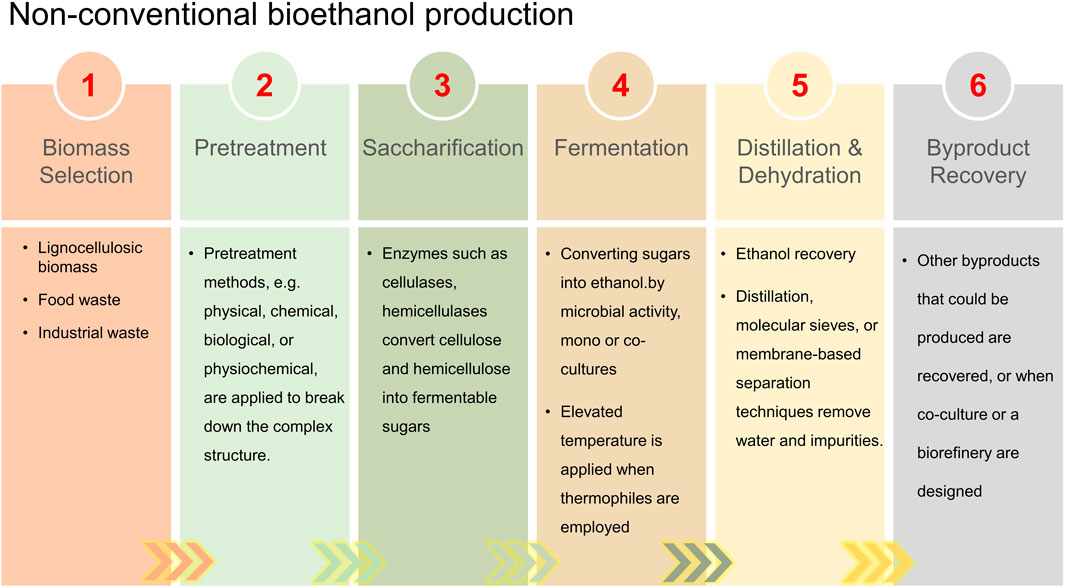
Figure 1. The process of non-conventional bioethanol production.
3 Key scaling parameters, challenges and innovations in commercialization of bioethanol focusing on our main topic
3.1 Technical barriers for upscaling
3.1.1 Feedstock availability
One of the main challenges of ethanol production is the feedstock availability and variability. Therefore, it is necessary to categorize the available feedstock, particularly bio-waste such as agricultural residue, forestry, and food waste, to recognize waste generation and to predict the availability of this waste in the future.
Agricultural residue was expected to have a theoretical potential of 291–367 million tons of dry matter (Mt DM) per year in the EU and 253–483 Mt in Europe prior to 2021 (Scarlat et al., 2019), and the actual amount of agricultural residue was estimated to be 439.76 million tons by 2021 in Europe (European Commission, 2021). Over 212 Mt DM is thought to have the technical capacity to be utilized in Europe (Scarlat et al., 2019). However, the technological, financial, and future risks that are anticipated by components of climate change hinder residue utilization for biofuel production. By 2030, only 83.3 Mt of agricultural residues from wheat, soybeans, sunflower, rye, olives, barley, rice, oats, triticale, rapeseed, and corn could be processed into various biofuels including bioethanol (O’Malley and Baldino, 2024).
France, Germany, and Romania are the major key players in agricultural residue production in the EU as they produced 59.78, 39.07, and 30.89 million tons in 2020, compared to 19.44 million tons in the UK (Carraro et al., 2021). Nonetheless, the production rate of certain agricultural residues in European countries is variable depending on the total amount of crops produced in each country. The summary of the produced crops is given in Table 1.
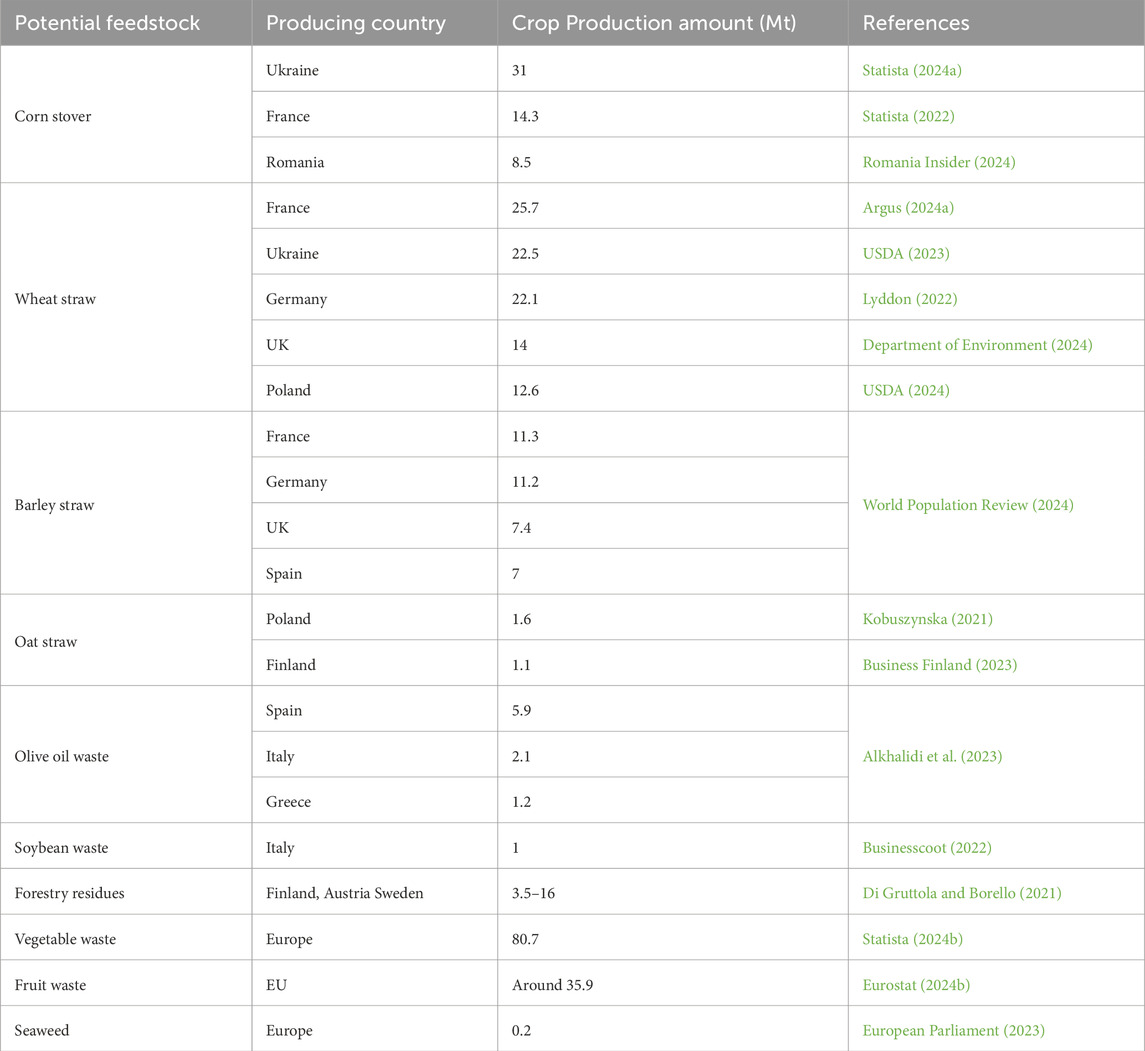
Table 1. Potential feedstock for non-conventional bioethanol production across Europe.
Cereals make up 50% of the EU’s economic production and 74% of its residual output (European Commission, 2021). Between now and 2035, the amount of agricultural and forest land in the EU is expected to stay constant. Despite climate change and limitations on the accessibility and affordability of certain agricultural inputs (such as plant protection products), cereal and oilseed yields are expected to stay steady due to short-term beneficial developments like precision farming, increased crop rotation, and better soil health. However, the EU will produce less sugar beet as a result of the gradual drop in sugar consumption (European Commission, 2023). Furthermore, the Representative Concentration Pathway (RCP) 8.5 scenario predicts that by 2050 the EU’s corn production will decline by 1%–22%, while southern Europe’s wheat yields may drop by as much as 49%, underscoring the Mediterranean regions’ extreme vulnerability due to reduced water supplies, continuously rising temperatures, and an increase in the frequency of heat waves and droughts (Hristov et al., 2020). Noteworthy, the complexity of agricultural systems and the variety of influencing factors naturally constrain the precision of estimates of agricultural residue, despite the fact that these estimates are essential for assessing the availability of resources (such as bioenergy) (European Commission, 2021). In contrast to the agricultural residues through 2050, the biomass resource for forestry residues is expected to remain stable at 11.2 Mt. However, alternative uses for these residues are still lacking, particularly for the byproducts of roundwood production (O’Malley and Baldino, 2024). Nevertheless, recent studies indicated that these residues have a high potential to be utilized as feedstock for bioethanol production in the form of beech wood chips (see case studies section below).
The potential for food waste in Europe is being lost, much like forestry waste. Although it was acknowledged that, from an economic and environmental perspective, food waste might be utilized to create biofuels such as bioethanol (Fagundes et al., 2024a; 2024b). Furthermore, the most readily available, reasonably priced, and plentiful feedstock for bioethanol production is food waste. The increasing rate of food waste generation and the depletion of energy supplies are real concerns, even though application technology is still in its infancy. One effective strategy is the bioconversion of waste at different stages of the food value chain (Bibra et al., 2023).
Over two-thirds of the 118–138 million tons of bio-waste produced yearly in the EU originate from municipal sources, with the remaining portion coming from the food and beverage sector (Ecostar, 2024). Depending on the Member State, bio-waste can range from 18% to 60% of municipal solid waste (Stylianou et al., 2020), and only 40% of this waste is effectively recycled in the EU (European Compost Network, 2022). In 2022, around 75% of food waste in Europe was either incinerated or deposited in landfills, and only 26% (around 5 million tons) of food waste was captured (Coombe, 2024). Certain European countries, namely, Romania, Cyprus, and Malta are struggling with waste recycling (European Environment Agency, 2023). Surprisingly, Romania lacks a working recycling infrastructure, clear legislation, and—above all—traceability and control systems. Organic waste is frequently intermingled, and there is little chance of composting or creating biofuel utilizing this waste (Ecostar, 2024). Nevertheless, beginning on 1 January 2024, bio-waste collection will be mandatory for EU Member States in accordance with the Waste Framework Directive (WFD) (Favoino and Giavini, 2024). Food waste would rank fifth in the EU for greenhouse gas emissions if they were a member state (Eufic, 2024). The total amount of food waste recorded at the EU level in 2022 was just over 59 million tons of fresh mass. 32 million tons of fresh mass, or 54% of the total (accounting for 72 kg per inhabitant), were made up of household food waste (Eurostat, 2024a; 2024b). Sweden, Croatia, and Slovenia had the lowest waste output per person, whereas Cyprus had the largest quantity of food waste per capita, at over 400 kg. Belgium, Denmark, Greece, and Portugal are likewise at the top of the scale (Fleck, 2024). In terms of mass, fruit accounted for 27% of all food waste in the EU, followed by vegetables (20%) and grains (13%) (Eufic, 2024). Notably, more than half of the production of fruits and vegetables comes from Spain, Italy, France, Poland, the Netherlands, and Germany. According to recent data, Spain produced 13.87 million tons of fresh fruit and vegetables in 2022, making it the EU’s highest producer. With a 2022 output of 12.35 million tons, Italy comes in second, followed by France (5.9 million tons), Poland (5.3 million tons), the Netherlands (4.8 million tons), and Germany (3.7 million tons) (Europe Data, 2024). In Spain, fresh fruits and vegetables account for 80% of food waste (Foodrus, 2020), over 260 million kilograms of wasted fruits and vegetables were discarded only between spring and summer in 2019 (Fresh Plaza, 2024). The possibility for instant conversion of fruit waste into bioethanol without any sort of pretreatment makes fruit wastes quite intriguing feedstocks. Still, the process requires a lot of effort to optimize ethanol production and to compare it with the conventional pathways (Basaglia et al., 2021).
The seaweed (algae) industry has been gaining significant attention recently in obtaining bioethanol because the agar-based algae industry generates 60%–75% of solid waste biomass which is easier to hydrolyze than some other plants (Muryanto et al., 2024). Moreover, the algae industry is expected to expand in the coming years, potentially resulting in a substantial increase in biomass availability (Al-Hammadi and Güngörmüşler, 2024). In Europe, Norway is the leading country in algae production (Cai, 2021), and is remarkably expanding its algae industry. In 2018, it cultivated 169 tons, and by 2050, it will have the capacity to produce more than 20 million metric tons of macro and microalgae annually (Bazil and Krogstie, 2020). Therefore, this feedstock should be considered and investigated to produce bioethanol and to analyze various types of algal biomass since the studies are limited regarding bioethanol production.
Syngas is an excellent raw material for generating bioethanol due to its adaptability and accessibility (Gungormusler et al., 2022) which consists of a mixture of CO, H2, N2, CH4, and CO2 (Sertkaya et al., 2021), and this type of feedstock is already being utilized by LanzaTech in Belgium for bioethanol production commercially (LanzaTech, 2023). However, there is a lack of publicly available statistics, making it difficult to pinpoint the precise yearly production volume of syngas in the world including the EU. On the other hand, relevant marketplaces and studies can provide insights. For instance, Europe shows a high capacity for producing syngas since it generated 22 billion cubic tons in 2023 (European Biogas Association, 2024), and renewable gas generation is projected to increase in the coming years which could be implemented in non-conventional ethanol production (Al-Hammadi and Güngörmüşler, 2025).
3.1.2 Policies and regulatory
The Renewable Energy Directive was amended by the European Union (EU) in 2023 and is known as “RED III.” As a result, the overall goal for the use of renewable energy in all sectors of the European Union was raised to at least 42.5% by 2030. Although the advanced biofuel has only a share of 4.5%, it is increased by 1.2 times compared with RED II in 2018 (3.5%), encouraging the utilization of the biowaste (The European Parliament, 2023). Notably, waste and residue utilization are double-counted toward the renewable energy goal, which significantly encourages the utilization of the biowaste as well. As for 2024, France, Finland, and the Netherlands are the most countries that produce advanced biofuel in the EU, accounting for 16.6, 4, and 2.9% cal of the total advanced biofuel production for each country, respectively. Importantly, the advanced bioethanol production in France represents 1.2% cal and is expected to be 3.8% cal by 2028. In the meantime, EU countries are lowering the cap (with an upper limit of 7%) of ethanol production from food and feed resources. Additionally, France and the Netherlands have already banned or started to ban some conventional feedstock for biofuel production such as soybean oil which encourages the non-conventional feedstock for ethanol production (Lieberz and Rudolf, 2024). Likewise, Germany’s environment ministry is intending to submit a draft law to prohibit the usage of crop and feed-based biofuels “as soon as possible” (Argus, 2023).
Although RED and the Common Agricultural Policy (CAP) aim to encourage the use of bioenergy, neither the RED Reform (RED III) nor the National Strategic Plans in the CAP contain a precise set of “binding” regulations to facilitate this shift towards the use of agricultural waste. Future studies should look more closely at how these frameworks might be used in concert to address the problem of indirect land-use change (ILUC) and enhance the utilization of agricultural waste streams in the direction of a more circular energy economy (Alessandrini et al., 2023).
EU biofuels policy is unstable, primarily due to sustainability issues and the fact that the majority of member states had failed to meet the 2020 targets. Over time, the types of biofuels that are prioritized have changed. Unpredictability in policy may make the sector less appealing to private investors and raise risks. Long-term investments may be at risk due to ambiguities surrounding the classification of advanced biofuels. Moreover, these policies lack a definite policy direction after 2030. There is currently no specific aim for road transport, but there is a 2030 target for the use of renewable energy in all transport sectors combined (RES-T). While the growth of crop-based and mature biofuels in road transportation is being restricted, a significant portion of this increase may be absorbed by the aviation and maritime industries. This does not allow for the increased use of biofuels in transportation by road. Furthermore, the European Commission has not implemented a comprehensive biomass policy according to the recent data in 2023, despite its stated need for resource efficiency and fair competition. The main tools to limit biomass overexploitation for biofuels are target caps and sustainability criteria. Despite the Commission’s studies, there has been no EU biomass strategy since the 2005 biomass action plan and no assessment of biomass availability and its potential in relation to renewable targets. Member states have left biomass availability assessment to their national energy and climate plans, and a study by the Commission found that only a small majority of member states refer to their domestic biomass production potential (European Court of Auditors, 2023). Crucially, certain advanced ethanol plants/companies in Europe such as St1 in Finland were enforced to terminate their service due to many reasons including feedstock availability (St1 Nordic Oy, 2023).
For advanced biofuel production in the EU, credits and certification such as ISCC, RSB, and greenhouse gas (GHG) savings are essential for guaranteeing sustainability, adherence to legal requirements, and market access, further to guarantee that imported biofuels in the EU do not originate from deforested or high-carbon stock areas. Lower certification prices or higher credits along with policy improvements are anticipated to increase demand for waste-based ethanol with greater GHG savings in 2025. Ethanol consumption in 2024 was impacted by the drop in GHG ticket costs, especially in Germany, which reduced the price gap between high and low GHG savings ethanol. Physical blending and premiums for high-GHG savings ethanol are expected to rise, and certain countries such as Germany have increased the GHG quota in 2025 and the use of carried-forward GHG certificates is proposed to be suspended, aiming to lessen dependency on previous credits, promote more mixing of low-carbon fuels such waste-based ethanol, and boost immediate compliance pressure. On the other hand, other countries such as the Netherlands have a minor decrease in the carry-forward allowed for tickets (Argus, 2024a; 2024b).
Recently, the certification scheme was criticized and flagged to be “inadequate” to combat the fraudulent (Moskowitz et al., 2023), and European biofuel producers have strongly criticized the delay in putting in place a mechanism to safeguard the EU market from fraudulent biofuel imports, which could lead to a significant climate damage and deforestation in non-EU producers in addition to the biofuel market since the fraudulent biofuel is cheaper which lead to unfair competition among the prices (Advanced Biofuel USA, 2023), and this unfair competition has already contributed to the shut down of advanced ethanol plants/companies such as Clariant in Romania (Clariant, 2023), and currently, France and Germany are calling on the EU to improve the policies to prevent the importation of fraudulent biofuel (AgWeb, 2024). The European Commission announced that it is creating a database to track the supply chains of feedstock for the renewable fuels used in the EU, as for January 2024, the EU announced that the database has become open for registration, and it will fully operate in 2026. The complete implementation is anticipated to hasten commercialization by fostering an environment for advanced ethanol production that is more transparent and conducive to investment (GoodFuels, 2024).
3.1.3 Pretreatment methodologies
The high cost of bioethanol production stems from biomass resistance and expensive pretreatment, which consumes the most energy and accounts for up to 40% of total costs (Zhang et al., 2024; Singh et al., 2014b; Bender et al., 2022; Awoyale and Lokhat, 2021). Pretreatment methods, classified as conventional or non-conventional (Saad and Gonçalves, 2024), present challenges—conventional methods are unsustainable due to harsh conditions and low productivity, while non-conventional methods have application limitations.
Physical pretreatment increases the surface area of the biomass and enhances hydrolysis yields. In many cases, physical pretreatment is necessary before or after other pretreatment processes (Kassim et al., 2022). Among the green-physical processes, milling is the most used technique according to Arce and Kratky (2022) and Bender et al. (2022), and this technology does not generate inhibitors. However, milling was generally considered non-feasible economically due to high energy consumption (Beluhan et al., 2023). Alternatively, extrusion has become one of the most attractive technologies because it can combine thermal, mechanical, and chemical pretreatments (Shukla et al., 2023) with various feedstock (Duque et al., 2017), and it has a low cost (Zheng and Rehmann, 2014). There is currently little information available about the expansion of extrusion for lignocellulosic biomass pretreatment, despite the fact that it is currently used on pilot scales (Vandenbossche et al., 2016), and can be easily modified for commercial use (Kuster Moro et al., 2017). Recently, plasma, microwave, and ultrasonic-assisted pretreatments have gained noticeable attention. However, high energy consumption and equipment cost are the main obstacles that hinder their implementation on the industrial level besides the high demand for advanced engineering and process optimization (Abolore et al., 2024). Simonetti et al. (2022) indicated that microwave pretreatment could be a feasible technique if electricity was provided via renewable sources.
The most used technique on a commercial scale is chemical pretreatment, particularly acid and alkali due to their high efficiency and low cost on an industrial basis (Verma and Shastri, 2020; Wang et al., 2022; Fagundes et al., 2024a). However, they are associated with inhibitor formation, corrosion, or slow reaction time (if they are diluted), respectively (Kumar and Sharma, 2017; Johannes and Xuan, 2024). More importantly, none of these methods is eco-friendly. The strong bases and acids utilized in these procedures are corrosive and toxic, and after pretreatment, neutralizing the acids or bases produces chemical waste that could contaminate soil and water (Jönsson and Martín, 2016; Wang et al., 2019; Hongbo et al., 2020). The most efficient and environmentally friendly chemical techniques are organic solvents (organosolv) and deep eutectic solvents (DESs). In the biomass, both solvents can dissolve lignin and hemicellulose leaving cellulose intact (Abolore et al., 2024). However, the organic solvents have an inhibition impact on the enzymatic hydrolysis and their removal is necessary (Maurya et al., 2015). Unfortunately, the low recovery rate of organic solvents makes this process exceedingly expensive, making it unsuitable for large-scale and commercialization (Mielenz, 2020), and currently, there are only four operational pilot plants that operate with organic solvents according to Tofani et al., (2023). Unlike organic solvents, DESs were reported to be more advantageous in terms of cost because they are easy to recycle (Mielenz, 2020). Still, DESs are relevantly a new technology and are still more likely to be used at the laboratory scale. In order to be sustainable, DES-based biorefineries must be technically scalable at the industrial level (Satlewal et al., 2018). Additionally, even though DESs were widely claimed to have low toxicity and are biodegradable, they are not always environmentally benign and their residue might inhibit enzymatic saccharification (Jose et al., 2024; Yao et al., 2024). Similar to DESs, ionic liquids (ILs) were acknowledged to be one of the most “green” and efficient solvents for lignocellulosic biomass since they dissolve lignin at room temperature (Xu et al., 2017; Zhao et al., 2022). However, it was demonstrated that some ILs are toxic to the microorganisms depending on the solvent’s type and concentration, and since ethanol has a low energy density of combusting, the procedures must be performed consecutively in the same reaction pot to make ILs application commercially viable (Kuroda, 2024). Barcelos et al. (2021) used cholinium lysinate in a single-pot pretreatment, demonstrating its effectiveness, biocompatibility, and efficiency in a pilot-scale system. However, improvements in the total yield and solid and enzymatic loading are needed (Barcelos et al., 2021). Another strategy to overcome the ILs toxicity is using non-conventional microorganisms with higher ILs tolerance such as Kazachstania telluris and Wickerhamomyces anomalus. Yet, the studies have not focused on this strategy (Kuroda, 2024).
Since its development in 1925, steam explosion has emerged as one of the most popular techniques for pretreating biomass and food residue; in fact, it has been effectively used as the primary pretreatment technique in commercial projects in the USA and China to produce bioethanol from lignocellulosic biomass (Chung and Washburn, 2016; Yang et al., 2023) and already scaled to industrial level (Oliveira et al., 2013; Chen, 2015) because it is effective, environmentally friendly, typically chemical-free, and industrially scalable (Guigou et al., 2023). This technology has a low cost and minimal energy requirements (Dziekońska-Kubczak et al., 2018), and is less expensive than biological, physical, and non-conventional chemicals pretreatments (Chen, 2015; Baral and Shah, 2017). Although this technology is the most successful and promising to be applied industrially, it still requires improvements to overcome the main challenges such as incomplete removal or disruption of lignin and inhibition generation (Behera et al., 2014). The latter can be minimized via steam explosion modification through the replacement of atmospheric air with CO2, in a pretreatment method known as supercritical CO2 explosion (Ravindran and Jaiswal, 2016). This modification allows for a better pretreatment of high lignin content (Alam et al., 2024). CO2 itself has a low cost and works in mild conditions unlike the steam explosion, however, it requires high pressure and high capital cost for carbon capture and storage, making it a moderate costing technology (Gu et al., 2013).
Another technique to overcome the limitation of the steam explosion is the ammonia expansion/explosion (AFEX), also referred to as the ammonia-catalyzed steam explosion. This technique is nearly identical to steam explosion technology excluding the harsh operational conditions that are applied in the steam explosion and the applied liquid anhydrous ammonia instead of atmospheric air to serve as a catalyst (Bundhoo et al., 2015; Meraj et al., 2023; Yang et al., 2023). Even though the AFEX offers industrial advantages such as negligible inhibitor impact, and water washing elimination, and is already scaled on a pilot basis (Shukla et al., 2023), it is costly due to the expense of ammonia and its recovery, and ammonia necessitates extra safety precautions and equipment. As a result, its higher efficiency might not be enough to balance these costs (Menon and Rao, 2012).
The liquid hot water method is comparable to a steam explosion, except the water is kept liquid by applying pressure (Keskin et al., 2019). LHW merely employs water as a reagent and requires less amount of energy compared with the steam explosion (on small scales) for its heating and cooling processes since lower pressure is required and more advantageous over the steam explosion in terms of inhibitors formation which is mild (Serna-Loaiza et al., 2022). Nevertheless, this process is not feasible on the industrial scale compared with the steam explosion because it requires a massive amount of water (Pachapur et al., 2020) with the possibility of generating wastewater which adds additional cost (Mujtaba et al., 2023).
Biological pretreatment is environmentally friendly, uses less energy, does not require chemicals, and does not generate inhibitors in most cases (Wu et al., 2022). It consists of microbial and enzymatic methods, with white, brown, and soft rot fungi being the most commonly investigated microbes (Maurya et al., 2015; Singh et al., 2022). However, microbial pretreatment requires a long time due to a slow conversion rate, eventually lowering the overall productivity (Mishra et al., 2018; Zhang et al., 2023). Moreover, this process requires massive bioreactors with sterile conditions and continuous monitoring that add additional cost which reaches 4-15 times greater than conventional methods besides the sugar consumption by the microbes which might lower the sugar availability for the fermentation, limiting the scaling up to an industrial scale (Ummalyma et al., 2019; Vasco-Correa and Shah, 2019), and Vasco-Correa and Shah, (2019) indicated that fungal pretreatment in a biorefinery scale might be not feasible economically in contrast to enzymatic pretreatment which is preferred for scaling up. However, enzymatic pretreatment has a low efficiency (Porninta et al., 2023), and enzyme costs can account for up to 48% of the final product’s total cost (Ramos et al., 2024). According to recent studies, on-site enzyme synthesis may drastically lower enzyme prices, and reducing enzyme loading is another strategy for bringing down the price. Yet, these studies are still awaiting industrial data validation (Liu et al., 2016).
Combining physical, chemical, physiochemical, and biological techniques is a new approach to overcoming the mentioned challenges (Ummalyma et al., 2019). The combined techniques could improve sugar yield, effectively handle different kinds of biomass, increase versatility and scalability, and reduce the inhibitors (Shukla et al., 2023), Moreover, numerous research suggested that the combination of pretreatment techniques could lower expenses and energy usage (Jiradechakorn et al., 2023). However, further research is necessary because the combined methods have higher operational costs and require optimization according to various feedstock and combined methods, which makes scalability more difficult and complex, requiring additional equipment that might raise the initial cost investment (Dimos et al., 2019).
3.1.4 Inhibitors
As already indicated in Table 2, certain chemicals that are widely applied for bioethanol production may inhibit the production, additionally, inhibitor formation such as furan derivatives, carboxylic acids (Al-Hammadi and Güngörmüşler, 2025), phenolic compounds (Wang et al., 2017), or glycolaldehyde is challenging during biomass pretreatment since they could disrupt glycolytic pathway and ethanol fermentation (Jayakody et al., 2011). These inhibitors could be avoided via an appropriate biomass pretreatment as previously discussed. Chemical residue, feedstock variability, and ethanol itself are other major inhibitors as well (see Figure 2). The feedstock that contains heavy metals was recommended to be processed before bioethanol production if it contains heavy metals. Noteworthy, many agricultural regions are prone if not already contaminated with heavy metals due to industrial waste, fertilizer, pesticides, and herbicides leaching into water and soil (Zohri et al., 2022). The amount of sugar loading for the fermentation process is very crucial since osmotic pressure-induced stressors on yeast cells reduce the efficiency of ethanol synthesis (Thatiyamanee et al., 2024). Similarly, high ethanol concentrations that are yielded through fermentation can inhibit the process because it reduces water activity nearby yeast cells, thereby removing hydrate layers from the medium (Nguyen et al., 2015). Furthermore, it affects the enzymes that are involved in the glycolysis process and reduces the ability of the plasma membrane to function as a semipermeable barrier, leading to cofactors and coenzymes leakage through the membrane (Osman and Ingram, 1985). In the case of utilizing syngas for ethanol production, syngas impurities such as furans, hydrogen sulfide (H2S), hydrocarbon and tar, particulate matter, metals, catalyst residues, and nitrogen oxide (NOx) should be removed or decreased (Al-Hammadi and Güngörmüşler, 2025), and CO and CO2 concentrations should be controlled so that fermenting microbes can tolerate them, otherwise, they can impact microbial growth (Gungormusler and Keskin Gundogdu, 2020).
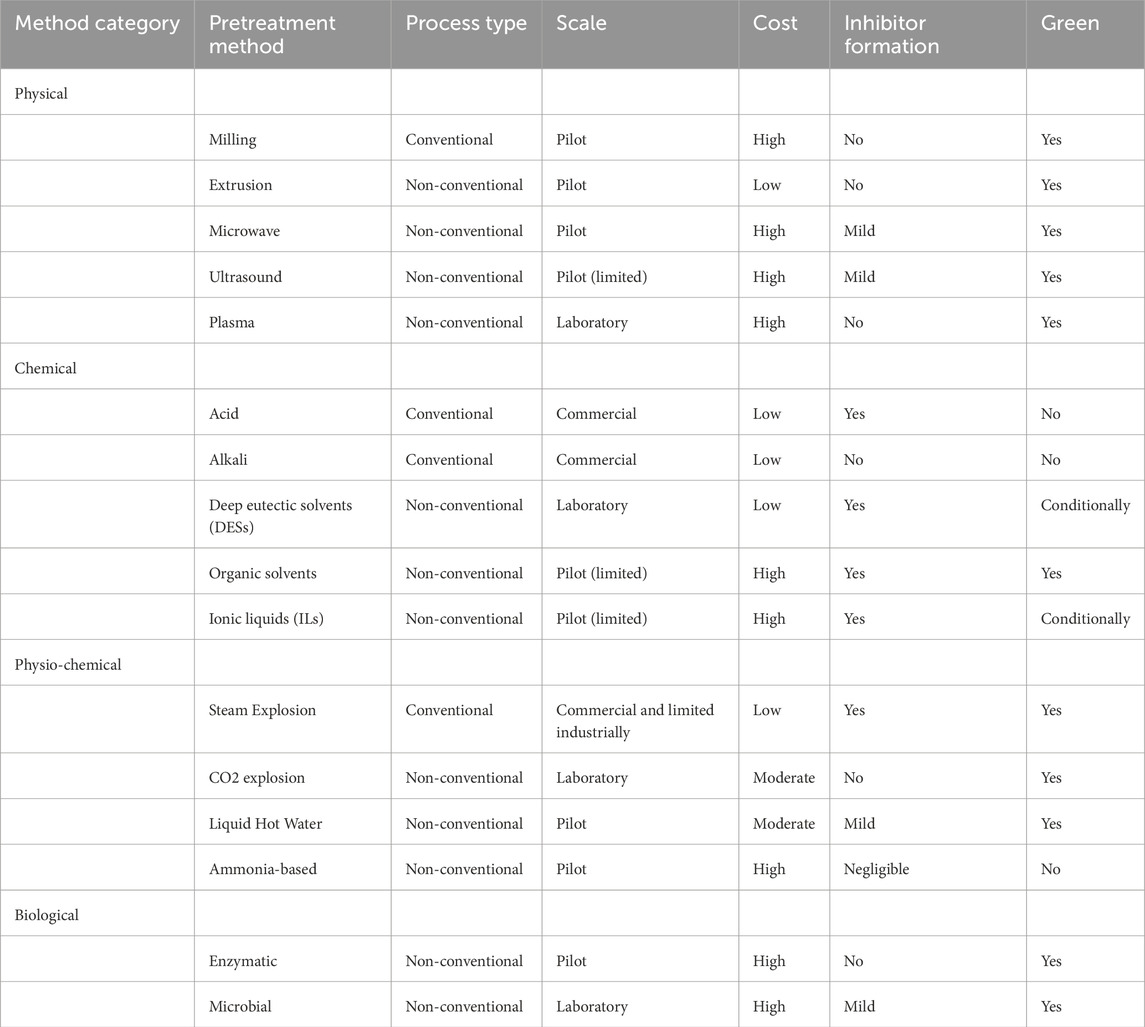
Table 2. Pretreatment technologies for bioethanol production from agricultural residue and food waste. The cost is determined based on the industrial scale.
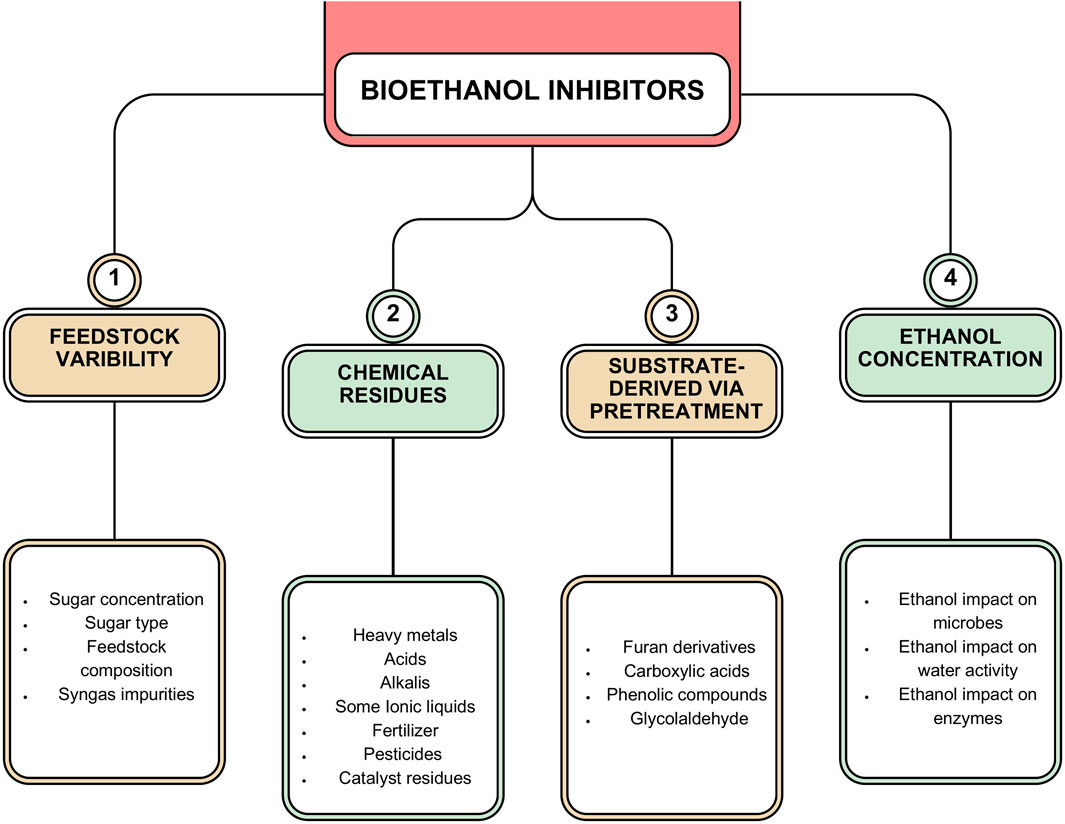
Figure 2. Bioethanol inhibitors that are resulted before, during, or after fermentation process.
3.2 Innovations in commercialization via immobilization
Cell immobilization confines viable microbes in a matrix, preserving their activity while enhancing protection, localization, and reusability, which improves the sustainability (Lapponi et al., 2022; Hassan et al., 2019). Various immobilization strategies such as cross-linking, aggregation and biofilm-mediated immobilization, covalent bonding, encapsulation or entrapment, and adsorption are well-defined in the literature (Sagir and Alipour, 2021; Mohidem et al., 2023) besides the potential of the developed immobilized reactors Willaert, (2011) and Wouters et al. (2021). These technologies have shown significant promise in enhancing bioethanol production, offering several advantages over traditional free-cell fermentation methods. They are being applied to immobilize at both research and commercial scales, with varying degrees of implementation (Karagoz et al., 2019; Erkan-Ünsal et al., 2023).
One of the most notable advantages of the cell immobilization procedure is the increased tolerance of cells to various lignocellulosic inhibitors. Chacón-Navarrete et al. (2021) and Rakin et al. (2009) indicate that cells immobilized in various supports, such as calcium alginate, are capable of maintaining their viability even in the presence of phenols, furans, and high ethanol concentration. Immobilized cells show greater physiological stability associated with the production of protective compounds such as trehalose or glycogen. These compounds favor an increase in cell viability with respect to fermentations with free cells by limiting the toxicity of ethanol and other lignocellulosic inhibitors (Chacón-Navarrete et al., 2021).
Furthermore, immobilized cells in alginate have demonstrated efficient fermentative activity for at least two fermentation cycles before the degradation of the support material (Rakin et al., 2009). Nevertheless, in this study, alginate support demonstrated some limitations in its mechanical stability under high cell density and CO2 release conditions. On the other hand, polyvinyl-alcohol (PVA) showed major mechanical resistance, although it exhibited less fermentation efficiency. This, along with other studies showing the potential for reusing immobilized cells and their suitability for use, highlights numerous industrial benefits. These include reduced downtime between cycles, and enhanced suitability for large-scale bioethanol production plants. Additionally, these systems offer economic advantages, such as notable reductions in operational costs. Immobilization systems also improve molecular transport between immobilized cells and the medium due to the adjustable porosity of materials like alginate and biochar systems. This allows substrates to penetrate toward the cells while metabolic products are subsequently released into the medium (Chacón-Navarrete et al., 2021). Another significant advantage of cell immobilization is the optimization of space, as the supports can accommodate a higher number of cells in a reduced volume. This increases cell density, volumetric productivity, and consequently fermentation efficiency (Chacón-Navarrete et al., 2021; Rakin et al., 2009).
The exploration of cell immobilization technologies for bioethanol production is opening new avenues, particularly with the use of non-conventional microorganisms. Although S. cerevisiae—in both its engineered and wild forms—remains the dominant organism for bioethanol production across all generations, these emerging technologies are still primarily in the research and development phase (Jansen et al., 2017; Soleimani et al., 2017; Moremi et al., 2020). Encouragingly, initial strides toward commercial implementation are now being observed. Table 2 provides an overview of various non-conventional microorganisms, including extremophiles, that have been immobilized within cell carriers to optimize bioethanol production.
Table 3 highlights various non-conventional microorganisms employed for bioethanol production using diverse feedstocks, emphasizing extremophiles and experiments approaching the performance of the conventional microorganism S. cerevisiae. This species achieves productivities of 3–4 g/Lh with ∼75% fermentation yield for first-generation bioethanol and 1–2 g/Lh with ∼65% yield for second-generation production (Macrelli et al., 2014; Narisetty et al., 2022; Devi et al., 2023; Hans et al., 2023). Extremophilic microorganisms such as Z. mobilis under repeated batch fermentation with mesoporous silica and glucose achieved a productivity of 0.39 g/Lh and a fermentation efficiency of 56.70% (Niu et al., 2013). Although these values fall below those of S. cerevisiae, they highlight the potential of extremophiles when fermentation conditions are further optimized.
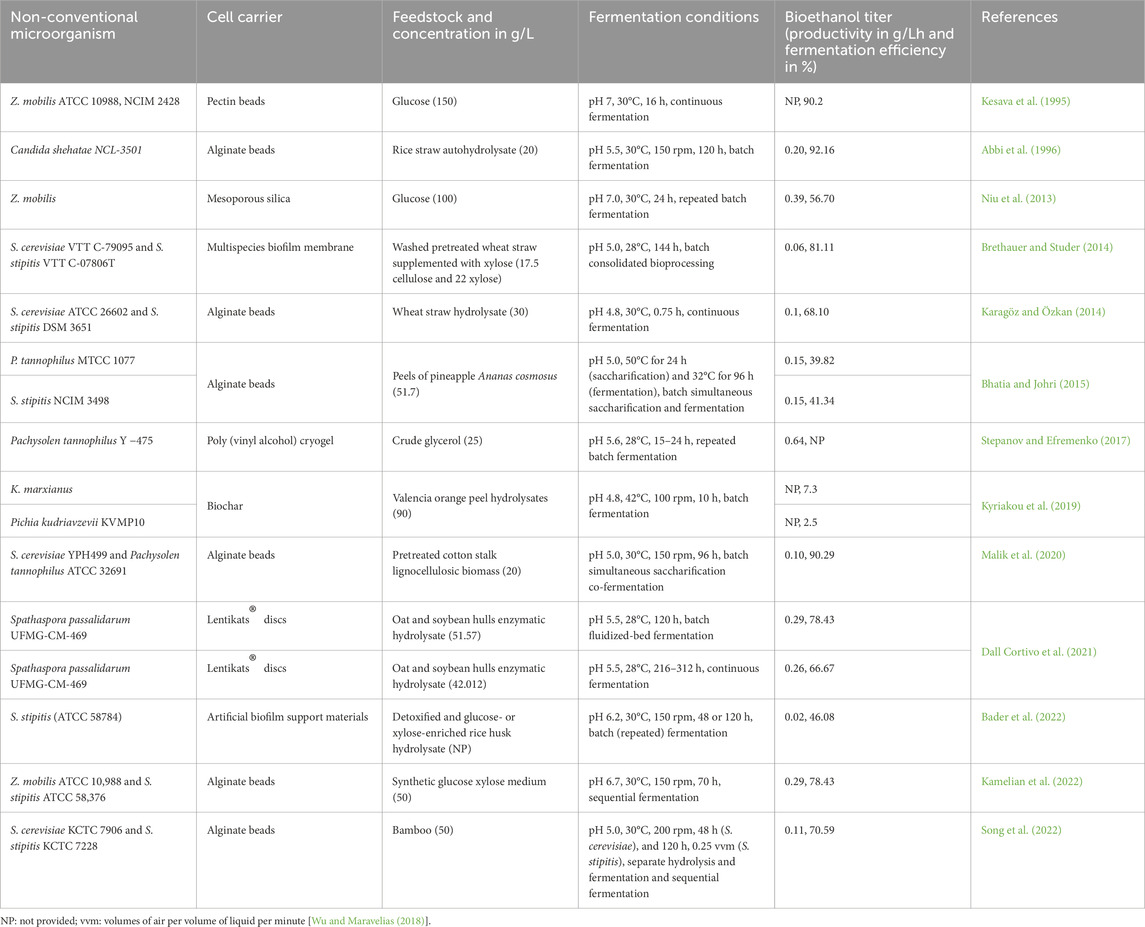
Table 3. Immobilized whole cells in cell carriers for enhanced bioethanol production with non-conventional methods, feedstocks and/or microorganisms.
Kamelian et al. (2022) demonstrated a sequential fermentation strategy combining Z. mobilis (strain ATCC 10,988) with S. stipitis (ATCC 58,376), achieving a productivity of 0.29 g/Lh and a fermentation yield of 78.43%. This study illustrates the advantages of using extremophilic and non-conventional microorganisms in tandem to enhance bioethanol production efficiency, especially when targeting specific substrates or conditions. While the productivities remain lower than the benchmarks of S. cerevisiae, such approaches show promise in advancing non-conventional systems for sustainable bioethanol production. In addition, Stepanov and Efremenko (2017) achieved a significant milestone by attaining a productivity of 0.64 g/Lh using Pachysolen tannophilus Y-475, a yeast known for its capacity to ferment pentose sugars. This was accomplished through the use of an innovative bioreactor system with immobilized cells, nearly doubling the productivity reported in many other non-conventional setups.
Other extremophiles such as Candida shehatae, known for its ability to metabolize and ferment pentose sugars and to survive in environments with high concentrations of inhibitors typically present in hydrolysates, achieved notable substrate utilization efficiencies. In a batch fermentation process using rice straw autohydrolysate, it delivered a fermentation efficiency of 92.16%, but its productivity was relatively low at 0.20 g/Lh (Abbi et al., 1996). Another experiment featuring a co-culture of S. cerevisiae and S. stipitis using wheat straw hydrolysate achieved 0.1 g/Lh productivity and a 68.10% fermentation efficiency (Karagöz and Özkan, 2014). Although the productivities fall short of conventional values, the efficiency levels approach or exceed S. cerevisiae in certain cases, showcasing potential in specialized conditions.
Notably, some systems utilizing immobilized cells enhanced productivity under industrially challenging feedstocks. For example, 81.11% fermentation efficiency was reached with pretreated wheat straw, though productivity remained at 0.06 g/Lh (Brethauer and Studer, 2014). These results highlight the innovative cell immobilization techniques applied to improve performance, even though further optimization is required to meet the standards of conventional production systems.
4 Pilot case studies on extremophiles/non-conventional microbes/methods on ethanol production
Globally, non-conventional bioethanol production faces several challenges limiting their readiness for scale-up as previously indicated in this article. This limitation involves the developed countries as well. The European market shows Surprisingly, only a few companies in European countries have scaled the production to a pilot or commercial scale (see Table 4). Nevertheless, recent studies in the last decade conducted abroad investigation regarding non-conventional bioethanol production using various feedstocks and microorganisms. The feedstocks included lignocellulosic biomass (Limayem and Ricke, 2012), industrial waste (Alfonsín et al., 2019), and urban and municipal waste (Meng et al., 2021), whereas microbial strains included primarily yeast (Nandal et al., 2020) and secondly bacteria (Tang et al., 2021).
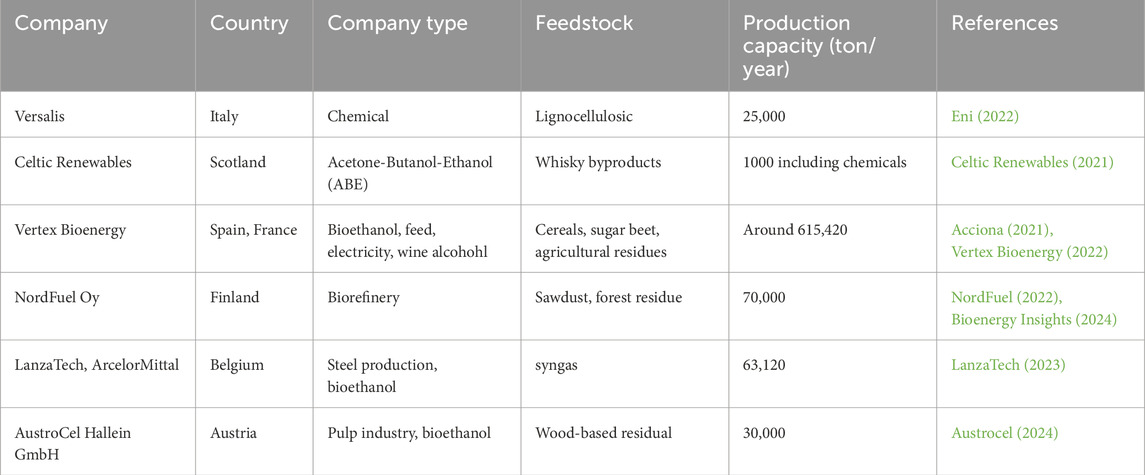
Table 4. Non-conventional bioethanol producing companies across Europe.
For non-conventional feedstocks and microbes processes, Lin et al. (2012) demonstrated that employing S. stipitis for xylose fermentation from rice straw has a potential for commercial ethanol production. Importantly, the ethanol yield was affected directly via biomass pretreatment directly. Unlike rice straw hydrolysates which were conditioned via ammonia that yielded 0.39 g/g of ethanol, the highest ethanol yield and productivity were 0.44 g/g and 0.22 g/Lh, respectively, when rice straw hydrolysates were obtained via the overliming-detoxification process. The authors stated that there is a strong relationship between the initial cell density and the concentration furfural on one hand, and the pretreatment process on the other hand. Hence, all these considerations may further improve ethanol yield depending on the applied pretreatment process and conditioning (Lin et al., 2012).
In a different strategy to utilize the rice straw, hydrolyzed rice straw was added to bamboo, plywood, and bagasse xylose fermentation by P. stipites. Similar to the previous study, overliming and ammonia were selected as the detoxification procedure to remove inhibitory compounds present in hemicellulosic hydrolysates and for neutralizing, respectively. Factually, this strategy increased S. stipitis cell mass, leading to higher ethanol yield by 20%–51% compared to the method when hydrolyzed rice straw was not added into the xylose, and the overall ethanol yield and productivity were 0.45 g/g and 0.25 g/Lh when ammonia pretreatment was conducted, and 0.43 g/g and 0.27 g/Lh, respectively. The yield and productivity were slightly better than rice straw-based xylose when it was solely utilized for the fermentation, indicating the high potential of rice straw to be the main source of xylose (Lin et al., 2016).
The potential of utilizing beech wood chips as a source of xylose and Spathaspora passalidarum capacity for bioethanol production was investigated by de Vrije et al. (2024). The authors employed organosolv fractionation method based on acetone for the pretreatment process. The medium also contained organic acids, furans, and phenolics. The ethanol yield of S. passalidarum was 0.38 g/g, which was less than that of S. stipitis (de Vrije et al., 2024). In contrast to P. stipites, which had ethanol productivity of 0.22 and 0.25 g/Lh (Lin et al., 2012; 2016), S. passalidarum had superior ethanol productivity of 0.78 g/Lh. However, YP + salt medium was added along with the extracted sugars for the fermentation process. Interestingly, the up-scaled reactor exhibited a higher ethanol yield compared with the flask scale which was 0.34 g/g which encourages conducting further pilot-scale analysis regarding xylose fermentation via S. passalidarum. In the same study, glucose was extracted from beech wood chips along with xylose. The extract was added to the YP + salt medium and was fermented by S. cerevisiae. Ethanol yield and productivity were 0.48 g/g and 3.9 g/Lh, respectively (de Vrije et al., 2024), showing the high capacity of wood chips to be applied with the ordinary medium since the yield is near the theoretical value of 0.51 g ethanol/g sugars (Krishnan et al., 1999). Sugarcane bagasse utilization by Kluveromyces marxianus showed less potential for ethanol production. Lin et al., (2013) conducted alkaline pretreatment followed by a fermentation process using a rotary drum reactor which is rarely reported. The authors achieved the highest ethanol concentration and productivity of 24.6 g/L and 0.342 g/Lh, respectively. Importantly, the results showed an effective scaling up since the obtained outcomes were similar to the laboratory scale. However, significant improvements are required to achieve better productivity.
Industrial waste, namely, avocado seeds, oat hulls, empty fruit bunches from palm oil, sugarcane bagasse, the potato processing industry, and the seaweed industry was investigated using S. cerevisiae (see Table 5 below). Among these non-conventional feedstocks, potato waste and avocado seeds exhibited the highest ethanol concentration and the most promising feedstocks for ethanol production. Various potato wastes were investigated separately to figure out the highest ethanol-producing feedstock, although the pretreatment methods were not identical. Potato peels were pretreated with alkaline while the potato tubers and slices were pretreated hydrothermally since these pretreatment methods were favored for each group. All groups were fermented using conventional yeast. The maximum ethanol concentration obtained from potato tubers and slices was 64 g/L, followed by potato peels which was 9 g/L, and these results were similar to those of a laboratory scale. Further, the authors utilized potato starch waste and chips directly via simultaneous saccharification and fermentation without any additional pretreatment process. Both of them exhibited high ethanol concentrations of 50 g/L and 57.5 g/L for the starch and chips, respectively. However, the ethanol productivity of the starch (0.69 g/Lh) was low compared with the chips (2.13 g/Lh) (Felekis et al., 2023). Similarly, avocado seeds-derived starch showed a very competitive ethanol concentration and productivity of 50.94 g/L and 2.11 g/Lh to potato starch and chips, respectively, after dilute acid pretreatment and conventional yeast fermentation. Further, the authors stated that the byproducts that could inhibit the fermentation process were very low (Caballero-Sanchez et al., 2023).
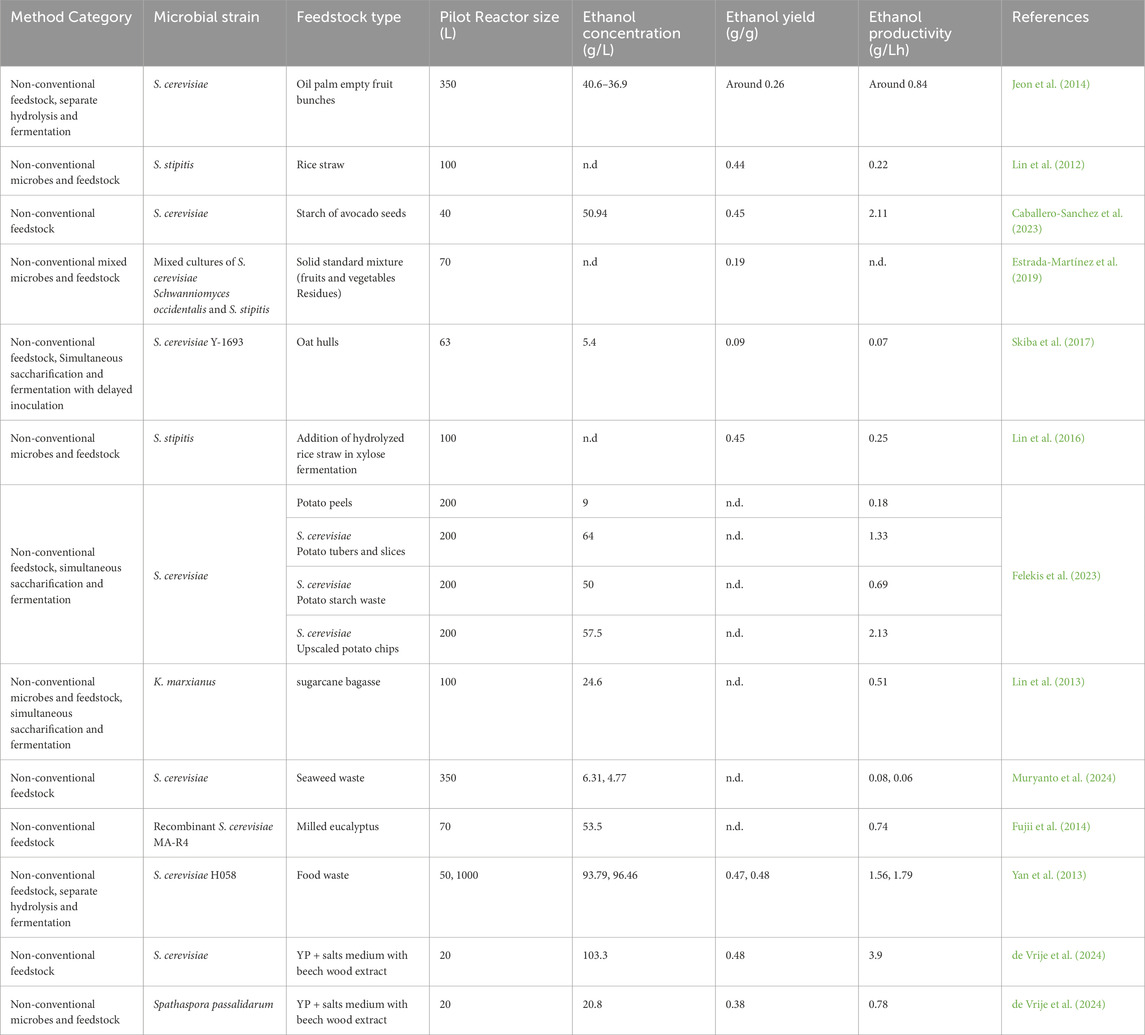
Table 5. Pilot scale ethanol production with non-conventional microbes/feedstocks.
Lastly, food waste was investigated using S. cerevisiae and mixed strains as well. In the single-strain case study, food waste was pretreated physically and biologically using milling and enzymatic, respectively. Following that, S. cerevisiae was employed for the fermentation in laboratory, pilot, and semi-pilot scales to compare the outcomes. Interestingly, the pilot scale resulted in the highest ethanol yield, concentration, and productivity of 0.48 g/g, 96.46 g/L, and 1.79 g/Lh, respectively, with the lowest fermentation time. The authors stated that food waste utilization can be economic. However, important factors such as nitrogen source and substrate loading must be considered since high loading of food-based sugar might inhibit or impact the fermentation process, and the absence of nitrogen in the food-based waste might require nitrogen supplementation and sugar reducing technique, respectively, prior to the fermentation process (Yan et al., 2013). In the case of mixed cultures, S. cerevisiae, Schwanniomyces occidentalis, and p. stipites were applied for food waste, particularly, solid mixtures of fruits and vegetables residues. A mild thermal pretreatment was followed initially and then fermented by the mixed cultures. However, the ethanol yield of 0.19 g/g was lower than the laboratory scale of 0.22 g/g, and lower than in the previous studies of food waste utilization. Notably, a reasonable pilot scale yield of more than 0.40 g/g indicates that the method may be scalable to a commercial scale, particularly if other parameters such as cost-effectiveness and productivity are positive (Macrelli et al., 2012).
5 Roadmap for commercialization of bioethanol with extremophiles/non-conventional microbes
One of the commercialization roadmap for bioethanol production using extremophiles and non-conventional microorganisms focuses on leveraging cell immobilization technologies to enhance productivity and fermentation efficiency under industrially challenging conditions. Extremophilic microorganisms, such as Z. mobilis, S. stipitis, and P. tannophilus, demonstrate unique capabilities in tolerating harsh environments, efficiently fermenting diverse substrates, and metabolizing pentose sugars. Innovative approaches like sequential fermentation and co-culture systems have achieved fermentation efficiencies comparable to or exceeding conventional systems, though productivities remain below the benchmarks of S. cerevisiae (Karagöz and Özkan, 2014; Kamelian et al., 2022; Song et al., 2022). Techniques such as immobilized cell have shown promise in optimizing non-conventional setups, with notable advances like a productivity of 0.64 g/Lh achieved with immobilized P. tannophilus and efficiencies exceeding 90% in specific setups (Kesava et al., 1995; Abbi et al., 1996; Brethauer and Studer, 2014; Stepanov and Efremenko, 2017; Malik et al., 2020). To accelerate the commercialization of bioethanol production with extremophiles and non-conventional microbes, a potential roadmap must incorporate multi-disciplinary collaboration among academia, industry, and policymakers. Developing robust pilot-scale demonstrations to validate laboratory findings is crucial for ensuring industrial scalability. Additionally, establishing regulatory frameworks and incentivizing investments in advanced biotechnologies can help overcome financial barriers. Moving forward, the roadmap emphasizes further optimization of fermentation conditions, integration of extremophiles tailored for specific feedstocks, and industrial-scale adaptation of immobilization technologies to bridge the gap between non-conventional and conventional bioethanol production benchmarks. These efforts must be supported by comprehensive life cycle assessments to evaluate the environmental and economic benefits of non-conventional bioethanol production systems. By aligning technological innovation with policy support, the pathway to widespread adoption of these advanced methods can be effectively realized.
6 Conclusion
The recent concerns regarding food security and environmental impact are urging for using non-food feedstock for biofuel production and supported by policy update. However, using non-conventional feedstock is challenging since the well-recognized microbial strains are unable to ferment these types of sugars. As a result, non-conventional thermophiles are suggested as a sustainable alternative since their enzymes have a potential to valorize these types of sugars such as pentose in elevated temperature, potentially to be cost-effective where sterilization is eliminated. Importantly, certain engineered strains such as Thermoanaerobacter mathranii could have ethanol yield of 94%. However, the literature lacks scaling up and validation studies. Similarly, other non-conventional strains, particularly, P. stipitis, and K. marxianus showed the best xylose fermentation and fast growth compared with S. cerevisiae, respectively, along with ethanol production. However, they are less resistant to ethanol, making them less attractive. Therefore, new techniques such as genetic engineering which its tools are available for many strains such as K. marxianus, co-culture, immobilization, and pretreatment selection could overcome or improve the tolerance along with ethanol yield improvement. Notably, co-culture could improve ethanol yield by 440% with some strains. Yet, more research should be conducted on large scales. Additionally, the literature lacks very important data that are related to a single strain, co-culture, or immobilized cells in biorefinery. For instance, K. marxianus is well-known for its potential to produce multiple valuable products and its co-culture with Bacillus coagulans could improve lactic acid and ethanol by 90%.
Feedstock availability and its pretreatment which accounts for up to 40% of ethanol production are other challenges. Unfortunately, feedstock availability is not reported properly including in the developed countries, while the novel eco-friendly pretreatment techniques are not scaled and/or formulate inhibitors, making the commercialization of the advanced ethanol very challenging and less viable. This paper provides a comprehensive review of the current advancements, challenges, and future directions for leveraging extremophiles and non-conventional microorganisms in bioethanol production. It serves as a valuable resource for researchers, industry stakeholders, and policymakers to drive innovation and collaboration, ultimately accelerating the transition to sustainable energy solutions.
Author contributions
MA-H: Data curation, Investigation, Visualization, Writing – original draft. GA: Investigation, Writing – original draft. FM-G: Investigation, Writing – original draft. JM-G: Investigation, Writing – original draft. TK: Investigation, Writing – original draft. MG: Conceptualization, Supervision, Validation, Writing – review and editing.
Funding
The author(s) declare that no financial support was received for the research and/or publication of this article.
Conflict of interest
The authors declare that the research was conducted in the absence of any commercial or financial relationships that could be construed as a potential conflict of interest.
Generative AI statement
The author(s) declare that Generative AI was used in the creation of this manuscript. To assist with English grammar, language editing, and clarity in the preparation of this manuscript.
Publisher’s note
All claims expressed in this article are solely those of the authors and do not necessarily represent those of their affiliated organizations, or those of the publisher, the editors and the reviewers. Any product that may be evaluated in this article, or claim that may be made by its manufacturer, is not guaranteed or endorsed by the publisher.
References
Abbi, M., Kuhad, R. C., and Singh, A. (1996). Fermentation of xylose and rice straw hydrolysate to ethanol by Candida shehatae NCL-3501. J. Industrial Microbiol. 17 (1), 20–23. doi:10.1007/BF01570143
Abolore, R. S., Jaiswal, S., and Jaiswal, A. K. (2024). Green and sustainable pretreatment methods for cellulose extraction from lignocellulosic biomass and its applications: a review. Carbohydr. Polym. Technol. Appl. 7 (11), 100396. doi:10.1016/j.carpta.2023.100396
Acciona (2021). ACCIONA to supply 100% renewable energy to Vertex Bioenergy in Spain. Available online at: https://www.acciona.com/updates/news/acciona-supply-renewable-energy-vertex-bioenergy-spain/.
Advanced Biofuel USA (2023). EU under pressure to tackle fraudulent biofuels imports, advanced biofuel USA. Available online at: https://advancedbiofuelsusa.info/eu-under-pressure-to-tackle-fraudulent-biofuels-imports (Accessed March 8, 2025).
AgWeb (2024). Germany, France push EU to halt import of fraudulent biofuel. AgWeb Farm J. Kansas Available online at: https://www.agweb.com/markets/pro-farmer-analysis/germany-france-push-eu-halt-import-fraudulent-biofuel (Accessed: March 8, 2025).
Ahmad, Q. ul A., Hussain, A., Chaudhary, A., and Deepanraj, B. (2024). Thermophilic combined bioproduction of ethanol and hydrogen utilizing sugarcane bagasse. Process Saf. Environ. Prot. 185, 930–939. doi:10.1016/j.psep.2024.03.004
Alam, M. M., Greco, A., Rajabimashhadi, Z., and Esposito Corcione, C. (2024). Efficient and environmentally friendly techniques for extracting lignin from lignocellulose biomass and subsequent uses: a review. Clean. Mater. 13 (6), 100253. doi:10.1016/j.clema.2024.100253
Alessandrini, M., Alblas, E., and Batten, L. (2023). “Agricultural waste to biofuel and biogas: law and policy,” in Law in the EU’s circular energy system, 28–48. doi:10.4337/9781802205879.00011
Alfonsín, V., Maceiras, R., and Gutiérrez, C. (2019). Bioethanol production from industrial algae waste. Waste Manag. 87, 791–797. doi:10.1016/j.wasman.2019.03.019
Al-Hammadi, M., and Güngörmüşler, M. (2024). New insights into Chlorella vulgaris applications. Biotechnol. Bioeng. 121 (5), 1486–1502. doi:10.1002/bit.28666
Al-Hammadi, M., and Güngörmüşler, M. (2025). From refuse to resource: exploring technological and economic dimensions of waste-to-energy. Biofuels, Bioprod. Biorefining 156, 1–23. doi:10.1002/bbb.2723
Alkhalidi, A., Halaweh, G., and Khawaja, M. K. (2023). Recommendations for olive mills waste treatment in hot and dry climate. J. Saudi Soc. Agric. Sci. 22 (6), 361–373. doi:10.1016/j.jssas.2023.03.002
Amaya-Delgado, L., Flores-Cosío, G., Sandoval-Nuñez, D., Arellano-Plaza, M., Arrizon, J., and Gschaedler, A. (2018). “Comparative of lignocellulosic ethanol production by Kluyveromyces marxianus and Saccharomyces cerevisiae,” in Special topics in renewable energy systems, 1–20. doi:10.5772/intechopen.78685
Arce, C., and Kratky, L. (2022). Mechanical pretreatment of lignocellulosic biomass toward enzymatic/fermentative valorization. IScience 25 (7), 104610. doi:10.1016/j.isci.2022.104610
Argus (2023). Germany revisits ban of crop-biofuels, Argus. Available online at: https://www.argusmedia.com/en/news-and-insights/latest-market-news/2410639-germany-revisits-ban-of-crop-biofuels (Accessed March 7, 2025).
Argus (2024a). France lowers 2024-25 wheat production outlook. Argus Media. London. Available online at: https://www.argusmedia.com/en/news-and-insights/latest-market-news/2608902-france-lowers-2024-25-wheat-production-outlook (Accessed December 9, 2024).
Argus (2024b). Viewpoint: ethanol producers face higher costs in 2025, Argus. Available online at: https://www.argusmedia.com/en/news-and-insights/latest-market-news/2641791-viewpoint-ethanol-producers-face-higher-costs-in-2025 (Accessed March 6, 2025).
Austrocel (2024). The biofuel from hallein. Austrocel. Hallein. Available online at: https://www.austrocel.com/en/bio-ethanol/ (Accessed: January 4, 2025).
Awoyale, A. A., and Lokhat, D. (2021). Experimental determination of the effects of pretreatment on selected Nigerian lignocellulosic biomass in bioethanol production. Sci. Rep. 11 (1), 557–616. doi:10.1038/s41598-020-78105-8
Bader, N. B., Germec, M., and Turhan, I. (2022). Repeated-batch fermentation of Scheffersomyces stipitis in biofilm reactor for ethanol production from the detoxified and glucose- or xylose-enriched rice husk hydrolysate and its kinetic modeling. Fuel 326, 125053. doi:10.1016/j.fuel.2022.125053
Baptista, M., and Domingues, L. (2022). “Kluyveromyces marxianus as a microbial cell factory for lignocellulosic biomass valorisation,” in Biotechnology advances (Elsevier). doi:10.1016/j.biotechadv.2022.108027108027
Baral, N. R., and Shah, A. (2017). Comparative techno-economic analysis of steam explosion, dilute sulfuric acid, ammonia fiber explosion and biological pretreatments of corn stover. Bioresour. Technol. 232, 331–343. doi:10.1016/j.biortech.2017.02.068
Barcelos, C. A., Oka, A. M., Yan, J., Das, L., Achinivu, E. C., Magurudeniya, H., et al. (2021). High-efficiency conversion of ionic liquid-pretreated woody biomass to ethanol at the pilot scale. ACS Sustain. Chem. Eng. 9 (11), 4042–4053. doi:10.1021/acssuschemeng.0c07920
Basaglia, M., D’ambra, M., Piubello, G., Zanconato, V., Favaro, L., and Casella, S. (2021). Agro-food residues and bioethanol potential: a study for a specific area. Processes 9 (2), 1–15. doi:10.3390/pr9020344
Bayrakci, A., and Koçar, G. (2013). Second-generation bioethanol production from water hyacinth and duckweed in Izmir: a case study. Renew. Sustain. Energy Rev. 131, 109911. doi:10.1016/j.rser.2013.10.011
Bazil, S. E., and Krogstie, H. B. (2020). SPIRE: can sea-weed in Nor-way be a sus-tain-able success? SeaweedSolutions. Trondheim. Available online at: https://seaweedsolutions.com/news/can-seaweed-in-norway-be-a-sustainable-success (Accessed: January 16, 2025).
Behera, S., Arora, R., Nandhagopal, N., and Kumar, S. (2014). Importance of chemical pretreatment for bioconversion of lignocellulosic biomass. In Renewable and sustainable energy reviews (Vol. 36, pp. 91–106). Pergamon. doi:10.1016/j.rser.2014.04.047
Beluhan, S., Mihajlovski, K., Šantek, B., and Šantek, M. (2023). The production of bioethanol from lignocellulosic biomass: pretreatment methods, fermentation, and downstream processing. Energies 16 (19), 7003. doi:10.3390/en16197003
Bender, L. E., Lopes, S. T., Gomes, K. S., Devos, R. J. B., and Colla, L. M. (2022). Challenges in bioethanol production from food residues. Bioresour. Technol. Rep. 19, 101171. doi:10.1016/j.biteb.2022.101171
Bhatia, L., and Johri, S. (2015). Biovalorization potential of peels of Ananas cosmosus (L.) Merr. for ethanol production by Pichia stipitis NCIM 3498 and Pachysolen tannophilus MTCC 1077. Indian J. Exp. Biol. 53 (12), 819–827.
Bibra, M., Samanta, D., Sharma, N. K., Singh, G., Johnson, G. R., and Sani, R. K. (2023). Food waste to bioethanol: opportunities and challenges. Fermentation 9 (1), 8. doi:10.3390/fermentation9010008
Bilal, M., Ji, L., Xu, Y., Xu, S., Lin, Y., Iqbal, H. M. N., et al. (2022). Bioprospecting Kluyveromyces marxianus as a robust host for industrial biotechnology. Front. Bioeng. Biotechnol. 10 (4), 851768. doi:10.3389/fbioe.2022.851768
Bioenergy Insights (2024). NordFuel’s Finland advanced bioproduct factory relies on Chempolis’ technology. Bioenergy Insights. Available online at: https://www.bioenergy-news.com/news/nordfuels-finland-advanced-bioproduct-factory-relies-chempolis-technology/ (Accessed January 10, 2025).
Brethauer, S., and Studer, M. H. (2014). Consolidated bioprocessing of lignocellulose by a microbial consortium. Energy & Environ. Sci. 7 (4), 1446–1453. doi:10.1039/c3ee41753k
Bundhoo, M. A. Z., Mohee, R., and Hassan, M. A. (2015). Effects of pre-treatment technologies on dark fermentative biohydrogen production: a review. J. Environ. Manag. 157, 20–48. doi:10.1016/j.jenvman.2015.04.006
Businesscoot (2022). The soybean market - Italy. Chesterfield: Businesscoot. Available online at: https://www.google.com/search?q=how+many+tons+of+soybean+is+producd+in+Italy%3F&sca_esv=b452c647e5ef5e7a&rlz=1C1GCEJ_enIQ963IQ963&ei=iwZXZ9K8EOSBi-gP0L-RyQQ&ved=0ahUKEwiSruq8-pqKAxXkwAIHHdBfJEkQ4dUDCA8&uact=5&oq=how+many+tons+of+soybean+is+producd+in+Ital (Accessed: December 9, 2024).
Business Finland (2023). The power is in the oats – Finland encourages export of its resilient oats. BusinessFinland. Helsinki. Available online at: https://www.businessfinland.com/press-release/2023/the-power-is-in-the-oats--finland-encourages-export-of-its-resilient-oats/#:∼:text=Finlandisoneofthe,oatsisalsogrowingsignificantly (Accessed December 9, 2024).
Caballero-Sanchez, L., Lázaro-Mixteco, P. E., Vargas-Tah, A., and Castro-Montoya, A. J. (2023). Pilot-scale bioethanol production from the starch of avocado seeds using a combination of dilute acid-based hydrolysis and alcoholic fermentation by Saccharomyces cerevisiae. Microb. Cell Factories 22 (1), 1–10. doi:10.1186/s12934-023-02110-5
Cai, J. (2021). “Global status of seaweed production, trade and utilization,” in Seaweed innovation forum Belize (5).
Carraro, A. C., Searle, S., and Baldino, C. (2021). Waste and residue availability for advanced biofuel production in the European Union and the United Kingdom. Int. Counc. Clean Transp. Washington, DC 2050 (11), 1–9.
Celtic Renewables (2021). The green chemicals. Celtic Renewables. Available online at: https://www.celtic-renewables.com/products/?utm_source=chatgpt.com (Accessed January 10, 2025).
Chacón-Navarrete, H., Martín, C., and Moreno-García, J. (2021). Yeast immobilization systems for second-generation ethanol production: actual trends and future perspectives. Biofuels, Bioprod. & Biorefining 15, 1549–1565. doi:10.1002/bbb.2250
Chang, T., and Yao, S. (2011). Thermophilic, lignocellulolytic bacteria for ethanol production: current state and perspectives. Appl. Microbiol. Biotechnol. 92 (1), 13–27. doi:10.1007/s00253-011-3456-3
Chen, H. (2015). “Lignocellulose biorefinery feedstock engineering,” in Lignocellulose biorefinery engineering. doi:10.1016/b978-0-08-100135-6.00003-x
Chung, H., and Washburn, N. R. (2016). “Extraction and types of lignin,” in Lignin in polymer composites (New York: William Andrew Publishing), 13–25. doi:10.1016/B978-0-323-35565-0.00002-3
Clariant (2023). Clariant shuts its sunliquid® bioethanol plant in Romania. Clariant. Muttenz. Available online at: https://www.clariant.com/en/Corporate/News/2023/12/Clariant-shuts-its-sunliquid-bioethanol-plant-in-Romania (Accessed March 9, 2025).
Coombe, S. (2024). 74% of Europe’s food waste landfilled or incinerated. London: Letsrecycle. Available online at: https://www.letsrecycle.com/news/74-of-europes-food-waste-landfilled-or-incinerated/#:∼:text=Thelatesteditionofthe,gardenwastesatat46%25 (Accessed: December 12, 2024).
Dall Cortivo, P. R., Aydos, L. F., Hickert, L. R., Rosa, C. A., Hector, R. E., Mertens, J. A., et al. (2021). Performance of xylose-fermenting yeasts in oat and soybean hulls hydrolysate and improvement of ethanol production using immobilized cell systems. Biotechnol. Lett. 43, 2011–2026. doi:10.1007/s10529-021-03182-2
Demiray, E., González-Fernández, C., and Tomás-Pejó, E. (2024). Kluyveromyces marxianus and Bacillus coagulans co-cultivation: efficient co-production of bioethanol and lactic acid from pomegranate peels. Bioresour. Technol. Rep. 25, 101808. doi:10.1016/j.biteb.2024.101808
den Haan, R., Rose, S. H., Cripwell, R. A., Trollope, K. M., Myburgh, M. W., Viljoen-Bloom, M., et al. (2021). “Heterologous production of cellulose- and starch-degrading hydrolases to expand Saccharomyces cerevisiae substrate utilization: lessons learnt,” in Biotechnology advances (Elsevier) 107859. doi:10.1016/j.biotechadv.2021.107859
Department of Environment (2024). Cereal and oilseed production in the United Kingdom 2023. London: Department for Environment. Food & Rural Affairs. Available online at: https://www.gov.uk/government/statistics/cereal-and-oilseed-rape-production/cereal-and-oilseed-production-in-the-united-kingdom-2023#:∼:text=Wheatisstillthepredominant,decreaseof5.7%25on2022.
Devi, A., Bajar, S., Sihag, P., Sheikh, Z. U. D., Singh, A., Kaur, J., et al. (2023). A panoramic view of technological landscape for bioethanol production from various generations of feedstocks. Bioengineered 14 (1), 81–112. doi:10.1080/21655979.2022.2095702
de Vrije, T., Dussan, K., van de Vondervoort, R. H. A. M., Veloo, R. M., Bonouvrie, P. A., Smit, A. T., et al. (2024). Bioethanol production from organosolv treated beech wood chips obtained at pilot scale. Biomass Bioenergy 181 (1), 107003. doi:10.1016/j.biombioe.2023.107003
Di Gruttola, F., and Borello, D. (2021). Analysis of the eu secondary biomass availability and conversion processes to produce advanced biofuels: use of existing databases for assessing a metric evaluation for the 2025 perspective. Sustainability 13 (14), 7882. doi:10.3390/su13147882
Dimos, K., Paschos, T., Louloudi, A., Kalogiannis, K. G., Lappas, A. A., Papayannakos, N., et al. (2019). Effect of various pretreatment methods on bioethanol production from cotton stalks. Fermentation 5 (1), 5–12. doi:10.3390/fermentation5010005
Duque, A., Manzanares, P., and Ballesteros, M. (2017). Extrusion as a pretreatment for lignocellulosic biomass: fundamentals and applications. In Renewable energy 114, 1427–1441. Pergamon. ]doi:10.1016/j.renene.2017.06.050
Dziekońska-Kubczak, U., Berłowska, J., Dziugan, P., Patelski, P., Balcerek, M., Pielech-Przybylska, K., et al. (2018). Comparison of steam explosion, dilute acid, and alkali pretreatments on enzymatic saccharification and fermentation of hardwood sawdust. BioResources 13 (3), 6970–6984. doi:10.15376/biores.13.3.6970-6984
Ecostar (2024). Biowaste: why organic waste is a hidden treasure in landfills. Ecostar. Sandrigo. Available online at: https://ecostar.eu.com/recycling-organic-waste-in-europe-and-around-the-world-ecostar/#:∼:text=CountriesintheEuropeanUnion,turnedintocompostanddigestate (Accessed: December 8, 2024).
Eni (2022). Versalis: the production of bioethanol up and running at Crescentino. Eni. Rome. Available online at: https://www.eni.com/en-IT/media/press-release/2022/02/versalis-the-production-of-bioethanol-up-and-running-at-crescentino.html (Accessed: January 10, 2025).
Erkan-Ünsal, S. B., Gürler Tufan, H. N., Canatar, M., Yatmaz, H. A., Turhan, I., and Yatmaz, E. (2023). Ethanol production by immobilized Saccharomyces cerevisiae cells on 3D spheres designed by different lattice structure types. Process Biochem. 125, 104–112. doi:10.1016/j.procbio.2022.12.014
Estrada-Martínez, R., Favela-Torres, E., Soto-Cruz, N. O., Escalona-Buendía, H. B., and Saucedo-Castañeda, G. (2019). A mild thermal pre-treatment of the organic fraction of municipal wastes allows high ethanol production by direct solid-state fermentation. Biotechnol. Bioprocess Eng. 24 (2), 401–412. doi:10.1007/s12257-019-0032-7
Eufic (2024). Food waste in Europe: statistics and facts about the problem. Eufic. Brussels. Available online at: https://www.eufic.org/en/food-safety/article/food-waste-in-europe-statistics-and-facts-about-the-problem (Accessed December 13, 2024).
European Biogas Association (2024). 22 bcm of biogases were produced in Europe in 2023, according to a new report released today. Etterbeek: European Biogas Association. Available online at: https://www.europeanbiogas.eu/22-bcm-of-biogases-were-produced-in-europe-in-2023according-to-a-new-report-released-today/ (Accessed January 17, 2025).
European Commission (2021). Agricultural biomass. European commission. Available online at: https://knowledge4policy.ec.europa.eu/bioeconomy/topic/agricultural-biomass_en (Accessed December 10, 2024).
European Compost Network. (2022). Bio-waste in Europe. European Compost Network. Available online at: https://www.compostnetwork.info/policy/biowaste-in-europe/ (Accessed: 14 December 2024).
European Court of Auditors (2023). Special report the EU’s support for sustainable biofuels in transport. Available online at: https://www.eca.europa.eu/ECAPublications/SR-2023-29/SR-2023-29_EN.pdf.
European Environment Agency (2023). Waste recycling in Europe. Copenhagen: European Environment Agency. Available online at: https://www.eea.europa.eu/en/analysis/indicators/waste-recycling-in-europe (Accessed December 14, 2024).
Europe Data (2024). What country is the largest producer of fresh fruit and vegetables in Europe? EuropeData. Available online at: https://europe-data.com/2024/03/04/what-country-is-the-largest-producer-of-fresh-fruit-and-vegetables-in-europe/ (Accessed December 13, 2024).
Eurostat (2024a). Food waste and food waste prevention - estimates. Eurostat. Luxembourg. Available online at: https://ec.europa.eu/eurostat/statistics-explained/index.php?title=Food_waste_and_food_waste_prevention_-_estimates (Accessed: December 7, 2024).
Eurostat (2024b). Fruit and vegetable production in 2022. Luxembourg: Eurostat. Available online at: https://ec.europa.eu/eurostat/web/products-eurostat-news/w/ddn-20240301-1#:∼:text=In2022%2CtheEUproduced,andtropicalfruit (Accessed: January 16, 2024).
Fagundes, V. D., Freitag, J. F., Simon, V., and Colla, L. M. (2024a). “Enzymatic hydrolysis of food waste for bioethanol production,” in Revista Brasileira de Ciências Ambientais (Brazil: Brazilian Journal of Environmental Sciences). doi:10.5327/Z2176-94781978
Fagundes, V. D., Freitag, J. F., Simon, V., and Colla, L. M. (2024b). Enzymatic hydrolysis of food waste for bioethanol production. Rev. Bras. Ciências Ambient. 59 (1), 19788–e2012. doi:10.5327/z2176-94781978
Favoino, E., and Giavini, M. (2024). Bio-waste generation in the EU: current capture levels and future potential. Available online at: https://biconsortium.eu/sites/biconsortium.eu/files/documents/BIC-ZWEreport-Bio-wastegenerationintheEU-currentcaptureandfuturepotential.pdf.50
Felekis, V., Stavraki, C., Malamis, D., Mai, S., and Barampouti, E. M. (2023). Optimisation of bioethanol production in a potato processing industry. Fermentation 9 (2), 103. doi:10.3390/fermentation9020103
Fleck, A. (2024). The scale of food waste in Europe. Hamburg: Statista. Available online at: https://www.statista.com/chart/31072/food-wasted-per-capita-in-european-countries/ (Accessed December 7, 2024).
Foodrus (2020). Spanish pilot. Foodrus. Available online at: https://www.foodrus.eu/spanish-pilot/ (Accessed December 13, 2024).
Fresh Plaza (2024). At what time of year are the most fruit and vegetables wasted in Spain. Fresh Plaza. Tholen. Available online at: https://www.freshplaza.com/europe/article/9242713/at-what-time-of-year-are-the-most-fruit-and-vegetables-wasted-in-spain/ (Accessed: December 13, 2024).
Fujii, T., Murakami, K., Endo, T., Fujimoto, S., Minowa, T., Matsushika, A., et al. (2014). Bench-scale bioethanol production from eucalyptus by high solid saccharification and glucose/xylose fermentation method. Bioprocess Biosyst. Eng. 37 (4), 749–754. doi:10.1007/s00449-013-1032-1
Gallo, G., Imbimbo, P., and Aulitto, M. (2024). The undeniable potential of thermophiles in industrial processes. Int. J. Mol. Sci. 25 (14), 7685. doi:10.3390/ijms25147685
Goers, L., Freemont, P., and Polizzi, K. M. (2014). Co-culture systems and technologies: taking synthetic biology to the next level. J. R. Soc. Interface 11 (96), 20140065. doi:10.1098/rsif.2014.0065
GoodFuels (2024). As the world races to meet global carbon reduction targets, the need for transparency in the biofuels supply chain has never been more critical. GoodFuels. Rotterda. Available online at: https://www.goodfuels.com/news/union-database-for-biofuels-bridging-the-gap-for-unified-standards-and-transparency-in-biofuels (Accessed March 8, 2025).
Gu, T., Held, M. A., and Faik, A. (2013). Supercritical CO2 and ionic liquids for the pretreatment of lignocellulosic biomass in bioethanol production. Environ. Technol. (United Kingdom) 34 (13–14), 1735–1749. doi:10.1080/09593330.2013.809777
Guigou, M., Guarino, J., Chiarello, L. M., Cabrera, M. N., Vique, M., Lareo, C., et al. (2023). Steam explosion of Eucalyptus grandis sawdust for ethanol production within a biorefinery approach. Processes 11 (8), 2277–2318. doi:10.3390/pr11082277
Gungormusler, M., Azbar, N., and Keskin, T. (2022). Bioethanol production from C1 gases using alternative media by syngas fermentation. Int. J. Glob. Warming, 28(1), 42–59. doi:10.1504/IJGW.2022.125079
Gungormusler, M., and Keskin Gundogdu, T. (2020). “Optimization of syngas feed for improved bioethanol production with Clostridium ragsdalei,” IConTES 2020: International Conference on Technology, Engineering and Science (Hamburg: World Population Review) 11, 174–179.
Hans, M., Lugani, Y., Chandel, A. K., Rai, R., and Kumar, S. (2023). Production of first- and second-generation ethanol for use in alcohol-based hand sanitizers and disinfectants in India. Biomass Convers. Biorefinery 13 (3), 1–18. doi:10.1007/s13399-021-01553-3
Hassan, M. E., Yang, Q., Xiao, Z., Liu, L., Wang, N., Cui, X., et al. (2019). Impact of immobilization technology in industrial and pharmaceutical applications. 3 Biotech. 9 (440), 440–516. doi:10.1007/s13205-019-1969-0
Ha-Tran, D. M., Nguyen, T. T. M., and Huang, C. C. (2020). Kluyveromyces marxianus: current state of omics studies, strain improvement strategy and potential industrial implementation. Fermentation 6 (4), 124. doi:10.3390/fermentation6040124
Hawaz, E., Tafesse, M., Tesfaye, A., Kiros, S., Beyene, D., Kebede, G., et al. (2024). Bioethanol production from sugarcane molasses by co-fermentation of Saccharomyces cerevisiae isolate TA2 and Wickerhamomyces anomalus isolate HCJ2F-19. Ann. Microbiol. 74 (1), 13. doi:10.1186/s13213-024-01757-8
He, Q., Hemme, C. L., Jiang, H., He, Z., and Zhou, J. (2011). Mechanisms of enhanced cellulosic bioethanol fermentation by co-cultivation of Clostridium and Thermoanaerobacter spp. Bioresour. Technol. 102 (20), 9586–9592. doi:10.1016/J.BIORTECH.2011.07.098
Hongbo, Du, Deng, F., Kommalapati, R. R., and Amarasekara, A. S. (2020). “Iron based catalysts in biomass processing,” in Renewable and sustainable energy reviews, 134. Pergamon, 110292. doi:10.1016/j.rser.2020.110292
Hristov, J., Toreti, A., Pérez Domínguez, I., Dentener, F., Fellmann, T. C. E., Ceglar, A., et al. (2020). “Analysis of climate change impacts on EU agriculture by 2050,” in Eur 30078 En, 26. doi:10.2760/121115
Ibrahim, O. O. (2023). Recent advances fermentation technology for bioethanol production as one of potential energy sources. Recent Prog. Sci. Technol. 4, 22–48. B P International. doi:10.9734/bpi/rpst/v4/4333b
International Energy Agency (2022). Liquid biofuel production by feedstock and technology in the Net Zero Scenario, 2021 and 2030. Paris: International Energy Agency. Available online at: https://www.iea.org/data-and-statistics/charts/liquid-biofuel-production-by-feedstock-and-technology-in-the-net-zero-scenario-2021-and-2030 (Accessed January 17, 2024).
Ishizaki, H., and Hasumi, K. (2013). “Ethanol production from biomass,” in Research approaches to sustainable biomass systems (Elsevier), 243–258. doi:10.1016/B978-0-12-404609-2.00010-6
Jansen, M. L. A., Bracher, J. M., Papapetridis, I., Verhoeven, M. D., de Bruijn, H., de Waal, P. P., et al. (2017). Saccharomyces cerevisiae strains for second-generation ethanol production: from academic exploration to industrial implementation. FEMS Yeast Res. 17 (5), fox044. doi:10.1093/femsyr/fox044
Jayakody, L. N., Hayashi, N., and Kitagaki, H. (2011). Identification of glycolaldehyde as the key inhibitor of bioethanol fermentation by yeast and genome-wide analysis of its toxicity. Biotechnol. Lett. 33 (2), 285–292. doi:10.1007/s10529-010-0437-z
Jeon, H., Kang, K. E., Jeong, J. S., Gong, G., Choi, J. W., Abimanyu, H., et al. (2014). Production of anhydrous ethanol using oil palm empty fruit bunch in a pilot plant. Biomass Bioenergy 67, 99–107. doi:10.1016/j.biombioe.2014.04.022
Jiradechakorn, T., Chuetor, S., Kirdponpattara, S., Narasingha, M., and Sriariyanun, M. (2023). Performance of combined hydrochemo-mechanical pretreatment of rice straw for bioethanol production. Energy Rep. 9 (11), 180–185. doi:10.1016/j.egyr.2023.08.081
Johannes, L. P., and Xuan, T. D. (2024). Comparative analysis of acidic and alkaline pretreatment techniques for bioethanol production from perennial grasses. Energies 17 (5), 1048. doi:10.3390/en17051048
Jönsson, L. J., and Martín, C. (2016). Pretreatment of lignocellulose: formation of inhibitory by-products and strategies for minimizing their effects. Bioresour. Technol. 199, 103–112. doi:10.1016/j.biortech.2015.10.009
Jose, D., Vasudevan, S., Venkatachalam, P., Maity, S. K., Septevani, A. A., Gupta, M., et al. (2024). Effective deep eutectic solvent pretreatment in one-pot lignocellulose biorefinery for ethanol production. Industrial Crops Prod. 222, 119626. doi:10.1016/j.indcrop.2024.119626
Kamelian, F. S., Naeimpoor, F., and Mohammadi, T. (2022). Effect of Zymomonas mobilis and Pichia stipitis presence/absence strategies in a two-stage process on bioethanol production from glucose-xylose mixture. Biomass Convers. Biorefinery 14 (2024), 3409–3424. doi:10.1007/s13399-022-02567-1
Karagoz, P., Bill, R. M., and Özkan, M. (2019). Lignocellulosic ethanol production: evaluation of new approaches, cell immobilization, and reactor configurations. Renew. Energy 143, 741–752. doi:10.1016/j.renene.2019.05.045
Karagöz, P., and Özkan, M. (2014). Ethanol production from wheat straw by Saccharomyces cerevisiae and Scheffersomyces stipitis co-culture in batch and continuous systems. Bioresour. Technol. 158, 286–293. doi:10.1016/j.biortech.2014.02.022
Kassim, M. A., Meng, T. K., Kamaludin, R., Hussain, A. H., and Bukhari, N. A. (2022). “Bioprocessing of sustainable renewable biomass for bioethanol production,” in Value-chain of biofuels: fundamentals, technology, and standardization (Elsevier), 195–234. doi:10.1016/B978-0-12-824388-6.00004-X
Kazemi Shariat Panahi, H., Dehhaghi, M., Dehhaghi, S., Guillemin, G. J., Lam, S. S., Aghbashlo, M., et al. (2022). “Engineered bacteria for valorizing lignocellulosic biomass into bioethanol,” in Bioresource technology (Elsevier). doi:10.1016/j.biortech.2021.126212
Kesava, S. S., Panda, T., and Rakshit, S. K. (1995). Production of ethanol by immobilized whole cells of Zymomonas mobilis in an expanded bed bioreactor. Process Biochem. 31 (5), 449–456. doi:10.1016/0032-9592(95)00086-0
Keskin, T., Nalakath Abubackar, H., Arslan, K., and Azbar, N. (2019). “Biohydrogen production from solid wastes,” in Biomass, biofuels, biochemicals: biohydrogen. Second Edition (Elsevier B.V), 321–346. doi:10.1016/B978-0-444-64203-5.00012-5
Kobuszynska, M. (2021). “Grain and feed update,” in Usda. Available online at: https://fas.usda.gov/data/indonesia-grain-and-feed-update-17.
Krishnan, M. S., Ho, N. W. Y., and Tsao, G. T. (1999). Fermentation kinetics of ethanol production from glucose and xylose by recombinant Saccharomyces 1400(pLNH33). Appl. Biochem. Biotechnol. - Part A Enzyme Eng. Biotechnol. 77–79, 373–388. doi:10.1385/abab:78:1-3:373
Kumar, A. K., and Sharma, S. (2017). Recent updates on different methods of pretreatment of lignocellulosic feedstocks: a review. Bioresour. Bioprocess. 4 (1), 7. doi:10.1186/s40643-017-0137-9
Kuroda, K. (2024). Bioethanol fermentation in the presence of ionic liquids: mini review. New J. Chem. 48 (23), 10341–10346. doi:10.1039/d4nj01394h
Kuster Moro, M., Sposina Sobral Teixeira, R., Sant’Ana da Silva, A., Duarte Fujimoto, M., Albuquerque Melo, P., Resende Secchi, A., et al. (2017). Continuous pretreatment of sugarcane biomass using a twin-screw extruder. Industrial Crops Prod. 97, 509–517. doi:10.1016/j.indcrop.2016.12.051
Kyriakou, M., Patsalou, M., Xiaris, N., Tsevis, A., Koutsokeras, L., Constantinides, G., et al. (2019). Enhancing bioproduction and thermotolerance in Saccharomyces cerevisiae via cell immobilization on biochar: application in a citrus peel waste biorefinery. Renew. Energy 155, 53–64. doi:10.1016/j.renene.2020.03.087
LanzaTech (2023). World’s leading steel company, ArcelorMittal and LanzaTech announce first ethanol samples from commercial flagship carbon capture and utilisation facility in Ghent. Belgium: LanzaTech. Available online at: https://lanzatech.com/worlds-leading-steel-company-arcelormittal-and-lanzatech-announce-first-ethanol-samples-from-commercial-flagship-carbon-capture-and-utilisation-facility-in-ghent-belgium/ (Accessed: November 1, 2025).
Lapponi, M. J., Méndez, M. B., Trelles, J. A., and Rivero, C. W. (2022). Cell immobilization strategies for biotransformations. Curr. Opin. Green Sustain. Chem. 33, 100565. doi:10.1016/j.cogsc.2021.100565
Li, J., Zeng, Y., Wang, W. B., Wan, Q. Q., Liu, C. G., den Haan, R., et al. (2022). “Increasing extracellular cellulase activity of the recombinant Saccharomyces cerevisiae by engineering cell wall-related proteins for improved consolidated processing of carbon neutral lignocellulosic biomass,” in Bioresource technology (Elsevier). doi:10.1016/j.biortech.2022.128132
Lieberz, S., and Rudolf, A. (2024). Report Name: biofuel mandates in the EU by member state - 2022. Washington, DC: United States Department of Agriculture. Available online at: https://apps.fas.usda.gov/newgainapi/api/Report/DownloadReportByFileName?fileName=BiofuelMandatesintheEUbyMemberState-2022_Berlin_EuropeanUnion_E42022-0044.pdf.
Limayem, A., and Ricke, S. C. (2012). Lignocellulosic biomass for bioethanol production: current perspectives, potential issues and future prospects. In Progress in energy and combustion science 4, 449–467. Pergamon. doi:10.1016/j.pecs.2012.03.002
Lin, T. H., Guo, G. L., Hwang, W. S., and Huang, S. L. (2016). The addition of hydrolyzed rice straw in xylose fermentation by Pichia stipitis to increase bioethanol production at the pilot-scale. Biomass Bioenergy 91, 204–209. doi:10.1016/j.biombioe.2016.05.012
Lin, T. H., Huang, C. F., Guo, G. L., Hwang, W. S., and Huang, S. L. (2012). Pilot-scale ethanol production from rice straw hydrolysates using xylose-fermenting Pichia stipitis. Bioresour. Technol. 116, 314–319. doi:10.1016/j.biortech.2012.03.089
Lin, Y. S., Lee, W. C., Duan, K. J., and Lin, Y. H. (2013). Ethanol production by simultaneous saccharification and fermentation in rotary drum reactor using thermotolerant Kluveromyces marxianus. Appl. Energy 105, 389–394. doi:10.1016/j.apenergy.2012.12.020
Liu, G., Zhang, J., and Bao, J. (2016). Cost evaluation of cellulase enzyme for industrial-scale cellulosic ethanol production based on rigorous Aspen Plus modeling. Bioprocess Biosyst. Eng. 39 (1), 133–140. doi:10.1007/s00449-015-1497-1
Lyddon, C. (2022). Focus on Germany. Kansas: World Grain. Available online at: https://www.world-grain.com/articles/17639-focus-on-germany#:∼:text=Thewheatcropisforecast,4.5millionthepreviousyear (Accessed: December 9, 2024).
Macrelli, S., Galbe, M., and Wallberg, O. (2014). Effects of production and market factors on ethanol profitability for an integrated first and second generation ethanol plant using the whole sugarcane as feedstock. Biotechnol. Biofuels 7, 26. doi:10.1186/1754-6834-7-26
Macrelli, S., Zacchi, G., and Mogensen, J. (2012). Techno-economic evaluation of 2nd generation bioethanol production from sugar cane bagasse and leaves integrated with the sugar-based ethanol process. Biotechnol. Biofuels 5 (1), 22. doi:10.1186/1754-6834-5-22
Malik, K., Salama, E.-S., El-Dalatony, M. M., Jalalah, M., Harraz, F. A., Al-Assiri, M. S., et al. (2020). Co-fermentation of immobilized yeasts boosted bioethanol production from pretreated cotton stalk lignocellulosic biomass: long-term investigation. Industrial Crops and Prod. 159, 113122. doi:10.1016/j.indcrop.2020.113122
Maurya, D. P., Singla, A., and Negi, S. (2015). An overview of key pretreatment processes for biological conversion of lignocellulosic biomass to bioethanol. 3 Biotech. 5 (5), 597–609. doi:10.1007/s13205-015-0279-4
Meng, F., Dornau, A., Mcqueen Mason, S. J., Thomas, G. H., Conradie, A., and McKechnie, J. (2021). Bioethanol from autoclaved municipal solid waste: assessment of environmental and financial viability under policy contexts. Appl. Energy 298, 117118. doi:10.1016/j.apenergy.2021.117118
Menon, V., and Rao, M. (2012). Trends in bioconversion of lignocellulose: biofuels, platform chemicals and biorefinery concept. In Progress in energy and combustion science 38, 4, 522–550. Pergamon. doi:10.1016/j.pecs.2012.02.002
Meraj, A., Singh, S. P., Jawaid, M., Nasef, M. M., Alomar, T. S., and AlMasoud, N. (2023). “A review on eco-friendly isolation of lignin by natural deep eutectic solvents from agricultural wastes,” in Journal of polymers and the environment 31, 3283–3316. 8. Springer US. doi:10.1007/s10924-023-02817-x
Mielenz, J. R. (2020). “Small-scale approaches for evaluating biomass bioconversion for fuels and chemicals,” in Bioenergy: biomass to biofuels and waste to energy (Academic Press), 545–571. doi:10.1016/B978-0-12-815497-7.00027-0
Mishra, S., Singh, P. K., Dash, S., and Pattnaik, R. (2018). Microbial pretreatment of lignocellulosic biomass for enhanced biomethanation and waste management. 3 Biotech. 8 (11), 458–512. doi:10.1007/s13205-018-1480-z
Mo, W., Wang, M., Zhan, R., Yu, Y., He, Y., and Lu, H. (2019). Kluyveromyces marxianus developing ethanol tolerance during adaptive evolution with significant improvements of multiple pathways. Biotechnol. Biofuels 12 (1), 63. doi:10.1186/s13068-019-1393-z
Mohidem, N. A., Mohamad, M., Rashid, M. U., Norizan, M. N., Hamzah, F., and Mat, H. bin (2023). Recent advances in enzyme immobilisation strategies: an overview of techniques and composite carriers. J. Compos. Sci. 7 (12), 488. doi:10.3390/jcs7120488
Mondal, S., Neogi, S., and Chakraborty, S. (2024). Optimization of reactor parameters for amplifying synergy in enzymatic co-hydrolysis and microbial co-fermentation of lignocellulosic agro-residues. Renew. Energy 225, 120281. doi:10.1016/j.renene.2024.120281
Moremi, M. E., Jansen Van Rensburg, E. L., and La Grange, D. C. (2020). The improvement of bioethanol production by pentose-fermenting yeasts isolated from herbal preparations, the gut of dung beetles, and marula wine. Int. J. Microbiol. 2020, 1–13. doi:10.1155/2020/5670936
Moskowitz, E., Asani, M., and Sys, M. (2023). How biofuels scams have undermined A flagship EU climate policy, organized crime and corruption. Available online at: https://www.occrp.org/en/investigation/how-biofuels-scams-have-undermined-a-flagship-eu-climate-policy (Accessed March 8, 2025).
Mujtaba, M., Fernandes Fraceto, L., Fazeli, M., Mukherjee, S., Savassa, S. M., Araujo de Medeiros, G., et al. (2023). Lignocellulosic biomass from agricultural waste to the circular economy: a review with focus on biofuels, biocomposites and bioplastics. J. Clean. Prod. 402 (3), 136815. doi:10.1016/j.jclepro.2023.136815
Muryanto, M., Chasanah, E., Sudiyani, Y., Uju, U., Bardant, T. B., Triwahyuni, E., et al. (2024). Characterization of solid waste biomass of agar processing plants and scale-up production of bioethanol. Biomass Convers. Biorefinery 14 (18), 22357–22366. doi:10.1007/s13399-023-04464-7
Nandal, P., Sharma, S., and Arora, A. (2020). Bioprospecting non-conventional yeasts for ethanol production from rice straw hydrolysate and their inhibitor tolerance. Renew. Energy 147, 1694–1703. doi:10.1016/j.renene.2019.09.067
Narisetty, V., Nagarajan, S., Gadkari, S., Ranade, V. V., Zhang, J., Patchigolla, K., et al. (2022). Process optimization for recycling of bread waste into bioethanol and biomethane: a circular economy approach. Energy Convers. Manag. 266, 115784. doi:10.1016/j.enconman.2022.115784
Naseeruddin, S., Desai, S., and Venkateswar Rao, L. (2021). Co-culture of Saccharomyces cerevisiae (VS3) and Pichia stipitis (NCIM 3498) enhances bioethanol yield from concentrated Prosopis juliflora hydrolysate. 3 Biotech. 11 (1), 21. doi:10.1007/s13205-020-02595-6
Ndubuisi, I. A., Amadi, C. O., Nwagu, T. N., Murata, Y., and Ogbonna, J. C. (2023). Non-conventional yeast strains: unexploited resources for effective commercialization of second generation bioethanol. Biotechnol. Adv. 63 (1), 108100. doi:10.1016/j.biotechadv.2023.108100
Nguyen, H. P., Le, H.Du, and Le, V. V. M. (2015). Effect of ethanol stress on fermentation performance of Saccharomyces cerevisiae cells immobilized on Nypa fruticans leaf sheath pieces. Food Technol. Biotechnol. 53 (1), 96–101. doi:10.17113/ftb.53.01.15.3617
Niu, X., Wang, Z., Li, Y., Zhao, Z., Liu, J., and Jiang, L. (2013). “Fish-in-net”, a novel method for cell immobilization of Zymomonas mobilis. PLoS ONE 8 (11). doi:10.1371/journal.pone.0079569
NordFuel (2022). Bioproduct factory. NordFuel. Available online at: https://nordfuel.fi/en/bioproduct-factory/#:∼:text=NordFuel’sbioproductfactoryproduces70%2C000,vehicles(flexiblefuelvehicles) (Accessed January 10, 2024).
Novia, N., Melwita, E., Jannah, A. M., Selpiana, S., Yandriani, Y., Afrah, B. D., et al. (2025). Current advances in bioethanol synthesis from lignocellulosic biomass: sustainable methods, technological developments, and challenges. J. Umm Al-Qura Univ. Appl. Sci. Prepr. doi:10.1007/s43994-025-00212-x
Oliveira, F. M. V., Pinheiro, I. O., Souto-Maior, A. M., Martin, C., Gonçalves, A. R., and Rocha, G. J. M. (2013). Industrial-scale steam explosion pretreatment of sugarcane straw for enzymatic hydrolysis of cellulose for production of second generation ethanol and value-added products. Bioresour. Technol. 130, 168–173. doi:10.1016/j.biortech.2012.12.030
O’Malley, J., and Baldino, C. (2024). Availability of biomass feedstocks in the European Union to meet the 2035 ReFuelEU Aviation SAF target. Available online at: https://data.europa.eu/doi/10.2784/8525.8
Osman, Y. A., and Ingram, L. O. (1985). Mechanism of ethanol inhibition of fermentation in Zymomonas mobilis CP4. J. Bacteriol. 164 (1), 173–180. doi:10.1128/jb.164.1.173-180.1985
Pachapur, V. L., Kaur Brar, S., and Le Bihan, Y. (2020). Integrated wood biorefinery: improvements and tailor-made two-step strategies on hydrolysis techniques. Bioresour. Technol. 299 (12), 122632. doi:10.1016/j.biortech.2019.122632
Park, J.-B., Kim, J.-S., Jang, S.-W., Hong, E., and Ha, S.-J. (2015). The application of thermotolerant yeast Kluyveromyces marxianus as a potential industrial workhorse for biofuel production. KSBB J. 30 (3), 125–131. doi:10.7841/ksbbj.2015.30.3.125
Patelski, A. M., Dziekońska-Kubczak, U., Balcerek, M., Pielech-Przybylska, K., Dziugan, P., and Berłowska, J. (2024). The ethanol production from sugar beet pulp supported by microbial hydrolysis with Trichoderma viride. Energies 17 (4), 809. doi:10.3390/en17040809
Porninta, K., Khemacheewakul, J., Techapun, C., Phimolsiripol, Y., Jantanasakulwong, K., Sommanee, S., et al. (2023). Pretreatment and enzymatic hydrolysis optimization of lignocellulosic biomass for ethanol, xylitol, and phenylacetylcarbinol co-production using Candida magnoliae. Front. Bioeng. Biotechnol. 11 (1), 1332185–1332221. doi:10.3389/fbioe.2023.1332185
Rakin, M., Mojovic, L., Nikolic, S., Vukasinovic, M., and Nedovic, V. (2009). Bioethanol production by immobilized Sacharomyces cerevisiae var. ellipsoideus cells. Afr. J. Biotechnol. 8 (3), 464–471. doi:10.4314/ajb.v8i3.59844
Ramos, M. D. N., Sandri, J. P., Kopp, W., Giordano, R. L. C., and Milessi, T. S. (2024). Immobilization, characterization and application of a xylose isomerase biocatalyst for xylose fermentation in biorefineries. Fermentation 10 (12), 659–716. doi:10.3390/fermentation10120659
Ravindran, R., and Jaiswal, A. K. (2016). A comprehensive review on pre-treatment strategy for lignocellulosic food industry waste: challenges and opportunities. Bioresour. Technol. 199, 92–102. doi:10.1016/j.biortech.2015.07.106
Reina-Posso, D., and Gonzales-Zubiate, F. A. (2025). Expanding horizons: the untapped potential of Kluyveromyces marxianus in biotechnological applications. Fermentation 11 (2), 98. doi:10.3390/fermentation11020098
Romania Insider (2024). EC revises downward Romania’s grain crop forecast. Bucharest: Romania Insider. Available online at: https://www.romania-insider.com/european-commission-romania-grain-crop-down-2024#:∼:text=Inmid-October%2Cagricultureminister,2milliontonnesofsunflowers (Accessed: December 9, 2024).
Ruchala, J., Kurylenko, O. O., Dmytruk, K. V., and Sibirny, A. A. (2020). Construction of advanced producers of first- and second-generation ethanol in Saccharomyces cerevisiae and selected species of non-conventional yeasts (Scheffersomyces stipitis, Ogataea polymorpha). J. Industrial Microbiol. Biotechnol. 47 (1), 109–132. doi:10.1007/s10295-019-02242-x
Saad, M. B. W., and Gonçalves, A. R. (2024). Industrial pretreatment of lignocellulosic biomass: a review of the early and recent efforts to scale-up pretreatment systems and the current challenges. Biomass Bioenergy 190, 107426. doi:10.1016/J.BIOMBIOE.2024.107426
Sagir, E., and Alipour, S. (2021). Photofermentative hydrogen production by immobilized photosynthetic bacteria: current perspectives and challenges. Renew. Sustain. Energy Rev. 141 (2), 110796. doi:10.1016/j.rser.2021.110796
Sahana, G. R., Balasubramanian, B., Joseph, K. S., Pappuswamy, M., Liu, W. C., Meyyazhagan, A., et al. (2024). “A review on ethanol tolerance mechanisms in yeast: current knowledge in biotechnological applications and future directions, Process Biochemistry,”. Elsevier. doi:10.1016/j.procbio.2023.12.024
Satlewal, A., Agrawal, R., Bhagia, S., Sangoro, J., and Ragauskas, A. J. (2018). Natural deep eutectic solvents for lignocellulosic biomass pretreatment: recent developments, challenges and novel opportunities. Biotechnol. Adv. 36 (8), 2032–2050. doi:10.1016/j.biotechadv.2018.08.009
Scarlat, N., Fahl, F., Lugato, E., Monforti-Ferrario, F., and Dallemand, J. F. (2019). Integrated and spatially explicit assessment of sustainable crop residues potential in Europe. Biomass Bioenergy 122 (2), 257–269. doi:10.1016/j.biombioe.2019.01.021
Serna-Loaiza, S., Dias, M., Daza-Serna, L., de Carvalho, C. C. C. R., and Friedl, A. (2022). Integral analysis of liquid-hot-water pretreatment of wheat straw: evaluation of the production of sugars, degradation products, and lignin. Sustain. Switz. 14 (1), 362. doi:10.3390/su14010362
Sertkaya, S., Keskin Gundogdu, T., Kennes, C., and Azbar, N. (2021). Bioethanol production through syngas fermentation by a novel immobilized bioreactor using Clostridium ragsdalei. Icontech Int. J. 5 (3), 13–20. doi:10.46291/icontechvol5iss3pp13-20
Sharma, V., and Chauhan, G. (2024). Co-fermentation of forest pine needle waste biomass hydrolysate into bioethanol. Bioresour. Technol. 301, 122887. doi:10.1007/s13399-022-02896-1
Shukla, A., Kumar, D., Girdhar, M., Kumar, A., Goyal, A., Malik, T., et al. (2023). Strategies of pretreatment of feedstocks for optimized bioethanol production: distinct and integrated approaches. Biotechnol. Biofuels Bioprod. 16 (1), 44–33. doi:10.1186/s13068-023-02295-2
Simonetti, S., Martín, C. F., and Dionisi, D. (2022). Microwave pre-treatment of model food waste to produce short chain organic acids and ethanol via anaerobic fermentation. Processes 10 (6), 1176. doi:10.3390/pr10061176
Singh, A., Singhania, R. R., Soam, S., Chen, C. W., Haldar, D., Varjani, S., et al. (2022). Production of bioethanol from food waste: status and perspectives. Bioresour. Technol. 360 (7), 127651. doi:10.1016/j.biortech.2022.127651
Singh, L. K., Majumder, C. B., and Ghosh, S. (2014a). Development of sequential-co-culture system (Pichia stipitis and Zymomonas mobilis) for bioethanol production from Kans grass biomass. Biochem. Eng. J. 82, 150–157. doi:10.1016/j.bej.2013.10.023
Singh, R., Shukla, A., Tiwari, S., and Srivastava, M. (2014b). A review on delignification of lignocellulosic biomass for enhancement of ethanol production potential. Renew. Sustain. Energy Rev. 32, 713–728. doi:10.1016/j.rser.2014.01.051
Skiba, E. A., Baibakova, O. V., Budaeva, V. V., Pavlov, I. N., Vasilishin, M. S., Makarova, E. I., et al. (2017). Pilot technology of ethanol production from oat hulls for subsequent conversion to ethylene. Chem. Eng. J. 329, 178–186. doi:10.1016/j.cej.2017.05.182
Soleimani, S. S., Adiguzel, A., and Nadaroglu, H. (2017). Production of bioethanol by facultative anaerobic bacteria. Journal of the Institute of Brewing 123 (3), 402–406. doi:10.1002/jib.437
Song, Y., Lee, Y. G., Lee, D. S., Nguyen, D. T., and Bae, H. J. (2022). Utilization of bamboo biomass as a biofuels feedstocks: Process optimization with yeast immobilization and the sequential fermentation of glucose and xylose. Fuel 307 (2021), 121892. doi:10.1016/j.fuel.2021.121892
St1 Nordic Oy (2023). St1’s ethanol production will end in Vantaa, Lahti, and Kajaani. St1 Nordic Oy. Available online at: https://www.st1.com/St1s-ethanol-production-will-end-in-Vantaa-Lahti-and-Kajaani (Accessed March 9, 2025).
Statista. (2022). Volume of corn grains produced in France during the 2021-2022 crop year, by use.Statista. Available online at: https://www.statista.com/statistics/752875/corn-grain-production-volume-france-by-use/#:∼:text=Duringthe2021-2022crop,therestoftheworld (Accessed: 9 December 2024).
Statista (2024a). Production of grain in Ukraine from marketing year 2021/22 to 2024/25. Statista. by type Available online at: https://www.statista.com/statistics/1379641/ukraine-grain-production-by-type/#:∼:text=Cornwasthemostproduced,wasamongthelargestworldwide (Accessed: December 9, 2024).
Statista (2024b). Vegetable industry in Europe - statistics & facts. Hamburg: Statista. Available online at: https://www.statista.com/topics/3782/vegetable-industry-in-europe/ (Accessed January 16, 2025).
Stepanov, N., and Efremenko, E. (2017). Immobilised cells of Pachysolen tannophilus yeast for ethanol production from crude glycerol. N. Biotechnol. 34, 54–58. doi:10.1016/j.nbt.2016.05.002
Stylianou, E., Pateraki, C., Ladakis, D., Cruz-Fernández, M., Latorre-Sánchez, M., Coll, C., et al. (2020). Evaluation of organic fractions of municipal solid waste as renewable feedstock for succinic acid production. Biotechnol. Biofuels 13 (1), 72–16. doi:10.1186/s13068-020-01708-w
Sun, L., Wu, B., Zhang, Z., Yan, J., Liu, P., Song, C., et al. (2021). Cellulosic ethanol production by consortia of Scheffersomyces stipitis and engineered Zymomonas mobilis. Biotechnol. Biofuels 14 (1), 221. doi:10.1186/s13068-021-02069-8
Sun, M., Gao, A. X., Liu, X., Bai, Z., Wang, P., and Ledesma-Amaro, R. (2024). Microbial conversion of ethanol to high-value products: progress and challenges. Biotechnol. Biofuels Bioprod. 17 (1), 115. doi:10.1186/s13068-024-02546-w
Svetlitchnyi, V. A., Kensch, O., Falkenhan, D. A., Korseska, S. G., Lippert, N., Prinz, M., et al. (2013). Single-step ethanol production from lignocellulose using novel extremely thermophilic bacteria. Biotechnol. Biofuels 6 (1), 31. doi:10.1186/1754-6834-6-31
Tang, Y., Huang, Y., Gan, W., Xia, A., Liao, Q., and Zhu, X. (2021). Ethanol production from gas fermentation: rapid enrichment and domestication of bacterial community with continuous CO/CO2 gas. Renew. Energy 175, 337–344. doi:10.1016/j.renene.2021.04.134
Thatiyamanee, P., Laopaiboon, P., and Laopaiboon, L. (2024). Optimizing bioethanol production from sweet sorghum stem juice under very high gravity fermentation and temperature stress conditions. Carbon Resour. Convers. 8, 100274. doi:10.1016/j.crcon.2024.100274
The European Parliament (2023). Renewable energy directive III, directive (EU) 2023/2413. Available online at: https://eur-lex.europa.eu/legal-content/EN/TXT/PDF/?uri=OJ:L_202302413.
Tofani, G., Jasiukaitytė-Grojzdek, E., Grilc, M., and Likozar, B. (2023). Organosolv biorefinery: resource-based process optimisation, pilot technology scale-up and economics. Green Chem. 26 (1), 186–201. doi:10.1039/d3gc03274d
Ummalyma, S. B., Supriya, R. D., Sindhu, R., Binod, P., Nair, R. B., Pandey, A., et al. (2019). “Biological pretreatment of lignocellulosic biomass-current trends and future perspectives,” in Second and third generation of feedstocks: the evolution of biofuels (Elsevier Inc). doi:10.1016/B978-0-12-815162-4.00007-0
USDA (2023). Ukraine: overview of MY 2023/24 wheat harvest. Washington, DC: USDA. Available online at: https://ipad.fas.usda.gov/cropexplorer/pecad_stories.aspx?regionid=umb&ftype=topstories#:∼:text=USDA’sestimateofUkrainewheat,fromthe5-yearaverage (Accessed: December 9, 2024).
USDA (2024). “Commodity intelligence report,” in United States department of agriculture foreign agricultural service report. Available online at: https://ipad.fas.usda.gov/highlights/2012/08/Mexico_corn/.
Vandenbossche, V., Brault, J., Hernandez-Melendez, O., Evon, P., Barzana, E., Vilarem, G., et al. (2016). Suitability assessment of a continuous process combining thermo-mechano-chemical and bio-catalytic action in a single pilot-scale twin-screw extruder for six different biomass sources. Bioresour. Technol. 211, 146–153. doi:10.1016/j.biortech.2016.03.072
Vasco-Correa, J., and Shah, A. (2019). Techno-economic bottlenecks of the fungal pretreatment of lignocellulosic biomass. Fermentation 5 (2), 30. doi:10.3390/fermentation5020030
Verma, S. K., and Shastri, Y. (2020). Economic optimization of acid pretreatment: structural changes and impact on enzymatic hydrolysis. Industrial Crops Prod. 147, 112236. doi:10.1016/j.indcrop.2020.112236
Vertex Bioenergy (2022). Vertex Bioenergy is an European benchmark in the biofuel industry. Madrid: Vertex Bioenergy. Available online at: https://www.vertexbioenergy.com/quienes-somos/presentacion-general#:∼:text=VertexBioenergyactuallyownsfour,Ml%2Cincludingwinealcoholunits (Accessed: January 11, 2025).
Wang, Q., Tan, X., Wang, W., Miao, C., Sun, Y., Yuan, Z., et al. (2022). KOH/urea pretreatment of bagasse for ethanol production without black liquor or wastewater generation. Industrial Crops Prod. 178, 114567. doi:10.1016/j.indcrop.2022.114567
Wang, Q., Wang, W., Tan, X., Zahoor, , Chen, X., Guo, Y., et al. (2019). Low-temperature sodium hydroxide pretreatment for ethanol production from sugarcane bagasse without washing process. Bioresour. Technol. 291, 121844. doi:10.1016/j.biortech.2019.121844
Wang, X., Tsang, Y. F., Li, Y., Ma, X., Cui, S., Zhang, T. A., et al. (2017). Inhibitory effects of phenolic compounds of rice straw formed by saccharification during ethanol fermentation by Pichia stipitis. Bioresour. Technol. 244, 1059–1067. doi:10.1016/j.biortech.2017.08.096
Willaert, R. G. (2011). “Cell immobilization and its applications in biotechnology: current trends and future prospects,” in Fermentation microbiology and biotechnology (Boca Raton: Third Edition), 313–368. doi:10.1201/b11490-18
World Population Review (2024). Barley production by country 2024. World Popul. Rev. Available online at: https://worldpopulationreview.com/country-rankings/barley-production-by-country (Accessed December 9, 2024).
Wouters, B., Currivan, S. A., Abdulhussain, N., Hankemeier, T., and Schoenmakers, P. J. (2021). Immobilized-enzyme reactors integrated into analytical platforms: recent advances and challenges. TrAC - Trends Anal. Chem. 144, 116419. doi:10.1016/j.trac.2021.116419
Wu, M., Jiang, Y., Liu, Y., Mou, L., Zhang, W., Xin, F., et al. (2021). Microbial application of thermophilic Thermoanaerobacterium species in lignocellulosic biorefinery. Appl. Microbiol. Biotechnol. 105 (14–15), 5739–5749. doi:10.1007/s00253-021-11450-4
Wu, W., and Maravelias, C. T. (2018). Synthesis and techno-economic assessment of microbial-based processes for terpenes production. Biotechnol. Biofuels 294 (2018). doi:10.1186/s13068-018-1285-7
Wu, Y., Wen, J., Wang, K., Su, C., Chen, C., Cui, Z., et al. (2023). Understanding the dynamics of the Saccharomyces cerevisiae and Scheffersomyces stipitis abundance in Co-culturing process for bioethanol production from corn stover. Waste Biomass Valorization 14 (1), 43–55. doi:10.1007/s12649-022-01861-3
Wu, Z., Peng, K., Zhang, Y., Wang, M., Yong, C., Chen, L., et al. (2022). Lignocellulose dissociation with biological pretreatment towards the biochemical platform: a review. Mater. Today Bio 16 (9), 100445. doi:10.1016/j.mtbio.2022.100445
Xu, A., Guo, X., Zhang, Y., Li, Z., and Wang, J. (2017). Efficient and sustainable solvents for lignin dissolution: aqueous choline carboxylate solutions. Green Chem. 19 (17), 4067–4073. doi:10.1039/c7gc01886j
Yan, S., Chen, X., Wu, J., and Wang, P. (2013). Pilot-scale production of fuel ethanol from concentrated food waste hydrolysates using Saccharomyces cerevisiae H058. Bioprocess Biosyst. Eng. 36 (7), 937–946. doi:10.1007/s00449-012-0827-9
Yang, E., Chon, K., Kim, K. Y., Le, G. T. H., Nguyen, H. Y., Le, T. T. Q., et al. (2023). “Pretreatments of lignocellulosic and algal biomasses for sustainable biohydrogen production: recent progress, carbon neutrality, and circular economy,” in Bioresour. Technol. 369, 128380. Elsevier. doi:10.1016/j.biortech.2022.128380
Yao, Z., Chong, G., and Guo, H. (2024). Deep eutectic solvent pretreatment and green separation of lignocellulose. Appl. Sci. Switz. 14 (17), 7662. doi:10.3390/app14177662
Zhang, B., Wei, Z., and Mao, B. (2024). Flocculation with intermittent dosing for enhanced microalgae harvesting. Sep. Purif. Technol. 330, 125445. doi:10.1016/j.seppur.2023.125445
Zhang, W., Diao, C., and Wang, L. (2023). Degradation of lignin in different lignocellulosic biomass by steam explosion combined with microbial consortium treatment. Biotechnol. Biofuels Bioprod. 16 (1), 55–15. doi:10.1186/s13068-023-02306-2
Zhao, J., Zhou, G., Fang, T., Ying, S., and Liu, X. (2022). Screening ionic liquids for dissolving hemicellulose by COSMO-RS based on the selective model. RSC Adv. 12 (26), 16517–16529. doi:10.1039/d2ra02001g
Zheng, J., and Rehmann, L. (2014). Extrusion pretreatment of lignocellulosic biomass: a review. Int. J. Mol. Sci. 15 (10), 18967–18984. doi:10.3390/ijms151018967
Zohri, A. E.-N., Soliman, M., Ibrahim, O., and Abdelaziz, A. (2022). Reducing heavy metals content in sugarcane molasses and its effect on ethanol fermentation efficiency. Egypt. Sugar J. 18, 60–67. doi:10.21608/esugj.2022.143054.1011
Keywords: bioethanol production, extremophiles, non-conventional microorganisms, sustainable energy, cell immobilization
Citation: Al-Hammadi M, Anadol G, Martín-García FJ, Moreno-García J, Keskin Gündoğdu T and Güngörmüşler M (2025) Scaling bioethanol for the future: the commercialization potential of extremophiles and non-conventional microorganisms. Front. Energy Res. 13:1565273. doi: 10.3389/fenrg.2025.1565273
Received: 22 January 2025; Accepted: 02 April 2025;
Published: 23 April 2025.
Edited by:
Sachin Kumar, Sardar Swaran Singh National Institute of Bio-Energy, IndiaReviewed by:
Ranaprathap Katakojwala, Korea Institute of Energy and Technology (KENTECH), Republic of KoreaAvinash Ashok Kadam, MIT Art Design and Technology University, India
Copyright © 2025 Al-Hammadi, Anadol, Martín-García, Moreno-García, Keskin Gündoğdu and Güngörmüşler. This is an open-access article distributed under the terms of the Creative Commons Attribution License (CC BY). The use, distribution or reproduction in other forums is permitted, provided the original author(s) and the copyright owner(s) are credited and that the original publication in this journal is cited, in accordance with accepted academic practice. No use, distribution or reproduction is permitted which does not comply with these terms.
*Correspondence: Mine Güngörmüşler, bWluZS5ndW5nb3JtdXNsZXJAaWV1LmVkdS50cg==
†ORCID: Mohammed Al-Hammadi, orcid.org/0009-0009-4317-3431; Francisco José Martín-García, orcid.org/0009-0003-9497-8121; Jaime Moreno-García, orcid.org/0000-0003-1987-9994; Mine Güngörmüşler, orcid.org/0000-0002-0207-405X