 Alessandro Ruggiero
- Department of Industrial Engineering, University of Salerno, Salerno, Italy
For years, the physical and mathematical modeling of tribological phenomena in natural human synovial joints has been a great challenge for researchers and scientists. This short review aims to summarize the main findings on lubrication modeling of human synovial joints over the years, starting from first insights and then underlining the evolution of the proposed theories. The complexity of natural human synovial joints, in which biological, fluid dynamic, and tribological phenomena takes place, makes this research area fascinating for scientists from several investigation fields. This manuscript underlines the necessity of deep scientific cooperation between researchers from different branches of the involved disciplines to achieve complete knowledge of these tribo-systems by taking in to account different points of view.
Introduction
The framework of biotribology, the science devoted to the study of “those aspects of tribology concerned with biological systems” (Dowson, 2012), offers the possibility to understand and to model the complex lubrication phenomena acting in natural synovial joints. This field has attracted interest from researchers and scientists for years, and assumes particular significance this year, as Duncan Dowson passed away in January 2020 (Jin et al., 2020). Synovial joints, also called diarthrosis, are freely movable joints that possess a cavity bounded by a synovial membrane (Khan et al., 2007). From a kinetics point of view, synovial joints can be viewed as a sophisticated bio-bearing which allows for wide movements and supports high loads, of up to 10 times the body weight, in the presence of very low friction due to the biological lubricant, named synovial fluid. From an anatomical point of view, the constitution of a synovial joint is complex: the joined bones are covered by the hyaline articular cartilage which plays a key role in load supporting and joint lubricating. These are lined by a fibrous capsule, which also provides stabilization to the joint and is covered by a synovial membrane devoted to synovial fluid secretion. Setting aside the complexity of the biological phenomena acting in the synovial joints, the possibility of a complete understanding of their tribological performances, accounting for the possibility of a detailed mathematical description of the contact and lubrication phenomena, could be useful to the scientists involved in both the medical or pharmacological treatment of joint diseases and also in the optimal biomechanical and tribological design of artificial joints (Popov, 2019; Ruggiero and Zhang, 2020).
Even if this topic remains under investigation, this short review aimed to summarize and highlight the scientific progress made through the years in the understanding and modeling of lubrication mechanisms in natural human synovial joints, covering more popular and relevant theories from earlier research in this field up to the latest ones, introducing briefly some milestones from the 1930's to today.
Lubrication Models Through the Years
The first coherent theory about human joint lubrication dates to 1932, when MacConaill stated that human joint comportment was regulated by a hydrodynamic action (MacConaill, 1932). Before his studies, Walmsley (1928) recognized and investigated the similarities between articulating surfaces in human joints and the physical wedge shown by Reynolds to be necessary for hydrodynamic or fluid-film lubrication. Between 1932 and 1960, MacConaill (1932, 1956, 1960) suggested that the intra-articular cartilage (for example, the meniscus in the knee joint) assumes a slight inclination of the coupled surfaces in order to create wedge-shaped lubricant films analogous to those observed in Michell tilting pads. Four years after MacConaill's earliest paper, Jones (1936) concluded that the joints can be viewed as hydrodynamically lubricated systems. Moreover, he performed one of the first detailed experiments on friction in natural joints, observing a horse stifle mounted as the fulcrum in a pendulum machine. He noticed that if the joint was lubricated by synovial fluid, a very low coefficient of sliding friction f = 0.02 arose. Furthermore, an unlubricated joint evidenced an audible creaking noise after 8,000 cycles when a constant load of 445 N was applied. After 4 h, Jones noticed effects such as joint heating, steam rising, debris being thrown out, bone grating, etc. In his investigation, Jones highlighted the essential role of lubricant in natural joints. Moreover, according to a study on human finger joints dating back to 1936 (Jones, 1936), Jones observed that decay in amplitude of the pendulum swing was exponential. From this, he concluded that viscous damping is present in the joint and the mode of lubrication was fluid film. In 1959, Charnley (1959) measured, with reference to the human knee joints, the friction in lubricated conditions at a very low rubbing speed and found a value no larger than 0.02. Hydrodynamic theory was at that time the first concept chosen in the study of natural human joint lubrication.
Boundary Lubrication
It was not until 1959 that both Charnley (1959) and McCutchen (1962) started to question MacConaill's concept. According to Charnley, hydrodynamic action could not exist due to low sliding velocities under the heavy loads acting in the human joints. This conclusion was based on several pendulum tests with dissected ankle joints, in which a linear decay in amplitude was observed. Charnley imputed Jones' exponential decay to the lack of congruity in the joint and to the contribution, at high amplitudes, from the capsule and the ligaments which Jones left intact in his study on the finger joint. Charnley proposed, as an alternative to MacConaill's theory, a boundary lubrication action. From several experiments on articular cartilage, Charnley (1959) recorded friction coefficients values, finding values between f = 0.005 ÷ 0.023 in dissected ankle joints. In 1962, Barnett and Cobbold (1962) commented upon Charnley's theory. They proved that a linear decay in amplitude was attributable to the dissection of the joint. However, when they replaced the joint in the pendulum fulcrum with a hydrostatic bearing, it was found that the decay still showed an essentially linear relationship with time. In 1967 and 1968, Linn (1967, 1968) and Linn and Radin (1968) performed experiments on animal joints at a constant load and the results suggested that an extraneous dynamic force component, generated by the eccentricity of the joint, had to be added to the friction force. Linn concluded that animal joints operate within the mixed film region of lubrication.
Weeping Lubrication
An in-between solution to the problem of joint lubrication was proposed in 1966 by McCutchen (1966). For the first time, he considered the porosity and elasticity of articular cartilage. McCutchen stated that, due to the load, the pressurized synovial fluid flows through the porous cartilage which behaves as sponge-like material, in a similar way to a self-pressurized hydrostatic bearing. The term weeping suggested that the lubricant film was sweated into the high-pressure region between opposing cartilages, while the boundary lubrication effect between the contact surfaces was still present. McCutchen used the term “weeping lubrication” because bearing materials which perform it weep liquid when compressed.
In several manuscripts (McCutchen, 1966, 1973, 1983) both weeping and boundary lubrication were discussed. A simple experiment was performed by using the sawn-off shoulder end of a pig which was pressed with a known force against a smooth glass surface, measuring the required force to make it slide. The friction of cartilage against glass increased over time and consequent squashing down of the cartilage was observed. If the cartilage was left in a fluid for 1 s, a lower friction force was observed for a brief period, while for a period of 10 s the cartilage swelled visibly and friction decrease was more marked, with the conclusion drawn that the cartilage is able to lose and regain water, like a sponge, through its fine pores. Friction is very low at the beginning and rises as the wringing out of the water permits the cartilage to be squeezed down (Figure 1).
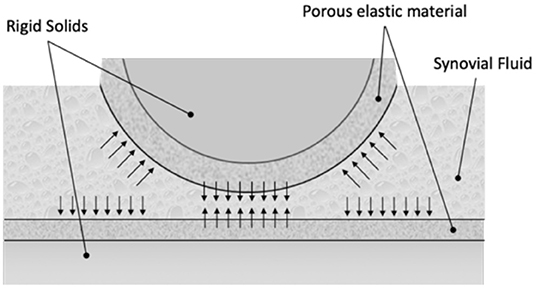
Figure 1. Weeping lubrication scheme.
Later, in 1994, Ateshian et al. (1994) and Ateshian and Hung (2006) proved that cartilage interstitial fluid plays a key role in the load support during the first 100–200 s after contact loading.
Elastohydrodynamic Lubrication
In 1963, a similar time to which weeping lubrication was hypothesized, Dintenfass (1963) provided new insights on human joint lubrication. Firstly, he showed the failure of the hydrodynamic lubrication mode, in which deformations were completely neglected. His studies took into account the deformability of articular cartilage and led to the elastohydrodynamic lubrication theory (EHD, see Popova and Popov, 2014). The main result was that in highly loaded lubricated contacts the operating film thickness may be up to 100 times greater than those predicted by conventional lubrication theory, since the human joint requires the correct operating conditions for the cartilage to be separated by a synovial film, and the boundary lubrication therefore does not exist. In 1966, Tanner (1966) calculated the film thickness in hip joints at normal walking speeds to be h = 10–5 cm. Even though the correct values of the loading pattern during gait were not yet available at the time, a mathematical incorporation of non-Newtonian lubricant properties was omitted. Tanner's theoretical values suggested that in the joints a lubricating film is possible when the lubricated surfaces are subject to relative motion. However, the question remained over what the lubricating mechanism is after a period of time under constant load with no motion (e.g., in human standing position).
Later, Medley et al. (1984), Dowson and Jin (1986), and Dowson (1995) confirmed EHD lubrication as the dominant mode of lubrication of many highly deformable or “soft” bearing systems, such as synovial joints.
Squeeze-Film Lubrication
In 1966, Dowson (1966) and Popova and Popov (2014) suggested a squeeze-film mechanism of lubrication. He based this assumption on the analysis concerning a loaded rigid cylinder approaching a rigid plate. A schematic representation of a generic model of a human joint is provided in Figure 2, in which a rigid plane opposes a rigid bone, covered by a layer of porous, elastic articular cartilage lubricated by synovial fluid. The considered relative velocities are both sliding and squeezing.
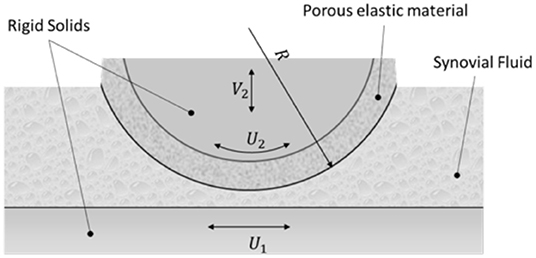
Figure 2. Example of human joint tribological scheme.
Dowson applied for the first time in tribology's history the main results of hydrodynamic and EHD theories in a simplified model for human joints.
The study demonstrated that EHD lubrication, caused by sliding and/or squeezing motions of the porous surfaces, seems to be the most common lubricating mechanism during usual body movement, while classical hydrodynamic lubrication is inadequate in knee and hip joints.
Similar conclusions were obtained by Fein (1966), Higginson and Norman (1974), and Higginson (1977), who considered a pair of compliant surfaces, between which the lubricant was squeezed out. However, the calculations did not consider the non-Newtonian behavior of the synovial fluid.
In 1966, Fein (1966) investigated and supported the squeeze-film lubrication between contact lubricated surfaces and performed optical experiments to validate his theory. Excellent agreement between theoretical and experimental values of film thickness was found.
In 1992, Hou et al. (1992) performed an asymptotic analysis of a lubrication problem for a model of articular cartilage and synovial fluid under the squeeze-film conditions, while more recently in 2011 and in 2013, Ruggiero et al. (2011, 2013) proposed an original analytical approximate model for the synovial pressure field determination in the ankle joint in a pure squeeze motion, accounting for the non-Newtonian behavior of synovial fluid and porosity of the cartilage. In 2000, very interesting research was published by Hlaváček (2000, 2001) on the squeeze-film lubrication of the human ankle joint with synovial fluid filtrated by articular cartilage.
Boosted Lubrication, Ultrafiltration, and Hydration Lubrication
Maroudas' ultrafiltration theory (Maroudas, 1968; Maroudas et al., 1968), as well as the boosted lubrication theory from Walker et al. (1968, 1969) introduced the attractive idea that the lubricant is retained between the loaded surfaces due to some specific properties of both synovial fluid and the articular cartilage. In 1967–69, Maroudas removed, by ultrafiltration, the water from the synovial solution, obtaining a jelly-like gel; this prompted them to consider the joint cartilage as a “filter,” permeable to water but not to the macro-molecules, allowing the gel formation under specific conditions. However, the stable thickness of the gel was estimated to be h = 0.01 μm, which is too small to provide separation between the surfaces. In 1968, Walker et al. (1968) noticed that during the loading the liquid component of the fluid becomes preferentially squeezed out, leaving the lubricant film enriched by the macromolecular components. In 1970, Dowson et al. (1970) observed that, due to the rising viscosity of the enriched synovial fluid, the squeezing times were greatly increased. Moreover, it was observed that macromolecules from the lubricant showed an affinity for the cartilage surface, allowing the formation of a skin-like protective gel. Investigations by Radin and Paul (1969), Radin et al. (1970), Swann and Radin (1972), Swann and Mintz (1979), and Swann et al. (1981) demonstrated the presence of an adsorption mechanism onto articular cartilage and identified the component in synovial fluid which was responsible for it. In 1975, new evidence on human joint lubrication was published by Unsworth et al. (1975). The authors studied friction coefficients in human joints using a pendulum machine. They examined six cadaveric human joints, one of which came from a patient affected by rheumatoid arthritis. They tested them both in dry conditions and with synovial lubricant. Used loads were between 135 and 1,500 N. The initial amplitude of swing was 0.0785 rad. Authors increased loads by 220 N after each test cycle. The main result was that, in human joints during the walking cycle, squeeze phenomena can be found, which occur under high load and high squeeze velocity without sliding. Moreover, it was observed that elastohydrodynamic lubrication takes place when the sliding velocity is quite high, so the formation of an EHD fluid film is possible. The results from this research enabled a description of the phenomena which occurs during the walking cycle in human joints.
More recently, Raviv et al. (2001, 2003), Briscoe et al. (2006), and Klein (2013) introduced the novel concept of a hydration lubrication mechanism as a new framework for understanding boundary lubrication processes in aqueous media. Schmidt and Sah (2007) investigated the connection between synovial fluid and the articular cartilage by means of the boundary lubrication mode, while Greene et al. (2011) stated that the tribology of synovial joints needs to be investigated considering the synergistic effect of several modes of lubrication. Other recent investigations (Hui et al., 2012) were also devoted to the connections between synovial lubrication and the system biology.
The Rheology of Synovial Fluid
Synovial fluid's (SF) rheological properties play a key role in the lubrication modeling of the joints. SF contains the molecules hyaluronan, proteoglycan 4 (proteins also known as lubricin, superficial zone protein, and megakaryocyte-stimulating factor), and surface-active phospholipids, each of which interacts with and adsorbs to the articular surface (Schmidt et al., 2007).
The non-Newtonian character of the viscosity was proposed, among others, by Ropes et al. (1947). Ogston et al. (1950) related changes in viscosity to the variations of both the concentration and conformation of the hyaluronic acid molecules, and in 1953 Ogston and Stanier (1953) qualitatively stated that synovial fluid also possesses elastic properties.
Until the year 1966, research on rheological properties of synovial fluid did not make any noticeable progress. From 1967, new interesting results succeeded each other very quickly, probably due to the improvement of experimental equipment.
Through the years several non-Newtonian models were proposed (Lai et al., 1978). The most common are:
• Power Law Model: The so-called “power-law equation,” or Ostwald–de Waele relationship, was mentioned. It relates the viscosity μ to the shear rate in a steady shear flow:
with K and n representing two coefficients obtained by the process of curve fitting.
• Generalized Newtonian fluid
The shear-thinning fluid described by Ostwald–de Waele relationship is a type of generalized Newtonian fluid that, in general, satisfies the rheological equation:
A generalized Newtonian fluid is an idealized fluid for which the shear stress is a function of shear rate at a particular time, but not dependent upon the history of deformation. For the power-law fluid, the rheological equation becomes:
• Cross-WLF Model
The empirical equation to describe the shear thinning behavior of synovial fluid gained wide acceptance in the literature and it can be written as:
where:
μ0 is the zero shear rate viscosity
μ∞ is the infinite shear rate viscosity
K is a time constant
n is the Power Law index
• Stokes Couple stress fluid (Stokes, 1966)
According to this theory used in some cases to model synovia, the momentum equation and the continuity equation of synovial fluid are:
The vectors V, F, and C represent, respectively, the velocity, the body force, and body couple per unit mass while ρ is the density of the oil, μ is the viscosity, and η is a “couple stress constant.”
Conclusions
This short review was focused on the development of understanding and modeling lubrication phenomena in natural synovial joints, highlighting some relevant research through the years. The topic is particularly interesting since it represents a fascinating research field connects both tribological and biological issues which are necessary for a deep understanding of the complex phenomena acting in the investigated bio-tribosystems. It is acknowledged that the topic is very wide and hence difficult to summarize in in a short manuscript, highlighting the “milestones” may be an interesting read and also a useful support for researches and scientists who are approaching this research field for the first time. It could stimulate the scientific community toward stronger cooperation between researchers from different scientific areas, resulting in new insights, and also allow for insights in the optimal tribological design of modern artificial joints, which requires more accurate models to be used in their in-silico pre-clinical testing.
Author Contributions
The author confirms being the sole contributor of this work and has approved it for publication.
Funding
This research was funded by MIUR, PRIN 2017- BIONIC.
Conflict of Interest
The author declares that the research was conducted in the absence of any commercial or financial relationships that could be construed as a potential conflict of interest.
References
Ateshian, G. A., and Hung, C. T. (2006). The natural synovial joint: properties of cartilage. Proc. Inst. Mech. Eng. Pt. J J. Eng. Tribol. 220, 657–670. doi: 10.1243/13506501JET86
Ateshian, G. A., Lai, W. M., Zhu, W. B., and Mow, V. C. (1994). An asymptotic solution for the contact of two biphasic cartilage layers. J. Biomech. 27, 1347–1360. doi: 10.1016/0021-9290(94)90044-2
Barnett, C. H., and Cobbold, A. F. (1962). Lubrication within living joints. J. Bone Joint Surg. 44, 662–674. doi: 10.1302/0301-620X.44B.3.662
Briscoe, W. H., Titmuss, S., Tiberg, F., Thomas, R. K., McGillivray, D. J., and Klein, J. (2006). Boundary lubrication under water. Nature 444, 191–194. doi: 10.1038/nature05196
Charnley, J. (1959). “The lubrication of animal joints,” in Proceedings of the Symposium on Biomechanics (London), 12–19.
Dowson, D. (1966). “Paper 12: modes of lubrication in human joints,” in Proceedings of the Institution of Mechanical Engineers, Conference Proceedings (London: SAGE Publications).
Dowson, D. (1995). Elastohydrodynamic and micro-elastohydrodynamic lubrication. Wear 190, 125–138. doi: 10.1016/0043-1648(95)06660-8
Dowson, D., and Jin, Z. M. (1986). Micro-elastohydrodynamic lubrication of synovial joints. Eng. Med. 15, 63–65. doi: 10.1243/EMED_JOUR_1986_015_019_02
Dowson, D., Unsworth, A., and Wright, V. (1970). Analysis of ‘boosted lubrication'in human joints. J. Mech. Eng. Sci. 12, 364–369. doi: 10.1243/JMES_JOUR_1970_012_060_02
Fein, R. S. (1966). “Research report 3: are synovial joints squeeze-film lubricated?,” in Proceedings of the Institution of Mechanical Engineers, Conference Proceedings (London: SAGE Publications), 125–128.
Greene, G. W., Banquy, X., Lee, D. W., Lowrey, D. D., Yu, J., and Israelachvili, J. N. (2011). Adaptive mechanically controlled lubrication mechanism found in articular joints. Proc. Natl. Acad. Sci. U.S.A. 108, 5255–5259. doi: 10.1073/pnas.1101002108
Higginson, G. R. (1977). Elastohydrodynamic lubrication in human joints. Proc. Inst. Mech. Eng. 191, 217–223. doi: 10.1243/PIME_PROC_1977_191_028_02
Higginson, G. R., and Norman, R. (1974). The lubrication of porous elastic solids with reference to the functioning of human joints. J. Mech. Eng. Sci. 16, 250–257. doi: 10.1243/JMES_JOUR_1974_016_045_02
Hlaváček, M. (2000). Squeeze-film lubrication of the human ankle joint with synovial fluid filtrated by articular cartilage with the superficial zone worn out. J. Biomech. 33, 1415–1422. doi: 10.1016/S0021-9290(00)00109-3
Hlaváček, M. (2001). The thixotropic effect of the synovial fluid in squeeze-film lubrication of the human hip joint. Biorheology 38, 319–334.
Hou, J. S., Mow, V. C., Lai, W. M., and Holmes, M. H. (1992). An analysis of the squeeze-film lubrication mechanism for articular cartilage. J. Biomech. 25, 247–259. doi: 10.1016/0021-9290(92)90024-U
Hui, A. Y., McCarty, W. J., Masuda, K., Firestein, G. S., and Sah, R. L. (2012). A systems biology approach to synovial joint lubrication in health, injury, and disease. Wiley Interdiscip. Rev. Syst. Biol. Med. 4, 15–37. doi: 10.1002/wsbm.157
Jin, Z. H., Meng, Y., Hu, Y., and Luo, J. (2020). In memoriam: Duncan Dowson (1928–2020). Friction 8, 1–3. doi: 10.1007/s40544-020-0360-9
Khan, I. M., Redman, S. N., Williams, R., Dowthwaite, G. P., Oldfield, S. F., and Archer, C. W. (2007). The development of synovial joints. Curr. Top. Dev. Biol. 79, 1–36. doi: 10.1016/S0070-2153(06)79001-9
Lai, W. M., Kuei, S. C., and Mow, V. C. (1978). Rheological equations for synovial fluids. J. Biomech. Eng. 100, 169–186. doi: 10.1115/1.3426208
Linn, F. C. (1967). Lubrication of animal joints: I. The arthrotripsometer. JBJS 49, 1079–1098. doi: 10.2106/00004623-196749060-00005
Linn, F. C. (1968). Lubrication of animal joints: II the mechanism. J. Biomech. 1, 193–205. doi: 10.1016/0021-9290(68)90004-3
Linn, F. C., and Radin, E. L. (1968). Lubrication of animal joints. III. The effect of certain chemical alterations of the cartilage and lubricant. Arthritis Rheumat. 11, 674–682. doi: 10.1002/art.1780110510
MacConaill, M. A. (1932). The function of intra-articular fibrocartilages, with special reference to the knee and inferior radio-ulnar joints. J. Anat. 66(Pt. 2):210.
MacConaill, M. A. (1956). Studies in the mechanics of synovial joints. Irish J. Med. Sci. 31, 353–364. doi: 10.1007/BF02951170
MacConaill, M. A. (1960). Lubrication of mammalian joints. Nature 185, 920–920. doi: 10.1038/185920a0
Maroudas, A. (1968). Physicochemical properties of cartilage in the light of ion exchange theory. Biophys. J. 8, 575–595. doi: 10.1016/S0006-3495(68)86509-9
Maroudas, A., Bullough, P., Swanson, S. A. V., and Freeman, M. A. R. (1968). The permeability of articular cartilage. J. Bone Jt. Surg. 50, 166–177. doi: 10.1302/0301-620X.50B1.166
McCutchen, C. W. (1962). The frictional properties of animal joints. Wear 5, 1–17. doi: 10.1016/0043-1648(62)90176-X
McCutchen, C. W. (1966). “Paper 1: physiological lubrication,” in Proceedings of the Institution of Mechanical Engineers, Conference Proceedings (London: SAGE Publications), 55–62.
McCutchen, C. W. (1973). A note on weeping lubrication. In: Kenedi RM, editor. Perspectives in Biomedical Engineering. London: Palgrave Macmillan. doi: 10.1007/978-1-349-01604-4_18
Medley, J. B., Dowson, D., and Wright, V. (1984). Transient elastohydrodynamic lubrication models for the human ankle joint. Eng. Med. 13, 137–151. doi: 10.1243/EMED_JOUR_1984_013_035_02
Ogston, A. G., and Stanier, J. E. (1953). The physiological function of hyaluronic acid in synovial fluid; viscous, elastic and lubricant properties. J. Physiol. 119, 244–252. doi: 10.1113/jphysiol.1953.sp004842
Ogston, A. G., Stanier, J. E., Toms, B. A., and Strawbridge, D. J. (1950). Elastic properties of ox synovial fluid. Nature 165, 571–571. doi: 10.1038/165571b0
Popov, V. L. (2019). Active bio contact mechanics: concepts of active control of wear and growth of the cartilage in natural joints. AIP Conf. Proc. 2167:020285. doi: 10.1063/1.5132152
Popova, E., and Popov, V. L. (2014). On the history of elastohydrodynamics: the dramatic destiny of Alexander Mohrenstein-Ertel and his contribution to the theory and practice of lubrication. ZAMM J. Appl. Math. Mech. 95, 652–663. doi: 10.1002/zamm.201400050
Radin, E. L., and Paul, I. L. (1969). Failure of synovial fluid to cushion. Nature 222, 999–1000. doi: 10.1038/222999a0
Radin, E. L., Swann, D. A., and Weisser, P. A. (1970). Separation of a hyaluronate-free lubricating fraction from synovial fluid. Nature 228, 377–378. doi: 10.1038/228377a0
Raviv, U., Giasson, S., Kampf, N., Gohy, J. F., Jérôme, R., and Klein, J. (2003). Lubrication by charged polymers. Nature 425, 163–165. doi: 10.1038/nature01970
Raviv, U., Laurat, P., and Klein, J. (2001). Fluidity of water confined to sub-nanometre films. Nature 413, 51–54. doi: 10.1038/35092523
Ropes, M. W., Robertson, W. V. B., Rossmeisl, E. C., Peabody, R. B., and Bauer, W. (1947). Synovial fluid mucin 1, 2. Acta Med. Scand. 128, 700–744. doi: 10.1111/j.0954-6820.1947.tb14705.x
Ruggiero, A., Gomez, E., and D'Amato, R. (2011). Approximate analytical model for the squeeze-film lubrication of the human ankle joint with synovial fluid filtrated by articular cartilage. Tribol. Lett. 41, 337–343. doi: 10.1007/s11249-010-9710-5
Ruggiero, A., Gómez, E., and Roberto, D. (2013). Approximate closed-form solution of the synovial fluid film force in the human ankle joint with non-Newtonian lubricant. Tribol. Int. 57, 156–161. doi: 10.1016/j.triboint.2012.06.024
Ruggiero, A., and Zhang, H. (2020). Editorial: biotribology and biotribocorrosion properties of implantable biomaterials. Front. Mech. Eng. 6:17. doi: 10.3389/fmech.2020.00017
Schmidt, T. A., Gastelum, N. S., Nguyen, Q. T., Schumacher, B. L., and Sah, R. L. (2007). Boundary lubrication of articular cartilage: role of synovial fluid constituents. Arthritis Rheum. 56, 882–891. doi: 10.1002/art.22446
Schmidt, T. A., and Sah, R. L. (2007). Effect of synovial fluid on boundary lubrication of articular cartilage. Osteoarthr. Cartil. 15, 35–47. doi: 10.1016/j.joca.2006.06.005
Stokes, V. K. (1966). Couple stresses in fluids. Physics Fluids 9, 1709–1715. doi: 10.1063/1.1761925
Swann, D. A., Hendren, R. B., Radin, E. L., and Sotman, S. L. (1981). The lubricating activity of synovial fluid glycoproteins. Arthritis Rheumat. 24, 22–30. doi: 10.1002/art.1780240104
Swann, D. A., and Mintz, G. (1979). The isolation and properties of a second glycoprotein (LGP-II) from the articular lubricating fraction from bovine synovial fluid. Biochem. J. 179, 465–471. doi: 10.1042/bj1790465
Swann, D. A., and Radin, E. L. (1972). The molecular basis of articular lubrication I. Purification and properties of a lubricating fraction from bovine synovial fluid. J. Biol. Chem. 247, 8069–8073.
Tanner, R. I. (1966). An alternative mechanism for the lubrication of synovial joints. Phys. Med. Biol. 11:119. doi: 10.1088/0031-9155/11/1/312
Unsworth, A., Dowson, D., and Wright, V. (1975). The frictional behavior of human synovial joints—part I: natural joints. J Tribol. 97, 369–376.
Walker, P. S., Dowson, D., Longfield, M. D., and Wright, V. (1968). “Boosted lubrication" in synovial joints by fluid entrapment and enrichment. Ann. Rheum. Dis. 27:512. doi: 10.1136/ard.27.6.512
Walker, P. S., Sikorski, J., Dowson, D., Longfield, M. D., Wright, V., and Buckley, T. (1969). Behaviour of synovial fluid on surfaces of articular cartilage. A scanning electron microscope study. Ann. Rheumat. Dis. 28:1. doi: 10.1136/ard.28.1.1
Keywords: biotribology, lubrication, joint, synovial fluid, cartilage
Citation: Ruggiero A (2020) Milestones in Natural Lubrication of Synovial Joints. Front. Mech. Eng. 6:52. doi: 10.3389/fmech.2020.00052
Received: 08 May 2020; Accepted: 08 June 2020;
Published: 31 July 2020.
Edited by:
Irina Goryacheva, Institute for Problems in Mechanics (RAS), RussiaReviewed by:
Vladimir Ivanovich Pakhaliuk, Sevastopol State University, RussiaValentin L. Popov, Technical University of Berlin, Germany
Copyright © 2020 Ruggiero. This is an open-access article distributed under the terms of the Creative Commons Attribution License (CC BY). The use, distribution or reproduction in other forums is permitted, provided the original author(s) and the copyright owner(s) are credited and that the original publication in this journal is cited, in accordance with accepted academic practice. No use, distribution or reproduction is permitted which does not comply with these terms.
*Correspondence: Alessandro Ruggiero, cnVnZ2llcm9AdW5pc2EuaXQ=