 Parveen Sharma1
 Kashmir Singh Ghatorha1Amardeep Singh Kang1
 Lenka Cepova2
 Ajay Kumar3*†
 Rakesh Kumar Phanden4
- 1School of Mechanical Engineering, Lovely Professor University, Phagwara, India
- 2Department of Machining, Assembly and Engineering Metrology, Faculty of Mechanical, Engineering, VSB-Technical University of Ostrava, Ostrava, Czechia
- 3Department of Mechanical Engineering, School of Engineering and Technology, JECRC University, Jaipur, India
- 4Amity School of Engineering and Technology, Amity University, Noida, India
The current study focuses on selecting the most suitable site location for a manufacturing industry using the Factor Rating Method (FRM). The study considers six key factors: Raw Materials Availability, Location, Availability of Labor, Transport, Availability of Utilities, and Environmental Impact. The FRM assign weights to each factor based on their relative importance. The results indicate that Raw Materials Availability holds the highest weight, suggesting its critical influence on site selection decisions. Subsequently, the Analytic Hierarchy Process (AHP) and Best Worst Method (BWM) are utilized to prioritize three available location alternatives through pairwise criteria comparisons. The analysis reveals that Location C emerges as the most favorable option, effectively meeting the manufacturing industry’s requirements. The successful application of these methods demonstrates their value in aiding decision-making processes related to site location selection. By considering multiple factors and utilizing structured methodologies, organizations can make informed choices aligned with their specific needs and goals. This research contributes to the existing body of knowledge by providing insights into effective site selection strategies for the manufacturing industry. Further research opportunities exist in incorporating additional factors, addressing real-world constraints, and conducting sensitivity analyses to enhance the accuracy and applicability of site location decision-making.
1 Introduction
Site selection plays a crucial role in the success of any industry. The choice of location can significantly impact factors such as operational efficiency, cost-effectiveness, accessibility to resources, and proximity to target markets (Sharma et al., 2012; Brown and Gibson, 1972; Morrison and Abrahamse, 1996; Raad and Rajendran, 2024.). Hence, it is imperative for decision-makers to assess and choose the most optimal site location carefully. In this research paper, the authors investigate the application of the Factor Rating Method (FRM) to select the most suitable site location for a manufacturing industry from a pool of accessible alternatives. Moreover, the authors aim to validate the FRM results using the Analytic Hierarchy Process (AHP) approach. This study aims to provide decision-makers in the manufacturing sector with a broad and reliable structure for evaluating potential site locations.
The FRM, also called the Point Rating Method, originated in the mid-1950s through the collaborative efforts of E.F.L. Brech and G. S. Odiorne. This approach allows organizations to evaluate the relative value of different jobs within their structure. It entails assigning numerical scores to specific job-related factors, such as skill levels, duties, and working conditions. These scores are then aggregated to derive an overall assessment of a job’s significance within the organization. It explores various methodologies for manufacturing site selection. One of the techniques employed in the study is the FRM, which is utilized alongside other methods, such as the Analytic Hierarchy Process (AHP) and the Best Worst Method (BWM). The industrial units are playing key roles to increase the productivity of the various sectors and boosting the economic growth. Management of the various resources of the industrial procedures can help in reducing the unwanted travelling and infrastructure which further can reduce the carbon emissions (Yadav et al., 2023; Tadesse et al., 2024; Kumar et al., 2024a; Kumar Ajay et al., 2024.) Novel manufacturing aspects also play vital role in increasing the productivity of the plants and in reducing the labours, pollution and transportation (Rani et al., 2023; Kumar et al., 2024c).
In this context, the FRM likely serves as one component of the broader approach to evaluating potential manufacturing sites. It allows researchers to assess and compare different factors relevant to site selection, such as infrastructure, labor availability, transportation networks, and regulatory environment. By assigning numerical scores to these factors, the researchers can quantitatively analyze and rank the suitability of various site options. Integrating multiple methods, including the FRM, enables a more comprehensive and robust analysis of manufacturing site selection. Each method may capture different aspects or perspectives of the decision-making process, contributing to a more informed and strategic decision.
The FRM is a broadly used technique in site selection analysis. It involves the identification of critical factors that are relevant to the specific requirements of the industry. These factors may include transportation infrastructure, utility services, labor availability, environmental regulations, and market proximity (Rane et al., 2023). Each factor is assigned a weight based on its relative importance to the industry’s requirements (Di Grazia and Tina, 2024). The next step in the FRM is to evaluate the available alternatives based on the recognized factors. A rating scale is used to assess the suitability of each alternative for the selected factors (Kheybari et al., 2019). The ratings are then multiplied by the respective weights assigned to the factors, and the total scores are calculated for each alternative (Aghaloo et al., 2023). The alternative with the highest total score is considered the most suitable site location for that particular industry. Yong, (2006). proposed a novel approach for choosing optimal plant locations using the fuzzy Technique for Order of Preference by Similarity to Ideal Solution (TOPSIS) method. The study addresses the complex decision-making process of selecting suitable plant locations by integrating fuzzy logic into TOPSIS, enabling a more realistic representation of the uncertainties and vagueness inherent in location selection criteria. The proposed methodology effectively handles subjective judgments and imprecise information by applying fuzzy sets and linguistic variables, providing decision-makers with a robust framework to evaluate and rank potential plant locations (Zhao et al., 2024).
Liang and Wang (1991) presented a comprehensive approach to address the challenges involved in selecting the most favourable sites for facilities. The study introduces a fuzzy logic-based methodology incorporating multiple criteria and their associated uncertainties into the decision-making process. By utilizing these linguistic variables and fuzzy sets, the proposed process allows decision-makers to assess and rank potential facility sites considering proximity to suppliers and customers, related costs, transportation infrastructure, environmental impact, and social acceptability. Chu (2002) introduced a fuzzy TOPSIS-based approach for plant location selection, combining fuzzy logic and TOPSIS to handle uncertainties and subjective judgments. It provides a practical framework for evaluating and ranking potential plant locations, improving decision-making for organizations. In 1972, Brown & Gibson presented a quantified model for facility site selection, specifically applied to a multi-plant location problem. By incorporating quantitative factors and decision criteria, the model offers a methodical approach to evaluate and select optimal site locations for multiple facilities, facilitating effective decision-making in complex scenarios.
The study by Kheybari et al. (2019) focuses on selecting bioethanol facility locations using the best-worst method. This research provided valuable insight into the decision-making process for choosing optimal locations for bioethanol facilities, utilizing a robust methodology that considers both the best and worst criteria to enhance the accuracy and reliability of the selection process. In 2021, Abdel-Basset et al. proposed a novel hybrid multi-criteria decision-making approach for selecting sustainable offshore wind energy station locations. Through a detailed case study, the research provides valuable insights into the decision-making process for determining optimal sites, considering different criteria related to sustainability, feasibility, and environmental impact, thereby facilitating informed decisions in the offshore wind energy sector.
Shao et al., 2020, provided an overview of multi-criteria decision-making applications specifically focused on the site selection of renewable energy projects. The study examined decision-making methods and their applications in this context, offering valuable insights into evaluating and selecting optimal sites for renewable energy installations, contributing to the advancement and sustainability of the renewable energy sector. Erdoğan’s 2019 study explored the land selection criteria for lights-out factory districts during the industry 4.0 process. The research offered insights into the factors and considerations necessary for identifying suitable locations for lights-out factories, contributing to the advancement of automation and digitalization in manufacturing industries. Rahimi et al., 2020 study introduced a hybrid decision-making approach, combining fuzzy group BWM, MULTIMOORA (Multi-Objective Optimization based on a Ratio Analysis plus the full MULTIplicative form), and Geographic Information System (GIS), for sustainable landfill site selection for municipal solid waste, providing a comprehensive methodology for addressing environmental and socio-economic factors in the decision-making process.
Kutlu Gündoğdu and Kahraman’s (2019) study presented a novel VIKOR method utilizing spherical fuzzy sets, offering an innovative approach for warehouse site selection that considers uncertainties and provides a robust decision-making framework. Leng et al’s (2021) review focused on designing digital twins-based smart manufacturing systems within the context of Industry 4.0, providing a comprehensive overview of the advancements and applications in this area. Puviarasu et al. (2023) study presented a hybrid multi-criteria decision-making model based on STEEP (Social, Technological, Environmental, Economic, and Political) factors for evaluating the location of battery recycling plants, providing a comprehensive approach to support sustainable decision-making in the recycling industry.
To ensure the accuracy and reliability of the results obtained from the FRM, it is crucial to validate them through an independent approach. In the current study, authors employ the Analytic Hierarchy Process as a validation technique. The AHP is a multicriteria decision-making method that enables comparing and prioritising alternatives based on a hierarchical structure of criteria and sub-criteria. It provides a systematic and rigorous approach to decision-making by considering both quantitative and qualitative factors. Li et al. (2023) introduced an optimal site selection framework for near-zero carbon emission power plants, incorporating the perspectives and considerations of multiple stakeholders, providing a comprehensive approach to support sustainable and inclusive decision-making in the energy sector. Akdeniz et al. (2023) assessed the suitability of shrimp farming site selection in Turkey, utilizing a Geographic Information System (GIS) and the Analytic Hierarchy Process (AHP), providing valuable insights for informed decision-making in the shrimp farming industry.
Saha et al. (2023) employed fermatean fuzzy-based decision-making approach for warehouse site selection in the automotive industry, offering a robust methodology to facilitate optimal location decisions and enhance logistics efficiency. Rahman et al. (2023) introduced an innovative fuzzy parameterized MADM approach utilizing sv-complex neutrosophichy per soft set for site selection in dam construction, providing a comprehensive framework for decision-making that considers multiple criteria and uncertainties. By utilizing the AHP approach, we aim to validate the results obtained from the FRM and provide decision-makers with additional confidence in their site selection decisions. The AHP allows for a more comprehensive evaluation of the alternatives by considering various criteria simultaneously and deriving pairwise comparisons between them. This comparison process helps determine the relative significance of each criterion and sub-criterion and provides a clear understanding of their impact on the final decision.
The objective of this research paper is to provide strategic insights into manufacturing site selection by employing a multi-method approach integrating the Factor Rating Method (FRM), Analytic Hierarchy Process (AHP), and Best Worst Method (BWM). Specifically, the study aims to assess and prioritize site location alternatives for a manufacturing industry based on six key factors: Raw Materials Availability, Location, Availability of Labor, Transport, Availability of Utilities, and Environmental Impact. Through applying these methodologies, the paper seeks to demonstrate their effectiveness in aiding decision-making processes related to site selection, ultimately enabling organizations to make informed choices aligned with their specific needs and goals. Additionally, the research contributes to the existing body of knowledge by offering insights into effective site selection strategies and identifying opportunities for further research to enhance the accuracy and applicability of site location decision-making.
Integrating the FRM and AHP approaches in this research paper offers a robust and reliable framework for site selection in the manufacturing industry. The combined methodology considers the industry’s specific requirements and the overall decision-making process. This comprehensive approach ensures that decision-makers have access to accurate and relevant information, enabling them to make well-informed choices regarding site location.
The following section analyzes the location factors that influence site selection in the manufacturing industry. Section 3 outlines the proposed approach, focusing on the Factor Rating Method. This is followed by section 4, which delves into the implementation aspect using a case study from the industry. Section 5 is dedicated to presenting results and discussing various components, including the analysis using the Factor Rating Method, Analytic Hierarchy Process (AHP), Best Worst Method (BWM), Comparative Analysis of Methods, Discussion of Comparative Results, and implications for future research. Finally, the paper concludes with a concluding section.
2 Location analysis
Location analysis is a significant process that involves analyzing and evaluating a range of alternative sites to select the best one for a business (Feiz et al., 2022). This section outlines the key components of location analysis, including site economics, demographic analysis, competitive analysis, and traffic analysis. Noorollahi et al. (2022) research presented a comprehensive framework for site selection and technical potential evaluation of PV solar farms using a combination of GIS, Fuzzy-Boolean logic, and AHP multi-criteria decision-making approach. Gil-García et al. (2022) study introduces a fuzzy GIS-based MCDM solution for the optimal offshore wind site selection, explicitly focusing on the Gulf of Maine case, offering a robust methodology for evaluating and selecting suitable sites for offshore wind energy projects. Xuan et al. (2022), employed hybrid MCDM methods for site location analysis of solar-powered hydrogen production plants in Uzbekistan, providing a comprehensive approach to support decision-making in the renewable energy sector.
Shao et al. (2023) introduced a decision framework for site selection of tidal current power plants in China using GIS and MCDM methods. The research offers valuable insights into evaluating and ranking potential sites, considering factors such as tidal resources, environmental impact, and infrastructure. This framework provides a practical approach to facilitating informed decision-making in developing tidal current energy projects. The key components of location analysis are the following (refer to Table 1).
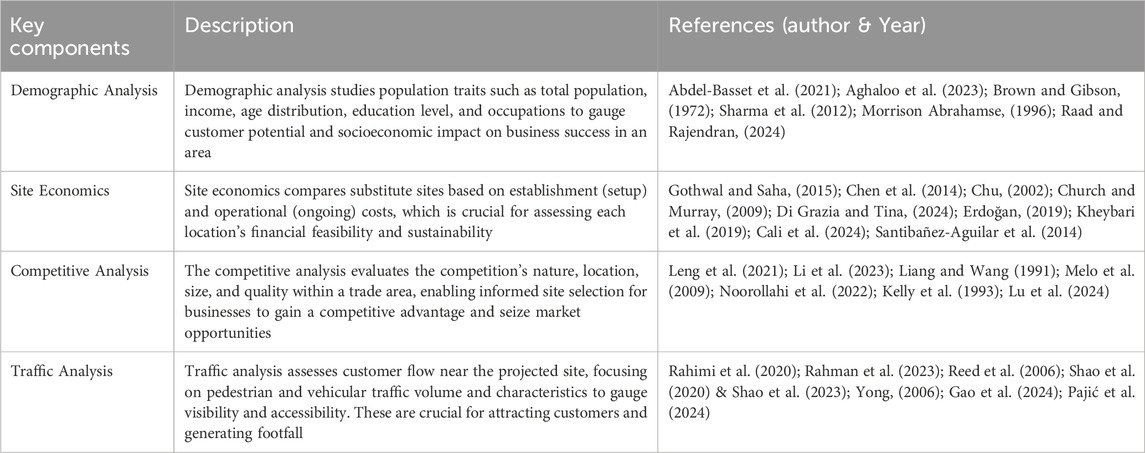
Table 1. Key components of location analysis.
2.1 Factors affecting manufacturing industry site selection
Selecting a suitable site for an industry is a significant decision that can significantly influence the enterprise’s success. Various factors must be carefully considered to make an informed alternative. Various research studies have been conducted on factors that affect the location of a manufacturing industry.
Gothwal & Saha, (2015) addressed the complexity of plant location selection, emphasizing its strategic significance and long-term consequences. It introduced the analytic hierarchy process (AHP) for decision-making and applied it to a real case study. Through AHP, Baddi emerged as the optimal location among five choices, demonstrating its effectiveness in considering various factors systematically. Chen et al. (2014) examined the expansion of global firms’ perspectives on manufacturing footprints, shifting towards considering environmental and social aspects alongside economic factors. It conducted a literature survey spanning 1990 to 2011, categorizing research and identifying influential factors. A framework for integrating sustainability into location decisions was proposed, alongside suggestions for future research on sustainable location.
This section explores the key factors that must be considered during the location analysis process.
2.2 Raw materials availability
The accessibility of raw materials is an essential factor influencing site selection (Church and Murray, 2009). It is essential to assess the cost of raw materials, proximity to suppliers, supply reliability, transportation expenses, purity of raw materials, and storage requirements. These factors directly impact production costs and the overall efficiency of the manufacturing process.
2.3 Location
The location of the market or intermediate distribution centres plays a vital role in determining the cost of product distribution and shipping time. Nearness to significant markets is advantageous as it allows easier customer access (Melo, et al., 2009). For instance, in the case of a sulfuric acid plant, locating it near fertilizer industries, which are significant consumers, would be beneficial.
2.4 Availability of suitable land
The land characteristics must be scrutinized when evaluating potential sites. Considerations consist of the topography of the land and its structure, as these can significantly impact construction costs. The cost of the land itself, local building costs, and living conditions should also be considered (Johar, et al., 2013). Additionally, it is significant to consider the potential need for future expansion and ensure that the land is flat, well-drained and has suitable load-bearing characteristics. Conducting a comprehensive site evaluation helps determine if special foundations or piling will be required.
2.5 Transport
Transportation is a vital consideration in site selection, as it affects the movement of materials and products to and from the plant (Hauswald, 1963). Ideally, a site should have convenient access to multiple forms of transportation, such as roads, waterways, railways, or seaports. Proximity to different transportation options allows for greater flexibility and cost-effectiveness in logistics. The availability of rail and air transportation facilities for plant personnel and convenient transportation between the plant and company headquarters should also be considered.
2.6 Availability of labor
The availability of skilled and unskilled labor is necessary for both construction and operation of the plant. While skilled workers may be brought in from outside the site, it is significant to have a local pool of unskilled labor and individuals suitable for training in plant operations (Schmenner et al., 1987). Skilled tradesmen are also needed for plant maintenance. Local trade union customs and restrictions should be taken into consideration when assessing the availability and suitability of labor for recruitment and training.
2.7 Availability of utilities
Utilities, including water, fuel, and electricity, are vital for the operation of any production process. A dependable water supply, such as rivers, lakes, wells, or seas, is crucial for various purposes, including cooling, steam generation, and as a raw material (Hobbs, 1995). The water supply’s cost, quality, and availability must be considered. Access to reliable and enough electricity is also critical, as industrial plants’ power and steam requirements are typically high.
2.8 Environmental impact and effluent disposal
Environmental considerations are paramount when selecting a plant site. Adequate facilities must be provided for effluent disposal to prevent any adverse environmental and public health impacts (Salgot and Folch, 2018). Compliance with local regulations regarding effluent standards and the potential need for additional waste treatment facilities should be carefully evaluated. Proper disposal of waste products, incredibly toxic and harmful effluents, must be considered thoroughly.
2.9 Local community considerations
The proposed plants must be accepted and integrated into the local community (Reed et al., 2006). Ensuring the plant’s safe location and minimizing any possible risks to the community are important factors to address during site selection.
2.10 Climate
Adverse climatic conditions can significantly impact costs and operations. Extreme temperatures may require additional insulation and heating measures for equipment and piping (Mikellidou et al., 2018). High humidity and hot temperatures also pose challenges that must be considered. Locations prone to high wind loads or earthquakes may require more substantial structures.
2.11 Political and strategic considerations
Governments often offer capital grants, tax concessions, and other incentives to attract investments to specific locations, particularly areas with high unemployment rates. The accessibility of such incentives can heavily influence site selection decisions.
2.12 Taxation and legal restrictions
Tax rates, zoning regulations, building codes, and other legal restrictions vary from one location to another. These factors and local regulations addressing nuisances and other facilities can significantly impact the final choice of a plant site.
Businesses can make informed decisions during the location analysis by carefully assessing and considering these various factors. Table 2 demonstrates the factors affecting a manufacturing industry’s location (Chen et al., 2014; Gothwal and Saha, 2015). Each factor plays a vital role in determining the suitability and feasibility of different sites, ultimately leading to selecting an optimal location for a manufacturing industry.
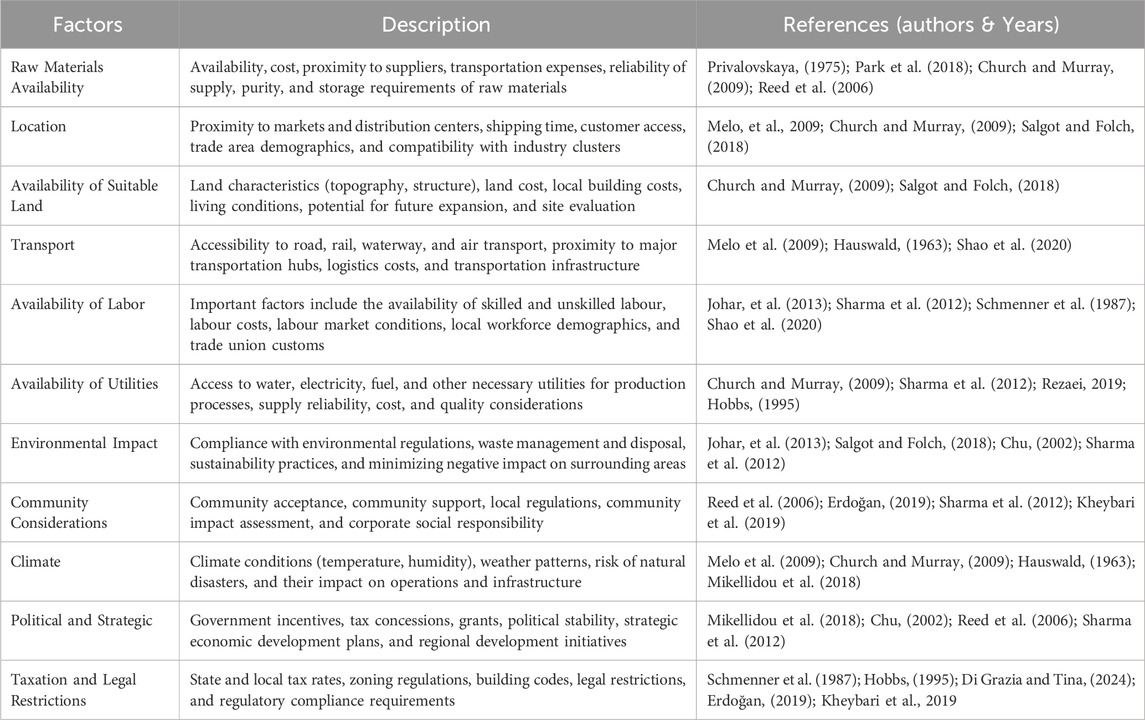
Table 2. Factors affecting the location of a manufacturing industry.
3 Proposed approach
3.1 Factor rating method
The FRM comprises a sequence of steps to evaluate and compare various site alternatives. These steps (Figure 1 demonstrates the proposed approach for selecting a Plant location) ensure a systematic and objective appraisal. The following are the critical steps involved in the FRM.
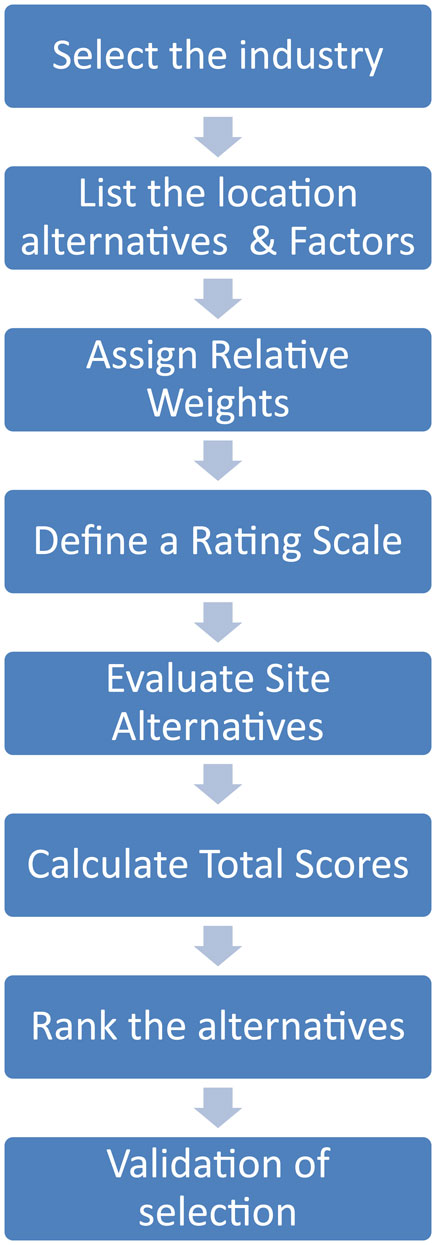
Figure 1. Proposed approach for selection of a Plant location.
3.2 Identify evaluation criteria
Determine the specific criteria that will be utilized to measure the site alternatives. These criteria should be relevant and aligned with the specific requirements and objectives of the manufacturing industry. Criteria may include labor availability, transportation accessibility, proximity to suppliers and customers, infrastructure, and cost considerations.
3.3 Assign relative weights
Allocate weights to each criterion based on their relative significance or priority in the evaluation process. The weights reflect the significance of each criterion in the final decision. The total weight assigned to all criteria should sum up to 100%.
3.4 Define a rating scale
Establish a rating scale that quantitatively measures the performance of each site alternative for every criterion. The rating scale can be numerical, ranging from 1 to 10, where 1 represents the lowest and 10 represents the highest.
3.5 Evaluate site alternatives
Using the rating scale, assess each site alternative against the identified criteria. Collect relevant data and information for each criterion and assign ratings accordingly. This step involves a thorough analysis and comparison of the alternatives.
3.6 Apply weighted scores
Multiply the ratings obtained for each criterion by their respective weights. This calculation incorporates the relative significance of each criterion, ensuring that more significant factors have a greater impact on the overall evaluation.
3.7 Calculate total scores
Calculate the total score for each site alternative by summing up the weighted scores across all criteria. The total score provides an overall measure of the suitability and desirability of each substitute.
3.8 Rank the alternatives
Rank the site alternatives based on their total scores. The option with the highest total score indicates the most suitable site for the manufacturing industry, while the one with the lowest score is considered the least appropriate.
3.9 Validate and review results
Validate the results obtained from the FRM by reviewing and analyzing the outcomes. It is essential to ensure that the evaluation process was conducted accurately and that the chosen site alternative aligns with the specific requirements and objectives of the manufacturing industry.
4 Implementation
4.1 Case industry
In the current study, the authors have focused explicitly on the automotive parts manufacturing industry, particularly tractor parts manufacturing units. We chose to concentrate on this sector as different industries have varying key factors influencing site selection. Therefore, we limited our analysis to a particular industry to maintain clarity and specificity so that outcomes can easily persuade particular industries. The management and experts of the concerned industry selected six critical factors on which they want to evaluate the available three locations. Figure 2 shows the selected factors:

Figure 2. Selected factors for analysis.
We will go through each stage of the factor analysis method to implement it for the selected factors (raw materials availability, location, availability of labor, transport, availability of utilities, and environmental impact) and evaluate three locations. Here is an outline of the stages and tables (Tables 3–8 demonstrate the data with implementation) for each stage.
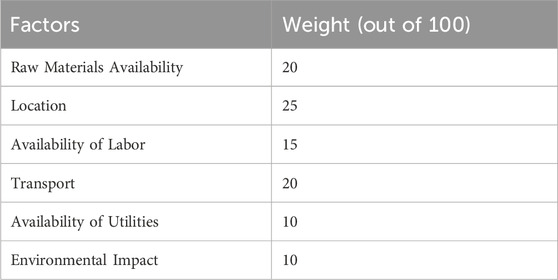
Table 3. Evaluation criteria and assign weights.
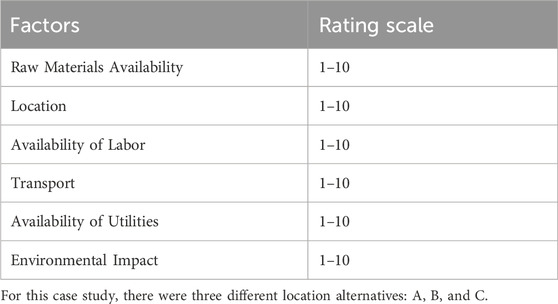
Table 4. Rating scale.
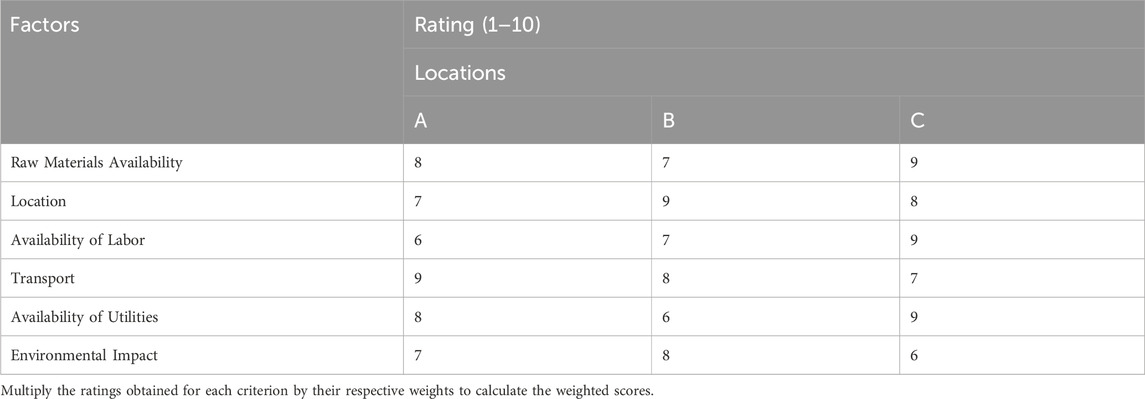
Table 5. Evaluation of locations A, B & C.
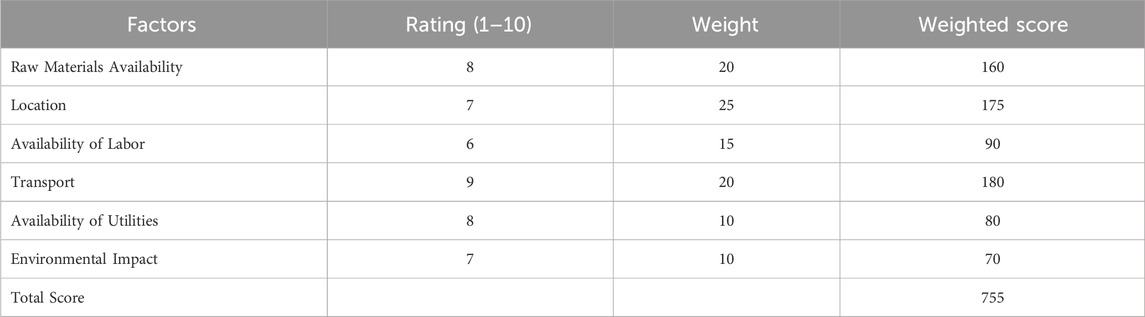
Table 6. Weighted scores for location A.
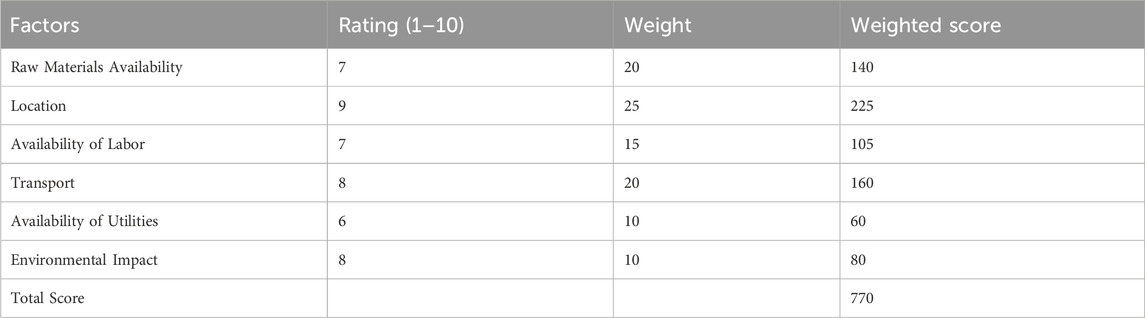
Table 7. Weighted scores for location B.
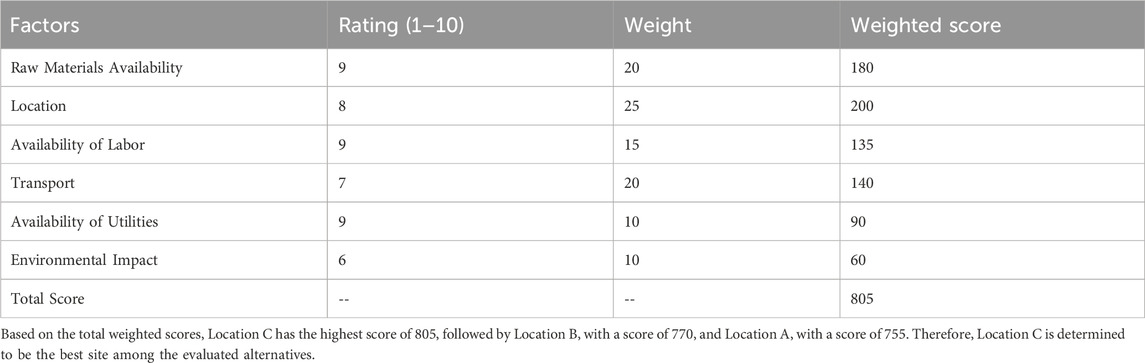
Table 8. Weighted scores for location C.
The industrial experts of the selected case study industry determined the weights assigned to each factor. Their expertise and insights into the industry’s specific requirements led to the determination of these weights. This approach ensured that the weighting accurately reflected the industry’s priorities and considerations.
4.2 Result’s validation
Based on the priority vectors from AHP implementation, the best location can be determined. In this case, Location C has the highest priority score of 0.5985, indicating that it is the most suitable location for the manufacturing industry. Location A and Location B have priority scores of 0.2780 and 0.1235, respectively. The Best Worst Method (BWM) analysis yielded insightful results regarding site location selection for the manufacturing industry. Utilizing selected weights and pairwise comparison scores, BWM identified Location C as the most suitable site, with the highest final score of 8.91. By designating Raw Materials Availability as the best criterion and Environmental Impact as the worst, the method provided a nuanced perspective on the relative importance of criteria. This outcome underscores Location C’s comprehensive alignment with the specified criteria, showcasing its superior desirability for the manufacturing industry. The BWM analysis contributes a unique dimension to decision-making processes, highlighting the holistic evaluation of criteria and reinforcing the significance of diverse analytical approaches in enhancing site selection strategies.
5 Results and discussion
Here, we discuss the outcomes of the site location selection process using three distinct methodologies: FRM, Analytic Hierarchy Process (AHP), and Best Worst Method (BWM). The study encompasses six key factors: Raw Materials Availability, Location, Availability of Labor, Transport, Availability of Utilities, and Environmental Impact.
5.1 Factor rating method analysis
The FRM assigned weights based on the relative importance of factors, and the total scores determined each location’s suitability. The results, summarized in Tables 9–11, indicated that Location C scored the highest, affirming its suitability for the manufacturing industry.
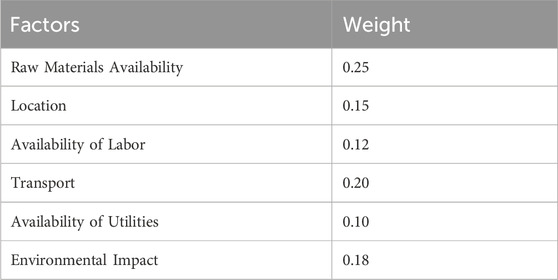
Table 9. Weight Assignment for factors.
5.2 Analytic hierarchy process analysis
The AHP involved pairwise comparisons to establish priority vectors for each location based on the identified criteria. The priority vectors, presented in Table 10, reinforced the selection of Location C as the most favourable site, aligning with the FRM results.

Table 10. Priority vectors for locations.
5.3 Best worst method analysis
The Best Worst Method introduced a new perspective by identifying the best and worst criteria, assigning scores, and calculating final scores for each location. The results, summarized in the Final Score column of the BWM table, positioned Location C as the most suitable site.
5.4 Comparative analysis of methods
To provide a holistic view of the site selection outcomes, we present a comparative table (refer Table 11) summarizing the results obtained from each method.

Table 11. Comparative analysis of site location selection methods.
5.5 Discussion of comparative results
The comparative analysis illustrates the consensus among the FRM, AHP, and BWM methodologies in ranking Location C as the most suitable site for the manufacturing industry. This alignment enhances the robustness of the decision-making process, validating the selection of Location C.
The introduction of the Best Worst Method contributes a nuanced perspective to the overall site selection process, reflecting the importance of diverse analytical approaches. The final scores from BWM reaffirm Location C as the preferred option, showcasing its holistic suitability across the identified criteria.
5.6 Future research implications
While this study integrates three methodologies, the dynamic nature of decision-making prompts further exploration of alternative methods and criteria. Future research could delve into the intricacies of combining diverse approaches, considering real-world constraints, and conducting sensitivity analyses to bolster the accuracy and applicability of site location selection.
The comparative analysis highlights the effectiveness of the FRM, AHP, and Best Worst Method in guiding site location decisions for the manufacturing industry. The consistent preference for Location C underscores its overall suitability, providing valuable insights for organizations aiming to make informed decisions aligned with their goals and requirements.
6 Conclusion
This research paper applied the FRM and the Analytic Hierarchy Process (AHP) to select the best site location for a manufacturing industry among three alternatives. The decision-making process considered six factors: raw materials availability, location, availability of labor, transport, availability of utilities, and environmental impact. The results obtained from the FRM assigned weights to each factor, highlighting the relative importance of Raw Materials Availability as the most influential criterion. Subsequently, the AHP and BWM were employed to prioritize the three locations based on comparisons of pairwise criteria. Location C emerged as the most favourable site, indicating its suitability for the manufacturing industry. The successful application of these methods demonstrates their effectiveness in guiding site location decisions. Organizations can make informed choices aligning with their goals and requirements by considering multiple factors and using structured decision-making techniques. However, it is vital to acknowledge the subjectivity involved in assigning weights and the specific context of the available alternatives. Future research could explore additional factors, incorporate real-world constraints, and conduct sensitivity analyses further to enhance the accuracy and robustness of site location selection. Overall, this study provides valuable insights into the site selection process for the manufacturing industry and offers a foundation for future investigations in this area.
Data availability statement
The original contributions presented in the study are included in the article/Supplementary material, further inquiries can be directed to the corresponding author.
Author contributions
PS: Data curation, Methodology, Writing–original draft. KS: Investigation, Methodology, Writing–review and editing. AK: Conceptualization, Investigation, Supervision, Writing–review and editing. LC: Conceptualization, Investigation, Methodology, Writing–review and editing. AK: Formal Analysis, Methodology, Supervision, Writing–review and editing. RP: Methodology, Supervision, Writing–review and editing.
Funding
The author(s) declare that no financial support was received for the research, authorship, and/or publication of this article.
Conflict of interest
The authors declare that the research was conducted in the absence of any commercial or financial relationships that could be construed as a potential conflict of interest.
Publisher’s note
All claims expressed in this article are solely those of the authors and do not necessarily represent those of their affiliated organizations, or those of the publisher, the editors and the reviewers. Any product that may be evaluated in this article, or claim that may be made by its manufacturer, is not guaranteed or endorsed by the publisher.
References
Abdel-Basset, M., Gamal, A., Chakrabortty, R. K., and Ryan, M. (2021). A new hybrid multi-criteria decision-making approach for location selection of sustainable offshore wind energy stations: a case study. J. Clean. Prod. 280, 124462. doi:10.1016/j.jclepro.2020.124462
Aghaloo, K., Ali, T., Chiu, Y. R., and Sharifi, A. (2023). Optimal site selection for the solar-wind hybrid renewable energy systems in Bangladesh using an integrated GIS-based BWM-fuzzy logic method. Energy Convers. Manag. 283, 116899. doi:10.1016/j.enconman.2023.116899
Akdeniz, H. B., Yalpir, S., and Inam, S. (2023). Assessment of suitable shrimp farming site selection using geographical information system based Analytical Hierarchy Process in Turkey. Ocean Coast. Manag. 235, 106468. doi:10.1016/j.ocecoaman.2022.106468
Brown, P. A., and Gibson, D. F. (1972). A quantified model for facility site selection-application to a multiplant location problem. AIIE Trans. 4 (1), 1–10. doi:10.1080/05695557208974822
Cali, U., Kantar, E., Pamucar, D., Deveci, M., Taylor, P., Campos-Gaona, D., et al. (2024). Offshore wind farm site selection in Norway: using a fuzzy trigonometric weighted assessment model. J. Clean. Prod. 436, 140530. doi:10.1016/j.jclepro.2023.140530
Chen, L., Olhager, J., and Tang, O. (2014). Manufacturing facility location and sustainability: a literature review and research agenda. Int. J. Prod. Econ. 149, 154–163. doi:10.1016/j.ijpe.2013.05.013
Chu, T. C. (2002). Selecting plant location via a fuzzy TOPSIS approach. Int. J. Adv. Manuf. Technol. 20, 859–864. doi:10.1007/s001700200227
Church, R. L., and Murray, A. T. (2009). Business site selection, location analysis, and GIS. Hoboken, NJ: John Wiley & Sons, 209–233.
Di Grazia, S., and Tina, G. M. (2024). Optimal site selection for floating photovoltaic systems based on Geographic Information Systems (GIS) and Multi-Criteria Decision Analysis (MCDA): a case study. Int. J. Sustain. Energy 43 (1), 2167999. doi:10.1080/14786451.2023.2167999
Erdoğan, G. (2019). Land selection criteria for lights out factory districts during the industry 4.0 process. J. Urban Manag. 8 (3), 377–385. doi:10.1016/j.jum.2019.01.001
Feiz, R., Metson, G. S., Wretman, J., and &Ammenberg, J. (2022). Key factors for site-selection of biogas plants in Sweden. J. Clean. Prod. 354, 131671. doi:10.1016/j.jclepro.2022.131671
Gao, J., Wang, C., Wang, Z., Lin, J., Zhang, R., Wu, X., et al. (2024). Site selection decision for biomass cogeneration projects from a sustainable perspective: a case study of China. Energy 286, 129518. doi:10.1016/j.energy.2023.129518
Gil-García, I. C., Ramos-Escudero, A., García-Cascales, M. S., Dagher, H., and Molina-García, A. (2022). Fuzzy GIS-based MCDM solution for the optimal offshore wind site selection: the Gulf of Maine case. Renew. Energy 183, 130–147. doi:10.1016/j.renene.2021.10.058
Gothwal, S., and Saha, R. (2015). Plant location selection of a manufacturing industry using analytic hierarchy process approach. Int. J. Serv. Operations Manag. 22 (2), 235–255. doi:10.1504/ijsom.2015.071531
Hauswald, E. L. (1963). The transport factor and plant-site selection in the factory fabricated home manufacturing industry. Indiana University.
Hobbs, B. F. (1995). Optimization methods for electric utility resource planning. Eur. J. Operational Res. 83 (1), 1–20. doi:10.1016/0377-2217(94)00190-n
Johar, A., Jain, S. S., and Garg, P. K. (2013). Land suitability analysis for industrial development using GIS. J. Geomatics 7, 101–106.
Kelly, J. P., Freeman, D. C., and Emlen, J. M. (1993). Competitive impact model for site selection: the impact of competition, sales generators and own store cannibalization. Int. Rev. Retail, Distribution Consumer Res. 3 (3), 237–259. doi:10.1080/09593969300000017
Kheybari, S., Kazemi, M., and Rezaei, J. (2019). Bioethanol facility location selection using best-worst method. Appl. energy 242, 612–623. doi:10.1016/j.apenergy.2019.03.054
Kumar, A., Jee Mishra, G., Gulati, V., Srivastava, A. K., Kumar, P., Kumar, V., et al. (2024a). Correction to: a comprehensive review on heat-assisted incremental sheet forming. Int. J. Interact. Des. Manuf. doi:10.1007/s12008-024-01734-0
Kumar, A., Kumar, P., Sharma, N., and Srivastava, A. K. (2024b). 3D printing technologies: digital manufacturing, artificial intelligence, industry 4.0. Berlin, Boston: De Gruyter. doi:10.1515/9783111215112
Kumar, A., Shrivastava, V. K., Kumar, P., Kumar, A., and Gulati, V. (2024c). Predictive and experimental analysis of forces in die-less forming using artificial intelligence techniques. Proc. Institution Mech. Eng. Part E J. Process Mech. Eng. 0 (0). doi:10.1177/09544089241235473
Kutlu Gündoğdu, F., and Kahraman, C. (2019). A novel VIKOR method using spherical fuzzy sets and its application to warehouse site selection. J. Intelligent Fuzzy Syst. 37 (1), 1197–1211. doi:10.3233/jifs-182651
Leng, J., Wang, D., Shen, W., Li, X., Liu, Q., and Chen, X. (2021). Digital twins-based smart manufacturing system design in Industry 4.0: a review. J. Manuf. Syst. 60, 119–137. doi:10.1016/j.jmsy.2021.05.011
Li, Y., Sun, Y., Kang, Y., Zhang, F., and Zhang, J. (2023). An optimal site selection framework for near-zero carbon emission power plants based on multiple stakeholders. Energies 16 (2), 797. doi:10.3390/en16020797
Liang, G. S., and Wang, M. J. J. (1991). A fuzzy multi-criteria decision-making method for facility site selection. Int. J. Prod. Res. 29 (11), 2313–2330. doi:10.1080/00207549108948085
Lu, J., Zheng, X., Nervino, E., Li, Y., Xu, Z., and Xu, Y. (2024). Retail store location screening: a machine learning-based approach. J. Retail. Consumer Serv. 77, 103620. doi:10.1016/j.jretconser.2023.103620
Melo, M. T., Nickel, S., and Saldanha-Da-Gama, F. (2009). Facility location and supply chain management–A review. Eur. J. operational Res. 196 (2), 401–412. doi:10.1016/j.ejor.2008.05.007
Mikellidou, C. V., Shakou, L. M., Boustras, G., and Dimopoulos, C. (2018). Energy critical infrastructures at risk from climate change: a state of the art review. Saf. Sci. 110, 110–120. doi:10.1016/j.ssci.2017.12.022
Morrison, P. A., and Abrahamse, A. F. (1996). Applying demographic analysis to store site selection. Popul. Res. Policy Rev. 15, 479–489. doi:10.1007/bf00125866
Noorollahi, Y., Senani, A. G., Fadaei, A., Simaee, M., and &Moltames, R. (2022). A framework for GIS-based site selection and technical potential evaluation of PV solar farm using Fuzzy-Boolean logic and AHP multi-criteria decision-making approach. Renew. Energy 186, 89–104. doi:10.1016/j.renene.2021.12.124
Pajić, V., Andrejić, M., Jolović, M., and Kilibarda, M. (2024). Strategic warehouse location selection in business logistics: a novel approach using imf SWARA–MARCOS—a case study of a Serbian logistics service provider. Mathematics 12 (5), 776. doi:10.3390/math12050776
Park, J. W., Oh, H. Y., Kim, D. Y., and Cho, Y. J. (2018). Plant location selection for food production by considering the regional and seasonal supply vulnerability of raw materials. Math. Problems Eng. 2018, 1–14. doi:10.1155/2018/7494398
Privalovskaya, G. A. (1975). The role of the raw-material sectors in the shaping of industrial production. Sov. Geogr. 16 (1), 7–19. doi:10.1080/00385417.1975.10640049
Puviarasu, M., Asokan, P., Sherif, S. U., Mathiyazhagan, K., and Sasikumar, P. (2023). A STEEP based hybrid multi-criteria decision making model for the evaluation of battery recycling plant location. J. Adv. Manag. Res. 20, 234–264. (ahead-of-print). doi:10.1108/jamr-06-2022-0124
Raad, N. G., and Rajendran, S. (2024). A hybrid robust SBM-DEA, multiple regression, and MCDM-GIS model for airport site selection: case study of sistan and baluchestan province, Iran. Transp. Eng. 16, 100235. doi:10.1016/j.treng.2024.100235
Rahimi, S., Hafezalkotob, A., Monavari, S. M., Hafezalkotob, A., and Rahimi, R. (2020). Sustainable landfill site selection for municipal solid waste based on a hybrid decision-making approach: fuzzy group BWM-MULTIMOORA-GIS. J. Clean. Prod. 248, 119186. doi:10.1016/j.jclepro.2019.119186
Rahman, A. U., Saeed, M., Mohammed, M. A., Al-Waisy, A. S., Kadry, S., and Kim, J. (2023). An innovative fuzzy parameterized MADM approach to site selection for dam construction based on sv-complex neutrosophichypersoft set. AIMS Math. 8 (2), 4907–4929. doi:10.3934/math.2023245
Rane, N. L., Achari, A., Choudhary, S. P., Mallick, S. K., Pande, C. B., Srivastava, A., et al. (2023). A decision framework for potential dam site selection using GIS, MIF and TOPSIS in Ulhas river basin, India. J. Clean. Prod. 423, 138890. doi:10.1016/j.jclepro.2023.138890
Rani, S., Tripathi, K., and Kumar, A. (2023). Machine learning aided malware detection for secure and smart manufacturing: a comprehensive analysis of the state of the art. Int. J. Interact. Des. Manuf. doi:10.1007/s12008-023-01578-0
Reed, M. S., Fraser, E. D., and Dougill, A. J. (2006). An adaptive learning process for developing and applying sustainability indicators with local communities. Ecol. Econ. 59 (4), 406–418. doi:10.1016/j.ecolecon.2005.11.008
Saha, A., Pamucar, D., Gorcun, O. F., and Mishra, A. R. (2023). Warehouse site selection for the automotive industry using a fermatean fuzzy-based decision-making approach. Expert Syst. Appl. 211, 118497. doi:10.1016/j.eswa.2022.118497
Salgot, M., and Folch, M. (2018). Wastewater treatment and water reuse. Curr. Opin. Environ. Sci. Health 2, 64–74. doi:10.1016/j.coesh.2018.03.005
Santibañez-Aguilar, J. E., González-Campos, J. B., Ponce-Ortega, J. M., Serna-González, M., and El-Halwagi, M. M. (2014). Optimal planning and site selection for distributed multiproduct biorefineries involving economic, environmental and social objectives. J. Clean. Prod. 65, 270–294. doi:10.1016/j.jclepro.2013.08.004
Schmenner, R. W., Huber, J. C., and Cook, R. L. (1987). Geographic differences and the location of new manufacturing facilities. J. Urban Econ. 21 (1), 83–104. doi:10.1016/0094-1190(87)90024-6
Shao, M., Han, Z., Sun, J., Xiao, C., Zhang, S., and Zhao, Y. (2020). A review of multi-criteria decision making applications for renewable energy site selection. Renew. Energy 157, 377–403. doi:10.1016/j.renene.2020.04.137
Shao, M., Zhao, Y., Sun, J., Han, Z., and Shao, Z. (2023). A decision framework for tidal current power plant site selection based on GIS-MCDM: a case study in China. Energy 262, 125476. doi:10.1016/j.energy.2022.125476
Sharma, P., Phanden, R. K., and Baser, V. (2012). Analysis of site selection based on factors rating. Int. J. Emerg. trends Eng. Dev. 2 (6), 616–622. Available at: https://drive.google.com/file/d/0B1tLlAvtgwTvZkxNSWhXRUNXaXc/view?resourcekey=0-I1EYcf5KxbHdCFeygjv5gg (Assessed on March 19, 2024).
Tadesse, H., Singh, B., Deresso, H., Lemma, S., Singh, G. K., Srivastava, A. K., et al. (2024). Investigation of production bottlenecks and productivity analysis in soft drink industry: a case study of East Africa Bottling Share Company. Int. J. Interact. Des. Manuf. (IJIDeM), 1–13. doi:10.1007/s12008-023-01715-9
Xuan, H. A., Trinh, V. V., Techato, K., and &Phoungthong, K. (2022). Use of hybrid MCDM methods for site location of solar-powered hydrogen production plants in Uzbekistan. Sustain. Energy Technol. Assessments 52, 101979. doi:10.1016/j.seta.2022.101979
Yadav, A. S., Kumar, A., Yadav, K. K., and Rathee, S. (2023). Optimization of an inventory model for deteriorating items with both selling price and time-sensitive demand and carbon emission under green technology investment. Int. J. Interact. Des. Manuf. doi:10.1007/s12008-023-01689-8
Yong, D. (2006). Plant location selection based on fuzzy TOPSIS. Int. J. Adv. Manuf. Technol. 28, 839–844. doi:10.1007/s00170-004-2436-5
Keywords: analytic hierarchy process (AHP), decision-making, factor rating method, site location, best worst method
Citation: Sharma P, Singh Ghatorha K, Kang AS, Cepova L, Kumar A and Phanden RK (2024) Strategic insights in manufacturing site selection: a multi-method approach using factor rating, analytic hierarchy process, and best worst method. Front. Mech. Eng 10:1392543. doi: 10.3389/fmech.2024.1392543
Received: 27 February 2024; Accepted: 25 March 2024;
Published: 05 April 2024.
Edited by:
Kanak Kalita, Vel Tech Dr. RR & Dr. SR Technical University, IndiaReviewed by:
Vikas Swarnakar, Khalifa University, United Arab EmiratesEvizal Abdul Kadir, Islamic University of Riau, Indonesia
Sunil Sharma, Technical University Dresden, Germany
Copyright © 2024 Sharma, Singh Ghatorha, Kang, Cepova, Kumar and Phanden. This is an open-access article distributed under the terms of the Creative Commons Attribution License (CC BY). The use, distribution or reproduction in other forums is permitted, provided the original author(s) and the copyright owner(s) are credited and that the original publication in this journal is cited, in accordance with accepted academic practice. No use, distribution or reproduction is permitted which does not comply with these terms.
*Correspondence: Ajay Kumar, YWpheS5rdW1hcjMwODg2QGdtYWlsLmNvbQ==
†ORCID ID: Ajay Kumar, orcid.org/0000-0001-7306-1902