 Himanshu Jangid
 Sudhakar Singh
 Piyush Kashyap
 Avtar Singh
 Gaurav Kumar
- 1School of Bioengineering and Biosciences, Lovely Professional University, Jalandhar, Punjab, India
- 2School of Agriculture, Lovely Professional University, Jalandhar, Punjab, India
- 3School of Electrical Engineering and Computing (SoEEC), Adama Science and Technology University (AS-TU), Adama, Ethiopia
Introduction: Silver nanoparticles (AgNPs) have gained significant attention in biomedical applications due to their unique physicochemical properties. This review focuses on the roles of AgNPs in antimicrobial activity, anticancer therapy, and wound healing, highlighting their potential to address critical health challenges.
Methods: A bibliometric analysis was conducted using publications from the Scopus database, covering research from 2002 to 2024. The study included keyword frequency, citation patterns, and authorship networks. Data was curated with Zotero and analyzed using Bibliometrix R and VOSviewer for network visualizations.
Results: The study revealed an increasing trend in research on AgNPs, particularly in antimicrobial applications, leading to 8,668 publications. Anticancer and wound healing applications followed, with significant contributions from India and China. The analysis showed a growing focus on “green synthesis” methods, highlighting a shift towards sustainable production. Key findings indicated the effectiveness of AgNPs in combating multidrug-resistant bacteria, inducing apoptosis in cancer cells, and promoting tissue regeneration in wound healing.
Discussion: The widespread research and applications of AgNPs underscore their versatility in medical interventions. The study emphasizes the need for sustainable synthesis methods and highlights the potential risks, such as long-term toxicity and environmental impacts. Future research should focus on optimizing AgNP formulations for clinical use and further understanding their mechanisms of action.
Conclusion: AgNPs play a pivotal role in modern medicine, particularly in addressing antimicrobial resistance, cancer treatment, and wound management. Ongoing research and international collaboration are crucial for advancing the safe and effective use of AgNPs in healthcare.
1 Introduction
Silver nanoparticles (AgNPs) have emerged as a captivating and highly versatile class of nanomaterials, drawing significant attention from the scientific community across diverse fields (Akter et al., 2018; Xu et al., 2020). Their unique physicochemical properties, distinct from bulk silver and other traditional materials, arise from their nanoscale dimensions (Zhang et al., 2016; Galatage et al., 2021). In recent years, AgNPs have garnered immense interest in biomedical research, particularly for their remarkable applications in antibacterial, anti-cancer, and wound healing therapies (Hasan et al., 2022; Hou et al., 2023). The exceptional properties of AgNPs stem from their remarkably large surface area-to-volume ratio, which confers upon them exceptional reactivity, making them ideal for various surface-related applications (Rani et al., 2020; Bruna et al., 2021). This heightened reactivity is crucial for their interactions with biological systems and enhances their efficacy in biomedical applications. One of the most compelling attributes of AgNPs is their potent antimicrobial activity. This activity is attributed to the controlled release of silver ions, which disrupt microbial cell membranes and internal processes, leading to the destruction of a broad spectrum of pathogens, including bacteria, viruses, and fungi (Yin et al., 2020). Notably, AgNPs have shown promise in combating antibiotic-resistant bacterial strains like Methicillin-resistant Staphylococcus aureus (MRSA) and multidrug-resistant Enterobacteriaceae, offering a potential solution to the growing global threat of antibiotic resistance (Dove et al., 2023; dos Santos et al., 2021; More et al., 2023). Beyond their antimicrobial prowess, AgNPs exhibit tunable optical and electronic properties that can be finely adjusted by manipulating their size, shape, and surface chemistry (Dikshit et al., 2021). This unique feature opens up a wide array of possibilities for their utilization in various fields, including sensing, imaging, and drug delivery. For instance, AgNPs can be engineered to act as highly sensitive sensors for detecting specific biomolecules or pathogens, providing valuable tools for diagnostics and disease monitoring. Moreover, their ability to absorb and scatter light in a controlled manner makes them suitable for imaging applications, potentially enabling the visualization of biological processes at the cellular and molecular levels. In the realm of biomedical research, AgNPs have demonstrated immense potential in combating infectious diseases, and cancer, and facilitating wound healing. As antibiotic resistance continues to pose a significant challenge to global health, AgNPs offer an alternative and complementary therapeutic approach. They are increasingly being integrated into medical devices, wound dressings, and topical formulations to prevent and treat infections (Qing et al., 2018; Paladini and Pollini, 2019). The incorporation of AgNPs into wound dressings, for example, has been shown to reduce infection rates and accelerate the healing process of chronic wounds such as diabetic ulcers and burns, offering hope for patients with difficult-to-treat wounds.
Furthermore, AgNPs have shown remarkable promise in cancer research. Their ability to selectively induce cytotoxicity in cancer cells while sparing healthy tissue makes them attractive candidates for targeted anti-cancer therapies (Zielinska et al., 2017). Researchers have extensively explored AgNPs as carriers for drug delivery, aiming to precisely deliver chemotherapeutic agents to malignant cells, thereby minimizing systemic side effects and enhancing the efficacy of cancer treatments (Gomes et al., 2021; Xu et al., 2023). The potential of AgNPs in revolutionizing cancer therapy is a rapidly evolving area of research with significant implications for the future of oncology. In addition to their antibacterial and anti-cancer properties, AgNPs play a crucial role in wound healing. Their antimicrobial properties create a favorable environment for tissue regeneration and wound closure, making them valuable components in advanced wound care materials (Krishnan et al., 2020; Rybka et al., 2023). The incorporation of AgNPs into wound dressings and hydrogels has shown promising results in accelerating healing in burn injuries, chronic ulcers, and other persistent wounds, offering a ray of hope for patients suffering from debilitating and slow-healing wounds.
The following are the objectives of the studies:
➢ To Conduct a Comprehensive Bibliometric Analysis: The primary objective of this research is to perform a comprehensive bibliometric analysis of the existing body of literature related to silver nanoparticles (AgNPs) in biomedical applications, with a specific focus on antibacterial, anti-cancer, and wound healing properties.
➢ To Identify Pivotal Trends: This research aims to identify and analyze pivotal trends in AgNP research, including publication trends, authorship patterns, citation networks, and keyword usage.
➢ To Recognize Influential Authors and Studies: Another objective is to recognize influential authors, research groups, and studies in the field of AgNP applications for antibacterial, anti-cancer, and wound healing purposes.
➢ To Delineate Emerging Research Trajectories: The research seeks to delineate emerging research trajectories within the realm of AgNPs, shedding light on evolving areas of interest and potential future directions in biomedical applications.
2 Literature review
Silver nanoparticles (AgNPs) have emerged as pioneers in nanotechnology applications owing to their distinctive attributes. Their utility transcends conventional boundaries, offering significant progress in antimicrobial treatments, anticancer therapies, and wound healing processes (Firdhouse and Lalitha, 2015; Bruna et al., 2021). The adaptability of AgNPs, characterized by their size-dependent physical and chemical properties, has spurred innovative approaches in medical science and biotechnology (Chung et al., 2016).
In antimicrobial applications, AgNPs have displayed exceptional efficacy against a broad spectrum of pathogenic microorganisms, including bacteria resistant to traditional antibiotics. This has paved the way for the development of more potent and less resistance-prone antimicrobial agents (More et al., 2023; Kim et al., 2024). Additionally, the eco-friendly synthesis of AgNPs has underscored a sustainable approach to harnessing their antimicrobial potential, minimizing environmental impact while maximizing therapeutic benefits (Osman et al., 2024). In the realm of anticancer research, AgNPs have exhibited promising capabilities in targeting and inhibiting tumor growth. Their versatility in being tailored for specific drug delivery systems has augmented the effectiveness of anticancer drugs, providing a focused approach to cancer treatment (Onugwu et al., 2022). The distinct properties of AgNPs, such as their surface modification and bioconjugation potential, have facilitated the creation of innovative anticancer therapies with reduced side effects and improved patient outcomes. Moreover, the applications of AgNPs in wound healing have yielded remarkable outcomes (Takáč et al., 2023). Their antimicrobial attributes, coupled with their capacity to stimulate tissue regeneration, have rendered AgNPs invaluable in the development of advanced wound dressings and healing agents. Incorporating AgNPs in wound care not only prevents infections but also expedites the healing process, enhancing recovery times and patient care (Aldakheel et al., 2023).
The subsequent Tables 1–3 succinctly outline significant breakthroughs in the utilization of silver nanoparticles across these critical research domains. Table 1: Key Breakthroughs in Silver Nanoparticles Antimicrobial Research Area Table 1 lists some of the key results in this field of research on silver nanoparticle antimicrobial science. It covers diverse synthesis methods, from chemical and green to biological syntheses, and the respective mechanisms associated with them for combating microorganisms. For instance, the AgNPs synthesized with the extract from green tea showed high activity against several bacterial strains while being biocompatible with human cells. This table underlines the multi-mechanistic properties of AgNPs, which include penetration and damage to bacterial cell walls, increase in membrane permeability, and generation of reactive oxygen species. There are, however, gaps regarding optimal dosing and long-term environmental effects; thus, research should be channeled toward these areas to maximize antimicrobial effectiveness and safety. Table 2: Key Breakthroughs in Silver Nanoparticle’s Anti-Cancer Research Domain Table 2 presents the development of the anticancer uses of AgNPs. These are antitumor activity of papaya leaf extracts mediated AgNPs against prostate cancer through pathways including cell arrest and apoptotic induction. The table suggests a need for strong in vivo testing and clinical trials to verify the findings in terms of efficacy and safety. In addition, a description of the specific cellular targets and an understanding of the molecular mechanisms implicated will be necessary to progress from these promising results to clinical application. Table 3: Key Milestones in the Domain of Wound Healing Research on Silver Nanoparticle Table 3 illustrates certain wound healing applications studies of AgNPs and their mechanisms of work to manifest dual features; AgNPs promote tissue growth on one side and hinder infections on the other side. For instance, AgNPs-based hydrogel dressings have improved diabetic rat healing by downregulating oxidative stress and inflammation pathways. Also, the most critical contribution given by biocompatible and eco-friendly synthesis methods includes using natural extracts for synthesizing AgNPs. Future perspectives in research should be optimization of these synthesis techniques for increased production efficiency and evaluation of the long-term effects of AgNPs in clinical applications for wound healing.

Table 1. Key breakthrough in silver nanoparticles antimicrobial research domain.
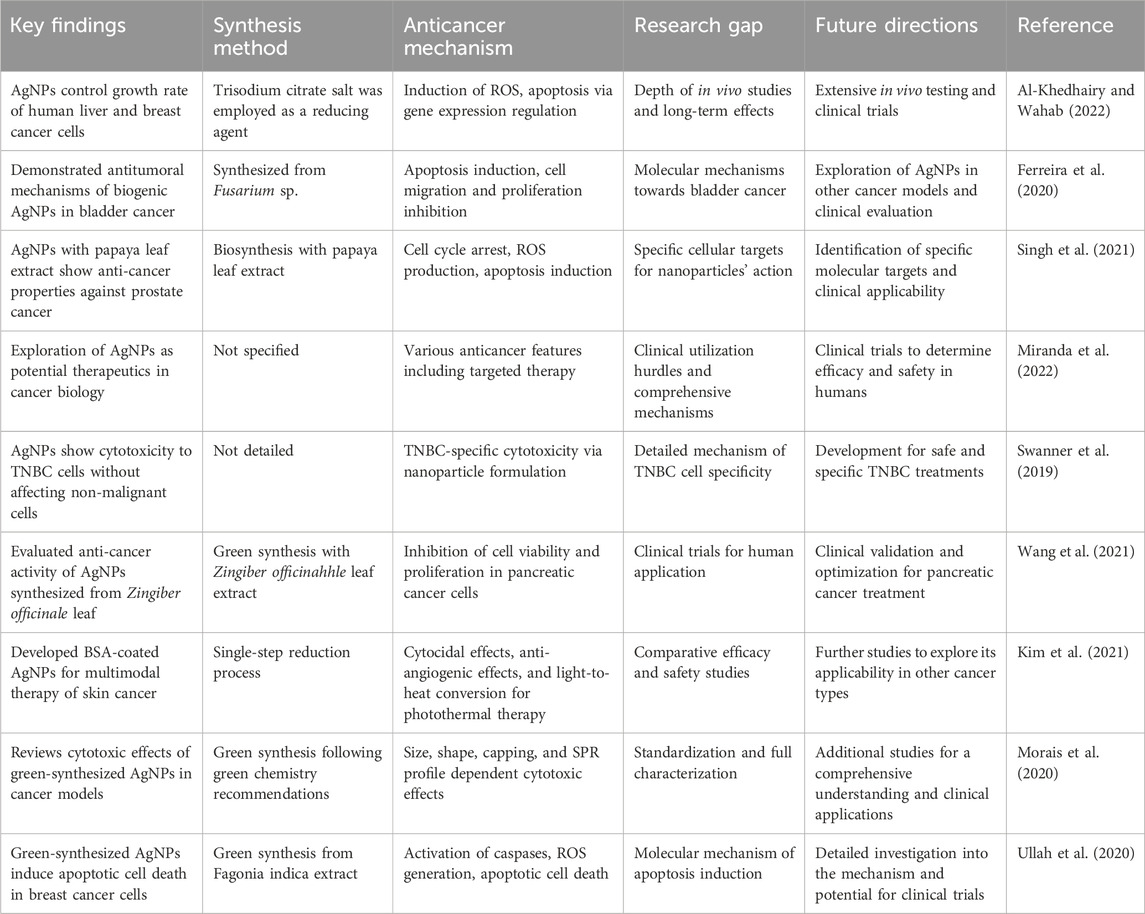
Table 2. Key breakthroughs in silver Nanoparticle’s anti-cancer research domain.
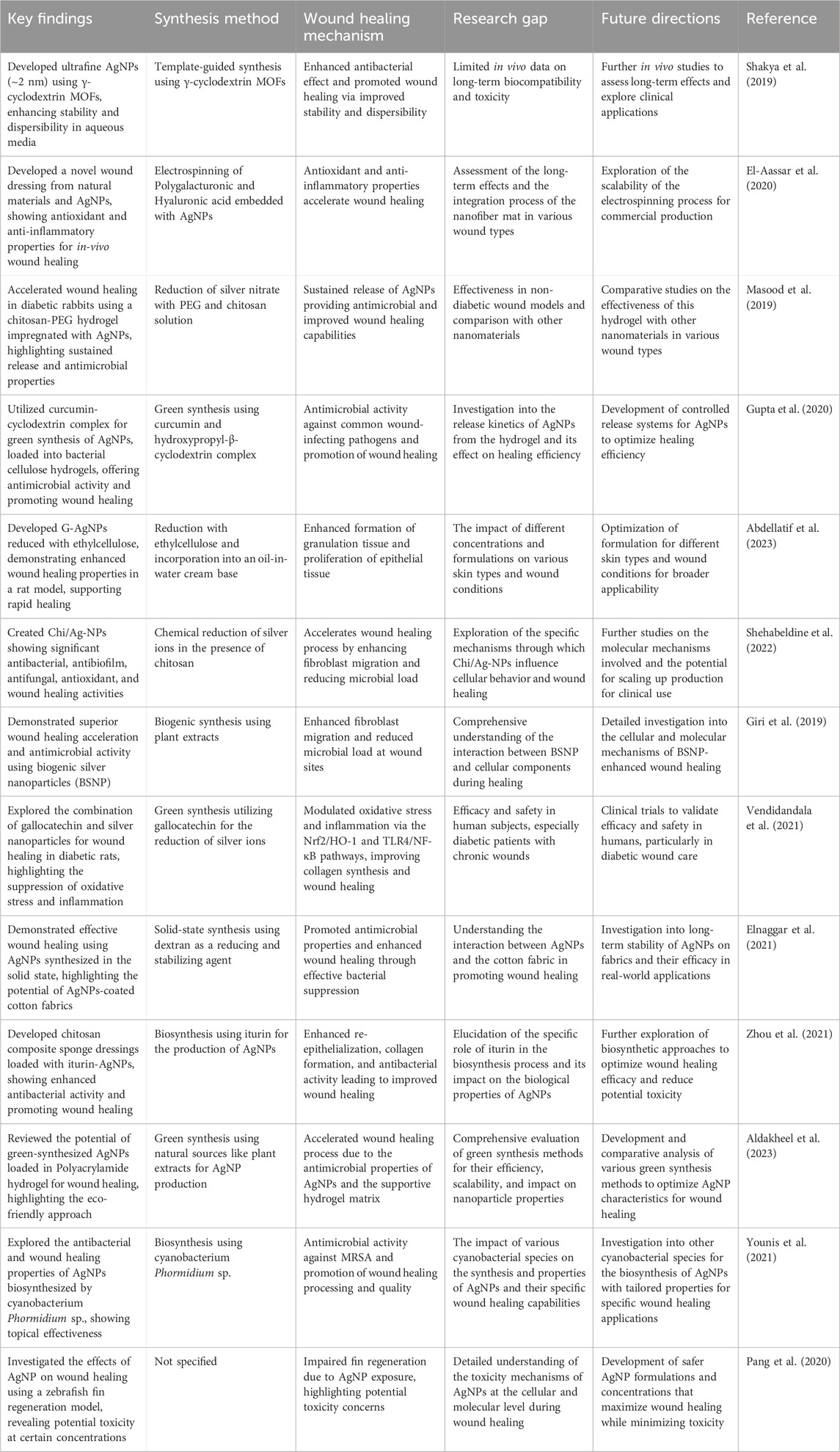
Table 3. Key breakthroughs in silver nanoparticles wound healing research domain.
3 Methodology
3.1 Data collection
3.1.1 Selection of databases
Scopus was selected as the main database for this bibliometric analysis because of its extensive coverage, multidisciplinary focus, detailed metadata, ease of use, and rigorous quality checks. Scopus offers access to a diverse array of scholarly articles, making it well-suited for our interdisciplinary examination of the applications of silver nanoparticles in antibacterial, anti-cancer, and wound healing contexts. It's timely updates and trustworthy data outlets guarantee the accurate tracking of the most recent research trends (Schotten et al., 2018; Pranckutė, 2021).
3.1.2 Search strategy
A systematic search on Scopus was conducted, focusing on research articles written in English. The search utilized the keywords ‘Silver nanoparticle’ and ‘Anticancer activity’ and ‘Antimicrobial activity’ and ‘Wound healing.’ This search strategy aimed to narrow down the dataset to articles directly related to silver nanoparticles and their applications in antibacterial, anti-cancer, and wound healing contexts, with a further limitation to research articles (Qamer et al., 2021; Hak et al., 2022).
3.1.3 Inclusion and exclusion criteria
Inclusion criteria for this bibliometric analysis encompassed research articles written in the English language. The chosen timeframe (2002–2024) ensured that the analysis included contemporary research in the field of silver nanoparticles (AgNPs) in biomedical applications. Articles were included if they directly pertained to AgNPs and their utilization in antibacterial, anti-cancer, or wound healing applications, as indicated by the presence of relevant keywords such as “silver nanoparticle” “anticancer activity” “antimicrobial activity” “wound healing” in the article content. Conversely, exclusion criteria consisted of non-English publications. Irrelevant articles that did not meet the defined keyword criteria or lacked relevance to the biomedical applications of AgNPs were excluded from the analysis. This stringent approach ensured the selection of a high-quality dataset directly aligned with the research objectives of this bibliometric study (Hinojo Lucena et al., 2019; Linnenluecke et al., 2019).
3.1.4 Data extraction
A systematic method was utilized to gather crucial metadata for each chosen article. This data encompassed details such as the article’s title, authors, publication date, abstract, keywords, journal source, and citation count. The extracted data formed the basis for the subsequent bibliometric analysis (Mengist et al., 2020).
3.2 Bibliometric indicators
3.2.1 Publication trends
This constructed a chronological depiction of research publications on AgNPs to identify trends in publication patterns over time. This timeline graphically represented the yearly distribution of articles across the designated research areas (Oliveira et al., 2019).
3.2.2 Authorship patterns
To pinpoint key figures in the field, we thoroughly investigated patterns of authorship. We identified prolific authors, research collectives, and affiliations. Co-authorship networks were scrutinized to uncover patterns of collaboration and influential clusters of research (Carchiolo et al., 2022).
3.2.3 Citation analysis
Citation analysis was performed to assess the impact of individual articles and their influence on subsequent research. Additionally, it built citation networks to visualize the interconnections among research within the biomedical domain of AgNP (Trujillo and Long, 2018).
3.2.4 Keyword analysis
A comprehensive keyword analysis was undertaken to assess keyword frequency and significance. This aimed to identify frequently used keywords and emerging keywords indicative of evolving research areas (Chen and Xiao, 2016).
3.3 Data analysis
3.3.1 Descriptive statistics
Fundamental descriptive statistics, encompassing metrics like mean, median, and standard deviation, were computed. These metrics were utilized to analyze publication trends, authorship structures, citation tallies, and keyword occurrences, furnishing a quantitative comprehension of the data (Cooksey, 2020).
3.3.2 Visualization
Vosviewer, R-studio, and MS Excel serve as tools for visualizing data, enabling the creation of charts, graphs, and network diagrams to improve the presentation of results. Visual depictions were utilized to communicate intricate relationships and trends discovered during the analysis (Aria and Cuccurullo, 2017; Derviş, 2020; Guleria and Kaur, 2021; Bhat et al., 2023).
4 Results and discussion
A bibliometric analysis was conducted using publications sourced from the Scopus database on 5 March 2024, focusing on interdisciplinary research concerning silver nanoparticles (AgNPs), particularly their applications in antimicrobial activity, anticancer activity, and wound healing. The search employed specific keywords such as “silver nanoparticles,” “antimicrobial activity,” “anticancer activity,” and “wound healing” to ensure thorough retrieval of relevant literature. Careful inclusion and exclusion criteria were applied to refine the dataset, resulting in a curated selection of publications for analysis. The initial data curation involved using Zotero version 6, a reference management software, to eliminate duplicates and effectively organize the literature (as per PRISMA guidelines in Figure 1). The curated dataset was then analyzed using the Bibliometrix R package, utilizing its Biblioshiny Version 4.1 interface for intuitive analysis (Aria and Cuccurullo, 2017). This bibliometric tool facilitated a comprehensive exploration of the dataset, extracting key metrics and trends within the field of study. For network visualization, VOSviewer version 1.6.20 was utilized to map relationships between key terms, authors, and publications, uncovering the intellectual structure and collaborative networks within the research domain. These visualizations provided insights into influential works, authors, and institutions contributing to the field. Additionally, Microsoft Excel 2019 was employed to create graphs and tables, presenting quantitative aspects of the dataset. This included the distribution of publications over time, citation analysis, and identification of core journals and articles shaping the discourse on AgNPs.
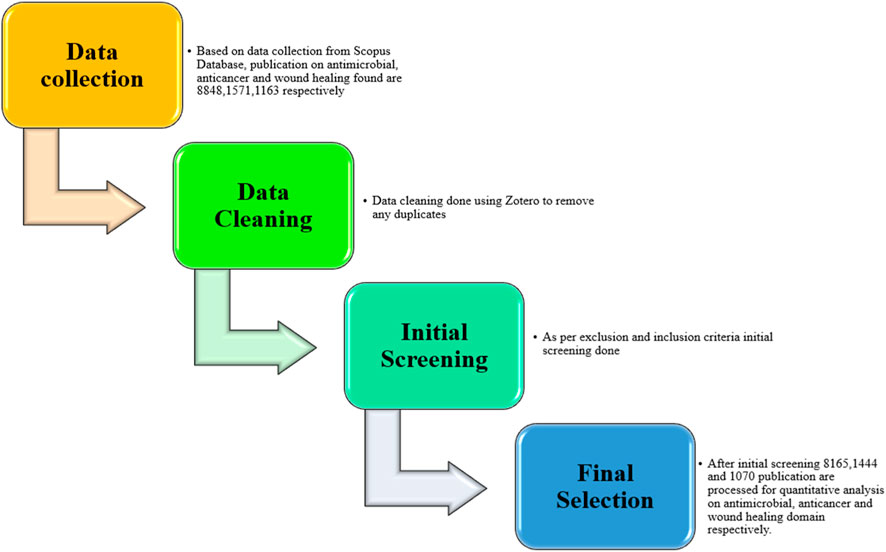
Figure 1. PRISMA flow diagram for bibliometric analysis of silver nanoparticles.
4.1 Data collection analysis
The bibliometric examination of literature concerning silver nanoparticles reveals a thriving domain with noteworthy scientific contributions spanning three principal biomedical areas: antimicrobial, anticancer, and wound healing. The data (as shown in Figure 2) illustrates a substantial increase in publication volume over the specified periods, with antimicrobial applications leading with 8,668 documents (A), followed by wound healing with 1,214 documents (C), and anticancer research with 1,444 documents (B). This distribution underscores the prominence of silver nanoparticles in antimicrobial investigations and suggests a solid knowledge base supporting exploration into other medical domains (Naganthran et al., 2022).
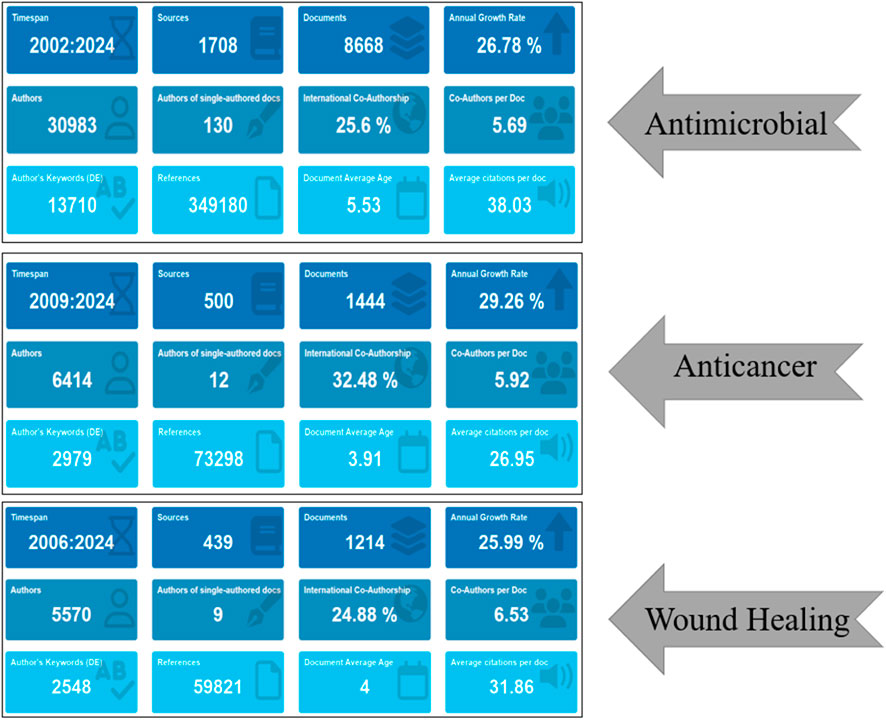
Figure 2. Comparative analysis of bibliometric data in silver nanoparticles research: a comprehensive overview delineating the dissemination and influence of scholarly works about silver nanoparticles, particularly emphasizing their antimicrobial, anticancer, and wound healing attributes throughout the periods of 2002–2024, 2009–2024, and 2006–2024 respectively. Vital metrics encompass the tally of sources, documents, authors, single-authored documents, percentage of international co-authorship, co-authors per document, author’s keywords, references, average age of documents, annual growth rate, and average citations per document.
Further analysis unveils intriguing dynamics in collaboration patterns and research depth. Antimicrobial research (A) not only exhibits the highest publication count but also demonstrates a notable average citation rate of 38.03, indicating the impactful nature of these studies. Additionally, there is a noteworthy international collaboration rate of 25.6%, underscoring global interest and cooperative efforts in combating microbial resistance. Similarly, anticancer (B) and wound healing (C) research show substantial international co-authorship at 32.48% and 24.88%, respectively, highlighting the global relevance and collaborative ethos within these research spheres. Remarkably, the average age of documents across all three fields is relatively low (ranging from 3.91 to 5.53 years), indicating an active and rapidly evolving field of research. The annual growth rates in these domains further emphasize the escalating interest and advancements, particularly notable in the anticancer domain (B) with a significant annual growth rate of 29.26%. This trend may reflect the pressing need for novel cancer therapies amidst global health challenges. Furthermore, the average number of co-authors per document indicates a collaborative trend in research endeavors, with wound healing investigations (C) exhibiting the highest at 6.53.
This implies that research in wound healing may necessitate interdisciplinary collaboration, drawing upon a variety of expertise to address the intricate mechanisms involved in tissue regeneration and infection management. In essence, the bibliometric data portrays a lively and cooperative research environment for silver nanoparticles, with notable contributions and interest spanning antimicrobial, anticancer, and wound healing investigations. This underscores the versatility of silver nanoparticles as a multifaceted tool in biomedicine, warranting ongoing exploration and investment. Additionally, the data emphasizes the importance of interdisciplinary approaches to fully leverage the potential of silver nanoparticles in tackling some of the most pressing health challenges of our era.
4.2 Yearly publication trend
The examination of the annual publication trend in research concerning silver nanoparticles offers a descriptive narrative of the field’s progression and the increasing interest among researchers. (Bouafia et al., 2021). As depicted in the provided data Table 4, there has been a noticeable exponential surge in publication numbers across all three domains—antimicrobial, anticancer, and wound healing—over the past two decades. This trend is further visualized in the line graph (as shown in Figure 3), illustrating a particularly steep rise in publications related to antimicrobial properties, indicating a robust and sustained focus in this area.
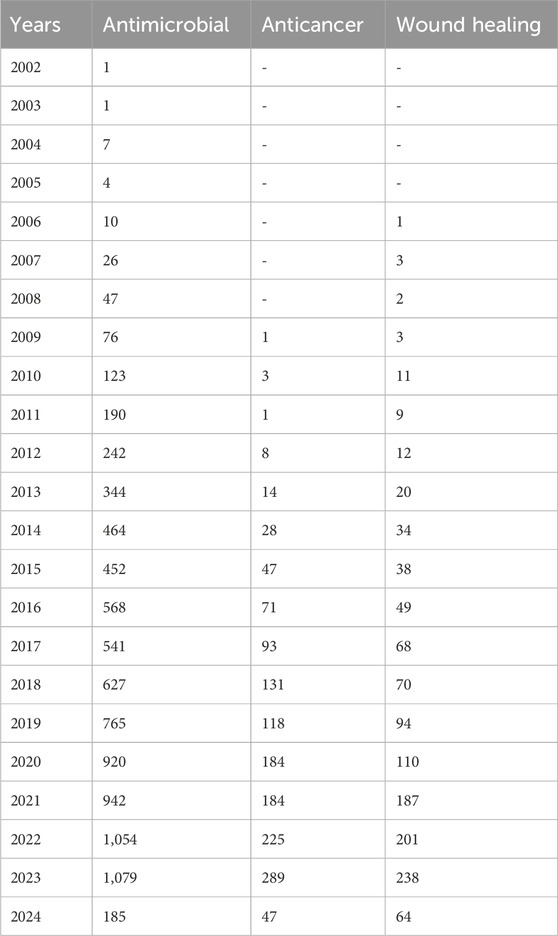
Table 4. Yearly Publication Statistics for Silver Nanoparticles Research: This tabulated data provides the count of research papers published annually spanning from 2002 to 2024, categorized according to their exploration of the antimicrobial, anticancer, and wound healing attributes of silver nanoparticles.
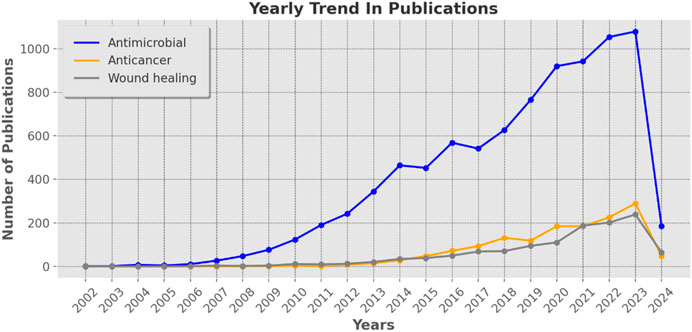
Figure 3. The graph depicts the annual progression of academic articles spanning from 2002 to 2024, showcasing the quantity of publications in three distinct research domains: antimicrobial, anticancer, and wound healing.
The domain of antimicrobial research has witnessed a remarkable escalation from a single publication in 2002 to 1,079 in 2023, with a subsequent decline observed in 2024, possibly due to data collection cessation or a temporal anomaly requiring further investigation. Conversely, publications in the anticancer domain have demonstrated a more gradual yet consistent upward trajectory, reaching a noteworthy peak of 289 publications in 2023. Despite being the smallest in volume, research on wound healing exhibits a continuous increase in publications, highlighting an enduring and growing interest indicative of the importance placed on developing advanced wound management treatments. The upward trend in publications is not merely quantitative but also qualitative, evidenced by the escalating citations over time (as discussed in the previous section). This trend suggests that research is not only expanding in volume but also impact and relevance, with newer studies building upon and referencing previous work, contributing to a robust knowledge base. Such trends may be attributed to mounting evidence regarding the effectiveness of silver nanoparticles in these domains, coupled with technological advancements facilitating nanoscale research feasibility. Furthermore, the increase in interdisciplinary collaboration, reflected in the rising number of co-authors per document, likely played a pivotal role in advancing the field. In conclusion, the data illustrates an active and dynamically evolving field with a clear emphasis on the antimicrobial applications of silver nanoparticles, followed by substantial interest and significant research endeavors in anticancer and wound healing applications. These trends mirror the scientific community’s response to global health challenges and underscore the potential of nanotechnology to offer innovative solutions.
4.3 Publication distribution based on region
The geographic analysis of publications concerning silver nanoparticle research (as depicted in Figure 4) unveils a notable discrepancy in research output across various regions, with specific countries demonstrating a concentrated presence (Li et al., 2022). Visualizing the data underscores a robust research footprint in India, China, and the United States, particularly in the realm of antimicrobial studies. This indicates a deliberate focus on utilizing silver nanoparticles for antimicrobial purposes in these regions, likely driven by the pressing need to address microbial resistance and infectious diseases, which are significant public health challenges.
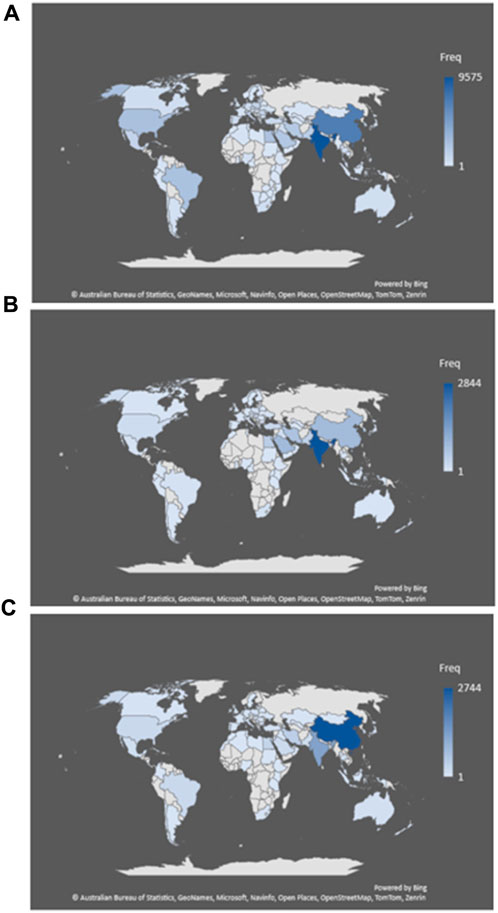
Figure 4. Global distribution of silver nanoparticles research publications: these maps present the frequency of research publications across different regions of the world for studies related to silver nanoparticles, categorized by their focus on antimicrobial (A), anticancer (B), and wound healing (C) properties.
Concerning anticancer research, the Indian subcontinent emerges as the primary contributor, with substantial frequencies also observed in Saudi Arabia, China, Iran, and South Korea. The investment in cancer research in these countries aligns with national health agendas aimed at innovating cancer treatment approaches using silver nanoparticles. In the domain of wound healing, China leads significantly, followed by India, Iran, Egypt, and Brazil. The distribution suggests a more geographically diverse interest in utilizing silver nanoparticles for wound healing, although it remains concentrated in countries with a specific focus on advanced wound care solutions. The heightened frequencies observed in these countries could be attributed to various factors, including the availability of research funding, the presence of robust scientific communities specializing in nanotechnology, and national healthcare priorities. Additionally, infrastructural capabilities for conducting advanced nanomaterial research may also influence this distribution. It is noteworthy that developing countries like India and China are prominently positioned across all three categories, indicative of their burgeoning research and development sectors. This underscores a global shift in scientific research hubs, with developing nations assuming more active roles in contributing to global knowledge, particularly in fields with significant societal implications like nanomedicine. The regional distribution underscores the importance of fostering international collaborations and knowledge exchange to bridge research disparities and harness the full potential of silver nanoparticles in healthcare. These insights are crucial for policymakers and funding agencies to comprehend the global research landscape and identify collaborative opportunities to advance the field of silver nanoparticles in medicine.
The data depicted in Figure 5 clearly illustrates the collaborative endeavors in global silver nanoparticle research. The distinction between publications originating from a single country (SCP) and those involving multiple countries (MCP) offers valuable insights into international cooperation dynamics within this field (Syafiuddin et al., 2017). Across the antimicrobial, anticancer, and wound healing domains, SCPs dominate, indicating robust domestic research capabilities. However, the substantial representation of MCP highlights the concerted efforts of the global scientific community to tackle the multifaceted challenges associated with silver nanoparticles in these areas.
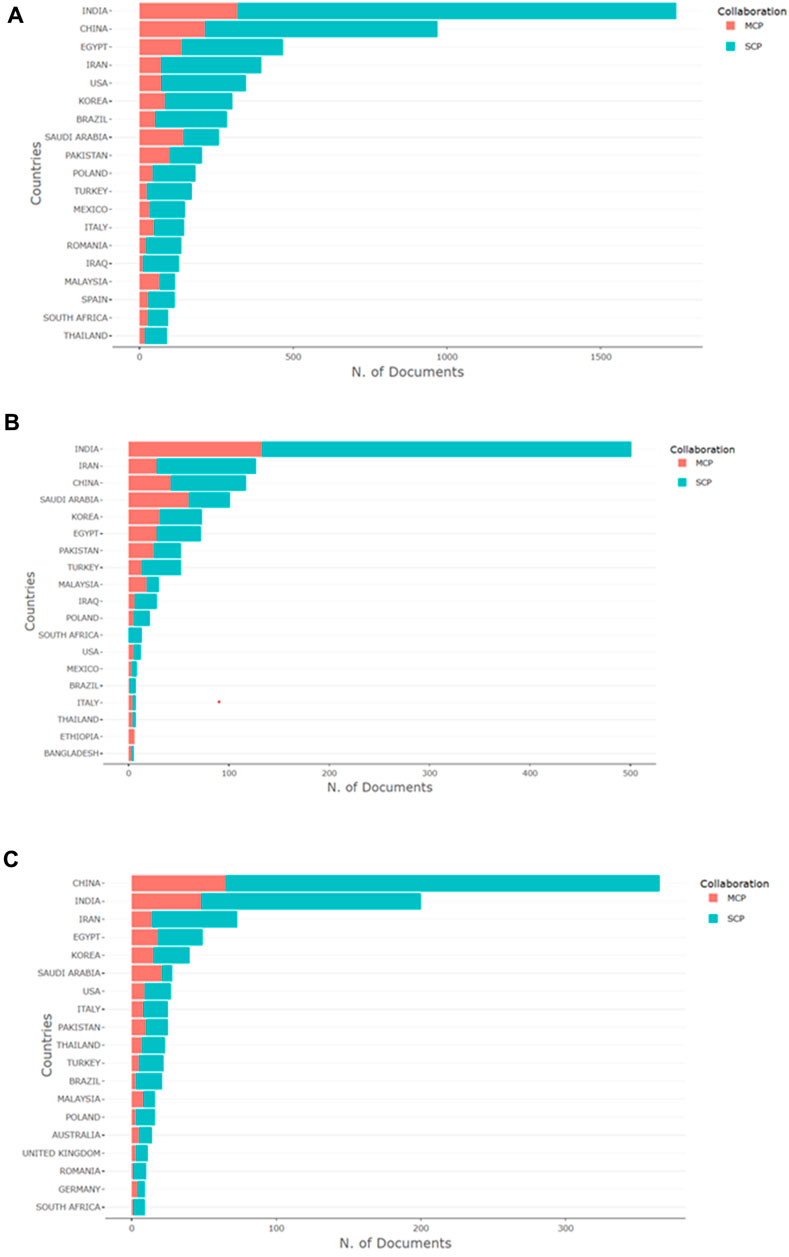
Figure 5. Collaborative patterns in silver nanoparticles research across nations: the figure illustrates the publication count from various countries, classified into single-country publications (SCP) and multiple-country publications (MCP), delineating collaboration trends in antimicrobial (A), anticancer (B), and wound healing (C) research involving silver nanoparticles.
In the antimicrobial sector (A), India emerges with the highest document count, implying a potent synergy of local research initiatives and international alliances. The ratio of MCP to SCP suggests a willingness to engage in global collaborations, potentially fostering progress in this crucial domain. China follows a similar trajectory, balancing significant domestic research output with substantial international cooperation. Regarding anticancer research (B), while India leads in publication count, there’s a slight tilt towards SCP, hinting at a pronounced domestic focus on cancer research despite continued collaborative efforts. In the realm of wound healing (C), China takes the lead with a higher prevalence of SCP, possibly reflecting a strategic emphasis on localized solutions for wound management. Nonetheless, China also demonstrates substantial international collaboration, as evidenced by the presence of MCP.
The prevalence of MCP across all three fields underscores the international character of nanotechnology research, where the exchange of knowledge and resources plays a pivotal role in fostering innovation. It is noteworthy that developed nations like the USA, despite exhibiting lower overall publication counts in these charts, demonstrate a significant presence in MCP, indicating their substantial involvement in collaborative research beyond what mere publication figures might suggest. In essence, the data reflects a growing inclination toward global collaboration in silver nanoparticle research, essential for addressing the multifaceted challenges associated with their effective application in healthcare. Such collaborations offer numerous benefits, including the sharing of expertise, access to diverse research facilities, and a broad scientific perspective, all of which can accelerate the pace of discovery and application of silver nanoparticles across various medical domains.
4.4 Bibliometric analysis of authors, affiliations and journals
The bibliometric analysis of silver nanoparticle research offers valuable insights into the intellectual landscape of the field through a comprehensive examination of authors, affiliations, and journals. The data shown in Table 5 highlights a specific cohort of researchers who stand out due to their significant contributions. For instance, in the antimicrobial sector, ‘Wang Y’ and ‘Zhang Y’ emerge as leading contributors with 90 and 76 articles, respectively, demonstrating remarkable individual productivity that shapes discussions in this domain. Similar trends are observed in the fields of anticancer and wound healing, where individuals like ‘Guru Nathan S’ and ‘Wang Y’ have made substantial contributions, with 13 and 38 articles, respectively, showcasing their influential presence across multiple research areas.
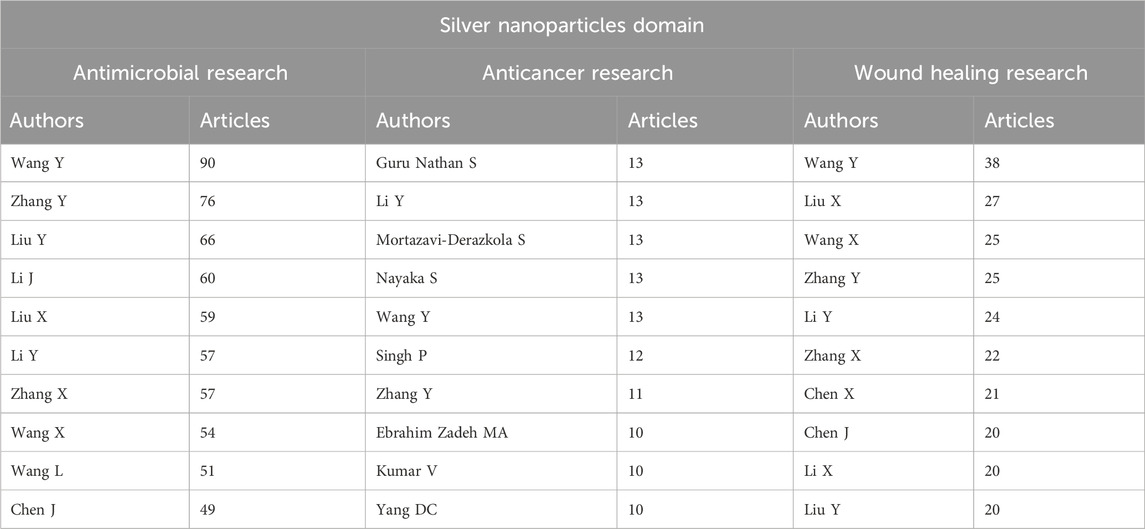
Table 5. Key authors in research on silver nanoparticles: an overview of leading authors and their article counts in the domains of antimicrobial, anticancer, and wound healing research involving silver nanoparticles.
Scientific journals play a crucial role in sharing research findings, and publications such as the ‘International Journal of Nanomedicine’ and ‘The International Journal of Biological Macromolecules stand out with high article counts. This underscores their significance as primary platforms for the latest research on silver nanoparticles, highlighting their vital role in advancing the field and facilitating the exchange of knowledge (as depicted in Table 6).
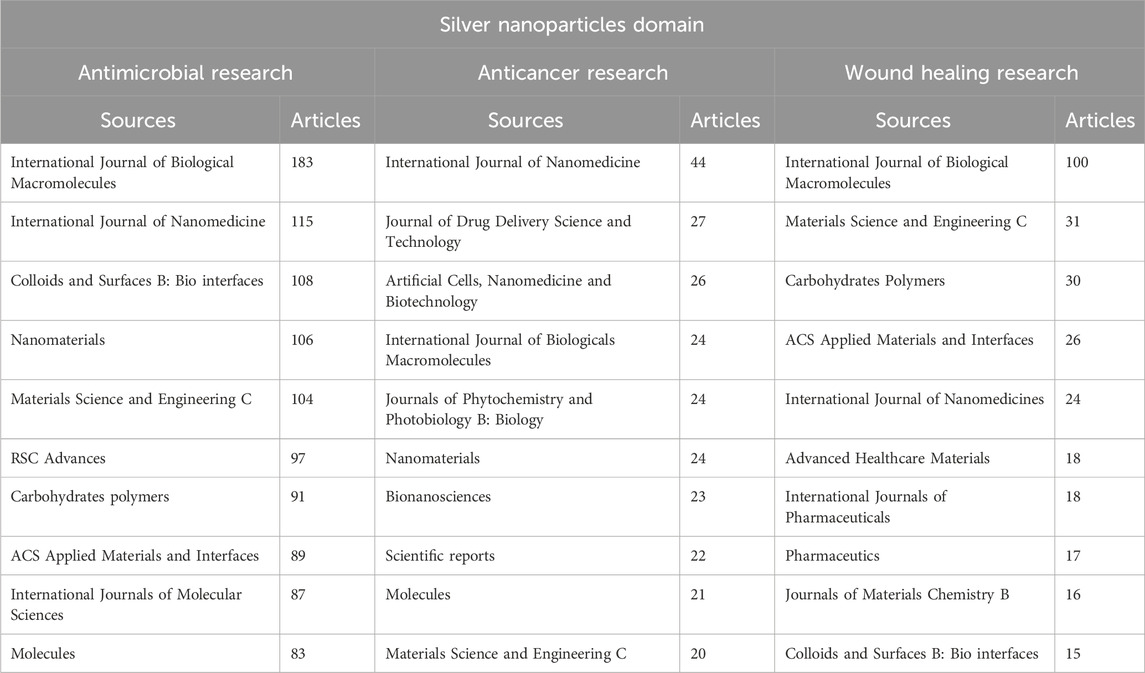
Table 6. Top journals publishing research on silver nanoparticles: this table presents journals with the highest article counts across the antimicrobial, anticancer, and wound healing domains of silver nanoparticles research.
Institutional affiliations serve as indicators of the research capabilities and areas of focus of academic and research institutions globally (Table 7 presents institutional contributions to Silver Nanoparticles Research) (Zahoor et al., 2021) King Saud University emerges as a leading institution in both antimicrobial and anticancer research, underscoring its deliberate investment in silver nanoparticle research. Additionally, institutions like Sichuan University and Southwest University are notable for their emphasis on wound-healing research.
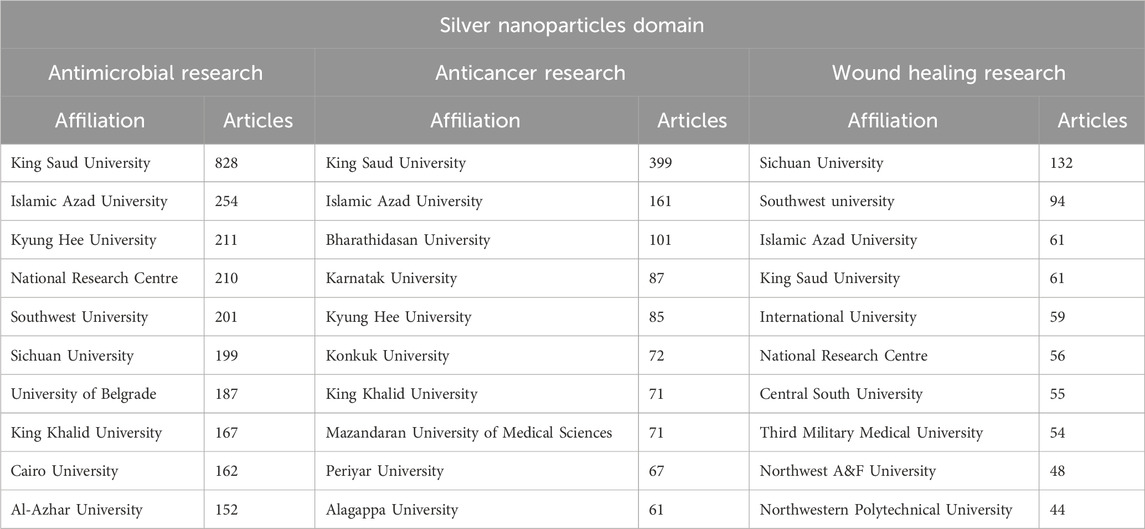
Table 7. Institutional contributions to silver nanoparticles research: this table showcases the significant affiliations and their scholarly productivity in the realms of antimicrobial, anticancer, and wound healing research involving silver nanoparticles.
The distribution of prolific authors and institutions, along with the focus on prominent journals, indicates both regional and global trends in research priorities. It suggests that certain regions may be allocating more resources to silver nanoparticle research or have developed specialized expertise in this field. This insight can be highly beneficial for new researchers seeking collaboration opportunities or institutions looking to establish their presence in this area of study. This bibliometric analysis offers a snapshot of the key contributors and platforms driving advancements in our understanding of silver nanoparticles. It underscores the importance of ongoing support and collaboration within the scientific community to further explore the potential of silver nanoparticles in addressing global health challenges across antimicrobial, anticancer, and wound healing applications.
4.5 Citation impact across research domains of silver nanoparticles
The bibliometric examination of citations within silver nanoparticle research domains sheds light on the most influential studies (as shown in Table 8) that have significantly impacted the field (Yeung et al., 2020). For instance, in the realm of antimicrobial research, the paper titled “Silver nanoparticles as an antimicrobial agent: a case study on E. coli as a model for Gram-negative bacteria” has garnered an impressive 7,645 citations, indicating its pivotal role in establishing the efficacy of silver nanoparticles against bacterial infections (Sondi and Salopek-Sondi, 2004). Similarly, the top-cited paper in the anticancer research domain, with 481 citations, delves into the broader medical applications of nanoparticles, showcasing their diverse potential beyond antimicrobial uses. In the domain of wound healing, the integration of silver nanoparticles into bacterial cellulose for antimicrobial wound dressing, with 1,210 citations, exemplifies the innovative application of silver nanoparticles in improving wound care. The substantial citation counts across these papers underscore the significance of silver nanoparticles in driving advancements in medical research and the widespread recognition of these findings within the scientific community.

Table 8. Top cited papers in silver nanoparticles research: this table presents the most highly cited research papers in the domains of antimicrobial, anticancer, and wound healing research related to silver nanoparticles.
From a geographical standpoint (as shown in Table 9), India leads in total citations across the antimicrobial and anticancer research domains, indicating the significant impact of its research output. Conversely, China has made considerable strides in the wound healing domain, accumulating the highest number of citations, underscoring its leading role in this area of research. The network visualization figures serve as graphical representations of the connections between countries and the collaborative nature of silver nanoparticle research (as shown in Figure 6). The size of the nodes (countries) and the thickness of the lines (collaborations) illustrate the extent of research activities and partnerships. These visualizations offer an intuitive grasp of how knowledge in the field is interconnected and how different regions contribute to and exchange information within the global research landscape. These bibliometric indicators—such as highly cited papers, total citations by country, and network visualizations—not only depict the current status of silver nanoparticle research but also inform future collaborations, funding decisions, and strategic priorities in the field. They underscore the importance of both individual scholarly works and collective international endeavors in advancing the understanding and application of silver nanoparticles for public health.
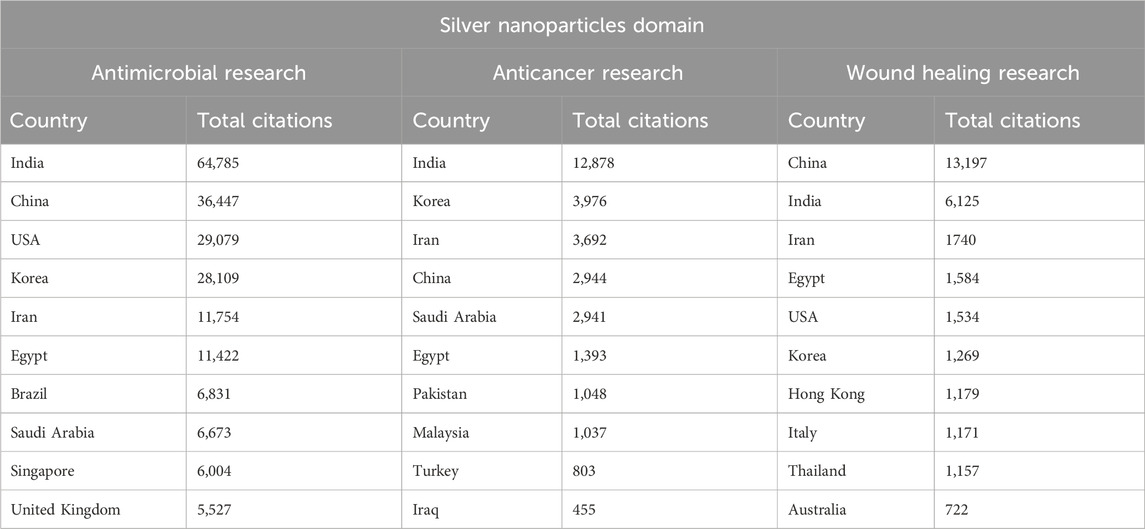
Table 9. Citation influence across countries in silver nanoparticles research: this table presents the cumulative citations garnered by research publications originating from different countries across the antimicrobial, anticancer, and wound healing spheres of silver nanoparticles.
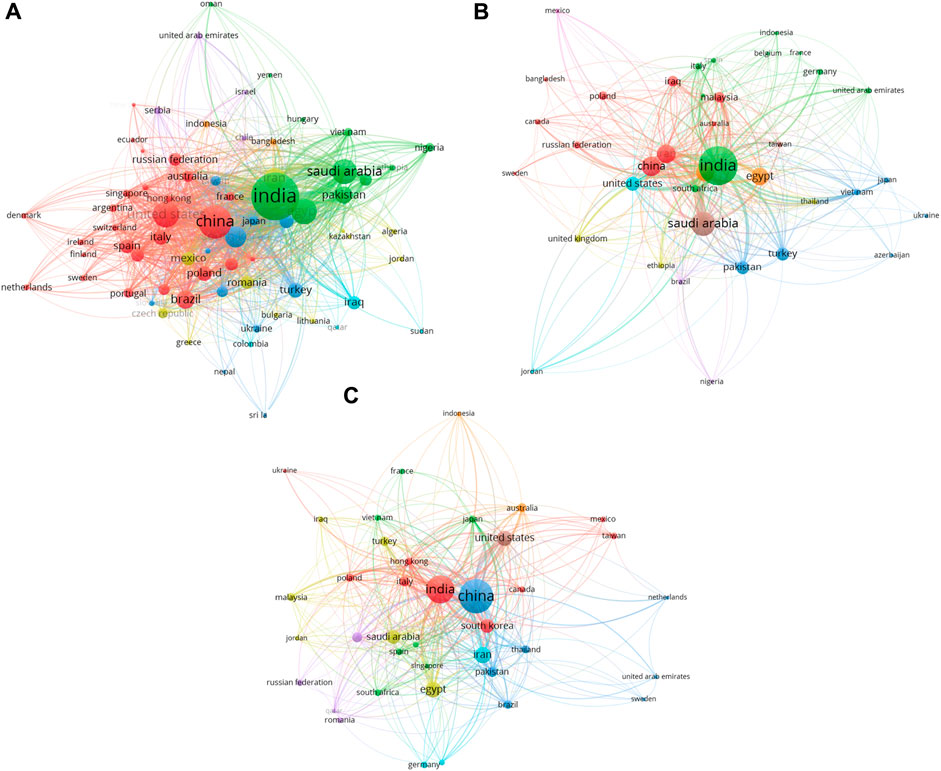
Figure 6. (A) Network visualizations of silver nanoparticles research: these visuals illustrate the bibliometric network encompassing research collaborations and citations in silver nanoparticle research across the antimicrobial domain. (B) Network visualizations of silver nanoparticles research: these visuals illustrate the bibliometric network encompassing research collaborations and citations in silver nanoparticles research across the anticancer domain. (C) Network visualizations of silver nanoparticles research: these visuals illustrate the bibliometric network encompassing research collaborations and citations in silver nanoparticles research across the wound healing domain.
4.6 Bibliometric analysis trends topics in silver nanoparticles research
The bibliometric examination of emerging themes offers a comprehensive insight into the evolving research focus within silver nanoparticles research across three key domains: antimicrobial, anticancer, and wound healing (as shown in Figure 7) (Peng et al., 2023). In the antimicrobial domain (A), the prevalence of terms like “biofilm inhibition” and “antibiotic resistance” reflects a global health priority to combat antibiotic-resistant strains. The consistent occurrence of “antibacterial activity” underscores ongoing efforts to comprehend and enhance the antimicrobial effectiveness of silver nanoparticles. The emergence of “green synthesis” signifies a growing interest in environmentally friendly production methods, indicating a shift towards sustainable research practices.
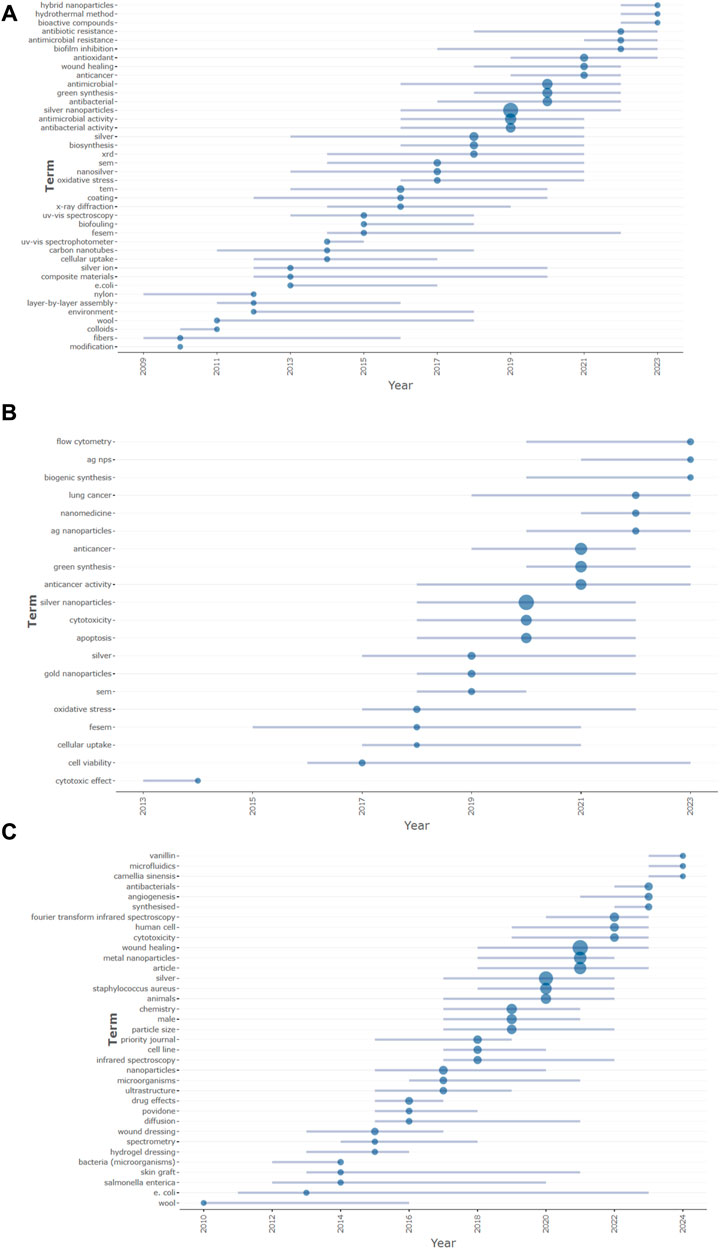
Figure 7. (A) Emerging themes in silver nanoparticles research: the figure comprises three horizon charts illustrating the occurrence and evolution of significant research themes over time in the realms of antimicrobial concerning silver nanoparticles, spanning from 2009 to 2024. (B) Emerging themes in silver nanoparticles research: the figure comprises three horizon charts illustrating the occurrence and evolution of significant research themes over time in the realms of anticancer concerning silver nanoparticles, spanning from 2009 to 2024. (C) Emerging themes in silver nanoparticles research: the figure comprises three horizon charts illustrating the occurrence and evolution of significant research themes over time in the realms of wound healing concerning silver nanoparticles, spanning from 2009 to 2024.
In anticancer research (B), the prominence of terms such as “cytotoxicity” and “apoptosis” indicates a focused exploration of the mechanisms through which silver nanoparticles induce cancer cell death, crucial for the development of potential nanotherapeutics. The increasing prevalence of “nanomedicine” reflects the integration of silver nanoparticles into broader therapeutic contexts and the exploration of their role within multifunctional drug delivery systems.
In the wound healing domain (C), the term “hydrogel dressing” gaining traction suggests a significant interest in novel wound care materials incorporating silver nanoparticles. The repeated mention of “wound dressing” and “skin graft” underscores the potential of silver nanoparticles in promoting tissue regeneration and repair. The presence of “antibacterial” within wound healing emphasizes the dual functionality of silver nanoparticles, combining healing promotion with essential infection control.
These trends indicate a maturation of the field, transitioning from broad investigations into the antibacterial properties of silver nanoparticles towards specialized applications addressing specific challenges like resistant bacterial strains, targeted cancer therapy, and advanced wound care solutions. The size and clustering of terms within the horizon charts not only demonstrate the significance and relevance of these topics but also highlight the collaborative and interdisciplinary efforts propelling innovation in nanotechnology (Husain et al., 2023). In conclusion, this meticulous bibliometric analysis of emerging themes offers strategic insights into the development and potential future trajectories of silver nanoparticle research. It underscores the imperative for continued focus on sustainable production methods, targeted therapeutic applications, and the development of multifunctional materials to fully harness the benefits of silver nanoparticles in addressing critical healthcare challenges.
4.7 Thematic mapping
The thematic maps provided here offer a visual breakdown of the silver nanoparticles research landscape, categorizing themes into niche, emerging, motor, and basic categories based on their centrality (importance) and density (advancement) in the literature (as shown in Figure 8) (Di Cosmo et al., 2021).
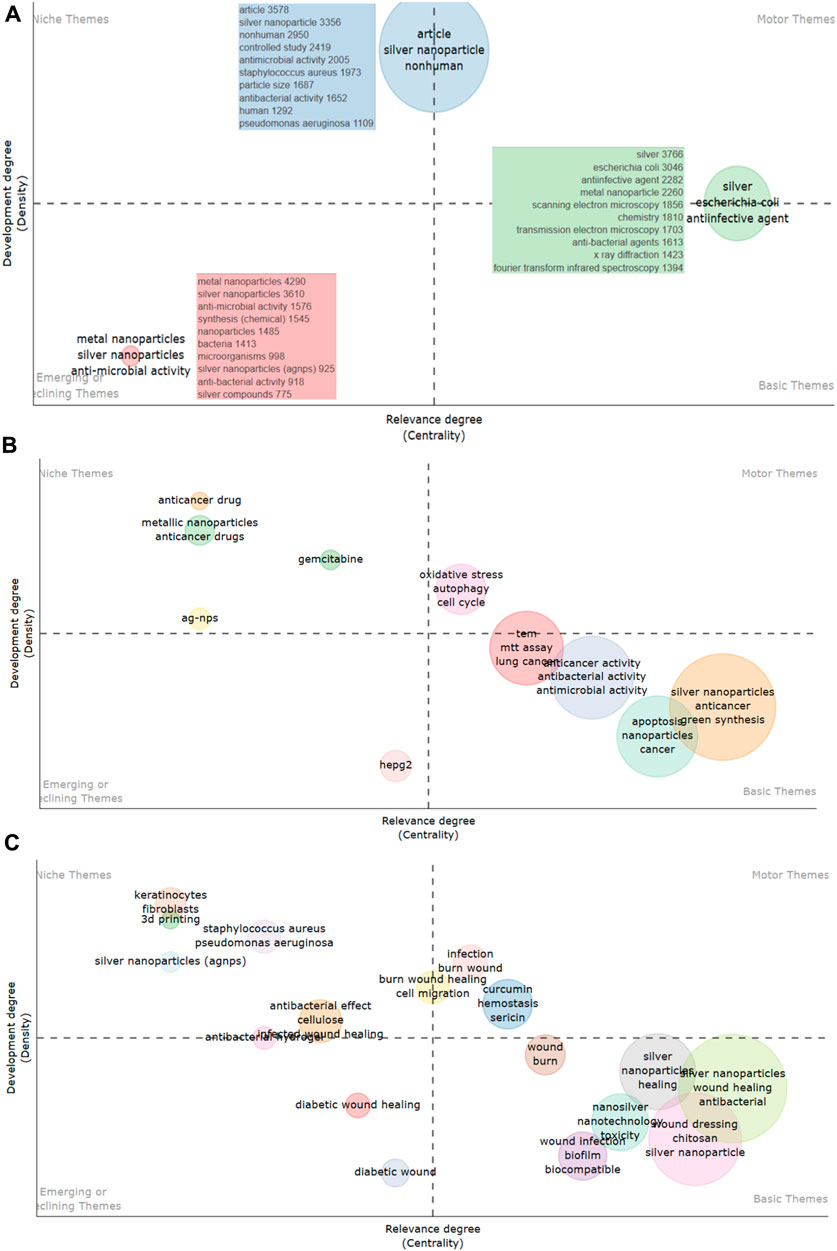
Figure 8. (A) Thematic mapping of silver nanoparticles research: these visual representations showcase the strategic layout of research themes on silver nanoparticles’ antimicrobial domain. Each map delineates niche, emerging, motor, and basic themes, discerning their centrality and density within the scholarly discourse on silver nanoparticles. (B) Thematic mapping of silver nanoparticles research: these visual representations showcase the strategic layout of research themes on silver nanoparticles anticancer domain. Each map delineates niche, emerging, motor, and basic themes, discerning their centrality and density within the scholarly discourse on silver nanoparticles. (C) Thematic mapping of silver nanoparticles research: these visual representations showcase the strategic layout of research themes on silver nanoparticles wound healing domain. Each map delineates niche, emerging, motor, and basic themes, discerning their centrality and density within the scholarly discourse on silver nanoparticles.
In the antimicrobial domain (A), terms like “silver nanoparticles,” “antibacterial activity,” and “antimicrobial” are classified as basic themes, indicating well-established, fundamental research areas with high centrality and development. Motor themes such as “E. coli” and “biofilm” represent highly developed and central areas that drive research in the field. Niche themes like “controlled study” and “silver nanocomposite” have lower centrality but are highly developed, signifying specialized yet significant areas of study. Emerging or declining themes, such as “silver compounds” and “biosynthesis,” show lower density but are gaining or losing centrality, indicating evolving areas of interest.
In the anticancer domain (B), central clusters around “silver nanoparticles,” “anticancer activity,” and “green synthesis” demonstrate a strong foundational presence, indicating extensive study and centrality in the field. Motor themes like “gemcitabine” and “oxidative stress” highlight influential topics driving research. Niche themes such as “metallic nanoparticles” indicate high development but lower centrality, representing specialized areas. Emerging themes like “ag-nps” and “hepG2” suggest nascent research areas with growing centrality.
➢ For the wound healing domain (C), basic themes like “silver nanoparticles” and “antibacterial” form the core of research, showing high centrality and development. Motor themes such as “nanotechnology” and “wound dressing” are central to driving the field and are well-developed. Niche themes like “keratinocytes” and “3D printing” are highly developed but with lower centrality, indicating specialization yet impact. Emerging themes like “diabetic wound healing” have started to gain centrality, indicating new frontiers in the field. Thematic mapping serves as a strategic tool for identifying research focus and trajectory. In the context of silver nanoparticles, these maps provide a clear framework of mature and developing topics, offering insights into areas ripe for exploration and investment. The persistence of certain terms reflects the enduring importance of foundational research, while the emergence of new themes highlights shifts in scientific inquiry and potential applications for silver nanoparticles in these domains.
4.8 Discussion
The bibliometric analysis of the scientific literature on silver nanoparticles (AgNPs) shows how the field has grown and developed. In this section, we discuss the implications that these results have: the general impact on the scientific community, potential applications, and future research directions.
➢ Strategic Focus on Antimicrobial Properties: Our findings indicate that AgNPs exert a massive effect in combating the global health crisis caused by antimicrobial resistance. A considerable amount of literature and citations in this field is a clear sign of not only the relevance of AgNPs as potent antimicrobial agents but also a call for finding alternatives to traditional antibiotics. The fact that there is ongoing research along this line provides good evidence that investments will pay off with significant breakthroughs in infectious disease management (Mohanta and Behera, 2014; Mohanta et al., 2017).
➢ Research on the antimicrobial activity of AgNPs continues to dominate; however, there is significant growth in research related to their anticancer and wound-healing potential. The growing research reflects the promising capability of AgNPs for future use in designing targeted therapeutic agents offering more localized therapy, thus minimizing the side effects of conventional cancer therapies. In wound healing, the promise of AgNPs in advanced dressings lies in their effectiveness at warding off infections and accelerating tissue regeneration. All these tendencies hint at increasing awareness of the multifunctionality of AgNPs, which might open the door to the revision of treatment protocols not only in oncology but also in dermatology (Mohanta et al., 2023; Mohanta et al., 2020).
➢ Role of International Collaboration: The present analysis demonstrates that international collaboration is focused intensively on the study of AgNPs worldwide. The present strong emphasis on interdisciplinary research, particularly in wound-healing-related studies, therefore necessitates harnessing the inherent properties of AgNPs from a consolidated information base of diverse expertise, resources, and technological innovations to quicken the pace of discovery and application.
➢ Regional Contributions and Future Directions: India with its enormous talent pool and cost-effective research environment, and China are both making tremendous contributions to furthering innovation in the AgNP research scenario. The focused research output from these regions has shown their commitment to addressing local and global health challenges and placed them at the forefront of nanomedicine research contributors. In future research, work on the long-term consequences of using AgNPs should focus more on their toxicity and environmental effects. Moreover, some areas, including the use of AgNPs in neurology and their interaction with the human microbiome, remain untapped for their potential to increase the applications of these nanoparticles.
➢ Policy Implications: International research collaboration: The distribution of scientific efforts over an extensive geographical area and the evident impact that international cooperation can have indicate the need to promote policies that facilitate collaborative research and innovation in nanotechnology. A framework, therefore, must be developed by policymakers to enhance international partnerships, while funding models are incentivized to advocate for research into sustainable and safe applications in nanotechnologies. This discussion not only places the relevant findings of this bibliometric analysis within context but also maps a potential trajectory for future research and development in silver nanoparticles, pointing out the critical domains that need further exploration and the strategic role of international collaboration in fostering advancements (Peng et al., 2023).
➢ Potential limitations of AgNPs in biomedical applications include concerns about their long-term toxicity and potential accumulation in tissues, the development of bacterial resistance, and the challenge of ensuring precise targeting and controlled release in drug delivery systems. Additionally, the variability in AgNP synthesis methods and characterization techniques can lead to inconsistencies in their properties and performance, posing challenges for standardized clinical use (Saddik et al., 2024) (130).
5 Translational research and clinical applications of silver nanoparticles in antimicrobial, anticancer, and wound healing treatments
Recent translational research has demonstrated the significant potential of silver nanoparticles (AgNPs) in various biomedical applications. In antimicrobial applications, AgNPs have shown enhanced efficacy in wound healing by promoting fibroblast migration and reducing infection rates. For instance, silver nanomix has been developed as an effective wound dressing material, showing superior antibacterial activity compared to traditional silver products (Polaka and Tekade, 2023). In cancer treatment, AgNPs synthesized from Bacillus sp. KFU36 has demonstrated significant anticancer effects in breast cancer cells by inducing apoptosis (Almalki and Khalifa, 2020). Moreover, AgNPs combined with antimicrobial peptides and blue light have shown promising results in treating methicillin-resistant S. aureus (MRSA) infections, accelerating wound healing in diabetic rats (Ibrahim et al., 2019). FDA-approved products like Acticoat (Smith and Nephew) for wound dressings, Silvadene (Pfizer) for burn treatment, and Cytolux (Nanobiotix) for targeted cancer therapy exemplify the clinical translation of AgNP-based therapies. Additionally, studies have highlighted the use of AgNPs in chitosan-based hydrogels, demonstrating enhanced wound-healing capabilities in diabetic rabbits (Masood et al., 2019). These products, along with ongoing clinical trials, underscore the translational potential and therapeutic efficacy of AgNPs in antimicrobial, anticancer, and wound healing treatments (as mentioned in Table 10).
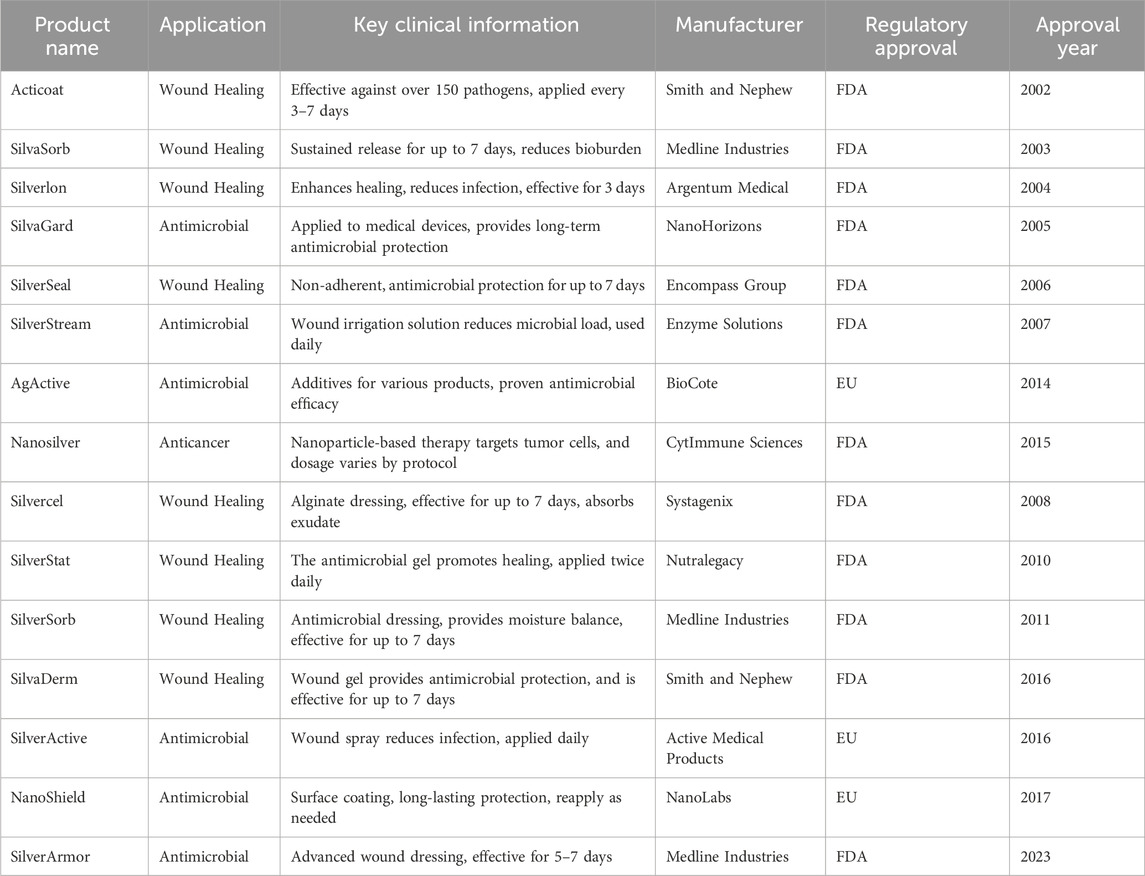
Table 10. Overview of FDA-Approved products for silver nanoparticles in antimicrobial, anticancer, and wound healing applications.
6 Challenges and future prospects in silver nanoparticles research: a SWOT perspective
As the scientific community delves deeper into the realm of silver nanoparticles (AgNPs), it becomes imperative to strategically assess both the challenges and opportunities inherent in this innovative field. The ensuing SWOT analysis serves as a crucial tool in dissecting the complexities and predicting the trajectory of AgNP research (Dhir et al., 2024). Challenges in this domain are multifaceted, with concerns such as potential cytotoxicity and the development of resistance taking precedence in scientific discourse. The economic viability of producing AgNPs on a large scale, compounded by a lack of comprehensive long-term safety data, further complicates their clinical and commercial applications. Additionally, the evolving regulatory landscape and environmental ramifications of nanoparticle utilization necessitate thorough scrutiny and the adoption of sustainable practices. However, the future holds considerable promise for AgNPs, driven by the growing demand for advanced antimicrobial and anticancer therapies in healthcare. Advances in nanotechnology bolster the prospects for AgNPs, offering innovative applications through targeted drug delivery systems and synergistic therapeutic modalities. The versatility of AgNPs in integrating with various platforms indicates their expanding role in medical interventions (Tunç, 2024; Rameshkumar et al., 2023).
The SWOT analysis embedded within this context provides a holistic overview of the internal and external factors influencing the field (as shown in Figure 9): (Hasan et al., 2022)
➢ Strengths such as the well-established antimicrobial and wound healing properties of AgNPs, coupled with their broad spectrum of action, reinforce their indispensable role in healthcare.
➢ Weaknesses, including the high production costs and concerns regarding cytotoxic effects, present tangible challenges that research and development efforts must address.
➢ Opportunities abound, with advancements in nanotechnology creating new pathways for the application of AgNPs across diverse biomedical domains.
➢ Threats are characterized by regulatory hurdles, environmental concerns, competition from alternative materials, and public apprehensions surrounding nanotechnology.
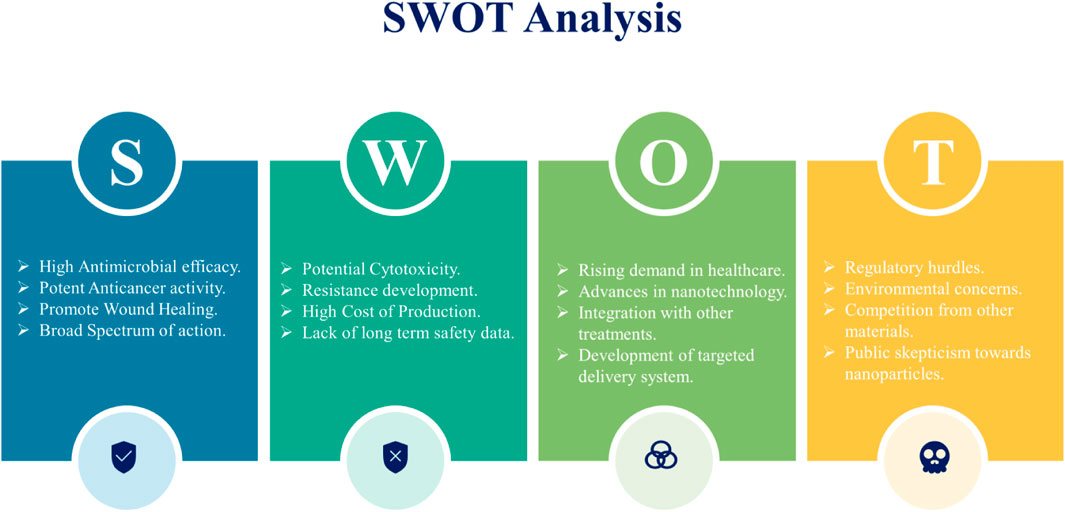
Figure 9. Strategic evaluation of silver nanoparticles research: A SWOT analysis (Khuda et al., 2023).
Recent studies have documented resistance to silver nanoparticles (AgNPs) as an emergent problem in their role as antimicrobial agents. Many studies have established that bacteria can develop resistance to AgNPs through different adaptive mechanisms. For example, one study by Panacek et al. (2017) has shown that bacteria like E. coli and Pseudomonas aeruginosa do so by producing flagellin that induces aggregation of the nanoparticles, thereby reducing their efficacy. Reduced interaction has been observed when AgNPs are exposed to pathogens that produce organic acids, resulting in microbial resistance (Panáček et al., 2018). In contrast, further research conducted by Lu (2019) showed that both silver ions and AgNPs can facilitate the horizontal transfer of plasmid-mediated antibiotic resistance genes, thus emphasizing the ecological risks associated with these materials in widespread use (Lu et al., 2020). Also, biofilm formation and enzymatic reduction of Ag+ to less toxic forms are other discovered mechanisms of resistance identified within bacterial strains, consequently reducing the effectiveness of silver as an antimicrobial agent (Kaweeteerawat et al., 2017; Ellis et al., 2018). In addition, AgNPs reported by Yuan (2017) further indicated that the biologically synthesized AgNPs exhibit potential toward MDR bacteria but acquire resistance (Yuan et al., 2017). Thus, there is a need to consider their judicious use in combination with novel methods that would prevent any resistance development. Along this line, the issues of bacterial resistance to silver nanoparticles remain equally sensitive, also bearing in mind the fact that in the long term, they would have to be used as antimicrobial agents, a process that will always be ongoing due to constant research being done to finding innovative ways. Together, this evaluation underscores the need for a nuanced approach to advancing AgNP research and highlights the importance of foresight in navigating potential obstacles. It advocates for a balanced approach that capitalizes on the strengths and opportunities of AgNPs while mitigating the weaknesses and threats. The forthcoming years are pivotal, demanding concerted efforts to overcome challenges and fully harness the transformative potential of silver nanoparticles in biomedical science and therapeutics (Beyene et al., 2017).
7 Conclusion
The comprehensive bibliometric analysis conducted in this review sheds light on the extensive and multifaceted expansion of silver nanoparticle research across the domains of antimicrobial, anticancer, and wound healing. The data underscore the crucial role of AgNPs as an invaluable asset in the biomedical field, addressing some of the most pressing health challenges of our time. In antimicrobial research, AgNPs have demonstrated their critical ability to combat drug-resistant bacteria, highlighting their potential to revolutionize infectious disease treatment. In oncology, AgNPs show promise as anticancer agents, opening new avenues in cancer therapy by inducing targeted cytotoxicity. Additionally, research in wound healing reveals the effectiveness of AgNPs in promoting tissue regeneration and preventing infections, representing a significant advancement in medical treatments. The geographical analysis of research output indicates a shift towards a more globally distributed contribution, with countries like India and China leading in both publication and citations, suggesting a growing decentralization of research activity. The rise in topics such as green synthesis methods reflects a conscious effort towards sustainable practices in nanoparticle production. Future perspectives derived from this analysis suggest a continued trajectory of growth and innovation, with interdisciplinary collaborations and sustainable development taking center stage. It is expected that AgNPs will continue to drive nanotechnological advancements, significantly contributing to the development of next-generation medical treatments. As the research community delves further into the unexplored applications of AgNPs, it is crucial to consider not only their scientific and therapeutic potential but also their environmental and ethical implications.
Data availability statement
The raw data supporting the conclusions of this article will be made available by the authors, without undue reservation.
Author contributions
HJ: Conceptualization, Methodology, Writing–original draft. SS: Supervision, Writing–original draft, Writing–review and editing. PK: Writing–original draft, Writing–review and editing. AS: Methodology, Resources, Writing–original draft. GK: Conceptualization, Methodology, Supervision, Visualization, Writing–original draft, Writing–review and editing.
Funding
The author(s) declare that no financial support was received for the research, authorship, and/or publication of this article.
Acknowledgments
We would like to express our genuine appreciation to Lovely Professional University and Adama Science and Technology University for creating an academic atmosphere and offering resources that greatly supported the successful culmination of this in-depth review paper.
Conflict of interest
The authors declare that the research was conducted in the absence of any commercial or financial relationships that could be construed as a potential conflict of interest.
Publisher’s note
All claims expressed in this article are solely those of the authors and do not necessarily represent those of their affiliated organizations, or those of the publisher, the editors and the reviewers. Any product that may be evaluated in this article, or claim that may be made by its manufacturer, is not guaranteed or endorsed by the publisher.
References
Abdellatif, A. A. H., Alhumaydhi, F. A., Al Rugaie, O., Tolba, N. S., and Mousa, A. M. (2023). Topical silver nanoparticles reduced with ethylcellulose enhance skin wound healing. Eur. Rev. Med. Pharmacol. Sci. 27 (2), 744–754. doi:10.26355/eurrev_202301_31077
Akter, M., Sikder, M. T., Rahman, M. M., Ullah, AKMA, Hossain, K. F. B., Banik, S., et al. (2018). A systematic review on silver nanoparticles-induced cytotoxicity: physicochemical properties and perspectives. J. Adv. Res. 9, 1–16. doi:10.1016/j.jare.2017.10.008
Akter, S., and Huq, M. A. (2020). Biologically rapid synthesis of silver nanoparticles by Sphingobium sp. MAH-11 T and their antibacterial activity and mechanisms investigation against drug-resistant pathogenic microbes. Artif. Cells Nanomedicine Biotechnol. 48 (1), 672–682. doi:10.1080/21691401.2020.1730390
Aldakheel, F. M., Sayed, M. M. E., Mohsen, D., Fagir, M. H., and Dein, D. K. E. (2023). Green synthesis of silver nanoparticles loaded hydrogel for wound healing; systematic review. Gels 9 (7), 530. doi:10.3390/gels9070530
Al-Khedhairy, A. A., and Wahab, R. (2022). Silver nanoparticles: an instantaneous solution for anticancer activity against human liver (HepG2) and breast (MCF-7) cancer cells. Metals 12 (1), 148. doi:10.3390/met12010148
Almalki, M. A., and Khalifa, A. Y. Z. (2020). Silver nanoparticles synthesis from Bacillus sp KFU36 and its anticancer effect in breast cancer MCF-7 cells via induction of apoptotic mechanism. J. Photochem. Photobiol. B Biol. 204, 111786. doi:10.1016/j.jphotobiol.2020.111786
Aria, M., and Cuccurullo, C. (2017). bibliometrix: an R-tool for comprehensive science mapping analysis. J. Informetr. 11, 959–975. doi:10.1016/j.joi.2017.08.007
AshaRani, P. V., Low Kah Mun, G., Hande, M. P., and Valiyaveettil, S. (2009). Cytotoxicity and genotoxicity of silver nanoparticles in human cells. ACS Nano 3 (2), 279–290. doi:10.1021/nn800596w
Beyene, H. D., Werkneh, A. A., Bezabh, H. K., and Ambaye, T. G. (2017). Synthesis paradigm and applications of silver nanoparticles (AgNPs), a review. Sustain Mater Technol. 13, 18–23. doi:10.1016/j.susmat.2017.08.001
Bhat, W., Manzoor, A., Ahmad, Z., and Qureshi, D. (2023). How to Conduct bibliometric analysis using R- studio: a practical guide. Eur. Econ. Lett. 13, 681–700. doi:10.52783/eel.v13i3.350
Bouafia, A., Laouini, S. E., Ahmed, A. S. A., Soldatov, A. V., Algarni, H., Feng Chong, K., et al. (2021). The recent progress on silver nanoparticles: synthesis and electronic applications. Nanomaterials 11 (9), 2318. doi:10.3390/nano11092318
Bruna, T., Maldonado-Bravo, F., Jara, P., and Caro, N. (2021). Silver nanoparticles and their antibacterial applications. Int. J. Mol. Sci. 22 (13), 7202. doi:10.3390/ijms22137202
Carchiolo, V., Grassia, M., Malgeri, M., and Mangioni, G. (2022). Co-authorship networks analysis to discover collaboration patterns among Italian researchers. Future Internet 14 (6), 187. doi:10.3390/fi14060187
Chen, G., and Xiao, L. (2016). Selecting publication keywords for domain analysis in bibliometrics: a comparison of three methods. J. Informetr. 10 (1), 212–223. doi:10.1016/j.joi.2016.01.006
Cheon, J. Y., Kim, S. J., Rhee, Y. H., Kwon, O. H., and Park, W. H. (2019). Shape-dependent antimicrobial activities of silver nanoparticles. Int. J. Nanomedicine 14, 2773–2780. doi:10.2147/IJN.S196472
Chung, I. M., Park, I., Seung-Hyun, K., Thiruvengadam, M., and Rajakumar, G. (2016). Plant-mediated synthesis of silver nanoparticles: their characteristic properties and therapeutic applications. Nanoscale Res. Lett. 11, 40. doi:10.1186/s11671-016-1257-4
Cooksey, R. W. (2020). Descriptive statistics for summarising data. Illus. Stat. Proced. Find. Mean. Quant. Data, 61–139. doi:10.1007/978-981-15-2537-7_5
Derviş, H. (2020). Bibliometric analysis using bibliometrix an R package. J. Scientometr. Res. 8 (3), 156–160. doi:10.5530/jscires.8.3.32
Dhir, R., Chauhan, S., Subham, P., Kumar, S., Sharma, P., Shidiki, A., et al. (2024). Plant-mediated synthesis of silver nanoparticles: unlocking their pharmacological potential–a comprehensive review. Front. Bioeng. Biotechnol. 11, 1324805. doi:10.3389/fbioe.2023.1324805
Di Cosmo, A., Pinelli, C., Scandurra, A., Aria, M., and D’Aniello, B. (2021). Research trends in Octopus biological studies. Animals 11 (6), 1808. doi:10.3390/ani11061808
Dikshit, P. K., Kumar, J., Das, A. K., Sadhu, S., Sharma, S., Singh, S., et al. (2021). Green synthesis of metallic nanoparticles: applications and limitations. Catalysts 11 (8), 902. doi:10.3390/catal11080902
dos Santos, E. M. P., Martins, C. C. B., de Oliveira Santos, J. V., da Silva, W. R. C., Silva, S. B. C., Pelagio-Flores, M. A., et al. (2021). Silver nanoparticles–chitosan composites activity against resistant bacteria: tolerance and biofilm inhibition. J. Nanoparticle Res. 23 (8), 196. doi:10.1007/s11051-021-05314-1
Dove, A. S., Dzurny, D. I., Dees, W. R., Qin, N., Nunez Rodriguez, C. C., Alt, L. A., et al. (2023). Silver nanoparticles enhance the efficacy of aminoglycosides against antibiotic-resistant bacteria. Front. Microbiol. 13, 1064095. doi:10.3389/fmicb.2022.1064095
Duncan, T. V. (2011). Applications of nanotechnology in food packaging and food safety: barrier materials, antimicrobials, and sensors. J. Colloid Interface Sci. 363 (1), 1–24. doi:10.1016/j.jcis.2011.07.017
El-Aassar, M. R., Ibrahim, O. M., Fouda, M. M. G., El-Beheri, N. G., and Agwa, M. M. (2020). Wound healing of nanofiber comprising Polygalacturonic/Hyaluronic acid embedded silver nanoparticles: in-vitro and in-vivo studies. Carbohydr. Polym. 238, 116175. doi:10.1016/j.carbpol.2020.116175
Ellis, D. H., Maurer-Gardner, E. I., Sulentic, C. E. W., and Hussain, S. M. (2018). Silver nanoparticle antibacterial efficacy and resistance development in key bacterial species. Biomed. Phys. Eng. Express 5 (1), 015013. doi:10.1088/2057-1976/aad5a7
Elnaggar, M., Emam, H., Fathalla, M., Abdel-Aziz, M., and Zahran, M. (2021). Chemical synthesis of silver nanoparticles in its solid state: highly efficient antimicrobial cotton fabrics for wound healing properties. Egypt J. Chem. 0 (0), 0. 0–0. doi:10.21608/ejchem.2021.57667.3236
Ferreira, L. A. B., Garcia-Fossa, F., Radaic, A., Durán, N., Fávaro, W. J., and De Jesus, M. B. (2020). Biogenic silver nanoparticles: in vitro and in vivo antitumor activity in bladder cancer. Eur. J. Pharm. Biopharm. 151, 162–170. doi:10.1016/j.ejpb.2020.04.012
Firdhouse, M. J., and Lalitha, P. (2015). Biosynthesis of silver nanoparticles and its applications. J. Nanotechnol. 2015, 1–18. doi:10.1155/2015/829526
Galatage, S. T., Hebalkar, A. S., Dhobale, S. V., Mali, O. R., Kumbhar, P. S., Nikade, S. V., et al. (2021). “Silver nanoparticles: properties, synthesis, characterization, applications and future trends,” in Silver micro-nanoparticles - properties, synthesis, characterization, and applications (IntechOpen). Available at: https://www.intechopen.com/chapters/77702.
Gan, D., Xing, W., Jiang, L., Fang, J., Zhao, C., Ren, F., et al. (2019). Plant-inspired adhesive and tough hydrogel based on Ag-Lignin nanoparticles-triggered dynamic redox catechol chemistry. Nat. Commun. 10 (1), 1487. doi:10.1038/s41467-019-09351-2
Giri, V. P., Pandey, S., Kumari, M., Paswan, S. K., Tripathi, A., Srivastava, M., et al. (2019). Biogenic silver nanoparticles as a more efficient contrivance for wound healing acceleration than common antiseptic medicine. FEMS Microbiol. Lett. 366 (16), fnz201. doi:10.1093/femsle/fnz201
Gomes, H. I. O., Martins, C. S. M., and Prior, J. A. V. (2021). Silver nanoparticles as carriers of anticancer drugs for efficient target treatment of cancer cells. Nanomaterials 11 (4), 964. doi:10.3390/nano11040964
Guleria, D., and Kaur, G. (2021). Bibliometric analysis of ecopreneurship using VOSviewer and RStudio Bibliometrix, 1989–2019. Libr. Hi Tech. 39 (4), 1001–1024. doi:10.1108/lht-09-2020-0218
Gupta, A., Briffa, S. M., Swingler, S., Gibson, H., Kannappan, V., Adamus, G., et al. (2020). Synthesis of silver nanoparticles using curcumin-cyclodextrins loaded into bacterial cellulose-based hydrogels for wound dressing applications. Biomacromolecules 21 (5), 1802–1811. doi:10.1021/acs.biomac.9b01724
Gurunathan, S., Lee, K. J., Kalishwaralal, K., Sheikpranbabu, S., Vaidyanathan, R., and Eom, S. H. (2009). Antiangiogenic properties of silver nanoparticles. Biomaterials 30 (31), 6341–6350. doi:10.1016/j.biomaterials.2009.08.008
Gurunathan, S., Park, J. H., Han, J. W., and Kim, J. H. (2015). Comparative assessment of the apoptotic potential of silver nanoparticles synthesized by Bacillus tequilensis and Calocybe indica in MDA-MB-231 human breast cancer cells: targeting p53 for anticancer therapy. Int. J. Nanomedicine. 10 (1), 4203–4222. doi:10.2147/IJN.S83953
Gurunathan, S., Raman, J., Malek, S. N. A., John, P. A., and Vikineswary, S. (2013). Green synthesis of silver nanoparticles using Ganoderma neo-japonicum Imazeki: a potential cytotoxic agent against breast cancer cells. Int. J. Nanomedicine 8, 4399–4413. doi:10.2147/IJN.S51881
Hak, J., Sharma, D. K., and Farooqui, N. A. (2022). A systemic review on silver nanoparticles: current prospective and quality optimization approaches and application. J. Popul. Ther. Clin. Pharmacol. 29 (04), 1240–1255. doi:10.53555/jptcp.v29i04.4340
Hasan, K. M. F., Xiaoyi, L., Shaoqin, Z., Horváth, P. G., Bak, M., Bejó, L., et al. (2022). Functional silver nanoparticles synthesis from sustainable point of view: 2000 to 2023 ‒ A review on game changing materials. Heliyon 8 (12), e12322. doi:10.1016/j.heliyon.2022.e12322
Hayat, P., Khan, I., Rehman, A., Jamil, T., Hayat, A., Rehman, M. U., et al. (2023). Myogenesis and analysis of antimicrobial potential of silver nanoparticles (AgNPs) against pathogenic bacteria. Molecules 28 (2), 637. doi:10.3390/molecules28020637
Hemlata, M. P. R., Singh, A. P., and Tejavath, K. K. (2020). Biosynthesis of silver nanoparticles using cucumis prophetarum aqueous leaf extract and their antibacterial and antiproliferative activity against cancer cell lines. ACS Omega 5 (10), 5520–5528. doi:10.1021/acsomega.0c00155
Hinojo Lucena, F. J., Aznar Díaz, I., Cáceres Reche, M. P., and Romero Rodríguez, J. M. (2019). A tour of open universities through literature. Int. Rev. Res. Open Distrib. Learn 20 (4). doi:10.19173/irrodl.v20i3.4079
Hou, T., Guo, Y., Han, W., Zhou, Y., Netala, V. R., Li, H., et al. (2023). Exploring the biomedical applications of biosynthesized silver nanoparticles using perilla frutescens flavonoid extract: antibacterial, antioxidant, and cell toxicity properties against colon cancer cells. Molecules 28 (17), 6431. doi:10.3390/molecules28176431
Huq, M. A. (2020). Green synthesis of silver nanoparticles using pseudoduganella eburnea MAHUQ-39 and their antimicrobial mechanisms investigation against drug-resistant human pathogens. Int. J. Mol. Sci. 21 (4), 1510. doi:10.3390/ijms21041510
Husain, S., Nandi, A., Simnani, F. Z., Saha, U., Ghosh, A., Sinha, A., et al. (2023). Emerging trends in advanced translational applications of silver nanoparticles: a progressing dawn of nanotechnology. J. Funct. Biomater. 14 (1), 47. doi:10.3390/jfb14010047
Ibrahim, O. M. S., Ayad, Z. M., and Omar, L. W. (2019). Efficacy of silver nanoparticles, antimicrobial peptides and blue light combination on healing infected wound by methicillin resistance Staphylococcus aureus in rats. Kufa Jou Vete Med. Sci. 9 (2). doi:10.36326/kjvs/2018/v9i24167
Ipe, D. S., Kumar, P. T. S., Love, R. M., and Hamlet, S. M. (2020). Silver nanoparticles at biocompatible dosage synergistically increases bacterial susceptibility to antibiotics. Front. Microbiol. 11, 1074. doi:10.3389/fmicb.2020.01074
Jeyaraj, M., Sathishkumar, G., Sivanandhan, G., MubarakAli, D., Rajesh, M., Arun, R., et al. (2013). Biogenic silver nanoparticles for cancer treatment: an experimental report. Colloids Surf. B Biointerfaces 106, 86–92. doi:10.1016/j.colsurfb.2013.01.027
Kaweeteerawat, C., Na Ubol, P., Sangmuang, S., Aueviriyavit, S., and Maniratanachote, R. (2017). Mechanisms of antibiotic resistance in bacteria mediated by silver nanoparticles. J. Toxicol. Environ. Health, Part A 80 (23–24), 1276–1289. doi:10.1080/15287394.2017.1376727
Khorrami, S., Zarrabi, A., Khaleghi, M., Danaei, M., and Mozafari, M. R. (2018). Selective cytotoxicity of green synthesized silver nanoparticles against the MCF-7 tumor cell line and their enhanced antioxidant and antimicrobial properties. Int. J. Nanomedicine 13, 8013–8024. doi:10.2147/IJN.S189295
Khuda, F., Gul, M., Ali Khan Khalil, A., Ali, S., Ullah, N., Shafiq Khan, M., et al. (2023). Biosynthesized silver nanoparticles using alnus nitida leaf extract as a potential antioxidant and anticancer agent. ACS Omega 8 (33), 30221–30230. doi:10.1021/acsomega.3c02928
Kim, D., Amatya, R., Hwang, S., Lee, S., Min, K. A., and Shin, M. C. (2021). BSA-silver nanoparticles: a potential multimodal therapeutics for conventional and photothermal treatment of skin cancer. Pharmaceutics 13 (4), 575. doi:10.3390/pharmaceutics13040575
Kim, D. Y., Patel, S. K. S., Rasool, K., Lone, N., Bhatia, S. K., Seth, C. S., et al. (2024). Bioinspired silver nanoparticle-based nanocomposites for effective control of plant pathogens: a review. Sci. Total Environ. 908, 168318. doi:10.1016/j.scitotenv.2023.168318
Kim, J. S., Kuk, E., Yu, K. N., Kim, J. H., Park, S. J., Lee, H. J., et al. (2007). Antimicrobial effects of silver nanoparticles. Nanomedicine Nanotechnol. Biol. Med. 3 (1), 95–101. doi:10.1016/j.nano.2006.12.001
Krishnan, P. D., Banas, D., Durai, R. D., Kabanov, D., Hosnedlova, B., Kepinska, M., et al. (2020). Silver nanomaterials for wound dressing applications. Pharmaceutics 12 (9), 821. doi:10.3390/pharmaceutics12090821
Krishnaraj, C., Muthukumaran, P., Ramachandran, R., Balakumaran, M. D., and Kalaichelvan, P. T. (2014). Acalypha indica Linn: biogenic synthesis of silver and gold nanoparticles and their cytotoxic effects against MDA-MB-231, human breast cancer cells. Biotechnol. Rep. Amst Neth 4, 42–49. doi:10.1016/j.btre.2014.08.002
Kumar, P. T. S., Abhilash, S., Manzoor, K., Nair, S. V., Tamura, H., and Jayakumar, R. (2010). Preparation and characterization of novel β-chitin/nanosilver composite scaffolds for wound dressing applications. Carbohydr. Polym. 80 (3), 761–767. doi:10.1016/j.carbpol.2009.12.024
Li, G., Liang, Y., Yang, H., Zhang, W., and Xie, T. (2022). The research landscape of ferroptosis in cancer: a bibliometric analysis. Front. Cell. Dev. Biol. 10, 841724. doi:10.3389/fcell.2022.841724
Li, W. R., Xie, X. B., Shi, Q. S., Zeng, H. Y., Ou-Yang, Y. S., and Chen, Y. B. (2010). Antibacterial activity and mechanism of silver nanoparticles on Escherichia coli. Appl. Microbiol. Biotechnol. 85 (4), 1115–1122. doi:10.1007/s00253-009-2159-5
Liang, D., Lu, Z., Yang, H., Gao, J., and Chen, R. (2016). Novel asymmetric wettable AgNPs/chitosan wound dressing: in vitro and in vivo evaluation. ACS Appl. Mater Interfaces 8 (6), 3958–3968. doi:10.1021/acsami.5b11160
Linnenluecke, M. K., Marrone, M., and Singh, A. K. (2019). Conducting systematic literature reviews and bibliometric analyses. Aust. J. Manag. 45, 175–194. doi:10.1177/0312896219877678
Lu, J., Wang, Y., Jin, M., Yuan, Z., Bond, P., and Guo, J. (2020). Both silver ions and silver nanoparticles facilitate the horizontal transfer of plasmid-mediated antibiotic resistance genes. Water Res. 169, 115229. doi:10.1016/j.watres.2019.115229
Madhumathi, K., Sudheesh Kumar, P. T., Abhilash, S., Sreeja, V., Tamura, H., Manzoor, K., et al. (2010). Development of novel chitin/nanosilver composite scaffolds for wound dressing applications. J. Mater Sci. Mater Med. 21 (2), 807–813. doi:10.1007/s10856-009-3877-z
Maneerung, T., Tokura, S., and Rujiravanit, R. (2008). Impregnation of silver nanoparticles into bacterial cellulose for antimicrobial wound dressing. Carbohydr. Polym. 72 (1), 43–51. doi:10.1016/j.carbpol.2007.07.025
Masood, N., Ahmed, R., Tariq, M., Ahmed, Z., Masoud, M. S., Ali, I., et al. (2019). Silver nanoparticle impregnated chitosan-PEG hydrogel enhances wound healing in diabetes induced rabbits. Int. J. Pharm. 559, 23–36. doi:10.1016/j.ijpharm.2019.01.019
Mengist, W., Soromessa, T., and Legese, G. (2020). Method for conducting systematic literature review and meta-analysis for environmental science research. MethodsX 7, 100777. doi:10.1016/j.mex.2019.100777
Miranda, R. R., Sampaio, I., and Zucolotto, V. (2022). Exploring silver nanoparticles for cancer therapy and diagnosis. Colloids Surf. B Biointerfaces 210, 112254. doi:10.1016/j.colsurfb.2021.112254
Mittal, A. K., Bhaumik, J., Kumar, S., and Banerjee, U. C. (2014). Biosynthesis of silver nanoparticles: elucidation of prospective mechanism and therapeutic potential. J. Colloid Interface Sci. 415, 39–47. doi:10.1016/j.jcis.2013.10.018
Mohanta, Y. K., and Behera, S. K. (2014). Biosynthesis, characterization and antimicrobial activity of silver nanoparticles by Streptomyces sp. SS2. Bioprocess Biosyst. Eng. 37 (11), 2263–2269. doi:10.1007/s00449-014-1205-6
Mohanta, Y. K., Biswas, K., Panda, S. K., Bandyopadhyay, J., De, D., Jayabalan, R., et al. (2017). Phyto-assisted synthesis of bio-functionalised silver nanoparticles and their potential anti-oxidant, anti-microbial and wound healing activities. IET Nanobiotechnol 11 (8), 1027–1034. doi:10.1049/iet-nbt.2017.0017
Mohanta, Y. K., Hashem, A., Abd_Allah, E. F., Jena, S. K., and Mohanta, T. K. (2020). Bacterial synthesized metal and metal salt nanoparticles in biomedical applications: an up and coming approach. Appl. Organomet. Chem. 34 (9), e5810. doi:10.1002/aoc.5810
Mohanta, Y. K., Mishra, A. K., Panda, J., Chakrabartty, I., Sarma, B., Panda, S. K., et al. (2023). Promising applications of phyto-fabricated silver nanoparticles: recent trends in biomedicine. Biochem. Biophysical Res. Commun. 688, 149126. doi:10.1016/j.bbrc.2023.149126
Morais, M., Teixeira, A. L., Dias, F., Machado, V., Medeiros, R., and Prior, J. A. V. (2020). Cytotoxic effect of silver nanoparticles synthesized by green methods in cancer. J. Med. Chem. 63 (23), 14308–14335. doi:10.1021/acs.jmedchem.0c01055
More, P. R., Pandit, S., Filippis, A. D., Franci, G., Mijakovic, I., and Galdiero, M. (2023). Silver nanoparticles: bactericidal and mechanistic approach against drug resistant pathogens. Microorganisms 11 (2), 369. doi:10.3390/microorganisms11020369
Mulani, M. S., Kamble, E. E., Kumkar, S. N., Tawre, M. S., and Pardesi, K. R. (2019). Emerging strategies to combat eskape pathogens in the era of antimicrobial resistance: a review. Front. Microbiol. 10, 539. doi:10.3389/fmicb.2019.00539
Naganthran, A., Verasoundarapandian, G., Khalid, F. E., Masarudin, M. J., Zulkharnain, A., Nawawi, N. M., et al. (2022). Synthesis, characterization and biomedical application of silver nanoparticles. Materials 15 (2), 427. doi:10.3390/ma15020427
Oliveira, O. J. de, Silva, F. F. da, Juliani, F., Barbosa, LCFM, Nunhes, T. V., Oliveira, O. J. de, et al. (2019). “Bibliometric method for mapping the state-of-the-art and identifying research gaps and trends in literature: an essential instrument to support the development of scientific projects,” in Scientometrics recent advances (London: IntechOpen). Available at: https://www.intechopen.com/chapters/69867.
Onugwu, A. L., Ugorji, O. L., Ufondu, C. A., Ihim, S. A., Echezona, A. C., Nwagwu, C. S., et al. (2022). Nanoparticle-based delivery systems as emerging therapy in retinoblastoma: recent advances, challenges, and prospects. Nanoscale Adv. 5 (18), 4628–4648. doi:10.1039/d3na00462g
Osman, A. I., Zhang, Y., Farghali, M., Rashwan, A. K., Eltaweil, A. S., Abd El-Monaem, E. M., et al. (2024). Synthesis of green nanoparticles for energy, biomedical, environmental, agricultural, and food applications: a review. Environ. Chem. Lett. 22 (2), 841–887. doi:10.1007/s10311-023-01682-3
Oves, M., Aslam, M., Rauf, M. A., Qayyum, S., Qari, H. A., Khan, M. S., et al. (2018). Antimicrobial and anticancer activities of silver nanoparticles synthesized from the root hair extract of Phoenix dactylifera. Mater Sci. Eng. C Mater Biol. Appl. 89, 429–443. doi:10.1016/j.msec.2018.03.035
Pal, S., Tak, Y. K., and Song, J. M. (2007). Does the antibacterial activity of silver nanoparticles depend on the shape of the nanoparticle? A study of the Gram-negative bacterium Escherichia coli. Appl. Environ. Microbiol. 73 (6), 1712–1720. doi:10.1128/AEM.02218-06
Paladini, F., and Pollini, M. (2019). Antimicrobial silver nanoparticles for wound healing application: progress and future trends. Materials 12 (16), 2540. doi:10.3390/ma12162540
Panacek, A., Kvítek, L., Prucek, R., Kolar, M., Vecerova, R., Pizúrova, N., et al. (2006). Silver colloid nanoparticles: synthesis, characterization, and their antibacterial activity. J. Phys. Chem. B 110 (33), 16248–16253. doi:10.1021/jp063826h
Panáček, A., Kvítek, L., Smékalová, M., Večeřová, R., Kolář, M., Röderová, M., et al. (2018). Bacterial resistance to silver nanoparticles and how to overcome it. Nat. Nanotech 13 (1), 65–71. doi:10.1038/s41565-017-0013-y
Pang, S., Gao, Y., Wang, F., Wang, Y., Cao, M., Zhang, W., et al. (2020). Toxicity of silver nanoparticles on wound healing: a case study of zebrafish fin regeneration model. Sci. Total Environ. 717, 137178. doi:10.1016/j.scitotenv.2020.137178
Peng, B., Li, Y., Yin, J., Ding, W., Fazuo, W., Xiao, Z., et al. (2023). A bibliometric analysis on discovering anti-quorum sensing agents against clinically relevant pathogens: current status, development, and future directions. Front. Microbiol. 14, 1297843. doi:10.3389/fmicb.2023.1297843
Polaka, S., and Tekade, R. K. (2023). Development and evaluation of silver nanomix as a next-generation tool for wound healing and dressing applications. ACS Appl. Bio Mater 6 (5), 1832–1848. doi:10.1021/acsabm.3c00051
Pranckutė, R. (2021). Web of science (WoS) and Scopus: the titans of bibliographic information in today’s academic world. Acad. World. Publ. 9 (1), 12. doi:10.3390/publications9010012
Qamer, S., Romli, M. H., Che-Hamzah, F., Misni, N., Joseph, N. M. S., Al-Haj, N. A., et al. (2021). Systematic review on biosynthesis of silver nanoparticles and antibacterial activities: application and theoretical perspectives. Molecules 26 (16), 5057. doi:10.3390/molecules26165057
Qiao, Z., Yao, Y., Song, S., Yin, M., and Luo, J. (2019). Silver nanoparticles with pH-induced surface charge switchable properties for antibacterial and antibiofilm applications. J. Mater Chem. B 7 (5), 830–840. doi:10.1039/c8tb02917b
Qing, Y., Cheng, L., Li, R., Liu, G., Zhang, Y., Tang, X., et al. (2018). Potential antibacterial mechanism of silver nanoparticles and the optimization of orthopedic implants by advanced modification technologies. Int. J. Nanomedicine 13, 3311–3327. doi:10.2147/IJN.S165125
Qu, X., Alvarez, P. J. J., and Li, Q. (2013). Applications of nanotechnology in water and wastewater treatment. Water Res. 47 (12), 3931–3946. doi:10.1016/j.watres.2012.09.058
Rameshkumar, K., Ananthi, V., Arun, A., Prema, P., Veeramanikandan, V., Nguyen, V. H., et al. (2023). Trianthema portulacastrum leaf extract mediated synthesis of silver nanoparticles and elucidation of their larvicidal and antibacterial activities. Mater. Today Commun. 35, 105980. doi:10.1016/j.mtcomm.2023.105980
Rani, P., Kumar, V., Singh, P. P., Matharu, A. S., Zhang, W., Kim, K. H., et al. (2020). Highly stable AgNPs prepared via a novel green approach for catalytic and photocatalytic removal of biological and non-biological pollutants. Environ. Int. 143, 105924. doi:10.1016/j.envint.2020.105924
Rolim, W. R., Pelegrino, M. T., De Araújo Lima, B., Ferraz, L. S., Costa, F. N., Bernardes, J. S., et al. (2019). Green tea extract mediated biogenic synthesis of silver nanoparticles: characterization, cytotoxicity evaluation, and antibacterial activity. Appl. Surf. Sci. 463, 66–74. doi:10.1016/j.apsusc.2018.08.203
Roy, A., Bulut, O., Some, S., Mandal, A. K., and Yilmaz, M. D. (2023). Green synthesis of silver nanoparticles: biomolecule-nanoparticle organizations targeting antimicrobial activity. RSC Adv. 9 (5), 2673–2702. doi:10.1039/c8ra08982e
Ruparelia, J. P., Chatterjee, A. K., Duttagupta, S. P., and Mukherji, S. (2008). Strain specificity in antimicrobial activity of silver and copper nanoparticles. Acta Biomater. 4 (3), 707–716. doi:10.1016/j.actbio.2007.11.006
Rybka, M., Mazurek, Ł., and Konop, M. (2023). Beneficial effect of wound dressings containing silver and silver nanoparticles in wound healing—from experimental studies to clinical practice. Life 13 (1), 69. doi:10.3390/life13010069
Saddik, M. S., Al-Hakkani, M. F., Abu-Dief, A. M., Mohamed, M. S., Al-Fattah, I. A., Makki, M., et al. (2024). Formulation and evaluation of azithromycin-loaded silver nanoparticles for the treatment of infected wounds. Int. J. Pharm. 7, 100245. doi:10.1016/j.ijpx.2024.100245
Saeed, S., Iqbal, A., and Ashraf, M. A. (2020). Bacterial-mediated synthesis of silver nanoparticles and their significant effect against pathogens. Environ. Sci. Pollut. Res. Int. 27 (30), 37347–37356. doi:10.1007/s11356-020-07610-0
Sankar, R., Karthik, A., Prabu, A., Karthik, S., Shivashangari, K. S., and Ravikumar, V. (2013). Origanum vulgare mediated biosynthesis of silver nanoparticles for its antibacterial and anticancer activity. Colloids Surf. B Biointerfaces 108, 80–84. doi:10.1016/j.colsurfb.2013.02.033
Schotten, M., El Aisati, M., Meester, W. J. N., Steiginga, S., and Ross, C. A. (2018). “A brief history of Scopus: the world’s largest abstract and citation database of scientific literature,” in Research analytics. Editor F. J. Cantú-Ortiz 1st ed. (Boca Raton, FL: Taylor and Francis), 31–58. Available at: https://www.taylorfrancis.com/books/9781498786386/chapters/10.1201/9781315155890-3.
Shakya, S., He, Y., Ren, X., Guo, T., Maharjan, A., Luo, T., et al. (2019). Ultrafine silver nanoparticles embedded in cyclodextrin metal-organic frameworks with GRGDS functionalization to promote antibacterial and wound healing application. Small 15 (27), 1901065. doi:10.1002/smll.201901065
Shehabeldine, A. M., Salem, S. S., Ali, O. M., Abd-Elsalam, K. A., Elkady, F. M., and Hashem, A. H. (2022). Multifunctional silver nanoparticles based on chitosan: antibacterial, antibiofilm, antifungal, antioxidant, and wound-healing activities. J. Fungi 8 (6), 612. doi:10.3390/jof8060612
Singh, R., and Nalwa, H. S. (2011). Medical applications of nanoparticles in biological imaging, cell labeling, antimicrobial agents, and anticancer nanodrugs. J. Biomed. Nanotechnol. 7 (4), 489–503. doi:10.1166/jbn.2011.1324
Singh, S. P., Mishra, A., Shyanti, R. K., Singh, R. P., and Acharya, A. (2021). Silver nanoparticles synthesized using carica papaya leaf extract (AgNPs-PLE) causes cell cycle arrest and apoptosis in human prostate (DU145) cancer cells. Biol. Trace Elem. Res. 199 (4), 1316–1331. doi:10.1007/s12011-020-02255-z
Sondi, I., and Salopek-Sondi, B. (2004). Silver nanoparticles as antimicrobial agent: a case study on E. coli as a model for Gram-negative bacteria. J. Colloid Interface Sci. 275 (1), 177–182. doi:10.1016/j.jcis.2004.02.012
Swanner, J., Fahrenholtz, C. D., Tenvooren, I., Bernish, B. W., Sears, J. J., Hooker, A., et al. (2019). Silver nanoparticles selectively treat triple-negative breast cancer cells without affecting non-malignant breast epithelial cells in vitro and in vivo. FASEB BioAdvances 1 (10), 639–660. doi:10.1096/fba.2019-00021
Syafiuddin, A., Salmiati, S. M. R., Beng Hong Kueh, A., Hadibarata, T., and Nur, H. (2017). A review of silver nanoparticles: research trends, global consumption, synthesis, properties, and future challenges. J. Chin. Chem. Soc. 64 (7), 732–756. doi:10.1002/jccs.201700067
Takáč, P., Michalková, R., Čižmáriková, M., Bedlovičová, Z., Balážová, Ľ., and Takáčová, G. (2023). The role of silver nanoparticles in the diagnosis and treatment of cancer: are there any perspectives for the future? Life 13 (2), 466. doi:10.3390/life13020466
Tian, J., Wong, K. K. Y., Ho, C. M., Lok, C. N., Yu, W. Y., Che, C. M., et al. (2007). Topical delivery of silver nanoparticles promotes wound healing. ChemMedChem 2 (1), 129–136. doi:10.1002/cmdc.200600171
Trujillo, C. M., and Long, T. M. (2018). Document co-citation analysis to enhance transdisciplinary research. Sci. Adv. 4 (1), e1701130. doi:10.1126/sciadv.1701130
Tunç, T. (2024). Synthesis and characterization of silver nanoparticles loaded with carboplatin as a potential antimicrobial and cancer therapy. Cancer Nanotechnol. 15 (1), 2. doi:10.1186/s12645-023-00243-1
Ullah, I., Khalil, A. T., Ali, M., Iqbal, J., Ali, W., Alarifi, S., et al. (2020). “Green-synthesized silver nanoparticles induced apoptotic cell death in MCF-7 breast cancer cells by generating reactive oxygen species and activating caspase 3 and 9 enzyme activities,”in Oxid med cell longev. Editor M. Saxena 2020, 1–14. doi:10.1155/2020/1215395
Vendidandala, N. R., Yin, T. P., Nelli, G., Pasupuleti, V. R., Nyamathulla, S., and Mokhtar, S. I. (2021). Gallocatechin-silver nanoparticle impregnated cotton gauze patches enhance wound healing in diabetic rats by suppressing oxidative stress and inflammation via modulating the Nrf2/HO-1 and TLR4/NF-κB pathways. Life Sci. 286, 120019. doi:10.1016/j.lfs.2021.120019
Wang, Y., Chinnathambi, A., Nasif, O., and Alharbi, S. A. (2021). Green synthesis and chemical characterization of a novel anti-human pancreatic cancer supplement by silver nanoparticles containing Zingiber officinale leaf aqueous extract. Arab. J. Chem. 14 (4), 103081. doi:10.1016/j.arabjc.2021.103081
Wu, J., Zheng, Y., Song, W., Luan, J., Wen, X., Wu, Z., et al. (2014). In situ synthesis of silver-nanoparticles/bacterial cellulose composites for slow-released antimicrobial wound dressing. Carbohydr. Polym. 102, 762–771. doi:10.1016/j.carbpol.2013.10.093
Xiu, Z. ming, Zhang, Q. bo, Puppala, H. L., Colvin, V. L., and Alvarez, P. J. J. (2012). Negligible particle-specific antibacterial activity of silver nanoparticles. Nano Lett. 12 (8), 4271–4275. doi:10.1021/nl301934w
Xu, L., Wang, Y. Y., Huang, J., Chen, C. Y., Wang, Z. X., and Xie, H. (2020). Silver nanoparticles: synthesis, medical applications and biosafety. Theranostics 10 (20), 8996–9031. doi:10.7150/thno.45413
Xu, M., Han, X., Xiong, H., Gao, Y., Xu, B., Zhu, G., et al. (2023). Cancer nanomedicine: emerging strategies and therapeutic potentials. Molecules 28 (13), 5145. doi:10.3390/molecules28135145
Yeung, A. W. K., Souto, E. B., Durazzo, A., Lucarini, M., Novellino, E., Tewari, D., et al. (2020). Big impact of nanoparticles: analysis of the most cited nanopharmaceuticals and nanonutraceuticals research. Curr. Res. Biotechnol. 2, 53–63. doi:10.1016/j.crbiot.2020.04.002
Yin, I. X., Zhang, J., Zhao, I. S., Mei, M. L., Li, Q., and Chu, C. H. (2020). The antibacterial mechanism of silver nanoparticles and its application in dentistry. Int. J. Nanomedicine 15, 2555–2562. doi:10.2147/IJN.S246764
Younis, N. S., El Semary, N. A., and Mohamed, M. E. (2021). Silver nanoparticles green synthesis via cyanobacterium Phormidium sp.: characterization, wound healing, antioxidant, antibacterial, and anti-inflammatory activities. Eur. Rev. Med. Pharmacol. Sci. 25 (7), 3083–3096. doi:10.26355/eurrev_202104_25563
Yuan, Y. G., Peng, Q. L., and Gurunathan, S. (2017). Effects of silver nanoparticles on multiple drug-resistant strains of Staphylococcus aureus and Pseudomonas aeruginosa from mastitis-infected goats: an alternative approach for antimicrobial therapy. IJMS 18 (3), 569. doi:10.3390/ijms18030569
Zahoor, M., Nazir, N., Iftikhar, M., Naz, S., Zekker, I., Burlakovs, J., et al. (2021). A review on silver nanoparticles: classification, various methods of synthesis, and their potential roles in biomedical applications and water treatment. Water 13 (16), 2216. doi:10.3390/w13162216
Zhang, X. F., Liu, Z. G., Shen, W., and Gurunathan, S. (2016). Silver nanoparticles: synthesis, characterization, properties, applications, and therapeutic approaches. Int. J. Mol. Sci. 17 (9), 1534. doi:10.3390/ijms17091534
Zhou, L., Zhao, X., Li, M., Yan, L., Lu, Y., Jiang, C., et al. (2021). Antibacterial and wound healing–promoting effect of sponge-like chitosan-loaded silver nanoparticles biosynthesized by iturin. Int. J. Biol. Macromol. 181, 1183–1195. doi:10.1016/j.ijbiomac.2021.04.119
Keywords: silver nanoparticles, antimicrobial resistance, cancer nano therapy, wound healing innovations, sustainable synthesis methods and bibliometric trend analysis
Citation: Jangid H, Singh S, Kashyap P, Singh A and Kumar G (2024) Advancing biomedical applications: an in-depth analysis of silver nanoparticles in antimicrobial, anticancer, and wound healing roles. Front. Pharmacol. 15:1438227. doi: 10.3389/fphar.2024.1438227
Received: 25 May 2024; Accepted: 26 July 2024;
Published: 08 August 2024.
Edited by:
Sanjeeb Kalita, DBT-APSCS&T CoE for Bioresources and Sustainable Development, IndiaReviewed by:
Yugal Kishore Mohanta, University of Science and Technology, Meghalaya, IndiaRehmat Islam, Northwestern Polytechnical University, China
Ahmed M. Abu-Dief, Sohag University, Egypt
Copyright © 2024 Jangid, Singh, Kashyap, Singh and Kumar. This is an open-access article distributed under the terms of the Creative Commons Attribution License (CC BY). The use, distribution or reproduction in other forums is permitted, provided the original author(s) and the copyright owner(s) are credited and that the original publication in this journal is cited, in accordance with accepted academic practice. No use, distribution or reproduction is permitted which does not comply with these terms.
*Correspondence: Gaurav Kumar, Z2F1cmF2a3IwMUBnbWFpbC5jb20=; Avtar Singh, YXZ0YXJzaW5naEBhc3R1LmVkdS5ldA==