 Laura O. Gallardo1†
 Montserrat Aiger Vallés2†
 Blanca Cativiela-Campos1
 Laura Domingo-Valero1
 Ángel Barrasa1
 Matilde Alique3,4
 Caridad López-Granero1*
- 1Department of Psychology and Sociology, University of Zaragoza, Teruel, Spain
- 2Department of Psychology and Sociology, University of Zaragoza, Zaragoza, Spain
- 3Departamento de Biología de Sistemas, Universidad de Alcalá, Alcalá de Henares, Madrid, Spain
- 4Instituto Ramón y Cajal de Investigación Sanitaria (IRYCIS), Madrid, Spain
Air pollution and its effects on population health are currently among the most important public health issues. It is well established that the impact of air pollution on health is exceedingly high, although it ignores its real scope and effects on the aging process because studies on air quality have largely focused on younger age groups. Herein, we emphasize the relevance of air quality to the behavioral aging process, taking into account the place of residence - rural or urban. We raise the following question: Can air quality and residential settings modulate cognitive, emotional and social behaviors during the aging? Some studies have analyzed the role of residential settings and air pollution in the context of a behavioral frame in elderly people. Based on the analyzed literature, this revision concluded that air pollutants affect cognitive function, increasing the risk of dementia as well as depression and anxiety emotional responses. In addition, social networks and inclusion can modulate and mitigate the effects observed during the aging in rural areas that are exposed to less contamination. Although there is no consensus, it seems that some observed behavioral effects are sex-dependent, as women are more vulnerable to air pollution. Additionally, we examined why older adults are vulnerable to the health effects of Particulate Matter (PM) exposure and highlighted the importance of social health in this context. Environmental agents could be the key to understanding the susceptibility and variability observed during aging in behavioral symptoms. Although cognitive decline is related to increased age, it is not a manipulated factor. Efforts should be centered on locating factors implicated in the aging process that could be susceptible to manipulation or variation, such as the choice of the place of residence and the air that we are breathing. Given the significant societal impact of PM, research and policy regulations should be closely aligned and collaborative.
1 Introduction
Ambient pollution, both indoors and outdoors, and its impact on population health represent some of the most pressing environmental and public health challenges today. It is well established that the impact of air pollution on health is exceedingly high (Chen and Kan, 2008), although it ignores its real scope and effects on the aging process, since studies on air quality have largely focused on younger age groups. The World Health Organization (WHO) states that nine out of 10 people inhale air with elevated pollutant levels. Furthermore, the organization estimates that poor air quality is responsible for 7 million deaths annually (World Health Organization, 2021). In addition, household air pollution from the combustion of polluting fuel or inefficient stores also causes serious health effects, such as lung diseases, lung cancer, and cardiovascular diseases, and is believed to cause over 3 million deaths a year (WHO, 2024). Consequently, air pollution is recognized as a significant public health issue (Brugha and Grigg, 2014).
Road transport, agriculture, power plants, industry and homes are the largest emitters of air pollutants around the world (WHO). Particulate matter (PM) is a widespread and harmful air pollutants (Croze and Zimmer, 2018). PM originates from natural sources (dust, pollen, sea salt, and volcanic eruptions) and human activities (construction, fossil fuel combustion, and industrial processes) (López-Granero et al., 2024). It is also formed by chemical reactions in the atmosphere involving sulfur dioxide, nitrogen oxides, and ammonia, which are affected by temperature and humidity. Since the PM enters the body through the nose until it reaches the brain, the olfactory cortex is one of the main brain areas affected (Ranft et al., 2009; Ajmani et al., 2016). Some authors have demonstrated lower olfactory function in persons who live close to busy highways with heavy traffic (Ranft et al., 2009) and a positive relationship between increased exposure to PM and worse olfactory function (Ajmani et al., 2016) (Figure 1). Therefore, efforts are currently being made to understand the effects of anthropogenic PM derived from diesel vehicle emissions (Fonken et al., 2011). Furthermore, the effects they have on health are serious, due to ease with which they enter the respiratory tract and travel into the brain, making it especially vulnerable (López-Granero et al., 2024; Costa et al., 2019; Costa et al., 2021).
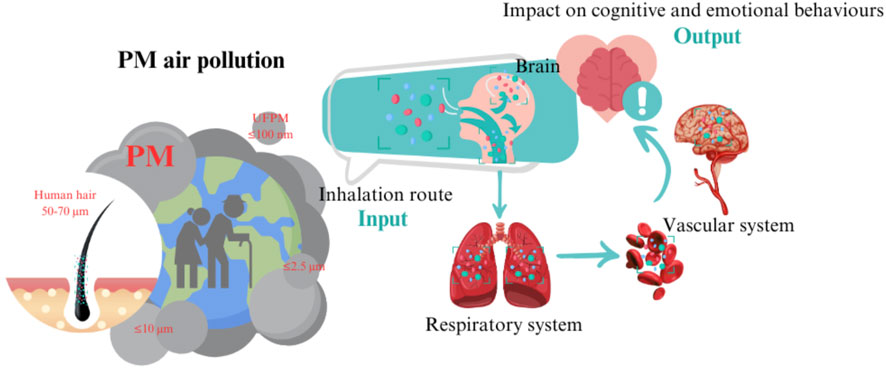
Figure 1. PM originates from a combination of natural and anthropogenic processes. These particles are capable of reaching the CNS and impacting cognitive and emotional functions, especially during aging. The route of access to PM is via inhalation through the nose. PM can (Chen and Kan, 2008) travel directly to the olfactory cortex and other brain regions or (World Health Organization, 2021) PM can be deposited in the lungs. Once it reaches the lungs, PM may also travel through the blood into the brain, causing brain disruption. Figure created with Canva.com.
PM is classified according to size: a) PM10: coarse particles ≤10 μm, mainly affecting the upper respiratory tract; b) PM2.5: fine particles ≤2.5 µm, capable of penetrating deep into the lungs and bloodstream; and c) ultrafine particles: <0.1 µm, with a high surface area to volume ratio, increasing their reactivity and health effects (Costa et al., 2021; Anderson et al., 2012). PM2.5, which is known to reduce visibility (haze), poses greater health risks than larger particles (EPA, 2025; Department for Environment and Food and Rural Affairs, 2025). Addressing these sources and properties is crucial for air quality management and public health protection. PM2.5 can remain in the air and travel hundreds or thousands of kilometers on air currents, exposing distant populations to pollutants. Studies have shown that long-range transport of PM2.5, spreads pollutants across regional and international boundaries (WHO, 2025). For example, PM2.5 from biomass burning, industrial activities, and traffic emissions can be carried by air currents, increasing pollution levels in downwind areas (Manousakas et al., 2021; Lucarelli et al., 2015; Zauli-Sajani et al., 2024; Lin et al., 2022). A study in northern South America found that aerosol transport increased local PM2.5 concentrations, increasing health risks such as cardiovascular and respiratory diseases (Velásquez-García et al., 2024). In Kyushu, Japan, researchers found that distant PM2.5 sources affected local air quality, highlighting the need for interregional cooperation (Kaneyasu et al., 2014). Similarly, a Mediterranean study found that long-range transport significantly affected PM2.5 levels, illustrating how atmospheric dynamics distribute pollutants (Perrone et al., 2013).
Many developed countries, including those in Europe, have failed to maintain urban air pollution levels below the WHO guidelines (World Health Organization, 2017). In 2021, the WHO established primary standards for PM2.5 at a 15 μg/m3 (24-h average) (WHO, 2023). This problem is illustrated by the fact that this value has been exceeded in many developed countries, surpassing WHO air quality guidelines despite stringent regulations. For instance, the U.S. frequently exceeds PM2.5 guidelines in areas like California’s Central Valley and Los Angeles due to vehicle emissions, industrial activity, and geographic factors trapping pollutants (World Health Organization, 2021). In the European Union, cities such as Paris, Milan, and Krakow report PM2.5 and NO2 levels above the WHO guidelines, driven by traffic congestion, industrial emissions, and solid fuel burning (World Health Organization, 2021). Despite its technological advancements, Japan experiences high ozone and PM2.5 levels in cities like Tokyo due to transboundary pollution and domestic industry (World Health Organization, 2021). These examples demonstrate that developed nations still face air quality challenges, requiring continued investment in clean energy, transportation, monitoring systems, and compliance with WHO’s 2021 guidelines (WHO guidelines and monitoring initiatives, accessed via https://www.iqair.com/newsroom/2021-WHO-air-quality-guidelines).
Numerous studies have shown that air pollution is associated with higher susceptibility to respiratory, cardiovascular, and cerebrovascular diseases (Clifford et al., 2016; Zhou et al., 2024) (Figure 1). However, its association with cognitive functioning and impairment requires additional study, as does its relationship with social and emotional status. Some studies have established a connection between air quality, specifically fine particles (PM2.5), and cognitive decline in older adults (Tallon et al., 2017). Evidence supports the link between poor air quality, cognitive impairment, and reduced successful aging (Cohen and Gerber, 2017). In fact, air pollution has also been associated with neurodegenerative disorders (Heusinkveld et al., 2016).
Given the potential health risks associated with environmental exposure like air pollution, these risks are particularly prevalent in urban areas due to gaseous pollutants and PM (Gatto et al., 2014). Thus, the connection between cognitive decline and exposure to neurotoxic ambient air pollution in urban areas (Gatto et al., 2014) is further reinforced by a series of studies published in recent years, which also highlight the relationship between urban environments and elevated levels of oxidative stress in the elderly (Sánchez-Rodríguez et al., 2006). Air quality appears to influence biological processes that directly affect cognition (Midouhas et al., 2018) and emotion (Lim et al., 2012; Power et al., 2015; Sass et al., 2017) by inducing neuroinflammation and oxidative stress (Block and Calderón-Garcidueñas, 2009; Calderón-Garcidueñas et al., 2004). Some studies have indicated that air pollutants can penetrate the blood-brain barrier, leading to systemic inflammation that negatively affects the central nervous system (Block and Calderón-Garcidueñas, 2009).
As mentioned, exposure to environmental pollution has been associated with a range of emotional alterations, such as depression, anxiety, and psychological stress (Lim et al., 2012; Power et al., 2015; Sass et al., 2017). Depression, the emotional factor that is most commonly associated with cognitive decline, has attracted significant academic attention. In geriatric populations, depression often co-occurs with measurable cognitive decline (Modrego and Ferrández, 2004; Rapp et al., 2011). Geriatric depression is considered a risk factor for Alzheimer’s disease (AD) (Rapp et al., 2011) and has been shown to increase the risk of dementia (Barnes et al., 2012; Ownby et al., 2006). Depression is also associated with cognitive decline and the onset of mild cognitive impairment (Feola et al., 2013; Wilson et al., 2014). However, these distinct pathologies are frequently confused (Dillon et al., 2014). Furthermore, a high prevalence of attention deficits has been linked to poor air quality (Siddique et al., 2011; Oudin et al., 2016; young and bok, 2017). Additionally, impaired autonomic and cognitive functions are predictors of impulsive-compulsive behavior at the time of a Parkinson’s disease (PD) diagnosis (Ricciardi et al., 2018).
According to several definitions, the process of human aging is complex and occurs in the biological, psychological and social spheres (Dziechciaż and Filip, 2014). A one-sided approach to aging would be incorrect. We raise the following question: Can air quality modulate cognitive, emotional, and social behaviors during aging? The aim of the present review was to deepen our understanding of behavioral consequence-dependent air quality during the aging process and the role of social health. In addition, it initiated a debate at the social and governmental levels regarding policies established by countries to address this public health issue.
2 The relevance of pollution-free residence for successful aging
The urban population is increasing rapidly worldwide. As cities expand, environmental quality, particularly urban air pollution, has become an increasingly critical factor in public health (Salim et al., 2013). Few studies have focused on identifying the predictive factors of cognitive decline in healthy elderly adults (Baumgart et al., 2015; Nguyen et al., 2002). Among these factors, there are variables centered on areas such as lifestyle and intellectual and social activities (Verghese et al., 2006). Following this argument, the Lancet Commission published a report adding new evidence to include pollution as a modifiable risk factor for dementia, including traumatic brain injury, high blood pressure, obesity, hearing loss, depression, diabetes, lower education, physical inactivity, smoking, alcohol abuse, social isolation, and pollution (Livingston et al., 2020).
It seems that the location of residence, whether rural or urban, and its inherent relation to environmental toxicity, pollution, and social conditions in these areas, could be considered as a predictive factor for healthy aging. Therefore, environmental pollution and the lack of socialization linked to urban environments deserve more attention in the study of risk factors of cognitive decline and emotional alterations (Gatto et al., 2014; Parra et al., 2022). In fact, some authors have already identified social relationships as a protective factor against aging (Tobiasz-Adamczyk and Zawisza, 2017). Tobiasz-Adanzczyk and Zawisza found an association between social activities and interactions and a better positive self-evaluation of health among elderly people living in rural environments in Poland (Tobiasz-Adamczyk and Zawisza, 2017). Furthermore, being married has been shown to be a protective factor against the effects of pollution, especially in the male population in South Korea (Kim et al., 2020).
Some studies have shown significant cognitive decline in relation to long-term exposure to urban pollution indices in different countries (Tan et al., 2023; Trushna et al., 2021; Weuve et al., 2012; Zeng et al., 2010; Zhang et al., 2024a; Tuffier et al., 2024). Air pollution is also associated with neurodegenerative conditions (Dimakakou et al., 2018; Shin et al., 2018; Yuchi et al., 2020). For example, it has been associated with a 2-year excess decline in cognitive function in relation to each 10 mg/m3 increase in long-term PM exposure in older women living in 11 US states, (Weuve et al., 2012). Other authors found similar results in women recruited from 24 states and Washington, DC, United States (Younan et al., 2022). In Brazil, Garbaccio et al. (2018) evaluated the quality of life of elderly people and concluded satisfactorily with good health in the cognitive processes of participants living in a rural Brazilian context. The favorable results derived from these studies merit discussion on a better redistribution of the population in favor of rural areas.
A consensus exists about the damage caused by pollution in urban areas in several cities worldwide (Gatto et al., 2014; Parra et al., 2022). However, other factors indirectly associated with air pollution exposure may contribute to the observed differences in cognitive abilities, such as socioeconomic status and emotional status. Exposure to environmental pollution is related to a range of symptoms such as depression, anxiety and psychological stress (Power et al., 2015; Lim et al., 2012; Sass et al., 2017; Tan et al., 2023; Trushna et al., 2021). Depression is also associated with cognitive decline and the incidence of mild cognitive impairment (Tan et al., 2023; Trushna et al., 2021; Tan et al., 2023; Trushna et al., 2021; Tan et al., 2023; Trushna et al., 2021; Tan et al., 2023; Trushna et al., 2021) and even geriatric depression has been considered a risk factor for AD (Rapp et al., 2011). These distinct pathologies are frequently confused in older adults (Dillon et al., 2014) (Figure 2).
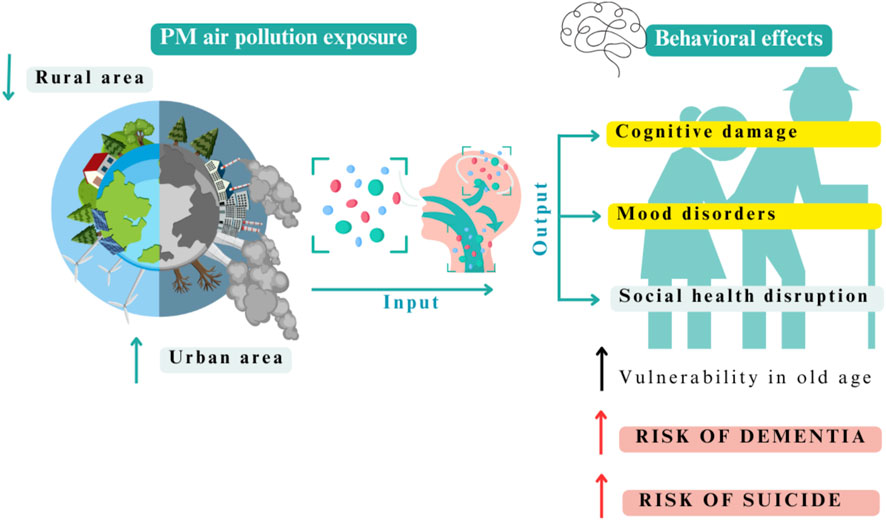
Figure 2. Overview of PM air pollution exposure and behavioral effects on human aging. In urban areas, the exposure to inhaled PM is high, leading to cognitive damage, mood disorders, and social health disruptions. The consequence is a higher vulnerability in older people with an increased risk of dementia and suicidal behavior. Figure created with Canva.com.
3 Air pollution and cognitive functioning in elderly people
With the rapid aging of the global population, it is estimated that this sector of the population increases annually between 12% and 22%, and within this group approximately 14% of adults aged 60 and over live with mental disorders (WHO, 2023). Air pollution is one of the factors associated with harmful effects on the central nervous system (CNS) is air pollution.
PM can reach other brain areas and cause cognitive dysfunctions (Table 1). Long-term exposure to PM2.5 has been shown to be strongly linked to impaired cognitive function in older Americans (exposure to PM2.5 also produces long-term mood disorders that have related pathways to affect as well cognition) (Tallon et al., 2017; Petkus et al., 2021). Inhalation of PM2.5 particles is associated with poor performance according to the Mini-Mental State Examination (MMSE) among the elderly in the US (Gatto et al., 2014; Parra et al., 2022), rural and suburban China (Ji et al., 2020; He et al., 2020; Wang et al., 2020) and Korea (Lee et al., 2022). Each 10 μg/m3 increase in exposure is estimated to be equivalent to two additional years of cognitive decline due to aging (Power et al., 2011). According to previous studies, a relationship between PM exposure and poor cognitive function (Cho et al., 2023; Ogurtsova et al., 2023; Kulick et al., 2020; Gui et al., 2024). A longitudinal study on aging in Taiwan (TLSA) established a relationship between exposure to PM with an aerodynamic diameter <10 μm (PM10) and cognitive impairment in older adult populations (Lo et al., 2019). This study demonstrated that co-exposure to ambient PM10 and O3 may deteriorate cognitive function to a greater extent in older adults. It is a fact that PM is able to damage the cognitive function by itself or along to others air pollutants such as O3 (Gatto et al., 2014; Gao et al., 2022).
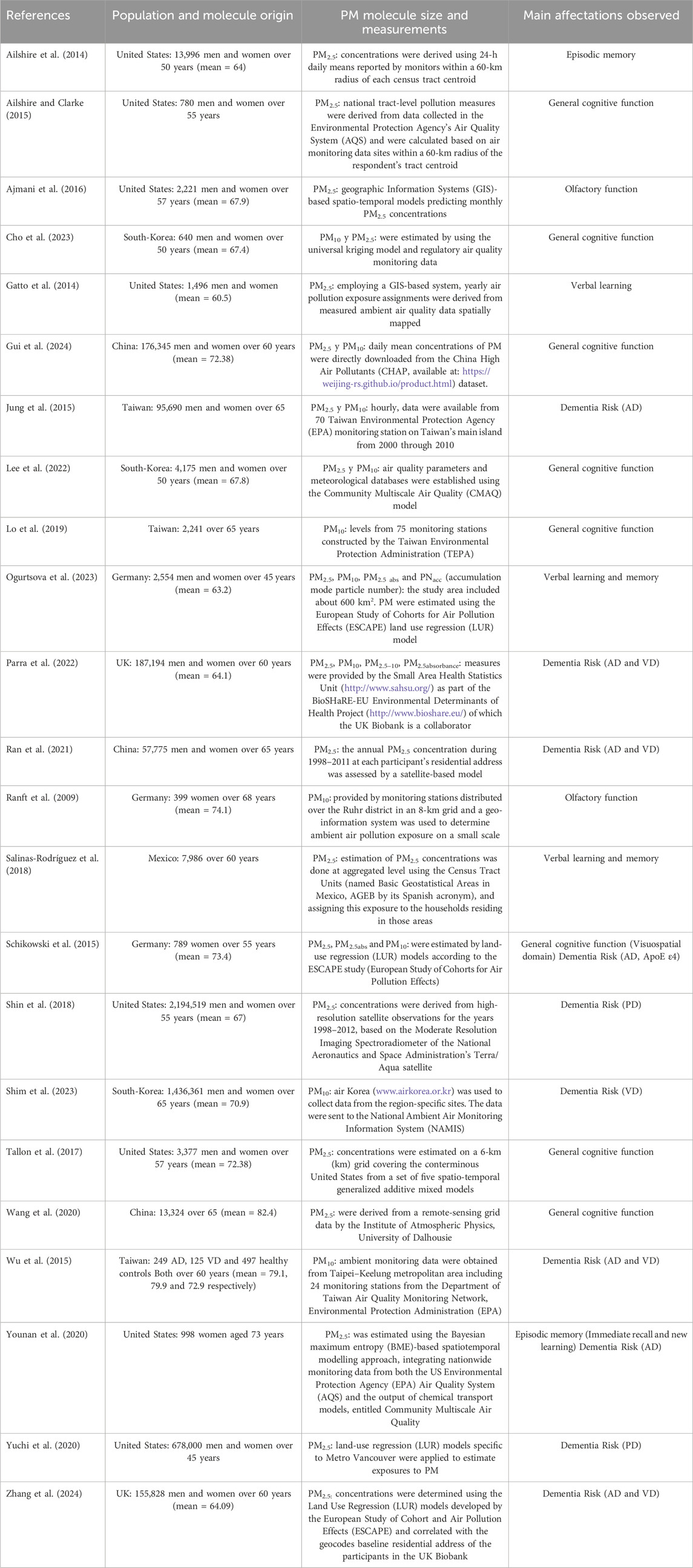
Table 1. Impact of PM exposure on older adults: key cognitive impairments and increased risk of dementia [Alzheimer’s Disease (AD), Parkinson’s Disease (PD), and Vascular Dementia (VD)] associated with PM exposure. Refer to Figure 6 for details on the geographical distribution.
Some studies have indicated that a specific cognitive subdomain is affected by PM exposure, not only by general cognitive status (Table 1). Specifically, in Germany, a study with a sample comprised of women older than 75 years indicated that those who lived near a busy road showed poorer performance in executive functions compared to those women who resided further from busy highways with heavy traffic (Ranft et al., 2009). Gatto and collaborators (2014) using a sample of 1,500 people with an average age of 60 years, found a reduction in verbal learning in US (Gatto et al., 2014; Parra et al., 2022). PM2.5 has also been found to strongly associate with a higher error rate on orientation and working memory tests in adults 55 years of age and older (Ailshire and Clarke, 2015) and reduced episodic memory compared to those with less exposure to PM2.5 (Younan et al., 2022; Ailshire and Crimmins, 2014). In addition, exposure to PM has been associated with lower scores on immediate verbal memory (Ogurtsova et al., 2023) and semantic verbal fluency (Salinas-Rodríguez et al., 2018).
Therefore, these studies have associated the exposure to PM with deficits in memory, working memory, episodic memory, verbal learning, memory, and attentional processes (Table 1) (López-Granero et al., 2024; Gatto et al., 2014; Ogurtsova et al., 2023; Younan et al., 2020; Yao et al., 2022a; Tonne et al., 2014; Wurth et al., 2018). It is noteworthy that working memory and attention are essential for normal cognitive development as well as being one of the first cognitive processes affected during aging. Working memory is a cognitive system that temporarily holds information for processing. Its function is crucial for any cognitive competence, such as learning, reasoning, problem solving and understanding language (Rivas et al., 2019; Vuontela et al., 2003). On the other hand, attention is a basic function required for higher cognitive abilities (e.g., executive function or memory) and involves different processes, such as selective attention to a particular source of stimulation or voluntary control (Anderson, 2002). Attention is also essential for controlling executive function. Inhibitory control deficits are characterized by the presence of impulsive behaviors, being a trait which appears to be present in various neuropsychopathological and neurodegenerative disorders (Robbins et al., 2012). It has also been indicated that poor cognitive performance and anxiety symptoms can predict the development of impulsive-compulsive behavior at the time of PD diagnosis (Ricciardi et al., 2018). In this sense, we highlight that the high prevalence of attention deficit has been associated with poor air quality in younger people (Tan et al., 2023; Trushna et al., 2021; Oudin et al., 2016; Young and Bok, 2017); however, it has not been studied in aging people, even when the interest in impulsivity is based on the theory that self-control could be related to measures related to longevity is currently on the rise (Strulik, 2019; Cohen and Gerber, 2017).
4 Air pollution and dementia
According to the WHO, the number of cases of dementia worldwide is increasing every 20 years by double the number of cases, taking into account the growth of the elderly population around the world (United Nations: World Urbanization Prospects, 2010), particularly in developing countries. In this regard, Figure 3 shows a comparative graph for increasing cases of AD and related dementias in Africa, America, Asia and Europe from 1990 to 2021. This graph shows how the number of years lived with disability (YLDs) in the population aged > 70 years in relation to AD and other dementias has increased over time. This trend is most prominent in regions of America, Asia, and Europe, with comparatively fewer cases reported in Africa.
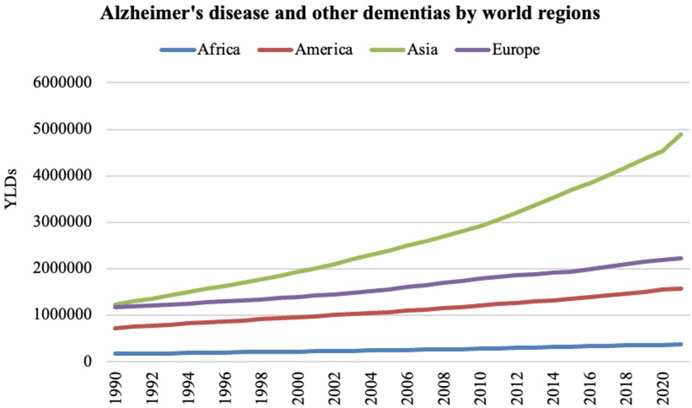
Figure 3. The number of years lived with disability (YLDs) in the population aged over 70 years in relation to AD and other dementias from 1990 to 2021 in Africa, America, Asia, and Europe. Institute for Health Metrics and Evaluation (IHME). GBD Compare Data Visualization. Global Burden of Disease (GBD) Study 2021. Seattle, WA: IHME, University of Washington, 2023. Available from http://vizhub.healthdata.org/gbd-compare. (Accessed 12/19/2024).
The 2017 Lancet Commission on Dementia Prevention, Intervention, and Care produced a list of possible risk factors for dementia including air pollution (Livingston et al., 2017). The 2018 Lancet Commission on Pollution states that a concurrent relationship is being built, specifically between fine PM and dementia in older people, thus requiring further research to examine emerging causal links (Landrigan et al., 2018).
In recent years, several human studies have demonstrated a link between air pollution exposure and dementia pathologies such as AD and PD (Table 1) (Costa et al., 2020; Mohammadzadeh et al., 2024; Peters et al., 2019). These findings raise the hypothesis that inhalation of particles (Calderón-Garcidueñas et al., 2004) negatively affects the brain, involving the activation of an inflammatory response and increasing production and deposition of Aβ peptides (Block and Calderón-Garcidueñas, 2009). A high incidence and risk of AD and PD dementias has been established for people exposed to PM ambient pollution and other air contaminants (such as NO2, CO, and O3 to name a few), around the world (e.g., Taiwan, Germany, Sweden, the United States, China and the UK) in the elderly (Parra et al., 2022; Braithwaite et al., 2019; Chang et al., 2014; Jung et al., 2015; Kasdagli et al., 2019; Schikowski et al., 2015; Wu et al., 2015; Ran et al., 2021; Wu et al., 2022). In a health and environment cohort study on a sample in the Ontario population (Chen et al., 2016) it was observed that exposure to PM2.5 was associated with a high incidence of dementia. In two other cohort studies involving 96,000 and 30,000 adults in Taiwan, exposure to PM2.5, was associated with a 54%–212% increase in the incidence of dementia (Chang et al., 2014; Jung et al., 2015). In another study carried out in the UK, positive associations were found between exposure to PM2.5, and the risk of all-cause dementia (Zhang et al., 2024b).
The social security coverage program administered by the United States government, which provides medical care to all people over 65 years of age known as Medicare, in one of the reviews of its users found data that for each increase of 1 μg/m3 at the annual concentration of PM2.5 citywide, there was an adjusted risk ratio (HR) of 1.08 for dementia (Kioumourtzoglou et al., 2016). Similar results have been found in other countries such as the UK, where samples from the UK Biobank were used to follow 155,828 elderly people aged 60 years and without a diagnosis of dementia for 12 years. Increases of 1 μg/m3 in ambient PM2.5 were found to have an adjusted hazard ratio (HR) of 1.07 for all-cause dementia risk (Zhang et al., 2024b). In general, it increases the risk of AD (Parra et al., 2022; Shim et al., 2023), PD (Shin et al., 2018; Yuchi et al., 2020) and vascular dementia (VD) (Parra et al., 2022; Shim et al., 2023) (Table 1).
Some authors have demonstrated an association between air pollution and respiratory and cardiovascular morbidity and mortality (Chen and Kan, 2008; Franchini and Mannucci, 2009; Ghio et al., 2012; Götschi et al., 2008; Pelucchi et al., 2009). VD is the second most common pathophysiological process (20%) after AD (Enhancing care, Advancing Health Science, 2025). Cardiovascular disease (CVD) is also known to affect cognitive function in later years (O’Brien, 2006; Rundek et al., 2022; Kalaria et al., 2016), and vascular and metabolic risk factors, including high blood pressure, obesity, diabetes, and stroke (Rosamond et al., 2008) are all inversely associated with cognitive function in middle-aged and older adults (Leritz et al., 2011).
It is worth mentioning that dementia and cognitive impairment, unlike cardiovascular disease, have no current treatment options (Livingston et al., 2020; Livingston et al., 2017) and should be considered an even higher risk to the population if the link between PM and cognitive decline is shown to be strong.
5 Air pollution and depression symptoms in elderly people
A wealth of research shows that air pollution influences emotional responses such as happiness, anxiety, depression symptoms, life satisfaction, stress, sadness, pain, powerlessness, and nervous and mental disorders. These emotional responses to air pollution have been documented worldwide, including Australia, Europe, the United States, Latin America, Canada, and China (Altuğ et al., 2020; Barnett et al., 2018; Lu, 2020; Mendoza et al., 2019; Wang et al., 2019). One of the main emotional consequences of air pollution is depression or depressive symptoms, which have been increasingly observed in recent years. Figure 4 illustrates this rise in cases in Africa, America, Asia, and Europe from 1990 to 2021 among older adults. According to the World Health Organization (World Health Organization, 2017), depression is one of the most common mental health issues affecting more than 300 million people worldwide. A meta-analysis published in 2018 showed a statistically significant association between air pollution and depressive symptoms in older adults (Barnett et al., 2018) (Table 2).
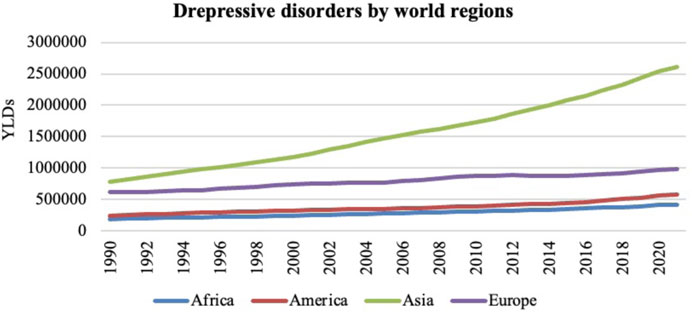
Figure 4. The number of years lived with disability (YLDs) in the population aged over 70 years in relation to depressive disorders from 1990 to 2021 in Africa, America, Asia and Europe. Institute for Health Metrics and Evaluation (IHME). GBD Compare Data Visualization. Global Burden of Disease (GBD) Study 2021. Seattle, WA: IHME, University of Washington, 2023. Available from http://vizhub.healthdata.org/gbd-compare. (Accessed 12/19/2024).
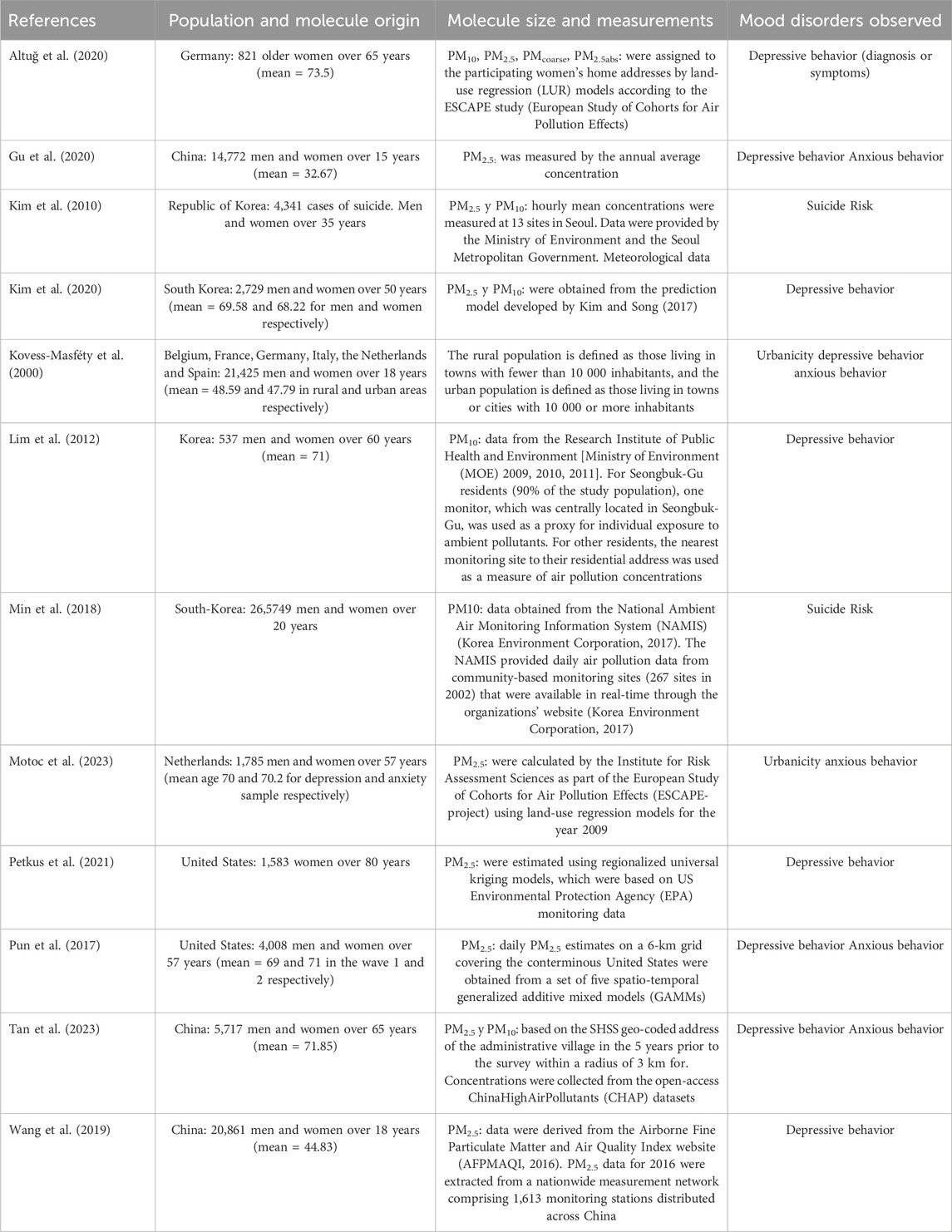
Table 2. Impact of PM exposure on older adults: key mood disorders associated with PM exposure. Refer to Figure 6 for details on the geographical distribution.
This association has been replicated in epidemiological and experimental studies with similar results. In 2019, Zhang and Wang (Zhang and Wang, 2019) found that high annual ground-level PM2.5 concentrations had significant negative effects on the average level of happiness in China with cross-sectional data. In addition to the Chinese population, some authors found that a higher concentration of PM2.5, significantly increased the prominence of the four negative emotions such as nervousness, depression, powerlessness, and restlessness (Gu et al., 2020). Additionally, Buoli et al. (2018) conducted a review with interesting results: long exposure to PM2.5 pollutant increased depressive symptoms (d effect size: 0.05–0.81 for each increase of 5–10 μg/m3 of air pollutant concentrations) (Buoli et al., 2018). Another review and meta-analysis study (Braithwaite et al., 2019) indicated that higher long-term exposure (>6 months) to PM2.5, was associated with higher odds of depression. Recently, some authors found that air pollution parameters, such as PM10 and PM2.5, were significantly and positively associated with depressive symptoms, even after adjustment for a German sample of elderly women (Altuğ et al., 2020). In addition, this study indicated that living within 100 m of a major road was positively associated with depression. Lim et al. (2012) conducted a study on elderly Chinese people and found that PM concentrations were significantly and positively related to depression. A systematic review and meta-analysis conducted in 2018 (Barnett et al., 2018) showed that air pollution, among other neighborhood characteristics, was positively related to depressive symptoms in the elderly population. This study evaluated a total of 73 articles with data from Asia, Europe, United States, and Oceania. Recently, two systematic reviews were published (Braithwaite et al., 2019; Cao et al., 2024). Both, which include a total of 22 and 25 papers, respectively, find associations between long-term exposure to PM2.5 and depression.
Overall, some of the aforementioned studies emphasized that the relationship between air pollution and mood disorders is remarkably different in rural and urban areas (Table 2). Similarly, Kovess-Masféty et al. also indicated that urbanicity seemed to be linked to a higher risk of mental health disorders, particularly depressive disorders (Kovess-Masféty et al., 2000). This finding is part of The European Study of the Epidemiology of Mental Disorders (ESEMeD 2000 study), which collected data from 6 European countries: Belgium, France, Germany, Italy, the Netherlands, and Spain. In Belgium, women in rural areas had fewer emotional disorders. Therefore, it seems that subjects living in metropolitan areas are more vulnerable to long-term PM10 exposure than those living in non-metropolitan areas (Young et al., 2018). It is worth mentioning that air pollution seems to trigger suicidal behavior; some authors have even indicated that air pollution exposure is associated with an increased risk of suicide in adults (Braithwaite et al., 2019; Young et al., 2018) (see Table 2). Kim and collaborators suggest that increased ambient PM associated to a higher suicide risk is more pronounced in persons 36–64 years of age (Enhancing care, Advancing Health Science, 2025). There are still insufficient studies that addressed the relationship between air pollution and suicide risk in the elderly.
In addition, it seems that air pollution contributes to depressive symptoms in older adults through feelings of loneliness (Zhang and Wang, 2019). Similarly, urbanicity was significantly associated with increased depressive symptoms, mediated by loneliness, physical activity, social support and air pollution (Pun et al., 2019). Social interactions seem to play a crucial role in shaping the overall quality of life of adults, particularly older adults (Scharf and Jong Gierveld, 2008; Bowling, 2005). Evidence indicates that limited or poor social connections can elevate the risk of dementia (Gardener et al., 2021). In addition, it has been shown that the probability of mortality increases by 30% in situations of loneliness, social isolation and living alone, so that, loneliness and isolation are considered predictors of physical, mental and psychosocial health problems in both rural and urban areas (Ibarra et al., 2020). Several studies underscore the advantages of aging in rural communities, such as robust social networks, enhanced social integration, and healthy and safe environments (Winterton and Warburton, 2012).
As well, depression is often associated with a decrease in overall wellbeing, affecting emotional, psychological, and social dimensions (Steptoe et al., 2015). Accordingly, air pollution may impair population health by influencing people’s subjective wellbeing (Li et al., 2019). Alternatively, as proposed by others, air pollution reduces subjective wellbeing by affecting physical health or reducing social contact with people outdoors, which indirectly affects subjective wellbeing (Zhang and Wang, 2019). In the study by Benavente Cuesta and Quevedo Aguadode (2019) on the Autoperception of Health, Quality of Life and Psychological Wellbeing among older people, a significant relationship was found between self-perception of health and the area in which people reside (rural and urban) (Benavente Cuesta and Quevedo Aguadode, 2019). The perception that the two groups have about their interpersonal relationships is attributed in this study to the phenomenon of depopulation experienced in rural areas in recent decades (Benavente Cuesta and Quevedo Aguadode, 2019).
6 Air pollution and anxiety emotion in elderly people
The effects of air pollution exposure on anxiety in older adults have not been well studied, despite the increasing diagnosis of anxiety disorders in the last 30 years around the world (see Figure 5). Negative emotions, such as nervousness, powerlessness, anxiety, and annoyance, have been linked to air pollution (Table 2). A few studies in the US have shown that an increase in PM2.5 is linked with anxiety symptoms, with the largest increase in the 180-day moving average during aging (Pun et al., 2017). In China, Tan and collaborators, in 2023 also found positive associations between exposure to PM2.5, PM10 and an increased prevalence of pain/discomfort and anxiety/depression mediated by higher socioeconomic status (affluent, urban, and higher level of education) (Tan et al., 2023).
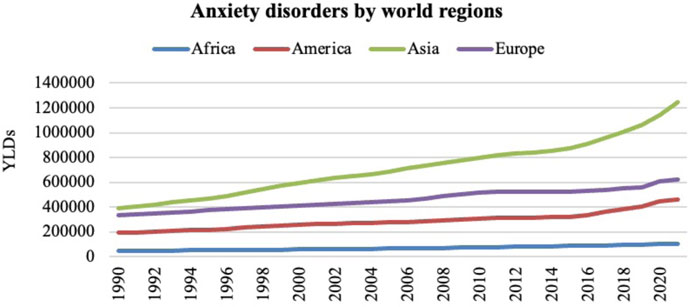
Figure 5. The number of years lived with disability (YLDs) in the population aged over 70 years in relation to anxiety disorders from 1990 to 2021 in Africa, America, Asia and Europe. Institute for Health Metrics and Evaluation (IHME). GBD Compare Data Visualization. Global Burden of Disease (GBD) Study 2021. Seattle, WA: IHME, University of Washington, 2023. Available from http://vizhub.healthdata.org/gbd-compare. (Accessed 12/19/2024).
A recent review (Lu, 2020) showed that exposure to PM2.5 in elderly women predicted increased anxiety symptoms. In addition, a systematic review and meta-analysis by Braithwaite team in 2019 reported significant positive associations between long-term exposure to PM2.5, and anxiety (Braithwaite et al., 2019). Higher concentrations of PM2.5, have been found to increase the negative emotions of nervousness and powerlessness in the Chinese population (Gu et al., 2020). Other works also found positive associations between air pollution and depressive and anxiety symptoms (Braithwaite et al., 2019; Zundel et al., 2022; Pun et al., 2017). Some authors have revised the literature and suggested that air pollution increases depressive and anxiety symptoms and behaviors, along with alterations in brain regions, leading to psychopathology risk (Zundel et al., 2022). The literature indicates that an increase in PM2.5 is significantly associated with anxiety symptoms, with the largest increase for the 180-day moving average in participants between 69 and 72 years old (Pun et al., 2017).
Neighborhood environmental characteristics play a relevant role in mental health during aging. Motoc et al. recently indicated that various neighborhood characteristics are associated with an increased incidence of anxiety, including higher urban density, higher PM2.5, and less green space (Motoc et al., 2023). Other studies have also found relationships between neighborhood characteristics and depressive or anxiety symptoms. For example, perceived social cohesion (Qin et al., 2023) and outdoor fitness facilities (Mu et al., 2023) are associated with a lower prevalence of depressive symptoms. These findings underscore the role of social characteristics in human health in the context of air pollution.
Social networks in the elderly may be sufficiently important to reduce the risk of mood disorders in older adults. In fact, Ward and colleagues found that greater social disconnection was associated with greater “wish to die,” with loneliness being the most important factor (Ward et al., 2024). Neighborhood is related to the services, accessibility, pollution, and social capital provided at the neighborhood level, and previous research has shown that it impacts both air quality and wellbeing (Lal et al., 2020). Similar to other emotional responses, Gu et al. (2020) suggested that exposure to a greater risk of air pollution might affect the mental health of the population by indirectly reducing wellbeing and social development. Thus, the concept of cognitive aging linked to brain toxicity secondary to environmental pollution in rural and urban areas does not explain the aging process in a global, unique, and direct way. A multidimensional vision is required that incorporates other factors associated with lifestyle, social support, and social networks in both areas.
7 Discussion and recommendations for future actions
Some studies have analyzed the role of residential settings and air pollution in the context of a behavioral frame in elderly people; however, they are insufficient. It seems that environmental agents could be the key to understanding the susceptibility and variability observed in behavioral symptoms during aging. The purpose of this review was to provide a deeper understanding of the cognitive, emotional, and social dimensions—both general and specific subdomains—which are influenced by air quality, place of residence, and individual susceptibility to environmental variations (Figure 2). Additionally, we highlight the role of social health and outline policy recommendations in the context of PM air pollution.
Aging is a universal phenomenon that does not necessarily have to bring the typical pattern of cognitive decline associated with dementia. Although we should note that cognitive decline is related to an increase in age, age is not a manipulated factor (Feldman and Kertesz, 2001; Kushwaha et al., 2017). Therefore, efforts should be directed to identify additional factors involved in the aging process, which could be susceptible to manipulation or variation. Might air quality be a key factor contributing to cognitive decline and mood disorders associated with aging?
7.1 PM air pollution associated with cognitive decline and mood disorders
Regarding behavioral effects, Table 1 shows the main effects of air pollution exposure on cognitive function in elderly people. The number of cases of dementia worldwide is increasing along with the number of air pollutants and urban areas. The repercussions of air pollution on the brain and central nervous system imply cognitive alterations. It has been reported that the exposure to air pollutants cause a decrease in the cognitive function leading to moderate to severe damage (Tallon et al., 2017; Gatto et al., 2014; Petkus et al., 2021; Ji et al., 2020; Wang et al., 2020; Lee et al., 2022; Power et al., 2011; Cho et al., 2023; Gui et al., 2024; Lo et al., 2019; Tallon et al., 2017; Gatto et al., 2014; Petkus et al., 2021; Ji et al., 2020; Wang et al., 2020; Lee et al., 2022; Power et al., 2011; Cho et al., 2023; Gui et al., 2024; Lo et al., 2019; Tallon et al., 2017; Gatto et al., 2014; Petkus et al., 2021; Ji et al., 2020; Wang et al., 2020; Lee et al., 2022; Power et al., 2011; Cho et al., 2023; Gui et al., 2024; Lo et al., 2019; Tallon et al., 2017; Gatto et al., 2014; Petkus et al., 2021; Ji et al., 2020; Wang et al., 2020; Lee et al., 2022; Power et al., 2011; Cho et al., 2023; Gui et al., 2024; Lo et al., 2019). Several studies have observed notable cognitive declines associated with long-term exposure to urban pollution levels (Weuve et al., 2012; Zeng et al., 2010; Power et al., 2011). Some researchers have even reported a 2-year accelerated decline in cognitive function for every 10 mg/m3 increase in long-term PM exposure among older women (Weuve et al., 2012). Air pollution has also been linked to neurodegenerative disorders (Dimakakou et al., 2018; Costa et al., 2020). Specifically, the authors mark poorer performance in executive functions, lower olfactory function, deficits in working memory, episodic memory, verbal learning, attentional processes, impulsivity behavior and higher levels of mortality as the mains cognitive alterations (Ranft et al., 2009; Gatto et al., 2014; Siddique et al., 2011; Young and Bok, 2017; Ailshire and Clarke, 2015; Ailshire and Crimmins, 2014; Rivas et al., 2019; Sacks et al., 2011). On top of that, it seems that exist a higher incidence of dementia in cities with poor air quality (Costa et al., 2020; Braithwaite et al., 2019; Chang et al., 2014; Jung et al., 2015; Wu et al., 2015; Chen et al., 2016; Kioumourtzoglou et al., 2016). The authors specifically inform of higher risk of AD, PD and VD among the neurodegenerative diseases (Parra et al., 2022; Costa et al., 2020; Shim et al., 2023).
In addition, air quality is implicated in a range of emotional symptoms such as depression, anxiety and emotional wellbeing responses (Power et al., 2015; Lim et al., 2012; Sass et al., 2017; Altuğ et al., 2020; Barnett et al., 2018; Gu et al., 2020; Pun et al., 2017; Lu, 2020; Li and Zhou, 2020) (Table 2). Recent research has shown a positive association between air pollutants and depressive symptoms, even with a higher risk of suicidal behavior (Young et al., 2018). Moreover, older women seem to be more susceptible to developing depressive symptoms under air pollution conditions (Altuğ et al., 2020). Likewise, subjective environmental evaluations can modulate the link between objective environmental quality and life satisfaction by measuring feelings of wellbeing feeling (Li and Zhou, 2020; Liao et al., 2015). In general, these studies show a negative association between air pollution, life satisfaction, and happiness, indicating a negative impact of air pollution on emotional human responses. Some of these studies have shown that higher levels of air pollution, as well as living within 100 m of a major road, were significantly positively associated with emotional symptoms, foregrounding the relevance of residential settings (Altuğ et al., 2020).
7.2 Increased susceptibility to environmental pollution in older adults
Sacks and colleagues established older adults as a vulnerable group to health effects related to PM exposure (Sacks et al., 2011). In addition, this research group was able to develop a definition of susceptibility that could be applied to include all populations potentially at risk of negative health effects due to air pollutant exposure. Aging is a natural process characterized by the gradual, time-dependent decline in biological and behavioral functions, with individuals of the same chronological age exhibiting variability (Sacks et al., 2011; Martins-De-Souza, 2023). Older adults are considered a susceptible population due to this gradual decline. Furthermore, older adults are considered more susceptible than younger groups because of the higher prevalence of preexisting cardiovascular and respiratory conditions, which may further increase their vulnerability to PM exposure (Sacks et al., 2011). With advancing age, studies on the dosimetry model of PM—which examines how these particles are deposited, accumulated, and cleared in different regions of the respiratory tract—have shown a reduced clearance of PM across all regions of the respiratory system (EPA, 2009).
So that, PM enters the respiratory tract via the nose to the olfactory bulb and travel into the brain, making it especially vulnerable (López-Granero et al., 2024; Costa et al., 2019; Costa et al., 2021). In fact, impaired olfactory function has been proposed as a precursor of AD (Calderon-Garciduenas et al., 1995; Fagundes et al., 2015). In this sense, some evidence also suggests an increased accumulation of amyloid-β in older individuals exposed to elevated levels of air pollution (Calderón-Garcidueñas et al., 2004). Therefore, PM pollutants may disrupt the blood-brain barrier and deposit in neural tissue, leading to systemic inflammation (Block et al., 2012). The inflammatory and oxidative stress responses triggered by air pollution are similar to those observed during natural aging, and the effects of these systems have been reported in the hypothesized biological pathways of neurological disorders (Dröge and Schipper, 2007; Schikowski and Altuğ, 2020).
Air pollution is not only associated with a higher susceptibility to respiratory and cerebrovascular systems but is also associated with CVD (Clifford et al., 2016; Zhou et al., 2024). Precisely, these systems show a decline with advancing age; therefore, environmental exposure could contribute to further deterioration. It has been reported increased cardiovascular disease hospital admissions among older adults compared with all ages when exposed to PM2.5 (Sacks et al., 2011; Pope et al., 2008). In this study, exacerbation of heart failure was associated with elderly patients, and the authors concluded that PM air pollution could be responsible for precipitating acute cardiac decompensation in otherwise well-managed patients with heart failure (Pope et al., 2008). A recent study observed that increasing exposure to PM2.5, was significantly associated with an increased risk of gastrointestinal bleeding, intracranial bleeding, and epistaxis in older adults (Fayyad et al., 2024).
7.3 The role of social health in mediating the effects of air pollution
The role of social health in pollution-free residences in elderly people deserves to be discussed. Some authors (Blekesaune and Haugen, 2018) offered a specific view of the importance of treating the linkage between the elderly and the community to obtain a better quality of life. Many older adults living in rural municipalities reported a stronger sense of community than those living in urban municipalities (Verheij et al., 2008). Maintaining positive and lasting social relationships with friends and neighbors is essential for the quality of life of the elderly (Bowling, 2005; Scharf, 2001), and the neighborhood is a particularly important source of social contact for the elderly (Blekesaune and Haugen, 2018). Perceptions of who is considered a neighbor can vary between urban areas (less knowledge) and rural areas (greater knowledge). Performing and receiving informal services in a locality is a good indicator of mutual relationships and support. Older rural residents have closer contact with their neighbors than urban dwellers. Friendships and neighborhoods tend to overlap more in rural communities than in urban areas. A higher proportion of those living in rural areas rely on getting help from friends in the community, suggesting that local friendship networks are stronger in rural municipalities than in urban ones (Blekesaune and Haugen, 2018).
Regarding social exclusion in old age, it seems that older people living in urban neighborhoods have higher levels of social exclusion. Biopsychosocial community deprivation has a high impact on the neighborhood and directly affects a greater proportion of older people. In this sense, it is explained that people who live in urban areas have a greater risk of social exclusion due to their predisposition to fewer ties with the neighborhood, due to the greater probability of deprivation and the loss of economic status in urban areas. Residents’ connections to their neighborhoods have the power to mitigate exclusion (Barnes et al., 2006; Jivraj et al., 2016).
We also conclude that the level of social networks and support inherent to a rural area in the elderly may be sufficiently important to reduce the risk of at least being seen at the emotional stage when access to essential services is guaranteed. Air contamination can modulate cognitive and emotional variables during aging, having strong and adequate social relationships with friends and neighbors is an essential value in the elderly for the quality of life (Bowling, 2005; Scharf, 2001) and this kind of connecting links are more suitable in rural areas. The perception of whoever is considered a neighbor is stronger in rural areas (Braithwaite et al., 2019; Zundel et al., 2022; Pun et al., 2017). It seems that older people living in rural areas obtain higher scores in self-perception of health, and this is attributed to the influence of the rural context on health (perception of natural environments as healthier, being away from pollution, and stress that experiences living in more industrialized urban areas) (Benavente Cuesta and Quevedo Aguadode, 2019) and the highest levels of exclusion found in urban populations compared to rural ones (Walsh et al., 2017).
7.4 Implications for society and policy recommendations
This work offers a comprehensive analysis of the impact of air quality on human health during aging. Identifying vulnerable population groups, such as older adults, affected by air pollution will aid in the development of effective prevention programs and the strategic planning of targeted interventions for specific populations. The health impacts of ambient air pollution result in significant costs to society (Yin et al., 2021). Higher health costs are associated with older people than with younger people. According to Yin and collaborators, in 2016, PM2.5 was estimated to have caused 8.42 million attributable deaths, which was associated with 163.68 million years of life lost (Yin et al., 2021). The economic cost per capita for the older population was $2,739, which was 10 times that of the younger population.
Consequently, policy strategies should focus on reducing the health effects and costs of ambient air pollution, with particular emphasis on the older population. Since 2005, the WHO has been implementing Global Air Quality Guideline recommendations, with the latest update published in 2022. Recent research suggests that efforts to address air pollution require both local and regional interventions, as well as global cooperation (Kandpal, 2024; Ogwu et al., 2024). Some of the proposed measures include the implementation of pollution prevention and control measures in industries that could help minimize the emissions of pollutants such as sulfur dioxide, nitrogen oxides, PM, and volatile organic compounds (McDonald et al., 2020). At the governmental level, national authorities are encouraged to monitor emissions, track air quality levels, and apply corrective measures to address non-compliance with regulatory standards. At the individual level, masks have consistently been identified as effective tools against environmental threats (Tcharkhtchi et al., 2021). They are considered to be protective equipment designed to protect the respiratory system from airborne droplets, viral particles, and pollutants. However, the filtration efficiency of various masks against aerosols is not uniform because the particles differ in size, shape, and properties. This underscores the necessity of using specific masks to ensure optimal protection (Tcharkhtchi et al., 2021).
Figure 6 illustrates the geographical distribution of the studies analyzed in this study. It is worth noting that these countries appear to undertake governmental actions against air pollution (Schraufnagel et al., 2019). Most developed nations have high-tech equipment and monitoring systems to collect and analyze air quality data, which are then used to generate information that informs policies and the population at local, national, and regional levels (United Nations Environment, 2019). However, in underdeveloped countries, such as those on the African continent, access to this technology remains limited (United Nations Environment, 2019). Promoting air quality policies and developing studies, such as those mentioned above, can help reduce the risk of exposure to air pollution and, consequently, the incidence of certain pathologies in humans. In 2015, Adar et al. studied the impact of clean-air technologies and fuel policies in Washington (US). The transition to low-sulfur diesel was associated with improved lung function (Adar et al., 2015). Similarly, in Korea, associations have been found between a decrease in pollutant emissions and hospital visits for asthma (Hu et al., 2022; Chen et al., 2020). In 2013, China launched a plan known as the Air Pollution Prevention and Control Action Plan (AAPCAP), which aimed to improve air quality through actions such as optimizing industrial structures, developing clean energy, establishing early warning and emergency monitoring systems, and reducing the use of dirty fuels (Hu et al., 2022; Chen et al., 2020), primarily focusing on the reduction of PM. As a result, within just 4 years (by 2017), there was a 33.3% reduction in the annual average concentration of PM2.5 compared to 2013, when the project commenced (Hu et al., 2022). This reduction also led to improvements in certain health indicators, such as a lesser decline in cognitive function (Younan et al., 2022; Hu et al., 2022; Yao et al., 2022b). Schraufnagel et al. analyzed the benefits of air pollution reduction in the US, Western Europe and Asia (Schraufnagel et al., 2019).
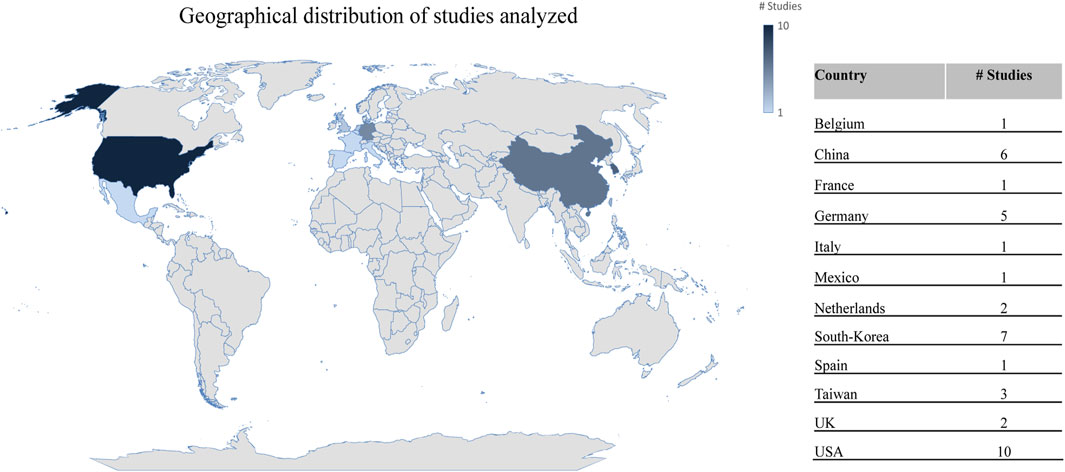
Figure 6. Geographical distribution of studies analyzed in relation to cognitive function, mood disorders, and PM air pollution.
8 Conclusion
Finally, we posit that it is necessary to apply a multidimensional approach that incorporates cognitive, emotional, and social elements to understand the human aging model. Based on the analyzed literature, we conclude that (a) air pollutants affect cognitive function and increase the risk of dementia and neurodegenerative disorders; (b) there is a link between depression, anxiety, and wellbeing emotional responses and poor air quality and risk of suicide; (c) social networks and inclusion can modulate and mitigate the effects observed during aging in rural areas exposed to less contamination; (d) older adults are particularly susceptible and vulnerable to the effects of PM pollution; (e) the consequences of air pollution exposure are not specific to a given country; and (f) new human epidemiological studies are necessary to better explain individual differences during aging in rural/urban residential settings. It is well known that pollution is caused by anthropogenic secondary to rapid industrialization and urbanization, accordingly, it is time to reverse this tragic trend by means of law that reduces air contamination. Pollution must be addressed at its source, emphasizing the need for increased efforts to reduce pollution at several levels, including global, local, and personal-level interventions.
Author contributions
LG: Conceptualization, Validation, Writing–original draft. MA: Conceptualization, Validation, Writing–original draft. BC-C: Conceptualization, Validation, Writing–original draft. LD-V: Conceptualization, Validation, Writing–original draft. AB: Conceptualization, Supervision, Validation, Writing–review and editing. MA: Funding acquisition, Supervision, Validation, Writing–review and editing. CL-G: Conceptualization, Funding acquisition, Supervision, Validation, Writing–review and editing.
Funding
The author(s) declare that financial support was received for the research, authorship, and/or publication of this article. This work was funded by the Spanish Government (Ministry of Science and Innovation; MCIN/AEI/10.13039/501100011033), grant reference: PID 2020-113812RA-C33 (CL-G.) and the European Union, Next-Generation EU (Investigo) (CL-G.). This research was also funded by grants from the Instituto de Salud Carlos III (ISCIII) and cofounded by Fondos Europeo de Desarrollo Regional (FEDER): “PI19/00240”, Junta de Comunidades de Castilla la Mancha SBPLY/23/180225/000109, co-financed by the European Union regional funding “a way to achieve Europe” and from Universidad de Alcalá (“Ayuda de la Línea de Actuación Excelencia para el Profesorado Universitario de la UAH”; EPU-INV-UAH/2022/001) (MA).
Acknowledgments
All figures were generated using Canva.com.
Conflict of interest
The authors declare that the research was conducted in the absence of any commercial or financial relationships that could be construed as a potential conflict of interest.
Generative AI statement
The author(s) declare that Generative AI was used in the creation of this manuscript. During the preparation of this work, the author M. A. used ChatGPT3.5 to improve the readability and language of the manuscript. After using this tool/service, the authors reviewed and edited the content as needed, and took full responsibility for the content of the published article.
Publisher’s note
All claims expressed in this article are solely those of the authors and do not necessarily represent those of their affiliated organizations, or those of the publisher, the editors and the reviewers. Any product that may be evaluated in this article, or claim that may be made by its manufacturer, is not guaranteed or endorsed by the publisher.
References
Adar, S. D., D’Souza, J., Sheppard, L., Kaufman, J. D., Hallstrand, T. S., Davey, M. E., et al. (2015). Adopting clean fuels and technologies on school buses: pollution and health impacts in children. Am. J. Respir. Crit. Care Med. 191, 1413–1421. doi:10.1164/rccm.201410-1924OC
Ailshire, J. A., and Clarke, P. (2015). Fine particulate matter air pollution and cognitive function among U.S. older adults. Journals Gerontology - Ser. B Psychol. Sci. Soc. Sci. 70, 322–328. doi:10.1093/geronb/gbu064
Ailshire, J. A., and Crimmins, E. M. (2014). Fine particulate matter air pollution and cognitive function among older US adults. Am. J. Epidemiol. 180, 359–366. doi:10.1093/aje/kwu155
Ajmani, G. S., Suh, H. H., Wroblewski, K. E., Kern, D. W., Schumm, L. P., McClintock, M. K., et al. (2016). Fine particulate matter exposure and olfactory dysfunction among urban-dwelling older US adults. Environ. Res. 151, 797–803. doi:10.1016/j.envres.2016.09.012
Altuğ, H., Fuks, K. B., Hüls, A., Mayer, A. K., Tham, R., Krutmann, J., et al. (2020). Air pollution is associated with depressive symptoms in elderly women with cognitive impairment. Environ. Int. 136, 105448. doi:10.1016/j.envint.2019.105448
Anderson, J. O., Thundiyil, J. G., and Stolbach, A. (2012). Clearing the air: a review of the effects of particulate matter air pollution on human health. J. Med. Toxicol. 8, 166–175. doi:10.1007/s13181-011-0203-1
Anderson, P. (2002). Assessment and development of executive function (EF) during childhood. Child. Neuropsychol. 8, 71–82. doi:10.1076/chin.8.2.71.8724
Barnes, M., Blom, A., Cox, K., Lessof, C., and Waker, A. (2006). The social exclusion of older people: evidence from the first wave of the English longitudinal study of ageing (ELSA). Final Report, 113. doi:10.1920/re.ifs.2024.0822
Barnes, L. L., Lewis, T. T., Begeny, C. T., Yu, L., Bennett, D. A., and Wilson, R. S. (2012). Perceived discrimination and cognition in older African Americans. J. Int. Neuropsychological Soc. 18, 856–865. doi:10.1017/S1355617712000628
Barnett, A., Zhang, C. J. P., Johnston, J. M., and Cerin, E. (2018). Relationships between the neighborhood environment and depression in older adults: a systematic review and meta-analysis. Int. Psychogeriatr. 30, 1153–1176. doi:10.1017/S104161021700271X
Baumgart, M., Snyder, H. M., Carrillo, M. C., Fazio, S., Kim, H., and Johns, H. (2015). Summary of the evidence on modifiable risk factors for cognitive decline and dementia: a population-based perspective. Alzheimer’s Dementia 11, 718–726. doi:10.1016/j.jalz.2015.05.016
Benavente Cuesta, M. H., and Quevedo Aguadode, M. P. (2019). Autopercepción de Salud, Calidad de vida y Bienestar Psicológico en una muestra de mayores = Autoperception of Health, Quality of life and Psychological Well-being in a sample of major. Rev. Española De. Comun. En. Salud 10, 21–29. doi:10.20318/recs.2019.3993
Blekesaune, A., and Haugen, M. S. (2018). Ageing in Norwegian rural and urban communities. Eur. Countrys. 10, 232–246. doi:10.2478/euco-2018-0014
Block, M. L., and Calderón-Garcidueñas, L. (2009). Air pollution: mechanisms of neuroinflammation and CNS disease. Trends Neurosci. 32, 506–516. doi:10.1016/j.tins.2009.05.009
Block, M. L., Elder, A., Auten, R. L., Bilbo, S. D., Chen, H., Chen, J.-C., et al. (2012). The outdoor air pollution and brain health workshop. Neurotoxicology 33, 972–984. doi:10.1016/j.neuro.2012.08.014
Braithwaite, I., Zhang, S., Kirkbride, J. B., Osborn, D. P. J., and Hayes, J. F. (2019). Air pollution (Particulate matter) exposure and associations with depression, anxiety, bipolar, psychosis and suicide risk: a systematic review and meta-analysis. Environ. Health Perspect. 127, 126002. doi:10.1289/EHP4595
Brugha, R., and Grigg, J. (2014). Urban air pollution and respiratory infections. Paediatr. Respir. Rev. 15, 194–199. doi:10.1016/j.prrv.2014.03.001
Buoli, M., Grassi, S., Caldiroli, A., Carnevali, G. S., Mucci, F., Iodice, S., et al. (2018). Is there a link between air pollution and mental disorders? Environ. Int. 118, 154–168. doi:10.1016/j.envint.2018.05.044
Calderon-Garciduenas, L., Rodriguez-Alcaraz, A., Garcia, R., Ramirez, L., and Barragan, G. (1995). Nasal inflammatory responses in children exposed to a polluted urban atmosphere. J. Toxicol. Environ. Health 45, 427–437. doi:10.1080/15287399509532006
Calderón-Garcidueñas, L., Reed, W., Maronpot, R. R., Henriquez-Roldán, C., Delgado-Chavez, R., Calderón-Garcidueñas, A., et al. (2004). Brain inflammation and alzheimer’s-like pathology in individuals exposed to severe air pollution. Toxicol. Pathol. 32, 650–658. doi:10.1080/01926230490520232
Cao, T., Tian, M., Hu, H., Yu, Q., You, J., Yang, Y., et al. (2024). The relationship between air pollution and depression and anxiety disorders – a systematic evaluation and meta-analysis of a cohort-based study. Int. J. Soc. Psychiatry 70, 241–270. doi:10.1177/00207640231197941
Chang, K. H., Chang, M. Y., Muo, C. H., Wu, T. N., Chen, C. Y., and Kao, C. H. (2014). Increased risk of dementia in patients exposed to nitrogen dioxide and carbon monoxide: a population-based retrospective cohort study. PLoS One 9, e103078. doi:10.1371/journal.pone.0103078
Chen, B., and Kan, H. (2008). Air pollution and population health: a global challenge. Environ. Health Prev. Med. 13, 94–101. doi:10.1007/s12199-007-0018-5
Chen, H., Burnett, R. T., Copes, R., Kwong, J. C., Villeneuve, P. J., Goldberg, M. S., et al. (2016). Ambient fine particulate matter and mortality among survivors of myocardial infarction: population-based cohort study. Environ. Health Perspect. 124, 1421–1428. doi:10.1289/EHP185
Chen, C., Fang, J. L., Shi, W. Y., Li, T. T., and Shi, X. M. (2020). Clean air actions and health plans in China. Chin. Med. J. Engl. 133, 1609–1611. doi:10.1097/CM9.0000000000000888
Cho, J., Jang, H., Park, H., Noh, Y., Sohn, J., Koh, S. B., et al. (2023). Alzheimer’s disease-like cortical atrophy mediates the effect of air pollution on global cognitive function. Environ. Int. 171, 107703. doi:10.1016/j.envint.2022.107703
Clifford, A., Lang, L., Chen, R., Anstey, K. J., and Seaton, A. (2016). Exposure to air pollution and cognitive functioning across the life course - a systematic literature review. Environ. Res. 147, 383–398. doi:10.1016/j.envres.2016.01.018
Cohen, G., and Gerber, Y. (2017). Air pollution and successful aging: recent evidence and new perspectives. Curr. Environ. Health Rep. 4, 1–11. doi:10.1007/s40572-017-0127-2
Costa, L. G., Cole, T. B., Dao, K., Chang, Y. C., and Garrick, J. M. (2019). Developmental impact of air pollution on brain function. Neurochem. Int. 131, 104580. doi:10.1016/j.neuint.2019.104580
Costa, L. G., Cole, T. B., Dao, K., Chang, Y. C., Coburn, J., and Garrick, J. M. (2020). Effects of air pollution on the nervous system and its possible role in neurodevelopmental and neurodegenerative disorders. Pharmacol. Ther. 210, 107523. doi:10.1016/j.pharmthera.2020.107523
Costa, L. G., Cole, T. B., Dao, K., Chang, Y., and Coburn, J. (2021). Effects of air pollution on the nervous system and its possible role in neurodevelopmental and neurodegenerative disorders. 1–47. doi:10.1016/j.pharmthera.2020.107523.Effects
Croze, M. L., and Zimmer, L. (2018). Ozone atmospheric pollution and Alzheimer’s disease: from epidemiological facts to molecular mechanisms. J. Alzheimer’s Dis. 62, 503–522. doi:10.3233/JAD-170857
Department for Environment, Food and Rural Affairs (2025). UK AIRAir information resource. Available at: https://uk-air.defra.gov.uk/.
Dillon, C., Tartaglini, F., Stefani, D., Salgado, P., Taragano, F. E., and Allegri, R. F. (2014). Geriatric depression and its relation with cognitive impairment and dementia. Arch. Gerontol. Geriatr. 59, 450–456. doi:10.1016/j.archger.2014.04.006
Dimakakou, E., Johnston, H. J., Streftaris, G., and Cherrie, J. W. (2018). Exposure to environmental and occupational particulate air pollution as a potential contributor to neurodegeneration and diabetes: a systematic review of epidemiological research. Int. J. Environ. Res. Public Health 15, 1704. doi:10.3390/ijerph15081704
Dröge, W., and Schipper, H. M. (2007). Oxidative stress and aberrant signaling in aging and cognitive decline. Aging Cell 6, 361–370. doi:10.1111/j.1474-9726.2007.00294.x
Dziechciaż, M., and Filip, R. (2014). Biological psychological and social determinants of old age: bio-psycho-social aspects of human aging. Ann. Agric. Environ. Med. 21, 835–838. doi:10.5604/12321966.1129943
Enhancing care, Advancing Health Science (2025). Annual General Meeting. Available at: www.ums.ac.uk.
EPA, (2009). Integrated science assessment (ISA) for particulate matter (Final Report, Dec 2009). Washington, DC: U.S. Environmental Protection Agency, EPA/600/R-08/139F, 2009.
EPA (2025). Particulate matter (PM) pollution. Available at: https://www.epa.gov/pm-pollution.
Fagundes, L. S., Fleck, A. D. S., Zanchi, A. C., Saldiva, P. H. N., and Rhoden, C. R. (2015). Direct contact with particulate matter increases oxidative stress in different brain structures. Inhal. Toxicol. 27, 462–467. doi:10.3109/08958378.2015.1060278
Fayyad, R., Josey, K., Gandhi, P., Rua, M., Visaria, A., Bates, B., et al. (2024). Air pollution and serious bleeding events in high-risk older adults. Environ. Res. 251, 118628. doi:10.1016/j.envres.2024.118628
Feldman, H., and Kertesz, A. (2001). “Diagnosis, classification and natural history of degenerative dementias,” in Canadian journal of neurological sciences. Canadian Journal of Neurological Sciences 28 (S1): S17–S27. doi:10.1017/s0317167100001177
Feola, M., Garnero, S., Vallauri, P., Salvatico, L., Vado, A., Leto, L., et al. (2013). Relationship between cognitive function, depression/anxiety and functional parameters in patients admitted for congestive heart failure. Open Cardiovasc Med. J. 7, 54–60. doi:10.2174/1874192401307010054
Fonken, L. K., Xu, X., Weil, Z. M., Chen, G., Sun, Q., Rajagopalan, S., et al. (2011). Air pollution impairs cognition, provokes depressive-like behaviors and alters hippocampal cytokine expression and morphology. Mol. Psychiatry 16, 987–995. doi:10.1038/mp.2011.76
Franchini, M., and Mannucci, P. M. (2009). Particulate air pollution and cardiovascular risk: short-term and long-term effects. Semin. Thromb. Hemost. 35, 665–670. doi:10.1055/s-0029-1242720
Gao, Q., Zang, E., Bi, J., Dubrow, R., Lowe, S. R., Chen, H., et al. (2022). Long-term ozone exposure and cognitive impairment among Chinese older adults: a cohort study. Environ. Int. 160, 107072. doi:10.1016/j.envint.2021.107072
Garbaccio, J. L., Tonaco, L. A. B., Estêvão, W. G., and Barcelos, B. J. (2018). Aging and quality of life of elderly people in rural areas. Rev. Bras. Enferm. 71 (2), 724–732. doi:10.1590/0034-7167-2017-0149
Gardener, H., Levin, B., Derosa, J., Rundek, T., Wright, C. B., Elkind, M. S. V., et al. (2021). Social connectivity is related to mild cognitive impairment and dementia. J. Alzheimer’s Dis. 84, 1811–1820. doi:10.3233/JAD-210519
Gatto, N. M., Henderson, V. W., Hodis, H. N., John, J. A., Lurmann, F., Chen, J. C., et al. (2014). Components of air pollution and cognitive function in middle-aged and older adults in Los Angeles. Neurotoxicology 40, 1–7. doi:10.1016/j.neuro.2013.09.004
Ghio, A. J., Smith, C. B., and Madden, M. C. (2012). Diesel exhaust particles and airway inflammation. Curr. Opin. Pulm. Med. 18, 144–150. doi:10.1097/MCP.0b013e32834f0e2a
Götschi, T., Heinrich, J., Sunyer, J., and Künzli, N. (2008). Long-term effects of ambient air pollution on lung function: a review. Epidemiology 19, 690–701. doi:10.1097/EDE.0b013e318181650f
Gu, H., Yan, W., Elahi, E., and Cao, Y. (2020). Air pollution risks human mental health: an implication of two-stages least squares estimation of interaction effects. Environ. Sci. Pollut. Res. 27, 2036–2043. doi:10.1007/s11356-019-06612-x
Gui, Z., Ji, W., Wang, Y., Li, J., Cheng, Y., Li, L., et al. (2024). Severer air pollution, poorer cognitive function: findings from 176,345 elders in Northwestern China. Ecotoxicol. Environ. Saf. 271, 116008. doi:10.1016/j.ecoenv.2024.116008
He, F., Tang, J. J., Zhang, T., Lin, J., Li, F., Gu, X., et al. (2020). Impact of air pollution on cognitive impairment in older people: a cohort study in rural and suburban China. J. Alzheimer’s Dis. 77, 1671–1679. doi:10.3233/JAD-200587
Heusinkveld, H. J., Wahle, T., Campbell, A., Westerink, R. H. S., Tran, L., Johnston, H., et al. (2016). Neurodegenerative and neurological disorders by small inhaled particles. Neurotoxicology 56, 94–106. doi:10.1016/j.neuro.2016.07.007
Hu, X., Nie, Z., Ou, Y., Qian, Z., McMillin, S. E., Aaron, H. E., et al. (2022). Air quality improvement and cognitive function benefit: insight from clean air action in China. Environ. Res. 214, 114200. doi:10.1016/j.envres.2022.114200
Ibarra, F., Baez, M., Cernuzzi, L., and Casati, F. (2020). A systematic review on technology-supported interventions to improve old-age social wellbeing: loneliness, social isolation, and connectedness. J. Healthc. Eng. 2020, 2036842. doi:10.1155/2020/2036842
Ji, J. S., Zhu, A., Lv, Y., and Shi, X. (2020). Interaction between residential greenness and air pollution mortality: analysis of the Chinese Longitudinal Healthy Longevity Survey. Lancet Planet Health 4, e107–e115. doi:10.1016/S2542-5196(20)30027-9
Jivraj, S., Nazroo, J., and Barnes, M. (2016). Short- and long-term determinants of social detachment in later life. Ageing Soc. 36, 924–945. doi:10.1017/S0144686X14001561
Jung, C. R., Lin, Y. T., and Hwang, B. F. (2015). Ozone, particulate matter, and newly diagnosed Alzheimer’s disease: a population-based cohort study in Taiwan. J. Alzheimer’s Dis. 44, 573–584. doi:10.3233/JAD-140855
Kalaria, R. N., Akinyemi, R., and Ihara, M. (2016). Stroke injury, cognitive impairment and vascular dementia. Biochim. Biophys. Acta Mol. Basis Dis. 1862, 915–925. doi:10.1016/j.bbadis.2016.01.015
Kandpal, P. C. (2024) “Combating air pollution: lessons from Mexico city,” in Combating air pollution. Cham: Springer Nature Switzerland, 101–126. doi:10.1007/978-3-031-68027-4_5
Kaneyasu, N., Yamamoto, S., Sato, K., Takami, A., Hayashi, M., Hara, K., et al. (2014). Impact of long-range transport of aerosols on the PM2.5 composition at a major metropolitan area in the northern Kyushu area of Japan. Atmos. Environ. 97, 416–425. doi:10.1016/j.atmosenv.2014.01.029
Kasdagli, M. I., Katsouyanni, K., Dimakopoulou, K., and Samoli, E. (2019). Air pollution and Parkinson’s disease: a systematic review and meta-analysis up to 2018. Int. J. Hyg. Environ. Health 222, 402–409. doi:10.1016/j.ijheh.2018.12.006
Kim, C., Jung, S. H., Kang, D. R., Kim, H. C., Moon, K. T., Hur, N. W., et al. (2010). Ambient particulate matter as a risk factor for suicide. Am. J. Psychiatry. 167(9):1100–7. doi:10.1176/appi.ajp.2010.09050706
Kim, H., Cho, J., Isehunwa, O., Noh, J., Noh, Y., Oh, S. S., et al. (2020). Marriage as a social tie in the relation of depressive symptoms attributable to air pollution exposure among the elderly. J. Affect Disord. 272, 125–131. doi:10.1016/j.jad.2020.04.059
Kioumourtzoglou, M. A., Schwartz, J. D., Weisskopf, M. G., Melly, S. J., Wang, Y., Dominici, F., et al. (2016). Long-term PM2.5 exposure and neurological hospital admissions in the northeastern United States. Environ. Health Perspect. 124, 23–29. doi:10.1289/ehp.1408973
Kovess-Masféty, V., Alonso, J., De Graaf, R., and Demyttenaere, K. (2000). A European approach to rural-urban differences in mental health: the ESEMeD 2000 comparative study. Can. J. Psychiatry 50 (14):926-36. doi:10.1177/070674370505001407
Kulick, E. R., Wellenius, G. A., Boehme, A. K., Joyce, N. R., Schupf, N., Kaufman, J. D., et al. (2020). Long-term exposure to air pollution and trajectories of cognitive decline among older adults. Neurology 94, E1782–E1792. doi:10.1212/WNL.0000000000009314
Kushwaha, S., Talwar, P., Anthony, A., Gupta, M., Bala, K., Agarwal, R., et al. (2017). Clinical spectrum, risk factors, and behavioral abnormalities among dementia subtypes in a north Indian population: a hospital-based study. Dement. Geriatr. Cogn. Dis. Extra 7, 257–273. doi:10.1159/000478978
Lal, R. M., Das, K., Fan, Y., Barkjohn, K. K., Botchwey, N., Ramaswami, A., et al. (2020). Connecting air quality with emotional well-being and neighborhood infrastructure in a US city. Environ. Health Insights 14, 1178630220915488. doi:10.1177/1178630220915488
Landrigan, P. J., Fuller, R., Acosta, N. J. R., Adeyi, O., Arnold, R., Basu, N., et al. (2018). The Lancet Commission on pollution and health. Lancet 391, 462–512. doi:10.1016/S0140-6736(17)32345-0
Lee, J. J., Kim, J. H., Song, D. S., and Lee, K. (2022). Effect of short-to long-term exposure to ambient particulate matter on cognitive function in a cohort of middle-aged and older adults: KoGES. Int. J. Environ. Res. Public Health 19, 9913. doi:10.3390/ijerph19169913
Leritz, E. C., McGlinchey, R. E., Kellison, I., Rudolph, J. L., and Milberg, W. P. (2011). Cardiovascular Disease Risk Factors and Cognition in the Elderly. Current cardiovascular risk reports 5 (5), 407–412. doi:10.1007/s12170-011-0189-x
Li, F., and Zhou, T. (2020). Effects of objective and subjective environmental pollution on well-being in urban China: a structural equation model approach. Soc. Sci. Med. 249, 112859. doi:10.1016/j.socscimed.2020.112859
Li, Y., Guan, D., Yu, Y., Westland, S., Wang, D., Meng, J., et al. (2019). A psychophysical measurement on subjective well-being and air pollution. Nat. Commun. 10, 5473. doi:10.1038/s41467-019-13459-w
Liao, P. S., Shaw, D., and Lin, Y. M. (2015). Environmental quality and life satisfaction: subjective versus objective measures of air quality. Soc. Indic. Res. 124, 599–616. doi:10.1007/s11205-014-0799-z
Lim, Y. H., Kim, H., Kim, J. H., Bae, S., Park, H. Y., and Hong, Y. C. (2012). Air pollution and symptoms of depression in elderly adults. Environ. Health Perspect. 120, 1023–1028. doi:10.1289/ehp.1104100
Lin, S. L., Deng, Y., Huang, C. E., Tien, K. K., and Lee, Y. Y. (2022). Atmospheric PM2.5 near an urban-industrial complex during air-pollution episodes with various meteorological conditions. Aerosol Air Qual. Res. 22, 220187. doi:10.4209/aaqr.220187
Livingston, G., Sommerlad, A., Orgeta, V., Costafreda, S. G., Huntley, J., Ames, D., et al. (2017). Dementia prevention, intervention, and care. Lancet 390, 2673–2734. doi:10.1016/S0140-6736(17)31363-6
Livingston, G., Huntley, J., Sommerlad, A., Ames, D., Ballard, C., Banerjee, S., et al. (2020). Dementia prevention, intervention, and care: 2020 report of the Lancet Commission. Lancet 396, 413–446. doi:10.1016/S0140-6736(20)30367-6
Lo, Y. T. C., Lu, Y. C., Chang, Y. H., Kao, S., and Huang, H. B. (2019). Air pollution exposure and cognitive function in taiwanese older adults: a repeated measurement study. Int. J. Environ. Res. Public Health 16, 2976. doi:10.3390/ijerph16162976
López-Granero, C., Polyanskaya, L., Ruiz-Sobremazas, D., Barrasa, A., Aschner, M., and Alique, M. (2024). Particulate matter in human elderly: higher susceptibility to cognitive decline and age-related diseases. Biomolecules 14, 35. doi:10.3390/biom14010035
Lu, J. G. (2020). Air pollution: a systematic review of its psychological, economic, and social effects. Curr. Opin. Psychol. 32, 52–65. doi:10.1016/j.copsyc.2019.06.024
Lucarelli, F., Chiari, M., Calzolai, G., Giannoni, M., Nava, S., Udisti, R., et al. (2015) “The role of PIXE in the AIRUSE project “testing and development of air quality mitigation measures in Southern Europe.”,” in Nuclear instruments and methods in physics research, section B: beam interactions with materials and atoms. Elsevier B.V., 92–98. doi:10.1016/j.nimb.2015.08.023
Manousakas, M., Diapouli, E., Belis, C., Vasilatou, V., Gini, M., Lucarelli, F., et al. (2021). Quantitative assessment of the variability in chemical profiles from source apportionment analysis of PM10 and PM2.5 at different sites within a large metropolitan area. Environ. Res. 192, 110257. doi:10.1016/j.envres.2020.110257
Martins-De-Souza, D. (2023). Proteomics, Metabolomics, Interactomics and Systems Biology. Advances in Experimental Medicine and Biology. Available at: http://www.springer.com/series/15040.
McDonald, F., Horwell, C. J., Wecker, R., Dominelli, L., Loh, M., Kamanyire, R., et al. (2020). Facemask use for community protection from air pollution disasters: an ethical overview and framework to guide agency decision making. Int. J. Disaster Risk Reduct. 43, 101376. doi:10.1016/j.ijdrr.2019.101376
Mendoza, Y., Loyola, R., Aguilar, A., and Escalante, R. (2019). Valuation of air quality in Chile: the life satisfaction approach. Soc. Indic. Res. 145, 367–387. doi:10.1007/s11205-019-02103-1
Midouhas, E., Kokosi, T., and Flouri, E. (2018). Outdoor and indoor air quality and cognitive ability in young children. Environ. Res. 161, 321–328. doi:10.1016/j.envres.2017.11.026
Min, J-y., Kim, H-J., and Min, K-b. (2018). Long-term exposure to air pollution and the risk of suicide death: A population-based cohort study. Sci. Total Environ. 628–629, 573–579. doi:10.1016/j.scitotenv.2018.02.011
Modrego, P. J., and Ferrández, J. (2004). Depression in patients with mild cognitive impairment increases the risk of developing dementia of alzheimer type A prospective cohort study. Arch Neurol. 61 (8):1290–3. doi:10.1001/archneur.61.8.1290
Mohammadzadeh, M., Khoshakhlagh, A. H., and Grafman, J. (2024). Air pollution: a latent key driving force of dementia. BMC Public Health 24, 2370. doi:10.1186/s12889-024-19918-4
Motoc, I., Hoogendijk, E. O., Timmermans, E. J., Deeg, D., Penninx, BWJH, and Huisman, M. (2023). Social and physical neighbourhood characteristics and 10-year incidence of depression and anxiety in older adults: results from the Longitudinal Aging Study Amsterdam. Soc. Sci. Med. 327, 115963. doi:10.1016/j.socscimed.2023.115963
Mu, Y., Yi, M., and Liu, Q. (2023). Association of neighborhood recreational facilities and depressive symptoms among Chinese older adults. BMC Geriatr. 23, 667. doi:10.1186/s12877-023-04369-0
Nguyen, H. T., Black, S. A., Ray, L. A., Espino, D. V., and Markides, K. S. (2002). Predictors of decline in MMSE scores among older Mexican Americans. Journals Gerontology - Ser. A Biol. Sci. Med. Sci. 57, 181–185. doi:10.1093/gerona/57.3.M181
O’Brien, J. T. (2006). Vascular cognitive impairment. Am. J. Geriatric Psychiatry 14, 724–733. doi:10.1097/01.JGP.0000231780.44684.7e
Ogurtsova, K., Soppa, V. J., Weimar, C., Jöckel, K. H., Jokisch, M., and Hoffmann, B. (2023). Association of long-term air pollution and ambient noise with cognitive decline in the heinz nixdorf recall study. Environ. Pollut. 331, 121898. doi:10.1016/j.envpol.2023.121898
Ogwu, M. C., Ro, B., and Thapa, B. (2024). Eco-friendly methods for combating air pollution. Sust. Stra. Air Poll. Miti. 237–277. doi:10.1007/698_2024_1119
Oudin, A., Bråbäck, L., Åström, D. O., Strömgren, M., and Forsberg, B. (2016). Association between neighbourhood air pollution concentrations and dispensed medication for psychiatric disorders in a large longitudinal cohort of Swedish children and adolescents. BMJ Open 6, e010004. doi:10.1136/bmjopen-2015-010004
Ownby, R. L., Crocco, E., Acevedo, A., John, V., and Loewenstein, D. (2006). Depression and risk for Alzheimer disease: systematic review, meta-analysis, and metaregression analysis. Arch. Gen. Psychiatry 63, 530–538. doi:10.1001/archpsyc.63.5.530
Parra, K. L., Alexander, G. E., Raichlen, D. A., Klimentidis, Y. C., and Furlong, M. A. (2022). Exposure to air pollution and risk of incident dementia in the UK Biobank. Environ. Res. 209, 112895. doi:10.1016/J.ENVRES.2022.112895
Pelucchi, C., Negri, E., Gallus, S., Boffetta, P., Tramacere, I., and La Vecchia, C. (2009). Long-term particulate matter exposure and mortality: a review of European epidemiological studies. BMC Public Health 9, 453–458. doi:10.1186/1471-2458-9-453
Perrone, M. R., Becagli, S., Garcia Orza, J. A., Vecchi, R., Dinoi, A., Udisti, R., et al. (2013). The impact of long-range-transport on PM1 and PM2.5 at a Central Mediterranean site. Atmos. Environ. 71, 176–186. doi:10.1016/j.atmosenv.2013.02.006
Peters, R., Ee, N., Peters, J., Booth, A., Mudway, I., and Anstey, K. J. (2019). Air pollution and dementia: a systematic review. J. Alzheimer’s Dis. 70, S145-S163–S163. doi:10.3233/JAD-180631
Petkus, A. J., Younan, D., Wang, X., Beavers, D. P., Espeland, M. A., Gatz, M., et al. (2021). Air pollution and the dynamic association between depressive symptoms and memory in oldest-old women. J. Am. Geriatr. Soc. 69, 474–484. doi:10.1111/jgs.16889
Pope, C. A., Renlund, D. G., Kfoury, A. G., May, H. T., and Horne, B. D. (2008). Relation of heart failure hospitalization to exposure to fine particulate air pollution. Am. J. Cardiol. 102, 1230–1234. doi:10.1016/j.amjcard.2008.06.044
Power, M. C., Weisskopf, M. G., Alexeeff, S. E., Coull, B. A., Avron, S., and Schwartz, J. (2011). Traffic-related air pollution and cognitive function in a cohort of older men. Environ. Health Perspect. 119, 682–687. doi:10.1289/ehp.1002767
Power, M. C., Kioumourtzoglou, M. A., Hart, J. E., Okereke, O. I., Laden, F., and Weisskopf, M. G. (2015). The relation between past exposure to fine particulate air pollution and prevalent anxiety: observational cohort study. BMJ (Online) 350, h1111. doi:10.1136/bmj.h1111
Pun, V. C., Manjourides, J., and Suh, H. (2017). Association of ambient air pollution with depressive and anxiety symptoms in older adults: results from the NSHAP study. Environ. Health Perspect. 125, 342–348. doi:10.1289/EHP494
Pun, V. C., Manjourides, J., and Suh, H. H. (2019). Close proximity to roadway and urbanicity associated with mental ill-health in older adults. Sci. Total Environ. 658, 854–860. doi:10.1016/j.scitotenv.2018.12.221
Qin, W., Erving, C. L., and Nguyen, A. W. (2023). Trajectories of depressive symptoms among older African Americans: the influence of neighborhood characteristics and gender. Aging Ment. Health 27, 2220–2228. doi:10.1080/13607863.2023.2215180
Ran, J., Zhang, Y., Han, L., Sun, S., Zhao, S., Shen, C., et al. (2021). The joint association of physical activity and fine particulate matter exposure with incident dementia in elderly Hong Kong residents. Environ. Int. 156, 106645. doi:10.1016/j.envint.2021.106645
Ranft, U., Schikowski, T., Sugiri, D., Krutmann, J., and Krämer, U. (2009). Long-term exposure to traffic-related particulate matter impairs cognitive function in the elderly. Environ. Res. 109, 1004–1011. doi:10.1016/j.envres.2009.08.003
Rapp, M. A., Schnaider-Beeri, M., Wysocki, M., Guerrero-Berroa, E., Grossman, H. T., Heinz, A., et al. (2011). Cognitive decline in patients with dementia as a function of depression. Am. J. Geriatric Psychiatry 19, 357–363. doi:10.1097/JGP.0b013e3181e898d0
Ricciardi, L., Lambert, C., De Micco, R., Morgante, F., and Edwards, M. (2018). Can we predict development of impulsive-compulsive behaviours in Parkinson’s disease? J. Neurol. Neurosurg. Psychiatry 89, 476–481. doi:10.1136/jnnp-2017-317007
Rivas, I., Basagaña, X., Cirach, M., López-Vicente, M., Suades-González, E., Garcia-Esteban, R., et al. (2019). Association between early life exposure to air pollution and working memory and attention. Environ. Health Perspect. 127, 57002–57011. doi:10.1289/EHP3169
Robbins, T. W., Gillan, C. M., Smith, D. G., de Wit, S., and Ersche, K. D. (2012). Neurocognitive endophenotypes of impulsivity and compulsivity: towards dimensional psychiatry. Trends Cogn. Sci. 16, 81–91. doi:10.1016/j.tics.2011.11.009
Rosamond, W., Flegal, K., Furie, K., Go, A., Greenlund, K., Haase, N., et al. (2008). Heart disease and stroke statistics-2008 Update: a report from the American heart association statistics committee and stroke statistics subcommittee. Circulation 117, e25–e146. doi:10.1161/CIRCULATIONAHA.107.187998
Rundek, T., Tolea, M., Ariko, T., Fagerli, E. A., and Camargo, C. J. (2022). Vascular cognitive impairment (VCI). Neurotherapeutics 19, 68–88. doi:10.1007/s13311-021-01170-y
Sacks, J. D., Stanek, L. W., Luben, T. J., Johns, D. O., Buckley, B. J., Brown, J. S., et al. (2011). Particulate matter-induced health effects: who is susceptible? Environ. Health Perspect. 119, 446–454. doi:10.1289/ehp.1002255
Salim, S. Y., Kaplan, G. G., and Madsen, K. L. (2013). Air pollution effects on the gut microbiota: a link between exposure and inflammatory disease. Gut Microbes 5, 215–219. doi:10.4161/gmic.27251
Salinas-Rodríguez, A., Fernández-Niño, J. A., Manrique-Espinoza, B., Moreno-Banda, G. L., Sosa-Ortiz, A. L., Qian, Z., et al. (2018). Exposure to ambient PM2.5 concentrations and cognitive function among older Mexican adults. Environ. Int. 117, 1–9. doi:10.1016/j.envint.2018.04.033
Sánchez-Rodríguez, M. A., Santiago, E., Arronte-Rosales, A., Vargas-Guadarrama, L. A., and Mendoza-Núñez, V. M. (2006). Relationship between oxidative stress and cognitive impairment in the elderly of rural vs. urban communities. Life Sci. 78, 1682–1687. doi:10.1016/j.lfs.2005.08.007
Sass, V., Kravitz-Wirtz, N., Karceski, S. M., Hajat, A., Crowder, K., and Takeuchi, D. (2017). The effects of air pollution on individual psychological distress. Health Place 48, 72–79. doi:10.1016/j.healthplace.2017.09.006
Scharf, T., and Jong Gierveld, J. (2008). Loneliness in urban neighbourhoods: an Anglo-Dutch comparison. Eur. J. Ageing 5, 103–115. doi:10.1007/s10433-008-0080-x
Scharf, T. (2001). Ageing and intergenerational relationships in rural Germany. Ageing Soc. 21, 547–566. doi:10.1017/S0144686X01008388
Schikowski, T., and Altuğ, H. (2020). The role of air pollution in cognitive impairment and decline. Neurochem. Int. 136, 104708. doi:10.1016/j.neuint.2020.104708
Schikowski, T., Vossoughi, M., Vierkötter, A., Schulte, T., Teichert, T., Sugiri, D., et al. (2015). Association of air pollution with cognitive functions and its modification by APOE gene variants in elderly women. Environ. Res. 142, 10–16. doi:10.1016/j.envres.2015.06.009
Schraufnagel, D. E., Balmes, J. R., de Matteis, S., Hoffman, B., Kim, W. J., Perez-Padilla, R., et al. (2019). Health benefits of air pollution reduction. Ann. Am. Thorac. Soc. 16, 1478–1487. doi:10.1513/AnnalsATS.201907-538CME
Shim, J. I., Byun, G., and Lee, J. T. T. (2023). Long-term exposure to particulate matter and risk of Alzheimer’s disease and vascular dementia in Korea: a national population-based Cohort Study. Environ. Health 22, 35. doi:10.1186/s12940-023-00986-9
Shin, S., Burnett, R. T., Kwong, J. C., Hystad, P., Van Donkelaar, A., Brook, J. R., et al. (2018). Effects of ambient air pollution on incident Parkinson’s disease in Ontario, 2001 to 2013: a population-based cohort study. Int. J. Epidemiol. 47, 2038–2048. doi:10.1093/ije/dyy172
Siddique, S., Banerjee, M., Ray, M. R., and Lahiri, T. (2011). Attention-deficit hyperactivity disorder in children chronically exposed to high level of vehicular pollution. Eur. J. Pediatr. 170, 923–929. doi:10.1007/s00431-010-1379-0
Steptoe, A., Deaton, A., and Stone, A. A. (2015). Subjective wellbeing, health, and ageing. Lancet 385, 640–648. doi:10.1016/S0140-6736(13)61489-0
Strulik, H. (2019). Limited self-control and longevity. Health Econ. (United Kingdom) 28, 57–64. doi:10.1002/hec.3827
Tallon, L. A., Manjourides, J., Pun, V. C., Salhi, C., and Suh, H. (2017). Cognitive impacts of ambient air pollution in the national social health and aging project (NSHAP) cohort. Environ. Int. 104, 102–109. doi:10.1016/j.envint.2017.03.019
Tan, J., Chen, N., Bai, J., Yan, P., Ma, X., Ren, M., et al. (2023). Ambient air pollution and the health-related quality of life of older adults: evidence from Shandong China. J. Environ. Manage 336, 117619. doi:10.1016/j.jenvman.2023.117619
Tcharkhtchi, A., Abbasnezhad, N., Zarbini Seydani, M., Zirak, N., Farzaneh, S., and Shirinbayan, M. (2021). An overview of filtration efficiency through the masks: mechanisms of the aerosols penetration. Bioact. Mater 6, 106–122. doi:10.1016/j.bioactmat.2020.08.002
Tobiasz-Adamczyk, B., and Zawisza, K. (2017). Urban-rural differences in social capital in relation to self-rated health and subjective well-being in older residents of six regions in Poland. Ann. Agric. Environ. Med. 24, 162–170. doi:10.26444/aaem/74719
Tonne, C., Elbaz, A., Beevers, S., and Singh-Manoux, A. (2014). Traffic-related air pollution in relation to cognitive function in older adults. Epidemiology 25, 674–681. doi:10.1097/EDE.0000000000000144
Trushna, T., Dhiman, V., Raj, D., and Tiwari, R. R. (2021). Effects of ambient air pollution on psychological stress and anxiety disorder: a systematic review and meta-analysis of epidemiological evidence. Rev. Environ. Health 36, 501–521. doi:10.1515/reveh-2020-0125
Tuffier, S., Zhang, J., Bergmann, M., So, R., Napolitano, G. M., Cole-Hunter, T., et al. (2024). Long-term exposure to air pollution and road traffic noise and incidence of dementia in the Danish Nurse Cohort. Alzheimer’s Dementia 20, 4080–4091. doi:10.1002/alz.13814
United Nations Environment (2019). Air pollution: Africa’s invisible, silentkiller. Available at: https://www.unenvironment.org/news-and-stories/story/air-pollution-africas-invisible-silent-killer-1(Accessed October 17, 2019).
Velásquez-García, M. P., Hernández, K. S., Vergara-Correa, J. A., Pope, R. J., Gómez-Marín, M., and Rendón, A. M. (2024). Long-range transport of air pollutants increases the concentration of hazardous components of PM2.5 in northern South America. Atmos. Chem. Phys. 24, 11497–11520. doi:10.5194/acp-24-11497-2024
Verghese, J., LeValley, A., Derby, C., Kuslansky, G., Katz, M., Hall, C., et al. (2006). Leisure activities and the risk of amnestic mild cognitive impairment in the elderly. Neurology 66, 821–827. doi:10.1212/01.wnl.0000202520.68987.48
Verheij, R. A., Maas, J., and Groenewegen, P. P. (2008). Urban-rural health differences and the availability of green space. Eur. Urban Reg. Stud. 15, 307–316. doi:10.1177/0969776408095107
Vuontela, V., Steenari, M. R., Carlson, S., Koivisto, J., Fjällberg, M., and Aronen, E. T. (2003). Audiospatial and visuospatial working memory in 6-13 year old school children. Learn. Mem. 10, 74–81. doi:10.1101/lm.53503
Walsh, K., Scharf, T., and Keating, N. (2017). Social exclusion of older persons: a scoping review and conceptual framework. Eur. J. Ageing 14, 81–98. doi:10.1007/s10433-016-0398-8
Wang, R., Liu, Y., Xue, D., Yao, Y., Liu, P., and Helbich, M. (2019). Cross-sectional associations between long-term exposure to particulate matter and depression in China: the mediating effects of sunlight, physical activity, and neighborly reciprocity. J. Affect Disord. 249, 8–14. doi:10.1016/j.jad.2019.02.007
Wang, J., Li, T., Lv, Y., Kraus, V. B., Zhang, Y., Mao, C., et al. (2020). Fine particulate matter and poor cognitive function among Chinese older adults: evidence from a community-based, 12-year prospective cohort study. Environ. Health Perspect. 128, 67013–67019. doi:10.1289/EHP5304
Ward, M., Briggs, R., and Kenny, R. A. (2024). Social disconnection correlates of a “Wish to Die” among a large community-dwelling cohort of older adults. Front. Public Health 12, 1436218. doi:10.3389/fpubh.2024.1436218
Weuve, J., Puett, R. C., Schwartz, J., Yanosky, J. D., Laden, F., and Grodstein, F. (2012). Exposure to particulate air pollution and cognitive decline in older women. Arch. Intern Med. 172, 219–227. doi:10.1001/archinternmed.2011.683
WHO (2024). Least developed countries: health and WHO: country presence profile. Available at: https://www.who.int/news-room/fact-sheets/detail/household-air-pollution-and-health
WHO (2025). The WHO regional Office for Europe. Available at: www.euro.who.int.
World Health Organization (2017). Depression and other common mental disorders: global health estimates. Geneva. Licence: CC BY-NC-SA 3.0 IGO.
Wilson, R. S., Capuano, A. W., Boyle, P. A., Hoganson, G. M., Hizel, L. P., Shah, R. C., et al. (2014). Clinical-pathologic study of depressive symptoms and cognitive decline in old age. Neurology 83, 702–709. doi:10.1212/WNL.0000000000000715
Winterton, R., and Warburton, J. (2012). Ageing in the bush: the role of rural places in maintaining identity for long term rural residents and retirement migrants in north-east Victoria, Australia. J. Rural. Stud. 28, 329–337. doi:10.1016/j.jrurstud.2012.01.005
World Health Organization (2021). WHO Global air quality guidelines. Available at: https://www.ncbi.nlm.nih.gov/books/NBK574594/(Accessed September 25, 2023).
Wu, Y. C., Lin, Y. C., Yu, H. L., Chen, J. H., Chen, T. F., Sun, Y., et al. (2015). Association between air pollutants and dementia risk in the elderly. Alzheimer’s Dementia Diagnosis, Assess. Dis. Monit. 1, 220–228. doi:10.1016/j.dadm.2014.11.015
Wu, J., Grande, G., Stafoggia, M., Ljungman, P., Laukka, E. J., Eneroth, K., et al. (2022). Air pollution as a risk factor for Cognitive Impairment no Dementia (CIND) and its progression to dementia: a longitudinal study. Environ. Int. 160, 107067. doi:10.1016/j.envint.2021.107067
Wurth, R., Kioumourtzoglou, M. A., Tucker, K. L., Griffith, J., Manjourides, J., and Suh, H. (2018). Fine particle sources and cognitive function in an older Puerto Rican cohort in Greater Boston. Environ. Epidemiol. 2, e022. doi:10.1097/EE9.0000000000000022
Yao, Y., Wang, K., and Xiang, H. (2022a). Association between cognitive function and ambient particulate matters in middle-aged and elderly Chinese adults: evidence from the China Health and Retirement Longitudinal Study (CHARLS). Sci. Total Environ. 828, 154297. doi:10.1016/j.scitotenv.2022.154297
Yao, Y., Lv, X., Qiu, C., Li, J., Wu, X., Zhang, H., et al. (2022b). The effect of China’s Clean Air Act on cognitive function in older adults: a population-based, quasi-experimental study. Lancet Healthy Longev. 3, e98–e108. doi:10.1016/S2666-7568(22)00004-6
Yin, H., Brauer, M., Zhang, J., Cai, W., Navrud, S., Burnett, R., et al. (2021). Population ageing and deaths attributable to ambient PM2·5 pollution: a global analysis of economic cost. Lancet Planet Health 5, e356–e367. doi:10.1016/S2542-5196(21)00131-5
Younan, D., Petkus, A. J., Widaman, K. F., Wang, X., Casanova, R., Espeland, M. A., et al. (2020). Particulate matter and episodic memory decline mediated by early neuroanatomic biomarkers of Alzheimer’s disease. Brain 143, 289–302. doi:10.1093/brain/awz348
Younan, D., Wang, X., Millstein, J., Petkus, A. J., Beavers, D. P., Espeland, M. A., et al. (2022). Air quality improvement and cognitive decline in community-dwelling older women in the United States: a longitudinal cohort study. PLoS Med. 19, e1003893. doi:10.1371/journal.pmed.1003893
Young, M. J., and Bok, M. K. (2017). Exposure to ambient PM10 and NO2 and the incidence of attention-deficit hyperactivity disorder in childhood. Environ. Int. 99, 221–227. doi:10.1016/j.envint.2016.11.022
Young, M. J., Kim, H. J., and bok, M. K. (2018). Long-term exposure to air pollution and the risk of suicide death: a population-based cohort study. Sci. Total Environ. 628-629 (628–629), 573–579. doi:10.1016/j.scitotenv.2018.02.011
Yuchi, W., Sbihi, H., Davies, H., Tamburic, L., and Brauer, M. (2020). Road proximity, air pollution, noise, green space and neurologic disease incidence: a population-based cohort study. Environ. Health 19, 8. doi:10.1186/s12940-020-0565-4
Zauli-Sajani, S., Thunis, P., Pisoni, E., Bessagnet, B., Monforti-Ferrario, F., De Meij, A., et al. (2024). Reducing biomass burning is key to decrease PM2.5 exposure in European cities. Sci. Rep. 14, 10210. doi:10.1038/s41598-024-60946-2
Zeng, Y., Gu, D., Purser, J., Hoenig, H., and Christakis, N. (2010). Associations of environmental factors with elderly health and mortality in China. Am. J. Public Health 100, 298–305. doi:10.2105/AJPH.2008.154971
Zhang, P., and Wang, Z. (2019). PM2.5 concentrations and subjective well-being: longitudinal evidence from aggregated panel data from Chinese Provinces. Int. J. Environ. Res. Public Health 16, 1129–1228. doi:10.3390/ijerph16071129
Zhang, T., Liu, W., Yang, T., Zhai, Y., Gu, X., Xu, L., et al. (2024a). Association between ambient fine particular matter components and subsequent cognitive impairment in community-dwelling older people: a prospective cohort study from eastern China. Aging Clin. Exp. Res. 36, 150. doi:10.1007/s40520-024-02793-9
Zhang, Y., Fu, Y., Guan, X., Wang, C., Fu, M., Xiao, Y., et al. (2024b). Associations of ambient air pollution exposure and lifestyle factors with incident dementia in the elderly: a prospective study in the UK Biobank. Environ. Int. 190, 108870. doi:10.1016/j.envint.2024.108870
Zhou, H., Hong, F., Wang, L., Tang, X., Guo, B., Luo, Y., et al. (2024). Air pollution and risk of 32 health conditions: outcome-wide analyses in a population-based prospective cohort in Southwest China. BMC Med. 22, 370. doi:10.1186/s12916-024-03596-5
Keywords: air quality, elderly, cognition, mood disorders, particulate matter, public health, rural/urban areas, social health
Citation: Gallardo LO, Aiger Vallés M, Cativiela-Campos B, Domingo-Valero L, Barrasa Á, Alique M and López-Granero C (2025) Psychological repercussions of PM air pollution in human aging: a comprehensive review of urban and rural environments. Front. Pharmacol. 16:1517090. doi: 10.3389/fphar.2025.1517090
Received: 25 October 2024; Accepted: 21 January 2025;
Published: 17 February 2025.
Edited by:
Liana Fattore, CNR Neuroscience Institute (IN), ItalyReviewed by:
Mayowa Lala, Afe Babalola University, NigeriaSungsu Jo, Hanbat National University, Republic of Korea
Ali Toptaş, Istanbul Technical University, Türkiye
Copyright © 2025 Gallardo, Aiger Vallés, Cativiela-Campos, Domingo-Valero, Barrasa, Alique and López-Granero. This is an open-access article distributed under the terms of the Creative Commons Attribution License (CC BY). The use, distribution or reproduction in other forums is permitted, provided the original author(s) and the copyright owner(s) are credited and that the original publication in this journal is cited, in accordance with accepted academic practice. No use, distribution or reproduction is permitted which does not comply with these terms.
*Correspondence: Caridad López-Granero, Y2dyYW5lcm9AdW5pemFyLmVz
†These authors have contributed equally to this work