 Misato Ota
 Toshiaki Makino
- Department of Pharmacognosy, Graduate School of Pharmaceutical Sciences, Nagoya City University, Nagoya, Aichi, Japan
Background: Rhubarb product is the crude drug derived from the root or rhizome of Rheum or other related plants, and has been used since ancient times in Asian and European countries. However, the original plant species for Rhubarb product had been confused throughout its long history and across different areas.
Methods: The present study aimed to identify the original plant species for Rhubab products used in Japan through histological analysis of medicinal literature, successive Japanese Pharmacopoeias, and the textbooks of crude drugs published from the mid-Edo period (1603–1868) to the early Showa era (1926–1989).
Results: During the Edo period, Rumex madaio (synonym, Rumex daiwoo), a plant that grows wild in Japan, was initially recognized as the origin of Rhubarb product. However, our present study indicates that, after Rheum rhabarbarum was imported from continental China in the 16th century, it was cultivated as the origin of true Rhubarb product. Since Rhubarb product derived from Rheum rhabarbarum has weak laxative effects, it is reasonable to infer that strong laxative effects were not anticipated in Japan at that time. Meanwhile, Rhubarb product derived from Rheum palmatum was known in Japan as Russian Rhubarb. Rheum palmatum had spread from continental China to Europe via Russia, and had been introduced to Japan as a laxative when Dutch medicine was introduced in the late-Edo period. Since the Meiji era (1868–1912) in Japan, the use of Rhubarb product during the Edo period had been re-evaluated, and Rhubarb product in Japan had been registered in the Japanese Pharmacopoeia. However, the publications in the Meiji era were reluctant to recognize that the Rhubarb product known as Toh-Rhubarb used by Japanese traditional Kampo physicians had derived from Rheum rhabarbarum. As a result, the two Rhubarb products were distributed separately, apart from those derived from Rheum palmatum. One was used by Kampo physicians and derived from Rheum plants grown in continental China, and referred to as Toh-Rhubarb. The other, derived from Rheum rhabarbarum, was referred to as Wa-Rhubarb.
Conclusion: Consequently, the names and origins of Rhubarb products had been changed after the Meiji era from those used during the Edo period.
1 Introduction
The rhizomes of Rheum palmatum L., Rheum tanguticum Maxim. ex Balf., Rheum officinale Baillon, and Rheum coreanum Nakai, belonging to the section Palmata, the family Polygonaceae, or their interspecific hybrids, are registered as Rhubarb in the current 18th edition of the Japanese Pharmacopoeia (The Society of Japanese Pharmacopoeia, 2021). The first three species originate from continental China, while the last one comes from the Korean Peninsula. In this paper, capitalized “Rhubarb” refers not to the plant but the medicinal product (crude drug) derived from the rhizomes or roots of Rheum or other related species, and “rhubarb” is used as the common name of the plants related to Rhubarb. The Rhubarb in Shosoin treasure house of Todaiji temple, where the medicinal substances had been collected during the Tang Dynasty (618–907) and has been preserved until now, was the rhizome of Rheum palmatum or Rheum tanguticum (Shibata, 1991), suggesting that Rhubarb had been imported from continental China to Japan before the Tang Dynasty. On the other hand, Rheum rhabarbarum L. (synonym, Rheum undulatum L.), belonging to the section Rhapontica, was also imported from continental China and cultivated in the mid-Edo period (1603–1868) (Matsuoka, 1961; Kubo et al., 1997), and the rhizome of this species may have been used for clinical purposes. Rheum rhabarbarum is grown in the Korean Peninsula, and its rhizome had been used as Rhubarb (Ishidoya, 1925). Its rhizome was also used as a folk medicine in Qinghai and Gansu Provinces in continental China (Namba et al., 1989). While Rheum coreanum grows in the northern part of the Korean Peninsula, it is reported that this species has never been used for medicinal purposes in the Korean Peninsula (Ishidoya, 1925). It is unclear when Rheum rhabarbarum had been imported to Japan and whether it was expected to have the same medicinal properties as Rheum palmatum or Rheum tanguticum, etc.
Rhubarb has two main effects: purgative and improving blood circulation. The former is mainly due to the action of sennosides (Tsukui et al., 1974; Oshio et al., 1978), which are present in the rhizomes of four species prescribed in the Japanese Pharmacopoeia, but not in that of Rheum rhabarbarum (Choi et al., 2011). While there are several reports on the ameliorating effects of Rheum rhabarbarum on blood circulation. The aqueous extract of Rheum rhabarbarum rhizome induced relaxation of the phenylephrine-precontracted rat aorta in concentration-dependent manners (Moon et al., 2006). The active ingredients in Rheum rhabarbarum rhizome extract have been reported to be stilbene compounds such as piceatannol and may be mediated through an endothelium-dependent nitric oxide signaling pathway (Oh et al., 2007; Yoo et al., 2007). The production of cGMP was increased in a dose-dependent manner when the aqueous extract of Rheum rhabarbarum rhizome was added to human umbilical vein endothelial cells, suggesting that it suppresses the vascular inflammatory process via endothelium-dependent NO/cGMP signaling (Moon et al., 2006). In addition, Rheum rhabarbarum rhizome contains stilbene compounds such as desoxyrhapontigenin and rhapontigenin, which show significant inhibitory effects on blood aggregation induced by arachidonic acid and collagen, but piceatannol did not (Ko et al., 1999).
Several studies have also reported that the rhizomes of the plants belonging to the section Palmata have beneficial effects on blood circulation. The dried root of Rheum officinale significantly reduced the phenylhydrazine-induced reactive oxygen species (ROS) staining intensity in zebrafish and improved the thrombosis inhibition rate by upregulating the expression of endothelial NO synthase (eNOS, NOS3) mRNA (Zhang et al., 2022). The roots of Rheum palmatum, Rheum officinale, and Rheum tanguticum all showed in vitro thrombin inhibitory activity, and especially the roots of the first two species having higher activity (Liang et al., 2022).
In Europe, Rheum rhabarbarum and its hybrids with Rheum rhaponticum or Rheum hybridum (known as Rheum × hybridum, synonym Rheum × rhabarbarum) are cultivated (Tanhuanpää et al., 2019), with the petiole being used as an edible ingredient in jams and other dishes. However, it was not used for medicinal purposes. On the other hand, Rhubarb from continental China has been known in Europe as a purgative, but the history of its spread is not fully understood.
In the present study, we reviewed the ancient Japanese literature from the mid-Edo period to the early Showa era (1926–1989) to elucidate the reason for the change of original plant species whose rhizome was historically used as Rhubarb, from the perspectives of importation and the usage of Rheum rhabarbarum. In addition, the differences in the history of using Rhubarb for medicinal purposes in Europe and Japan were also clarified. Since there was no distinction between roots and rhizomes during the Edo period, the medicinal part of the original Rheum plants were referred to as roots in this article. After the distinction between root and rhizome was established during the Meiji era (1868–1912), this article follows the descriptions in the original literature.
2 Materials and methods
The descriptions about Rhubarb in medicinal literature, successive Japanese pharmacopoeias, and textbooks of crude drugs from the mid-Edo to the early Showa era were reviewed using the databases of National Diet Library Digital Collections https://dl.ndl.go.jp, Waseda University Library’s collection of Japanese and Chinese classics https://www.wul.waseda.ac.jp/kotenseki/index.html, and Kyoto University Rare Materials Digital Archive https://rmda.kulib.kyoto-u.ac.jp/en.
3 Results
3.1 Descriptions of the plants related to Rhubarb in the Edo period
The morphological descriptions of the plant used for Rhubarb in the medicinal literature of the Edo period are summarised in Table 1, and the characteristics of plants considered as the original plants of Rhubarb in Japan are summarized in Table 2. “Illustrated Materia Medica (Zukai Honzo)” (Shimotsu, 1680) mentioned that the original plant for Rhubarb was similar to yotei, the Japanese common plant name of Rumex japonicus Houtt. (gishigishi in the present) at that time, but the plant body was much larger, reaching 1.8–2.1 m in height and having a sour taste. “Explanation and Commentary on Records of Medicinal Properties (Yakushoki Benkai)” (Okamoto, 1699) described the leaves of the original plant for Rhubarb were round in shape, whereas “Illustrated Sino-Japanese Encyclopedia of the Three Realms (Wakan Sansai Zue)” (Terashima, 1824) described that they were rough, long, thick, and emerging from all four directions. “Brief Compendium of Medicinal Herbs (Yakuso Rhakuhu)” (Kyakuika, 1793) described the leaves of the original plant for Rhubarb were similar to those of Arctium lappa L., whereas “Illustrated Explanation of Poisonous Plants (Yudoku Somoku Zusetsu)” (Kiyohara, 1827), “Illustrated Manual of Materia Medica (Honzo Zufu)” (Iwasaki, 1830a), and “Investigation of Crude Drugs in Classical Prescriptions (Koho Yakuhin Ko)” (Naito, 1840) described that they were similar to those of Paulownia tomentosa (Thunb.) Steud. Since the leaves of Arctium lappa and Paulownia tomentosa are different in appearance, the original plants of Rhubarb were confused during this period.

Table 1. The characteristics of the original plants of Rhubarb described in Japanese literature during the Edo period (1603–1868).

Table 2. The characteristics of plants considered as the original plants of Rhubarb in Japan.
The color of flowers of the original plant for Rhubarb was described as yellow in “Brief Compendium of Medicinal Herbs (Yakuso Rhakuhu)” (Kyakuika, 1793), yellow in “Illustrated Sino-Japanese Encyclopedia of the Three Realms (Wakan Sansai Zue)” (Terashima, 1824), yellow-green in “Illustrated Manual of Materia Medica (Honzo Zufu)” (Iwasaki, 1830a), and light green in “Investigation of Crude Drugs in Classical Prescriptions (Koho Yakuhin Ko)” (Naito, 1840). Since only the first description has a reddish tint, it is possible that the plant species described in “Brief Compendium of Medicinal Herbs (Yakuso Rhakuhu)” was different from the other three literature. “Brief Compendium of Medicinal Herbs (Yakuso Rhakuhu)” (Kyakuika, 1793) described that the plant had reddish stems. “Illustrated Manual of Materia Medica (Honzo Zufu)” (Iwasaki, 1830a) described that its petiole was purple. “Illustrated Manual of Materia Medica (Honzo Zufu)” (Iwasaki, 1830a) and “Investigation of Crude Drugs in Classical Prescriptions (Koho Yakuhin Ko)” (Naito, 1840) described that its fruit resembled that of Fagopyrum esculentum Moench, and its root resembled that of Phytolacca americana L. The illustrations in the medicinal literature depicted three types of leaves: palm-shaped (Figures 1a,b), long-leafed (Figure 1c), and wavy-edged (Figures 1d–f).

Figure 1. Attached illustrations of rhubarb in “Illustrated Materia Medica (Zukai Honzo: 図解本草)” (Shimotsu, 1680) (a), “Complete Compendium of Materia Medica of Wide Benefit (Koeki Honzo Taisei: 広益本草大成)” (Okamoto, 1698) (b), “Illustrated Sino-Japanese Encyclopedia of the Three Realms (Wakan Sansai Zue: 和漢三才図会)” (Terashima, 1824) (c), “Illustrated Manual of Materia Medica (Honzo Zufu: 本草図譜)” (Iwasaki, 1830a) (d), “Investigation of Crude Drugs in Classical Prescriptions (Koho Yakuhin Ko: 古方薬品考)” (Naito, 1840) (e), and “Recorded Hearings on the Compendium of Materia Medica (Honzo Komoku Kibun: 本草綱目紀聞)” written by Mizutani (n.d.) (f).
The first description of Rheum palmatum appeared in “Illustrated Manual of Materia Medica (Honzo Zufu)” (Iwasaki, 1830a). This literature depicted the original plant for Rhubarb having palmate leaves and red flowers in the attached figure (Figure 2), which was consistent with Rheum palmatum (Table 2). Another edition of this literature (Iwasaki, 1830b) stated that two types of plants related to Rhubarb were listed in Dutch literature: one from Europe that was introduced from China, and one from Russia that was similar in shape to the Chinese type but had serrated leaves like those of Brassica juncea subsp. integrifolia (West) Thell. It stated that the Russian type differed from the original plant for Rhubarb considered in Japan because it had serrations of the leaves and resembled Rheum palmatum, as shown in the attached figure (Figure 2).
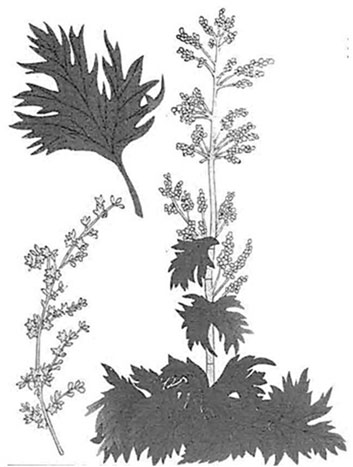
Figure 2. Attached illustration of Rheum palmatum in “Illustrated Manual of Materia Medica (Honzo Zufu: 本草図譜)” (Iwasaki, 1830a).
3.2 Plants related to Rhubarb grown in Japan during the Edo period
Plants related to Rhubarb in Japan (Japanese rhubarb) could be classified into six types: cultivated rhubarb, yotei-rhubarb, do-rhubarb, toh-rhubarb, wa-rhubarb, and shin-rhubarb (Supplementary Table S1). Yotei (羊蹄) was presumably Rumex japonicus. Do (土) means soil. Toh (唐) is a Japanese adjective that means derived from continental China by respecting the Tang dynasty. Wa (和) means Japan, and shin (真) means true.
Both “Correction of Misunderstandings about Materia Medica (Honzo Bengi)” (Endo, 1681) and Honzo Wage (Masatsugu, 1712) stated that the original plant for Rhubarb grown in Japan did not coincide with the description of “Compendium of Materia Medica (Honzo Komoku in Japanese, 1596)” (Li, 2004). However, Toeki Hengyoku Honzo (Takada, 1683) stated that they were the same.
“Correction of Misunderstandings about Materia Medica (Honzo Bengi)” (Endo, 1681) stated that Japanese Rhubarb had the best fragrance, similar to Chinese Rhubarb. “Complete Book of Drug Processing (Hosha Zensho)” (Ino, 1702) described that the areas where Japanese rhubarb was cultivated were Yamato (part of present-day Nara prefecture), Yamashiro, and Tango (part of present-day Kyoto prefecture). “Secret Formulas of Materia Medica (Honzo Hiketsu)” (Author anonymous, 1826) stated that Japanese Rhubarb was the variety of Chinese Rhubarb called “brocade patterned Rhubarb”. “Investigation of Crude Drugs in Classical Prescriptions (Koho Yakuhin Ko)” (Naito, 1840) stated that this variety had been imported from continental China during the Kyoho era (1716–1736). “Explanations of Crude Drugs in Classical Prescriptions (Koho Yakusetsu)” (Ujita, 1795) stated that the plants from continental China were easy to grow in Japan. However, “Secret Formulas of Materia Medica (Honzo Hiketsu)” (Author anonymous, 1826) stated that the plants imported from continental China were a different species because they could not be grown in Japanese soil. Therefore, it is considered that the rhubarb that could be grown in Japan had been imported from continental China during the Kyoho era, but that this plant must be different from the original Chinese rhubarb. “Complete Book of Agriculture (Nogyo Zensho)” (Miyazaki, 1697) described that toh-rhubarb was cultivated at Yamashiro and other places, and that this type was the representative of Japanese rhubarb. It stated that the leaves of toh-rhubarb were round and thick, the stems were slightly red, similar to those of Farfugium japonicum (L.) Kitam., and the roots were similar to those of wa-rhubarb, but that the species of toh-rhubarb was different from wa-rhubarb.
“Recorded Hearings on Materia Medica (Honzo Kibun)”, written by Ono (n.d.), stated that Toh-Rhubarb was imported from continental China during the Kyoho era, which was similar to the description of Japanese Rhubarb. Meanwhile, “Explanations of Crude Drugs in Classical Prescriptions (Koho Yakusetsu)” (Ujita, 1795) stated that Do-Rhubarb had been mistakenly called Toh-Rhubarb. “Brief Compendium of Medicinal Herbs (Yakuso Rhakuhu)” (Kyakuika, 1793) described that the products derived from toh-rhubarb were similar to those from sambo.
“Correction of Misunderstandings about Materia Medica (Honzo Bengi)” (Endo, 1681) stated that yotei-rhubarb was grown at the riversides and in rice fields, and its Japanese common name is shinoko, gishigishi, or no-rhubarb. “Explanation and Commentary on Records of Medicinal Properties (Yakushoki Benkai)” (Okamoto, 1699) stated that yotei-rhubarb has long and slender leaves, had been mistakenly called as Rhubarb, and was also known as gishigishi. “Recorded Hearings on the Compendium of Materia Medica (Honzo Komoku Kibun)” written by Mizutani (n.d.), described that yotei-rhubarb was sometimes called ohoshi (large gishigishi), and resembles sambo, but was larger than sambo. “Illustrated Explanation of Plants (Somoku Zusetsu)” (Iinuma, 1856) depicted that the leaves of gishigishi were long, and its numerous small flowers were arranged in whorls, and its inflorescence had leaf-like bracts, which were consistent with the characteristics of Rumex japonicus (Figure 3a). Therefore, Yotei-Rhubarb refers to the root of gishigishi (Rumex japonicus), and its root was used as a substitute for Rhubarb.

Figure 3. Attached illustrations of gishigishi (a) and suiba (b) in “Illustrated Explanation of Plants (Somoku Zusetsu: 草木図説)” (Iinuma, 1856).
“Complete Book of Drug Processing (Hosha Zensho)” (Ino, 1702), Yakuro Honzo (Katsuki, 1727), and “Pocket Compendium of Essential Materia Medica (Shuchin Honzo Shun)” (Hirazumi, 1790) described that the majority of Rhubarb sold in drugstores was derived from the root of yotei-rhubarb. “Study of Crude Drugs for Daily Use (Nichiyo Yakuhinko)” (Shibata, 1810) stated that yotei-rhubarb had once been considered the original plant for Rhubarb, and that the Rhubarb appearing in the past prescriptions had been derived from the root of yotei-rhubarb. “Investigation of Crude Drugs in Classical Prescriptions (Koho Yakuhin Ko)” (Naito, 1840) stated that Yotei-Rhubarb should only be used externally.
“Elucidation of Compendium of Materia Medica (Honzo Komoku Keimo)” (Ono, 1805), “Augmented Edition of the Primer on the Palm (Zoho Shuhan Hatsumo)” (Fujii, 1823), “Illustrated Explanation of Plants (Somoku Zusetsu)” (Iinuma, 1856), and “Illustrated Manual of Materia Medica (Honzo Zufu)” (Iwasaki, 1830a) mentioned that do-rhubarb was the another name of karasunoabura. “Ippondo’s Selection of Crude Drugs (Ippondo Yakusen)” (Kagawa, 1738) stated that do-rhubarb has shorter, rounder, and larger leaves than yotei-rhubarb, similar to the leaves of the original plant for Rhubarb, but that its edges were not chipped and its color is not the same. “Secret Formulas of Materia Medica (Honzo Hiketsu)” (Author anonymous, 1826) stated that do-rhubarb was called ushinosita, and its leaves resembled those of Nicotiana tabacum L. (tobacco). The attached illustration of do-rhubarb in “Illustrated Manual of Materia Medica (Honzo Zufu)” (Iwasaki, 1830a) and “Illustrated Explanation of Plants (Somoku Zusetsu)” (Iinuma, 1856) depicted those characteristics (Figure 4).
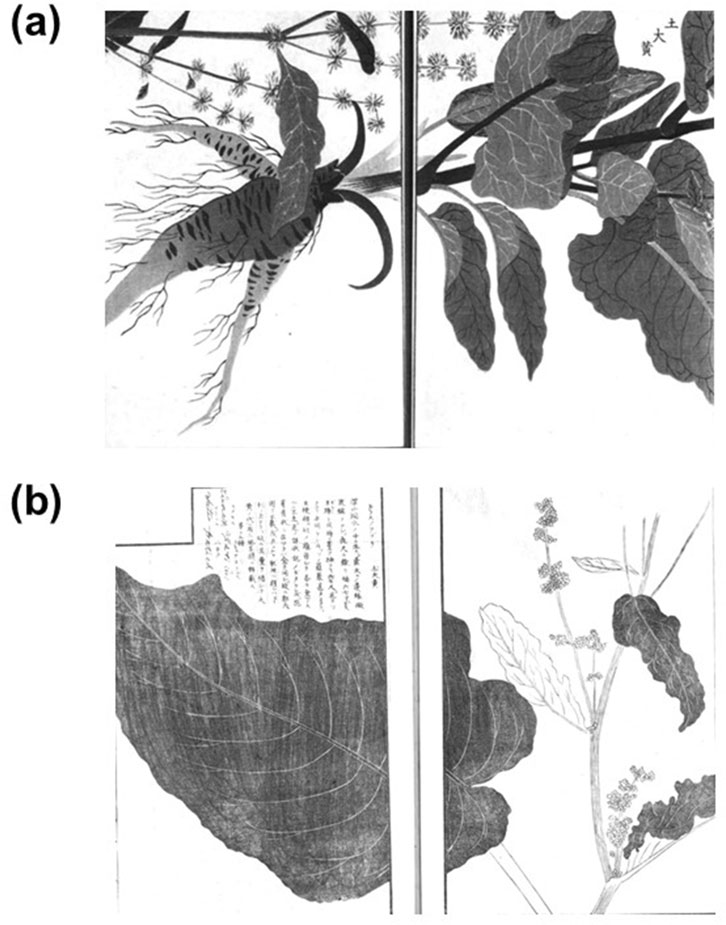
Figure 4. Attached illustrations of do-rhubarb in “Illustrated Manual of Materia Medica (Honzo Zufu: 本草図譜)” (Iwasaki, 1830a) (a) and “Illustrated Explanation of Plants (Somoku Zusetsu: 草木図説)” (Iinuma, 1856) (b).
“Correction of Misunderstandings about Materia Medica (Honzo Bengi)” (Endo, 1681) and “Complete Compendium of Materia Medica of Wide Benefit (Koeki Honzo Taisei)” (Okamoto, 1698) mentioned that do-rhubarb resembled Japanese rhubarb species, but the color was more reddish, and that the Japanese common name of do-rhubarb was sambo. “Secret Formulas of Materia Medica (Honzo Hiketsu)” (Author anonymous, 1826) stated that sambo resembles Ricinus communis L. However, “Elucidation of Compendium of Materia Medica (Honzo Komoku Keimo)” (Ono, 1805) states that Li Shizhen, the author of “Compendium of Materia Medica (Honzo Komoku in Japanese, 1596)” (Li, 2004), had been incorrect in stating sambo was do-rhubarb, and that sambo had been known as suiba in Japanese (Rumex acetosa L.) and can be found in the aquatic plants section. The illustrated characteristics of suiba depicted in “Illustrated Explanation of Plants (Somoku Zusetsu)” (Iinuma, 1856) matched those of Rumex acetosa, having narrow, elongated leaves and branched, conical inflorescences (Figure 3b), suggesting that sambo and suiba are different plant species.
“Explanations of Crude Drugs in Classical Prescriptions (Koho Yakusetsu)” (Ujita, 1795) stated that do-rhubarb was sold in drugstores as Wa-Rhubarb, while “Compilation and Commentary on the Compendium of Materia Medica (Honzo Komoku Sanso)” (So, 1798) mentioned that wild Japanese rhubarb was not shin-rhubarb but do-rhubarb, revealing the confusion over the species names. Furthermore, “Newly Revised and Augmented Dutch Mirror of Medicine (Shintei Zoho Oranda Yakkyo)” (Udagawa, 1830) noted that unscrupulous merchants sold Do-Rhubarb mixed with yotei root, indicating that Do-Rhubarb was sometimes mixed with Yotei-Rhubarb.
“Ippondo’s Selection of Crude Drugs (Ippondo Yakusen)” (Kagawa, 1738) stated Do-Rhubarb was poor quality and should not be used. “Essential Knowledge for Using Medicines (Yoyaku Suchi)” (Matsuoka, 1726) noted that Do-Rhubarb had the same efficacies as that of Yotei-Rhubarb. “Illustrated Manual of Materia Medica (Honzo Zufu)” (Iwasaki, 1830a) stated that Do-Rhubarb also had a purgative effect. “Inquisitive Materia Medica (Shitsumon Honzo)” (Go, 1837) listed cooling and purging poison from whole body as the efficacies of Do-Rhubarb. “Illustrated Explanation of Plants (Somoku Zusetsu)” (Iinuma, 1856) noted that when using Do-Rhubarb in place of common Rhubarb, the dosage should be double. Therefore, the efficacies of Do-Rhubarb were similar but weaker than those of common Rhubarb.
“Minimumal 6 × 8 Materia Medica (Hengyoku Rokuhati Honzo)” (Kato, 1780) lists the original plants of wa-rhubarb as gishigishi, while “Illustrated Sino-Japanese Encyclopedia of the Three Realms (Wakan Sansai Zue)” (Terashima, 1824) lists it as yotei or suiba with large roots. “Study of Crude Drugs for Daily Use (Nichiyo Yakuhinko)” (Shibata, 1810) stated that most items sold as Wa-Rhubarb are actually Do-Rhubarb, the mixture of shaved Shin-Rhubarb and Do-Rhubarb. It also stated that Yotei-Rhubarb (No-Rhubarb) might be regarded as the low-quality product of Wa-Rhubarb. However, either Do-Rhubarb or Yotei-Rhubarb should not be used as common Rhubarb. Meanwhile, “Study of Japanese Rhubarb (Nihon Daioko)” (Shimizu, 1859) stated that wa-rhubarb is called ohoshi and is different from Chinese rhubarb. Therefore, Wa-Rhubarb referred to either products derived from gishigishi or suiba, Do-Rhubarb, or the mixture of shaved Shin-Rhubarb and Do-Rhubarb.
“Clarifying Confusions about Crude Drugs (Yakuhin Benwaku)” (Oguchi, 1754) stated that shin-rhubarb was derived from the Tang dynasty and was grown in Yamashiro, Yamato, and Tango areas. This description is similar to that of toh-rhubarb as mentioned above. While, “Investigation of Crude Drugs in Classical Prescriptions (Koho Yakuhin Ko)” (Naito, 1840) stated that shin-rhubarb refers to do-rhubarb. “Explanations of Crude Drugs in Classical Prescriptions (Koho Yakusetsu)” (Ujita, 1795) described that the leaves of shin-rhubarb resembled those of do-rhubarb and the roots of shin-rhubarb had a purple brocade pattern. “Elucidation of Compendium of Materia Medica (Honzo Komoku Keimo)” (Ono, 1805) noted that Shin-Rhubarb was not as good as the imported Rhubarb because they had not adapted to the Japanese soil, and that shin-rhubarb grown for more than 2 years had the same quality as Chinese rhubarb. “Compilation and Commentary on the Compendium of Materia Medica (Honzo Komoku Sanso)” (So, 1798) stated that due to the mild efficacies, Shin-Rhubarb should not be used in emergency situations. “Clarifying Confusions about Crude Drugs (Yakuhin Benwaku)” (Oguchi, 1754) stated that although imported Rhubarb had better quality, it was acceptable to use Shin-Rhubarb if imported Rhubarb from continental China was in short supply. These statements indicate that although Shin-Rhubarb was considered to have weaker efficiencies than imported Rhubarb, it was acceptable when imports were scarce.
Furthermore, the literature in this era generally stated that Shin-Rhubarb possessed the brocade pattern characteristic of common Rhubarb. However, the attached illustration in “Recorded Hearings on the Compendium of Materia Medica (Honzo Komoku Kibun)” written by Mizutani (n.d.) showed that Shin-rhubarb had a swirl-like pattern, while Wa-Rhubarb and Toh-Rhubarb did not display this pattern (Figure 5).
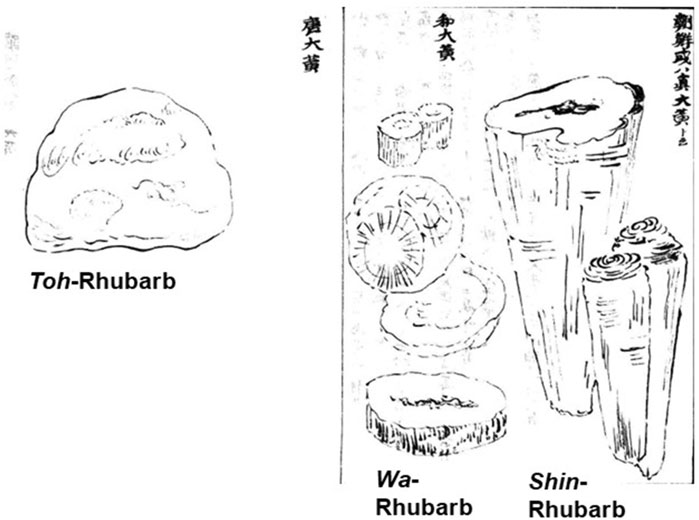
Figure 5. Attached illustrations of Toh-, Wa-, and Shin-Rhubarb in “Recorded Hearings on the Compendium of Materia Medica (Honzo Komoku Kibun: 本草綱目紀聞)” written by Mizutani (n.d.).
Both “Study of Crude Drugs for Daily Use (Nichiyo Yakuhinko)” (Shibata, 1810) and “Illustrated Manual of Materia Medica (Honzo Zufu)” (Iwasaki, 1830a) described that the other names for Shin-Rhubarb and Do-Rhubarb were Korean Rhubarb. “Study of Japanese Rhubarb (Nihon Daioko)” (Shimizu, 1859) stated that Rhubarb produced in Japan was the same as that imported from the Korean Peninsula in the past, hence it was called Korean rhubarb.
3.3 Rhubarb imported from continental China during the Edo period
Two types of Rhubarb were imported from continental China: Sogi- and Tsunagi- (Sengan-) Rhubarb (Supplementary Table S2). In “Illustrated Materia Medica (Zukai Honzo)” (Shimotsu, 1680), Sogi-Rhubarb was superior to Tsunagi-Rhubarb. “Correction of Misunderstandings about Materia Medica (Honzo Bengi)” (Endo, 1681) stated that Sogi-Rhubarb was the product made by cutting Rhubarb at an angle and then drying it, and that Tsunagi-Rhubarb was made by threading Rhubarb through a rope and drying it like a string of pearls, mentioning the difference in preparation methods. Both types of Rhubarb were painted in the illustrations of “Illustrated Sino-Japanese Encyclopedia of the Three Realms (Wakan Sansai Zue)” (Terashima, 1824) and “Recorded Hearings on the Compendium of Materia Medica (Honzo Komoku Kibun)” written by Mizutani (n.d.) (Figure 6). The perception that Sogi-Rhubarb was superior had remained largely unchanged until the early 18th century. However, “Augmented Edition of the Lingbao Medicinal Properties, Efficiency, and Toxicity (Zoho Reiho Yakusho Nodoku)” (Manase, 1698) regarded Tsunagi as superior. “Essential Knowledge for Using Medicines (Yoyaku Suchi)” (Matsuoka, 1726) stated that Sogi-Rhubarb was not true Rhubarb and was derived from yotei-rhubarb (gishigishi), and that Tsunagi-Rhubarb (Sengan-Rhubarb described in the ancient medicinal literature) was true Rhubarb. Namely, high-quality Rhubarb product was Sogi in the 17th century. By the 18th century, it had changed to tsunagi. Sogi-Rhubarb in the 18th century was derived from yotei-rhubarb (gishigishi).
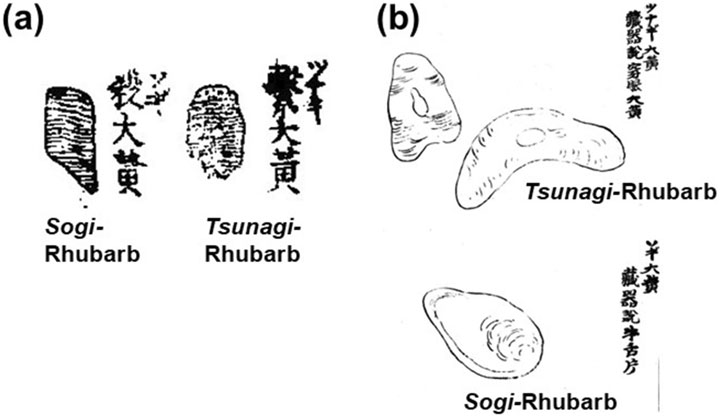
Figure 6. Attached illustrations of Sogi- and Tsunagi-Rhubarb in “Illustrated Sino-Japanese Encyclopedia of the Three Realms (Wakan Sansai Zue: 和漢三才図会)” (Terashima, 1824) (a) and “Recorded Hearings on the Compendium of Materia Medica (Honzo Komoku Kibun: 本草綱目紀聞)” written by Mizutani (n.d.) (b).
“Ippondo’s Selection of Crude Drugs (Ippondo Yakusen)” (Kagawa, 1738) described that since the cow’s tongue-like type of Rhubarb was produced in Japan while the brocade-patterned type was made in China, the cow’s tongue-like type was considered as made in Japan among the Sogi-Rhubarb. Furthermore, “Minimumal 6 × 8 Materia Medica (Hengyoku Rokuhati Honzo)” (Kato, 1780) stated that Sogi-Rhubarb derived from gishigishi must not be used.
In the 19th century, “Elucidation of Compendium of Materia Medica (Honzo Komoku Keimo)” (Ono, 1805) stated that Sogi-Rhubarb had once been imported, but no longer was. “Augmented Edition of the Primer on the Palm (Zoho Shuhan Hatsumo)” (Fujii, 1823), citing Dutch theory, stated that Sogi-Rhubab had originated from Chinese mountains, while sengan (tsunagi) had come from Russia, incorporating a European perspective.
3.4 Views on Rhubarb during the Meiji era (1868–1912)
The descriptions of Rhubarb during the Meiji era are summarized in Supplementary Table S3. “Recorded Hearings of Daily Lectures on Materia Medica” (Ermerins, 1878) stated that Russian Rhubarb was native to continental China and was considered the products with high-quality. The first textbook of pharmacognosy (Wigand, 1888) in Japan noted that Chinese Rhubarb was derived from Rheum officinale, distinct from what was called toh-rhubarb. Meanwhile, European rhubarb included both Rheum rhabarbarum and Rheum palmatum. “Practical Methods for Medicinal Identification” (Sano, 1889) stated that European Rhubarb was inferior in quality compared to Chinese Rhubarb. The Supplement to the Japanese Pharmacopoeia revised edition (Kashimura and Ise, 1891) noted that while the original plant for Chinese Rhubarb was once considered Rheum palmatum, Rheum officinale was the primary original species at that time. It also noted that Toh-Rhubarb was used by traditional Chinese medicine practitioners, but it was derived from a different type of Rheum plant that is typically rotten and softened. This book also described that although the characteristic actinocyte and medullary patterns of Rhubarb are unknown, common Rhubarb in Japan was considered distinct from Chinese Rhubarb. In the textbook of Pharmacognosy (Shimoyama, 1904), the original plant for Chinese Rhubarb was defined as two species, Rheum officinale and Rheum palmatum, while European Rhubarb no longer included descriptions of Rheum palmatum. This textbook also stated that Japanese Rhubarb produced in Tsugaru area was the best, which resembled Austrian Rhubarb and was likely derived from Rheum rhabarbarum, but that the original plants of Toh-Rhubarb had remained unknown—a description that had not been updated from previous editions.
As stated in the “Preface to the Complete Works of Yukichi Fukuzawa” (Fukuzawa, 1897), the importation of Chinese Rhubarb had ceased approximately seven or eight years ago, and the price of Rhubarb suddenly soared. Consequently, the utilization of Wa-Rhubarb resulted to treat the onset of gastrointestinal disorders. “Concise Pharmacognosy” (Shimazaki, 1909) described that the plant commonly referred to wa-rhubarb was Rumex japonicum or Rumex aquaticus, etc. Meanwhile, “Pocket Pharmacognosy” (Nishimura, 1911) suggested that wa-rhubarb might be Rheum rhabarbarum.
In 1896, Tomitaro Makino stipulated that do-rhubarb was Rumex madaio Makino, the species he had previously designated, and that it was synonymous with madaio (Makino designated shin-rhubarb as madaio) (Makino, 1896). Concurrently, the “General Flora of Great Japan” (Saita, 1897) identified do-rhubarb as the same madaio, but attributed its original species to Rumex aquaticus L. var. japonicus Meisn.
3.5 Views on Rhubarb during the Taisho era (1912–1926)
The descriptions of Rhubarb during the Taisho era are summarized in Supplementary Table S4. The “Complete Compendium of Modern Pharmacy” (Ito, 1913) stated that Japanese Rhubarb was derived from Rheum rhabarbarum and that produced in Tsugaru area had high quality. The “Cultivation and Marketing of Important Medicinal Plants” (Bandai, 1918) noted that rhubarb cultivated in Tsugaru area was referred to as toh-rhubarb. The “Annotated Complete Collection for Pharmacist Examination Questions and Answers” (Onda, 1918) suggested that the original species of Toh-Rhubarb might be Rheum rhabarbarum.
The fourth edition of the Japanese Pharmacopoeia (Nagao, 1924) listed the item name Toh-Rhubarb for the first time, but its origin was listed as the Chinese Rheum plant without specifying the species. Meanwhile, that books outside the Japanese Pharmacopoeia, such as “Cultivation of Medicinal Plants for New Drugs” (Matsuda, 1920) and “Concise Lectures for Drug Merchants” (Maruyama, 1923) stated that the original plant for Toh-Rhubarb was karadaio, namely Rheum rhabarbarum. Note that the Han-letter for karadaio is identical to that for Toh-Rhubarb; karadaio refers to the plant, while Toh-Rhubarb refers to the medicinal product (crude drug), making them homonyms for different substances. Regarding the effect of Toh-Rhubarb, “Materia Medica for Drug Merchants” (1923) (Koyama, 1923) stated Toh-Rhubarb was used as a laxative and stomachic. Practical Guide or the Fourth Edition of the Japanese Pharmacopoeia for Physicians with Prescriptions (Nagao, 1924) stated that Toh-Rhubarb had the same medicinal effects as common Rhubarb and was mainly used as a raw material for medicines. Furthermore, “Concise Lectures for Drug Merchants” (Hino, 1925) noted that Toh-Rhubarb contained the component emodin.
“Annotated Complete Collection for Pharmacist Examination Questions and Answers” (Onda, 1918) stated that Wa-Rhubarb was derived from Rumex daiwoo Makino. Meanwhile, “Cultivation of Medicinal Plants for New Drugs” (Matsuda, 1920) stated that Wa-Rhubarb was derived from Rheum rhabarbarum.
3.6 Views on Rhubarb during the Showa era (1926–1989)
The descriptions of Rhubarb during the Showa era are summarized in Supplementary Table S5. The Register of Domestic Products (Kokusanshinkokai, 1928) stated that Toh-Rhubarb and Wa-Rhubarb were the same products, but their original plants differed slightly. While many texts mention Rheum rhabarbarum as the original plant for Toh-Rhubarb, the Pharmacognosy textbook (Shimoyama, 1943) and the “Latest Classified Compilation of Pharmaceutical Products” (Yoshimatsu, 1947) described that Rheum rhabarbarum might not be the original plant for Toh-Rhubarb. Conversely, these texts distinguished Wa-Rhubarb as originating from Rheum rhabarbarum. During this period, the origin of Rheum rhabarbarum was recorded as Siberia. Subsequently, the Sixth Edition of the Japanese Pharmacopoeia (Japan Pharmaceutical Association, 1951) listed items derived from Rheum rhabarbarum as Wa-Rhubarb. The Seventh Edition (Pharmaceutical and Medical Device Regulatory Science Society of Japan, 1961) maintained this entry, but the Eighth Edition (Pharmaceutical and Medical Device Regulatory Science Society of Japan, 1971) removed Wa-Rhubarb from the list.
Regarding the medicinal effects of Toh-Rhubarb and Wa-Rhubarb, the “Supplementary Notes on Kampo Medicines” (Nakayama, 1929) stated that Westerners used Turkish Rhubarb as a laxative, but when Japanese used it, it caused severe abdominal pain, so Japanese must use Toh-Rhubarb. This suggests Toh-Rhubarb may have been better suited to the Japanese constitution. Meanwhile, “Makino’s Illustrated Flora of Japan” (Makino, 1940) stated that Toh-Rhubarb, meaning Chinese Rhubarb, was mistaken for true Rhubarb, i.e., Shin-Rhubarb; however, Toh-Rhubarb was not true Rhubarb and had no medicinal value. “Latest Classified Compilation of Pharmaceutical Products” (Yoshimatsu, 1947) indicated that Wa-Rhubarb was used as a substitute for Rhubarb or Toh-Rhubarb as a laxative or stomachic, but its laxative effect was considered the mildest among its counterparts, and that rhubarb grown in Nara Prefecture had a strong laxative effect; however, it had also been reported to cause abdominal pain. “Illustrated Guide to Medicinal Plants” (Murakoshi, 1952) stated that Wa-Rhubarb can be used as a substitute for true Rhubarb. A small amount of Wa-Rhubarb had been used to treat indigestion, while a large amount had been used as a laxative in powder or decoction form. The recommended daily dosage ranges from 2 to 4 g.
In “Medicinal Plants for Home Knowledge” (Kyushu Medicinal Plant Research Society, 1929), Do-Rhubarb was referred to as Shin-Rhubarb, and its original species was called karasunoabura, with its medicinal properties equivalent to common rhubarb. “Makino’s Illustrated Flora of Japan” (Makino, 1940) assigned the species Rumex daiwoo as do-rhubarb, stating that the species name ‘Daiwoo’ was based on the fact that it was once mistaken for medicinal rhubarb, which Japanese name meant ‘true rhubarb’ but it was originally misidentified and was not actually a true rhubarb. This book also described that while suggesting that the ohoshi mentioned in the Engishiki (the book describing about laws and customs in Japan published in 927) could be shin-rhubarb, the author refuted his own theory, stating it was unlikely to have been cultivated about 1,000 years ago.
“Studies on Japanese Medicines” (Shimizu, 1941) stated that Wa-Rhubarb was the root of Rheum rhabarbarum, and that Rumex daiwoo was used for a fake Toh-Rhubarb. In “Latest Classified Compilation of Pharmaceutical Products” (Yoshimatsu, 1947) stated that the roots of Rumex japonicus and Rumex acetosa were also treated as the origin of Rhubarb in Japan, but were said to cause severe abdominal pain.
3.7 Trends in the use of Rhubarb around the world and in Japan from the 16th to the 19th century
Table 3 summarizes global trends in Rhubarb from the 16th to the 19th century. In 1510, Portugal colonized Goa, India, and began using Rhubarb, one of the Indian medicines. Rhubarb was considered an effective remedy for constipation and diarrhea due to its purgative and astringent properties. Many European conscripts suffered from cholera and other gastrointestinal diseases; therefore, Rhubarb was very useful to the Portuguese (Walker, 2011). At the same period, Rhubarb was carried on Portuguese ships traveling from continental China to Japan as part of the Nanban trade (Oka, 2008). On the other hand, historical records indicate that Rhubarb was exported from continental China to Russia in 1568 and 1654, with the latter export being larger in volume (Romaniello, 2016). Records indicated that Rhubarb was exported from continental China to Japan in 1698 (Huang, 2004). However, by the late 17th century, Japan began promoting cultivation of the original plant of Rhubarb as part of efforts to domestically produce crude drugs (Xu, 2018). Although Rhubarb was imported from continental China during the 18th and 19th centuries (Miyashita, 2018), it was extremely expensive, forcing reliance on domestic substitutes. While there were records of Korean Rhubarb being imported in 1642 (Tashiro, 1999), imports had become rare after the 18th century (Iwanaga, 1800).

Table 3. Trends in the use of Rhubarb around the world and in Japan from the 16th to the 19th century.
Regarding the use of Rhubarb, Nicholas Culpeper of England noted in 1649 that boiling Rhubarb reduces its purgative effect. He also recommended soaking it in white wine overnight and drying it over a low heat. Thus, the knowledge that boiling weakens its laxative properties had reached England (Chang, 2005), though they employed different processing methods than those used in China.
4 Discussion
4.1 The original plant species for Rhubarb during the Edo period
Descriptions in medicinal literature from the Edo period indicated that there were two main types of rhubarb leaves: 1. round and broad, resembling paulownia leaves, and lacking serrations; 2. long and thick, resembling burdock leaves, and resembling yotei (Rumex japonicus). The attached illustration shows three leaf types: A. palmate leaves (Figures 1a,b); B. long leaves (Figure 1c); and C. wavy-edged leaves (Figures 1d–f). We selected plants native to China and Japan from Flora of China (Author anonymous, 1998) and the first edition of Makino’s Illustrated Flora (Makino, 1940) (Table 2) that were possibly used as the original plant for Rhubarb in Japan. We then compared these plants with descriptions in ancient medicinal literature. The results suggest that A is likely Rheum officinale, B is likely Rumex madaio, and C is likely Rheum rhabarbarum. Furthermore, based on the descriptions, classification 1 is most likely Rheum rhabarbarum, and classification 2 is most likely Rumex madaio. The predicted plant names are listed in Table 1.
The attached illustrations in “Illustrated Materia Medica (Zukai Honzo)” (Shimotsu, 1680) and “Complete Compendium of Materia Medica of Wide Benefit (Koeki Honzo Taisei)” (Okamoto, 1698) may be quoted from Chinese medicinal literature of “Compendium of Materia Medica (Honzo Komoku in Japanese, 1596)” (Li, 2004), and they coincide with the leaf shape of Rheum officinale, a plant used in China. On the other hand, the former text was a quotation from “Newly Revised Materia Medica (Shinshu Honzo in Japanese, 659)” (Su, 2013) and “Illustrated Classic of Materia Medica (Zukyo Honzo in Japanese, n.d.)” described in the “Materia Medica Arranged According to Pattern (Shorui Honzo in Japanese, 1108)” (Tang, 1971). The description of the leaves resembles yotei, and this literature also contained the description “sour.” It is unclear to which part of the plant this refers, but the petioles of the edible rhubarb (Rheum × hybridum) and the leaves of Rumex acetosa, are said to taste sour because they contain high levels of oxalic acid (Cojocaru et al., 2019; Korpelainen and Pietiläinen, 2020). Meanwhile, there are no reports of this for Rheum officinale. Although this is the plant considered to be the original plant species of Rhubarb in China, when compared with subsequent materia medica descriptions, it is similar to Rumex madaio. However, as there are no reports on the taste of Rumex madaio, it cannot be identified based on taste alone.
In “Illustrated Sino-Japanese Encyclopedia of the Three Realms (Wakan Sansai Zue)” (Terashima, 1824), the leaf shape depicted in the illustration and accompanying text resembles that of Rumex madaio. However, the yellow flower color is closer to that of Rheum rhabarbarum. In “Brief Compendium of Medicinal Herbs (Yakuso Rhakuhu)” (Kyakuika, 1793), written at the end of the 18th century, the flowers are described as reddish, which is a characteristic closer to that of Rumex madaio. Since plants in the Rheum genus are self-incompatible and easily produce hybrids, it is possible that Rumex madaio hybrids also began to exist around the end of the 18th century.
The plant’s morphology is described in detail in “Illustrated Manual of Materia Medica (Honzo Zufu)” (Iwasaki, 1830a), including the purple petioles and yellowish flowers, which coincide with those of Rheum rhabarbarum. The attached illustration clearly shows the flowers arranged in a whorl, confirming its identity as Rheum rhabarbarum. Furthermore, “Investigation of Crude Drugs in Classical Prescriptions (Koho Yakuhin Ko)” (Naito, 1840) depicts it more accurately, showing the wavy leaves and whorled flowers characteristic of Rheum rhabarbarum.
Meanwhile, “Illustrated Manual of Materia Medica (Honzo Zufu)” (Iwasaki, 1830a; Iwasaki, 1830b) introduces the third species, Rheum palmatum, noting that it has similar anti-diarrheal effects to the rhubarb commonly used today. This suggests that Rheum palmatum, also known as medicinal rhubarb, was likely used as a substitute at that time. Additionally, the description in the Dutch text cited by “Illustrated Manual of Materia Medica (Honzo Zufu)” (Iwasaki, 1830b), which stated that the Russian variety resembled the Chinese one in shape but had serrated edges like crepe mustard, is believed to refer to Rheum palmatum. This indicates that, at the time, it was believed that Rheum palmatum was Russian, not Chinese, in origin.
Thus, it can be inferred that, until the late 18th century, two species—Rumex madaio and Rheum rhabarbarum—were recognized as rhubarb in Japan. Thereafter, only Rheum rhabarbarum was designated as rhubarb. Conversely, since Rheum palmatum was identified as Russian rhubarb, it is unlikely that it was ever considered true Chinese rhubarb.
4.2 The original plant species for Rhubarb grown in Japan during the Edo period
Li Shizhen wrote do-rhubarb was sambo in “Compendium of Materia Medica (Honzo Komoku in Japanese, 1596)” (Li, 2004). The Japanese mistakenly interpreted this as referring to suiba (Rumex acetosa). The character “酸” (sam in Japanese, which means sour taste) in sambo (酸模) suggests sourness. It is possible that they perceived it as suiba, whose leaves are sour. Consequently, some texts identified do-rhubarb as suiba. However, the attached illustrations of do-rhubarb in “Illustrated Manual of Materia Medica (Honzo Zufu)” (Iwasaki, 1830a) and “Illustrated Explanation of Plants (Somoku Zusetsu)” (Iinuma, 1856) depicted leaves that were round and broad with small, spaced-apart flowers arranged in whorls. This morphology coincides with that of Rumex madaio, which was later named by Tomitaro Makino (Makino, 1896). Assuming do-rhubarb refers to Rumex madaio, there is no contradiction with the description in “Secret Formulas of Materia Medica (Honzo Hiketsu)” (Author anonymous, 1826) leaves resembling those of Nicotiana tabacum. Do-rhubarb likely referred to Rumex madaio, but the original plant remained unknown due to the absence of Japanese name at the time and its sale under an incorrect name in drugstores. However, this investigation could not determine what is sambo, said to resemble Ricinus communis.
4.3 The original plant species for Toh-, Wa-, and Shin-Rhubarb during the Edo period
The original plant species for Toh-, Wa-, and Shin-Rhubarb are summarized in Table 4. Some literature stated that the original plant of Rhubarb cultivated in Japan was imported from continental China. “Recorded Hearings on Materia Medica (Honzo Kibun)”, written by Ono (n.d.), provides a similar description of toh-rhubarb. This suggests that, since the Chinese pronunciation at the time was “Tang” (read as “Toh” in Japanese), the rhubarb introduced from continental China was named “toh-rhubarb.” Since Rheum rhabarbarum is native to continental China, the rhubarb introduced from China was probably this species. The description of toh-rhubarb in “Complete Book of Agriculture (Nogyo Zensho)” (Miyazaki, 1697) mentioned leaves that were round and thick, resembling Farfugium japonicum, and stems that were slightly red. These characteristics coincide with those of Rheum rhabarbarum and present no contradiction. However, according to Kinoshita’s opinion (Kinoshita, 2015), the first rhubarb introduced to Japan was Rheum rhaponticum. Since the stems of Rheum rhaponticum are not red like those of Rheum rhabarbarum (Makino, 1940; Libert and Englund, 1989; Author anonymous, 1998), we concluded that the rhubarb introduced to Japan was derived from the latter species.

Table 4. The summary of original plant species used as To-, Wa-, Shin- and Do-Rhubarb in Japan.
The term ‘wa-rhubarb’ can refer to any of the following three species, all of which are native to Japan: gishigishi (Rumex japonicus), suiba (Rumex acetosa), and do-rhubarb (Rumex madaio). This suggests that, in Japan, the term ‘wa-rhubarb’ referred to all rhubarb produced domestically, excluding imports from China.
In most Japanese medicinal literature, ‘shin-rhubarb’ and 'toh-rhubarb’ (Rheum rhabarbarum) refer to the same plant. This suggests that the rhubarb recognised in Japan was known as ‘shin’ ('true’ in Japanese) rhubarb. However, before Rheum rhabarbarum was widely cultivated in Japan, other large-leaved rhubarbs, namely Rumex madaio, were recognised as Japanese rhubarb, which likely caused some confusion.
Medicinal literature on the Edo period described Shin-Rhubarb as having a brocade pattern. The front illustration in “Recorded Hearings on the Compendium of Materia Medica (Honzo Komoku Kibun)” written by Mizutani (n.d.) and the only text to include an attached diagram, shows a pattern that resembles swirling lines. It is possible that this pattern was referred to as ‘brocade’. However, the pattern is unclear and absent from the larger illustration in the background. Furthermore, the Toh-Rhubarb illustration also lacks this pattern. This suggests that the type of brocade pattern associated with Rhubarb was not well understood in Japan at that time.
4.4 The medicinal effects of Toh-, Wa-, Shin-, Do-, and Yotei-Rhubarb during the Edo period
Japanese Rhubarb was highly prized for its aroma and potent medicinal properties, especially for healthy people during the 17–18th centuries. In contrast, Yotei-Rhubarb was considered an inferior substitute. Do-Rhubarb had a mild laxative effect, and Shin-Rhubarb was also less potent than Chinese Rhubarb. Therefore, the Japanese Rhubarb that was considered to have strong medicinal effects in Japan at that time is not thought to be Yotei-, Do-, or Shin- Rhubarbs. However, since the original plant of Shin-Rhubarb was confused with either Rheum rhabarbarum or Rumex madaio, it is possible that only the former was considered high quality. On the other hand, Rumex plants have long been valued in folk medicine in Asia, America, and Europe. They have been used as hemostatic, diuretic, and laxative agents. Furthermore, since Rumex plants have been reported to contain compounds similar to those found in common Rhubarb, such as anthraquinones, flavonoids, tannins, and stilbenes (Li et al., 2022), treating them as Rhubarb was not incorrect despite their potency.
“Ippondo’s Selection of Crude Drugs (Ippondo Yakusen)” (Kagawa, 1738) stated that although Chinese Rhubarb had been intensely dried using fire, it still had a stronger purgative effect than Japanese Rhubarb, and that Chinese Rhubarb was better for its purgative action than Japanese Rhubarb. This literature also described that Japanese Rhubarb was better for reducing blood stasis and joint toxicity without causing severe diarrhea, even when taken long-term. It had a milder effect, making it suitable for weak people, as it cures the patient without necessarily causing purgation. In other words, Rhubarb was probably more highly valued in Japan for its ability to reduce blood stasis than for its strong laxative effect. However, this is the only Japanese medicinal literature that mentions reducing blood-stasis properties of Japanese Rhubarb; others only discuss its laxative properties and compare different types of Rhubarb. Since Japan mainly used products derived from Rheum rhabarbarum, it can be inferred that a strong laxative effect was not required. Additionally, since the Rheum rhabarbarum used in Japan had a naturally weak laxative effect, further heating was likely unnecessary. This is thought to be the reason why Rhubarb processing had not become widespread in Japan.
As mentioned in “Supplementary Notes on Kampo Medicines” (Nakayama, 1929), written in the Showa era, the type of Rhubarb that does not cause abdominal pain may have been well-suited to the Japanese constitution. Furthermore, while the reducing blood-stasis properties of Rhubarb derived from Rheum rhabarbarum are highly valued in Korea, Rhubarb with these properties appears to have been used in Japan since ancient times.
“Ippondo’s Selection of Crude Drugs (Ippondo Yakusen)” (Kagawa, 1738) stated that Japanese Rhubarb was suitable for weak individuals. However, other literature suggested that its potent effects made it unsuitable for healthy people, resulting in conflicting descriptions. The latter may simply have intended to assert the superiority of Japanese Rhubarb over Chinese varieties, but the reason for this remains unclear.
4.5 The reason Rheum rhabarbarum was introduced to Japan
The earliest recorded cultivation of a plant believed to be Rheum rhabarbarum in Japan was referenced in “Complete Book of Agriculture (Nogyo Zensho)” (Miyazaki, 1697). Although the literature published in the 19th century stated that this plant was introduced during the Kyoho era (1716–1736) (Naito, 1840), it had actually been present in Japan prior to that time. In continental China, the rhizome of Rheum palmatum and Rheum officinale were the major species used, but the rhizome of Rheum rhabarbarum was also used as folk medicine in the Provinces of Qinghai and Gansu (Namba et al., 1989). Furthermore, the rhizome of Rheum rhabarbarum was also used in the Korean Peninsula. Therefore, two possibilities can be considered for the introduction of Rheum rhabarbarum to Japan.
1. Rheum rhabarbarum may have been imported from the Korean Peninsula.
2. Rheum rhabarbarum may have been mistakenly imported from continental China as the original plant of true Rhubarb.
Regarding point (1), the records show that Rhubarb was imported from the Korean Peninsula in 1642 (Tashiro, 1999), which was just before the publication of “Complete Book of Agriculture (Nogyo Zensho)” (Miyazaki, 1697). Later, Rhubarb produced in Japan and shin-Rhubarb were sometimes referred to as 'Korean Rhubarb’, which also coincided with the imported variety from the Korean Peninsula. However, as Rhubarb was presented to the general, it is unlikely that its use spread widely throughout Japan.
Regarding (2), Chinese Rhubarb was imported into Japan in the 17th century as Sogi- and Tsunagi-Rhubarb. A variety of rhubarb cultivated in Japan was already referred to as toh-rhubarb at this time, meaning that products derived from Rheum rhabarbarum must have been introduced even earlier. Additionally, there are records of Portuguese ships bringing Rhubarb from continental China to Japan via the Nanban trade (Oka, 2008). These records noted that Rhubarb was plentiful in continental China and that exporting it to Japan doubled its price, suggesting a profit motive. Therefore, if financial gain was the goal, it would not be surprising if the wrong type of Rhubarb had been introduced.
At the same time, Portugal had colonised India and realised that true Rhubarb, derived from Rheum palmatum, was an extremely useful medicinal product for soldiers suffering from diseases such as cholera (Walker, 2011). Therefore, it seems unlikely that they would have sold it purely for profit. This suggests that Rheum rhabarbarum was most likely introduced from continental China via the Nanban trade. Furthermore, although the plant seeds would be required for the cultivation, as mentioned in “Classification and Appraisal of Things (Butsurui Hinshitsu)” (Hiraga, 1763), this plant germinates poorly from seed and is usually propagated by root division. Therefore, if some of the imported rhubarb roots were not completely dried, it might have been possible to produce seedlings.
Regarding Sogi- and Tsunagi- (Sengan-) Rhubarb, which had been imported from continental China since the 17th century, Sogi was considered the higher quality variety in the 17th century. However, by the late 18th century, Tsunagi had replaced it as the preferred variety, and Sogi was no longer available on the market. The reason for this shift was that high-quality Sogi ceased to be imported from continental China. Consequently, yotei (gishigishi) began to be processed into the same shape and sold as Sogi in Japan. Once this practice was recognised as counterfeit, Tsunagi came to be regarded as the superior product, resulting in a change to the standard of quality. Therefore, it can be inferred that Chinese Sogi disappeared from the market around the beginning of the 18th century, rather than at the end.
From the 16th century onward, rhubarb derived from the Chinese species Rheum palmatum spread throughout Europe via Russia and other routes. However, Japan began shifting towards producing Rhubarb domestically around the late 17th century. This occurred just before Chinese-produced Sogi disappeared from the market. The Rhubarb derived from Rheum rhabarbarum, which had been introduced to Japan earlier, was cultivated and regarded as Japanese Rhubarb. In contrast, the use of Rhubarb derived from Rheum palmatum had been very limited. Consequently, even after the introduction of Dutch medicine, Rhubarb derived from Rheum palmatum was referred to as “Russian Rhubarb,” suggesting that it was not considered the true Chinese Rhubarb.
On the other hand, since Rhubarb derived from Rheum palmatum was introduced to Japan from Europe during the adoption of Dutch medicine, it is thought that its use replaced Western medical laxatives. The Rhubarb preserved in the Shosoin repository was believed to be either Rheum palmatum or Rheum tanguticum, suggesting that true Rhubarb was imported to Japan at that time. However, the Rhubarb mainly used in Japan during the Edo period was derived from Rheum rhabarbarum. Therefore, it is possible that Rhubarb derived from Rheum palmatum traveled from continental China to Europe via Russia and then returned to Japan when Dutch medicine was introduced.
4.6 The original plant species of Rhubarb during the Meiji era
During the Meiji era, detailed descriptions of the characteristics of Rhubarb from various regions were provided. In the late 19th century, Russian Rhubarb was considered a high-quality variety originating from China; however, the original plant was not specified, suggesting that its origin was unknown. In the first textbook on Pharmacognosy translated by Gendo Oi in 1888 (Wigand, 1888), the origin of Chinese Rhubarb was identified as Rheum officinale, while Rheum palmatum and Rheum rhabarbarum were classified as European. By 1904, the pharmacognosy textbook (Shimoyama, 1904) stated that Chinese Rhubarb originated from two species: Rheum officinale and Rheum palmatum. This suggests that, during the early Meiji era, Rheum palmatum had not yet been recognized as the origin of Chinese Rhubarb. Since Rheum palmatum was transmitted from continental China to Russia and Europe, it is highly probable that Russian Rhubarb also referred to the product derived from Rheum palmatum.
Rheum rhabarbarum is native to Europe and was considered to be of inferior quality compared to the Chinese variety. Toh-rhubarb had been first described as Rheum rhabarbarum in the botanical literature published in 1897 (Saita, 1897), but subsequent references stated that the original plant was unknown. The pharmacognosy textbook (Shimoyama, 1904) suggested that rhubarb cultivated in Japan might be Rheum rhabarbarum. This implies that recognizing that European species Rheum rhabarbarum could not be the same as toh-rhubarb, led to the original species being designated as unknown. At the same time, it was suggested that the cultivated Japanese species, wa-rhubarb, might be Rheum rhabarbarum. This resulted in the two products derived from toh- and wa-rhubarb being treated as distinct.
Furthermore, the Supplement to the Japanese Pharmacopoeia Revised Edition (Kashimura and Ise, 1891) stated that Toh-Rubarb is rotten and softened, lacking brocade patterns. As mentioned above, this suggests that the nature of the brocade patterns themselves may not have been understood during the Edo period. It can also be inferred that Toh-Rhubarb was perceived as inferior in the Meiji era.
The “Preface to the Complete Works of Yukichi Fukuzawa” (Fukuzawa, 1897) mentioned gastrointestinal disorders caused by Wa-Rhubarb. This is likely because it was made from plants outside the Rheum genus, such as Rumex japonicus and Rumex aquaticus. For the aforementioned reasons, however, Rhubarb made in Japan derived from Rheum rhabarbarum had come to be called Wa-Rhubarb, which differs from Wa-Rhubarb in the Edo period (Table 4).
As the plant do-rhubarb did not have another common Japanese name, Tomitaro Makino gave it the Japanese common name madaio in 1896, along with the Latin name Rumex madaio (Makino, 1896). Madaio (真大黄) is an alternative reading of shin-rhubarb in Japanese. Specifically, he seemed to have considered do-rhubarb, a Japanese plant used as the origin of Rhubarb, to be shin-rhubarb. However, this study clarifies that, after the cultivation of toh-rhubarb became widespread, shin-rhubarb referred to toh-rhubarb. Therefore, it can be concluded that his designation was based on the prior theory, before the cultivation of toh-rhubarb became widespread.
4.7 The original plant species of Rhubarb during the Taisho era
During the Taisho era, many publications began attributing to toh-rhubarb to Rheum rhabarbarum. However, the fourth edition of the Japanese Pharmacopoeia (1920) (Choyokai Co, 1920) specified the original plant as a Chinese species of the genus Rheum. The official Pharmacopoeia appears to have avoided specifying plants with ambiguous origins. Some literature applied Rheum rhabarbarum to wa-rhubarb, while others applied Rumex madaio (Table 4). This suggests that wa-rhubarb, meaning Japanese rhubarb, was applied to the plant other than Rumex japonicus (gishigishi) and Rumex acetosa (suiba), both of which are unsuitable for use as the origin of Rhubarb.
4.8 The original plant species of Rhubarb during the Showa era
During the Showa era, there was a trend to return to the Meiji era’s definition of Rheum rhabarbarum as Japanese Rhubarb (Wa-Rhubarb) rather than Toh-Rhubarb, which was used by Kampo physicians during the Edo period. The Sixth and Seventh Editions of the Japanese Pharmacopoeia (Japan Pharmaceutical Association, 1951; Pharmaceutical and Medical Device Regulatory Science Society of Japan, 1961) no longer listed Toh-Rhubarb; instead, they designated Rheum rhabarbarum-derived products as Wa-Rhubarb (Table 4). However, subsequent editions omitted listing altogether. This may have been an attempt to acknowledge that Rheum rhabarbarum was cultivated in Japan, while denying the implication that the medicinal efficacy of Rhubarb could not be expected if the Toh-Rhubarb used in Japanese Kampo medicine was derived from Rheum rhabarbarum. In Tomitaro Makino’s Illustrated Flora of Japan (Makino, 1940), he asserted that Toh-Rubarb, derived from Rheum rhabarbarum, was not true Rhubarb and had no medicinal value. However, while Korean physicians used Rhubarb derived from Rheum rhabarbarum, Japanese physicians may not have recognized this practice. Nevertheless, Rheum rhabarbarum appears to have little value in modern Japanese medicine and was likely excluded from the Japanese Pharmacopoeia. This indicates that the focus of rhubarb in Japan has shifted towards its laxative properties.
Tomitaro Makino also revised the Latin name that he had previously given to Rumex madaio, changing it to Rumex daiwoo. This emphasised that the species had previously been mistakenly identified as the origin of Rhubarb, which is also written as daiwoo in Japanese. He also stated that Rumex madaio might have been cultivated about 1,000 years ago. However, our present study revealed it was probably not a cultivated variety, but rather a native Japanese species, similar to Rumex japonicus (gishigishi) and Rumex acetosa (suiba).
5 Conclusion
During the Edo period in Japan, Rumex madaio, a plant that grows wild in Japan, was initially recognized as the original plant for Rhubarb. However, our present study indicates that, after Rheum rhabarbarum was imported from China in the 16th century, it was cultivated as the true origin of Rhubarb. Since Rhubarb derived from Rheum rhabarbarum has weak laxative effects, it is reasonable to infer that strong laxative effects were not anticipated in Japan at that time. Meanwhile, Rhubarb derived from Rheum palmatum was known in Japan as Russian Rhubarb. Rheum palmatum spread from continental China to Europe via Russia and was believed to have been introduced to Japan as a laxative when Dutch medicine had been introduced.
Since the Meiji era, the use of Rhubarb during the Edo period had been re-evaluated, and Rhubarb produced in Japan had been included in the Japanese Pharmacopoeia. However, the literature in Meiji era were reluctant to acknowledge that the Rhubarb used by Kampo physicians was derived from Rheum rhabarbarum. As a result, the three types of Rhubarb had been distributed separately. The first was common Rhubarb derived from Rheum palmatum used in modern medicine; the second was used by Kampo physicians referring to Toh-Rhubarb; the third was Wa-Rhubarb produced in Japan derived from Rheum rhabarbarum. It is thought that, consequently, the names for Rhubarb differed after the Meiji era from those used during the Edo period.
Data availability statement
The original contributions presented in the study are included in the article/Supplementary Material, further inquiries can be directed to the corresponding author.
Author contributions
MO: Methodology, Writing – original draft, Conceptualization, Resources, Visualization, Project administration, Investigation. TM: Resources, Writing – review and editing, Validation.
Funding
The author(s) declared that financial support was received for this work and/or its publication. This study was partially supported by grants from the Japan Society for the Promotion of Science (Grant-in-Aid for Scientific Research (C), 22K07425, 2022). The author(s) declared that this work received funding from Tsumura & Co. and Kobayashi Pharmaceutical Co., Ltd. (grant support to TM). The funders were not involved in the study design, collection, analysis, interpretation of data, the writing of this article, or the decision to submit it for publication.
Conflict of interest
The author(s) declared that this work was conducted in the absence of any commercial or financial relationships that could be construed as a potential conflict of interest.
The author TM declared that he was an editorial board member of Frontiers at the time of submission. This had no impact on the peer review process and the final decision.
Generative AI statement
The author(s) declared that generative AI was not used in the creation of this manuscript.
Any alternative text (alt text) provided alongside figures in this article has been generated by Frontiers with the support of artificial intelligence and reasonable efforts have been made to ensure accuracy, including review by the authors wherever possible. If you identify any issues, please contact us.
Publisher’s note
All claims expressed in this article are solely those of the authors and do not necessarily represent those of their affiliated organizations, or those of the publisher, the editors and the reviewers. Any product that may be evaluated in this article, or claim that may be made by its manufacturer, is not guaranteed or endorsed by the publisher.
Supplementary material
The Supplementary Material for this article can be found online at: https://www.frontiersin.org/articles/10.3389/fphar.2025.1726521/full#supplementary-material
References
Author anonymous, (1826). Secret formulas of materia medica (Honzo hiketsu: 本草秘訣). Tokyo: National Diet Library Digital Collections, 2–3. Available online at: https://dl.ndl.go.jp/pid/2558004.
Bandai, T. (1918). Cultivation and marketing of important medicinal plants (重要薬草栽培と其販売法). Tokyo: National Diet Library Digital Collections, 22–24. Available online at: https://dl.ndl.go.jp/pid/931634.
Chang, C. C., and Barrett, P. (2005). Origins of a misunderstanding: the qianlong Emperor's embargo on rhubarb exports to Russia, the scenario and its consequences. Asian Med. 1, 335–354. doi:10.1163/157342105777996674
Choi, H. K., Kim, K. H., Seo, Y. T., Yook, C. S., and Jang, Y. P. (2011). Quantitative analysis of sennoside A and anthraquinones for the guideline for the quality control of rhubarbs. Korean J. Pharmacog. 42, 144–148.
Choyokai Co (1920). The Japanese Pharmacopoeia. Fourth Edition. Tokyo: National Diet Library Digital Collections, 148. Available online at: https://dl.ndl.go.jp/pid/931676.
Cojocaru, A., Munteanu, N., Petre, B. A., Stan, T., Teliban, G. C., Vintu, C., et al. (2019). Biochemical and production of rhubarb under growing technological factors. Rev. Chim. 70, 2000–2003. doi:10.37358/RC.19.6.7263
Editors of Flora of China, Chinese Academy of Sciences, (1998). “Rheum L.,” in Flora of China. Peking: Science Press, 166–209.
Endo, G. (1681). Correction of misunderstandings about materia medica (Honzo bengi: 本草弁疑). Tokyo: National Diet Library Digital Collections. Available online at: https://dl.ndl.go.jp/pid/2557651.
Ermerins, J. (1878). Recorded hearing of dialy lectures on materia medica (薬物学 日講紀聞) Transrated by Mise, M. Tokyo: National Diet Library Digital Collections, 14–16. Available online at: https://dl.ndl.go.jp/pid/837744.
Fujii, K. (1823). Augmented edition of the primer on the palm (Zoho shuhan hatsumo: 増補手板発蒙). Kyoto: Kyoto University Rare Materials Digital Archive, 2. Available online at: https://rmda.kulib.kyoto-u.ac.jp/item/rb00003037.
Fukuzawa, Y. (1897). Preface to the complete works of yukichi fukuzawa (福澤全集緒言). Tokyo: National Diet Library Digital Collections, 18. Available online at: https://dl.ndl.go.jp/pid/1083585.
Go, K. (1837). Inquisitive materia medica (Shitsumon honzo: 質問本草). Tokyo: National Diet Library Digital Collections, 34–35. Available online at: https://dl.ndl.go.jp/pid/2556214.
Hino, G. (1925). Concise lectures for drug merchants (薬業講習書). Tokyo: National Diet Library Digital Collections, 67–68. Available online at: https://dl.ndl.go.jp/pid/922699.
Hiraga, K. (1763). Classification and appraisal of things (Butsurui hinshitsu: 物類品隲). Tokyo: National Diet Library Digital Collections, 27. Available online at: https://dl.ndl.go.jp/pid/2555267.
Hirazumi, S. (1790). Pocket compendium of essential materia medica (Syuchin honzo shun: 袖珍本草雋). Tokyo: National Diet Library Digital Collections, 122–124. Available online at: https://dl.ndl.go.jp/pid/2536830.
Huang, Q. (2004). The private trade between Japan and China from the middle ming to the beginning of qing dynasty. Bull. Inst. Orient. Occid. Stud. Kansai Univ. 37, 85–116.
Iinuma, C. (1856). Illustrated explanation of plants (Somoku zusetsu: 草木図説). Tokyo: National Diet Library Digital Collections, 33–36. Available online at: https://dl.ndl.go.jp/pid/2558241.
Ino, N. (1702). Complete book of drug processing (Hosha zensho: 炮炙全書). Tokyo: National Diet Library Digital Collections, 37. Available online at: https://dl.ndl.go.jp/pid/2556035.
Ishidoya, T. (1925). Research on the source plants of Korean herbal medicines (朝鮮産漢方薬ノ原植物ニ関スル研究). Bull. Pharm. Soc. Korea (朝鮮薬学会会報) 5, 152.
Ito, H. (1913). Complete compendium of modern pharmacy (最新薬学全書). Tokyo: National Diet Library Digital Collections, 30–31. Available online at: https://dl.ndl.go.jp/pid/931567.
Iwanaga, K. (1800). Revised, supplemented and excerpted edition of the elucidation of the compendium of materia medica (Zhushu honzo komoku keimo zouho shoroku: 重修本草綱目啓蒙増補抄録). Tokyo: National Diet Library Digital Collections, 4–6. Available online at: https://dl.ndl.go.jp/pid/2558712.
Iwasaki, T. (1830a). Illustrated manual of materia medica (Honzo zufu: 本草図譜) a. Tokyo: National Diet Library Digital Collections, 4–8. Available online at: https://dl.ndl.go.jp/pid/1287131.
Iwasaki, T. (1830b). Illustrated manual of materia medica (Honzo zufu: 本草図譜) b. Tokyo: National Diet Library Digital Collections, 4–7. Available online at: https://dl.ndl.go.jp/pid/2558018.
Japan Pharmaceutical Association (1951). The Japanese Pharmacopoeia. Sixth Edition. Tokyo: Japan Pharmaceutical Association, 369–370.
Kagawa, S. (1738). Ippondo's selection of crude drugs (Ippondo yakusen: 一本堂薬選). Tokyo: Japan Pharmaceutical Association, 54–56. Available online at: https://dl.ndl.go.jp/pid/2556221.
Kashimura, K., and Ise, J. (1891). Supplement to the Japanese pharmacopoeia revised edition (改正日本薬局方随伴). Tokyo: National Diet Library Digital Collections, 103–104. Available online at: https://dl.ndl.go.jp/pid/837850.
Kato, K. (1780). Minimumal 6x8 materia medica (Hengyoku rokuhachi honzo: 片玉六八本草). Tokyo: National Diet Library Digital Collections, 108–111. Available online at: https://dl.ndl.go.jp/pid/2575936.
Katsuki, G. (1727). Medicine basket materia medica (Yakuro honzo: 薬籠本草). Tokyo: National Diet Library Digital Collections, 38–41. Available online at: https://dl.ndl.go.jp/pid/2557070.
Kokusanshinkokai (1928). Register of domestic products (国産台帳). Tokyo: National Diet Library Digital Collections, 152–153. Available online at: https://dl.ndl.go.jp/pid/1188697.
Kinoshita, T. (2015). Dictionary of crude drugs: historical edition of the Japanese Pharmacopoeia (歴代日本薬局方収載生薬大事典). Tokyo: Gaia Books, 236–238.
Kiyohara, S. (1827). Illustrated explanation of poisonous plants (Yudoku somoku zusetsu: 有毒草木図説). Tokyo: National Diet Library Digital Collections, 21. Available online at: https://dl.ndl.go.jp/pid/2556216.
Ko, S. K., Lee, S. M., and Whang, W. K. (1999). Anti-platelet aggregation activity of stilbene derivatives from Rheum undulatum. Arch. Pharm. Res. 22, 401–403. doi:10.1007/BF02979065
Korpelainen, H., and Pietiläinen, M. (2020). Sorrel (Rumex acetosa L.): not only a weed but a promising vegetable and medicinal plant. Bot. Rev. 86, 234–246. doi:10.1007/s12229-020-09225-z
Koyama, Y. (1923). Materia medica for drug merchants (薬種商薬物学). Tokyo: National Diet Library Digital Collections, 156. Available online at: https://dl.ndl.go.jp/pid/919195.
Kubo, M., Ko, S., Hiraba, K. I., Harima, S., Matsuda, H., and Kim, I. (1997). Study on anti-oketsu activity of rhubarb I. Pharmacological efficacy of rhubarb (Rheum undulatum L.) cultivated in Korea. J. Tradit. Med. 14, 234–244.
Kyakuika, S. (1793). Brief compendium of medicinal herbs (Yakuso rhakuhu: 薬草略譜). Tokyo: National Diet Library Digital Collections, 54. Available online at: https://dl.ndl.go.jp/pid/2535717.
Kyushu Medicinal Plant Research Society (1929). Medicinal plants for home knowledge (家庭須知薬用植物). Tokyo: National Diet Library Digital Collections, 152. Available online at: https://dl.ndl.go.jp/pid/1057198
Li, S. Z. (2004). Rpt. Compendium of materia medica (本草綱目) 2nd. People's Medicinal Publishing House: Beijing.
Li, J. J., Li, Y. X., Li, N., Zhu, H. T., Wang, D., and Zhang, Y. J. (2022). The genus Rumex (polygonaceae): an ethnobotanical, phytochemical and pharmacological review. Nat. Prod. Bioprospect. 12, 21. doi:10.1007/s13659-022-00346-z
Liang, W., Weimei, Z., Chen, Y., Sun, J., Guo, F., Hu, J., et al. (2022). Quality evaluation of different varieties of rhubarb based on multicomponents and bioactivity: application to quality control in the production of rhubarb decoction pieces. Biomed. Chromatogr. 36, 1–13. doi:10.1002/bmc.5368
Libert, B., and Englund, R. (1989). Present distribution and ecology of Rheum rhaponticum (Polygonaceae). Willdenowia 19, 91–98.
Makino, T. (1940). Illustrated flora of nippon, with the cultivated and naturalized plants by Tomitaro Makino (牧野日本植物図鑑), Tokyo, Hokuryukan 630–632.
Manase, G. (1698). Augmented edition of the lingbao medicinal properties, efficiency, and toxicity (Zoho reiho yakusho nodoku: 増補霊寳薬性能毒). Tokyo: Waseda University Library's collection of Japanese and Chinese classics, 8–12. Available online at: https://archive.wul.waseda.ac.jp/kosho/bunko31/bunko31_e1592/bunko31_e1592_0003/bunko31_e1592_0003.pdf.
Maruyama, F. (1923). Concise lectures for drug merchants (簡明薬種商講義). Tokyo: National Diet Library Digital Collections, 171–172. Available online at: https://dl.ndl.go.jp/pid/931707.
Masatsugu, S. (1712). Materia medica harmony and interpretation (Honzo wage: 本草和解). Tokyo: National Diet Library Digital Collections, 8–12. Available online at: https://dl.ndl.go.jp/pid/2557701.
Matsuda, H. (1920). Cultivation of medicinal plants for new drugs (新薬植物栽培). Tokyo: National Diet Library Digital Collections, 74–75. Available online at: https://dl.ndl.go.jp/pid/931664.
Matsuoka, G. (1726). Essential knowledge for using medicines (Yoyaku suchi: 用薬須知). Tokyo: National Diet Library Digital Collections, 22. Available online at: https://dl.ndl.go.jp/pid/2536607.
Miyashita, S. (2018). Manuscripts on imported drugs and kitchenwares the later Edo period. Bull. Inst. Orient. Occid. Stud. Kansai Univ. 28, 31–62.
Miyazaki, Y. (1697). Complete book of agriculture (Nogyo zensho: 農業全書). Tokyo: National Diet Library Digital Collections, 19–20. Available online at: https://dl.ndl.go.jp/pid/2558577.
Mizutani, T. (n.d.). Recorded hearings on the compendium of materia medica (Honzo komoku kibun: 本草綱目紀聞). Tokyo: National Diet Library Digital Collections, 5–9. Available online at: https://dl.ndl.go.jp/pid/2580162.
Moon, M. K., Kang, D. G., Lee, J. K., Kim, J. S., and Lee, H. S. (2006). Vasodilatory and anti-inflammatory effects of the aqueous extract of rhubarb via a NO-cGMP pathway. Life. Sci. 78, 1550–1557. doi:10.1016/j.lfs.2005.07.028
Murakoshi, M. (1952). Ilustrated guide to medicinal plants (薬用植物図説). Tokyo: National Diet Library Digital Collections, 27–28. Available online at: https://dl.ndl.go.jp/pid/2423405.
Nagao, O. (1924). The Japanese Pharmacopoeia fourth edition for physicians with prescriptions (処方添註医家用第四改正日本薬局方). Tokyo: National Diet Library Digital Collections, 313. Available online at: https://dl.ndl.go.jp/pid/931708.
Naito, H. (1840). Investigation of crude drugs in classical prescriptions (Koho yakuhin ko: 古方薬品考). Tokyo: National Diet Library Digital Collections, 122–124. Available online at: https://dl.ndl.go.jp/pid/2536679.
Nakayama, T. (1929). Supplementary notes on kampo medicines (漢方医学余談). Tokyo: National Diet Library Digital Collections, 82. Available online at: https://dl.ndl.go.jp/pid/2536679.
Namba, T., Wang, X., Mikage, M., and Lou, Z.-C. (1989). Pharmacognostical studies of Chinese crude drug Da-huang (rhubarb) (III). Some rheum species used as Chinese folk medicine (1). Shoyakugaku Zasshi 43, 109–120.
Nishimura, T. (1911). Pocket pharmacognosy (ポケット生薬学). Tokyo: National Diet Library Digital Collections, 33. Available online at: https://dl.ndl.go.jp/pid/837650.
Oguchi, Y. (1754). Clarifying Confusions About Crude Drugs (Yakuhin benwaku: 薬品弁惑). Tokyo: National Diet Library Digital Collections 16. Available online at: https://dl.ndl.go.jp/pid/2536583.
Oh, K. S., Ryu, S. Y., Kim, Y. S., and Lee, B. H. (2007). Large conductance Ca2+-activated K+ (BKCa) channels are involved in the vascular relaxations elicited by piceatannol isolated from Rheum undulatum rhizome. Planta Med. 73, 1441–1446. doi:10.1055/s-2007-990246
Oka, M. (2008). The commodity in the Nagasaki-Macau trade of the late sixteenth-century as seen through an analysis of documents in the Archivo de Indias in Sevilla. Bull. Hist. Inst. Univ. Tokyo 18, 48–69.
Okamoto, I. (1698). Complete compendium of materia medica of wide benefit (Koeki honzo taisei: 広益本草大成). Tokyo: National Diet Library Digital Collections, 20–23. Available online at: https://dl.ndl.go.jp/pid/2557115.
Okamoto, I. (1699). Illustrated explanation of poisonous plants (Yudoku somoku zusetsu: 薬性記弁解). Kyoto: Kyoto University Rare Materials Digital Archive, 62–64. Available online at: https://rmda.kulib.kyoto-u.ac.jp/item/rb00005434.
Onda, S. (1918). Annotated complete collection for pharmacist examination questions and answers. Seventh Edition (説明附薬剤師試験問題答案全集). Tokyo: National Diet Library Digital Collections, 252–254. Available online at: https://dl.ndl.go.jp/pid/931574.
Ono, R. (1805). Elucidation of compendium of materia medica (Honzo komoku keimo: 本草綱目啓蒙). Tokyo: National Diet Library Digital Collections, 4–6. Available online at: https://dl.ndl.go.jp/pid/2555480.
Ono, R. (n.d.). Recorded hearings on materia medica (Honzo kibun: 本草記聞). Tokyo: National Diet Library Digital Collections, 4–6. Available online at: https://dl.ndl.go.jp/pid/2556936
Oshio, H., Naruse, Y., and Tsukui, M. (1978). Quantitative analysis of the purgative components of rhubarb and senna. Chem. Pharm. Bull. 26, 2458–2464. doi:10.1248/cpb.26.2458
Pharmaceutical and Medical Device Regulatory Science Society of Japan (1961). The Japanese Pharmacopoeia. Seventh Edition. Tokyo: Hirokawa Publishing Company, 323–324.
Pharmaceutical and Medical Device Regulatory Science Society of Japan (1971). The Japanese Pharmacopoeia. Eighth Edition. Tokyo: Hirokawa Publishing Company.
Romaniello, M. P. (2016). True rhubarb? Trading Eurasian botanical and medical knowledge in the eighteenth century. J. Glob. Hist. 11, 3–23. doi:10.1017/S1740022815000327
Saita, K. (1897). General flora of great Japan (大日本普通植物誌). Tokyo: National Diet Library Digital Collections, 147. Available online at: https://dl.ndl.go.jp/pid/832549.
Sano, T. (1889). Practical methods for medicine identification (実用薬品鑑定法). Tokyo: National Diet Library Digital Collections, 82. Available online at: https://dl.ndl.go.jp/pid/837438.
Shibata, M. (1810). Study of crude drugs for daily use (Nichiyo yakuhin ko: 日用薬品考). Tokyo: Waseda University Library's Collection of Japanese and Chinese Classics, 51–52. Available online at: https://dl.ndl.go.jp/info:ndljp/pid/2536868.
Shibata, S. (1991). Supplement to the scientific investigation of the crude drugs stored in shosoin. II. J. Jap. Bot. 66, 70–75. doi:10.51033/jjapbot.66_2_8578
Shimazaki, K. (1909). Concise pharmacognosy (簡明生薬学). Tokyo: National Diet Library Digital Collections, 60–61. Available online at: https://dl.ndl.go.jp/pid/837391.
Shimizu, N. (1859). Study of Japanese rhubarb (Nihon daioko: 日本大黄考). Tokyo: National Diet Library Digital Collections. Available online at: https://dl.ndl.go.jp/pid/2536361.
Shimizu, T. (1941). Studies on Japanese medicines (国医薬物学研究). Tokyo: Hirokawa Publishing Company, 142–144.
Shimotsu, M. (1680). Illustrated Materia medica (Zukai honzo: 図解本草). Tokyo: National Diet Library Digital Collections, 5–8. Available online at: https://dl.ndl.go.jp/pid/2556850.
Shimoyama, Z. (1904). Pharmacognosy (生薬学). Sixth Edition. Tokyo: National Diet Library Digital Collections, 50–53. Available online at: https://dl.ndl.go.jp/pid/837458.
So, H. (1798). Compilation and commentary on the compendium of materia medica (Honzo komoku sanso: 本草綱目纂疏). Tokyo: National Diet Library Digital Collections, 6–7. Available online at: https://dl.ndl.go.jp/pid/2580137.
Su, J. (2013). Rpt. Newly revised materia medica (新修本草), 221. Taiyuan: Shaanxi People's Publishing House.
Takada, G. (1683). Materia medica of decoctions and precious fragments (Toeki hengyoku honzo: 湯液片玉本草). Tokyo: National Diet Library Digital Collections, 89. Available online at: https://dl.ndl.go.jp/pid/2536852.
Tang, S. W. (1971). Rpt. Classic classified materia medica of the daguan period (経史証類大観本草). Taipei: National Institute of Chinese Medicine, 283–285.
Tanhuanpää, P., Suojala-Ahlfors, T., and Hartikainen, M. (2019). Genetic diversity of Finnish home garden rhubarbs (rheum spp.) assessed by simple sequence repeat markers. Genet. Resour. Crop. Evol. 66, 17–25. doi:10.1007/s10722-018-0692-8
Tashiro, K. (1999). Research on the investigation of Korean medicinal materials in the Edo period (江戸時代朝鮮薬材調査の研究). Tokyo: Keio University Press.
Terashima, R. (1824). Illustrated sino-japanese encyclopedia of the three realms (Wakan sansai zue: 和漢三才図会). Tokyo: National Diet Library Digital Collections, 4–5. Available online at: https://dl.ndl.go.jp/pid/2569770.
The Society of Japanese Pharmacopoeia (2021). The Japanese Pharmacopoeia. Eighteenth Edition. Tokyo: Yakuji-Nippo.
Tsukui, M., Yamazaki, M., Toyosato, T., Matsuoka, T., and Fujimura, H. (1974). The biological assay of rhubarb. Yakugaku Zasshi 94, 1095–1100. doi:10.1248/yakushi1947.94.9_1041
Udagawa, S. (1830). Newly revised and augmented Dutch mirror of medicine (Shintei zoho oranda yakkyo: 新訂増補和蘭薬鏡). Tokyo: National Diet Library Digital Collections, 3–13. Available online at: https://dl.ndl.go.jp/pid/2555324.
Ujita, I. (1795). Explanations of crude drugs in classical prescriptions (Koho yakusetsu: 古方薬説). Tokyo: National Diet Library Digital Collections, 19–20. Available online at: https://dl.ndl.go.jp/pid/2556026.
Walker, T. (2011). “Stocking Colonial Pharmacies Commerce in South Asian Indigenous Medicines from their Native Sources in the Portuguese Estado da Índia,” in Networks in the first global age 1400–1800. Editor R. Mukherjee (New Delhi, India: Primus Press), 141–170.
Wigand, A. (1888). Pharmacognosy (生薬学), translated by Oi, G. Tokyo: National Diet Library Digital Collections, 43–46. Available online at: https://dl.ndl.go.jp/pid/837455.
Xu, W. (2018). Local regions involved in production and distribution of domestic crude drugs during the Edo period in Japan: the case of sendai Han. Jap. J. Hist. Pharm. 53, 91–101. doi:10.34531/jjhp.53.2_91
Yoo, M. Y., Oh, K. S., Lee, J. W., Seo, H. W., Yon, G. H., Kwon, D. Y., et al. (2007). Vasorelaxant effect of stilbenes from rhizome extract of rhubarb (Rheum undulatum) on the contractility of rat aorta. Phytother. Res. 21, 186–189. doi:10.1002/ptr.2042
Yoshimatsu, I. (1947). Latest classified compilation of pharmaceutical products (最新医薬品類聚). Tokyo: National Diet Library Digital Collections, 141–145. Available online at: https://dl.ndl.go.jp/pid/1045801.
Keywords: laxative effect, medicinal history, origin, Rheum palmatum, Rheum rhabarbarum, Rhubarb, Rumex madaio (Rumex daiwoo)
Citation: Ota M and Makino T (2026) Historical studies on the use of Rhubarb in Japan. Front. Pharmacol. 16:1726521. doi: 10.3389/fphar.2025.1726521
Received: 16 October 2025; Accepted: 04 December 2025;
Published: 10 February 2026.
Edited by:
Wei Li, Toho University, JapanCopyright © 2026 Ota and Makino. This is an open-access article distributed under the terms of the Creative Commons Attribution License (CC BY). The use, distribution or reproduction in other forums is permitted, provided the original author(s) and the copyright owner(s) are credited and that the original publication in this journal is cited, in accordance with accepted academic practice. No use, distribution or reproduction is permitted which does not comply with these terms.
*Correspondence: Misato Ota, cHJvdGEtbWlzYXRvQHBoYXIubmFnb3lhLWN1LmFjLmpw